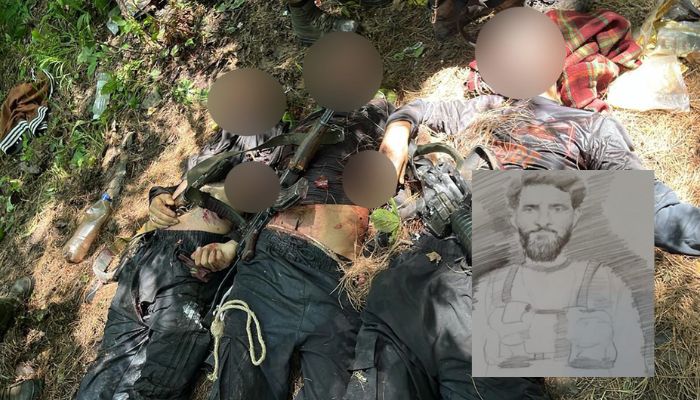
On 28th July, in a major breakthrough for Indian security forces, the mastermind of the brutal Pahalgam terrorist attack was neutralised along with two other terrorists during a joint anti-terror operation codenamed Operation Mahadev in Jammu and Kashmir. The operation was led by the Chinar Corps of the Indian Army with support from the Jammu and Kashmir Police and Central Reserve Police Force (CRPF).
One of the slain terrorists has been identified as Hashim Musa alias Abu Suleman. He was a top Lashkar-e-Taiba (LeT) operative and key conspirator in the Pahalgam terrorist attack that claimed the lives of 26 innocent Hindus in April this year.
Tracked and hunted in the forest
According to a report in India Today, the terrorists were part of a joint LeT and Jaish-e-Mohammed module. It was under surveillance by security forces for the past 14 days. Security agencies pointed out that there were 5-7 members in the group.
Sources revealed that the terrorists were caught off gaurd. The encounter was unplanned and occurred after personnel from 4 PARA and 24 Rashtriya Rifles spotted the terrorists napping in a tented hideout beneath dense forest cover. An official speaking to India Today said, “They were lying down inside a makeshift trench, concealed under trees. The 4 PARA team acted instantly and neutralised them.”
Drone visuals captured at 12:37 PM confirmed three bodies in the vicinity, confirming swift elimination. The engagement had started barely an hour earlier in the general area of Lidwas, deep inside the Dachigam forest region.
Local inputs and intercepted chatter played a key role
Operation Mahadev was commenced two days prior to the encounter after suspicious communication, suspected to be from a terrorist handset, was picked up from the Dachigam area. Intelligence agencies believe the signal originated from a Chinese satellite phone activated in Baisaran on 11th July.
Search parties were deployed across the forest terrain to follow the lead. Crucially, local nomads familiar with the area provided valuable inputs that helped in pinpointing movement patterns of the suspected terrorists.
Unnamed sources told India Today, “The terrorists were part of a joint LeT–Jaish-e-Mohammed module and had been under surveillance for over 14 days. The group is estimated to have 5 to 7 members.” The three neutralised terrorists were likely a splinter cell that had broken away from the main group earlier that morning.
Prime suspect of Pahalgam massacre
Hashim Musa had been on the radar as the chief executor of the Pahalgam terrorist attack. In that incident, 26 innocent Hindu tourists were mercilessly gunned down in the Baisaran Valley. Security agencies noted that Musa appeared extremely thin, likely an attempt to alter his physical appearance to avoid detection.
Agencies believe that the other two neutralised terrorists were Yasir and Hamza, also known by the alias Harris. Final confirmation of identities is pending, and a forensic match is underway to establish their exact role in the Pahalgam terrorist attack.
Operation Mahadev is ongoing
Chinar Corps confirmed that the larger operation remains in progress. The remaining members of the terror module are suspected to be hiding in the larger Dachigam forest region. Combing operations are being carried out to flush them out.
— Chinar Corps? – Indian Army (@ChinarcorpsIA) July 28, 2025
The elimination of Hashim Musa is considered one of the most significant successes since the launch of Operation Sindoor, the retaliatory response to the Pahalgam terrorist attack. In the cross-border offensive, India destroyed nine terror camps in Pakistan and Pakistan-occupied Jammu and Kashmir. Over 100 terrorists were eliminated.
Despite the massive blow delivered by Operation Sindoor, the hunt for the masterminds behind the massacre continued, until now.
Operation Mahadev has struck at the core of that plot. But officials say, “the mission will only be considered complete once all members of the module are tracked down and neutralised.”
In Ramgarh, Jharkhand, Aftab Ansari sexually exploited a married Tribal woman after enticing her with a job offer. He called her to a shop called Arshi Garments and sexually exploited her. He was subsequently arrested after he raped the tribal woman at the backside of the shop.
How many more Jamai Tolas until this stops, @HemantSorenJMM Ji?
Aftab Ansari trapped a married tribal woman under the pretense of offering her a decent job. He called her to a shop named Arshi Garments; however, when she arrived, he asked her to come to a place behind the store,… pic.twitter.com/ApJy6MkzBZ
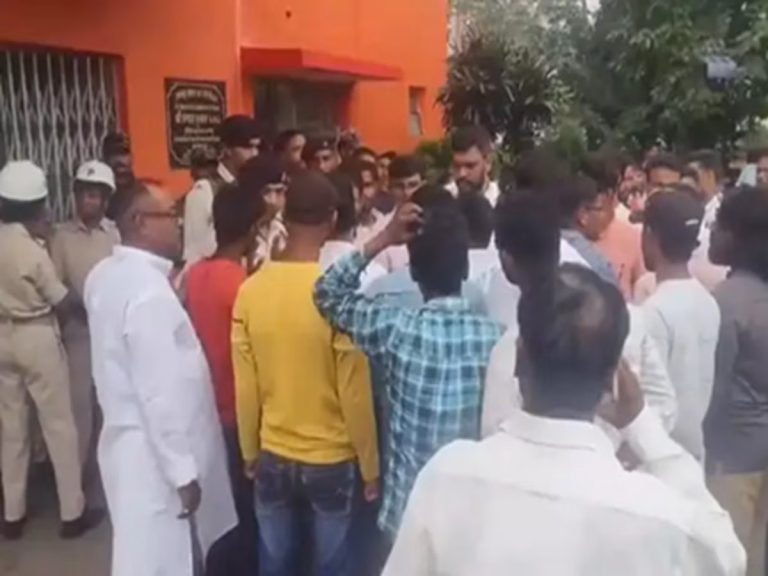
Ansari was beaten up by Hindu activists belonging to an organisation called the ‘Hindu Tiger Force’ and then handed over to the police for his heinous act on July 23. However, Ansari escaped police custody later and jumped into the Damodar river to escape the authorities. CCTV footage shows Ansari escaping from the prison.
Later, Aftab Ansari’s dead body was found in the same river on July 26. However, his death has created a lot of tension in the area with his family members alleging that he was killed in custody by the police.
Local Muslim community has also come out in support and has alleged that Aftab was killed by the police.
After the death of Aftab Ansari, the local police has registered a case against 12 members of the Hindu organisation ‘Hindu Tiger Force’ and arrested a member Rajesh Sinha. He has apparently been arrested for posting a video online that disturbed communal harmony.
Meanwhile, BJP’s MP from Hazaribagh, Manish Jaiswal has condemned his arrest, saying that the victim woman had approached Sinha for help after police failed to initiate any action despite filing a written complaint.
Further, on Sunday, July 27, under the leadership of BJP MLA from Barkagaon, Roshan Lal Chaudhary, Hindu organizations staged a dharna for about one and a half hours against the miscarriage of justice.
IGP (Bokaro Range) Kranti Kumar Garideshi has also suspended Ramgarh police station’s Officer-in-Charge Pramod Kumar Singh, and three constables for dereliction of duty following the incident.
Meanwhile, Congress delegation, led by the party’s state working president Shahzada Anwar, met Ramgarh SP Ajay Kumar and demanded the immediate arrest of those responsible for Ansari’s death.
The local authorities have said that the situation is under control now.
One of India’s key oil refining and marketing companies with Russian ownership, Nayara Energy, has filed a petition in the Delhi High Court against tech giant Microsoft. The company, in its petition, has accused Microsoft of abruptly suspending access to essential digital services, including email, without any prior notice. The company has said that Microsoft’s actions have jeopardised operations across its India network.
Sanctions fallout and operational impact
The development came in the wake of recent European Union sanctions on Nayara for having links with Russian oil giant Rosneft. Although Microsoft is based in the United States, Nayara argues that the company is under no obligation to enforce EU sanctions under US or Indian law.
Following the sanctions, at least two ships reportedly skipped loading refined products from Nayara’s Vadinar refinery, while one tanker carrying Russian Urals crude was diverted. Amid the turmoil, Nayara’s CEO resigned and has since been replaced by Sergey Denisov.
Nayara seeks urgent court relief
The petition seeks an interim injunction and immediate restoration of services. According to Nayara, Microsoft’s move was executed “unilaterally, without prior notice, consultation or recourse”, and under the “guise of compliance”. Notably, the company has emphasised that the suspended services were acquired under “fully paid-up licences”, which made the disruption even more unjustified.
The company stated that Microsoft’s actions have resulted in restriction of access to Nayara’s own data, proprietary tools and products. The disruption has had a direct operational impact since last Tuesday.
Strategic importance in India’s fuel economy
In its petition, the company has underlined its crucial contribution to India’s energy infrastructure. The company accounts for around 8% of India’s refining capacity and runs 7% of the country’s petrol pumps. It is also building around 8% of India’s polypropylene capacity.
Despite the current issues faced by the company, Nayara has reaffirmed its commitment to uninterrupted fuel supply across the country. It has stated that the company will continue to operate with full compliance under Indian regulations.
Earlier this month, the European Union imposed sanctions on Nayara’s Vadinar refinery as part of the 18th package of sanctions against Russia, which included asset freezes, shipping and insurance curbs, and a reduction in the price cap on Russian crude. The Government of India has categorically refused to recognise unilateral sanctions.
Following the sanctions, the company called EU’s move unjustified and illegal. The company said, “Recently, Nayara Energy has come under international scrutiny, facing political pressures and the imposition of sanctions by the European Union which have no legal basis. We categorically state that this unilateral move by the European Union is founded on baseless assertions, representing an undue extension of authority that ignores both international law and the sovereignty of India. It is to be noted that while many European countries continue to import Russian energy through various sources, they take a high moral ground by chastising and sanctioning an Indian asset for processing Russian crude largely used by its domestic population of 1.4 billion Indians and businesses.”
The Delhi High Court is expected to hear the matter shortly. Microsoft has not issued any official comment on the matter.
Big Tech as a geopolitical weapon in the West’s sanctions playbook
After Russia-Ukraine war broke in 2022, several major Western corporations suspended or froze operations in Russia. They cited compliance with international sanctions and geopolitical considerations. Global financial giants like Visa and Mastercard stopped their operations involving Russian banks which severely impacted cross-border payments. Tech companies including Google restricted access to various services, advertisements and monetisation channels.
Companies like McDonalds also pulled from Russia but their businesses were soon taken over by local brands. These actions formed part of a broader corporate exodus from Russia, with companies reassessing legal, ethical and reputational risks in the wake of the conflict and coordinated sanctions by the West.
‘Gaza is starving’, ‘Netanyahu is committing genocide in Palestine’, ‘Gazan children dying of starvation’. This is what the Hamas-sympathising Western media wants the world to believe, even as the reality differs monumentally. After peddling pro-Hamas narratives and projecting the Islamic terrorists as some sort of ‘freedom fighters’, Islamo-leftists media have now resorted to using images of genetically deformed children to peddle that Gaza residents are being starved due to Israel.
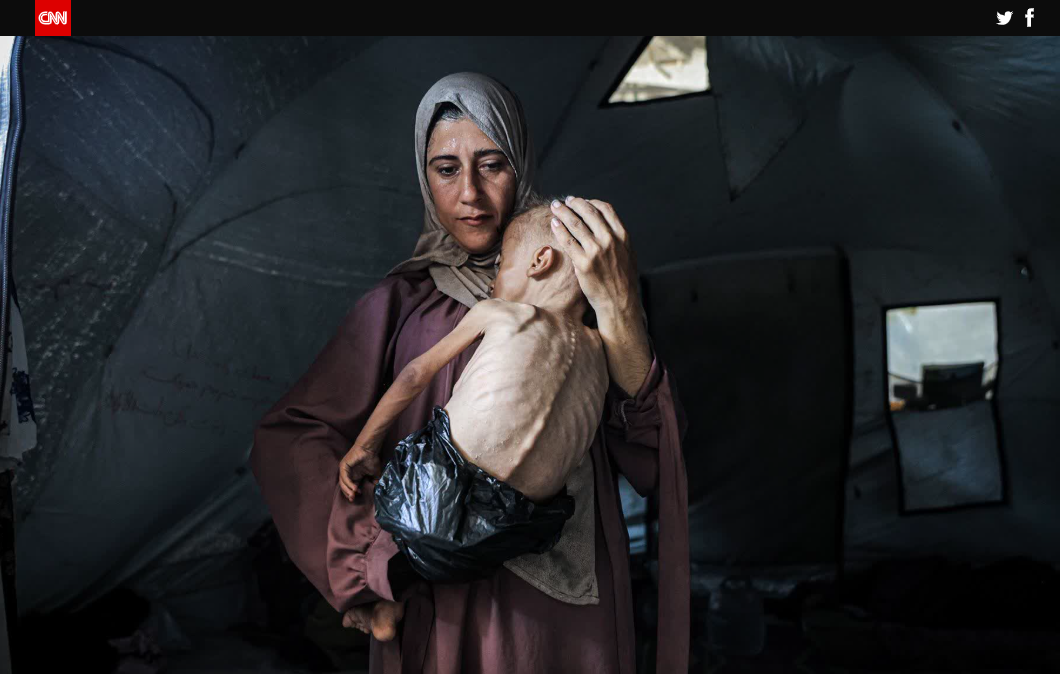
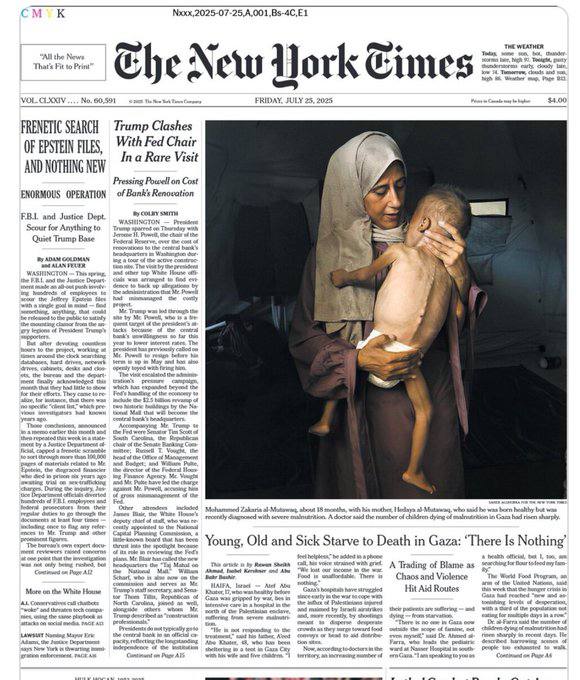
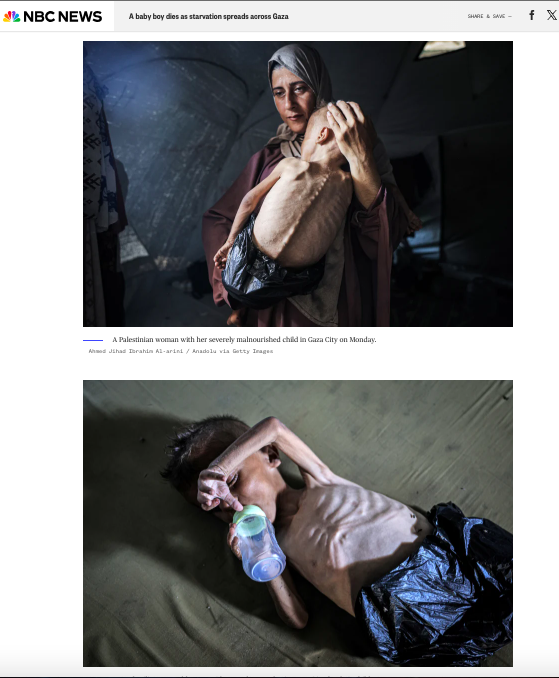
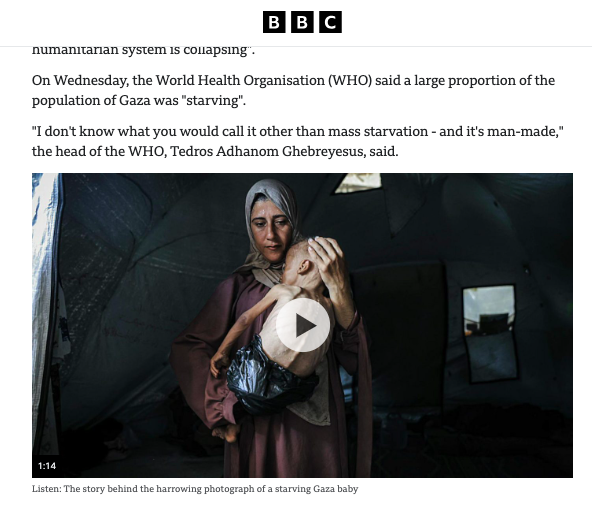
In their recent reportage on the Gaza crisis, several Hamas-sympathising Western media outlets like The New York Times, NBC News, CNN, The Guardian, BBC, Daily Express, Daily Mail, Seattle Times, The Age (Australia), Osservatore Romano (official paper of the Vatican) among others used pictures of emaciated Palestinian boy Muhammad Zakariya Ayyoub al-Matouq, cradled in his mother’s arms, passing the images off as a face of Israel-inflicted starvation in Gaza.
“Gazans Are Dying of Starvation. After 21 months of devastating conflict with Israel, Gaza’s most vulnerable civilians — the young, the old and the sick — are facing what aid groups say is impending famine,” NYT reported.
Meanwhile, The Guardian published an article headlined, “Starvation in Gaza is destroying communities – and will leave generational scars”. The Guardian piece published on 23rd July 2025, used the image of the Palestinian boy and his mother to emphasise the severity of the starvation and human rights crisis in war-torn Gaza.
Similarly, NBC News used the images of the same mother-son duo in its report titled, “A baby boy dies as starvation spreads across Gaza.”
Daily Express went a step ahead a published a propaganda piece titled, “The suffering of little Muhammad clinging on to life in Gaza hell shames us all.” Express, however, did not care to delve into whether the suffering of the ‘little Muhammad’ was caused by Israel, the ongoing war, the food crisis or something else. The newspaper passed off the misery of a severely malnourished Muhammad Zakariya Ayyoub al-Matouq as the one caused by the aid blockades imposed by Israel.
BBC, in its recent report headlined: “One in five children in Gaza City is malnourished, UN aid agency says”, also used the pictures of Matouq with his mother and linked his medical condition to the Gaza crisis.
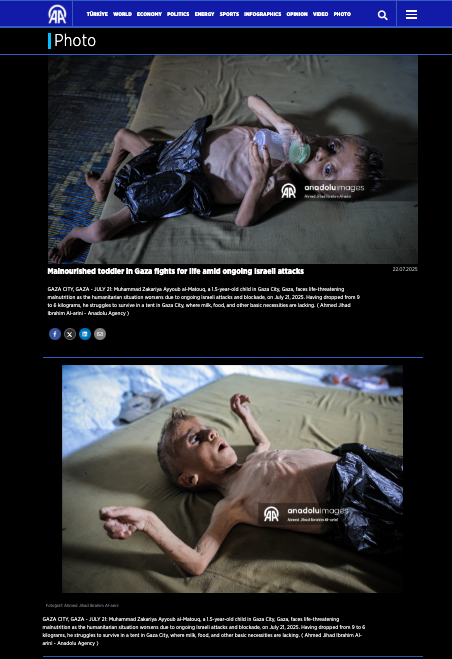
Though moving, the Palestinian boy’s suffering has little to do with the food crisis in Gaza. The pictures widely used by the pro-Hamas media outlets were taken by Ahmed Jihad Ibrahim Al-arini for Turkish news outlet Anadolu Agency.
Anadolu Agency, notorious for peddling pro-Hamas Islamist propaganda several photographs of Muhammad Zakariya Ayyoub al-Matouq, a 1.5-year-old child in Gaza and claimed that he is facing life-threatening malnutrition “as the humanitarian situation worsens due to ongoing Israeli attacks and blockade.”
“Having dropped from 9 to 6 kilograms, he struggles to survive in a tent in Gaza City, where milk, food, and other basic necessities are lacking,” Anadolu Agency claimed.
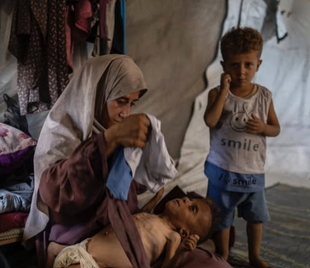
While the media outlets picked Muhammad Zakariya Ayyoub al-Matouq’s pictures with his mother, which aligned with their narrative, in one of the pictures, Muhammad Matouq’s older brother can be seen standing. In the picture, the other boy looks well-nourished, healthy and mentally sound.
None of the propaganda outlets that used Matouq and his mother’s pictures used the picture featuring the other boy, reported to be Matouq’s brother, since the picture would have punctured their lies.
Moreover, speaking to CNN, Matouq’s mother herself revealed that Matouq suffers from a rare muscle disorder. She added that her son receives specialised nutrition and physical therapy for his condition.
The medical reports and other details that have surfaced about the malnourished boy Matouq, whom the pro-Hamas media made the face of Gaza starvation and a proof of Israel’s supposed cruelty, suffers from cerebral palsy, has hypoxemia, and was born with a serious genetic disorder.
Turns out, the iconic picture of the Palestinian boy being the victim of the ‘great Gaza crisis’, is an ironic lie, presented in a much more sophisticated and emotion-provoking manner than the entire Pallywood could ever pull off.
Looks like the Western legacy media has upped its efforts in the narrative warfare and resorted to exploiting a disabled child to fuel anti-Israel sentiment, amounting to nothing less than a modern blood libel aimed at inciting global outrage and hatred against Israel and Jews. Apparently, the Hamas cheerleaders think that why bother verifying when you can vilify.
While many people on social media are demanding accountability from these pro-Hamas propaganda machines, they won’t get any since this was not a case of sloppy journalism but a calculated manipulation. The boy’s protruding spine, his skeletal body and his misery naturally evoke sympathy; thus, despite his condition having not been caused by Israel or the aid blockades, Anadolu Agency, NYT, and others turned him into a poster boy for a famine, using his heart-wrenching pictures to peddle an anti-Israel narrative.
Even as the Hamas-sympathising propaganda outlets are relying on unrelated images to concoct sob stories about Gazan residents, the crisis is real, and the shortage of food and essential supplies is real. However, all of it is mindlessly blamed on Israel while the real culprit, the catalyst of the ongoing chaos—Hamas, which still refuses to release the remaining Israeli hostages, gets a free pass.
This grotesque distortion by the Western media outlets is not surprising, given that they have a history of peddling pro-Hamas falsehoods; in fact, this is only a new low they have stooped to.
When NYT defended rehiring Hitler-praising and pro-Hamas ‘journalist’ from Gaza for Israel-Hamas war, and admitted to having relied on Hamas claims to accuse Israel of bombing a hospital
Just weeks after Palestinian Islamic terror group Hamas massacred innocent Israeli civilians on 7th October 2023, the New York Times rehired Soliman Hijjy, a Gazan journalist, who had a notorious track record of praising Hitler‑the, the 20th-century genocidaire of the Jews in Nazi Germany, and taking a pro-Hamas stand.
Maintaining ‘high standards’ of journalism, the NYT issued a statement defending its decision to rehire Soliman Hijjy. It claimed that after a review of his “problematic” social media posts, which came to light in 2022, they took various actions following which Hijjy adhered to their standards of journalism. Notably, the NYT platformed Hijjy to peddle pro-Hamas propaganda. In his reports published in the NYT, Hijjy carried out Hamas propaganda regarding the attack on Al-Ahli Hospital in Gaza and falsely accused Israel of the attack. Hijjy had a contribution in the NYT’s reportage on the Hospital attack, which later turned out to be false. Later, NYT issued a half-hearted’ clarification but admitted that it relied heavily on Hamas claims on the hospital explosion.
BBC used the son of a Hamas leader as narrator in its documentary to peddle the Jihadist group’s anti-Israel propaganda
In July 2025, the British Broadcasting Corporation (BBC) admitted that its documentary titled “Gaza: How to Survive a Warzone” was propaganda. The broadcast claimed that it breached editorial guidelines as it failed to disclose a critical conflict of interest. The child who narrated the documentary was the son of an official linked to the Palestinian terrorist outfit Hamas. The documentary was produced by an independent company named Hoyo Films. It was removed from iPlayer in February this year after concerns emerged about the boy’s background. While the makers of the propaganda documentary were aware that the narrator was the son of a Hamas terrorist, the BBC did not care to conduct a basic editorial check and allowed usage of its platform for Hamas propaganda.
This was the second documentary aired by the BBC to be taken down over impartiality concerns. As reported earlier, the BBC ran a documentary titled “Gaza: Doctors Under Attack,” which sparked outrage because a journalist, Ramita Navai, displayed problematic social media activity.
On 4th July, Ramita had said on BBC Radio 4’s Today programme that Israel is “a rogue state that’s committing war crimes and ethnic cleansing, and mass-murdering Palestinians”.
Earlier, the BBC has been under fire for refusing to name Hamas as a terrorist organisation, even though it is marked as such by the UK, the US, the EU, and Israel. Earlier, the BBC had defended its stand on not calling Hamas a terrorist organisation, saying that calling someone a terrorist would mean taking sides.
It is, thus, unsurprising that the BBC, NYT and their likes manipulated a child’s suffering to inflame anti-Israel outrage. With their vast resources and self-proclaimed commitment to ‘accuracy’, they discarded journalistic integrity and banked on emotional imagery to vilify Israel. Considering the past record of backtracking after outrage, these propaganda outlets may put up a ‘clarification’; however, the damage is done. The Western media has become the extended branch of Pallywood, wherein the characters and the setting may be real, but the story is partially or fully imaginary.
Muslims organisations from Bangladesh are actively working to change the religious demographics in Nepal, which is the only Hindu-majority country other than India in the entire South Asia.
Nepal is home to 2.36 crores Hindus, which make up roughly 81% of the landlocked nation (as per 2021 census data). Muslims, on the other hand, constitute about 5% of the country’s population.
However, a concerted attempt is now underway to artificially change the religious demographics and culture in the country. And this is being done shrewdly in the garb of ‘humanitarian activities.’
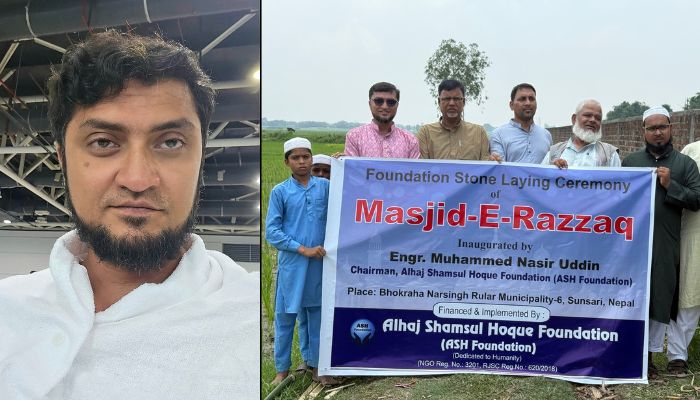
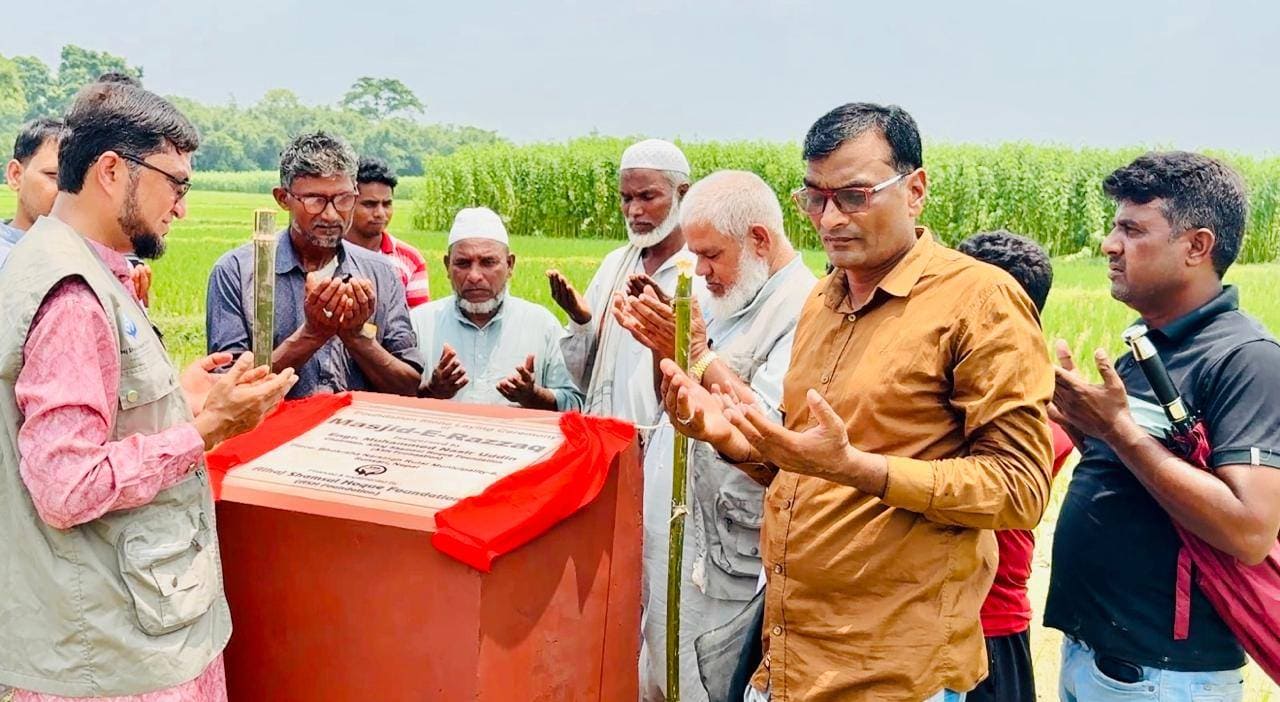
ASH Foundation laying the foundation stone of Masjid-e-Razaaq
A Bangladeshi organisation named ‘Alhaj Shamsul Hoque Foundation (ASH Foundation)’ is working on this goal with a mission-mode.
Founded by one Muhammed Nasir Uddin, ASH Foundation is operational in Bangladesh, the United States, the United Kingdom and even Egypt. The so-called NGO is headquartered in Chittagong.
“ASHF has the vision of achieving a hunger free, poverty free, healthy community to ensure the peace and prosperity for all regardless to any race, religion, caste and gender,” it claims to be its objective.
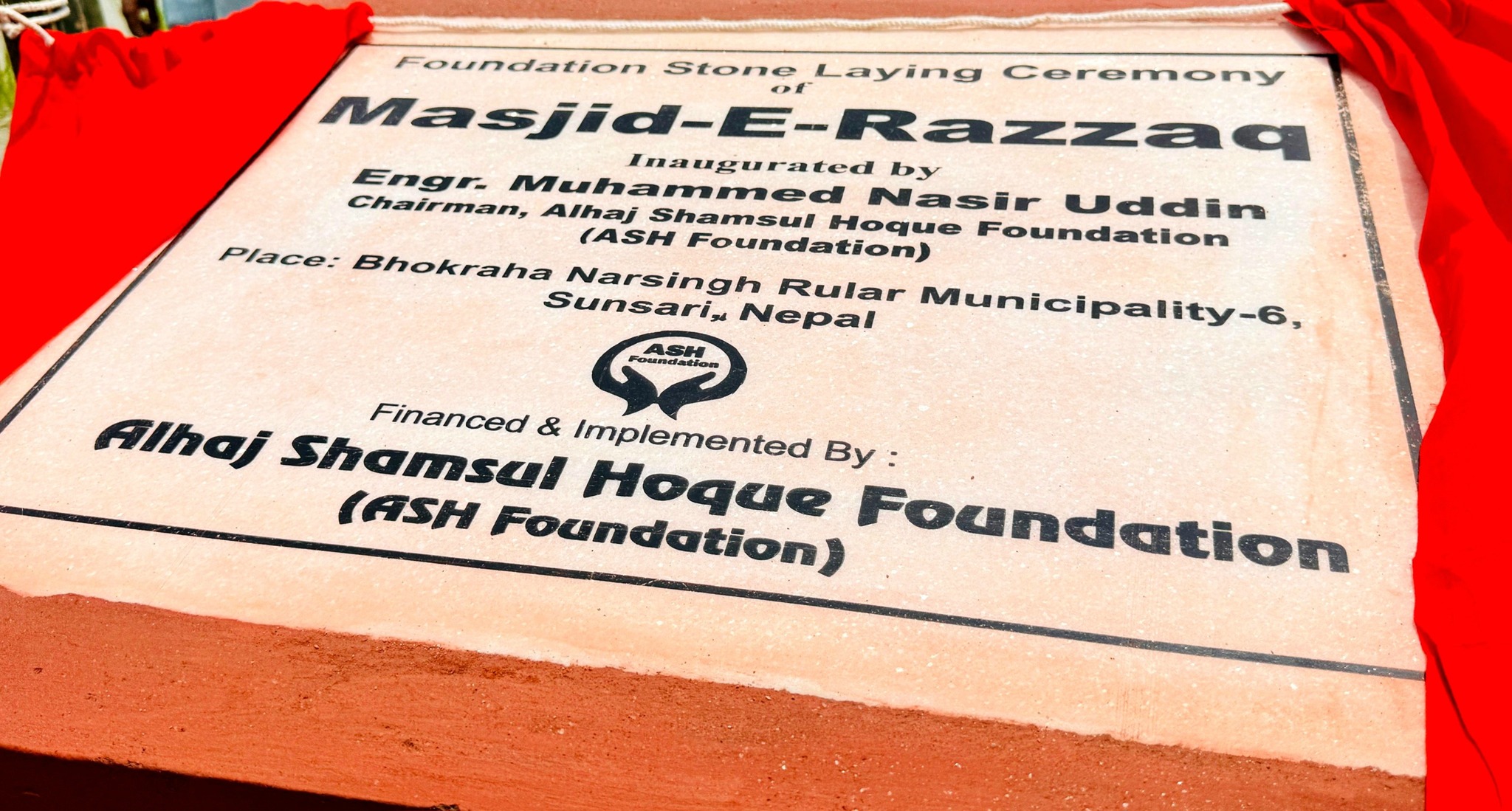
Plaque of Masjid-e-Razaaq
However, the activities of ‘Alhaj Shamsul Hoque Foundation (ASH Foundation)’ are clearly aligned towards Tabligh (propagation of Islam) and Daʿwah (Islamic proselytism).
Contrary to the organisation’s mission statement, its founder, Muhammed Nasir Uddin, used funds to lay the foundation stone of ‘Masjid-e-Razaaq’ in Sunsari district of Nepal.
“There are only 5% Muslims in Nepal. There is an opportunity of Daʿwah (Islamic proselytism),” he declared in a viral video posted on Facebook on Friday (25th July).
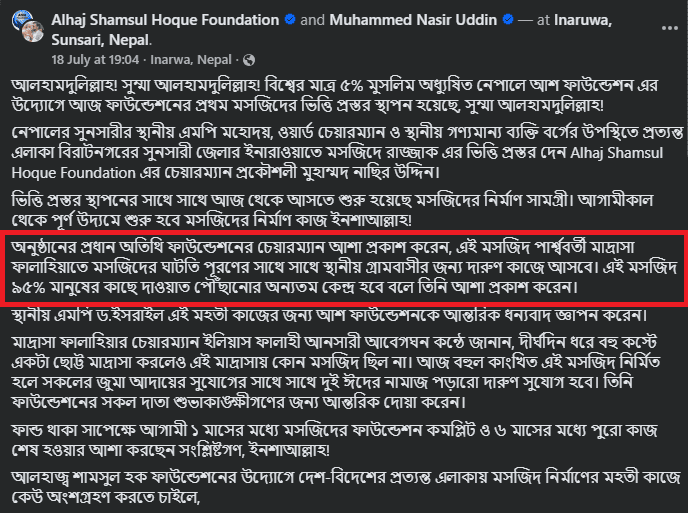
In a Facebook post on 18th July, the ASH Foundation conceded that the mosque will serve as a centre to spread the message of Islam to at least 15% of the population.
It also put out bank account details, seeking donations from Bangladeshis to contribute and support their mission to build more mosques in the Hindu-majority country and convert the native population.
Screengrab of the Facebook post by ASH Foundatio
“One of the biggest Hindu Rashtras in the world is Nepal. It is thus extremely important to carry out Daʿwah. One of the biggest tenets of our religion is to invite people on the path of Allah, ” ASH founder Muhammed Nasir Uddin spelt out his nefarious agenda during a conversation with local Muslims.
One of the fascinating aspects about the ASH Foundation is its modus operandi.
Praise the Hindu community for ensuring religious coexistence
Seek funds from Bangladeshi Muslims to help facilitate the spread of Islam
Use the same financial assistance to convert vulnerable Hindus, induce an alien Islamic culture and foster a demographic change in Nepal.
Attempts to alert law enforcement authorities and government officials by Hindu organisations have so far ended in vain.
Growing Islamism in Hindu-majority Nepal
OpIndia has reported multiple instances of the growing animosity of the Muslim community towards the native Hindus in Nepal.
In April 2025, a violent Muslim mobs attacked a Hanuman Jayanti procession in Birgunj city in Parsa district of Nepal.
In July 2024, Muslims stopped road construction work, resorted to stone pelting and attacked homes of Dalit Hindus in Nepal’s Sarlahi district.
A month earlier, the Hindu-majority country was in the news after Muslims renamed a village to ‘Islam Nagar’ and ‘Brahma Sthan’ to ‘Madrasa Chowk’ in Rautahat district.
Brahma Sthan has become Madrasa Chowk. (Source: OpIndia Hindi)
OpIndia also reported on a land jihad case, where Muslims attempted to occupy government land by offering Namaz at the site and illegally constructing a wall. The incident occured in Janakpur city of Nepal.
With the growing presence of Bangladeshi Muslim outfits such as ASH Foundation in Nepal, the work of proselytism and aggression towards the Hindu community is likely to increase.
On Monday (28th July), Madras High Court judge GR Swaminathan rebuked advocate Vanchinathan after the lawyer accused him of caste and communal bias. Justice Swaminathan called the lawyer a “comedy piece” and accused of orchestrating a campaign aimed at maligning the judiciary.
During a hearing by a bench comprising Justice GR Swaminathan and K Rajsekar, Justice Swaminathan said, “You are a comedy piece. I don’t know who called you all revolutionary. You are all comedy pieces.”
This came after advocate Vanchinathan refused to respond to Justice Swaminathan’s queries orally and urged the Court to pass a written order.
It all started with advocate Vanchinathan accusing Justice Swaminathan of acting with communal and caste prejudice in judicial decisions. The lawyer cited several social media posts and video interviews to back is accusations.
Following this, Justice Swaminathan summoned Vanchinathan to clarify whether the lawyer stood by these remarks or wished to retract them. It was during the hearing on this matter that the High Court judge called advocate Vanchinathan a “comedy piece”.
Justice Swaminathan asserted that while criticism of judgments is legitimate and acceptable, allegations of caste-based bias cross the line.
“Mr. Vanchinathan, I 100 per cent respect your right to brutally criticise my judgments. But when you are alleging caste bias, things take a different turn,” Justice Swaminathan said.
The bench also mentioned one of advocate Vanchinathan’s interviews wherein he reportedly claimed that the Court had targeted a senior lawyer since he was a Dalit, while not giving similar treatment to another senior lawyer as he was a Brahmin.
“For four years, you have been slandering me. I have not taken any action against you. We are also conscious of the rules of procedure. We are not fools. We will place the case before the Chief Justice or an appropriate bench. The whole ecosystem has ganged up—we are aware. We will not be intimidated or cowed down. Judicial independence is supreme,” Justice Swaminathan said.
“We fail to understand on what basis such allegations have been made against this Court…We clarify once again that the proceedings against him have nothing to do with that complaint,” the court order reads.
“You have assumed two things that have no basis. First, this has nothing to do with the complaint you sent to the Hon’ble Chief Justice of India. Second, we have not initiated any contempt action till Friday. We only want to clarify your stance—whether you continue to allege caste and communal bias,” the Court added.
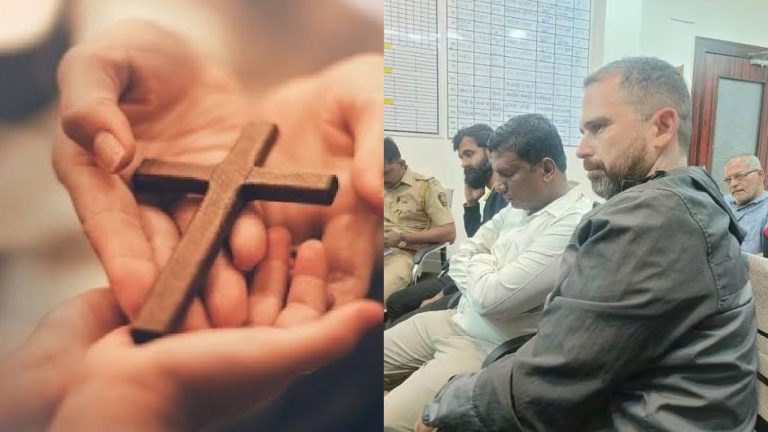
In a significant case that has sparked fresh debate over foreign-funded religious conversions in India, the Pimpri-Chinchwad Police have arrested an American national and his Indian associate for allegedly attempting to convert locals to Christianity by offering financial inducements. A minor has also been detained in connection with the case.
Accused identified: Foreign national linked to conversion bid
According to police officials, the accused have been identified as Schaefer Javin Jacob (41), a resident of California, USA, and Steven Vijay Kadam (46), a resident of Raisoni Society, Pimpri. Jacob had been staying in a rented flat near Mukai Chowk, Pimpri-Chinchwad.
Investigations revealed that Jacob had been visiting India since 2016 on tourist and business visas, raising concerns about the potential misuse of visa provisions to carry out religious propagation under the guise of legitimate travel.
FIR details: Alleged attempt to lure Hindu man with money and promises
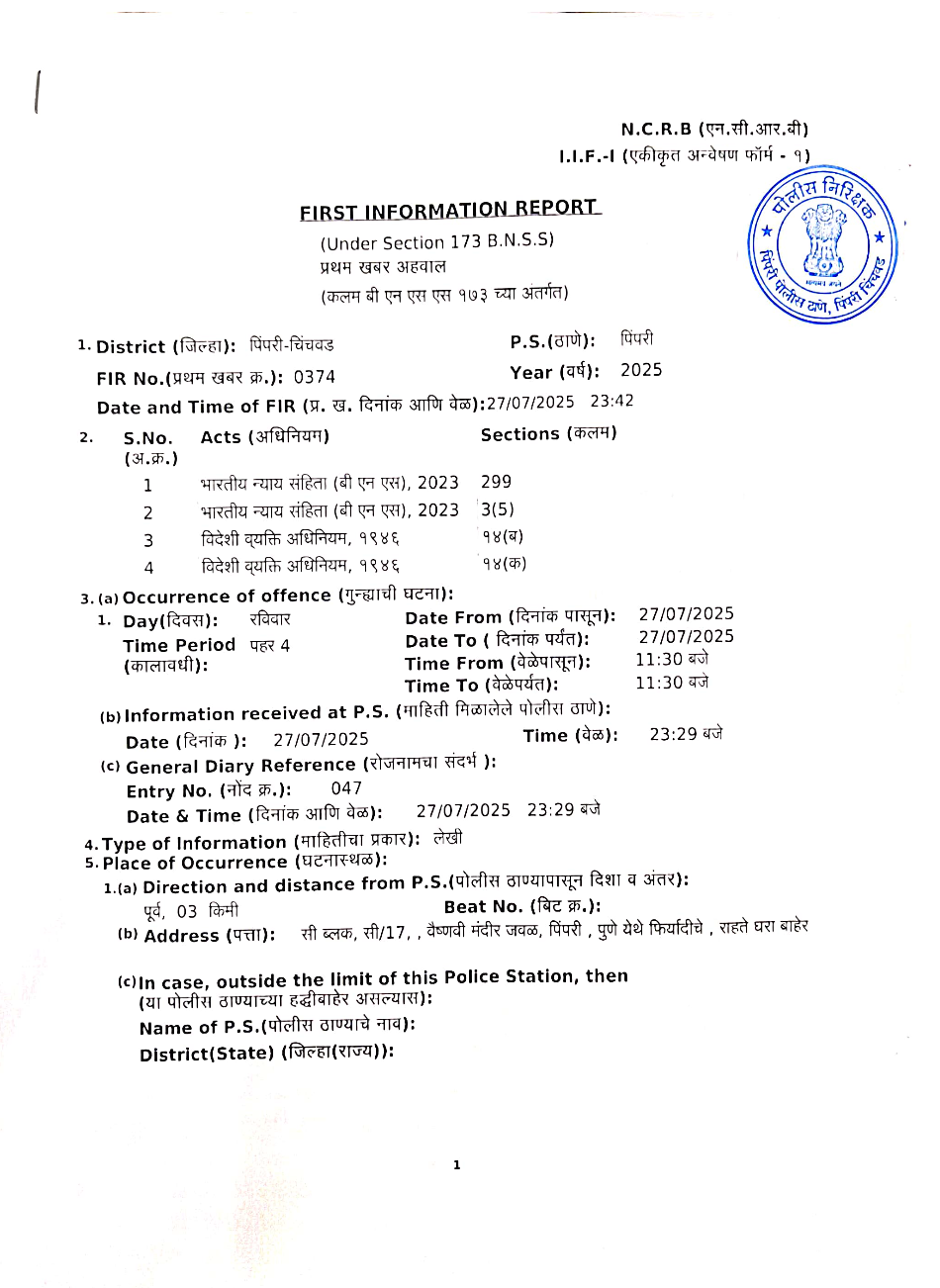
The First Information Report (FIR), filed by Sunny Dhanani (27), a Hindu-Sindhi resident of Pimpri, describes in detail how the accused visited his home around 11:30 AM on Sunday, July 27. As per the complaint, Jacob and Kadam allegedly urged him to embrace Christianity, promising him and his family peace, wealth, mental well-being, and financial support in return.
A copy of FIR in the case
The FIR further states that the accused attempted to present themselves as religiously well-versed individuals, quoting from Hindu scriptures and presenting Christianity as a superior path to salvation. When Dhanani became suspicious, he promptly reported the matter to the Pimpri Police Station, leading to their arrest.
“They told me that if I accepted Christianity, I would be happy, mentally peaceful, and financially stable. They also promised help from foreign sources,” Dhanani stated in the FIR.
Digital trail and systematic outreach suspected
Police believe that Jacob and Kadam may have been involved in a broader effort to influence and convert individuals, potentially using WhatsApp, mobile calls, and face-to-face interactions to reach out to local families. The FIR also notes the use of emotional manipulation and selective interpretation of religious texts to push their agenda.
Police have seized electronic devices and literature that may have been used for religious indoctrination. Forensic analysis and financial trail investigations are currently underway.
Minor detained; role under investigation
Authorities have also taken a minor boy into custody, whose role in the case remains unclear. It is suspected that he may have been used to gain the trust of families or assist in meetings and outreach.
Legal action under the BNS and the foreigners act
The Pimpri-Chinchwad Police have registered a case against the accused under multiple provisions of the Bharatiya Nyaya Sanhita (BNS) and the Foreigners Act. They have been charged under Section 299 of the BNS, which pertains to deliberate and malicious acts intended to outrage religious feelings, and Section 3(5) for attempting to convert individuals through inducement. In addition, Sections 14(b) and 14(c) of the Foreigners Act have been invoked against the American national for allegedly engaging in activities that violate the terms and conditions of his visa.
A senior officer from Pimpri-Chinchwad Police stated:
“We are taking this matter seriously. Misuse of a tourist visa for religious propagation is a violation of national security norms and will be dealt with strictly.”
Rising Concerns Over Religious Conversions
This case has added to growing concerns over organised foreign-funded religious conversions in India, particularly in urban and semi-urban areas. Several social organisations have demanded a wider investigation into Jacob’s visits since 2016 and his connections within India.
It is believed that the accused had built a network of contacts in Pimpri-Chinchwad and may have attempted similar activities with other vulnerable individuals or families.
The American national is currently in judicial custody, and immigration authorities have been notified. He may face deportation, and his visa may be revoked permanently.
Meanwhile, investigations continue into the source of funds, the network supporting such activities, and whether other foreign nationals may be involved.
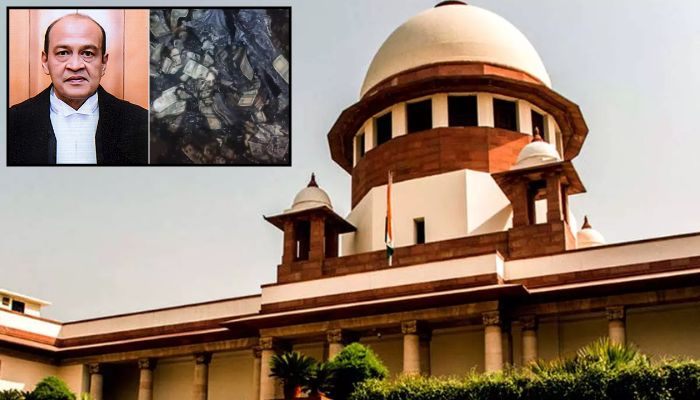
The Supreme Court on Monday, 28th July, asked some tough questions to Justice Yashwant Varma, who is challenging the findings of an in-house inquiry report that went against him. The case relates to a huge pile of cash that was found inside a storeroom at his government residence in Delhi, after a fire broke out there in March this year.
The apex court asked why Justice Varma had participated in the internal inquiry process if he didn’t believe the committee had the authority to investigate him in the first place. The bench, consisting of Justices Dipankar Datta and A.G. Masih, also questioned the timing of the petition, asking why was it filed only after the inquiry report was submitted.
“Why did you appear before the committee if you thought it had no power to investigate? You are a constitutional authority; you can’t now say that you didn’t know,” Justice Datta asked.
Senior Advocate Kapil Sibal, appearing for Justice Varma, said that the judge’s removal must follow a proper constitutional process. He argued that the internal committee had no legal authority to recommend action and that its findings were being used to create public outrage before any official move to impeach the judge.
Sibal pointed to Article 124 of the Constitution, which lays down how judges can be removed only through a formal motion in Parliament. He said the public release of the inquiry report and videos from the fire from the Judge’s own house had damaged his client’s image unfairly.
He also claimed that the Chief Justice of India had no power to send the report directly to the President or the Prime Minister and that this went against the rules.
What did the Supreme Court say
Justice Datta responded that even impeachment is a political process. He asked why Justice Varma didn’t approach the court earlier when the committee was formed, or when the tapes were made public. “Why wait until the report was out?” he asked.
Sibal answered that they believed the committee might uncover the real truth, like who the money belonged to. But Justice Datta was not convinced. He noted that while Sibal said the money wasn’t Justice Varma’s, he hadn’t denied that the cash was found on the property. “If the cash was there, it has to be explained,” the judge said.
Sibal insisted that there was no proof of misbehaviour by the judge. “Where is the link between the cash and the judge himself?” he asked while talking about the pile of cash found at the Judge’s residence. He also argued that the internal committee’s report was just an initial opinion, not proper evidence as defined under the Judges’ Inquiry Act.
But the court pointed out that this was not just about technicalities; it was about the public trust in the judiciary.
The bench eventually decided to adjourn the hearing till Wednesday. It asked Sibal to place a copy of the internal report on record.
Justice Varma also hides his identity
Justice Varma has also concealed his identity in his petition in the Supreme Court challenging the findings of an inquiry panel that recommended his removal.
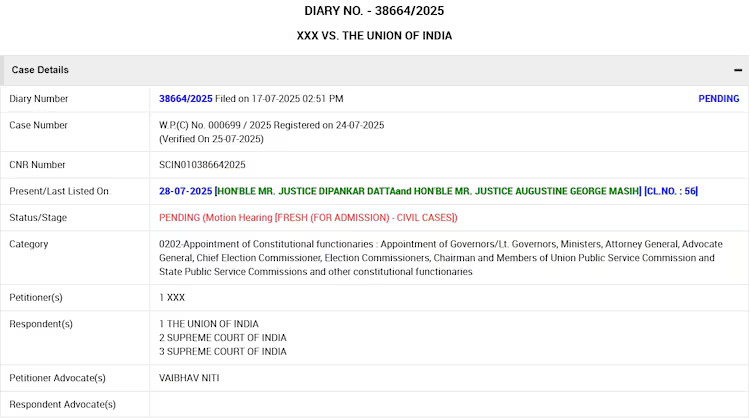
The Supreme Court cause list for Monday, 28th July, mentions the case as “XXX vs The Union of India”. Here, XXX refers to Justice Varma, who has urged the Supreme Court to grant permission for non-disclosure of his identity in his petition.
While the usage of ‘XXX’ to hide the identity of petitioners is not uncommon, it is generally used by victims of sexual assault or rape survivors. It is also used in cases involving juveniles and minors to prevent revealing their identity.
Background of the case
In March this year, firefighters on their way to douse a fire at Justice Varma’s home discovered piles of cash stashed in a storeroom. The findings quickly made headlines, leading to public outrage. Justice Varma was then a judge of the Delhi High Court.
Following the discovery, then Chief Justice of India Sanjiv Khanna formed a three-judge internal committee to look into the matter. Justice Varma was moved back to the Allahabad High Court, and his judicial work was suspended during the inquiry.
The committee, which examined 55 witnesses, including Varma and his daughter, and reviewed photos and videos from the fire brigade, concluded that the cash was found in a part of the house under Justice Varma’s or his family’s control. Since he could not give a convincing explanation about the money, the panel said that action should be taken against him.
Justice Varma is now facing an impeachment motion in Parliament. Last week, a group of MPs from both the Lok Sabha and Rajya Sabha submitted a notice for his removal. This comes after the in-house committee submitted its findings to the Chief Justice of India, who then forwarded it to the President and Prime Minister.
Justice Varma had earlier refused to resign when advised to do so by the CJI.
With the issue now turning into a constitutional debate over the powers of the judiciary, Parliament, and the role of the media, the Supreme Court’s final word in this case will likely set an important precedent.
Myanmar has lately been grabbing headlines for its civil war, military coups and narco terrorism, as well as for Chinese-operated call centres that are filled with kidnapped tourists and trapped job seekers from India and other countries. Unfortunately, these dramatic events have overshadowed the magnificent history of the Buddhist-majority nation, popularly known as the “Golden Land” due to its abundance of golden temples and pagodas.
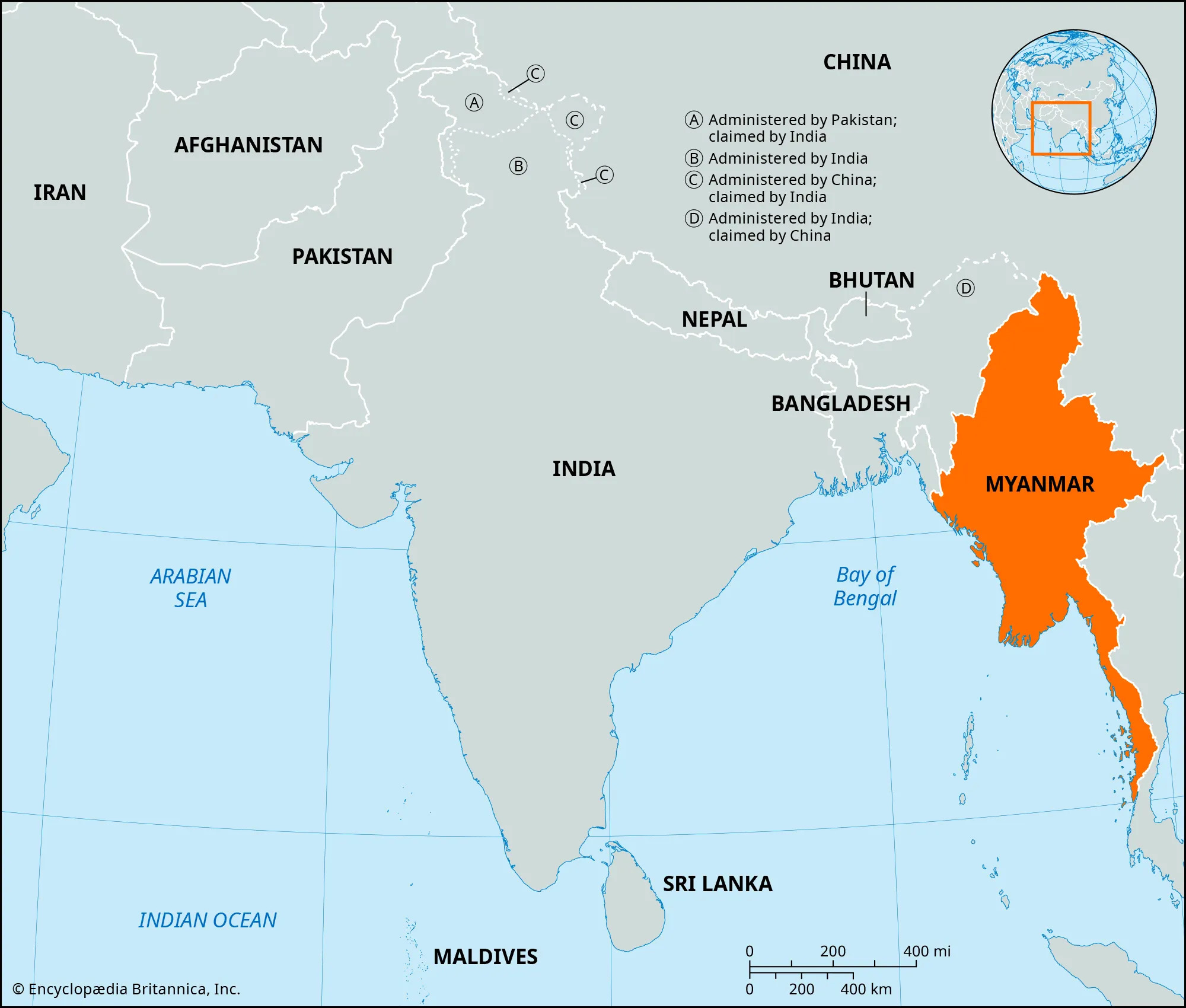
Image via Britannica
It was a thriving civilization that possessed a vibrant culture, beautiful natural landscapes and enchanting scenery which is now tainted by relentless political turmoil and rampant violence. The nation has also experienced the ascension and decline of many kingdoms including the the Ava Kingdom, the Hanthawaddy Kingdom and the Toungoo Empire, among others, over its long and fascinating past which have profoundly impacted and richly contributed its legacy and history.
Bagan kingdom takes root
The Bagan (mentioned as Pagan in some texts) dynasty was one such kingdom which became the first to unify the areas that would eventually form present-day Myanmar, the country which was previously known as Burma. Interestingly, Mranma or the Burman people are credited as the source of both these names.
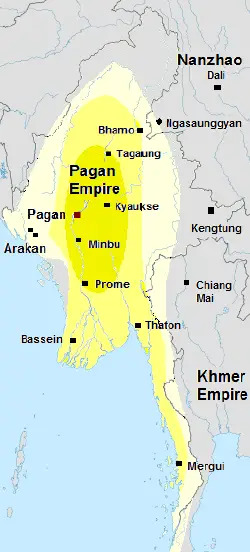
Pagan or Bagan Kingdom (Source: newworldencyclopedia.org)
The historians stated that the Burman were originally from the areas that border Tibet and western China. A military crisis had gripped the Pyu kigdom when they seized the opportunity. Burman annexed their cultural territory in the middle of the 9th century AD and made Bagan their capital in 849 AD. Nevertheless, the take over was not absolute as the culture and traditions of the Pyu had a crucial impact on the new arrivals.
The latter did not resort to plundering but tried to adapt to the already established way of life of the Pyu people. Indian cultural and economic ties had influenced the Pyu. They were Buddhists and the new conquerors also followed suit. The Pyu wet-rice cultivation which is still practised in the Irrawaddy Delta, was another fresh lesson for the Burman who were accustomed to the temperature and terrain of far higher altitudes.
Modern historians consider Pyinbya to be one of the earliest monarchs of Bagan which would eventually occupy modern-day central Myanmar over the next two centuries. However, the country’s chronicles name him as the 33rd king of the dynasty.
A short video on temples of Bagan, Myanmar There are more than 2000 temples in Bagan spread over an area of 40 miles². Bagan was mainly founded in 849 during the reign of king Pyinbya, known as 'AriMardanaPura'/TambaDipa(TamraDweep). Video: Milosh Kitchovitch pic.twitter.com/d8OoHL5NWC
— भारतीय वास्तुकला(Wonderful Indian Architecture) (@wiavastukala) July 19, 2018
Anawrahta ascends the throne
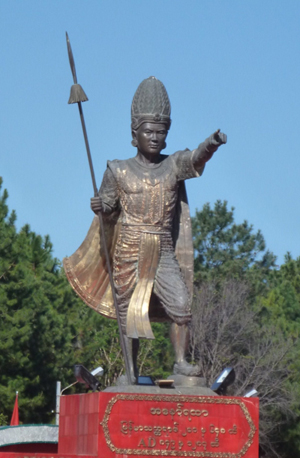
Bagan was modest kingdom until King Anawrahta whose original name was Aniruddha, its greatest ruler came to power in 1044. He was the great-grandson of Pyinbya. His debut brought a substantial change in the fortunes of his kingdom and the entire region and altered their destiny. The new ruler made Bagan a leading producer of rice by enhancing the irrigation infrastructure throughout his realm.
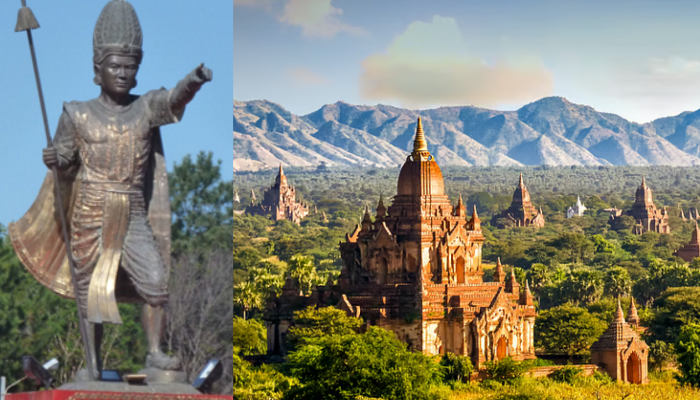
Statue of King Anawrahta (Source: gomyanmartours.com)
Furthermore, Anawrahta launched bold military plans. He took control of Thaton which was the capital of the prosperous and elegant Mon kingdom to the south, in 1057. The first Burmese empire swiftly rose to prominence when Anawrahta brought the entire Irrawaddy area under Bagan sovereignty. The important development pushed neighbouring Mon princes to yield to Burman authority.
Nathlaung Kyaung Temple is a Hindu temple dedicated to Vishnu. It is located inside the city walls of old Bagan, Burma & is the only remaining Hindu temple in Bagan. It is one of the oldest temples in Bagan, and was built in the 11th century, during the reign of King Anawratha. pic.twitter.com/3YySFS1o1G
The king’s accomplishment involved both military triumphs and cultural interchange. Similar to his forebears, he was moulded by the Mon school of Theravada Buddhism which he propagated throughout the Bagan state because he perceived it as a beneficial unifying force.
Expansion of Bagan Empire and Indian influence
The Mon culture which was heavily influenced by Indian culture, was also valued greatly by Anawrahta. He was able to hire Mon engineers, goldsmiths, woodworkers and artists to adorn Bagan as a result of the wealth acquired by the capture of the Mon ports. River transportation was controlled by this remarkable civilisation which broadened their sphere of dominance.
Meanwhile, the king ordered the construction of countless temples, pagodas and stupas. Every structure appeared to be more expansive and impressive than the one before it. Notably, the sacred tale of Ramayana was popularized in Burma from his time.
It was known as Rama Zatdaw in Burmese and was recorded in Ava by the end of the 13th century and was passed down orally from generation to generation until the 16th century. Buddhist monks viewed it as a great story in the 18th century. Based on Old Bagan oral traditions, the historical epic was written down in prose, verse and dramatized between the sixteenth and eighteenth centuries.
Bagan’s golden period continued even after Anawrahta’s passing in 1077 as the flourishing commerce funded the rapidly growing temple complex. The ancient city was their political, economic and cultural hub from around 1044 and 1287 CE.
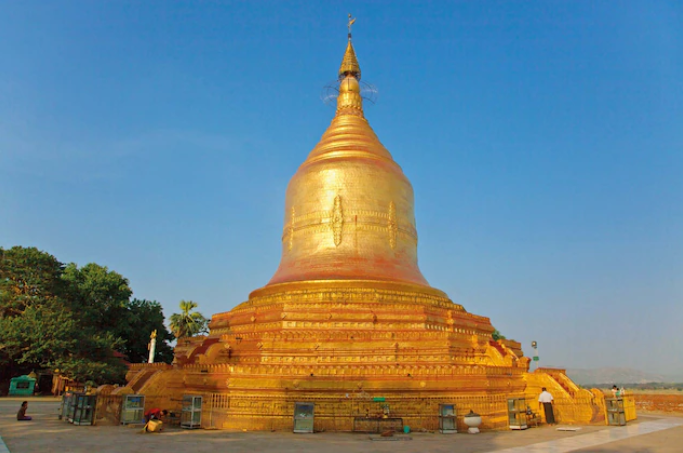
The Lawkananda Pagoda, commissioned by King Anawrahta, dates from AD 1059. It is home to a sacred relic believed to be one of the Buddha’s teeth. (Source: National Geographic)
However, just as all great things, including formidable empires, are destined to come to an end, the mighty Bagan too had to submit to the brutality of the same rite with the onset of the Mongols. It was engulfed, like a number of other city-states in the central region of Myanmar after falling as a result of various political and economic issues starting in the late 1200s.
The power of Bagan, akin to so many other nations, was ultimately overrun by Mongol invasions. King Narathihapate, emboldened by the victories initially, avoided communication with Mongol monarch Kublai Khan. Bagan’s fortunes fluctuated and its decline began in 1277 with an unexpected defeat at the Battle of Ngasaunggyan. Bagan fell ten years later.
Many of the temples and pagodas were abandoned in the centuries that followed. Nevertheless, the original culture of the region persisted and the 15th century witnessed Bagan reclaim its status as a destination for Buddhist pilgrims. It remained a place of worship and underwent a resurgence of construction in the 1700s.
Temples, monasteries, and stupas, buildings that store Buddhist treasures and are formed like mounds, bell-like domes or cones are among the thousands of monuments that remain standing to this day. Nearly all of these revered structures are composed of brick with stucco.
Bagan make its way into UNESCO World Heritage site
The sacred landscape of Bagan is home to an extraordinary collection of Buddhist art and architecture as well as centuries of the Theravada Buddhist practice of merit making (Kammatic Buddhism). It also offers striking evidence of the Bagan Period (11th-13th centuries) during which redistributional Buddhism evolved into a political control mechanism with the king serving as the primary donor.
Temple construction increased rapidly as a result of the merit-making customs, reaching a pinnacle in the 13th century. The area is divided into eight serial components (parts) which are situated on a bend in the Irrawaddy River. One component is on one side of the river while seven are on the other.
Bagan: The land of ten thousand temples (Source: @histories_arch/X)
The complex’s intangible qualities are represented in farming, traditional cultural customs, Buddhist worship and merit-making endeavours. The 3,595 documented monuments there are comprised of stupas, temples, and other Buddhist spiritual practice structures. They also include extensive archaeological resources as well as numerous inscriptions, murals and sculptures.
Bagan is truly a multi-layered, intricate cultural ensemble of modern cities and residential neighbourhoods which was named a United Nations Educational, Scientific and Cultural Organization (UNESCO) World Heritage site in 2019.
Melting pot of culture and religion
Over 5,000 religious monuments were built on the Bagan plains which covered an area of roughly 65 square kilometres under the supervision of its rulers. The Bagan Archaeological Zone contains more than 2,000 of the original structures that have survived to this day in various repair states.
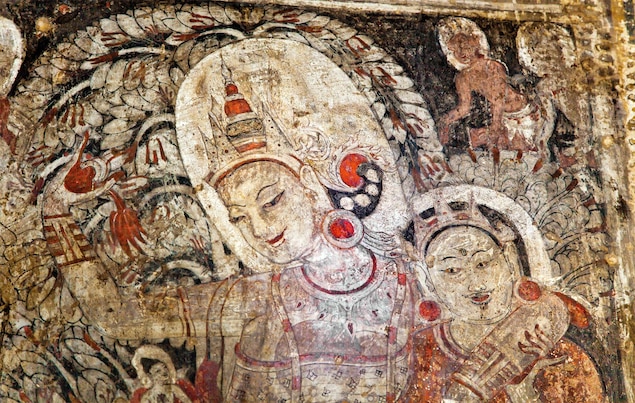
Images illustrating the lives of the Buddha and earlier Buddhas adorn the monuments. Bagan excelled during its more than 250-year golden age under the empire and had an incredible 10,000 religious monuments dispersed over a 40-square-mile area, according to other reports.
A fresco detail from the Law Kahtikepan Temple complex in Bagan. (Source: National Geography)
Several sites stand out among the thousands of buildings ranging from vast temples to modest, one-room monasteries. The Lawkananda Pagoda, constructed by Anawrahta, dazzles tourists with its shining dome which is crowned with an umbrella-shaped finial. A relic considered to be one of the Buddha’s teeth is housed in this pagoda which was acquired in Sri Lanka by the ruler.
Likewise, many rose-colored pagodas and temples soared above crimson soil and lush greenery, which have been a sight to behold for tourists along the bend of the Irrawaddy River in central Myanmar.
One of the greatest concentrations of Buddhist temples in the world can be found in this expansive sacred area which is a testament to the intricate connection between culture and religion. Scholars have examined how this relationship shaped the formation of Burmese identity in the early 1900s.
What is next for Bagan
The Burmese people had long prized Bagan. However, the Maha Yazawin from the 18th century and the Hmannan Yazawin from the 19th century provided the basis for its history. Moreover, Burmese researchers looked for fresh evidence in the early 1900s to give more reliable historical details about the same. These included Gordon Luce, a British scholar and U Pe Maung Tin, a Burmese scholar.
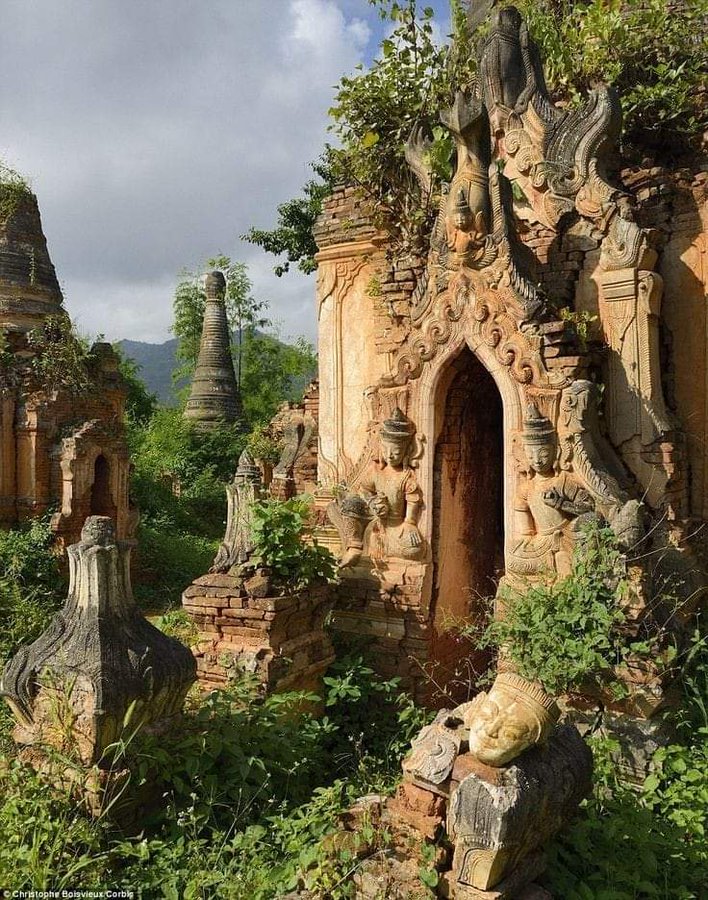
Crumbling pagodas of Bagan (Source: @histories_arch/X)
Bagan which is located in an area that is prone to earthquakes, has experienced multiple seismic events that have seriously damaged its religious and archaeological attractions. Several buildings were destroyed by two earthquakes in 1975 and 2016. In the 1990s, over 2,229 temples and monuments were preserved as a consequence of massive restoration initiatives run by the military administration.
However, archaeologists criticised the military government’s restoration of the site. The World Heritage award, according to Bagan history researchers, should encourage collaboration between experts and the Myanmar government to protect Bagan’s holy sites for many years to come.
Bagan is frequently referred to as an archaeological marvel. However, it is also a living historical monument with functional temples that are essential to the local, national and international Buddhist communities. Notably, the Archaeological Survey of India (ASI) has also played an important role in the restoration of this crucial cultural and historical heritage.
Bagan: Amalgamation of Indic religion and culture
Bagan is as an active reminder of the influence of India and a religion that was born in in the country, which then spread to the rest of the world, including Myanmar. This reflects the unparalleled popularity and impact of India and its religions, showcasing the extraordinary imprint on culture, traditions, societies and civilizations for centuries with evidence that stands to this day.
Bagan also affirms that Burmans were conquerors who seized kingdoms to form their dominance and authority. Nevertheless, they embraced the local heritage as their own and integrated rather than trying to replace or uproot it. They were deeply influenced by the Indian culture and an Indic religion that was already prominent in the area, which they not only adopted but also propagated further, erecting monuments to celebrate and commemorate it.
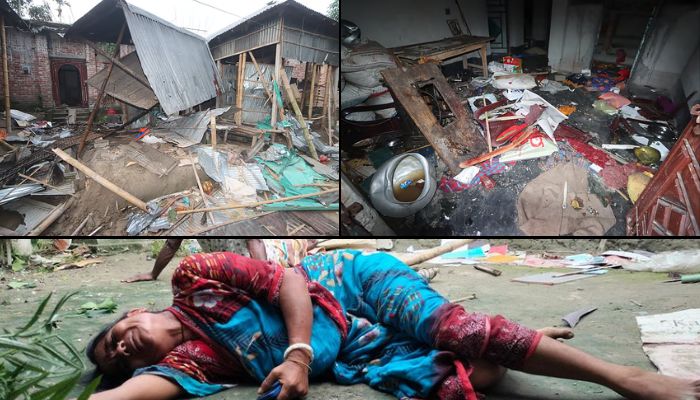
On Sunday (27th July), a strong mob of 500-600 Muslims attacked over 15 Hindu homes and carried out looting and vandalism under the pretext of ‘blasphemy.’ The incident occurred in the Betgari Union in Gangachara upazila in Rangpur district of Bangladesh.
According to reports, the attack was carried out at about 4:30 pm on Sunday. The violent Muslim mob selectively targeted Hindu homes and looted their belongings.
Fearing for their safety and security, at least 50 Hindu families have fled the area. The carnage, however, began on Saturday (26th July) when Muslims attacked the home of a Hindu man with sticks and weapons.
Last night in Gangachara, Rangpur, more than 30 Hindu homes were attacked under the pretext of alleged blasphemy. The attackers were radical Islamists affiliated with Jamaat-e-Islami and the NCP. Notably, the military was also present at the time.??
— Voice of Bangladeshi Hindus ?? (@VHindus71) July 27, 2025
Again on Sunday (28th evening), a violent Muslim mob laid siege to the homes of Hindu families, carried out vandalism and looting. They were armed with sticks and country-made weapons.
A Hindu woman lamented, “How will we survive now? We have been rendered penniless. They (Muslims) have taken away everything.”
A young Hindu girl told Ajker Patrika that the police were present when the attackers came to vandalise their homes. The cops initially resisted the marauding mob but later fled, leaving the helpless Hindus to their impending fate.
News: "In Gangachara, Rangpur, a 17-year-old boy has been arrested by the police on charges of making derogatory remarks about the Prophet Muhammad. Following this, enraged mobs attacked and vandalized the boy’s house as well as 15 houses belonging to members of the Sanatan… pic.twitter.com/bzOIwhW998
“Why were the homes of innocent people like us vandalised and looted?” the Hindu girl asked, unaware of the ‘collective punishment’ doctrine of violent Muslim mobs.
Gangachara Police OC Al Emran conceded that he allowed the mob of 500-600 Muslims to gather, mistaking it to be a ‘peaceful march.’ He added, “However, they suddenly launched an attack. One cop was seriously injured.”
He further added that the Muslim mob carried out the attack, following the conclusion of afternoon Namaz.
Local Hindu resident Pramod Mahant told Prothom Alo how Muslims were supposed to stage a protest in the market area but soon began shouting slogans and attacking Hindu homes.
The grim situation was later brought under control by the police and the army. The attackers managed to flee the crime scene. Sources told OpIndia that not a single arrest has been made in connection with the destruction of Hindu homes.
A similar template of violence and arson attack was used by Muslim mobs in May this year to punish the Hindu community in Jessore district of Bangladesh.
The Background of the Incident
On Saturday (26th July), an 18-year-old Hindu boy named Ronjon Roy was arrested in Gangachara over unproven charges of ‘blasphemy’.
According to reports, the victim was accused of insulting Islam and making derogatory posts on Facebook about Prophet Muhammad. It was claimed that he uploaded the said posts from the ID ‘Ronjon Roy Lrm’ over a span of 5 days.
Journalist and fact checker Sohan RSB highlighted how a duplicate account of the Hindu victim existed on Facebook, and the alleged blasphemous posts were made from the new account.
He pointed out how the new account had shared pictures from Ronjon’s old account with derogatory captions about the latter’s family.
Without verifying the facts of the matter, a frenzied Muslim mob took to the streets of Gangachara demanding action against the Hindu boy.
The police soon gave in to their diktat and arrested the 18-year-old without confirming whether Ronjon Roy even has access to the new Facebook handle that posted the ‘blasphemous content.’
A group of Muslims allegedly conspired to frame a minority Hindu boy by creating a fake ID and posting offensive remarks about Islam within just 15 days. 1/3 pic.twitter.com/bLYE5l9O11
Police Officer-in-Charge (OC) Al Emran acknowledged, “When the locals got angry, we quickly conducted a raid to arrest him and bring the law and order situation under control. He is being interrogated.”
This nonetheless became an excuse for Muslims in the area to carry out vandalism and looting at Hindu homes, effectively destroying their shelter, livelihoods and means of survival.
OpIndia had previously highlighted 13 cases where Hindus were attacked, tortured and persecuted by Muslim mobs under the pretext of ‘blasphemy.’