Home Blog Page 2819

Suicide bomber had planned to blow up a temple in Coimbatore, accused Firoz Ismail confesses to meeting Easter blasts terrorists: Reports

0

As the investigation into the Coimbatore Car Blast in Tamil Nadu progresses, shocking facts are coming out. According to reports, the suicide bomber was trying to blow up the temple. Firoz Ismail, one of the six people arrested in this case, has also admitted to meeting the terrorists involved in the Easter serial blasts in Sri Lanka during interrogation. The National Investigation Agency (NIA) has also registered its first FIR in the case.

The blast took place at around 4 am on October 23, 2022, at the Kottai Eswaram temple in Coimbatore. 25-year-old Jamisha Mubeen was killed in this blast. The NIA has suspected Mubeen to be a suicide bomber. A large number of explosives were also recovered from his house. It is believed that he could not succeed in carrying out his mission due to being a novice in the use of explosives.

Officials investigating the case said that on October 22, 2022, a day before the attack, Mubin and his two accomplices Mohammad Azharuddin and Afsar Khan were seen in CCTV footage in the car carrying three steel drums filled with potassium nitrate, aluminium powder, sulphur, charcoal, and nails, etc. along with two LPG cylinders. Another footage also shows Mubin and his accomplices conducting a recce before the attack. The trio had also conducted a recce of Koniyamman temple at Big Bazaar Street and Puliakulam Mundhi Vinayagar temple.

The accused arrested in this case have told in the interrogation that Mubin thought that his suicide bombing mission would cause havoc within a radius of 50 to 100 meters in the area and some houses including the temple would also come under its purview. Firoz Ismail has also confessed during interrogation that he met IS terrorists Mohammad Azharuddin and Rashid Ali. Both were involved in the Easter serial blasts in Sri Lanka and are lodged in a jail in Kerala.

The next day after the blast, the police arrested five people. They were identified as Mohammad Thalka (age 25), Mohammad Asruddin (age 25), Mohammad Riaz (age 27), Firoz Ismail (age 27), and Mohammad Nawaz Ismail (age 27). Mubin’s relative Afsar Khan was arrested on October 27.

The NIA said in its FIR, “A search of the premises of deceased Jamiza Mubeen led to the seizure of 109 items, including potassium nitrate, black powder, nitroglycerin, PETN powder, aluminum powder, sulphur powder, sterile surgical, notebooks with details about jihad, etc.”

According to a report by India Today, the links of this are also being found in the serial blasts in Coimbatore in 1998. Mohammad Thalka is among those arrested after the car blast. He is the son of Nawab Khan, who is lodged in jail in the 1998 serial blasts. His uncle Syed Ahmed Basha is the head of Al-Umah, the terrorist organization responsible for the serial blasts.

‘All symbols of colonialism in the state will be renamed’, announces Uttarakhand CM Pushkar Singh Dhami

In line with the recent push for decolonisation by Prime Minister Narendra Modi, Uttarakhand CM Pushkar Singh Dhami on Saturday, October 29, announced that all colonial symbols in the state would be gradually rechristened.

“After Modi ji became the prime minister, across India, whatever symbols of colonialism were there, they are either being removed or being given a new image. Those symbols are being changed,” he told the news agency ANI in a video.

“Similarly, in Uttarakhand, we have said whatever such symbols are there, they would all be changed, and we have sought a report on this,” Dhami added. The CM said that the names of the roads and cities in Uttarakhand that are from the British era will be changed.

The Uttarakhand Chief Minister’s remarks came a day after it was reported that the Defence Ministry has requested renaming recommendations from the Lansdowne cantonment administration. It has also requested that the Lansdowne cantonment board supply information on any British-named sites in the area.

Lansdowne was created in the year 1887, when the first battalion of the Garhwal Rifles relocated from Almora. It was given its current name in 1890, 132 years ago, after the town was founded by the then-Viceroy of India, Lord Lansdowne.

Previously, it was known as Kalu Danda, which translates to “Black Mountain” in Garhwali, the local dialect. The former name is proposed as a replacement in a proposal sent in response to the ministry’s directives.

It may be recalled that during his Independence Day speech from the Red Fort this year, PM Modi had stressed upon decolonisation. In keeping with the goal of eliminating imperial remains, the central government has been modifying several British-era names. Only two months earlier, Prime Minister Narendra Modi inaugurated the ‘Kartavya Path’, the reconstructed and renamed New Delhi’s historic Rajpath. Prior to this, the Indian Naval ensign was changed to remove St George’s Cross from the ensign, and the Scottish hymn ‘Abide By Me’ was removed from the Beating Retreat ceremony during Republic Day celebrations.

Meerut mass conversion: VHP leader sheds light on methods used by Christian missionaries and Islamists to lure gullible Hindus

0

In a shocking incident, a mass conversion racket got busted this week after some Christian evangelists forcibly converted as many as 400 Dalit Hindus living in the Mangatapuram colony, a slum in the Bhrampuri police station area in Meerut, Uttar Pradesh. To understand the methods deployed by proselytisers on the prowl for converting unsuspecting populations, OpIndia spoke with Raj Kamal Gupta, a VHP Meerut Zone General Secretary who has been fighting against the evangelists bent on targeting vulnerable Hindus.

In our conversation, the VHP functionary threw light on various inculturation methods Christian missionaries and Islamists have been using as bait to deceive gullibly and economically deprived Hindus across the country over time.

According to Gupta, while orchestrating such conversion rackets as the one in Meerut, Christian Missionaries follow a specific pattern.

Explaining the modus operandi, Gupta told us how Christian missionaries begin by identifying such small Hindu hamlets where the majority of the populace is underprivileged and ignorant. Christian activist or a pastor first visits a hamlet to casually engage in conversations with the villagers. They then begin to provide them assistance in the shape of food, clothing, medicines, and money. To gain their faith, the missionaries go out of their way to provide finances for Hindu children’s education and marriage. After gaining the trust of these victims, they persuade them that all gods are the same. They hand out books and literature, teach people about the ‘miracles’ of Jesus Christ, and encourage them to visit churches.

Once vulnerable Hindus fall into the trap, evangelists brainwash them into adopting Christianity. When the bulk of the hamlet’s population succumbs to their plan, the missionaries encroach on Hindu lands and begin erecting churches on them, which, unmistakably, is the real motive behind the conversion racket. The impoverished and ignorant Hindus, meanwhile, have little choice but to submit to the powerful missionaries.

At this point, Gupta referenced a similar incident that happened in Uttar Pradesh’s Moradabad district to emphasize how the modus operandi employed by the Islamists across the country is similar to these Christian missionaries.

He described how Islamists had successfully targeted a similar village in the Moradabad district, where there was only one Muslim household and the rest of the community was Hindu. He asserted that Islamists took advantage of these uninformed and uneducated Hindus’ financial disadvantages and began luring them to convert to Islam.

Gupta went on to say that, similar to how Christian missionaries operate, Islamists first erected a mosque inside the house of the sole Muslim household in the village. The converted Hindus were then encouraged to visit the masjid. Gradually, several Mazars proliferated around the neighbourhood. The Moradabad police only became aware of the racket when these unlawful Mazars appeared, and the authorities eventually visited the village and removed these illegal constructions, said the VHP leader.

Mass conversion racket busted in Meerut: Christian evangelists lure 400 Hindus to convert, remove idols and threaten against performing puja

On Friday, October 28, Uttar Pradesh’s Meerut police filed an FIR against 9 accused under sections of the Uttar Pradesh Prohibition of Unlawful Conversion of Religion Act, 2021. The FIR was filed based on a complaint lodged by many Dalit Hindus living in the Mangatapuram colony, a slum in the Bhrampuri police station area in Meerut. The complainants alleged that some Christian evangelists residing in the same village had compelled as many as 400 of them to convert to Christianity.

As per the FIR filed in the Brahmpuri police station in Meerut, the Christian evangelists took undue advantage of the lockdown imposed due to the Covid-19 pandemic and lured the poor and vulnerable Hindus with financial aid and food to entrap them. They then gradually started brainwashing them to convert to Christianity.

When the vulnerable Hindus started falling into the trap, the evangelists began pressuring them to visit churches and remove idols of gods and goddesses from their homes. They threatened them not to participate in any Hindu rituals. Additionally, they pressurised the Hindus to change their names on their Aadhar cards.

The report also stated how the police team which arrived in the village saw a temporary church that had unexpectedly sprung up in the neighbourhood. During their investigation of the church, the police discovered numerous records with the identities of all those who had been forcefully converted to Christianity. The manner in which funds are provided to these vulnerable victims was also mentioned in these records. The documents also stated that out of the total 550 people living in Mangatapuram Colony more than 400 people have been converted.

Odisha HC denies reports that Chief Justice S Muralidhar held a ‘closed-door meeting’ with CM’s private secretary, calls it fake news

A dispute erupted after an Orissa High Court Advocate published a photo of Chief Justice S Muralidhar holding a “closed-door meeting” with  IAS V K Pandian, the Private Secretary to Chief Minister Naveen Patnaik along with some other people. However, Odisha Hight has issued a statement refuting the claims made by the lawyer Srinivas Mohanty calling it fake news.

Srinivas Mohanty, a lawyer, posted a photo on Facebook alleging that Chief Justice S Muralidhar had a ‘closed door meeting’ with CM Naveen Patnaik’s private secretary, IAS VK Pandian, and a few other people, in violation of official protocol. Advocate Mohanty wrote in the caption of the now-deleted Facebook post, “Chief Justice of Orissa High Court being one of the participants of a closed-door meeting regardless of the decorum of the state’s judicial head.” 

Screengrab of the Advocate Srinivas Mohanty’s Facebook post.

In the wake of the said claim doing rounds on social media and otherwise, the High Court has issued an official press release saying that it is fake news.

“It is extremely unfortunate that an item of fake news has been made viral on social media at the instance of a lawyer practising in Orissa High Court by publishing a photograph and making a wholly scurrilous and false statement without knowing the real facts,” the High Court Registry read.

Press release issued by Odisha High Court (Image credit: Twitter @/LiveLaw)

According to the press release, the photograph was taken on March 12, 2022, at the Satya Sai Seba Organisation in Bhubaneswar, on the occasion of the inauguration of the Sathya Sai Heart Hospital’s three-day Free Mega Heart Camp. Supreme Court Justice MR Shah was invited as the function’s Chief Guest. On the other hand, Chief Justice S Muralidhar was invited as the Guest of Honour. IAS VK  Pandian was also invited to attend the event. Manoj Bhimani, the Managing Trustee of Sri Sathya Sai Heart Hospital, is seen seated at the head of the table in the photo. Besides VK Pandian, the other individuals are three doctors from the aforementioned heart hospital.

The statement said that the photograph was taken when the guests were waiting for the arrival of Justice MR Shah from Puri. Therefore, it was not a ‘closed door meeting’ or a ‘private meeting’ between the Chief Justice and the IAS officer. The statement added that it was not even a meeting, and the guests were just waiting for the start of a public function by a charitable organisation providing free treatment to thousands of poor children in Odisha suffering from heart ailments.

“It is extremely unfortunate that a sinister attempt has been made to deliberately malign not only the Chief Justice of the Orissa High Court but the institution of the judiciary as a whole. Further, certain section of the media has unfortunately carried the news item making negative comments without verifying the above facts,” the statement added. The Registry also added that these facts could have been easily verified from the organiser of the programme and also from the Registrar General of the High Court, before the publication of such a news item.

The Registry also published the official invitation card for the Satya Sai Seba Organisation’s March 12 event. 

Official invitation card for the Satya Sai Seba Organisation’s March 12 event. (Image credit: LiveLaw)

Justice Muralidhar has previously been involved in controversies. In February 2020, he was transferred to the Punjab and Haryana High Court, despite strong opposition from the Delhi Bar. The transfer was notified shortly after he directed the Delhi police to decide on if an FIR needs to be registered for alleged provocative speeches against BJP leaders Anurag Thakur, Kapil Mishra, Pravesh Verma, and one Abhay Verma in relation to the 2020 Delhi anti-Hindu riots.

Back then, the Congress party attacked the government over the issue, claiming that the government wanted to remove Justice Muralidhar from the Delhi riots case in order to protect BJP leaders accused in the case. OpIndia had reported on the false claims made by the Congress party and supported by the left-liberal ecosystem, but the truth was that the Union Government did not transfer Justice Muralidhar overnight. The Supreme Collegium recommended his transfer on February 12, and the law ministry simply issued the notification in accordance with the collegium’s decision.

Union govt refutes allegations of Kapil Sibal that amendments to IT Rules make social media unsafe, says no provision for prosecution added as claimed

After Congress leader Kapil Sibal claimed that the amendment made to the IT Rules makes the law safe for the government and unsafe for the citizens, the government denied the claims, saying that no new provision for prosecution has been made in the amendment. PIB Fact Check tweeted that the claim is misleading.

Earlier in the day, Kapil Sibal had issued a statement saying that under the amendment made to the Information Technology (Intermediary Guidelines and Digital Media Ethics Code) Rules, 2021, people will be prosecuted for making defamatory statements. He had claimed that social media is the only platform left for ordinary citizens, but now they will be prosecuted for using it.

Kapil Sibal also claimed that the BJP government has already captured TV networks, and now they are going to capture social media. “It’s the comprehensive capture of media. We’re moving towards one code of conduct, one political party, one system of governance & no answerability to anyone,” he said, according to ANI.

Hours after Sibal’s statements were reported, PIB Fact Check tweeted saying that the claim is misleading, and the amended IT Rules have not added any new provision for prosecution.

It is notable that India already has provisions for initiating civil and criminal proceedings against defamation, and no other provisions for the same were added in the amendment to the IT Rules.

The new amendment actually has provisions empowering social media users to raise grievances against actions of social media companies like arbitrary blocking, suspension etc, and also to get harmful or derogatory content removed. The amendment has no provision that allows the govt to prosecute social media users for defamatory messages.

Talking about the amendment, Union Minister Rajeev Chandrasekhar said that this is next step to realizing the government’s duty to Digital Nagriks of Open, Safe and Trusted, Accountable Internet. “Also marks a new partnership btwn Govt and Intermediaries in making n keeping our Internet safe & trusted for all Indians,” he had tweeted.

The minister said that the amendment of IT rules will put more definite due diligence obligations on social media companies to make efforts to ensure that no unlawful content or misinformation is posted on their platforms. He said that the formation of Grievance Appellate Committees under the amendment is necessary as the government is aware of lakhs of messages from citizens where grievances were not responded to by social media firms despite complaints.

“The obligations of intermediaries earlier was limited to notifying users of rules but now there will be much more definite obligations on platforms. Intermediaries have to make efforts that no unlawful content is posted on the platform,” Rajeev Chandrasekhar said.

The amendment makes a provision for the central government to form Grievance Appellate Committees to address the concerns of social media users. The committees will have the power to issue directions to social media companies to remove content.

With the new amendments, any person aggrieved by a decision of the Grievance Officer related to blocks, suspensions, etc. by social media platforms may prefer to file an appeal with the Grievance Appellate Committee within a period of thirty days from the date of receipt of communication from the Grievance Officer.

The government’s amendments stemmed from users’ complaints about being de-platformed or being removed from a social media site, without social media companies like Twitter, Facebook etc giving them an adequate avenue of hearing or a satisfactory explanation.

The amendments mandate social media companies to acknowledge user complaints within twenty-four hours and resolve such them within a period of fifteen days from the date of their receipt. If users deem social media intermediaries’ actions unsatisfactory, they can approach the Grievance Appellate Committees for redressal.

It is notable that Kapil Sibal, who as the IT minister had brought the draconian section 66A in the IT Act, is now talking about freedom of speech on social media. Before this section was struck down by the Supreme Court, ordinary people were arrested by police for their messages on social media platforms if anyone complained against them.

Ahead of Chhath Puja, Twitter users compare the clean Sabarmati riverfront with the polluted Yamuna

The Yamuna River in Delhi and the Sabarmati Riverfront in Gujarat are being compared in pictures and videos that are gaining traction ahead of Chhath Puja, a highly significant festival for Biharis and other North Indians.

Thousands of people are criticizing Delhi Chief Minister Arvind Kejriwal on Twitter over the Yamuna River’s extreme pollution while praising Gujarat’s Sabarmati Riverfront. By promising a clean Yamuna in a timely manner, Kejriwal’s AAP party has won two elections. However, Yamuna’s surface is still covered with foam. A vast number of Bihari people bathe in the river during the Chhath Puja celebration.

Since a few years ago, the devotees have been forced to choose between taking a bath in the contaminated, foam-mixed river waters or staying away. In an effort to save face this year, the Delhi Jal Board crews are spraying chemicals into the Yamuna River to dissolve the froth brought on by the severe pollution in Delhi. Although the optics may be saved, the chemical that is being sprayed is considered to be harmful to the skin. While Arvind Kejriwal is campaigning in Gujarat, the residents of Delhi are in danger of illness as a result of pollution in the Yamuna River.

Netizens highlight how the Sabarmati riverfront in Gujarat is clean and pristine as compared to squalor strewn on the Yamuna riverbank

Gujarat Based senior Journalist Nirnay Kapoor yesterday shared the pics of preparation at the Sabarmati riverfront and said, “Due to the pollution of Yamuna in Delhi, you are seeing the ruckus on Chhath Puja, now just look at the preparations for Chhath Puja in Ahmedabad, there are only 2-3% Bihari in Ahmedabad, this Chhath Ghat was built separately for them, which is being cleaned Yes, pollution is also “0” in Sabarmati.”

Now, a comparison video of the Sabarmati River in Gujarat and the Yamuna River in AAP-ruled Delhi is going popular on social media, with users pointing out the differences in cleanliness between the two rivers.

BJP Spokesperson Shehzad Poonawala also tweeted the pics for comparison and wrote, “On Left see Gujarat Model where preparations for Chhath Puja are being done in Ahmedabad On Right Hand Side is Kejriwal Model where toxic Silicone Defoamer was used & now there is a ban on all ghats of Yamuna Ji because Kejriwal betrayed Maa Yamuna.”

North Delhi Municipal Corporation’s former mayor Preety Agarwal, posted a comparison video with the caption, “The difference is clear.”

BJP’s IT cell head Amit Malviya tweeted, “Delhi’s air quality this morning is in “very poor” category. The Delhi University area, where Kejriwal lives, is worst affected. This is despite no Deepawali crackers. Yamuna is also frothing just before Chhat Puja. Incompetent Arvind Kejriwal is the person to be blamed for it all.”

Another Twitter user posted a meme regarding the same with the caption, “Delhi’s magician’s amazing. Yamuna river turned into Dal Lake.”

Chhath Puja will be celebrated on October 30. It is a celebration of the Sun God, the power source of our world, the one who makes life possible for us humans. Usha and Pratyusha, the two consorts of the Sun God are considered his energy that blesses humans with life, fertility, agriculture, and health.

Stubble-burning incidents in Punjab record a 20 percent rise, plunging Delhi’s AQI to ‘very poor’ category

On Friday, the Air Quality Index (AQI) in the national capital fell into the ‘very poor’ category as the state of Punjab witnessed around 2067 incidents of parali stubble burning. The overall AQI of Delhi stood at 357 (304 in the year 2021) while the highest AQI was recorded at Anand Vihar measuring between 455 to 500.

Reportedly, the state of Punjab has witnessed around 8147 incidents of stubble burning from September 15 to October 27. The state has also recorded a 20 per cent increase in such incidents in comparison to the number of farm fires in the same period last year, affecting the quality of air in the major parts of Delhi, Punjab, Uttar Pradesh, and Bihar.

The incident came to light as BJP National Spokesperson Shehzad Poonawalla tweeted saying that the state of Punjab had witnessed 2067 Parali burning incidents in one day. He also slammed the AAP government for ignoring the stubble-burning incidents and blaming firecrackers for the poor air quality of the city.

“Diwali is long over but the AQI in Delhi and the pollution in Delhi are plummeting. AQI has crossed 300 in many parts of Delhi but firecrackers are not to be blamed. The real cause of blame as per Mr Kejriwal was Punjab’s burning of parali stubble. He said this last year and last to last year. In fact, in Punjab, a 20 per cent increase has been marked in stubble burning compared to last year. 2000 incidents of stubble burning have taken place just yesterday and entire north India is facing severe pollution”, the BJP leader said.

He added, “According to the IIT, the main causes of pollution in Delhi are vehicular pollution, industrial pollution, dust on roads, construction dust, and biomass burning. What has been done by the AAP government in Punjab and Delhi on these fronts? What happened to Pusa Bio Decomposer?”

The BJP leader also said that the AAP leaders had done nothing for Delhi as far as the issue of pollution is concerned and now were imposing bans on Chhat Puja and firecrackers during Diwali. “The only agenda of the AAP government was to demonize Diwali and demonize Hindus. They could not clean the river Yamuna so they have also put a ban on Chhat Puja at the ghats of Yamuna”, he said.

Delhi on October 28 witnessed severe pollution. The AQI at Anand Vihar measured between 455 to 500 at around 4 pm. However, Delhi had an overall AQI of 357, Ghaziabad 384, Noida 371, Greater Noida 364, and Faridabad 346. The air quality in the several cities of Punjab, Uttar Pradesh, and Bihar also fell in the ‘very poor’ category. Reports mention that an AQI between 0 to 50 is regarded as ‘good’, 51 to 100 as ‘satisfactory’, 101 to 200 as ‘moderate’, 201 to 300 as ‘poor’, 301 to 400 as ‘very poor’, and 401 to 500 as ‘severe’. 

According to the Centre for Science and Environment, Stubble burning is the large-scale combustion of crop residues from the rice-wheat systems of Punjab, Haryana, and western Uttar Pradesh. The transport level winds then carry the smoke from the farm fires to Delhi and nearby areas affecting the quality of air.

Earlier, in July 2022, Delhi CM Arvind Kejriwal and Punjab CM Bhagwant Mann said that they would do everything possible to provide a healthy environment to the people of Delhi. They also proposed to provide a cash incentive of Rs 2500 per acre to the farmers for not burning their paddy stubble.

Also in the year 2020, the Kejriwal government distributed Pusa bio-decomposer for stubble management, free of cost to the farmers. He had said that the stubble burning in neighbouring states in October is a major factor behind the high level of air pollution in Delhi and that the usage of Pusa bio-decomposer would help reduce the pollution.

However, the state of Punjab witnessed around 8147 incidents of stubble-burning from September 15 to October 27 this year. The state also recorded a 20 per cent increase in such incidents in comparison to the number of farm fires in the same period last year, affecting the quality of air in the major parts of Delhi, Punjab, Uttar Pradesh, and Bihar.

Vishwa Vedic Sanatan Sangh to hand over power of attorney of Gyanvapi Cases to UP CM Yogi Adityanath

All cases involving the disputed Gyanvapi premises in Mathura that are being handled by Vishwa Vedic Sanatan Sangh will be handed over to Uttar Pradesh Chief Minister Yogi Adityanath. On Saturday, Jitendra Singh Visen, the head of the Vishwa Vedic Sanatan Sangh, stated that all legal proceedings would be completed by November 15.

Jitendra Singh Visen told Dainik Bhaskar that the Vishwa Vedic Sanatan Sangh has filed almost all of the cases related to the Gyanvapi premises. VVSS is currently advocating five cases. Apart from the Maa Shringar Gauri case and Bhagwan Adi Vishweshwar Virajman case, VVSS is currently involved in three other cases. After the legal process is completed, the power of attorney for these five cases will be handed over to CM Yogi Adityanath.

Jitendra Singh Visen further said that the decision to hand over the case to the UP CM was already made, which is being implemented now. He said that by November 15, the legal formalities for giving power of attorney to Yogi Adityanath will be completed.

In general, a Power of Attorney is a legal system that allows one person to act on behalf of another. It enables a person to appoint someone or an organization to manage his assets, medical affairs, and finances while he is away. The authorized person is referred to as the agent or power of attorney agent. Depending on the terms and conditions, the authorized agent may have broad or limited legal decision-making authority over property, medical matters, and finances. The Power of Attorney Act of 1888 governs it.

On the other hand, a hearing was held on October 28 on an application filed by Hindu Sena National President Vishnu Gupta and Ajit Singh seeking permission to conduct worship and religious rituals, referring to the Shivling found in the Gyanvapi complex as Lord Avimukteshwar. The respondent’s counsel was present during the hearing in the court of Civil Judge Fast Track Court Mahendra Kumar Pandey.

In this case, the respondent Anjuman Intejamiya Masjid, Kashi Vishwanath Trust, Varanasi DM, and Police Commissioner were given advance notice of the application letters. The next hearing of this case has been scheduled for November 29.

On October 14, the Varanasi district court denied the Hindu side’s petition, which sought a scientific evaluation of the Shivling discovered within the Gyanvapi mosque complex. District Judge AK Vishvesh delivered the verdict saying that allowing study of the Shivling will violate the Supreme Court order of keeping the Shivling safe, as the process of study may harm it.

It should be noted that the Anjuman Intezamia Masjid Committee Varanasi had previously objected to the Hindu side’s request on the grounds that it is in a ‘prohibited area.’

Kantara: A fierce feeling of deep devotion, the man-nature conflict and reclaiming our civilisational roots

A friend from Bihar exclaimed over the phone during the Deepawali weekend. “What’s this film, Kantara that has made everyone’s mind go dhuan dhuan in towns and villages here?!” For the uninitiated, it’s typical Deepawali imagery to denote excitement over something. So, imagine the effect Rishab Shetty’s moneyspinner has had on the Hindi belt that even the average film lover in the remotest part of Bihar couldn’t evade its fascinating grip. Bihar, a place, you might reason, that possibly has no clear similarities with Tulunadu’s interiors, where Kantara was filmed and where the lore is based. But then, if you think in the context of Bharat’s ancient beliefs of Hindu religious rituals, traditions and customs, every part of this country is bound by a common thread of devotion. That is the call of divinity Kantara has evoked in the majority.

Backed up by nil explanations or justifications Shetty’s treatise is an unapologetic celebration of the indigenous beliefs of Tulunadu’s tribal Sanatan civilization. Released roughly a month before Hindus in the country celebrated Deepawali, its success also resembles the emphatic manner in which the festival was observed this year in the face of constant communist propaganda to deride, mock and target only Hindu festivals. Just like we did Deepawali this year with Indian mithai and magnificent firecrackers, Kantara proudly and boldly flaunted its Hindu identity by crafting a riveting saga depicting the Bhoota Kola traditions observed in the forest villages there. The layered narrative incorporates many important subjects and elements about land conflicts, the role of women and human flaws and follies but every subplot is deftly balanced without any shred of guilt or remorse. That is another beauty in the magical world of Kantara, which has found praise and love from the masses not only in India but also in the world for its nuanced and relatable content. 

The fierce feeling of Deep Devotion

While it is unfair to give out spoilers here but any discussion on the film would be incomplete without referring to the spectacular climax where the protagonist Shiva (played by writer and director Shetty himself) finds himself empowered by the call of Guliga, the Daiva who destroys those who wrong the villagers. Be it in the body language, the dance or the expressions, there is an unrelenting display of passion in his war cry as he vanquishes evil. The imagery is almost of an angry Shiva doing the taandav of destruction after being invoked by Daiva (the hero’s personality arc is also drawn on the lines of Mahadev where he is seen to destroy as well as protect.

His tree house, where he hangs around with his friends, is also named Kailasa, a direct reference to Bhagwan Shiv’s eternal abode). Threading together a religious tradition practised in Tulunadu since ancient times, the movie celebrates an art form but does it with deep devotion. Honestly, the cinematography and choreography touch a raw nerve in the audience who feels the divinity depicted. It’s almost as if the audience finds a voice that cries out, “Yes, this is our culture and we shall own it. Whoever tries to belittle these beautiful traditions of ours, we shall silence them with the strength in our beliefs.”

Considering that the climax, which binds the entire story in a comprehensive whole, is the high point of the blockbuster, the film has given a fat chance to the Hindu majority to be proud of their religion, traditions, beliefs and customs unapologetically. The time to clam up is over. The film is representative of the fact that today a Hindu is much more enthusiastic and bold about flaunting visible symbols of his faith. Earlier, under the attack of the Left and Islamist cabal, he might have been ashamed to celebrate his traditions and icons openly but this marks an inner shift in the identity of self-acceptance and pride. The Hindu has found his voice and it is here to stay!

Chronicling the true colours of an Indian village

The Indian parallel cinema movement, with communist/socialist narratives rampantly brainwashing viewers, had always painted Bharatiya villages as depressing, joyless lands. This resulted in the masses getting disillusioned by the picture of dismay presented of their heritage and roots. Kantara’s legends are derived from the divine land of Tulunadu which is blessed with thick rainforests and a rich culture deeply rooted in tradition and the lore of the land. Every frame of the film is an ode to that diversity. From Kambala racing, and Yakshagana to Daivaradhane, every single aspect of local culture is sensitively depicted with the respect it deserves without belittling them as ‘folk culture’ or attempting to trivialise ancient beliefs, in the name of modernisation. Instead, Shetty’s pen delves deep to maintain the delicate balance between nature and human activity. The glorious co-existence of tribals and the respect they pay to nature is incessantly harped upon. 

Every frame (the cinematography by Arvind S Kashyap is a charming play of rustic originality and passionate candour) is a detailed, authentic representation of the rural culture, lifestyle and lands of Tulunadu, from the rain-splattered dirt paths, the mud and cow-dung tulsi Vrindavanas, the adike shringara, the humble but practical clothes or fresh arecanut flowers offered to the Daiva to the outdoor bathrooms built from woven palm fronds. If masses from all over India found a resonance with the film, it also means these vignettes remind them of their village roots and homes they probably pined for sitting in urban concrete jungles. Shiva and his pals live simple lives, and eat frugal (but fresh) food, but they nurture mutual respect and love for each other. They fob off problems by supporting each other and not once does it look like they hate their lives in the village. In fact, such is their devotion towards their motherland that they go to great, and spiritual, lengths to protect it from the evil eye. 

Rationalising the Nature and Man conflict  

J Sai Deepak’s India that is Bharat studies the sacred bond between Mother Earth and humans that Bharatiya culture always nurtured and worshipped through effective modes to balance the need for preserving nature with human desires and aspirations. The concept of sacred forests, water bodies protected by guardian deities or worshipping rivers as sanctimonious entities were all Hindu ways of protecting and preserving the purity of nature. Colonial rule tried to uproot all these traditions and indigenous ways of eco-protection under the guise of modernity. Local communities were forcibly stripped off of their roles as sacred custodians of the natural environment, and that role was usurped by the state.

The film clearly depicts how this has given rise to conflicts between an all-powerful state that neither understands nor respects local traditions as well as culture and communities that are no longer stakeholders. This struggle enables selfish elements to exploit nature at the cost of both, the state and the communities. The devious landlord represents this mindset. Kantara thus becomes a dialogue to reclaim the holistic balance between Mother Nature and human activity through age-old traditions and culture. Offering hope, the narrative hints that the state-community partnership can possibly be a respectful solution to the man-nature conflict. Local communities need to identify themselves as sacred custodians of the environment, and the state machinery can enable that. How impeccable would that settlement be! 

Reclaiming our civilizational roots

Kantara has shown what life in remote hamlets of tribal areas is all about through an intricate tapestry of music (B Ajaneesh Loknath’s score is impeccably rousing as well as heartstoppingly beautiful), dance and drama. Simple lives, meaningful rituals, drinking habits, food traditions and finally, their beliefs and reverence for their Gods are all shown through a narrative that is relatable to the masses so that the effect is supreme. The love story, quite practically shows that carnal desires are part of the emotion but nothing is cheap or crassly presented. Women have a strong voice and an important role to play in the film. They are not merely sidekicks. Human flaws are not hidden in the script but neither are they harped on. In fact, this realism and fine-tuning is what makes Kantara a sensorial and spiritual delight. If a cultural renaissance could be transcribed through cinema, Rishab Shetty has shown how that is to be done. Perhaps the audience has understood through this movie that it’s high time we recognize the good work happening in cinema and reclaim our roots through that powerful vocabulary. 

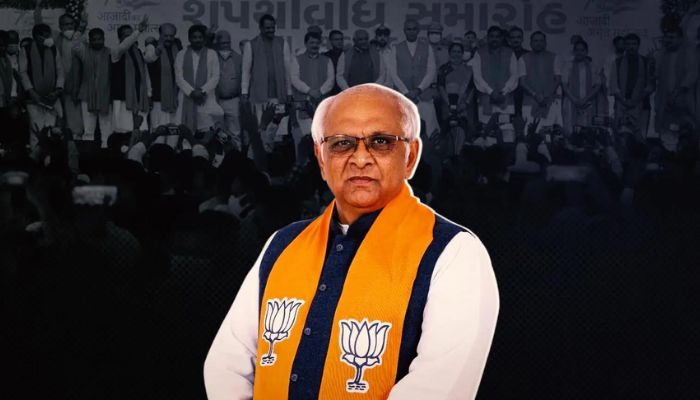
Gujarat government looks to introduce Uniform Civil Code in the state ahead of assembly elections

The Gujarat government is likely to implement a uniform civil code in the state soon. For this purpose, it may propose to set up a committee under a retired high court judge to evaluate all aspects. A similar exercise was earlier undertaken by the Uttarakhand government under Bharatiya Janta Party (BJP). The Gujarat government is likely to move a proposal on October 29 regarding this law.

A proposal to set up the committee is likely to be tabled in the Cabinet meeting on October 29 in Gandhinagar. The Gujarat Home Minister will hold a press conference at 3 pm. It is believed that he can make an announcement about this development.

What is a Uniform civil code

The Uniform Civil Code proposes the creation of a single legislation for India that would govern issues like marriage, divorce, inheritance, and adoption for all religious sects. The law is mandated by Article 44 of the Constitution, which states that the state must work to establish a uniform civil code for its residents across the entire country.

The governments of Himachal Pradesh and Uttarakhand have already declared their intention to adopt the Uniform Civil Code. A plan to create and implement a uniform civil code in India would ensure that all individuals, regardless of gender, or religion, are subject to the same personal laws.

The BJP also included the Uniform Civil Code in its manifesto during the 2019 Lok Sabha elections. This is an issue that has always been in the news. The BJP believes that gender equality will come only when the Uniform Civil Code is implemented.

Many politicians have supported the Uniform Civil Code. However, the All India Muslim Personal Law Board (AIMPLB) has termed it as an unconstitutional and anti-minority move. The Centre had earlier this month told the Supreme Court that it cannot direct Parliament to enact or implement any law on uniform civil code in the country.