Home Blog Page 283

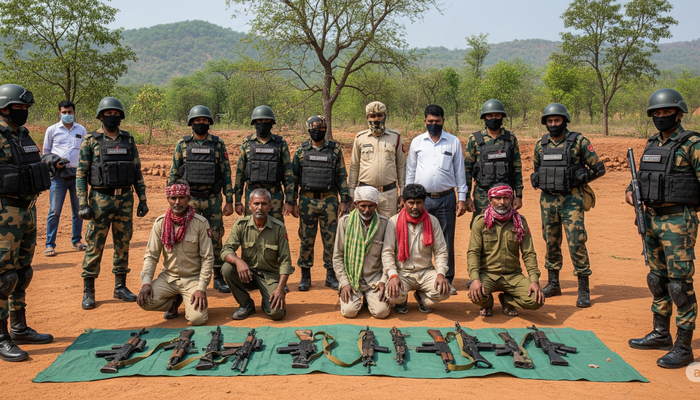
Chhattisgarh: In a major blow to left wing terrorism, 66 Naxalites carrying rewards worth crores surrender before security forces

In a major success during the ongoing anti-Naxal operation of the central government, 66 Naxalites, including 49 carrying a cumulative bounty worth ₹2.27 crore, surrendered in the Bastar region of Chhattisgarh on Thursday (24th July). The Naxals, including senior operatives and women, surrendered across the five districts of Bijapur, Dantewada, Narayanpur, Kanker, and Sukma. Many of them were reportedly involved in high-profile attacks, extortion networks, ambushes against security personnel and arms training camps.

As per reports, 25 Maoist cadres surrendered in Bijapur, 23 out of whom had a bounty of ₹1.15 crore, 15 in Dantewada with a cumulative bounty of ₹17 lakh, 13 in Kanker with a total bounty of ₹ 62 lakh, 8 in Narayanpur with a bounty of ₹33 lakh and 5 in Sukma. Among the entire group of Naxals who surrendered, 27 are women.

Out of the 13 Naxals who surrendered in Kanker, 5 were women. There was a company commander among them, who handled tactical operations and logistics in the North Bastar zone. The rest were involved in extortion from villages and attacks on road-opening parties.

Among the Naxals who surrendered are Ramanna Irpa (37), a member of the Maoists’ Odisha state and special zonal committee, his wife Rame Kalmu (30), a platoon party committee member (PPCM), Sukku Kalmu (38), Bablu Madvi (30), Kosi Madkam (28) and Reena Vanjam (28). Budhram alias Lalu Kuhram, a divisional committee member, his wife Kamli alias Moti Potawi, and Vatti Ganga alias Mukesh (44), the Maoists’ north bureau technical team in charge, are also among the surrendered Naxals.

Naxals who surrender receive state’s assistance for rehabilitation

The Naxals laid down their weapons before the Central Reserve Police Force (CRPF), Border Security Force (BSF), Indo-Tibetan Border Police (ITBP) and police personnel. According to reports, an official revealed that the Naxals cited their disappointment with the hollow Maoist ideology, atrocities committed by Naxalites on innocent tribals, and growing internal differences within the Maoist cadre. They also said that they were impressed by the village development schemes of the state government.

“They also claimed to be impressed by ‘Niyad Nellanar’ (your good village) scheme of the state government, aimed at facilitating development works in remote villages, new surrender and rehabilitation policy of the state government and Poona Margham (Rehabilitation for Social Reintegration), a rehabilitation initiative launched by Bastar Range police,” the official was quoted as saying by the New Indian Express.

The surrendered Maoist cadres will be provided a financial assistance of ₹50,000 each and will be rehabilitated under the state’s surrender and reintegration policy. Since the launch of the ‘Lon Varratu’ (Return to Your Village) campaign in 2020, 1020 Naxals, including 254 carrying bounties, have surrendered in Dantewada. Since 2023, more than 1,400 Naxals have surrendered under Poona Margham.

“This surrender wave clearly shows that the ideological grip of the Maoist movement is weakening. Their senior cadres are disillusioned with the hollow promises of the outfit. Poona Margham has emerged as a credible path for reintegration and peace,” P Sundarraj, Inspector General (Bastar Range), told India Today.

The central government’s ongoing operation to end Naxalism

Since assuming power in 2014, the Modi government has adopted a policy of zero tolerance towards terrorism and Naxalism in the country. In 2015, the government launched the National Policy and Action Plan, which involves a multi-pronged strategy including aggressive military operations to eliminate Naxal terrorism as well as development efforts to integrate the Left-wing extremism (LWE) affected areas and people into the mainstream. The central government has vowed to eliminate Naxalism from the country by March 2026.

In January 2024, the Modi government launched Operation Kagar in the left-wing terrorism-affected areas to eradicate the Maoist terror. The operation entered its last phase this year. Under the operation, around 1 lakh para-military troops, including the Central Reserve Police Force (CRPF), its elite CoBRA units, District Reserve Guards DRG), and state police, equipped with modern technology, have been deployed in the left-wing terrorism affected areas to completely uproot the naxal terrorism from its last remaining strongholds. Since the start of the operation, the security forces have eliminated over 400 Naxal terrorists so far, while more than 800 Maoists have surrendered.

In a major breakthrough, the security forces neutralised the elusive Maoist commander Nambala Keshav Rao alias Basavaraju along with 26 Naxals in May 2025, in a fierce gun battle in Abujhmad area of the Narayanpur district of Chhattisgarh.

The collaborative efforts of the central government and the security forces have been fruitful, as the number of Naxal-affected districts has significantly reduced over the past 10 years and more than 8,000 Naxals have surrendered.

Australia: Hindu temple and Asian restaurants defaced with hate graffiti in Melbourne after an Indian was assaulted in Adelaide

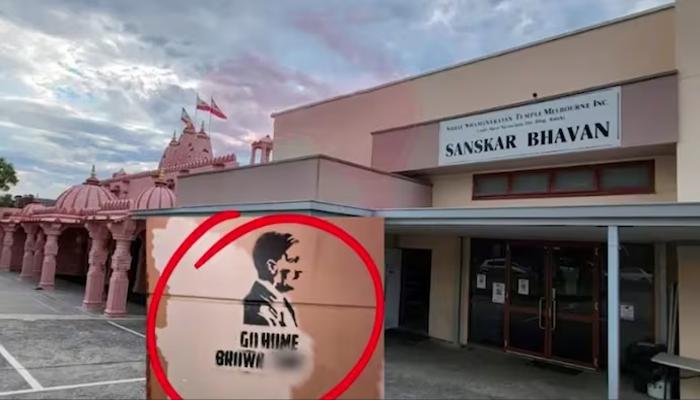
In a shocking incident, a Hindu temple and two Asian- run restaurants were defaced with racist graffiti in Melbourne, Australia. The incident has raised a serious concern among the community members residing in Australia, a report states on Thursday, July 24.

The temple was the Shree Swaminarayan temple at Melbourne’s eastern suburb of Boronia, which was painted with red racist slurs on July 21, Monday morning, the Australia Today web portal reported. It was also observed that on the same day, the same slur was written on the two restaurants, situated on Boronia Road. An image of Adolf Hitler with the message, “Go Home Brown C**T”, was found spray-painted on the premises of the temple.

In a strong reaction, the president of the Hindu Council of Australia Victoria chapter, Makrand Bhagwat, said “it feels like an attack on our identity, our right to worship and freedom of religion,” the web portal reported.

Victoria police confirmed the incident, saying that “There is no place at all in our society for hate-based and racist behaviour.” In a private message to Temple Management, Victoria’s Premier, Jacinta Allan, marked the attack “hateful” and “racist”, the report said.

The news came shortly after a day of a report of an Indian student being brutally assaulted in Australia. The man 23 year-old, Charanpreet Singh, was harassed in Adelaide over a parking dispute. The incident is being investigated as a possible racially motivated attack.

Singh claimed, while he was with his wife, a group approached his vehicle, used racial language, and then punched him. This led to from facial fracture and admission to the hospital. A viral video revealed that Singh was attacked with metal knuckles. The attackers were heard using racial abuse, saying, “F**k off, Indian”.

Zero-duty market access, push for services and labour-intensive sectors and more: How the trade deal with UK will benefit India

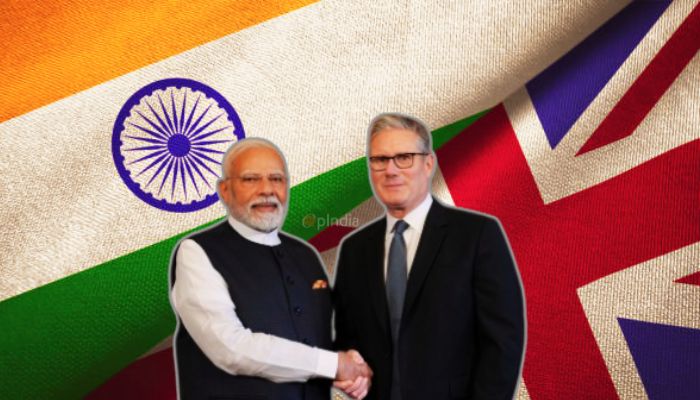
On the 24th of July 2025, India and the United Kingdom signed the historic India-UK Free Trade Agreement (FTA) in the presence of Prime Ministers Narendra Modi and UK PM Keir Starmer in London. Officially known as the India-UK Comprehensive Economic and Trade Agreement (CETA), this deal marks a new era of economic collaboration and massive mutual benefits for the signatory nations across various sectors.

While the bilateral trade between the two countries currently stands at nearly USD 56 billion, the FTA has a joint goal to double this figure by 2030 taking it to USD 120 billion.

Duty-free access for 99% of India’s exports and greater access to UK markets

Under the UK-India FTA, India has gained access for 99% of its exports to the UK, covering entire trade basket. This opens opportunities for labour-intensive industries such as textiles, marine products, leather, footwear, sports goods, toys, and gems and jewellery, alongside fast-growing sectors like engineering goods, auto components, and organic chemicals. Currently, Indian goods in these industries faced UK tariffs between 4 to 16 per cent.

In the textile sector, current UK tariffs of 8–16% will be removed. This waiver will benefit companies like Welspun India, Arvind Ltd. Meanwhile, the zero-duty access to UK markets in the footwear industry will benefit manufacturers in Agra, Kanpur, and Chennai, with Bata India and Relaxo emerging as top gainers. It is estimated that leather and footwear exports to the UK may cross $900M.

Similarly, a duty-free market access (current tariffs up to 16 per cent) in jewellery sector, will benefit Indian exporters from Gujarat and Maharashtra.

The FTA also offers greater market access in Information Technology and IT-enabled services, financial and legal services, professional and educational services, and digital trade. Indian professionals, including those deployed by companies to work in the UK across all service sectors, professionals deployed on contracts such as architects, engineers, chefs, yoga instructors, and musicians, will benefit from simplified visa procedures and liberalised entry categories.

In addition to increasing export volumes and promoting domestic production and job creation in these vital sectors, the immediate removal of these tariffs will increase the competitiveness of Indian goods on the British market. The UK leather industry alone is predicted to increase its market share by 5% in the next two years, while exports of engineering and electronics are likely to double by 2030.

Tariff changes in alcoholic beverages, automobiles, seafood, Auto components and engineering goods, Pharmaceuticals and medical devices

The FTA provides significant reductions and concessions in tariffs on several goods. Scotch whisky and gin import taxes will be reduced from 150% to 75% instantly, and then to 40% over the following ten years. Under a quota-based system, the present 100% tariff on automobiles made in the UK will be reduced to 10%. In the meantime, India will lower or do away with duties on goods including medical equipment, cosmetics, salmon, chocolates, and biscuits.

Under the FTA, India’s seafood gets zero-duty access to UK’s $5.4B marine market and thus, the fisherfolk in Andhra, Odisha, Kerala, Gujarat and TN will benefit directly. Shrimp, tuna, fishmeal and feeds have become 100% duty-free. Now, Indian exporters will gain parity with EU giants like Germany & Netherlands.

Push for inclusive growth

The India-UK FTA has also been designed to make trade more inclusive. Now, women and youth entrepreneurs, farmers, fishermen, startups, and MSMEs will gain access to global value chains, supported by provisions that encourage innovation, promote sustainable practices, and reduce non-tariff barriers.

Under the FTA, women artisans, MSMEs and SHGs get duty-free access to the UK’s $23B market.

Duty-free access to the UK’s $23B market opens doors for women artisans & entrepreneurs. IPR protection will boost innovation by women in biotech, textiles & beauty. Meanwhile, zero tariffs on textiles help weavers, stitchers & crafters reach premium buyers. Women-led SHGs, co-ops & MSMEs will also be provided support via training, finance & skilling.

Services sector expected to boom after India-UK FTA

The CETA also opens doors to myriad opportunities for India’s services sector. The deal makes it easier for Indian professionals to enter the UK market as musicians, chefs, yoga instructors, and other contractual service providers. Now, more than 1,800 chefs, yoga experts, and musicians can work in the UK each year. Relaxed rules will help intra-corporate transferees, investors, and business visitors.

The three-year exemption from social security contributions in the UK for Indian workers temporarily stationed there is a significant advantage for India.  This exemption is expected to increase the draw and competitive edge of Indian talent in the UK by saving Indian professionals and their employers up to Rs 4,000 crore a year.  It is projected that industries such as professional services, financial services, and information technology will see significant expansion and job opportunities.

Under the Double Contribution Convention agreement, around 75,000 Indian workers will be exempted from UK social security payments for 3 years. This will improve the cost competitiveness of Indian talent.

Moreover, the FTA will open access to 36 service sectors with no Economic Needs Test for Indian firms and freelancers.  In addition, now Indian professionals can work in 35 UK sectors for 24 months, even without a UK office.

Increased business transparency and the UK’s gains

Not only has the UK opened its markets for India, but India too has allowed access to the United Kingdom in several non-sensitive sectors. The FTA lays down rules for public procurement, allowing companies from the UK to bid on Indian federal government tenders worth over Rs 200 crore in non-sensitive sectors.

In addition, opening lucrative Indian markets for the UK, this will also push Indian firms towards becoming more competitive. This landmark trade deal addresses innovation, intellectual property, and government procurement aspects. With this, there will be a more transparent business environment and will attract increased investments.

Moreover, luxury automakers like Aston Martin and Jaguar Land Rover (owned by Tata Motors) and UK-based companies like Diageo (Scotch whisky) will have better access to the Indian market.  The UK government estimates indicate that the India-UK FTA is expected to boost the UK’s GDP by £4.8 billion a year.

At present, over 970 Indian companies operate in the UK, contributing approximately £1.17 billion in corporation tax and providing employment to around 1.1 million people, playing a vital role in supporting local economies and livelihoods.

For eligible traders, the FTA offers streamlined procedures such as monthly payment options and tariff suspension. Along with a commitment to clear goods within 48 hours, it also supports digital trade by enabling paperless customs procedures and electronic authentication.

With India deciding to lower its trade barriers and partnering up with a key economy like the UK, it will emerge as a magnet for foreign direct investment (FDI). Beyond traditional trade partnerships, India’s position as a reliable trade partner will also help it further diversify its economic engagements.

Along with the FTA, a Memorandum of Understanding was also signed by India’s Central Investigation Bureau and the UK’s National Crime Agency. Foreign Secretary Vikram Misri revealed the same during a special press briefing after the landmark trade deal was signed. He said that the objective of the MoU is to combat instances of corruption.

The MoU is important given that many economic offenders in India take shelter in the UK, as they consider it to be a safe haven. The agreement aims to enhance collaboration on cross-border investigations, asset recovery, and extradition of fugitives, including economic offenders. During his bilateral talk with PM Keir Starmer, Narendra Modi sought the UK’s cooperation in bringing economic offenders and fugitives from India to justice under Indian laws.

Indian trade bodies call India-UK FTA a “transformational milestone”

The Industry trade bodies and industry leaders have welcomed the signing of the India-UK Free Trade Agreement (FTA), terming the deal a “transformational milestone in bilateral economic relations” of the two countries.

Industry body Confederation of Indian Industry (CII), in a statement, added, “Once implemented, the India-UK FTA is expected to reduce trade barriers, enhance investor confidence, and promote joint ventures and technology transfers, especially in labour-intensive sectors like textiles and apparel, leather and leather goods, gems and jewellery, and marine products, among others.”

“The agreement will provide a strong framework for unlocking new opportunities in clean energy, digital technologies, life sciences, and advanced manufacturing. India’s rapidly growing market and manufacturing capabilities, combined with the UK’s strengths in innovation, finance, and high-end services, will further accelerate bilateral economic relations,” CII’s statement added.

Meanwhile, Sunil Bharti Mittal, Founder & Chairman of Bharti Enterprises and Co-Chair of the India-UK CEO Forum, applauded the deal, saying, “Indian industry across all sectors welcomes the India-UK FTA with great optimism. This agreement establishes a modern, forward-looking partnership that will stimulate innovation, ease market access, and foster investment. Businesses in India as well as the UK stand to gain tremendously, as it lays the groundwork for scaling up bilateral cooperation across key growth sectors.”

Hemant Jain, President, PHD Chamber of Commerce and Industry (PHDCCI), also hailed the India-UK Free Trade Agreement and said, “The signing of the India-UK Free Trade Agreement is a landmark moment for Indian industry. We commend both governments for finalising a deal that promises to catalyse bilateral trade, enhance the competitiveness of Indian SMEs, and open new doors for industries in manufacturing, services, and technology sectors. The agreement is a testimony to the strategic depth that will lead to a doubling of bilateral trade to over USD 120 billion by 2030 with the UK.”

India-UK Vision 2035

On 24th July 2025, Indian Prime Minister Narendra Modi and his British counterpart Keir Starmer not only signed the Comprehensive Economic and Trade Agreement (CETA) but also endorsed the new “India-UK Vision 2035”. This long-term agreement centres on the commitment of India and the UK to work together for mutual growth, prosperity, and to shape a prosperous, secure, and sustainable world in a time of rapid global change.

As per a press release issued by the Indian Prime Minister’s Office (PMO), the India-UK Vision 2035 sets clear strategic goals and milestones, tracking a path for sustained future collaboration and innovation. The Vision focuses on growth and jobs in the UK and India, education and skills partnership, development of cutting-edge technology and research, transformative Climate Partnership, and defence and security partnership.

Why does the timing of the India-UK FTA matter

The signing of the India-UK Free Trade Agreement is a significant strategic move which comes at a time when geopolitical and trade tensions are escalating globally. With shifting loyalties and threats of sanctions, over-the-sky tariffs, especially as a means of nothing but retribution against countries like India, which bought Russian oil, India’s bolstering partnership with the United Kingdom holds special value. By diversifying its trade partners, although the UK has always been a reliable trade ally, India is countering US protectionism and curbing reliance on the US market in several sectors, as well as bolstering its influence in the Indo-Pacific.

Moreover, the India-UK FTA has also strengthened India’s leverage in negotiations with other major economies, especially the European Union, which is desperate now more than ever to sign a Free Trade Agreement with India. For the EU, a trade deal with India is not confined to commerce; rather, it is also crucial for its strategic interests in the Indo-Pacific region. Now the EU will be under pressure to come up with an agreement matching the scale of the India-UK FTA.


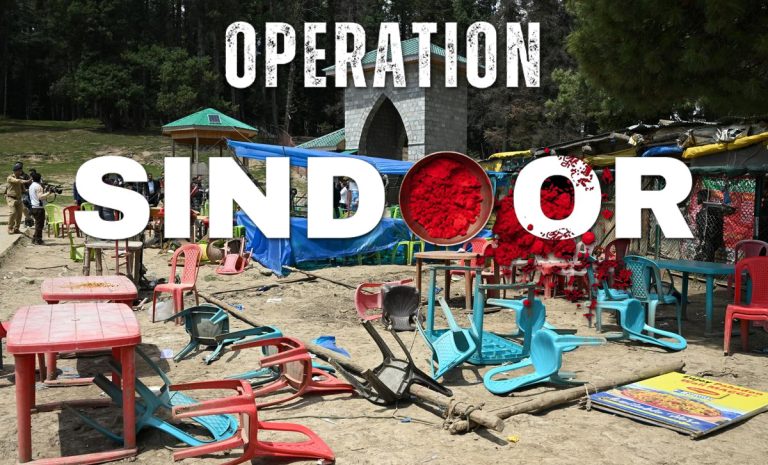
Centre refutes claims that Operation Sindoor was announced under international pressure, reiterates it was in response to terror attack

The Central government has refuted claims that Operation Sindoor was announced “under international pressure.”

In a reply to a question by Samajwadi Party MP Ramji Lal Suman, Union Minister of State for External Affairs Kirti Vardhan Singh said that Operation Sindoor was launched to respond to a barbaric cross-border terror attack in Pahalgam and It focused on dismantling terrorist infrastructure and neutralizing terrorists.

MP Suman had asked “whether it is a fact that Operation Sindoor was announced under international pressure.”

Replying to his question, MoS Vardhan said, “Operation Sindoor was launched to respond to a barbaric cross-border terror attack by Pakistan-sponsored terrorists. It focused on dismantling terrorist infrastructure and neutralizing terrorists likely to be sent across to India.”

The government further said that India’s actions were “focused, measured, and non-escalatory.”

The Centre further clarified that Pakistan’s attack in response to Operation Sindoor were met with a “strong and decisive response from the Indian armed forces.”

“Pakistan, however, attempted targeting Indian civilian areas, in addition to some military facilities. These provocations and escalatory actions by Pakistan were met with a strong and decisive response from the Indian armed forces, inflicting significant damage on the Pakistani military,” the reply reads.

It further said, “Subsequently, on 10 May 2025, the Director General of Military Operations of Pakistan approached his Indian counterpart to request for cessation of firing and military activities, which was agreed to later that day.”

The Opposition INDIA bloc have been demanding to discuss the Operation Sindoor and Pahalgam terror attack in Parliament.

Since the commencement of Monsoon Session, both Houses of Parliament have faced major disruption with Houses being adjourned shortly after convention. The proceedings have been halted to due to opposition’s continuous demand to discuss the key national issues, Operation Sindoor, Pahalgam terror attack, Bihar Special Intensive Revision (SIR) of electoral rolls.

The Monsoon Session of Parliament started on July 21 and will continue till August 21.


(This news report is published from a syndicated feed. Except for the headline, the content has not been written or edited by OpIndia staff)

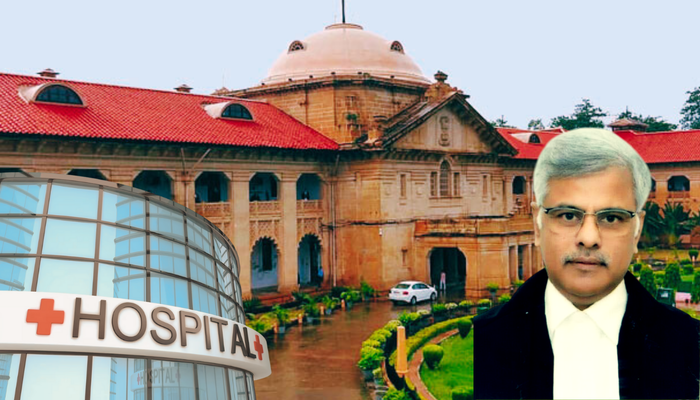
Private hospitals and nursing homes treat patients like ATMs: Allahabad HC dismisses the plea of a doctor seeking quashing of medical negligence case against him

The Allahabad High Court has come down heavily on doctors and private nursing homes, for admitting patients without appropriate facilities and infrastructure and charging them huge amounts of money.

Dismissing an application filed by a doctor, the High Court noted in the judgment dated July 24, 2025, “It is common practice these days that private nursing homes/hospitals tend to entice the patients for treatment even though they do not have the doctors or infrastructure. When the patient is admitted to a private hospital, they start calling for the doctor to treat the patient. It is common knowledge that the private hospitals/nursing homes have started treating the patients as guinea pigs/ATM machines only to extort money out of them.”

The applicant, named Dr Ashok Kumar Rai, approached the High Court for the quashing of an FIR filed against him on July 29, 2007, which says that the foetus of a pregnant woman, who was admitted to his nursing home, died due to his medical negligence. A bench of Justice Prashant Kumar dismissed his application, saying that a prima facie offence was made out against him and allowed criminal proceedings to continue against the doctor.

“In this matter, though consent was taken around 12 O’Clock, but the operation was conducted at 5.30 P.M. Delay in conducting the surgery was because of non-availability of the anesthetist, which resulted in the death of the child,” the judge said.

Facts of the case

On July 28, 2007, a woman in the advanced stage of pregnancy was admitted to Savitri Nursing Home, Deoria, Uttar Pradesh, around 10.30 a.m. for delivery. After examining the patient, Dr Rai advised a C-section. Around 12 o’clock, the family of the patient gave consent for the surgery. However, the surgery was delayed by several hours due to the absence of an anaesthetist, who arrived around 3:30 pm. The surgery was finally carried out around 5:30 pm, but the delay resulted in the death of the child. The post-mortem report of the child described “prolonged labour” as the cause of death.

An FIR was filed by the family of the patient against the doctor under Sections 304A, 315, 323 and 506 of the IPC. A case regarding the same has been going on in the court of the Additional Chief Judicial Magistrate, Deoria. The present application was filed by the applicant seeking the quashing of the entire proceedings against him.

“A bare perusal of the post mortem report of the foetus, which has been annexed along with the supplementary counter affidavit, shows that the cause of death was “Prolonged Labour”. A bare perusal of the post mortem report of the foetus, which has been annexed along with the supplementary counter affidavit, shows that the cause of death was ‘Prolonged Labour’,” the High Court noted.

Findings of the Medical Board not credible: HC

After the registration of the FIR, the police wrote to the Chief Medical Officer (CMO) to seek his opinion. The CMO invited the applicant to submit his version of the incident and constituted a Medical Board to look into the issue. The Medical Board declared the doctor not guilty. The applicant placed reliance on the decision of the Medical Board to defend himself. However, the High Court said that the findings of the Medical Board were not credible as neither the post-mortem report nor the Operation Theatre note (OT note) was placed before it for examination.

“All the documents were not produced before the Medical Board, and hence, the opinion of the Medical Board would have no credence in this matter. This is a case where prima facie offence is made out against the applicant and there is no justification to invoke inherent powers for any interference in the impugned proceedings,” the High Court noted in its judgment.

On a cautionary note, the High Court called for striking a balance between the rights of medical practitioners who are unfairly blamed for an untoward incident and their obligation towards patients to perform their duty skillfully.

Over a lakh civilians displaced, F-16 jets deployed, missiles used, Buddhist monastries targeted: Tensions spike on Thailand-Cambodia border

The border conflict between Thailand and Cambodia has intensified rapidly, leading to a devastating toll on both human lives and cultural heritage. On the first day of conflict, 14 Thai citizens died, with the overall death toll rising to 60. Additionally, over 125,000 civilians have been displaced due to the ongoing conflict, according to official Thai government sources.

Thailand has launched multiple airstrikes using F-16 fighter jets targeting Cambodian military bases. Reports have confirmed that the attack has destroyed several Cambodian installations. Cambodian officials stated that bombs were dropped near the UNESCO World Heritage-listed Preah Vihear Temple, a site already involved in historic tension between the two nations.

While clashes continued until Friday morning, July 25, both sides appeared to be engaged in heavy fire. According to the Thai military, Cambodian forces used field artillery and BM-21 rocket systems during bombardments. In response, Thai forces retaliated with “strategic fire” as per their official statement.

Religious and cultural sites under attack

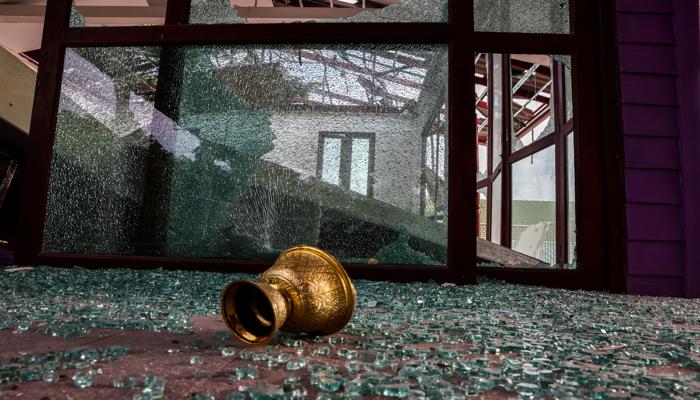
In a major attack, a Thai airstrike reportedly hit a pagoda in Cambodia’s Siem Reap province, forcing Buddhist monks to flee. Khmer Times reported that the Prasat Ta Moan Senchey Pagoda was destroyed after three bombs were dropped on the site by Thai fighter jets on July 24, Thursday. The incident has sparked fear among border communities, prompting mass evacuations.

Monks and villagers, who seemed in traditional attire, fled the area overnight carrying only essential belongings. Eyewitnesses have described the scenes of chaos as terrified and exhausted, where civilians arrived in Siem Reap early Thursday morning.

UNESCO Sites in Peril

The conflict has brought centuries-old religious and cultural sites to extreme danger. The reports show the shelling and aerial attacks have put both the Ta Muen Thom and Preah Vihear temples at great risk. These temples hold deep cultural and religious significance for both countries. The international community has also raised serious concerns, calling for an immediate ceasefire to protect the region’s irreplaceable heritage.

Thailand defends sovereignty and urges dialogue

Thailand’s Prime Minister Phumtham Wechayachai accused Cambodia of launching missile attacks and using heavy weaponry during border clashes. During a National Security Council meeting, Phumtham stated, “While we remain committed to peaceful dialogue, we must defend ourselves and protect our national sovereignty.”

Authorities have begun evacuating civilians from affected regions. The Thai Ministry of Education has ordered the closure of schools near the border, and the Public Health Ministry has converted district hospitals into field medical units to handle casualties.

On the other hand, Cambodian Prime Minister Hun Manet condemned Thailand’s actions, urging to dismissal of military moves that could worsen the situation. He called on Thai forces to withdraw and refrain from provocative actions, accusing them of violating international law.

Cambodia’s army claimed that Thai forces struck eight locations in the provinces of Oddar Meanchey and Preah Vihear. Cambodian army spokesperson Lt. Gen. Socheat said that Cambodian forces have regained full control over key areas, including Ta Krabey and Mom Bei, and continue to hold strong positions around the Tamon Thom temple.

As tensions escalate, both countries face mounting pressure from the global community to de-escalate and return to dialogue before more lives and historical treasures are lost.

As of now, Thailand has evacuated more than 100,000 people along the Cambodian border after both nations entered into bloody military clashes for the second day. The interior ministry confirmed that 100,672 people from four border provinces had been moved to shelters, while the health ministry announced the death toll had risen to 15, of which 14 were civilians.


2011 Soumya rape and murder case: Convict Govindachamy alias Charley Thomas breaks out of Kerala’s high-security Kannur central jail

A convict has fled from Kannur central jail on 25th July, triggering a massive manhunt. Police discovered that Govindachamy alias Charley Thomas was missing from his cell at 7:15 am, in a startling breach in prison security. The Tamil Nadu native was behind bars in the rape and murder case of 23-year-old Soumya, in 2011.

According to reports, the instance happened at around 1:15 am. His disappearance was only discovered by jail officials later in the morning when they conducted routine checks. He had been incarcerated at the high-security facility in the fourth cell of the 10th Block.

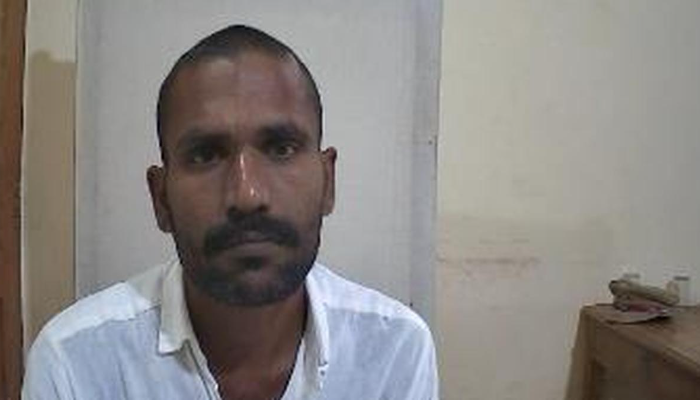
His recent image has been made public. The authorities also released a phone number and urged people to contact if they spot him. Charley Thomas was in his jail uniform when he escaped. Another inmate, who is also from Tamil Nadu stated that he was asleep and did not observe anything out of the ordinary. An internal investigation has commenced to find out how he managed to abscond.

The fugitive only has one arm, but was able to get out of the one of the most secure prisons in the state. He reportedly made a rope out of his knotted garments and used it to scale the prison wall.

Efforts to catch the prisoner amid backlash

The incident is shrouded in mystery because the jail staff has no idea how he gathered the clothes and executed his escape plan without assistance. Now, a Special Investigation Team has been established. Police in Karnataka and Tamil Nadu have reportedly been notified to find the offender.

The senior officials stated that further surveillance has been implemented at border areas and transportation hubs and that all checkpoints have been informed. They are also looking into potential weaknesses in the jail’s security system. CCTV footage of the areas surrounding the jail is being analysed and inspections of train and bus terminals are underway. Police officers were seen checking trains in Kannur.

The jail authorities have drawn criticism after the development. Officials are accused of conducting the search six hours after he broke out of the facility by climbing over the massive electric fence wall. K Surendran, the state head of the Bharatiya Janata Party suspected that someone purposefully turned off the wall’s electricity to help him.

The victim’s mother voiced that the police aided him, in an interview with Manorama News. She insisted that he should be apprehended and punished straight away and further conveyed that the court should have imposed death penalty on him.

Background of the case

On 1st February 2011 Soumya was alone in the ladies’ compartment of the passenger train from Ernakulam to Soranur. She was thrown out of the moving train near Vallathol Nagar station by Charley Thomas, who already had a criminal record. He had entered the coach illegally, tried to rob her and also abused her.

He then pursued her, pulled her into a wooded location, sexually assaulted her and ran away. The victim suffered internal trauma and significant head injuries due to which she passed away on 6th February, as she was undergoing treatement at Thrissur Medical College Hospital. The perpetrator is from Virudhachalam and had already been charged with multiple muggings and thefts in the Salem area before his arrest in this case.

A Thrissur fast-track court first sentenced him to death in 2012 and the Kerala High Court affirmed that decision in 2014. The Supreme Court, however, dismissed the murder charges in 2016 due to prosecution’s inability to provide sufficient proof concerning intent to kill. It reduced the murder charge to seven years but maintained his life sentence for rape.

From ‘India Out’ to ‘Modi In’: The changing dynamics of India-Maldives relations

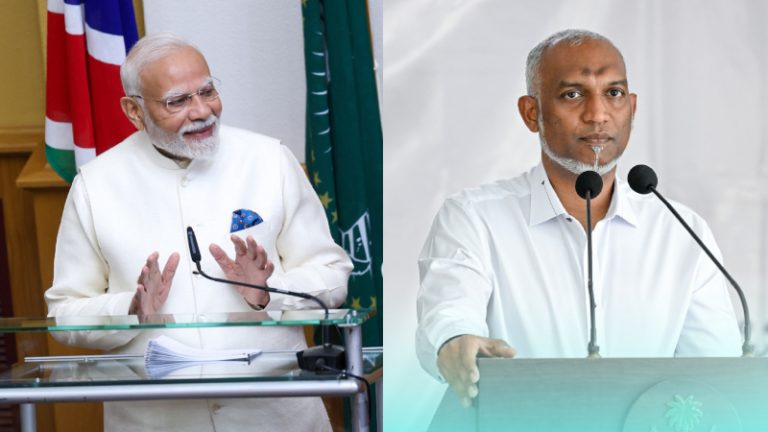
Prime Minister Narendra Modi will attend the Maldives Independence Day conference on Saturday (26 July, 2025) as the chief guest. This comes as quite a surprise to those commentators who had genuinely believed that the ‘India Out’ movement had completely driven India out of the Maldives.

Earlier today, PM Modi landed in Male to a rousing welcome by President Muizzu and his cabinet colleagues.

It is also noteworthy that PM Modi is the first head of state to visit the Maldives after Mohamed Muizzu became the President. Let us understand why the leader who came to power by running the ‘India Out’ campaign is now rolling out the red carpet for Modi.

Over the past two years, there has been a notable change in the relationship between India and the Maldives. The “India Out” movement, which aimed to protest New Delhi’s presence in the archipelago, formerly took the stage, but under Prime Minister Narendra Modi’s leadership, the focus has since changed to renewed cooperation and increased trust. In addition to stabilising the Maldivian economy, India’s financial assistance. Specifically, the $400 million currency swap from the Reserve Bank of India (RBI) and the $100 million treasury bond subscription from State Bank of India (SBI) has restored India’s standing as the Maldives’ most dependable partner.

This article looks at how India navigated the tumultuous waters of anti-India rhetoric, economic obstacles, and growing Chinese influence to reclaim its position as the Maldives’ key strategic ally.

India & Maldives: A historic partnership

A long-standing alliance based on trade, cultural proximity, and strategic security in the Indian Ocean exists between India and the Maldives. The Maldives is a crucial ally in India’s maritime security strategy because of its strategic location close to important shipping lanes. India was one of the first countries to recognise and establish diplomatic relations with the Maldives following its independence in 1965.

India’s timely aid during the 1988 coup (Operation Cactus) resulted in trust and positive bilateral relations with the Maldives. Withdrawing our forces when no longer needed alleviated concerns about Indian supremacy and territorial claims. India was the first to aid Maldives following the 2004 Tsunami and the water crisis in December 2014. Three crises (In 1988, 2004, and 2014) demonstrated India’s proximity and ability to respond to the Maldives’ crisis, which has been acknowledged by the Maldivian government and people. In January 2020, India sent 30,000 doses of measles vaccine to avert an epidemic in the Maldives. Additionally, during the COVID-19 pandemic, India provided prompt and thorough aid to the Maldives, demonstrating its status as a “first responder”.

Development assistance, such as housing projects, infrastructure construction, and scholarships for Maldivian students, has also helped to strengthen bilateral ties.

The ‘India Out’ campaign

The “India Out” movement, led by sections of the opposition, characterised India as an intrusive presence in Maldivian internal and security issues. The campaign claimed that Indian military forces stationed in the Maldives posed a threat to sovereignty, despite the fact that they were mostly involved in humanitarian and disaster relief efforts.

During Jaishankar’s visit in February 2021, India and the Maldives agreed to build the Uthuru Thilafalhu (UTF) harbour. At the time, the Union Minister tweeted that the project would “strengthen Maldivian Coast Guard capability” and that the two countries were “partners in development and partners in security.” During the same visit, India provided a $50 million line of credit for defence purchases. Anti-India campaigners in the Maldives also claimed that Indian troops were stationed on a fast patrol vessel that India recently gifted to the Maldives Coast Guard and was commissioned as CGS Huravee earlier that week, a claim refuted by Mariya Didi (Former Defense Minister), who had stated that the Indian crew was only on the ship in Male for training purposes and that it would be manned entirely by Maldivians from now on.

Since Muizzu took power in November 2023, the Maldives took a more pro-China stance while distancing itself from India, its historic ally. During his presidential campaign, Muizzu advocated for a “India Out” campaign to reduce New Delhi’s influence and presence in the country.

There were diplomatic repercussions between New Delhi and the Maldives following Prime Minister Narendra Modi’s visit to the Lakshadweep islands in January 2024. This exacerbated an already tense relationship that has gotten worse since Maldivian President Mohamed Muizzu took office in November 2023. When three deputy ministers from Muizzu’s administration entered the social media discussion and made derogatory comments about Modi, the situation deteriorated. India was not appeased when its Foreign Ministry issued a statement saying the remarks reflect “opinions [that] are personal and do not represent the views of the Government of Maldives” and suspended three deputy ministers who made the comments. A social media response spearheaded by celebrities and internet users calling for a travel boycott of the Maldives followed India’s Ministry of External Affairs’ summons of the Maldivian ambassador to voice its concerns.

From defiance to dependence: Maldives welcomes PM Modi

The Maldives’ growing economic problems may be the main cause of Muizzu’s conciliatory discourse towards India. India has always been “one of the closest” allies and “invaluable” partners, enabling and delivering aid “whenever Maldives has needed it,” according to President Mohamed Muizzu’s Aug 2024 acknowledgement. He made these remarks during a ceremony at the President’s Office to hand over completed water supply and sewerage facilities on 28 Maldives islands, which were funded by the Government of India’s Line of Credit Facility via EXIM Bank of India.

In order to handle debt and import requirements, the Maldives’ dangerously low foreign reserves were strengthened in October 2024 by a historic currency swap arrangement with the Reserve Bank of India that gave them access to USD 400 million and INR 30 billion under the SAARC framework (2024–2027). Following a USD 50 million Treasury Bill rollover in May 2025 at the request of the Government of the Maldives, India pledged USD 69 million in grant assistance in March 2025.

Two high-profile trips in early 2025 appear to bode well for bilateral relations between India and the Maldives. Given that bilateral ties were at their lowest point last year, the visits by Maldivian Foreign Minister Abdulla Khaleel and Defence Minister Ghassan Maumoon were especially crucial. Minister Khaleel, in an interview, separated the incumbent government leadership from former President Abdulla Yameen’s “India Out” campaign, which the current administration participated in as the Opposition. “As such, the government will completely disassociate with isolated comments from such figures, whether they represent the government or the Opposition,” the minister stated.

President Muizzu aimed to strengthen the Maldives’ relationship with India, according to Foreign Minister Khaleel. He had said, “In this regard, our President has repeatedly stated that he is strengthening his relationship with India and the Indian people.”

As the son of Maumoon Abdul Gayoom, the archipelago nation’s longest-serving President (1978–2008), Defence Minister Ghassan Maumoon’s subsequent visit (Jan 8-10) was equally significant, as he acknowledged that India is the first responder during times of crisis faced by his country over the past decades. In order to put down a 1988 coup attempt against the government, New Delhi sent in military personnel post-haste during Maumoon Gayoom’s rule.

Similarly, India’s Defence Minister Rajnath Singh stated during the defence talks that their discussions gave India-Maldives relations “new vigour.” India also reaffirmed its commitment to bolstering the Maldives’ defence capabilities, which includes supplying defence gear and training troops. Additionally, India announced a US$4 million grant to outfit the Maldives National Defence Force (MNDF) with certain items.

Notwithstanding early tensions, the Muizzu government understood the strategic and economic importance of keeping close relations with India. High-level bilateral discussions and Prime Minister Modi’s outreach initiatives, which prioritised commerce, security, and mutual growth, marked a turning point.

Looking ahead: A resilient partnership

Malé’s practical approach aligned with India’s emphasis on “Neighbourhood First” and SAGAR (Security and Growth for All in the Region) policies. Symbolic actions like skill development, scholarships, and partnerships on digital payments (UPI and RuPay) have further enhanced India’s image as an ally in the Maldives’ long-term development narrative.

The transition from “India Out” to “Modi In” shows how resilient India-Maldives ties are. India has maintained its position as the Maldives’ most reliable partner through cultural engagement, strategic patience, and financial diplomacy. Although managing Malé’s domestic politics and balancing China’s influence still present difficulties, the renewed partnership points to a promising future.

This partnership is not only about strategic interests but also about shared prosperity and security in the Indian Ocean area because of India’s dedication to being a first responder and long-term development partner.

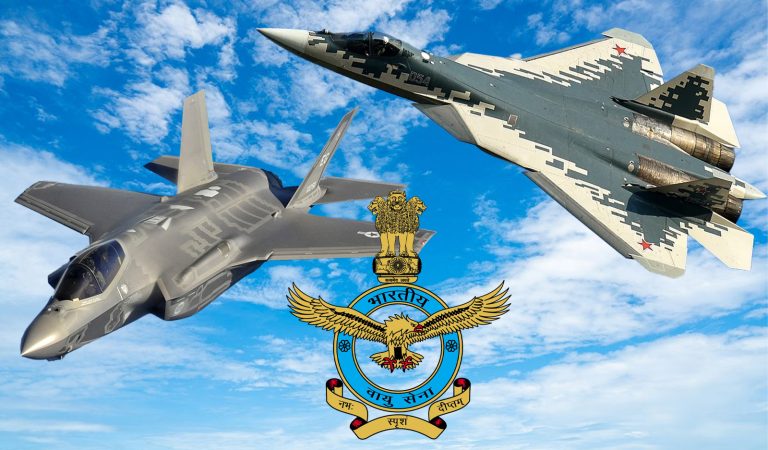
Indian Air Force plans to acquire 40 to 60 fifth-generation fighter jets from foreign sources to strengthen its combat capabilities until indigenous AMCA is ready

The Indian Air Force (IAF) is looking to acquire two to three squadrons of fifth-generation fighter jets from foreign sources to strengthen its combat capabilities until the indigenous Advanced Medium Combat Aircraft (AMCA) project becomes operational.

A fighter squadron typically consists of 18 to 20 jets.

The IAF recently made a detailed presentation to the government outlining its future requirements for maintaining an edge over adversaries, defence sources told ANI.

They said the IAF is looking to acquire around two to three squadrons (40-60 aircraft) in the interim till the indigenous project gets ready for meeting its operational requirements.

An empowered committee led by Defence Secretary RK Singh recommended the induction of fifth-generation fighter jets to enhance the force’s deterrence and preparedness, especially along the northern and western borders.

The Indian side is showing interest in acquiring the fifth-generation fighter aircraft, when reports suggest that China is already working on sixth-generation fighter jets and may also provide its fifth-generation fighters to the Pakistan Air Force in the next few years.

The two countries from which India could potentially procure fifth-generation aircraft were the United States and Russia.

However, the government has not taken any decision on the issue of fifth-generation fighter jets, but discussions are going on in this regard.

The US has offered the F-35 fighter jet, while Russia has proposed its Su-57 jets for India’s consideration.

India had opted out of the Fifth Generation Fighter Aircraft (FGfA) project many years ago, but there is an option to rejoin it.

The F-35 has been sold to various countries by the US in Europe and outside.

India is also looking at a programme to build 114 modern 4.5 plus generation fighters in partnership with a foreign country under Make in India, and may go for a government-to-government deal after a tender.

The Indian Air Force is looking to use these planes to prepare a strong deterrence all along the western and northern fronts.


(This news report is published from a syndicated feed. Except for the headline, the content has not been written or edited by OpIndia staff)

2020 Bengaluru riots case: Ikramuddin, Atif and Mohammed plead guilty, sentenced to 7 years in jail by NIA court

Three people have been sentenced to seven years of hard imprisonment by the National Investigation Agency (NIA) Special Court in Bengaluru. The case pertained to the August 2020 violent mob attack on the DJ Halli and KG Halli police stations. They are identified as Syed Ikramuddin (alias Syed Naveed), Syed Atif and Mohammed Atif. Furthermore, each convict was slapped with ₹36,000 fine.

Sections 15, 16, 18 and 20 of the Unlawful Activities (Prevention) Act, 1967, sections 143, 147, 148, 353, 333, 332, 436, 427 and 149 of the Indian Penal Code alongside section 4 of the Karnataka Prevention of Damage to Public Property Act was invoked against them.

“The substantial sentences imposed on accused number 14, 16, and 18 shall run concurrently. The period spent in judicial custody shall be set off under Section 428 of the CrPC. The entire fine recovered shall be applied towards defraying the expenses incurred in the prosecution,” the court stated.

According to the chargesheet, they were the fourteenth, sixteenth and eighteenth accused. 187 of the 199 people named in the case were taken into custody. One died while four others later turned themselves in. 138 people have thus far been the subject of a formal chargesheet filed by the prosecution.

On 11th August 2020 over 300 people assembled in front of the DJ Halli Police Station to protest an allegedly disparaging Facebook post made by P. Naveen about Prophet Muhammad, according to the police. He is the nephew of Congress leader and Pulakeshinagar MLA Akhanda Srinivas Murthy.

A man named Firdous Pasha filed a complaint claiming offences under Sections 295-A and 153 of the Indian Penal Code, which led to the filing of a formal complaint. The throng, however, refused to disperse and only grew in size in spite of the FIR and the police’s best attempts to pacify them. Afterward, they gathered outside the home of Akhanda Srinivasa Murthy and severely damaged it.

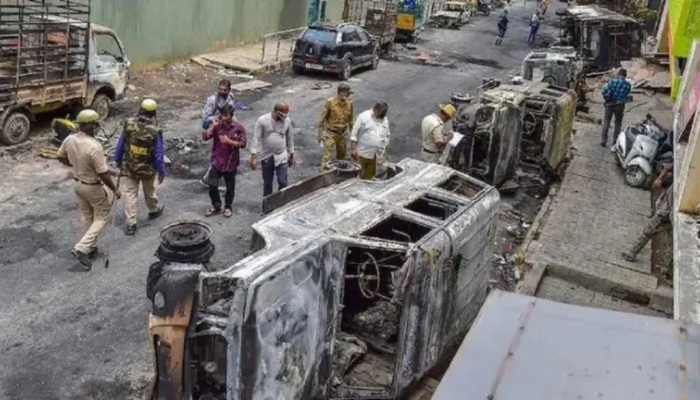
Syed Ikramuddin, one of the now-convicted people, spearheaded the demonstration. Police enforced Section 144 of the CrPC (Code of Criminal Procedure) to keep the peace as tensions increased. However, the blood-thirsty crowd caused extensive property damage throughout the area and three fatalities transpired duirng police action. The violence injured more than 80 police officers.

13 vehicles were also vandalized, including one Innova, five two-wheelers and seven other automobiles. As the radicals caused chaos, their liberal and leftist apologists attempted to cover up their crimes by claiming that human chains were created to protect the tempels, a lie that was subsequently exposed.

The local police then handed over the investigation to the NIA. Critical connections between the accused and the now-banned Popular Front of India (PFI) and its political offshoot, the Social Democratic Party of India (SDPI) were uncovered by NIA investigations.

According to the agency, PFI members planned the attack with the intention of escalating communal tensions and upending governmental institutions. There are currently 64 criminal cases lodged and investigations are underway.