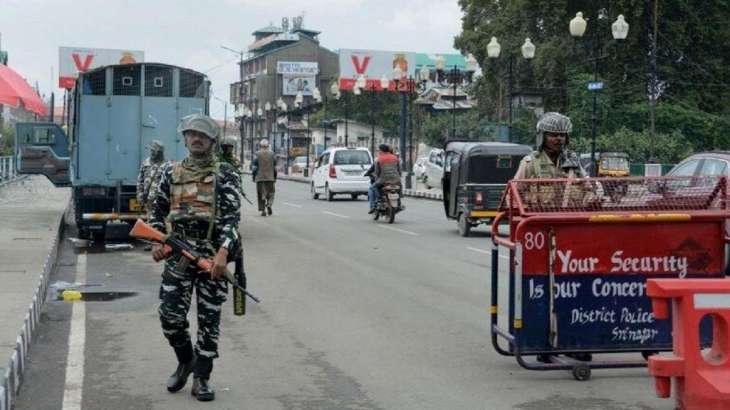
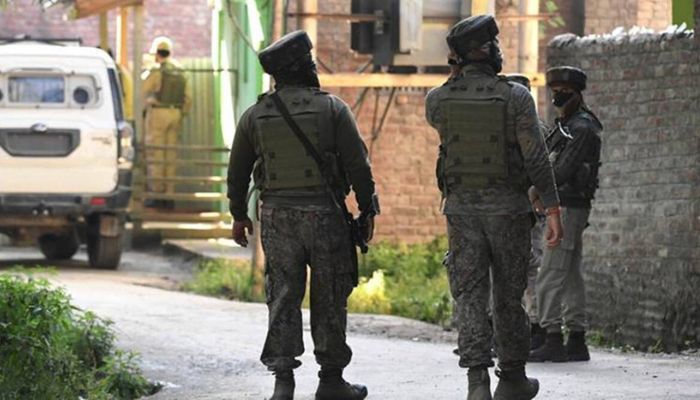
The Jammu and Kashmir administration dismissed 4 government employees, including police personnel, and a bank manager, for indulging in anti-national activities, the spokesperson said on Saturday.
He said the dismissal of the five employees was ordered under Article 311 of the Constitution of India, which provides for the dismissal of a person employed in civil capacities under a Union or a state.
“The activities of these employees had come to the adverse notice of law enforcement and intelligence agencies, as they have been found involved in activities prejudicial to the interests of the security of the state,” the spokesperson said.
Among those dismissed from service is the Manager of Baramulla Central Cooperative Bank Ltd Afaq Ahmad Wani, Constable in the Auxiliary wing of the Jammu and Kashmir Police Tanveer Saleem Dar, village-level worker Syed Iftikhar Andrabi, orderly-cum-chowkidar in Jal Shakti Department at Baramulla, Irshad Ahmad Khan and Assistant lineman in Public Health Engineering Sub-division, Handwara, Abdul Momin Peer.
Targeted killing in Kashmir continues unabated, another Kashmiri Pandit shot dead by terrorists
The announcement of the dismissal of government employees indulging in anti-India activities came on the day when terrorists killed a Kashmiri Pandit named Poona Krishan Bhat in yet another incident of targeted killing in Kashmir. Bhat was shot dead by terrorists in the Shopian district of Kashmir on Saturday, 15th October 2022. He used to live in the Chowdhary Gund area, shot dead by the terrorists in the same locality.
After being shot, Pooran Krishan Bhat was rushed to the local hospital. The doctor examined him and declared brought dead. The area has been cordoned off after this incident and a hunt has been initiated to catch the attackers.
A police official said, “Terrorists fired upon a civilian Shri Puran Krishan Bhat while he was on way to the orchard in Chowdari Gund Shopian. He was immediately shifted to the hospital for treatment where he succumbed. The area is cordoned off. The search operation is in progress.” Meanwhile, migrant Kashmiri Pandit employees in Jammu protested against the killing of Pooran Krishan Bhat by terrorists in Shopian.
A little before midnight on Friday, my phone buzzed to an incoming email, the subject of which was ‘Guardian reporter Aina J Khan’. The email was marked to the OpIndia English editor, Nirwa Mehta and myself, the Editor-in-Chief of OpIndia.
The email essentially asked us to “stop online attacks against Aina J Khan via the publication and personal and official handles”. Apparently, we had no basis to call Aina an Islamist and our doing so had somehow put her in harm’s way. The rest of the incoherence in that email and our response to it have been elucidated going further in this article.
My team and I were thoroughly amused but responded politely, asking which article on OpIndia specifically “attacked” Aina J Khan. We also wondered why Aina was not tagged in the email that was sent to us by Sheila Pulham. Honestly, we were wondering if the email was a hoax by a sophisticated hacker who may have spoofed the domain name. Much to our levity, after we tweeted that we would respond to the email in time, the Guardian Communication handle responded to Nirwa Mehta with a screenshot of the email, emphasising that they were only “requesting” us to not “attack their journalist”.
Dear Ms. Mehta – in the interests of transparency for your followers, here is the email you mention. We simply ask you (again) politely to refrain from making personal attacks on our reporter on your site and on social media https://t.co/qi0SbFRWOSpic.twitter.com/4qXVUrbSvD
It must be mentioned here that at the time of writing this article, we had not received a direct response from Ms Sheila Pulham to the question we asked her – which specific article on OpIndia “attacked” Aina J Khan in their opinion and why was Aina not included in the mail that we received. Be that as it may, it is only fitting that we respond publicly since the email itself has been tweeted by The Guardian.
In bold is the text of the email and following that, is our response to Ms Sheila Pulham.
Dear Nupur J Sharma
I am quite pleasantly surprised at the outset, that you managed to get my name right and added the “J”. Several individuals, who support the kind of journalism The Guardian and Ms Aina Khan practises, have consistently wished death upon me and issued threats to behead me after mistaking me for the Nupur Sharma you vilified in your publication. Before I respond to the rest of your email, I would like to congratulate your entire editorial team, including Aina, for getting this right without prejudice. Of course, given the manner in which you covered Nupur Sharma and fuelled the campaign of beheading threats being issued to her, I have no doubt in my mind that I might meet the same fate, given that you have now turned your attention to me.
I am writing to request that OpIndia stop its online attacks on Guardian reporter Aina J. Khan via your publication and your official and personal social media channels.
That is an agreeably worded sentence that uses “request” to show just how polite your email is, but in actuality, it is a veil (no pun intended, of course, lest your “journalist” Aina Khan considers the word “veil” as another “Islamophobic attack” against her identity – a fair supposition given that she thought laser eyes were “demon eyes”) to mask the prejudices, baseless accusations and surmises that this sentence is loaded with.
Firstly, my Editor, Nirwa Mehta, responded to your email, asking you to furnish evidence of this alleged “attack” against your journalist via our publication, and official and personal handles, which, by the way, you have not bothered to respond to. As a 200-year-old media organisation, I am sure you are aware that criticism of one’s reportage cannot, by any way, shape, manner or form, be considered an “attack” against the reporter. An article showing the glaring bias in reporting a sensitive issue where the British Hindu minority came under attack, or an opinion piece on the mythical “bravery” of the duo who supposedly stood up to “Hindutva mobs” (and were unscathed) cannot particularly be called an “attack” but a criticism of the turn of events. If this is considered an “attack” by The Guardian, I must humbly point out that your publication has been indulging in online Armageddon since its very inception, given that you have an illustrious history of misinterpreting nuances, misrepresenting facts, labelling and demonising those you don’t agree with and siding with the most violent elements in society.
For the uninitiated, I think a primer on the entire issue of Leicester violence and the shenanigans of your reporter would be desirable. The tension in Leicester started with a skirmish over a cricket match on the 28th of August. In this skirmish, there is video evidence that the Hindus had later tended to the Sikh man who had desecrated the Indian flag. On the 4th of September, Islamists in mobs attacked Hindus, their houses and their establishments. After that, the minority British Hindu community had decided to take out a protest march against the violence that had been unleashed against them since the 4th. On the 17th of September, fuelled by consistent fake news and propaganda by Islamists, Hindus came under attack again, identified in several cases by the display of their religious symbols.
The saga of fake news started in August itself when Muslim organisations in Leicester approached the police, claiming that Hindus were chanting slogans like “death to Muslims”. This was first furthered by the Leicester police fallaciously and then debunked on the 1st of September. As far as OpIndia is concerned, we got introduced to Aina Khan while we were just about beginning to look into the Leicester violence. On the 19th of September, while Hindus were under severe threat, Aina Khan proceeded to report from Leicester. Without a shred of evidence, she claimed that she had interviewed one “Hindu Nationalist” who was “holding the Indian flag” – a man who was wearing a helmet. She claims that the man identified himself as an RSS supporter, adding that RSS was inspired by Mussolini. There is no evidence to back this claim. In fact, Congress President Sonia Gandhi’s father, Stefano Maino, actually served as a foot soldier in Mussolini’s army, but we digress.
Here is an excerpt from our very first report about Aina Khan:
She then said how the helmet-wearing man said Muslims are a problem in the UK and talked about the Rotherham grooming gang. There is no video clip evidence of the man saying ‘Muslims’ are a problem, but the fact that many Muslims are prime accused in the Rotherham grooming gang case, one does not see what exactly is incorrect in this.
Aina so far has not been addressed as an Islamist. We have merely pointed out that her reportage seems one-sided and with zero evidence, to put it mildly. There were several other falsities peddled by Ms Khan, including a strange tirade against RSS and Hindus. While Ms Aina wishes to brand all criticism as Islamophobia, she displayed her Hinduphobia when she claimed that her discussion got ‘heated’ when the ‘Jai Shri Ram’ slogans were raised. She refers to Jai Shri Ram (Glory to Shri Ram), as a ‘Hindu chant appropriated by extremists in India’ and also alleged that Jai Shri Ram is now synonymous with anti-Muslim hatred. As a journalist, one would expect her to realise that several of these fake cases where Jai Shree Ram was chanted were debunked by the police themselves. But we would not want to accuse The Guardian of journalism.
While branding an organisation as fascist, Hindus as extremists and Hindu religious chants as war cries, Aina cries Islamophobia as usual and proclaims that she was accompanied by one Majid Freeman, a “Local Muslim activist”, in her endeavour to find the truth of Leicester violence. The full extent of the lies peddled in her first thread about Leicester can be read here.
It was at this point that OpIndia started looking into Majid Freeman and realised the litany of fake news that he had spread, aiding the violence against Hindus. Much to our dismay, it was this individual, with known sympathies for ISIS/Al Qaeda, who was guiding the Guardian’s coverage of Leicester. Majid Freeman, the terror sympathiser who had travelled to Syria with terror organisations, spread fake news about a Mosque being attacked by Hindus, about the attempt to kidnap a Muslim girl by a Hindu man, about Quran pages being ripped and far more. He also gave calls for Muslims to assemble in an attempt to attack Hindus since Muslims were fed up with the music being played by Hindus during their festivals. He considered a mere march by Hindus chanting their religious slogans as “provocation” simply because there was a mosque on their path. The full coverage of Majid Freeman’s lies and criminal provocations against Hindus can be read here.
A terror sympathiser who instigated attacks against Hindus was the “activist” who was the primary source for Ms Aina Khan, the journalist with Guardian. When the victims are turned into perpetrators and persecuted are turned into aggressors, it is in the interest of the truth that such bias in reporting is called out. In fact, the fact that Aina Khan and her “source” were lying blatantly when they blamed Hindus is evidenced by the fact that Aina had later grudgingly accepted that a Hindu temple was indeed attacked by a Muslim mob – but her religious sentiments, of course, forced her to hail an Imam instead of speaking up for the victims of violence. Calling out such blatant truth jugglery is not an “attack” – it is journalism. It is speaking up for the truth and standing by those who were being victimised. We decided to call out the farce being perpetrated in the name of “objective journalism” – that it is being called an “online attack” by Ms Pulham is a testament to the journalistic standards that Guardian prefers to maintain.
Now, coming to the alleged “attacks” from personal and official handles, according to the email by Ms Pulham.
Well, there was no “attack”.
Dear Ms Pulham, I am unaware as to the extent to which Ms Khan has briefed you, however, you must know that your journalist decided to wake up and start hurling accusations 20 days after an opinion piece about her double standards with regard to Hindus was published. In the article, we deconstructed how Aina Khan or Muskan can bravely take a stand against those who follow Hindutva because they are aware that they would be untouched. The same, of course, cannot be said about her co-religionists. Given what is happening in Iran, I am sure you see the precedence – while Aina goes on a tirade against Hindus, she would not have been unscathed had she expressed similar disdain in an Islamic regime against values that her co-religionists hold dear.
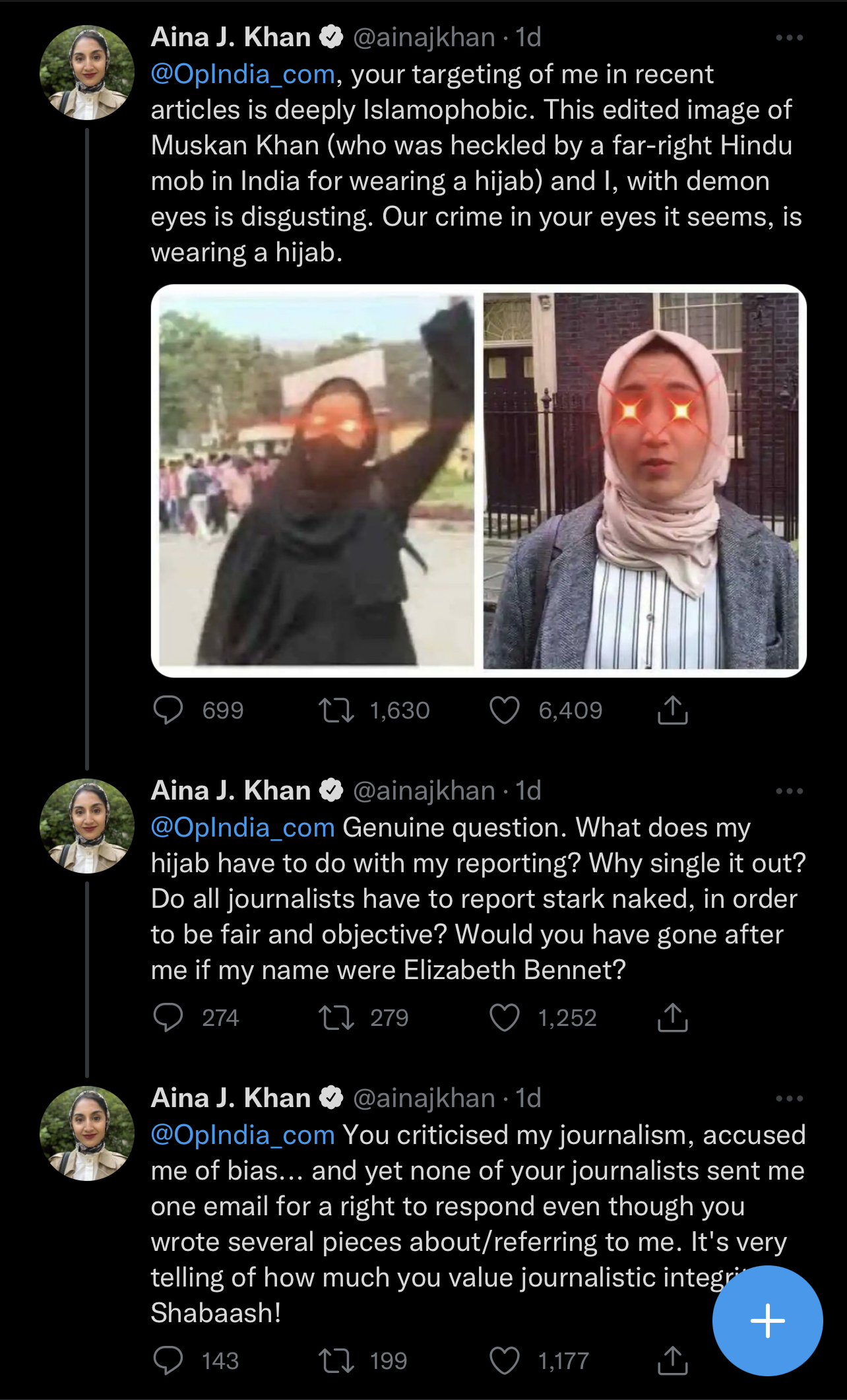
Tweets by Aina Khan
First off, let us address the apparent elephant in the room – those are laser eyes, not “demon eyes”. Maybe religiosity makes Ms Khan believe that those are indeed “demon eyes” but they are not. It’s a meme where people are either shown bullish on something or are painted as possessing superpowers (in The Guardian’s case, one would imagine that superpower is turning the victims into aggressors). Perhaps the publication could hold classes called #KnowYourMeme so such digital transgressions aren’t repeated in the future.
Further, I wonder if you, Ms Pulham, asked your journalist on what basis did she conclude that those students who were protesting against the imposition of Hijab in schools by some students, flouting uniform norms, where students are meant to be a-religious and equal, were a “far-right Hindu mob”. Is it the Guardian’s editorial policy to ascribe motives to mere students completely ignoring the nuance of the situation? Further, did you also ask Ms Khan how the opposite of “wearing a hijab” is “reporting stark naked”? And if those are indeed her views, if she is called an Islamist in response to the colourful labels she likes to throw around, how is it an “online attack”? When Ms Aina calls every Hindu she disagrees with a “far-right mob” and holds the opinion that those who don’t wear a Hijab are essentially “stark naked”, was I so off the mark to label her so?
Is it the Guardian’s considered editorial position that their journalists are free to label and “attack” others who criticise their journalism but any response from those they attack would be deemed problematic simply because her faith gives her the pass to cry Islamophobia? I am, however, willing to concede that the fault does not lie completely with Ms Khan, after all, Ms Pulham, this is the Guardian’s editorial standard and inherent racism against Hindus – why would Guardian then not espouse a journalist who considers a terror sympathiser her source, who considers non-Muslims “stark naked” because they don’t wear a Hijab and considers her attacks fair game while crying victim when she gets a response in equal measure?
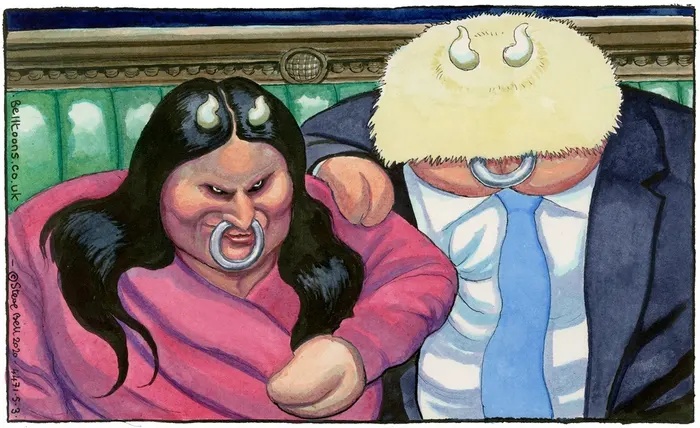
The Guardian’s racist cartoon depicting Priti Patel as a cow
Clearly, as the Managing Editor, you seem to believe that Hindus being branded with all kinds of labels is fair game since your magazine has done it in the past, but any criticism of your abysmal journalistic standard is an “attack”. We reject this proposition, Ms Pulham.
There is no basis for you to accuse Aina, without any evidence whatsoever, of being “Islamist” or biased in her reporting.
There is a basis bigger than the size of the former British empire to accuse Ms Aina Khan of being biased in her reporting. Most of it has been explained above already. But in case you want certain specifics for easier comprehension, here it is:
If Islamists have attacked the minority Hindu community, a journalist is not supposed to base her reportage on the say-so of an ISIS/Al Qaeda supporter who spread fake news and enabled the murderous attacks against Hindus. That is not journalism. That is confirmation bias and a dangerous one at that.
There was no basis for Aina Khan to brand every Hindu an RSS supporter (though there is nothing wrong with being one) and by extension, a “fascist” based on false evidence of RSS being inspired by Mussolini.
How are Hindus, the victims, all “mobs” even though Aina grudgingly accepted that a Hindu temple was attacked by a Muslim mob? And if she did admit that it was, why was an Imam hailed with no evidence unless your journalist was trying to exonerate the aggressor community?
Has Ms Aina Khan, during her coverage of Leicester, written extensively about the fake news being spread against Hindus by her source Mr Majid Freeman? Has she informed your readers about his links to terror organisations? If not, does that not speak of her bias?
On what basis did Aina Khan brand our criticism of her journalism as “Islamophobia”? Does your journalist looking at everything from the prism of her religious faith also not speak towards her bias?
I will leave you to answer these questions to yourself.
Now, let’s come to the part about her being called an “Islamist”.
Aina Khan being branded as an Islamist only came up when I responded to your journalist after she suddenly decided to be incensed about an article published 20 days ago. If you, Ms Pulham, want people to believe that the basis of your indignation is simply your journalist being called an Islamist, your contention is as believable as your country claiming that they are the rightful owners of the stolen artefacts adorning the British Museum. When your journalist brands Hindus as “fascists” and calls me the names that she did, I have the right to respond in the same manner.
When one cosies up to elements like Majid Freeman, what did Guardian expect their journalist to be called? In fact, Guardian itself termed those who carried out the 9/11 attack as “Islamist fundamentalists” – now, if your journalist treats someone who covers up the terror attack as a source, would she not be called an Islamist as well?
At a time when risks to journalists’ safety are rising around the world, it is highly irresponsible to encourage hate against a young female reporter, whether online or in person. Moreover, doing so risks undermining your credibility as a media organisation.
Full marks for using the veil again. You threw in an unrelated issue of the safety of journalists. Yes, journalists are certainly under threat – in fact, one journalist was arrested only yesterday in the Indian state of West Bengal for reporting an attack against Hindus – a story that will never be published on The Guardian – while pushing the charge of “hate” without any basis. Just how seamlessly you transitioned from “online attacks” to “hate” with the real threat of physical attack is something all of us need to learn. If propaganda were a symphony, you, madam, would certainly be Beethoven.
Let me take this opportunity to educate you, perhaps. Do you know who is encouraging hate and jeopardising safety? Elements like Majid Freeman who your journalist cosied up to. Do you know who else? Your publication with racist cartoons against Hindus. The brown sepoys who still bend to the Crown’s will further tropes of “Dismantling Hindutva”, because of which, Hindus across the globe have been endangered with the active help of Left media who are the ideological backbones of Islamists.
And thanks for worrying about the credibility of our organization. An entire cabal is out there to attack it, like the motivated garbage we see on Wikipedia, and by now we have become immune to it. In such a scenario, this supposed concern looks more like a threat – “desist, or we will destroy your credibility”. Is it a hitjob against us being prepared? I hope at least it’s published in The Guardian and not some of those websites run by the brown coolies back in India. Either way, I would want you to know that we are prepared.
I can see that OpIndia disagrees with some of the Guardian’s coverage of Prime Minister Modi’s actions; you are entitled to criticise our coverage however you see fit, but not to make personal attacks on our journalists.
Honestly, I am not sure where to start with this. I would like to tell you that this specific part of the email was a source of constant amusement to my team. Prime Minister Modi has nothing to do with our coverage of the Leicester violence, Majid Freeman or the fact that the terror sympathiser was your journalist’s primary source. It is purely a figment of your imagination if you believe that we criticised your reportage about Leicester because we don’t like your coverage of PM Modi. Leicester was about Hindus being under attack by Islamists, and your Islamist journalist blamed the victims while being hands in gloves with another Islamist. It is absurd for you to make this leap of argument and I can safely conclude that you and the editorial team of the Guardian seem to be far more obsessed with the Indian Prime Minister than with Indians themselves. I wish you luck.
As far as my entitlement is concerned, I would have you know that your nation lost the right to decide what we are entitled to decades ago. Please deal with it. I could suggest some coping mechanisms if you so wish.
If you have any concerns regarding the Guardian’s editorial coverage, you are welcome to email our independent readers’ editor at [email protected].
Well, Ms Pulham, you refused to respond to our query over email as a response to your condescending email. So, thank you for your suggestion which has been taken into consideration and duly discarded. You chose to take this public and we will follow suit and publish our response publicly as well. I would, however, encourage our readers to write to your independent readers’ editor and air their grievances with the editorial standard of the Guardian and the conduct of your journalists.
A Kashmiri Pandit named Pooran Krishan Bhat was shot dead by terrorists in the Shopian district of Kashmir on Saturday, 15th October 2022. He used to live in the Chowdhary Gund area. He was shot dead by the terrorists in the same locality.
After being shot, Pooran Krishan Bhat was rushed to the local hospital. The doctor examined him and declared brought dead. The area has been cordoned off after this incident and a hunt has been initiated to catch the attackers.
#Update | Terrorists fired upon a civilian (minority) Puran Krishan Bhat while he was on his way to an orchard in Chowdari Gund, Shopian. He was immediately shifted to hospital for treatment where he succumbed. Area cordoned off. Search in progress: Jammu and Kashmir Police
A police official said, “Terrorists fired upon a civilian Shri Puran Krishan Bhat while he was on way to the orchard in Chowdari Gund Shopian. He was immediately shifted to the hospital for treatment where he succumbed. The area is cordoned off. The search operation is in progress.” Meanwhile, migrant Kashmiri Pandit employees in Jammu protested against the killing of Pooran Krishan Bhat by terrorists in Shopian.
J&K | Migrant Kashmiri Pandit employees in Jammu protest against the killing of one Puran Krishan Bhat by terrorists in Shopian pic.twitter.com/v9KQaNW0QR
In June this year, OpIndia reported how the killing of civilians by terrorists in the valley suddenly peaked in October last year. There have been many target killings of Hindus in the last few months, with the number certain to rise if we include other non-local Hindus and Muslim government officials who have also been targeted in the valley recently.
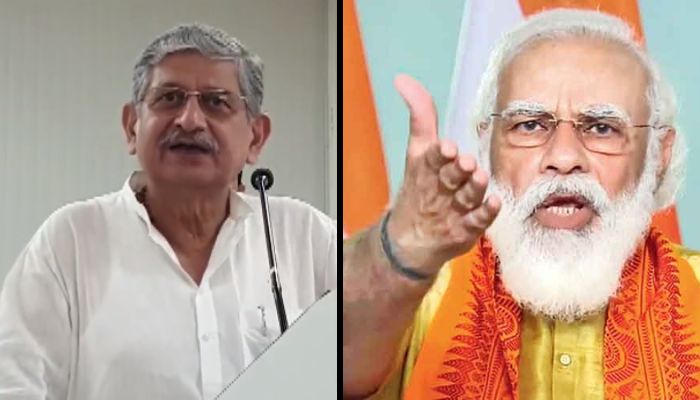
On Friday (October 14), Janata Dal (United) National President Lalan Singh courted controversy after he falsely claimed that Narendra Modi added his caste to the OBC category following his stint as the Gujarat Chief Minister.
He made the controversial remarks during a political event in Patna. “The character of the Bharatiya Janata Party (BJP) is problematic…Before the 2014 elections, Narendra Modi was going around claiming to be from the Extremely Backward Class (EBC),” the JD(U) leader alleged.
He accused Narendra Modi of ‘impropriety’ and indulging in caste-based politics. Singh claimed, “There is no EBC category in Gujarat. There is only Other Backward Caste (OBC). Narendra Modi was not an OBC.”
#WATCH | In 2014, PM Modi roamed the country saying he was from the Extremely Backward Class (EBC). There’s no EBC in Gujarat, only OBC. When he became Gujarat CM he added his caste to OBC. He’s a duplicate, not an original: JD(U) national president Lalan Singh at Patna y’day pic.twitter.com/EY5xwysLYC
He added, “When he became Gujarat CM he added his caste to OBC. He’s a duplicate, not an original.” The JD(U) leader’s ignorant comment received overwhelming applause from his supporters.
The development comes ahead of the upcoming Vidhan Sabha polls in the State of Gujarat.
The truth behind PM Modi’s caste
Opindia has earlier reported that Narendra Modi belongs to the Modh Ghanchi caste, which is listed as an OBC by the Gujarat government. Records show that the Modh Ghanchi caste was classified as OBC in July 1994, much before Modi became the Gujarat Chief Minister (2001-2014).
On 25th July 1994, the Department of Social Justice and Empowerment added several castes to the list of OBCs, and Modh Ghanchi was one of them. This was done by issuing a resolution numbered SSP/1194/1411/A dated 25/07/1994.
Screengrab of the 1994 resolution
The relevant page of the resolution, which is in Gujarati, has been attached above. It may be noted that reservations for OBCs were granted only during VP Singh’s government after the Mandal Commission report. Prior to that, only SCs and STs were eligible for reservation.
And the practice of including additional castes under the OBC started after the Mandal Commission report was accepted. Accordingly, respective states had identified OBC castes and included them in the list in the 1990s, including the Modh Ghanchi caste of PM Modi.
The Opposition is trying its best to unseat the BJP from forming a government in Gujarat for the 5th time in a row. And to achieve it, they have now resorted to casting aspersions about the caste of the Prime Minister.
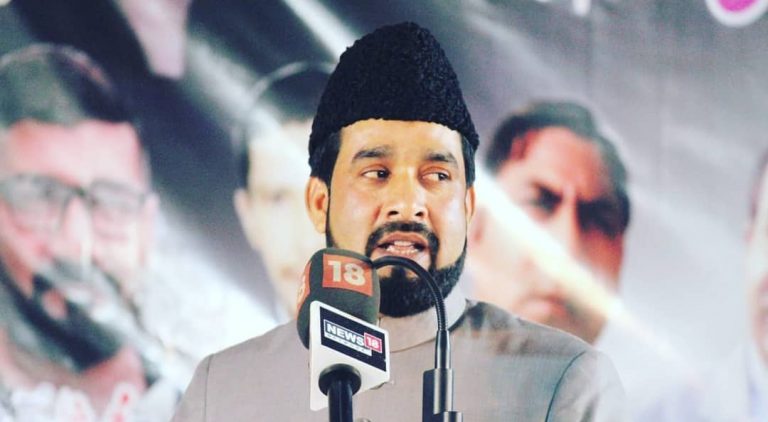
Shaukat Ali, the All India Majlis-e-Ittehad-ul Muslimeen (AIMIM) president for Uttar Pradesh, has made derogatory remarks towards Hindus while addressing a gathering in Sambhal in the state. Defending polygamy in Islam, Shaukat Ali said that if Hindus marry more than one woman, they become their mistress, however, this is not the case with Muslims.
Addressing the rally in the state, Shaukat Ali said, “People say we have three marriages. Even if we have two marriages, we give respect to both wives in society, but you (Hindus) marry one and have three mistresses without informing anyone and you neither respect your wife nor the mistress. But if we have two weddings, we keep them with respect and our children’s names are also on the ration card.”
The UP AIMIM State President also spewed venom on the Supreme Court’s ruling in the Hijab controversy. He said, “Hindutva will not decide who will wear what in the country, but the constitution will. Shaukat Ali further said that “the BJP is working to break the country by raising such issues.”
Shaukat Ali said that Muslims have been targeted by the BJP. “Because it is so simple to attack Muslims, issues like as madrassa, mob lynching, waqf, and hijab are being discussed,” Ali said. He claimed that when the BJP is weak, it promotes Muslim-related concerns.
Further spewing venom on Hindus, Ali said, “we ruled on India for 832 for years, and you were forced to say ji hujur by keeping your hands behind yours back in front of our Badshahs”, referring to Muslim rules from Sultans to Mughals in India.
This comes after AIMIM leader Asaduddin Owaisi compared the hijab to a bikini, and asserted that while other women may wear bikinis, Muslim women will not remove their hijab. Asaduddin Owaisi said, “If not hijab, should we wear a bikini? If you want, you can wear it. Why are you bent upon finishing off our religion, culture and traditions like hijab and beard.”
These politicians’ remarks follow after a two-judge bench of the Supreme Court issued a divided ruling on Thursday while hearing petitions challenging a Karnataka High Court verdict that declined to overturn a ban on hijabs in state educational institutions. The Karnataka High Court ruling, however, is not being stayed by the Supreme Court. The issue has now been submitted to Chief Justice of India (CJI) UU Lalit for the appointment of a new bench to listen to the matter.
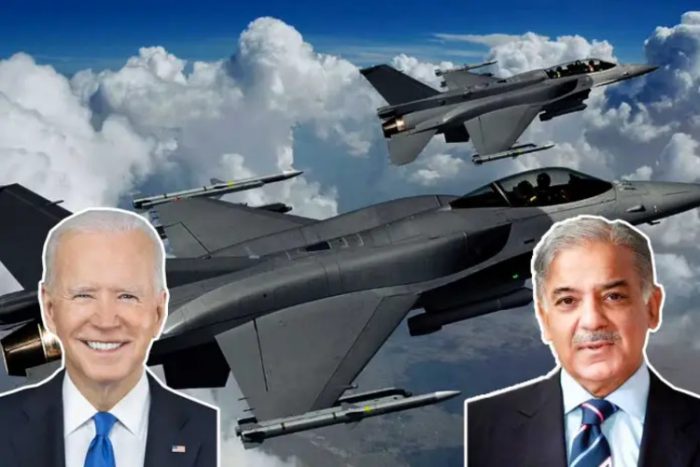
Speaking at the Democratic congressional campaign committee reception in Los Angeles on Friday, USA President Joe Biden tore into Pakistan by calling it one of the most dangerous nations in the world. The remark came merely a month after the USA struck a $450 million defence deal with Pakistan.
Biden said, “What I think is maybe one of the most dangerous nations in the world, Pakistan. Nuclear weapons without any cohesion,” when discussing Russia’s invasion of Ukraine and its global consequences, as well as the US foreign policy toward China and Vladimir Putin’s Russia.
“What I think is maybe one of the most dangerous nations in the world, Pakistan. Nuclear weapons without any cohesion”, said US President Joe Biden at Democratic Congressional Campaign Committee Reception pic.twitter.com/cshFV5GVHY
“Did anybody think we’d be in a situation where China is trying to figure out its role relative to Russia and relative to India and relative to Pakistan?” the US president was quoted in the official transcript of the speech released by the White House.
“This is a guy (Xi Jinping) who understands what he wants but has an enormous, enormous array of problems. How do we handle that? How do we handle that relative to what’s going on in Russia? And what I think is maybe one of the most dangerous nations in the world: Pakistan. Nuclear weapons without any cohesion,” Biden added.
Talking about Putin, Biden said, “Did any of you ever think you’d have a Russian leader, since the Cuban Missile Crisis, threatening the use of tactical nuclear weapons that would — could only kill three, four thousand people and be limited to make a point?”
“This is a guy who understands what he wants but has an enormous, enormous array of problems. How do we handle that? How do we handle that relative to what’s going on in Russia? And what I think is maybe one of the most dangerous nations in the world: Pakistan. Nuclear weapons without any cohesion,” the US president said.
US sanctions $450 million F-16 fleet sustainment program for Pakistan
It is worth noting that Biden’s remark came roughly three weeks after the US and Pakistan struck a defence deal on the F-16 fleet. On September 8, OpIndia reported how US President Joe Biden approved $450 million in financial aid to Pakistan to sustain a fleet of F-16 fighter jets, overriding the decision taken under previous President Donald Trump. This assistance is being provided to Pakistan in order for it to deal with existing and future counter-terrorism operations, according to the Defense Security Cooperation Agency.
The United States recognizes Pakistan as a counter-terrorism ally
The State Department said in a statement to the US Congress that it has decided to sanction a prospective Foreign Military Sale (FMS) to Pakistan for the maintenance of F-16 fighter jets. “The US government has notified Congress of a potential foreign military sale to preserve the Pakistan Air Force’s F-16 program,” a State Department spokesperson said. He further added that Pakistan is an essential counter-terrorism ally.
India questions merits of US-Pakistan deal on F-16
After the deal was struck between the USA and Pakistan, Dr S Jaishankar, the Union Minister of External Affairs slammed the Biden administration’s plan to provide 450 million dollars in spares and maintenance for Pakistan’s F-16s, asserting that claims that these highly proficient fighter aircraft are exclusively for counter-terrorism operations are nonrational and delusional.
Rajnath Singh, the Indian Defence Minister, had also voiced India’s reservations to US Defense Secretary Lloyd Austin on Washington’s proposal to provide a maintenance package for Pakistan’s F-16 fleet.
A 24-year-old Muslim man named Syed Moin was apprehended in Karnataka after being accused of converting a lady under the pretence of marrying her. This is the first arrest made in accordance with the recently passed Karnataka Protection of Right to Freedom of Religion Act.
The incident was discovered when a 19-year-old woman disappeared on October 5 and her mother went to Yeshwanthpur Police Station to report her missing. Following a report from the woman’s mother the day before, a missing complaint was filed on October 6.
During the investigation, the police discovered that the woman had eloped with Syed Moin who lured her for getting married. On October 8, Syed Moin and the woman were interrogated at the police station. On October 13, the woman’s mother once more filed a complaint, this time claiming that her daughter had been influenced to convert to a different faith under the pretence of being married by a man.
Her complaint led to the registration of a case under section 5 of the Karnataka Protection of Right to Freedom of Religion Act, which resulted in the arrest and confinement to judicial custody of the accused. The purported conversion allegedly occurred in Penugonda, Andhra Pradesh. On September 30, the law prohibiting conversions became effective in Karnataka. According to the Law, any individual who feels wronged, including that party’s parents, siblings, and other blood, married, or adopted relatives, may file a First Information Report about a conversion that violates section 3 of the Act. According to the legislation, anyone who violates the rules will be sentenced to prison.
Apart from Karnataka, strict anti-conversion laws are passed in Himachal Pradesh, Madhya Pradesh, Uttar Pradesh, and Gujarat. Now, Karnataka police have made their first arrest in a case under the Karnataka Protection of Right to Freedom of Religion Act.
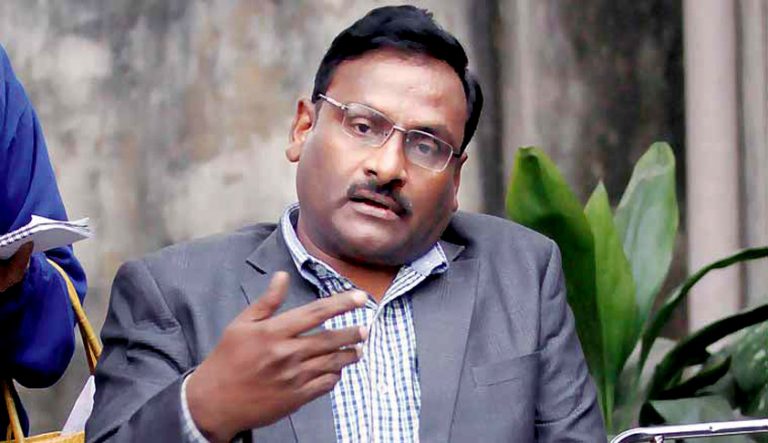
The Supreme Court on Saturday suspended the Bombay High Court order acquitting former Delhi University professor Gokarakonda Naga Saibaba in a case for his links with Maoists, along with 5 others. The apex court also stayed the release of the convicted persons.
The High Court had acquitted the urban Naxals on a technicality, overlooking the merits of the case considered in detail by the trial court. The HC had said that the prosecution had not obtained sanction from the central govt to prosecute GN Saibaba under UAPA. Further, while the required sanction was obtained to prosecute the other 5 under UAPA, the High Court declared the sanction invalid. Maharashtra government had moved the Supreme Court contending that failure to grant sanction cannot lead to acquittal in view of Section 465 of the Code of Criminal Procedure.
Bench : For reasons stated above the impugned judgment and order of HC is suspended till further orders. Counter if any to be filed on behalf of A6 within a period of 4 weeks. Counter if any on behalf of other accused to be filed within 4 weeks of receipt of notice.
Immediately after the Bombay High Court had delivered the judgement, the Maharashtra government had approached the Supreme Court challenging it, and the apex court agreed for a special sitting to hear the case. A bench of justices MR Shah & Bela Trivedi heard the case, and ruled that the High Court took a wrong approach.
Representing the Maharashtra government, Solicitor General Tushar Mehta argued that the High Court erred in by not going into the merit of the case when the trial had been concluded and the accused had been convicted, but declared the entire trial null and void just because sanction from the govt was not taken. Mehta also said that while sanction was taken obtained for GN Saibaba, for the other 5 the sanction was granted.
The court also noted that the accused had not raised the matter of sanction specifically during the trial, and the trial court had noted this aspect in the judgement. Justice Shah said that while the court didn’t find fault with the accused, they find fault with the Bombay High Court for not considering the merits of the case at all.
The Supreme Court said that GN Saibaba has not been acquitted on merits, he has only been discharged. The bench said that they find it fit case to suspend the impugned judgment and order of the High Court. Giving reasoning for the order, the bench said that the accused were convicted after detailed appreciation of evidence. Further, the offences are very serious, and if the state succeeds on merits, offences are very serious against the interest of the society, sovereignty and integrity of India.
The Supreme Court said that the High Court has not considered the merits, and the court discharged the accused only on the ground that the sanction was invalid for the other 5 and sanction was not obtained for Saibaba. With this order, the Supreme Court stayed the release of Saibaba and the 4 others as ordered by the High Court.
The others convicted in the case were Mahesh Kariman Tirki (22), late Pandu Pora Narote (27), Hem Keshavdatta Mishra (32), Prashant Rahi Narayan Sanglikar (54) and Vijay Nan Tirki (3). GN Saibaba was arrested later, and their trials were clubbed with his trial. Pandu Pora Naroted died during the trial.
The apex court also rejected Saibaba’s appeal to keep him under house arrest and not in jail due to his medical condition. The bench said that this request cannot be accepted at this stage when the accused was already convicted by trial court. The solicitor general had opposed this request, saying that even from home he can communicate with Maoists and keep running antinational agenda. “There is a recent tendency from urban naxals to seek house arrests. But everything can be done from within the home for them. even by phone. Please say that house arrest can never be an option,” Tushar Mehta said.
Commenting on Saibaba’s health condition, the court noted that earlier he had applied for bail on health grounds and the same was rejected. However, the court said that the convicts have the liberty to appeal for bail.
On Saturday, Delhi BJP leader and spokesperson Tajinder Bagga quoting a tweet posted by Aam Aadmi Party (AAP) Gujarat leader Gopal Italia in 2018 took a jibe at Italia for being a “paap of Congress”. However, the official Twitter handle of Daman and Diu Congress Sevadal replied to Bagga’s tweet alleging that the Aam Aadmi Party is an illegitimate child of the Rashtriya Swayamsevak Sangh (RSS).
Notably, in his 2018 tweet, Gopal Italia wrote, “Exercising constitutional powers, Congress (@/INCIndia) should expose the drama of the BJP in front of the people by bringing a private member bill in the Rajya Sabha on the issue of Ram temple.”
संवैधानिक शक्तिओ का इस्तेमाल करते हुए @INCIndia को राममंदिर के मुद्दे पर राज्यसभा में प्राइवेट मेम्बर बिल ला कर भाजपा का पूरा नाटक लोगो के सामने खुल्ला कर देना चाहिए।@RahulGandhi@KapilSibal@the_hindu
Interestingly, the Daman and Diu Congress Sevadal jumped in, replied to Bagga’s tweet, and wrote, “BJP’s agent is now telling his own illegitimate child as neighbour’s, the whole world knows that the father of BJP and AAP is ##RSS!”
खुद की नाजायज औलाद को अब पड़ोसी की बता रहा है ? बीजेपी का दल्ला ? , पूरी दुनिया को पता है बीजेपी और AAP का एक ही बाप ##RSS है !?
Notably, this is not the first time a Congress official account has attracted controversy on Twitter.
Congress tweets and deletes fake‘AajTak survey’
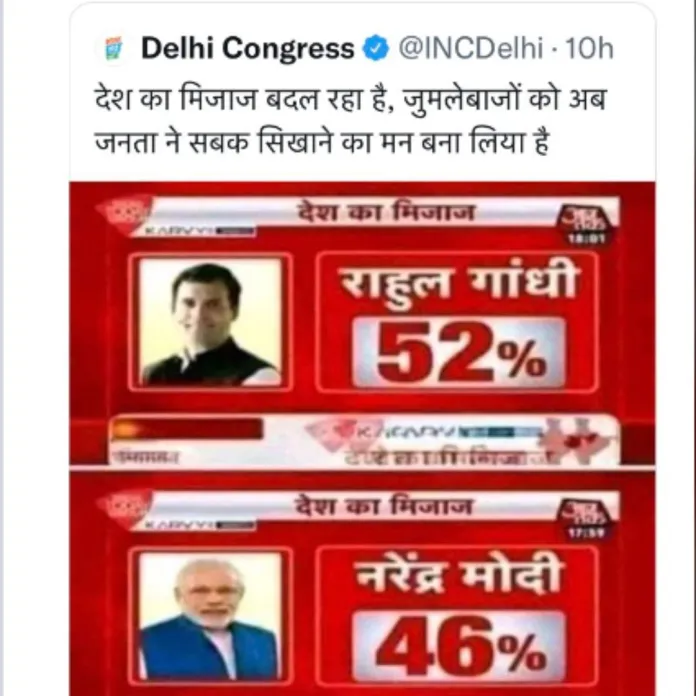
The Congress party lauded its leader Rahul Gandhi on Thursday (October 13) for allegedly overtaking Prime Minister Narendra Modi as the people’s choice, based on an imaginary poll attributed to news outlet Aaj Tak.
According to the ‘photoshopped survey,’ the Congress scion has a 52% approval rating, while Prime Minister Narendra Modi has a 46% approval rating.
The official Twitter account of the Delhi Congress tweeted, “The mood of the nation is changing.” People have now decided to teach a lesson to those who make false promises (a reference to the BJP and Prime Minister Modi).”
Screengrab of the Tweet by the Congress party
The joy of the Congress ecosystem, however, was short-lived, as Aaj Tak was forced to refute the misinformation spread in its name.
The news outlet clarified in a tweet that no such survey was conducted by its team and that the image shared by the Delhi Congress had been manipulated. “Delhi Congress, the information shared via your tweet is false,” it clarified. The image has been manipulated. Aaj Tak did not conduct such a survey, and it is a fake.”
“As a responsible political organization, we expect you to remove this misleading tweet that falsely attributes Aaj Tak as promptly as possible,” it asserted.
CLARIFICATION: @INCDelhi इस ट्वीट में शेयर की गई जानकारी पूरी तरह से गलत है. यह तस्वीर Photoshopped है. आजतक ने ऐसा कोई सर्वे नहीं कराया है, यह पूरी तरह Fake है. हम आशा करते हैं कि आपके जैसे जिम्मेदार राजनीतिक संगठन आजतक के नाम पर गलत ख़बर वाले इस ट्वीट को तुरंत हटा लेंगे धन्यवाद https://t.co/lsC8YtHA6Z
Soon after, the Delhi Congress deleted the tweet without apologizing for spreading misinformation.
Congress leader Nagma Morarji’s ‘fake letter’ tweet
Earlier this year, Congress leader Nagma Morarji tweeted a forged letter purporting to be from India’s Union Home Minister Amit Shah. The alleged letter directed Uttarkhand Chief Minister Pushkar Singh Dhami to provide former BJP spokesperson Nupur Sharma with Z security as soon as possible.
“In the current scenario, I recommend that you evaluate emerging threats to Smt Nupur Sharma’s family house in Dehradun and provide Z security on an urgent basis,” the letter said.
Furthermore, the alleged letter named Nupur Sharma as an RSS ideologue who could aid in the establishment of a Hindu Rashtra. Swati Goel Sharma, a journalist, was quick to call her bluff. Morarji quickly deleted her tweet after it was pointed out that the letter was fake, of course, without apologizing.
Congress’s “Rice Bag” joke
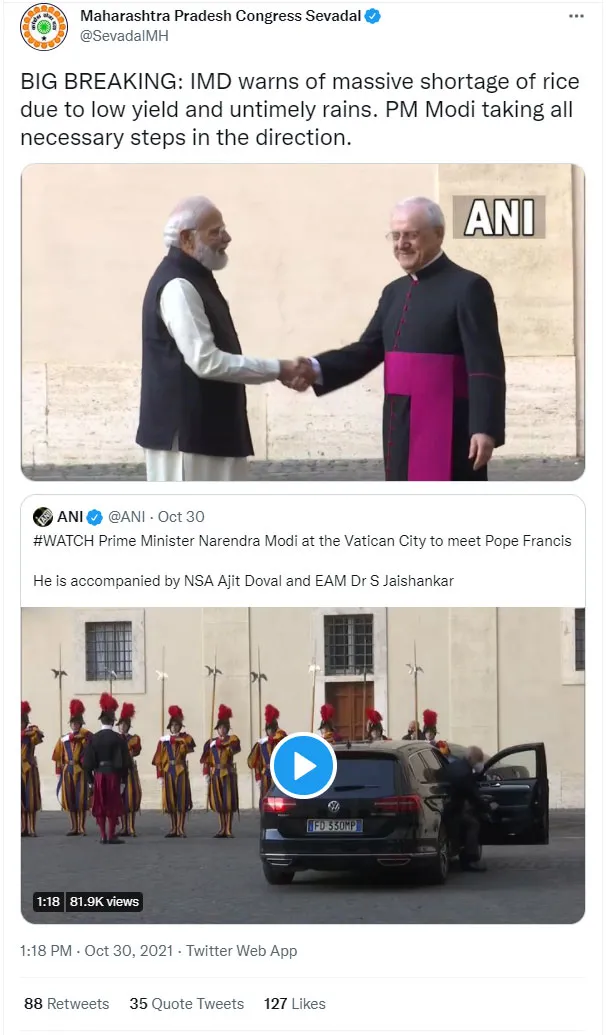
In October 2021, Maharashtra Congress Sevadal cracked a ‘rice bag’ joke to target PM Modi. Quoting ANI’s tweet that talked about PM Modi’s meeting with Pope Francis at the Vatican, Maharashtra Pradesh Congress Sevadal cracked a ‘Rice Bag’ joke. The organization wrote, “BIG BREAKING: IMD warns of a massive shortage of rice due to low yield and untimely rains. PM Modi taking all necessary steps in the direction.”
Congress Sevadal’s Tweet
‘Rice Bag Converts,’ ‘Rice Christians,’ or simply ‘Rice Bags’ are people who convert to Christianity after being persuaded to do so by Christian missionaries promising material benefits. The phrase has been used for centuries. Rice Christians, according to The Brewer’s Dictionary of Phrase and Fable, are “converts to Christianity for worldly benefits, such as a supply of rice to Indians.” The profession of Christianity born of lucre, not faith.”
Over time, the term has come into common use to mock Christians who converted for financial gain.
Congress’s ‘whitewashing’ of Islamic tyrant Aurangzeb
In May of this year, the Maharashtra Congress Sevadal attempted to whitewash the crimes of tyrants such as Aurangzeb.
The Maharashtra Pradesh Congress Sevadal’s official handle insinuated that the ancient Hindu temple was not destroyed by the Mughal emperor, claiming that a photograph taken in 1890 can prove that Aurangzeb destroyed the temple when the Mughal emperor had died nearly two centuries before.
Congress Sevadal attempted to dismiss Aurangzeb’s destruction of the temple in order to build simply because a photograph of the partially destroyed wall was taken decades later. But the fact remains that the original Kashi Vishwanath temple was destroyed during Aurangzeb’s reign, and the mosque was built on its ruins. Even Muslims do not deny this fact; they only justify it by claiming that Aurangzeb ordered the demolition.
On Wednesday, October 13, a local court in Adilabad district dismissed the case and acquitted 24 Muslim men accused in the violence that broke out between Hindus and Muslims in Bhainsa town in Nirmal district, Telangana, in the year 2008.
All the accused were already out on bail, which was granted to them merely 3-months after the incident.
While pronouncing the judgement, the principal judge of Adilabad court, Madhavi Krishna, advised the accused “to behave with good conduct in the society” and warned them against indulging in any kind of communal violence in the future.
Senior counsel Mohammad Ghouse Siddiqui, who defended the case on behalf of the 18 Muslim accused had argued before the court that, “the police submitted a charge sheet in the case in 2012, four years after the incident occurred.”
“The police had filed the case under Sections 147 (rioting), 148 (violence using weapons) and 149 (unlawful assembly to commit an offence), besides 302 (murder) of the Indian Penal Code, they could not prove the charges,” Siddiqui said.
The counsel representing the accused further added that all 24 accused were released on bail within three months of the incident, as the police had failed to file the charge sheet in the stipulated time.
Based on this argument, the court acquitted the accused, stating that the prosecution had failed to provide adequate evidence to substantiate the accusations.
On October 10, 2008, three people were killed and fifteen others were injured in communal riots and subsequent police firing in the communally sensitive Bhainsa town, which was then part of the unified Adilabad district.
The violence erupted during the immersion procession of Durga idols, which coincided with the time when the Muslims in the area gathered to offer Friday Namaz. As per reports, the Hindu procession was passing through a road next to the Panjeshah mosque in the town and the people inside the shrine objected to music being played as their prayers were on. That led to a heated argument between the members of the two communities. What followed next was a round of stone pelting and the situation got out of control.
Hindus alleged that stones were pelted at the Idol immersion procession from the place of worship and Muslims claimed that the participants in the procession had pelted stones at a place of worship.
During the clashes, miscreants plundered and set fire to 150 shops and 20 vehicles. To control the situation, the police used brute force but when that didn’t help the authorities opened fire in the air. According to police officials at the time, the situation was brought under control after 35 bullets were fired into the air. A week-long curfew was also imposed to restore normalcy in the area.
Accused of involvement in the riots, 25 Muslims of Bhainsa were detained by the police and a case was registered against them.
Bhainsa has a history of violence
Since 2008, Bhainsa has been considered a hyper-sensitive area. However, there had been peace for a long time until last year when Bhainsa again saw rioting between Hindus and Muslims.
On March 7, Hindus and Muslims clashed and reportedly pelted stones at each other in Bhainsa, Nirmal district, Telangana. As per initial reports, ten people, including media persons, civilians and police personnel, were injured, and two houses and at least one auto-rickshaw were set ablaze during the incident.
Prior to this in January 2020, a clash broke out between Hindu and Muslim communities that left around 11 people injured. Reports suggested that 18 houses were set on fire in Korbagalli street, and several bikes were torched. BJP MLA Raja Singh was put under house arrest. He had alleged that AIMIM was behind the attack on Hindus in Bhainsa. On February 3, it was reported that the Telangana government filed a case against a journalist for reporting how Muslim mobs attacked Hindu homes amidst chants of “Allah ho Akbar”.