Home Blog Page 2900

Desi cold drink ‘Campa Cola’ to make a comeback, Reliance Industries acquires the brand to relaunch during Diwali

Long before any of our favourite cold drink brands dominated the market, there existed this ‘Made In India’ cola drink named Campa Cola which was closer to probably everyone’s heart during the 1990s. Campa Cola was a huge part of the Indian market for over two decades before two US-based cola giants led to the eventual decline of the desi cola brand.

Campa Cola vanished from the shelves of grocery stores by the year 1999, but now is making a comeback as Reliance Industries plans to relaunch the product by Diwali this year. In a bid to scale up the FMCG business, Reliance Industries this week acquired the brand Campa and has planned to re-launch the Cola product by October this year nearing Diwali.

According to reports, Reliance Industries purchased the brand from Delhi-based Pure Drinks Group for around Rs 22 crore and said that it would relaunch the Campa cola by October this year. The Campa Cola will be relaunched in three flavours including its iconic cola, the lemon flavour, and orange.

With this, the brand will attempt to compete with existing similar cola products including Coca-Cola and PepsiCo, which once led to Campa’s gradual demise in the 1990s. While other desi cold drink brands Thums Up, Limca, Gold Spot, Citra and Maaza were purchased by Coca-Cola from Parle in 1993, resulting in the continued presence of those brands in the market, Campa Cola was not subject to any such acquisition. Reports mention that the product will be accessible for purchase in Reliance Retail shops, JioMart outlets, and Kirana retailers that buy Reliance items.

Reliance eyeing on the FMCG market

Reliance Industries is planning to enter the Fast-Moving Consumer Goods (FMCG) market. Recently, at the 45th Annual General Meeting (AGM) of the company, Isha Ambani who is the director of Reliance Retail Ventures Ltd (RRVL) said that the company would launch the FMCG goods business this year.

According to the reports, Reliance Industries have identified around two dozen potential brands which can be acquired or partnered with by the company to strengthen the FMCG sector. “A couple of deals have already fallen through due to the high valuations sought. Reliance’s strategy is to go for small-sized deals valued at a few crores”, the company executive stated to the Economic Times.

Earlier, the company collaborated with Meta and Jio Mart to launch Reliance Retail on WhatsApp, allowing customers to order groceries over WhatsApp. The business is also in advanced negotiations with an edible oil and namkeen brand, as well as a soap brand.

Campa Cola was huge hit after Coca Cola was asked to leave India

The recently acquired cola brand named Campa was quintessentially a Delhi brand and was manufactured at its headquarters at Shankar Market. The production was a huge hit since its launch in the year the 1970s. Campa Cola was launched by Pure Drinks Group, which also owns the Le Méridien hotel in Delhi after Coca-Cola was asked to leave the country in 1977 by the then Janata Party government over alleged violations of the Foreign Exchange Regulations Act. The then Janata Government had also asked other multinationals such as IBM to leave the country along with Coca-Cola.

Goerge Fernandes was the Industry Minister in the post-emergency government led by former PM Morarji Desai. He had asked the Coca-Cola company to follow the regulations and demanded it dilutes its equity stake in its Indian associates to 60 percent. Fernandes also desired that Coca-Cola Company share the formula for its concentrate with Indian stockholders. The corporation stated that it was willing to transfer a majority of the shares but not the formula, which it claimed was a trade secret.

The firm, therefore, left the Indian market as the then government denied them permission to import Coke concentrate. However, once the P V Narasimha Rao administration liberalized the Indian market in October 1993, it made a strong comeback and has maintained a significant presence ever since.

The instant hit Cola vanished by 1999

It is notable that Pure Drinks Group (PDG) was the first to introduce Coca-Cola to India in 1949, and it remained the company’s sole licensed maker and distributor in India till the 1970s. The PDG then launched Campa Cola in the decade of 1970s after Coca-Cola exited the Indian markets. For about 15 years after 1977, Campa Cola became Delhi’s cold beverage of choice. The brand was an instant hit and was manufactured in over 50 factories across the country, including four in Delhi. Reports mention that the CP factory was the oldest one hosting the production of Campa Cola and the other three factories were located at Moti Nagar, Najafgarh, and Okhla.

Later, similar products began to enter the market to compete with Campa Cola. The Parle Group brought Thums Up which eventually ruled over the customers in Mumbai. Thums Up was later acquired by Coca-Cola in 1993 along with other brands owned by Parle, Limca, Gold Spot, Citra and Maaza. The production of the Campa Cola carbonated drink also declined and stopped in the due course after the return of Coca-Cola in 1993, and the entry of Pepsi in 1989, due to the dominance of their brands. Local brands could not compete with the mighty ad budgets of the American multinationals, and all the Campa production units were shut down by the year 1999.

However, Campa has made repeated efforts to re-enter the market, the most recent in 2019, but has been unable to compete with established players owing to a lack of financial strength. Reliance Industries has now acquired the brand and is planning to relaunch the product by October this year nearing Diwali. RIL had the financial and distribution muscle to compete with the global brands, and soon Campa Cola could become a familiar cold drink across India.

Reservations to Dalit Christians and Muslims was a ‘Communal Award’ given by Sonia Gandhi for defeating Vajpayee: Why BJP has to resist it

On Tuesday, the Supreme Court of India issued a notice to the Union Government, asking for their response in a plea that said those Dalit Hindus who had converted to Christianity or Islam should be given the same reservation benefits as extended to the Scheduled Caste (SC) category. The Supreme Court has given the central government a window of three weeks to respond. After that, the petitioners would get one week to respond to the government’s response.

Notably, last year, the then Union Law Minister Ravi Shankar Prasad said in the Rajya Sabha that Dalits who had shunned their faith and converted to Islam and Christianity will not be permitted to contest parliamentary or assembly elections from constituencies reserved for Scheduled Castes (SC), and will not be allowed to claim other reservation benefits.

Speaking on eligibility to contest from reserved constituencies, Prasad said, “Para 3 of the Constitution (Scheduled Castes) Order outlines that… no person who professes a religion different from Hindu, Sikh or Buddhist religion shall be deemed to be a member of a Scheduled Caste.”

The root of the issue lies in a 1950 Presidential Order. In Para 3 of that order, it was clarified that only those who profess Indic faiths – Hindus, Sikhs and Buddhists – would constitute Scheduled Castes. Those who convert to Islam or Christianity, leaving Hinduism, would not be eligible for the same benefits.

1950 Presidential Order

The 1950 order was further ratified by several other cases where the High Court and the Supreme Court of India reiterated the exact same position.

In the C.M Arumugam v S. Rajgopal and others, the court held that “It is no doubt true, and there we agree with the Madras High Court in G. Michael case that the general rule is that conversion operates as an expulsion from the caste, or, in other words, the convert ceases to have any caste, because caste is predominantly a feature of Hindu society and ordinarily a person who ceases to be a Hindu would not be regarded by the other members of the caste as belonging to their fold.”

The case in which this principle was ruled out was Michael v S. Venkateshwaran. This principle was further reiterated in the cases of Coopoosami Chetty v Duraisami Chetty and Muthusami v Masilamani. The basic premise of these judgements was that once someone converts to Islam or Christianity, out of Hinduism, their caste ceases to exist altogether, which is to say that they stop belonging to any caste, therefore, they should not be eligible for any benefits under Scheduled Caste category.

When the 1950 Presidential Order and the various judgements of the Courts have laid this principle out clearly, one has to wonder where the current case comes from. Of course, the Christian and Muslim communities would have counters to these orders, which we can discuss threadbare in a separate article, but politically, what is forming the basis of the court considering this demand seriously?

The petitioners led by NGO Centre for Public Interest Litigation (CPIL) had filed the plea for extension of quota benefits to Dalit Christians in 2004 and the case was last heard in February 2015. In between the court was informed that the government had set up the Ranganath Misra commission to examine the issue. Prashant Bhushan referred extensively to the Commission report that the government had set up after CPIL had filed the petition.

For the purpose of this article, we will focus on the genesis of the report and its political ramifications given the time it was commissioned.

Resolution for formation of the commission

It was in October 2004 that a resolution was passed by the Government of India to investigate steps to be taken to benefit the “socially and economically backward sections among religious and linguistic minorities”.

The aim of the “National Commission for religious and linguistic minorities” was to 1) figure out how to identify the backward communities under religious and linguistic minorities”, 2) recommend measures for their welfare and 3) recommend constitutional, administrative and legal modalities for the implementation of recommendations made. The BJP at the time had vociferously rejected the implementation of the report and also opposed reservations for Dalit Christians, accusing Congress of playing vote bank politics.

What is pertinent to note here is that the Commission was set up in October 2004. Only a few months after UPA, led by Sonia Gandhi, defeated Atal Bihari Vajpayee’s NDA alliance in the General Elections. Post the victory of the UPA, Sonia Gandhi and her band of cohorts had taken several decisions to appease the minorities that had overwhelmingly made the UPA win possible. Here, I say Sonia Gandhi because there are official NAC records that say, in no uncertain terms, that the Manmohan Singh government was remotely controlled by Sonia Gandhi, making her the de-facto leader of the nation.

The decisions taken by Super PM Sonia Gandhi were always dressed up as welfare schemes, however, the undertones are extremely hard to miss after winning the elections in 2004.

It was, for example, in January 2006, the Congress government split the Ministry of Social Justice and Empowerment to create the Minority Affairs Ministry. The first minister in 2006 was Abdul Rahman Antulay, a Muslim and then, in 2009, it was Salman Khurshid, again a Muslim. Interestingly, AR Antulay’s name came up in the confidential memo by the U.S. Ambassador to India, David Mulford, released by WikiLeaks. In the Wikileaks cable, it was clearly mentioned that Antulay had raised doubts about 26/11, saying that “Hindutva forces” could have been involved in the 26/11 terror attack.

“The Congress party, after first distancing itself from the comments (of Antulay, the then Minority Affairs Minister), two days later issued a contradictory statement which implicitly endorsed the conspiracy. During this time, Antulay’s completely unsubstantiated claims gained support in … Indian—Muslim community,” Mulford wrote in his secret cable to the State Department on December 23, 2008. “Hoping to foster that support for upcoming national elections, the Congress Party cynically pulled back from its original dismissal and lent credence to the conspiracy,” Mulford wrote.

It is rather evident that while the Ministry was supposed to take care of all minorities, including Buddhists, the Sonia Government was focused mainly on appeasing the Muslims as their primary minority group that needed to be rewarded for voting them back to power. The actual expenditure on Minority Scheme had been from 143.53 crores in 2006-07 to Rs. 1593.23 in 2012-13.

In the campaign of appeasement, it wasn’t just the endless list of schemes that were introduced for minorities and specifically for Muslims, it was also a period where dangerous attempts were made to introduce dangerous legislations like the Communal Violence Bill. In 2005, UPA1 introduced a communal violence bill. In 2011, under the guidance of the NAC, UPA2 introduced a revised draft of the same. 

In the 2005 version of the bill, any “group” that has become a victim of communal attacks could seek redressal. However, in 2011, a new definition of the “group” which is protected, was introduced. “Group means a religious or linguistic minority, in any State in the Union of India, or Scheduled Castes and Scheduled Tribes within the meaning of clauses (24) and (25) of Article 366 of the Constitution of India

Thus only minorities and SCs/STs could be “victims” and the perpetrators of communal violence would always be the majority, which is Hindus. The definition of “offences” itself was so wide — any sort of crime could be brought under the ambit of this Act.

“Continuous unlawful activity of a widespread or systematic nature knowingly directed against a group or part thereof’ means the course of conduct involving the multiple or mass commission of acts referred to in this section, whether spontaneously or planned, whether over a short or prolonged period or in one place or a number of places simultaneously or otherwise, against any group or part thereof”.

About 35 offences under the IPC were brought under dual ambit — by making it also relevant to this Communal Violence Bill. The only additional criterion being it has to be committed multiple (read — more than once) times against a minority. The Act turned many judicial concepts upside down. It mandates that every accused be first assumed guilty — with the onus of proving otherwise on the accused.

Whenever an offence of organized communal and targeted violence is committed and it is shown that a hostile environment against a group exists or the offence of hate propaganda under section 8 was committed against a group, it shall be presumed, unless the contrary is proved, that the said offence was knowingly directed against persons belonging to the group by virtue of their membership of the group”.

There were several other provisions that specifically painted a target on the backs of Hindus in order to protect Muslims, presumably, as a mark of thanks for electing them back to power.

From Communal Violence Bill to MASUKA, the creation of a Minority Ministry, excessive doles and schemes to benefit Muslims specifically and commissions such as the Misra commission to extend SC benefits to those Dalits who convert to Christianity – Congress attempted in every possible way to appease “minorities”, which certainly did not include Buddhists, Sikhs, Parsis and Jains.

Extending reservation to Dalit Christians, a misnomer, to begin with, was a political campaign that was set in motion by the Congress government in 2004, by setting up a specific commission to include Christian converts into Scheduled Castes. In Telangana, as recently as 2021, Congress had promised that if it is voted to power, it would include Dalit Christians in Scheduled Castes. In 2014 as well, Congress had promised quotas for “backward Muslims” and inclusion of Dalit Christians in Scheduled Castes.

It is evident that the cycle Congress had followed after coming back to power in 2004, is being repeated as the last ditch effort to come back to power in 2024. With the Supreme Court now asking the Modi government to file a response to the plea, it would do well to stay away from the cycle that only furthers the Congress’ appeasement agenda, almost incentivising Hindus to convert to Christianity and Islam.

Aside from political concerns, legal and civilisational concerns are also aplenty, that the government would do well to consider. The entire reason Dalits convert from Hinduism to Christianity or Islam – inducement is that Hinduism is discriminatory and that these religions would provide equality, respect and security. If that is the case, the moment a Dalit changes his religion, there is an assumption that he is shedding the supposed historic oppression to become a part of an egalitarian society. In that case, if they are getting equality, why should they be entitled to reservations owing to their former Hindu identity? This could as well be a way to whitewash casteism in Islamic and Christian societies. There are enough examples of lower castes within these two religions being discriminated against. They essentially want state protection while their own discriminate against them, but use their Hindi identity to do so – preserving the propaganda of Christianity and Islam.  

Reservations were accorded to Scheduled Castes (Dalits) essentially because of the historical oppression that the community faced. The oppression then led to economic and social backwardness. As far as social backwardness is concerned, that ideally should be taken care of the moment the individual converts to Christianity or Islam. The economic backwardness is now taken care of by Economic Weaker Section (EWS) and therefore, additional reservation on the basis of an identity they gave up, is essentially going to work as an incentive for Hindus to convert to Christianity. It is pertinent to note that according to reports, 70% of Indian Christians are Dalit converts – if that is true – this essentially means that the majority of Christians would be taking benefits as minorities and as “Dalits”. The asininity of this proposal must be summarily rejected by the Modi government.

When BJP said ‘throw in the dustbin’ for recommendation to give reservations to ‘Dalit Christians and Muslims’: Throwback as apex court asks govt’s opinion

On August 30, the Supreme Court of India sought a response from the central government to a plea that the Dalits who have converted to Islam and Christianity from Hinduism should be eligible for the same quota benefits that are reserved for Scheduled Castes.

The court asked the Centre to reply within three weeks and directed the other side to respond to the Centre’s response within one week. Advocate Prashant Bhusan appeared for the petitioner, and Solicitor General Tushar Mehta appeared for the union government.

It is noteworthy that then-Union Law Minister Ravi Shankar Prasad had said in Rajya Sabha last year that Dalits who had shunned their faith and converted to Islam and Christianity would not be permitted to contest parliamentary or assembly elections from constituencies reserved for Scheduled Castes (SC), and will not be allowed to claim other reservation benefits.

The issue of granting reservation rights to the converted Dalits has been raised several times in the past. As per the current law, Para 3 of the Constitution (Scheduled Castes) Order outlines that no person who professes a religion different from Hindu, Sikh or Buddhist religion shall be deemed to be a member of a Scheduled Caste.

Furthermore, then-Prime Minister of India Jawahar Lal Nehru-led central government had passed an order in 1950 limiting the definition of “scheduled caste” only to members of the Hindu faith, which was later extended in 1956 to Sikhs and to Buddhists in 1990. In the past, the Supreme Court of India had too had upheld the caste benefits only to those belonging to the Indic faiths.

Converts lose reservation rights leading to a dilemma

Though it is not widely talked about, most of the converts that leave Hinduism and accept Islam or Christianity do so allegedly to have a “better life” without any discrimination. They are often allegedly lured by the religious leaders of those faiths with a promise that if they convert, their woes will be over.

However, no one tells those people that after conversion, they will lose the right to a reservation that they enjoy while being attached to the Hindu fold. When converted, the benefits marked for the Hindu Dalits no longer apply to them, and it becomes a major headache for the religious leaders to keep them in the new faith.

In the past, there have been several attempts to include “Muslim Dalits” and “Christian Dalits” in the reservation system, but the attempts were not fruitful for such converts.

Caste system in Christianity and Islam

Though it is often believed that Christianity and Islam do not have a caste system, the reality is different. When a Dalit converts to Christianity or Islam, no matter whether he or she is lured or done on their own, they face discrimination. It is often seen that Dalits have separate churches, though not promoted that way, but in an unsaid rule. The same goes for Islam. Those who get converted to Islam are not seen as “pure” by their fellow practising Muslims. It might be the reason the idiom that roughly translates to “A new Muslim will follow religious practices more vigorously” came into existence. To find a space for themselves in the community, new converts in any religion follow the traditions of the book.

However, it takes a lot of time and commitment for them to find the space they desire. Meanwhile, the benefits of reservation in jobs and education they were enjoying being a Dalit of the Hindu community are stripped, resulting in further “shock” that they are often not ready for. To stop the converts from going back to Hinduism, attempts are being made to expand the horizon for Dalit reservations to such converts.

BJP against Ranganath Mishra Commission report

While Bharatiya Janata Party is now in power at the Centre and preparing a response to the Supreme Court over reservation for Converted Dalits, it is important to recall what BJP had said in 2010 after the Ranganath Mishra Commission report was released in 2009.

In 2009, the government-appointed Justice Rangnath Commission recommended 10 per cent reservation for Muslims and 5 per cent for other minorities in government jobs. The committee also favoured Scheduled Caste status for Dalits in “all religions”.

The commission recommended delinking the Scheduled Caste status from religion and abrogation of the 1950 Scheduled Caste Order, which “still excludes Muslims, Christians, Jains and Parsis from the SC net.” The committee recommended that if Muslims were not available to fill the seats, other minorities could be appointed, but in “no case”, the seat should be given to anyone from the majority community.

It is noteworthy that Member Secretary of the commission Asha Das was against the SC status on Dalit converts to Islam and Christianity. She found no justification to give such converts SC status. Furthermore, she added that such converts should continue to form part of OBCs and avail benefits accordingly. However, the commission rejected her dissent note.

In 2010, BJP had dubbed the report as a curse and said it should be thrown “into a dustbin”. The party vowed to protect “the rights of backward classes”. The statement was made during a convention in Bengaluru.

Then-BJP president Nitin Gadkari had said that the party would not accept the report “at any cost”. He added that BJP would oppose if the then-government decided to implement the recommendations that would result in cutting into the reservation of OBCs.

Madhya Pradesh Chief Minister Shivraj Singh Chouhan had said in a statement that BJP would not allow the then-central government to snatch reservations from the OBCs and reminded Congress that first Prime Minister Jawaharlal Nehru also opposed reservations for convert Dalits.

He further added that the report should be dumped into a dustbin and said he gave a similar treatment to the Sachar Committee report that asked the states to provide details of Christians and Muslims working in the states.

Former Vice President M Venkaiah Naidu had termed the report as a curse on the backward classes. He called it a “worse loss” for the backward communities.

Before Prime Minister Narendra Modi won the elections in 2014, he had reached out to the Dalits and backward classes to come forward and debunk the Ranganath Mishra Commission report on reservation for minorities. In 2009, when he was Chief Minister of Gujarat, he urged the central government not to implement the recommendations in the report. By that time, the report was yet to be tabled in the Lok Sabha.

It is notable that in March 2022, Union Minister of State for Social Justice A Narayana Swamy said that the Centre had no plans to implement the report of the Ranganath Misra Commission. As the Supreme Court has again commenced hearing on such case, there is a high possibility that the Centre would stick to its old stand that is against providing reservations to “Dalits” who convert to Islam or Christianity.

Delhi police arrest stalker Amanat Ali who shot a 16-year-old girl in Sangam Vihar, seizes two country-made pistols

0

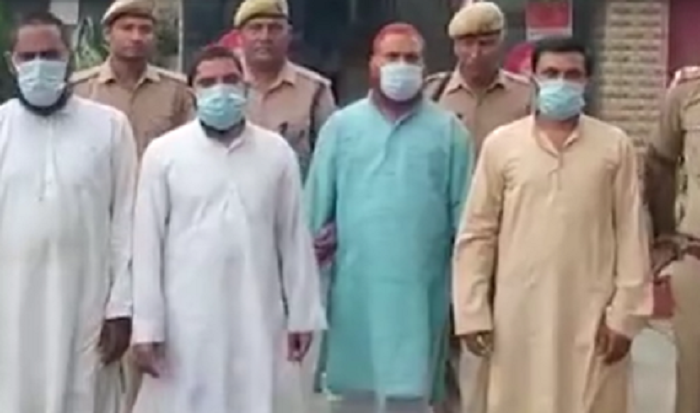
The Delhi police arrested stalker Amanat alias Arman Ali who had shot a 16-year-old girl near her home in Sangam Vihar, South Delhi on August 25, Thursday. His two associates Bobby and Pawan were also arrested, said DCP Benita Mary Jaiker.

DCP Benita Mary Jaiker further told news agency ANI that, after the incident, the other two accused absconded to Muzaffarnagar in Uttar Pradesh and were eventually nabbed on August 26. Ali had got the weapons from his uncle and wanted to kill the girl.

According to reports, two country-made pistols, three live and one empty cartridge were seized from the possession of Ali and his associates. The police registered a case against the trio under sections 307 (attempt to murder) and 34 (common intention) of the Indian Penal Code (IPC).

The 16-yr old girl was admitted to the hospital with a bullet injury, where she is currently recuperating.

The incident took place on August 25, when the victim, a Class-11 student of the Cambridge International School on Devli Road, was coming home from school. She was reportedly accompanied by her mother. The CCTV footage of the area, that surfaced, showed that the girl was followed by three men on a motorcycle. Near South Delhi’s Sangam Vihar B block, one of them fired at her and the trio fled the spot.

The police said that Amanat alias Arman Ali, who lived in the girl’s neighbourhood, had been continuously stalking and harassing the victim for the last 4-5 months. The police added that Amanat Ali confessed that he came in contact with the victim through social media. The victim stopped talking with him some time ago due to which he was angry and had decided to kill the girl. 

Ali contacted his friends Bobby and Pawan to hatch a conspiracy to kill her. On August 25, when the girl was returning from her school, Amanat Ali along with his aides followed her on a bike. Ali fired at her before the trio fled on the bike. At around 3.45 pm on Thursday (August 25) the Sangam Vihar police received the information that the victim received a gunshot injury on her shoulder, after which the police reached the spot and rushed her to the hospital.

The victim, who is currently being treated in the hospital, told the police that she was in touch with him for two years through social media. She stopped talking to Ali around six months ago but the accused would still follow her continuously. 

The victim’s father expressed shock and disbelief that as bystanders continued to record the incident, no one stepped forward to assist his wife, who continued to beg for help, while his daughter cried in pain.

Meanwhile, on Friday, the Delhi Commission for Women (DCW) took cognizance and issued a notice to the city police seeking an action-taken report on the matter. 

Munawar Faruqui plays victim, says having suicidal thoughts after his shows get cancelled, had earlier apologised and then mocked Hindus

After several shows of ‘comedian’ Munawar Faruqui got cancelled in Delhi, Banglore and Mumbai, reports have emerged claiming that the ‘comedian’ is disturbed and is having suicidal thoughts. Munawar Faruqui said that he is fed up with the controversies revolving around his show and that he had thoughts to end up his life. He is currently on a country-wide tour with his solo comedy show Dongri To Nowhere, but due to protests for his past anti-Hindu comments, the show has been cancelled in several cities.

According to the reports, Faruqi’s show ‘Dongri to nowhere’ which was scheduled to be held on August 28 at the Kedarnath Stadium in Delhi’s Civic Centre was cancelled after the Delhi unit chief of the Vishwa Hindu Parishad, wrote to Delhi police demanding cancellation of his shows. The Hindu organization had said that they would hold protests against the show if it is not cancelled.

The organization had stated that the ‘comedian’ mocks Hindu gods and goddesses in his show. “Due to his shows, communal tensions were triggered in Bhagya Nagar. We urge you to immediately cancel this show, or else, Vishwa Hindu Parishad and Bajrang Dal activists will oppose the show and hold protests against the same”, Surendra Kumar Gupta had said.

In an exclusive interview with popular host Siddharth Kannan, Faruqui on August 31 said that he is depressed over his ‘comedy’ shows getting cancelled and that had thoughts to end his life. Playing the victim after controversy around his comments insulting Hindu Gods, Faruqui in the interview further claimed that he was depressed and broken from the inside due to his shows getting cancelled.

He said that he had suicidal thoughts crossing his mind several times over the period but he never attempted to do so as he considers suicide the biggest sin. “It’s better to survive than to go to Jahannam (hell) after committing suicide”, he believes. Earlier, in the reality show Lock Upp hosted by Kangana Ranaut, Faruqui had confessed that had suicidal thoughts in the past too and also recalled his reaction when he had first heard about the shocking death of the late actor Sushant Singh Rajput. It is notable that Munawar Faruqui emerged as the winner in the first season of Lock Upp which was streamed on Alt Balaji and MX Player.

“This body has been given by God. In Islam, many things are ‘haram’ (sin) because they harm your body, like tattoos, and cigarette. Ending that body’s existence is considered the biggest sin. It is said that weak people do this, but last 3-4 years I realized that only very strong people can do this”, he had said adding that his hands trembled for two to three days after he heard about the death of Sushant Singh Rajput.

“When such suicidal thoughts start coming into my head, the first thing that stops me is that God doesn’t allow it, and the second is you start seeing faces”, he was quoted. Recently, after all ‘Dongri to nowhere’ shows got canceled in Delhi, Banglore, and Mumbai, Faruqi on Instagram posted a reel giving a witty career update and said that he would now work as a ‘full-time reeler’.

The controversial stand-up comedian has recently seen many of his live shows of ‘Dongri to nowhere’ being cancelled over his past indecent remarks against Hindu gods and goddesses and Union Home Minister Amit Shah. On August 21 (Sunday), his show scheduled to be held in Mumbai’s YB Chavan Auditorium was cancelled after event organizers did not get the required permissions.

Prior to this, the Bengaluru police denied permission for Munawar’s show ‘Dongri to nowhere’ in the city, which was scheduled to take place on Friday, August 19. Interestingly, Munawar Faruqui had then lied about missing his flight due to health issues which had led to the cancellation of his Bangalore show, but later it came to light that the show was cancelled on the directions of the Police following a letter of opposition by the Hindu organization Jai Shri Ram Sena. 

It is worth noting that Munawar Faruqui drew the ire of the public for his abject mockery of Hindu deities and Hindu victims of the Godhra train burning incident, a tragedy in which 59 people were burnt alive when Sabarmati Express carrying karsevaks from Ayodhya, was set on fire allegedly by a Muslim mob near Godhra station.

He was also arrested in January 2021 for allegedly passing indecent remarks against Hindu deities during his stand-up shows. Though he was released later, his unrepentant remarks on a Hindu genocide and his distasteful remarks on Hindu Gods have fuelled protests against his shows. Later he apologized saying that he never intended to hurt anyone’s feelings through his jokes and continued to demean Hindus and their culture through his ‘comedy’ shows.

Misogynist or misunderstood? Ami Ganatra retells the Hindu epic Ramayana in her latest book

Mythological fiction, mythology inspired fiction or stories from our ancient text, whichever way one looks at it, readers are definitely in for a treat as more and more authors are offering writings on the Hindu dharma. OpIndia spoke to Ami Ganatra, whose new book Ramayana Unravelled retells the story of Shri Rama and looks at topics such as his childhood and youth while trying to understand him and the choices he made. The newer generation often cites certain incidents from the Hindu epic as ‘misogynist’, however, is the epic really or is it just one of the many wrong interpretations of our history.

Here are the excerpts of the interview

Is it yet another book on Shri Ram? How is it different from the ones already written and widely read.

Yes, indeed it is yet another book on Shri Ram and Ramayana :). Most books, however, would fall in the mythological fiction category, or should I say aitihasik fiction, to be more precise. As with Mahabharata, so with Ramayana, authors have picked themes and characters of Ramayana and woven stories around them adding their colour, flavour and even ideology.

In the process, sometimes, turning the message of the epics on its head where heroes are demonised, villains deified and a whole dollop of victimhood added to make the stories evoke deep emotions. Now, as long as it is known as fiction, there is absolutely no problem.

Retellings have been a part of our literary tradition. Unfortunately, in recent years, retelling of our itihasa is used more often to set social narratives and make assertions about Hindu Dharma and Indic society itself. Gullible readers assume the same to be the truth because avenues of knowing the itihasa for what it is without having to read the entire grantha or its translation are limited.. Even in those writings which are more faithful to the epic, events get told as stories, more often missing out on the underlying nuances and motivations of the decisions and actions taken by the characters.

My attempt in Ramayana Unravelled has been to narrate the events along with all the nuances that Rishi Valmiki has mentioned in Ramayana without giving my own color. The goal of the book is very simple – to provide readers a lucid and easily available reference point to come back to and check the validity of most commonly pushed narratives that they may encounter and to bring forth the profound and practical wisdom of ancestors to help make sense of our own lives.

In recent past a lot of books have been written as author’s interpretations of Hindu epics. What inspired you to talk about it?

As mentioned above, one motivation was to talk about the itihasa ‘as it is’ narrated by our rishis and provide a ready reference to cross validate fictitious ideological propaganda passed of as ‘the truth’. But that happened later, after I actually got to studying the epics and realised what is truth and what is propaganda.

The very inspiration to study the epics was to find answers to questions that bothered me deeply about certain characters and events. Having heard the stories as they are usually told in mainstream media, I couldn’t make sense of the significant inconsistencies seen in behaviours of the main actors and the adjectives ascribed to them. It couldn’t be that our rishis called someone epitome of Dharma when their actions seemed to suggest quite the opposite in certain instances.

When no satisfying answer was forthcoming, I decided to read the texts for what they are. That’s when I figured, the seeming inconsistencies in characters was because of my incomplete understanding of the itihasa itself. I also figured that I was not alone in asking the questions I asked. There were many like me who were genuinely keen to know. The bigger realization was how profound the texts were in their wisdom – nuanced and practical, and how relevant that wisdom is even today, more so today. And that’s how the writing and talking began.

Do you consider Ramayan and Mahabharata as Hindu epics or mythology? Did the events depicted in the epics take place or were they imagination?

Our rishis called Ramayana and Mahabharata itihasa and that’s what I believe they are. We have a very intricate classification of various types and Shruti and Smriti literature; so clearly they knew what they were speaking about. The word itihasa – iti-ha-aasa means ‘So it was’.

The definition is ‘Itihasa is that which is based on something that happened in the past, is narrated in a katha format; and is meant to give instructions of the four purusharthas – Dharma, Artha, Kaama, Moksha – for living a fruitful life . In that sense, itihasa is not merely a documentation of the past, but a commentary of what happened in the past with lessons for our own lives. In a way, itihasa is a case study of sorts which, through the lives of our ancestors, highlights the wisdom of Sanatana Dharma.

Given the katha format, there surely are allegorical elements to the story but that doesn’t negate the actual happening of the core events. In fact, I’d say, some allegorical elements are definitely later day additions. For example, stories Ahalya being a stone, or stones with name of Shri Rama floating on the sea – these do not appear in Srimad Valmiki Ramayana. The original text narrates these incidents more realistically.

Recently, the youth of India, especially sub-25 year old category have taken to Dharma and want to read more about the faith they were born in. What do you think has led to this?

I think a few factors have come together in the last few years. A big one is technology – the era of internet, which has democratized knowledge significantly. Unlike before where a group of elite pretty much controlled what was available to the masses and what not, internet made dissemination of information equitable, which led to a revolution of sorts. A lot of literature of India’s past, it’s history, it’s culture, from credible sources which was actively suppressed by the gatekeepers for years since independence became available for ready consumption.

News did not remain the prerogative of select media houses. Happenings which otherwise were deliberately ignored because it didn’t suit certain agenda, were now brought to the masses. The hypocrisy and double standards of the elites, especially those in media was out there for everyone to see.

As the people, especially the younger ones, had access to wider range of information, they started questioning all that they saw and read, even more about their own roots which the education system (unfortunately even after independence) taught them to be ashamed of, but their living experience was significantly different from what they read. As they see their counterparts in the country and even globally wear their identities on their sleeve unapologetically inspite of the patchy record of all those religious systems, Indian youth too has come to challenge the tone of the narrative being handed over to them and are curious to understand why they are the way they are.

Also with overall standard of living improving in the country in the last 3 decades, youngsters are becoming more assertive about their identity and not bogged down by the weight of extreme poverty which the earlier generations lived through. They are more confident in their own skin and not willing to bullied for what they are. This change is quite evident in Sports as well where we see our current lot of players showcase a greater will to succeed and a killer instinct which was not seen in the previous generation.

Lord Ram is politicised, some say. What are your thoughts on the same?

It pains me that it took over 500 years, 70 years since independence to reclaim the bhumi of Shri Rama; that for so many years, all that existed in the name of a temple in his janmabhumi, was his murti in a literal tent; that for over two decades ‘an alleged liberal intellectual brigade’ tried to not just question the existence Shri Rama and of a temple in Ayodhya but actively misled the courts with false and flimsy testimonies despite foolproof historical records, even those of the Mughals; leaving no scope for any doubts; that even chanting ‘Jai Shri Ram’ is labelled as threatening by certain groups of people – what could be a bigger travesty for Hindus in this land of Shri Rama.

So yes, Shri Rama has been politicized not by the believers, but by those who make the allegations of politicization, those who have sought to deny Shri Ram his rightful place in his homeland and in the consciousness of a billion Hindus.

Jai Shri Rama

About the book:

No epic has moved the consciousness of millions like the Ramayana. The appeal of the story of Rama is such that it has inspired the imagination of countless storytellers over the centuries, across the length and breadth of the subcontinent. From Jain poets to Bhavabhuti, from Kamban to Goswami Tulsidas, many have retold the Ramayana in their own language, infusing their own unique flavour. Though the story of Rama is much loved and well-known, questions prevail. Ramayana Unravelled attempts to address some key concerns: How did his childhood and youth shape Rama? Why did Rama agree to go on vanvas – was it only to obey his father or was there more to it? How was the relationship of Rama and Seeta? Is the Ramayana inherently misogynist, considering the characterisation of Seeta, Shurpanakha, Kaikeyi and Tara? What led to the downfall of Ravan? Ami Ganatra takes the reader through the events of the Ramayana, resolving conundrums and underlining the reasons the epic continues to be cherished to this day.

You can buy a copy here.

‘90% people here are Muslims, convert or leave’, Muslim youths barge into Hindu man’s house in Mathura, assault and issue threats

0

An elderly Hindu man from Mehrauli, a Muslim-dominated village in Mathura, Uttar Pradesh has filed a complaint against a few Muslim youths in the neighbourhood, accusing them of threatening him with severe repercussions if he does not accept Islam. He also alleged that the accused barged into his house and assaulted him. They ransacked his house and threatened him with life unless he converted to Islam.

In the complaint filed with the Kosi Kalan PS in Mathura on July 22, 2022, 60-year-old Tejram named Tahir, Tarif, Aashi, Amir, Idrish, Gunna, Amir, Amsar, Babbu, Shabbir and Sagan as the accused. The victim further alleged that the Kosi Kalan police and local officials were acting on the accused’s orders and that his plea was being ignored as a result of their clout and terror.

Tejram’s accusation prompted Mathura Police to take cognisance of the case. On August 31, 2022, the Mathura police instructed the Kosi Kalan station in charge to investigate the matter on an urgent basis and take appropriate and prompt action in the case.

Tejram stated in his police complaint, a copy of which is also with OpIndia, that he and a few other Hindus acquired government plots in the area 18 years ago. Tahir, Tarif, Aashi, Amir, Idrish, Gunna, Amir, Amsar, Babbu, Shabbir, and Sagan, all from the same hamlet, had entered their plots and cut down the trees a few days ago. Furthermore, they breached the boundary fencing of the field belonging to another Hindu man from the same village named Godharan and merged it into their own. Tejram had filed a complaint against these Muslim youths with the police and local authorities following both events. This enraged the accused, according to Tejram.

Tejram further alleged that the accused had political and religious animosity toward him. On the evening of July 23, 2022, the Muslim youths barged into his house and started abusing him. They threatened him by saying “you can achieve nothing by complaining to the police or the local authorities”. They then ransacked and vandalised his home. When Tejram resented they started brutally thrashing him up.

The complaint further stated that when people from the neighbourhood attempted to help Tejram, they were also assaulted. According to Tejram, the assailants said, “This is our village…if you want to stay here you’ll have to stay as per our whims. We Muslims make up 90% of the village population. If you irk us you will have to wash your hands off your life and property/land. Embrace our religion or leave this village.”

Speaking about the plight of Hindus in the village, Tejram said that he is not the first to face such intimidation. Previously, other Hindu residents of the village have also been threatened and harassed. But no one has ever dared to speak up as they are all afraid of the accused. Tejram further stated that the accused have weapons in their possession and also have links with local gangsters. He said that it is also believed that the Kosi Kalan police and revenue department employees are also under the accused’s control. Which is why his complaint also went unheard for all this while, said Tejram.

Tejram told OpIndia that when he was younger, the hamlet did not have a large Muslim population. In the years since, not only has the Muslim population grown significantly but several Hindus in the area have also been compelled to flee. He further revealed how for the last almost two decades, the village has not had a Hindu sarpanch. The current Muslim leader also backs the accused.

Tejram described another incident in which a Dalit woman was violently beaten up by Muslim villagers and made to compromise while detailing the suffering of the village’s Hindu population at the hands of the Muslim villagers. He further told OpIndia, “Many times in the past, Muslims here have implicated Hindus in bogus cases and gotten away with it.”

Noida: 75-year-old Akbar Ali sentenced to life imprisonment for ‘digital rape’ a 3-year-old, know what the term means

0

On August 31, a 75-year-old man identified as Akbar Ali from Malda, West Bengal, was sentenced to life imprisonment for the digital rape of a 3-year-old girl. The incident took place in 2019 in the Sector 39 Police Station area of Noida, Uttar Pradesh.

A complaint was filed against Akbar Ali on January 21, 2019, by the girl’s father. Special Public Prosecutor Neetu Bishnoi said in a statement, “The complainant said at 11 am that day, his daughter was playing outside her home. Akbar lured her with toffee and took her to his room.” The Father of the victim said, “My daughter came home crying and revealed her ordeal to her mother.”

As to the Police, Akbar was staying at his son-in-law’s house in the neighbourhood. One day, when no one was home, he committed the crime. The minor victim had testified in court where she told the court that one day she was playing outside when Akbar lured her into his room with toffee and sexually assaulted her.

The medical examination of the girl was done by Dr Pushpalata, who said in her report, “There was no injury mark on the private part… In my medical report, any rape can’t be confirmed with a medical inspection. The internal inspection of the victim was found to be normal.”

Claiming Akbar was innocent, her granddaughter, who was a defence witness, said it was a false case. She said her family had cooked meat two days before the incident and dumped the bones in the neighbourhood, which led to an altercation with the family of the victim. She said, “The complaint registered is a false case against my grandfather.”

However, her testimony in favour of her grandfather did not work in the court that relied on the testimonies of the victim and her parents. The court convicted Akbar of life imprisonment under POCSO Act and imposed a fine of Rs 50,000. The court said, “Out of the amount of fine imposed, 80% shall be paid to the girl for trauma, pain and suffering as she is entitled under Section 357-A of the CrPC.”

Irshad Ali, Akbar’s lawyer, said in a statement that the judgement was not satisfactory. He said, “The medical report did not establish rape or assault. We will challenge this order in the high court.”

What is digital rape?

Though it may sound related to an offence committed digitally or virtually, the term digital rape has nothing to do with the online world. Digital Rape refers to an act of forceful penetration using fingers or toes without any consent. It is notable that in the English Language dictionary, the word ‘digit’ refers to finger, thumb or toe, thus, the act is called ‘digital rape’.

Until December 2012, digital rape fell under molestation and not rape per se. However, following the infamous Nirbhaya gang rape case, new rape laws were introduced in the parliament, and the act was classified as a sexual offence under Section 375 in case the victim is an adult, and it was also added to the Protection of Children from Sexual Offences (POCSO) Act for cases where the victim is a minor. It is notable that Section 375 of the Indian Penal Code (IPC) is also applicable in cases involving minor victims. The accused is tried under both IPC 375 and POCSO Act.

As per the legal definition, rape is an “act of forcing a male genital, any foreign object, or any other part of the body into a woman’s genitals, mouth, anus, or urethra.”

Under POCSO Act, the accused, if convicted, faces five years in prison. However, if the person is charged under Section 376, the punishment can be extended to ten years or life imprisonment with or without a fine.

Telangana: Congress leader K Shivkumar Reddy booked for rape and blackmail of party worker, accused of using obscene videos

0

On Thursday, the Hyderabad Police lodged an FIR against Narayanpet District Congress chief K Shivakumar Reddy for rape and blackmail of a woman colleague. The victim woman in her complaint stated that Reddy spiked her drink, physically assaulted her in Banglore and Hyderabad, and also shot incriminating videos of her.

According to the reports, the victim woman was a member of the Indian National Congress (INC) and was deputed to campaign and coordinate the Municipal Elections in 2020. Amid the campaign, she met District Congress Committee President, Khumbam Shivakumar Reddy who tried to get close to her.

The woman in her written complaint said, “I was allotted Narayanpet region for the campaign. There I met Reddy. He often messaged at ungodly hours. Finally, on one occasion, he expressed his intention to marry me”. The woman was aware that Reddy was already married and hence asked him about his wife. The accused then pretended that his wife was critically ill and would not survive for more than 3 years.

He said that he was looking for a woman to marry who would take care of him and his family. According to police, during their stay in Dubbaka district, Shivakumar Reddy arrived at the woman’s room in an inebriated state and forced her to have sex with him. “On refusing to accept his proposal, he physically assaulted her and also thrashed her”, the complaint read.

Reports mention that the accused tied a yellow thread around the neck of the victim signifying that they were married according to the Hindu rituals. Later he called the victim to a reputed hotel for some discussion related to the campaign and allegedly spiked her drink with some pills to rape her.

The victim was not in a conscious state of mind when the incident happened. The accused also clicked obscene pictures of the victim and recorded several incriminating videos of her. He later used these pictures and videos to blackmail her to fulfil his future sexual demands. According to police, a case has been registered under sections 420 (cheating), 376 IPC (rape), and 506 IPC (criminal intimidation) of the Indian Penal Code (IPC), and an investigation is underway.

Asia Cup 2018: When ‘Ganpati Bappa Morya’ chants drowned ‘Pakistan zindabad’ chants during India vs Pakistan match

In 2018 Asia Cup match of India and Pakistan, when the Indian and Pakistani cricket fans were chanting ‘zindabad’ chants for their respective countries, the Indian crowd suddenly erupted into ‘Ganpati Bappa Morya’ chants leaving the Pakistani fans silent.

One can see how the crowd is chanting ‘India zindabad’ to which one person in blue cap responds with ‘Pakistan zindabad’. These chants continue for a few seconds till someone from India side breaks into ‘Ganpati Bappa Morya’ chants. Likely not knowing how to react to this, the Pakistani side fell silent.

The above clip is from Asia Cup Super Four match from September 2018 where Indian team led by Rohit Sharma won against Pakistan by nine wickets, paving way to the finals.

This video has again started making rounds on social media especially in the light of Ganesh Chaturthi that was celebrated on 31st August 2022 and the nailbiting India vs Pakistan Asia Cup match on Sunday where Hardik Pandya led India to a victory.