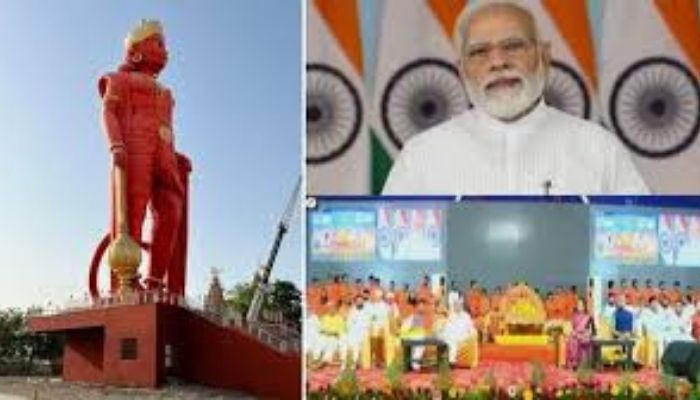
PM Modi unveiled the 108-feet tall statue of Lord Hanuman in Morbi of Gujarat on 16 April 2022. PM Modi attended the inauguration program via video conferencing. The 108-feet high statue of Lord Hanuman is built in the Ashram of Param Pujya Bapu Keshvanand Ji in Morbi and it was unveiled by PM Modi on the occasion of Hanuman Jayanti.
On this occasion, PM Modi said, “On the auspicious occasion of Hanuman Jayanti, best wishes to all of you, and to all the countrymen! On this auspicious occasion, this grand statue of Hanuman Ji has been unveiled at Morbi today. It is very pleasing to Hanuman devotees in the country and around the world.”
हनुमान जयंती के पावन अवसर पर आप सभी को, समस्त देशवासियों को बहुत-बहुत शुभकामनाएं!
इस पावन अवसर पर आज मोरबी में हनुमान जी की इस भव्य मूर्ति का लोकार्पण हुआ है।
ये देश और दुनियाभर के हनुमान भक्तों के लिए बहुत सुखदायी है: PM @narendramodi
PM Modi further said, “Hanuman Ji connects everyone with his devotion, by his service. Everyone gets inspiration from Hanuman Ji. Hanuman is the power and strength that gave all forest-dwelling species and forest brethren the right to respect and honor. Therefore, Hanuman Ji is an important link of ‘Ek Bharat Shreshtha Bharat’.
हनुमान जी अपनी भक्ति से, अपने सेवाभाव से, सबको जोड़ते हैं।
हर कोई हनुमान जी से प्रेरणा पाता है।
हनुमान वो शक्ति और सम्बल हैं जिन्होंने समस्त वनवासी प्रजातियों और वन बंधुओं को मान और सम्मान का अधिकार दिलाया।
इसलिए एक भारत, श्रेष्ठ भारत के भी हनुमान जी एक अहम सूत्र हैं: PM
Underlining the important role Lord Hanuman played in the life of Lord Ram, PM Modi also explained the importance of Ram Katha. He said, “Ramkatha is also organized in different parts of the country. Whatever the language dialect, the spirit of Ramkatha unites everyone, unites with the devotion toward the Lord. This is the strength of the Indian faith, our spirituality, and our culture and tradition.
रामकथा का आयोजन भी देश के अलग-अलग हिस्सों में किया जाता है।
भाषा-बोली जो भी हो, लेकिन रामकथा की भावना सभी को जोड़ती है, प्रभु भक्ति के साथ एकाकार करती है।
यही तो भारतीय आस्था की, हमारे आध्यात्म की, हमारी संस्कृति, हमारी परंपरा की ताकत है: PM @narendramodi
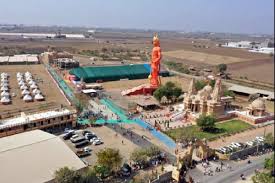
The 108-feet high statue of Lord Hanuman is built in the Ashram of Param Pujya Bapu Keshvanand Ji in Morbi. Image Source: www.pipanews.com
This statue is the second of the four statues of Lord Hanuman being built at four places in the country, one in each direction. In the north, one such statue was built at Shimla in 2010. The statue in Morbi unveiled by PM Modi is in the western part while the other two statues are being built; one in Rameshwaram and the other in West Bengal.
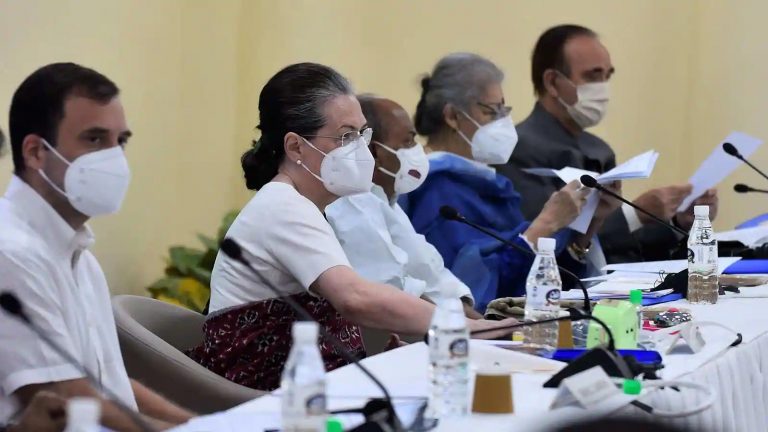
According to reports, key Congress leaders gathered at the house of party president Sonia Gandhi on Saturday and have reportedly discussed the strategy for the next Assembly elections as well as the brainstorming session that the party is intending to host to create measures for the party’s recovery.
Congress leaders Ambika Soni, Digvijaya Singh, Mallikarjun Kharge and Ajay Maken arrive at the residence of party chief Sonia Gandhi in Delhi.
Later this month, a brainstorming session will be conducted to plan the Congress’ strategy for strengthening the organisation at the grassroots level and suggesting reforms to the party.
Former party president Rahul Gandhi, senior politician Mallikarjun Kharge, KC Venugopal, Ambika Soni, Ajay Maken, and Priyanka Gandhi Vadra are among those attending the meeting. Interestingly, poll strategist Prashant Kishor was also present at Sonia Gandhi’s residence.
Poll strategist Mr Prashant Kishor leaving from 10 Janpath- residence of Congress President Mrs Sonia Gandhi pic.twitter.com/peQnTbAjkZ
Kishor’s role in electoral strategy has sparked great debate inside the party. According to reports, a faction inside the party wants him to be involved in the Gujarat election campaign.
There was frequent talk in 2021 that election strategist Kishor would become a full-fledged member of Congress. According to many reports, Kishor sent out feelers about working for the party as a member in May 2021, after the results of the West Bengal assembly elections were known.
Prashant Kishor stated in December 2021 that he had been in contact with the Congress leadership for the preceding two years, but that after the Bengal election, the relationship became much more planned and focused. He stated that he was on the verge of joining the party, but decided against it since he understood that working together would be unproductive for both sides owing to several concerns. He did not, however, address the concerns that prevented him from joining the Congress party.
In the recent assembly elections of five states, Congress fell down poorly as it won only a few seats in all states. They even lost deposits on 97% of the seats contested in Uttar Pradesh. Since then, Congress has been struggling hard to act in a manner that would result in the revival of the party at any cost.
A procession taken out to mark the 131st birth anniversary of Dr Babasaheb Ambedkar in Sangamner, Maharashtra on April 14, turned communal when a mob of 100-120 fanatics created ruckus and chanted provocative slogans like “Allahu Akbar” and “Islam Zindabad” during the procession. According to reports, several women were also molested by these riotous youths during the incident, the video of which has gone viral on social media.
BIG:
100-120 radicals are charged for disrupting procession of Ambedkar Jayanti by chants of “Allahu Akbar” and “Islam Zindabad”, and also molesting women in Sangamner, Maharashtra.https://t.co/79QoC5MD2Ipic.twitter.com/X07C7IEOQk
In the video dated April 15, a huge crowd of youth was seen marching through the main road carrying green and red flags featuring symbols of the moon and stars. The situation turned communal when the mob started chanting “Allahu Akbar” and “Islam Zindabad” slogans. They reportedly misbehaved with the women who were also a part of the procession.
Following the incendiary incident, police filed a case against around 100 to 120 miscreants under the Scheduled Castes and Scheduled Tribes Prevention Act (Atrocities) for inciting religious sentiments, attempting to cause riots, assault, and molestation of women.
Maharashtra PFI leader issues open threat to MNS chief Raj Thackeray over call for loudspeaker ban
In a separate incident, an FIR had been registered against Popular Front of India (PFI) Mumbra President, Abdul Mateen Shekhani for organising an illegal gathering where he allegedly gave an inciting speech on Friday. Mumbra is a Muslim-dominated area of Thane rural in Maharashtra. The PFI leader was booked under IPC section 188 and sections 37(3) and 135 of the Maharashtra Police Act.
In response to MNS chief Raj Thackeray’s statement on the removal of loudspeakers from mosques, PFI Mumbra President Matim Shekhani stated during a protest on Friday, “Chhedenge to chodenge nahi” (we will not spare you if you tease us). He had added, “some people are trying to disrupt peace. Some have problems with Azaan while some have problems with madrassas and mosques. PFI wants peace, but don’t provoke us otherwise we won’t spare. If any mosques, madrassa or loudspeaker is touched, PFI will lead the struggle.”
PFI office-bearer Abdul Matin Shekani had also said that the demonstrations were being held to highlight atrocities against Muslims following incidents of violence in some states on Ram Navami on April 10.
After the matter came to light, the Mumbai Police registered a case against Shekhani for holding a meeting without permission and making inflammatory speeches. While registering a case under section 188 of IPC and section 37(3) and 135 of the Maharashtra Police Act, the police said that the PFI leader had not taken prior permission before organising the event.
The recent incident on Ambedkar Jayanti is the latest in a string of communal clashes that has engulfed the country since the Hindu festival of Ram Navami. Several videos surfaced, showing fanatics indulging in stone-pelting, arson and vandalism in places like Rajasthan’s Karauli, Madhya Pradesh’s Khargone and Jharkhand’s Lohardaga on the occasion of Ram Navami.
On April 13 OpIndia reported how on April 10, when Islamists were pelting stones and petrol bombs at Hindus celebrating Ram Navami in Khargone, Madhya Pradesh, a 16-year-old boy Shivam became the victim of the violence. Shivam Shukla was part of the procession on Ram Navami. As per reports, the broken skull bones had punctured the brain, and a clot had formed. Surgery was performed on Shivam by the doctors to save his life. He is now in ICU, struggling for his life.
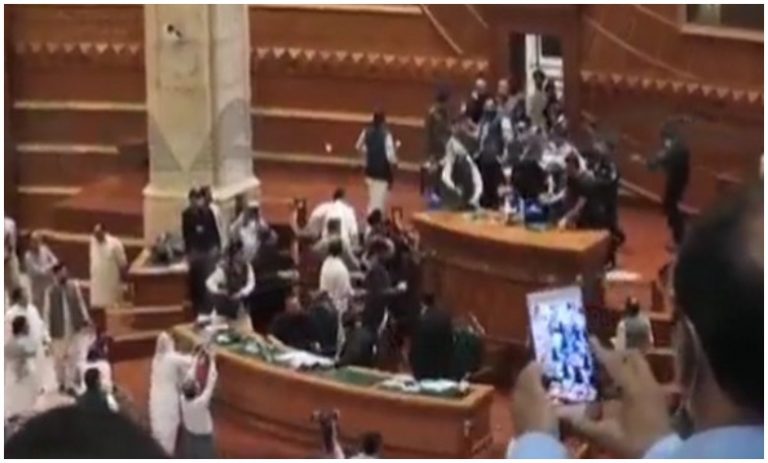
Pakistan’s Punjab Assembly turned into a battle zone on Saturday after Imran Khan’s Pakistan Tehreek-e-Insaf (PTI) lawmakers manhandled Deputy Speaker Dost Mohammad Mazari and threw lotas (pitchers) at him.
According to the reports, Deputy Speaker Punjab Assembly Dost Muhammad Mazari was attacked with ‘lotas’ by members of PTI seated at the treasury benches on Sunday as he arrived to chair the assembly session that was convened to elect a new chief minister.
The PTI lawmakers of the ruling party, who opposed the election, threw ‘lotas’ at Mazari, attacked him and pulled his hair despite the presence of security guards.
The videos of the incident have gone viral on social media platforms. The angry PTI lawmakers disrupted the house and attacked Deputy Speaker amidst the presence of security guards. The guards were seen trying to save Mazari from being manhandled by the PTI members.
PTI and PMLQ lawmakers attack Deputy speaker Dost Mazari with lotas – Dost Mazari is also from PTI pic.twitter.com/LNQ7THWHxY
Following the scuffle, Mazari reportedly left the House. The Punjab Assembly session was scheduled to start at 11:30 am to elect chief minister Punjab with PML-N’s Hamza Shehbaz and PML-Q’s Chaudhry Parvez Elahi in the run. However, it was delayed due to the unruly behaviour of the PTI lawmakers.
PML-N had elected Hamza Shehbaz as the new Punjab Chief Minister
Earlier on April 7, Pakistan Muslim League-Nawaz had held a Punjab assembly session of their own at a hotel to elect a new Punjab chief minister.
After the Punjab Assembly building in Pakistan was locked and sealed off with barbed wires amidst all the political drama in the country, the opposition lawmakers, led by the Pakistan Muslim League-Nawaz, had elected Hamza Shehbaz as the Punjab chief minister at a session held in a private hotel in Lahore.
The legitimacy of the election is at stake as the session was held outside the Punjab Assembly and was attended only by opposition lawmakers. Punjab Assembly speaker Parvez Elahi and Deputy Speaker Sardar Dost Muhammad Mazari were not present during the ‘assembly session’ called by PML-N lawmakers. Interestingly, the Punjab Assembly secretariat has not issued any notifications regarding the session or venue change or the so-called election that elected Hamza as the chief minister of Punjab.
The session was instead presided over by PPP MPA Shazia Abid. Abid claimed that she was appointed to the panel of chairmen for the 40th session of the Punjab Assembly on April 3.
This had come after joint opposition in Pakistan led by PPP and PML-N had held a mock session inside the National Assembly on Sunday after Deputy Speaker Qasim Khan Suri ended up the actual session.
A day after a complaint regarding forgery, impersonation and identity fraud was lodged after a furniture maker named Kunal Merchant had claimed to have received an e-mail from the Prime Minister’s office, he is yet to make further comments on the issue. Instead, Kunal Merchant has started blocking people on social media who has been countering him on his claim of refusing to design a table for the PM.
In an Instagram story, Merchant had claimed that he was contacted by a PMO official named Vivek Kumar asking him to design a table for use by the current and future PM. However, he had said that he had refused the offer, accusing the Modi govt and ‘fascism’ and ‘atrocities against Muslims’. He had posted the screenshots of the so called PMO email and his reply in his Instagram story. His claims on Instagram were subsequently published by Islamist publication Siasat.
However, soon after that it was revealed that the PMO didn’t contact Merchant to build a table, and the mail purportedly received by him was fake. The Delhi Police Commissioner had tweeted yesterday to inform that the police have received a complaint regarding forgery, impersonation and identity fraud of an office bearer at the Prime Minister’s Office. The police had also informed that a probe has been launched in the matter.
It is interesting to note that in the screenshots, the so-called mail from PMO was signed by Vivek Kumar, Private Secretary to the PM. However, in his rely, Merchant had addressed him as the Additional Principal Secretary to the Prime Minister. According to the PMO website, Vivek Kumar is actually the private secretary of PM, and there is no additional principal secretary with that name.
It raises the question of how can one get the designation of a senior govt official wrong while sending an e-mail to that official.
After it was revealed that Merchant was not contacted by the PMO to make any furniture, he deleted his Instagram story. But he has refrained from issuing any clarifications on the matter. Reportedly, the police have contacted him and will examine his devices to find the source of the email sent to him.
After the matter came to light, many social media users accused Merchant of behind the entire incident. They alleged that it was an PR exercise, and he himself had sent the email to himself impersonating the PMO official. However, after people started targeting him over the issue, he has started blocking them on social media instead of refuting the allegations.
While it is certain that the mail was forged – govt issues public tenders for procurement, not over email to individuals – it is not certain who had forged it. It is possible that someone played a prank on Kunal Merchant and sent him the email, and the allegation that he himself did it also can be possible. The fact behind the mail will be known after the probe by the Delhi police.
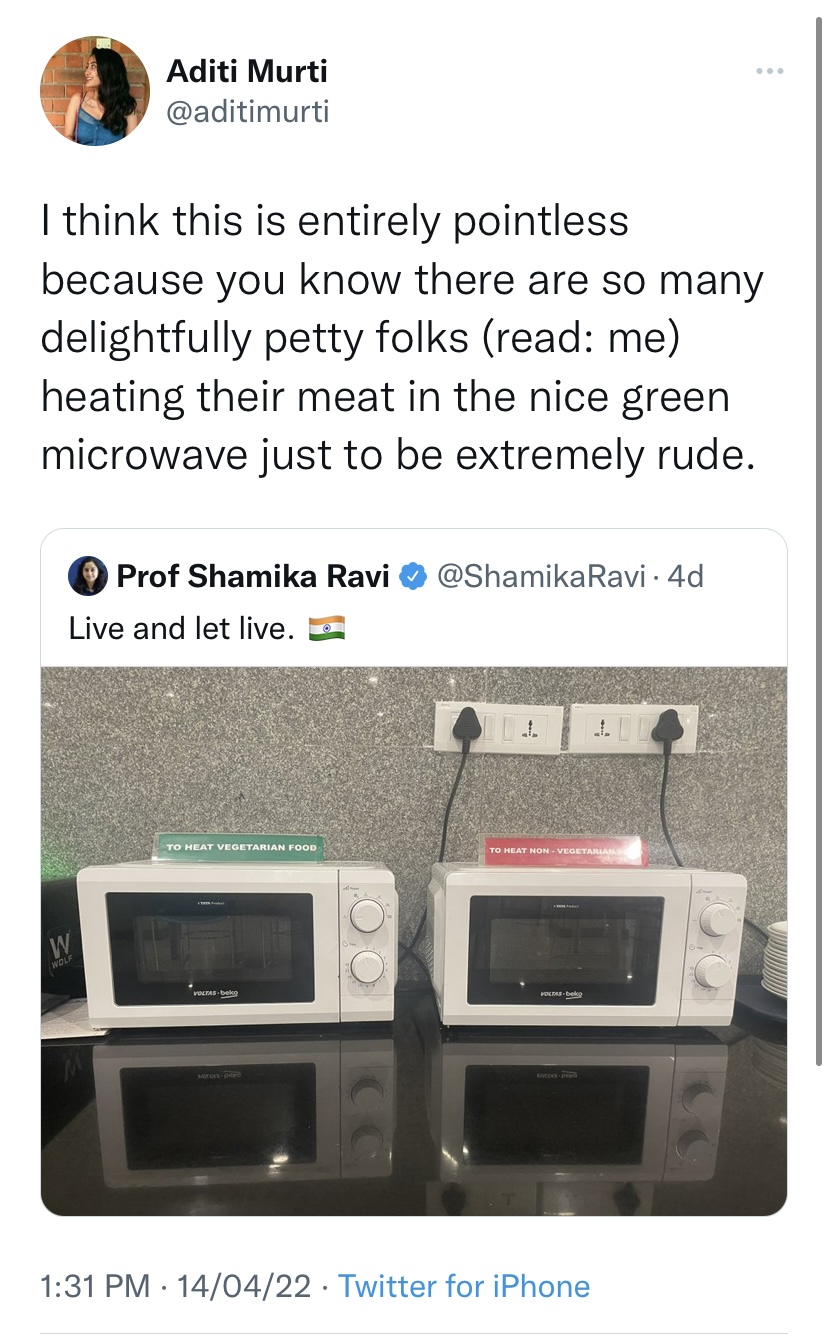
Earlier this week, Professor Shamika Ravi, an Economist and a non-resident Senior Fellow at the Brookings Institute, took to Twitter to share a picture that showed two microwave ovens kept side by side. A green coloured instruction plaque on the left oven read it was meant for heating vegetarian food while another instruction plague, which was red in colour and placed on the right oven read it was meant for heating non-vegetarian food.
Professor shared the picture with the caption “Live and let live”, implying that people who consume vegetarian and non-vegetarian food can exist side by side without having to cause inconvenience to one another.
Such a kind of practice is often observed in organisations, educational institutes and other centres where employees, students and in general, people, come from varied backgrounds and religious persuasions, some of whom could be sticklers for consuming vegetarian food and not comfortable sharing microwave ovens that are used for heating non-vegetarian food. Therefore, organisations and companies, in order to allay the concerns of their vegetarian employees, usually install two separate microwave ovens—one for heating vegetarian food and the other for non-vegetarian food.
However, a seemingly innocuous tweet meant to demonstrate how vegetarians and non-vegetarian eaters can exist alongside each other exposed the prejudice the ‘journalist’ working for the left propaganda website The Wire harboured for vegetarians. She proceeded to claim that the entire exercise of segregating ovens for vegetarians and non-vegetarians is futile because “petty folks” like herself would heat their meat in the green microwave just to be “extremely rude” to the vegetarian folks.
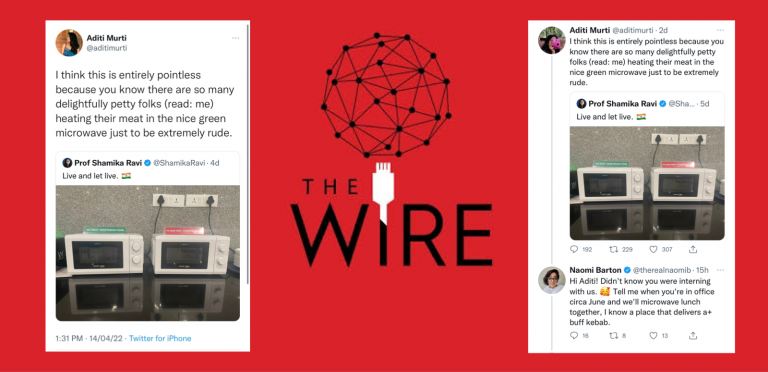
“I think this is entirely pointless because you know there are so many delightfully petty folks(read: me) heating their meat in the nice green microwave just to be extremely rude,” Aditi Murti, a reporting intern at The Wire Science tweeted while quoting Prof Shamika Ravi’s tweet.
Source: Twitter
What Murti with her tweet tried to convey is that there were many non-vegetarian people, including herself, who would heat their meat in microwave ovens earmarked for vegetarian food just to be rude to those who strictly observed vegetarianism and did not consume non-vegetarian food. Furthermore, she gloated on being petty and spiteful towards others simply because they did conform to her eating preferences.
Murti’s tweet sparked sharp reactions from social media users, many of whom slammed The Wire intern for her unacceptable behaviour and displaying a callous disregard for the food sensitivities of others.
In her subsequent tweet, Murti said her hypothesis is that caste vegetarians are pathetic because of all the bland food they eat. Just because a section of people preferred to uphold the sanctity of living beings and abstain from eating the meat of speechless animals, Murti declared them to be “pathetic”, which, according to her, gives her the sanction to attack and sully ideals cherished by them.
Murti’s tweet and its endorsement by The Wire journalist Naomi Barton betrays their contempt for their ideological opponents
More importantly, the intolerance, contempt and disdain for vegetarians as reflected in Murti’s tweets brings to the front burner the much-talked-about issue of how meat is used as a political tool to hurt the sentiments of ideological opponents. The tweets also reveal a perverse mentality that is opposed to diversity and believes in imposing a homogenous culture, where people cannot exercise their right to consume food of their choice.
Being a strict vegetarian is a conscious choice, guided by one’s religious beliefs and a part of moral ethics that govern’s their behaviour. For example, Jains and many sections of Hindu community are religiously ordained not to consume meat. Adherents of other faiths and even atheists who may not be bounded by their religious precepts observe vegetarianism and refrain from consuming meat as a part of their personal moral codes.
But such folks are deemed as “pathetic” because their food choices are too bland to the liking of people like The Wire intern, who do not feel any qualms in foisting their food preferences on others, even if that means undermining religious beliefs and moral codes held dear by others. And far from condemning such conduct, the journalists at The Wire encourage and reward such patently perverse behaviour.
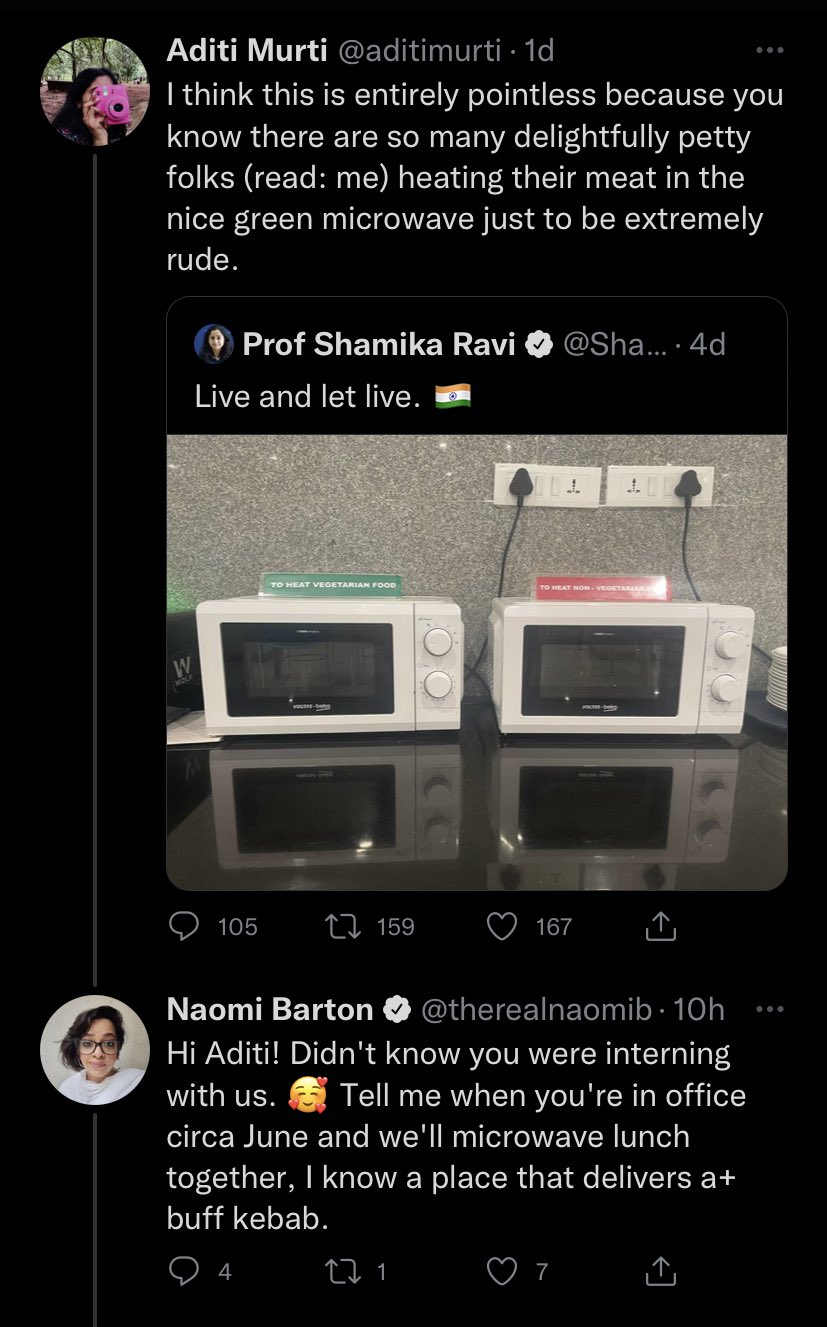
For instance, The Wire journalist Naomi Barton responded on Aditi Murti’s contentious tweet, telling her that she would have a microwave lunch together at a place that delivers “a+ buff kebab”.
Source: Twitter
Barton, who recently told a woman who felt violated to ‘not weaponise her privilege’ against a man who ‘was from a lower-class chain’, was predictably not scandalised by the revelation made by Murti in her tweet. Instead, she gleefully extended the offer of having a microwave lunch with Murti, implying that she was perfectly fine with the practice of using a microwave oven meant for heating vegetarian food for meat.
It is rather evident that if one is a vegetarian who wishes for their dietary or religious sentiments to be respected, The Wire is not the place to work. The Wire employees seem to take pride in desecrating the Hindu faith, must like Islamist and terrorist outfits.
How meat has often been used as a political tool to hurt sentiments of ideological opponents
This shows that folks at The Wire are least bothered with the sensitivities of vegetarians and have displayed little regard for their religious and moral precepts. It is a reminder of how meat has often been used as a political tool to hurt the religious sentiments of ideological opponents.
Earlier this month, a controversy erupted after South Delhi Municipal Corporation announced that all meat shops located within the vicinity of a temple will remain closed between April 2-11, in the light of Navratri celebrations. The proponents of meat claimed that they had a right to eat meat as and when they want and questioned why the food habits were being foisted upon others.
While the sale of meat should be banned or not is a debate for another day, in recent times, meat has been politicised and used specifically to hurt the religious sentiments of Hindus as well as Jains. Various ‘meat festivals’ including ‘beef festivals’ have been organised by a certain section of society specifically to hurt the religious sentiments of Hindus and Jains.
In June 2019, a beef festival that was supposed to be organised in Kolkata was cancelled after the organisers allegedly received threats from people. The organisers had conceded that they could not ensure the safety of the attendees. In a Facebook post, the Accidental Note said, “If anyone person is harmed, we would feel personally responsible, and we can not accept that.”
Prior to that in May 2017, Youth Congress workers in Kerala carried out the public slaughter of a cow. They also organised beef festivals. Hindus consider cows holy and for many Hindus consumption of beef is forbidden. The cow was slaughtered publicly by Youth Congress workers to specifically hurt the religious sentiments of those who hold the cow holy. As have been other ‘beef festivals’.
In September 2015, Shiv Sena tried to cook chicken outside a Jain temple in Mumbai. This was done during the time of Paryushan, the Jain festival where many Jains even abstain from consuming food and water. Jains are predominantly vegetarians, many of whom even hold fast as a penance for the slaughter of goats on Bakri Eid celebrated by Muslims. Similarly, Shiv Sena, too, tried to sell meat on street during Paryushan, with an aim to irk the Jain community.
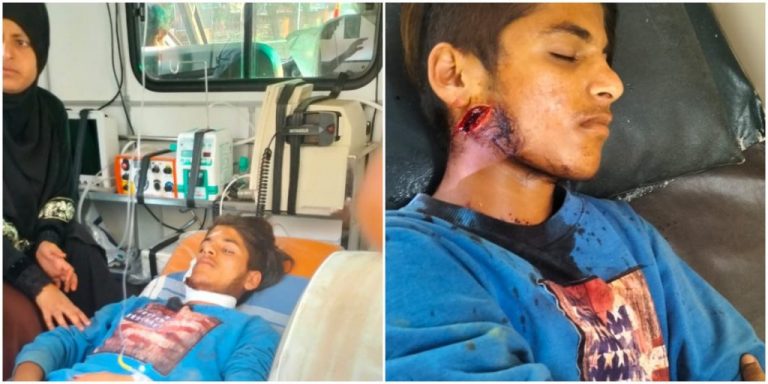
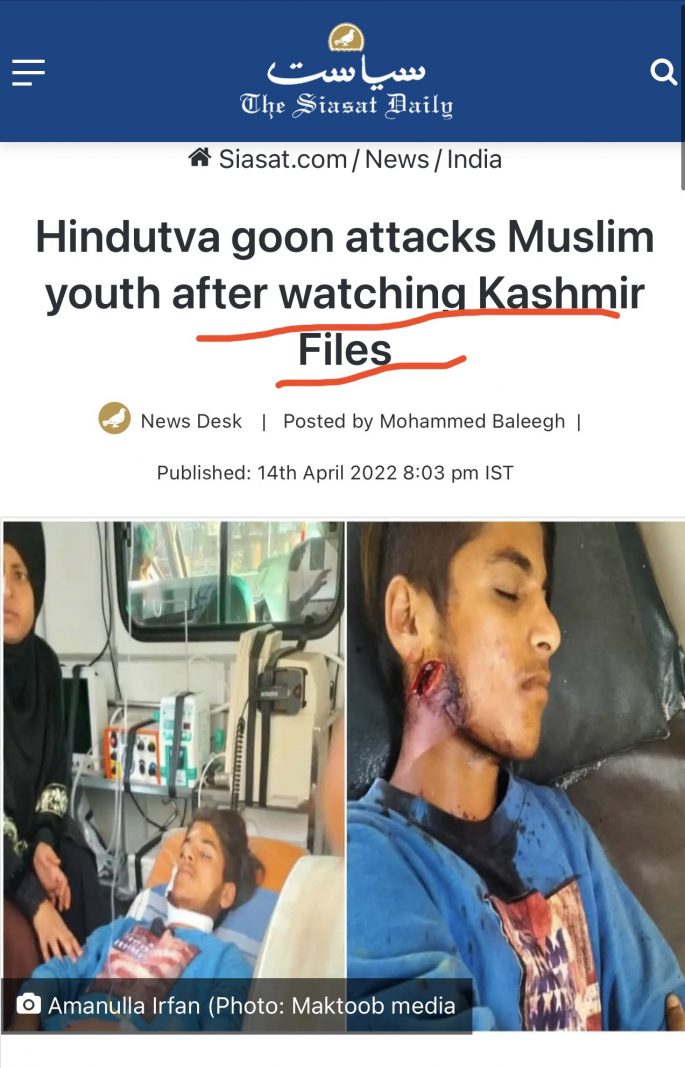
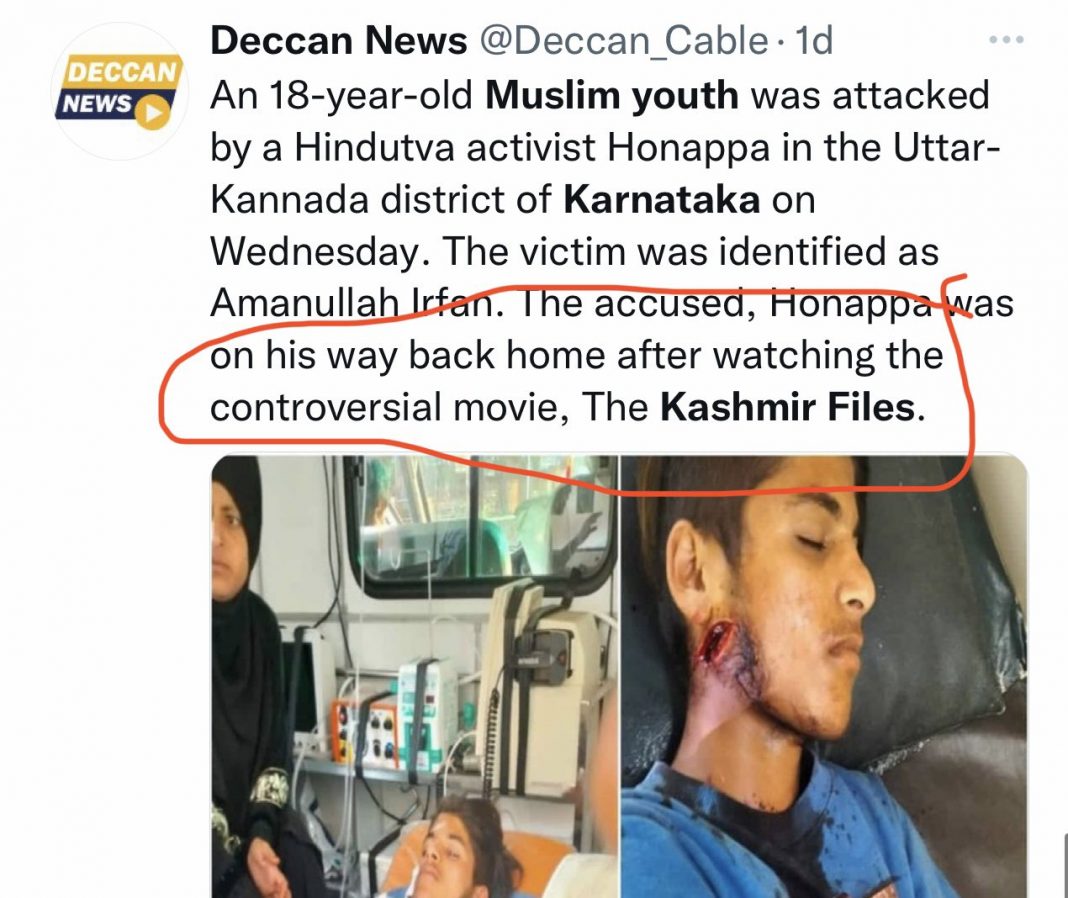
Earlier this week, several media outlets shared a news story about a Muslim youth being attacked in Tergaon village in Haliyal in Uttar Kannad District of Karnataka. The story claimed that 18 years old Amanulla Irfan was attacked due to his religion with a sword by a 30-year-old man named Honappa when Irfan was returning after watching ‘The Kashmir Files’.
The claim quickly went viral on social media with several media outlets blaming ‘Hindutva’ and The Kashmir Files film for the attack.
However, Karnataka Police has now clarified that the story was false and mischievous. Sharing the information on their fact-check page, the Karnataka police mentioned how the facts of the case have been twisted for propaganda purposes.
Sharing the facts about the case, Karnataka police mentioned that the accused Honappa and victim Irfan are neighbors. An argument broke out between the two as the victim was constantly abusing the mother of the accused. The argument escalated and Honappa assaulted Irfan in front of his house with a pocket knife.
The accused has been secured by police, thoroughly interrogated, and has also confessed to his crime. He is sent to judicial custody for further investigation in the case. Police clarified that the incident is in no way related to The Kashmir files movie nor was there any communal motive to the crime. The victim is now out of danger.
Police have also mentioned that action has been initiated against the news portals for publishing a false story without proper verification.
Days after the Khargone Ram Navami violence, Hindus who suffered in the riots have been sharing dreadful stories of betrayal, perfidy and treachery they endured from their Muslim neighbours. On Friday, one of the Hindus revealed to the media that he was attacked by his Muslim neighbor to whom he had alerted about the riots and asked to stay safe amid the violence.
In an exclusive conversation with India TV, the Hindu victim said that he had asked his Muslim neighbors to stay secure amid the escalating violence. He stated that his neighbors defrauded him and joined the rioters who were pelting stones and petrol bombs on Hindu residences.
“As I heard of violence escalating during the Ram Navmi procession in another area of Khargone, I told my neighbors to lock themselves safe in their houses. I also closed the doors to protect my family. Later, these Muslim neighbors joined the rioters and led a mob attack on my family”, the victim said on April 15.
Hindu riot victim alerted his neighbour about riots and asked him to stay inside for his security. Few minutes later, his neighbour led a mob attack on his house. #KhargoneFiles are no different than #KashmirFiles. pic.twitter.com/4XlFGoxTwb
He added that there was no procession in his area but the Muslims began targeting all the Hindu residents of Khargone. “They pelted stones, burnt vehicles belonging to Hindus, threw petrol bombs to create fear in the minds of Hindus. Suddenly 200-300 Muslims gathered in my colony and abused us. They banged at my door intending to break it but could not. So they broke my electricity meter and wrote outside my house ‘Yeh Ghar Bikau Hai'”, he said. (Time Stamp- 26:00 onward)
The Hindu victim continued to curse his Muslim neighbours who joined the rioters to attack them. He said that his neighbours maintained good relations with his family earlier, but unveiled their real faces on April 10.
“I and my family inside the house were scared as 200-300 people began thrashing the door. I covered my younger son’s mouth to avert his cries from reaching the rioters. Later they went away but destroyed the outer side of my house”, he added.
In the ground report by India TV, the residences belonging to Muslims in the colony could be seen untouched and safe. Properties and assets owned by Hindus however could be seen destroyed. The report showed the burnt vehicles with ‘Aum’ written on them, remains of the petrol bombs and bricks that were targeted at the Hindus on Sunday. The report further mentioned that the Muslims had climbed up to the terraces of buildings and had deliberately targeted non-Muslims.
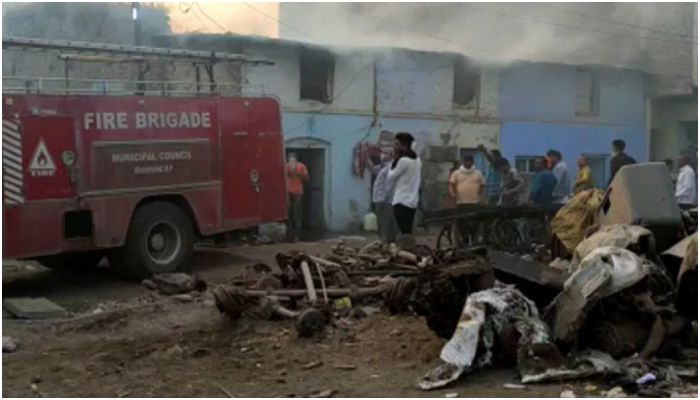
Last week, a Ram Navmi procession in the Khargone area of Madhya Pradesh was attacked by Islamists which led to communal riots disrupting peace in the state. The Islamists pelted stones at the procession that began in the Talab Chowk area of Khargone on April 10. Islamists also attacked Hindu women and taunted them saying, “Where is your Ram? We Ravans have come to abduct you”.
Riots escalated after several vehicles and shops were set on fire. The cops struggled to pacify the situation and resorted to firing tear gas shells to disperse the violent crowd. During the orgy of violence, a total of 24 people were injured, including six police personnel. The Khargone administration later took strict action against the miscreants who had pelted stones. The illegally constructed buildings owned by the stone pelters were bulldozed by the administration.
The Police suspect that the attack was pre-planned and that it is part of a huge conspiracy. While the investigation in the case is underway, the Police continue to guard the area, and section 144 stays imposed.
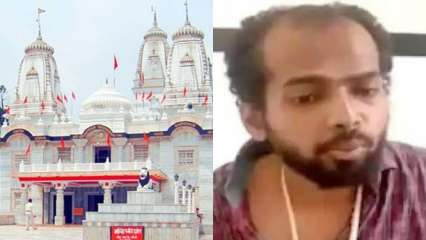
The Uttar Pradesh Anti-Terrorism Squad (ATS), probing the Gorakhnath temple attack case, has sent accused Ahmad Murtaza Abbasi to judicial custody for further interrogation. In addition, the police have also imposed relevant sections of the stringent Unlawful Activities (Prevention) Act (UAPA) against him.
Ahmad Murtaza Abbasi was arrested after he had forcibly tried to enter the premises of the temple and attacked two cops with sharp weapons. Abbasi, who is a graduate of the Indian Institute of Technology (IIT), had attempted to break into the Gorakhnath temple premises on April 3 while shouting Allahu Akbar. The 30-year-old chemical engineering graduate attacked the security personnel with a sickle when they tried to stop him, injuring two Provincial Armed Constabulary (PAC) constables. He was later captured by other security staff and arrested.
Reports further stated that Murtaza was produced before the court and he may be produced before a special court in the future.
The UP ATS, meanwhile, has also detained 5 more persons in connection with this case who reportedly were aware of Abbasi’s every move.
Notably, during interrogation, Murtaza told the ATS that he wanted the Sharia law to be implemented in the country. Reportedly, the accused, who is an IIT graduate, knew all the methods of making bombs easily. According to sources, he also admitted to deleting some important information from his laptop and mobile phone.
Ahmad Murtaza Abbasi had told authorities that his attack was a response to the passing of the Citizenship Amendment Act (CAA) and the proposed National Register of Citizens (NRC). According to reports, the accused Ahmad Murtuza Abbasi confessed to the police that his hatred spawned from alleged atrocities committed against Muslims. The attacker said he was not happy with the Citizenship Amendment Act (CAA) and the proposed National Register of Citizens (NRC) as he deemed them as an act of “injustice to Muslims”.
The police said that the confession indicated that Abbasi had been radicalised to the extent that he was even willing to die committing such crimes.
Gorakhnath Temple attack accused was trying to develop ‘jihadi app’, planning to join ISIS
Moreover, Murtaza Abbasi’s interrogation revealed that he was attempting to develop an app called ‘Jarima’ at the behest of Islamic terror groups. In Arabic, the word ‘Jarima’ means ‘oppression.’ Abbasi used to exchange messages via the Pir2Pir app before creating this Arabic-language jihadi app, which is widely used by Islamic ultras.
The investigation also revealed a ‘honey trap’ angle.
According to reports, Abbasi’s interest in radical ideas began with an email from a girl in an ISIS camp in Syria. Ahmad Murtaza Abbasi admitted to interrogators that he had transferred money several times into the girl’s account. He was also planning to join the terrorist organisation ISIS.
Abbasi revealed that a girl from an ISIS camp in Syria sent him an email, as well as a photo, and promised to meet him in India. Abbasi, in turn, sent her Rs 40,000. They began communicating via e-mail, and as a result, Abbasi came into contact with ISIS terrorists. He was also rumoured to be on his way to Syria via Nepal.
Abbasi sent lakhs to ISIS
Another shocking revelation made during the investigation was that Abbasi had sent lakhs of rupees to bank accounts linked to ISIS. According to a top official, investigating agencies are looking into its financial dealings with Abbasi. He has accounts in ICICI Bank, IDFC First Bank, and Platinum Federal Bank, among others, reported Republic. He had transferred money from a bank account in Nepal to Syria.
During the interrogation, it was revealed that Abbasi’s mentor was an American identified as Imam Anwar al-Halaki, who originally hails from Yemen. Abbasi was highly influenced by banned Islamic preacher Zakir Naik as well.
Advocate Ashwini Kumar Upadhyay has filed public interest litigation (PIL) in the Delhi High Court challenging the Waqf Act 1995. The PIL states that the Act is made under the garb of managing waqf properties but there are no similar laws for followers of other religions. The PIL challenges the validity of various provisions under this act.
Upadhyay pleaded that the Act is against secularism, unity, and integrity of the nation. He also highlighted that the Waqf is not mentioned anywhere in the Constitution.
In his plea, Ashwini Kumar Upadhyay said, “If the impugned Act has been made to protect the rights guaranteed under Articles 29-30 then it has to cover all the minorities i.e., followers of Jainism, Buddhism, Sikhism, Judaism, Bahaism, Zoroastrianism, Christianity, and not only Islam.”
The PIL mentions, “Centre cannot make Tribunals arbitrarily beyond the scope of Articles 323A–323B, but if the impugned Act is enacted under Article 245 and Entry-97 of the List-1 of the Schedule-7, then the Tribunal has to perform in consonance with Articles 14-15.”
Advocate Upadhyay’s plea further states, “The Religious Endowment Act 1863, Indian Trustees Act 1866, Indian Trust Act 1882, Charitable Endowment Act 1890, Official Trustees Act 1913, and Charitable and Religious Act 1990 are made to manage trusts and religious endowments of all communities. But rather than unifying them and making a ‘Uniform Code for Trust and Trustees, Charities and Charitable Institutions, Charitable and Religious Endowments and Religious Institution’, Centre has arbitrarily enacted the impugned religion-biased Act against the basic tenets of Articles 14-15.”
The dispute relating to the Waqf properties are decided by the Waqf Tribunal as per the Waqf Act. The PIL also challenges this provision and seeks direction that the dispute relating to religious properties shall be decided by the Civil Court only under Section 9 of the Civil Procedure Code 1908.
Earlier, the Supreme Court had refused to hear the plea seeking directions to the central government or the law commission of India to draft a ‘Uniform Code for Trust-Trustees and Charities-Charitable Institutions’ in the spirit of Articles 14 &15 of the Constitution. The Supreme Court’s bench said that it cannot direct the parliament to enact such a law.