In a major revelation, the National Investigation Agency (NIA) told a special court in Kerala that the agency had recovered hit lists containing names of more than 950 individuals targeted by the now-banned Popular Front of India (PFI). The disclosure was made during the hearing of bail applications filed by four accused from Palakkad, namely Muhammad Bilal, Riyasudheen, Ansar K P and Saheer K V.
The NIA told the court that they seized the documents during multiple raids, including at Periyar Valley Campus in Aluva. Notably, this location was allegedly being used as an arms training centre. Eight documents were recovered from Sirajudheen, one of the accused, which had names of 240 people from non-Muslim communities marked as potential targets. The agency also seized a wallet from another accused, Abdul Wahad, who is currently absconding. The wallet carried details of five individuals, including a retired district judge.
PFI’s elaborate terror framework
According to the NIA, PFI operated through specialised units including a Reporter Wing that conducted reconnaissance of the possible “enemies”, a Service Wing that executed the murders, and a Physical and Arms Training Wing that trained operatives. These hit lists, according to the NIA, were created based on surveillance inputs gathered by the now-banned organisation.
The NIA recovered another list of 232 names from an accused who later turned approver. During a raid at the house of Ayoob T A, the NIA found another hit list with names of 500 individuals. The NIA stated the findings established the outfit’s systematic planning to eliminate individuals it viewed as obstacles to its radical goals.
India 2047 conspiracy and Sreenivasan’s murder
The agency reiterated that PFI had a long-term plan, code-named “India 2047”, which aimed at establishing Islamic rule in the country. The agenda was discovered during an earlier investigation by the Delhi unit of the investigating agency into a case first registered in Phulwari Sherif of Bihar in 2022. A six-page document outlining the plan was recovered from accused Muhammed Jamaludheen.
The NIA asserted that the murder of RSS leader Sreenivasan in Palakkad was not an isolated act but part of the broader conspiracy aligned with the India 2047 goal. Audio clips and witness testimonies reportedly confirm the dissemination of the plan among PFI cadres.
Court denied bail citing gravity of charges
Citing the seriousness of the case, NIA Special Court Judge P K Mohandas denied bail to all four accused. The court stated that there were reasonable grounds to believe that the accusations were prima facie true. The court cited the applicability of Section 43D(5) of the UAPA and concluded that the case was ready for trial.
While the Left opposed ban on PFI, Congress got its political wing’s support during general elections
When the Popular Front of India was banned in September 2022 by the Ministry of Home Affairs, Government of India, the Left had opposed the ban, claiming such bans have no effect. Citing examples of Maoist organisations and the ban briefly imposed on the RSS, the CPI(M) went ahead and accused the RSS of being involved in murders just like the PFI.
On the other hand, the Congress, while it did not openly oppose the ban, argued that if the PFI was to be banned, the RSS should be banned as well.
Interestingly, during the 2024 Lok Sabha elections, the SDPI, the political arm of the banned organisation PFI, extended support to the Congress in Kerala. The support led to severe backlash, with Bharatiya Janata Party (BJP) leader and Home Minister Amit Shah slamming the Congress party for taking SDPI’s support in the polls. Following the backlash, the Congress was forced to deny the support extended by the SDPI.
Later, during the Palakkad bypoll, BJP State President of Kerala, K Surendran, accused the Congress of signing a secret deal with the SDPI for the election. He said in a press conference that a group called Green Army was conducting door-to-door campaigns among a certain community, seeking votes for the UDF, the alliance of which the Congress is a part.
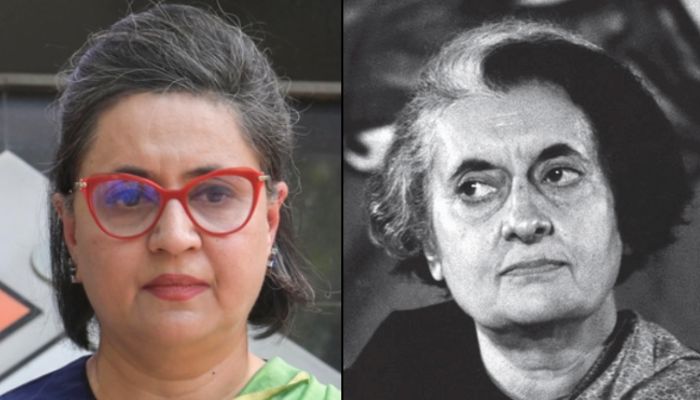
On the 50th Anniversary of the Emergency, Trinamool Congress (TMC) MP and former ‘journalist’ Sagarika Ghose took to X (formerly Twitter) to distort history and give a clean chit to the atrocities perpetrated by Prime Minister Indira Gandhi during the darkest phase of Indian democracy.
In a tweet on Tuesday (25th June), Ghose brazened out, “Indira Gandhi imposed #Emergency1975 because RSS was pushing India towards total anarchy.”
She did not stop here but went to eulogise the former Prime Minister for ‘calling elections’ and ‘taking questions in public’.
Sagarika Ghose was under the impression that her factually incorrect tweet and the subsequent attempt at whitewashing the image of Indira Gandhi would make people forget the horrors of Emergency.
Indira Gandhi imposed #Emergency1975 because @RSSorg was pushing India towards total anarchy. YES, the Emergency was a BLOT, BUT the same #IndiraGandhi called elections, resigned and took questions in public. Why doesn’t @narendramodi hold a press conference like this ??first… pic.twitter.com/NP5nlx2J7s
The Rajya Sabha MP also shared a video of the Congress leader speaking to the media in 1978, wherein Gandhi claimed that she had the support of the public.
“My political future has been exactly the same, and it is not what the press has said it is. I have had the people’s support throughout, regardless of the image that all of you have been trying to project…” the former PM was heard saying in the video.
“Immediately after the defeat, I have had the people’s support wherever I have gone in this country in an unmistakable manner. Look, I imposed censorship and I said I was imposing it,” she had conceded.
Towards the end of the video snippet, Indira Gandhi was heard saying that she did not want people to be ‘victimised’.
The propaganda video was used by Sagarika Ghose to suggest that the Congress leader was compassionate towards the people and that it was the RSS which somehow ‘provoked’ Indira Gandhi to implement the Emergency
What is the Truth behind Emergency
The Emergency, which was declared on 25th June 1975 and remained in effect until 21st March 1977, remains one of the darkest chapters in the history of independent India.
It was declared by the then Prime Minister Indira Gandhi. It marked a period of authoritarian rule, during which fundamental rights were suspended and press freedom was curtailed.
At the same time, Opposition leaders were jailed, and civil liberties were brutally crushed. The backdrop to this authoritarian turn was political turbulence and not the make-believe ‘anarchy’ of the RSS.
The 1971 war victory and the emergence of Bangladesh had elevated Indira Gandhi’s stature.
However, discontentment began to increase as the Congress government failed to check rising inflation, economic stagnation and widespread corruption. By 1974, public confidence in the Indira Gandhi government had almost eroded.
The tipping point came with the Allahabad High Court’s landmark judgement on 12th June 1975.
Justice Jagmohanlal Sinha found the sitting Indian Prime Minister guilty of electoral fraud in the 1971 Lok Sabha elections and invalidated her seat.
Opposition parties led by Jayaprakash Narayan launched a nationwide movement demanding Indira Gandhi’s resignation. Massive protests were witnessed in the National Capital against the ruling Congress government.
On the advice of trusted aides like Siddhartha Shankar Ray and son Sanjay Gandhi, Indira Gandhi directed President Fakhruddin Ali Ahmed to declare a state of Emergency under Article 352 (internal disturbances) of the Indian Constitution.
By midnight of 25th and 26th June, the government clamped down on Opposition leaders and arrested them under the Maintenance of Internal Security Act (MISA).
The Indian press was muzzled. ‘The Indian Express’ famously ran a blank editorial on 28th June 1975 as a form of ‘silent protest’. The most notorious aspect of the Emergency was the suspension of civil liberties.
The Indira Gandhi government invoked Article 359 to deny Indians the right to seek judicial remedy for violations of their fundamental rights. Sanjay Gandhi oversaw arbitrary arrests, torture in police custody forced sterilisation drives.
While we remember the #Emergency today, it is important to tell the story of an estimated 1.2 crore people who were forcibly sterilised by the Congress regime between 1975 and 1977
This is the story of how Indira & Sanjay Gandhi infringed upon people's right to life.
— Dibakar Dutta (দিবাকর দত্ত) (@dibakardutta_) June 25, 2023
The number of forced sterilisations were estimated between 8-12 million, most of whom were poor and vulnerable.
Over 1 lakh people were detained without trial during the 21 months of the Emergency. No one was spared including opposition leaders, civil rights activists, journalists, academics.
The judiciary too appeared to buckle under pressure. In the infamous ADM Jabalpur v. Shivkant Shukla case, the Supreme Court ruled that citizens had no right to habeas corpus during the Emergency.
India’s democratic image took a beating in the international media, with many highlighting serious human rights abuses by the same Indira Gandhi (who is being presented as a champion of democracy in 2025 by the likes of Sagarika Ghose).
The Congress leader’s insecurities post-Allahabad High Court judgement and fear of losing power made her take the drastic decision to curtain freedom and civil liberties of Indian citizens and not alleged ‘anarchy’ of RSS’
The Janata Party was born from this struggle and it swept the 1977 elections, which ended the uninterrupted, rule of the Congress party since 1951.
Now 50 years later, the likes of Sagarika Ghose are re-inventing new history, distorting facts to give a clean chit to the tainted legacy of the Gandhi family.
Assembly elections are scheduled to take place in Bihar this year. Both the ruling and opposition parties are actively preparing for the contest. The media has once again entered the phase of political interviews and Tejashwi Yadav, the Leader of the Opposition in Bihar Legislative Assembly, engaged in an extensive discussion lasting approximately 57 minutes with the news agency ANI.
During the conversation, he made several accusations against the Bharatiya Janata Party (BJP)-led National Democratic Alliance (NDA) and Chief Minister Nitish Kumar. He tried to present the situation in Bihar as deteriorating. He also asserted that the 2020 assembly election was rigged, resulting in the Rashtriya Janata Dal’s (RJD) defeat and expressed confidence that his party would emerge victorious in the state this time.
There is nothing unexpected about this. During the election season, each party or leader denounces their rivals as incompetent. Until the final results are revealed, every party and their members proclaim success. After the election, they search for a scapegoat to accuse for their loss.
During this interview, Tejashwi Yadav also directed his criticism towards the media, which has emerged as one of the primary duty for opposition leaders since Narendra Modi’s rise in Indian national politics. He sought to hold the media accountable for everything from Prime Minister Narendra Modi’s third consecutive victory in the general elections to the prevailing lawlessness in Bihar.
He alleged that the media has become subservient and the saffron party is succeeding due to its propaganda. When he was inquired about the instances where the media, from Bihar to the national level, has treated him unfairly, Tejashwi Yadav replied that whenever his party is in power, even the death of a cockroach is blown out of proportion. Today, crimes are occurring, yet no one refers to it as “Jungle Raj.”
He charged that whenever any incident takes place, the criminal is associated with his party and its members. The media portrays him as a close confidant of Lalu Prasad Yadav and Tejashwi Yadav. He mentioned that the media presents RJD governments as “Mahajungleraj.” It is asserted that during that time, people did not come out because they used to be abducted.
Moreover, Tejashwi Yadav insisted that the evaluation of the law and order situation should be based solely on statistical data. When comparing the crime statistics of RJD administrations with those of the NDA government, it becomes evident that criminal activity is at its peak during Chief Minister Nitish Kumar’s tenure. However, the media is not raising any concerns.
The entire conversation can be heard from 12 minutes to 17 minutes and 40 seconds in the video linked below.
Jungle Raj is the brutal past of Bihar
The term “Jungle Raj” is frequently referenced in the political landscape of Bihar. This phrase denotes the era from 1990 to 2005, during which Tejashwi Yadav’s parents, Lalu Prasad Yadav and Rabri Devi, held the position of Chief Ministers in the state. During this time, Bihar was plagued by a series of horrific caste massacres. The slogan “Bhura Baal Saaf Karo” (remove Brahmin, Bhumihar, Rajput and Kayasth from Bihar) echoed throughout there.
Kidnapping turned into a booming “industry.” Showrooms were ransacked during the wedding of the chief minsiter’s daughter, leading to a mass exodus of businessmen due to fear. The state witnessed the decline of both livelihood and educational as well as health institutions. The public endured bumpy rides on potholed lanes, while those who promised to create roads as smooth as actress Hema Malini’s cheeks were in power. This was indeed a dark age characterized by the use of lanterns.
Bihar witnessed the RJD leader who had the two sons of a man named Chanda Babu from Siwan doused in acid and got the other one shot, the RJD MLA who kidnapped a Dalit girl from her residence and forced her into his jeep after whcih she was repeatedly raped. Likewise, wife, mother, and niece of IAS officer BB Vishwas were subjected to sexual abuse for a duration of two years. When this issue came to light, it appeared that the entire government was engaged in efforts to protect the perpetrators.
Meanwhile, Tejashwi Yadav sought to counter the reality of “Jungle Raj” by providing examples. I have mentioned a few instances when RJD was in power in Bihar, however, the list is so extensive and horrifying that my fingers would tire, keyboards would break under the strain and your eyes would grow weary while reading, yet, the documented instances of Jungle Raj will not come to an end, along with many more that remain unrecorded.
Tejashwi Yadav must indicate which of these occurrences pertains to the death of a cockroach. Additionally, he should clarify which of these events involved individuals who had no ties to the RJD or were referred to as cockroaches.
Can addressing statistics wash away the reality of Jungle Raj
It is indeed accurate that the manner in which Nitish Kumar tackled crime and dealt with criminals during his initial term was not replicated subsequently. The primary reason for this is Janata Dal (United)’s alliance with the RJD on two separate occasions. Furthermore, it is also a fact that if one considers the number of crimes reported to the Bihar Police as the sole measure, the figures seem significantly greater than those recorded during the 15 years of Lalu-Rabri.
Nevertheless, this is incomplete truth. With the rise of media, particularly social media, it has become increasingly difficult to conceal any criminal activity. Individuals are now more inclined to visit police stations to file reports. This trend is observable not only in Bihar but also in other states, where one can similarly note higher statistics.
However, “Jungle Raj” cannot be measured only by the frequency of crimes. The statistics reflect the murder of Chanda Babu’s three sons as merely homicides. Yet, do these figures convey the brutality of their deaths? What kind of fear did Chanda Babu suffer throughout his life? How many parents were left terrified by this occurrence? How many Mohammad Shahabuddins were emboldened to disregard the law?
The numbers might indicate the scale of murders and abductions that happened, but do they also unveil that killings and kidnapping had transformed into an “industry” during the period? That it became a business, a source of income? That such a collaboration among politicians, officials and mafias had never been witnessed before? Most importantly, that the criminal empire was sustained by brother-in-laws and dreaded gangsters like Mohammad Shahabuddin?
Whether the Bathe massacre or any other incident of caste violence, the data will only reflect the murder of a few individuals. It does not illustrate the profound effect this had on the Bhumihar population. Statistics do not disclose the apprehension generated among the upper castes by the slogan “Bhura Baal Saaf Karo.” The data also does not show that people in Bihar started to hide their surnames.
Jungle Raj not a fabrication of media
Tejashwi Yadav attempted to claim that “Jungle Raj” is a media fabrication and portrayed the media before 2014 as “innocent.” The truth is that before 2014, the media was kind to Lalu Prasad Yadav, who was convicted in the fodder scam and the situation is not any different even today.
Whether it is mainstream media or the liberal-leftist faction, they initially tried to create an image of Lalu as a messiah of social justice. They painted him as a tall figure in politics. Later, they attempted to label him as a “management guru.” The gracious media even interpreted his kurta-tearing antics as a form of Holi celebration.
The courage demonstrated by the Biharis was remarkable, as they did not falter in the presence of these visuals. They advanced, challenging the adversities of “Jungle Raj.” They undertook legal battles. Social media served as a platform for them to talk about incidents that had been suppressed. As a result, the media was also compelled to recognize the truth of “Jungle Raj.”
Tejashwi Yadav should express gratitude towards this media, as it envisions a promising future for Bihar with him at the helm. It tries to erase the blemish of his party’s “Jungle Raj.” It attempts to portray what is referred to as “Jungle Raj” as “peaceful days,” by showcasing crime statistics.
However, it is unfortunate for Tejashwi Yadav that the reality of “Jungle Raj” is so firmly entrenched in Bihar that it cannot be swayed by these hollow arguments. Bihar’s “good fortune” lies concealed within the misfortune of Lalu Prasad Yadav’s entire family.
The Axiom Mission 4 launched aboard a SpaceX Dragon spacecraft from Launch Complex 39A at NASA’s Kennedy Space Centre in Florida at 2:31 am Eastern Time (12 Noon IST).
This is the fourth private astronaut mission to the International Space Station. The crew is traveling to the orbiting laboratory on a new SpaceX Dragon spacecraft. The targeted docking time is approximately 7 am Eastern Time (4pm IST) on Thursday, June 26.
Once docked, the astronauts plan to spend up to 14 days aboard the orbiting laboratory, conducting a mission comprised of science, outreach, and commercial activities. Peggy Whitson, former NASA astronaut and director of human spaceflight at Axiom Space, is in command of the mission, while Indian Space Research Organization Astronaut Group Captain Shubhanshu Shukla serves as pilot. The two mission specialists are European Space Agency project astronaut Slawosz Uznanski-Wisniewski of Poland and Tibor Kapu of Hungary.
The astronauts are using the new Axiom Extravehicular Mobility Unit (AxEMU) spacesuit which provides them with advanced capabilities for space exploration while providing NASA with commercially developed human systems needed to access, live and work on and around the Moon. The advanced spacesuits ensure astronauts are equipped with high-performing, robust equipment and are designed to accommodate a wide range of crew members.
The Ax-4 mission is going to be conducting major research. The research complement includes around 60 scientific studies and activities representing 31 countries, including the U.S., India, Poland, Hungary, Saudi Arabia, Brazil, Nigeria, UAE, and nations across Europe.
This will be the most research and science-related activities conducted on an Axiom Space mission aboard the International Space Station to date
NASA and ISRO (Indian Space Research Organisation) are collaborating to launch several scientific investigations.
These studies include examining muscle regeneration, growth of sprouts and edible microalgae, survival of tiny aquatic organisms, and human interaction with electronic displays in microgravity.
The first private astronaut mission to the station, Axiom Mission 1, lifted off in April 2022 for a 17-day mission aboard the orbiting laboratory. The second private astronaut mission to the station, Axiom Mission 2, also was commanded by Whitson and launched in May 2023 with four private astronauts who spent eight days in orbit. The most recent private astronaut mission, Axiom Mission 3, launched in January 2024; the crew spent 18 days docked to the space station.
The International Space Station is a convergence of science, technology, and human innovation that enables research not possible on Earth. For more than 24 years, NASA has supported a continuous human presence aboard the orbiting laboratory, through which astronauts have learned to live and work in space for extended periods of time.
(This news report is published from a syndicated feed. Except for the headline, the content has not been written or edited by OpIndia staff)
Twelve days of conflict between Israel and Iran, topped with the United States intervening, got the whole world on the edge of its seat. Israel had targeted nuclear facilities and military establishments in Iran to cripple its nuclear program as it was believed Iran was on the path of developing a nuclear bomb.
However, Israel’s limited munition could not penetrate Iran’s nuclear establishments located deep under the mountain. This is when the US intervened and used “bunker busters” to destroy the establishments. While the US claimed the mission was successful, experts think otherwise. Now, when Israel and Iran have agreed to a ceasefire announced by US President Trump, a stark question emerges — what did the United States really gain by getting involved in the conflict?
The US showcased dramatic airstrikes using advanced B-2 bombers and the bold statements claiming Iran’s nuclear program has been crippled appear to be far from reality. According to a Pentagon report, Iran’s nuclear program remains largely intact and has been pushed back by only a few months. Trump hinted at regime change but the idea has also been dropped. Furthermore, Iran targeted US bases in the Middle East, challenging the “invincibility” of the US military’s might. In fact, the Trump administration appears to be walking back its loftiest ambitions after the dust has settled.
Iran’s nuclear program remains largely intact
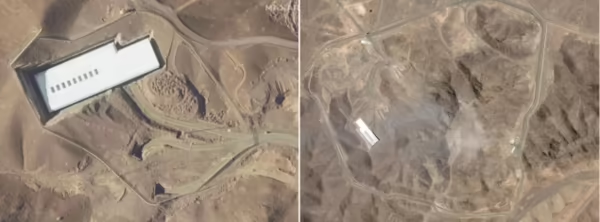
Despite multiple strikes by Israel followed by a massive strike by the US, Iran’s nuclear program remains largely intact. While satellite images show damage from above, sites like Fordow reportedly recieved repairable damage because of its depth. There is no doubt that Iran’s nuclear program is experiencing a temporary setback, but it will not take much time for the Islamic country to get back on track.
Source: Times of India
And this time, Iran may get fiercer with the enrichment of uranium, making it bomb-ready. As of now, reports suggest it has achieved 60 percent enrichment, and for a bomb, it needs over 90 percent enrichment. The enriched uranium did not get hit during the strikes, which was clear as agencies reported zero radiation leak at the attacked nuclear establishments including Fordow, Natanz and Esfahan.
The core objective of the US strikes was to cripple Iran’s ability to develop a nuclear weapon. However, the results have been underwhelming. Critical components like uranium centrifuges survived the strikes or can be repaired quickly, which means Iran could restart enrichment within months of the attack.
American intelligence also determined that Iran had safeguarded its most sensitive nuclear materials. In fact, Tehran reportedly moved much of its 60 percent enriched uranium stockpile out of the targeted facilities much before the strikes. Iran currently has around 480 kg of highly enriched uranium kept at an unknown location.
Little surprise, then, that international inspectors like the IAEA reported they could “no longer account” for this stock of uranium in the aftermath. In short, Iran’s nuclear program lives on, and any damage inflicted was minimal and reversible. Iranian engineers have most likely already started restoring the bombed sites.
Tehran kept its uranium and its defiance
Iran achieved two goals. It preserved the enriched uranium and also maintained an attitude of defiance. Its leadership rapidly signalled that they will not bow down to the strikes and abandon the nuclear program. Iran’s Supreme Leader, Ayatollah Khamenei, pointedly remained silent on the strikes, projecting an image of resolve.
According to media reports, people of Iran took to the streets and raised anti-US and anti-Israel slogans in a show of nationalist fervour after the attack. While the US was hoping for a regime change following the attack, it seems that the result was completely opposite to what the US expected, and it sparked rally-round-the-flag sentiment.
Iran has consistently insisted that its nuclear program is for peaceful purposes and vowed to rebuild any lost capability. Iranian President Masoud Pezeshkian declared Iran would rebuild and continue its nuclear project once the conflict is over. Iran believes that it has the right to nuclear technology and that it is non-negotiable.
On the other hand, Israel partnered with Washington in the campaign. Prime Minister of Israel, Benjamin Netanyahu, has boasted of a “historic victory” against Iran. However, in the same breath, he vowed that Israel would strike again if Iran rebuilds its nuclear project. This admission shows that even Israel realises Iran’s nuclear infrastructure could be restored.
Iran’s retaliation shattered the US aura of invincibility
The outcome of the conflict is not limited to the nuclear program of Iran. It is widely believed that American forces in the region are untouchable. However, Iran demonstrated a willingness and capability to hit back directly at US targets, something that once was almost unthinkable. In retaliation for the US actions, Iran launched ballistic missiles at US bases in the Middle East.
Not to forget, this is not the first time Iran has challenged the US’s might in the region. In January 2020, during a peak in US-Iran tensions, Iran fired 16 ballistic missiles at the Ain al-Asad airbase in Iraq that housed US troops. Around 30 US soldiers were wounded in that attack. While the attack occurred five years ago, it set a precedent. Iran proved it could directly strike US military installations and inflict real harm, and it repeated the same following the US strikes on its nuclear establishments. Notably, during the recent flare-up, the US embassies and bases were on high alert.
Iran also defied the ceasefire announcement by the US President as it fired missiles at Israel following Trump saying that both the countries have agreed to a ceasefire. It shows Iran is willing to test red lines. If anything, the conflict exposed American troops to harm and chipped away at US deterrence, as Iran demonstrated it can retaliate and challenge US power directly.
Washington drops talk of regime change in Tehran
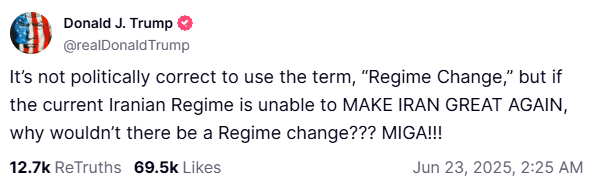
Following the announcement of strikes by the US on Iran’s nuclear facilities, President Trump suggested regime change in Iran. In a post on Truth Social, he said, “It’s not politically correct to use the term, ‘Regime Change,’ but if the current Iranian Regime is unable to MAKE IRAN GREAT AGAIN, why wouldn’t there be a Regime change??? MIGA!!!” The remark was a clear sign that the US desired the end of Iran’s ruling system. This was not a statement that could be ignored. It implied US involvement in Iran had a goal beyond destroying its nuclear program.
Source: Truth Social
However, the talks of regime change were quickly buried under the ground. Notably, hours before Trump’s desire for a change in regime in Iran, Defence Secretary Pete Hegseth had publicly stressed that it was not about regime change but to neutralise Iran’s nuclear facilities. The talks of regime change have faded away quietly since the announcement of ceasefire.
No clear strategic benefit for the United States
It is hard to escape the conclusion that the US gained little of tangible value from this entanglement. Iran’s nuclear capability is bruised, there is no doubt. However, claiming that it has been destroyed would be exaggerating. It has only been delayed by a few months. Tehran still holds the enriched uranium and can resume its program. The issue is, it is no longer traceable by international agencies.
The Iranian regime remains as strong as ever, having survived the confrontation without conceding its core positions. Washington’s brief flirtation with regime change rhetoric has been shelved, and the US now finds itself effectively reverting to containment and negotiation rather than revolution in Iran.
The US has gained no new support. If anything, European powers are now warning they may reimpose UN sanctions on Iran if a new nuclear agreement is not reached. In other words, despite the military fireworks, the solution still points back to negotiations and sanctions, the same toolkit used before the bombs fell.
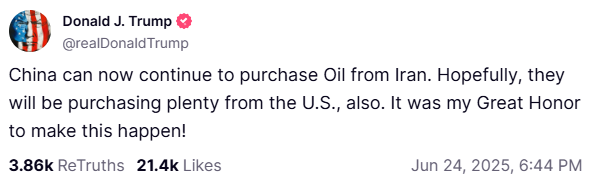
Moreover, the US has come down to compromise mode. Trump recently said in a Truth Social post that China can continue buying Iranian oil and hoped it will buy from the US too. The gesture suggests Washington felt pressure to stabilise oil markets and placate Beijing amid the Iran crisis. It appears that the confrontation produced economic and geopolitical headaches for the US.
Source: Truth Social
In conclusion, while Washington’s high-profile intervention in Iran yielded no decisive victory, Iran’s nuclear ambitions are only dented, not destroyed. The lofty goal of a safer, non-nuclear Iran governed by different leaders has not materialised. The situation will remain tense in the region even if Israel and Iran have agreed to a ceasefire, as Iran may resume its nuclear program in a matter of months and may even start working on developing an actual nuclear bomb in the coming months.
The question is, was it worth it? The evidence so far suggests the answer is a resounding no.
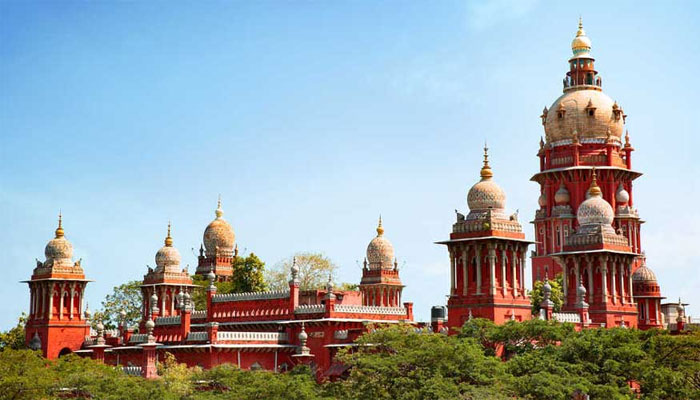
In a case of encroachment of temple land by an organisation to run the ‘St Joseph Matriculation Higher Secondary School’ in Tamil Nadu, the Madras High Court has issued notice on a contempt petition against 5 IAS officers of the state.
As per reports, the bench of Justice KR Sriram and Justice Sunder Mohan issued notices to the following IAS officers:
P Amudha, Secretary, Department of Revenue and Disaster Management
S Madhumathi, Secretary, Department of School and Education
Dr B Chandramohan, Secretary, Department of Tourism, Culture, HR and CE
PN Sridhar, Commissioner, Department of Hindu Religious and Charitable Endowment Administration
Sibi Adithia Senthilkumar, District Collector, Cuddalore
Two joint commissioners from the HR&CE Department are also named in the notices by the High Court. The said officers have been asked by the High Court to appear in person on July 10.
The notices were issued on a contempt plea filed by the petitioner, S Vinoth Raghavendran, alleging the non-compliance of an April 2024 order issued by the Madras High Court. In April 2024, the High Court had asked the state government authorities to find an alternate land for the St Joseph school that has been running on the encroached temple land.
S Vinoth Raghavendran is the state secretary of the BJP’s Spiritual and Temple Development Wing.
In his petition, S Vinoth Raghavendran had mentioned that the plot on which the St Joseph Matriculation and Higher Secondary School runs in Cuddalore belongs to a Hindu temple, and despite efforts, the encroachment has not been removed.
When the Madras High Court took up the writ petition, the state government advocate informed the Court that the as per an earlier order by the Court on a writ petition submitted by the school, the State authorities were directed to arrange for an alternate land to relocate the school, and make sure that the land is near the said town so students are not inconvenienced.
However, the proposal for the relocation has been pending with the state government for 5 long years. In April 2024, the Court had granted an additional 6 months to the State for providing land to relocate the school.
The petitioner S Vinoth Raghavendran has drawn the HC’s attention to the fact that despite the extension granted, no steps have been taken by the State authorities to provide an alternate site for the school, and to ensure the removal of the encroachment of the temple land.
The St Joseph Matriculation and Higher Secondary School has been running on land that belongs to the Devanathaswamy Temple of Thiruvanthipuram, the petitioner has said to the Court.
Three giant Tunnel Boring Machines (TBMs), needed for the construction of underground section of Mumbai-Ahmedabad high-speed bullet train corridor are stuck at a Chinese port. The machines are vital to excavate a 21-km-long underground part of the high-speed rail corridor, from Bandra-Kurla Complex (BKC) to Shilphata, featuring India’s first undersea rail tunnel under Thane Creek.
The TBMs were manufactured in Guangzhou by the German tunnelling firm Herrenknecht. Two were slated to arrive in India by October 2024, while the third was supposed to have arrived earlier this year. Yet, till now, Chinese port authorities have not provided clearance, and no official reason for the delay has been made public.
Matter escalated to the External Affairs Ministry
Worried that the project could be delayed, the Ministry of Railways in India has approached the Ministry of External Affairs. The matter is now being taken up through diplomatic channels
This section of the bullet train line is among the most technically challenging, particularly the 7-km tunnel under Thane Creek. Delays in the arrival of the machines would affect progress, though officials insist the overall project timeline remains unaffected.
Post-Galwan scrutiny of Chinese goods
Following the latest Galwan Valley clash between Indian and Chinese troops in 2020, India further strengthened its Chinese investment and import policies. A few contracts of Chinese firms were cancelled, and an effort has been made vigorously to cut back on Chinese equipment dependence.
Before 2020, TBMs from China had found usage in the Mumbai Metro and coastal roads. However, newer projects, such as the Thane–Borivli tunnel, have taken to Herrenknecht-made machines.
India’s biggest TBM is stuck
India’s biggest TBM, which got stuck in China, is one of them. Its cutter head is 13.56 metres wide—almost double the width of the ones used for metro rail tunnels. It is designed to cut through complex terrain, including soil, rock, and mixed ground, with extreme precision.
Work has begun without TBMs
Afcons Infrastructure Ltd, the company handling this stretch, is moving ahead with initial works. It won the ₹6,397 crore contract in June 2023 and has a timeline of just over five years to complete it.
Work on launching and retrieval shafts is underway—these include deep vertical shafts at BKC (36m), Vikhroli (56m), and Sawli (39m), and a 42-metre inclined shaft at Ghansoli.
The tunnel will descend up to 114 metres below Parsik Hill and needs to run through wetlands, residential areas, and water bodies. It’s a high-risk, high-reward part of the bullet train corridor.
Though NHSRCL and Afcons have not made a public statement, sources indicate attempts are being made by all concerned to settle the matter. For the time being, the construction goes on—but the clock is ticking. The bullet train schedule might get affected if the TBMs don’t depart China shortly.
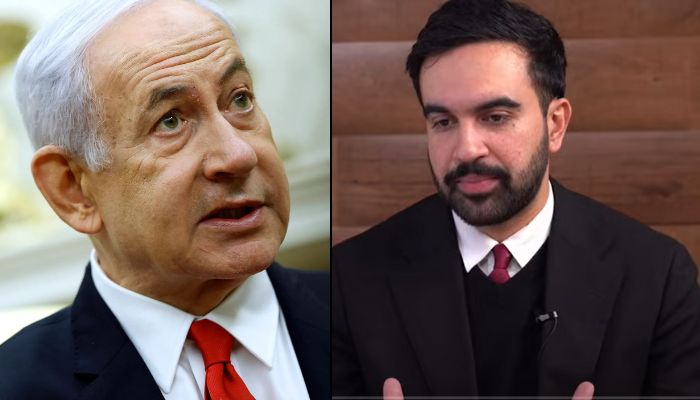
A video of New York City (NYC) mayoral candidate Zohran Mamdani, vowing to arrest Israeli Prime Minister Benjamin Netanyahu, has gone viral on social media. The development comes amid the ongoing Israel-Iran conflict and the victory of Mamdani in the Democratic primaries.
The viral video is a snippet from Mamdani’s interview with controversial ‘journalist’ Mehdi Hasan, which was originally published on YouTube in December last year.
During the interview, Hasan asked, “And Mayor Mamdani, would he welcome Prime Minister Netanyahu to New York City for whatever he comes for, given the US is not a signature to the ICC, so he can travel to the US, unlike a lot of other countries? Would a Mayor Mamdani welcome Benjamin Netanyahu to the city?”
MAMDANI: “As Mayor I would have Netanyahu arrested if he came to New York!”
“No. As Mayor, New York City would arrest Benjamin Netanyahu. This is a city that our values are in line with international law. It’s time that our actions are also,” Zohran Mamdani brazened out.
“Even though the US is not a signature to the ICC?” Hasan inquired.
Zohran Mamdani had remarked, “No, it’s time that we actually step up and make clear what we are willing to do to showcase the leadership that is sorely missing in the federal administration.”
The controversies of Zohran Mamdani
He is an American politician and the son of ‘filmmaker’ Mira Nair and ‘author’ Mahmood Mamdani. Mamdani, who was born in Uganda, is currently running as a mayoral candidate for New York City (NYC).
The controversial Democrat is currently a member of the New York State Assembly. He has a vicious record at peddling Hinduphobia and defaming India.
In August 2020 (months before the publication of eulogies in the Indian media), the famed son of ‘filmmaker’ Mira Nair was found leading a hate mob, demonising Hindus as ‘Harami (bastards),’ at Times Square.
NYC Candidate for Mayor Zohran Mamdani led a mob of protestors in Times Square calling Hindus as bastards and heaping abuses upon Lord Rama, who is worshipped by Hindus
“Who are the Hindus? Harami (Bastards),” the mob was heard yelling. Mamdani remained unflinched despite the dehumanisation of the Hindu community by his supporters. He instead began spewing vitriol against Ram Mandir.
“I am here today to protest against the BJP government in India and the demolition of the Babri Masjid that attempted to build a temple on the ruins of it,” claimed Zohran Mamdani.
He made it clear that the hate mob that he was leading at Times Square in August 2020 belonged to Khalistani extremists.
Screengrab of the August 2020 tweet of Zohran Mamdani
The video coincided with the Bhoomi Pujan ceremony of the Ram Mandir at Ayodhya, which was performed by none other than Prime Minister Narendra Modi.
Around the same time, Zohran Mamdani peddled vicious disinformation on X (formerly Twitter) about the re-constrcution of Ram Mandir. For context, a Ram Mandir always existed at the very site in Ayodhya since time immemorial.
Mughal tyrant Aurangzeb destroyed part of the temple and built a disputed structure on top of the temple foundation. The historical wrongdoing was corrected on 6th December 1992 by karsevaks.
Through years of litigation, the Hindu site finally got the greenlight to begin the reconstruction of the temple at the same site where it existed before.
On 15th May, he crossed all limits of civility by dubbing Indian Prime Minister Narendra Modi as a ‘war criminal.’
If India PM Narendra Modi held a rally at MSG and wanted to do a joint presser with you as mayor, would you? Stringer: No Lander: No. Mamdani: No. "And this is someone who we should view in the same manner that we do Benjamin Netanyahu. This is a war criminal."
“No. And this is someone who we should view in the same manner that we do Benjamin Netanyahu. This is a war criminal,” Zohran Mamdani remarked on being asked about the possibility of joint presser with the Indian Prime Minister in New York.
The reference to Israeli Prime Minister Benjamin Netanyahu as a ‘war criminal’ in the same breath stems from his deep-seated anti-Semitism. Earlier, Zohran Mamdani passed on signing a resolution ‘condemning the Holocaust.’
He also refused to sign a resolution, which recognised 77th anniversary of Israel. His innate hatred for Jews and Israel became crystal clear after he targeted Israel for responding to October 7 terror attack by Hamas.
“He condemned Israel the day after October 7th, regularly gives interviews on unapologetic antisemitic platforms and just proudly accepted an endorsement from a disgraced former fire-alarm pulling Congressman who denied October 7th rapes before walking that back,” New York State Assembly member Sam Berger pointed out.
Despite all this, the Indian media heaped praises on Zohran Mamdani in several news articles and interviews.
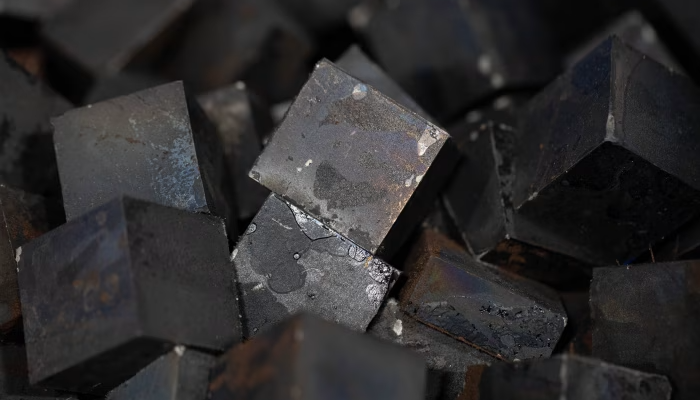
A new project worth ₹1,000 crore will be launched by the government to encourage the domestic manufacture of rare earth magnets, which are essential parts for industries like electronics, electric vehicles and defense, reported CNBC-TV18. The plan’s main objective is to boost India’s ability to produce about 1,500 tons of rare earth magnets.
A significant contribution will be made by India Rare Earth Limited (IREL), which will provide original equipment manufacturers (OEMs) involved in the production of magnets with about 500 tonnes of rare earth raw materials. According to the sources, five to six businesses are currently interested in breaking into the rare earth magnet manufacturing market.
The government is aware of worries that some companies would prefer importing fully finished components rather than procuring magnets domestically, even though it views the situation around rare earth magnets as stable at the moment. Officials are contemplating about changing the Production Linked Incentive (PLI) scheme’s Domestic Value Addition (DVA) requirements if needed to promote localized manufacturing in order to address this.
Although less than 20% of India’s geological potential has been explored, the country is home to the third-largest rare earth reserves in the world.
What do the experts say
Experts in the field believe the time is right to accelerate exploration and develop indigenous capabilities. While monazite, a crucial source of neodymium for rare earth magnets, is abundant in India, Arun Misra, CEO of Hindustan Zinc and Executive Director at Vedanta, stated that there are substantial technological and legal barriers.
He conveyed, “The first step is to remove monazite from the atomic minerals list and open it up for private mining investment.” Since China and Japan presently possess the technology to extract neodymium from rare earth chlorides, he maintained, the nation needs to make significant investments in R&D and smelting technology.
He asserted that while beach sand is processed by Indian Rare Earths Ltd. to produce rare earth oxides, the value-added chain ends there. “Just mining monazite and making chlorides is not a solution. We need to develop ways to produce neodymium so we can manufacture permanent magnets,” he added.
What is the centre’s plan
Union Minister HD Kumaraswamy stated on 24th June that the government will decide within 15 to 20 days whether to implement a plan to subsidize domestic manufacture of rare earth magnets. Consultations with stakeholders are being held to decide how much of a subsidy will be provided under the plan.
Heavy Industries Ministry Secretary Kamran Rizvi highlighted that the plan will be submitted to the union cabinet for approval if the overall incentives exceed ₹1,000 crore. The Minister for Heavy Industries and Steel, Kumaraswamy, informed, “One Hyderabad-based company is showing interest. They have promised that they will deliver 500 tonnes by this year-end, December. We have (had) discussions with the Mines Minister. Our Secretary and our ministry are working on, ultimately, a decision (will be taken) I think within 15-20 days.”
Many nations, notably India, experienced significant disruptions in the production of semiconductor chips and automobiles as a result of China’s recent curbs on exports of essential metals. The secretary pointed out that the government and business are considering other procurement options, such as Japan and Vietnam, in the interim, as the actual production of rare earth magnets is expected to take around two years.
Neodymium-iron-boron (NdFeB) magnets are examples of rare earth magnets. It is utilized in high-performance automotive applications such power steering motors in passenger cars and electric vehicles with internal combustion engines, as well as traction motors in two-wheelers and electric vehicles.
How will the new scheme help
The incentive will make it easier for corporations to invest in building processing facilities so they can turn rare earth oxides into magnets. The only rare earth repository in India is Indian Rare Earth Magnets Ltd, a PSU under the Ministry of Atomic Energy. The officials mentioned that they possess sufficient rare earths to produce 1,500 tons of magnets.
According to Kamran Rizvi, secretary in the ministry of heavy industries, the amount of incentives to be provided would determine whether or not the plan will move to the union cabinet.
“It depends on the level of incentives. If it is less than ₹1,000 crore, (heavy industries) minister and finance minister can do it. If it goes beyond ₹1,000 crore, it has to go to the cabinet. We do not know the quantum of subsidy required yet, stakeholder consultations are on, as the minister pointed out, so varied responses have come. Somebody wants 50 per cent, somebody wants 20 per cent, so it will be subject to a competitive bid, then we will know the quantum of support required,” he outlined.
The officials emphasised that 30 automakers requested permission from the Directorate General of Foreign Trade (DGFT) two weeks ago to import rare earth magnets from China in order to avoid production being adversely affected by the scarcity.
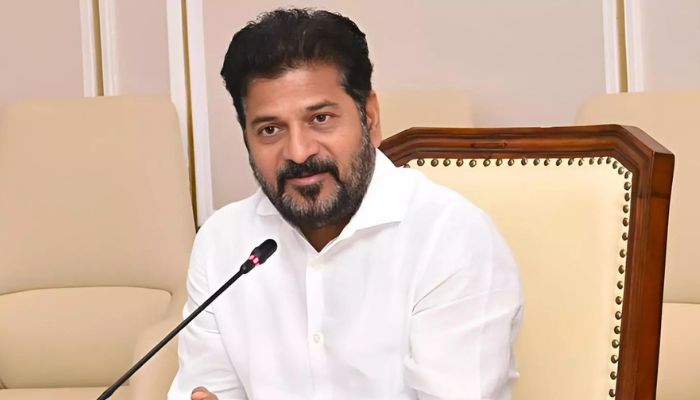
In a move that exposes glaring ideological contradictions, Telangana Chief Minister Revanth Reddy has launched a vigorous campaign to revive Urdu in the state’s education system, even as his government continues its vehement opposition to Hindi a language he dismisses as “imposed.” This dual stance raises urgent questions about linguistic authenticity, historical revisionism, and political appeasement in India’s youngest state
The anti-hindi stance
At the India Today Conclave 2025, CM Reddy unequivocally declared, “Hindi is not the national language,” questioning why Prime Minister Modi aggressively promotes Hindi while neglecting Telugu India’s second-most-spoken language. He highlighted the removal of Telugu from civil service exams as evidence of systemic marginalization. In a sharp quip, Reddy revealed his personal motive for learning Hindi: “Modi ji ko thokne ke liye Hindi seekha” (I learnt Hindi to take on Modi). His stand aligns with southern states like Tamil Nadu, which reject the Centre’s three-language policy under the National Education Policy (NEP) 2020 .
The urdu promotion agenda
Simultaneously, Telangana has embraced Urdu as its second official language statewide a move ratified by the assembly in 2017 and actively implemented. Urdu is now used in government communications, education boards, and public services. This policy cites Urdu’s historical significance: it was the administrative language under the Nizams and remains vital to accessing Telangana’s archives (most pre-1948 records are in Urdu or Persian). As journalist Moses Tulasi argues, “If Telangana students are to read their own history, Urdu must be revived”
The contradiction critics weigh in opponents, particularly the BJP, accuse Reddy of hypocrisy
Urdu was enforced in Nizam-era Telangana despite only 11% Urdu speakers, marginalizing Telugu, Marathi, and Kannada communities. Its revival risks reopening old wounds. Urdu’s promotion is seen as appeasement of Telangana’s 13% Muslim population a key Congress vote bank. Critics note Reddy’s Cabinet lacks Muslim representation despite their electoral support. BJP leader G. Kishan Reddy asks “Why oppose Hindi as ‘imposition’ while state-imposed Urdu gains official traction?”. He notes Telugu itself struggles for implementation in government offices.
Urdu’s non-native roots in Telangana
Demographic Imposition: During the Nizam’s rule (1724–1948), Urdu was enforced as the sole official language despite Telugu speakers constituting 50% of Hyderabad State’s population, compared to a mere 11% Urdu speakers. This was a deliberate act of cultural erasure, not organic linguistic evolution.
Geographic Origin: Urdu evolved in the Meerut-Delhi region (Uttar Pradesh) as a camp language (“Zaban-e-Urdu-e-Mualla”) of Mughal armies, absorbing Persian and Arabic vocabulary. Its presence in Telangana began only with the Bahmani and Qutb Shahi invasions, making it an imported language not an indigenous one.
Suppression of Telugu: The Nizam’s Urdu-only policy systematically excluded Telugu from education and administration, sparking the Telangana Armed Struggle (1946–51). As historian Moses Tulasi notes, “Not making Telugu the state language majorly contributed to the un-doing of the Nizam state”. Reviving Urdu today echoes this oppressive legacy.
Political double standards
Reddy’s stance reveals a calculated appeasement strategy, While he questions, “What has Modi done to promote Telugu?”, his government diverts resources to Urdu spoken by just 11% of Telangana today, ignoring truly native tribal languages like Gondi, Koya, and Lambadi. Reddy dismisses Hindi as lacking “benefits”, yet Urdu, once the language of the Nizamati eliteis, has been repackaged as the people’s tongue. This ignores that Urdu’s script and vocabulary alienate Telugu’s Dravidian linguistic base.
The larger agenda
This agenda is not new as it mirrors the Samajwadi Party’s demand for Urdu translations in UP assemblies a move CM Yogi Adityanath rightly condemned as attempts to “make children maulvis” rather than scientists. Meanwhile, AIMIM’s Asaduddin Owaisi weaponizes Urdu as “India’s language of Independence”, whitewashing its divisive history.
Conclusion: Whose legacy is Telangana protecting?
Telangana’s true linguistic heritage lies in Telugu a classical language spoken by 77% of its people and its tribal dialects. Promoting Urdu as “native” is historical fraud. If the CM genuinely opposes linguistic imperialism, he must explain why fighting Hindi a language uniting India’s heartlandtakes precedence over reviving the Nizam-suppressed Telugu itself. The answer lies not in culture, but in vote-bank politics that sacrifices Telugu pride at the altar of minority appeasement.
In a move that exposes glaring ideological contradictions, Telangana Chief Minister Revanth Reddy has launched a vigorous campaign to revive Urdu in the state’s education system, even as his government continues its vehement opposition to Hindi a language he dismisses as “imposed.” This dual stance raises urgent questions about linguistic authenticity, historical revisionism, and political appeasement in India’s youngest state