NATO leaders have agreed to increase their defence spending to 5% of the GDP by 2035, as demanded by US president Donald Trump. At a meet at The Hague on Wednesday, the leaders of the North Atlantic Treaty Organization finally accepted the US demand after dodging it for several months.
However, Spain has refused to agree with the demand, resulting in an angry outburst from Trump. Ahead of the meeting today, Spanish Prime Minister Pedro Sanchez had said on Thursday he would not commit to the 5% target. Spain has committed to spend 2.1% of GDP to meet NATO’s core military requirements, up from current 2%.
Saying that his country can raise its expenditure to 2.1%, Pedro Sanchez said “nothing more, nothing less.” He said that Spain will meet the alliance’s ambitious new weapons and troop targets, but without committing to the price tag that NATO had attached to it.
Sanchez had said that increasing spending on defence will result in drastic cuts on social spending such as state pensions, or tax hikes, and he was unwilling to do the same. At that time also, Trump had said that Spain “has to pay what everybody else has to pay”, adding that Madrid was “notorious” for low defence spending.
As Spain finalised its decision today, Trump said that it is terrible what they have done, and Spain is the only NATO country to not hike defence spending. He also threatened to double tariff on Spain to make it pay.
BREAKING:
Trump slams Spanish PM Pedro Sanchez for refusing to increase military spending to 5% as all other NATO states have agreed to do
“It's terrible what Spain has done (…) We're negotiating a trade deal & I will make them pay twice as much. I'm serious about that” ???? pic.twitter.com/pgsCCPDYm2
Trump said, “You’re the only country that is not paying. I don’t know what the problem is,” adding that Spanish economy is doing well. He further said, “We’ll make it up. You know, we’re going to do, we’re negotiating with Spain on a trade deal. We’re going to make them pay twice as much. And I’m actually serious about that.” He added that the economy of Spain may blow if something happens.
However, Madrid said that they are downplaying Trump’s remarks. A spokesperson said, “We downplay Trump’s comments and we emphasize our commitment to NATO.”
As per a joint declaration issued by NATO, other member nations will increase their defence spending target from 2% of gross domestic product to 5% by 2035, marking a massive increase. US has been demanding this increase, arguing that it contributes to the majority of NATO expenses, and it can’t continue. Notably, some member states have yet to meet the 2014 target to spend 2% of GDP on defence.
Of the 5%, “at least” 3.5% of GDP will be spent on “pure” defence related activities, with the remainder 1.5% can be sent on other security and defence-related “critical infrastructure” to ensure “our civil preparedness and resilience, unleash innovation, and strengthen our defence industrial base,” the statement said.
The allies will be required to submit annual plans “showing a credible, incremental path to reach this goal.” The joint statement said that they are united against “profound security threats and challenges, in particular the long-term threat posed by Russia to Euro-Atlantic security and the persistent threat of terrorism”.
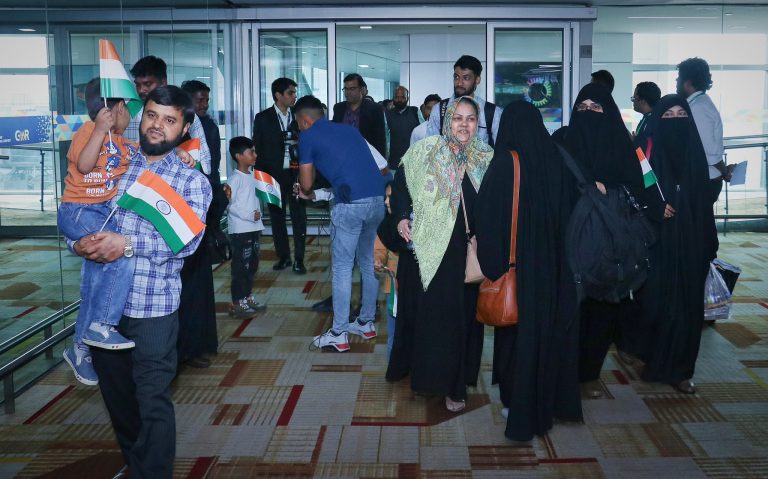
Another special flight carrying 296 Indian nationals and four Nepalese nationals stranded in conflict-hit Iran landed safely in New Delhi on Wednesday, taking the total number of people evacuated under Operation Sindhu to 3,154.
“296 Indian and 4 Nepalese nationals were evacuated from Iran on a special flight that arrived in New Delhi from Mashhad at 16:30 hrs on 25th June. 3154 Indian nationals have now been brought home from Iran as part of Operation Sindhu,” the Ministry of External Affairs stated in a post on X.
Operation Sindhu was launched amidst the escalating conflict between Iran and Israel, which had gripped the region for the past couple of weeks before a ceasefire was agreed on Tuesday.
The Indian Embassy in Iran has announced that it will be gradually winding down its evacuation exercise for Indian nationals, initiated after the escalated conflict in the region following Israel’s military operations on the Islamic Republic, as a ceasefire deal was made between the two countries on Tuesday.
In a post on X, the Embassy detailed the closure of the contact desk set up for registering new names of Indian nationals for evacuation, while assuring continued monitoring of the security situation.
Announcement from Embassy of India, Tehran: Since there has been an announcement of ceasefire, the Embassy is gradually winding up the evacuation exercise initiated during the military conflict in Iran.
“Announcement from Embassy of India, Tehran: Since there has been an announcement of ceasefire, the Embassy is gradually winding up the evacuation exercise initiated during the military conflict in Iran. Hence the Embassy has closed the contact desk that was opened to register new names for evacuation. At the same time, Govt. of India is keeping a careful eye on the evolving situation & will reassess its strategy in case there is again a threat to the security of Indian nationals in Iran,” the Embassy stated.
The Embassy advised Indian nationals currently in other parts of Iran, who were planning to travel to Iran’s Mashhad for evacuation, to remain in their current locations and continue monitoring news updates and any revised advice from the Embassy.
For those who had already arrived in Mashhad in recent days and are staying in hotels arranged by the Embassy, it issued a directive to shift to the Sadr hotel in Iran by Wednesday (local time). “Those Indians who had already travelled to Mashhad in the last few days, and are staying in one of the hotels arranged by the Embassy, are requested to shift to Sadr hotel today itself, because the Embassy will be releasing the rooms in other hotels,” the Embassy specified.
This came after US President Trump, on early Tuesday, announced a ceasefire agreement between the two conflict-gripped nations following Iran’s attack on US military bases in Qatar and Iraq in response to the US strikes on its nuclear facilities.
(This news report is published from a syndicated feed. Except for the headline, the content has not been written or edited by OpIndia staff)
The Northeastern State of Assam is host to several Vaishnavite monasteries called Satras, which were founded by Assamese saint-scholar Srimanta Sankardeva and his disciples in the 15th and 16th centuries.
Satra is a spiritual institution and has been the centre of traditional performing arts (literature, music and theatre) in the State. Typically, it consists of a large prayer hall, bathing tanks, dormitories, and guest accommodation.
Devotees can participate in the worship of Lord Krishna and Lord Vishnu and watch traditional bhaona performances, and observe artisans at work. The first Satra was founded in Assam’s Majuli.
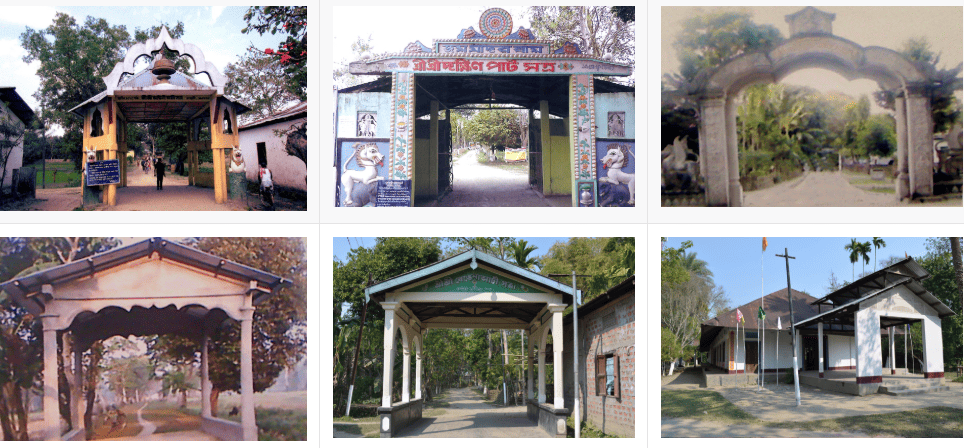
Satras of Assam, image via the Department of Tourism/ Government of Assam
In total, there are 900 Satras spread across the State, which have been established for the propagation of socio-cultural ideals and ethics.
The popular Satras include Auniati, Kamalabari, Dakhinpat, Garamur, Bengenaati, Samaguri and Natun Kamalabari.
Over several centuries, kings and local Hindus have donated vast acres of land to Satras for cultural, economic and religious propagation. These lands are known as ‘Satra lands’, which were part of official land records.
These Satra lands provided economic support to the monks and helped maintain the religious and cultural functions of the institutions. Satras continue to play a key role in preserving Assamese identity.
The menace of land encroachment
A grim reality is that today, large portions of Satra lands across Assam are under illegal encroachment. Factors such as demographic changes, involvement of land mafia and political patronage have contributed to the menace.
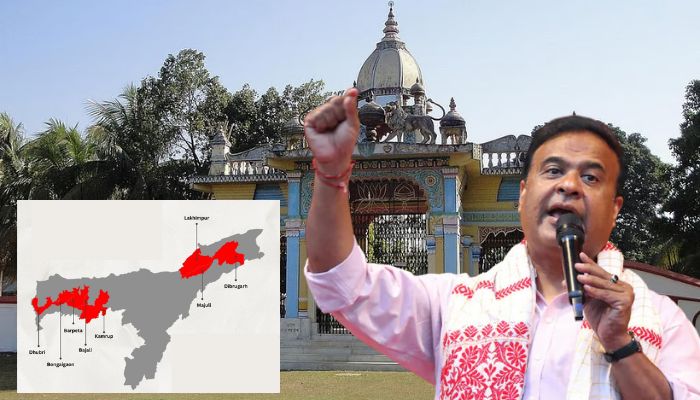
The extent of the problem is significant. On 13th June, this year, Chief Minister Himanta Biswa Sarma informed that 15,288.52 bighas of Satra lands remain illegally occupied across 29 districts of the State.
He highlighted massive encroachment in districts such as Bongaigaon, Majuli, Dibrugarh, Nagaon, Bajali, Kamrup, Lakhimpur and Dhubri.
An area twice the size of our capital Dispur! Yes, that's the magnitude of Satra land encroached upon in Assam.
The sheer scale of encroachment of the Satras is a direct assault on Assam's culture and identity.
“An area twice the size of our capital Dispur! Yes, that’s the magnitude of Satra land encroached upon in Assam. The sheer scale of encroachment of the Satras is a direct assault on Assam’s culture and identity,” Sarma tweeted.
He vowed to deal with the menace of illegal encroachment firmly.
Himanta Biswa Sarma government is reclaiming Satra lands in Assam
In recent years, the Himanta Biswa Sarma government in Assam launched a strict drive to reclaim Satra lands from illegal encroachment.
In November 2021, it formed a high-level committee, which later came to be known as the ‘Commission for Review and Assessment of Problems of Satra Lands in Assam (CRAPSLA)’ to study the extent of encroachment on Satra lands.
“There have been complaints and news reports about encroachment of land belonging to ‘satras’. But till now no government has done any survey on this issue. Now we have decided to constitute a committee to look into all aspects of the problem,” the Assam CM had said at that time.
Happy to receive interim report of Commission for Review & Assessment of Problems of Satra Lands in Assam led by Hon’ble MLA Shri Prodip Hazarika.
The Commission visited 62 satras to prepare the report, which we’ll study before deciding on next course of action. pic.twitter.com/9OwtQCtQRi
A year later in December 2022, CRAPSLA submitted its interim report to Himanta Biswa Sarma. The Commission comprised of 3 MLAs, Pradeep Hazarika, Rupak Sarma and Mrinal Saikia.
According to reports, they visited 62 Satras of Assam and emphasised the urgent need to clear off illegal encroachments. The tenure of the Commission was further extended so that field visits could be done to more affected Satras.
On 9th June this year, CRAPSLA submitted its final report to Himanta Biswa Sarma. The Commission visited 126 Satras, gave its detailed assessment and recommendations for policy action.
Our Satriya culture has been passed on through generations and is a living example of Assam's rich history.
Have you wondered what are the essentials of this dance form? Let me introduce it to you~
Sattriya Paag (The headgear) Bortaal (The cymbal) Khol Khorom Devotional Book pic.twitter.com/KTFrUS0MBA
“This report sheds light on the growing threats to Satra lands due to encroachments. The government will examine the findings thoroughly and act upon the recommendations,” the Assam CM stated.
He also announced the establishment of a Permanent Satra Aayog within 1 year. The Commission will have administrative autonomy, judicial authority and financial grants to support the functioning of Satras in the State.
“A law will be introduced in either the September or February legislative session to institutionalise the Aayog. It will formulate a 25-year vision document to protect and modernise Satra institutions,” he added.
Concrete action against encroachers on the ground
Soon after the interim report of CRAPSLA was published in December 2022, the Assam government cleared off encroachments from 1000 bighas of land near the birthplace of Srimanta Sankardev in Batadraba Than in Nagaon district of Assam.
In February 2023, the Assam government successfully reclaimed 55 bighas of encroached land near Gopal Ata Satra. A similar anti-encroachment drive in July 2024 helped restore 34 bigha land near the revered spiritual institution.
In August 2024, the Himanta Biswa Sarma govt enacted the ‘The Assam Land and Revenue Regulation (Second Amendment) Bill’ to prevent outsiders from buying land within a 5-km radius of heritage institutions that are over 250 years old.
This includes Batadrawa Than, Barpeta Satra and Majuli Island, which have been re-categorised as “Heritage Blocks.”
Himanta Biswa Sarma had informed around the same time that Satras were being provided with financial support.
In October last year, the Assam government launched protective zoning measures under ‘Mission Basundhara 3.0’ to facilitate land distribution to Satras and formalise legal ownership.
Many Satras in districts such as Nagaon and Morigaon have come together to ensure the swift recovery of encroached properties.
Minorities should respect the traditions and customs of the indigenous people and not try to create a conflict by building Masjids near Satras and occupying Satra land.
Dhubri, Barpeta, etc. are an example of such templates and we should not let this be repeated. pic.twitter.com/94qSPcO6j9
Himanta Biswa Sarma had recently pointed out that mosques were being constructed on Satra lands, and beef was being consumed to hurt the indigenous cultural identity.
“When cow meat is consumed near a Satra, and the sound of Azaan from a masjid overlaps with the Namghar of the Satra, it becomes a non-negotiable point,” he said, adding that such activities can be done 10 kms away but not near Satras.
The BJP has been raising the issue of the encroachment of Satra lands as early as 2016 while the Congress regime had tried to brush it off as conspiracy theory.
In the past 9 years, efforts have been made by the BJP government(now in a mission mode) to reclaim indigenous land meant for Satras.
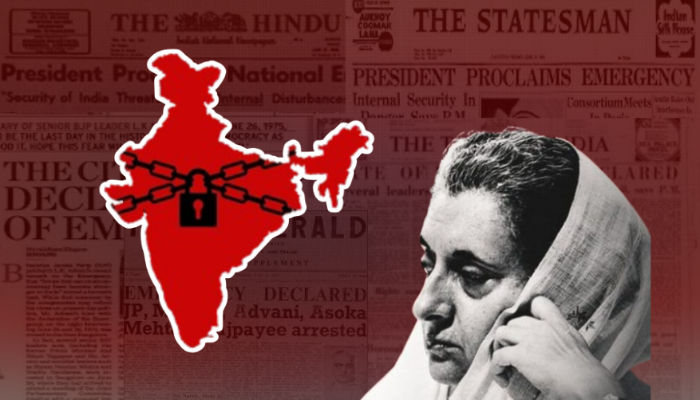
Today marks the 50th anniversary of the Emergency proclaimed by Indira Gandhi in 1975—a year etched in black ink for the nation, as it curtailed the freedoms of its people. Several events unfolded during that period which led to the imposition of Emergency on the midnight of 25 June 1975. That night turned into a nightmare, as the nation woke up to a bombshell from the Allahabad High Court, which found Indira Gandhi guilty.
India was governed by Prime Minister Indira Gandhi and President Fakhruddin Ali Ahmad when the Emergency was enforced under Article 352. The move was justified by citing internal disturbance and a threat to national security. Between the proclamation and 1977—nearly two years of unrest—the nation faced numerous challenges: civil liberties were suspended, opposition leaders jailed, press freedom was curbed, public gatherings banned, and much more. Although India remained a democracy on paper, it felt stripped of its identity for the next 21 months.
While every decision deeply unsettled the nation, the censorship of the press was especially disturbing. The press was silenced overnight. Power supply to newspaper presses in Delhi was cut immediately after the Emergency was declared. Mainstream media such as The Indian Express resumed publication with its June 28 edition, leaving a blank space in the editorial section. The Statesman followed with similar blank columns. The National Herald, founded by Jawaharlal Nehru, faded out its masthead slogan: “Freedom is in peril, defend it with all your might.”
The Indian media was instructed that all newspapers must seek approval from the Chief Press Adviser before publishing anything, and were barred from sharing any content that could spark public outrage. In fact, Indira Gandhi issued a set of guidelines for journalists, making it mandatory to adhere to them.
While mainstream media gasped for air, vernacular newspapers struggled to hold on to their identity. People continued to rely on regional publications for news. Newspapers like Frontier, Sadhna, Janata, Himmat, and Swaraj quickly fell victim to censorship. Ranchi Express, the only newspaper in the then-united Bihar, which began in 1963, left its editorial space blank—carrying the censor officer’s signature—a fact documented in the book Emergency Ka Kahar Aur Censor Ka Zahar.
Gour Kishore Ghosh, a satirist and editor, was jailed after he shaved his head and published a symbolic letter mourning the loss of freedom. Bartaman—founded later by Barun Sengupta—reflected that enduring spirit of dissent, even though it came post-Emergency.
The restrictions were so severe that the press was barred from covering major news. In mid-1975, Sanjay Gandhi launched a Five-Point Programme—family planning, abolition of dowry, eradication of illiteracy, elimination of casteism, and a plantation drive—perhaps to distract the public from the Emergency. Journalists were strictly banned from reporting or photographing the slum demolitions at Delhi’s Turkman Gate, which rendered thousands homeless. Coverage of the conditions inside the high-security Tihar Jail was also off-limits.
Foreign journalists from The Times, Newsweek, and The Daily Telegraph were given just 24 hours to leave India if they refused to sign censorship agreements. While the Indian press remained under government surveillance for 21 months, the foreign media found opportunities to expose the real state of journalism in India and the suspension of constitutional rights.
According to Om Mehta, the then Home Minister, nearly 7,000 journalists and media workers were arrested by May 1976.
The English weekly Himmat, started by Rajmohan Gandhi, faced intense backlash and initially left its editorial page blank in protest. Later, the publication resumed its regular tone, only to be informed it had violated censorship norms. Rajmohan Gandhi and his brother Ramchandra Gandhi were soon arrested after covering a prayer meeting at Rajghat on October 2, where Acharya J.B. Kriplani had spoken. They were later released.
Veteran politician L.K. Advani’s famous remark—“You were asked only to bend, but you crawled”—still echoes in the conscience of Indian journalism. He too was imprisoned during the Emergency. Noted journalist Kuldip Nayar was also arrested for raising his voice in protest.
Even before the ink had dried on the Emergency declaration, Punjab Chief Minister Giani Zail Singh called N.P. Mathur, the Chief Commissioner of Chandigarh, urging strict action against the press. He demanded that The Tribune, a leading newspaper in Punjab, Haryana, Himachal Pradesh, and Jammu & Kashmir, be shut down, and that its editor, Madhavan Nair, be arrested. Mathur found himself in a bind—he didn’t want to issue official orders. Instead, he relayed the message to S.N. Bhanot, the Senior Superintendent of Police. However, Bhanot refused to act without written instructions from the District Magistrate. Still, he visited The Tribune‘s office and warned the staff not to publish content that could displease the government. A small police team was also stationed there.
But The Tribune did not back down. The paper hit stands the next morning as usual. This infuriated Haryana Chief Minister Chaudhary Bansi Lal, who threatened that if the Chandigarh administration didn’t raid The Tribune and arrest its editor, he would send the Haryana Police to do it himself. But that too didn’t happen—civil servants stood their ground and refused to carry out unlawful orders. Ultimately, they only appointed a Censor Officer under the Defence of India Rules.
In Jalandhar, Hindi and Urdu newspapers printed blank pages with the label ‘Censor ki Bench’. Veer Pratap, a Hindi daily from Jalandhar, was even more expressive, printing an Urdu couplet beneath its empty editorial space: “I can neither anguish nor petition; it is my fate to choke and die.”
The government later labelled this period as ‘Samvidhan Hatya Diwas’—a time that may have tested the nerves of Indian citizens, but did not break them. Despite the heavy censorship, what remains crucial to remember is that Indian newspapers and media outlets kept breathing. With the rise of independent and digital media in the 21st century, the ability to report truth has only strengthened—offering the people easier and broader access to information than ever before.
“Mythology, not history”: this is the first and foremost argument leftists put forth whenever Saraswati, the sacred ancient river kept alive in Hindu faith, is mentioned. In what could be a significant step in tracing the Saraswati river mentioned in the most ancient religious text Rig Ved, the Archaeological Survey of India (ASI) has dug up an ancient paleochannel buried 23 metres under the Bahaj village in the Deeg district of Rajasthan.
Rajasthan dig reveals 3,500-year-old settlement and River channel: This ancient river system nourished early human settlements and connects Bahaj to the larger Saraswati basin culture. https://t.co/kLEjIGihTS
Notably, a paleochannel is the remnant of an ancient river or stream channel that is no longer active and has ceased surface flow.
What emerged from the excavation conducted between April 2024 and May 2025 has drawn the attention of historians and archaeologists, who link the discovered paleochannel to the Saraswati River. There is evidence suggesting that there were settlements here between 3500 and 1000 BC. These discoveries date back to the Kushan, Magadha and Sunga (also spelt, Shunga) dynasty.
The discovery of a paleochannel is reported to be the first-ever in India’s archaeological history.
While giving a presentation at the Banaras Hindu University, Vinay Gupta, superintending archaeologist of ASI Jaipur, said, “This ancient river system nourished early human settlements and connects Bahaj to the larger Saraswati basin culture.”
Gupta also called the palaeochannel an “unprecedented discovery confirming ancient water systems supported civilisation here”.
Notably, the ASI has submitted its report to the Ministry of Culture, which will decide how to preserve the site. In addition to the paleochannel, the ASI excavation team has also found remnants of residential structures with earthen posts, trenches with stratified walls, furnaces and a variety of iron and copper artefacts.
The Microlithic tools or small stone implements suggest that the roots of this settlement date back to the pre-Holocene era, TOI reported.
The excavation team also found many Hindu religious relics, including 15 yajna kundas (sacrificial pits), votive tanks dedicated to Shakti worship, and terracotta images of Shiva and Parvati, dating back to around 1000 BC. In addition, Yajna kundas from the Mahajanapada period were also found, most of them filled with sandy soil and miniature pots holding uninscribed copper coins.
‘The mythical river that never was‘ or the ancient ‘Guptagamini’ remerging? How leftists kept denying the existence of Saraswati due to its Vedic connection
In the Vedas, theSaraswati River is called “ambitame, naditame, devitame (the best of mothers, the best of rivers, the best of goddesses)”. The Saraswati river is mentioned some fifty times in the hymns of the Rig Veda. It is closely related to the ancient Rig Vedic society and Hinduism.
The Saraswati river, also known as ‘Guptagamini’ (the river with a hidden flow), revered in the Vedas as a mighty and sacred river, has long been a subject of debate among scholars, archaeologists, and ideologically driven groups looking for opportunities to demean and discredit Hindu history. While scientific evidence now increasingly hints at the existence of a massive river system matching the Vedic descriptions, especially the mentions made in the oldest Vedic text, the Rig Ved, some leftists ‘historians’ and propaganda outlets have perpetually been dismissing even legitimate research pertaining to the existence of the Saraswati river. They come up with absurd arguments to claim that Saraswati is only a ‘mythological’ river or a symbolic mention instead of a real geographical entity.
On the surface, the rhetoric of leftist ‘scholars’ and ‘media’ around the Saraswati River’s existence or the possibility of its existence appears to be academic denial. However, this denial is not simply academic; the Hindu-hating leftists have long been critiquing and dismissing research and findings that emphasise the antiquity and continuity of Vedic traditions. They undermine the cultural and historical significance of the Vedas as the Vedic texts form the bedrock of Hindu civilisation.
In fact, the repeated use of the term ‘mythical’ for the Saraswati River in the media indicates a perpetual and deliberate attempt at subtle brainwashing so as to convince the general populace, especially the Hindus, that the Saraswati River is ‘mythical’ even as archaeological evidence and research show otherwise.
Unsurprisingly, leftist propaganda portal TheWire has long been denying the Saraswati River’s existence, slamming attempts at research and mindlessly mocking legitimate scientific enquiries into India’s ancient river systems.
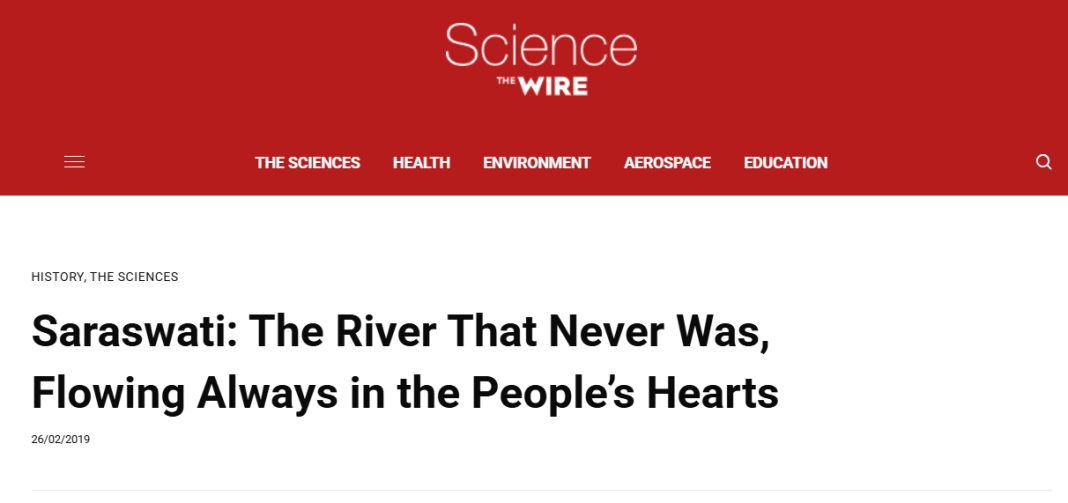
In February 2019, TheWire published an article headlined: Saraswati: ‘The River That Never Was, Flowing Always in the People’s Hearts’. In this piece, the author mentioned the likes of Romila Thapar, Irfan Habib, among other leftist historians who have a history of glorifying Islamic invaders and tyrants and diminishing the Hindu history, to equate the existence of the Saraswati River with cultural memes.
“So it is also likely that the Saraswati was a mental construct of the Vedic Aryans, which metaphorically overflowed as they encountered the bleak, water-poor landscape of the Indus-Yamuna interfluve. The new findings don’t believe there existed a perennial river in Harappan times in the Indus-Yamuna interfluve region of northwest India,” TheWire article reads.
It further lamented the government’s decision to spend Rs 50 crore on finding a “non-existent” river.
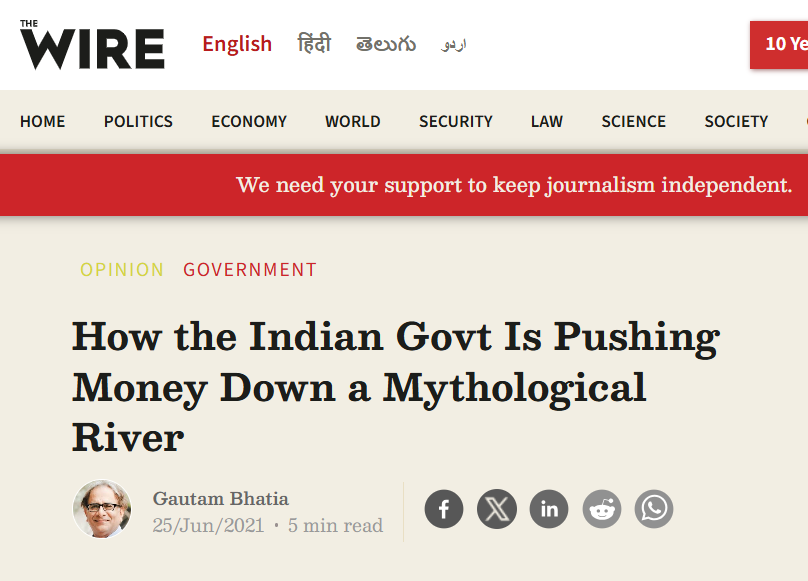
In 2021, TheWire again cried hoarse over the government’s decision to set up the Centre of Excellence for Research on the Saraswati River (CERSR) at Kurukshetra in Haryana. TheWire article headline, “How the Indian Govt Is Pushing Money Down a Mythological River“, called the Modi government’s efforts to trace the ‘disappeared’ Saraswati River, a ‘Hindu project’.
The article authored by an architect and sculptor also lamented back then that the Central government was spending money on connecting Char Dham and on the Kashi-Vishwanath Corridor, suggesting that the government is promoting Hindu ‘mythology’. It also asserted that Saraswati is a mythical river and mythology provides immediate results while science is slow, tedious and evidence-based, thus, may not yield quick benefits for the Modi government.
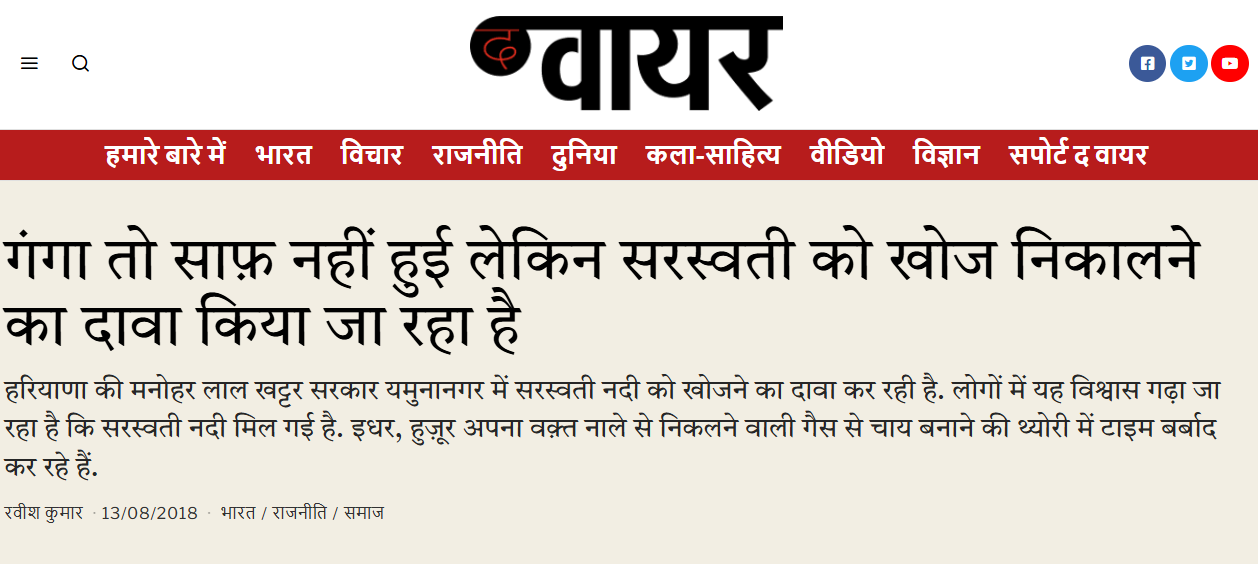
TheWire also platformed alleged journalist-turned-YouTuber Ravish Kumar in August 2018, to mock the government’s steps to back research and investigation pertaining to the Saraswati River.
Similarly, in January 2018, Scroll reported the formation of a permanent panel to study the mythical Saraswati river. The concluding paragraph of the article, as usual, casts aspersions on the existence of the river itself.
There are many such articles calling Saraswati a ‘mythical’ river, the pursuit of tracing it as a ‘Hindu project’, and any scholar, historian, or archaeologist attempting to explore history and archaeological remains, based on the descriptions made in the Vedic texts, as ‘Hindutva-influenced’. Such opinion pieces, mostly authored by leftist ‘intellectuals’, insinuate that a trend of excavating sites approximating descriptions in the ancient Hindu scriptures has become mainstream and is a part of the ‘revivalist’ agenda of the Hindu nationalists.
At the 2001 Indian History Congress, Marxist historian Irfan Habib, who has been a Mughal fanboy and often villainises the Hindus, presented his research paper titled, “Imaging River Sarasvati: A defence of common sense”. In this, Habib not only dismissed the grandeur of once-thriving Saraswati River, but also argued that the claims about Saraswati’s existence were exaggerated to back a Hindu-centric view of history. Even Romila Thapar has been among the leftist-communist historians who reject the research and findings linking the Ghaggar-Hakra system with the ancient Saraswati River.
While the leftists dismiss Vedic texts and other Hindu scriptures as unreliable sources since, for them, everything mentioned in these texts is ‘mythical’, a growing body of scientific research hints at the existence of paleochannels in northwestern India, consistent with the Vedic descriptions of the Saraswati River.
In 2019, a research team led by scientists and researchers of IIT-Bombay and the Physical Research Laboratory, Ahmedabad, stated that they had found ample evidence of a perennial river on the plains of Northwestern India, which had led to the flourishing of early Harappan civilisations in the area.
Contradicting the earlier beliefs that the Harappan civilisation depended upon the monsoon, ample evidence has been found that suggests that a considerable number of Harappan settlements flourished along the ancient course of a modern seasonal stream called Ghaggar in Northwestern India.
The research by the Physical Research Laboratory, Ahmedabad, in collaboration with IIT-Bombay, has stated that there is enough evidence to say that there was a perennial river in the parts of Northwestern India that followed along the current course of the Ghaggar. The scientists believe that it is the ancient river Saraswati mentioned in the Rig Veda.
The research says that the Saraswati was perennial and had flowed from the higher Himalayas between 7000 and 2500 BC. The Harappans had built their earliest settlements along the perennial Saraswati between 3000 and 1900 BC. The decline of Saraswati eventually led to the collapse of Harappan civilisation, the research adds. It also says that the demise of the river and the Harappan civilisation approximately coincide with the onset of the Meghalayan stage, the current dry state of global climate that began 4200 years ago.
The scientists involved in the study also say that while the Saraswati had sources in the glacial regions of the Himalaya, similar to the Ganga, Yamuna and Sutlej, the current Ghaggar has no direct connection to the higher Himalayas and originates from the Siwalik, the foothills of the Himalaya.
The dating of the layer was done with the radiocarbon and optically stimulated luminescence methods at the PRL. Scientist JS Ray explains that they found that the perennial river had uninterrupted flow starting 80,000 years ago and continued till 20,000 years ago. It then started diminishing due to the extreme aridity of the later glacial period. However, the river gained strength some 9000 years ago and continued till 4500 years ago.
The decline of Saraswati’s flow is said to have started due to the drying up of the Sutlej-fed channels. The later Hindu scriptures, such as the Mahabharat, also describe the Saraswati’s diminishing flow, till it all but disappeared.
“This revived perennial condition of the Ghaggar, which can be correlated with the Saraswati, likely facilitated the development of the early Harappan settlements along its banks. The timing of the eventual decline of the river, which led to the collapse of the civilisation, approximately coincides with the commencement of the Meghalayan Stage,” the research report reads.
“Our study brings to light the fact that the Harappans built their early settlements along a stronger phase of the river Ghaggar, during ~9 to 4.5 ka, which would later be known as the Saraswati. However, by the time the civilisation matured, the river had already lost its glacial connection,” the study adds.
In his book, “The Land of Seven Rivers”, noted historian and economist Sanjeev Sanyal comments that tectonic shifts may have played a role in the shift of the river’s course. The site Dholavira (Gujarat) is located in the Rann of Kutch. Surely, no civilisation could have built a city and lived there if there were no water source nearby. He also backs the hypothesis that the Harappan civilisation could have ended due to the death of the Saraswati River. The people who lived in those cities might have moved eastwards to the Gangetic plains after the death of the Saraswati River.
Source : The Land of Seven Rivers by Sanjeev Sanyal
Interestingly, back in 2013, an unstarred question was asked by Harish Chaudhary in the Lok Sabha about the Saraswati River. Since ISRO functions directly under the PMO, the answer was addressed to the Prime Minister. In response to the query raised, the government said that the Indian Space Research Organisation (ISRO) studied the paleochannels in North West India and related them to the channels of the River Saraswati.
“An integrated palaeochannel map of River Saraswati has been prepared from the origin in the Himalayas to the Rann of Kutchch. The origin of the mapped course of the River Saraswati palaeochannel in North West India was linked to the Himalayan perennial source through the Sutlej and Yamuna Rivers,” the government said.
It added that the work on delineation of the entire course of the river ‘Saraswati’ in North West India was carried out using Indian Remote Sensing Satellite data along with a digital elevation model. Satellite images are multispectral, multitemporal and have the advantage of a synoptic view, which is useful to detect palaeochannels. The palaeochannels are validated using historical maps, archaeological sites, hydro-geological and drilling data. It was observed that major Harappan sites of Kalibangan (Rajasthan), Banawali and Rakhigarhi (Haryana), Dholavira and Lothal (Gujarat) lie along the River Saraswati.
Drainage map of northwestern India showing old bed of Saraswati river which is largely occupied by modern Ghagghar River except a 35 km loop which flows north of the palaeochannel near Fatehabad. Source: Research Gate
There are numerous Harappan sites, including Kalibangan, Rakhigarhi, and Dholavira, located along the Ghaggar-Hakra system. This suggests that a significant river supported the development of the Indus Valley Civilisation, which is also known as the Sindhu-Saraswati or Indus-Saraswati Civilisation.
Archaeologist Braj Basi Lal, or BB Lal, the former Director-General of the ASI, has been a prominent advocate of the argument that the distribution of these Harappan sites aligns with the course of Saraswati, not the Sindhu/Indus, suggesting that Saraswati was a central hub of the IVC. Even in Kalibangan, excavations have uncovered Vedic ritual altars, Vedis, and Yupas, hinting at the cultural-religious continuity between the Vedic and Harappan civilisations. Interestingly, BB Lal is often labelled as a ‘Hindutva-influenced’ archaeologist by the left-liberal cabal.
The deliberate dismissal of the Saraswati as ‘mythical’ seeks to weaken the authority of Hindu scriptures, especially the Vedas, as reliable historical sources. It is understandable that relying solely on religious scriptures, even if those scriptures are the cornerstone of Hindu culture and give elaborate insights into the life and times of the Vedic era, is not appropriate. However, the leftists discredit legitimate research papers, archaeological findings and other evidence just because it does not align with their agenda, and to prevent further research and investigations in this direction.
Besides the ideological imperative of undermining the histriocity of Hindu scriptures, the leftists and other anti-Hindu elements who have been blind supporters of the Aryan Invasion Theory (AIT), are also opposed to efforts to trace what they call the ‘dead river’, since the Saraswati’s perennial phase, (9,000-4,500 years ago), and its mention in the Rig Ved as massive river still flowing, likely before 1900 BCE. Many scholars are of the view that this earlier dating aligns the Vedic period with the Mature Harappan phase (2600-1900 BCE). This suggests that the Vedic and the Harappan cultures could have been contemporaneous or even identical.
Interestingly, the discovery of Vedic religious elements at Harappan sites, the absence of archaeological evidence for a violent invasion, as well as genetic studies showing limited Steppe ancestry in India, have devastated the Aryan Invasion Theory propagators. So far, the studies have hinted at cultural continuity rather than a disruptive and violent foreign incursion. Even the shrewd attempts by leftist scholars and historians to shift the narrative from ‘invasion’ to ‘immigration’ have not yielded the desired results.
However, denying the existence of the Saraswati River helps leftists maintain whatever little relevance their AIT has, by avoiding the need to reconcile the Rig Ved’s timeline with the Indus Valley Civilisation. No wonder, there was a massive outrage among the left liberal ‘intellectual’ ecosystem when the NCERT decided to update the name of Harappan Civilisation as Sindhu-Saraswati Civilisation in school textbooks. Not to forget, acknowledging Saraswati River’s existence validates the antiquity of the Vedic culture and also debunks the divisive claims made by the likes of Max Müller and other foreign scholars in the 19th century and later on, that the foreign Aryans invaded the Indian subcontinent and clashed with the native Dravidians, displacing the existing Indus Valley civilisation. Interestingly, while the neo-Buddhists are among those who propagate the AIT as a universal truth, OpIndia reported earlier how even their idol, Dr BR Ambedkar, debunked the Aryan Invasion Theory.
In conclusion, while left-liberal cabal kept trying all tactics at hand to discredit Hindu history and to establish the narrative that the Saraswati river is nothing but a ‘myth’, archaeological evidence emerging one after the other, suggest that what they call ‘myth’ is probably, a truth yet to be fully discovered. Thus, more research on the Saraswati River and its link to the Harappan and Vedic cultures should be conducted to trace the ancient river and its role in an indigenous Vedic-Harappan continuum.
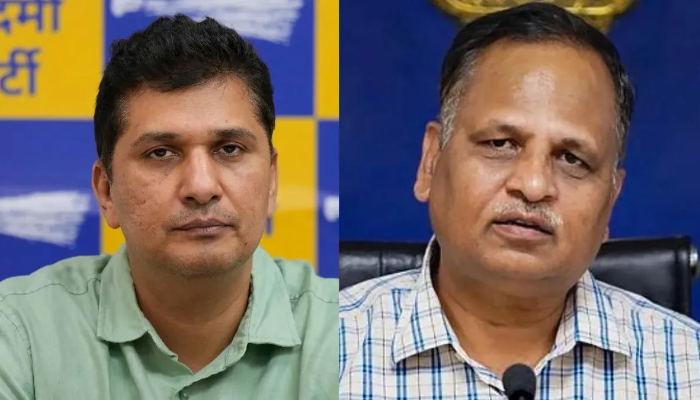
The Delhi government’s Anti-Corruption Branch (ACB) has been officially authorized by Ministry of Home Affairs (MHA) to launch an inquiry against former health ministers Saurabh Bhardwaj and Satyendar Jain in relation to a hospital scam involving thousands of crores, marking a significant political upheaval. Lieutenant Governor Vinai Kumar Saxena’s proposal led to the probe’s clearance on 6th May.
The approval was granted in accordance with section 17A of the Prevention of Corruption Act, which stipulates that any inquiry or investigation into a public official must first acquire consent from the appropriate authority.
The investigation stems from a complaint that senior Bharatiya Janata Party leader Vijender Gupta (current Speaker of Delhi Assembly) submitted on 22nd August 2024, charging widespread financial irregularities and procedural violations while the Aam Aadmi Party was in power in the national capital.
According to him, both ministers were responsible for significant delays and exorbitant expenses regarding multiple health sector projects. The Vigilance Department transmitted the request to the appropriate departments after the ACB referred the matter to them for permission to investigate the two AAP leaders.
What is the scam
The Delhi government approved ₹5,590 crore for 24 hospital projects between 2018 and 2019, comprising 11 new (greenfield) and 13 renovation (brownfield) projects, based on official statistics. Nevertheless, the initiatives experienced prolonged postponements and considerable cost increases.
“It came to notice that in 2018-19, 24 hospital projects were sanctioned for a total cost of ₹5,590 crore. But inexplicable delays and astronomical cost overruns indicate a large scale of fund siphoning,” disclosed a source in LG office, reported The Hindu.
An additional ₹1,125 crore was approved for seven intensive care units with 6,800 beds. Nevertheless, after three years, just half of the work was completed, despite the fact that ₹800 crore had already been spent. The construction of seven hospitals employed pre-engineered structures was approved for ₹1,125 crore in September 2021, however, as of 2024, “only 50% of the work was completed, while ₹800 crore was utilised.”
The expansion of Lok Nayak Jai Prakash Narayan (LNJP) Hospital is one of the projects presently under inquiry. The cost of building a new block there nearly “tripled to ₹1,125 crore” from ₹465.52 crore, in just four years. Similarly, just 52 polyclinics were built at a greater expense of ₹220 crore out of a ₹168 crore polyclinic proposal for 94 centers.
Moreover, the Health Information Management System (HIMS) was purposefully postponed for years in an apparent attempt to evade transparency.
“Upon prima facie perusal of the complaint, the ACB revealed consistent inflating of project costs, deliberate delays by the department, rejection of cost-effective solutions, mis-allocation of funds and creation of idle assets and termed the same as tactics and patterns of misconduct and corrupt activities, which resulted in huge loss to the government exchequer,” informed an official.
The ACB requested prior permission from the Vigilance Department (DoV) to investigate Bhardwaj and Jain under Section 17A of the PoC Act. The department sent the findings to the Public Works Department (PWD) and the Health and Family Welfare Department for their feedback. The ACB might investigate these matters, according to the health department, and they have no objections to it.
The PWD suggested looking into every possible problem related to the setup of intensive care units, polyclinics and 24 other hospitals. They also recommended probing for instances of corruption, irregularities as well as legal and regulatory violations.
The official mentioned, “Examining the proposal submitted by ACB and comments furnished by the two departments, the DoV, in a file noting said due to upgradation in specifications and facilities beyond original provision after award of work, the construction of hospitals was not completed in prescribed and stipulated time.”
According to the vigilance department, due diligence in planning and estimate preparation was reportedly not performed accurately, which resulted to an unusual cost increase that exceeded the initial approved amount.
AAP denies the allegations
The Aam Aadmi Party (AAP), which refuted the accusations, claimed that the saffron party and the LG had “weaponized” regular project delays as corruption, turning governance into a “laughing stock.” Bhardwaj asserted, “The construction of hospitals was sanctions were given in 2017-18 and 2021. The estimates were also approved at the same time. I became the health minister in 2023.”
He asserted that no paperwork pertaining to the cost or updated estimates of the hospital project construction ever reached him after he was appointed health minister and he never approved any monetary escalations. “In spite of this undeniable fact, conducting an investigation against me has made the whole matter ridiculous. Also, it shows the frustration and disappointment of the BJP and the lieutenant governor,” he added.
The party maintained that Jain had no involvement in the aforementioned initiatives and questioned the rationale of opening an investigation against him. AAP claimed that it was illogical to blame ministers because all of the officers working on these projects answer directly to the LG and charged, “If this is the yardstick, then several union ministers should face CBI probes every week,” alleging significant cost extensions and delays in central government projects.
According to AAP over 56.3% of union government projects under the Ministry of Statistics and Programme Implementation’s (MoSPI) supervision were behind schedule with average delays exceeding three years, as of March 2023. It then emphasized that the 2015-approved Mumbai-Ahmedabad Bullet Train project has been stalled for almost ten years and whose cost has increased by 85% from ₹1.08 lakh crore to ₹2 lakh crore. The party challenged whether corruption probe would be triggered by the center’s delays.
AAP contended, “As per central government data, common causes for delays in projects include delayed regulatory approvals, land acquisition issues, financial constraints, contractor non-performance, environmental clearances and bureaucratic inefficiencies. Can corruption cases be registered against Ministers for these reasons?”
BJP welcomes the move
Virendra Sachdeva, the president of the Delhi BJP, applauded the action and outlined that the investigation would reveal the corruption that occurred under the AAP’s health administration. He asserted that s cams involving the building of Mohalla Clinics, hospital testing contracts, contract health worker employment and hospital upgrades have all been ignored between 2015 and 2024.
He highlighted that public funds were being embezzled while the Kejriwal administration was occupied with promoting its “world-class” health model. ‘Today, when both former ministers failed to even retain their security deposit in the elections, it shows the public has delivered its verdict,” he expressed.
“Team Arvind Kejriwal” will have to respond to all inquiries regarding “looting” public funds, according to the Delhi BJP. The party declared that Jain and Bharadwaj lost the Delhi assembly elections because voters noticed the corruption in the health department.
AAP and its corrupt legacy: Delhi liquor policy scam
The Aam Aadmi Party, which asserted itself as the people’s government, has been marred by scandals since it came to power in the national capital. The most prominent of these scams is the 2021 Delhi excise policy or liquor policy scam, which resulted in the imprisonment of the party’s senior leadership and founding members, including Arvind Kejriwal, the national convenor and former Chief Minister of Delhi, Manish Sisodia, the former Deputy Chief Minister and Education Minister of Delhi, Satyendar Jain, a cabinet minister, Rajya Sabha MP Sanjay Singh and others.
Kejriwal, who was arrested on 21st March 2024, after failing to respond to nine summons issued by the Enforcement Directorate (ED) regarding the liquor scam, made history as the first sitting chief minister in the country to be arrested. The policy had to be retracted later.
The policy enabled only private establishments to sell alcohol, excluding the government from the business. AAP permitted liquor delivery to homes and allowed stores to remain open until three in the morning. Additionally, licensees could provide limitless discounts. However, the changes swiftly encountered difficulties with Lieutenant Governor VK Saxena and the Delhi Police’s Economic Offenses Wing.
The Enforcement Directorate (ED) also opened an investigation, uncovered money laundering and revealed that a liquor lobby known as the “South Group” provided at least ₹100 crore in kickbacks to AAP for its Goa election campaign. The group’s whims were accommodated by Manish Sisodia in exchange for an upfront payment.
The ED underlined that the government lost ₹2,800 crore as a result of the scam. Comptroller and Auditor General (CAG) also stated that it cost the public coffers an astounding ₹2,026 crore.
Satyendar Jain had already served time in prison for accumulating assets totaling ₹1.47 crore in a case involving excessive assets. A money laundering investigation later led the ED to seize properties valued at ₹4.81 crore that belonged to four businesses associated with him and his family.
Delhi Waqf Board scam
According to the Enforcement Directorate (ED), Amanatullah Khan, Delhi Waqf Board chairman and Okhla MLA, stole lakhs of rupees he obtained as the board’s chairman following the 2020 Delhi anti-Hindu Riots under the pretense of providing aid to the victims. He bought a ₹19 lakh property in the name of his second wife, Maryam Siddique, who is completely reliant on him and unemployed, shortly after the Delhi Waqf Board Relief Committee formed in 2020.
He paid for this in part with cash and then with money he received from his close friend Zeeshan Haider. The agency further shared that Amanatullah Khan did not provide all the details in his election affidavit. He had not disclosed that his second wife, Maryam Siddique, was entirely dependent on him and had no income.
The investigation discovered irregularities in the appointment of staff, abuse of official authority as chairman, improper allocation of the Delhi Waqf Board’s property tenancy without following the correct procedures and possession of assets out of proportion to his known revenue streams. Amanatullah Khan was diverting funds with the assistance of his associates, Zeeshan Haider and Daud Nasir.
The purchase of a property in Tikona Park, Okhla, through these associates and Kausar, involved cash transfers totaling ₹27 crore, according to a handwritten notebook that belonged to the latter. A testimony from a female Delhi Waqf Board employee was also recorded by the ACB.
She mentioned that in accordance with Amanatullah Khan’s instructions, files pertaining to the Waqf Assets Management System of India (WAMSI) project were deleted. She added that he wished to hide his illicit actions by avoiding transparency regarding Waqf Board properties.
Classroom construction scam
The Anti-Corruption Branch (ACB) of the Delhi government has also launched legal action against former Public Works Department (PWD) minister Satyendar Jain and former deputy chief minister Manish Sisodia on allegations of corruption in the building of 12,748 classrooms during the Arvind Kejriwal government.
According to officials, a massive scam totaling more than ₹2,000 crore was uncovered when the AAP government erected 12,748 classrooms and other buildings in Delhi. “Significant deviations and cost escalations were observed, and not a single work was completed within the prescribed period. Consultant and Architect appointed without following due procedure, and cost escalations were carried out through him,” unveiled the authorities.
On Tuesday, June 24, the Telangana High Court held that under Sharia law, a Muslim woman has every right to terminate her marriage by Khula without requiring the consent of her husband. The Court also made it clear that it is not required to obtain a certificate (khulanama) from a Mufti or an Islamic authority to render the divorce valid.
The matter was decided by a division bench of Justices Moushumi Bhattacharya and BR Madhusudhan Rao. They stated that khula—a type of divorce under Islamic law sought by a Muslim wife—is valid from the time she makes the request, provided the issue remains confidential and is not brought to court immediately.
High Court quoted the verses of the Quran
During the process of reviewing the case, the High Court quoted verses of the Quran, Chapter II, Verses 228 and 229. According to the Court, these verses allow women to seek separation from their husbands without their consent. The Court further observed that there is no practice mentioned in the Quran or Sunnah by Prophet Muhammad regarding what should be done if the husband does not agree to the wife’s demand for khula.
The bench further noted that khula is a form of “no-fault divorce” and no reason needs to be given by the wife for desiring termination of the marriage, and the husband cannot also oppose it—he can only negotiate the refund of the mehr. Even when the wife does not return the dower, that would not be a sufficient reason to reject her application for khula.
“The husband however does not have the right to refuse Khula merely because the wife declines to return the dower or a part of it. Khula is, therefore, a non-confrontational form of divorce and one which is privately settled after the parties have made an attempt to preserve the marriage,” the high court said.
The court said that if the case does come to court, then the sole function of the court is to establish that the wife has issued a valid request for Khula and that there has been an attempt to reconcile. There is no need for the court to hold a long trial. Rather, the procedure should be straightforward and limited only to establishing the wife’s intention to live separately and whether she wishes to relinquish the Mehr (dower) or not.
The case
The verdict was given while considering an appeal by a Muslim man, Mohammed Arif Ali, whose wife had divorced him via khula. She approached the Ada-e-Haq Sharai Council (a private voluntary organisation) when it denied her a divorce. The man had approached the family court, requesting it to invalidate the divorce certificate given by the NGO. But his plea was turned down by the family court, and he turned to the High Court.
Here, in this specific situation, the High Court concluded that the woman had requested for divorce several times, but her husband did not consent. She then went to the NGO, and after reconciliation attempts proved unsuccessful, the certificate of khula was issued. According to the judges, the petition of husband was not required, particularly since religious institutions such as a Mufti have no legal jurisdiction to issue binding certificates of divorce—their view is merely advisory.
Court’s opinion is limited
The Court stated, “The husband is not entitled to prevent a khula simply because the wife does not agree to return the dower. Khula is to be an amicable and quiet process that follows only after attempts to salvage the marriage have been unsuccessful.”
Although the Court limited its opinion to this particular case, it did take cognisance of complaints made regarding Muslim women being placed in precarious positions after seeking khula. It stated that it was hopeful its ruling and other rulings by courts on this issue would improve the condition of Muslim women throughout the nation.
In short, this ruling upholds that Muslim women are entitled to dissolve a marriage by khula without the consent of husband. All that the court has to do is ensure the procedure and imprint it with the legal seal, not to pull it into a protracted trial.
The Union Cabinet chaired by Prime Minister Narendra Modi has approved the Pune Metro Rail Project Phase-2, which includes Vanaz to Chandani Chowk (Corridor 2A) and Ramwadi to Wagholi/Vitthalwadi (Corridor 2B), as extensions of the existing Vanaz–Ramwadi corridor under Phase-1. These two elevated corridors will span 12.75 km and include 13 stations, connecting fast-developing suburbs such as Chandani Chowk, Bavdhan, Kothrud, Kharadi, and Wagholi. The project is scheduled for completion within four years.
As per a press release by Union Cabinet, the estimated project cost is ₹3626.24 crore, to be equally shared by the Government of India, Government of Maharashtra, and external bilateral/multilateral agencies. This strategic proposal is a logical extension of the existing Corridor-2 and aligns with the Comprehensive Mobility Plan (CMP), which envisions a continuous Chandani Chowk to Wagholi Metro corridor to strengthen East–West mass transit in Pune.
These extensions will serve key IT hubs, commercial areas, educational institutions, and residential pockets, increasing the share of public transport and ridership across the network. The new corridors will also integrate at the District Court Interchange Station with Line-1 (Nigdi–Katraj) and Line-3 (Hinjewadi–District Court) to enable seamless multimodal urban travel.
Under long-term mobility planning, intercity bus services from cities like Mumbai and Bengaluru will be integrated at Chandani Chowk, while those from Ahilya Nagar and Chhatrapati Sambhaji Nagar will connect at Wagholi, allowing passengers to easily access Pune’s Metro system. These extensions will also help decongest arterial routes such as Paud Road and Nagar Road, offering safe, fast, and eco-friendly mobility options.
After completion of these corridors, the projected incremental daily ridership for the entire Line 2 is estimated at 0.96 lakh in 2027, 2.01 lakh in 2037, 2.87 lakh in 2047, and 3.49 lakh in 2057. The project will be implemented by Maharashtra Metro Rail Corporation Limited (Maha-Metro), which will execute all civil, electro-mechanical, and related works. Pre-construction activities such as topographical survey and detailed design consultancy have already commenced.
This strategic expansion is poised to unlock Pune’s economic potential, enhance its urban transport infrastructure, and contribute significantly to sustainable and inclusive development across the metropolitan region.
On June 25, 2025, Prime Minister Narendra Modi marked the 50th anniversary of the Emergency imposed by Indira Gandhi with a series of strongly worded messages calling the day Samvidhan Hatya Diwas, a day 50 years ago when democracy and constitutional values were brazenly trampled and individual liberties severely curtailed.
Today marks fifty years since one of the darkest chapters in India’s democratic history, the imposition of the Emergency. The people of India mark this day as Samvidhan Hatya Diwas. On this day, the values enshrined in the Indian Constitution were set aside, fundamental rights…
“It was as if the Congress Government in power at that time placed democracy under arrest!” PM Modi tweeted.
In a subsequent tweet, PM Modi elaborated upon the skulduggery of the Congress government that was in power during the imposition of the emergency. “No Indian will ever forget the manner in which the spirit of our Constitution was violated, the voice of Parliament muzzled and attempts were made to control the courts,” PM Modi tweeted.
PM Modi also acknowledged and paid tributes to those who opposed the Emergency (1975-77), positioning them as guardians of democracy. By referring to “people from all over India, from all walks of life, from diverse ideologies,” he emphasized national unity, inclusiveness, and cross-party collaboration, subtly projecting that the resistance transcended political divides.
We also reiterate our commitment to strengthening the principles in our Constitution and working together to realise our vision of a Viksit Bharat. May we scale new heights of progress and fulfil the dreams of the poor and downtrodden. #SamvidhanHatyaDiwas
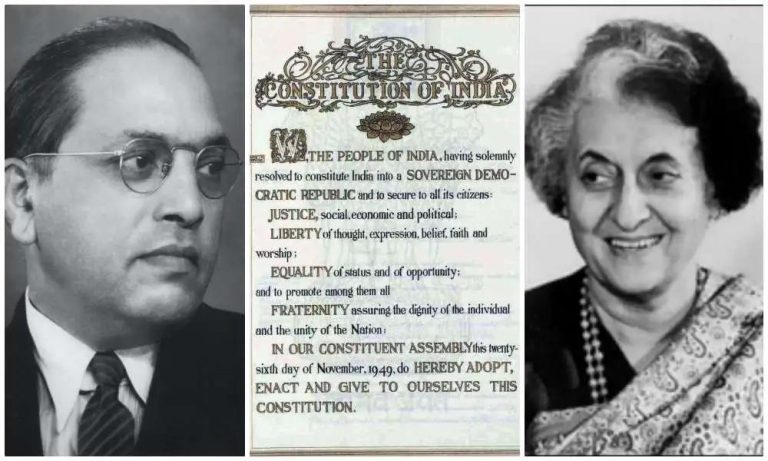
As India reflects on that dark chapter, it is important to revisit an often-overlooked but significant fact: Dr. BR Ambedkar, the man widely hailed as the principal architect of the Constitution, was fundamentally opposed to embedding rigid ideological labels like ‘Socialist’ and ‘Secular’ into the foundational text of the Republic.
His opposition was not grounded in contempt for the values themselves but stemmed from a deep commitment to democracy, individual liberty, and the evolving nature of society.
The foundational debates: Ambedkar’s rejection of fixed ideological labels
The framing of the Constitution of India was marked by intense debates that shaped the identity and future direction of the nation. One of the most crucial debates unfolded on 15 November 1948, when Professor KT Shah proposed that India should be explicitly declared a “Secular, Federal, Socialist Union of States.”
Dr. Ambedkar, serving as the Chairman of the Drafting Committee, firmly repudiated the amendment and offered reasons that continue to resonate even today, especially in the context of political overreach during the Emergency and subsequent debates around constitutional integrity.
Ambedkar raised two primary objections:
1. The Constitution should not impose an ideology
Ambedkar viewed the Constitution as a framework for governance, not as an ideological manifesto. He firmly believed that the Constitution should regulate the functioning of the state, while preserving the freedom of future generations to decide the country’s social, economic, and political direction based on prevailing circumstances.
In response to Shah’s proposal, Ambedkar famously said:
“What should be the policy of the state, how society should be organised in its social and economic side, are matters which must be decided by the people themselves according to time and circumstances.”
His argument was not a rejection of socialism per se, but a rejection of codifying it as an eternal, unalterable principle. Societies evolve. Ideologies that seem relevant at one point in history may be replaced or refined by new systems better suited to future challenges. By embedding socialism into the Constitution, Ambedkar believed it would “destroy democracy altogether” by stripping future generations of the right to choose their own course.
2. Socialist principles were already embedded in the Constitution
Ambedkar also pointed out that the drafted Constitution already reflected socialist values within the Directive Principles of State Policy. He specifically referred to Article 31, which included provisions aimed at preventing the concentration of wealth, ensuring equal pay for equal work, and promoting social justice.
Ambedkar rhetorically asked:
“If these directive principles… are not socialistic in their direction and in their content, I fail to understand what more socialism can be.”
In his view, explicit ideological branding was unnecessary. The Constitution already empowered governments to pursue policies that advanced social and economic equity, without tying the country to rigid dogmas.
Moreover, Ambedkar emphasised flexibility. While socialist ideals had merit, binding the country to them constitutionally would hinder the government’s ability to adapt to new economic realities or emerging philosophies.
The ‘Secular’ debate: Ambedkar’s nuanced approach
While Ambedkar did not present specific reasons against adding the word ‘secular’ to the Preamble during the debates, his overall opposition to Professor Shah’s proposal reflected similar concerns about ideological rigidity.
Notably, Ambedkar was a vigorous advocate for keeping religion and state affairs separate as witnessed during debates on the framing of the Constitution. His commitment to religious pluralism and impartiality was reflected in various constitutional provisions, particularly Articles 14, 15, 16, and 25, which guarantee equality before the law and prohibit discrimination based on religion.
Ambedkar was convinced these safeguards rendered the explicit mention of secularism in the Preamble redundant.
Even Jawaharlal Nehru, the first prime minister of independent India and a thorough proponent of secular governance, argued that Indian secularism differed from its Western counterpart. In Europe, secularism emerged from the historical conflict between Church and State. In India, with its deeply intertwined religious and social fabric, secularism was to be a functional, lived principle rather than a mere label in the Preamble.
The 42nd Amendment: How Indira Gandhi defied the spirit of the Constitution
During the Emergency (1975–77), a period often regarded as the most authoritarian phase in independent India’s history, then Prime Minister Indira Gandhi introduced the 42nd Amendment, inserting ‘Socialist’ and ‘Secular’ into the Preamble.
The amendment was widely criticised as a political move designed to consolidate Gandhi’s grip over state institutions, appease some sections of society through token symbolism, and reframe constitutional ideals to comply with the incumbent government’s preferences.
The context of the Emergency, marked by press censorship, mass arrests, the suspension of civil liberties, and centralised power renders the amendment’s ideological additions suspect.
As PM Modi noted in his June 25 tweets:
“The 42nd Amendment is a prime example of their shenanigans. The poor, marginalised and downtrodden were particularly targeted, including their dignity insulted.”
The amendment, introduced during a period when democracy itself was under siege, stands in stark contrast to Ambedkar’s vision, where constitutional changes should emerge from free, democratic debate, not political insecurity.
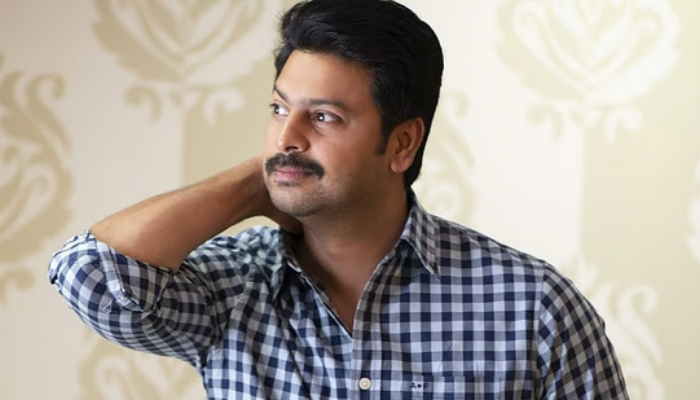
Tamil actor Srikanth was arrested on Monday, June 23, after allegedly being involved in a narcotics case. Next, a bail petition was filed on his behalf. His arrest led to the unveiling of several other cases and a criminal network that is beyond taking intoxicating substances and their distribution.
The arrest made by Chennai police revealed several other crimes including job rackets, land scams, and blackmail cases. The case came to light after Prasad, one of the prime accused, was arrested while police were probing a pub brawl case.
Who is Prasad, and how are the cases interlinked?
Prasad was an ex-AIADMK IT wing functionary. The police said the investigation started with the clash between the two groups at a bar on May 22 in Nungambakkam. Police were alerted about the case, leading to registration of two cases. The two cases were charged against both groups, in which seven people, including Prasad, were also arrested. Police also conducted a search at his house.
After probing, it was revealed that he had been involved in several offences and had engaged in a Job scam, where he promised over 200 people to give government jobs in Tamil Nadu Public Service Commission, by collecting money ranging from ₹2 lakh to ₹20 Lakh each. He allegedly collected ₹2 crore in total.
Prasad’s friend Ajay Vandaiyar along with Senthil, Nagendra Sethupathi, and Sivasankaran, who were involved in land grabbing from landowners in Chennai, were also arrested. Investigation has revealed that they prepared fake documents to seize property in Chennai and other places owned by people living abroad.
Further interrogation revealed cases already filed against him related to drug abuse and supply, encouraging police to dig deeper into the web to investigate his link with the narcotics network.
During the probe, Prasad named his source Pradeep Kumar, who has already been arrested for cocaine supply. Kumar further named actor Srikanth for the supply of cocaine through Prasad. It is believed that the drug transaction took place during a party linked to the film Theekirai, which Prasad was co-producing with Srikanth in the lead role.
Prasad has allegedly confessed to the Anti Narcotics Intelligence unit of the Chennai City Police that he supplied drugs, including cocaine, to Srikanth.
Case status so far
On Monday night, Srikanth was produced before the Metropolitan Magistrate in Egmore and remanded to judicial custody until June 7. Vignesh Ramanadhan, Shrikanth’s advocate, represented him during his proceedings. The hearing took place at the residence of the magistrate in the judicial officers’ quarter, which is at the Egmore area of Chennai. On Tuesday, a bail petition was filed on his behalf.
“Actor Srikanth, who had obtained and used cocaine, was subjected to a medical examination. His financial transactions were reviewed, and his residences were thoroughly searched before he was arrested with appropriate evidence,” said police in a statement. The police statement added that “Prasad, Ajay Vandaiyar, and their associates have been involved in crimes such as running a government job racket, land grabbing, illegal activities involving the land registry and IT department, and drug trafficking.”
Previously, Srikanth was taken to the Kilpauk Medical College hospital for a medical examination as part of the procedure for allegedly being involved in a drug case. His blood test was collected and resulted the presence of a drug system in his body.
Srikanth was arrested after analyzing money transactions, medical examination, and searching his house based on appropriate evidence. In this case, investigation would lead to more arrests, the city police said. This interrogation at the Nungambakkam police station on Monday afternoon continued for more than nine hours.
So far, three cases have been filed against Vandaiyar and his associates. A total of 22 arrests have been made under the Goondas Act, while 5 others have been detained by police.