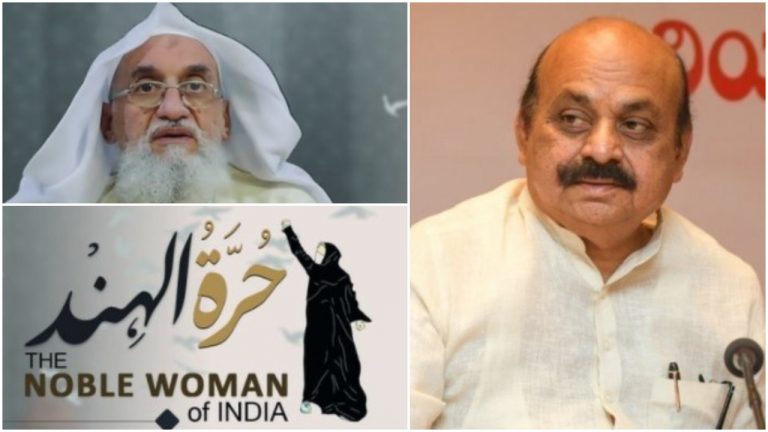
Karnataka Chief Minister Basavaraj Bommai on Thursday ordered a probe into a video released by the Islamic terror organisation Al-Qaeda extending its support to the burqa-clad protestor Bibi Muskaan Zainab Khan, who had shouted provocative “Allahu Akbar” at Hindu students in Karnataka’s Udupi.
#BREAKING | #HijabRow | Karnataka CM Basavaraj Bommai has ordered probe into Al-Qaeda Chief Zawahari’s video on #Hijab. Cops to probe the authenticity of the video.@harishupadhya shares details.
ANI quoted the Karnataka CM as saying that the top police officials have been instructed to ascertain the authenticity of the Al-Qaeda video clip.
Adding that he was “not surprised” by the video, Bommai said, “Some forces have been at work to create unrest among the people by raking up issues against the State.”
Top police officials have been instructed to ascertain the authenticity of the Al-Qaeda video clip…Some forces have been at work to create unrest among the people by raking up issues against the State: Karnataka CM Basavaraj Bommai, earlier today pic.twitter.com/0VBnmnmNvj
“As part of it, the Al Qaeda has expressed its views explicitly,” he added. “Many issues, which are against the law of the land, are unnecessarily raked up and made into a controversy,” he said, adding that such attempts are relentless. The CM said that the video by Al-Qaeda is part of such attempt.
To allegations by Leader of the Opposition Siddaramaiah that RSS is behind the statement by Al-Qaeda, he said, “I am surprised. Why is Siddaramaiah panicking over the Al-Qaeda video? What is their problem if a video by Al-Qaeda is released?”
Terror org Al-Qaeda releases video lauding the burqa-clad protestor during Karnataka hijab row
The chief minister was referring to a nine-minute video released by Al-Qaeda’s official Shabab media, Ayman al-Zawahiri on Tuesday, wherein the leader of terror outfit Al-Qaeda, praised Muskan Khan, the burqa-clad protestor who came to the limelight after yelling “Allahu Akbar” slogans at Hindu students in Udupi during the hijab protests.
In the video titled “The Noble Woman of India”, which carried an infographic depicting Muskan Zainab Khan, Zawahiri recited and dedicated a poem he had composed to praise Khan.
The jihadi terrorist said he learned about Muskan Khan from videos and social media. Referring to Muskan Khan as ‘sister’, the Al-Qaeda chief said he was so moved by her act, especially the raising of “cries of Takbeer”. Impressed by her chanting provocative Islamic slogans, Ayman al-Zawahiri said he decided to write a poem.
The terrorist also attempted to incite Indian Muslims saying they needed to react to the “oppression” carried out against them by the Indian state.
On Saturday (April 2), the friends and relatives of a theatre artist named Neeraj Kunder stormed the Kotawali police station in Sidhi district of Madhya Pradesh to protest against his arrest in connection with abusing a BJP legislator and his son.
BJP MLA Kedarnath Shukla had filed a complaint with the Kotwali police station against Kunder, following which a case was registered on March 16 this year. The theatre artist had made abusive posts against Shukla and his son Gurudutt on Facebook using a fake ID named ‘Anurag Mishra.’
Neeraj Kunder, who runs the theatre group ‘Indravati Natya Sansthan’, was arrested by the Kotwali police station on April 2, 2022. A frenzied mob of 40-odd people, comprising of friends and relatives of the theatre artist, laid siege at the police station.
The mob was joined by journalist Kanishk Tiwari, who runs a Youtube channel by the name of ‘MP Sandesh News 24‘. Reportedly, the police first resorted to using force against the mob before detaining them under the Indian Penal Code (IPC) Section 151 (unlawful assembly). They were released after a few hours.
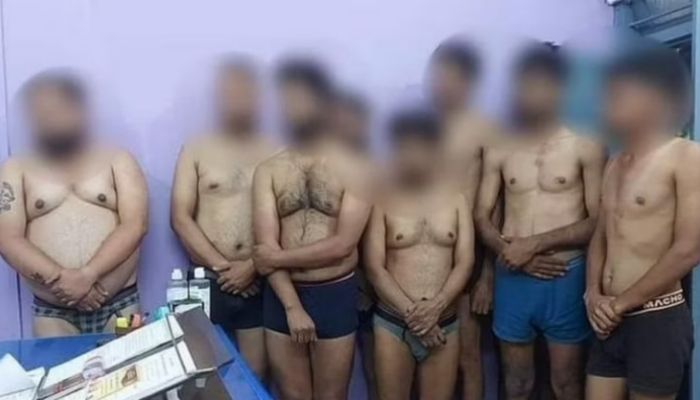
यह मप्र के सीधी जिले के पुलिस थाने की तस्वीर है। यह अर्धनग्न युवा कोई चोर उचक्के नहीं है, ये लोकतंत्र के चौथा स्तंभ कहे जाने वाले मीडिया के साथी है, इन्हें अर्धनग्न कर जेल में इसलिए डाला गया क्योंकि इन्होंने भाजपा विधायक के खिलाफ खबर चलाई थी। pic.twitter.com/k5wVLQsVhF
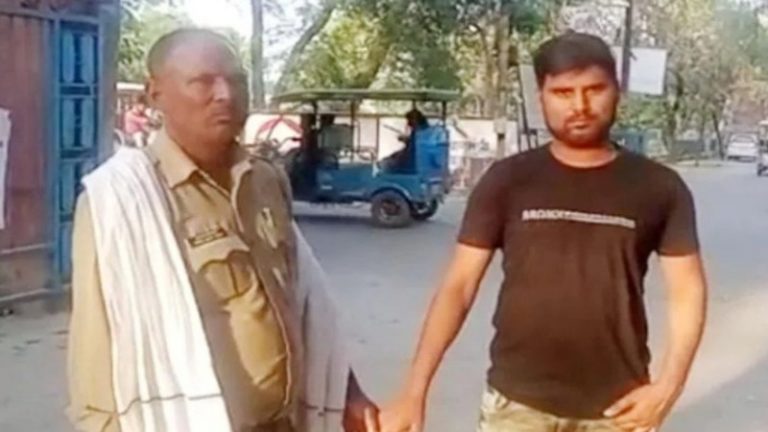
On Thursday (April 7), a picture featuring journalist Tiwari and 8-9 relatives of jailed Neeraj Kunder went viral on social media, wherein they were seen standing against a wall in their underwear. The contentious image criticism from all corners, thereby forcing the Madhya Pradesh government to issue an internal investigation into the matter.
According to journalist Kanishk Tiwari, he had gone to the Kotawali police station to cover the ‘protests’ by the friends and relatives of Neeraj Kunder. He alleged that the police thrashed him and forced him to strip to his undergarments. Tiwari claimed that he was targeted for critical stories against BJP MLA Kedarnath Shukla.
Police defend action, probe initiated
In its defence, the Kotawali police said that the demonstrators were detained for disturbing the peace under the pretext of protests. Charges were filed against the mob under Indian Penal Code Sections 34 (common intention), 152 (obstructing public servant while preventing riots) 153 (provocation), 186 (obstructing public servant on duty), 341(wrongful restraint) and 504 (intentional insult).
Station House officer Majoj Soni went on to say that it was a normal practice in jails to prevent people from committing suicide. “We keep them in jail in this way so that they cannot commit suicide using their clothes,” he emphasised.
The viral pictures of the protestors and journalists in undergarments triggered a controversy, with opposition Congress leaders, including ex-minister Jaivardhan Singh and social activists, including Ajay Dube, demanding stern action against the responsible cops.
“We keep them in jail in this way so that they cannot commit suicide using their clothes,” SHO Manoj Soni had said.
While speaking to The Indian Expres, Superintendent of Police (Sidhi) Mukhesh Shrivastava assured that action will be taken against those found guilty. He had also ordered a probe into the matter, which will be supervised by Sub-Divisional Police Officer Gayatri Tiwari.
“Irrespective of the crime committed by the culprits, such action (of stripping) is not acceptable. Based on prima facie evidence, we have attached Town Inspector Manoj Soni and Station House Officer Abhishek Singh to the police line. Since Singh was present in the police station at that time, he is also being transferred out,” SP Mukhesh Shrivastava had remarked.
He concluded, “It was in this context that they were held under preventive detention. But why they were stripped off their clothes and who did that is being investigated. The concerned SDPO under whom the police station falls has been asked to inquire the matter and whoever is responsible, action will be taken against them.”
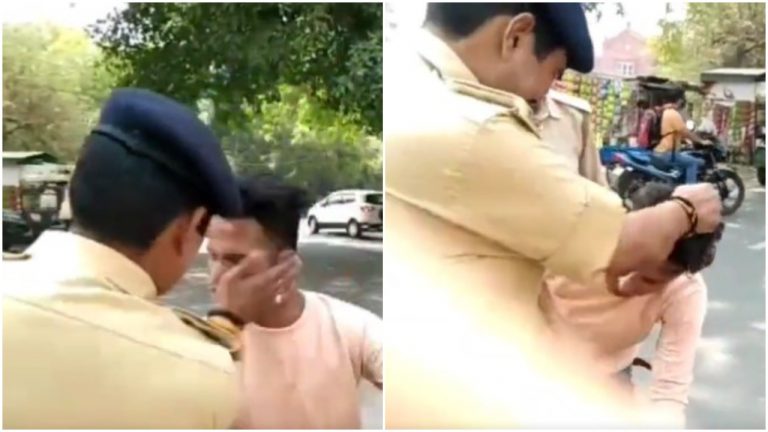
On Thursday, April 7, a video of a police officer thrashing a youth in the middle of a road in broad daylight went viral on social media. According to reports, ACP Tripurari Pandey of Colonelganj in Kanpur, Uttar Pradesh, thrashed a youth named Mehtab Alam after catching him red-handed molesting a girl on the road.
Kanpur: Mahtab Aalam used to harras a girl by changing his name to Jagmohan. Today he was caught red-handed trying to molest her on road, by ACP of UP Police pic.twitter.com/juvcY5ZRk1
As can be seen in the video, ACP Tripurari Pandey repeatedly slapped the youth until he fell off his motorcycle. The officer then grabbed him by the hair and asked him something, the audio of which is not clear in the video. A young girl, who appeared to be terrified, could be seen standing beside the youth.
According to Amar Ujala, the youth, when caught, identified himself as Jagmohan. However, when the police officer pressed him further, he revealed that his actual name was Mehtab Alam, a resident of Old Kanpur in Uttar Pradesh.
In what transpired, the girl was walking past Dayanand Girls Post Graduate College (Civil Lines) on Thursday afternoon, when Mehtab Alam accosted her. He stopped his motorbike in front of her, yanked her dupatta and began harassing her in the middle of the street. Colonelganj ACP was returning to his office after a field tour when he noticed Mehtab Alam harassing the girl. He dashed out of his car, ran towards the accused, and grabbed him. Before arresting Mehtab Alam, the infuriated officer beat him up for harassing the girl. ACP handed over the accused to the Gwaltoli police station.
ACP Tripurari Pandey then informed the girl’s family, who rushed to the spot immediately. The victim’s father revealed that Mehtab Alam had been stalking and harassing his daughter for a long time, but they had never filed a police complaint against the accused out of fear. He added that Mehtab Alam used to hide his religious identity to befriend Hindu girls and then harass them. He did the same to lure his daughter, said the father, further stating that his family was actually considering asking the girl to discontinue her studies and marry her off in order to save her from Mehtab Alam.
The victim’s father thanked ACP Tripurari Pandey for teaching Mehtab Alam a lesson about harassing his daughter. ACP Tripurari Pandey, in turn, requested that the girl’s father file a written complaint against Mehtab Alam so that he could be brought to justice. The ACP assured the family that the case would be investigated promptly and fairly.
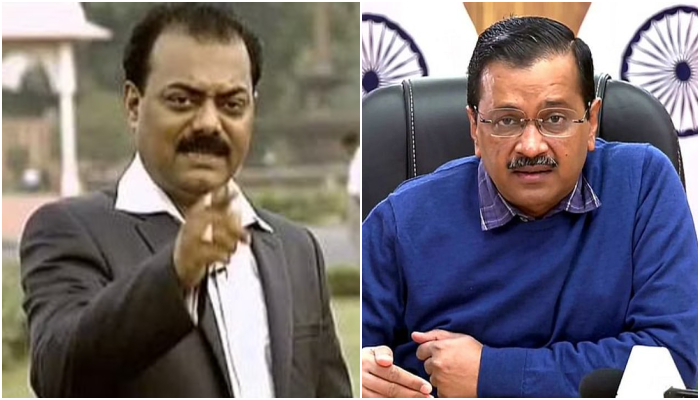
The Punjab Police on Thursday late night filed an FIR against BJP Delhi Spokesperson Naveen Kumar Jindal for allegedly sharing a doctored video of AAP National Convener Arvind Kejriwal. The FIR dated April 7 was lodged late in the night at around 2300 hours. Jindal has been charged under the relevant sections of the Indian Penal Code, 1860, and the Information Technology Act, 2000.
Jindal on April 6 had allegedly shared a video of an interview where Delhi CM Arvind Kejriwal is heard saying that he now takes bribes and fosters corruption, along with Punjab Chief Minister Bhagwant Mann, and ministers and assembly members. “Eventually the truth has come out”, he had tweeted.
“Earlier, the money used to reach the prime minister. The system was made in a way that if someone needs to facilitate something at the bottom, they were allowed to make money. So all the money – from different departments, from police, from tehsildar – all the collected money used to reach the top. Now our Bhagwant Mann also takes money, I also take money, the minister also takes money, and MLA also takes money. Now in Punjab, there was a meeting with tehsildars – they have said collect at the bottom, and take it to the top”, Kejriwal was heard saying in the video shared by Jindal.
— Naveen Kumar Jindal ?? (@naveenjindalbjp) April 6, 2022
However, responding to the FIR filed by the Punjab Police, the BJP leader slammed Delhi CM Arvind Kejriwal for filing fake cases against the BJP leaders and targeting them. “At the behest of Arvind Kejriwal, Punjab CM has assigned the Punjab Police not to check crimes in Punjab but to conduct fake cases against BJP workers”, he tweeted. “Thug Arvind Kejriwal has no more work left. After winning in Punjab, he thinks he can misuse the Punjab Police. File as much as FIRs against me. I am not scared. I will continue to expose you”, he added.
महाठग @ArvindKejriwal के पास ओर कोई काम नहीं बचा हैं, पंजाब क्या मिला पंजाब पुलिस को अपने बाप की बापौती समझ बैठा, फर्जी मुक़दमे करो 1000 करो। तुम्हारे मुकदमों से मैं डरने वाला नहीं हूँ रोज तुम्हारी ऐसे ही पोल खोलता हूँ ओर आगे भी डंके की चोट पर खोलता रहूँगा।
— Naveen Kumar Jindal ?? (@naveenjindalbjp) April 8, 2022
Meanwhile, BJP Tajinder Singh Bagga also slammed Punjab Police and mentioned that Jindal is the same person who had earlier exposed Arvind Kejriwal’s 11 crore swimming pool plan. Also, BJP leader Kapil Mishra said that the AAP was using Punjab Police to target the BJP workers. “Arvind Kejriwal would never have been able to enter politics if FIRs were lodged against him on such political statements. This conspiracy will not last long”, he tweeted.
Kejriwal Police of Punjab filed FIR against BJP Delhi Spokesperson @naveenjindalbjp for exposing Kejriwal real Face. Naveen bhai is same person who exposed Kejriwal 11 Crore swimming Pool Plan. l pic.twitter.com/vJaVxNrUhe
— Tajinder Pal Singh Bagga (@TajinderBagga) April 8, 2022
This is not the first time that Punjab Police has lodged an FIR against a BJP leader. Earlier on April 2, Punjab Police had registered an FIR on BJP leader Tajinder Singh Bagga based on the complaint filed by Dr. Sunny Singh Ahluwalia, Lok Sabha Incharge & Spokesperson, Aam Adami Party. In his complaint, Ahluwalia had alleged that Bagga and other unknown persons gave a statement on March 30 in which he instigated his followers to cause violence, use force, and cause hurt to Delhi CM Kejriwal and other AAP leaders.
The Punjab Police had also arrived at Bagga’s home in Delhi presumably to arrest him and had failed to inform Delhi Police about their arrival in the state, which is against the law. Bagga then had slammed Kejriwal and had said, “Tell me, Arvind Kejriwal. Are you happy now after registering FIR? Now I am telling you. Do not stop at one and register 100 FIRs against me. You got powers recently. Abuse them as much as you can. But I would like to tell you that even Raavan’s ego was broken, your ego would face a similar fate”.
— Tajinder Pal Singh Bagga (@TajinderBagga) April 3, 2022
It is important to note that Jindal in the year 2021 had also accused Delhi CM Arvind Kejriwal of spending Rs 9 crore of taxpayer’s money for renovating his residence. In a video shot outside the premises of Kejriwal’s residence, Jindal had claimed that amidst the pandemic when the people of Delhi grasped for basic health facilities, the CM had decided to spend crores on giving his residence a makeover.
The Punjab Police in the current case has booked Jindal under sections 465, 469, 471, 500, 504, 505 (1) (b) of the Indian Penal Code, 1860 and section 66 of the Information Technology Act, 2000.
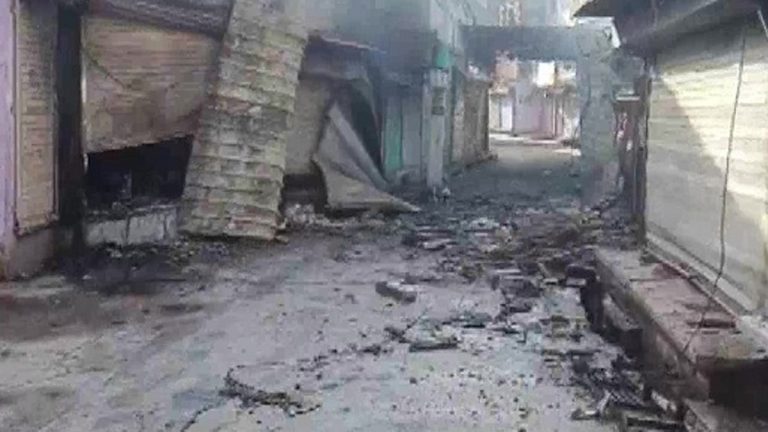
Days after a Muslim mob attacked the residents of Karauli, Rajasthan, on the auspicious day of the Hindu new year, the looming threat of exodus of Hindus from the area has arrived. After they were attacked and their shops were looted, the Hindus residing in the area do not want to stay in the Muslim-dominated locality anymore as they fear for their life.
Speaking to Republic Bharat, the victims of the recent Karauli communal clashes, where the mob mercilessly attacked Hindus on the day of the Hindu new year, said they do not feel safe in Karauli and planning to move to other secure location with their families.
Chandrashekhar Garg, a resident of Hatwara Bazar in the city, said his family ran a departmental store for the last six decades in the locality. On that fateful day of April 2, Garg narrated, he was sitting in his shop running his business as usual. He added that at around 15:30 hours, Muslim shop owners closed their shops entirely and left the locality.
“We run around eight shops, all close to the shops run by Muslims. At around 15:30, they suspiciously closed the shops and left the area. They were assembling at a place. But, we did not worry much as we all know them very well. However, they took out a rally and at around 19:00 hours, they forcefully removed us from stores. My father and brother were thrown by the angry mob out of the stores forcefully, who then looted the entire shop.” said Garg.
As Garg tried to stop them, the mob attacked them and vandalised their shop. My father was attacked, said Garg, as he cried helplessly. He also added that the Muslim mob set fire after robbing everything from the shop.
Garg, who has now lost his three shops in the attacks, said they tried to contact the fire brigade. Shockingly, the fire brigade did not respond to their calls, instead, they deployed three to four teams to help Muslims and not Hindus.
“All the shops owned by them are safe. The mob specifically targetted the Hindu shops and set them on fire,” added Garg, accusing the Muslim mob of meticulously planning the attacks on Hindus in advance.
Now, fearful of another round of attacks from the Muslim mob, Garg and his family have decided to move out Hatwara Bazar area.
“The Hindus want to quit Karuali and leave the town. They will push us outside, we are very fearful. We are being attacked. We are leaving this locality, said Chandrashekhar Garg.
Karauli attack was pre-planned, there will be more attacks on us, says a resident
Another elderly victim, Ramesh, who is in his 60s, also corroborated the claims made by his neighbour Garg. Ramesh said he owned two shops, one a provisions store and a milk vending booth, which was explicitly targeted by the Muslim mob.
“My shops and house were all burnt down by the mob. I have been running this business for the last 35 years, now they have burnt it down,” said Ramesh, who is perturbed after the April 2 attacks.
The resident of Hatwara Bazar, Ramesh, also said that the Muslim mob took out a rally on Saturday noon and later in the evening, they assembled and attacked, looted and set fire to shops owned by Hindus.
“They thrashed us, forced us to run away from the shop. We were not allowed even to save our shops. It was a pre-planned attack on us. They looted my dairy and vandalised our scooters. Our workers had to run for life. We saved our lives as we hid inside the closed doors. Half an hour later, the mob attacked us again. We are shocked and do not want to open the shops. This is a very troubling time for us,” said Ramesh speaking to Republic Bharat.
Interestingly, the residents all confirmed that they knew the attackers very well as they had been neighbours for many years. “We lived like brothers, but they attacked us. The Muslims closed their shops just before the attacks,” noted Ramesh, who is too now afraid to stay in the locality after the violence.
They looted our shops in front of our eyes, Rajasthan government will not help us: Hindu resident
Similar attacks were unleashed on Hemant Agarwal, who runs a provisions store in the Bazar area. According to Agarwal, the mob looted goods worth Rs. 20 lakhs. We have suffered a lot, said Hemant, narrating that they had opened shops as usual.
“At around 17:00 hours, the mob attacked us. We started closing the shops, but the mob attacked and looted us. The enraged mob looted us, we cried and begged them. But, they did not listen to us. They attacked and looted our shops and set them on fire,” said Hemant Agarwal, who runs the biggest shop in the area.
“We are so helpless now, said Hemant, adding added that the Ashok Gehlot-led government is not helping them in any manner. “The people who looted us were our neighbours, if the government wants to take action, they can do it, but they are reluctant,” he added.
“We do not have anything to eat, we do not know what to do. We do not want to stay here as we fear our lives. So our family is thinking to leave this place for good,” Agarwal said, adding that they will return to Karauli again.
Karauli attacks
On April 2, communal violence broke down in the Hatwara Bazaar area of Karauli when miscreants pelted stones at a Hindu bike rally while more than a dozen shops and three bikes were set on fire.
Reportedly, 43 people, including policemen, were injured in the mob attack while the rally was celebrating ‘Nav Samvatsar’ passed through a Muslim-dominated area. All were admitted to the district hospital. The condition of a person named Pushpendra is said to be serious. He has been referred to Jaipur.
Four policemen accompanying the rally were also injured in the stone-pelting on the bike rally. The reports said that there were knife marks on the body of the injured who reached the hospital.
Meanwhile, Rajasthan Police have imposed a curfew, and internet services have been shut down in Karauli.
An 18-year-old girl from Uttar Pradesh’s Fatehpur area has been forcefully married off following her kidnapping and conversion. The victim had already filed a kidnapping case, and on the girl’s father’s complaint, a case of forceful conversion and marriage was also filed at the police station. The police have arrested the accused Sabir Mirza. Further investigation into the case is underway.
Sabir Mirza, according to reports, kidnapped the girl and carried her to a mosque in Banda. He ‘married’ her after converting her to Islam. The girl has been rescued, and the perpetrator has been apprehended. The Maulvi’s role in the crime is also being scrutinised.
The case is of a village under the jurisdiction of the Ghazipur police station in the Fatehpur district of Uttar Pradesh. Sabir Mirza, 24, is accused of abducting an 18-year-old Jukar village resident, in broad daylight on March 31.
According to her father, the victim left home on March 31, 2022, to attend an examination. He filed an official report after she failed to come home. The police opened an inquiry and began looking for the girl after the victim’s father filed a complaint.
As per reports, the victim was rescued by police help and she narrated that Sabir had tried to forcefully convert her to Islam and perform ‘nikah’ with the help of a Maulvi in a mosque in Banda.
“A man had submitted a complaint with the police station Ghazipur about his daughter being taken away by someone,” stated the DSP of Jafarganj. ” An FIR was filed at the police station in this matter, and the victim was rescued. Following her return, it was discovered that efforts were being made to convert her. She was being threatened at the same time. In this context, 24-year-old Sabir Mirza was arrested and further investigation is underway,” he added.
According to media sources, the accused, Sabir Mirza, took the victim to a mosque in the adjoining Banda district. During this time, a Maulvi converted and facilitated the marriage of the victim. The accused Mirza has been charged under IPC sections 366, 386, 420, 506, and 3/5 of the Prohibition of Unlawful Religious Conversion Act, 2020. Other suspects’ roles in this crime are also being probed.
“I’m not easily given to pessimism” declared Siddharth Varadarajan alias Thambi this morning while doing, what he does best – manufacture an imagined story to pursue his agenda journalism.
Thambi’s latest has two side characters – a Hindu husband and his Muslim wife – and the protagonist, Thambi himself. To me, Thambi’s decision to allocate faiths ‘wrongly’ to fictional characters in a mixed marriage points to how irreparably his psyche has suffered damage, ever since Narendra Modi assumed power. Seemingly, the fear of being booked by the BJP supporters for propaganda pushed him to tread with caution. After all, the clairvoyant Thambi saw it coming 22 years ago and he even warned of the IT act being used as a policing tool. Coincidentally the man was booked under this very act 20 years later.
Come next tweet and the self-proclaimed fighter in Thambi decided to give in to pessimism and declare – “picture is gloomy.” Poor Thambi is losing again. Too bad, as the last time, when he had won against Hindu chauvinists was as a boy; after he prevailed over Muthusamy and Usha and successfully resisted doing his sacred thread ceremony, unlike Tunku Anna. Coming events cast their shadows before said someone long ago!
Back to Thambi’s latest creation. I wonder if his interaction with a mixed couple of the ‘imagined’ story was a ‘one on one’ or if it took place in a crowded conference hall. Knowing this is important because, in his own words, he found ‘one on ones’ as something of a mixed blessing, which if the chemistry is right, risks being charmed into making commitments that may not be in their best interest. Borrowing from his own, it seems that the commitment – “we can’t let them decide what India will be” made by him to his imagined couple seems to be a charmed one resembling the virgin Thambi on Viagra; who, while in Perugia, Italy, don’t know what to do with his new-found fleeting power in a foreign land, thus making him susceptible to indiscretions.
I am convinced that Thambi will be fine as soon as the 40-degree heat of Delhi’s blistering sun will hit his bearded face and bring him back to the reality of the new India of Narendra Modi- who he once called Newton Modi!
And if the ‘imagined’ meeting was not a ‘one on one’ then it must have taken place in some crowded conference hall and the virgin Thambi on Viagra, with his penchant for posing before the camera, must have clicked some pictures. Come on Thambi, be a sport and share it!
Next, he mentioned his friend Aakar Patel. Well, I am not in a mood to go into the details of the fraud committed by an inconsequential Aakar Patel but I do agree with him that his friend, who could dodge foreign exchange regulations with such ingenuity, indeed possesses a sharp mind.
Moving on to the next few tweets and to see Thambi talk of hate, I want to remind him of his April 2004 hate ridden Geetaben item in the Times of India and how the press council found him guilty of shamelessly manufacturing lies and presenting it as news instead of opinion. Truth be told, even opinion doesn’t seem to be his forte as evident from his Jan 2000 declaration- Nothing Islamic about terrorism. He wrote this within days of Rachna losing her husband of a few weeks to Islamic terrorists.
But then such is the tragedy of Indian media that this man remains relevant even after being found guilty of false narrative building several times in the past. Irrespective of how hard Thambi – the creator of Geetaben of 2002 and an imaginary couple of faraway Italy- tries, Newton Modi’s reign is here to stay.
Thanks to Chidambaram, I am reminded of a befitting Tamil proverb- one cannot straighten a dog’s tail – to best describe Thambi alias Siddharth Varadarajan!
He better not quit doing what he does- the agenda journalism!
Days after communal violence flared up in the Hatwara Bazaar area of Karauli, the Police on Thursday registered an FIR against 37 people for instigating the violence. While the police have identified Congress Councillor Matloob Ahmed as the main conspirator in the stone-pelting incident, it has booked BJP leader and Jaipur mayor Somya Gurjar’s husband Rajaram Gurjar for his alleged involvement in violence.
The Gurjar community on April 7 condemned the Police action against Rajaram Gurjar and demanded his release from the FIR. According to the reports, the Mahapanchayat consisting of 13 village Sarpanchs noted that Gurjar and 5 other people from the Gurjar community were unnecessarily booked by the Police under political influence. They also demanded a CBI inquiry in the case and said that they would stage protests if the names of Rajaram Gurjar and the other 5 from the community were not removed from the complaint.
On April 2, Karauli witnessed heavy violence after stones were pelted on a religious procession of Hindus when it was passing through a Muslim-dominated area. Following the incident, a clash broke out leading to arson and vandalism in which at least 42 people got injured. Additional Director General of Police (Law and Order) Hawa Singh Ghumariya had informed that over 30 people had been detained by the police.
Meanwhile, after the communal clashes, the BJP alleged Congress local leaders’ involvement in the incident. It also alleged that the radical Islamist outfit Popular Front of India (PFI) had a role in the communal clashes on Saturday. Calling the incident a ‘pre-planned conspiracy, the BJP further accused the Congress-led government in Rajasthan of shielding its people.
As reported earlier, PFI had written a letter to the Rajasthan government 2 days before the incident, warning of such violence in the district during the Hindu new year rally, but the Ashok Gehlot government turned a deaf ear. The PFI had also alerted the local administration and the police against the Hindu community’s wish to take out a new year procession through the “Muslim-dominated” locality.
Later the Police confirmed that Congress Councillor Matloob Ahmed had incited violence and organized a mob to attack the bike rally celebrating Hindu New Year in the city. However, the Police also booked convenor Neeraj Sharma who had applied for permission for the rally, Sahab Singh Gurjar, state president of the Hindu Sena, and Rajaram Gurjar, former Chairman of the Municipal Council, Karauli.
According to the Mahapanchayat, Gurjar on April 2 was serving the injured people who were taken to the SMS hospital in Jaipur after the violence. “If this is how police and politicians treat a social worker, humanity will soon end”, the Mahapanchayat noted. It has given 5 days of ultimatum to the authorities to look into the matter and release Rajaram Gurjar from the case. Reiterating its demand for a CBI inquiry, the Mahapanchayat said that if the state fails to fulfill the demands of the Gurjar community, they along with people from other communities will stage protest rallies and hold the state responsible for the after-effects.
To avoid clashes, 600 policemen including 50 deputy superintendents of police have been deployed in the city. The Police have also imposed a curfew and shut down the internet services in Karauli as a consequence of the violence.
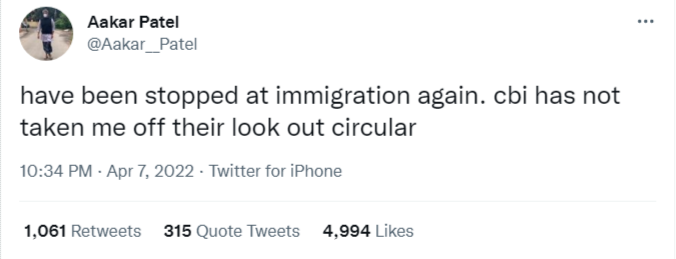
Hours after the Rouse Avenue Court in Delhi allowed Aakar Patel to travel abroad, the former Amnesty International India Head on Thursday (April 7) night alleged that the Central Bureau of Investigation (CBI) did not remove the Look Out Circular (LOC) issued against him.
In a tweet, Patel claimed, “Have been stopped at immigration again. CBI has not taken me off their lookout circular.”
Screengrab of the tweet by Aakar Patel
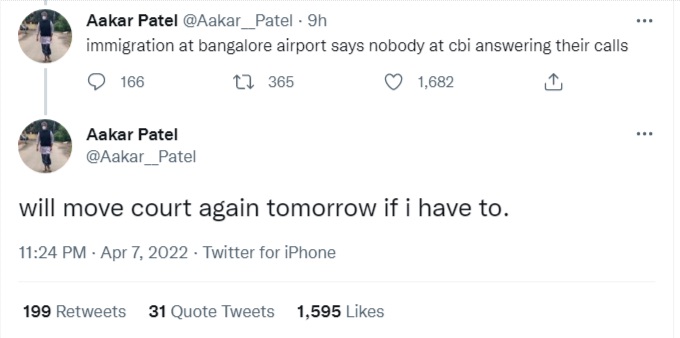
He further alleged, “Immigration at Bangalore airport says nobody at CBI answering their calls. Will move court again if I have to…”
Screengrab of the tweer by Aakar Patel
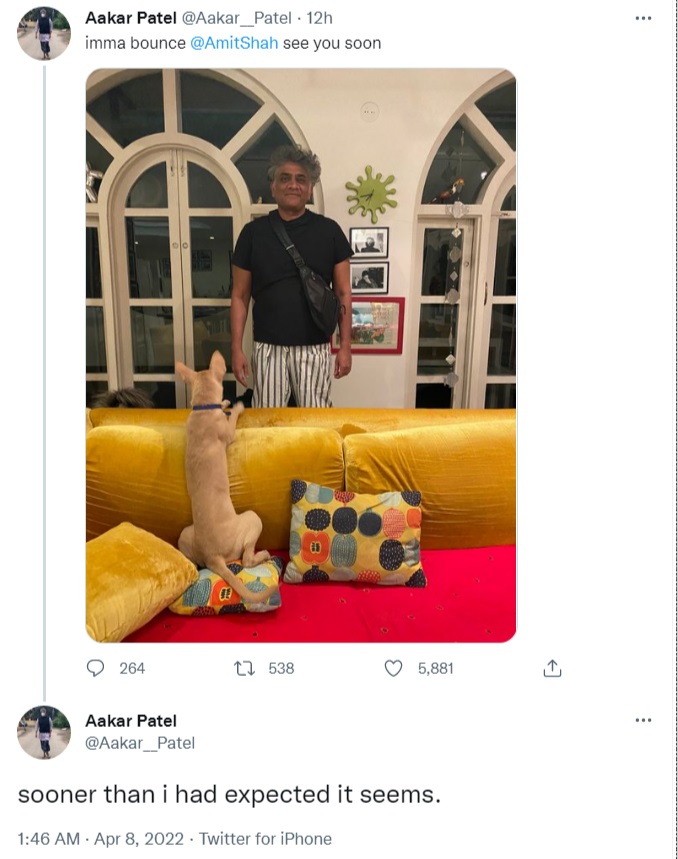
Later at 1:45 am on Friday (April 8) night, Aakar Patel uploaded a cryptic tweet while tagging Union Home Minister Amit Shah. While posing with his dog, the ex-Amnesty International (India) chief wrote, “Imma bounce (I am leaving) Amit Shah, see you soon. Sooner than I had expected it seems.
Screengrab of the tweet by Aakar Patel
It is notable here that the Central Bureau of Investigation will act on the court order, only on receipt of a written copy. Given that the Rouse Avenue Court issued its directives only on April 7, it is quite possible that the CBI did not receive the written copy of the court order by the time Patel tweeted about being stopped at Bengaluru airport.
Citing sources in the CBI, NDTV had reported that the central investigation agency will challenge the court order and file an appeal on Friday (April 8) morning.
On Wednesday (April 6), Aakar Patel was stopped from boarding a flight to the USA at the Bengaluru airport. The former Amnesty India chief had tweeted that he was put on an exit control list. Patel claimed that he had obtained his passport through a court order.
He added that a CBI officer informed him that he is on a Look Out Circular because of the case against Amnesty International India regarding the FCRA violations. He was later granted temporary relief by the Rouse Avenue Court in Delhi yesterday. And the CBI has stated that they would challenge the court order.
immigration says CBI has put me on the list why @PMOIndia
In February last year, the Enforcement Directorate had attached movable properties of Amnesty International India worth Rs 17.66 crore in a money laundering case.
ED had found that after the cancellation of the FCRA license by the Indian government, Amnesty International India Foundation Trust and other Amnesty entities adopted ‘new methods’ to receive money from abroad.
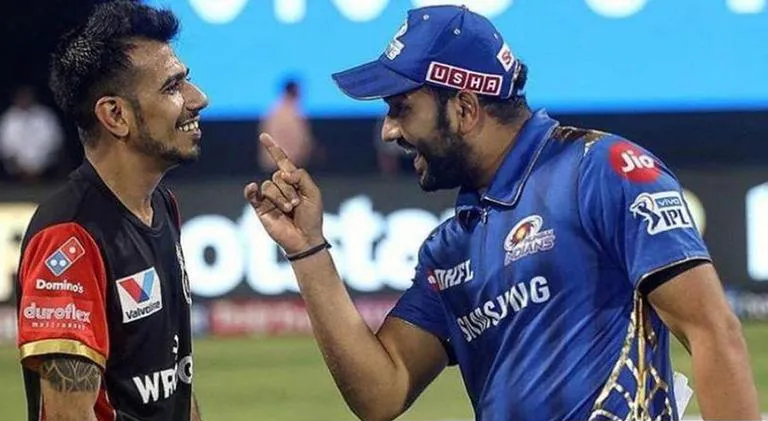
Yuzvendra Chahal, an Indian leg-spinner who currently plays for Rajasthan Royals after a seven-year stint with the Royal Challengers Bangalore team in the Indian Premier League (IPL), has spoken out about a terrifying incident that occurred in 2013 while he was playing for Mumbai Indians in the sixth edition of the IPL.
Chahal revealed how a drunk MI player had him dangling outside of a balcony on the 15th floor of their hotel building, in a talk with new companions Ravichandran Ashwin and Karun Nair.
Ravichandran Ashwin, Karun Nair, and Yuzvendra Chahal were discussing some hitherto unheard anecdotes from their respective cricketing careers. When Chahal’s turn came, he recounted the incident. Chahal, however, declined to divulge the player’s identity in order to avoid causing a stir.
“I never told this story, from today everyone will know. I never shared this. This dates back to 2013 when I was with Mumbai Indians we had a match in Bangalore. There was a get-together after that. So there was a player who was very drunk, I won’t say his name,” Chahal said. “He was very drunk, he was looking at me for a long time and he just called me and he took me outside and he hung me on the balcony,” he added.
“Had I lost my grip, I was on the 15th floor… Suddenly many people who were there came and handled the situation. I kind of fainted, they gave me water. Then I realized how responsible we need to be when we go anywhere. So this was one incident where I felt I had a narrow escape. Had there been the slightest of memories, I would’ve fallen down,” he further recounted.
Chahal claimed that few people knew about the incident since he had kept it to himself until now. He admitted that things could have gone tragically wrong if his hands had slipped. However, a few more people entered the room and took charge of the situation.