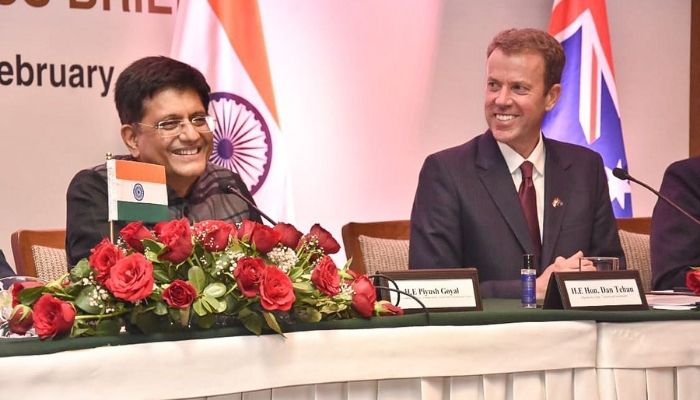
Union Minister of Commerce and Industries Piyush Goyal has identified Indo-Australian relations as ‘Dil Chahta Hai’ on 11th February 2022 while addressing a press conference after both countries signed MoU on tourism cooperation in the field of tourism in New Delhi. He has also expressed hope for a jump in the bilateral trade between the two countries.
Piyush Goyal signed the MoU with Dan Tehan Wannon who is the Australian Minister of Trade, Tourism, and Investment. The aim of this agreement is to facilitate bilateral relations in tourism and the exchange of information and data related to the sector between the two countries.
According to a press release by the Press Information Bureau, the ministers of both countries have announced reaching an understanding of the Interim Agreement and finalizing it in the next 30 days. The India-Australia Comprehensive Economic Cooperation Agreement (CECA) is expected to be concluded in 12 months thereafter.
While speaking in the press conference, Piyush Goyal said “Every free trade agreement always concludes with the ‘Dil Chahta Hai’ more moment. And many of you have seen the movie Dil Chahta hai which is shot largely in Australia. You will appreciate that the Dil Chahta Hai moment today was also covered in the CECA FTA and tourism MoU that we have both executed today.”
India-Australia are working towards a ‘Dil Chahta Hai Free Trade Agreement’ post which our bilateral trade is expected to see a quantum jump. ?? ??
He further said, “I must thank the Ministry of Tourism led by the honorable minister Kishan Reddy and the Tourism Secretary Mr. Arvind Singh and of course the officers from Dan’s side. These officers and Arvind Singh have put in a lot of effort and I thank them for that. I think we will continue to demand more from each other and that is what friendship is all about. I am sure that the bilateral trade which is currently about 20 Billion Dollars is going to take a quantum leap after this agreement.”
The PIB has also informed that the two nations are expected to sign the Interim Agreement in March 2022. The areas covered under the interim agreement should include goods, services, rules of origin, sanitary and phytosanitary measures, customs procedures, and Legal and Institutional issues. The CECA would be a substantial opportunity for both economies and a significant moment in the India-Australia bilateral relationship.
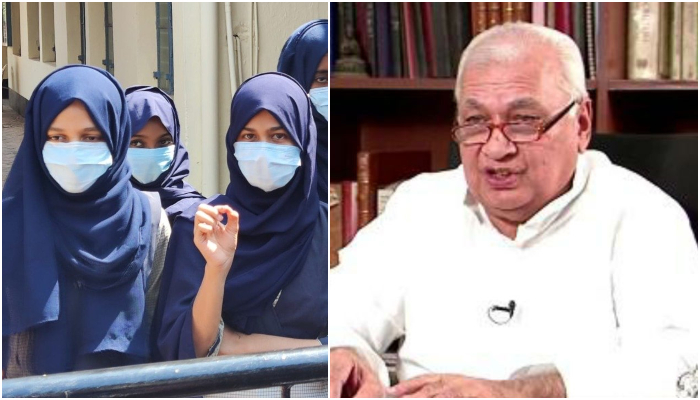
Criticising the ongoing Karnataka hijab controversy, Kerala Governor Arif Mohammed Khan on Saturday said that ‘Right to wear Hijab’ argument is acceptable, but then it will be the Muslim women who will be the losers. He recalled several instances of women refusing to wear the veil in the history of Islam.
Khan narrated a short story to prove his point on the hijab row in the neighboring state of Karnataka. “A young girl, who was brought up in the household of the Prophet himself, and she was the niece of the wife of the Holy Prophet. She was proverbially beautiful. In medieval times, she was chided for not wearing a hijab. What she said was that God had made her beautiful and the almighty had placed His stamp of beauty on her. She said I want people to see my beauty and see the grace of God in my beauty. This is how the women of the first generation of Islam behaved”, he said reaffirming that the story is true and is written in the history of Islam.
“In the past, veil in north India came up due to invaders. But now women in north India women don’t put-up extremely long veils, and are not mandated to do so; as time changes, so do the customs,” he said.
He sharply added that those claiming to follow the legacy of Islam today are actually losers and the entire act of hijab controversy is useless. “Those girls having problem with the uniform can go and join any such school where there is no compulsion of following the uniform discipline. They (hijab girls) should understand that when they’ve joined some school with certain principles and standards, they are bound to follow the rules of that institution”, he stated.
The Kerala Governor while exclusively talking to India Today also slammed the Pakistan government for interfering in the matters of India. He said that the Pakistan govt must be treated the way it deserves to be treated. “I don’t even want to talk about Pakistan govt. Malala who supported the hijab may be misinformed about the issue. She fails to understand that if hijab right is accepted, Muslim women will become losers, their lives will become miserable”, he added.
He appealed to the hijab girl students to avoid being instigated by the outside forces and requested them to focus on education and a better standard of life. The hijab controversy gained ground earlier this month when eight hijab-wearing Muslim girls refused to follow the school uniform regulations. They hit the High Court seeking permission to attend the classes with hijab, as it is their fundamental right, they said.
The High Court so far has declared that no one should be allowed to wear their religious attire inside the educational institutions until the matter is pending in the Court. However, the Supreme Court denied to interfere in the matter after the girls impatiently knocked the doors of the apex court.
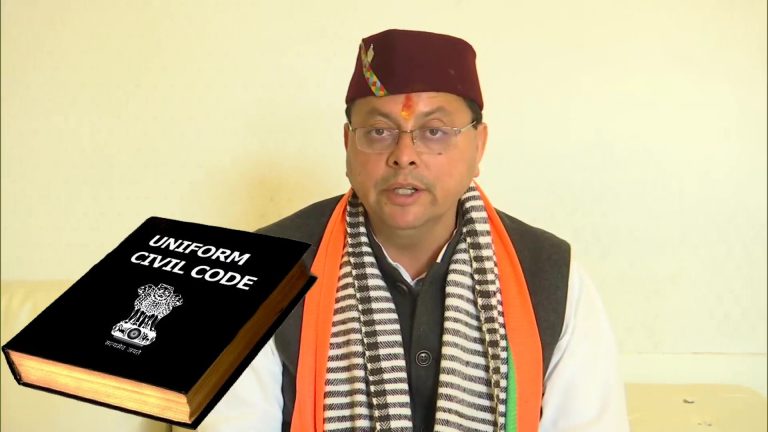
Two days before the state goes to the polls, Pushkar Singh Dhami, the Chief Minister of Uttarakhand, said on Saturday that if the BJP wins the upcoming Assembly elections, the state’s administration will implement the Uniform Civil Code. Dhami stated that as soon as the BJP takes power in the state, a panel will be formed to prepare a draft of the Uniform Civil Code.
Speaking to ANI, the Uttarakhand CM said: “Soon after its swearing-in, new BJP govt will form a committee to prepare the draft of Uniform Civil Code in the state. This UCC will provide for same laws regarding marriages, divorce, land-property & inheritance for all people, irrespective of their faith”.
#WATCH | “Soon after its swearing-in, new BJP govt will form a committee to prepare draft of Uniform Civil Code in state. This UCC will provide for same laws regarding marriages, divorce, land-property & inheritance for all people, irrespective of their faith” says Uttarakhand CM pic.twitter.com/83SYlH2AkE
The Uttarakhand CM in his statement said: “Our Devbhoomi, Uttarakhand, the home to 1.3 Crore citizens, holds a deep cultural and spiritual significance for the country and our civilization. The State also has a very critical role in national security. It shares an international border with 2 countries and hence the geographical and political aspects within Uttarakhand deeply impact the overall national security of the country.”
He further said, that “in all different facets- cultural, environmental, national security, Uttarakhand is a State of key strategic importance for the country. Hence, the BJP Government, right after the elections shall be forming a committee comprising experts and imminent citizens from diverse fields to prepare the draft of the Uniform Civil Code. Through this, Uttarakhand will implement a Uniform Civil code to provide a uniform legal framework to all citizens irrespective of religion in issues including family law, property law etc.”
The implementation of the Uniform Civil Code in Uttarakhand as soon as possible will help to ensure that everyone in the state has equal rights. It will improve social harmony, promote gender equality, build women’s empowerment, and aid in the preservation of the state’s unique cultural-spiritual character and environment, Dhami added.
Implementing Uniform Civil Code in Uttarakhand at the earliest will boost equal rights for everyone in state. It’ll enhance social harmony, boost gender justice, strengthen women empowerment&help protect the extraordinary cultural-spiritual identity & environment of the state: CM pic.twitter.com/uK8YhFbwtu
“Our constitution via Article 44. mentions how India should strive for achieving Uniform Civil Code across the country. This Uniform Civil Code will be a step towards realising the dreams of those who framed our Constitution and solidify the spirit of the Constitution. This will also be an impactful step towards Article 44 that provides for UCC for all citizens,” said Dhami.
Many ministers welcomed CM Dhami’s decision, calling it a significant step toward fulfilling a key constitutional mandate.
BJYM congratulates the young & dynamic CM of Uttarakhand Sri @pushkardhami Ji for resolving to introduce UCC in Uttarakhand.
UCC in Uutarakhand .. It’s huge .. ” New BJP govt will form a committee to prepare draft of Uniform Civil Code in state. This UCC will provide for same laws regarding marriages, divorce, land-property & inheritance for all people, irrespective of their faith” …CM @pushkardhami
The implementation of the UCC has been a longstanding issue in the country. The BJP has, on various occasions, said that it was committed to the implementation of the UCC. However, unfortunately for Muslim appeasement, Congress and other pseudo-secular parties always blocked the road of UCC.
Last year, the Allahabad HC had asked the central government to take steps for the implementation of the Uniform Civil Code (UCC) across India under article 44 of the Constitution of India.
Prior to this, in July last year, the Delhi High Court had also lent its support for a Uniform Civil Code (UCC) in the country and urged the Indian Government to take necessary steps to implement the same.
In fact, former Chief Justice of India S A Bobde had in April last year, appreciated the uniform civil code (UCC) in Goa, the only state to have one and urged intellectuals to seriously study the Goa UCC.
The UCC would involve a single set of laws for all communities in the area of personal laws, substituting the Hindu Marriage Act, Hindu Succession Act, Indian Christian Marriages Act, Indian Divorce Act, Parsi Marriage and Divorce Act, the Shariat Application Act and Dissolution of Muslim Marriages Act among others.
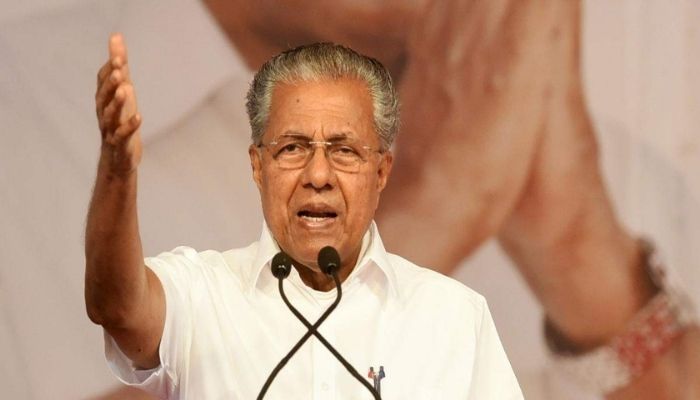
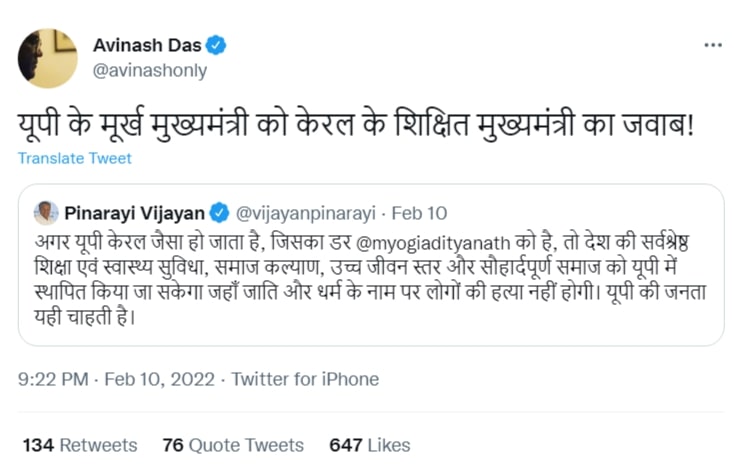
Amidst the war of words between Kerala Chief Minister Pinarayi Vijayan and Uttar Pradesh Chief Minister Yogi Adityanath over the ‘development models’ in their respective states, a controversy surrounding Vijayan’s educational qualifications arose on social media.
On Thursday (February 10), controversial filmmaker Avinash Das shared a tweet by Pinarayi Vijayan and wrote, “UP’s ignorant Chief Minister received the response of educated Chief Minister of Kerala.” His tweet prompted comparisons between the educational qualifications of the two political leaders.
Screengrab of the tweet by film director Avinash Das
Official Kerala CM website claims Pinarayi Vijayan is a graduate
According to the official website of the Kerala Chief Minister, Pinarayi Vijayan is a graduate with a Bachelor’s degree in the discipline of Economics. “In 1962, he joined the Government Brennen College, Thalassery for pre-university studies. From 1964, he did his Bachelor of Arts studies in Economics,” the description read.
Screengrab of the profile of Kerala CM on the official government website
The Wikipedia page of the Kerala Chief Minister also claims that he had earned a BA Economics degree from Government Brennen College.
Screengrab of the Wikipedia page of Pinarayi Vijayan
Election affidavit lists Pinarayi Vijayan as 12th Pass
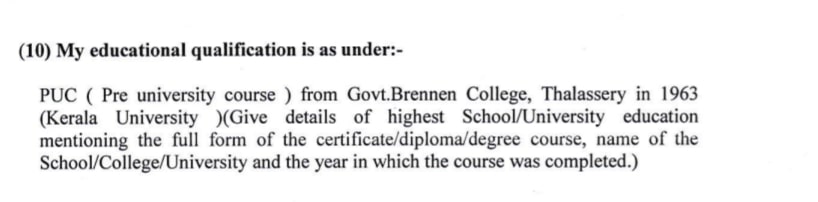
Ahead of the Vidhan Sabha polls in Kerala, the Communist Party leader had filed his election affidavit on March 15, 2021. Interestingly, as per the affidavit, Pinarayi Vijayan’s educational qualifications had been listed as 12th Pass.
Under the column that sought details of his highest school/University education, the incumbent Kerala CM wrote, “PUC (Pre Univeristy Course) from Govt. Brennen College, Thalassery in 1963 (Kerala University).”
Screengrab of the election affidavit of Pinarayi Vijayan
His 2016 election affidavit also shows that he is an undergraduate. Despite being 12th pass, the official government website of Kerala CM lists him as an Economics graduate. The same ‘misinformation’ is parroted by Vijayan’s party cadet on social media.
Contrary to claims made by controversial filmmaker Avinash Das that the Uttar Pradesh Chief Minister Yogi Adityanath is illiterate, he holds a Bachelor’s degree and is thus more ‘literate’ than the Kerala Chief Minister.
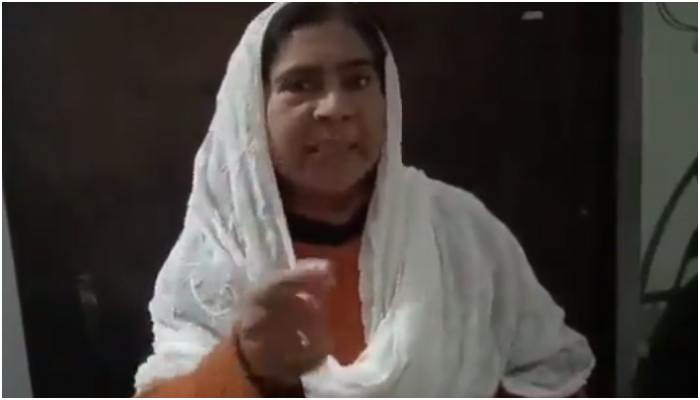
The Karnataka Hijab row is spreading to more and more states, as political leaders use the controversy to meddle the situation more. Today a Samajwadi Party leader threatened violence against those who oppose Hijab in schools and colleges. On Saturday, Samajwadi Party leader Rubina Khanum made a controversial statement saying, ‘will cut off the arms of those who put hands on Hijab’. She supported the hijab-wearing Muslim girls and said that politicizing the hijab issue was mean and troublesome.
“India is a diverse country. Whether it is forehead tilak or turban, burqa or hijab, it is an integral part of our culture and traditions. Creating controversy by politicizing it is the height of meanness”, she added in a video that has gone viral over social media.
Senior Samajwadi Party leader Rubina Khanum says we will cut off the hands of those who put their hands on Hijab pic.twitter.com/O2zMKwRRM7
She also criticised the government and warned against thinking that ‘women are weak’. “Don’t make the mistake of thinking women are weak. If the self-esteem of our sisters and daughters is attacked, we will become the Queen of Jhansi and Razia Sultan and cut off their hands”, she affirmed.
Aligarh’s Samajwadi Party Metropolitan President Rubina Khanum further called the schools in Karnataka and those protesting against Hijab as ‘Kalyugi Raavan’ and accused that they were trying to create violence against Muslim women by not allowing them to wear hijab.
Earlier in Maharashtra, a burqa-clad woman had hit out at PM Modi over the issue and said that he should be burnt alive. “Modi brought hijab law to harass everyone, he should be burned alive”, she was quoted in the Nationalist Congress Party’s Pune protests over the Karnataka hijab controversy.
It is important to note that Rubina Khanum’s controversial remark also comes when Hindus are being openly attacked for supporting the ban on hijab in schools. Yesterday, Dileep Malagimane in Malebennur town, was attacked by a mob of 300 persons from the Muslim community, who dragged him out of the store and brutally attacked him over a post he had uploaded on WhatsApp to support the ban on hijab. Also, in Nallur village of Davangere district, another mob of Muslims had attacked Naveen and his 60-year-old mother for their alleged posts on social media on the hijab controversy.
The hijab controversy in Karnataka gained momentum since the first week of January after eight Muslim girls were denied entry to classes in a Udupi college because they were wearing hijab. The college authorities had informed that the hijab was not a part of the uniform dress code suggested to the students. The Muslim women, adamant on wearing hijab, then filed a petition in High Court seeking permission to attend classes with hijab. They stated that wearing hijab was their ‘fundamental right’ granted under Article 14 and 25 of the Indian Constitution and ‘integral practise of Islam’.
The controversy spiraled as Hindu students in Karnataka styled with saffron scarves around their necks, protested against Muslim girls continuing to wear Hijab to the college. Tensions also prevailed at some educational institutions in Udupi, Shivamogga, Bagalkote and other parts as incidents of stone-pelting and violence were reported from various parts of the state.
The High Court so far has declared that no one should be allowed to wear their religious attire inside the educational institutions until the matter is pending in the Court. However, the Supreme Court denied to interfere in the matter after the girls impatiently knocked the doors of the apex court.
The Udupi Burqa debate is one of the many cases which makes us paranoid over the course of Feminism in the 21st century. Supposedly Intellectual voices who usually stick their necks out to stand up against patriarchy on every issue under the sun, have now chosen silence ‘in solidarity’ with the Burqa-clad college aspirants. The worldview that often likes to paint itself libertarian, has kept itself busy at inventing new justifications for the centuries-old oppressive urges to cover the woman’s body.
While the school authorities are standing up to their decision of not allowing religious identities to take over the school uniform, The Burqa-clad girls too have made their priorities clear – “Hijab is our first priority, studies the second” The girls are being joined by the Arfa Khanums and Rana Aayubs of the world, who with their Islamist indoctrinations mince no words while convincing the world that wearing a Burqa or a Hijab is a matter of individual liberty. Sadly, for them to realise that Individual freedoms are bound by protocols of secular institutions, and their attempts to communalise them by wearing religious identities on sleeves will go unchallenged, comes from their rose-tinted tunnel vision of sharia complied world.
It was also time for Malala, to get up from nowhere and talabanise the institution in Udupi with her 280-character ‘solidarity’ on Twitter. She wants the girls to give up the college uniform and follow orthodox practices which she herself fought against the Taliban. According to her standing up against the Hijab, will lead to the objectification of women.
“College is forcing us to choose between studies and the hijab”.
Refusing to let girls go to school in their hijabs is horrifying. Objectification of women persists — for wearing less or more. Indian leaders must stop the marginalisation of Muslim women. https://t.co/UGfuLWAR8I
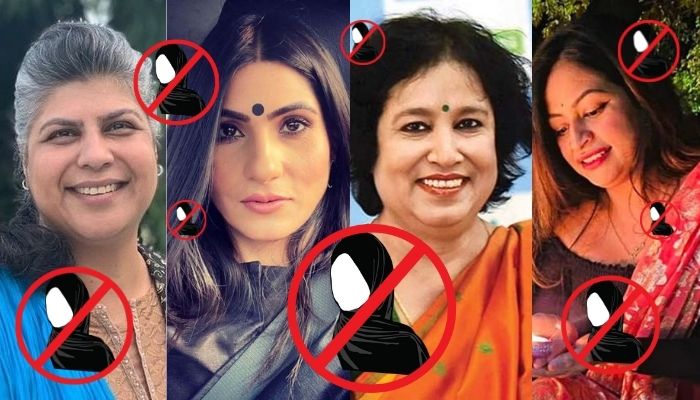
Amidst all the solidarity jargon, what stands out are the voices of those women who come fiercely while making sense of the pure fact that face veils have no place in a 21st-century society. While the Individuality of a woman for her will to wear the hijab can be used to validate Islamism, it can also be respected at times when she chooses to ditch the patriarchy instead. The voices of women from the community who have refused to perpetuate and generalise adamant misogynistic attitudes are somehow never pedestaled when they speak for themselves. Moreover, it has been observed, particularly in the hijab debate that those voices who have given away the veil are often stifled and threatened with online bullying, objectification and targeting. Here is a case study of views on the issue by four women from the Muslim community, who have been reckless fighters against Islamic radicalisation threatening to stifle the personal freedoms of women.
Rubika Liyaquat
ABP News anchor and Journalist left no stone unturned while making a case that Burqa has nothing to do with anything Indian. Recalling her times in Rajasthan, a state where the Ghoongat in some cases is a traditional commonplace, she asserted, “I have seen no girl going to school draping a veil. Here, we are going against the times where Ghungat is becoming obscure.” She also questioned how did the Black burquas inject themselves into the lives of the young generation while Muslim women from earlier generations only wore Indian dresses.
मैं राजस्थान से आती हूँ वहाँ घूँघट की प्रथा एसी थी कि आधी चूनर घूँघट में ख़त्म हो जाती थी… लेकिन कभी किसी लड़की को घूँघट में स्कूल जाते नहीं देखा.. किसी परिवार को स्कूल कॉलेज प्रशासन से ज़िद करते नहीं देखा.. ज़माना आगे बढ़ा औरतों ने घूँघट कारना लगभग ख़त्म कर दिया लेकिन 1/2
2/2 लेकिन हम उल्टे ही चले जा रहे हैं.. ईमानदारी से अपने आस पास मुस्लिम बुज़ुर्ग नानी-दादी को देखिए बुर्का नहीं भारतीय लिबास पहने मिलेंगी ऊपर दुपट्टा या चादर पहनेंगी.. या तो साड़ी या फिर सलवार क़मीज़.. ये काले बुर्के नई पीढ़ी में इस कदर बढ़ कैसे गए?
While Rubika was seen fighting the evils of Burqa in many of her latter tweets on the Udupi issue, she was trolled for expressing herself openly by people in Islamic and ‘liberal’ circles. Many questioned her with a defence of whataboutery sighting orthodox Hindu customs existing, others used slangs, objectification, passed misogynistic comments and even questioned her journalistic credentials.
मेडम हिज़ाब वोह अपनी मर्ज़ी से ओर पसंद से पहनती है ।कोई ज़बरदसती या थोपा नही है और लड़ाई भी वो खुद लड़ रही है । आप जब साड़ी ओर बिंदिया लगा कर एंकरिंग करते हो तब आपको किसीने रोका है । आपको आज़ादी है तो सब को आज़ादी होनी चाहिए @RubikaLiyaquat
Hijab is a personal choice,India is an independent state no person can stop a person from wearing clothes of his or her choice,jb desh ke ek CMdharmik kapde pehen ke shasan kr skhte, jb PMdin mei 4 baar kpde badal kr apna PR kr skhte, so why this hypocrisy?#HijabRow#AllahuAkbar
Author Taslima Nasreen has been at the forefront to call out the subtle imposition of Burqa or Hijab as a symbol of ‘Islamism and misogyny’. She is of the opinion that all kinds of religious symbolism should be avoided in secular institutions like schools.
Some ppl think hijab is a symbol of secularism. No,it’s not. It’s a symbol of Islamism & misogyny. Secularism means without religion. Embracing all religions equally is not secularism,rather it is superduper-religionism.U want a secular space?Avoid all kinds of religious symbols.
While hinting at the invasion of politics in the issue, she thrashed out at orthodox practices in Islam saying, “Islam is now political Islam. Hijab is now political hijab.”
It’s glaring to see when criticism from the religious quarters arrives at the tweets of these women, it is mostly the male accounts countering their progressive ideas. Much talk about the individual rights of women fails to deliver here. While all Taslima asked for was separating religious symbolism from schools, she too was charged with inciting ‘communalism’.
Its right of an induvidual to wear what she or he likes. Its matter of there culture and beliefs. Don’t spoil the new generations in name of injecting communalism.
Meet Amana Begum Ansari – Researcher and Policy Analyst who has led the cause of Pasmanda Muslims in India. Amana is of the view that while she does not support the burqa, she is not in favour of its complete ban by the state unless a security concern arises. While calling out the veil patriarchal, she says, “Women should have the right to wear patriarchal clothes just like they have the right to smoke despite being it a health issue.”
Nuanced takes like those of Amana are often slipped under the carpet while meta-narratives of glorifying and justifying the Burqa qualify as positions taken in favour of personal liberties. While speaking on The Sham Sharma Show, Amana claimed that while orthodoxies in the Hindu community have been rightfully challenged by awareness, the state has taken no steps like these, when it came to Muslims. “Campaigns with slogans like Ghoongat Chodo, Duniya Dekho are assertively carried out in interior Rajasthan by the Congress Government, but there would never be such slogans when it comes to the Muslim community.”
Arshia Malik
While progressive voices calling out for reforms in the Muslim society are often sidelined, Arshia Malik, who hails from Delhi has made sure her voice is always heard. In a recent article in The New Indian, she writes, “Those liberals of Muslim or non-Muslim heritage who are supporting the enforcement of hijab in Muslim culture as freedom of choice, and a tool of empowerment need to understand the moment when, girls, just about to step into puberty or years away from it are told to cover up.” In her opinion piece, she has argued for Muslims often being the victims of Islam itself.
While calling out the hypocrisy of Lawyer Devadutt Kamat, who argued before the court on behalf of the girls that wearing Hijab is an essential practice in Islam while citing religious scriptures, Arshia wrote on Twitter asking, “Since when did law courts in India become Sharia courts?”
The Hindu man is also basing his arguments on Sharia-compliancy; laws based on the supernatural & superstitious, by male Muslim jurist-theologians of the medieval times. Since when did law courts in India become Sharia courts? Sycophancy so deep?Practically licking mullahs’ toes! https://t.co/BT96J3hIDV
Maybe there is a reason why do not celebrate the life of Fatima Sheikh, who alongside Savitribai Phule became the first Muslim teacher in India as a social reformer. Her name has been brushed away in history whereas the Phules are revered for their pathbreaking deeds. Who remembers Mehrunnisa Dalwai? – who fought against the social evils of Triple Talaq all throughout her life. Reformers in the Muslim sphere need recognition at a time when young college going girls have suddenly taken up Hijab as a marker of their identity. The girls, without being demonised, should be opened up to the values of the new India where cultural identities do not contest with the baggage of continuing practices just for the sake of tradition.
The case for burqa not only exhibits the ongoing Islamic radicalization in society but also justifies patriarchal notions against women of the worst kind. How can a collectivist normalization of covering every woman visible be touted as an exercise in personal individual liberty? The Burqa debate that has erupted out of Karnataka is about to spread its tentacles all over the country. The question thence before the nation is an all-encompassing philosophical, legal, political and religious one – Will obscure religious/social practices hurting eternal individual freedoms be allowed to determine the fabric of the 21st-century society or will the state intervene?
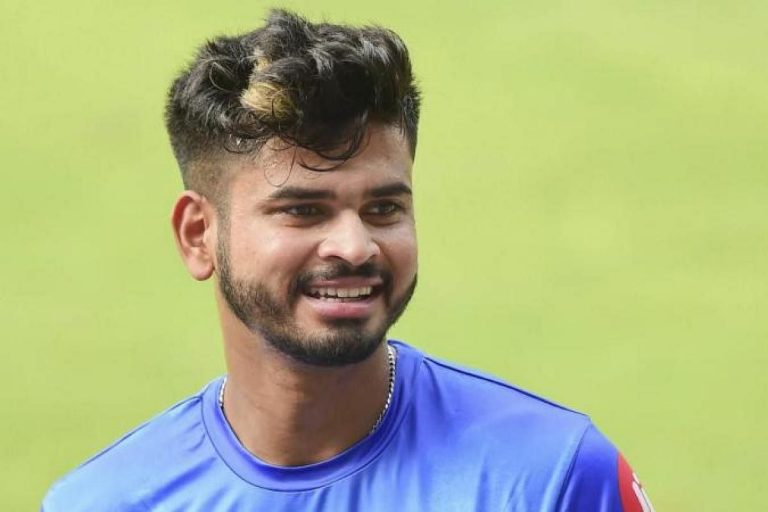
Kolkata Knight Riders have bought Shreyas Iyer in Tata IPL auctions 2022. Kolkata Knight Riders have bought him for Rs. 12.25 crores
The right-handed top-order batsman – Shreyas Iyer had captained the Delhi Capitals in the last season, however, the team did not retain him for this season. Kolkata Knight Riders will is his second franchise.
A total of 10 teams will be participating in IPL 2022. Till now, the IPL was contested among eight teams. Two new teams – Lucknow Supergiants and Gujarat Titans have been added, making this season one of the biggest tournaments ever held across the world. The IPL 2022 is scheduled from April 2, and the finals will be held on June 3 2022.
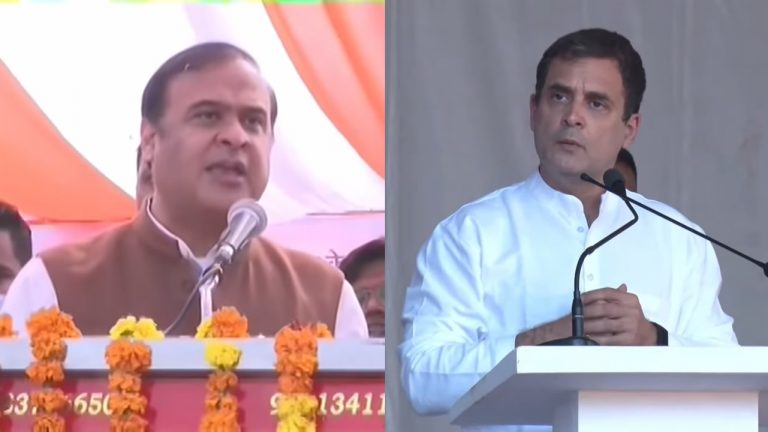
On Friday, Assam Chief Minister Himanta Biswa Sarma hit out at Gandhi-scion Rahul Gandhi for expressing doubts over the surgical strikes carried out against Pakistan and demanding proof from the Indian Armed Forces.
Addressing a public meeting at Uttarakhand’s Kichha ahead of the assembly elections, Assam Chief Minister Himanta Biswa Sarma hit out at Rahul Gandhi by asking whether his party has never sought any proof on whose son he was. Sarma attacked Rahul Gandhi for repeatedly raising doubts about India’s surgical strikes.
In his address, Himanta Biswa Sarma said, “Look at the mentality of these people. General Bipin Rawat was the pride of the country. India conducted the Surgical Strike in Pakistan under his leadership. Rahul Gandhi demanded proof of the strike. Did we ever ask you for proof of whether you are Rajiv Gandhi’s son or not? What right do you have to demand proof from my Army?”
It’s a misfortune that Congress always humiliates the country by questioning its achievements.The party insulted son of Uttarakhand&1st ever CDS late Gen Bipin Rawat by questioning Indian Army’s surgical strike & the country by questioning efficacy of #MadeInIndia Covid vaccine. pic.twitter.com/mvsTXXydRW
Hitting out further, the Assam Chief Minister said that there could not be any dispute once the Army said that the strike was conducted.
“If our Army said that they conducted the strike in Pakistan, that means they have done it. Where is the discrepancy in this? Don’t you have trust in General Bipin Rawat? If he has said that the Army conducted the strike, that means they have done it. So why do you want proof of it? Do not disrespect the soldiers. People sacrifice their lives for the country,” Sarma said while addressing a public meeting in Uttarakhand.
The Indian Armed Forces had carried out two surgical strikes, first in Pakistan Occupied Kashmir (PoK) in September 2016 after 19 of the Indian Army soldiers were killed in the base camp in Uri. Again in 2019, the Indian Airforce had carried out an Airstrike following a suicide bomber attack on the convoy of 40 Central Reserve Police Force (CRPF) personnel on February 14.
On both occasions, Rahul Gandhi and his party had attempted to politicise the issue and had expressed doubts over the strikes. Rahul Gandhi had tried his level best to cast aspersions around the Pulwama attack and suggested that it was an “inside job” of the BJP for electoral gain ahead of the 2019 Lok Sabha polls.
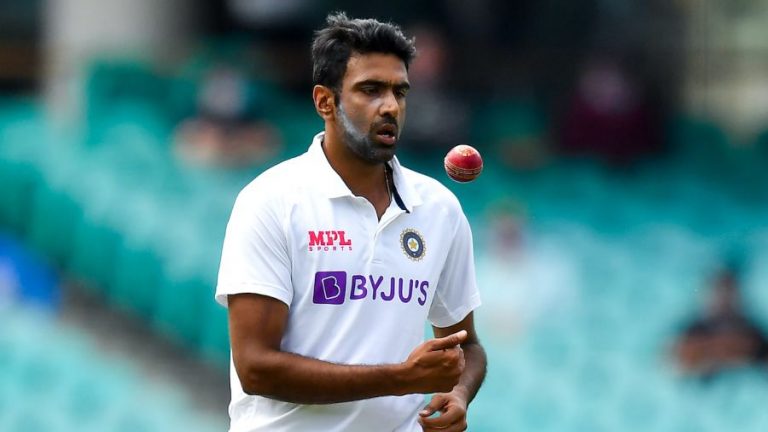
Indian ace spinner Ravichandran Ashwin is all set to play for Rajasthan Royals. The franchise bought the spinner for Rs.5 crores in the Tata IPL Auctions 2022.
Ravichandran Ashwin has played for different franchises including Chennai Super Kings, Delhi Capitals and was also the captain for the Kings XI Punjab. The Rajasthan-based team has now bought him. This is his fourth IPL team.
A total of 10 teams will be participating in IPL 2022. Till now, the IPL was contested among 8 teams. Two new teams – Lucknow Supergiants and Gujarat Titans have been added, making this season one of the biggest tournaments ever held across the world. The IPL 2022 is scheduled from April 2 and the finals will be held on June 3 2022.
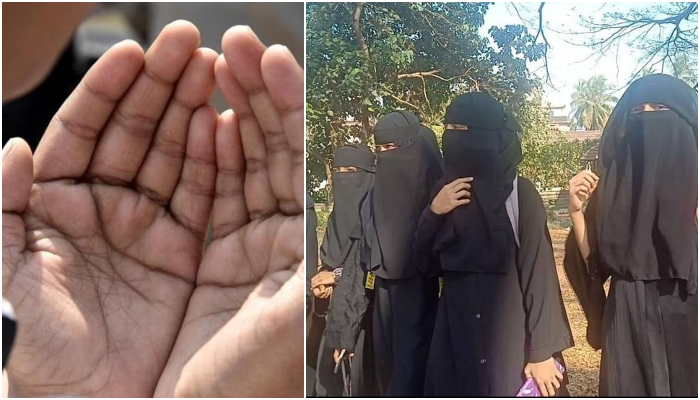
In accordance with the ongoing hijab row in the state of Karnataka, 6 students in a government school happened to offer Namaz inside the school premises in Ilkul, Bagalkote. The controversy erupted when the locals of Ilkul town opposed the students being allowed to offer Namaz in the school premises.
According to the CNNnews18 report, the Ilkul school principal had clearly directed the students that they can’t offer Namaz in the classrooms or in the school, yet the girls offered Namaz in the corridor area when the teachers were busy having their lunch. The locals have questioned the school management over the incident.
While the video of the girls offering Namaz went viral over the social media, a similar incident has been reported in a government school of Kadapa in Mangalore. The girls there were seen offering Namaz inside a vacant classroom. As tensions prevailed in the town, the Block Education Officer in Manglore has sought a report pertaining to the incident from the school in Kadapa.
This is weeks after a school principal of Bale Changappa Government Higher Primary School in Bengaluru got suspended for allowing students to offer Namaz in the classroom. Around 20 students offered their Friday prayers in the classroom since December last year, after headmistress Uma Devi permitted them to do so.
The issue, however, came to light when a video of the incident was shot on Friday, January 21 and uploaded on various social media sites on January 23.Many locals as well as the members of various Hindu organisations had protested against the authorities of the school for favoring children of a particular community.
Offering Namaz in Public places
Huge controversies have embroiled after local Muslim residents started offering Namaz in public places in some parts of India, especially Gurugram in Haryana. Recalling the one in Gurgaon, Haryana, CM Manohar Lal Khattar had opined that ‘Namaz should be read in Mosques or Idgahs rather than public spaces’.
Further according to former UP Shia Waqf Board chairman Syed Waseem Rizvi people are supposed to seek permission before using public spaces for prayers. “One cannot offer namaz at a public space without seeking permission from the authorities concerned. Offering Namaz at public places without proper permission is not allowed in Islam,” Rizvi had said earlier back in 2018. Rizvi has since reverted to Hinduism and goes by the name Jitendra Narayan Tyagi
Prominent Muslim cleric and member of the All India Muslim Personal Law Board Khalid Rasheed Farangi Mahali also had noted that Muslims should avoid offering namaz at places where it inconveniences others. “People must adhere to the directions of the local administration when it comes to using public spaces for offering namaz. It is best that one offers Namaz either inside one’s home or at a designated place such as a mosque,” the Muslim scholar had said then.
Police suspects Campus Front India’s (CFI) role in the Karnataka Hijab Row
In an update to the ongoing hijab controversy in Karnataka that initiated at the core of Udupi first, the CNNnews18 report confirms that the communal tensions in the city have calmed down after hundreds of policemen rallied on the streets to motivate the students to not fall prey to the vested interests.
However, the major point of contention revolves around the role of the Campus Front of India (CFI) who is believed to be the brain child of the entire episode. The Police and the local administrative authorities have suspected that the CFI has instigated the girls to run the Muslim agenda. The CFI has also been accusing the state government of favoring the anti-muslim propoganda.
The Police to the CNNnews18 has said that they are about to launch an investigation in the case pertaining to CFI’s involvement. This is after the Udupi MLA K Raghupathi Bhat has also called for an NIA investigation into the hijab controversy. “The students all by themselves cannot plant themselves into such a massive operations and conjure up such support for the Hijab movement”, he was quoted.
The hijab controversy gained the grounds earlier this month when eight hijab wearing Muslim girls denied to follow the school uniform regulations. They hit the High Court seeking permission to attend the classes with hijab, as it is their fundamental rights, they said. The girls have admitted to have been consulting CFI over the hijab row. They have been in talks with the CFI since October 2021 and the pro-hijab protests started in December 2021.
The High Court so far has declared that no one should be allowed to wear their religious attire inside the educational institutions until the matter is pending in the Court. However, the Supreme Court denied to interfere in the matter after the girls impatiently knocked the doors of the apex court.