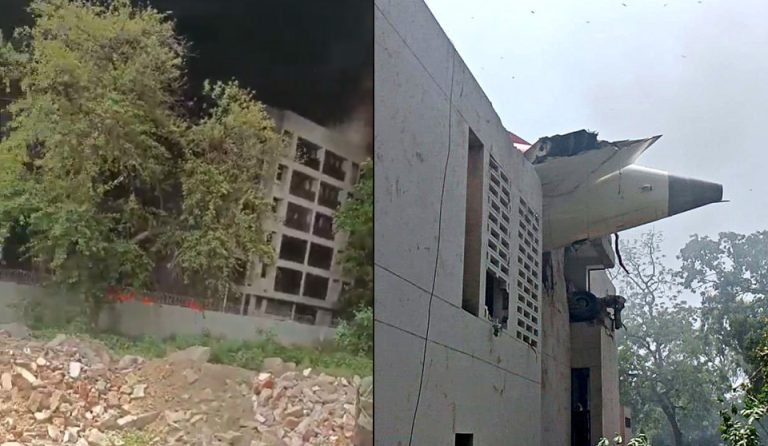
Air India on Thursday confirmed that flight AI171 with destination to Gatwick in London, was involved in an accident today after take-off from the Sardar Vallabhbhai Patel International Airport in Ahmedabad, Gujarat.
“Air India confirms that flight AI171, from Ahmedabad to London Gatwick, was involved in an accident today after take-off. The flight, which departed from Ahmedabad at 1338 hours, was carrying 242 passengers and crew members on board the Boeing 787-8 aircraft. Of these, 169 are Indian nationals, 53 are British nationals, 1 Canadian national and 7 Portuguese nationals. The injured are being taken to the nearest hospitals. We have also set up a dedicated passenger hotline number, 1800 5691 444, to provide more information. Air India is giving its full cooperation to the authorities investigating this incident,” the Airline said
Air India confirms that flight AI171, from Ahmedabad to London Gatwick, was involved in an accident today after take-off.
The flight, which departed from Ahmedabad at 1338 hrs, was carrying 242 passengers and crew members on board the Boeing 787-8 aircraft. Of these, 169 are…
The Sardar Vallabhbhai Patel International Airport, Ahmedabad, is currently not operational, and all flight operations are temporarily suspended until further notice, the airport said.
Earlier today, an Air India plane from Ahmedabad to London with 242 passengers crashed in the Meghaninagar area near Ahmedabad airport on Thursday. The Directorate General of Civil Aviation said that a team has been rushed to the spot for investigation.
“On 12th Jun, 2025, Air India B787 Aircraft VT-ANB, while operating flight AI-171 from Ahmedabad to Gatwick, has crashed immediately after takeoff from Ahmedabad. There were 242 people on board the aircraft, consisting of 2 pilots and 10 cabin crew,” said a senior DGCA official. The aircraft was under the command of Capt Sumeet Sabharwal with First Officer Clive Kundar. Capt Sumeet Sabharwal is an LTC with 8200 hours of experience. The copilot had 1100 hours of flying experience, the official further added.
As per ATC, the aircraft departed from Ahmedabad at 1339 IST (0809 UTC) from runway 23. It gave a mayday Call to ATC, but thereafter, no response was given by the aircraft to the calls made by ATC.
Aircraft immediately after departure from Runway 23, fell on the ground outside the airport perimeter. Heavy black smoke was seen coming from the accident site, said the official.
Thick plumes of smoke could be seen at the accident spot, and fire tenders have reached the spot.
Aviation Minister Ram Mohan Naidu said, “Shocked and devastated to learn about the flight crash in Ahmedabad. We are on the highest alert. I am personally monitoring the situation and have directed all aviation and emergency response agencies to take swift and coordinated action. Rescue teams have been mobilised, and all efforts are being made to ensure medical aid and relief support are being rushed to the site. My thoughts and prayers are with all those on board and their families.”
The minister, who was in Vijayawada attending the first anniversary events of the NDA Government, rushed to Ahmedabad immediately upon receiving news of the flight crash.
In light of the AI171 crash, an Operational Control Room has been activated at the Ministry of Civil Aviation to coordinate all details.
(This news report is published from a syndicated feed. Except for the headline, the content has not been written or edited by OpIndia staff)
On June 10, Russia deployed 315 drones and 7 missiles against Ukraine overnight in retaliation for the audacious drone operation dubbed “Spiderweb” that took out aircraft stationed at its military installations. Shortly after midnight, air raid sirens sounded throughout Kyiv, warning of an impending Russian assault.
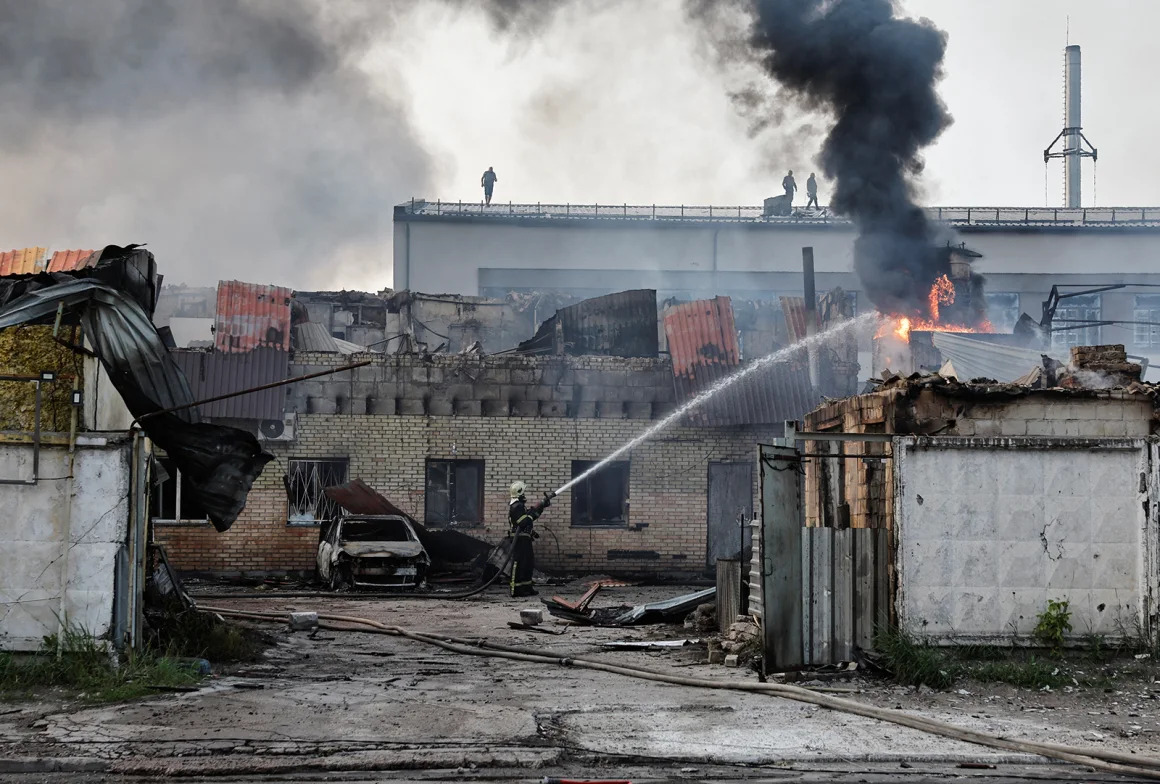
There was extensive damage in seven of the 10 districts of the capital, resulting in 3 deaths and 13 injuries. Homes, vehicles, warehouses, high-rise structures, and medical institutions were left in flames.
“Today was one of the largest attacks on Kyiv. Russian missile and Shahed strikes drown out the efforts of the United States and others around the world to force Russia into peace,” stated President Volodymyr Zelensky.
A firefighter works at the site of a Russian drone strike in Kyiv. (Source: Thomas Peter/Reuters)
Another barrage of drones struck Odesa in the south where locals claimed they couldn’t recall a night with that many strikes. According to regional chief Oleh Kiper, the assault destroyed residential structures and a maternity hospital in the southern port of Odesa. The regional prosecutor’s office reported that nine individuals were hurt and two people were killed. Tymur Tkachenko, the regional head informed that another person lost his life in the Obolonskyi area of Kyiv.
The city was overrun with the sound of drones and explosions for hours. Moscow launched around 500 drones at Ukraine in the largest overnight drone assault of the war, the day before the new attack. The Russian assault continued unabated as drone attacks in the northeastern city of Kharkiv killed 3 individuals and injured 60.
According to Mayor Ihor Terekhov, the second largest city of the country, which is only 30 kilometers from the Russian border was hit hard by the 9-minute-long aerial raid early on 11th June, when 17 drones hit two residential districts. Oleh Syniehubov, the regional director of Kharkiv mentioned that 9 children between the ages of 2 and 15 were among the 60 people injured in the attacks.
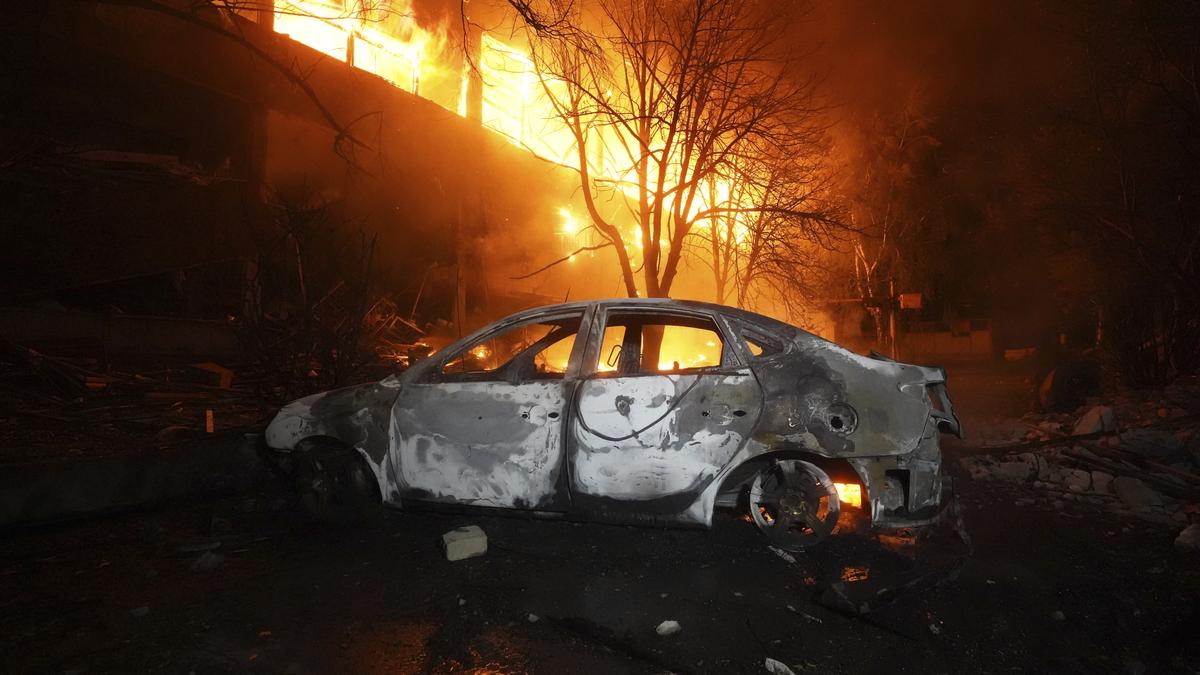
Firefighters tackle a blaze after a Russian attack that hit a residential building in Kharkiv. (Source: Associated Press)
Emergency personnel, city employees and volunteers had to labor through the night to save lives from burning buildings and restore vital services in the city, which has been attacked repeatedly in recent months, after the assault. The Ukrainian Air Force reported that its air defense systems had intercepted 40 of the 85 drones that Russia had launched overnight, including the strikes on Kharkiv.
Russian forces also targeted an energy complex in Mykolaiv and Kherson, two southern Ukrainian provinces, leaving them without electricity. A new wave of drone attacks on four city districts was reported early on 12th June by Kharkiv Mayor Ihor Terekhov, including a drone that landed in a school courtyard and smashed windows.
This wave after wave of Russian drones started targeting Ukrainian cities in response to Ukraine’s drone attack of its own, ‘Spiderweb’. Ukraine targeted Russian fighter jets deep inside Russia using drones smuggled into Russia.
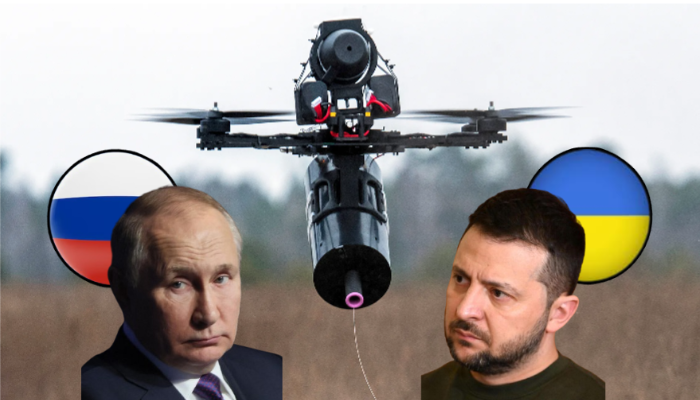
Drones have become a major factor in this war and both the countries are busy manufacturing or importing as many drones as they can as they may well turn out to be the decisive factor in this war. Among the drones, Fiber Optics drones have become particularly popular among the two armies.
Fiber optic drones changing the course of Ukraine-Russia war
Drones have played a key role in Russia-Ukraine conflict. Surveillance drones are sent to locate targets on the ground while the commanders monitor multiple banks of displays. Artillery or mortars are then used to destroy them once they are identified. Kamikaze or bomb-dropping type drones can rapidly close in on their targets to deliver a lethal blow.
The problem with these drones is that the enemy can electronically jam these drones. However, a recent addition to arsenals of both countries has proven to be extremely effective. These drones are Fiber-Optic. It is difficult to bring them down since there is no radio signal to jam or detect.
Both Russia and Ukraine are connecting several of their first-person view (FPV) drones to their commanders via fiber optic cables rather than using radio waves around the battlefield. This renders them immune to jamming and other electronic warfare techniques and minimizes the impact of terrain which can also impede radio control.
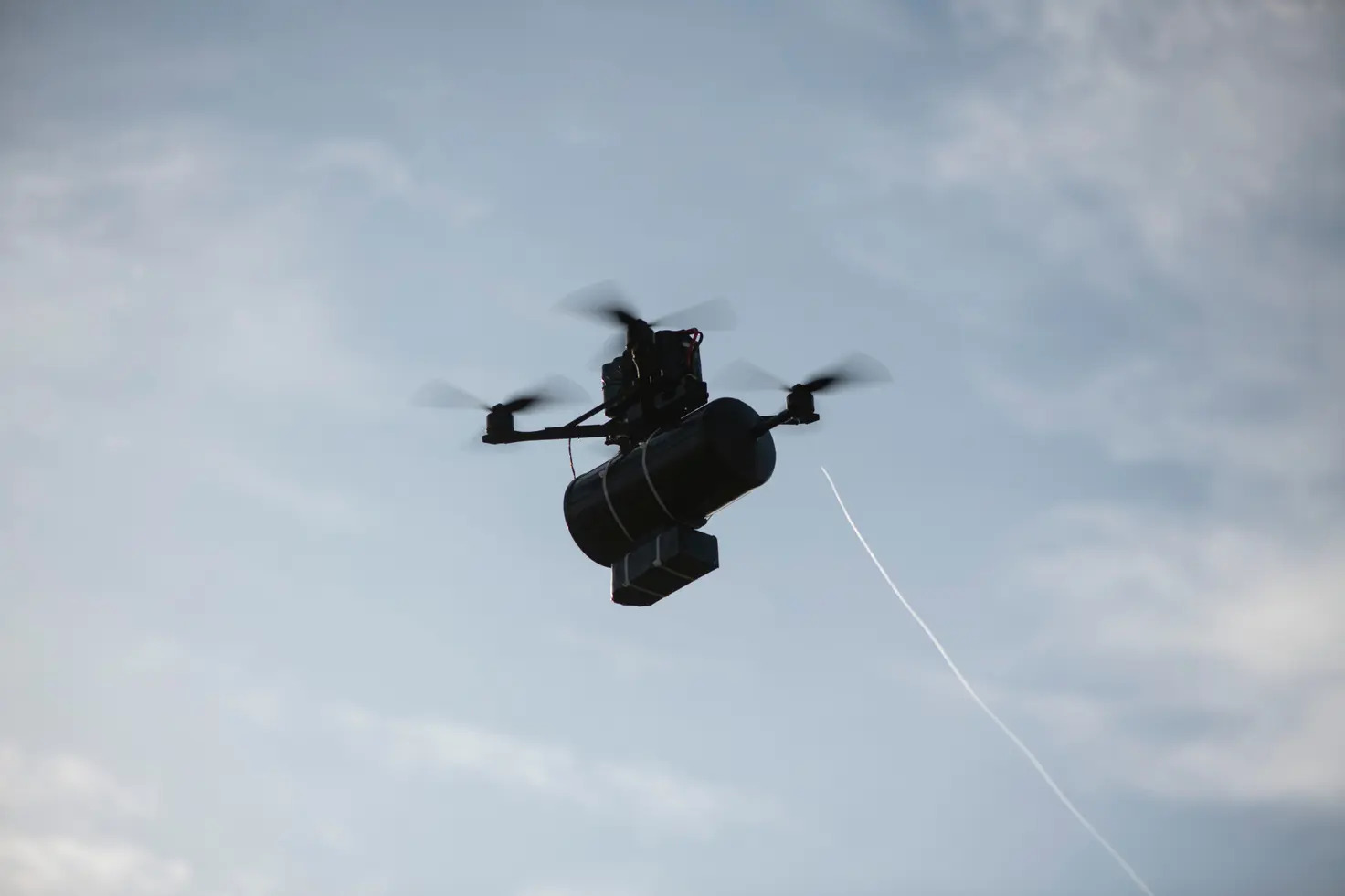
A fiber optic drone during a test flight near Kyiv last December. (Source: NZZ)
The majority of FPV attack drones depend on a radio connection to the operator, which could be a drawback as connection could be lost if it flies too low or behind a hill. Up to 75% of FPVs are also lost due to jamming. “Friendly fire” is more likely to cause losses than adversary electronic warfare. Many rely on jammers which provide only partial protection against FPVs.
The Russia-Ukraine war has seen the rise of fiber optic drones, which can penetrate enemy lines up to 20 kilometers and use high-resolution images to strike targets. These drones operate at low altitudes to avoid detection and interception and their cable range can reach as far as 20 kilometers.
The range of fiber optics drones continues to expand from the initial few kilometers. Drones with wire lengths of 10-15 kilometers are now common. There is potential for far larger ranges. According to recent reports, Ukrainian military used a fiber optics drone to strike targets 42 kilometers away.
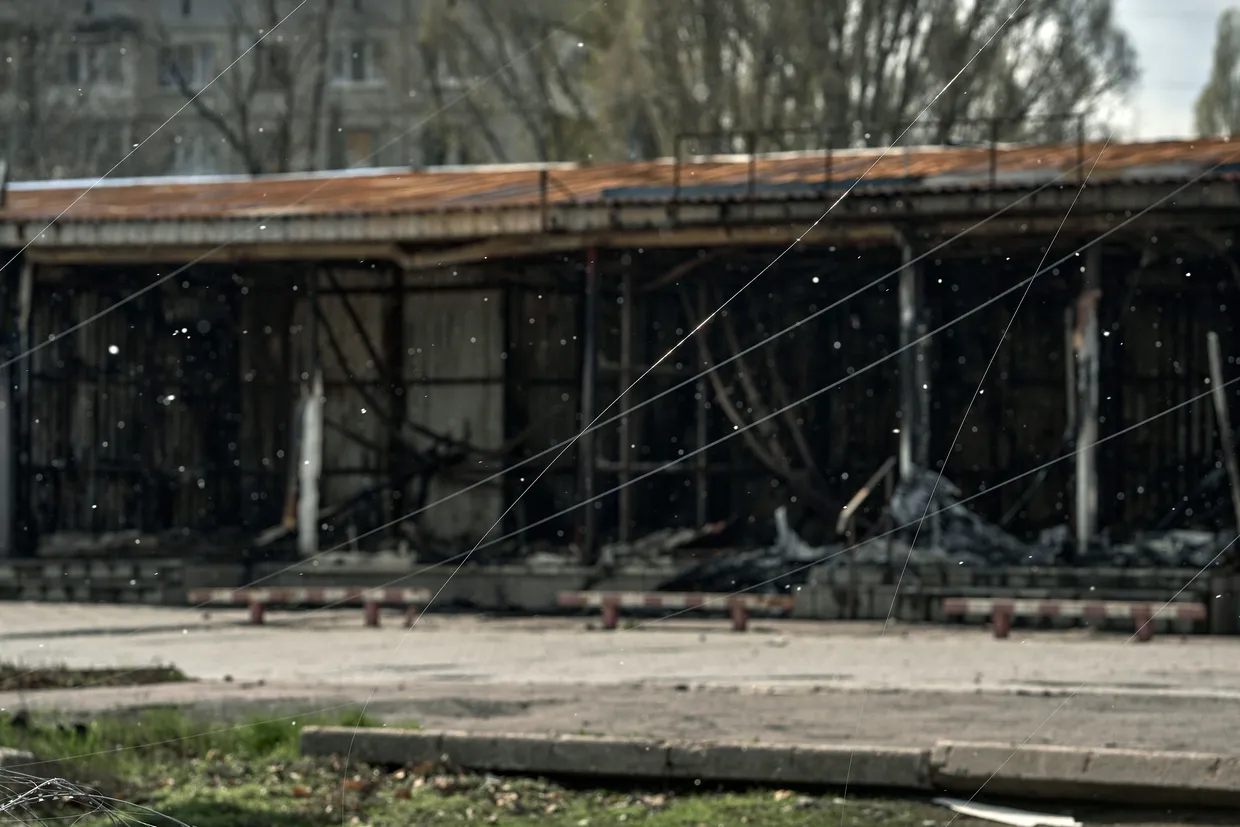
Threads from FPV (first-person view) drones controlled by fiber optics are seen in Pokrovsk, Ukraine, on 8th April. (Source: Kostiantyn Liberov/Libkos/Getty Images)
A purported 50 kilometer fiber spool that weighs less than 4 kilograms was seen in a Russian video. It is excessive for many FPVs but appropriate for larger models with a lower bombload. Better fiber is expected to result in weight reduction and range expansion. Ambush attacks, in which the drone lands and waits for a target, are becoming progressively more common with fiber FPVs.
Why is fiber optic drone a game changer
Fiber optic drones often fly farther than the majority of conventional FPVs since they are fitted with ever-larger spools. Oleksandr Syrskyi, Ukraine’s Commander-in-Chief of the Armed Forces, declared that 46 per cent of Ukraine’s December 2024 strikes against Russian targets were executed by kamikaze drones, on 5th January.
Fiber optic drones can even hover by a road or track for a long time because they need less power to stay in communication over vast distances. These drones fly straight through windows and doors that are open as well as through roof gaps or holes. “These drones can fly up to 60 kilometers per hour, perform maneuvers, and within a range of 10 kilometers, the fiber does not break,” highlihgted Serhiy Beskrestnov of the Ukrainian military.
Areas that were previously secure from drone attacks can now be targeted because fiber-optic drones can fly low between buildings or across forests while carrying small payloads and maintaining signal strength. FPV drones are usually inexpensive quadcopters or comparable variants that are controlled in real time by the user wearing goggles.
A birds next including fiber optic cabling gathgered from the battlefield in Ukraine. (Source: Forbes)
According to studies, electronic warfare weapons have destroyed between 75 and 90 per cent of drones during the conflict between Russia and Ukraine by interfering with the radio link of the drone’s pilot. However, fiber optic drones transmit high-resolution video without the need of radio transmissions, making them imperceptible and immune to electronic warfare.
Unlike radio-controlled drones, these drones fly at low altitudes, avoiding obstructions and minimizing exposure to air defense fire. It leads to a secure connection by using a robust fiber optic spool that unravels while in flight. High-speed light signals are sent across the fiber optic line carrying the pilot’s commands and video data.
High-resolution camera-equipped reconnaissance drones provide a significant edge in locating hostile targets. Nevertheless, using fiber optic connections makes the drone heavier and shortens its range.
How fiber optic drone functions
Fiber drones is a concept DARPA (Defense Advanced Research Projects Agency) created for its Close Combat Lethal Recon drone in the early 2000s but never deployed. Fiber drones were first dispatched by the Russians just over a year ago, initially in limited quantities before they were used on a large scale.
The fiber optic drone employed in Ukraine is essentially just a variant of the conventional FPV drone, which has already revolutionized warfare. This often entails a quadcopter design on a frame made of carbon fiber, aluminum, or polymer, with electronics welded on the middle, a battery strapped to the top, and the munition strapped to the bottom just before taking off on a combat mission.
The communication between the drone and its pilot is where the difference lies. The majority of FPV drones use conventional analog or digital antennas to receive their control inputs and beam back video and keep a strong signal connection even while operating at long distances which is essential to engage and reach targets.
Ukrainian soldiers walk along a field covered in fiber-optic cable from FPV drones somewhere near the frontline. pic.twitter.com/TZpGWaj5eY
Signal booster drones are sometimes used together with the drone’s vertical antennae to do this, enabling the FPV to fly farther. However, the FPV is still constrained by the terrain’s radio horizon. EW (Electromagnetic or electronic warfare) devices of many sizes and forms, ranging from modest systems installed on cars to defend them against FPVs to larger and more potent units that can block an entire region from a distance.
A long spool of lightweight optical fiber is held in a big but relatively light cylinder that hangs beneath the drone, often between the frame and the munition. The spool slowly unwinds as the drone advances. This effectively turns the drone into a wire-guided precision weapon, similar to the US TOW (Tube-launched, Optically tracked, Wire-guided) anti-tank missiles developed during the Cold War.
Drone pilots can rely on a flawless visual feed all the way up to the target when using fiber optics, as long as it isn’t damaged or severed in mid-flight, without concerns about radio horizon and electronic warfare. Both Ukraine and Russia made significant investments in pricey EW systems, particularly in 2024, to defend vehicles and other valuable targets, but these new drones left them ineffective.
The same is true with radio-based drone detection equipment that units frequently utilize to alert them to FPVs flying nearby. Fiber optic also enables FPV drones to fly to places they have never been able to, as both sides have shown on the battlefield.
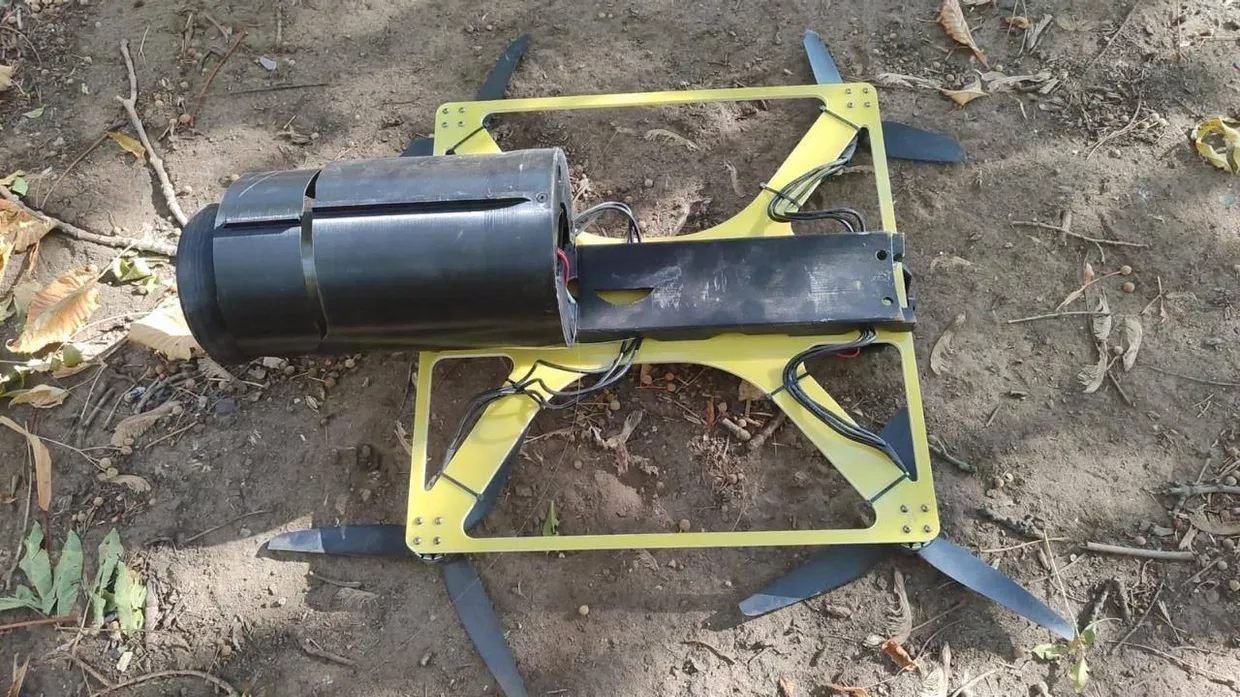
A Russian fiber optic drone of the Knyaz Vandal Novgorodsky model, downed by Ukrainian forces in Kursk Oblast, Russia, in September 2024. (Source: Serhii Flash/Telegram)
Notably, Ukraine swiftly adopted the usage of fiber optic wires on the FPV drone after the Russians started using it in the spring of 2024. Aleksey Chadaev, a former Russian political professor who is now a volunteer, developed the Ushkuinik military technology accelerator project which produced the Knyaz Vandal Novgorodsky, the first fiber optic drone model to be scaled up to the front line.
The drone was initially used in Kursk Oblast in August 2024 and expanded as efforts to drive out the Ukrainians from Russian territory intensified. It proved to be extremely productive and in a short amount of time, especially when it came to narrowing down the already overburdened Ukrainian supply lines across the state border.
Ukrainian forces have given fiber optic drones to their most professional and well-equipped drone units. Meanwhile, Russia’s current superiority in the field is posing a significant threat to Ukrainian defense. Fiber-optic cable is being sought after by both nations.
A standard FPV drone can cost $400 without considering the cost of its explosive payload. However, the cable is an additional $400. The weight of ten kilometers of fiber optic cable, which is between 1.2 and 1.4 kilogram is bound to alter according to the drone’s movement. However, tens of thousands of pilots are available and eager to learn on both sides, as drones are already the main weapon on the evolving battlefield.
More FPVs would allow uncrewed vehicles to launch their own mini-Operation “Spiderweb” attacks.
A gau rakshak has died in an attack by cow smugglers in Bhadrak, Odisha. A group of cow smugglers had attacked the gau rakshak a few days ago. He was seriously injured during the attack, and later died during treatment in the hospital. Following the development, Hindus in the area are very angry and demand strict action against the perpetrators.
According to media reports, on Wednesday (June 11), gau rakshak Santosh Parida died during treatment in a hospital. He was a resident of Tihadi in Bhadrak, Odisha. Gau rakshak Parida was admitted to the hospital since May 30 and was undergoing treatment after suffering injuries during the attack.
Parida was attacked by a gang of cow smugglers on May 30, 2025. Parida was seriously injured during the attack. It is suggested that this attack took place when the gau rakshak clashed with the cow smugglers.
The situation has become tense in Bhadrak after this death. Bhadrak police has registered an FIR in the case and arrested 12 people in this case. In view of the deteriorating situation, internet has been shut down in Bhadrak from June 12, 2025.
Additional police force has also been deployed in Bhadrak. The Mohan Charan Manjhi government of the state has also taken cognizance of the matter. The Manjhi government has announced a compensation of ₹10 lakh to the victim’s family. The government has assured strict action in the matter.
A report suggests that 2000+ cow smuggling cases have been registered in Odisha between 2019-24. A senior Odisha Police officer told OpIndia on the condition of anonymity that Bhadrak’s border is not very far from West Bengal, so cows are smuggled from here to Bangladesh via Bengal.
CNN News18 on Thursday issued an apology for one its anchor’s shocking remarks claiming human sacrifice at Kamakhya Mandir and linking the Raja Raghuvanshi murder case with the same. The channel called it a complete error of judgment, saying that had no intention whatsoever.
CNN News18 posted on X, “In one of the shows aired yesterday, in the context of Raja Raghuvanshi murder case, CNN News18 anchor referred erroneously to ‘human sacrifice’ at the holy Kamakhya Temple in Assam. This was a complete error of judgment. We had no intention whatsoever. We apologize profusely to anyone whose religious sentiments are hurt after these comments. Further, we have deleted any reference to such a clip from all our platforms. We deeply regret these comments and apologise profusely for the same.”
In one of the shows aired yesterday, in the context of Raja Raghuvanshi murder case, CNN News18 anchor referred erroneously to 'human sacrifice' at the holy Kamakhya Temple in Assam. This was a complete error of judgment. We had no intention whatsoever. We apologize profusely to… pic.twitter.com/qNzabvZ1Af
The controversial remarks were made by anchor Akanksha Swarup while talking to Raja Raghuvanshi’s sister Shrasti Raghuwanshi on air on Wednesday. While talking to her, Shrasti Raghuwanshi claimed that it can be a case of human sacrifice also, as the honeymoon couple had visited Kamakhya Mandir in Guwahati before going to Meghalaya, where Raja was killed by his wife Sonam with the help of three aides from Madhya Pradesh.
Akanksha Swarup said, “It has been said that it can be a case of human sacrifice. We have talked to Raja Raghuvanshi’s brother, who said that this can be called a human sacrifice because he was stabbed from behind and he was also had a garland on him. And Because they had visited Kamakhya, where human sacrifice takes places or sacrifices are made.”
? Absolutely shocking & deeply offensive!
Anchor @akankshaswarups, while sitting in the studio of @CNNnews18, has casually and falsely claimed that human sacrifices are part of rituals at the revered Maa Kamakhya Temple in Assam.
The anchor then asked, “So do these things raise a suspicion that this can be a tantric murder?” Responding to this leading question, Raja’s sister said that she can’t say anything on this, but added that she knows that human sacrifice takes place at Kamakhya.
This is a completely false claim planted by CNN News18 anchor Akanksha Swarup, because no human sacrifice takes place at Kamakhya. Yes, animal sacrifice does takes place at the Shakti Peeth, where various animals and birds are sacrificed during Durga Puja.
Obviously, human sacrifice is a crime and is not allowed anywhere in India. Therefore, the anchor’s claim that this regularly takes place at Kamakhya has triggered an outrage in Assam.
Telangana’s Anti-Corruption Bureau, on Tuesday (10th June) conducted raids on 13 locations linked to an executive engineer employed at the state irrigation and Command Area Department in connection with a corruption probe. Executive engineer Nune Sridhar was arrested on the allegations of amassing wealth exceeding his means.
As per reports, Sridhar led an envious lifestyle, which was not legally possible for a salaried government employee. He spent crores on his son’s destination wedding in Thailand. He has accumulated massive wealth and properties including a villa in Tellapur near Hyderabad, 3 independent buildings in Warangal, Karimnagar and Hyderabad, 19 prime residential plots in the three cities, 4 flats, 16 acres of agricultural land, and stakes in several hotels in Karimnagar. He also reportedly owns a 4,500 square foot flat in a luxury residential complex called ‘Sky High’ in Hyderabad’s Shaikpet, along with three other flats in Karimnagar. Apart from these, the ACB found two four wheelers, gold ornaments and bank deposits during the raid.
“A case of disproportionate assets to the known sources of income was registered against Nune Sridhar, executive engineer, irrigation & CAD department, division No.-8, SRSP Camp, Choppadandi, Karim Nagar for having acquired these assets by indulging in unlawful practices and dubious means during his service,” said a statement by the anti-corruption branch.
It is reported that the executive engineer was involved in the Kaleshwaram Lift Irrigation Project, a multi-stage lift irrigation project constructed during the previous Bharat Rashtra Samithi (BRS) government with an estimated cost of over ₹1 lakh crore. The project came under scrutiny for alleged financial and technical irregularities. The project hit headlines after some structural failures emerged, including the sinking of piers at the Medigadda barrage in 2023. Former Telangana chief minister and Bharat Rashtra Samithi chief K Chandrashekar Rao was also summoned by the PC Ghose Commission yesterday (11th June), which is investigating the alleged irregularities in the project.
As per NDTV, a report, submitted by the Director General, Vigilance and Enforcement (DG, V&E), Hyderabad, reccommended criminal proceedings in the Medigadda Barrage Case. The report found serious lapses in execution resulting in the sinking of Block No 7 of the barrage and a substantial financial loss to the state. The Vigilance Commission instructed that the cost incurred for the replacement of the damaged block be recovered from the contractor.
Solar Defence and Aerospace Limited (SDAL) has successfully completed the trial of its Hybrid VTOL UAV Rudrastra at the Pokharan Firing Range on Wednesday.
The trial was conducted in accordance with the Indian Army’s performance parameters, including vertical takeoff and landing (VTOL), high endurance, precision targeting, and mission flexibility.
The UAV demonstrated robust operational capability, covering a mission radius of over 50 km with a stable real-time video link and successfully returning to the original launch point. The total range, including loitering at the target area, exceeded 170 km, with an estimated endurance of approximately 1.5 hours.
A significant highlight of the trial was the successful deployment of a precision-guided anti-personnel warhead. Dropped from medium altitude, the munition executed an airburst detonation at low height, achieving a lethal effect over a wide radius, meeting tactical effectiveness benchmarks.
#WATCH | Solar Defence and Aerospace Limited (SDAL) has successfully completed the trial of its Hybrid VTOL UAV Rudrastra at the Pokharan Firing Range on 11th June 2025. The trial was conducted in line with performance parameters laid out by the Indian Army, including vertical… pic.twitter.com/vGhQn4maMX
This successful demonstration marks a major milestone in India’s pursuit of indigenized defence technologies and is a strong step toward Aatmanirbhar Bharat.
In a related development, SDAL had earlier tested a new low-cost counter-drone solution in hard-kill mode, named ‘Bhargavastra’. Designed to neutralise hostile drone swarms, the system employs micro-rockets to deliver rapid and effective responses. The trials were conducted at the Seaward Firing Range in Gopalpur on May 13 and 14 under the observation of senior Army Air Defence (AAD) officials.
Three rounds of tests were carried out, including two single-rocket firings and one salvo-mode trial where two rockets were fired within a two-second interval. All four rockets met launch parameters and validated the system’s ability to counter emerging aerial threats effectively.
Highlighting ‘Bhargavastra’s adaptability and cost-effectiveness, SDAL emphasised its indigenous design and the development of dedicated rocket and micro-missiles to neutralise hostile UAVs. Furthermore, the system is modular and can have an additional soft-kill layer to include Jamming and Spoofing to provide an integrated and comprehensive shield for all branches of the armed forces.
This is another feather in the cap for the “Make in India” mission and a progressive step in further strengthening our already robust Air Defence umbrella.
(This news report is published from a syndicated feed. Except for the headline, the content has not been written or edited by OpIndia staff)
The world might witness a war in the Middle East as Israel prepares to launch an operation into Iran in coming days. As per reports, Israel informed the US officials about its plan to attack Iran following which the US State Department has advised US citizens and officials on Wednesday (11th June) to leave Iraq amid rising regional tensions. The US is anticipating that Iran could retaliate to Israel’s action by targeting the American sites in Iraq.
According to reports, the US planning to pull its non-essential staff from its embassies and bases lying within the strike range of Iran in the Middle Eastern region. The military bases of the US in the UAE, Bahrain and Kuwait have reportedly been put on red alert. The US government has also authorised the military family members in the region to voluntarily leave. Speaking at the Kennedy Centre on Wednesday, US President Donald Trump informed the media that the US citizens have been advised to leave the Middle East “because it could be a dangerous pleace, and we’ll se what happens”. Trump added that the US did not want Iran to develop a nuclear weapon.
Meanwhile, Iran’s Defense Minister Aziz Nasirzadeh, on Wednesday, clearly expressed the possibility of Iranian attack on the US bases in the region saying that if a “conflict is imposed on us,” the Islamic Revolutionary Guard Corps “will target all U.S. bases in the host countries.”
The US-Iran nuclear deal
The US envoy in Middle East, Steve Witkoff is reportedly planning to meet with Iranian officials in the next few days for a sixth round of talks on Iran’s nuclear program. The two countries have held five rounds of discussion since April 2024 in order to reach an agreement that could replace the2015 Iran nuclear accord which was junked by Trump during his first term in 2018. The Iran nuclear accord or the Joint Comprehensive Plan of Action (JCPOA) was an agreement signed by Iran with the five permanent members of the US Security Council (United States, United Kingdom, France, China, Russia, and Germany) and the European Union, which put restrictions on Iran’s nuclear program in exchange for lifting sanctions.
President Trump has low hopes regarding the discussions between the US and Iran. He expressed the lack of possibility of a nuclear deal being made between the two countries. “I don’t know. I did think so, and I’m getting more and more — less confident about it. They seem to be delaying, and I think that’s a shame, but I’m less confident now than I would have been a couple of months ago. Something happened to them, but I am much less confident of a deal being made,”Trump said. The US-Iran talks apparently hitting a dead-end coupled with Iran’s rejection of the US proposal for a nuclear deal and a demand for the recognition of its right to enrich uranium, have led to the current spike in tensions between Israel and Iran.
Why the US and Israel are opposed to Iran’s nuclear program
Both the US and Israel have been opposing Iran’s nuclear program considering its possible geopolitical repercussions and a potential threat for the Jewish state. Even though Iran was the second Muslim country, after Turkey, to recognise Israel as a sovereign state, but the country’s support for proxy forces in the region and its military and financial assistance to terrorist groups like Hamas and Hezbollah have led to Israel viewing it as a threat to its existence.
Developing a nuclear weapon would enhance Iran’s military capabilities as well as its influence in the Middle East, which is something that Israel is vehemently trying to prevent. Even though, Iran has been denying developing any nuclear weapon, Israel has been accusing the country of secretly attempting to develop a nuclear weapon.
With no current possibility of a nuclear deal between the US and Iran, Israel might now plan be planning to target Iran’s nuclear establisments in order to eliminate the chances of progress of its nuclear programme. However, since Iran’s nuclear facilities are underground, Israel would need the assistance of the US for locating and targeting them.
History of Iran-Israel conflict
In the light of the current situation between Iran and Israel, it is hard to believe that the two countries once used to be close allies. Israel-Iran relations took a downward turn following the 1979 revolution in Iran, which resulted in a regime change in the country. The revolution replaced Mohammad Reza Shah Pahlavi, who had a pro-West inclination, with theocratic Ayatollah Ruhollah Khomeini, who declared Iran as an Islamic republic. The Khomeini regime has been openly opposed to Israel and the US. It does not recognise Israel’s existence and seeks its eradication. Iran’s second Supreme Leader, Ayatollah Ali Khamenei, described Israel a “cancerous tumour” that “will undoubtedly be uprooted and destroyed”.
As part of its broader strategy to challenge the influence of Israel and the US in the region, Iran has been supporting Palestinian terrorist groups under the banner of “axis of resistance”. In a 2009 sermon, Khomeini reportedly said that his regime woulf support any country or group that fights Israel.
Iran has been indulging in asymmetic warfare in the Middle East by supporting terrorist groups to target Israel. By hiding behind terrorist groups and not launching a direct military action against Israel, Iran is able to avoid accountability and discreettly push its agenda in the region.
The Israel-Iran conflict hightened after Israel launched an aggressive military action against the operatives and leaders of Palestinian terrorist groups including Hamas and Hezbollah in the aftermath of the brutal terrorist attack in Israel in October 2023. In the terrorist attack, around 1200 people, inlcuding foreign nationals were killed and around 200 people were taken hotage by the terrorists in Gaza. Israel launched major military operations in Gaza targeting terrorist bases. It also targeted the Iranian proxies in the region, which attracted retaliation by Iran. In April last year, Iran launched a barrage of 300 ballistica missiles on Israel. This was followed by another strike in October in the same year, when Iran launched 200 ballistic missiles on Israel.
International Labor Organization (ILO) has released its World Social Security Report which has shown how India has taken a giant leap in providing social security to its citizens. According to this report, India is providing social security to more than 94 crore people. 19% of the population was covered in 2015, which has now drastically increased to 64.3% in 2025.
Union Minister of Labour and Employment of India Mansukh Mandaviya said that this increase in India’s social security coverage is the fastest growth seen anywhere in the world. He further said that there are millions of people who are taking advantage of various food and health security schemes in the country. Minister Mandaviya added that this reflects the commitment of the government and the goal is to bring empowerment to every single person in the country.
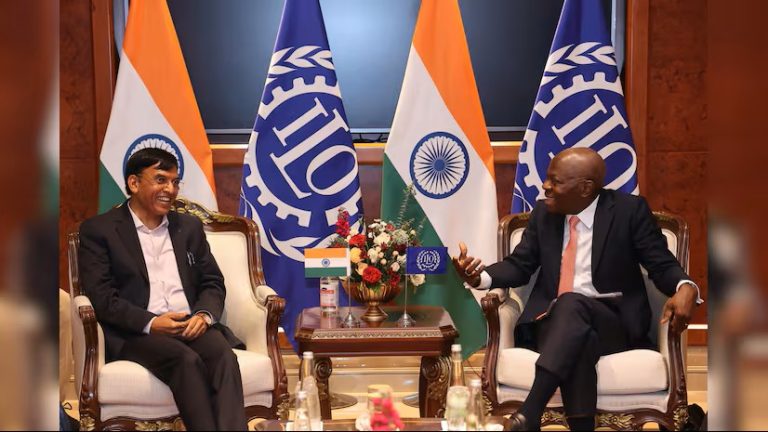
Minister Mansukh Mandaviya also interacted with ILO Director-General Gilbert F. Houngbo at the 113th session of the International Labor Conference in Geneva. During this, he said that the Modi government has brought several welfare schemes for the poor in the last 11 years.
ILO is a United Nations agency dedicated to labor rights and social justice. It periodically evaluates social security coverage among its member countries. There are 9 categories across which data is collected and then analyzed.
These categories include unemployment allowance, family and child benefits, health protection, old age pension, employment injury benefit, maternity benefit, disability benefit, sickness benefit through income replacement and survivor benefit.
To get ILO recognition, the social security scheme of any country must be legally supported, actively implemented and presented with verified data for the last three years.
India’s social security system has expanded significantly through various welfare programs. Its goal is to provide financial security, health care and food assistance to millions of people.
These programs have played an important role in improving the lives of citizens and reducing poverty across the country. These include Ayushman Bharat, e-Shram Portal, Pradhan Mantri Garib Kalyan Anna Yojana, Atal Pension Yojana and other schemes.
The International Labour Organisation’s assessment of 48.8% is still incomplete in terms of India’s social security scenario. According to the report, this is the first phase of the data pooling exercise. It includes data of beneficiaries of central and women-centric schemes of 8 states. After the completion of the second phase, India’s total social security coverage can reach more than 100 crores.
The Ministry of Labour and Employment has launched the first phase of India’s social security data pooling exercise on 19th March 2025 to conduct a comprehensive assessment of social security coverage. The initiative aims to collect data of beneficiaries of India’s welfare schemes.
In the first phase, ten states including Uttar Pradesh, Rajasthan, Maharashtra, Madhya Pradesh, Tamil Nadu, Odisha, Andhra Pradesh, Telangana, Karnataka and Gujarat have been selected to collect data at the central level.
India is also the first country in the world to update social security coverage data in 2025. The Union Minister says that this has strengthened digitisation and transparency in the system of welfare schemes for the people.
The court has remanded all five key accused, including Sonam Raghuvanshi, to eight-day police custody in the Raja Raghuvanshi murder case, police said on Wednesday.
SIT chief and SP (City), East Khasi Hills, Herbert Pyniaid Kharkongor confirmed the same after all the accused were presented before the District Court.
The accused, Raja Rahuvanshi’s wife, Sonam Raghuvanshi, Raj Singh Kushwaha, Akash Rajput, Vishal Singh Chauhan and Anand, were then brought back to the Shillong Sadar Police Station.
This development comes as the police continue their probe into the murder of Raja Raghuvanshi, whose body was discovered in a gorge near Sohra, close to Cherrapunji in Meghalaya, on June 2.
Raja was on his honeymoon with his wife, Sonam Raghuvanshi, to the northeastern state in May, 2025. Both had been reported missing earlier during the trip.
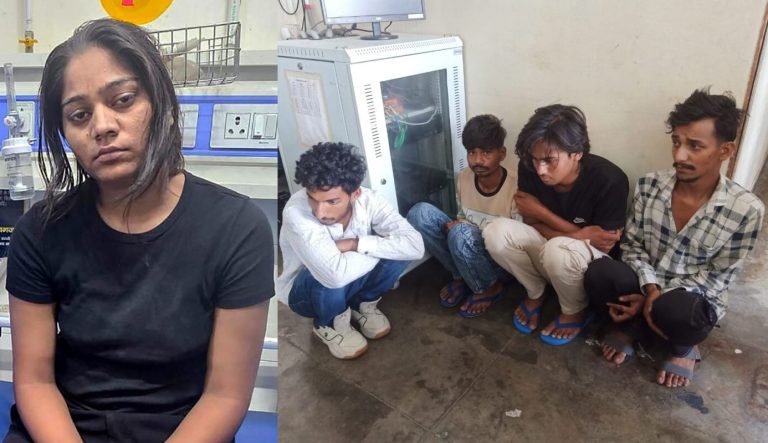
Following the discovery of Raja’s body, Sonam was located near a roadside dhaba on the Varanasi-Ghazipur highway. She, along with four others, has been accused in connection with the alleged murder.
Earlier in the day, Sonam Raghuvanshi’s brother, Govind, made a shocking statement claiming he’s “100% sure” of his sister’s involvement in the murder of her husband.
During a press conference here, Govind demanded severe punishment for Sonam on the matter and stated that she should be hanged if found guilty. He further publicly distanced himself and his family from his sister, noting that he had apologised to Raja’s family as they lost their son and said that he would do anything to make amends for his sister’s actions.
“According to the evidence found so far, I am 100 per cent sure that she has committed this murder… All the accused in this case are related to Raj Kushwaha… I am no one to ask for forgiveness from the (Raja’s) family. But I have apologised but this family had lost their son… We have broken our ties with Sonam and now I have become a part of the family and I will do everything against Sonam as Raja was very close to me,” Govind stated.
“If Sonam is guilty, she should be hanged,” he added.
Govind also pointed to the close ties between Sonam and one of the accused, revealing details about Sonam’s relationship with Kushwaha.
“Raj Kushwaha always used to call Sonam ‘Didi’ and his family is saying the same thing… For the last three years, Sonam has been tying a rakhi to Raj Kushwaha,” Govind stated.
“Sonam does not considered herself guilty. There has been no contact between us… We have severed all ties with her… I will fight on behalf of Raja (Raghuvanshi),” he added.
Kiran Raghuvanshi, Sister-in-law of Raja Raghuvanshi revealed that Sonam had two phones and used them to constantly send messages.
“Sonam had two phones, she used to tell us that one of those was for her office purposes and the other for her personal usage…I didn’t see her regularly speaking over phone but she used to keep sending messages over the phone. She always had her phone with her…I demand that she be hanged at the earliest…We have lost a loved one, nothing can satisfy us. He (Govind – Sonam’s brother) did apologise to us and told us that if her sister is at fault, she should be hanged…But as far as I am concerned, we do not need anyone’s apology; she should be hanged,” she said.
The Superintendent of Police (SP) of Meghalaya’s East Khasi Hills, Vivek Syiem, also revealed that there is adequate evidence pointing to the involvement of Sonam Raghuvanshi in the murder, emphasising that a conclusive confirmation would only emerge after thorough interrogation of those who were involved.
“Investigation is going on; we have to confirm a lot of things. There is evidence against her (Sonam Raghuvanshi) of her involvement in the murder. But things will be clearer after the interrogation. We have to tie up a lot of loose ends… Our evidence has proven that she was very much involved, but after the interrogation, we can only confirm,” SP Syiem stated.
(This news report is published from a syndicated feed. Except for the headline, the content has not been written or edited by OpIndia staff)
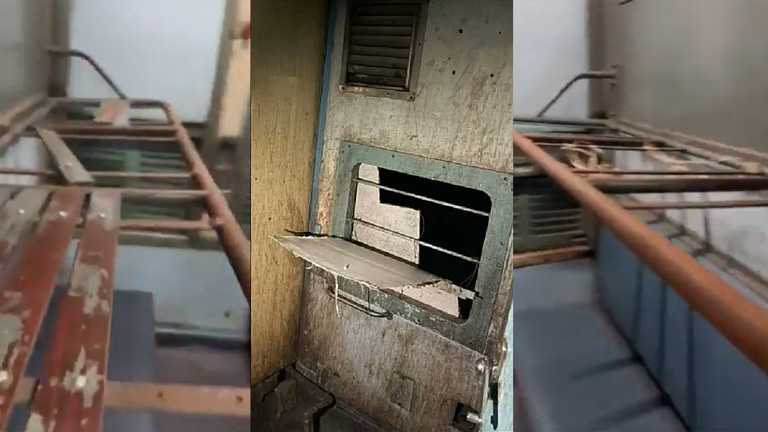
Union Railway Minister Ashwini Vaishnaw has taken stern action in the incident involving the deployment of an unsuitable train with its coaches in poor condition for Border Security Force (BSF) personnel going on duty to Kashmir from Tripura to ensure their safety during the Amarnath Yatra.
In response to the lapse, four officials from the Alipurduar Division have been immediately suspended.
Addressing the issue in the cabinet meeting briefing, Vaishnaw said, “Action was taken on this yesterday itself. The train’s rake was changed. Four officers who were responsible for this have been suspended.”
The suspended official includes the Coaching Depot Officer of Alipurduar and three senior Section Engineers of Alipurduar Division.
BSF also clarified when asked about reports of 1,200 BSF personnel refusing to travel for the Amarnath Yatra, saying that they had brought to the attention of Indian Railways through an official letter the poor condition of a few coaches.
They added that a replacement train was arranged after they flagged the issue.
"Train replaced and 4 officials suspended."
– Railways minister Ashwini Vaishnaw on viral video of filthy train arranged for travel of BSF personnel pic.twitter.com/Fj13fv9xG9
“A few coaches of the train initially allotted to our jawans were in poor condition. The issue was brought to the attention of Indian Railways through an official letter. Following this, a replacement train was arranged. The jawans will now continue their journey,” the BSF clarified.
A special train from Agartala is now being arranged exclusively for BSF personnel, with full attention to their convenience and honour.
1,200 BSF jawans deployed for Amarnath Yatra security were to travel from Udaipur to Jammu on Monday, but the train provided was in such poor condition that the personnel refused to travel. A new train has now been arranged. BSF has now clarified that the BSF officials raised the… pic.twitter.com/8ByMJY7rzE
The Ministry of Railways has also ordered a detailed inquiry into the entire incident. All efforts are being made to ensure that such lapses do not recur in the future.
The Railway Minister has made it clear that the dignity and comfort of security forces are of the utmost priority and that such negligence will not be tolerated at any level.
(This news report is published from a syndicated feed. Except for the headline, the content has not been written or edited by OpIndia staff)