Home Blog Page 3702

No trace of coronavirus found in Ganga samples collected during the second wave of COVID-19 outbreak: Report

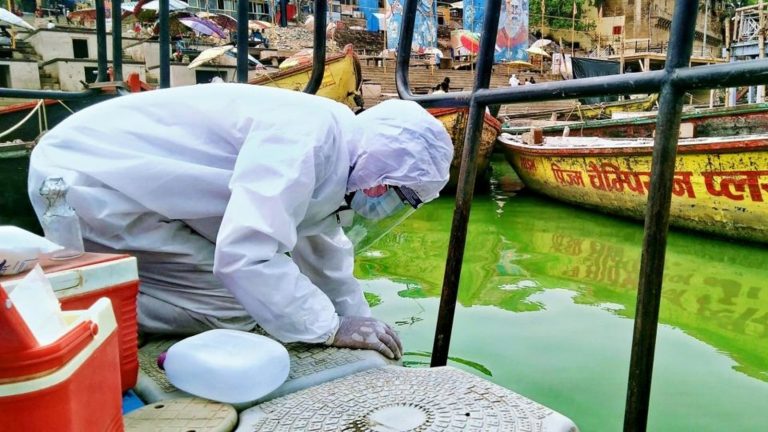
A study conducted by scientists and researchers of Council for Science and Industrial Research (CSIR) and Indian Institute of Toxicology Research (IITR) recently submitted a 120-page report declaring that there was no trace of coronavirus in any water sample collected from river Ganga during the second wave of COVID-19 outbreak in India.

The report, which is exclusively accessed by The New Indian, says that the samples of water that were collected from 13 locations of the Ganga river and were subjected to the RT-PCR test as done on humans yielded negative results, meaning none of the samples had traces of coronavirus.

The report concluded, “Of a total of 132 samples (378 sample triplicates/ 1134 technical triplicates) analyzed, none of the samples was found positive for the presence of SARS CoV-2 virus.”

The findings of the report are singularly momentous given that a slew of journalists and western media outlets had run a smear campaign against the Yogi Adityanath government, accusing his administration of hiding COVID-related deaths after corpses were found floating in the Ganga river.

The media outlets had then conjectured that the dead bodies in the Ganga river were of people who died due to COVID-19 related complications and the administration understated the actual death by disposing of their bodies in the river. Various Indian journalists such as Barkha Dutt and others belonging to the left persuasion promoted the theory that the dead bodies found in the river Ganga were COVID-19 related deaths.

Study debunks the western media’s narrative that dead bodies in Ganga were affected by COVID-19

Speaking to The New Indian, S K Barik, Director, CSIR-Indian Institute of Toxicology Research (IITR), said the report makes it abundantly clear that there was no COVID virus present in the Ganga river. He said the study was grounded in robust scientific procedure and adequate sample size, putting paid to the speculations and suppositions that the Ganga river was used as a medium to dispose of COVID-related deaths.

“The Standard Operating Procedure(SOP) has been same as that we have tested for humans for RT PCR for any presence of coronavirus. But the result is that there was no trace of coronavirus in the water at all,” Barik said.

As per the report, the sampling by the CSIR-IITR was done in May and then again in June this year during the second wave of coronavirus outbreak.

“The primary aim of the study was to find whether SARs COV-2 was present in water or not. Samples were obtained from different parts of Uttar Pradesh and Bihar, taken from the middle of the river, banks of the river and so on, but none of them came back positive for the virus,” Barik added.

The Ganga river locations included Kannauj, Unnao, Kanpur, Prayagraj, Mirzapur, Varanasi, Buxar, Hamirpur, Ghazipur, Ballia, Patna, Saran and Bhojpur.

‘Not a single sample collected from various sites yielded positive result for COVID-19’: Report

“Dead bodies being buried along the banks and floating in river Ganga has been reported in major cities with the fear of spreading SARS-CoV-2. Keeping in view of this alarming situation, various authorities such as NMCG, CPCB, SPCB and specialized virology testing institutes joined hands and initiated the investigation of SARS Cov-2 virus contamination and analysis of water quality due to disposal of dead bodies in river Ganga. The investigation concluded that in each sampling site the water quality was found to deviate from the standard norms. However, the overall water quality was not affected,” the study said.

The study further said, “The analysis report also shows that SARS- CoV-2 was not detected in any of the sites. Thus, it can be concluded that disposal of bodies did not largely affect the water quality of river Ganga though few of the parameters deviated from the standard norms which may be due to other anthropogenic activities.”

The report, however, added that disposing of bodies in the river Ganga did take place but said that there was no evidence to prove that people whose bodies were found in river Ganga died due to COVID-19.

The findings of the report have now begged several questions in Uttar Pradesh, with many asking if the campaign to malign the UP government and the BJP was a carefully designed ploy by the western media outlets to defame India and show it in a bad light by accusing it of understating COVID-relates deaths by dumping dead bodies in Ganga. The findings also assume special significance as the smear campaign against the UP government came just months ahead of the state assembly elections, which are slated to take place early next year.

While the BJP welcomed the report and asserted that its findings vindicates the Yogi Adityanath government in Uttar Pradesh, the opposition parties were clearly not happy with the conclusion of the study. Congress and SP in Uttar Pradesh rejected the findings, saying everybody saw that deaths took place due to COVID-19 and those bodies who were found floating in river Ganga were of COVID-19 positive patients only.

Western media outlets resort to vulture journalism and tragedy porn to malign India

The opposition parties’ assertion stems from the extensive misinformation campaign and vulture journalism practised by some Indian journalists and western-based media organisations, who took it upon themselves to depict that India is struggling to deal with the COVID-19 outbreak.

As India continued to reel under the ferocious second wave of the coronavirus outbreak, the foreign media outlets went into overdrive, feasting on the dead and projecting a grim picture of the tragedy. From obsessing over the funeral pyres to spreading fake news about COVID-19 dead bodies being dumped in Ganga, foreign media outlets junked the last vestiges of journalistic ethics and integrity in their coverage of the COVID-19 outbreak in India. The contagion, which took a devastating toll in India from April to June 2021, was suddenly symbolised by pictures of the burning funeral pyres, floating dead bodies in Ganga, and bereaved people mourning the death of their loved ones.

Many journalists, especially Barkha Dutt, were among those who amplified the narrative that the Uttar Pradesh, Bihar administration have been hiding the real casualties of the COVID-19 related deaths by disposing of bodies in the river Ganga. Soon enough, many western media organisations lapped up the narrative and published reports claiming that people in Uttar Pradesh and Bihar were forced to dump the dead bodies of their kin who died from COVID-19 in the river Ganga as the state administration was focused on reporting a low number of coronavirus-related deaths.
‘Babri will be rebuilt, Inshallah’: Viral video shows schoolchildren being brainwashed by alleged SDPI members

0

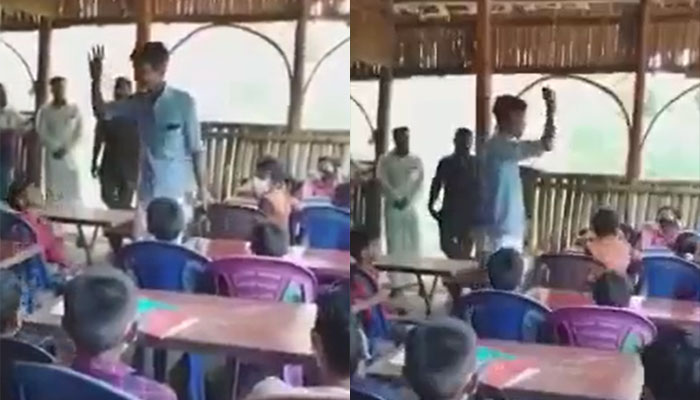
After the Social Democratic Party of India (SDPI), the political wing of Islamist organization Popular Front of India (PFI), was accused of distributing ‘I am Babri’ batches to school children in Kerala, another video has emerged on social media platforms in which a man could be seen brainwashing children about the disputed structure. The undated video is believed to be of December 6 this year.

In the video, a man, allegedly an SDPI worker, is brainwashing children about Babri Mosque. In a Tweet, Shriraj Nair, Spokesperson VHP, questioned how it could be allowed in the schools. He said, “What kind of hate is propagated amongst small school going children asking them to rebuild Babri, this amounts to contempt of court too. Why is CMO Kerala not taking action against these kinds of Anti-Social elements.” He further urged Home Ministery to take cognizance of the video.

SDPI had distributed badges of ‘I am Babri’

On December 6, a video had emerged where alleged SDPI workers were seen making schoolchildren wear ‘I am Babri’ badges and pinning those badges on the shirts of the children from Chungappara St. George School in Kottangal. In one of the pictures shared on social media, the badges of ‘I am Babri” could be seen tagged on a student. The alleged SDPI worker also carried the same tag on his shirt.

The Parent-Teacher Association has lodged a police complaint, and a probe has been launched. The incident took place in the school compound when students arrived at school on Monday morning. When the school authorities noticed the badges in the classroom, they reportedly asked the students to remove them.

Gujarat: Hawkers accuse AAP councillors in Surat of collecting Rs 100 daily from each of them, collection could run in crores

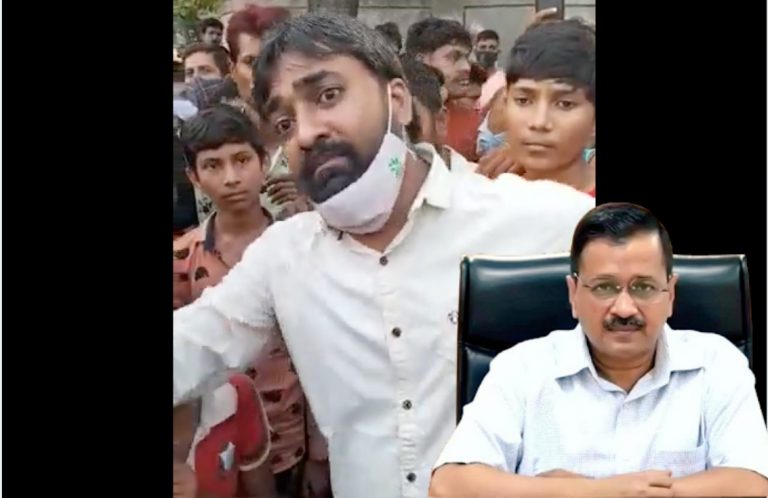
A video has surfaced on social media wherein hawkers in Surat are accusing Aam Aadmi Party councillors of collecting Rs 100 from each of them by coercion. A video was shared by Zee Media correspondent on social media.

In the video, a man can be heard saying, “On one hand they say that they are an honest party. How is it an honest party? Ask anyone here. If I am lying, ask these people.” To which, people standing in the crowd agree that they are being forced to cough up Rs 100 each every single day by Aam Aadmi Party councillors. “Every day they take Rs 100 each. If you make calculations, it would amount to turnover of crores of rupees in a year,” he added. He further added that Aam Aadmi Party corporators are collecting Rs 100 each from the hawkers.

In local body polls held in Gujarat earlier this year, Aam Aadmi Party emerged second in Surat Municipal Corporation elections winning 27 out of 120 seats across 30 wards. BJP had emerged clear winner with 93 seats while Congress won zero seats.

Australia announces diplomatic boycott of Winter Olympics in Beijing over human rights abuses in China

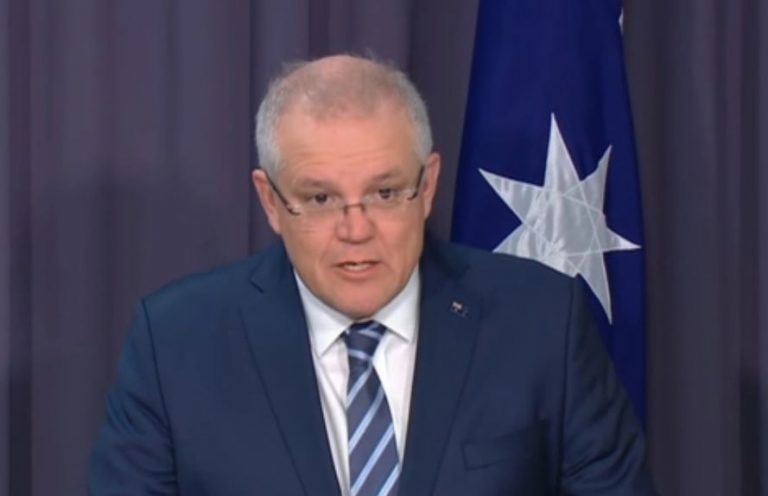
Amit a bitter trade war between Australia and China, Australian Prime Minister Scott Morrison has announced that his country will boycott the 2022 Beijing Winter Olympics over ‘human rights abuses’ in China.

The 24th Winter Olympics will take place from February 4 to 20 next year in Beijing in China under the shadow of Covid 19 pandemics. Now the threat of diplomatic boycotts is also looming large.

Besides, USA and Australia, many other countries are considering boycotting and limited representation at the Winter Olympics on the issue of human rights violations and others.

The China-Australia relations collapsed last year and Morrison said the decision of Australia was not surprising. He said that human rights abuses in Xinjiang as one of the factors of the diplomatic boycott.

A spokesperson from China’s embassy in Canberra has retorted saying that some Australian politicians were engaged in political posturing.

Diplomatic boycott rattles China

The Chinese embassy in Ottawa reacted to China facing isolation. “The Beijing 2022 Winter Olympics are about athletic excellence and global unity. Stop using it as a platform for grandstanding and division,” it said.

Netizens questioned the track record of China over human rights violations and asked “1 million Uyghurs detained, Peng Shuai locked up, Hong Kong dissidents punished, Tibetans tortured. . . . you call this “grandstanding”?

Recently, the USA had announced a diplomatic boycott of the Winter Olympics alleging China of committing genocide of the Uyghur minority.

White House press secretary Jen Psaki had said American players would continue to compete, but “we will not be contributing to the fanfare of the games. US diplomatic or official representation would treat these games as business as usual.”

China warned the USA would have to “pay the price for its wrongdoing”. Chinese foreign ministry spokesman Zhao Lijian accused the USA of interfering with the Beijing Winter Olympics out of ideological prejudice. China accused the USA of spreading lies and rumours about China out of sinister intentions.

Denying any human rights atrocities China said that the Winter Olympics was not a stage for political shows and political manipulation and USA was trying to undermine the Beijing Winter Olympics.

China threatened to respond to the USA with unspecific firm countermeasures. Chen Weihua who is a prominent columnist of China Daily said: “Mr Biden would live long enough to see China boycott the Summer Olympics to be held in Los Angeles in 2028.”

The threat of diplomatic boycott looming large over Winter Olympics

Other nations have announced a diplomatic boycott of the Winter Olympics in Beijing too.

The New Zealand government has decided not to send diplomatic representatives at a ministerial level to the Winter Olympics, citing a range of factors but mostly to do with Covid-19. But New Zealand said that on several occasions, the country expressed its concerns to China about human rights issues.

Deputy Prime Minister of New Zealand, Grant Robertson, said that in October New Zealand had made it clear to China that it would not send diplomatic representatives. However, there was no suggestion whether New Zealand athletes will compete at the games.

Britain is considering approving limited government attendance at the Winter Olympics which is seen as a token of the diplomatic boycott. The UK government in November had stated having no plan for its ministers to attend Winter Olympics.

Lithuania, facing trade and diplomatic hostilities from China over its growing relationship with Taiwan, announced neither its president nor ministers would attend the Games.

Similarly, Japan is also considering not to send cabinet members to the Beijing Winter Olympics.

Gujarat: Bharuch residents to organise ‘Maha Aarti’ to create awareness about Disturbed Areas Act, call upon Hindus to unite

Residents of Hathikhana Bazaar in Bharuch have organised a ‘Maha Aarti’ on Thursday, December 9, 2021 to create awareness amongst the people about Disturbed Areas Act and how it is being circumvented by some people. Members of Hindu Jagran Manch have been fighting a legal battle with authorities over alleged exploitation of loopholes in Disturbed Areas Act and subsequent demography change in Soni Faliya area of Bharuch.

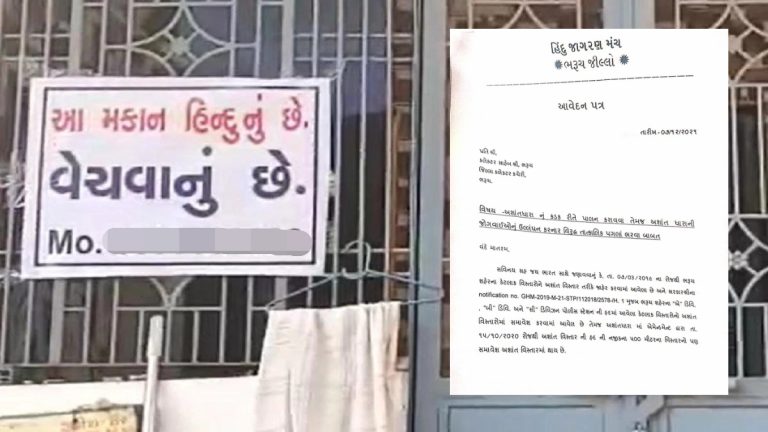
Hindu Jagran Manch has also submitted a memorandum to the Bharuch District Collector on Tuesday, 7th December appealing the administration to take strict action against those who have been violating the provisions of Disturbed Areas Act. The memorandum, a copy of which is accessed by OpIndia, states that in old Bharuch area, the Disturbed Areas Act is not being implemented properly and property has been transferred without having taken prior permission of Collector.

District Administration, to maintain communal harmony and peace, could declare certain areas as ‘Disturbed Areas’ which are susceptible to demography change. The transfer of immovable property in these areas would require an elaborate procedure. The seller, in the application, must mention that the seller is selling the property by their own free will.

OpIndia had earlier reported how the Hindus in the Soni Faliya locality had put their homes and temples up for sale to protest against the violations of Disturbed Areas Act as well as demography change. In the memorandum submitted to Collector on Tuesday, the residents have alleged that despite repeated appeals by the residents, the administration has not taken action against the violations of Disturbed Areas Act. “Because of this, the residents of Soni Faliya have put up ‘for sale’ boards outside their properties. Even then the administration has kept a stoic silence,” the memo states.

Giving details of the properties sold which are in alleged violations of the Disturbed Areas Act, the memorandum list down various properties without following the provisions of the law. One house owned by Devyani Bhupendra Tailor was sold to one Nafisa Shabbir Matarwala without speaking to the neighbours of the property as specified in the Disturbed Areas Act. As per the Act, neighbours of the property which is to be transferred as well as other people who may be affected by the demography change in the area need to be informed and consent must be obtained.

Similar has been the case of sale of property between Arunaben Ganesh Soni and Sigamwala. In other instances where properties were sold by Prakash Sardar Soni to Kapadia Tasleem, Jayshreeben Rameshchandra Itwala to Nilofar Khatun Munawar Khan Pathan, Dineshbhai Ambalal Patanwadia to Diwan Mehmood Karimkhan, Sureshchandra Tribhovandas Jadav and Mahendra Tribhovandas Jadav to Abdul Latif Abdul Rahim Sheikh and Chitraben Ishwarlal Almola to Mansuri Julekha Mohammad Rafiq, the provisions of Disturbed Areas Act were not followed, the memorandum states.

“As per section 3 (2) of Disturbed Areas Act, there is increased polarisation by one community and there is threat of further polarisation. Because of which, the other communities in the area are being pushed into minority community and this may change the demography. Certain members of one community are spreading fear and more such cases can come up. For example, a member of Muslim community has objected to aarti in a temple in the locality. An FIR has also been registered in ‘A’ division police station in this regard,” the memorandum reads.

The memorandum also talks about the recent threats the residents of Soni Faliya are receiving allegedly by Muslim goons from outside of the country, trying to arm twist them into selling their homes. An FIR in this regard has also been registered. “In places like Soni Faliya and other places, Hindus are being polarised and there has been demography change in these areas. If the administration continues to turn a blind eye on these matters of violation of Disturbed Areas Act, we shall be forced to hold protest programmes in this regard,” it states.

‘Hindu temple for sale’ signs come up in Soni Faliya, Bharuch

In October this year, OpIndia had reported that while the Disturbed Areas Act had been implemented in parts of Bharuch, some people have been exploiting loopholes as well as taking advantage of coronavirus pandemic related lockdown to transfer properties without following due procedure mentioned in the Act. This has led to demographic change in certain areas. The sources in the know of the matter, however, say that when the residents protested against such taking over of property by exploiting loopholes, police and administration instead threatened to file case against them accusing them of disturbing peace.

In a letter written to the administration, residents of Soni Faliya alleging illegal transfer of property to Muslim owners, said that the demography of the area is changing and it has turned into a Muslim dominated area. “If this happens, they could slaughter animals in public places which could be disturbing for Hindus, especially women and children, who are predominantly vegetarian. Similarly it may also cause hindrance to celebration of Hindu festivals. They have already stopped playing of religious songs at Jalaram Bapa temple and Shiva temple in the locality,” the residents say in a note to the Chief Minister of Gujarat written on 2nd September, 2020.

However, alleging inaction by the administration, the residents have now written to District Collector again and will also be holding a ‘Maha Aarti’ to educate the residents about the Disturbed Areas Act.

What is Disturbed Areas Act?

Disturbed Areas Act is often wrongly interpreted that it applicable where at least one party between buyer and seller are either Hindus or Muslims. The thing is, any such transactions in such areas would require to follow due process. This is to preserve the religious and community value and identity of the areas which are susceptible to demographic change.

A Collector would carry out formal inquiry after any such application is made and police and district magistrate have to carry out the inquiry. In such cases, the authorities have to physically go to the property and take information that is publicly available and even take written approval from people affected. This includes those who live nearby that particular property as well. Only once the procedure is followed and Collector is satisfied will he approve the transfer of property.

Essentially, the Collector is the peacekeeper of the district and it is his/her responsibility that the communal harmony is maintained. To make sure things don’t escalate and communal riots do not break out, the Collector has the responsibility of keeping peace. Through this Act, the government is trying to keep a check on the polarisation of communities in sensitive parts of the state.

Bombay HC says Nawab Malik breached undertaking by speaking against Wankhede family, should explain his actions

The Bombay High Court has sought an explanation in the form of an affidavit from NCP minister Nawab Malik for the wilful breach of his undertaking where he had agreed not to post or make any statements against Sameer Wankhede and his family members in the public till the nest hearing.

The Court has directed Nawab Malik to give reasons in the affidavit stating why the Court should not take any action against him after the breach of his undertaking.

After hearing a plea made by Dnyandev Wankhede’s counsel Birendra Saraf regarding the breach of the undertaking on December 3, the bench of Justices SJ Kathawalla and Milind Jadhav said, “We are prima facie satisfied that the statement made by Malik has been willfully breached by him. Before we take any action, we order him to file an affidavit stating why action should not be taken against him for wilfully breaching the statement.”

Dhyandev Wankhede had notified the division bench about the violation of the court’s order by Nawab Malik on three instances to which Justice Kathawalla asked, “Is he(Malik) saying this in his capacity as a minister or in his individual capacity. If it is in his individual capacity, we will call him here right now.” Justice Jadhav added, “What Malik has said on December 2, he had no business saying this. He is trying to over-reach the order of the high court. He is saying that what we have said is wrong. What is this?”.

Nawab Malik’s advocate Karl Tamoly had initially suggested that the statement were made by Malik in an individual capacity which was later clarified. Tamoly said, “I have taken instructions, he spoke as a spokesperson for the NCP party.”

Notably, Sameer Wankhede’s father Dhyandev Wankhede had filed a defamation suit against Nawab Malik in the Bombay High Court after the NCP minister levelled serious allegations against Wankhede and made derogatory comments against his family and relatives. Justice Madhav Jamdar observed that Malik had been tweeting with malice after his own son-in-law was arrested by Sameer Wankhede. The Court had restricted Nawab Malik from making any more comments against Wankhede and his family till December 9.

Pakistan viral video: 5 arrested for stripping 4 women naked and beating them in Faisalabad

Yesterday, a disturbing video of some women being stripped naked and beaten by a group of men in Pakistan’s Faisalabad had gone viral on social media.

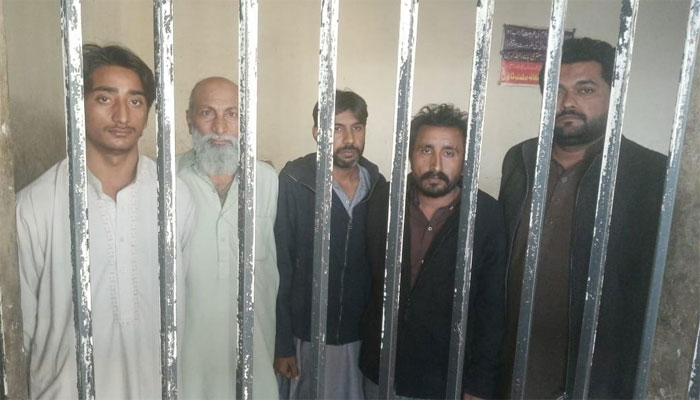
Acting on the incident, Faisalabad Police has arrested five men for assaulting, stripping and filming four women in Pakistan’s Punjab province. The incident took place in Bawa Chak Market, Faisalabad, Pakistan. A video of the incident went viral on social media platforms, after which the Police took action.

Four out of five accused have been identified as Saddam (owner of Usman Electric Store) and employee of the store, Zaheer Anwar, and Faqeer Hussain (owner of a sanitary products’ shop). Another ten unidentified suspects have also been named in the FIR.

According to the complaint filed at Millat Town Police Station, the complainant is a ragpicker. She went to Bawa Chak Market to collect garbage with three other women on December 6 at around 10:30 AM. She entered Usman Electric Store as she was feeling thirsty. When she asked for a water bottle, Saddam started shouting at her and accused her of entering the shop to steal. The other suspects came to the shop after he started screaming.

As per the complaint, during the arguments, they started beating the four women. The women were stripped and dragged into the market. The complainant said in her statement, “They continued to beat us for around an hour and made our videos in naked condition.” Upon hearing about the case, some family members of the victims rushed to the market and stopped the accused with the help of the passersby, who requested the suspects to let the women go.

The victim asked for strict action against the accused. In a tweet on December 7, Faisalabad Police said, “We police had arrested two accused last night. Further action has been taken, and five accused have been arrested. All other aspects of the incident are also being investigated. IG Punjab is pursuing a zero-tolerance policy on incidents of violence and harassment against women and children.”

The accused have been booked under Sections 354(A), 509, 147, and 149 of the Pakistan Penal Code.

Shopkeepers alleged women tore clothes themselves

Geo TV quoted Naeem Aziz, Superintendent of Police (SP), saying that the shopkeepers informed the Police that the women stole items from the shop. When they were caught, they tore up their clothes themselves and threatened the shopkeeper. SP Aziz added that some women could be seen tearing their clothes in the CCTV footage. A Twitter user posted CCTV footage of the shop in which the women could be seen stealing things in the shop. One of the women was seen forcefully entering the back side of the shop.

In another video, the women could be seen removing/tearing their clothes themselves and intimidating the shopkeeper.

The women’s clothes were further torn when the accused dragged them out of the shop. He said that the Police were reviewing all aspects of the case, and the investigation is underway.

Rohingyas in UK and USA sue Facebook for promoting ‘hate speech’: Read details

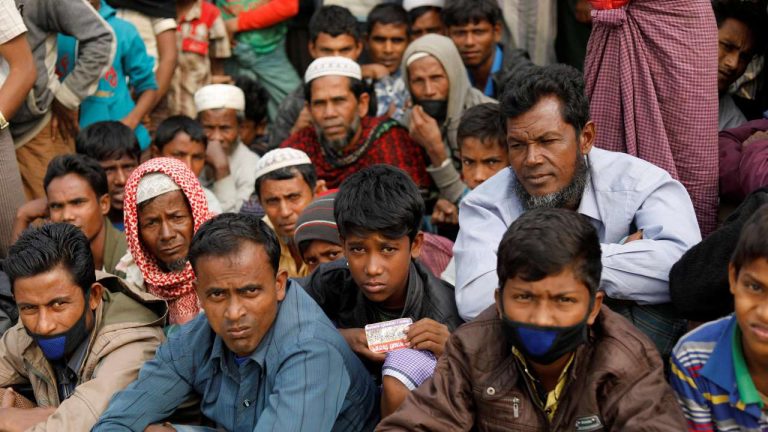
Rohingya Muslims living in the UK and the USA have filed a lawsuit of $150bn against Facebook for promoting violence and hate speech against the Rohingya community in Myanmar. While Rohingyas themselves have been accused of massacring Hindus by Amnesty International, the ones taking shelter in USA and UK are now demanding compensation of more than 150 billion dollars from the owners of the social media application Facebook.

The Rohingyas have accused Facebook of “the dissemination of hateful and dangerous misinformation to continue for years” with other allegations that included amplifying the hate speeches made against the Rohingya community, not recruiting moderators and fact-checkers who had knowledge about the political situation in Myanmar and failing to take down posts and hate speeches targeting the Rohingya community.

Some lawyers in the USA have filed a legal complaint against Facebook and accused the platform of trading human lives for better market penetration in Myanmar. As per reports, Facebook had failed to moderate posts made in local languages of Burmese and Rakhine that contained anti-Muslim hate speech and false information about Rohingya terrorist plots. British lawyers have also sent a legal notice to Facebook’s London office.

Facebook has mentioned the US internet law section 230 in its defence which states that online platforms are not liable for content posted by third parties. The complaint however wanted to invoke Myanmar law which was deemed as far-fetched by some legal experts.

Notably, a Rohingya Muslim named Mohammed Taher from one of the camps in Bangladesh has welcomed the decision of the lawyers and stated that Facebook was involved in spreading anti-Rohingya ‘propaganda’.

It is important to note here that in October of this year, a suspected terror attack happened in one of these Bangladeshi refugee camps where at least six people lost their lives and many more were injured. According to Rohingyas, they have alleged that the attack was carried out by ARSA (Arakan Rohingya Salvation Army) consisting of Rohingya refugees from those camps themselves who wanted to establish a terrorist training centre inside Camp No 18. Furthermore, Rohingya refugees camps in Bangladesh have become notorious for all kinds of illegal activities including drug smuggling and religious fundamentalism.

Amnesty had confirmed that Rohingya Muslims had massacred Hindus

In 2018, Amnesty International, the Indian arm of which has had quite a few run-ins with the law, confirmed the massacre of the Hindus by Rohingya Muslims even as Indian ‘liberals’ tried to whitewash their crimes. As per the reports, an investigation carried out by Amnesty has revealed that an armed Rohingya group was responsible for at least one, and potentially a second, massacre of up to 99 Hindu men, women and children as well as unlawful abductions in August 2017.

Amnesty based its report on dozens of interviews conducted in Rakhine and across the border in Bangladesh and throws light on the largely under-reported human rights abuses by the Arakan Rohingya Salvation Army (ARSA) fighters, who sowed fear among Hindus and other ethnic communities with these brutal attacks. The report gave details of the massacre in Kha Maung Seik in August 2017, killing Hindus, executing style, sparing those who agreed to ‘convert’ to Islam. The report also stated other killings and violent attacks against the other ethnic and minority communities by the Rohingya terrorists.

The report said, “Eight Hindu women and eight of their children were abducted and spared after ARSA fighters forced the women to agree to “convert” to Islam. The survivors were forced to flee with the fighters to Bangladesh several days later, before being repatriated to Myanmar in October 2017 with the support of the Bangladeshi and Myanmar authorities”.

Musical hate: The ‘catchy’ songs calling for the genocide of Hindus, Kafirs and beheading are terrifying

A number of songs are being uploaded on YouTube and other music and social media platforms that are calling for the genocide of Hindus, Kafirs and beheading of those who commit “blasphemy”. Not only songs but videos of large crowds calling for beheading have been circulating for years. OpIndia looked for some songs and tried to understand the message they were conveying. The songs that often have catchy background music have been seen lakhs of times.

‘Khair Nahi Hai’ by Syed Aftab Ali Qadri Chishti from Pakistan

At the beginning of the song, a highly-motivated looking Muslim man could be heard praising Allah and saying the people of his community is willing to sacrifice their lives for the love and respect of Allah. He further adds that they could forget about their lives, families and children but cannot forget Allah.

Another man appears on the screen who starts singing the song. The lyrics start with the infamous chants of ‘Gustakh-e-Nabi ki Ek saza, sar tan se juda’ (The one who disrespects Nabi should be beheaded). He warned those who allegedly committed the blasphemy of the consequences. He adds, ‘Gustakh ke sar kaat ke rakh denge Musalman’ (The Muslims would behead those who commit blasphemy).

He calls for killing those who indulge in disrespecting Allah and says, “Sarkar ki tauheen agar koi Karega, hum uske shab-o-Roz bana daleinge Zinda”. It seems like he called for burning the accused of blasphemy alive. Such a case recently happened in Pakistan. A man from Sri Lanka who was heading a factory in Pakistan was burnt alive over accusations of blasphemy.

Furthermore, the singer said whoever indulged in blasphemy would die before his/her time. He indirectly wanted to say that the person would be killed. The blasphemy is not limited to Allah but to all Nabi or Prophets. He calls for surrounding and punishing those who might indulge in blasphemy. Generally, according to them, such acts can only be done by Kafirs or those who do not believe in their God.

Aaqa Ke Wafadar by Hafiz Tahir Qadri

The song starts with the singer calling themselves ‘Aaqa Ke Wafadar’, which means loyal to the master (Allah or Prophet). He further says those who are loyal to the master are ready to die for him. He says, ‘Sarkar ka Dushman koi zinda na rahega, maula ki kasam woh badi zillat se marega’ that roughly translates to ‘the enemy of the master would die a painful death’.

He says, ‘gustakh ka jeena humein bardasht nahi hai, ik pal bhi rahe zinda humein bardasht nahi hai’. He wants to convey the message that the loyal to the master cannot tolerate that those who indulge in blasphemy live for even a second. He further calls for killing those who conspire to disrespect the Prophet.

‘Gustakh-e-Nabi ki ek saza’ by Adoni Raza

This ‘gem’ originated in India. Adoni Raza channel is operated from Andhra Pradesh by one Abdul Mustafa Razvi Adoni. The song possibly came into existence in 2018 after the Netherlands (Holland) organized a competition for Prophet Muhammad’s cartoon. The competition was organized by a far-left MP of the Netherlands and had sparked controversy in many parts of the world.

The song lyrics contain the infamous chant of ‘Gustakh-e-Nabi ki ek saza, sar tan se juda, sar tan se juda’. It starts with cursing the Muslims who did not take any action against the deeds of Holland. The singer calls all Muslims to come together and tell the world that those who disrespect Nabi would be killed. He says, “Maalik ne humein lalkara hai jaago musalmano, gustakh ki saza maut hai duniya ko bata do’.

He further refers to ‘Khaake banana wale’ that refers to Hindus and calls for revolt against them. He says, “Is naam ki shama tu aisi dil mein jala de, Khaake banane walon ko to khaak bana de.” Coming back to Holland and the countries that are allegedly willing to disrespect Prophet, he calls for wiping them out of the map of the world. He adds ‘Tauheen e nabi ke liye jo mulk hai raazi, Maula use duniya ke nakshe se mita de’.

He further questions why ambassadors of Holland and the Embassy of Holland is operating in the country and calls for putting up locks on its doors. He says ‘is desh mein Holland ke safeer ka kya kaam, Holland ki embassy ko taale laga dein’.

Crowds and protesters chanting the same slogans

The chants of ‘Gustakh-e-Nabi’ is not limited to the songs, but when the particular community go out on a protest march, it is one of the most common slogans they raise. Recently, in April 2021, similar slogans were raised while calling for the beheading of Dasna Temple Mahant Yati Narsinghanand.

A video from Pakistan made rounds in November 2020 in which a large crowd was seen chanting the same slogan.

Shocking video of school girls learning how to behead someone

Major Gaurav Arya shared a video of an unknown location on December 7 in which a Burkha-clad woman was seen teaching school girls how to behead someone with a sword.

While in the background the song ‘Gustakh-e-Nabi ki ek saza’ was playing, the women and the girls were heard chanting ‘Nara-e-Takbir Allah Hu Akbar’. Towards the end of the video, the girls were seen protesting against President of France Emmanuel Macron. The video was earlier found its space on social media networks in October 2020. Reportedly, it was from a Deobandi seminary in Islamabad, Pakistan.

Tayyaba Dua Ghazi, daughter of Deobandi cleric Abdul Aziz Ghazi, was quoted by research institute SAMRI as saying, We shall avenger our Prophet’s honour. We seek the Prophet’s approval, not FATF White List. France can’t insult the Prophet and maintain the glory of Paris. As you sow, so shall you reap.”

Mamata Banerjee casts aspersions on BSF yet again, asks police in border districts to keep a tab on their activities

West Bengal chief minister Mamata Banerjee on Tuesday raised aspersions on the Border Security Forces(BSF) of India, asking police in districts that share borders with neighbouring countries to keep a tab on their activities. She also asked the police to not allow the BSF to breach its earmarked jurisdiction and asserted that law and order is a state subject.

The TMC chief also accused the BSF personnel of harassing villagers and locals and entering areas that are not under their jurisdiction.

“I know there is this problem…BSF personnel enter our villages and then we get complaints of harassment. They go to several places that are beyond their jurisdiction without informing the police,” Banerjee said at an administrative review meeting of Uttar Dinajpur and Dakshin Dinajpur districts held in Karnajora.

Banerjee linked her distrust of BSF to the recent spate of violence that erupted in Nagaland following the killing of 13 civilians by security forces. “Everybody has seen what happened in Nagaland… in Bengal’s Sitalkuchi during assembly polls and recently in Coochbehar, where three persons were killed in firing… I will ask the block development officers and inspectors-in-charge to be on alert,” she said.

Mamata Banerjee ups her antes against BJP govt for BSF order

Deepening its feud with the Centre, West Bengal CM Mamata Banerjee had earlier moved a resolution in the state Assembly on November 17 opposing the central government’s decision to extend the Border Security Force jurisdiction from 15 km to 50 km. The CM had criticised the Centre’s move alleging that it was an attempt to interfere with the federal structure of the country.

Besides, the chief minister has also been grumbling about the Centre’s decision to extend the jurisdiction of BSF, calling the move an attempt to undermine the federal structure of the country. The BJP government at the Centre had amended the BSF Act to sanction the force to undertake search, seizure and arrest within a 50-km stretch from the earlier 15-km limit, from the international border in Punjab, West Bengal and Assam.

“We do not have problems in the border areas and share very cordial relations (with neighbouring countries). There is no need to create this confusion. Law and order is a state subject,” Banerjee had said.

While Mamata Banerjee claims West Bengal, which shares its borders with Bangladesh, Bhutan and Nepal, has no border-related problems, reports suggest that there is an alarming rise in smuggling, especially of bovine animals, along the Bangladesh-West Bengal border. The BSF has played a crucial role in foiling smuggling bids at the porous international border between Bangladesh and India.

Centre extends BSF’s operational area in Punjab, West Bengal and Assam

It may be noted that the Union Ministry of Home & Affairs has amended its July 3, 2014 notification to extend the jurisdiction of Border Security Forces (BSF) from existing 15 km to 50 km inside the international border in Assam, West Bengal and Punjab which share borders with Bangladesh and Pakistan respectively.

Moreover, the jurisdiction of BSF in Gujarat has been reduced from 80 km to 50 km and no change has been made in Rajasthan where BSF continues to guard 50 km from the border.  

The basic idea was to bring uniformity in the area of operation in states sharing international borders.

The BSF was raised in December 1965 as a specialized force to guard India’s international border.

The decision was taken in the wake of an increasing number of cases of cattle and drug smuggling and Fake Indian Currency Notes (FICN) racket alongside the international borders. Drug and arms smuggling has emerged as a new challenge in Punjab whereas Assam and West Bengal are the hotbeds of cattle smuggling, FICN, and illegal Bangladeshi and Rohingya migration.