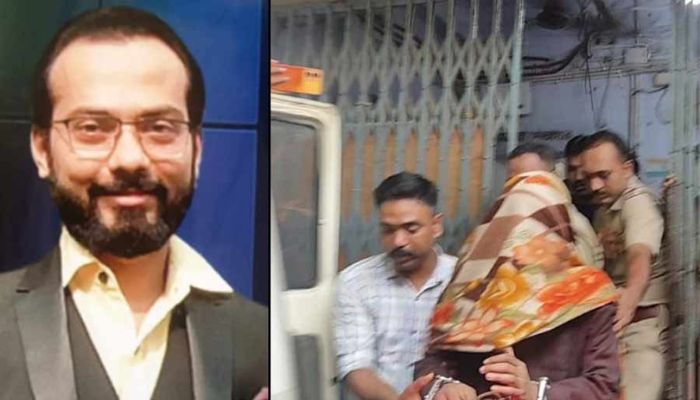
Two weeks after an online Muslim mob issued rape and death threats against a Hindu influencer named Sharmistha, the Kolkata police have arrested the victim on Friday (30th May).
Instead of chasing the Muslim social media users who doxxed and gave ‘Sar Tan se Juda’ threats to the Hindu influencer, the Mamata Banerjee’s police force have arrested Sharmistha instead.
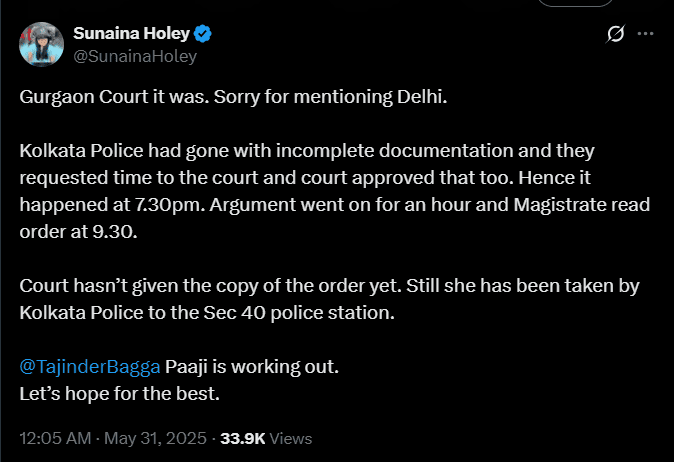
The Kolkata police travelled 1500 km to Gurgaon to make this arrest possible. According to social media activist Sunaina Holey, the cops did not have proper documents or warrant. However, they were able to obtain a Magistrate order.
Screengrab of the tweet by Sunaina Holey
According to Sunaina Holey, the victim is currently in Kolkata and will be produced before a court at 12 pm on Saturday (31st May).
How Muslims hounded Hindu influencer Sharmistha
The controversy began on 14th May when a Pakistani Muslim handle attempted to whitewash the massacre of 24 Hindus during the Pahalgam terror attack. Islamic terrorists had confirmed religious identity of the victims before shooting them dead.
An enraged Sharmistha mocked the Pakistani Muslim handle for believing that India started a war without any reason and asked if she had heard of Pahalgam and other Pakistan-sponsored terror attacks.
Sharmishta further asked if Indian forces should just sit and do nothing about these terror attacks. The video was taken out of context by Pakistani and Indian Muslims alike to allege insult to Islam and Prophet Muhammad.
Screengrab of the rape and death threats issued to Sharmistha
Soon after, Muslims from both countries joined hands to issue rape, death and STSJ threats to the Hindu influencers. The Indian Muslim social media users began tagging the police, demanding her arrest.
Forced by circumstances, Sharmistha deleted her video and even tendered an unconditional apology. The Kolkata police, however, chose to travel 1500 km to Gurgaon to arrest the victim instead of those who issued rape and death threats.
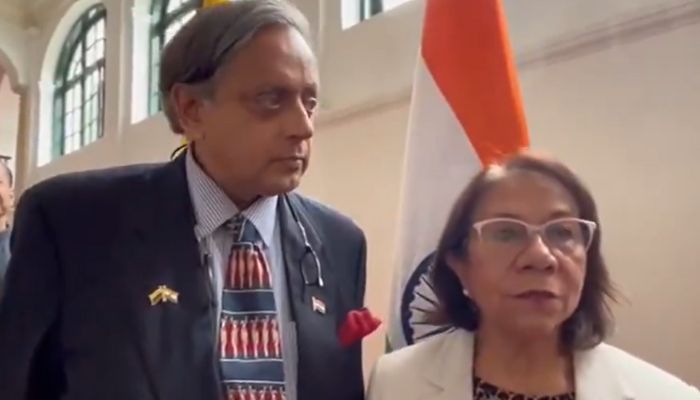
On 30th May (local time), Colombia, which had earlier expressed condolences over Pakistani casualties during India’s Operation Sindoor, withdrew its controversial statement. Congress MP Shashi Tharoor, who is leading one of the all-party delegations to foreign nations, met senior Colombian officials and clarified India’s position on terrorism and self-defence. Following the meeting, Colombia not only withdrew the statement but is also set to issue a strong message of support for India.
#WATCH | Colombia officially withdraws its earlier statement that it issued expressing condolences on the loss of lives in Pakistan after the Indian strikes; earlier, Shashi Tharoor, who is leading the all-party delegation, raised concern and said – we (India) were a little… pic.twitter.com/iVFmLUl1yP
The Indian delegations are currently on a multi-nation diplomatic visit to several countries. The one led by Tharoor has reached Colombia in the Americas after stops in Panama and Guyana. Speaking from Bogota on Thursday, he had expressed “disappointment” over Colombia’s initial reaction, as it appeared to sympathise with Pakistan rather than acknowledge the Pahalgam terrorist attack that claimed the lives of 26 innocent Hindus in India.
Speaking to media in Bogota, Tharoor said, “We were a little disappointed in the reaction of the Colombian government, which apparently expressed heartfelt condolences on the loss of lives in Pakistan after the Indian strikes, rather than sympathising with the victims of terrorism.”
Firm rebuttal and facts shared by India made the difference
The Indian delegation, which included MPs from both Bharatiya Janata Party (BJP) and Congress, laid out the sequence of events leading to India’s counter-terror strikes under Operation Sindoor. They highlighted that the airstrikes were in response to the Pahalgam attack and showed photographic evidence of Pakistani military officials attending funerals of killed terrorists during the operation.
#WATCH | Bogotá, Colombia | Congress MP Shashi Tharoor says, "There (in Pakistan) was a well-publicised funeral of one of the terrorists on the sanctions list. That funeral was attended by uniformed senior military and police personnel from Pakistan. That is the extent of… pic.twitter.com/ASPpVPFYnW
Tharoor said, “There can be no equivalence between those who dispatch terrorists and those who resist them. We are only exercising our right of self-defence. If there is any misunderstanding, we are here to dispel it.”
Colombia now aligns with India’s position
Following the meeting with the Vice Minister of Foreign Affairs of Colombia, Rosa Yolanda Villavicencio, Tharoor confirmed that Colombia had withdrawn its earlier statement. He said, “We had some good news: they have withdrawn their statement that disappointed us earlier and will issue a statement of strong support for our position and understanding of our position.”
Speaking to ANI, the Vice Minister acknowledged that the Colombian side had gained a clearer understanding of the situation after a detailed explanation by the Indian delegation. She said, “we are very confident with the explanation that we received today and the detailed information that we now have regarding the real situation, the conflict, and what happened in Kashmir, we can also continue the dialogue.”
Diplomatic outreach gaining momentum
Speaking to media, former Ambassador and BJP leader Taranjit Singh Sandhu added that Colombia’s change of stance shows the value of face-to-face diplomatic engagement. He said, “The end result was that they are withdrawing one of the other statements which had come out and have promised and stated, actually quite clearly, on terrorism and the issue.”
BJP MP Shashank Mani noted Colombia’s history with terrorism and said the nation now better understands India’s position. He said, “It is notable that terrorism has affected Colombia as well. However, after a long struggle, Colombia is now a peaceful country. We have come here with a message of peace. We have clearly stated that we will give a fitting response to every terrorist attack, and when it is over, we want nothing but peace.”
After Colombia, the Indian delegation is headed to Brazil and the United States. Colombia, soon to be a member of the United Nations Security Council, now standing with India rather than Pakistan is being seen as a win for India’s focused and assertive diplomacy. It is also a strong reply to those who were questioning India’s decision to send all-party delegations to different countries to explain India’s position against terrorism and its sympathisers.
Manipulating words to create confusion in the minds of readers is an old trick in the media’s playbook. Most casual readers may never realize the psychological influence of the terminology being served to them. A glaring example is how the media routinely labels Muslim clerics or faith-healers as “tantriks”, “priests”, or “sadhus”—terms deeply associated with Hindu traditions—while concealing the actual identity of the accused. It’s a propaganda tool that’s been in use for years.
And it’s happening again.
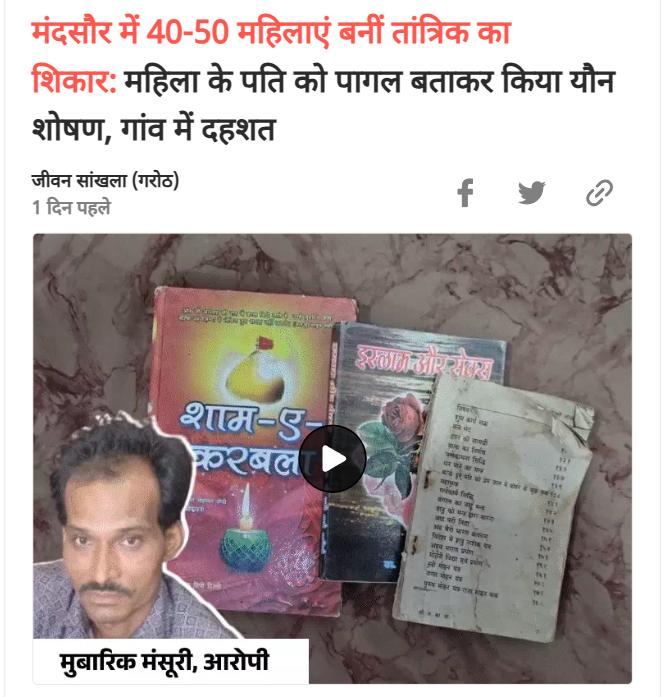
Case in point: Dainik Bhaskar recently published a sensational report with the headline: “40–50 women fall prey to tantrik in Mandsaur: Called husband insane, then sexually exploited them, village in panic.”
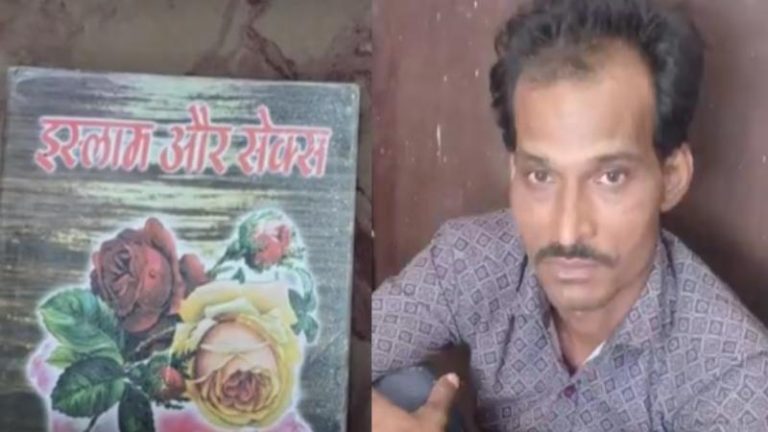
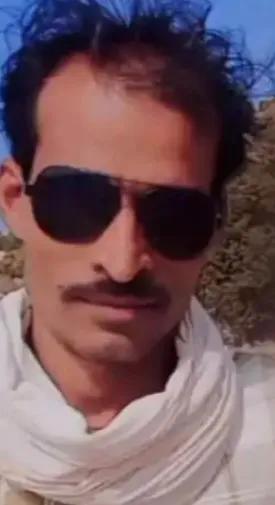
The man accused in the story is Mubarak Mansoori—not exactly the name one would associate with a Hindu tantrik. Locals report that in Mandsaur, Madhya Pradesh, Mansoori lured 40–50 women to his den under the pretense of exorcisms and ritual healing. Once there, he drugged and sexually assaulted them, even recording the abuse.
During the police investigation, fake IDs and obscene literature were recovered from his premises. Among the books seized were titles like “Shaam-e-Karbala” and “Islam and Sex”—hardly something from a tantrik’s library. Yet the media chose to represent the story as if a Hindu mystic were the culprit.
Let’s look at the Bhaskar headline again. Any uninformed reader scanning that title would immediately picture a man with ash smeared on his forehead, chanting mantras before a fire—not someone named Mubarak Mansoori. But that’s the idea: plant a Hindu image in the reader’s mind while the truth is buried in the fine print.
This is not an isolated case. The mainstream media, consciously or not, runs an agenda—confusing and demonizing Hindu cultural symbols while covering up religious identity when the accused belongs to a different faith. If that means using misleading terms or omitting key details, so be it.
OpIndia has been flagging this issue since 2019. Time and again, we have pointed out that when a Muslim cleric performs similar rituals of healing or “black magic,” the media never labels them tantriks—even though their actions are functionally the same. Why the double standard?
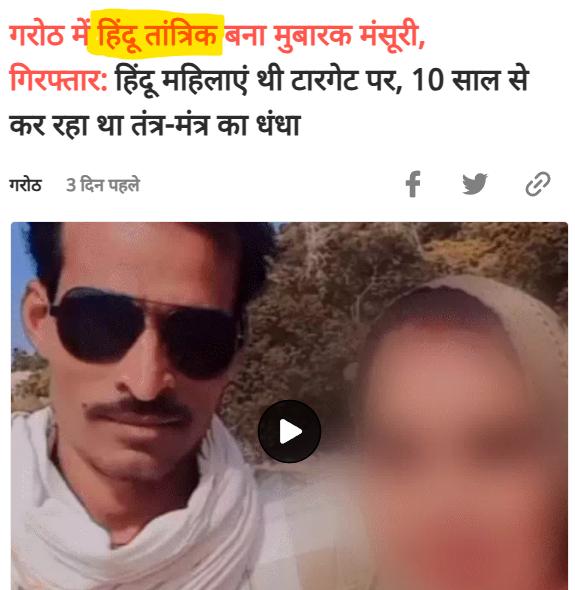
And Dainik Bhaskar is no stranger to this game. Just three days before the Mandsaur story, they published another piece with the headline: “Mubarak Mansoori became Hindu Tantrik in Garoth, arrested: Targeted Hindu women, was into occult practices for 10 years.”
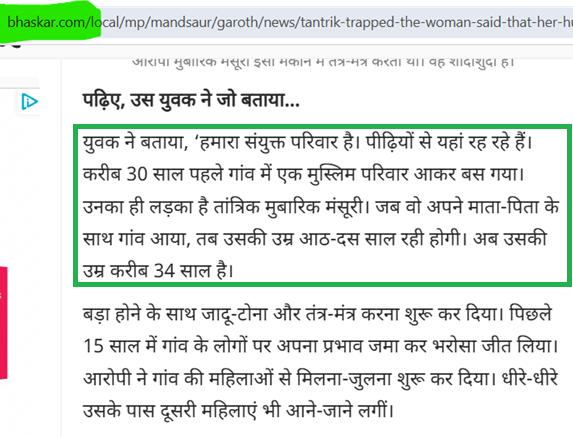
Later, in a follow-up report, they themselves admitted—based on locals’ accounts—that Mubarak comes from a Muslim family that moved to the village 30 years ago. So even if we give them the benefit of the doubt and say the initial report was misinformed, shouldn’t the outlet correct the earlier headline now that the truth is known?
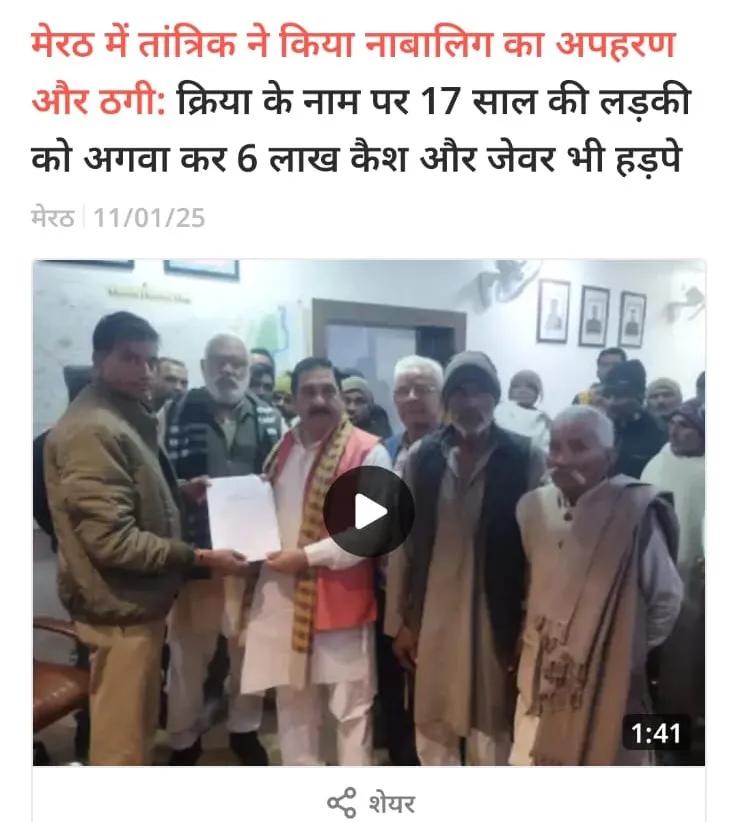
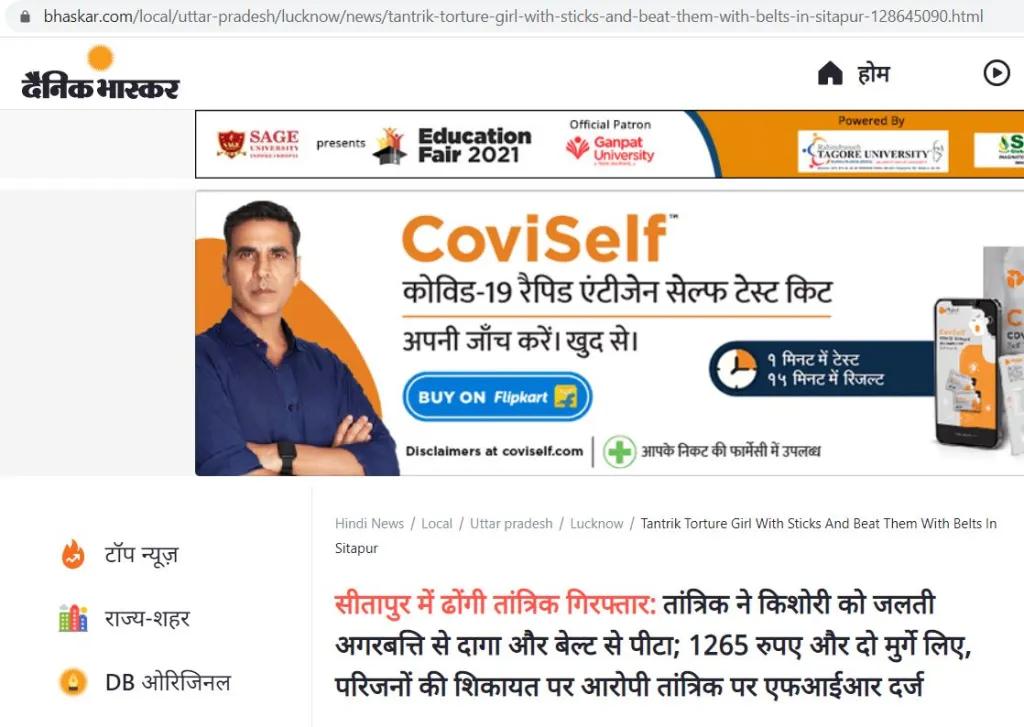
But this isn’t their first offense. When a minor was kidnapped and duped in Meerut, the accused was Rashid Khan, but the word tantrik still made it to the headline. In Sitapur, when an Islamic cleric named Ishtiyaq brutally burned a girl with incense sticks in a supposed healing ritual, the media still painted him as a tantrik. And again, in Sultanpur, when a maulvi defrauded a Hindu woman, the label tantrik was used.
The pattern hasn’t changed from 2019 to 2025. Crimes committed by individuals from other faiths are still misrepresented using terms associated with Hinduism. Even in translations, Christian priests are often called pūjāris, subtly transferring blame and stigma onto Hindu figures. And when questioned, these distortions are justified under the veneer of “Ganga-Jamuni tehzeeb”—a façade of secular harmony that conveniently silences scrutiny.
The result? Readers are conditioned to associate heinous crimes like sexual exploitation and black magic not with the actual perpetrators, but with the Hindu identity the media implants in their minds.
Indigo has been granted a one-time last and final extension of three months up to August 2025 for the “damp-leased” aircraft from Turkish Airlines, the Directorate General of Civil Aviation (DGCA) said on Friday.
Indigo is operating two B777-300ER aircraft under a “damp lease” from Turkish Airlines, which was permitted till May 31, 2025.
Indigo had requested a further six-month extension, which the regulator did not agree to.
“However, in order to avoid passenger inconvenience due to immediate flight disruption, Indigo has been granted a one-time last and final extension of three months,” the DGCA said.
“This extension is based on the undertaking from the airline that they will terminate the damp lease with Turkish Airlines within this extension period, and shall not seek any further extension for these operations,” the DGCA added.
With one new aircraft joining the fleet every week throughout 2025-26, IndiGo anticipates surpassing a fleet size of 600 aircraft by 2030, the airline said on the network expansion front.
Additionally, the airline has signed an agreement with Norse Atlantic Airways for the damp lease of six Boeing 787-9 Dreamliner aircraft. Deliveries will be completed by early 2026, and the A350S are anticipated to arrive in 2027.
These additional aircraft strengthen the airline’s long-haul capabilities.
2025-26 will also be the year in which the long-range A321XLR joins IndiGo’s fleet, opening doors to new long-range international markets not previously connected directly to India.
Continuing IndiGo’s strategy of internationalisation, the airline is planning to add an impressive 10 new international destinations-in all directions from India- to its route network in the year to come, bringing it to over 50 international destinations.
It has already announced commencement of long-haul operations with non-stop, direct flights connecting Mumbai with Manchester and Amsterdam starting July 2025, respectively. As IndiGo’s fleet of damp leased B787s expands later this year, the airline is planning to expand its long-haul network to London and Copenhagen.
With the extended range capabilities of the A321XLR aircraft joining the IndiGo fleet, will allow to further build its European network with direct connectivity to markets where Athens is planned to be introduced over the course of the coming year.
The airline will continue to build on its strong regional international network, with four more Central Asian destinations being added. The airline will also re-activate services to Almaty and Tashkent with new non-stop services from Mumbai. Tbilisi will also see additional capacity with non-stop connectivity from Mumbai.
Direct flights to Siem Reap will be IndiGo’s foray in the India – Cambodia market, and yet another destination connected in Southeast Asia after the successful launch of services to Langkawi, Penang and Krabi last year. The airline will also add capacity to Denpasar Bali (Indonesia) as well as Ho Chi Mihn City and Hanoi in Vietnam.
In the domestic market, IndiGo plans to add four more stations to its network, increasing it from 91 to 95 destinations to literally every corner of the nation. IndiGo is all set to become the first airline to start operations at the Navi Mumbai International Airport and Noida International Airport in Jewar (serving both the Uttar Pradesh and Delhi catchment area).
In addition, IndiGo will launch flights to/from Adampur Airport in Jalandhar on July 1, 2025, and Hindon Airport in Ghaziabad in due course.
(This news report is published from a syndicated feed. Except for the headline, the content has not been written or edited by OpIndia staff)
The Supreme Court on Thursday cancelled bail granted by the Calcutta High Court granting bail to five accused in a rioting and attempt to rape case during the post-poll violence in West Bengal. Accepting CBI’s appeal against the bail order, the apex court said that the allegations in the case were serious and had the effect of shaking the conscience of the Court.
The five accused, Sekh Jamir, Sekh Nurai, Sekh Asraf alias Sk Rahul alia Asraf, Jayanta Dome and Sekh Kabirul, are accused of vandalizing the complainant’s house, assaulting him, and attempting to rape his wife for supporting BJP.
Justice Vikram Nath and Justice Sandeep Mehta noted that the attack on the complainant’s house by the accused was an act of vengeance for his political support for the BJP. The bench said, “we feel that the present one is a case wherein the allegations against the accused respondents are so grave that the same shake the conscience of the Court. Furthermore, there is an imminent propensity of the accused persons adversely affecting the proceedings of the trial”.
The court said that the Calcutta High Court erred in granting bail to the accused despite the gravity of the allegations and their alleged attempts to obstruct trial proceedings. It added that the allegations of sexual assault and communal targeting had the effect of undermining democratic foundations.
The bench further said, “The concerted attack on the complainant’s house was launched on the day of election results with the sole objective of wreaking vengeance because he had supported the saffron party. This is a grave circumstance which convinces us that the accused persons including the respondents herein were trying to terrorize the members of the opposite political party whom the accused respondents were supporting.”
The case was filed by a Hindu person from Gumsima village in West Bengal, who said that he and his family were attacked by a mob affiliated with the ruling Trinamool Congress party because he had campaigned for the BJP during the assembly elections. As per the complaint, around 40 to 50 armed people vandalised their house, looted valuables and sexually assaulted his wife on 2 May, 2021.
The FIR stated that the mob dragged his wife by her hair, undressed her and then molested her. In a desperate attempt to protect herself, she poured kerosene on her, threatening to immolate herself, after which the mod fled from the scene.
However, when the family later went to file a complaint with the police, the police refused to register FIR against the TMC goons. The cops instead advised them to leave the place for their safety. Later when Calcutta HC ordered CBI to register all such cases, FIR in this case was also registered by the central probe agency. The accused were arrested in November 2022, and a chargesheet was filed.
But they were granted bail by the high court in 2023, and this order was challenged by the CBI at the Supreme Court.
Cancelling the bail, the Supreme Court said that the fact that local police refused to register the FIR shows that the complainant is right that the accused have political influence in the area. Calling the assault on the family an attack on democracy, the court noted, “The reprehensible manner in which the incident was perpetrated shows the vengeful attitude of the accused persons and their avowed objective to subdue the supporters of the opposite party into submission by hook or by crook. The dastardly offence was nothing short of a grave attack on the roots of democracy.”
Delhi’s Patiala House Court on Thursday compounded a defamation case against Olympic wrestler Bajrang Punia after his apology. Coach Naresh Dahiya filed the case against Punia. Metropolitan Magistrate Yashdeep Chahal compounded the matter on Thursday.
A detailed court order has yet to be uploaded. ” I tender my unconditional apology to Mr. Naresh Dahiya for the wrong and insensitive statement made by me against him during the press conference held at Jantar Mantar during the agitation, in public view,” the apology reads.
Advocate Rajesh Kumar Rexwal, along with advocates Ravinder Singh and Lovinder Chaudhary, is counsel for the complainant. Advocate Rexwal said that the matter has been compounded after Bajrang Punia gave his written apology.
Advocate Tushar Giri, counsel for Punia said that after tendering of apology, matter was settled between the parties and complaint was compounded.
Earlier, Punia was granted bail by the court after his physical appearance.
The Court on August 3, 2023, issued a summons to Olympic medalist wrestler Bajrang Punia.
Through a criminal defamation complaint, the complainant or Coach Naresh Dahiya, stated that during the protest at Jantar Mantar on May 10, 2023, Bajrang Punia made defamatory remarks against him in a press conference.
The Court had noted that, the relevant extracts reveal that the accused Bajrang Punia had referred a rape case ongoing against the complainant (Naresh Dahiya) in Tis Hazari Court.
The accused allegedly referred to the complainant by name and stated that the complainant has no credibility to oppose the protest as he was himself facing a rape case.
But during recording of statement complainant categorically deposed that he was acquitted in the said rape case in 2019 itself and the said fact was well known to the accused as well, who is a part of the same fraternity.
Metropolitan Magistrate Yashdeep Chahal, while issuing summons to Bajrang Punia, had said that on a consideration of the complaint, supporting documents and presummoning evidence, I am of the prima facie view that all the ingredients of defamation are made out.
He further said that the statement made in the press conference appeared to be malicious and not made in good faith. In view of the same, let the accused, Bajrang Punia, be summoned to commission an offence punishable under Section 499 read with Section 500 of the Indian Penal Code.
However, the Court clarified that at the stage of summoning, it is fairly settled that the Court is not required to conduct a comparative analysis of the possible defences that the accused may take.
It was submitted that the fact of acquittal was well known, and a malicious attack was made by the accused to tarnish the reputation and credibility of the complainant to dissuade him from supporting the WFI President in the protest.
(This news report is published from a syndicated feed. Except for the headline, the content has not been written or edited by OpIndia staff)
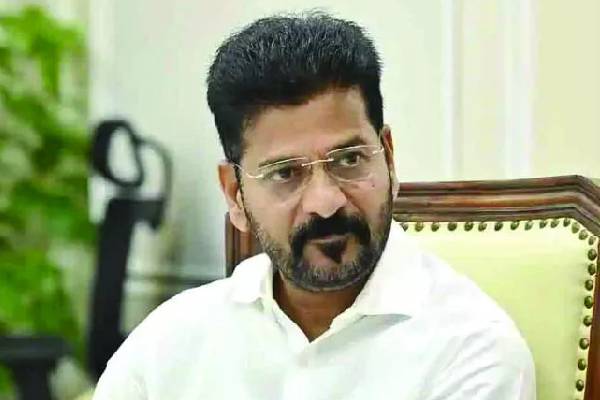
Parroting Pakistan’s narrative, Telangana CM Revanth Reddy got himself embroiled in a controversy by questioning PM Modi as to how many Rafale fighter jets were shot down by Pakistan during the recent military escalations between the two countries. Reddy made the remarks during ‘Jai Hind’ rally in Hyderabad on Thursday (29th MAY).
“The soldiers of this (Secunderabad ) Cantonment participated in the war. The war planes being manufactured in Telangana upheld respect for our country. Rafale aircraft brought by Narendra Modi were shot down by Pakistan. There is no discussion on how many Rafales were shot down. Narendra Modi should answer how many Rafale aircraft were shot down by Pakistan during the recent war. You give us the account,” said Reddy.
Reddy attacked the Modi government, for not convening an all-party meeting before agreeing to a ceasefire with Pakistan. “After four days of war, we do not know who threatened whom and who succumbed to whom. All of a sudden, US President Donald Trump came out and said he threatened India and stopped the war,” the CM said. He accused the Modi government of failing to use the opportunity to take control PoK and separating Balochistan from Pakistan.
After suffering heavy losses as a result of India’s military action under Operation Sindoor, Pakistan tried saving its face by falsely claiming to have shot down three Indian Rafale jets. However, the Islamic state could not provide any evidence to back its claim, which was amplified by Chinese media.
BJP hits back at Reddy, slams Congress
BJP hit back at Reddy for accusing him of echoing Pakistan’s narrative and undermining the Indian armed forces. Addressing the media at the BJP headquarters in New Delhi on Friday (30th May), BJP MP Sambit Patra called out Congress leaders Reddy, Jairam Ramesh and Rahul Gandhi for raising doubts on the armed forces instead of asking how many Pakistani air bases were destroyed by India. “Rahul Gandhi, Jairam Ramesh, and Revanth Reddy are asking how many Rafales were shot down. ‘Yeh jo Pakistan ke Babbar hain, woh Hindustan ke Gabbar hain’. Rahul Gandhi did not ask how many Pakistani airbases were destroyed, how many terrorists were killed; rather, he only asked how many Indian planes were shot down,” said Patra.
#WATCH | Delhi: BJP MP Sambit Patra says, "Rahul Gandhi, Jairam Ramesh, Revanth Reddy are asking how many Rafales were shot down. 'Yeh jo Pakistan ke Babbar hain, woh Hindustan ke Gabbar hain'. Rahul Gandhi did not ask how many Pakistani airbases were destroyed, how many… pic.twitter.com/X43SVhZ9S5
Telangana BJP President G Kishan Reddy, accused the Congress party of playing dirty politics and demoralising the armed forces. “Congress – From their leader Rahul Gandhi to their CM Revanth Reddy are demeaning our brave armed forces day in and day out. Not the first time Congress and its leaders are resorting to cheap and dirty politics, not the first time they have questioned and doubted the surgical strikes, not the first time they are demoralizing our armed forces, not the first time they are speaking the enemy language. Who is the Congress loyal to Bharat or?” the Union Minister for Coal and Mines wrote on X.
Congress – From their leader Rahul Gandhi to their CM Revanth Reddy are demeaning our brave armed forces day in and day out.
Not the first time Congress and its leaders are resorting to cheap and dirty politics, not the first time they have questioned and doubted the surgical…
While Congress leaders like Shashi Tharoor, Manish Tiwari, Salman Khurshid are representing India abroad as part of the multi-party delegations, their colleagues back home are undoing their good work.
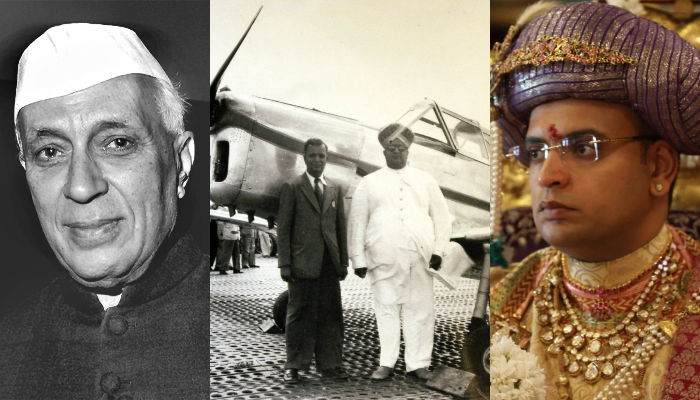
Karnataka’s Deputy Chief Minister DK Shivakumar on 27th May declared that Pandit Jawaharlal Nehru was the founder of HAL (Hindustan Aeronautics Limited). Bharatiya Janata Party (BJP) MP and Mysore (Mysuru) royal descendant Yaduveer Krishnadatta Chamaraja Wadiyar, however, countered this claim, both in public forums and online. He stated that India’s first prime minister had no involvement in the establishment of HAL and emphasized that the credit should rightfully go to industrialist Walchand Hirachand and the Kingdom of Mysore.
“The Deputy Chief Minister said it is Nehru’s contribution. We need to clarify that. In 1940, Walchand Hirachand approached many kings with the idea of an aircraft development system. Only the King of Mysore agreed. The Government of Karnataka, back then the Government of Mysore, gave around 700 acres of land. The initial investment came from the Government of Mysore. The king decided not to give the share to anyone else.” he pointed out on 28th May and highlighted that the roots of HAL were very local.
“This is a system that has been developed by the Kannadigas, under Kannadiga leadership. We also need to remind the DyCM. He has a compulsion to attribute everything to a dynasty and high command, but we need to tell this clearly to him,” Yaduveer reiterated. He then stressed, “HAL should be kept in Karnataka itself. Even if other defence centres come up, it must remain here. This is what we are telling the Chief Minister as well.” He also posted a thorough 18-part thread detailing the real origins of HAL.
Wadiyar kings of Mysore
The Wadiyars or Wodeyars who are believed to be the descendants of Lord Krishna ruled over the Mysore kingdom from 1399 to 1947. They possessed a rich heritage that included splendid palaces, exquisite artwork and traditional musical instruments. Their reign extended over five centuries, during which they significantly influenced social and cultural aspects.
They fostered public participation and engagement, as their welfare model was crafted with the populace at its heart. Despite the loss of their titles, the Wodeyars remain a powerful influence among the Kannadigas, celebrated for their pro-people policies and prompt actions in times of crisis. However, their remarkable contributions to the fields of Science & Technology will forever be regarded as a pinnacle achievement of their administration.
The Mysore kingdom started as a small vassal of the Vijayanagara Empire, but it expanded under the influence of successive kings. Chikka Devaraja, the fourteenth king, brought the dynasty to its peak by reforming the administration and launching a new taxation system. The kingdom witnessed a golden era when Nalwadi Krishnaraja Wadiyar IV succeeded to the throne.
The philosopher-king, who was a supporter of the fine arts, laid the groundwork for educational systems and dedicated efforts to reduce poverty, rebuild rural communities, improve public health, promote industry and stimulate economic growth. In 1902, Mysore was the first Indian state to harness hydroelectric power in Asia and it was also the first Asian city to install street lights in 1905.
He oversaw the opening of educational institutions such as the Indian Institute of Science and the University of Mysore. Victoria Hospital, Cheluvamba Hospital and Minto Eye Hospital were started along with the construction of the Krishna Raja Sagara dam. Mohandas Karamchand Gandhi referred to his kingdom as “Ramrajya” and praised him as a “Rajrishi.” Mysore was referred to as “the best-administered state in the world” by Lord John Sankey who was the Lord Chancellor of Great Britain and a human rights activist.
How HAL was founded
World War II was rocking the globe in 1940. India was at a pivotal moment. Sri Jayachamaraja Wadiyar replaced his uncle as King of Mysore on 8th September 1940. He was only 21 when he was presented with a daring suggestion that would alter India’s course. William Douglas Pawley, an American industrialist who had been constructing airplanes in China required a new base. In 1933, he created the Central Aircraft Manufacturing Company (CAMCO) to assemble Hawk 75 and CW-21 fighter aircraft for China’s Nationalist government.
Chinese aviation was mostly dependent on CAMCO but Japanese raids compelled Pawley to relocate. On a Pan Am Clipper flight to Hong Kong in October 1939, he met Walchand Hirachand, an Indian entrepreneur. The concept of having an aircraft production in India was inspired by that fortuitous encounter. Upon his arrival in India in July 1940, Pawley received British permission for the project within 72 hours.
The ambitious plan consisted of the construction of India’s first significant aircraft manufacturing. However, it wasn’t simple. The stockholders of Walchand’s Scindia Steam Navigation Company rejected his proposal. He subsequently made his way to the princely territories of Mysore, Baroda, Gwalior and Bhavnagar. They all refused one after another.
The statement made by the Honourable Deputy Chief Minister of Karnataka, Shri D.K. Shivakumar (@DKShivakumar), that Nehru founded HAL, is far from the truth.
Nehru had nothing to do with it and facts are as follows:
— Yaduveer Wadiyar (@yaduveerwadiyar) May 28, 2025
However, Walchand and Pawley met the young king of Mysore when they arrived in Bangalore in October 1940. He was a visionary leader and hence the Mysore government invested ₹25 lakh in shares, guaranteed 700 acres of land for free and provided full assistance in less than 72 hours. Pawley choose the location himself. This was more than merely a business transaction, but it represented a pathway for India’s self-reliance. The king understood that aviation would influence the country’s future.
It moved at an incredible pace. Walchand served as Chairman of the Hindustan Aircraft Company when it was registered on 23rd December 1940, under the Mysore Companies Act. The very following day work began. The first structure and runway were completed in three weeks, by mid-January 1941. The business maintained an office in a home on Bangalore’s Domlur Road named “Eventide.” The first order from the Indian government was for 74 Vultee Attack Bombers, 30 Harlow PC5 Trainers and 48 Curtis Hawk Fighters all of which were due in 1942.
Wings to India’s aviation dreams
Less than a year after it was established, the business turned over its first aircraft, a Harlow Trainer, to the government on 29th August 1941 as India embarked on its aviation journey. The importance of Hindustan Aircraft increased as World War II intensified. All of CAMCO’s equipment was relocated to Mysore after Japan attacked its factory in China. The British Indian Government matched Mysore’s stake in April 1941 with an investment of ₹25 lakh.
This one is priceless in my collection. Maharaja of Mysore Jayachamarajendra Wadiyar and India's legendary plane designer Dr V M Ghatage (HAL). Behind them is HT-2. Young aerospace engineers must read up every bit on Dr Ghatage. #Avgeeks@akananthpic.twitter.com/zNZuu2DgO1
The British purchased Walchand’s shares in April 1942 for ₹57 lakh, a substantial profit on his ₹25 lakh investment, following Japan’s attack on Pearl Harbor in December 1941 and its advance in Malaya. The Mysore administration granted the control to the British during the war but it refused to surrender its share.
The facility became the 84th Air Depot after it was taken over by the United States Army Air Forces in 1943. PBY Catalinas and other aircraft used in India and Burma were refurbished, making it one of Asia’s biggest aviation repair facilities. Mysore-based aircraft assisted in driving back Indian National Army and Japanese forces in Manipur and Nagaland. A compensation of ₹12.11 lakh was given to the Mysore government for pausing its stake in the war. Mysore soon returned to active engagement in April 1946.
Nurturing aviation ambitions
The Royal Air Force’s No. 129 Squadron, also known as the “Mysore Squadron,” was established owing to a £100,000 donation from Mysore. It participated in the Battle of Britain and other significant operations while flying Supermarine Spitfires. Its emblem included the Gandabherunda, the mythical two-headed bird of Mysore, along with the words “I will defend the right.” The king personally sent a Gandabherunda insignia and a message to each pilot stating, “My birth after the last war’s victory led to Jaya in my name, and my emblem is the Gandabherunda, the mightiest bird. I wish you Jaya in all your battles.”
The king also contributed 211 acres for the Government Flying School in Jakkur of Bangalore, which opened in 1948 and constructed Mandakalli Airport near Mysore. He even offered to train pilots on his own Dakota DC-3 aircraft. Usha Sundaram, India’s first female pilot, received her training at this institution. The Ministry of Defence reorganised and renamed Hindustan Aircraft as Hindustan Aeronautics Limited (HAL) on 1st October 1964. HAL is now an essential part of India’s aerospace and defense sector.
Creation of a modern scientific institution
The rulers of Mysore developed multiple educational institutions around the state because they believed that educating the populace was essential to modernization. The most important project they worked on was perhaps Jamsetji Nusserwanji Tata’s ambitious plan to build an excellent research institute in India. Tata informed his friend K Seshadri Iyer who was also the Dewan of Mysore, of his plan during a visit to South India in 1899.
Maharani Kempananjammani Vani Vilasa Sannidhana was approached by the latter regarding whether and how Mysore could assist the industrialist. The Regent Queen readily agreed to back the proposal. She also committed to funding the project and supplying land. Iyer promptly informed Tata’s Provisional Committee, which was tasked with carrying out his vision. Mysore proposed that the university should be located in Bangalore.
Today is the birth anniversary of Maharaja Krishnaraja Wadiyar. The Mysore royal family donated 371 acres and 16 guntas of land well as funds to help set up IISc.
Director Prof G Rangarajan commemorated the occasion by garlanding the Maharaja's statue in the Main building. pic.twitter.com/rdcffuG46G
371 acres and 16 guntas of land in Bangalore were pledged along with ₹5 lakh for construction expenditures and a monthly payment of ₹30,000 (in 1905, this was raised to ₹50,000). The government approved the proposal, but before IISc could be established, many obstacles had to be removed, including those brought on by Tata’s tragic death in the summer of 1904. The land promised by the state was formally turned over by Mysore’s Dewan, Vice President Madhava Rao, on 14th March 1907.
Following a vesting order and resolution passed by the British Government of India to create the Institute, IISc (Indian Institute of Science) ultimately came into being on 27th May 1909. Mysore grants were by far the largest the institute would receive in its early years and they were also the highest from a local government in the years that followed (the only greater contributions in later years were from the Indian government). Additionally, Mysore provided students with recurring grants and scholarships as IISc continued to gain many benefits from the state after it was founded. The Institute’s research also directly led to the emergence of a number of industries over the following years.
Harnessing the power of the Cauvery
It was fortunate for the royal city to have Cauvery water in the early 1900s because of the work of Mysore officials and the availability of electricity. During the queen Vani Vilas regency, the administrators succeeded in something they had failed to do for decades. A project designed under Maharaja Chamaraja Wadiyar’s reign and completed under the queen’s supervision, the Vani Vilas Water Works is a testament to the labor that went into extracting water from the Cauvery River.
Major Alain Chartier Joly de Lotbiniere, a Mysore state employee had the initial idea to use the Cauvery’s power. He then proposed the concept to Mysore’s King Nalvadi Krishnaraja Wodeyar, who talked about it with Dewan K Sheshadri Iyer, his chief administrator. However, according to other reports, Edmund Carrington, an electrical engineer was motivated in 1894 to use the power of the 100-meter-tall Gaganachukki Falls which are formed by the Cauvery tributary Kabini.
Notably, the two stories only prove that the project was supported by the Mysore state. The city was supplied with Cauvery water by the early 1900s which was pumped from the Devaraja canal on the riverbanks close to Belagola. The first hydroelectric plant in Asia was nearing completion at Shivanasamudra at this time courtesy to the vision of Mysore’s dewan K Sheshadri Iyer.
Kolar Gold Fields began receiving power from Shivanasamudra by 1902. Electricity was only introduced to Mysore in 1908. According to history, Vani Vilas was the regent when the effort to draw drinking water from the river was completed.
Innovation to maintain food security
The Central Food Technology Research Institute (CFTRI) is a leader in emerging technologies today. It’s interesting to note that the stark food shortages in India provide the ideal context for understanding the value of Wadiyar’s administrative foresight. Famine after famine struck India, with the Great Bengal famine being the worst on record.
The Viceroy of India did not mince words when describing the enormity of the situation, strict management of Mysore’s food supplies was vital. One of Wadiyar’s major achievements during the 1940–1947 period was controlling the food scarcity in Mysore and establishing administrative measures to stop a widespread famine, similar to what happened in Bengal.
Image via Wikipedia
The concept of establishing a research center that might look into the preservation, packaging and storage of grain samples for future generations could have been spawned by this struggle for food. Consequently, Mysore gave birth to the Central Food Technology Research Institute (CFTRI). The exceptionally lovely Cheluvamba Mansion, which was first built by Krishnaraja Wadiyar IV for the third Princess of Mysore, Cheluvajammanni, was dedicated to this cause by the state.
The pioneers of modern India
The rich culture of the area has been influenced by the rulers of the Wodeyar dynasty throughout history. Raja Wodeyar I began the Mahanavami festival celebrations in 1610 which are now known as the well-known Mysore Dasara celebrations. Furthermore, they made Mysore one of the first Indian states to adopt a parliamentary system in 1881. Members of the dynasty, Jayachamaraja Wodeyar and Nalvadi Krishnaraja Wodeyar IV were active members of the Constituent Assembly of India which helped bring about Indian independence.
They further advanced wildlife conservation through the establishment of Nagarhole National Park and Bandipur National Park, as well as the Mysore Zoo, which is among the oldest and most renowned zoos in India. The famous Mysore Palace is among the wonderful palaces, temples and public structures they commissioned.
They promoted classical music, dance and literature with the goal of conserving India’s rich cultural legacy. With the founding of libraries and the publication of works like the well-known Kannada epic “Kumaravyasa Bharata,” they were instrumental in the growth of Kannada literature and even Sanskrit. Likewise they supported the growth of Siddha and Unani medicine by opening clinics and hospitals in Mysore and promoting Ayurveda, the traditional Indian medical system.
Krishnaraja Wodeyar IV launched the major businesses, including the Silk Research Centre at Channapattana, the Soap Factory, the Sandal Oil Factory, Mysore Bank and the Steel Factory at Bhadravathi. They built Bangalore along modern lines and during his rule, a rail connection was established between Bangalore and Chikkaballapur and Arisikere.
Moreover, the current Vokkaligara Sangha was set up. Dewan Ananda Rao of Mysore played a pivotal role in bringing Sir M V Visveswaraya back to serve the state from Poona and his skill produced an engineering marvel such as Krishnaraja Sagara. The Cantonment area of Bangalore was fully developed as a modern city when the Mysore state acquired it from the British.
Image via navrangindia.in
The National Tuberculosis Institute (NTIB) on Bellary Road, housed in the historic Avalon building that was once the home of Jayachamarajendra Wadiyar’s sister is one of Bengaluru’s most notable landmarks. The structure, which is a leading Tuberculosis research facility under the Directorate General of Health Services, Ministry of Health and Family Welfare was donated to the country by the Wadiyars.
The Wadiyars have significantly enhanced not only India’s society and culture but have also laid the groundwork for an innovative and educated India through their determined efforts. Future generations will continue to benefit from their contributions to the development and growth of the nation.
On Wednesday (28th May), the police arrested a Muslim man named Humayun Kabir for brutally murdering his parents and attacking 4 teachers at an orphanage after being inspired by ‘jihadi literature’.
The incident occurred in Memari town in Purba Bardhaman district of West Bengal. A Bongaon court remanded him for 3 days in police custody.
According to reports, the accused purchased a knife from an e-commerce platform and slit the throat of his parents. He then dragged their bodies onto the road.
The deceased were identified as Haji Mustafizur Rahman (65) and Mumtaz Begum (55). Humayun Kabir then went to an orphanage (Hafizia Kharizia Orphanage Madrassa) in Bongaon, 130 km away from Memari, and attacked 4 teachers.
Visuals of the accused, roaming around with a knife in hand, have now surfaced on social media. As per reports, Humayun Kabir studied at the infamous leftist bastion of Jadavpur University.
He was browsing jihadi literature extensively before killing his parents, who he believe did not follow Islam. Kabir was married to a girl but got divorced within a year due to his jihadi mindset.
An incident took place in Bongaon PS area this evening when a mentally unstable person stabbed 4 persons in a fit of rage. Police promptly reached the spot and arrested the accused person. Subsequently, a group of agitated mob reached the police station and attempted to snatch…
He used to work in Noida but lost job 5 months ago. The parents of the accused brought him back to Memari.
Humayun Kabir believed that he would go to ‘jannat’ after killing his parents and hated that they wanted him to reform and give up on his extremist views. He was reportedly planning to escape to Bangladesh after committing the murders.
In the meantime, the Bongaon police department posted a tweet alleging that Kabir is ‘mentally unstable‘ – a term repeatedly used by the State police to downplay Islamist crimes.
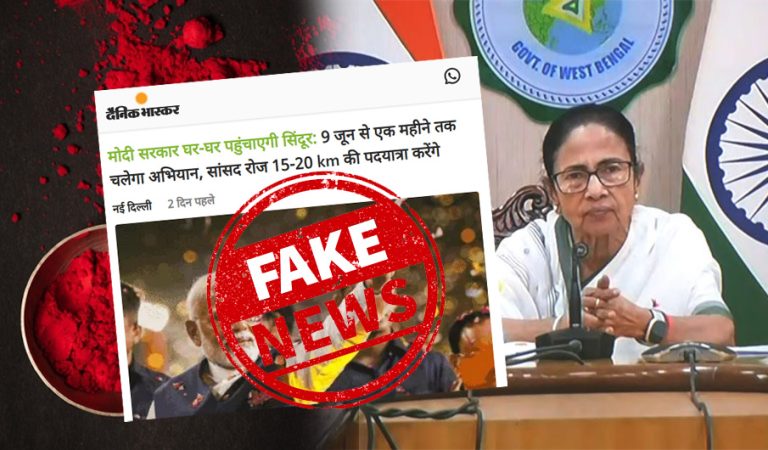
The Bharatiya Janata Party (BJP) has denied media reports claiming that the party is visiting house to house to distribute sindoor (vermilion). Referring to a report published by Hindi daily Dainik Bhaskar, BJP’s national IT cell head Amit Malviya called it fake news, and slammed the opposition for amplifying the same.
The report titled “Modi government will deliver vermilion to every home: Campaign to run for one month from 9th June, MPs will walk 15-20 km every day,” claimed that sindoor will gifted to women by BJP leaders during the campaign. The report stated that the campaign will start on 9th June, the day PM Modi took oath as PM for the third term. Dainik Bhaskar cited an unnamed BJP leader for the claim.
A similar claim was made by Zee News in its report on BJP’s plan to celebrate the third anniversary. The report stated, “The Bharatiya Janata Party (BJP) is launching ‘Operation Sindoor’ on June 9, coinciding with Prime Minister Narendra Modi’s third oath-taking, to highlight the achievements of the Modi 3.0 government nationwide. As part of this month-long public outreach, BJP aims to connect with every household, particularly by gifting vermillion to women and distributing informative pamphlets.”
Some other media outlets also carried the same claim.
However, now BJP leader Amit Malviya has clarified that it is fake news, and the party has not planned to distribute vermillion among women. He posted on X, “Many people are reacting on social media based on this #FakeNews published in Dainik Bhaskar.”
बहुत सारे लोग भास्कर में प्रकाशित इस #FakeNews के आधार पर सोशल मीडिया पर अपनी प्रतिक्रिया दे रहे हैं। लेकिन हद तो तब हो गई जब पश्चिम बंगाल की मुख्यमंत्री, एक अधिकृत सरकारी मंच से, एक ट्रोल की तरह इस आधारहीन खबर को लेकर राजनीति करने लगीं।
Malviya also slammed West Bengal CM Mamata Banerjee over her attack on PM Modi using the fake news, and said, “But the real absurdity began when the Chief Minister of West Bengal, from an official government platform, started politicizing this baseless report like a troll.”
Mamata Banerjee made a statement accusing PM Modi using Operation Sindoor for his political benefits, and said that PM was selling Sindoor. She further alleged that Modi is pretending to be husband of everybody, and asked why he is not giving Sindoor to his wife first. She added, “You are not husband of everybody, why you are not giving to you wife first?”
The Bengal CM also alleged that while PM Modi sent opposition leaders to various countries to place India’s side on the conflict against Pakistan, the PM himself was roaming inside the country.
"Modi is pretending to be the husband of everybody. Why isn't he giving sindur to his wife first?”Mamata Banerjee's comment about the PM lacks respect and dignity.
Actually she doesn’t understand the margin between a father and a husband because she is inspired by ISLAM where… pic.twitter.com/AS9JnxzHtr
Referring to her comments, Malviya said, “Mamata Banerjee should be concerned about the deteriorating condition of her own state and refrain from making ridiculous statements on sensitive issues like national security. West Bengal is burning in the fire of communal tensions, women are not safe, the unemployed have no jobs — these should be Mamata Banerjee’s priorities.”
Referring to comments of Congress spokespersons on the issue, Amit Malviya said, “they are frivolous people. It would be unreasonable to expect anything better from them.” Congress spokesperson Supriya Shrinate posted a video on social media saying that women put vermillion on their hair partings in only their husband’s name, and asked who are the BJP workers that will distribute vermillion among women.