Home Blog Page 377

PM Modi unveils ₹300 coin honouring Ahilyabai Holkar, salutes India’s women warriors for heroism in Operation Sindoor

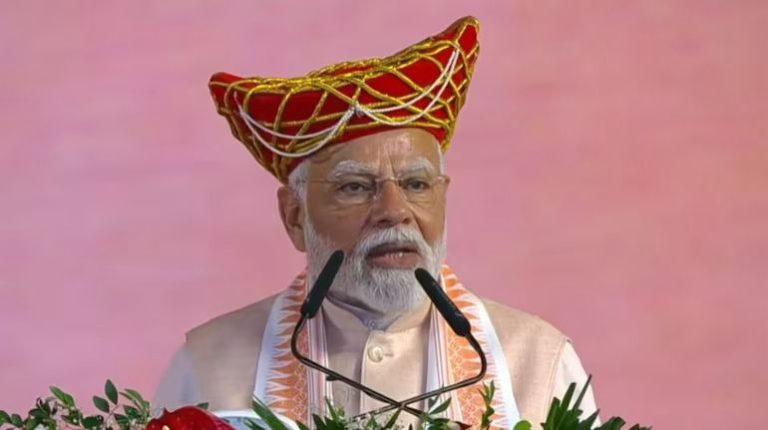
Prime Minister Narendra Modi visited Bhopal, the capital of Madhya Pradesh, to attend the Lokmata Devi Ahilyabai Women Empowerment Conclave held at Jamboree Ground. Addressing a massive public gathering, PM Modi paid heartfelt tribute to Lokmata Devi Ahilyabai Holkar, praising her legacy as a beacon of courage, culture, and compassion.

“Just hearing the name ‘Ahilyabai’ evokes deep reverence,” he said. “Centuries ago, when India was shackled by foreign rule, she not only uplifted her own kingdom but also safeguarded the soul of Bharat — its culture and heritage.”

Modi recalled how Ahilyabai had rebuilt numerous temples across the country, including the iconic Kashi Vishwanath Temple. “It is my privilege to serve in Kashi, where Lokmata once led monumental works of devotion and development,” he said, pointing out that her statue now stands tall at the Kashi temple complex.

To honor her memory, the Prime Minister unveiled a commemorative postage stamp and a special ₹300 coin featuring her portrait. He also felicitated female artists who have contributed to tribal, folk, and traditional Indian arts with the National Devi Ahilyabai Award.

Operation Sindoor: India’s grit and glory

A major highlight of his speech was the praise for Operation Sindoor, which he described as the most successful counter-terror operation in India’s history. “When terrorists tried to tear apart our society in Pahalgam, our brave forces turned their hideouts into dust,” he declared. “Now, every Indian says — if you fire bullets, you’ll be answered with shells.”

Modi symbolically linked Sindoor — traditionally a sacred mark of strength and devotion in Indian culture — with the operation, calling it a new emblem of India’s courage and feminine power. “Hanuman applies it. We use it in worship. And today, it signifies India’s indomitable spirit.”

The PM especially lauded the fearless contribution of women in uniform. “Even under intense shelling by Pakistan, our brave BSF women stood their ground,” he said. “From classrooms to battlegrounds, India trusts its daughters like never before.”

Whether it’s tackling Maoists or confronting cross-border terror, Modi said, women are now India’s frontline defenders.

Empowering women, the Modi way

A large portion of his speech focused on women’s empowerment. He revealed that the government has pledged to transform 3 crore rural women into Lakhpati Didis — self-made millionaires — and over 1.5 crore have already reached that milestone.

“Our village women, working as ‘Bank Sakhis’ and ‘Insurance Sakhis,’ are bringing financial services to the last mile,” he said. “Earlier, women were kept away from technology. But that’s changing now.”

He highlighted women’s strides in science, medicine, engineering, and aviation — noting that over 100 women scientists and engineers were part of the Chandrayaan-3 mission. He also cited the Namo Drone Didi initiative as a game-changer that’s empowering rural women with tech-based livelihoods.

Ahilyabai’s vision, today’s governance

PM Modi emphasized that his government is walking in the footsteps of Ahilyabai Holkar. “Her governance model prioritized the poor and marginalized. She built irrigation canals and supported cottage industries — the very things we are promoting today.”

Quoting the mantra “Nagrik Devo Bhava” (citizens are divine), he said, “In every scheme of ours, women are not just beneficiaries, they are at the core.”

He noted that millions of women have been given home ownership for the first time, and they now play key roles in startups and even India’s space missions.

A celebration led by women, for women

Madhya Pradesh Chief Minister Mohan Yadav echoed the PM’s sentiments, saying the visit was a tribute to Ahilyabai’s ideals, with the government working relentlessly to fulfill her vision of empowered womanhood.

In a symbolic twist, the entire event was organized by women. A female pilot flew PM Modi’s aircraft from Datia to Bhopal. The first trip of the Indore Metro featured only women passengers. From security to stage management, women took charge of every aspect of the event — showcasing true empowerment in action.

Thousands of women, dressed in vibrant sindoori (vermillion-colored) sarees, lined the streets of Bhopal to welcome the PM in a grand roadshow. The tricolor fluttered across the city, while posters celebrating Operation Sindoor adorned the landscape.

As the roadshow culminated at Jamboree Ground, it became clear this was no ordinary political event. It was a resounding celebration of India’s strength — embodied by its women, inspired by Ahilyabai, and led from the front by a government committed to transformation.

PM Modi’s Bhopal visit was more than a rally — it was a statement. A powerful fusion of heritage, valor, and the unstoppable rise of Nari Shakti (woman power) in New India.
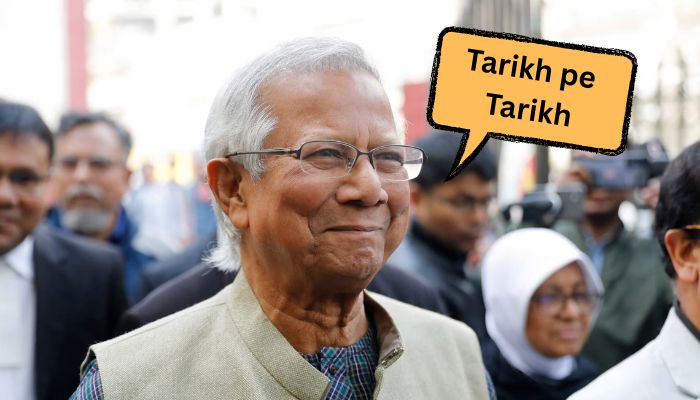
A timeline of fake promises: How Muhammad Yunus has been keeping elections in Bangladesh at bay to undemocratically hold onto power

Muhammad Yunus, the ‘chief advisor’ to the interim government of Bangladesh, came to power after the undemocratic ouster of Prime Minister Sheikh Hasina in a well-coordinated regime change operation (masked as ‘student protests’).

Yunus became the undemocratic, de-facto leader of Bangladesh on 8th August 2024, following the ‘invitation’ of the radical Islamists who helped unseat Sheikh Hasina and forced her to flee to India.

It has been over 9 months since the controversial ‘Nobel laureate’ became the ‘chief advisor’ of the interim government, making hollow promises of ‘free and fair elections’ and drastic systematic reforms.

But elections are nowhere in sight in Bangladesh, which is now being undemocratically run by Muhammad Yunus.

Faced with popular discontentment and backlash from Opposition parities and the Bangladesh Army, Yunus issued threats of resignation, blamed India, placated Islamists and created mass hysteria of ‘war-like situation.’

However, one distinct pattern of his regime became crystal clear – Muhammad Yunus had been strategically pushing behind the date for conducting elections to hold onto power undemocratically.

July 2024: Yunus wanted ‘fresh election’ when Sheikh Hasina was in power

On 26th July last year, the controversial ‘Nobel laureate’ gave an interview to Indian daily ‘The Hindu’ wherein he claimed that conducting fresh election was essential for restoration of democracy in Bangladesh.

It must be mentioned that nationwide elections were conducted in January 2024, just 6 months prior to the interview. At that time, he mouthed platitudes about democracy and norms but exactly doing the opposite now.

On being asked by The Hindu if Yunus was looking forward to a ‘fresh election’, the US asset replied, “Of course, election is the ultimate solution of all political problems. When something doesn’t work, you go back to the people to seek their instructions.”

“They are the ultimate owners of the country. Make sure it is a genuine election, not an election of a magician,” he had claimed.

October 2024: Yunus refused to put a ‘time frame’ to conducting elections

Muhammad Yunus, who had the backing of the US deep State, was tasked to stir the country amid the political turmoil and chaos that ensued after the fall of Dhaka.

His reputation of being a ‘Nobel laureate’ and a champion of ‘microfinance’ gave hopes of ‘renewed democracy’ to the Bangladeshis. 

He received overwhelming support from the public, so-called ‘student protestors’, the Opposition Bangladesh Nationalist Party (BNP), Islamic extremists and even the Bangladeshi military.

While speaking to ‘Voice of America’ on 3rd October 2024, Muhammad Yunus even reiterated his commitment to ‘holding elections’.

On being asked about the diktat given by the Bangladeshi Army General Waqar-Uz-Zaman to hold elections with 1.5 years (about 18 months), he brazened out, “Well, if you want to presume, you may, but that’s not the decision of the government. The government has not given any opinion so far. The government needs to say when they would take a decision about their duration.”

When ‘Voice of America’ asked him about his main objectives, Yunus stated, “My main objectives are to bring in reforms, to arrange an election and hand over the power to the elected representatives.”

December 2024: Faced with pressure, Yunus vows to hold elections in late 2025 or early 2026

After 4 months had passed to the constitution of the interim government, Muhammad Yunus came under intense pressure to provide a timeline to conduct election.

To placate the masses, he said that fresh elections in Bangladesh would be held in late 2025 or early 2026. While speaking on the occasion of Vijay Diwas (16th December 2024), Yunus was heard saying, “Election dates could be fixed by the end of 2025 or the first half of 2026.”

“Throughout, I have emphasised that reforms should take place first before the arrangements for an election,” he said. “If the political parties agree to hold the election on an earlier date with minimum reforms, such as having a flawless voter list, the election could be held…by the end of 2025,” he added.

The ‘chief advisor’ to the interim government had claimed that elections could be delayed by a few months if ‘full list of electoral reforms’ were to be implemented.

March 2025: Yunus pushes election process to next year amid pressure from all quarters

Amid deteriorating law and order situation, economic crisis, and political uncertainty in Bangladesh, Muhammad Yunus came under intense pressure from all quarters (public, political class, and the Army).

It had already been 7 months since the controversial ‘Nobel laureate’ took the reigns of the country into his hands.

On 25th March this year, Muhammad Yunus remarked that elections in Bangladesh could be held either in December 2025 or the half of next year (around June 2026).

“Our responsibility is to present the entire process transparently before the nation and hold the election once the process is complete,” he remarked.

May 2025: Yunus delays election in Bangladesh to until June 2026

On 25th May this year, the Press Secretary of Muhammad Yunus declared that Yunus would not stay in power for a single day after 30th June 2026 (indicating that elections in Bangladesh are unlikely to happen until that time).

Shafiqul claimed, “In the meeting, the chief adviser told political party leaders that ‘we are in a state of war’. After banning the Awami League, they [people] are not able to accept anything. There is a conspiracy going on inside and outside the country aiming to push us back into subjugation. They’re trying destabilise the country,” he brazened out.

Yunus had tried to make an emotional appeal through his press secretary that he meant no harm to Bangladesh and that he was ‘undemocratically’ working for the country’s own interests (without being elected).

Muhammad Yunus and his new theatrics

The ‘chief advisor’ to the interim government of Bangladesh, Muhammad Yunus, has finally run his course.

In a last-ditch effort to save his throne, the controversial US asset is resorting to blame game, creating mass hysteria and even threatening resignation.

After a drama that unfolded on 22nd May about the possibility of Yunus’ resignation, the nation’s focus shifted swiftly from the growing discontenment and facade of unelected, ‘democratic’ governance.

Student activists attempted to woo him at his residence, others demanded his elevation to the post of President. Opposition Bangladesh Nationalist Party claimed it never asked Yunus to vacate his position.

To top it all, prominent Bangladeshi newspaper ‘The Daily Star’ made a heartfelt appeal to the ‘chief advisor’ against considering resignation. Of course, Muhammad Yunus ‘relented‘ and decided against ‘abandoning’ his responsibilities.

“We’re not going anywhere until our job is done. The chief adviser will be with us. He has not said he will resign. The other advisers are also staying. We have been given responsibilities, and we are here to fulfill them,” information adviser Wahiduddin Mahmud clarified.

Delhi High Court upholds termination of a Christian Army officer who refused to participate in his regiment’s Puja ceremony citing his faith

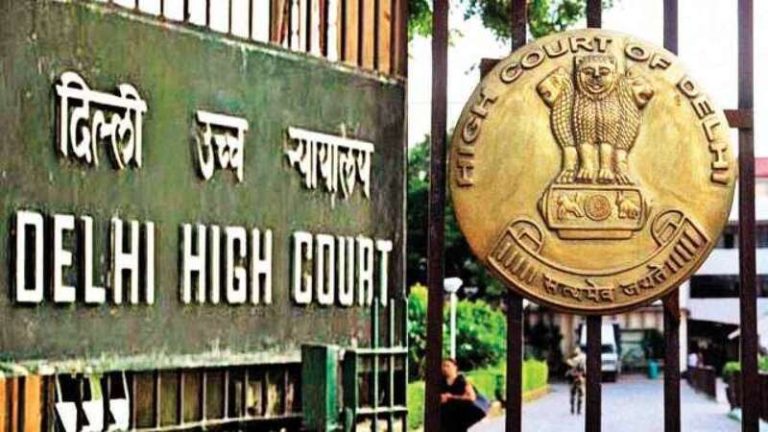
The Delhi High Court on 30th May upheld the termination of a Commanding Officer of in Indian Army who refused to take part in a regimental weekly Puja ceremony on the ground that it violated his Christian faith. Commanding Officer Samuel Kamalesan was counselled multiple times by his superiors about the importance of regimentation but he maintained his stand after which he was terminated.

Hearing the petition of the Commanding Officer, a bench of Justices Navin Chawla and Shalinder Kaur upheld his termination and observed, “uniformity among personnel, not only in their appearance but also in showing their respect for the religion of all, is quintessential to a cohesive, disciplined, and coordinated functioning of an Armed Force.”

The petitioner had challenged his termination order and his dismissal from the India Army without pension and gratuity. He sought reinstatement in service. Kamalesan, who was commissioned in the Army in 2027, submitted before the court that his troop maintained only a Mandir and a Gurudwara and not a ‘Sarv Dharm Sthal’ which would serve persons of all faiths. He also claimed that there was no church in the premises. He admitted that he accompanied his troops to Mandir or Gurudwara for weekly religious parades but sought exemption from entering the innermost part of the Mandir where puja, havan or aarti took place.

This is not a case of religious freedom but of disobeying of command: HC

The High Court noted that the officer was resolute in not attending the ceremonial puja and stood outside the premises due to his personal belief which is admitted by him. “The Commanding Officers are to lead by example and not by division; and by placing the cohesion of the Unit above individual religious preferences, particularly when commanding troops who they will lead in combat situations and war, ” the court said in its judgment dated 30th May.

After considering the submissions of both sides, the High Court stated that the present case does not involve a question of religious freedom but of obeying the lawful command of a superior. “It is not disputed by the petitioner that his superiors have been calling upon him to attend the religious parades by even entering the sanctum sanctorum and perform the rituals if this would help in boosting the morale of the troops,” the court noted.

Standard of discipline required in Armed forces is beyond ordinary: HC

“While, to a civilian, this may appear a bit harsh and may even sound far fetched, however, the standard of discipline required for the Armed Forces is different. The motivation that is to be instilled in the troops may necessitate actions beyond ordinary civilian standards,” the court explained.

The High Court dismissed Kamalesan’s petition citing that his conduct amounted to indiscipline as he placed his religion above a lawful command of his superior.

Delhi High Court rejects plea to halt demolition of Pakistani-Hindu refugee camp

0

The Delhi High Court has rejected a petition seeking to restrain the Delhi Development Authority (DDA) from demolishing the Pakistani-Hindu refugee camp at Majnu Ka Tila until alternative land is allocated to its residents.

The court acknowledged its sincere attempts to engage with relevant authorities to facilitate the rehabilitation and relocation of the refugees. However, these efforts remained unproductive, largely due to bureaucratic delays, particularly on the part of the Union of India. Despite the humanitarian concerns, the court clarified that framing policy for refugee relief is beyond its jurisdiction.

In a judgment delivered on Friday, Justice Dharmesh Sharma ruled that the interim order issued on March 12, 2024, stands vacated. The court further stated that the petitioner, Ravi Ranjan Singh, along with other similarly placed refugees, “have no right to continue to occupy the area in question,” thereby dismissing their plea to halt the eviction.

The bench emphasised the necessity of safeguarding the ecologically sensitive Yamuna floodplains.

It noted that environmental protection measures align with directives from the Supreme Court, the National Green Tribunal (NGT), and the Delhi High Court itself. These actions aim to preserve ecological integrity and uphold the fundamental right to a clean and healthy environment for both current and future generations.

Given the fragile state of the Yamuna River, the court asserted that any interference with its restoration efforts cannot be justified. It ruled that humanitarian considerations cannot override environmental imperatives, as such exemptions would delay critical public projects.

The petition, filed by Singh, highlighted the plight of nearly 800 Hindu refugees from Pakistan. It urged the court to direct the DDA to refrain from demolition until alternative land was allocated in accordance with the government’s policy under the Citizenship Amendment Act, 2019. The plea also called for embankments along the Yamuna to protect such settlements and religious structures, citing precedents like the Akshardham Temple and the Commonwealth Games Village. 

(This news report is published from a syndicated feed. Except for the headline, the content has not been written or edited by OpIndia staff)

IndiaAI Mission: India’s Common Compute Capacity reaches 34,333 GPUs with addition of around 16,000 GPUs, 3 more Indigenous Foundation Models selected

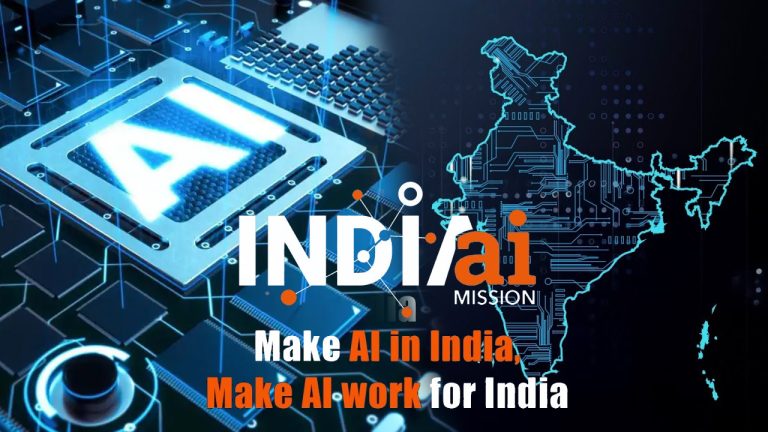
In a significant stride towards bolstering India’s artificial intelligence (AI) capabilities, the nation’s compute capacity has now exceeded 34,000 Graphics Processing Units (GPUs). This milestone was announced by Union Minister for Electronics & Information Technology, Ashwini Vaishnaw, during the ‘IndiaAI – Make AI in India, Make AI Work for India’ event held in New Delhi.

The augmentation includes an addition of 15,916 GPUs to the existing 18,417, culminating in a total of 34,333 GPUs. This expansion aims to provide a shared computational AI platform on the cloud, facilitating training and inference processes essential for developing indigenous foundational models and AI solutions tailored to the Indian context.

Seven industry partners contributed to this enhancement: Cyfuture India Pvt. Ltd., Ishan Infotech Ltd., Locuz Enterprise Solutions Ltd., Netmagic IT Services Pvt. Ltd., Sify Digital Services Ltd., Vensysco Technologies Ltd., and Yotta Data Services Pvt. Ltd. These companies are providing various processose like AMD MI300X, AWS Inferentia2, AWS Trainium, Intel Gaudi 2, NVIDIA A100, NVIDIA B200, NVIDIA H100, NVIDIA H200, NVIDIA L4, NVIDIA L40S etc.

Under the IndiaAI Mission, three additional startups have also been selected to develop and deploy Indian foundation models. They are:

  1. Soket AI: Tasked with creating India’s first open-source 120 billion parameter foundation model, optimized for the nation’s linguistic diversity and targeting sectors like defense, healthcare, and education.
  2. Gnani AI: Developing a 14 billion parameter Voice AI foundation model capable of delivering multilingual, real-time speech processing with advanced reasoning capabilities.
  3. Gan AI: Working on a 70 billion parameter multilingual foundation model aimed at achieving “Superhuman TTS (text-to-speech)” capabilities to surpass current global leaders.

These initiatives complement the efforts of Sarvam AI, previously selected to build India’s Sovereign LLM Ecosystem with an open-source 120 billion parameter AI model. Sarvam AI’s earlier models include Sarvam-1 (2 billion parameters) and Sarvam-M (24 billion parameters) with hybrid reasoning capabilities.

Union Minister Ashwini Vaishnaw urged the newly selected teams under the IndiaAI Mission to aim for a top-five global position in their respective sectors. Emphasizing Prime Minister Narendra Modi’s vision of democratization of technology, Vaishnaw said, “Technology should not be left in the hands of a few. It’s very important that a larger section of the society should be able to access technology, develop new solutions and get better opportunities. That’s the philosophy with which IndiaAI Mission was created. We are making significant progress in practically every pillar of the AI mission. Common compute is a very important principle of democratizing technology.”

The minister also noted that 367 datasets have been uploaded to AI Kosh, contributing to the creation of a comprehensive and inclusive AI ecosystem in India. The Minister underlined IndiaAI Mission’s role in fostering reverse brain drain, and creating a comprehensive ecosystem encompassing foundational models, compute capacity, safety standards, and talent development initiatives. He emphasized that these efforts are aimed at building a complete and inclusive AI ecosystem in India.

Recognition of Cybersecurity Innovations

In collaboration with the Indian Cyber Crime Coordination Centre (I4C) under the Ministry of Home Affairs, the IndiaAI I4C CyberGuard AI Hackathon was conducted to develop AI-based solutions enhancing the classification of cybercrime complaints and identifying emerging crime patterns. The hackathon’s outcomes include models capable of interpreting complex inputs such as handwritten FIRs, screenshots, and audio calls with improved speed and accuracy.

IndiaAI is an Independent Business Division under MeitY, is the implementation agency for the IndiaAI Mission. It strives to democratize the benefits of AI across all strata of society, bolster India’s leadership in AI, foster technological self-reliance, and ensure the ethical and responsible use of AI.

From podium to protest: Who is Megha Vemuri? Indian-American student banned from MIT for her pro-Palestine speech

0

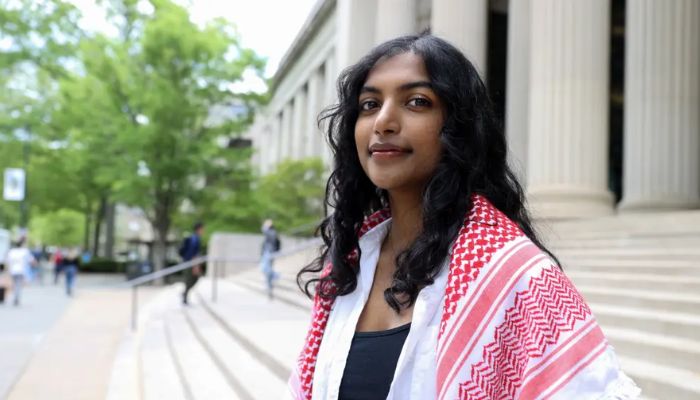
An Indian-American MIT Class of 2025 student, Megha Vemuri, has been barred from her own graduation ceremony for delivering a surprise pro-Palestine speech. Vemuri, who happened to be the president of the class, sparked controversy with her speech made during an event on 29th May. In her speech, she sharply criticised Israel and accused the Massachusetts Institute of Technology of being complicit in what she called the “genocide” of Palestinians.

Her remarks triggered a walkout by several Jewish students and prompted MIT to ban her, along with her family, from most of the campus during the official commencement that was scheduled for 30th May.

What did Megha Vemuri say?

Vemuri came off the stage wearing a red keffiyeh, a scarf linked to Palestinians. She went off-script during her speech and lashed out at MIT for its alleged ties with the Israeli Defence Forces (IDF). She said, “The Israeli occupation forces are the only foreign military that MIT has research ties with. This means that Israel’s assault on the Palestinian people is not only aided and abetted by our country, but our school.”

She further claimed, “We are watching Israel try to wipe Palestine off the face of the earth, and it is a shame that MIT is a part of it.”

Though she got cheers from a few sections of the audience, her accusations drew visible discomfort and audible boos. She declared, “You faced threats, intimidation and suppression coming from all directions, especially your own university officials. But you prevailed, because the MIT community that I know would never tolerate a genocide.”

Why did MIT ban her?

Following the incident, University Chancellor Melissa Nobles sent an email to her stating that she had deliberately misled the commencement organisers. The letter read, “While we acknowledge your right to free expression, your decision to lead a protest from the stage, disrupting an important institute ceremony, was a violation of MIT’s time, place and manner rules for campus expression.”

As a result, Vemuri and her family were banned from attending the undergraduate commencement on 30th May.

Who is Megha Vemuri?

Megha Vemuri was raised in Alpharetta, Georgia. She completed her school at Alpharetta High School before joining MIT in 2021. Recently, she graduated with a degree in computer science, neuroscience and linguistics. She is associated with a campus group called “Written Revolution”, which describes itself as a platform for revolutionary ideas. She has previously worked with the UCT Neuroscience Institute in South Africa as a research intern.

Jewish students walk out in protest

Vemuri’s comments during the ceremony provoked strong reactions, especially from Jewish students and their families. Many walked out mid-ceremony. One Israeli student told media, “All of our families came from far to see the ceremony and were extremely disappointed.”

Another graduate said the walkout included not just Israeli families but many Jewish attendees who found her words offensive and inappropriate for the occasion.

In a statement, MIT stood by its disciplinary action, saying it supports free speech but will not tolerate deliberate disruption of institutional events through misleading conduct.

A recurring pattern on campuses?

This is not the first time American universities have witnessed aggressive anti-Israel protests that included hostile occupation of spaces, confrontation with Jewish students, and inflammatory speeches. Interestingly, Vemuri took the drastic step leading to her ban at a time when the US government under President Donald Trump is taking strict action against students involved in campus activism, especially against Israel.

Vemuri followed the trend and used a public and shared moment to push a divisive narrative that many believe crossed the line from political expression into targeted hostility.

A criticism worth making

Vemuri’s remarks were not limited to dissent. She accused her own university of complicity in genocide and framed Israel’s actions as total erasure of an entire community. By doing this, she misrepresented facts and turned a solemn and inclusive event into a theatre of political provocation.

Her speech was so hurtful that several Jewish students felt the need to walk out of what should have been a moment of joy. In the name of resistance, people like Vemuri risk replacing dialogue with dogma and inclusivity with intimidation. And when the so-called revolution begins by pushing out Jewish students from their own graduation, it might be time to question just whose rights are being defended.

Busting the brainwashing industry: ‘His Story of Itihaas’ challenges India’s distorted history taught in textbooks and reclaims stolen civilizational memory

“Did Emperor Ashoka really embrace Buddhism out of remorse for the Kalinga war?”
“Was Akbar truly great?”
“Was Tipu Sultan a freedom fighter?”
“Is Aurangzeb really a ‘living saint’?”
“Did Vasco da Gama ‘discover’ India?”
“Did Islamic invaders really rule India for 1000 years?”
“Was Sati an obligatory ritual for Indian widows?”
“Has India truly contributed nothing to science and mathematics?”
“Is the Swastika a Nazi symbol?”
“Is biryani a foreign dish in India?”

We all know the answers we read to these questions in our school textbooks. But were those answers really true? Or is the truth something else – systematically hidden from us for generations? Were entire generations deliberately misled? Were our children made to feel ashamed of their own nation and culture? ‘His Story of Itihaas’ is a film that attempts to seek answers to these very questions.

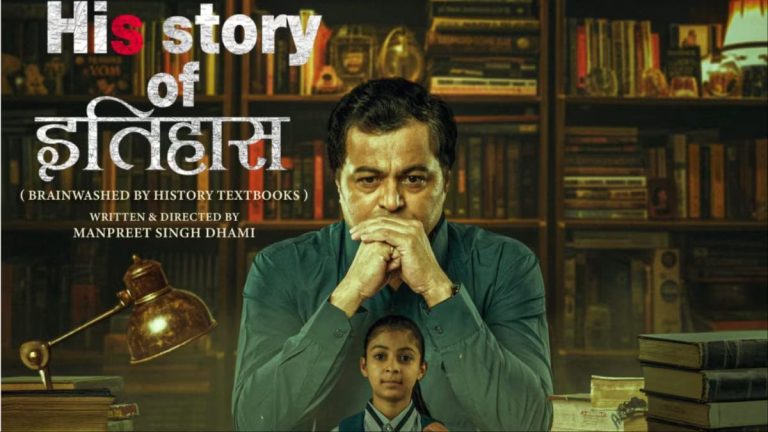
Before we go further, let’s talk about the film. The story revolves around a physics teacher, played by the acclaimed Marathi actor Subodh Bhave. Bhave has been active in the Marathi industry for years and has won several awards. With a strong background in theatre, his acting needs no justification. Alongside him, seasoned actor Yogendra Tiku plays a history professor – an artist we’ve all seen in many films. We strongly recommend you watch this film in theatres. That’s why this review doesn’t reveal the plot. It’s a low-budget film made with immense struggle and effort – it’s our duty to respect that effort. The struggle is real – nearly 60 actors rejected the script simply because of the film’s subject. Directed and produced by Manpreet Singh Dhami under the banner of ‘Panchkarma Films’, the film is a rare gem in today’s cinematic landscape.

‘His Story of Itihaas’ Digs Deep into a Critical Crisis

The film is based on real incidents. If you’ve read Neeraj Atri’s book ‘Brainwashed Republic’, you’ll have a clear idea of what the film covers. Atri has long raised his voice against the distortions in our school textbooks. He questioned NCERT over several so-called historical facts taught to children, and the board could not provide a single piece of credible evidence in response. Atri went on to write an entire book on the subject. Through his YouTube channel Politically Incorrect, he continues to raise awareness.

Back to the film, it never bores you, despite dealing with a sensitive and serious subject. The portrayal of leftist professors and historians feels real—you’ll recognize them. For many viewers, this might be the first time they truly understand how parents and children get trapped in their ideological web. The film runs a parallel narrative of two families – one wealthy, one not. And it successfully shows that the issue affects everyone, regardless of class or gender.

It’s a story of resistance against a powerful system. It’s a challenge to the status quo, and a lament for the helplessness of the new order that emerges after change.

‘His Story of Itihaas’ is your story, your household’s story

  • It’s the story of brainwashed mothers who tell their children “sit karo” & ‘eat kro’ to flaunt their English.
  • It’s the story of brainwashed fathers who take loans to send their kids to missionary schools, only to develop BP and diabetes under the pressure.
  • It’s the story of a brainwashed child who views the Swastika as a symbol of hatred.
  • It’s the story of a brainwashed teen who tries to look “cool” and begins walking the path of Christian conversion through Western influence.
  • It’s the story of a brainwashed IAS officer who sees his own country with contempt.

This is also the story of an entire brainwashing industry.

  • An industry that includes activist women with oversized bindis, who consider their writings to be the ultimate truth—and dismiss any challenge as a “rant.”
  • An industry with historians who call temples mosques just to keep certain narratives intact.
  • An industry where professors who try to teach real history are mocked for their language and accent.
  • An industry where even leaders who promise change are rendered helpless once in power.
  • An industry that has perfected tactics to manipulate everything – from streets to parliaments to universities, to maintain its grip on the system.

Films Are Now Being Made on Once ‘Untouchable’ Topics This is not a technical review, because this film transcends that. The story is set in Delhi and Noida, so there’s not much visual grandeur to showcase. The narrative is contained within homes, schools, and university halls – occasionally reaching a gurdwara, which also carries a message.

The fact that films are now being made on topics once considered “untouchable” is a victory in itself. What began with The Kashmir Files in 2019 has now reached Chhava and His Story of Itihaas. Perhaps if we had been taught history truthfully, there would have been no need for films like The Kashmir Files or Chhava in the first place.
This film exposes the brainwashing industry that has long controlled our minds.

“The government may be theirs, but the system is still ours.” This powerful line from The Kashmir Files resonates even more deeply after watching His Story of Itihaas.
Because even today, the academic and creative space is dominated by those who are hell-bent on erasing or tarnishing anything positive about India. And this is a battle that cannot be won by just one film. The problem is too deep-rooted—it will take many such efforts to cleanse the rot.

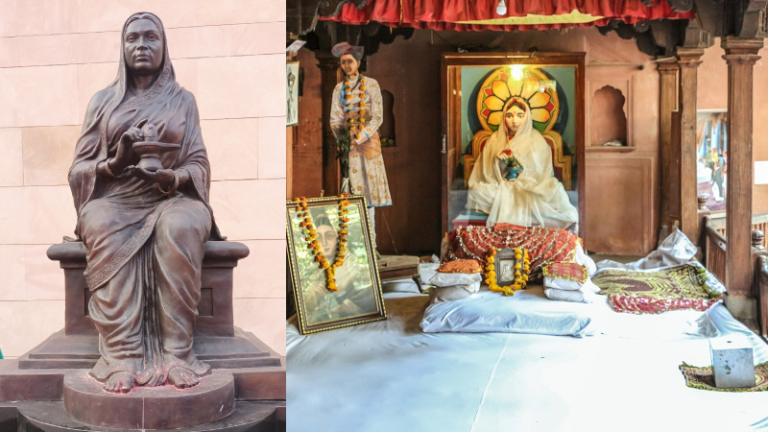
A rare confluence of religion, governance, and service, Lokmata Ahilyabai Holkar left a mark from Kashi to Kedarnath: An introspection on her 300th birth anniversary

Whenever public welfare is discussed in the context of Indian history, some personalities shine like stars – one of these brightest star is the name of Lokmata Devi Ahilyabai Holkar, who was born on May 31, 1725 in Chaudi village of Aurangabad district of Maharashtra. Her father Mankoji Shinde was an ordinary farmer, but was a very religious and cultured person. Right from her childhood, Mother Sushila Bai taught Ahilyabai the values ​​of religion, penance, service and tolerance, which became the foundation of her entire life.

The beginning of an extraordinary life

Contrary to social customs, Ahilyabai had the good fortune of being noticed by Malharrao Holkar, the ruler of the Holkar dynasty, in her childhood itself. Impressed by her culture, intelligence and behaviour, Malharrao wanted her to marry his son Khanderao. Thus, she became the daughter-in-law of the Holkar royal family in Indore.

Ahilyabai’s life was full of struggle from the very beginning. The untimely death of her husband Khanderao in a war 1754, then the death of her father-in-law Malharrao Holkar (1766), and then the death of her only son Malerao – all these tragedies could break any ordinary woman. But Ahilyabai, with the strength of her tolerance, patience and extraordinary ability in governance and management, was able to handle not only herself but also the entire Holkar empire.

Leadership symbolizing sacrifice and austerity: In 1767, Ahilyabai took over the reins of the Holkar empire. She kept her personal life extremely simple by cutting down administrative expenses. She never misused the state treasury. She considered the welfare of the common people as the main objective of governance and this approach led to her title of ‘Lokmata’.

During her reign, Maheshwar was made the capital of the empire, where she lived a simple life. Her residence still exists there which can serve as a symbol of an ideal lifestyle for leaders, administrators and people associated with the judicial system.

The ideal of justice and love for the people

Ahilyabai’s justice system was so transparent and quick that she is compared to King Harishchandra of ancient times. She used to personally sit in the court and hear cases. Her view was, “The first duty of a king is to serve his subjects, not his own benefit.” She empowered all sections of society by providing fair pay to soldiers, reducing taxes to help farmers, and expanding trade facilities.

Lokmata Ahilyabai Holkar was the patron of Indian culture

Devi Ahilyabai was not only an efficient administrator but also a major inspiration for Indian cultural revival. She built hundreds of temples, ghats, wells, dharamshalas, sadavrat (free eateries) to help travelers across the country. The list of religious places built by her is so extensive that its compilation can be a subject of research in itself.

Kashi, Ayodhya, Mathura, Vrindavan, Somnath, Dwarka, Rameswaram, Badrinath, Kedarnath, Trimbakeshwar, Ujjain, Gangasagar, Tirupati, Jagannath Puri – there is hardly any major pilgrimage site in India that does not bear the mark of Devi Ahilyabai’s contribution.

Particularly the reconstruction of the Kashi Vishwanath temple (1780) is a symbol of her religious consciousness and cultural commitment. When Aurangzeb demolished this temple in 1669, it remained neglected for a long period. Ahilyabai not only got it rebuilt, but also made complete arrangements for the proper management of the priests, travelers, dharamshalas and pilgrims there.

A ruler with a modern outlook

Ahilyabai also revived roads, improved water management, transport, security and communication. During her reign, a road was built from Kashi to Calcutta, so that pilgrims could travel conveniently. British officer Sir John Malcolm praised Devi Ahilyabai in his book ‘Memoirs of Central India (1823)’ and wrote that his assistant Captain D.T. Stuart saw dharamshalas and wells built by the Holkars in inaccessible pilgrimage sites like Kedarnath and Devprayag.

Glory of women in Sanatan culture: In Indian culture, women power is considered to be Jagadjanani, Ardhanarishwar, Shakti-Swarupa. Devi Ahilyabai was the embodiment of that tradition. She was a mother, a widow, an administrator, a judge, a donor, a Yogini, a scholar and a saint. She proved through her life that coordination of Dharma and power is possible, when the objective is public welfare.

Why is Ahilyabai relevant in today’s era? Today, when moral values ​​are eroding in politics, administration and religion, personalities like Ahilyabai inspire that governance can be done with honesty, sacrifice and service.

Every aspect of her life is a school for modern public life on how to do good for people even with limited resources, how power should be used for the national interest rather than for self-interest, and how, despite being a woman, one can pass the tests of supreme leadership.

Tricentenary anniversary: ​​Not just a celebration, but an opportunity for introspection

On Saturday (May 31, 2025), 300 years of Devi Ahilyabai Holkar’s descent on earth will be completed. This is not just a fact but an opportunity for introspection for a nation.

It is time to think:
● Are we able to learn something from her justice and administrative ideals?
● Have we imbibed her love for her subjects in our conduct?
● Do we have the same reverence and spirit of service towards religious places and cultural heritage?
● Can her ideals become an inspiration for today’s leaders and administrators?

Unless these questions can be answered with a ‘yes’, the celebration of the 300th birth anniversary of Devi Ahilyabai will remain a mere formality.

The eternal message of a visionary

Ahilyabai’s entire life is a book, which has sacrifice, religion, ethics, leadership and above all, the spirit of public welfare. For her, power was a means of service, not enjoyment.

Today there is a need to tell our children the story of her life, make our leaders aware of her principles, and connect our society with her life. Only then will this legacy of ‘Lokmata’ remain alive in reality.

(The author Harishchandra Srivastava is a social and political thinker)

UPI rules, ATM withdrawals, Credit Cards, EPFO, Aadhaar updates etc: Here are the key changes set to kick in from June 1

Some significant financial changes are set to take effect from June 1, 2025 across the country which are likely to impact the everyday finances of the common man. The changes are taking place in credit cards, Aadhaar system, UPI, TDS etc. Here is a list of the changes to be implemented from tomorrow:

EPFO 3.0

The Employees’ Provident Fund Organisation (EPFO) is likely to introduce the EPFO 3.0 system from 1st June. The new system will simplify the process of withdrawal of Provident Funds, streamline Know Your Customer (KYC) updates, and expedite claim processing. To make the process of withdrawal of PFs easier, an ATM-like feature has also been introduced.

Aadhaar Card update

Those looking to change their Aadhaar details online can do that for free by June 14, 2025. After the deadline, any changes in the Aadhaar details such as names, address, etc. will incur a charge of ₹25 through online mode and ₹50 at the physical centres.

TDS Certificate deadline

June 15, 2025 is the deadline for the issuance of the TDS (tax deduction at source ) certificate under Form 16. It is a document provided by employers to salaried employees, which confirms tax deduction from their salaries. It is a proof that the decucted salary has been submitted to the Income Tax Department and is required for filing returns (ITR). The certificate is issued by June 15 of the relevant financial year.

UPI rules

In a significant step, the National Payments Corporation of India (NPCI) has mandated all UPI apps to display the verified names of the beneficiaries during transactions instead of QR codes or edited names. This decision, effective from 30th June, has been taken to reduce fraud and misdirected payments.

Additionally, the NPCI will restrict UPI balance enquiries and will set specific hours for processing UPI autopay mandates from August 1, 2025. This is intended to reduce load on servers and improve performance.

Credit Card Payments

Some banks are introducing new rules regarding credit card transactions such as payment of bills from June 1. For example, Kotak Mahindra Bank will charge 1% fee on fuel payment exceeding monthly cap. The bank will also put a limit on reward points items like rent, utility bills, and insurance.

Similarly, Axis Bank will introduce phased changes to its REWARDS Credit Card from 20th June which will involve changes in reward points, cashback percentages, lounge access, and spending categories for certain cards. From 10 June 2025, HDFC is also revising its lounge access policy for Tata Neu Infinity and Tata Neu Plus credit cardholders. As per the new policy, lounge access will be available through vouchers based on quarterly spending instead of direct card swipes.

ATM withdrawal fee

Some banks are likely to introduce increased fee on withdrawal of money from ATMs above the free threshold. The charges might differ from bank to bank.

FD Rates

Some banks may alter the interest rates on fixed deposits (FDs) from 1st June. ICICI Bank has reduced rates by upto 20 baic points on select tenures. Suryodaya Small Finance Bank has also decreased interest rates from 8.6% to 8% for 5-year FDs. For deposists below ₹3 crore, the bank will offer interest rates from 4% to 8.4% for tenures between 30 to 36 months.

Mutual Funds

The Securities and Exchange Board of India (SEBI) has introduced changes in the cut-off timings for overnight mutual fund schemes, effective from 1st June. As per the new cut-off timings, 3pm has been set for offline transactions and 7pm for online transactions. This means that any order made after these cut-off timings will be processed the next working day and may get a different net asset value (NAV) calculation process.

LPG cyliner

The prices for domestic LPG cylinders will also be revised at the beginning of the next month. The prices may increase, decrease or remain unchanged based on oil companies and market conditions

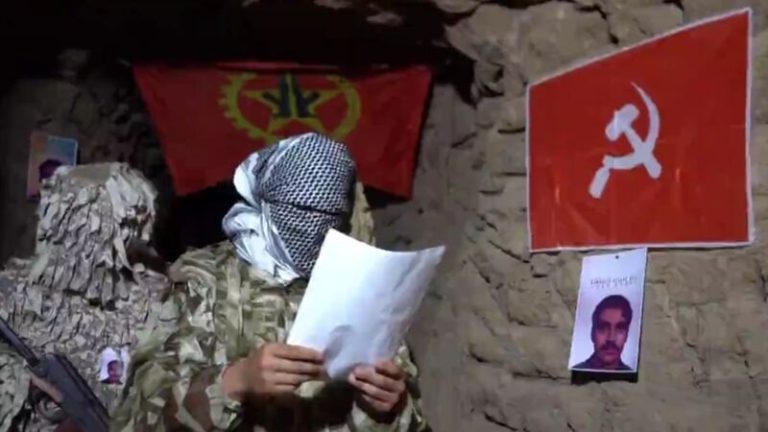
Maoist leader Basavaraju’s international connections, Turkey’s leftist terror group pays tribute to the terrorist killed by Indian security forces

Turkey’s Maoist terror group called Türkiye Komünist Partisi-Marksist Leninist (TKP-ML) paid tribute to the dreaded Maoist leader Nambala Keshav Rao alias Basavaraju. The General Secretary of the Maoist Party was killed along with 26 naxals by the Indian security forces during an anti-naxal operation on 21st May in the forests of Abujhmad in the Narayanpur district of Chhattisgarh.

“We send our condolences to all the workers, peasants and laborers of India, especially to the fighters and commanders of our sibling army PLGA. We respect the memory of the immortals and declare our eternal commitment to their struggle,” said the Maoist group in a video message.

TKP-ML, which is fighting the “people’s war” in Turkey, criticised the Indian government, describing it as “fascist Brahmanical Hindutva RSS-BJP Regime” for killing Basavaraju. “The fascist Brahmanical Hindutva RSS-BJP Regime is using fascist terrorism to defend the interests of large mining companies and multinational monopolies. Under the name of operations against Maoist guerrillas, it is massacring indigenous peoples who resist large mining companies and manipulating these operations by presenting everyone they killed as guerrillas,” said a masked Turkish Maoist terrorist reading out a message in the video.

The Maoist group hailed Basavaraju, who was responsible for orchestrating brutal attacks in which several politicians and security persons lost their lives, as a hero of the workers and the peasants. They said, “Throughout his entire life of struggle, Comrade Basavaraju worked for the liberation of the workers and peasants with a consciousness of fire and a will of steel. He dedicated his life to the freedom of the poor people living on the soil of India. He understood the revolution not only as a duty but as a way of life, and he brought the Indian revolution into existence in his own life.”

The Maoist terror group avowed to continue with the “struggle of the masses” and “to leap even further on the illuminated path of Marxism-Leninism-Maoism in the flowing struggle of the masses like a flood. The absolute victory of the People’s War will shine like a star in the skies of South Asia.”

India’s fight against Naxalism

The Indian government has resolved to uproot Naxalism from the country by March 2026. To achieve this end, the government has adopted an aggressive military approach to counter Naxal terrorism which entered its last phase under Operation Kagar which was launched by the government in January 2024.

Under the operation, around 1 lakh para-military troops, including the Central Reserve Police Force (CRPF), its elite CoBRA units, District Reserve Guards DRG), and state police, equipped with modern technology, have been deployed in the left-wing terrorism affected areas to completely uproot the naxal terrorism from its last remaining strongholds. Since the inception of the operation, the security forces have eliminated over 400 naxal terrorists so far while more than 800 Maoists have surrendered.