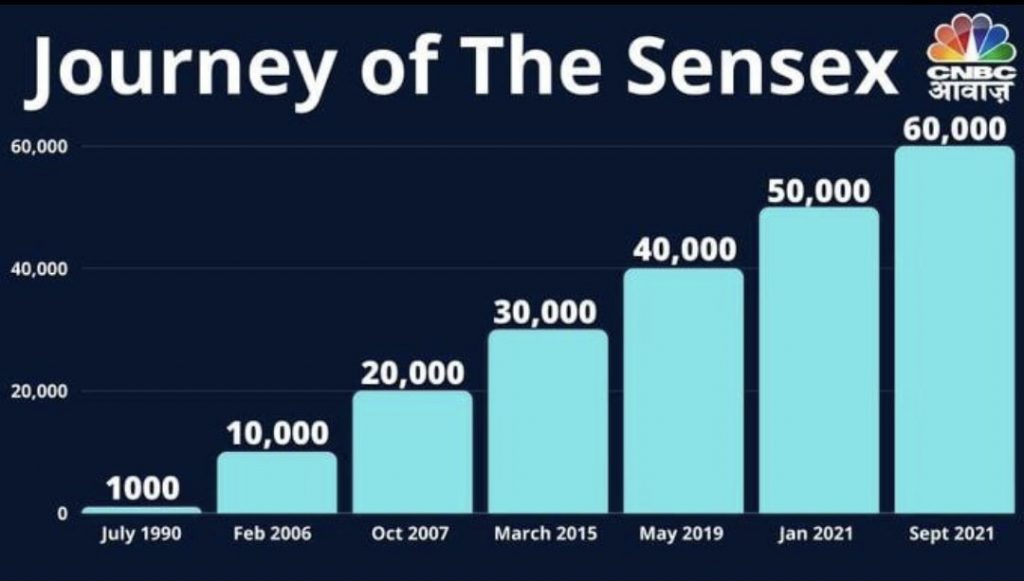
The BSE Sensex on Friday touched an important milestone, breaching the 60,000-mark for the first time ever as the 30-stock benchmark index continues to rally on the back of expanding Covid-19 vaccination coverage, eased restrictions on business activity and the government’s measures to boost the economy.
Besides, NIFTY, another benchmark Indian stock market index that represents the weighted average of 50 of the largest Indian companies listed on the National Stock Exchange, was also up by about 100 points to touch the new highs of 17,900 levels.
As per the CEO of Motilal Oswal Financial Services, “Equity market today had a historical day with Sensex touching 60,000 for the first time driven by large caps with many index heavyweights touching new highs.”
“Given rich valuations, one cannot ignore intermittent volatility. However, we expect the positive momentum to continue on the back of improving economic activity and recovery in corporate earnings,” Oswal said.
COVID-19 vaccination coverage, positive global sentiments and favourablep govt policies power the Sensex surge
The significant milestone testifies the resilience of the Indian Inc. that came under strain in the wake of uncertainty wrought by the coronavirus pandemic in early 2020. But a deluge of global liquidity and faster-than-expected earnings recovery from the pandemic lows boosted public sentiments that have driven the markets to scale unprecedented heights.
The Sensex was languishing at the low of 25,638 on March 24, 2020, days after PM Modi had announced a rigorous lockdown to stop the spread of the virus. Since then, the S&P BSE Sensex has surged approximately 134%in a matter of just 18 months, with the last 10,000-point rally coming in just over eight months.
This was the fastest pace at which the Sensex had completed its 10,000-point rally. It took only 167 trading sessions for the stock index to blaze through from 50,000 to 60,000 points. Before this, the index had taken on an average of 931 sessions for a 10,000-point move.
Sensex charts a fastest ever 10,000-point rally, completed its journey from 50k to 60k mark in just over 8 months
To put the gains made by the stock markets in perspective, it is worth noting that it took four and half years for Sensex to touch the 1,000 mark after it was launched in 1986. The Sensex touched the 10,000 mark for the first time in February 2006. It took another 18 months for the next 10,000-point move. The subsequent 10,000-point rally to reach 30,000-mark came after eight years, in March 2015.
An inevitable correction came and the stock markets wavered around for the 30,000 mark for a while before reaching the milestone of 40,000 points in March 2019. The market steadily grew since then but the onset of COVID-19 in early 2020 threw spanner in the works, eroding the hard-earned growth achieved in the last several years.
Source: CNBC
The Sensex was at 30,000 levels in January 2020 and it touched low levels of 25,000 in March 2020, around the time when India was girding for a pandemic that had first emerged in the central Chinese city of Wuhan in December 2019. However, it took just one and half years for the Sensex to completely shake off the slump induced by COVID-19 restrictions and shutdown, with the 50,000-mark breached in January 2021 and another 10,000 points added in the next eight months.
Stock analysts and pundits predict that if the momentum is sustained, Sensex might touch the 1,00,000-mark by the end of 2022-2023 financial year or roughly eighteen months from now. But they are also wary that the parabolic move in the last few days could lead to short-term correction, driven by investors’s tendency to book profits. Additionally, caution is also advised in the eventuality of a subsequent wave of coronavirus pandemic that could once again disrupt businesses and the country’s overall economic growth.
In a bizarre judgement, the consumer court in Delhi has awarded a Rs 2 crore compensation to a model for the mental trauma she allegedly underwent because of a bad haircut given to her by the hairstylist at Delhi’s ITC Maurya.
For the mental harassment caused to the woman, the National Consumer Disputes Redressal Commission (NCDRC) has in its order dated Tuesday, September 21 asked the five-star hotel in Delhi to pay a whopping Rs 2 crore compensation to the woman.
A two-member bench comprising of President Justice RK Agrawal and member S M Kantikar said: “There is no doubt that the women are very cautious and careful with regard to their hair. They spend a handsome amount on keeping the hair in good condition. They are also emotionally attached with their hair”.
The court has asked ITC to pay the compensation to the complainant Aashna Roy within 8 weeks for deficiency in service under the Consumer Protection Act.
“The Opposite Party No 2 is also guilty of medical negligence in hair treatment. Her scalp was burnt and still, there is allergy and itching due to fault of the staff of Opposite Party No 2,” noted the commission.
‘Has stopped seeing herself in the mirror’, the court noted while ordering ITC Maurya to pay the compensation
Roy reportedly told the court that she has undergone severe mental breakdown and has stopped seeing herself in the mirror and refrained from all social activities because of the “shoddy haircut and thereafter the torturous hair treatment”.
“She stopped seeing herself in the mirror… and her social activities. She is a communication professional and is required to be involved in meetings and interactive sessions. But she lost her self-confidence due to her little hair. She has also suffered a loss of income due to a mental breakdown after the shoddy haircut and thereafter the torturous hair treatment. She left her job also,” noted the bench.
The consumer court bench added that the complainant, because of her long hair has been a model for hair products and has done modelling for big brands like Pantene and VLCC. “But due to hair cutting against her instructions… she lost her expected assignments and suffered a huge loss which completely changed her lifestyle and shattered her dream to be a top model,” it added.
The respondents in the case, on the other hand, had submitted that the “compensation claimed by the complainant is ex-facie exaggerated and without any basis”.
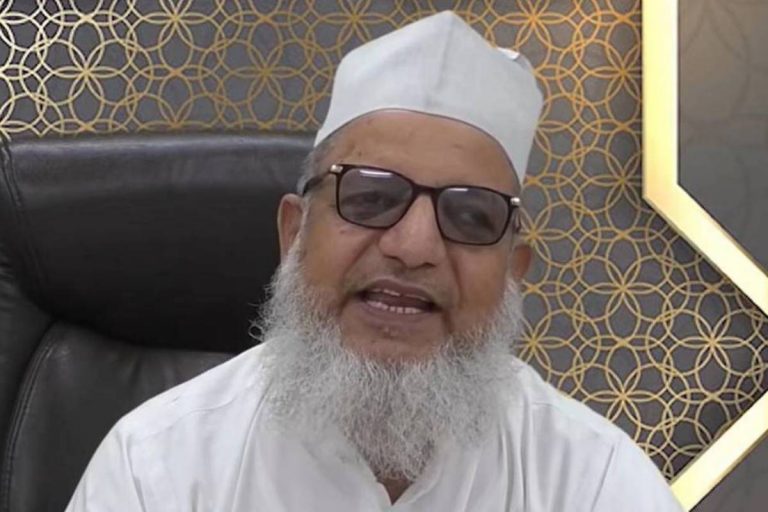
An audio clip of the Islamic scholar Maulana Kaleem Siddiqui, who was arrested on charges of religious conversions by the Uttar Pradesh Anti-Terrorist Squad on Tuesday, September 21, has gone viral. In the audio clip, the Maulana admits that upper caste girls like the Brahmins or the Kshatriyas were the targets for the mass conversion syndicate he had been operating.
In the audio clip shared by Zee News, Maulana Kaleem said: “…isse pehle aaye the toh who bole ki choti jaat ke hain, agar ladki Brahmin ya Kshatriya ya phir koi badi jaat ki ho toh woh jam jaata hain” (…the ones who came before, belonged to the lower caste, its better if the girl is a Brahmin, Kshatriya or from any other upper caste). The Maulana added that he will do something once the lockdown opens.
Maulana Kaleem Siddiqui received funds from Islamic countries including Pakistan
Prior to this, it was also revealed that the cleric was receiving funding from Pakistan for running his illegal conversion racket. Apart from that, Pakistan had also been providing technical assistance to Maulana Kaleem Siddiqui.
Earlier, the police had revealed that the 64-year-old Islamic scholar runs Jamia Imam Waliullah trust that funds several madrassas for which he received huge foreign funding. Uttar Pradesh ADG (Law and Order) Prashant Kumar informed, “Investigation shows Maulana Kaleem Siddiqui’s trust received Rs 3 crores in foreign funding including Rs 1.5 from Bahrain.”
The Islamic scholar arrested by Uttar Pradesh ATS
Siddiqui was on the radar of security agencies and was nabbed from Meerut late on Tuesday (September 21) night. The police official further said that six teams have been formed to investigate the matter further. The Islamic scholar was interrogated along with his three associates throughout the night by UP police.
During the interrogation of ATS, Maulana Kalim also said that after the arrest of Umar Gautam, he too was afraid of being arrested. He confessed to changing his mobile number twice to avoid being caught by the ATS.
A fresh case of forced conversion has been lodged in the Faridabad district of Haryana against Islamic scholar Maulana Kaleem Siddiqui by one Vinod Kumar alias Noor Mohammad. The complainant said that he was a minor when Maulana Kaleem Siddiqui had forced him to accept Islam.
Maulana Kaleem Siddiqui and five others have been booked for the forced conversion. The Public Relations Officer (PRO) of Faridabad Police, Sube Singh, has confirmed the FIR has been lodged.
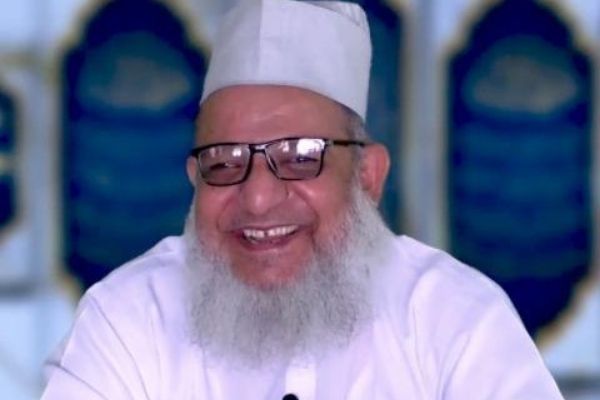
64 years old Maulana Kaleem Siddiqui, one of the top clerics from western Uttar Pradesh, was arrested by the Anti-Terrorist Squad of Uttar Pradesh Police for being involved in the biggest conversion racket. So far the investigation is concerned with the cleric who runs Jamia Imam Waliullah trust and Global Peace Center, which is alleged to have received foreign funding worth Rs 3 crores.
In the fresh case, the complainant who is the resident of Premnagar, sector 17 of Faridabad district, said that he was a minor in 2013 when Maulana Kaleem Siddiqui and his associates forcefully converted him to Islam. The complainant further alleged that a person name Dilshad whom he identified as a close aide of Maulana Kaleem Siddiqui often pressurized him to undergo terror training in Pakistan.
Explaining how he became a victim of the conversion racket, Binod Kumar said that in 2011-2012 he was a student of class nine at New Vidya Mandir School. Some of the Muslims, including Shahzad and his relatives Anish Khan, Rahish Khan, Ashfaq Siddique and Mohammd Ali stayed in the same locality. They regularly used to poison his mind about Hindu religion and enticed him to change his religion to Islam.
These Muslims regularly took him to a local mosque “Sitara Masjid’ where he was brainwashed that if he accepts Islam it will save him from hell.
In 2013 they took him to the Global Peace Center of Maulana Kaleem Siddiqui located at Shaheen Bagh. Maulana Kaleem Siddiqui coaxed him to recite the kalima stating that Islam will save him from the fire of hell. Vinod Kumar was named Noor Mohammad soon after that.
After that Vinod Kumar turned Noor Mohammad was sent to Uttar Pradesh and Gujarat to study Islam which mostly focused on hate for Hinduism. But the situation had left him terrified as Dilshad often pressured him to visit Pakistan to receive terror training.
The victim has also explained why he lodged the FIR so late. He said that in 2018 he somehow managed to escape from their clutches and remained underground for two years in Faridabad. In 2020 he visited his family after he came to know that his sister had been married.
He narrated the whole episode to the family members who convinced him to lodge an FIR.
Court sends Maulana Kaleem Siddiqui on 10 days police remand in UP conversion racket case
In the Uttar Pradesh conversion racket, the Special Judge NIA/ATS YR Gupta sent Maulana Kaleem Siddiqui on 10 days police remand for his questioning by the ATS. The custody period starts from 10 AM of September 24 till 10 AM of October 4. In the remand plea, ATS said that a mobile phone and seven local and foreign SIM cards were recovered from the possession of the accused. ATS claimed that he runs many Muslim institutions and through them, he used to convert non-Muslim into Islam. He has been booked under relevant sections of the Uttar Pradesh Prohibition of Unlawful Conversion of Religion Act, 2020 and IPC.
ATS G.K. Goswami the IG of ATS informed that Maulana Kaleem Siddiqui will be taken to the offices Global Peace Center, which will be raided to gather digital and documentary evidences. Besides, he will be taken to Meerut and Muzaffarnagar after the raid in his Delhi institution is completed.
On Thursday (September 23), a political analyst by the name of Masood Hashmi courted controversy after he claimed that Hindu parents teach their daughters to lure Muslim men to avoid dowry during marriages.
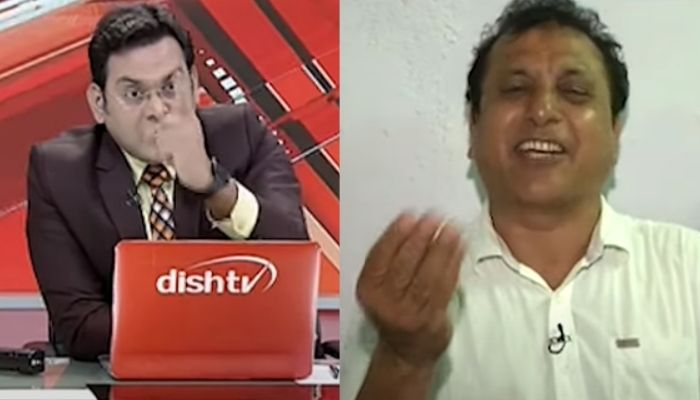
He made the contentious remarks during the ‘Shankhnaad’ show that was aired on Thursday on Zee Hindustan. At about 37 minutes and 40 seconds into the show, Hashmi alleged, “Hindu parents get their daughters hitched to Muslim men. Because Hindus take dowry while Muslims don’t. So, they tell their daughters to marry Muslim men over Hindus.” His comments were preceded by claims of attaining ‘Jannat (paradise)’ if one converted to Islam.
(Video Credits: Youtube/Zee Hindustan)
A furious Rohit Ranjan interrupted Hashmi and asked him to get out of the show. “People with such crooked thoughts are not welcome anywhere. Who are you to question the Hindu religion? Do you have any proof of what you just said? Sitting on a debate and making baseless claims,” he stated. At that point, Hashmi claimed that the anchor was furious only because he had said ‘truth’ to his face. Rohit Rajan kicked him out of the programme and made it crystal clear to his audience that mockery of the Hindu Faith will not be tolerated on his show.
In a tweet, he wrote, “Make fun of Sanatan Dharma, speak against Hindu daughters and still expect us to remain silent? Have removed you out of show now. Hold your tongue. We neither speak ill of anyone nor tolerate anyone speaking ill (of our religion).”
सनातन का मज़ाक़ बनाओ, हिंदू बेटियों के ख़िलाफ़ बोलो और हम ख़ामोश रहेंगे? अभी तो बस शो से बाहर निकला है… ज़ुबान पर लगाम लगाओ… ना ग़लत कहते हैं ना सुनेंगे… pic.twitter.com/cbrv2XM8y2
The show was based on the recent conversion racket that was unearthed in Uttar Pradesh. On Wednesday (September 22), the Anti-Terrorist Squad (ATS) had arrested one Islamic scholar Maulana Kaleem Siddiqui from Western UP on charges of forced conversions. The 64-year-old Islamic scholar runs Jamia Imam Waliullah trust that funds several madrassas for which he received huge foreign funding, the police had said.
The UP ATS initiated a massive investigative operation after the arrest of one Umar Gautam and his aide in June. Reportedly, the duo ran an organisation named Islamic Dawah Centre (IDC), along with their other associates, to mass convert people into Islam through inducements such as marriage, job and money and mental pressure. They were accused of targeting differently-abled children to convert and use them as human bombs. Moreover, the investigation has also revealed the illegal foreign funding received by Gautam and his accomplices.
The Bajrang Dal members in Jahangirabad town in Bulandshahr, Uttar Pradesh have approached the police with a complaint against some local youths named Samshudin, Naushad, Chaman, Akram, Rahim, Anas, Mehtab and 30-40 other unidentified youths accusing them of assault and kidnapping.
The complaint has been lodged by the Bajrang Dal district Gau Rakshak chief Yatendra Kumar. According to a report by Hindi daily Jagran, a mob of 30-40 people, including the accused persons, had attacked the home of youth named Akash after a minor scuffle.
The purported incident took place on Wednesday, September 22 in the Jalilpur block in Bulandshar’s Jahangirabad town, which a Muslim-dominated area.
Sharing details of the case, Vishwa Hindu Parishad member Vivek Tripathi warned that if stern action is not taken against the perpetrators, the Hindu outfit would stage protests.
बुलंदशहर स्थित जहाँगीराबाद कस्बे मे बजरंगदल के जिला गौ रक्षा प्रमुख यतेंद्र गहना जी और उनके साथियों पर जिहादियों के द्वारा जान से मारने की नियत से किया गया हमला । पुलिस प्रशासन का लचीला रवैया रहा है ।यदि समुचित कार्यवाही नही हुई तो विश्व हिन्दू परिषद आन्दोलन के लिये तैयार है। pic.twitter.com/SQ3gb9vMZ1
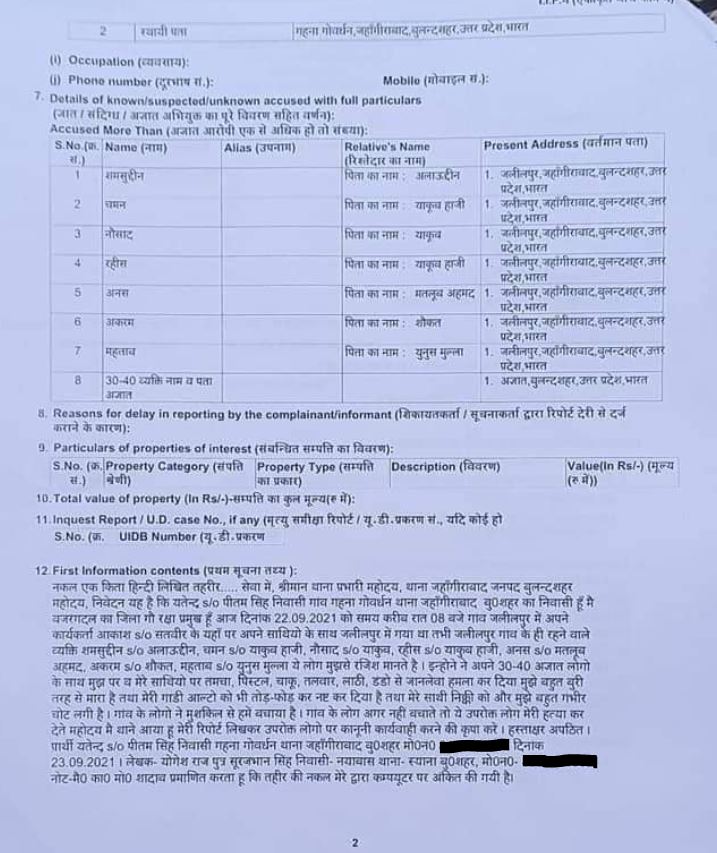
Based on the complaint the Uttar Pradesh police lodged an FIR against 7 identified and 40 unidentified people and has also made two arrests in the case.
Screengrab of the FIR filed in the case, via Facebook
Bajrang Dal activist Yatendra Kumar had complained that when he and his associates had gathered in the house of another Bajrang Dal member named Aakash to conduct a meeting on Wednesday, a Muslim mob suddenly barged into Aakash’s house with sharp weapons and pistols and attacked them. They brutally beat up the Bajrang Dal members with lathis and rods. The perpetrators vandalised the house and the vehicles belonging to the Bajrang Dal members. Yatendra Kumar also accused the Muslim youths of kidnapping Aakash.
Meanwhile, Yatendra and his aide Nikki, who were gravely injured in the assault, were rushed to a nearby community health centre but were later moved to the district hospital due to their critical condition.
In what had transpired, Aakash had gone to the market to fetch something for the Bajrang Dal members who had gathered in his house for the meeting on Wednesday. In the market, Akash’ bike had mistakenly hurt the foot of a youth belonging to the Muslim community. Angered by this, the youth gathered his friends and started beating up Aakash.
Aakash somehow managed to escape and rushed home. After coming back he narrated the incident to the district Gau Rakshak head Yatendra and his other associates who were waiting in his house. Before one could realise, a marge Muslim mob of 30-40 people reached there and started assaulting the Bajrang Dal activists. The Muslim mob also vandalised the vehicles belonging to the activists and took Aakash away with them.
According to reports, the police has launched a search operation but have not been able to trace Aakash yet. His mobile phone has also been switched off.
There is, in fact, a backstory. As per reports, two days earlier, Aakash had shared a religious post on his social media handle. A youth named Hasim reacted to the message by making obscene comments on it and abusing Akash for writing it. He not only abused but also made indecent statements hurting Aakash’s religious sentiments. The peeved Aakash had also shared this with his Bajrang Dal colleagues.
Police denies kidnapping angle
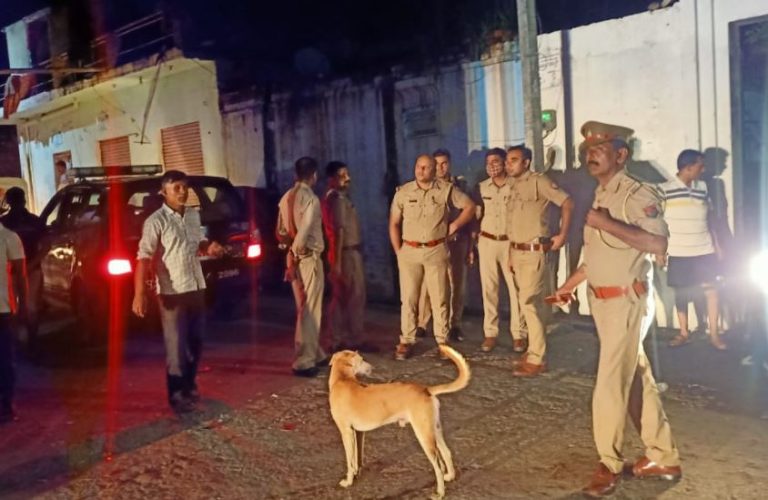
The police have stated that the issue is not communal in nature but is of enmity between two groups. Police have stated that the injuries are not life-threatening and police personnel have been deployed in the area to prevent further violence. They also stated that the police do not think that Akash has been kidnapped and it is possible that he has gone somewhere on his own.
Meanwhile, fearing communal tensions, the Bulandshahr police have deployed heavy force in the area. Efforts are on to nab the other accused. The police have also been conducting search operations to locate Aakash, who has been missing since Wednesday.
“I was told by a doctor at Dhamtari Christian Hospital that I have cancer from head to toe. They said I might not survive. Then a nurse advised me to come here for healing prayer sessions and surrender myself to Christ. I took her advice and came here and I am all fine now,” narrated a woman from a village in Dhamtari district, Chhattisgarh.
As per the 2001 census, the scheduled tribes form 31.8 per cent of the total population in the state of Chhattisgarh. How many of these remain in the Hindu fold is unknown.
Subodh Rathi runs a school and college in Dhamtari and is also a worker of Dharma Sena, a Hindu organization that works towards safeguarding the tribal population from missionaries. In a Mission Kaali documentary, Rathi revealed that lakhs of villagers and tribals have been converted to Christianity in Chhattisgarh.
“I am working in this field for the past 16 years. 99 per cent of villagers give just one reason for conversion and that is ‘healing.’ If the miracle healing does everything then why are the missionaries operating a 500-bed hospital in the district?” said Rathi talking about the malicious and deceitful methods deployed by Christian missionaries for conversion.
Rathi’s question as well as concern is valid. Here are a few images of Dhamtai Christian Hospital with Jesus in their logo and a chapel on their campus. Now, almost every hospital has a temple or a prayer room. However, what a hospital does not have are nurses who send the patients to ‘miracle healing centres.’
Image Source: Official website of Dhamtari Christian Hospital
“A member from our Sahu community went to Dhamtari Christian Hospital after falling sick. He recovered but returned as a Christian. We told him that he can continue to visit the healing centre but cannot convert. He objected to us and started saying that Jesus is supreme. Lord Ram, Ganesha and Mahesh are all His creations and that Jesus too is an avatar. He is no longer a part of our community,” said Videshi Ram Sahu, a member of Gram Panchayat.
The process of indoctrination
Christian missionaries and evangelical organizations are best known for their multilevel marketing techniques. Their network comprises healthcare centres, education centres and everything that a family living in the hinterland or below the line of poverty is in need of.
“The missionaries have built a huge hostel in the city. They encourage the youth of villages to move to the cities for education and assure them of providing accommodation. They also promise the 16-17-year-olds that they will be taught spoken English if they stay in their hostel,” revealed Rathi.
But here’s the catch. “The kids leave their homes to stay in the hostel with the hope to get a good education. With English course begins the 3 months, 6 months 1 year and 3 years of Bible training and pastor training course. When the kids return to their villages, they refuse to visit temples or even accept prasad. They say we believe only in Christ,” Rathi said further.
In another documentary, Sukki Bhawani says that we are made to close our eyes and sing Hallelujiah. “We were told to stop installing idols on Ganesh and Durga puja. They asked us to not accept prasad as well. I went there as my husband is an alcoholic and does not earn. But neither did my husband quit drinking nor did we prosper,” Bhawani shared further.
Threats and attempts to create disharmony
However, this is not where it stops. Rathi in the documentary further reveals how the missionaries create a rift in an otherwise peaceful village.
“We have no problem with anyone converting to Christianity. But, the problem is when they are trained to create tensions in the village. The missionaries give them tasks like desecrating and urinating on Hindu god idols to prove their loyalty to Jesus and complete their conversion. The village is never at peace after that,” said Rathi.
Amitabh Soni, a social worker who freed the village of Kekadiya, Madhya Pradesh from missionaries has cases filed against him under the SC/ST Act for being a hindrance to evangelists.
“A boy from the village went to Indore in hunt of opportunities. There he got converted to Christianity and returned to the village to convert others. When we tried to talk to him, false cases were filed against other workers and me under the SC/ST Act for alleged harassment,” revealed Soni.
He further informed that he was interrogated multiple times owing to the complaint. “Had an FIR been filed, I would have been in police remand for three months,” said Soni.
Inculturation: From Yeshu Jayanthi to Yeshu Kathakali
While one Abrahamic religion tolerates no misappropriation of their culture, the other looks for opportunities to disguise the Gospel in local culture and traditions.
The concept of inculturation is deeply enshrined in Christianity. It “denotes the presentation and re-expression of the Gospel informs and terms proper to a culture.”
In this blog from 2011, Fr Joy Chencheril thought it was a great idea for Christians to promote the dying art of kathakali. Brief episodes from the life of Jesus were then enacted in a kathakali drama.
Image Source: Mission Kaali Twitter handle
Even today emails are sent to Hindus to give the message of ‘Moksha’ as explained by Jesus. The emails also preach how one can make Christ their ‘Ishta Deva.’
Screenshot of email from gospel2india
“The innocent villagers are made to believe that Jesus is one among the 33 crore Hindu Gods. They are told that Jesus is also an incarnation of some Hindu god,” revealed Soni.
The missionaries on the one hand discourage the likes of Bhawani from celebrating Ganesh and Durga festivals, but on the other welcome Yeshu bhajans.
Yet, it occurred to no one that if Jesus is one among the 33 crore Gods then why are they stopped from believing in the other 32,99,99,99. In fact, why are they made to insult other Hindu gods when Jesus is just another avatar?
Did no one think of questioning why they are made to worship an idol of Christ but asked to desecrate other Hindu god idols because ‘idol worship’ is a sin? Singing a Hindu bhajan is blasphemous but dancing to Halleliuah isn’t?
Well, the concept of inculturation is not limited to just Hindus. Here is one Esther Gill singing ‘yeshu kirtan.’
The state of Punjab with 57 per cent Sikh population now has Shromani Church Parbhandak Committee and individual cults in the form of Christian Deras.
In a virtual conference, professor Madhu Kishwar shared how the missionaries attach aspirational values to the religion as bait to attract the gullible. It is an easy choice if a person struggling to make the ends meet is offered job opportunities or avenues to earn better.
Claiming that the pandemic lockdown was ‘godsent’ the missionaries converted as many as 1 lakh people and adopted 50,000 villages in a span of one year. Need for medical aid and two squares meals amidst the financial crisis, pushed the economically weaker section into the trap of missionaries. The missionaries also built a record number of churches in thousands of villages where none existed before.
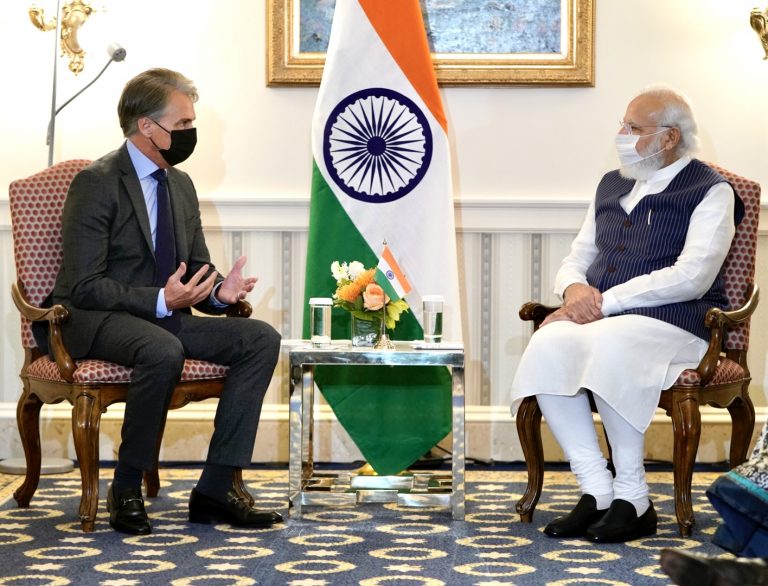
Prime Minister Narendra Modi had a packed schedule on the first day of his three-day tour. The PM apart from meeting US Vice President Kamala Harris also had back-to-back individual meetings with CEOs of five major global companies from diverse sectors.
Post the marathon meetings on Thursday, PM Modi Tweeted, “Through the morning, had extensive discussions with top CEOs and business leaders on investment in India. They were appreciative of India’s reform trajectory. Closer economic linkages between India and USA benefit the people of our nations.”
Here’s what was discussed in these meetings
Adobe
In a meeting with Shantanu Narayen, Chairman, President and CEO of Adobe, PM Modi took stock of the company’s ongoing activities in India and exchanged ideas to leverage ‘Digital India’ flagship programme in sectors like health, education and R&D.
“PM Modi believes that technology is the way to help things move forward.”
Mr. Shantanu Narayen, Chairman, President and CEO of @Adobe shares what he discussed with PM Modi during their meeting. pic.twitter.com/4uovM0kRF4
When asked about India’s startup scenario, Narayen said, “As an Indian American, it is a matter of pride to see the Prime Minister encourage startups and investments in India. Startups in India have global aspirations. I am a huge supporter and fan of what he does.”
The CEO also appreciated India’s focus on educational and digital transformations. “Any reformation in education and digital literacy in India will help Adobe,” Narayen remarked.
Adobe’s biggest operations after North America is in India with over 6,000 employees across its campuses in Noida and Bengaluru. Additionally, initiatives such as Adobe’s Grassroots Innovation Challenge and Women-in-Technology Scholarship are working in sync with the ongoing digital revolution in India.
Blackstone
Stephen Schwarzman, the CEO of Blackstone, the American investment management giant in the media interaction post his meet with PM Modi revealed that the company has already made investments worth $60bn in India and is all set to invest another $40bn in the next five years.
Mr. Stephen Schwarzman, the CEO of @blackstone speaks about the interaction with the Prime Minister and the plans of investing in India in the times to come. pic.twitter.com/MAjvmBUj1H
“India has been our best market for investment in the world,” Schwarzman said adding that he is very optimistic about India’s potential.
Lauding India for its reforms, the CEO said, “They’re very smart, they’re very reform-oriented. They’re objective (about) what can be done, how quickly can it be done, how sensible is it. It is of benefit to India and benefit to outsiders. So I would give them an extremely high grade.”
General Atomics
Vivek Lall, CEO of General Atomics expressed confidence in India’s policy reforms. In the meeting, PM Modi elaborated on India’s liberal drone policy and the opportunity in the field of manufacturing due to the Production Linked Incentive (PLI) scheme.
Confidence and policy reforms coming out of India, says Mr. Vivek Lall, Chief Executive of @GeneralAtomics Global Corporation.
The PM also mentioned the need for a dedicated drone hub in India to support the entire ecosystem of drones.
General Atomics which first arrived in India in 2018, is working with both governments in an effort to provide India with the latest systems and technologies supporting the national defence.
First Solar
CEO of First Solar, Mark Widmar was all praises for PM Modi and his commitment to long-term climate goals. “Only if every country could embrace and emulate what India has done, our ability to hit the long-term climate objectives will not be a problem,” said Widmar.
CEO of @FirstSolar, Mr. Mark Widmar described his meeting with PM @narendramodi as outstanding and also elaborated on why he is optimistic about closer business relations with India, especially in manufacturing. pic.twitter.com/75ggIKayPU
The two also talked about India’s renewable energy landscape. The PM further elaborated India’s efforts to harness solar energy, including the ‘One world, One sun and One grid’ initiative and investment opportunities in the sector.
Talking about the recently launched PLI Scheme, First Solar expressed interest in setting up manufacturing facilities in India using their unique thin-film technology.
The company has successfully commissioned 150 MW of Utility-Scale Solar Power to the Grid in India and has installed 1.8 GW of solar capacity in the country. First Solar intends to set up a new 3.3 GW Facility in India and is contributing to India’s plans to ramp up solar power generation to 100 GW by 2022.
Qualcomm
Taking pride in a solid partnership with India, Cristiano R Amon, President and CEO said, “We talked about 5G, acceleration of 5G. We also discussed the opportunity to expand the industry, not only domestically in India, but India as an exporter of technology. Discussion on our conductors was an important topic of conversation.”
It is a great meeting…we are so proud of our partnership with India.
PM Modi further discussed investment opportunities in India’s telecom and electronics sectors for Qualcomm and informed about the government’s recently announced production-linked incentive schemes for Electronics System Design and Manufacturing (ESDM).
The two also discussed the need for developments in India’s semiconductor supply chain and strategies to build the “local innovation ecosystem” in the country.
Meeting with VP Kamala Harris
PM Modi also had a successful bilateral meeting with US Vice President Kamala Harris in which the leaders discussed ongoing conflicts such as Afghanistan and the need to monitor Pakistan’s support to terrorism.
VP Harris also acknowledged India’s dominant global role in fighting the ongoing Covid-19 pandemic. In the joint statement, Harris said, “Early in the pandemic, India was a vital source of vaccines for other countries.”
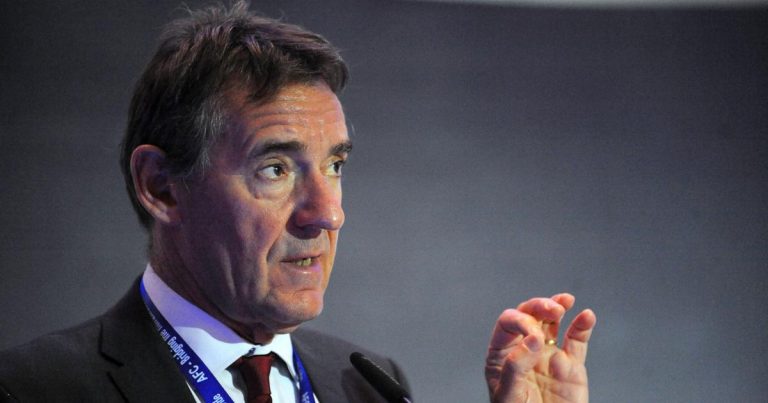
China has long sought to be an international player just like the United States, but it would be incredibly difficult for it to transition itself in the role if it fails to engage India, said Jim O’Neill, the former chairman of Goldman Sachs Asset Management and former UK treasury minister, in an exclusive interview with Business Today.
Jim O’Neill, a notable global economist and chair of UK think tank Chatham House, discussed China’s emergence on the world stage and its implications for the global power dynamics among other things during his special interaction with the said media organisation.
When asked how China would shape its policy to influence the global financial system and importantly, contribute more responsibly towards it, O’Neill said China has been steadfast in pursuing its goals and the policy that they have espoused has always jibed with the 5-year estimates suggested.
Neill, however, added that the outlook for China is not as favourable as it used to be. He cites two reasons for the current predicament facing Beijing. The first one being the crackdown initiated by Chinese Premier Xi Jinping, which is attributed to the desire for more equality and could disincentivize parts of domestic economic growth. According to O’Neill, such a policy decision poses incredible risks to growth at a time when the labour force has veritably peaked in China.
Another reason why O’Neill is unsure of China’s emergence on the global stage is Beijing’s inability to develop a credible policy on how they want to engage with the rest of the world. The former UK treasury minister said China’s complete lack of dialogue and involvement of India in its ambitious one-belt-one-road programme is a testament to Beijing’s failure in inspiring regional players to join its initiative.
“If China can’t truly engage in a constructive way with important neighbours in the region, it shows how difficult it is to be a bigger accepted global player the same way the US has been for the last 50 years. China will have to figure all these things out. It’s difficult for China to find a stable relationship with the rest of the world. Got to change how they engage,” said O’Neill, who coined the acronym BRICS 20-year-ago to portray the probable emergence of economies of Brazil, Russia, India and China.
Besides, O’Neill also weighed in on India’s growth prospects over the span of the next two decades. With favourable demographics, he said, India is poised in the next 15 years to be catapult itself as the 3rd largest economy in the world, surpassing Japan. The achievement of this feat will be contingent upon the Indian policies, said O’Neill, adding that in absence of a potent policy, global events will continue to exert influence on India’s growth like they have in the past several decades and it will experience much more erratic cycles of growth vulnerable to global forces. Even so, he said it is still possible for India to grow close to double digits in the next 15-20 years.
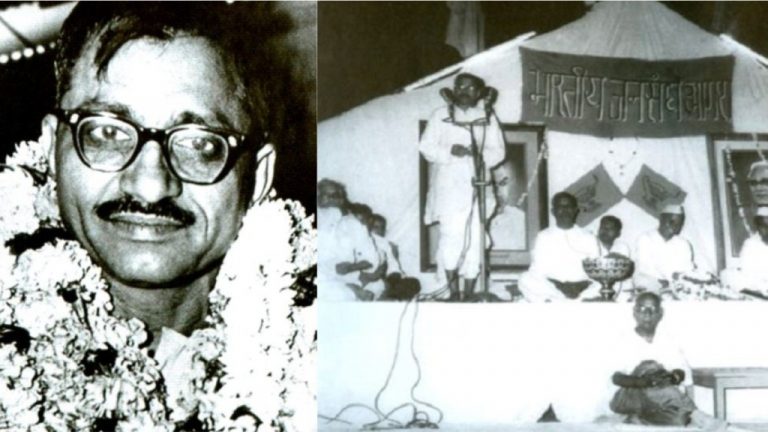
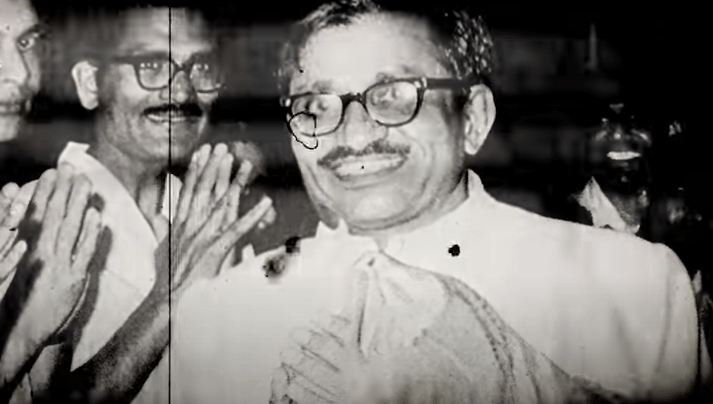
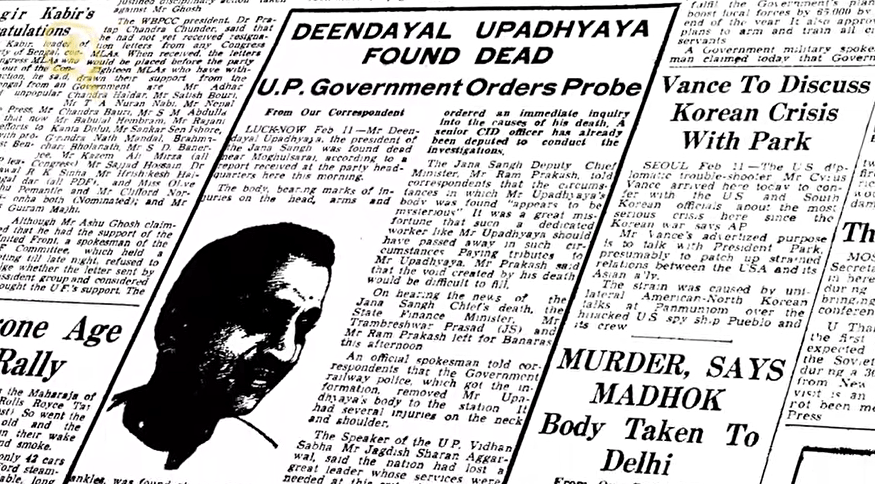
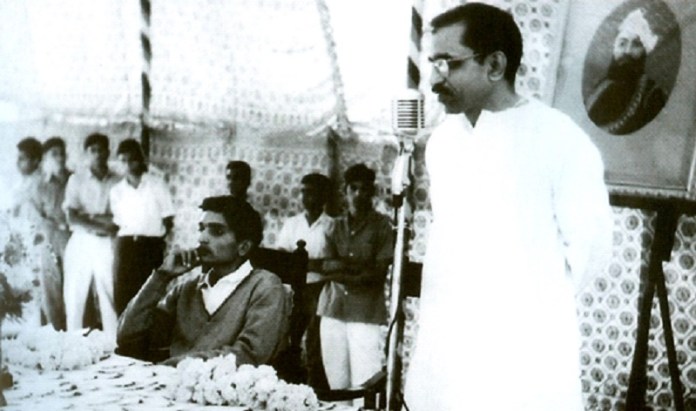
September 25th marks the 105th birth anniversary of Pandit Deen Dayal Upadhyaya. The erstwhile president of Bharatiya Jana Sangh was found dead on February 11, 1968. This body was discovered on the tracks near the Mughalsarai Junction. It has been 53-years since. Still, to this date, there are no answers to who killed the man who was fondly addressed as Panditji. The mysterious death of Pandit Deendayal Upadhyay still intrigues the nation.
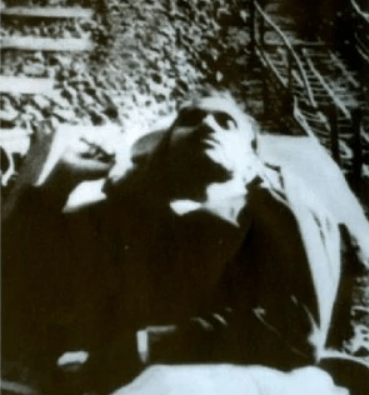
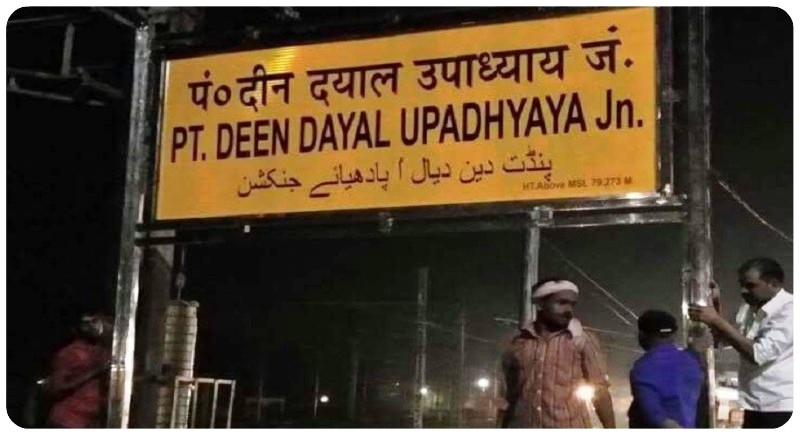
It was in the morning of February 11, 1968, when a dead body covered with a sheet was discovered on the railway tracks at Mughalsarai station, which the BJP-led government at the centre renamed as Deen Dayal Upadhyaya railway station in the year 2018. The body was lying flat on its back on the railway tracks. There was a 5 rupee note in the deceased’s fist. On his wrist was a watch by the name of Nana Deshmukh. There were only 26 rupees in the pocket and there was a first-class ticket with the number 04348 on it.
Pandit Deen Dayal Upadhyay was found dead in mysterious conditions
The body was found near the electric pole by one Ishwar Dayal, a leverman at the station. Dayal informed the Assistant Station Master that about 150 yards from the station, towards the south of the railway line, a dead body was lying near the electric pole No.1276. This body was later identified as the Bharatiya Jana Sangh President Pandit Deendayal Upadhyay, who was on his way to Patna from Lucknow.
It’s disturbing that there is still no concrete evidence about the circumstances which led to the death of the sole engineer of the philosophy of Integral Humanism. According to reports, the CBI has then concluded that the murder was an ordinary crime. According to the CBI report, two petty thieves had murdered Pandit Deendayal Upadhyay and their motive was theft. On June 9, 1969, a special sessions court gave its verdict on the basis of this CBI report. It created a stir after it stated that “the real truth still has to be found”.
The furore sparked by the judge’s statement compelled the Indira Gandhi government to constitute an inquiry commission.
The commission, appointed on 23 October 1969, concluded that Upadhyaya was murdered under mysterious circumstances.
Many people have since then felt that Panditji’s death was a politically motivated killing and the urge to reopen the case has resurfaced time and time again.
Accidental death, or a pre-planned murder?
According to the little information available in the public space, Pandit Upadhyaya was at the house of his sister Lata Khanna in Lucknow a day before he was murdered. On that day, Panditji had to hurriedly board the Lucknow-Sealdah Express, since he had to head to Patna where a Jan Sangh meeting was scheduled to take place in view of the budget session.
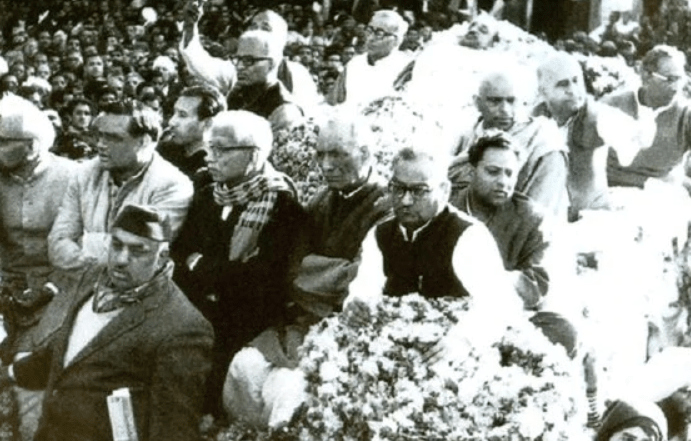
Panditji’s funeral procession
Half of the bogey in which he was travelling in was part of the third class and the other half was first class. In Railway parlance, it was an FCT bogie. Panditji managed to get a first-class ticket. The Deputy Chief Minister of the state Ram Prakash Gupta himself had gone to drop him at the station.
The Pathankot-Sealdah Express reached Lucknow at around 7 pm.
Upadhyaya’s berth had been in coupe A, but he exchanged his birth with Gauri Shanker Rai, a member of the legislative council who had his birth in coupe B. MP Singh, a government officer, was the other passenger in Coupe A.
Those days, the Pathankot Sealdah Express did not go through Patna. At Mughalsarai, some of the train’s bogeys were separated and joined with the Delhi-Howrah Express.
At around 12 ‘O’clock in the night, Upadhayaya met Kanhaiya, an emissary sent by the erstwhile king of Jaunpur. When he saw Maharaj of Jaunpur’s letter addressed to him, Panditji realised he had forgotten his glasses in the previous compartment. He brought his glasses from Coupe A, read the letter and told Kanhaiya he would respond later. This incidence records Deendayal Upadhyaya’s presence at Mughalsarai railway station at 2.15 am.
At 2.50 am, the Delhi-Howrah Express departed Mughalsarai and arrived in Patna the next morning. Here in Patna, preparations were being done to welcome Panditji. Deendayal Upadhyaya, however, did not reach Patna the next morning.
While the members of the Jan Sangh party began searching through the entire train for Pandit Deen Dayal Upadhyay, they learnt that a dead body has been discovered in the Mughalsarai railway station.
Back in Mughalsarai, doctors had declared him dead by that time. No one at the station knew until then that the body was that of Jana Sangh co-founder Deen Dayal Upadhyaya. Nobody, not even the cops. However, there was a person working at the station named Banmali Bhattacharya who recognised Paditji and later informed the Jana Sangh workers.
Moreover, the police also discovered a ticket beside his body, which allowed them to quickly identify him by matching the ticket number.
Additionally, when the train Panditji was travelling in left Patna and reached the Mokama station at around 9:30 in the morning, a traveller discovered an unclaimed suitcase. The passenger handed it over to the railway staff. Upon investigation, it was discovered that the suitcase belonged to Panditji.
MP Singh, another passenger in Coupe A, confirmed Panditji’s presence in the train to the authorities. Singh told the police that in Mughalsarai when he was walking towards the restroom, he saw a person pulling down Panditji’s bedding from the train. When he inquired, the unknown person told MP Singh that the bed belonged to his father and since he had got down at the Mughalsarai station, he was unloading his luggage including the bed.
Based on the tip, the authorities were able to track down a man named Lalta. On interrogation, Lalata stated that he was approached by one Ram Awadh who had requested him to remove the unclaimed bed from the train. On further inquiry, the police also recovered Panditji’s jacket and kurta from a sweeper.
Several investigations were carried out but no new leads were found. The probe was then handed over to the CBI. When the investigations were being carried out it was learnt that when the train had reached Patna station some unknown person, who himself did not board the train, had given four hundred rupees to a sweeper to clean the coupe.
CBI had even identified Ram Awadh and one Bharat Lal as the accused. But since there was not too much evidence against the duo, the court freed them for the charges. The court concluded that Pandit Deendayal Upadhyay was murdered by two petty thieves. The court sent a youth named Bharat Lal for 4 years imprisonment for theft.
As mentioned above, the case was handed over to a committee constituted by the Congress government, but again nothing conclusive was arrived at. Some even blamed Atal Bihari Vajpayee, the Jana Sangh’s next president, but every theory failed and the death of Panditji continued to remain a mystery.
What do analysts and BJP leaders say on the ‘murder’ of Pandit Deen Dayan Upadhyaya?
Here, it becomes imperative to revisit what many analysts and experts have said about the death of Pandit Deen Dayal Upadhyay in the past.
There are many conspiracy theories about Upadhyaya’s death. Balraj Madhok, one of the founding members of Jan Sangh, has said categorically on many occasions that Upadhyaya’s was a murder, not an accident. In his memoir, he had written about the involvement of certain senior Jan Sangh leaders in the murder. In 1977, the Janata Party government had initiated a fresh inquiry, but it yielded no results.
The BJP had directly blamed Congress for the death of Deen Dayal Upadhyaya. The party believes that the growing popularity of the Jan Sangh leader was a threat to Congress, and was the main reason for his death.
There are some videos on youtube in which many people have directly targeted the then Prime Minister Jawaharlal Nehru while talking about Pandit Deen Dayal Upadhyay.
In a video posted by The Quint, when political analyst Rakesh Sinha had discussed Panditji, he claimed that when he entered politics, Jawaharlal Nehru began targeting the Jana Sangh. He was well aware that this individual would not only alter the political landscape, but also the quality of politics.
In 2015, BJP leader Subramanian Swamy had demanded setting up a multi-disciplinary special investigating team to re-investigate the “conspiracy” behind the mysterious death of Jan Sangh founder Deen Dayal Upadhyaya.
He claimed that Upadhyaya’s close companions, including Nanaji Deshmukh and Dattpant Thengadi, never accepted the CBI’s findings that he was forced out of the train by thieves.
The BJP leader had further argued that if that was the case, how was Panditji’s body lying upright? Why did he have a 5 rupee note in his hand? Saying that every passenger present that day in the train had booked tickets by providing fake addresses, Swamy had claimed that Panditji’s murder was all well planned, which was never investigated properly.
MJ Akbar had also concurred that the mystery behind the death of Panditji remains unsolved.
Mughalsarai Junction renamed as Pandit Deen Dayal Upadhyaya
As a tribute to one of its tallest leaders, the Bharatiya Janata Party-led Uttar Pradesh government had renamed the iconic Mughalsarai railway station to Deen Dayal Upadhyaya Junction in the year 2018. The Uttar Pradesh government had sent a proposal in 2017 regarding renaming the Mughalsarai station and the proposal was approved by the centre on 4th June 2018.
The station is inextricably attached to the history of one of the tallest leaders of Jan Sangh, Deen Dayal Upadhyaya, who is an icon for many nationalists even today.
Mughalsarai railway station renamed as Deen Dayal Upadhyay station in 2018 by the Yogi govt
The Yogi Adityanath-led UP government had proposed changing the name of the station in 2017 after it rose to power in the state. Though the Centre had given its in-principle approval in 2017 to the state government’s proposal to rename the station, the move to rename Mughalsarai got a leg-up after UP Governor Ram Naik gave his assent to the proposal in June 2018.
The decision had not sat well with the opposition as the Samajwadi Party and Bahujan Samajwadi Party had protested against the decision in 2017.
Who is Upadhyay, whose vision was hailed by PM Modi
On, February 11, 2021, on the occasion of Panditji’s 53 death anniversary, PM Narendra Modi had paid tribute to Deen Dayal Upadhyaya, saying the country is realising Panditji’s vision of building a self-reliant India.
“Deen Dayal Upadhyaya Ji‘s thoughts are equally relevant today and will continue to be so. In 1965, during the Indo-Pakistan war, India had to depend on foreign countries for weapons. Deen Dayal Jihad said at that time that we need to build an India that is self-reliant not just in agriculture, but also in defence and weaponry,” PM Modi said.
Deen Dayal Upadhyaya was the second top Jana Sangh leader, the first being the outfit’s founder, Syama Prasad Mookerjee, who also died mysteriously on June 23, 1953. Mookerjee too was 52 at the time of his demise.
Politics wasn’t just about gaining power for Upadhyaya. He had insisted on a politics founded on values and principles. Upadhyaya became president of the BJS at the party conclave in Kozhikode in December 1967. However, this arrangement was only temporary. On February 11, 1968, two months after becoming president, Upadhyaya’s body was found the side of the railway track near Mughal Sarai station in Uttar Pradesh. He was only 52 years old. His death created a void in Indian politics that took years to fill.