Home Blog Page 3853

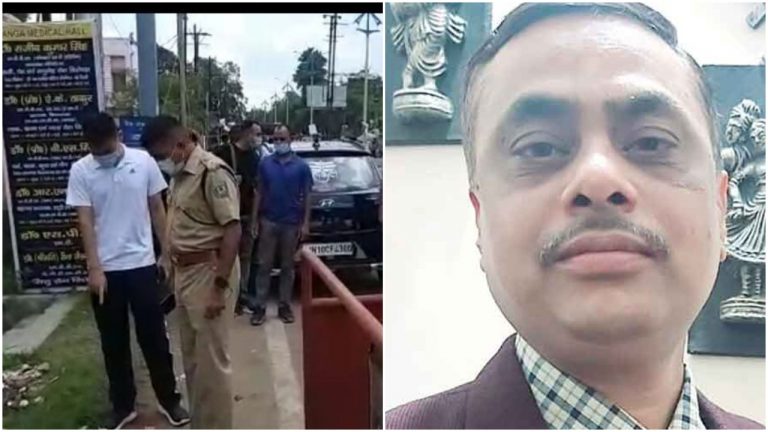
Dhanbad judge Uttam Anand was deliberately hit causing his death, CBI informs Jharkhand High Court

0

The CBI joint director Sharad Agrawal on Thursday informed the Jharkhand High Court that Additional District and Sessions Judge of Dhanbad, Uttam Anand, was deliberately hit by the auto-rickshaw leading to his death. However, the motive of the murder is not confirmed yet. The CBI further informed the court that the agency is investigating whether accused auto driver Lakhan Verma and his friend Rahul Verma were asked by somebody to hit the judge.

Analysing the recreated crime scene, CCTV footage, and forensic evidence suggested that the incident was not an accident and the judge was deliberately hit, the CBI has concluded. The agency said that it is probing to ascertain the motive behind the murder.

Sharad Agrawal, who was summoned by the court to explain the progress made in this case, further informed the Bench of Chief Justice Dr. Ravi Ranjan and Justice Sujeet Narayan Prasad that the CBI is making all efforts to investigate the judge murder case.

On this, the High Court made an oral observation that the murder of the judicial officer has lowered the morale of judicial officers. The High court further observed that if this murder case is not solved soon it will not be good for the judicial system of the country as it was for the first time when a judge died in this way.

Notably, in the previous hearing, the court had expressed displeasure as the CBI was unable to make any progress. The court had summoned CBI joint director for a physical appearance and had slammed the CBI for furnishing stereotyped progress reports.

The court had expressed displeasure that the agency could not move an inch beyond two accused persons Lakhan Verma and Rahul Verma who are already in judicial custody. The court had questioned whether these accused had any motive to kill the judge.

The CBI also conducted narco tests upon them and further interrogated them in police custody. They accepted that they intentionally hit the judge on the morning of July 28 near Randhir Chowk in Dhanbad district when the judge was returning home after a morning walk.

But they tried to convince the CBI that they hit the judge to snatch valuable items from his possession believing he (judge) must be carrying a mobile phone and wallet.  Accused said that they fled away after they saw some bikers.

Investigation revealed that the accused had stolen an auto-rickshaw (JH 10R 0461) besides three mobile phones. 

Complaint filed against Alt News founder Pratik Sinha in Surat for insulting Hindu gods

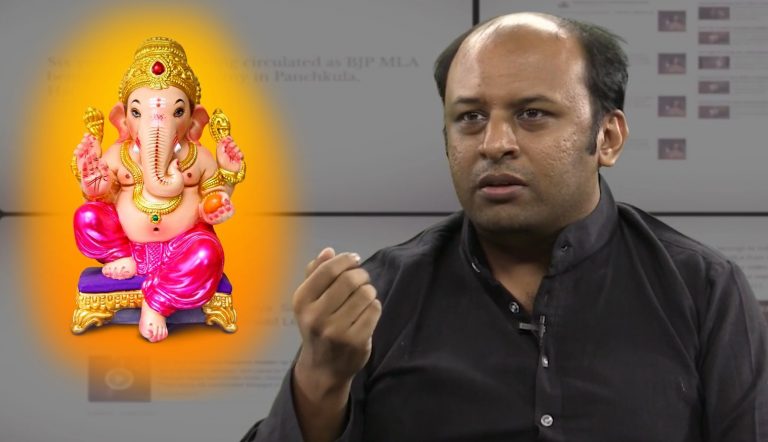
A complaint has been filed against Alt News founder Pratik Sinha over a tweet he had posted in 2015, accusing him of disrespecting Hindu Gods and Goddesses. The complaint was filed at the Khatodara police station in Surat by social activist Vikash Ahir.

The complaint seeks filing of an FIR against Pratik Sinha under sections 153A (Promoting enmity between different groups), 295A (Deliberate and malicious acts intended to outrage religious feelings or any class by insulting its religion or religious beliefs), 298 (Uttering any words with deliberate intent to wound the religious feelings), 504 (Intentional insult with intent to provoke breach of the peace) and 505 (creating or promoting enmity, hatred or ill will between classes) of the Indian Penal Code, along with relevant provisions of the Information Technology Act.

Informing about the complaint filed, the Twitter account of Vikash Ahir’s team said that Hindustan will not tolerate the insult of Lord Ganesha. The tweet also added hashtags demanding the arrest of Pratik Sinha.

The case relates to a tweet by Pratik Sinha posted on 19 September 2015, where he had allegedly insulted Hindu God Ganesha. ‘So many people posting pictures of Ganesha. You guys really believe a man had an elephants (sic) head?’, he had posted in the tweet.

The screenshots of the tweet had surfaced recently on the social media platform during the recently concluded Ganesh Chaturthi, causing outrage among Hindu social media users. They had said that the tweet was insulting towards Hindu gods, and action should be taken against the Alt News founder for hurting the religious freedom of Hindus.

Accordingly, social activist and Hindu Yuva Vahini’s Gujarat president Vikash Ahir has filed the complaint at the Khatodara police station in Surat, which was accepted by the police station on September 20. Vikash Ahir told OpIndia that police have accepted the complaint, registered a case, and have started proceedings in the case.

He informed that the police have summoned Pratik Sinha to the police station to file his response to the complaint. If he does not appear at the police station within the given time, a police team will be dispatched to arrest him to bring him to Surat.

‘What India has done, no other country has been able to do’: SC lauds Modi govt’s handling of COVID, decision to pay ex-gratia to kin of victims

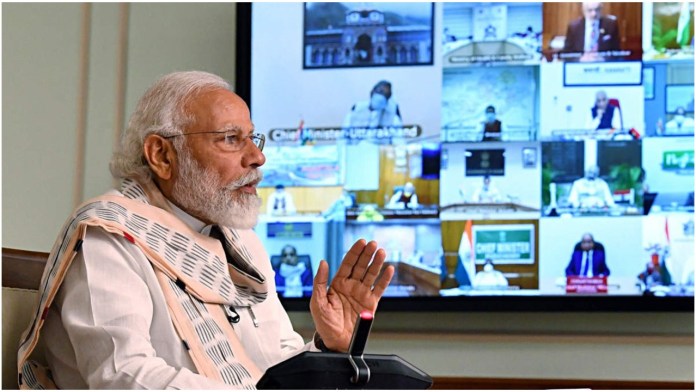
The Supreme Court on Thursday appreciated the Narendra Modi government for taking steps to provide Rs 50,000 ex-gratia assistance to the nearest kin of those who lost their life due to COVID-19. The bench of Justices A S Bopanna and Justice M R Shah which is hearing petitions related to ex-gratia assistance to the family Covid-19 victims further applauded the Modi government for steps taken to tackle the pandemic.

The court took note of the fact that what India could do and have done for its citizen no other country has been able to do. The court further expressed happiness since the step will bring some solace to the persons who have suffered and it will also wipe the tears of many families. The court took note of the fact that despite so many problems of population and overpopulation, the government managed to tackle the pandemic in the manner that it did.

“What India has done, no other country has been able to do. We are happy that something has been done to wipe the tears of many families,” the Supreme Court noted.

The Supreme Court’s appreciation has once again exposed lies of the Lutyens media and Toolkits of the opposition aimed to defame the government and the country.

Solicitor General Tushar Mehta who appeared for the Centre said that the loss of life can’t be repaired and compensated but even after the nation has done whatever it could do for the families who have suffered.

The Centre had informed the court that the National Disaster Management Authority (NDMA) has recommended Rs. 50,000 per deceased person who died due to COVID-19. It also includes such persons who were part of the relief operations, associated with related activities and they died due to COVID-19. The Centre assured the court that the assistance is not limited to the first and second wave of the pandemic. It will continue in future phases of the pandemic.

The bench took on record two affidavits filed by the Centre and said that it will hold the next hearing on October 4 when the orders will be passed with suitable directions including empowering the grievance redressal committees at the district level to call for medical records of the deceased from the hospital, in case of any dispute over the issuance of a death certificate.

Notably, lawyer Gaurav Kumar Bansal besides others who lost their family members due to COVID-19 had filed petitions to demand ex-gratia assistance.

During the course of the hearing, there were some concerns that were addressed and resolved like what if the hospitals do not mention Covid-19 as the cause of death even if a person lost his life due to post COVID-19 complications.

On this Solicitor General, Tushar Mehta said that in such a situation kin of the deceased can approach the committee formed at the district level which will be constituted under guidelines of NDMA. The district-level committee will also look into the cases of issuance of death certificates.

The bench pointed out that some hospitals behave like a monarch. It refuses to hand over medical reports to the family members and sometimes even refuses to hand over the dead bodies.

The Solicitor General said that in such cases family members can approach the committee which can call for the hospital records.

Explaining modalities Solicitor General Mehta said the next of kin of the deceased may produce some evidence like an RT-PCR test report before committees to show that the patient concerned was affected by COVID-19 before his death. This can help to settle cases where the hospital does not mention COVID 19 as the cause of death.

On September 11 the NDMA had issued a detailed guideline on the directive given by the Supreme Court on June 30

ABP journalist calls news report by his own channel fake to attack PM CARES Fund and PM Modi: Here are the details

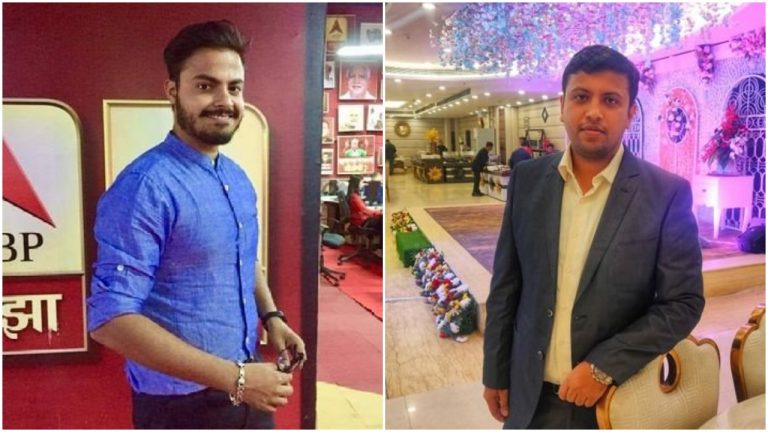
A war of words has erupted on Twitter between activist Ankur Singh and ABP journalist Abhinav Pandey after the latter called one of its own news channel’s report fake, in order to attack the central government’s PM CARES Fund. The controversy erupted after the ABP journalist took to the microblogging site to cast aspersions on PM Modi’s PM Cares Fund.

In response to the journalist’s tweet criticising the BJP government for establishing the PM Care Fund instead of the PM National Relief Fund, activist Ankur Singh used a series of tweets to educate the journalist. Ankur shared a snippet of a video uploaded by ABP news on its YouTube channel on May 27, 2020.

The controversy worsened after Abhinav Pandey, in order to castigate the Modi government and prove his skewed perception right, shamelessly went on to call his own news channels’ report fake.

The May 2020 ABP report, which summarised the difference between the PM Cares Funds and the PMNRF, clearly states that the President of the Congress party is still very much a member of the managing committee of the Prime Minister’s National Relief Fund (PMNRF), a fact that the ABP journalist was vehemently refuting in his Tweets.

OpIndia has also written a detailed report about the Prime Minister’s National Relief Fund, in which it is clearly mentioned that PMNRF has the PM, deputy PM, finance minister, Congress president and a representative of the Tata Trust and industry representative chosen by FICCI, as members of the trust whereas PM Cares have up to 13 eminent experts to undertake relief or assistance of any kind relating to a public health emergency including the creation and up-gradation of healthcare facilities. Most importantly, the eminent experts will be working pro bono.

Here, rather than gracefully accepting his mistake, Abhinav Pandey defended himself and blamed Ankur Singh for sharing a bogus video. According to Pandey, no fraudulent video can be passed off as genuine by affixing the news channel’s logo. The ABP news logo has changed, according to the journalist, and the sample of video shared by Ankur was not posted on his channel.

Then, before one could even realise, ABP News made the aforementioned video posted on its YouTube channel private. The archive version of the report by ABP News can, however, be viewed here.

ABP News makes the video posted by it on May 27, 2020 private

After the ABP News journalist deleted his Tweet which called the channel’s report fake, activist Ankur Singh, once again, hit out at Pandey and ABP News for not issuing an apology.

The ABP News journalist, like many other Congress loyalists and trolls, had taken to Twitter to peddle the same lie surrounding the PM Care Fund and questioning the decision to set up a new body when there was already a relief fund in the form of the Prime Minister’s National Relief Fund (PMNRF).

Pandey wrote that if in all disasters including floods, storms, money is given from PMNRF, then why not for Covid?

It becomes pertinent to note here that after the Coronavirus pandemic gripped the country, Prime Minister Narendra Modi had set up the PM CARES Fund and invited people to contribute to the Fund. PM CARES Fund Trust was formed on 27th March this year to receive public donations to fight emergencies or distresses like the current Covid-19 pandemic. Prime Minister is the Chairman of this trust, and its members include Defence Minister, Home Minister and Finance Minister.

After the PM CARES fund was set up by the government, opposition parties and a section of left-liberal intellectuals had launched a campaign against it, alleging that the fund will be misused as it will not be audited by the CAG. Congress president Sonia Gandhi had demanded that the entire money collected in the fund should be transferred to the PM National Relief Fund.

‘Cash? Why don’t you be happy this YouTube video instead?’ homestay owner accuses journalists of ‘cheating’ him after ‘free stay’

On September 22, Aditya Dicky Singh, a homestay owner, accused YouTubers Dhiraj Singh and journalist Sahar Zaman of not paying bills for their stay at Alsisar Nahargarh, Ranthambore.

Sharing on Twitter, Singh stated that, Dhiraj and Sahar went to Ranthambore for a vacation. They contacted Singh, who is in the process of building an expensive Homestay, “The Ranthambhore Bagh”, in village Khilchipur, Ranthambore. They asked him if they could stay at his place.

Aditya shared further that as the place was not ready yet, he arranged for their stay at Alsisar Nahargarh close to his place. He also got them a 50% discount for their stay. Singh alleged that the night they arrived, he went to meet them and had a drink, for which he paid himself. For the next three nights, the couple visited Singh’s place for dinner.

On the third day, they did an interview of Singh and took some footage that he had shot at Ranthambore National Park. He said, “basically made a video on me using my footage.”

Singh further said that on the night before the checkout, the Youtubers contacted him again and requested if he could get them a better discount. Singh obliged and said it was possible. They all agreed that they would send the final amount to Nahargarh’s account once Singh inform them about it after negotiation.

Things went on the wrong track when Singh asked them to pay. He alleged that Dhiraj sent him a message that as they charge Rs. 30,000 to Rs.50,000 for posting videos on Hunar TV’s YouTube channel, the couple do not owe anything to Singh. Singh said, “Their channel has 900 subscribers – so much for traction.”

He added that the Manager of Nahargarh told him over the call that a legal team from the Times Of India group had called him and informed him about the legal action they were planning to take for allegedly threatening the reporter Sahar Zaman. While laughing over the notice, Singh said, “Pay you bills cheapskates. Asking you to pay up for your vacation is ‘threatening’.”

On September 23, Singh published a follow-up tweet in which he added a screenshot sent by Hunar TV informing him that they had sent him a legal notice as well. He said, “Just got a notice from their lawyer. What say shall we take this to the court.”

Hunar TV, Dhiraj Singh and Sahar Zaman have not issued any statement yet.

Was the 1921 Malabar genocide the first time that Moplah Muslims massacred Hindus? List of 50 incidents that preceded the 1921 genocide

The 1921 Malabar Hindu genocide has often been touted as a ‘peasant uprising’ against the Landlords. Shashi Tharoor had recently commented that there is one “version of history” which says that the peasants, who were overwhelmingly Muslims rose up against the mistreatment by the Landlords, who were overwhelmingly Hindus. Saying so, an assertion was made that what happened in 1921 was not a genocide of Hindus by Muslim mobs, but an uprising against landlords. This theory has been debunked in the primary sources if one cares to read them.

In the book The Moplah Rebellion, 1921 written by Diwan Bahadur C. Gopalan Nair, he narrates how even before the Moplah massacre of Hindus, intermittently, there were times when Muslims went into a frenzy and slaughtered Hindus. He writes how the Muslims would sometimes go into their “Hal Ilakam” (Religious frenzy) and not only slaughter Hindus but also desecrate their temples. 

At that time, one MR TL Strange as the special commissioner in Malabar to understand what the cause of these frenzied episodes are. In an 1852 report, Mr Strange wrote: 

“It is apparent that in no insistence can any outbreak or threat of outbreak that has risen be attributed to the oppression of tenants by landlords. A great clamour is now raised on this regard, prominently in the southern taluks visited by me, the Moplah population seeking to throw the blame of these outbreaks upon the landlords by thus charging them with being the cause thereof. I have given the subject every attention and am convinced that though instances may and do arise of individual hardship of the tenant, the general character of the dealing of the Hindu landlords towards their tenantry, whether Moplah or Hindu, is mild, equitable and forbearing. I am further convinced that where stringent measures are taken, the conduct of the tenants is in the vast majority of cases, the cause thereof and that the Moplah tenantry, especially of the Taluks in the South Malabar, where the outbreaks have been so common are very prone to evade their obligations and to resort to false and litigious pleas”.

He further said:

“A ‘feature that has been manifestly common to the whole of these affairs is that they have been one and all marked by the most decided fanaticism, and this, there can be no doubt, has ‘furnished the true incentive to them. The Hindus in the parts where the outbreaks have been most frequent, stand in such fear of the Moplahs as mostly not to dare to press for their rights against them, and there is many a Moplah tenant who does not pay his rent, and cannot, so imminent are the risks, be evicted”.

While there are several such testaments and reports that prove that the Malabar Genocide of Hindus was hardly a peasant uprising against the landlords, the narrative of the Left has prevailed over the years, whitewashing a heinous part of Hindu history.

Apart from direct testimonies that refute the ‘peasant uprising’ theory, there are at least 50 documented cases of Moplah ‘outrages’ against Hindus in the same general area that give credence to the fact that the 1921 Genocide was not an isolated event where Muslims went on the war-path to murder Kafirs.

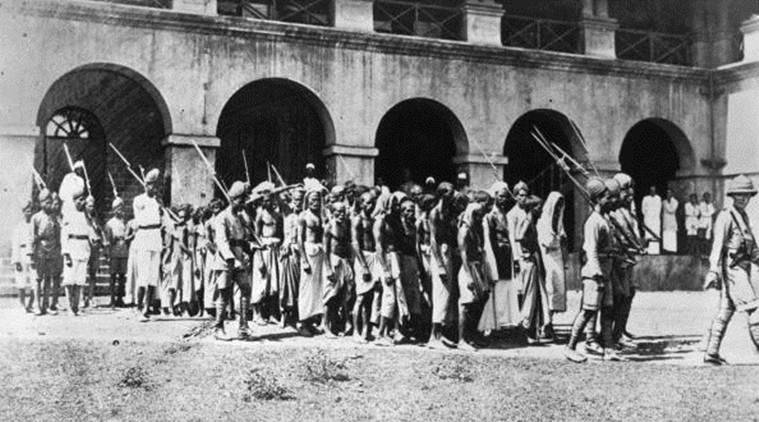
One of the first recorded outbreaks, when Moplah Muslims massacred Hindus due to fanaticism, is from 1836 and the process of mindless murder, loot and rape, intermittently continued till 1919. The Malabar genocide broke out in 1921 and the Khilafat movement was officially launched in 1920.

Here is a list of 50 such incidents as recorded by Diwan Bahadur C. Gopalan Nair, the then Deputy Collector of Calicut in his book:

1. 26th November 1836: In Pandalur Ernad, one Kallingal Kunholan stabbed one Chakku Pannikar who subsequently died of his wounds. He also wounded three others and was finally shot down by the Tahsildar on the 28th of November.

2. 15th April 1837: In Kalpatta, Ernad, one Ali Kutti of Chengara Amsom attacked and severely injured one Narayana Moosad and occupied his shop. The Tahsildar and Taluk peons then tried to control him, with the police shooting him down the next day.

3. 5th April 1839: In Pallipuram, Walluvanad one Thorayam Pulakal Athan and some other skilled one Kellil Raman and then set fire to a Hindu temple. They then hid in another Hindu temple where they were shot by the Taluk peon.

4. 6th Apri 1839l: One Mambattodi Kuttiathan wounded a Hindu man Paru Taragan and a Taluk peon. Was later sentenced and transported for life.

5. 19th April 1940: In Irimbulli, Ernad, one Parathodiyil Ali Kutti wounded one Odayath Kunhunni Nayar and one more person. The Muslim man then set fire to the Kidangil temple. He was later shot dead by Taluk peon on the following day.

6. 5th April 1941: In Pallipuram, Walluvanad, one Tumba Manie Kunyunnian and eight others killed one Perumballi Nambudiri and another person. The fanatics had also burnt his house and 4 other houses. The Moplah Muslims were then neutralised on the 9th of April by the 36th Regiment Native Infantry and the police peons.

7. 13th November 1841: Kaidotti Padil Moidin Kutti and 7 others killed a Hindu man, Tottasseri Tachu Pannikar and a peon. They then hid in a mosque for three days. They were later joined by three other Muslim fanatics on the morning of 17th November. They were later killed by 40 sepoys.

8. 17th November 1841: Around 2,000 Moplah Muslims laid siege against a police party that was guarding the spot where the Muslim fanatics from 13th November were buried. They later carried the bodies and buried them at a Mosque. 12 of these men were convicted and punished.

9. 27th December 1841: One Melemanna Kunyattan with 7 others killed one Talappil Chakku Naik and one more individual. They then took refuge in the Adhikari house. They then got surrounded by the police and also the villagers. They were then killed and their body was buried under the gallows in Calicut.

10. 19th October 1843: In Tirurangadi, one Kunnancheri Ali Atman and 5 others killed a Hindu man Kaprat Krishna Pannikar. After another Moplah Muslim fanatic joined then, they proceeded to Nair’s house to heap more atrocities. They hid out at the house. On the 24th morning, a military detachment was supposed to neutralise them. But when the Moplah Muslims rushed out, the sepoys ran away. Later the Muslim fanatics were killed by the Taluk peons and the villagers. The sepoys who had run away were court-martialed.

11. 4th December 1843: A Nair labourer was found dead with 10 deep wounds on his body. It is believed that the Moplah Muslim fanatics murdered him.

12. 11th December 1843: In Pandicad, one Anavattat Soliman and 9 others killed a Hindu man Karukammana Govind and a servant of his. They also defiled two temples and took shelter in a house. Troops were deputed in the area but when the Moplah Muslims rushed at the troops, they were killed.

13. 19th December 1843: A peon was found with his hand and his head cut off. The perpetrators were Moplah Muslim fanatics.

14. 26th May 1849: In Ernad, one Chakalakkal Kammad wounded one Kannancheri Cheru and one more person. After that, they hid in a mosque. The Tehsildar went to the mosque to convince him to surrender. When he did, the Moplah lunged towards him with a knife and was subsequently killed.

15. 25th August 1849: One Torangal Unniyan killed one Paditodi Theyunni and with Attan Gurukkal and others killed three more people. After that, they took shelter in a Temple and desecrated the temple in Manjeri, including partially burning it down. According to the book, Ensign Wyse was killed when, with the exception of 4 men, refused to advance against the Moplahs and fled. That night, the Moplah Muslims went to the Angadipuram Temple and were followed by a native infantry detachment. The Muslims then attacked and were killed. That night, over 64 Moplah Muslims were killed.

16. 2nd October 1850: The sons of Periambath Attan, the Moplah Adhikari, had concerted with others to kill one Mungamdambalatt Narayana Moosad and them to kill themselves as well.

17. 5th January 1851: In Payyanad Ernad, one Choondyamoochikal Attan attacked and wounded a clerk named Raman Menon. He then shut himself up in the Inspector’s house, defying the police. The Tehsildar tried to get the Moplah to surrender, however, he opened fire. In the process, he was shot dead.

18. 17th January 1851: According to the book, 3 Moplahs were thinking of “contemplating an assault”. The targets were given security.

19. 15th April 1851: Illikot Kunyunni and 5 others were reported as designing to break out and kill one Kotuparambat Komu and others. The information was true, according to the book, but they were discharged.

20. 22nd August 1851: In Kulathur, Walluvanad, in the above-mentioned case where Komu Menon and his servant were killed by 6 Moplah Muslims, with three others, they also killed Kadakottil Nambudiri and Komu Menon’s brother, Raman Menon. They had also severely wounded Mundangara Rarichan Nair, who died later. They set fire to Rama Menon’s house and then they proceeded to Kuluthur and murdered one old person called Kuluthur Variyar and two servants. Later in police action, 17 Moplah Muslims were killed along with one Subhedar and 4 European privates.

21. 5th October 1851: Tottingal Mammad and 3 other Moplah Muslims had planned to commit an ‘outrage’. Security was provided to the targets.

22. 27th October 1851: In Irimbuli, Ernad, security was taken from two Moplah who intended to join the late Kalathur outbreak.

23. 4th January 1852: Choriyot Mayan and 14 others supported by a mob of 200 Moplah Muslims butchered all the inmates, 18 of them, of Kalattil Kesavan Tangal’s house and extirpated the family, defiled temples, burnt houses and finally fell on January 8th on a desperate attack on the house of Kalliad Nambiar.

24. 5th January 1852: Security taken from 5 Moplah Muslims.

25. 28th February 1852: One Triyakaltil Chekku and 15 other Moplah Muslims of Melmuri and Kilmuri Amsoms set out to “die and create a fanatical outbreak”. Security was taken from them.

26. April-May 1852: In Ernad, two Cherumas after converting to Islam returned to their original faith (Hinduism). These Cherumas were then working for the Kudilil Kannu Kutti Nayar who, being a peon, was transferred from Ernad Taluk to Ponnani and subsequently to Calicut to avert the danger to his life. Others who had returned to Hinduism were also transferred to other places to ensure there was no disturbance.

27. 9th August 1852: In Kurumbranad, 3 Moplah Muslims took up a position in a house of a village accountant (Puttur) and had resolved to die as ‘Shahids’. They wounded a Brahmin and were killed by the police on 12th August.

28. 16th September 1853: In Angadipuram, Kunnumal Moidin and Cherukavil Moidin murdered a Hindu man Chengalary Vasudevan Nambudiri. The Moplah Muslims were not getting any ‘recruits’ so they proceeded. to the top of a hill near Angadipuram. The Tehsildar proceeded there with his peons but the fanatics charged at them. 18 shots were fired and the elder man was brought down wounded. The younger unhurt fell on the peons and the villagers by whom he was dispatched.

29. 12th September 1855: In Calicut, 3 Moplahs – Valasseri Emalu, Puliyakunat Tenu, Chemban Moidin Kutti and Vallattadayyatta Parambil Moidin escaped from their working party of Jail convicts at Calicut and proceeded to Walluvanad. They roamed about the country and on the 10th September reached Calicut. On the 12th, they murdered Collector Mr Conolly at his Bungalow. The assassins were shot on 17th September by a detachment of Major Haley’s Police Corps and a part No. 5 Company of HM’s 74th High landers. A fine of Rs 38,331.80 was collected from the villages implicated in the outrage and Rs 30,936 was paid to Mrs Conolly.

30. November 1855: 2 Moplahs, who had deserted from the Malabar police corps, were suspected of complicity with the murderers of Mr Collony and were required to produce securities for good behaviour and were confined, on the failure to give securities, for 3 years. They were later allowed to leave the country.

31. August 1857: In Ponmala, Poovadan Kunhappa Haji and 7 other Moplah Muslims were suspected of conspiring to revenge the supposed insult offered to their religion by the relapse of a Nair convert, and to make an attempt to rid the country of the Kaffirs representing the Government was weakened by the mutiny in Northern India. The conspirators were surprised and taken prisoners and seven of them were deported under the Moplah Outrages Act.

32. February 1858: In Tirurangadi, Ernad, a Moplah who purchased a piece of ground which was the scene of the death struggles of the Moplahs killed in the outbreak of 19th October 1943, had built a small mosque there and had instituted a day for holding a festival. The number of visitors had increased and the feast assumed a threatening character. The Moplah purchaser and two Mullahs were deported.

33. North Malabar, 1860: Two Moplahs were deported for short terms for threatening the life of an Adhigari.

34. 4th February 1864: In Melmuri, during the Ramzan feast, a Moplah named Attan Kutti in a fit of religious fanaticism stabbed and caused the death of one Notta Pannikkar whom he found in the house of Tiyyan, his intended victim. Attan was sentenced to be hanged as an ordinary malefactor, and his confederate deported, the village being fined to the extent of Rs 2037.

35. 17th September 1865: 3 Moplahs were convicted of murdering one Shangu Nair of the Nenmini Amsam and it was thought that the murder was committed due to personal and private motives. However, a religious cloak was thrown around the affair by the performance three days before the murder of a Muvalad ceremony at which several persons were present who knew of the intended murder. 6 of them were deported.

36. 8th September 1973: In Paral, Kunhappa Musaliar visited the Velichapad or Oracle of Tuthekil temple, struck him with several blows with a sword and left him for the dead. They proceeded to Kolathur and attacked a member of Kolathur Varier’s family and mortally wounded him. Troops from Malappuram surrounded the house and the fanatics attacked them. Of the nine fanatics 8 were killed and one a “mere child” was wounded and afterwards recovered. The villages concerned were fined Rs 42,000.

37. 27th March 1877: In Irimbulli, Avinjipurath Kunhi Moideen and 4 other Moplah Muslims designed to commit a fanatical outrage as a Nair had debauched the wife of one of the men. Two of the conspirators elected to leave Malabar for Mecca to which place they were sent and Kunhi Moideen was ‘bound’ for good behaviour.

38. June 1879: In Paral, Kunnanath Kunhi Moidu incited 6 young men to commit an outrage but before accomplishing their object they were arrested. The ring leader was deported.

39. 9th September 1880: In Melattur, M Ali deliberately cut the throat of a Cheruma lad who had become a convert to Islam and had reconverted. He then wounded a potter on the next day. He was shot and killed by a watchman when he went to the house of the intended victims. 7 Moplahs were deported for this and some were fined.

40. June 1879: Kunnanath Kunhi Moidu incited 6 men to commit an outrage but before accomplishing their object they were arrested. The ring leader was deported.

41. 4th March 1884: A petition was received by the authorities that 2 Moplahs were planning to kill a Hindu called Appathara Pattar. Two ringleaders were deported.

42. 18th June 1884: Kannacheri Raman who had previously embraced Islam and had then reconverted to Hinduism was attacked in the most savage manner, according to the book. The attack was carried out by 2 Moplah Muslims. 3 Moplahs were transported for life and 3 others were deported.

43. 28th December 1884: Because of the deportations and fines imposed, the Moplah Muslims were angry. One Kolakadam Kuyyyassam and 11 others proceeded to the house of Raman’s brother Choyikutti who was greeted by a volley of forearms that the Moplah Muslims were carrying. After this, they set fire to the Hindu’s house. On the way to leaving Malappuram, they mortally wounded one Brahmin man and proceeded to the Trikalur temple. The troops surrounded the temple where the Moplah Muslims were hiding and opened fire at the temple. Then they blasted the door with dynamite to get entry. Of the 12 Muslims, 3 were still alive and 2 had died immediately.

44. 1st May 1885: A gang of Moplah Muslims broke open the house of a Hindu man called Kutti Kariyanand and murdered him, his wife and his 4 children. They set the house on fire and also set ablaze a neighbouring temple. The victim had become a convert to Islam and had reverted to Hinduism 14 years ago. The Moplah Muslims after doing this receded to their own areas and on the 2nd May occupied the house of a Brahmin man. On the afternoon of that day, they attacked a party of South Wales Borderers from Malappuram. They opened fire from a window in the top storey of that house at the military and wounded 4 men. In retaliation, all the Moplah Muslims, 12 of them, were killed.

45. 11th August 1885: A Moplah named Unni Mammad entered the house of one Hindu Krishna Pisharodi under the pretence of buying paddy. At that time, the Hindu man was bathing. Mammad Unni (the Moplah Muslim) rushed past the attendant with one blow of a machete and delivered another one on the head of the Hindu man. He was later hanged after a trial.

46. 1894: In this year, a gang of Moplah Muslims in Pandicad started on the warpath. They wandered defiling and burning temples wherever they could besides attacking and killing Nairs and Brahmins on their way. From one such temple, they came out with their usual fury and were then all shot by the police.

47. 1896: In the book, Nair writes that for this particular atrocity that was unleashed on the Hindus, one was pressed to find any trigger. It was just a result of the unbridled Mohammadan fanaticism. On the 25th of February 1896, a gang of 20 Moplah Muslims went on a killing spree from Chembrasseri Amsom and for 5 days, they terrorised the villages. The book says that during this period, Hindus were murdered and/or their Kudumis were cut off. They were forcefully converted to Islam as well. Temples were desecrated rampantly during this massacre and burnt down to ashes. On 1st March, the Muslims entered the Karanammulpad Temple, determined to make their last stand. Shots were exchanged with about 20 soldiers. At 9 AM, the District Magistrate with the main body of the troops and occupied the hill overlooking the temple at a distance of about 750 yards. When the police opened fire, instead of hiding, the Muslim fanatics purposely courted death while they were howling, shouting religious slogans and firing. Advancing steadily with frequent volleys over the broken ground, the police came near the temple to ask the Moplah Muslims to surrender. The Muslims were defiant and the troops ended up entering the temple without resistance. They ended up walking in on the dead bodies, with their throats slit of 92 Moplah Muslims who had been murdered by Muslims themselves to ensure they were not captured alive.

48. April 1898: The Moplahs were ‘revolting’ in Payyanad. But the fanatics surrendered eventually.

49. 1915: In the year 1915, an attempt was made on the life of Mr Innes, the District Magistrate. The Moplah Muslims had then gone on a rampage, murdered and committing arson. They were finally shot down.

50. February 1919: A gang of fanatics headed by dismissed Moplah head constable began to brew trouble. Following their usual methods they broke into and defiled several temples, killed almost every Brahmin and Nair who they came across and finally died at the hands of the police. 4 Brahmins and 2 Nairs had died in this incident.

After the 1919 incident, the Malabar Hindu Genocide broke out in August 1921 where over 10,000 Hindus were mercilessly killed. It was during these mindless fanatic killings by Moplah Muslims that TL Strange was sent as a special commissioner to inquire why the Muslims were intermittently killing the Hindus. In his report, as mentioned above, he had categorically stated that the reason was mindless fanaticism of the Muslims and not a peasant revolt.

The three judges who had presided over a Special Tribunal in Calicut after the Malabar Genocide of Hindus had said:

For the last hundreds of years at least, the Moplah community has been disgraced from time to time by murderous outrages, as appears from the district Gazetteer. In the past, they have been due to fanaticism. They generally blazed out in the Ernad, Taluk, where the Moplahs were for the most part proselytes drawn from the dredges of the Hindu population. These men were miserably and hopelessly ignorant, and their untutored minds were particularly susceptible to the inflammatory teaching that Paradise was to be gained by killing Kaffirs, and the servants of Kaffirs. They would go out on the war path, killing Hindus, no matter whom, and would be joined by other fanatics and then seek death in hand-in-hand conflict with the troops. In some cases, they may have been inspired by hatred of a particular landlord, but no grievance seems to have been really necessary to start them on their wild careers. The Moplahs has been described as a barbarous and a savage race and unhappily the description seems appropriate at the present day. But it was not mere fanaticism, it was not agrarian trouble, it was not destitution, that worked on the minds of Ali Musalair and his followers. The evidence conclusively shows that it was the influence of the Khilafat and the non-cooperation movements that drove them to their crime. It is this which distinguishes the present from all previous outbreaks. Their intention was, absurd though it may seem, to subvert the British Government and to substitute a Khilafat Government by force of arms.

This was an excerpt from the Judgement in case number 7 of 1921 on the file of Special Tribunal, Calicut.

This judgement itself clearly shows that for 100 years before 1921, Moplah Muslims had gone on the warpath and massacred Hindus. They did so then owing to their Islamic fanaticism. What was different about the 1921 genocide of Hindus was not that they were doing it to support India’s freedom struggle but to establish a Khilafat Government inlace of the British. A Khilafat government here means nothing but an Islamic caliphate. It is to be kept in mind that this was the movement summarily and wholeheartedly supported by Mohandas Karamchand Gandhi. To date, the narrative about the Malabar Hindu Genocide has been distorted to whitewash the horrors faced by the Hindus of Malabar, to insinuate that the murders of Hindus were retribution for Hindu landlords mistreating Muslim peasants. The reality, however, is far from it.


Karnataka government’s plans to bring anti-conversion law makes Christian missionaries worried, file memorandum against it

0

The Christian missionaries in Kerala have been constantly raising concerns about the Grooming Jihad but missionaries in the neighbouring state Karnataka are unhappy where the government is contemplating bringing an ‘Anti-Conversion Law’ that can effectively curb the devil of Grooming Jihad.

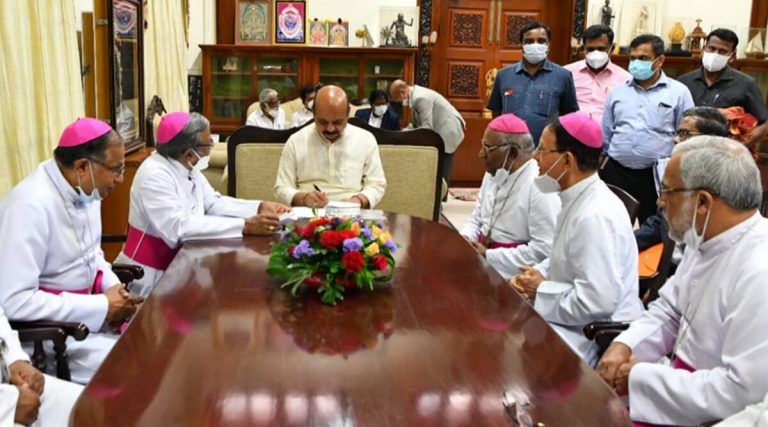
This alleged doublespeak of Christian missionaries became evident on Wednesday when a delegation of Catholic bishops of Karnataka met Karnataka Chief Minister Basavaraj Bommai.

The delegation headed by Archbishop of Bangalore Peter Machado raised their concerns on the proposed law to make forcible religious conversions in Karnataka a punishable offence. Peter Machado had earlier opposed the Citizen Amendment Act enacted by the Narendra Modi government.

The Bishop handed over a memorandum to the chief minister stating that the proposed anti-conversion law was unwarranted, claiming that it will lead to unnecessary communal issues and unrest in Karnataka.

The home minister of the BJP ruled Karnataka Araga Jnanendra had recently stated during the assembly debate that the government is considering passing a law to regulate religious conversion.

BJP MLA from Hosadurga constituency Goolihatti Shekhar reveals his mother converted to Christianity

The state home minister was replying to a question raised by the BJP MLA from Hosadurga constituency Goolihatti Shekhar during the ‘Zero Hour’. The MLA left everybody shocked when he revealed that his own mother fell prey to inducement and converted to Christianity. The MLA had expressed concern that conversion has gone rampant in Karnataka adding that around 15,000 to 20,000 persons of his constituency got converted to Christianity.

The MLA said that his mother has been told not to put ‘kumkum’ (vermillion) on her forehead. She had changed the ringtone of her cell phone to Christian prayers and she threatens to commit suicide if anybody tries to stop her. The MLA had further said that Christian Missionaries had called his mother for prayers and misled her that she will feel better after prayer and trapped her in this way. He said that his mother now doesn’t like even a picture of Hindu God and Goddess.

The minister in his reply had said that the issue of religious conversions has come to the notice of the government and there is a wide network across the country working for religious conversions.

As the Karnataka government has taken a serious note of conversion and has officially announced that an anti-conversion law is under consideration, it has left missionaries worried.

Christian missionaries have always denied allegations of conversion. But if a state government ever brought or announced a law to restrain conversion Christian missionaries oppose this. The instance of Jharkhand can be taken where the BJP government headed by Raghubar Das had brought the law ‘Jharkhand Freedom of Religion Act, 2017.’

Archbishop of Bangalore Peter Machado also contradicted allegations and said someone was trying to malign them and missionaries don’t force anyone for conversion. The delegation also demanded representatives of Christian management should be included in committees formed to implement the new National Education Policy (NEP).

Notably, the Karnataka government has set a target to ensure implementation of National Education Policy 2020 in the next 10 years against the 15 years target set by the Centre.

From improved road connectivity to scenic mountains that are now accessible, Arunachal Pradesh CM shows how the state has transformed under Modi govt

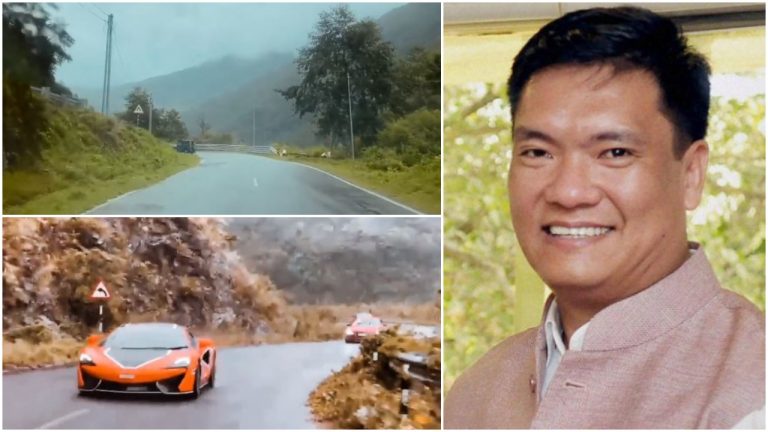
Pema Khandu, the Chief Minister of Arunachal Pradesh, has taken to Twitter to share some delightful pictures and videos of how the vast areas and roads in the state have been transformed after the BJP government has accelerated strategic infrastructure projects in Arunachal Pradesh and other northeastern states.

Captioning his Tweet: “Mera desh badal raha hai…aage badh raha hai” shared a snippet of the picturesque and pristine newly constructed Trans Arunachal Highway connecting Roing to Namsai (86km) over NH13 and NH15. The CM informed that the distance between Roing to Namsai, which” earlier took 7-8 hours crossing numerous streams and rivers, and trudging dodgy roads”, can now be covered in merely one hour.

On September 20, the CM shared pictures of supercars cruising through some of the finest roads in eastern Arunachal. “Supercars are back cruising through some of the finest roads in eastern Arunachal, speeding straight and negotiating fine curves. Here the luxury sports-car vrooms past the highways in Dambuk, Roing, Tezu, Namsai and Changlang”, wrote Pema Khandu while sharing a video of the supercars racing past the highways.

Similarly, on September 17 the CM had also shared a snippet where supercars were seen making their way through the highways of Arunachal.

Recently, Arunachal Pradesh had gained limelight after supercars owned by businessman Gautam Singhania arrived in the state for cruising through its scenic landscapes. The arrival of cars was another testimony of the improved road transport and connectivity in the state in recent years.

The CM periodically keeps posting pictures and videos of the Trans Arunachal Highway, the pet project of the current BJP regime to connect all the remote border locations of Arunachal Pradesh.

The majority of the nearly 1,600 km highway is now open for traffic. It is believed that there is no other road in the country that compares to the Trans-Arunachal Highway in terms of beauty, landscape, road conditions, and wilderness. Not only is the road exciting to drive on, but the landscape and the scenery it guides you through will also leave you awestruck.

On September 17, the Arunachal Pradesh Chief Minister took his followers on a tour of the beautiful and meandering road that leads to his home in Tawang. “To my home – to Tawang. Reached my hometown today travelling through the scenic road”, wrote Khandu, while sharing his extraordinary journey through the exemplary Trans Arunachal Highway.

Intending to promote and create awareness around Arunachal Pradesh while also inviting tourists to the Covid-19 free state, Arunachal Pradesh CM Pema Khandu had in April 2021 flagged off the 15-day Trans Arunachal Drive 2021- a road trip from Namsai in the eastern part of the state to Tawang in the west.

The highway has connected 12 of the current 16 district headquarters, while an 848-kilometre link route connects the remaining four districts and the state capital.

The North-East states of India had long been neglected by previous governments. However, the Modi government has been very focused on developing connectivity and economic activities in the states to bring prosperity and development for all.

Started in 2008, the actual work of the construction of the Trans Arunachal highway began in late 2013 and was sped up during the Modi government. It is now nearly complete, with the exception of a few sections from Seppa to Yazali.

Both CM Pema Khandu and Union Minister Kiren Rijiju often share scenic pictures from Arunachal Pradesh, portraying the beauty of the hill state and how under the Modi government, the easternmost state of India is developing rapidly.

Remembering Bengal’s Pritilata Waddedar on her death anniversary, who chose to die at 21 than being caught by British

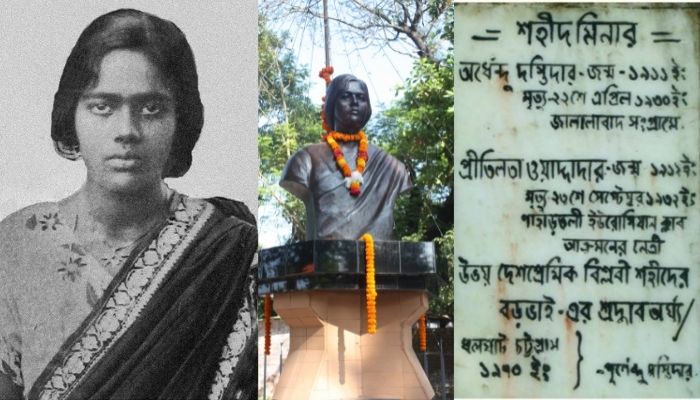
History is replete with examples of valour, grit and determination exhibited by India’s freedom fighters against the British Raj. While some of them featured prominently in history textbooks, others never received their deserved recognition. Even freedom fighters, who put down their lives for their motherland, also disappeared into oblivion. Such has been the case of Bengal’s first female martyr, Pritilata Waddedar. She made the supreme sacrifice on this day (September 23), 89 years ago.

Born to Jagabandhu Waddedar and Pratibha Devi on May 5, 1911, in Chittagong (present-day Bangladesh), Pritilata Waddedar was a bright student since her childhood. Her father was a clerk at the Municipality Offices and barely managed to make ends meet. Despite financial difficulties, Jagabandhu Waddedar provided his daughter good education. “My hopes are bound up with you”, he would often tell Pritilata Waddedar. She exhibited signs of ‘striking intelligence’ as a student at the Khastagir girl’s school in Chittagong.

Pritilata completed her matriculation in 1927, followed by her Intermediate examinations in 1929. She had secured the first rank among all candidates from the Dhaka Board. She joined the Bethune College of Kolkata to pursue her bachelor’ degree in Philosophy. It was around that time when her father lost his job, leaving the family’s responsibility on the shoulders of Pritilata Waddedar. She continued to pursue her education but her degree was withheld by the British authorities. Her degree was later awarded posthumously on March 22, 2012, by the University of Calcutta.

Pritilata Waddedar and her entry into revolutionary organisations

After completing her Bachelors degree, she returned to Chittagong and became the Headmistress of a high school named Nandankaran Aparnacharan School. During her Intermediate at Eden College, Pritilata began taking a keen interest in revolutionary activities and had joined freedom fighter Lila Nag in Dipali Sangha. Bengal in the 1930s had shunned Gandhi’s idea of ‘non-violence.’ Revolutionary organisations, espousing armed struggle against the British regime, had gained centrestage in Bengal.

Pritilata Waddedar was introduced to Masterda Surya Sen and Nirmal Sen, by one of her revolutionary brothers. It was rare for women in those days to be accepted in revolutionary groups. Pritalata Waddedar was not only accepted but was trained in fighting and leading attacks. Her inclusion into the Dhalghat camp of the Jugantar group, run by Surya Sen himself, drew the ire of fellow revolutionary leader Binod Bihari Chowdhury. However, Sen understood that it would be easier for a woman to transport arms without raising suspicion.

Although her inclusion was initially meant to deceive the British authorities, Pritilata Waddedar soon rose the ranks in the group. During the Chittagong Armoury raid of April 18, 1930, Pritalata Waddedar was successful in destroying telephone lines, telegraph office. Besides Surya Sen, she was also inspired by revolutionary Ramakrishna Biswas. He was serving prison time in Alipore Central jail for killing rail officer Tarini Mukherjee mistakenly, although his target was the General Inspector of Police (Chittagong) Craig.

Pritilata Waddedar was firm in her resolve, willing to die for the motherland

Owing to her deception skills, she was able to meet Biswas in jail about 40 times without raising any suspicion. Pritilata Waddedar easily passed off as his elder sister. When Biswas was hanged to death in 1931 by the British authorities, the incident fuelled her revolutionary ideas even more. Freedom fighter Kalpana Dutta shared her experience with Pritilata Waddedar in her book, ‘Chittagong Armoury raiders : Reminiscences.’

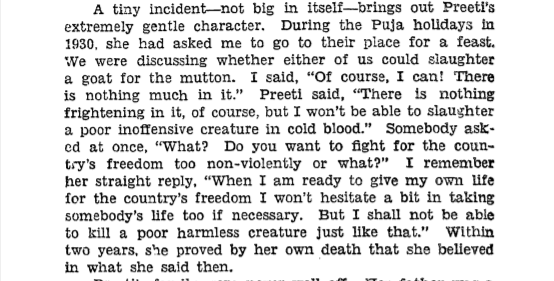
Excerpt of the book

She narrated how Waddedar was reluctant to sacrifice a goat on Durga Puja, thereby making fellow revolutionaries question her ability at armed struggle. “Do you want to fight for the country’s freedom too non-violently or what?”, Pritilata was asked. She replied, “When I am ready to give my own life for the country’s freedom, I won’t hesitate a bit in taking somebody’s life too if necessary.” The incident went on to show the resolve and the fire of patriotism that was burning in her heart.

The raid on Pahartali European Club

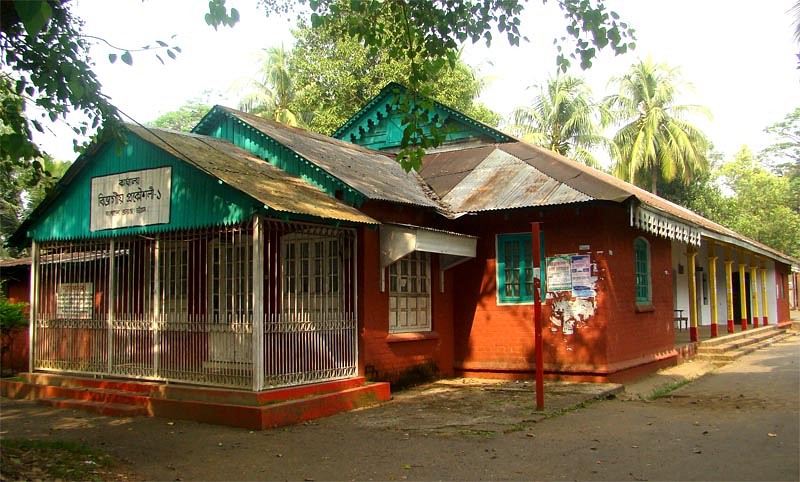
Pritilata Waddedar had a narrow escape when she went to meet Surya Sen on June 13, 1932. His hideout was surrounded by the British troops, leading to a confrontation. Although some revolutionaries were martyred, the duo managed to escape. The British authorities got alerted and they put her up on the list of ‘most wanted’ revolutionaries. Sen instructed Pritilata to remain underground for someone while the group hatched other plans. Masterda wanted to target a racist, white supremacist club named ‘Pahartali European Club’. The notice board outside the club read, ‘Dogs and Indians not allowed.’

The torched ‘Pahartali European Club’, image via Wikimedia

Revolutionaries, including Pritilata Waddedar, were tasked to conduct a raid and destroy the club on the fateful day of September 23, 1932. She was to lead a group of 40 people. Pritilata disguised herself as a Punjabi man while others wore shirts and lungis. The revolutionaries laid siege on the club at 10:45 pm and set it on fire. During the raid, one woman was killed while four other men were injured. The revolutionaries came under a counterattack from the police officials stationed inside the club.

Martyrdom and aftermath

Pritilata was injured by a bullet wound. To avoid being captured by the British, she consumed a pill of potassium cyanide. Her martyrdom at the tender age of 21 years sent waves of inspiration for other revolutionaries in Bengal. Kalpana Dutta recounted in her book how Surya Sen was against the idea of handing potassium cyanide capsules to Pritilata Waddedar.

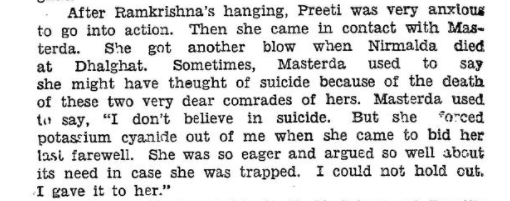
Excerpt from book

“I don’t believe in suicide. But she forced potassium cyanide out of me when she came to bid her last farewell. She was so eager and argued so well about its need in case she was trapped. I could not hold out. I gave it to her,” Masterda narrated. The participation of Pritilata Wadedar and her eventual martyrdom, therefore, became crucial as the armed revolution was largely a men’s affair.

Excerpt from book

Through her example, she sent out a message to the women of Bengal that they can march shoulder to shoulder with men in liberating the country from the British. In her book, Kalpana Dutta recounted how the parents of Pritilata Waddedar were devasted at her loss. “People of Chittagong have not forgotten Preeti or her great sacrifice. They point out her father to any stranger and say, ‘He is the father of the first girl who gave her life for our country,” she concluded.

References: Dutt, K. (1945). Chittagong Armoury Raiders: Reminiscences. India: People’s Publishing House.

Mundra Port drug seizure: Drug smugglers’ modus operandi revealed, Pakistani smugglers’ involvement suspected

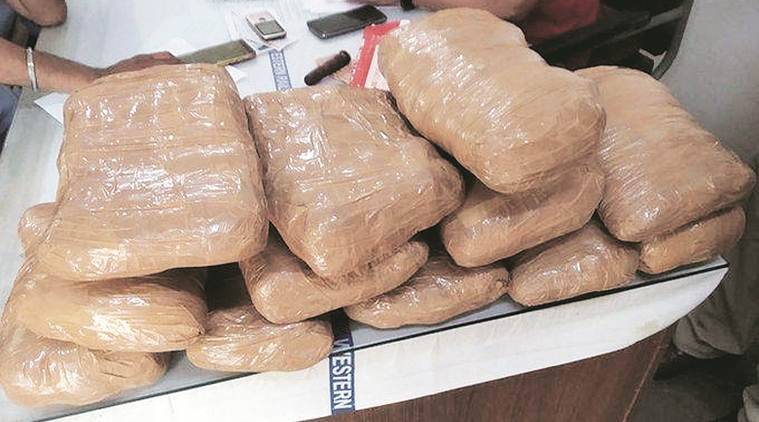
Revelations in the the 3,000 kg drug seizure from Mundra Port in Gujarat suggest that Pakistani nationals may be involved in the smuggling racket.

As reported by New18 Gujarati, the Pakistani drug smugglers would send the drugs to Iran where the further transactions are carried out at the Konarak port in Iran. Of the seven Iranian nationals arrested in the drug seizure, one of the accused has earlier been arrested by at least 3-4 countries in drug smuggling. Satellite phones and other communication devices are recovered which the authorities are currently investigating.

Report further suggests that they would come up with unique ways to smuggle drugs. The smugglers would put the drugs in fishermen’s net and throw in the sea to save hoodwink the authorities. As per R K Rajput, PI, ATS, the drug smugglers would also hide the drugs inside the cavities of the boat when Indian Coast Guard would come for verification and would pretend to be fishermen.

As per reports, further investigations have revealed that the Andhra firm that has been registered as official recipient of the drugs, had earlier imported similar consignment from Afghanistan in June this year. That consignment too was sent by M/S Hasan Husain Ltd and declared as containing ‘semi-processed talc stones’. The invoice was in the name of one Kuldip Singh, from Alipur, Delhi.

The Directorate of Revenue Intelligence (DRI) has taken custody of Chennai-based Machavaram Sudhakar and his wife Govindaraju Durga Purna Vaisali. The latter is the proprietor of the firm M/s Aashi Trading Company which is registered in Andhra Pradesh’s Vijaywada. The DRI is also conducting investigations in New Delhi, Chennai, Coimbatore, Ahmedabad, Mandvi, Gandhidham and Vijayawada.

Indian Express report states that the DRI told a Bhuj court that the consignment was of Afghan origin and that the accused were in touch with “Afghan and Irani nationals” and there was need to probe “probable threat perception involved”.

Sudhakar informed DRI that the firm was started in August last year and the consignment was received from Hasan Husain Ltd in Afghanistan through their local representative ‘Amit’. For this consignment, Sudhakar reportedly received two sets of documents and when he inquired from his Iranian contact ‘Javed’, he was informed that the consignment weighed 300 kgs extra than what the liner recorded. Hence, there were two sets of documents.

Reports suggests that two more such consignments that were on their way here have since been diverted. The Enforcement Directorate (ED) has also filed a money laundering case under the Prevention of Money Laundering Act (PMLA).