Home Blog Page 4000

Two BJP workers found dead in Bengal, one found hanging with his hands tied behind his back, another found dead in a pond

There seems to be no end to the spasm of violence that erupted in West Bengal following an emphatic victory of Trinamool Congress in the assembly elections that were held earlier this year. In continuance with the spate of violence unleashed against political opponents in the state, two BJP workers were found dead under mysterious circumstances in different parts of West Bengal.

BJP worker Indrajit Sutradhar was found hanging from the ceiling of a room with his hands tied from behind in an abandoned building at Khoirasol in the Birbhum district. The body has been sent for autopsy, police officials investigating Sutradhar’s death said.

Police officials claim prima facie it appears to be a case of murder but the autopsy report will confirm the exact cause and circumstances.

The BJP has chalked up the gruesome murders to the ruling TMC, alleging that miscreants sheltered by the party are responsible for the killings of their workers.

According to the family members of Sutradhar, the middle-aged BJP worker was missing since Monday night. They also said that he had “personal enmity with some locals”.

Another BJP worker, Tapan Khatua (45) was found dead at Egra in Purbo Medinipur district earlier today. His body was fished out of a pond in the region, a police officer privy to the details revealed. The BJP and the family of Khatua blamed the ruling party for his death.

However, the local TMC leadership has dismissed the allegations, stating Sutradhar was killed due to a personal feud and Khatua was suspected to have committed suicide. The police have ordered investigations to probe into the deaths of the BJP workers.

Post-poll violence in West Bengal

Ever since Mamata Banerjee-led Trinamool Congress came back to power in West Bengal, violence has become the order of the day. BJP workers and other opposition leaders have been hunted down and killed after the results were declared on May 2, 2021. Even the National Human Rights Commission made scathing remarks on the prevailing culture of political violence in West Bengal. Similarly, the National Commission for SC/ST also blasted the West Bengal government for violence that has been unleashed against the tribal communities following the TMC victory.

Post-poll violence has become a leitmotif of news emerging out of Bengal following the declaration of results. Umpteen number of violence against political opponents have been reported from the state. In an overwhelming number of such incidents, the victims have been BJP supporters and workers while the accused were said to be the supporters of the TMC party. More than 30 BJP workers have lost their lives in the post-poll violence that ensued following the victory of the TMC party in the assembly elections.

The violence unleashed against them also forced hundreds of BJP party workers and supporters to flee their villages along with their families. They crossed over to Assam where they have been provided temporary shelter under supervision by minister Himanta Biswa Sarma. It is not just the BJP but even CPI(M) which has accused the TMC of killing its workers. Reports of attacks on BSF jawans have also emerged in the media.

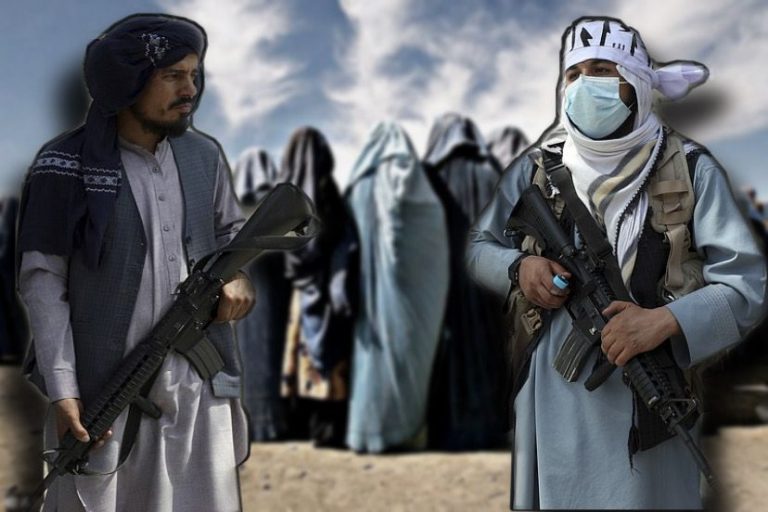
Taliban captures TV and radio stations in Afghanistan to broadcast threats and warnings and to also propagate the ‘Voice of Shariah’

Taliban has upped its ground offensive ever since the US has started withdrawing its troops from Afghanistan. For the last five days, fierce fighting has broken out in three major cities in the south and west Afghanistan, namely Herat, Lashkar Gah and Kandahar, as Taliban militants seek to seize them from government forces. According to Hindi daily Navbharat Times, the Taliban, on August 2 (Monday) captured a radio station in Lashkar Gah.

The Helmand TV station, located in Lashkar Gah, the capital city of Helmand province, is operated by state-run Radio and Television Afghanistan. The report suggests that the Taliban have taken over the TV station to broadcast threats and warnings and to also propagate the Taliban’s Voice of Shariah.

Media gagged as Taliban terrorists do not want their injustices exposed

Meanwhile, other media houses have reported that the Afghan information ministry has confirmed that as many as 4 television and 11 radio stations in the city had been seized and has stopped broadcasting after receiving threats from the Taliban. Only the aforementioned TV station had been operating and streaming Islamic programming.

The radio stations were reportedly captured as a retaliation to the US airstrikes, which the latter has intensified against the Taliban in a bid to halt the terrorists’ advances on a number of major Afghan provincial capitals, especially in District 1 of southern Helmand province. 

“Terrorists do not want the media to publish the facts and expose their injustices,” the Ministry of Information and Culture said.

Taliban terrorists using civilians as shields

It is also being reported that the Taliban terrorists are hiding in civilian homes and using them as shields. Because of this many ordinary civilians are having to bear the brunt of the Afghan officials. Many such houses where officials suspect the Taliban terrorist might be hiding have been bombed in the past few days. Following these strikes, nine dead bodies and eight wounded were sent to Lashkar Gah’s emergency hospital on Monday.

Herat, Kandahar and Lashkar Gah under seige

Over the past 72 hours, US airstrikes have targeted Taliban positions around the cities of Herat, Kandahar and Lashkar Gah, a senior Afghan security official said on Monday.

While Navbharat Times has reported that as many as seven Taliban terrorists were neutralised in the airstrikes conducted by the US on August 2 (Monday), a report by Hindustan Times said that the Afghan defence ministry had informed that at least 40 Taliban terrorists have been killed in a US airstrike in Lashkar Gah city.

However, the Afganistan defence ministry tweeted on Sunday that as many as 300 Talibani terrorists have been killed and hundreds wounded in operations by Afghanistani security forces in different provinces since Saturday. “254 Taliban terrorists were killed and 97 wounded as a result of ANDSF (Afghanistan National Defence and Security Forces) operations in Ghazni, Kandahar, Herat, Farah, Jowzjan, Balkh, Samangan, Helmand, Takhar, Kunduz, Baghlan, Kabul & Kapisa provinces during the last 24 hours. Also, 13 IEDs were discovered & defused by #ANA,” read the Tweet.

As a result of these clashes, as many as 330,000 Afghans have been displaced and at least 30,000 flee their homes every week to escape the Taliban rule. 

Since the US troops began the last stage of their withdrawal from Afghanistan in early May, the Islamic terrorist organisation has seized control of much of rural Afghanistan, but they are facing resistance as they try to capture the provincial capitals.

General Sami Sadat, the Afghan general, who has been leading the battle against the Taliban in the southern province of Helmand, has warned of “devastating” consequences for global security if the Taliban win in their fight against government forces.

Meanwhile, the United Nations Assistance Mission in Afghanistan (UNAMA) has raised concerns over the security of civilians, caught between the clash.

Referring to the Afghan national army, UNAMA Tweeted on August 3 (Tuesday): “Deepening concern for Afghan civilians in #Lashkagah as fighting worsens. Latest reports show 118 civilians injured & 40 killed within last 24 hours as Taliban continue ground assault & Afghan Army attempts to repel. UN urges immediate end to fighting in urban areas. #Afghanistan”.

India’s manufacturing sector sees the strongest rate of growth in July in recent months: IHS Markit survey

As per the IHS’s recently released monthly Survey, India’s manufacturing sector witnessed the strongest growth in the manufacturing sector in July in the last three months. 

Asserting the strongest growth rate, the seasonally adjusted IHS Markit India Manufacturing Purchasing Managers’ Index (PMI) rose from 48.1 in June to 55.3 in July. It is imperative to note that in PMI parlance, a score above 50 signifies expansion while a score below 50 denotes contraction.

Enhanced demand conditions and easing of some local COVID-19 restrictions with a decline in new cases are said to be the reason for improved performance.

Pollyanna De Lima, Economics Associate Director at IHS Markit said, “It’s encouraging to see the Indian manufacturing industry recover from the blip seen in June.”

“Output rose at a robust pace, with over one-third of companies noting a monthly expansion in production, amid a rebound in new business and the easing of some local COVID-19 restrictions,” she added. 

Hopeful about the improving conditions, Lima noted, “Should the pandemic continue to recede, we expect a 9.7% annual increase in industrial production for the calendar year 2021.”

The IHS survey also observed that Indian firms foresee output growth in the year ahead. The end of the pandemic will also result in increased sales to support the upturn, as per reprts.

“The overall level of positive sentiment rose from June’s 11-month low, but remained historically subdued as some companies were concerned about the path of the pandemic,” the survey noted.

Rebound in factory activities

As the impact of the second wave of the pandemic receded, businesses ramped up manufacturing activities. Exports too witnessed a healthy rise as orders grew at the fastest rate since April.

While the threat of a third wave continues to loom, the re-opening of the economy has led to higher demand and sales. 

Madan Sabnavis, chief economist at Care Ratings remarked, “Looking ahead we can expect it to remain over 50 but may not deviate much from the July level as the index is based on comparisons with the previous month. July being high, August would not show much of an uptick.”

He believes the manufacturing sector in India has gotten over the negative effects of the lockdown.

Marginal increase in employment

A marginal increase in recruitment in July ended the 15-month sequence of job shedding. “Although marginal, the rise in employment was the first since the onset of COVID-19. With firms’ cost burdens continuing to rise, however, and signs of spare capacity still evident, it’s too early to say that such a trend will be sustained in coming months,” Lima said commenting on the employment situation. 

“Operating conditions in India improved during July, after growth was halted by the escalation of the pandemic in June. Output, new orders, exports, the quantity of purchases, and input stocks all returned to expansion territory, while a marginal increase in employment ended a 15-month sequence of job shedding,” the data analytics firm noted.

RBI to keep interest rates unchanged

On the inflation front, Lima said, “Policymakers will welcome evidence that inflationary pressures are starting to abate. Firms signaled the slowest increases in input costs and output charges for seven months.”

“Hence, we expect the RBI to keep interest rates unchanged in its August meeting as it continues to support growth,” she added. 

Experts suggest that amid constant fears of a third wave of the coronavirus pandemic and hardening of retail inflation, the Reserve Bank is likely to maintain the status quo on interest rates. 

In a pattern being followed from the time India was hit by the pandemic, reports suggest the RBI will continue to watch the developing macroeconomic situation for some more time before taking any decisive action on monetary policy.

IMF slashed growth projection

Discounting the signs of recovery, the International Monetary Fund last week slashed economic growth projection for FY22 to 9.5% from 12.5% estimated in April. It cited a slow recovery in consumer confidence after the second wave as the reason. 

However, India’s chief economic advisor Krishnamurthy Subramanian hit back at the International Monetary Fund for downgrading the country’s growth projection, saying it’s “significantly off the mark.”

Speaking to CNBC Subramanian claimed that the IMF’s assessment was driven by “saliency bias”. He alleged that more focus was given to striking information while data that is comparatively less remarkable was ignored. He said India dismissed the downgrade assessment.

Pakistan: Imran Khan govt to rent out the official PM residence for fashion and cultural events, after selling all the buffaloes to raise funds

0

The Pakistan Tehreek-e-Insaf (PTI) government, led by Imran Khan, has decided to put up the Prime Minister House in Islamabad for rent, reported Saama Tv.

Khan, who had earlier vowed to convert the building into a university and education hub, has decided to rent it out for fashion, cultural and educational events. The decision was finalized by the Federal Cabinet of Pakistan. In this regard, two committees have been constituted to ensure that the ‘decorum’ and ‘discipline’ of the PM House are maintained during these events. It must be mentioned that Imran Khan had vacated the Prime Minister House in August 2019 and shifted to his plush residence at Bani Gala.

Imran khan had auctioned buffaloes and luxury cars belonging to PM House

Earlier in September 2018, PM Imran Khan decided to auction the buffaloes that were housed in PM’s official residence. The sale of the bovines had fetched PKR 23.02 lacs. Dawn had reported that it was a part of the austerity drive of Khan, who had vowed to cut down on government expenses amidst Pakistan’s economic crisis. The Pakistani Prime Minister had also auctioned off 61 luxury cars that belonged to the PM House and added PKR 20 crores to the government funds. A month later in October, he had chaired a meeting to convert the PM House into a university.

PM House was to be converted into a university

Imran Khan had directed the constitution of a committee to review the charter of the university. The meeting was attended by Higher Education Commission (HEC) chairman Tariq Banuri, the then Education Minister of Pakistan, and other officials. During the said meeting, it was decided that two separate committees would be formed for draft charter evaluation and selection of a vice-chancellor. PM Imran Khan had also approved the establishment of an Institute of Advanced Studies as part of the proposed university.

Imran Khan rents out PM House for wedding ceremony of army man’s daughter

In August 2019, Imran Khan came under the spotlight for renting out the PM House for the wedding ceremony of one Brigadier Waseem Iftikhar Cheema’s daughter Anam Waseem. At that time, Cheema was the military secretary to the Pakistani Prime Minister. Khan soon became the subject of a social media tirade for using the PM House as a wedding venue. However, in less than 3 years’ time, PM Imran Khan took a U-turn and decided to rent out the PM House and add funds to the government’s coffers.

US shot putter Raven Saunders twerks to celebrate her silver medal at Tokyo Olympics, sparks outrage: Details

Athletes competing for medals at the Olympics have differing ways of celebrating their triumph. While most of them beat their fist in the air or jump in ecstasy on qualifying for the subsequent rounds or achieving victory, United States Shot Putter Raven Saunders had a peculiar style of celebrations that have raised many eyebrows.

Saunders secured second place in the women’s shot put tournament at the 2020 Tokyo Olympic Games, and she marked her victory by twerking in front of the camera. After winning a silver medal in the shot put tournament at the Tokyo Olympics, Saunders was seen sashaying in front of the camera, before breaking into twerk.

Her sheer power in the shot put category was evident with her win being a finishing distance of 19.79 meters, second to China’s Lijiao Gong. However, Saunders’s second throw was regarded to be even farther, possibly enough to challenge for gold if not for a foul called for stepping outside of the circle.

Nevertheless, Saunders appeared ecstatic at bagging the silver medal, celebrating her victory by twerking in front of the cameras. The Olympics broadcast quickly aired pulled the camera away after realising what Saunders was doing after winning the silver medal. Besides twerking, Saunders is also known for her idiosyncratic demeanour—wearing technicolour sunglasses, purple and green hair and an Incredible Hulk facemask.

Needless to say, Saunder’s twerking created quite a flutter on the internet, with reactions pouring in from a large number of social media users.

One user was sardonic in criticising Saunders for twerking on camera. In a sarcastic jibe, the user said “nothing screams oppression better than multicoloured hair guy twerking on live TV”.

Another concerned American on Twitter remarked that twerking on live TV in a country that clucks over chewing food in public has made the United States a laughing stock.

Yet another Twitter user was quite snarky in commenting that what Saunders did on live TV could not be compared to twerking.

There were numerous others who did not take kindly to the gesture.

While her twerking was seemingly censored, Saunders continued her theatrics when she was called upon the podium to receive her medal. Raising her arms above her head as she crossed her wrists to form an “X,” the 25-year-old shot put player told the media that the gesture symbolized “the intersection of where all people who are oppressed meet”.

Survey shows Muslims do not trust vaccines, have been vaccinated far less compared to Hindus: Details

0

On August 2, the results of the YouGov-Mint-CPR Millennial Survey were released for the months of June and July, covering 10,285 respondents across 203 cities. The survey was conducted jointly by YouGov’s Indian branch, Centre for Policy Research, Delhi and Mint. The aim of the surveys conducted by the group is to examine attitudes, aspirations and anxieties of the digital narrative of India. More than half of the respondents were millennials.

Lack of trust in vaccines among Muslims

The data released in the survey reports show that there is a notable gap in vaccine coverage across religious groups. Two-third of the Hindus among the respondents have received at least one dose. However, Muslims are far behind, covering less than half of the population. Muslim respondents said they are worried about the safety and side-effects of the vaccines.

Muslims have lesser trust on vaccines compared to Hindus. Source: YouGov-Mint-CPR Millennial Survey

According to the survey report, there were 7,155 Hindus and 883 Muslims in the sample. While 66% of Hindus had already taken the first dose of the vaccine, only 48% of Muslims had taken the first shot. 13% of Muslims were reluctant to take the vaccine, while only 6% Hindus thought they wouldn’t take the vaccine. 

There have been several misleading reports that suggested Covid-19 vaccines may cause impotency, mental health issues, and other problems. Some other reports suggested the use of pork in vaccines. Some religious leaders also propagated against getting vaccinated.

Political influence on decision making to get vaccinated

Political views make a significant difference in developing a viewpoint. In the case of vaccines, a similar problem is coming to light as there has been a lack of trust over the ruling party. Interestingly, the survey showed that those who have trust in BJP are far ahead in vaccination coverage compared to the supporters of other parties. BJP supporters are more convinced of vaccination safety and do not worry about the side effects or complications.

BJP supporters are more likely to get vaccinated. Source: YouGov-Mint-CPR Millennial Survey

71% of the BJP supporters in the sample had taken at least one shot of the vaccine compared to 57% of Congress supporters. 71% of BJP supporters believe vaccines are safe, but the number dropped to 56% in Congress supporters.

The inequality in vaccination coverage

Due to lack of language coverage, limited slots and lack of high-speed internet, there has been a noteworthy inequality in vaccination coverage. The sections that belong to the lower-income groups and have lesser education are less likely to have been vaccinated. Though walk-in, on-site registration and other such programs are helping these groups, there is still a significant gap in vaccination coverage.

Poor and less educated are lagging behind in getting vaccinated. Source: YouGov-Mint-CPR Millennial Survey

According to the survey, those with professional degrees were better covered under the vaccination program. Those who earn less than Rs.20,000 were far behind those who earn more than 1,00,000 per month in getting vaccinated.

The said survey was part of four-part series on Covid experiences in India’s netizens.

Domestic violence case filed against Yo Yo Honey Singh by his wife, court issues notice

Wife of Bollywood actor and singer Yo Yo Honey Singh has filed a case of domestic violence against him.

As per initial reports, Shalini Talwar, wife of Yo Yo Honey Singh (real name Hirdesh Singh), has filed a case against him under the Protection of Women from Domestic Violence Act in Delhi. The Tis Hazari Court has issued notice to him and sought his response over it by August 28.

In 2014, Yo Yo Honey Singh introduced his wife on a reality show Rawstar.

Yo Yo Honey Singh’s battle with drugs

Known for his raps and Punjabi music, the rapper-cum-star singer has a long history of alcohol abuse. In 2016, in an interview, Honey Singh revealed his addiction problem that led to his absence from the industry for 18-months. When he disappeared without any information, there were rumors that he was lodged in a rehab center for his drug problem.

In his interview with Times of India, he denied those allegations but said that he was getting treatment for alcohol abuse. He admitted that he has bipolar disorder and is an alcoholic with a mental illness took a toll on his mental and physical health. He said, “I must confess that I was bipolar and an alcoholic, which aggravated the condition.”

‘Backdoor entry for NGOs banned over FCRA violations?’: Netizens slam Kejriwal over proposal to bring ‘philanthropic organisations’

As the roads in the national capital continue to flood and the clean Yamuna promise is still filled with toxic foam, Delhi Chief Minister Arvind Kejriwal is back with a few more dreams and promises. 

Kejriwal while launching Delhi@2047- a platform for fostering partnerships with CSR and Philanthropic organizations said, “We’ll increase Delhi’s per capita income to Singapore’s level. We’ll bid for 2048 Olympics. There should be 24×7 water supply before next polls.”

Changing destination from Singapore to Europe, Kejriwal further boasted, “Delhi has made good efforts in some sectors in last 5 yrs. Extraordinary achievements have been made in education. Delhi has 24×7 electricity supply. There are over 100 door services. Many things are yet to be done. We want to make roads as per European standards.”

However, his comments did not go down well with the netizens who slammed the Chief Minister reminding him of his failed promises.

Netizens react to new promises

A Twitter user pointed out that Kejriwal’s new promise is plausibly a back-door entry for NGOs after they were subjected to intense scrutiny over Foreign Contribution Regulation Act (FCRA) violations. 

“Making way for back-door entry of breaking-India forces & NGOs that took a hit bcz of Modi govt’s FCRA enforcement, and now their illegal, black money funds are drying up,” the handle Tweeted. 

In the first term of NDA Government, the registrations of over 14,800 NGOs were cancelled over various FCRA violations. This move to rope in ‘philanthropic organisations’ was seen by many with suspicion that this may open doors for the NGOs which were earlier shown the door by Union Govt.

Another user hinting at the government’s inefficiency, tweeted about the recent sinkholes that appeared on prime roads in Delhi.

“Fact: Delhi roads have already attained International standards under the rule of Arvind Kejriwal. They’ve underground parking system similar to Japan & Water transportation system similar to Venice,” read the Tweet. 

While some dug out long-forgotten promises made by the Chief Minister on water supply comparing it to today’s water crisis in Delhi. 

Some even mocked Kejriwal for his advertising and marketing gimmicks by wanting to make Delhi a new international city every year.

A user by the name Adith Malhotra Tweeted, “This is latest addition to the fakery of political advertisement world. Delhi walas keep on enjoying the show. Kabhi London, kabhi Singapore, kabhi Europe and Delhi wale Delhi ka hi intezaar karte rehgaye hai. Courtesy Advertisement guru Shri Shri @ArvindKejriwal ji Maharaj.”

Arvind Kejriwal government had recently come under fire for spending crores on advertisement amid the pandemic, especially when there was peak oxygen crisis during the second wave of coronavirus pandemic.

Singapore warned Kejriwal to stick to ‘facts’

In a recent political faux pas, the Delhi Chief Minister was slammed by his role model country officials for accusing them falsely. Kejriwal in the month of May had taken to Twitter to claim that a new variant of Covid-19 was found in Singapore and appealed to Indian government to shut down flights to and from Singapore to not let the ‘new variant’ reach India.

To this, Singapore’s Foreign Minister Vivian Balakrishnan suggested that politicians should stick to facts and slammed Kejriwal’s statement reiterating that there is “no Singapore variant.”

A Twitterati was quick to remind Kejriwal of the embarrassing incident. “Sir, you have such a short memory,” wrote the user sharing the news.

Failed Delhi Model

The national capital governed by the Aam Aadmi Party has been in the news for all the wrong reasons lately. From mismanagement during the second wave of the coronavirus pandemic to supporting ‘andolanjeevis’ to the water crisis, Kejriwal’s dream of Delhi seems far from reality.

Kejriwal in 2015 had promised to clean the Yamuna river within 5 years. And this was the promise made on the banks of the river when Kejriwal, along with his cabinet colleagues and senior Delhi government officials, had taken part in the first ‘Yamuna Aarti’ held at the Kudesia Ghat. However, the river continues to be clouded with toxic foam.

Kejriwal’s next promise of ‘free pani’ too turned out to be costly for the citizens of Delhi who were seen running behind the water tankers this summer amidst a raging pandemic.

Talking about wanting to make roads as per European standard, here are some visuals of the roads in Delhi after one spell of rain.

Just like the woes of the Delhi citizens have no end, the dreams of Arvind Kejriwal too seem to be endless.

What is Delhi@2047?

Kejriwal’s Delhi@2047 initiative is to invite private players from different sectors to develop public infrastructure, transport networks, solid waste management and fight air pollution.

“Several sectors need more work in the days to come, such as Delhi’s roads, water supply, public transport system, development of lakes, sports infrastructure, solid waste management and fighting air pollution. It is not rocket science. Cleaning Delhi actually can be turned into a revenue generating idea,” Kejriwal said at the launch.

Meanwhile, the Delhi government has approved a hike in MLAs’ salaries who will now get a salary of Rs 30,000 besides other perks amounting to a total of approximately Rs 90,000.

The Economist slammed after claiming colonialists in Congo had admirable intentions, deletes tweet after outrage

On Saturday (July 31), the weekly newspaper ‘The Economist’ sparked a controversy after it propagated a pro-colonialist narrative regarding the Democratic Republic of Congo.

An article was published by ‘The Economist’ titled, “A grim account of the construction of the Congo-Océan Railway” on Saturday. It was a review of the newly published book ‘In the Forest of No Joy’ by WW Norton. “The book is a masterful, if relentlessly bleak, account of the construction of the Congo-Océan Railway, a route designed to connect the central African interior to the Atlantic. What makes it so compelling is the divide it exposes between the often admirable intentions of colonial bureaucrats, who did genuinely think they were lifting Africans out of poverty, and the grim reality that they enabled.”

Screengrab of the contentious tweet by The Economist

Given that the construction of the railway project in the 1920s was marred by violence, forced labour and deaths of tens of thousands of Africans, the use of ‘admirable intentions’ for colonial bureaucrats drew the wrath of netizens. To build the railway, the French colonisers unleashed brutality and forced the labourers to work at gunpoint. The workers were chained at the neck, treated like slaves and made to walk hundreds of kilometres to the track. As such, the Economist’s attempt to suggest that colonial bureaucrats even intended to benefit the Africans drew people’s ire on social media.

Netizens slam ‘The Economist’ for whitewashing historical wrongdoings

One user wrote, “I didn’t know that the mass murderer King Leopold was admirable o The Economist employees.”

Another Twitter user stated, “The Economist employs its typical apology for colonial violence by framing the “admirable intentions” of the colonizers. There is nothing “admirable” about colonialism. The book is called In the Forest of No Joy: The Congo-Océan Railroad and the Tragedy of French Colonialism.”

One Twitter user (@speraomarco) lamented, “When the genocide is in Africa they still call it “admirable”.”

Another miffed netizen remarked, “There’s nothing admirable about colonization, just like there’s nothing admirable about The Economist, one of the trashiest publications out there.”

The Economist removed contentious choice of words, didn’t cite apology

Screengrab of the Editor’s note by The Economist

Following the social media backlash, the Economist deleted the tweet. A new tweet was posted with the words ‘admirable intentions’ removed from the caption as well as the article. In the Editor’s note, the weekly paper stated, “We have deleted and revised a previous tweet to clarify the description of the bureaucrats’ intentions.”

US/UK based ISI-linked ‘activists’ fuelling anti-India narrative on Kashmir, and their ties with the Biden administration: Details

A new report published by Disinfo Lab uncovers damning links between US/UK based ‘Kashmiri activists’, who are feathering their nest through keeping the Kashmir pot boiling, with Pakistan’s notorious intelligence agency ISI. The report also details the links between such dubious activists and the Biden administration in the United States.

Since India tightened its FCRA regulations in 2015-2016, thereby making it difficult for the rabble-rousers to continue sowing discord in Jammu and Kashmir, a renewed attempt is being made to transfer the ‘family business’ of continuing to inflame tensions in the state to the next generation with the help from the Pakistani establishment, anti-India activists, ISI stooges and vested interests.

In their attempt to continue peddling propaganda on Kashmir, several white experts/activists have been roped in that harbor critical view of India’s ‘failings’. These include usual suspects—CJ Werleman, Audrey Truschke, Haley, McIntyre, and organizations like Polis Project, Equality Labs, KKRF, etc, as per the Disinfo Lab report.

The attempt to internationalize the Jammu and Kashmir issue can be gauged from the fact that in the United Kingdom alone, there have been more than 6 new organizations registered by just one person—Muzammil Thakur—the ‘new age’ Kashmiri activist as the report mentions.

It is worth noting that while Thakur portrays himself as a ‘Kashmiri activist’, he was born in Saudi Arabia and lived in London. His interest in pursuing Kashmiri activism was piqued by his marriage to Shaista Safi, daughter of Ghulam Safi, a Hurriyat convenor who was removed by Geelani for corruption. Shaista is a lobbyist at YFK.

The report says Muzammil has divergent views on Kashmir, based on his audience. For the Pakistanis, Muzammil passionately argues for Kashmir being a part of Pakistan. However, for the international audience, he talks about ‘independent Kashmir’.

However, Muzammil is not the only ‘new age’ Kashmiri activist who is engaged in propagating anti-India narrative on Jammu and Kashmir. Several other dubious characters have also assumed the mantle of keeping Kashmir in flux by their kins, including Hafsa Kanjwal, Sameera Fazili, and Ather Zia, all of whom live either in the United States or the United Kingdom.

The report sheds light on a particularly nefarious and interlinked nexus involving the so-called Kashmiri activists, their relatives who serve as important members of suspicious anti-India organizations, dubious individuals, and a convicted ISI operative.

The dubious nexus between ‘Kashmiri’ activists, ISI operatives and anti-India organisations

Kanjwal is co-founder of suspicious organization Stand with Kashmir, which describes itself as a “Kashmiri diaspora-driven independent global citizen grassroots group committed to standing in solidarity with the people of Kashmir in ending the occupation and supporting their right to self-determination.”

Source: Disinfo Lab

In the past, StandWithKashmir has supported terrorists such as Yasin Malik who has ties with the LeT, Riyaz Naikoo, a senior commander of the Hizbul Mujahideen who was eliminated by security forces. SWK also calls Asiya Andrabi a ‘sociopolitical activist’ despite her known links to terrorists.

One of the founders on the document of Stand with Kashmir is Sehla Ashai, a relative of Tony Ashai, who in turn is considered to be a close aide to Pakistan PM Imran Khan and who was recently awarded the Namal Project Contract by the Khan administration.

Another founder on the document of SWK is one Aejaz Dar, son of Akram Dar, who serves as the Director of Kashmiri American Council, a murky organization founded by convicted ISI agent Ghulam Nabi Fai that indulges in lobbying for Kashmiri separatism. Hafsa Kanjwal, the co-founder of Stand with Kashmir was often seen with Ghulam Nabi Fai since 2006, leaving no doubt about the ISI involvement in running and managing SWK. Fai was arrested by the FBI in 2011 and released in 2013, kept low profile till 2015-16, after which he was rehabilitated by Pakistan PM Imran Khan and FM Qureshi, the report says.

It is notable to mention that Thakur’s father was a close friend of convicted ISI agent Ghulam Nabi Fai, who played a pivotal role in settling Thakur first in Saudi Arabia and then in the United Kingdom.

SWK’s ties with the Biden administration

Intriguingly enough, a member of the SWK is a member of the Joe Biden administration. Sameera Fazili of Kashmiri origin works as the Deputy Director of the National Economic Council. She is also Hafsa Kanjwal’s cousin and had worked as Ex Media Coordinator of SWK.

Fazili is also the daughter of another suspicious character, Yousuf Fazili, who also serves as one of the Directors of the ISI-linked Kashmiri American Council.

These activists reportedly set up organizations such as Stand with Kashmir, Justice For Kashmir, Friends of Kashmir, Free Kashmir, Americans of Kashmir and other such organisations. They host webinars, social media campaigns and other media activities to continue peddling venom against India and challenge its sovereignty over Jammu and Kashmir. They are then amplified by an organised syndicate, the report states.

The close association between various anti-India organisations and the new-age ‘Kashmiri’ activists

The report further states that SWK was simply a ‘facelift’ version of Justice For Kashmir, whose first follower and promoter on Twitter was Muzammil Thakur, thereby demonstrating the interconnection between various so-called Kashmir activists. It is their modus operandi to use one anti-India organisation to bankroll and support other such organisations.

For instance, Friends of Kashmir is set up by Ghazala Khan, who is also associated with Kashmir Khalistan Referendum Front(KKRF), along with Gurpatwant Pannun, from Sikhs For Justice(SFJ), a Pakistani product.

Aejaz Dar, one of the founders of the document of SWK, is the founder of Americans For Kashmir, a US-based organization that, although claims to stand for independent Kashmir, surreptitiously supports Pakistan’s claim on Jammu and Kashmir.

Apparently, these next-gen ‘Kashmiri’ activists are progenies of the yesteryear-generation activists, groomed in some of the best US institutes, but are either not related to Kashmir or have no thorough understanding of the intricacies accompanying the issue.

US politicians working at the behest of Pakistan to influence policy decisions on Jammu and Kashmir

Additionally, the report also highlights the involvement of CIA operatives in doing the bidding for their Pakistani masters in promoting propaganda on Kashmir. Lobbyists hired by Pakistan to influence US policy on Kashmir include CIA station chief in Islamabad Robert Grenier. Earlier, another CIA operative Robin Raphel had grabbed a contract worth $1.5 million for lobby firm Cassidy and Ass.

Even US politicians are working at the behest of Pakistan in spreading the anti-India narrative on Kashmir. The money funneled to the US lobbying firms by Pakistan inevitably finds its way to the US politicians, who then express ‘concern’ over India’s rule in Jammu and Kashmir. Rep. Pramila Jayapal had expressed similar ‘concerns’ between June-December 2019 and introduced a resolution on Kashmir in December 2019.