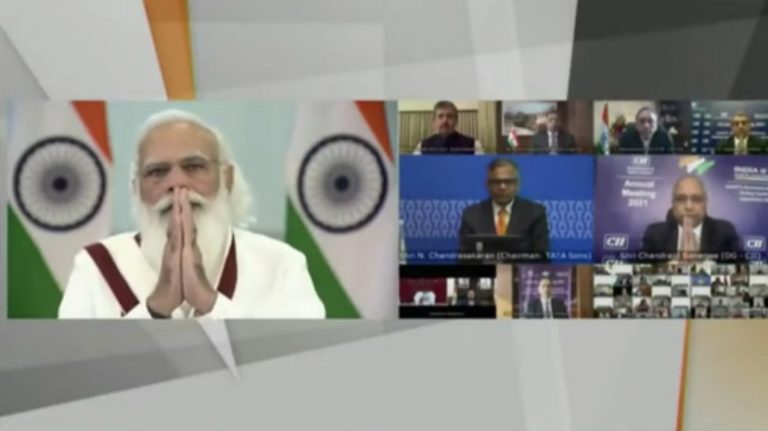
Prime Minister Narendra Modi on Wednesday addressed the Confederation of Indian Industry (CII) annual session 2021 via video conferencing. In his address, PM Modi said India has passed tough key reforms in the monsoon session and also undid “mistake of the past”, referring to the axing of the retrospective tax.
“The abolition of the retrospective tax will strengthen investors’ confidence,” said PM Modi.
The CII Annual Meeting 2021 is being held over two days on 11 and 12 August. The theme for the upcoming CII Annual Meeting is ‘India@75: Government and Business working together for Aatmanirbhar Bharat’.
PM Modi spoke about the bold decisions his government has taken to bring about anniversaries reforms and provide a boost to economic activity in the country.
“There’s a government in place that can take the boldest decisions keeping the nation in mind and not political benefits. GST wasn’t implemented by the previous governments because of its political risk. We did not just implement it, we’re also witnessing record collections,” PM Modi said.
Indians want made in India products, not necessary for the company to be Indian: PM Modi
Addressing foreign companies’ concerns about ‘Made in India’ initiative, PM Modi said, “The situation is changing rapidly. Today, the sentiments of citizens lie with products that are made in India. It is not necessary for it to be an Indian company, but every Indian now wants to use products that are made in India.”
In his speech, PM Modi also highlighted several steps taken by his government that has led to record FDI in India. He further added that the country is creating new records in FPI and the forex reserve is at an all-time high.
“India, which was once apprehensive of foreign investment, is today welcoming all types of investments. India is taking major leaps in ease of doing business ranking today,” PM Modi said.
Start-up culture fuelling the India Growth story: PM Modi
PM Modi also spoke about the budding start-up culture that has powered the rise of many unicorn companies.
“Start-Ups are showing self-confidence. Several unicorns are becoming the image of the nation. 7-8 years ago, India might have had just 3-4 unicorns. Today, there are nearly 60 unicorns in India! Out of these 60, 21 of them have been developed in the last few months,” PM Modi said.
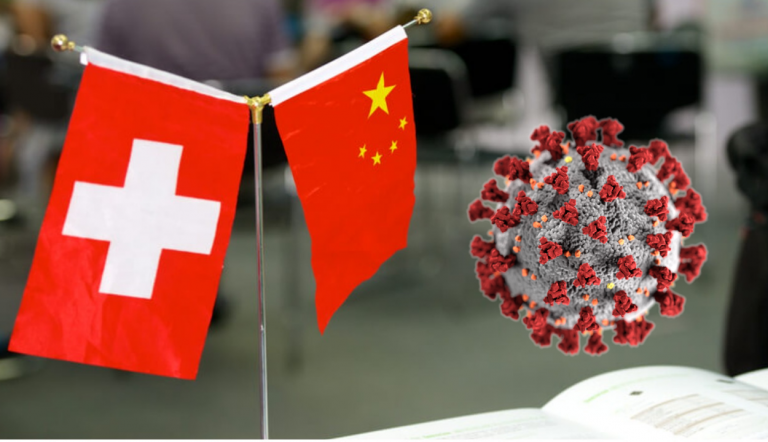
The Swiss embassy in China on Tuesday ‘fact-checked’ the Chinese state-sponsored media outlets media for quoting a fictitious Swiss scientist in their news articles accusing the United States of politicising Covid-19 origin investigations.
According to the reports, on 24 July, a Facebook post by an account named Wilson Edwards had claimed to have gained information regarding efforts by the United States to politicise the World Health Organization’s Covid-19 investigations from within.
Chinese State media outlets, including the Global Times, the People’s Daily, had carried articles with comments from “Wilson Edwards” on the origins of Covid-19 and the WHO’s independence.
Post by Chinese state-owned media People’s Daily China
The alleged Swiss scientist Wilson Edwards had quoted unnamed WHO sources and “fellow researchers” to claim that they have been facing “enormous pressure and even intimidation from the US side as well as certain media outlets” to interfere in the WHO’s investigation on Covid-19 origin.
“The WHO sources told me the US is so obsessed with attacking China on the origin-tracing issue that it is reluctant to open its eyes to the data and findings,” the purported post had claimed.
The so-called scientist had insinuated that the US government was attempting to reclaim its power in the WHO after his predecessor Donald Trump had withdrawn US membership from the international body in April 2020, soon after the Chinese pandemic began to cause havoc worldwide.
“I have the impression that WHO’s new plans, which include lab audits, are largely politically motivated,” Wilson Edwards was quoted as writing on the social media platform.
Chinese media quotes fake Swiss scientist, Swiss embassy fact-checks them
The Chines state media, including the Global Times, the People’s Daily, promptly picked up the story to create a narrative that the United States has been attempting to interfere in the WHO’s investigation. The Chinese media carried the story headlined its story as “US attempts to overturn report, leveraging WHO into political tool” in multiple languages.
A few days later, these reports caught the attention of the Swiss embassy, who dug up public records to find out that neither there was any such citizen nor any academic research was published in that name.
In response to Chinese propaganda, on Tuesday, the Embassy of Switzerland in Beijing fact-checked the Chinese media outlets saying that the alleged Swiss biologist quoted by the Chinese media in recent days did not exist at all.
“Looking for Wilson Edwards, alleged [Swiss] biologist, cited in press and social media in China over the last several days. If you exist, we would like to meet you!” it said.
Looking for Wilson Edwards, alleged ?? biologist, cited in press and social media in China over the last several days. If you exist, we would like to meet you! But it is more likely that this is a fake news, and we call on the Chinese press and netizens to take down the posts. pic.twitter.com/U6ku5EGibm
— Embassy of Switzerland in Beijing (@SwissEmbChina) August 10, 2021
“While we appreciate the attention on our country, the Embassy of Switzerland must, unfortunately, inform the Chinese public that this news is false,” the Swiss embassy said in a statement posted on Twitter.
In its clarification, the Swiss embassy added that the reports are more likely to be “fake news” and asked the Chinese press and netizens to take down the posts.
Chinese media outlets take down fake posts on Swiss scientist
Following the response from the Swiss embassy, Chinese state media outlets have begun to remove the specific articles it had published by citing Swiss scientist Wilson Edwards.
Reportedly, the Facebook account of Wilson Edwards was created on the same day it published its only post claiming US interference in the WHO’s investigation. The profile had a photo of a library at Oxford University and had just three friends, which also have strangely disappeared on Wednesday.
Meanwhile, the People’s Daily is yet to delete its posts live even after clarification from the Embassy of Switzerland in Beijing.
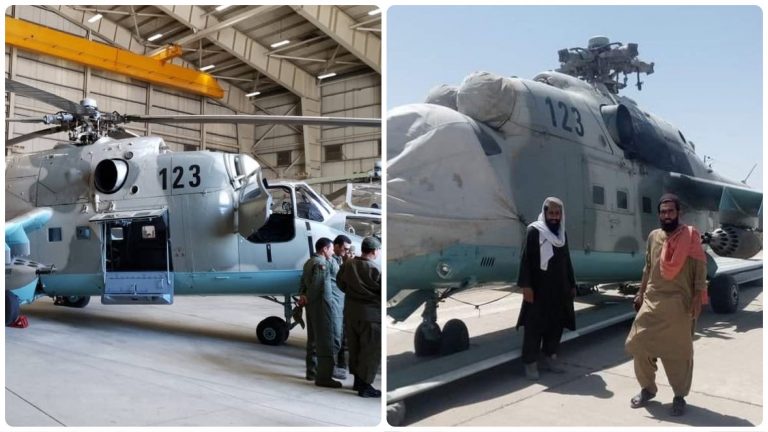
Amidst the escalating Talibani offensive in Afghanistan, a Mi-35 attack helicopter gifted by India to the Afghan forces has been captured by the Talibani terrorists. The Russian-designed Mi-35 Hind attack gunship was seized by the Taliban after it seized control of Kunduz airport in northern Afghanistan from Afghan forces.
Videos and photographs have emerged from the captured airport showing Taliban fighters guarding the gunship. However, the rotor blades and vital components of the engines of the helicopter appear to be missing. A closer examination of the video and the photo shows that the rotor blades were kept on the ground, below the helicopter.
According to Defence analyst Joseph Dempsey, on July 14, the satellite image showed a Mi-35 attack helicopter parked at the Kunduz hangar with its rotor blades intact, but the image that was clicked yesterday, i.e August 10, showed the helicopter without its rotor blades. Therefore, it is being speculated that the Afghan forces removed the parts from the helicopter anticipating defeat to the Taliban forces.
It is also being speculated that besides removing its rotor blades, the Afghan air force personnel also must have incapacitated the helicopter by denuding it of its combat capabilities and engine. However, it cannot be independently verified. The image of Talibani terrorists standing beside the helicopter also shows disassembled rotor blades kept in its vicinity. According to Indian defence expert Manu Pubby, it is possible that Afghan Air Force was using the airframe to scavenge parts to repair other helicopters.
Taliban had reportedly this week took control of the northeastern city of Kunduz, with the Afghan forces in control of the airport and the army base. Kunduz, a strategic town lies at the gateway of northern provinces and Central Asia. Talibanspokesman Zabihullah Mujahid said its forces were close to the airport. Today, the Talibani terrorists overran the airport and snatched its control from the Afghan forces, including the local army headquarters at the Kunduz airport.
According to social media users, one civilian plane was also present at the airport. The headquarters of the Afghan National Army’s 217th Corps is located at the airport, which is now under Taliban control. According to reports, hundreds of Afghan soldiers and police officers surrendered to the Taliban.
India gifts 4 Mi-35s to Afghan Air Force
India in October 2019 had handed over the second pair of Mi-24V helicopters, also known as Mi-35 to war-torn Afghanistan, boosting the capability of the Afghan forces. India had delivered the first two Mi-24Vs in May 2018. The four new helicopter gunships were a replacement for four attack helicopters gifted by India to Afghanistan in 2015 and 2016. However, those were not Indian Air Force helicopters. They were refurbished helicopters purchased from Belarus.
Mi-24V are close-air support helicopters fitted with a YakB four-barreled, 12.7mm, built-in, flexibly mounted machine gun, as well as rocket and grenade launchers.
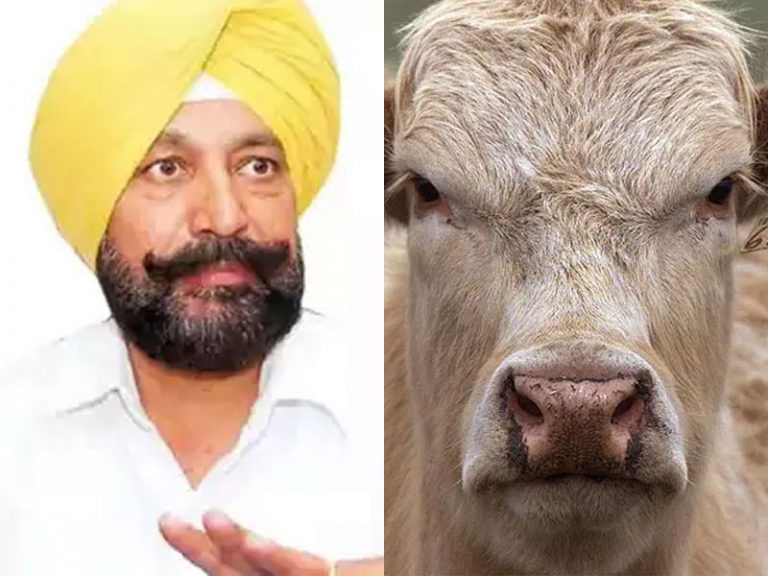
Allegations have been raised against Balbir Singh Sidhu, Health Minister, Punjab, over a prime 10-acre panchayat land allotted to an NGO linked to him. While raising the allegations that Sidhu proposed to build a banquet hall at the land allotted for Gaushala, former Punjab legislative assembly speaker Bir Devinder Singh and ex-minister Bikram Singh Majithia of Shiromani Akali Dal demanded CBI inquiry into the alleged land grab attempt by Sidhu.
The said land is located in Balongi panchayat, district Mohali, Punjab. It has been allotted to the Bal Gopal Gau Basera Welfare Society at Rs.25,000/acre per annum for 33 years which is remarkably less compared to the current market price.
While raising the allegations against Sidhu, Majithia in a public meeting said, “Balbir Sidhu has grabbed panchayat land worth crores in Balongi and now, in connivance with his brother, as mayor of Mohali, is going to legalise his garbbed land by including Balongi into MC limits. We demand a CBI inquiry into the matter.”
Echoing with his allegations, Bir Devinder said, “A mega land scandal involving the Punjab health minister has come to the fore, in which a suspicious trust, headed by Balbir Singh Sidhu, has usurped the common panchayat land of Balongi village in Mohali district, worth Rs 100 crores, with the active connivance of minister for rural development and panchayats Tript Rajinder Singh Bajwa. To legalise it, he is also including Balongi into MC limits, which must be probed by CBI.”
Documents suggest there was a proposal to build a banquet hall
English Daily Tribune got hold of the documents submitted by the Bal Gopal Gau Basera Welfare Society, the NGO that got the land. The documents suggest that a resolution, signed by its general secretary Naresh Kansal, was prepared last year in October in which there was mention of Gaushala, Mandir, diagnostic centre and banquet hall to be built on the land. The official address of the NGO is Sidhu’s residence at Mohali, and he is the president of the NGO as well.
Activists and villagers cried foul
Parvinder Singh Kittna, RTI activist, sent a letter to Chief Minister Capt Amarinder Singh and demanded an inquiry into the matter. He alleged it was a case of land grabbing. Another activist, Satnam Daun, added that the land mafia has been eyeing the prime land of several villages in Mohali. He alleged panchayats are being forced to pass resolutions to hand over prime lands to private individuals.
The panchayat and villagers are reportedly not ready to allow construction of anything other than Gaushala on the said land. Bahadur Singh, Balongi Sarpanch said in a statement that they got a proposal only for Gaushala and nothing else. “There was no mention of either banquet hall or a temple,” he added.
Minister denied allegations
Health Minister Sidhu claimed that the land had been allotted solely to build a Gaushala and take care of stray cattle. He assured me there would not be any commercial activities on the premises. While addressing the media at NGO on Friday last week, he said that the land would only be used for charitable purposes. “If anyone wants to know the purpose, he may visit the site to see the commercial activities running there,” he added.
Sidhu rubbished the claims made by the opposition leaders and said, “Is it a mistake to construct a gaushala after I made a commitment to the people of Mohali that I will make this city stray animal free so that the road mishaps could be prevented and precious lives of innocent people, as well as animals, can be saved.”
He further added that the land was encroached upon by people, but after the construction of Gaushala, the panchayat will get income from the lease. He said that the NGO is trying to establish a state-of-the-art semen lab at the Gaushala to commence research on foetus transplant to ensure only female calves are born.”
NGO claims there would be no commercial activities
Kansal claimed that the banquet proposed in the plan was not for commercial activities, but it was meant to be a community hall for poor people so that they can hold their functions and festivities. He added that the trustees have been working tirelessly for the last four years to provide the best care for the stray cattle in the area. In 2017-18 the NGO was managing the Municipal Corporation Gaushala, but it lacked space, facilities and diet for the cattle, Kansal added.
Anurag Aggarwal, a trustee of the Bal Gopal Gau Basera Welfare Society, claimed that trustees have donated money and raised funds via donations to construct the Gaushala with an investment of Rs.1 crore. He added that the aim is to establish a diagnostic-cum-health centre along with a community hall for the poor. The NGO said that they would invest a total of Rs.5 crores in completing the project.
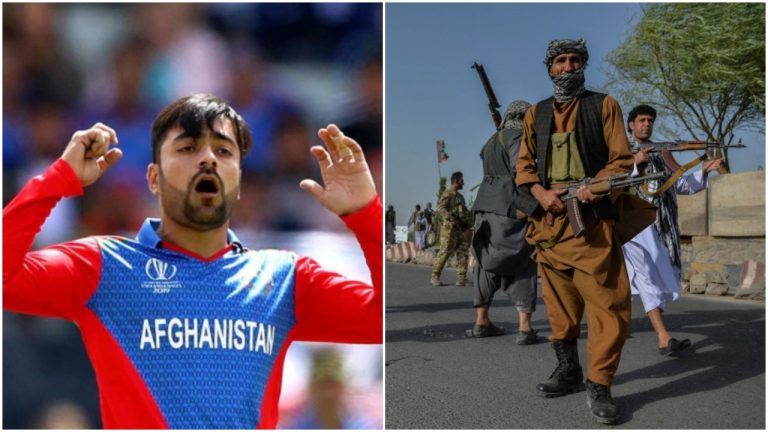
As Islamic terror group Taliban takes control of several provincial capitals in Afghanistan, fuelling a massive humanitarian crisis, Afghanistan cricketer Rashid Khan took to Twitter on Tuesday to appeal for peace and requested the world leaders not to leave his countrymen in chaos.
“Dear World Leaders! My country is in chaos, thousand of innocent people, including children & women, get martyred every day, houses & properties being destructed. Thousand families displaced,” wrote leg-spinner Rashid Khan.
Dear World Leaders! My country is in chaos,thousand of innocent people, including children & women, get martyred everyday, houses & properties being destructed.Thousand families displaced.. Don’t leave us in chaos. Stop killing Afghans & destroying Afghaniatan??. We want peace.?
“Don’t leave us in chaos. Stop killing Afghans & destroying Afghanistan. We want peace,” he added.
Rashid Khan’s call for help from the global community comes just as the Taliban is gaining control over large parts of Afghanistan, terrorising people and forcing Afghan people to flee to neighbouring countries. As American troops withdrew from Afghanistan, the Taliban continues to tighten its grip on several provinces.
Since last week, the Taliban is consolidating its positions by capturing important provincial capitals. Meanwhile, the government has withdrawn forces from rural areas to hold off the Taliban offensive on major population centres. Taliban has captured at least six provincial capitals in recent days in the north, west and south. A U.N. official recently said that the advances made in human rights in the 20 years since the hardline Islamists were ousted from power in Afghanistan were in danger of being erased.
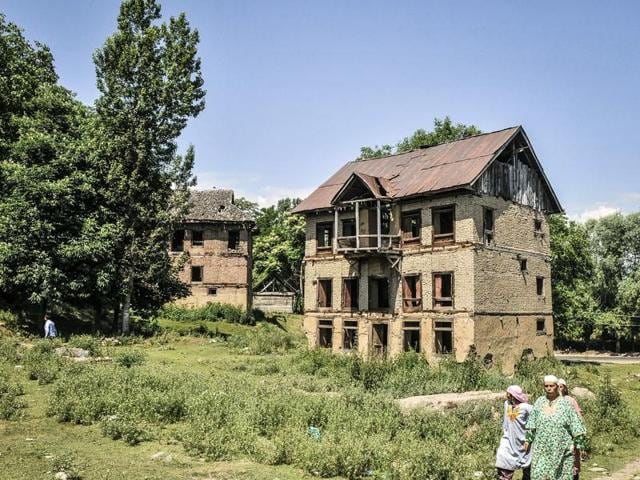
Minister of State Home Affairs Nityanand Rai in a written reply in Rajya Sabha gave details on the settlement of migrants and restoration of properties after the abrogation of Article 370 in Jammu and Kashmir.
The Ministry of Home Affairs was questioned in the Upper House whether the Centre had appointed any authority to receive requests from Hindus, who returned to Kashmir to reclaim their movable and immovable property.
To this Minister Nityanand Rai informed, “Under the J&K Migrant Immovable Property Act, 1997, DMs of concerned districts are the legal custodians of the immovable properties of migrants, who take suo motto action on eviction proceedings in cases of encroachment.”
The migrants can also request DMs in such (encroachment) cases: MoS Home Nityanand Rai to RS in a written reply on whether govt has appointed any authority to receive such requests from Hindus, who returned to Kashmir to reclaim their movable and immovable property
“The migrants can also request DMs in such (encroachment) cases,” he added.
Properties restored and migrants return to Kashmir
Detailing the resettlement data post the abrogation of Article 370, Rai said, “As per the information provided by the Govt. of Jammu & Kashmir, after the abrogation of Article 370, a total of 520 migrants have returned to Kashmir for taking up the jobs under the Prime Minister’s Development Package-2015.”
As per the information provided by the Govt. of Jammu & Kashmir, after the abrogation of Article 370, a total of 520 migrants have returned to Kashmir for taking up the jobs under the Prime Minister’s Development Package-2015: MoS Home Nityanand Rai to Rajya Sabha
“Regarding restoration of properties to its rightful and original owner, 9 properties have been restored, as per the information provided by the Govt. of Jammu & Kashmir,” informed Rai further.
Two persons from outside purchased properties
The Ministry of Home Affairs on Tuesday had informed the Lok Sabha that two people from outside of the Union Territory have purchased properties in Jammu and Kashmir since the abrogation of Article 370.
The Ministry also informed that no instance of hardship was experienced by the government and people of other states purchasing property in Jammu and Kashmir.
Meanwhile, owing to the regular disruptions, the Lok Sabha has been adjourned sine die. The parliament proceedings were dented with constant uproar and sloganeering hampering the discourse of the monsoon session.
Lok Sabha Speaker Om Birla remarked on Wednesday, “I am hurt by the fact that the proceedings of the House did not take place as per expectations in this (Parliament Monsoon) session. I always make an effort to see that maximum Business takes place in the House and discussions are held over issues related to the public.”
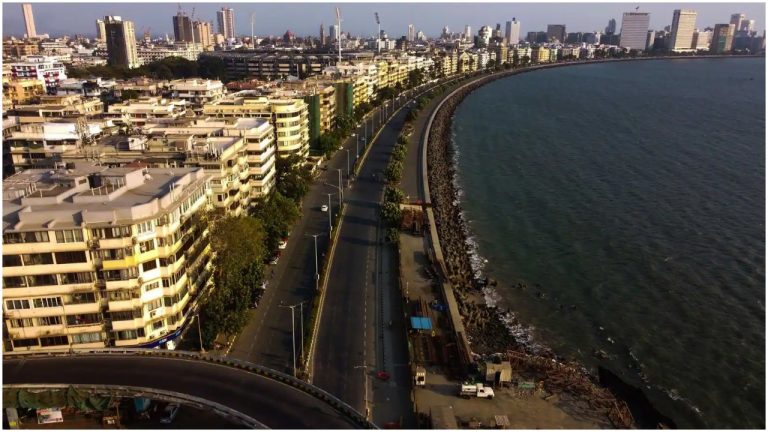
As many as 12 Indian coastal cities, including Mumbai, will be underwater by the end of the century, the National Aeronautics and Space Administration (NASA) of the US has predicted.
According to the reports, NASA has released a study based on the recent report published by the Intergovernmental Panel on Climate Change (IPCC) that analyses climate change, including rising sea-level worldwide.
As communities across the world prepare for the impacts of sea level rise, a new visualization tool provided by @NASAClimate & @IPCC_CH gives users the ability to see what sea levels will look like anywhere for decades to come. Discover more: https://t.co/VAST2xSOyEpic.twitter.com/nePqLntrqv
In its latest report, the Intergovernmental Panel on Climate Change (IPCC) had issued a ‘code red’ for humanity and had warned against imminent climate change in the coming decades due to increased human activity. The IPCC publishes global climate assessments every five to seven years, concentrating on changes in temperature and ice cover, greenhouse gas emissions, and sea levels throughout the world. This is IPCC’s sixth global science assessment since 1988.
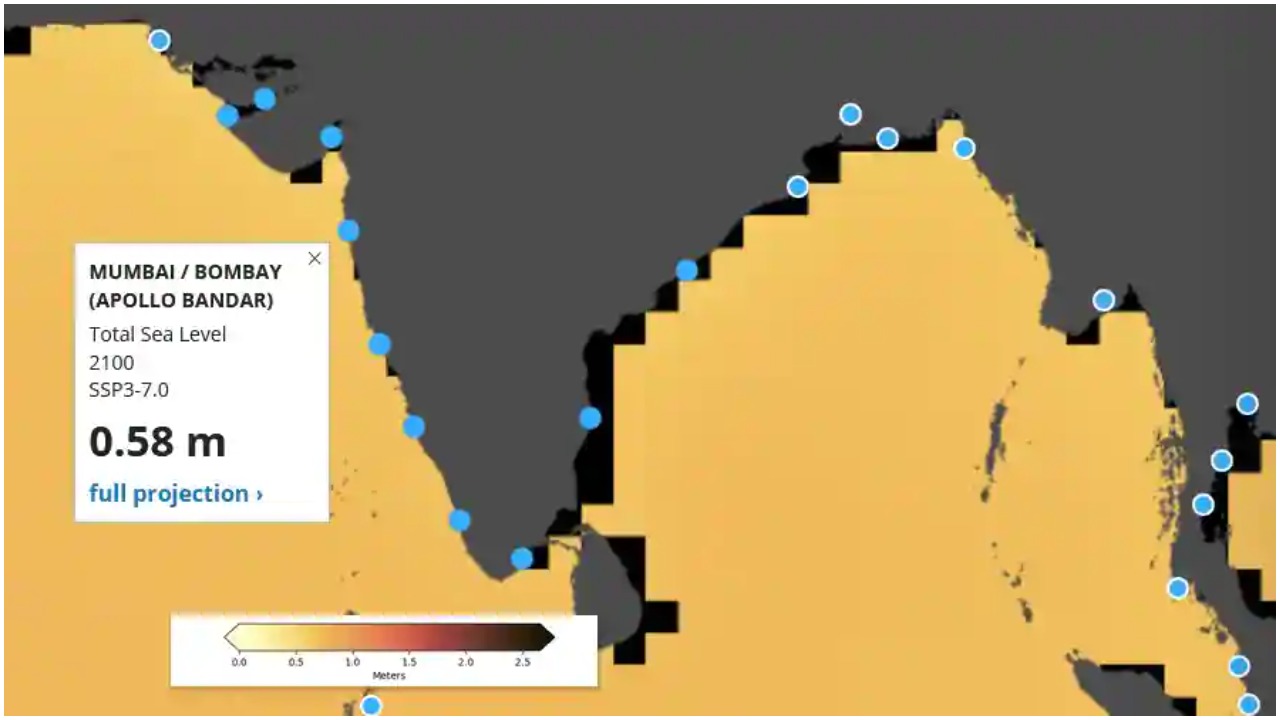
Using the IPCC’s publicly available data, NASA’s Sea Level Change Team has created a sea-level projection tool that provides extensive data on the future sea-level rise. The NASA Data has accessed data from satellites and ground equipment, as well as computer simulations, to make their sea-level forecasts.
As per NASA’s analysis, 12 Indian cities – Kandla, Okha, Bhavnagar, Mumbai, Mormugao, Mangalore, Cochin, Paradip, Khidirpur, Visakhapatnam, Chennai, and Tuticorin are projected to witness a rise in sea levels leading to the submergence in low lying areas.
In its landmark report, the IPCC has warned that the planet will warm by 1.5° Celsius in the next two decades without drastic moves to eliminate greenhouse gas emissions. The latest scientific assessment from the UN’s Intergovernmental Panel on Climate Change has put the blame on human actions for rising temperatures. The scientists forecast no end to warming trends until emissions cease.
The report said that modern society’s continued reliance on fossil fuels is heating the world at a rate unprecedented in the past 2,000 years and its effects are already visible as record droughts, wildfires, and floods devastate communities across the globe.
“It is unequivocal that human influence has warmed the atmosphere, ocean and land,” wrote the authors of the IPCC’s sixth global science assessment. The IPCC authors concluded that the crucial warming threshold of 2°C would be “exceeded during the 21st century” without deep emissions cuts in the next decades. The assessment released on Monday is the collective work of more than 200 scientists, approved by delegates from 195 countries.
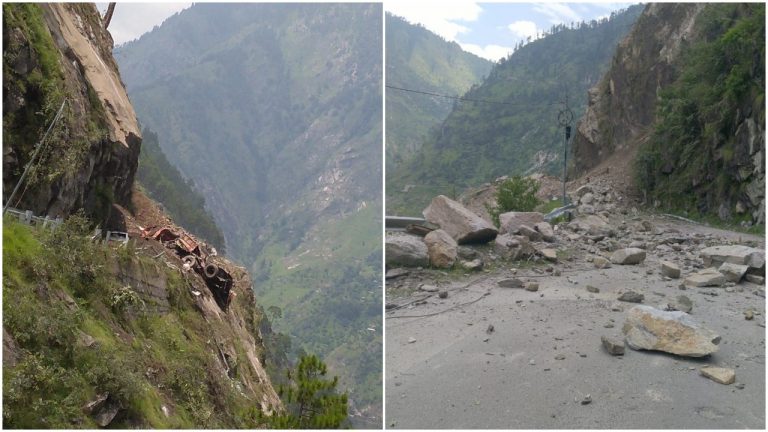
Two persons have died, and nearly 40 people are feared buried after a landslide struck in Himachal Pradesh’s Kinnaur on Wednesday. The landslides that occurred this afternoon have left many vehicles trapped under the debris.
According to the reports, the landslide took place on the Reckong Peo-Shimla Highway in Kinnaur at around 12.45 pm. A truck, a state-run bus and other vehicles are believed to have been buried in the rubble.
Landslide in Himachal’s Kinnaur hits a bus and a truck, several feared trapped. ITBP team rushed for rescue ops. @IndiaTodaypic.twitter.com/J2dJrHWFkT
The bus having at least 40 passengers on board was travelling to Shimla. The local police said at least 40 people were trapped or buried in the landslide. The ITBP has rescued ten people from the debris so far, including the driver, according to the State Emergency Operation Centre.
The Indo-Tibetan Border Police (ITBP) has deployed a rescue team to help the people stuck under the debris. ITBP personnel of the 17th battalion, 19th battalion and 43rd battalion have reached the landslide site on Reckong Peo-Shimla Highway near Nugulsari in Kinnaur.
A landslide reported on Reckong Peo- Shimla Highway in #Kinnaur District in Himachal Pradesh today at around 12.45 Hrs. One truck, a HRTC Bus and few vehicles reported came under the rubble. Many people reported trapped. ITBP teams rushed for rescue. More details awaited. pic.twitter.com/ThLYsL2cZK
Chief Minister Jai Ram Thakur saidNDRF, ITBP, CISF, Police teams have also been called to the rescue operations.
“Efforts are on for rescue operation, but rubbles are still dropping from a height. As soon as it comes under control, rescue teams will get in action,” Himachal Pradesh Jai Ram Thakur said.
Kinnaur has recently seen a series of landslides, caused by inclement weather and rainfall. Nine tourists were killed and three others, including a local resident, were injured when heavy boulders fell on a minibus during multiple landslides on the Batseri-Sangla road in Kinnaur on July 25. Heavy, incessant rains have caused such landslides in parts of Himachal Pradesh over the past few weeks.
When the British finally decided to leave India and hand over the governing power to Indians, the subcontinent was divided into dozens of princely states, and some scattered territories under the rule of the Portuguese and French. The collation of all the areas into the Union of India was an arduous and extensive task that took time and a lot of efforts.
We all know how Sardar Ballabhbhai Patel, by his sheer will and determination, had made the princely states of Junagarh, and Hyderabad give up the designs of their Muslim rulers to join Pakistan and instead become the part of India.
Some parts of India, like Goa, Pondicherry and others became official Indian territories a little later than 1947. Sikkim too came later. The little Union Territory we know as Dadra and Nagar Haveli today also became a part of India quite late because it was under Portuguese control and they were not willing to let it go.
The story of the accession of the coastal Union Territory with India is an interesting one.
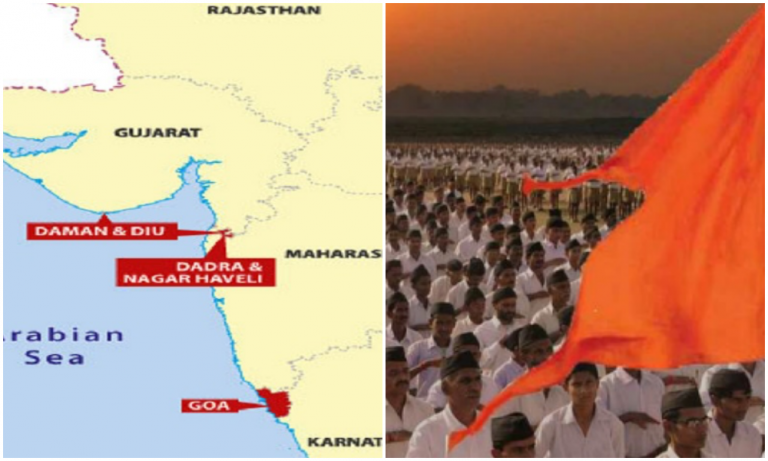
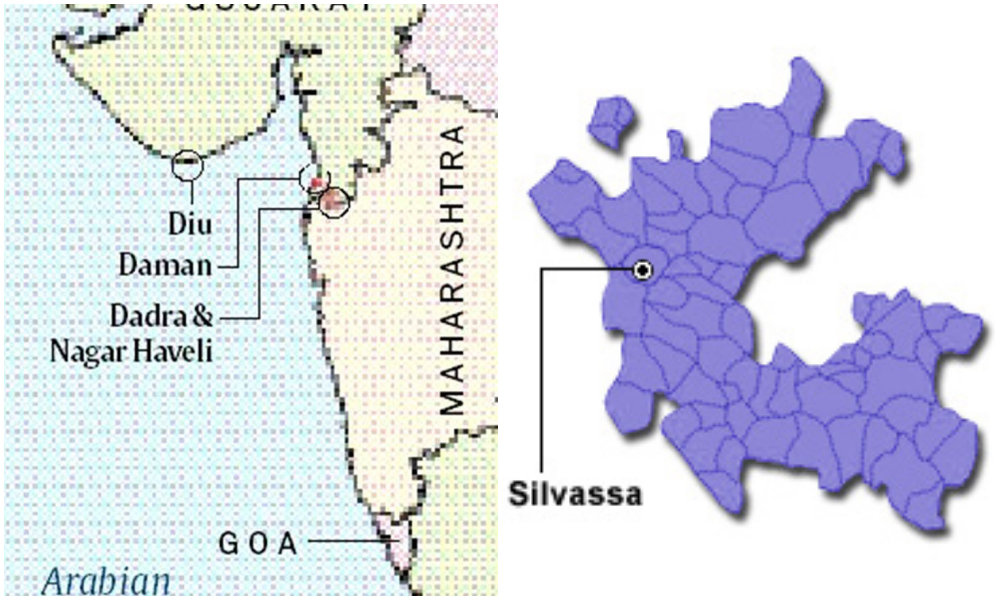
Location and map of Dadra and Nagar Haveli, images via knowindia.gov and Indian Express
Located just between the states of Gujarat and Maharashtra, and just over 150 km from Mumbai, is the Union Territory of Dadra and Nagar Haveli. In January 2020, the two UTs of Dadra & Nagar Haveli and Daman & Diu were merged into one.
History
The coastal territories of Dadra and Nagar Haveli came under Portuguese control in 1783 and 1785 respectively. It was an enclave of around 72 villages. The total area is approximately 491 square km. Before the Portuguese control, the area was historically under Koli chieftains, and Rajputs, eventually controlled by Marathas.
Under the Maratha rule, the Portuguese were later granted permission to collect revenues from the villages of Nagar Haveli after a treaty. After the Maratha powers were defeated in the third Anglo-Maratha war in 1818, the Portuguese took control of the area and recognised it as territory of Portuguese India.
Call for liberation and armed resistance against Portuguese rule
In the 1930s, when the anti-Portuguese movement in Goa started gaining momentum, it also caused similar movements in Dadra and Nagar Haveli. Many freedom fighters were active under different organisations, demanding the Portuguese to hand over the area. Appasaheb Karmalkar, a government employee who was heading the National Liberation Movement Organisation (NMLO), the Azad Gomantak Dal led by Vishwanath Lavande, Prabhakar Sinari, Dattatreya Deshpande were the leaders who were spearheading the movement for the liberation of Portuguese-controlled territories in India.
The volunteers of Rashtriya Swayamsevak Sangh (RSS) played a crucial role in the liberation movement. RSS leaders Raja Wakankar and Nana Kajrekar had made several tours to the area, taking stock of the situation and organising the locals against a revolution against the Portuguese. The RSS, along with the other liberation movement organisations, was planning for an armed assault against the Portuguese at Dadra and Nagar Haveli.
Many leaders, including Lohia and Jay Prakash Narayan etc, had supported the liberation of Dadra and Nagar Haveli. Even the legendary singer Lata Mangeshkar had performed in Pune in 1954 at an event to raise funds for the cause.
In 1954, RSS, NLMO and AGD formed a United Front to lead an armed assault against the Portuguese officials at Dadra and Nagar Haveli. The entry of persons and material to Dadra and Nagar Haveli was under the control of the Special Reserve Police of the government of India. JD Nagarwala, the DIG of the SRP was also sympathetic to the cause of the liberation of Dadra and Nagar Haveli. Another organisation called the United Front of Goans was also working to force the Portuguese out of the area.
The UFG had attacked the Dadra police station and overpowered the staff to unfurl the Indian flag on July 22, 1954. Dadra was declared a free territory. On 28 July, RSS swayamsevaks under Wakankar and AGD volunteers stormed the Naroly police station and overpowered the Portuguese staffers, forcing them to surrender. Naroly was declared free from Portuguese rule the next day. Communist Party was also leading the tribals of several villages to protest against the Portuguese rule.
As liberation forces gained momentum, the Portuguese forces retreated to Silvassa, under Captain Virgilio Fidalgo. The liberation forces asked Fidalgo to surrender. When he did not, hundreds of RSS swayamsevaks and AGD workers marched towards Silvassa. The Portuguese fled, and the RSS and other organisations declared Dadra and Nagar Haveli independent of Portuguese rule on August 2, 1954.
The liberation forces continued to track and attack the Portuguese. Finally, Fidalgo surrendered to the SRP on August 11.
Appasaheb Karmalkar was chosen as the first administrator of Dadra and Nagar Haveli at a public meeting later.
Integration: The one-day Prime Minister
Even though Dadra and Nagar Haveli was declared independent from Portuguese rule in 1954, it was many years before the area was formally added as a part of the Indian Union. In legal terms, after the fall of the Portuguese rule on August 2, 1954, Dadra and Nagar Haveli had become an independent country. The freedom organisations formed a governing body called the Varishtha Panchayat of Free Dadra and Nagar Haveli. The story of the integration was narrated in a 2019 Economic Times article.
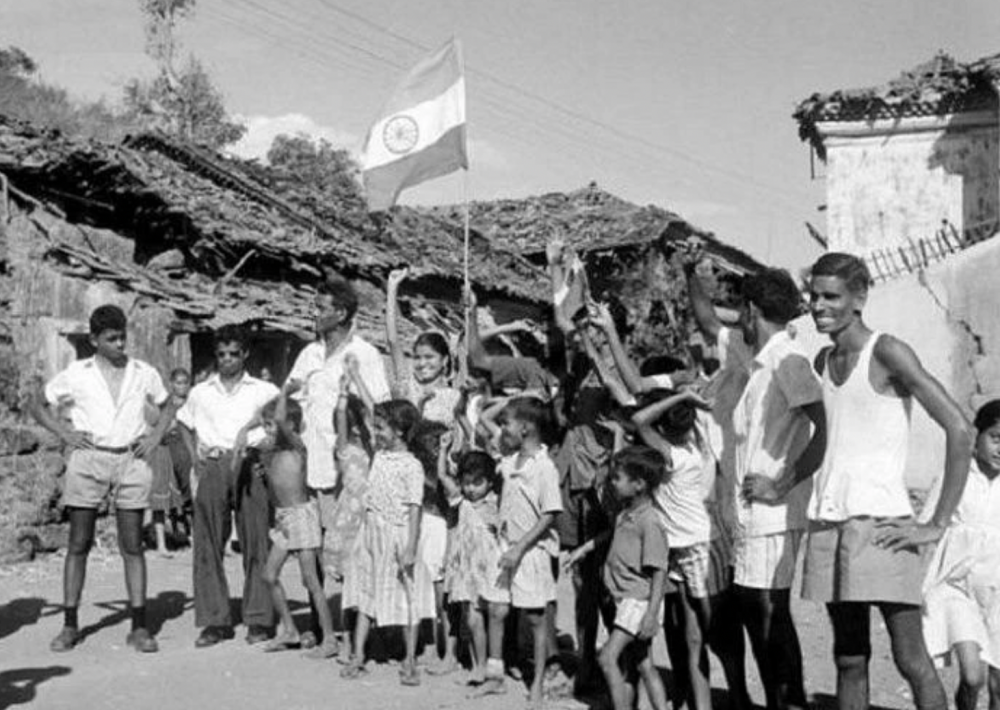
Locals celebrating with the Indian flag in Dadra and Nagar Haveli, image via The Better India
However, the government of Portugal was not ready to give up. They took the matter to the International Court of Justice. An article in the Economic Times suggests, in 1960, the ICJ ruled in favour of Portugal, saying that they have sovereign rights over Dadra and Nagar Haveli. The Varishtha Panchayat then knew that it was time for some drastic action.
The local leaders and the Varishtha Panchayat reached out to the government of India. A Gujarat cadre senior IAS officer named KG Badlani was then sent as an administrator. In June 1961, the people of Dadra and Nagar Haveli and the Varishtha Panchayat had voted to join India.
Some history to learn from. How K G Badlani IAS, the then Administrator for Dadra and Nagar Haveli was appointed Prime Minister of DNH in June 1961 and he signed the document of accession to India on 11th August 1961. #IASpic.twitter.com/zrxAPeKBGe
On August 11, 1961, in a unique and intriguing move, KG Badlani was appointed as the Prime Minister of Dadra and Nagar Haveli. By making him Prime Minister, Badlani was made ‘equal to Nehru’, with the power to sign the document of accession with India. And with that manoeuvre, the document was signed, a constitutional amendment was made in the Parliament and Dadra and Nagar Haveli was officially recognised as a Union Territory of India.
Soon after the accession of Dadra and Nagar Haveli, the Portuguese were driven out of Goa too. After the Portuguese forces attacked Indian ships in November 1961, Indian armed forces stormed into Goa to a rousing welcome by Goans in December and the Portuguese were made to give the region up.
The case of Dadra and Nagar Haveli was unique due to many reasons. Armed Swayamsevaks had marched into the region to fight with the Portuguese. Also, unlike Kashmir, thankfully, Nehru did not take the issue to the UN.
Though India formally added Dadra and Nagar Haveli as a Union Territory in 1961, the international community had not recognised the region as a part of India till 1974. The story of the liberation of Dadra and Nagar Haveli and the events after, when an IAS officer was made a PM for one day, is one of the many intriguing tales of the formation of the strong sovereign republic that we are today. Our map has seen many changes over the decades and it has taken a lot of hard work and sacrifices by countless individuals to become what we are today.
The Arvind Kejriwal government had put up huge hoardings of table tennis star Manika Batra, shooter Deepak Kumar and two 400m runners, Amoj Jacob and Sarthak Bhambri all over Delhi just ahead of the Tokyo Olympics 2020. However, now one of them has informed that apart from the advertisements, the Delhi govt didn’t provide any help to the athletes ahead of the just-concluded Olympics.
These posters had read, ‘Delhi bole jeet ke ana’, but “kaise jeet ke ana? (Delhi says win medal at Olympics. How to win this way?)” asked 22-year-old runner Sarthak Bhambri reacting to the hoardings.
Bhambri came down heavily on the Delhi government for not offering any support to the athletes and sportsmen. Seems like the promises and initiatives of the Delhi government are limited just to the city hoardings.
“I can tell you that Delhi government never came to my help, no monetary help was ever offered to me,” said the athlete who earned a spot in the India 400m relay team after a string of medal-winning performances at multiple national events.
Lamenting on the hoardings featuring him, Bhambri said, “I saw somewhere that crores have been spent on hoardings and posters for the Olympics. Even If they gave us 10-15 per cent of that for our preparations months before going to the Olympics, we could have put it to good use on our performance.”
Bhambri also blew the lid of the Delhi government’s Mission Excellence scheme which claims to financially aid top athletes from the national capital. Alleging no benefit from the scheme, the young athlete said, “Mission Excellence is a good scheme they have but they need to really revamp it because if I do well today in the Olympics and I want to prepare for Asian Games and Commonwealth Games next year, then I won’t have any funding until 2023, then what’s the use of it?”
“I have 8-10 months left for CWG but if no funding is going to come then how will we grow,” he added.
The athlete, however, released a Tweet saying that he fully supports the state government and that he wasn’t aware of the government policies after the article went viral.
“My recent interaction with media was not shown in a healthy way. I am in full support of the Delhi Government. I was earlier not aware of the policies & hence couldn’t apply for mission excellence scheme,” Bhambri Tweeted.
My recent interaction with media was not shown in a healthy way. I am in full support of the Delhi Government. I was earlier not aware of the policies & hence couldnt apply for mission excellence scheme. @ArvindKejriwal ji @msisodia ji @kmmalleswari ji
This is not the first time the state government has received criticism for unhelpfulness. As per reports, World Championship bronze medallist boxer Gaurav Bidhuri and wrestler Divya Kakran had also slammed the government for not providing any help.
Who is Sarthak Bhambri?
The 22-year-old sprinter, Bhambri is a resident of Delhi’s Rajouri Garden and is an undergraduate student. Bhambri and Jacob were members of the 400m relay squad, the team that set the Asian record at the Olympics with a timing of 3:00:25 seconds.
Bhambri came a long way after suffering a career-threatening knee injury five years ago. He made his come back in 2020 and won two gold medals in 200m/400m sprints with a meeting record at the Delhi State Athletics Championships.