Home Blog Page 4075

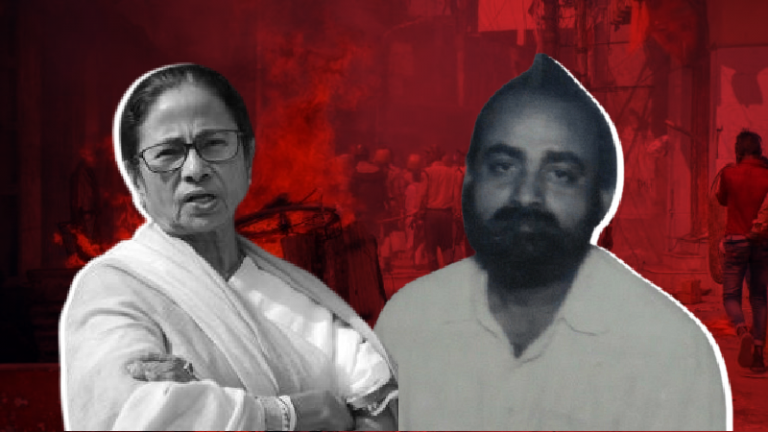
The post-poll violence in Bengal: Where is our Gopal Patha

Just as I finished interviewing Ritu (name changed), who was gang-raped in front of her father by TMC barbarians looking for ‘Hindu girls’, I felt numb and nauseous. I messaged a friend telling him as much. That perhaps I can’t keep doing this for long. How long does one keep interviewing victims, being murdered, raped and butchered because the echelons of power don’t see merit in breaking off the cycle of violence unleashed in Bengal? This was the impact of the interview, of course. The realisation that democracy has been reduced to a mere double entendre – one, signifying the right of every citizen to exercise their agency, the other, a cruel joke where you get butchered for it. 

Since the 2nd of May, ever since it became clear that Mamata Banerjee was all set to retain power in the state of West Bengal, heinous, animalistic violence was unleashed upon the people of Bengal, specifically, those who dared to either work for BJP or those who dared to vote for them in the state elections. Ritu was gang-raped on the 2nd of May. She says it must have been about 6 or 7 PM. It was at about 5 PM when Mamata Banerjee announced her victory and told her workers that she would address the media post 6 PM.

Ritu told us during the interview that according to her knowledge, there are several other women who were gang-raped in the vicinity of her residence in Burdwan. But as is expected, none of them really want to talk about it.. none of them wants to go to the police because they believe going to the police is as good as walking into the TMC office where the goons who gang-raped them are sitting. None of them trusts the local BJP leaders, who have all but sold out to the TMC, according to her. Hands in gloves with the very people who are brutalising and disrobing women who dared to exercise their agency in the state elections.

While the media looked away, the judiciary brushed aside the urgency of a state-sanctioned carnage of political opponents and the echelons of power twiddled their thumbs, the Hindus of Bengal, the Bhadralok, sat at their chai-tapris, glad that the election micchils (processions) were done with. They could finally enjoy their heated political debates while having chai-biskoot, without the constant blaring of the loudspeaker or the police shooing people away because a political rally was about the start. And as they did, the women of Bengal who were being brutalised wept.

As the women wept and the men’s blood soaked parts of Bengal, to celebrate the menacingly famed slogan that Mamata believes clinched the victory for her in the state, ‘Khela Hobe’, she chose a fitting day. 16th August, the day when the call to massacre Hindus of Bengal was given by Muslim League founder Mohammad Ali Jinnah. Bengal, the only province in India under Muslim League rule at that time, was apparently chosen by the Muslim League leadership as the suitable place to unleash terror on Hindus in the name of “Direct Action”.

In 1946, the massacre of Hindus in Bengal was rather intricately planned. Jinnah is recalled having said that he will either have India divided or India burnt and that he had given up on Constitutional methods to demand the creation of Pakistan. Jinnah had chosen the 16th of August as Direction Action Day because it was the 18th day of Ramzan, the day when the Battle of Badr was fought and won – a war fought by Prophet Muhammad himself, against the Kaffirs, and is considered to be won by Allah’s divine intervention by Muslims. The battle led to the violent occupation of Mecca.

On the 16th of August, Calcutta was littered with posters lionising Jinnah and reminding Muslims that they had to follow the footsteps of the Prophet. It is reported that Syed Muhammad Usman, mayor of Calcutta, had issued a widely circulated leaflet that said: Kafer! Toder dhongsher aar deri nei! Sarbik hotyakando ghotbei! (Infidels! Your end is not far away! You will be massacred!). The aim was to make Bengal ‘land of the pure’ and rid it of the Kaffirs (Hindus). The aim was to wage another Battle of Badr, in which the Muslims would conquer the heathens.

What followed on the 16th right after the Jumma Namaz is Muslims going on a rampage, beheading Hindus, chopping their limbs off and raping Hindu women. Several women were taken as sex slaves by those who were fighting with the religious fervour of the Battle of Badr. In the Kesoram Cotton Mills at Lichubagan in the Muslim-dominated Metiabruz area, Muslim mobs entered and beheaded over 600 labourers. The Hindus, neutered and asked by Gandhi to die with a smile on their face hardly fought back. There was a mass exodus from Bengal that marked millions fleeing, because the massacre seemed too brutal to fight against.

The parallels, as frightful as they may be, are hard to miss. There is a reason why Mamata Banerjee has selected the 16th of August as the day to celebrate the “Khala Hobe Diwas”. Just like in the run-up to the Direct Action Day, Mamata too had announced, rather openly, that violence would be the norm if she came back to power and also, that she was not above using violence as a tool to teach those people a lesson who would dare to go against her. Mamata Banerjee had warned the people of Bengal that the BJP would lose and when they do, they would only have her to turn to – her menacing tone not missed by anyone. She had given a call to gherao the forces deployed in the state, a call that paved the way for unbridled violence against them. Her leaders had warned of killing those who dared to vote for BJP. In fact, TMC leader Firhad Hakim had openly asked for BJP workers to be thrashed, calling them the progeny of pigs.

What followed, just like during the Direct Action Day, is the carnage of Hindus. In Ritu’s case, her rapists were looking for “Hindu women” to rape. She says there are several like her who will never speak up. Just like during the Direct Action Day, men were found hanging from trees, women were disrobed and gang-raped, villages were burnt to ashes and carnage was unleashed against the political Kaffirs. Just like during the Direct Action Day, thousands fled Bengal to take refuge in neighbouring Assam, wailing because they had no place to go. Wailing because the political system and the double entendre of democracy had failed them.

During the Direct Action Day, on the 17th of August after 2 days of Hindus being massacred, Gopal Chandra Mukhopadhyay rose like a phoenix. Gopal Patha (Patha means ‘lamb’. He was called so because he ran a mutton shop) had already founded the Bharat Jatiya Bahini, an organisation of young men to help fellow citizens during a natural calamity. On the 17th, Gopal Patha turned from a philanthropist to a warrior, ready to defend his people. Throughout the night, Gopal Patha, along with his young men from the Bharat Jayati Bahini worked on a plan on how they could defend Hindus from the Muslim barbarians. The marwaris offered finances, others spent the night making weapons for them.

Muslim League chief minister of Bengal, Huseyn Shaheed Suhrawardy and the Muslim League goons had decided on the 17th that they were going to take two more days to complete the annihilation of Hindus. But they had not taken into consideration their greatest roadblock. Gopal Patha.

From the 18th to 20th, Gopal Patha and his men put up a brave fight, paying the Muslim League goons back in equal measure, if not more. Historian Sandip Bandopadhyay wrote, “They faced resistance everywhere. Hindu youths counter-attacked with such ferocity that the Muslim League men had to flee. Many were killed. Emboldened by their success in taking on and defeating their Islamist attackers, Hindu youths took the fight to Muslim-majority areas and started killing Islamist men. They did not, however, touch Muslim women and children or the aged and the infirm”.

By the 19th of August, suddenly, the Muslims started feeling unsafe. Only two days of retribution, of self-defence, and the Muslim League started running with tail between their legs. It was only on the 21st of August when the Muslims had started feeling unsafe because the Hindus dared to defend themselves, did Viceroy’s rule come into action in Bengal.

Where is our Gopal Patha

What happened during Direct Action Day has significant lessons for Hindus of Bengal. Today, when their self-confidence lies six feet under the ground and their own are being disrobed, the rest of the country has often wondered why the central government has not bothered to do much. While that question in itself has merit and the ire is justified, we must not forget history or we would certainly be doomed to repeat it.

When countless Hindus were being raped and massacred in Bengal, it took the Muslims to feel “threatened” for the Viceroy’s rule to be imposed. It was the Muslims feeling “threatened” that got the deracinated Indian leadership of Gandhi and Nehru to take note of the massacre foisted on the people because of their neutered secular politics.

During the Noakhali riots, countless Hindus were raped and murdered. The converted Hindus were made to write declarations that they had accepted Islam out of their free will and Hindus in the 2000 square mile area were made to pay the Jaziya. When MK Gandhi had visited Naokhali, he was rebuked by the Muslim League and after that, he had travelled to Bihar to stop the retaliatory violence by the Hindus. There, he is famed to have said that Hindus must leave Noakhali or die – this, because the Muslim League had asked him to quell the violence, the same Muslim League that was raping Hindu women, beheading Hindu women and waging a war against Kaffirs.

It is indeed our history that the state, historically, has incentivised street veto and it is also our history that the Muslim community has wielded that power effectively. When Hindus were massacred in Bengal in 2021, we made the mistake that the Gopal Patha knew not to. We are waiting for a deracinated state, running a democracy that is inherently rigged against Hindus, to save us. It is not really the fault of any single party – every government historically has responded to those who scream the loudest. In fact, it is not only a problem endemic to India.

NN Taleb, in his book Skin in The Game (Chapter: The Most Intolerant Wins: The Dominance of the Stubborn Minority’), talks about how a small community of Jews/Muslims in the USA is able to influence the availability (Kosher/Halal meat) in entire America. He talks of a ‘one-way street of religions’ and explains how the Muslim majority was achieved in a largely Christian West Asia and Egypt.

He writes:

“Yes, an intolerant minority can control and destroy democracy. Actually, it will destroy our world. So, we need to be more intolerant with some intolerant minorities. Simply they violate the silver rule (Do not do to others what you would not like them to do to you). It is not permissible to use ‘American values’ or ‘Western values’ in treating intolerant Salafism (which denies other people’s right to have their own religion). The west is currently in the process of committing suicide.”

The most important lesson in his book, however, is the following:

“Beware of the person who gives advice, telling you that a certain action on your part is “good for you” while it is also good for him, while the harm to you doesn’t directly affect him.”

And that really is the principle that ensures that every democracy is rigged against the real victims. The real victims hardly scream or kick or run riots. The real victims are mostly like the Hindus of Bengal, who silently go into the night because they have been told over the ages that the very foundation of their religion requires them to be non-violent. Political parties and the state, as such, step in when the loudest minority starts fearing the retaliation of the silent majority because that means the minority, that is feeling threatened, will also scream the loudest after they fail to meet their violent goals. It is the political mess that the state responds to, not pleas for help.

Governments are not always evil, the wisdom of the masses is not always sound. It becomes quite evident in the case of how India treats its Muslim minority. There can be little doubt that the Indian state is scared of its Muslim population. Due to the power structures that form the basis of Muslim society, our country is held hostage by radical elements from the community whose ideology is almost exactly the same as the Taliban’s or the Al Qaeda’s.

The lesson that the governments of the world, the Indian government included, wants Hindus to learn is remarkably simple: We will listen to you when you respect yourself enough to defend yourself.

The State is, plainly, telling Hindus, and rightly so, that civilisational battles can’t be fought by moaning to a state that has its hands tied behind its back historically, because breaking those shackles takes decades. The State responded and stepped in to restore peace only after Gopal Patha saved Hindus. The State and the leadership (Gandhi and Nehru) stepped in only when Hindus started paying the barbarians back in their own coin – a Bihar for a Naokhali.

The state is telling Hindus, in no uncertain terms, that fighting the civilisational fight, the battle to survive, rests on the shoulders of those who wish to survive. It is upon us if we choose to document our end or defend what we have. The state is telling Hindus to find their Gopal Patha.
Explained: Read what is the meaning of Modi govt extending OBC and EWS reservation to All India Quota seats in medical colleges

On Thursday, the union government announced the decision to provide reservation to students belonging to OBCs and Economically Weaker Section in the All India Quota available in medical and dental courses across the country. The decision grants 27% reservation to OBC students and 10% reservation to EWS students from across the country in various medical and dental colleges in all the states and UTs for both undergraduate and postgraduate courses.

Announcing the decision, prime minister Narendra Modi termed the decision a landmark decision, saying that it will come into effect form the current academic year.

“This will immensely help thousands of our youth every year get better opportunities and create a new paradigm of social justice in our country,” he said. Here is what the decision means for the students.

The reservation has been extended for the All India Quota in Medical and Dental colleges, which is available for students from any state. At present, 15% of the undergraduate seats and 50% of the postgraduate seats in those institutions are available under the All India Quota. This means, 27% reservation for OBC and 10% reservation for EWS students will be available in 15% seats in undergraduate and 50% seats in postgraduate courses.

The rest 85% and 50% seats in UG and PG courses respectively are set aside for the students of the respective states by the state governments.

The All India Quota (AIQ) Scheme was introduced in 1986 under the directions of Supreme Court to provide for domicile-free merit-based opportunities to students from any state to study in medical colleges in any other state. Initially, there was no reservation for the seats in the quota.

However, reservations for SCs and STs were added to this All India Quota in 2007, as the Supreme Court had ordered 15% reservation for SCs and 7.5% for STs in that year. Now the same has been extended to the OBCs and EWS.

While the Central Educational Institutions (Reservation in Admission) Act had given 27% reservation to all central government institutions, the All India Quota in state medical colleges were kept out of it. The reservation was applied to central govt medical institutions like Safdarjung Hospital, Lady Harding Medical College, Aligarh Muslim University and Banaras Hindu University etc, but the reservation was applicable for the AIQ seats in Medical and Dental colleges under state governments. These seats were also kept out when the Modi govt introduced the 10% for the economically weaker sections among the upper castes in 2019.

With this decision, OBC and EWS students from any students will be able to compete for seats in medical and dental colleges in any state in the country under the reserved quota. The Other Backward Communities listed in the central list of OBCs will be eligible for this quota.

According to the government, this decision would benefit every year nearly 1500 OBC students and 550 EWS students in MBBS courses, and 2500 OBC students and around 1000 EWS students in postgraduation courses.

As the AIQ seats in undergraduate courses are only 15% of the total available seats, the actual seats under the All India Quota were not very much earlier. But in the recent few years, the number of medical seats in the country has increased significantly, as a large number of new medical colleges have been built.

The number of MBBS seats in the country has increased by 56% from 54,348 seats in 2014 to 84,649 seats in 2020, and the number of PG seats has increased by 80% from 30,191 seats in 2014 to 54,275 seats in 2020. This was achieved mainly by the construction of 179 new medical colleges in the six-year period after the Modi govt came to power in 2014.

The country now has 558 medical colleges, which includes 289 government colleges and 269 private colleges. As result, the AIQ seats have also gone up accordingly, providing the govt with the opportunity to extend reservation to OBCs and EWS in the AIQ seats in the state medical colleges.

‘They should come on two limbs, sent back on four’: SBSP president Om Prakash Rajbhar asks women to thrash Uttar Pradesh BJP leaders

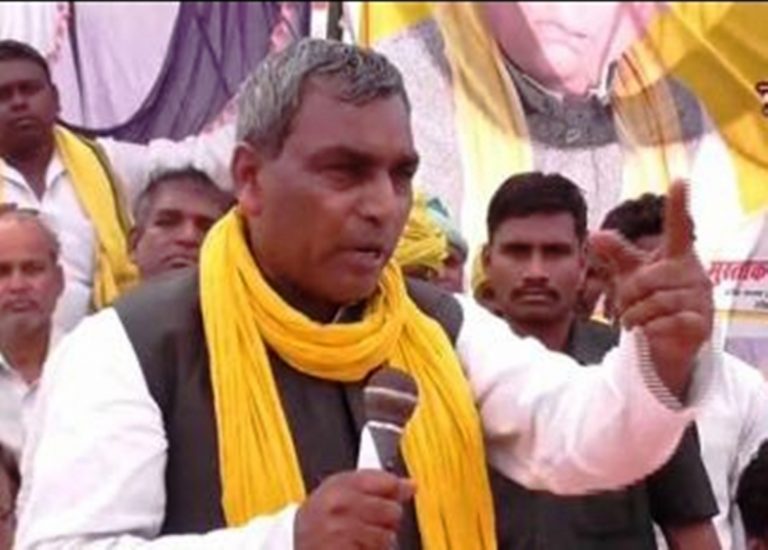
As the Uttar Pradesh Assembly election draws nearer, the opposition parties have begun indulging in all sorts of drama to berate the incumbent BJP government led by Yogi Adityanath in the state. Om Prakash Rajbhar, the president of Suheldev Bhartiya Samaj Party (SBSP) and a former minister in the Yogi government was seen taking off on a bizarre rant against the BJP government in Uttar Pradesh during a party meeting in Varanasi earlier this week. He asked the Uttar Pradesh women voters, to trash BJP people who come to them to seek their votes.

Addressing in Bhojpuri Rajbhar said: “BJP wale vote mangne do pair pe aye, to unko char pair pe wapas bhejo (when BJP people come to you seeking your vote on two legs, thrash them so that they go back with the support of others)”.

Later when asked by reporters, the SBSP president reiterated his remark. He concurred: “Yes, I told the women present at my Varanasi meeting earlier this week that if BJP leaders have not fulfilled their promises of ensuring a 33 per cent reservation for them and checking inflation, they should be sent on four legs (carried away by others) if they come to seek your votes again.”

Continuing his bizarre rant, Om Prakash Rajbhar said, “They (BJP leaders) consume ‘ganja’ and daru (liquor) and start making tall promises in their speech. Women voted for them but they have failed to fulfil any of their promises including Rs 15 lakh in every bank account. The promise of two crore jobs has also remained unfulfilled while the price of LPG, pulses and mustard oil have increased massively.”

Ever since Om Prakash Rajbhar was dismissed by the Yogi Adityanath government in the midst of the Lok Sabha elections in 2019, he has launched an offensive against the BJP government in the state. To take on Yogi Adityanath in the upcoming elections, Rajbhar set up the Bhagidari Sankalp Morcha, comprising a number of smaller parties, including the Asaduddin Owaisi’s AIMIM.

Legislative Assembly elections in Uttar Pradesh will be held in the month of February to March 2022 to elect 403 members of the Uttar Pradesh Legislative Assembly. The term of the current assembly elected in 2017 will expire on 14 March 2022.

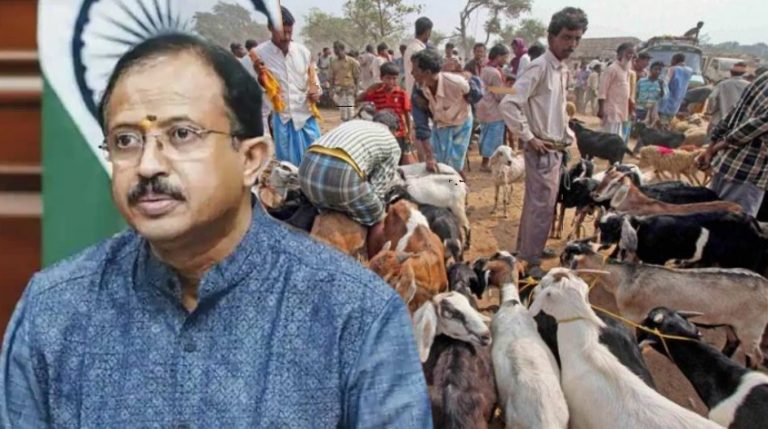
‘Eid relaxation, weekend lockdown unscientific’, union minister V Muraleedharan slams Kerala model for Covid-19 management

As Kerala records more than half of the new Covid-19 cases in the country, Union Minister of State for External Affairs and Parliamentary Affairs, V Muraleedharan has slammed the state government for failing to curb the rise in cases.

In an interview with the media, Muraleedharan said, “The number of cases (in Kerala) has increased to such an extent that now it is more than half of the total tally of the country. The govt didn’t follow scientific principles in the mgmt of COVID. It’s a global pandemic, WHO & ICMR have issued guidelines.”

Commenting on the failed ‘Kerala model’, Muraleedharan added, “But the Kerala govt has taken the stand that they follow their own principles & their own formula. Now it has come to light that their formula has failed. Govt should follow the scientific principles & formula. Kerala Govt has been using this pandemic for political gains.”

The Minister also took strong objection to the relaxation given by the Kerala govt for the celebration of Bakri Eid and called it ‘unscientific’. 

“The relaxation that was given on Eid was completely unscientific, it was completely against principles. Now the relaxation that has been given is not on the basis of cases increasing or decreasing, it’s on political & vote bank considerations,” he added. It is notable that even the Supreme Court had refused to intervene on the state govt’s order allowing the relaxations.

Muraleedharan also spoke about the sporadic imposition of lockdown leading to a mass gathering. “Lockdown is not on basis of any scientific basis. Every Saturday-Sunday is a lockdown. As a result, people rush to markets on Fridays & it causes a spike. Govt should follow scientific principles, observe guidelines of ICMR & also not use COVID for political gains,” he concluded. 

Centre sends a team to handle Kerala crisis

With the infection in Kerala spiralling out of hand, the Centre will soon be sending a team to the state to take a stock of the situation. Union Health Union health minister Mansukh Mandaviya took to Twitter to inform, “Central Government is sending 6 member team to Kerala headed by NCDC Director. As large number of COVID cases are still being reported in Kerala, the team will aid state’s ongoing efforts in #COVID19 management.”

As per reports, the team will review the situation and aid the civil administration in managing the infection surge.

Kerala recorded 22,056 new Covid-19 cases and 131 fatalities on Wednesday, a few days after the Kerala government had announced relaxations for the celebrations of Bakri Eid. With over 43,000 new Covid-19 cases recorded in the country on Wednesday, Kerala accounts for nearly 50 per cent of fresh cases. 

As Mamata dreams of vehicle manufacturing industry, here is how she drove away Tata Motors from West Bengal back in 2008

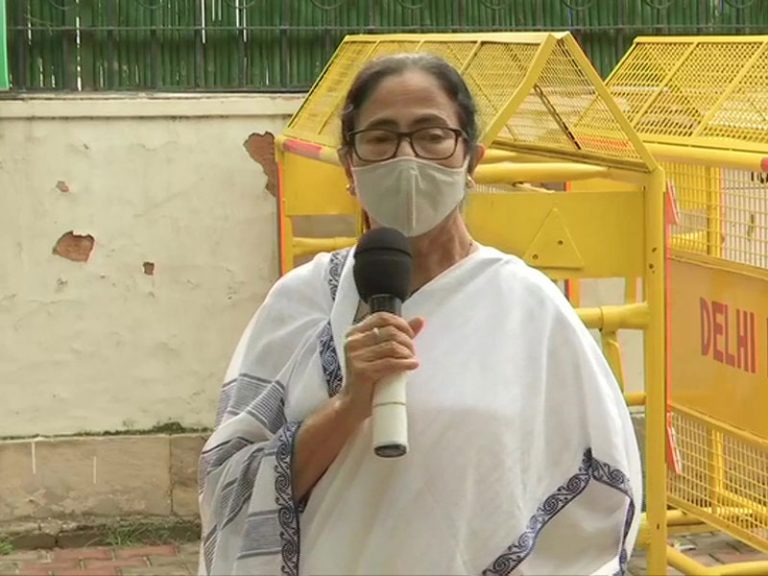
On July 29, West Bengal Chief Minister Mamata Banerjee met Union Minister Nitin Gadkari after a series of political meetings with leaders of various parties that are in opposition to the Modi government. She said, “I requested that it’ll be good if we have a manufacturing industry in our state that will manufacture electric buses, electric autos, electric scooters. Our state shares borders with Bangladesh, Nepal, Bhutan & northeastern states. So, we need proper roads.”

While Gadkari asked the CM to send the chief secretary for a meeting, it is essential to know how she dove away Tata Motors from West Bengal in 2008.

How Bengal lost Tata Motors to Gujarat in 2009

In 2006, the land acquisition for a Tata Motors plant had started in West Bengal. The land was acquired by the state government, and in 2007, Tata Motors began the ceremonial construction of the plant. However, controversy over the land acquisition process caused problems in the completion of the project.

Tata was planning to start a manufacturing plant for Tata Nano in Singur, West Bengal. Banerjee was the leader of opposition in the state. During the process of acquisition of land in previous years, massive protests had erupted against the Tata manufacturing plant and the state government. At that time, it was alleged that the state government had forcefully acquired multi-crop land from the landowners at an inadequate price.

It led to violence and bloodshed as police forces under the rule of the Left Front government opened fire at the protestors. Banerjee became the frontrunner of the protests and started a movement called “Save Farmland”. Soon, high-profile professional protestors like Medha Patkar, Arundhati Roy and Anuradha Talwar joined the protests to drive away Tata Motors from the state. Following the uproar, Tata Motors finally decided to cancel the project in West Bengal in September 2008 and started the process for the same in Gujarat’s Sanand. Prime Minister Narendra Modi was Chief Minister of Gujarat at that time.

The then Gujarat CM Narendra Modi had assured the Tata motors not just land to build a massive, state of the art manufacturing factory, his government had also ensured that the plant gets built and starts manufacturing soon. Initially designed for the Nano model, the plant later started producing Tata’s Tiago and Tigor models and had achieved 100% production capacity in 2018. In September 2020, Tata Motors had rolled out the 300,000th Tiago car from the plant.

Years have been passed since the controversy, but the locals have not forgotten what they have done. The majority of the locals who took part in the protests now believe that they were wrong at that time. One of the protestors had said, “We got nothing out of the agitation. We were used and later dumped to fend for ourselves by the political parties to serve their own purposes. No industries came up in the region, nor the land which was returned to us in 2016 is cultivable. We are living in extreme poverty.”

Tamil Nadu: Hindu temples atop a hill in Tirunelveli desecrated, ‘Allah’, ‘786’ written on sacred rocks

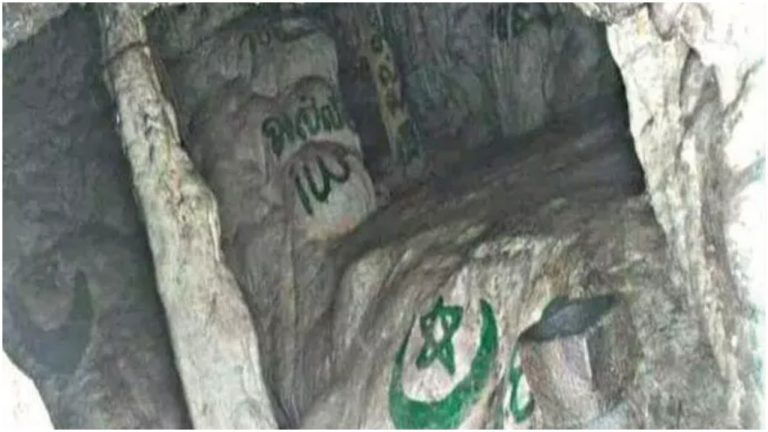
In yet another attack on Hindu temples in Tamil Nadu, the rock-cut mountain temples on top of Aththri Hills in Alvarkurichi in Tirunelveli district have been vandalised by Islamists recently.

According to a report by Kathir news, the rocks surrounding the Hindu temples on Aththri hills were desecrated allegedly by Muslims, who painted the Islamic symbol “crescent moon” on the sacred rocks. The culprits also wrote “Allah”, along with an Islamic symbol and the number 786, atop the hill.

The act of vandalism on the Hindu temples has shocked the devotees, who have demanded that the Tamil Nadu government and its Hindu Religious and Charitable Endowments (HR&CE) department immediately intervene to stop the encroachment of Hindu temples.

Reportedly, the HR&CE Department of Hindu Religious Affairs is responsible for managing the administration of the Arulmigu Anusuyadevi Sameda Aththri Parameswar temple and Gorakkar temple on Aththri Hill in Tirunelveli. The river Kadanaa, known as Aththri Ganga Theertham, is a perennial river and also home to a rare white turtle.

Devotees fear encroachment of sacred hill

The devotees fear that Islamic organisations are attempting to encroach the sacred hill and accused the state forest department of aiding these culprits to trespass into lands belonging to Hindus.

The incident comes at the backdrop of several such incidents of vandalism against Hindu temples in the state of Tamil Nadu. Recently, a Chola-era Shiva temple in Pudukkottai district was found desecrated, and idols of the deities were beheaded by unknown assailants.

A group of unknown assailants had entered the Kailasanathar temple in Keezhananchur village in Pudukkottai district earlier in June and damaged the Shivalingam present inside the temple. The assailants had also damaged idols of many deities, including Lord Shiva, Ganesha, Parvathi and Nandi installed in the Chola-era temple.

Similarly, in the Ranipettai district, Amman statues were disfigured, and semen was ejaculated over the idols in the historic Panchalingeswarar temple, creating a massive outrage in Tamil Nadu.

Centre intervenes as COVID pandemic in Kerala goes out of control a week after Bakrid celebrations

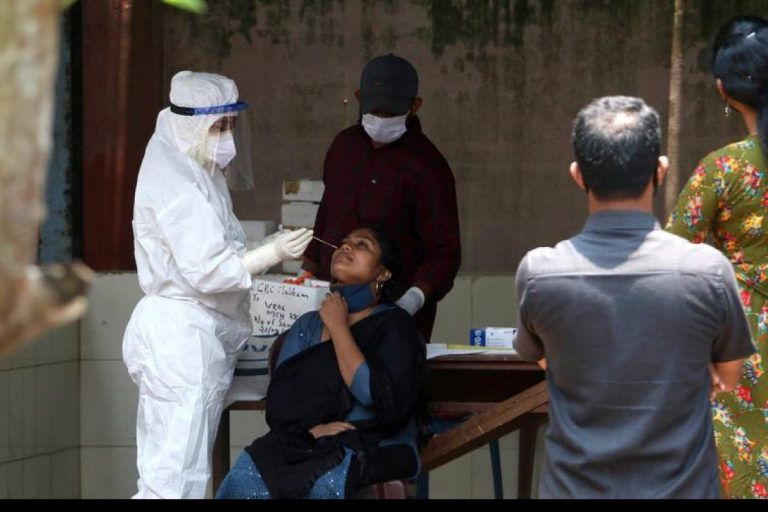
As Kerala consistently clocks over 20,000 new Chinese coronavirus cases, the Central government announced that it is sending a 6-member team to Kerala, headed by the director of the National Centre for Disease Control.

Union health minister Mansukh Mandaviya took to Twitter to share the update. “Central Government is sending 6 member team to Kerala headed by NCDC Director. As large number of COVID cases are still being reported in Kerala, the team will aid state’s ongoing efforts in #COVID19 management,” he informed. 

As per reports, the team will review the situation and aid the civil administration in managing the infection surge.

Kerala recorded 22,056 new Covid-19 cases and 131 fatalities on Wednesday, a few days after the Kerala government had announced relaxations for the celebrations of Bakri Eid. 

Kerala announces weekend lockdown

What can be called a stopgap solution, the CPM-led Kerala government in view of rising cases has declared a complete lockdown in Kerala on the coming weekend- July 31 and August 01.

As per a government press release, the districts worst hit by the recent surge in Covid-19 are — Malappuram, Thrissur, Kozhikode, Ernakulam, Palakkad, Kollam, Alappuzha, Kannur, Thiruvananthapuram, and Kottayam.

Bakri Eid celebrations turn out to be ‘super-spreader’

The Eid-ul-Adha celebrations have turned out to be Covid-19 super-spreader in Kerala, as the state has yet again recorded more than 22,000 new Covid-19 cases creating a wave of panic. Kerala government had given three day relaxation ahead of Eid, where Covid-19 norms were flouted and people gathered in large numbers in markets.

The Muslim-majority in the areas, especially in North Kerala, has reported the maximum number of cases in the state. Kerala now accounts for nearly 53 per cent of the fresh infections in the country.

In sync with the government’s data, the Malappuram district on Tuesday logged the most positive cases with 4,037 cases in a single day, followed by Thrissur, Kozhikode and others.  

Meanwhile, India recorded a little over 43,000 new Covid-19 cases on Wednesday, making Kerala nearly 50% contributor to the caseload.

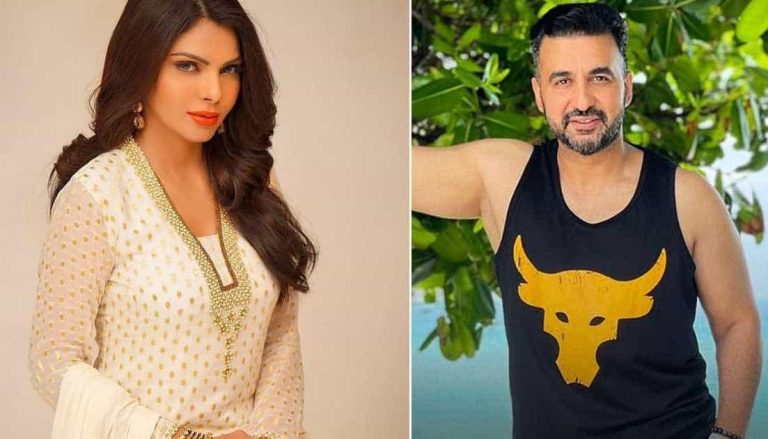
Sherlyn Chopra accuses Raj Kundra of sexual assault, says she had even filed an FIR against him

Shilpa Shetty’s husband Raj Kundra, who has been sent to 14-day judicial custody in the pornography case, has now been accused of sexual assault. Bollywood actresses Sherlyn Chopra, who had earlier claimed that Raj Kundra was instrumental in getting her into the adult film industry, recently accused him of sexual misconduct.

Chopra in a statement recorded with Mumbai Police said that Raj Kundra tried to kiss her, and she had to hide in the washroom to avoid the situation. “I kept telling him to stop as I was scared. After a while, I somehow managed to push him aside and rushed into the washroom. I stayed in the washroom for some time until he left,” Chopra claimed.

She furthered that Raj Kundra’s marital relationship with Shilpa Shetty was going through a rough patch and he was stressed about it, adding that she did not want to get involved with a married man.

Sherlyn Chopra in her police statement revealed that she had filed an FIR against him in April 2021 alleging sexual assault. He was charged under section 376 of Indian Penal Code r/w section 384, 415, 420, 504 and 506, 354 (a) (b) (d), 509, of Indian Penal Code, 67, 67 (A), of Information Technology Act 2008, sec 3 & 4 of Indecent Representation of Women Act 1986.

In her complaint, she had revealed that in early 2019 Raj Kundra had called her manager for a business proposal. After she met him on March 27, 2019 over the same, she claimed, Raj showed up at her home unannounced due to a heated argument over a text. It was then he tried to sexually assault her, claimed Chopra.

‘Raj Kundra asked me to create content for his HotShots app’: Sherlyn Chopra

Further, in her statement to the Cyber Cell of the Mumbai Police in March 2021, actor Sherlyn Chopra had said that Raj Kundra had urged her to create content for his HotShots app, but she had refused as she found content on his platform to be “sleazy and downmarket”.

Sherlyn Chopra told Mumbai police that in March 2019, that Kundra had approached her business manager with the idea of “The Sherlyn Chopra App”, saying that the content she uploads on social media is free but she could earn if she uploads the content on a customized app.

Sherlyn Chopra and Raj Kundra, the creator of Armprime, signed a deal in March 2019. She stated in her statement that she did not renew her contract with Armsprime because she was unhappy with the existing income sharing scheme of 50/50. She claimed that she had requested that the content on the app be erased when the agreement expired, but that the content was still available on the internet.

During the investigation, it was revealed that Sherlyn was paid Rs 30 lakh for each project, and so far, she had done 15-20 projects for Kundra.

Mumbai court rejects Sherlyn’s anticipatory bail plea

Earlier today, a sessions court in Mumbai rejected an anticipatory bail plea filed by Sherlyn Chopra.

As per reports, Mumbai Police had informed the court that Chopra had been summoned as a witness in the pornography case. Chopra had also claimed that it was Kundra who had ‘pushed’ her into doing pornographic videos.

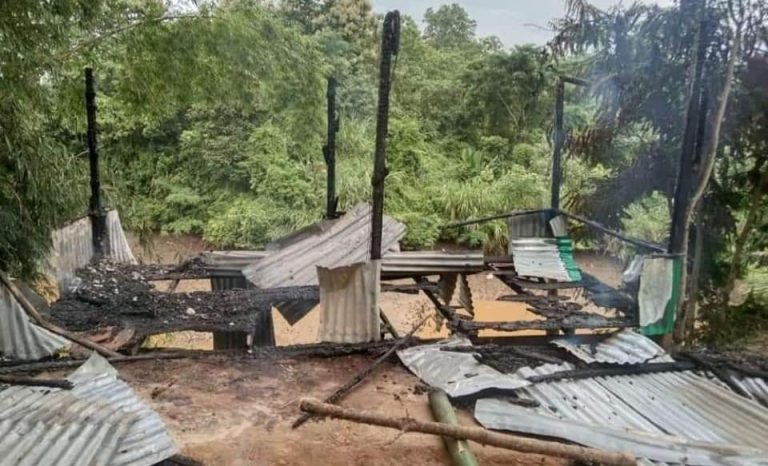
Around 1500 tribals from Tripura become refugees in Assam after Bru refugees from Mizoram living in Tripura attack them

Even as the border tension between Assam and Mizoram remains delicate, fresh tensions have emerged on the Mizoram – Tripura border. Around 1500 locals from Tripura were forced to take shelter in neighbouring Assam after they were attacked by Bru refugees from Mizoram living in the state.

According to reports, the clashes took place between Bru people living in the Casco relief camp in Damcherra area and people from Chorei, Tripuri and Halam communities on July 26 over the possession of forest land in the area. The people from Bru community, also known as Reang, was displaced by the Mizos from Mizoram in 1997 following large scale violence against them, and have been living in relief camps in Tripura since then. After the efforts to repatriate them to Mizoram by the central govt had failed, last year it was decided that they will be permanently settled in Tripura.

However, locals allege that since that decision in January last year, the Bru people have been dominating the natural resources in the areas where their camps are located. The Brus have been objecting to the local people farming on the forestland, patta of which was given under Forest Rights Act by the government. Efforts by the administration to resolve the conflict had produced no results.

When on 26th July the locals went to take possession of the land, they were allegedly attacked by the Brus living in the Casco camp. The locals had also objected to the Bru people opening shops in the area. When they asked the Brus to close the shops, they refused and started a verbal confrontation, which soon escalated.

Following the heated exchange of words, the Brus and locals clashed using sticks and matchets, injuring several people. Several houses of the locals were destroyed in the attack. According to the police, 32 people were injured in the attack. The police had to fire in the air after arriving at the spot to end the violence. The injured have been admitted to the hospital.

Following the clash, around 1500 people from the minority Halam and Chorei communities crossed over the River Longai and took shelter in Manikbandh, Uricherra and Magura villages in Karimganj district in Assam. The administration in Assam provided them shelter in schools and other community buildings. The locals in the area arranged for their food and other essential items.

The villagers complain that the Brus living in all the six camps in the area have been attacking them frequently over various issues. They said that due to regular violence, some indigenous people have left their villages, which have been captured by the Brus. They also alleged that on several occasions, the refugees have expressed their intention to take over the villages.

“A year after Brus displaced from Western Mizoram in 1997 because of their non-compromising attitude and invading behaviour towards indigenous Mizo community, they have been harassing and committing atrocities on the local people of both tribals and non-tribals and in 23 years 70 per cent of the non-tribal families left their homes and hearths and shifted to other parts. Now, they want to evict the local tribals and capture the land,” a local trader Birmani Halam told the media.

“Casco is one of such spots where the relief camp of Brus is there and also, the state government selected the area to give cluster based rehabilitation of displaced Brus ignoring our united voice. When Brus got confirmation that the state government is sympathetic to them, they now resorted to attack on us to evict us from our ancestral land,” Halam added.

After the locals from Tripura took shelter in Assam, the district administration of Karimganj contacted their counterparts in North Tripura to inform them about the situation. North Tripura Superintendent of Police Bhanupada Chakraborty informed that some villagers have also taken shelter in markets in the affected villages. He said the situation has calmed down now but the administration has continued with section 144 of CrPC in the area to defuse the tension.

He also said that they are trying to bring back the people who have fled to Assam. “We are in the job to find them out and bring them back to their homes. However, we have initiated the investigation into the incidents and the law will take its own course inappropriate time. Now, our effort is to keep normalcy in the villages and maintain peace apart from resolving the issues whatever it is,” Chakraborty said.

Around 30,000 Bru refugees are living in Tripura, and after the triparty agreement in January last year, it was decided to settle them in Tripura as the Brus and the Mizos didn’t agree on terms of repartition. Tripura chief minister Biplab Kumar Deb had written to the Union home ministry offering to settle the Bru people in the state. Deb had said that 5,082 families continue to live in camps as they refuse to go back to Mizoram, and hence they should be allowed to settle in Tripura.

Accordingly, the process of rehabilitating the Brus in Tripura have started early this year, and many of them have been rehabilitated in different parts of the state. According to the decision taken in the triparty meeting, they will be given 40×30 square feet residential plots, fixed deposit of Rs 4 lakhs, case aid of Rs 5,000 per month for two years, free ration for two years and Rs 1.5 lakh aid to build their house. They will also get Tribal status, and will have voting rights in Tripura.

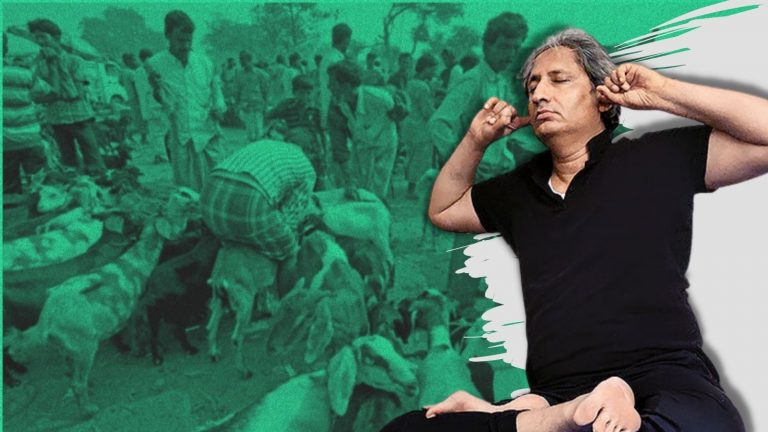
Read how NDTV’s Ravish Kumar this time sent ‘hazaar laanat’ to ‘IT cell’ instead of questioning Kerala govt for the state’s Covid crisis

After sending ‘hazaar laanat’ to the bullet that took photojournalist Danish Siddique’s life, NDTV’s Ravish Kumar is now trying to send ‘hazaar laanat’ to BJP IT Cell for questioning the Kerala government for a surge in Covid-19 cases. 

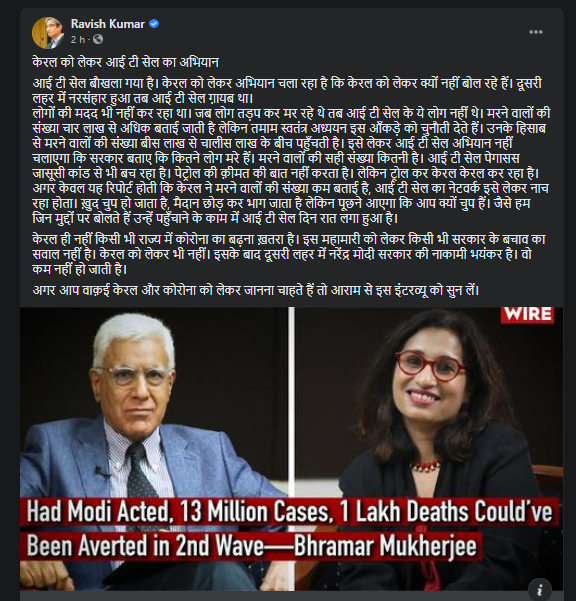
In a long rant on Facebook, Kumar accused BJP’s IT Cell of everything, even the second wave of the coronavirus pandemic, but not once did he mention the ‘not-so-successful’ Kerala model. On the other hand, he questioned the so-called “IT Cell” and BJP supporters for questioning the Kerala government. Did not make much sense? Well, that is the point. 

Here is how Ravish Kumar’s monologue made very little sense and seemed like a childish squabble of ‘you did it..no you did it.’

Kumar began his post by claiming that the ‘IT-Cell’ is running a campaign on social networking platforms heckling media for its silence on Kerala. Without uttering a single line on the current worrisome situation of the state, Kumar quickly cross-questioned by asking why this IT-Cell was in hiding during the second wave of the pandemic. 

Ravish Kumar’s Facebook post

He also claimed that they refused to help the people in need. Now we are not too sure who Kumar considers as IT-Cell because for the left a 10-year-old referring to Prime Minister Modi as ‘ji’ could also be listed as an IT-Cell. Anyway, assuming Kumar here is referring to BJP leaders and supporters, it was for all of us to see how from a supporter to a karyakarta to a Union Minister responded to as many SOS calls as possible. 

In fact, it will be interesting to note how many SOS calls did their favourite youth leader respond to amidst the crisis. 

Also for the benefit of the Magsaysay Award winner, with immense efforts and gumption, most of the country is past the second wave. The call for questioning the Kerala government is to ensure that we are not hit by the third wave because of the sloppiness of one state. 

Just like Ravish Kumar had focused all of his ‘Hazaar laanats’ not on the Taliban which killed Danish but the bullet, here he is accusing the “IT-cell” for questioning the Kerala government, but not the Kerala government which is clearly failing to control the Covid cases in the state.

Doing what the lobby is best at, Kumar once again asserted that the government is hiding Covid-19 data. Without citing any source, Kumar alleged that the deaths due to the coronavirus could be well above 40 lakhs and added why did the IT-Cell not question the government then. 

In a shameful and blatant attempt to fearmonger, Kumar conveniently missed the fact that data collection and health management is a state affair. Oh sorry! The recent ‘no deaths due to lack of oxygen’ spin had unravelled their propaganda already. 

Kumar, plausibly concerned about the ‘idea of India’ also questioned why the same IT-Cell chooses to remain quiet on alleged Pegasus snoopgate and rise in petrol prices. 

Kumar, in an ironic ending to his sermon, said, “No government must be shielded on their failure of tackling corona. Not even the Kerala government. Modi government’s failure in the second wave is evident. We cannot discount that.”

How to pin the blame on someone for someone else’s failure, is an art to learn from the left lobby.

To conclude, Kumar recommended a ‘must-watch’ TheWire exclusive (not-so-explosive one this time) interview. In this, one expert from the US who claimed the worst was over in February, blames the Modi government for the second wave of the pandemic.  

In a 50-minute interview to Karan Thapar, Bhramar Mukherjee who as TheWire quoted is “one of the United States’ most highly regarded professors of biostatistics, epidemiology and global public health, who has done path-breaking work on India’s COVID-19 experience at the University of Michigan” claimed that the second wave could have been averted if the Centre acted on time.

Mukherjee in the interview said, “To summarise, had action taken place at any time in March, it is plausible that more than 90% of observed cases and deaths between March 1 and May 15 could have been potentially avoided.” We reported earlier multiple times on how the Centre had alerted states of the plausible second wave including special meetings with Maharashtra which was the one to be affected by the second wave.

While Mukherjee blamed Assam’s election rally for the rise in cases in the North East (conveniently leaving out West Bengal), she provided a ‘balanced view’ on the current situation in Kerala, still claiming that it protected its people better than the other states.