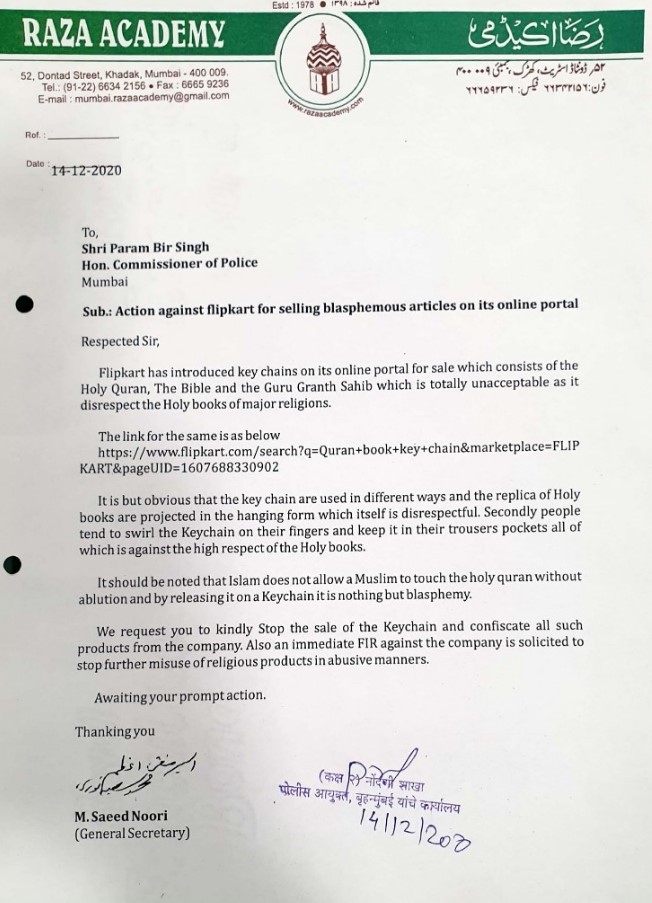
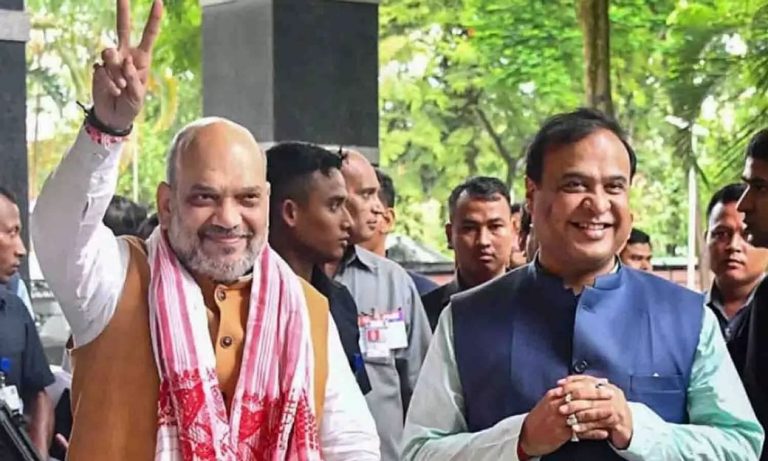
The Raza Academy has written to Mumbai Police Commissioner Pram Bir Singh to take action against Flipkart for permitting the sale of ‘blasphemous’ keychains on its platform. The Islamist organisation demanded that the sale be stopped and all such products be seized from the company.
Source: ANI
The letter said, “Flipkart has introduced key chains on its online portal for sale which consists of the Holy Quran, The Bible and the Guru Granth Sahib which is totally unacceptable as it disrespect (sic) the Holy Books of major religions.” “It should be noted that Islam does not allow a Muslim to touch the Holy Quran without ablution and by releasing it on a Keychain it is nothing but blashphemy (sic),” it added.
The Raza Academy also demanded that an FIR be registered against the company to “stop further misuse of religious products in abusive manners.” Earlier this year, the organisation had launched a campaign against France and demanded that Islamic countries issue fatwas against France after its president Emmanuel Macron defend the right of individuals to mock the prophet of Islam.
The dark and violent history of Raza Academy
The Raza Academy has been one of the notorious radical Islamic organisations that has instigated violence on the streets of the country in the past.
In August 2011, Raza Academy had staged a morcha at Azad Maidan ground to protest against the alleged atrocities on Muslims in Assam and Myanmar, which later turned into a riot. The protest turned violent after one of the notorious group attacked the policemen leading to police firing in which two persons were killed and 63 persons including 58 policemen were injured.
Raza Academy which had organized the protest had earlier assured the Mumbai Police that only 1,500 people would turn up. However, more than 15,000 people assembled at the Azad Maidan and later the crowd swelled to over 40,000 people resulting in Muslim mobs unleashing violence on the streets of Mumbai.
The most shocking incident of the Azad Maidan Riots was the desecration of Amar Jawan Jyoti memorial by the Muslim mobs. The war memorial is dedicated to the fighters of 1857 – the First Indian Freedom Struggle. The riots had caused approximately Rs 2.72 crores worth of damages to various public properties.
Earlier this year, Raza Academy had threatened with ‘law and order situation’ if the movie ‘Muhammad: The Messenger of God’ was not banned. The movie depicts the life of the prophet from birth till the age of 13. The Islamic organisation had issued a fatwa against AR Rahman, the music composer of the movie, and Iranian director Majid Majidi in 2015 as well.
“A Muslim will die in honour than to see or hear even the slightest insult on his Holy Prophet,” the Raza Academy said threateningly.
One of the most prominent Sikh Gurudwara, Bangla Ji Sahib, is known for its water that is believed to have healing properties. Sikhs from around the world visit this Gurudwara and take the holy water with them back home. Originally, Gurudwara was Raja Jai Singh’s bungalow. Eighth Sikh Guru, Guru Har Kishan, stayed in the place during his stay in Delhi in 1664.
During that era, the smallpox and cholera epidemic had hit the region, and Guru Har Kishan Ji served the ailing by giving them aid and fresh water. Soon he too contracted the disease and died on March 30, 1664. Raja Jai Singh constructed a small tank over the well from where Guru Har Kishan Ji used to draw fresh water. It is now believed that the water from this tank has healing powers.
Due to its historical connection, popularity, location, and beautiful construction, it is visited by lakhs of devotees every year. Its kitchen is one of the most famous Gurudwara kitchens in India. The beautiful golden dome is visible from a distance, and you cannot miss it while visiting Connaught Place in Delhi.
The morning Gurbani and Kirtan
Gurbani and Kirtan are live telecasted on several channels and on social media platforms like YouTube. Millions of devotees around the world tune in to the live telecast on different channels. The peaceful recitation of Guru Granth Sahib, followed by Kirtan Path, is a real stress buster for many. The platform is often used to recite stories of Sikh Gurus.
The misinformation about Agriculture laws
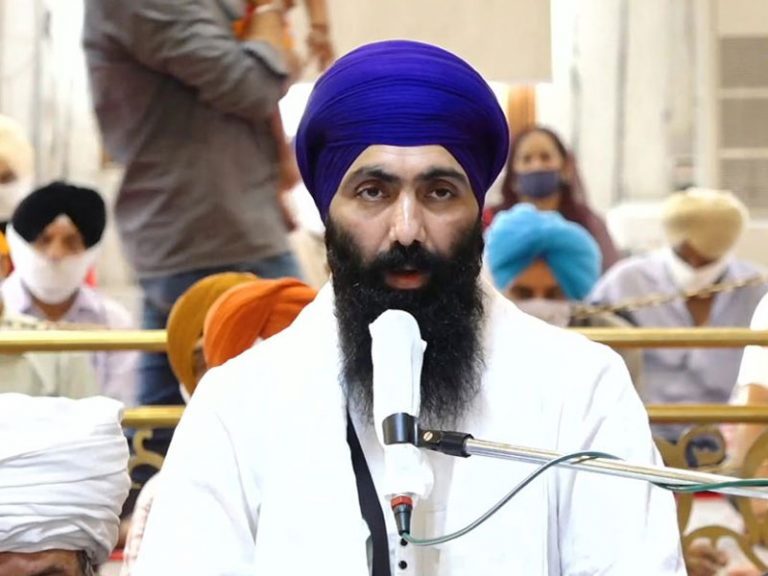
On December 13, after Gurbani and Kirtan Path, Katha Vachak Baba Banta Singh Ji shared stories of Gurus. However, towards the end, he talked about the ongoing farmers’ protests and Agriculture laws, during which he shared some misinformation about the laws. Towards the end of the Morning Prayer session, he talked about the protests and said that there are three laws that the government has passed, Trade, Produce, and Commerce. In general language, it is known as ‘free market.’ He said that the concept has already failed in America and Canada.
MSP and produce price in general
Claim: He said, “These Acts are the first step to end MSP. The government wants to withdraw MSP. As per the new law, there will be private markets alongside government markets. These private markets will pay more compared to the government markets. The farmers will be lured towards private markets because of price, convenience and facilities. While in government markets it takes days to get the produce unloaded, the process will be quick in the private markets.”
He further said that this would continue for a few years. “Once the farmers stop going to government markets, the government will close them down on the pretext of losses. Then, the corporate will say that as there is no competition, they will only pay half the price to the farmers. With no option left, the farmers have to sell the produce at low rate.”
Fact: The government has clearly said that there are no plans to withdraw MSP. Even after passing the laws, the government has procured all-time high Kharif produce from the farmers. MSP for the next produce for 2021 has already been set, and the government has spent 67,248.22 crores on the procurement of Kharif produce.
Essential Commodity
Claim: He said that the government had removed the limit of storage capacity. The corporate houses can store as much produce as they want. “Even those farmers who have 100 acre land do not have the facility to store their produce. The corporate who live in Mumbai will store all the grains, potato, pulses etc. and will create shortage in the market. When there is shortage, the price will rise. There will be time when you will have to pay Rs.500 for the KG of rice that you buy for Rs.100 these days. Corporate will set the price as per their wish.” He further added that the corporate houses would increase every commodity’s price just like Reliance sells corn for Rs.50 that the farmer sells for a mere Rs.5.
Fact: The Law [PDF] allow storage according to the ceiling capacity of the storage house. Every storage house has a specific limit. They cannot store more than that. Also, the government will strictly monitor the price of every commodity and will intervene when the price increases for horticulture produce by 100% or 50% for non-perishable produce.
It has to be noted that there are hundreds of commodities, especially under horticulture produce or perishable produce, that do not come under MSP. Their price fluctuates every year based on the season. The government will compare the price of every commodity to its price in the last twelve months or to the price of the last five years, whichever is lower, and intervene accordingly.
Contract farming
Claim: He said that the corporate houses would offer double the price of contract farming to the farmers compared to current rates. However, they will put a clause of multiple years in the contract. The farmer will get lured due to the higher price. For one year, they will pay the decided price, but after one year, they will say that due to low productivity, they can only pay the lower price.
“If the farmer ask them to leave his land, they will show him the contract for multiple years. No one will listen to him including police or SDM, where farmers are allowed to file a complaint. The law does not allow farmers to go to court.” He further added that the farmer would have no choice but to sell his land to the corporate houses.
Fact: The law allows contracts for one crop season or a maximum of up to five years. If the crop needs more than five years to grow, then the farmer and the sponsor may get into a mutual contract for a longer period. The price has to be mentioned in the contract, along with the quality of the produce.
If the price may vary depending on the product, a guaranteed price has to be mentioned in the contract. Any bonus or premium that the farmer may get must be mentioned in the contract. The price can be decided on the line of APMC yard or electronic trading or transaction platform. The sponsor will not have the right to retract from accepting the produce. He may, however, check the quality of the produce as per the agreement.
The law says[PDF] that the two-thirds payment has to be made immediately at the time of accepting the produce in case of seed production, and the remaining amount has to be paid within 30 days of accepting the produce. In other cases, the payment has to be made at the time of accepting the produce.
The law also bars any of the party from adding farmers’ land in the agreement. The land cannot be sold, transferred, or leased. The contract will be for the produce only. The sponsor can raise structure on the land, but he has to remove it as the contract ends. If he fails to do so, the farmer will own the structure after the conclusion of the agreement. In case of a dispute, the parties can approach SDM, and the case has to be settled in 30 days. In case the parties are not happy with the outcome of the judgment, they can appeal to the Appellate Authority, i.e., the Collector. In the recent discussions, the government has shown willingness to amend the law further to allow the parties to approach courts.
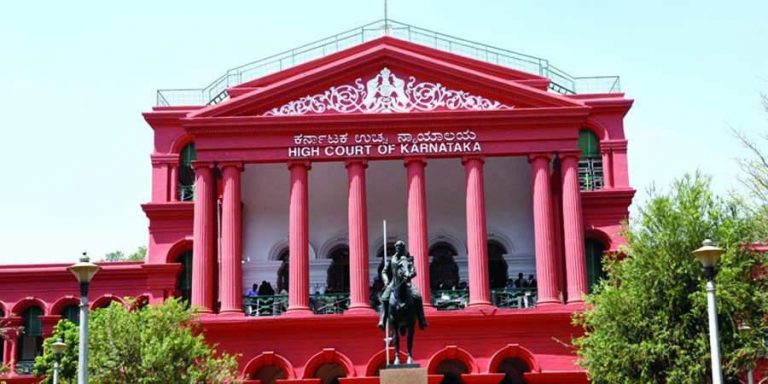
The Karnataka High Court has dismissed pleas that sought the strict implementation of Section 7 of the Karnataka Hindu Religious Institutions and Charitable Endowments Act, which maintains that only Hindus can be employed in the management of Hindu Temples, LiveLaw has reported. The petitions were dismissed without providing any relief.
One petition questioned the printing of the name of one A B Ibrahim, working as Deputy Commissioner with the HRCE department in Mangaluru, on the invitation card of Mahalingeswara Temple’s annual festival. The other was filed by Bharata Punarutthana Trust objecting to the appointment of Mohamad Deshav Alikhan as Superintendent in the office of the Commissioner under the Act.
“What heavens are going to fall if respondent 4 being the Deputy Commissioner, for overlooking the arrangements will enter the temple. Hindu religion was never so narrow. Hindu religion as professed never consisted of people who are so narrow minded,” the bench comprising of Chief Justice Abhay Oka and Justice S Vishwajith Shetty observed orally as per the report.
The bench cited ‘Constitutional philosophy’, which appears to be a variant of the more popular term ‘Constitutional morality’, to question the maintainability of such petitions. “After the Constitution has come into force, we will never entertain such petitions in the court. There is something known as the Constitution, there is something known as Constitutional philosophy. We will not entertain a petition which will take us 100 years back.”
Section 7 of the said Act says, “The Commissioner and every Deputy Commissioner or Assistant Commissioner and every other Officer or servant, appointed to carry out the purposes of this Act by whomsoever appointed, shall be a person professing Hindu Religion, and shall cease to hold office as such when he ceases to profess that religion.”
The bench stated, “On plain reading of section 7, there is no general prohibition on appointing an officer or servant to work in the offices of commissioner, deputy commissioner or assistant commissioner. The restriction imposed by section 7 is that Commissioner, Dy Commissioner, Asst Commissioner and every officer or servant appointed to carry out purposes of the said act of 1997, shall be a person professing Hindu religion. The test for applicability is that the officer or servant is appointed to carry out the purpose of the Act.”
The bench noted before concluding, “Judicial notice will have to be taken of the fact that government officers, police officers, irrespective of their religious faith and beliefs effectively assist all religions in celebrating their respective religious festivals. In fact that is part of the Constitutional philosophy and concept of Secularism.”
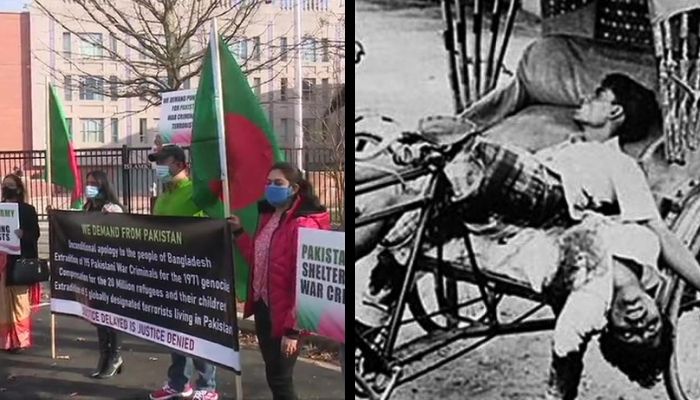
Two days ahead of the ‘Bijoy Diwas’, a US-based Bangladeshi organisation staged a protest outside the Pakistani embassy in Washington seeking an apology for the human rights violations committed by the country in 1971. The demonstration included Bangladeshi nationals as well as other South Asian minorities.
“Pakistan! Stop sheltering 175 war criminals,” a banner read. “Time for Pakistan to apologise for the 1971 genocide”, read another placard. The protestors demanded an ‘unconditional apology’ from the State of Pakistan for 3 million deaths and 4 lac rapes committed by its forces during ‘Operation Searchlight’.
The development comes just 2 days ahead of the 39th anniversary of Pakistan’s humiliating defeat to India and the ‘Mukti Bahini’ in the Bangladesh Liberation War of 1971. As such, December 16 is celebrated as Bijoy Diwas in Bangladesh and Vijay Diwas in India to mark the victory to honour those who laid their lives in the line of duty.
US-based Bangladeshi organisation along with other South Asian minorities held a protest outside the Pakistani Embassy in Washington DC demanding an apology for the 1971 genocide named ‘Operation Searchlight’. pic.twitter.com/Tt54Y9qCKx
The story began in 1970. In the General elections held on December 7 that year, Sheikh Mujibur Rahman of the Awami League secured a huge majority (167 seats) in the provincial legislature in East Pakistan. With constant interference in the affairs of East Pakistan by its Islamic counterpart, Rahman had begun demanding for greater regional autonomy.
This was just within 13 years of the Partition of the Indian subcontinent, when Muslims sought for a separate country of their own. Although united by the common Faith, the resentment between the West and East Pakistan towards each other continued to grow. Zulfikar Ali Bhutto of the Pakistan People’s Party (PPP), who won the most seats in West Pakistan in 1970 elections, was opposed to the demands of Rahman. He had threatened to boycott the Assembly and sought for the dissolution of the provincial legislature in East Pakistan, if PPP was not included in the government.
Miffed over the denial of power and autonomy to East Pakistan, Sheikh Mujibur Rahman called civil disobedience movement, on March 7, 1971. Bhutto feared civil war and President Yahya Khan, therefore, declared martial law and ordered the arrest of Rahman and other leaders.
What happened during Operation Searchlight?
In order to contain the civil and political unrest, the Pakistan army launched Operation Searchlight on March 26, 1971. Rahman, disillusioned by the high-handedness of West Pakistan, had already called for independence from West Pakistan.
The Pakistani soldiers launched their attack on the Bengali population in Rajararbagh and Peelkhana area. They put Mujibur Rahman behind bars and ambushed the Dhaka university, resulting in the death of 9 teachers and 200 students in Iqbal Hal. Similarly, the Pakistan army continued with its barbaric attacks on civilians in Old Dhaka, Tejgaon, Indira Road, Mirpur, Kalabagan and other places.
On the same night, several people in Chittagong were shot dead by the army personnel. National newspapers, including, Daily Ittefaq, the Daily Sangbad were shut down and their offices were set ablaze, resulting in the death of several media personnel. Mass graves were dug out and hastily bulldozed. An estimated 700 people were burnt to death in Dhaka. Similarly, they set fire to the houses of slum dwellers, fired bullets at those running away to save their lives, razed a Kali Mandir and also destroyed the Central Shaheed Minar.
The aftermath of Operation Searchlight
It is believed that around 10,000-35,000 Bengalis were killed by the Pakistan army under the Operation Searchlight while the death toll to increased to over 3 lacs in the months to follow. “Thanks to God that Pakistan could have been saved,” Bhutto had famously remarked. The genocide against the Bengali population intensified. In the months to follow, around 4 lac Bengali women were raped by the Pakistan army while a majority of the victims being Hindus.
The situation worsened, forcing neighbouring India to step in to prevent the further continuation of genocide. In 14 days, Pakistani forces under AK Niazi signed the Instrument of surrender and thus a new nation of Bangladesh was born. While Bangaldesh has tried and hanged several war criminals, Pakistan continues to dispute the 1971 genocide, far from being apologetic about the heinous crimes.
Bangladesh Prime Minister lambasts Pakistan over 1971 genocide
Recently, Bangladesh Prime Minister Sheikh Hasina confronted Pakistan over the atrocities it unleashed against Bangladesh during the 1971 war. Hasina said that human rights violations Pakistani forces unleashed during the war of independence in 1971 are “unshakeable memories” for Bangladesh.
Her strong remarks against Pakistan came during her meeting with Imran Ahmed Siddiqui, the Pakistani high commissioner in Dhaka. “Incidents of 1971 cannot be forgotten. The pain will remain forever,” she said as she met Pakistan High Commissioner Imran Ahmed Siddiqui in Dhaka on Friday. Citing to the volumes of the book titled “Secret Documents of Intelligence Branch on Father of the Nation Bangabandhu Sheikh Mujibur Rahman”, Prime Minister Sheikh Hasina said all can learn many historical facts from 1948 to 1971 from the books.
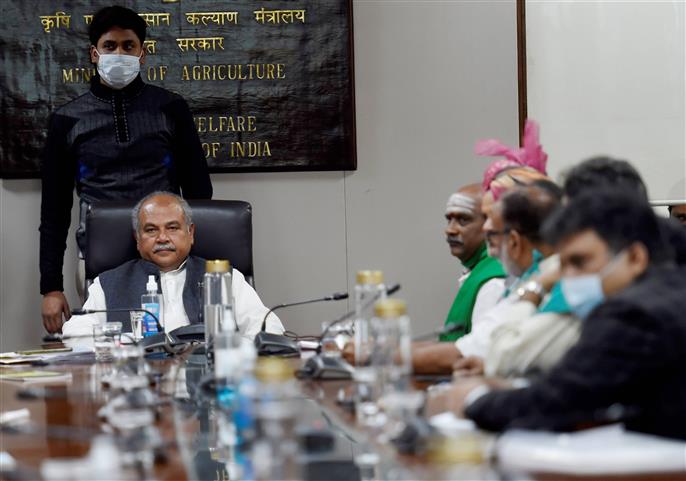
While some misled farmers continue to protest against the new farm laws, ten farmer leaders associated with the All India Kisan Coordination Committee (AIKCC) met Union Agriculture Minister Narendra Singh Tomar and extended their support to the three new agrarian laws passed by Parliament. The All India Kisan Coordination Committee (AIKCC) is the fourth group of farmers who have pledged their support to the laws in the last two weeks.
It is pertinent to note that AIKCC has presence in 28 states, and is considered as one of the largest farmer organisations in India.
These representatives of farmers’ unions came to the national capital from several states such as Uttar Pradesh, Kerala, Tamil Nadu, Telangana, Bihar and Haryana to meet the Union Agriculture Minister and hand over a memorandum to extend their support to the three farm laws.
10 organisations from various states like Uttar Pradesh, Kerala, Tamil Nadu, Telangana, Bihar and Haryana, associated with All India Kisan Coordination committee, are meeting Union Agriculture Minister Narendra Singh Tomar, to extend their support on 3 Farm Bills. pic.twitter.com/FMnzpoO2c1
The memorandum speciafically slammed those few elements who were trying to spread misinformation and instigate the farmers against the new laws. According to them, some elements involved in the farmers’ protest were trying to spread misconceptions about the agrarian laws among the protesters.
Some elements involved in the farmer’s stir were trying to push the farmers back into the dungeons by provoking them against the new farm laws: AIKCC
The farmer leaders mentioned that the AIKCC has always raised its voice against laws that exploit farmers in the last three decades and would continue to do so. Throwing its weight behind the new laws, it said that the new farmer’s laws would mark a new beginning for the farmers and that these elements involved in the farmer’s stir were trying to push the farmers back into the dungeons by provoking them against these laws brought by the Modi government.
They argued that the farmers should not be forced to adhere to the APMCs. Moreover, the farmers’ representatives warned that they will hit the streets if Centre repeals the agrarian laws. The memorandum also listed other demands such as the availability of modern technology to farmers, reduction of GST on farm equipment and fertilizers and the complete repeal of the Essential Commodities Act.
All India Kisan Coordination Committee express gratitude, requests Govt to not give in to the protesting farmer’s flawed demands
The farmer leaders associated with the All India Kisan Coordination Committee (AIKCC) urged the central government to stick to its decision to implement the new farm laws and not give in to the flawed and inapt demands of the protesting farmers.
They said that they have come together from different parts of the country to express their gratitude towards the central government for bringing in such laws which would change the fate of the farmers in the country.
Meanwhile, Union Agriculture Minister Narendra Singh Tomar has been leading the negotiations with 40 farmer unions, along with Food Minister Piyush Goyal and Minister of State for Commerce and Industries Som Parkash. “We tried to convince farmers and farmer unions leaders. Our wish is that they come for clause-by-clause discussion. If they are ready to express their views clause by clause, we are ready for discussion,” he said.
Enacted in September, the three farm laws have been projected by the central government as major reforms in the agriculture sector that will remove the middlemen and allow farmers to sell anywhere in the country, thereby getting them the best rate for their produce. However, the protesting farmers have expressed apprehension that the new laws would pave the way for eliminating the safety cushion of Minimum Support Price and do away with the mandis, leaving them at the mercy of big corporates, a fallacy that the Congress and the leftist liberals have been peddling day and night to mislead farmers. However, Modi government has, again and again, stressed that they are neither abolishing APMC Mandis not repealing MSPs.
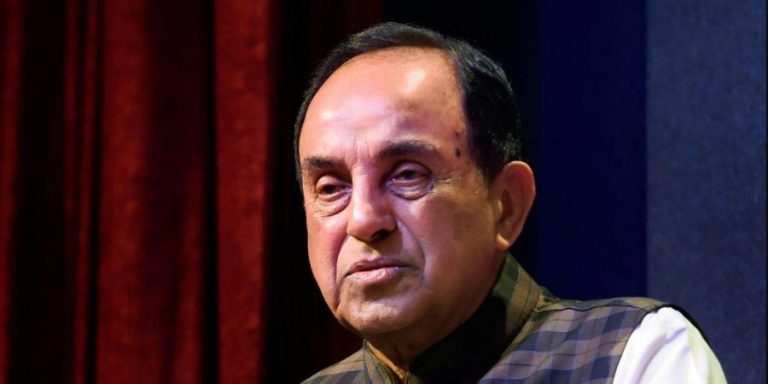
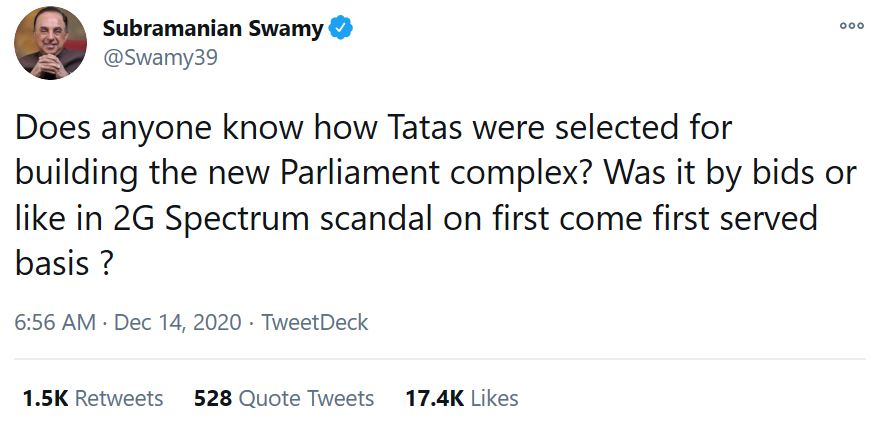
“Does anyone know how Tatas were selected for building the new Parliament complex? Was it by bids or like in 2G Spectrum scandal on first come first served basis?”, Tweeted Subramanian Swamy, wondering whether the Tata Projects limited won the contract through a fair bid or the contract was a scam, perhaps like the 2G spectrum scam under the UPA coalition government.
Subramanian Swamy’s Tweet dated December 14
However, Swamy’s insinuations seem misplaced.
Why aspersions made by Dr Subramanian Swamy are wrong
Tata Projects Ltd was amongst the 7 companies which had placed pre-qualification technical bids for the construction of the new building in the month of July. A senior official aware of the development had then confirmed that seven firms had submitted their bids, which were to be considered. “It will take two to three weeks to shortlist the bidder based on their technical qualifications,” the official had added while speaking to Hindustan Times.
Mumbai-based construction and civil engineering company ITD Cementation India Limited, Shapoorji Pallonji and Company Private Limited, Larsen & Toubro Limited, NCC Limited (headquartered in Hyderabad), PSP Projects Ltd based in Ahmedabad, Tata Projects Ltd and Uttar Pradesh state government undertaking UP Rajkiya Nirman Nigam Limited had filed their bids online seeking to construct the new Parliament complex, adjacent to the existing Parliament building, with a built-up area of approximately 60,000 square meters.
On August 12, three construction companies have qualified for submission of financial bid. These companies were L&T Ltd, Tata Project Ltd and Shapoorji Pallonji and Co Pvt Ltd.
The Central Public Works Department (CPWD) then opened the financial bids for the new Parliament building construction on September 16, 2020. The government civic body had estimated a cost of Rs 940 crore for the project. Tata Projects had submitted the lowest bid of Rs 861.90 crore. Larsen and Toubro’s bid was at Rs 865 crore. Since Tata Projects Ltd’s bid was the lowest, it won the construct to build the new Parliament building.
The New Parliament Building
The new building will come up at plot number 118 of the Parliament House Estate, according to the Central Public Works Department (CPWD), which said the existing building will continue to function during this period. It will comprise of halls with larger seating capacity for the Lok Sabha and the Rajya Sabha and offices for members of Parliament as well as a courtyard, dining facilities, and a lounge for the politicians.
The contract for the new Parliament building was to be awarded in March but was delayed due to the Covid-19 lockdown. The construction of this new complex is a part of Prime Minister Narendra Modi-led government’s ambitious Central Vista Redevelopment Project.
Modi Govt’s Central Vista redevelopment project
The Central Vista project involves the redevelopment of the area known as Central Vista Avenue, the area between the Rashtrapati Bhavan and the India Gate, where all the important buildings related to the union government are located. This project has two main parts, a new parliament building, and a new secretariat complex to bring all the central govt ministries in one place. A third part involves the development of the Rajghat and the area around it, which is available for the general public, including the development of public amenities. This project will involve demolition of some non-heritage buildings in the area, and construction of new buildings in place of them.
Like most of the initiatives taken by the Central government, the proposal to construct the new parliament building has also irked the ‘secular’ forces in the country. While the Congress went ahead to boycott the foundation stone-laying ceremony of the new Parliament building on December 10, Trinamool Congress MP Mahua Moitra had expressed displeasure on the Bhumi Pujan saying that the Prime Minister of a country should lay the foundation stone and not perform Bhumi Pujan, in a ‘secular’ multi-faith democracy.
Actor Kamal Haasan on Sunday demanded that Prime Minister Narendra Modi should spell out the rationale behind constructing a new Parliament building.
While the so-called liberals continue to cry foul, there are several reasons which completely justify India’s need for a new parliament building and a central secretariat complex. The old building is not only posing safety issues, it is inadequate to serve the need of a tech-savvy, rapidly developing democracy. Many parts of the building are crumbling and the earthquake vulnerability of the area in Delhi makes a new, better-designed structure the need of the hour.
As if 2020 wasn’t bad enough, Gmail, Google and YouTube, Google Pay, Google Maps, all decided to ditch us, paralysing our lives. What do you mean Internet is not life! And while we wait, twiddling our thumbs and toes waiting for Google servers to get back up, netizens took to social media to let off some steam and manage their #GoogleIsDown anxiety.
#GoogleDown and it feels like the entire internet crashes. I bet a lot of people panicked when they saw "couldn't find your google account"… Grimacing face pic.twitter.com/TwSrQ8yzEg
Google, Gmail, YouTube and some other Google services are down in multiple countries. According to DownDetector, the issues reportedly developed at 11.56 GMT and are affecting users worldwide. There has been no comment from Google on these issues thus far.
Among those experiencing issues with YouTube, 54% could not access the website, 42% said they could not watch videos and 3% were having difficulties log-in. On YouTube, a monkey with a message appears that says, “Something went wrong…”
Source: Twitter
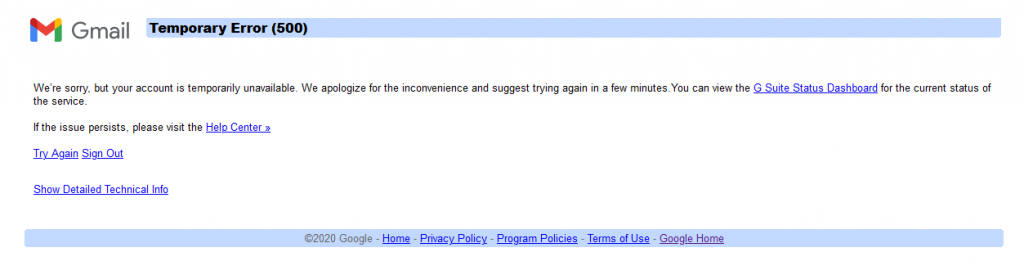
With Gmail, 75% users could not log in, 15% could not access the website and 8% could not receive messages. Some users were handed a message saying, “We’re sorry, but your account is temporarily unavailable.” The message asked people to try again in a few minutes.
Source: Twitter
Google shows an error 500. We cannot confirm whether everyone is seeing the same error.
Source: Twitter
Google Drive appears to be experiencing issues as well although it is known if everyone is experiencing these issues. This is a developing situation and not much is known at this point. We will update our report with more information as and when it is available.
Assam minister and senior BJP leader Himanta Biswa Sarma on Monday said that the state cabinet has decided to make education secular in state. Hence, 198 high madarsas and 542 other madarsas in Assam will be operating as general educational institute. He further said that these institutes will not give admission to students for theological studies.
In February 2020, in a significant decision, the Assam government had announced that the government is shutting all state-run madarsas and Sanskrit tols. Sarma, at that time, said that it is not the government’s job to teach religion, religious scriptures, Arabic and other languages for religious purposes.
There are around 1000 state-run madarsas in Assam and that the state spends about Rs 260 crore annually on them. Sarma had earlier said that the state govt evaluated the situation, and decided that the state should not teach or preach Quran using public money. He said that due to the presence of state-run madarsas, there were demands from some organisations to teach Bhagawada Gita and Bible as well in the schools but it was not feasible to run schools as per all religious scriptures.
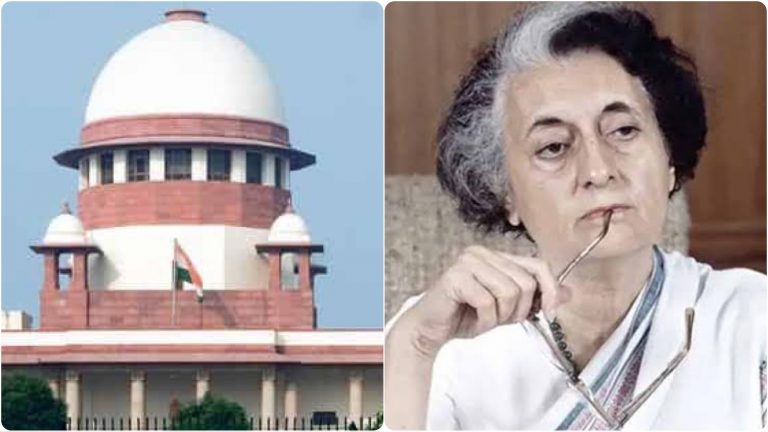
The Supreme Court today agreed to examine whether it would be feasible or desirable to look into the Constitutional validity of the Emergency imposed by the former Indian Prime Minister Indira Gandhi in 1975. The apex court was hearing a plea filed by a 94-year-old widow who wants the Emergency imposed 45 years ago to be declared “wholly unconstitutional”. The woman had also sought an amount of Rs 25 crore as compensation from authorities involved in imposing and enforcing the Emergency.
Hearing the plea, the bench comprising of Justices Sanjay Kishan Kaul, Dinesh Maheshwari and Hrishikesh Roy issued notice to the Central Government stating that the court would hear the petitioner on the limited aspect of whether the validity of such proclamation can be probed by the Court after the passage of “such a long time.”
“We are having difficulty. Emergency is something which should not have happened,” the top court observed while hearing the plea.
Arguing that the Court is empowered to examine the validity of the proclamation of emergency, senior advocate Harish Salve appearing for petitioner Veera Sarin, said that Emergency was a “fraud” and the “greatest assault” on the Constitution as rights were suspended for months.
94-year-old widow moves Supreme Court seeking for declaration of Emergency as unconstitutional
Petitioner Veera Sarin had on December 4, moved the SC seeking for declaration of Emergency as unconstitutional. Referring to the 2017 judgment of KS Puttaswamy (Retd.) vs. Union of India which overruled the decision of 5-Judge Bench in ADM Jabalpur v. Shiv Kant Shukla, the petition held that the end of the darkest chapter of the Indian democracy is yet to bring closure to the petitioner who had endured brutalities at the hands of those in power during the Emergency.
Petitioner seeks justice for the lifetime of misery and perennial sufferings due to the Emergency
In her plea, the Sarin argued that the then government authorities specifically targeted her and her husband with untenable and groundless detention orders, and they had to escape the country because of the government’s organised looting of businesses and homes of the victims.
The petitioner cited the Delhi High Court’s ruling passed in December 2014 which ultimately put an end to the proceeding against her deceased husband and stated that the valuables impounded from her husband’s prosperous and thriving business worth crores of rupees were yet to be returned.
She also alleged that the government authorities had during those days, seized valuable worth crores from the petitioner’s husband. “His business was shut down, assets and valuables including immovable property was seized and appropriated. The Petitioner’s husband succumbed to the pressure and died. Since then the Petitioner has been single-handedly facing all proceedings initiated against her husband during the Emergency period, which were arbitrarily pursued,” the petition stated.
The petitioner’s husband, HK Sarin, had a flourishing art and gem business in Karol Bagh and Connaught Place. However, shortly after the Emergency was imposed in June 1975, raids were conducted in commercial bases in Sarin and valuables, jewellery and artefacts were seized on suspected violations of the Customs Act.
The emergency was proclaimed minutes before the midnight of June 25, 1975, by then Prime Minister Indira Gandhi. The proclamation was revoked in March 1977.