After the Indian Air Force (IAF) objected to the inappropriate portrayal of its uniform in an upcoming Netflix movie named AK vs AK starring Anil Kapoor and Anurag Kashyap, many Congress supporters and liberals jumped in to preach the Indian Air Force asking it not to take that seriously. In the trailer of the movie, Kapoor, in the IAF uniform, is seen using foul language and behaving in a manner that lowers the dignity of the uniform. The IAF had objected to this and had asked the relevant scenes to be withdrawn from the movie.
However, this did not go down well with some congress supporters and liberals who started sermonising the IAF on ‘letting go’. One Congress supporter reminded the IAF that it was “just a movie” and that it did not demean their glory.
@IAF_MCC with due respect to the enormous sacrifices you all make for the country, it is just a movie and an inaccurate depiction by an “actor” doesn’t demean or devalue your glory. You are beyond this. You may consider it as an inaccurate art and let it go. Rest is your choice.
Another person named Shilpi Tiwari, perhaps assuming that the IAF were not aware that it was a movie, gave a detailed explanation about how the uniform was a “costume” and Kapoor was not an IAF officer but an actor. She, in turn, attacked the IAF for ‘targeting’ the movie and questioned whether they would “target” kids in fancy dress competitions if they wore “uniform costume”.
Dear IAF ..
Costume — NOT Uniform Actor — NOT IAF Officer Artist rules — NOT IAF rules Reel — NOT Real
Next what- target kids in fancy dress donning uniform costume
Similarly, a “writer”, “nyctophile”, “ailurophile” and “thalassophile”, as claimed by her Twitter bio, named Saniya Sayed pointed out to the IAF that it was just a movie and that they needed to “chill”.
Another person who does by the name @vanillaessence on Twitter grew nostalogic after IAF’s objection to the scenes in the movie and recalled how back in school her friend had donned the IAF uniform inappropriately in a fancy dress party and sung the Mogli song.
sir/maám mein jab 9th mein thi toh meri best friend ne ek fancy dress party mein Air Force officer ban ke gaya tha. aur woh sari raat jungel jungle pata chala hain chaddi pehen ki fool khila hain gaa ta raha. Full innacurately donned and did not conform to behaviourial norms
Another Twitter user who goes by the name @meetsengupta also tried to explain the purpose of cinema to the IAF and the “point” that the filmamakers were trying to make. She also put in her perspective to make IAF understand better.
It’s not supposed to be real! or it would be impersonation! 🙂 Also, Inaccuracies, I think, are the point they are trying to make – of how hamming it gets it wrong. Or that’s how I read it as audience. It’s a commentary on cinema, and it’s flawed journeys.
Saving all the efforts to preach the IAF, this Twitter user named @aaliznat went to declare that the person handling the IAF Twitter account was a “sanghi”.
The IAF has far more grace and chill than this tweet depicts.
Recently, Anil Kapoor and Anurag Kashyap had engaged in an orchestrated public gimmick to promote their movie AK vs AK that will be released on Netflix.
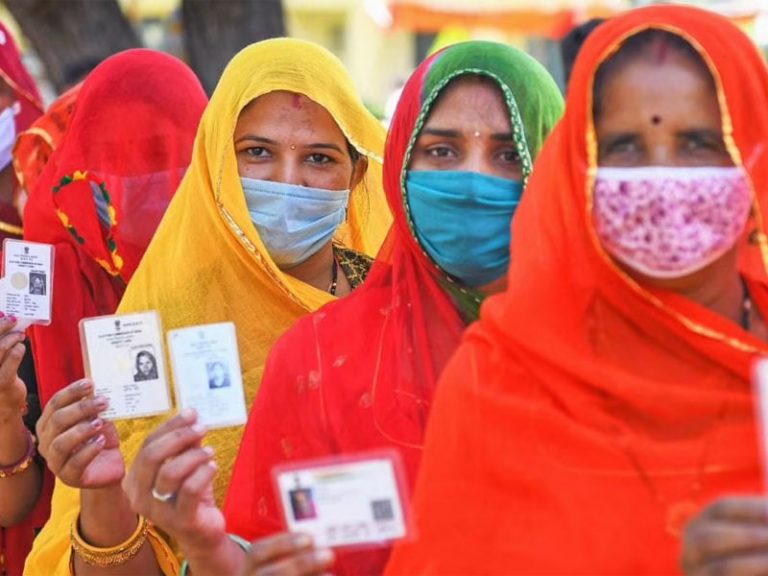
Bharatiya Janata Party is leading in the Panchayat Samiti and Zila Parishad elections held in 21 districts of Rajasthan. Though the counting is underway, BJP is maintaining a strong lead on the majority of the seats ahead of the ruling party Congress.
So far, 1,833 Panchayat Samiti members from BJP have won, while Congress has grabbed 1,713 seats. Independent candidates have won 420 seats. In Zila Parishad polls, BJP has won 265 hearts while Congress won 201 seats.
J P Nadda congratulated party workers
BJP Chief J P Nadda congratulated the party workers and said that the victory in Panchayat Samiti and Zila Parishad elections show that poor, labourers and farmers have trust in Prime Minister Narendra Modi. In his tweet, Nadda said that women, farmers, and other rural voters are showing faith in BJP.
राजस्थान में पंचायती राज और जिला परिषद चुनावों में प्रदेश के ग्रामीण क्षेत्र की जनता, किसानों व महिलाओं ने भाजपा में जो विश्वास प्रकट किया है, इसके लिए मैं उनका आभार व्यक्त करता हूं। यह जीत गांव, गरीब, किसान और मजदूर के प्रधानमंत्री श्री @narendramodi जी में विश्वास का प्रतीक है।
By Tuesday afternoon, Congress was leading the seats, but by evening the results start to favour BJP in both Zila Parishad and Panchayat Samiti elections. Satish Poonia, state BJP president, said that this was a historic performance. He added that the results show people have trust in Prime Minister Narendra Modi’s ideas for farmers.
In the recent urban body elections in Rajasthan, Congress got a majority in four out of six municipal corporations, including Jaipur, Jodhpur, and Kota. The party was expecting to continue its winning spree in rural elections, too, but it could not happen.
BSP and CPI(M) grabbed seats in Panchayat Samiti
CPI(M) managed to win 16 Panchayat Samiti seats, out of which notable one was Sikar. BSP managed to win three seats. CPI(M) also won two Zila Parishad seats from Hanumangarh.
Local body elections in 21 districts in Rajasthan
Out of 33 districts in Rajasthan, local body polls were held in 21 districts were Ajmer, Banswara, Barmer, Bhilwara, Bikaner, Bundi, Chittorgarh, Churu, Dungarpur, Hanumangarh, Jaisalmer, Jalore, Jhalawar, Jhunjhunu, Nagaur, Pali, Pratapgarh, Rajsamand, Sikar, Tonk, and Udaipur. 12,663 candidates were trying their luck against 4,371 Panchayat Samiti posts. 1,778 candidates against 636 Zila Parishad posts tried their luck in these elections.
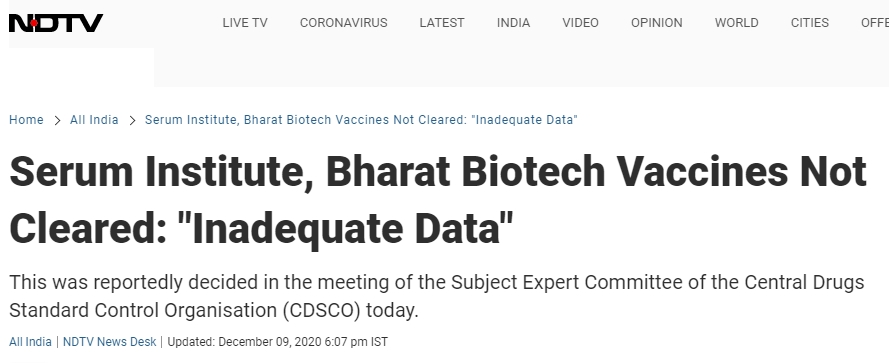
The union ministry of Health and Family Welfare has clarified that it has not rejected emergency use proposals for Coronavirus vaccines from Serum Institute and Bharat Biotech. The ministry said that a new report by controversial media house NDTV is fake.
A report published by NDTV had claimed that Serum institute and Bharat Biotech’s proposals for emergency use of their Coronavirus vaccines use were not cleared over inadequate safety and efficacy data. The report quoted ‘sources’ claiming that “Both proposals are not approved due to inadequate safety and efficacy data available currently. Both have been asked for more data.”
The report stated that Serum Institute of India, the world’s largest vaccine-maker, had requested approval for the Oxford vaccine, Covishield, on December 6, and Bharat Biotech had applied for emergency use approval of its indigenously-developed COVID-19 vaccine Covaxin.
However, Twitter handles of health ministry and PIB fact check said that the report is fake, and the proposals have not been rejected.
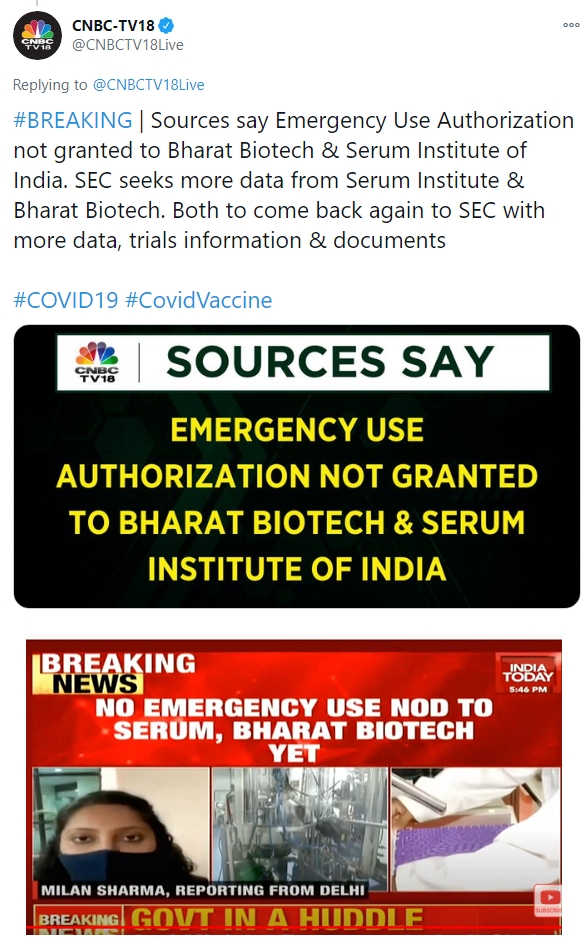
Although the government responded to the NDTV report, it was also carried by several other media houses. News18, India Today, CNBC TV 18 and several other media houses had carried similar news reports claiming that emergency use authorization has not been granted to Covid-19 vaccines of Serum Institute of India and Bharat Biotech over lack of data. All the media reports credited ‘sources’ for their reports.
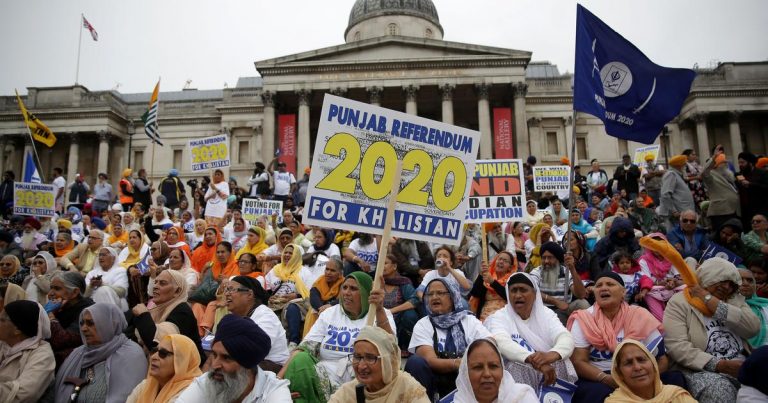
On Wednesday, the National Investigation Agency (NIA) filed charge-sheet against 16 accused associated with the Khalistani terrorist organisation Sikh for Justice (SFJ) in Referendum-2020.
According to the reports, the NIA filed a charge-sheet in a special court in Delhi against 16 Khalistani terrorists, who currently operate from foreign soil in connection with plotting conspiracy against India by launching a concerted secessionist campaign under the banner of ‘Referendum 2020’ for creation of ‘Khalistan’.
A case was registered against the accused under various IPC sections 120B, 124A, 153A, 153B and 505 of IPC and 13, 17 and 18 of Unlawful Activities (Prevention) Act, 1967. The charge-sheet nails the conspiracy of how Pakistan-backed Khalistani groups are fomenting trouble in Punjab.
The charge-sheeted accused are Gurpatwant Singh Pannun, Avtar Singh Pannun, Gurpreet Singh Baagi, Harpreet Singh, Paramjit Singh, Sarabjit Singh Bannur, Amardeep Singh Purewal, JS Dhaliwal, Kulwant Singh Mothada, Dupinderjit Singh, Hardeep Singh Nijjar, Kulwant Singh, Harjaap Singh, Sarabjit Singh, Jatinder Singh Grewal, S Himmat Singh/ The above individuals are members of Sikh For Justice, an organization banned by the Indian government for involving in terror-related activities. The NIA has shared the details in a press release.
Sikhs For Justice: A Pakistan sponsored terror group that radicalises Sikh youths against India
Earlier, the NIA investigation in the case had revealed that Sikhs For Justice was nothing but a terror group that operates with the support of Pakistan’s ISI and has offices in various foreign countries like the USA, Canada, the UK, Australia etc. The NIA had disclosed that SFJ propagates secession and also instigates enmity on the grounds of region and religion to radicalise impressionable youth and to cause disturbance to peace and harmony and to raise funds for terrorist activities.
The terror organisation SFJ has been attempting to undermine the security of the Indian State by instigating Sikh personnel in the Indian army to rise up in mutiny against India. SFJ is also trying to radicalize youth of Kashmir and openly extending support for the secession of Kashmir from India, the NIA had disclosed.
Earlier, the NIA had also carried out searches at six locations in Punjab’s Ferozpur, Ludhiana and Moga in connection with the hoisting of the Khalistani flag by cadres of the outlawed Sikhs For Justice (SFJ) organisation on the eve of Independence Day.
SFJ links to the farmers’ protests in India
The farmers’ protest saw participation from pro-Khalistani elements. Several ‘farmers’ resorted to violence and worrying slogans, supporting Khalistan were also raised. With pro-Khalistan and anti-Indian slogans being raised during the ‘farmer protest’ along the Haryana-Punjab border, questions were also being raised over the alleged involvement of SFJ in instigating Punjab farmers to protest against the Modi government under the pretext that the three farm bills are ‘anti-farmer’ in nature.
The SFJ collusion indicated the involvement of pro-Khalistan elements to hijack these farmer protest.
It is important to note that the Khalistan organisation SFJ, funded by Pakistan, had earlier declared a grant of $1 million for farmers in Punjab and Haryana in lieu of their support for Khalistan.
On 23rd September, it was reported that the SFJ had attempted to capitalise on the ongoing protests by farmers and had declared that it would distribute $1 million among farmers who had defaulted on agricultural loans.
Top SFJ functionary Paramjit Singh Pamma, who is on the most-wanted list of the NIA, was also seen at a “Kisan Rally” in London. Pamma was at spotted at the rally with his supporters. The rally saw Khalistani flags and anti-India slogans.
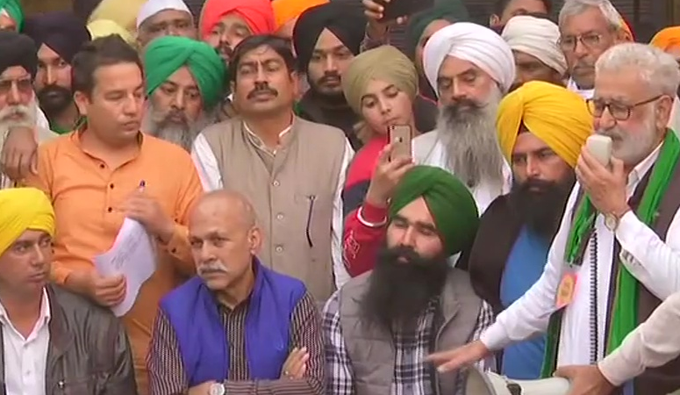
The agitating farmers from Punjab have rejected the proposals sent by the union government, remaining adamant with their demand that the new farm laws must be withdrawn. The farmer organisations have decided only to continue the protest, but also to intensify the same.
Announcing the decision, Darshan Pal, President of Krantikari Kisan Union, said that they are rejecting the proposals of the govt. He also announced that the farmers will block the Delhi-Jaipur and Delhi-Agra highways on 12th December as part of the agitation. They will also capture the toll plazas on the highways across the country, freeing them.
We reject the government's proposals: Darshan Pal, President of Krantikari Kisan Union at Singhu (Delhi-Haryana border)#FarmLawspic.twitter.com/FmBgyqAiU2
On 14th December, the protesting farmers will launch nationwide protests, with gherao of BJP offices across the country, and protest demonstrations will be held. The farmers have further announced that they will boycott Reliance malls, and will port out their Jio numbers to other networks.
Pal said that they have also appealed to the farmers from the other parts of the country to join the protests. It may be noted that the ongoing protests have been done by farmers mostly from Punjab, with negligible support from farmers from other states.
The All India Kisan Sangharsh Coordination Committee (AIKSCC) released a statement on government’s proposal and termed them “old proposals dressed up as new”.
“Modi govt insincere & arrogant about resolving farmers demands; all farmers bodies rightly reject old proposals dressed up as new. AIKSCC and all farmer organisations reiterate their demand to repeal 3 farm acts and EB 2020 . Protest to continue, more farmers to join in, in Delhi. District level dharnas to start in all states,” the press release stated.
Earlier, the agriculture ministry had sent proposals to the farmer organisations offering to make several amendments to the new farm laws. The proposals made by the govt included same tax rate for APMC and private markets, amendment to dispute resolution mechanism, amendment to market registration system, amendment to contract farming law, assurance of minimum support price, assurances on govt procurement, withdrawal of the air pollution law that penalises stubble burning by farmers, and withdrawal of the electricity act.
These proposals broadly covers all the apprehensions raised by the farmers regarding the three farm laws. But still the organisations rejected them, demanding complete withdrawal of the laws.
The proposals were sent after representatives of the farmers had met union home minister Amit Shah yesterday. A delegation of 13 farmer leaders had met the home minister.
Speculations are rife about possible signings in the January Transfer Window as teams are expected to strengthen key positions in their squad. However, in an unusual turn of events, disgruntled fans are on the lookout for signings as well in order to strengthen their protests against their managers and the management of the club.
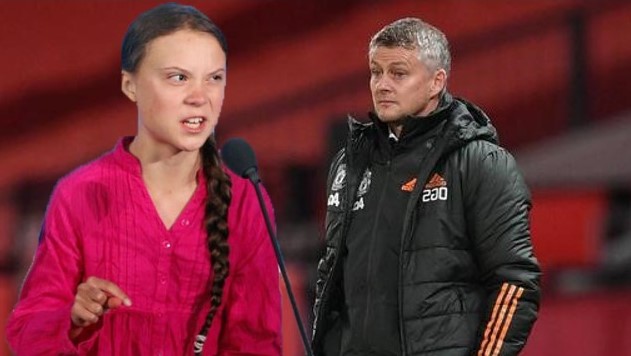
Ole Gunnar Solskjaer and Mikel Arteta are the current managers of Manchester United and Arsenal football club respectively. Fans, primarily from Manchester United and Arsenal, have been calling for their managers to be sacked for quite some time without much success. They appear to have reached the consensus that their protests have not been successful due to the lack of professional expertise. Therefore, a decision has been made to sign up professional protesters such as Greta Thunberg and Yogendra Yadav to help their cause.
According to reliable sources, the decision was the consequence of a long drawn out discussion between a heartbroken Manchester United fan and an Arsenal fan. The discussion occurred in the aftermath of United’s defeat against RB Leipzig, which resulted in the club’s ouster from UEFA Champions League. United finished third in their group and will now play in the Europa League.
The United fan in question claimed to have been infected with COVID-19 in order to avoid fans from rival clubs at a meet-up. Later, he was found getting drunk at the local pub with the Arsenal fan. Together, after several rounds of heated brainstorming sessions in drunken stupor, it was decided that the best path forward was to seek professional help.
When the idea was revealed to others, everyone agreed that it had great potential. Sources tell us that informal discussions are underway between the football fans and the professional protesters but a deal is far from being finalised. While Greta Thunberg’s terms are expected to be fairly simple, as the new cycle of protests would provide her with more reasons to skip school and spend time traveling, Yogendra Yadav’s demands are definitely not.
The fans were under the impression that fervent appeals to Yadav’s emotional sentiments would be enough to secure a deal, however, they have learnt since then that he has appealed for compulsory voluntary donation as quid pro quo to join the crusade. The fans were shocked by such a demand since YouTube compilations of his speeches gave them the impression that protesting was his passion and he could be convinced to protest absolutely anything and everything under the Sun with some tears and drama.
More so since the last time he appealed for donation, despite 168 retweets and 816 likes, he could not even get Rs 50 as donation, as he himself once admitted.
Yogendra Yadav, nonetheless, has communicated to the fans that his style of protesting would require significant investment. At one point during the discussion, he referred to himself as the Pep Guardiola of the world of professional protesters in order to communicate effectively why investments would be so necessary.
Robbie of Arsenal FanTV has been approached for monetary help and he is open to supporting efforts to have Mikel Arteta sacked at Arsenal. Manchester United fans are quite distressed as they believe they do not have the strength to match Robbie’s financial might. Some United fans have suggested that they reach out to ‘PIL’ activist Prashant Bhushan over the matter, however, others shot down that proposal as Courts in the United Kingdom, unlike Indian Courts, are unlikely to pass a judgment ordering the manager of a football club to be sacked.
Another proposal to combat the far greater financial resources of Arsenal fans came from Corbynites within the United ranks. The Corbynites believe that if Jeremy Corbyn could be convinced that the situation at Manchester United was a consequence of Capitalist oppression of football fans at the hands of Glazers, vast sections of which come from working class backgrounds, then the senior Labour leader would be more than willing to support their initiative.
Efforts are also being made to reach out to Bernie Sanders to garner his support for the same. Simultaneously, Brexiteers in the United ranks are trying to reach out to Nigel Farage to convince him that their club is being ruined by a network of Globalists in order to secure his support. Arsenal fans, although they are wary of these developments, are finally happy that they have more financial resources than United in at least one area. They are also optimistic that they will be able to prevent the appointment of Rahul Gandhi to replace Mikel Arteta.
Even so, Arsenal fans are looking for back-ups as well in case they fail to sign either Greta Thunberg or Yogendra Yadav. The primary candidates they have targeted are the ‘Shaheen Bagh’ dadis. However, that would require working Visas which should not prove to be too difficult, Arsenal fans reckon. However, a section of Arsenal fans are extremely unhappy about the suggestion as they believe it is precisely this mentality, of looking for cheap solutions to deep seated problems, that has gotten the club in such a mess in the first place.
A delegation of Barcelona fans is expected to arrive in England soon to meet Manchester United and Arsenal fans soon as well for tips on how to protest properly as their team has never been in such a poor run of form in recent times and their lack of experience means they are not quite sure about who or what to protest and how to protest effectively.
Note: This, of course, is a work of fiction. Any resemblance to any incident that may incur in future is completely coincidental.
Days after senior BJP worker Ulen Roy was killed in a clash between BJP workers and West Bengal Police, another BJP worker has been found dead under suspicious circumstances.
Swapan Das, a BJP booth committee member of Tufanganj assembly, was found hanging from the ceiling this morning inside a school building in West Bengal’s Coochbehar district.
BJP blames TMC goons
The official Twitter account of BJP Bengal unit posted a tweet, informing about Das’ suspicious murder and alleging TMC’s involvement in his death.
“Pishi’s goons can’t save their inevitable end by carrying out murders. People will uproot TMC from West Bengal soon,” the BJP Bengal Unit tweeted.
Swapan Das, BJP Booth committee member of Tufanganj assembly found hanging this morning. Finger of suspicion points to TMC goons for the MURDER.
Pishi’s goons can’t save their inevitable end by carrying out murders. People will uproot TMC from West Bengal soon! pic.twitter.com/zXG2HMQ9jE
The BJP has alleged that “miscreants” having their allegiance to the Trinamool Congress had murdered Das on Tuesday night and his body had been hanged later.
According to a local BJP leader, Das’ death was a cold-blooded murder presided over by the TMC. He cited the blood-stains present on the floor and the deceased’ feet touching the ground to allege there was foul play involved in his death.
TMC refutes allegations of murder
On the other hand, the TMC repudiated the allegations, stating that the BJP has a tendency of linking every “unnatural death” with the ruling party for “cheap politics”.
“Every death is unfortunate and the Trinamool Congress is in no way involved in the death of Das,” said Rabindranath Ghosh, the North Bengal Development Minister, adding, “The BJP is fomenting disturbances by doing cheap politics with every single unnatural death in the state”.
BJP worker Ulen Roy died during clashes with Bengal police
On December 7, West Bengal had become a war zone when the police attacked BJP workers during a peaceful protest against the WB government at Tinbatti. There were reports that TMC goons were also standing with the WB police and hurdled country-made bombs on the protesters.
The protest was against the Mamata Banerjee government for ignoring the under-developed North Bengal. Over a hundred people were injured, and one senior Karyakarta, Sri Ulen Roy, died.
Rising cases of political violence in West Bengal
West Bengal continues to be racked by a spate of political killings, with the ruling dispensation TMC often accused of eliminating opposition leaders with dissenting political beliefs.
In July this year, sitting MLA, Debendra Nath Roy was found dead under mysterious circumstances near his house in North Dinajpur district in north Bengal.
Roy was found hanging from a ceiling, outside a closed shop, near his home in the Hemtabad area of the district. His family and the party alleged that it was a “cold-blooded murder by TMC”.
In another such incident, a BJP worker named Purnachandra Das was found hanging from a tree near his house in West Bengal’s East Midnapore district weeks after Roy’s death.
One of the major features of the Narendra Modi government has been the opposition the government has faced in almost each and every decision it has taken. Not just issues like Article 370 and triple talaq ban, the opposition parties and left-liberal ecosystem have also opposed important infrastructure projects like highway projects, bullet trains, railway network enhancement, seaport construction etc. One of such projects is the central vista project, including the construction of the new parliament building.
With PM Modi scheduled to conduct the Bhoomi Pujan for the new parliament building on 10th December, the usual suspects have started questioning the project. According to them, there is no need of a new parliament building, as the existing one is sufficient. While some of them are not questioning the need for the project, all of them are asking why now. According to them, including to the Congress party, when the economy is facing hardship and the country is facing a pandemic, the money earmarked for the central vista project should be diverted to social welfare.
Not just Left-liberals and opposition parties, many common people are also asking what is the need for a new parliament building when we already have one. They are asking this because they genuinely don’t know the reason. The article is an attempt to answer those questions, which is mainly based on a presentation by Bimal Patel, the chief architect of the project.
The Central Vista project
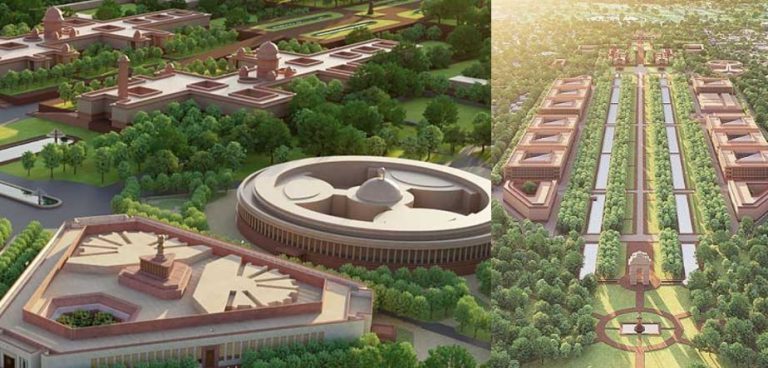
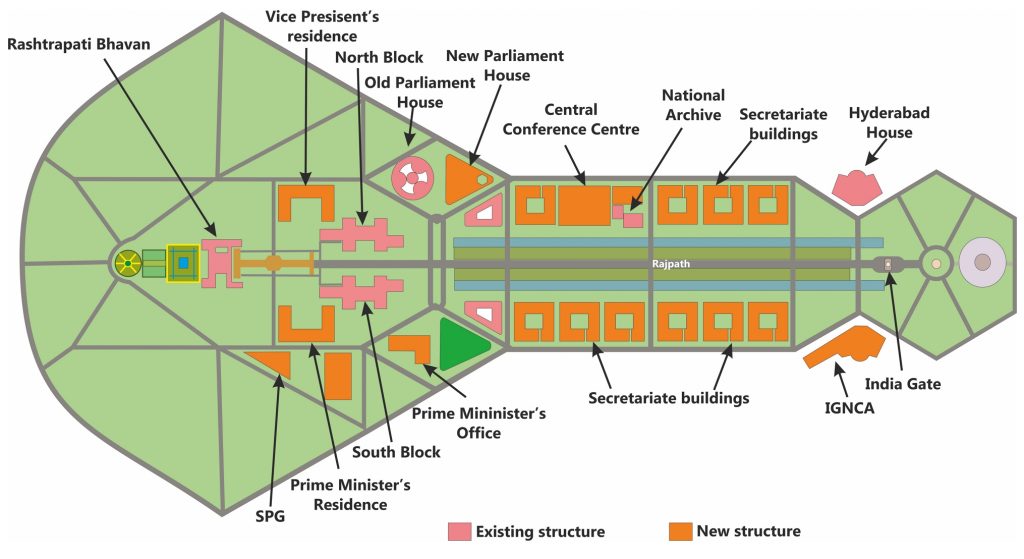
The Central Vista project involves the redevelopment of the area known as Central Vista Avenue, the area between the Rashtrapati Bhavan and the India Gate, where all the important buildings related to the union government are located. This project has two main parts, a new parliament building, and a new secretariat complex to bring all the central govt ministries in one place. A third part involves the development of the Rajghat and the area around it, which is available for the general public, including the development of public amenities. This project will involve demolition of some non-heritage buildings in the area, and construction of new buildings in place of them.
The Central Vista was designed by Edwin Lutyens and Herbert Baker, to house the capital of British India. The top of the Raisina Hill and adjacent hills in the area was flattened to create space for the buildings. The original capital included the Viceroy’s House (Rashtrapati Bhawan), the two secretariate buildings (North Block and South Block), The Council House (Parliament House). The National Archive building further down the Rajpath was also built by Lutyens, known as Imperial Record Department at that time. The Rajpath was known as King’s way, and the Janpath was known as Queen’s way.
The entire area on both sides of the Rajpath was an open area, covered by gardens at that time, it didn’t have the various office buildings we see now. According to the original plan by Lutyens and Baker, several other buildings were to be built on that area, for both administrative and cultural purposes. But various reasons like budget constraints, the independence movement, war etc put a halt on the project in 1931, which was never resumed.
In 1947, the government of Independent India occupied the structures in the central vista for the capital. As the original British plan was incomplete, the Indian government later added several buildings for various ministries and departments. The central govt had allocated plots in the area to various ministries, and the ministries added their buildings as per their choice, with no similarity with the existing heritage buildings.
While the original capital built by the British was sufficient for that time, it was not built for a country with 130 crore people. After a century, needs have arisen to add new structures, as the existing ones are no longer sufficient for India’s growing needs. To address these needs, the central vista development project has been envisioned. Now let’s examine each of the component of the project and their need in detail.
Why a new parliament building is needed
The most significant aspect of the project is the construction of a new parliament building. There are several reasons for needing a new building to house the two houses of the parliament. The most important one is, the impending expansion of the size of the parliament. Due to increased population, which have almost quadrupled since independence, there is a need to increase the number of Lok Sabha constituencies through delimitation.
According to the original plan, although the number of Lok Sabha members to remain constant, the number of MPs in states were to be changed every 10 years to reflect the change in population. This change was to ensure that every MP will represent an equal number of citizens. But when the govt of India adopted a policy of population control in 1970s, it posed a problem. If the number of seats was to be re-allocated to states according to population, states that failed to control population growth would be rewarded with more seats, while states that successful in population control program would be punished with lesser seats. This had also led to a North-South conflict, as Southern states were more successful in controlling population compared to Northern states.
Due to this anomaly, the number of Lok Sabha constituencies was frozen in 1976 up to 2001. When this 25-year term was over, it was again pushed back by 25 years, and now the next delimitation exercise is scheduled for 2026, which is fast approaching. With a 50 year-long freeze on the number of MPs, it is expected that it is not going to be postponed one more time. The number of states and the Indian population has increased a lot since 1976, and there is an urgent need to increase the number of Lok Sabha members so that each MP represents a manageable size of the population. It is speculated that the size of the Lok Sabha will be increased to more than 800 from the current strength of 543.
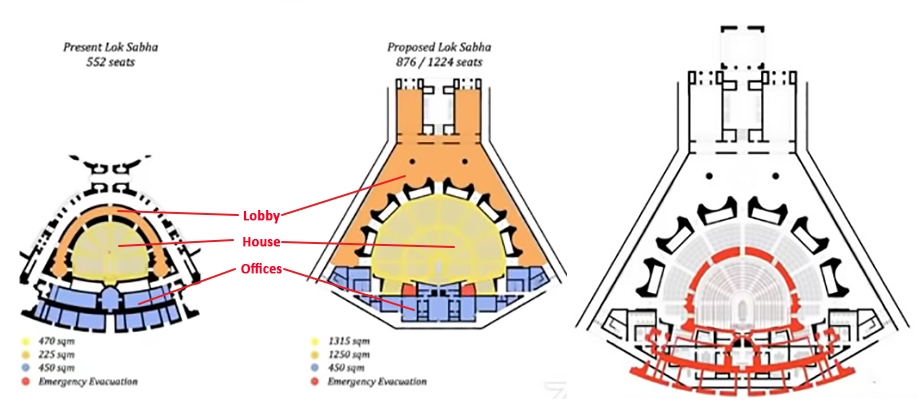
But there is a big problem before the Lok Sabha strength can be increased, the size of the Lok Sabha hall in the Parliament House. There are only 552 seats in the current house, with no scope for adding any new seat. In fact, the wall on the back of Lok Sabha was already taken down, and the corridor next to it was included the Lok Sabha hall to create more space for additional chairs for the MPs. Therefore, the strength of the Lok Sabha can’t be increased without creating space to accommodate all the MPs.
Similarly, the central hall of the parliament, used to hold joint sessions, actually does not have enough seats for the MPs of both houses. The Central hall has around 430 seats, less than the size of Lok Sabha. During joint sessions, temporary chairs are placed on the aisles so that all the members can sit. Certainly not a dignified scene for the parliament of the largest democracy of the world.
The Central hall also serves as the lounge of the parliament, as the building does not have any dedicated lounge for the members to spend their time outside session hours. It is notable that a lounge is not just a place for passing free time, it is also a place where informal discussions take place, networks are built etc. It is a very important place for discussing bills in an informal setting.
The sitting arrangement in all the houses in parliament are of bench type, with longer benches as one moves towards the back of the house. This means, when members enter or exit their place, they have to pass over other members sitting in the same bench. The members also don’t have any desk in front of them, except for the first two rows. From the third row onwards, microphones and voting panels are actually fitted on the backrests of the benches in front of the respecting benches. This is a very clumsy arrangement and does not offer any place for the members to keep their documents and other personal belongings.
Several newly built assembly houses in the country have sitting arrangements with two members per seat, with proper desks and tables. Even many schools and colleges in the country have abandoned benches and introduced single and twin sitting arrangements, but our Parliamentarians still seat on long benches with no desk at all.
Crumbling infrastructure inside Parliament House
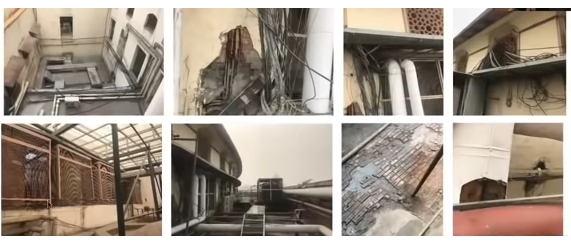
The infrastructure of the parliament also antiqued, as they were added at various times as and when required. It has microphones that can’t be switched off, a very old electronic voting system etc. Although the parliament building looks magnificent from the outside, the same is not true about its inside. Due to drilling holes in the walls to run electrical and telecommunication lines, water and sewage pipes, air-conditioning ducts etc, it all looks a mess from inside. Such drillings have also weakened the structure a lot.
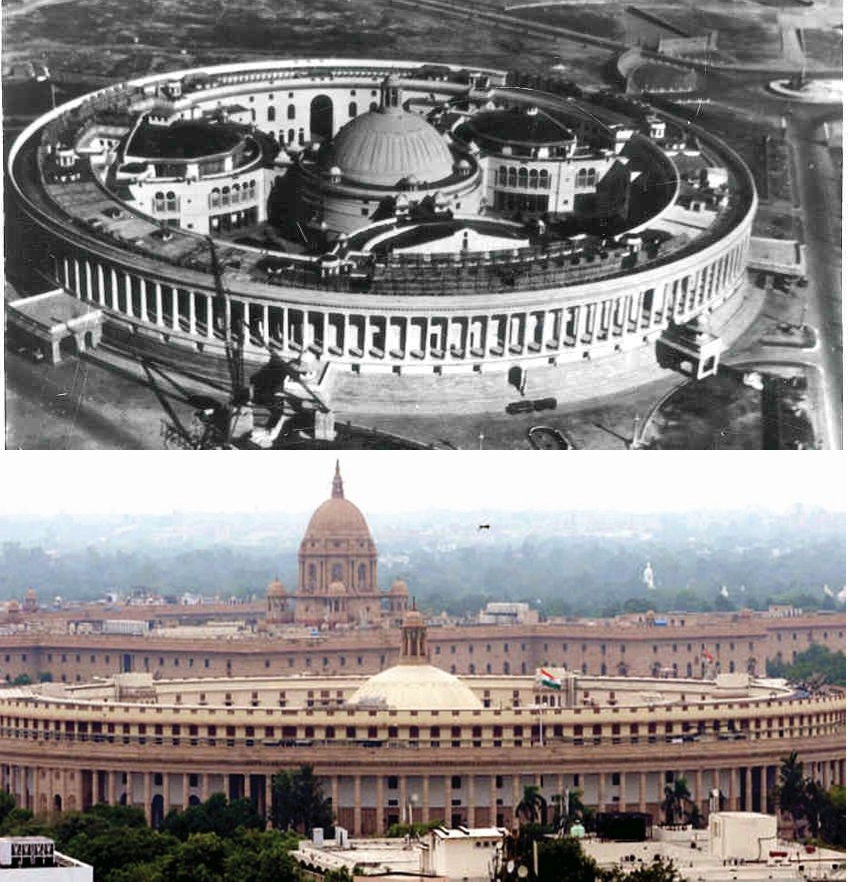
Along with that, the area around Delhi has become more earthquake-prone in recent times. But as the original drawings of the building are not available now, it not possible to certify the building as earthquake-proof now. It is notable here that two floors have been added on the top of the parliament building to make space for offices, and it has almost blocked the visibility of the central dome.
Two floors were added to the top of the Parliament House later, blocking the view of the central dome
Due to these reasons, a pressing need was felt to construct a new parliament building. Once the new building is constructed, the old one will be retrofitted and retained as a heritage building. Some functions of the parliament will remain in this building after adequate improvements are made. This includes the library, the parliamentary committee rooms etc.
How the new parliament building will look like
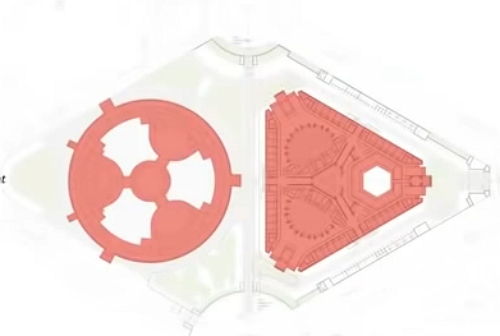
For the new parliament building, a triangular plot next to the current building has been chosen, located to the east of it. The plot currently does not have any significant structure, apart from parking facilities, police barrack etc. As the plot is triangular, the shape of the new parliament house has been chosen as triangular for maximum use of available space.
Old and new Parliament Houses
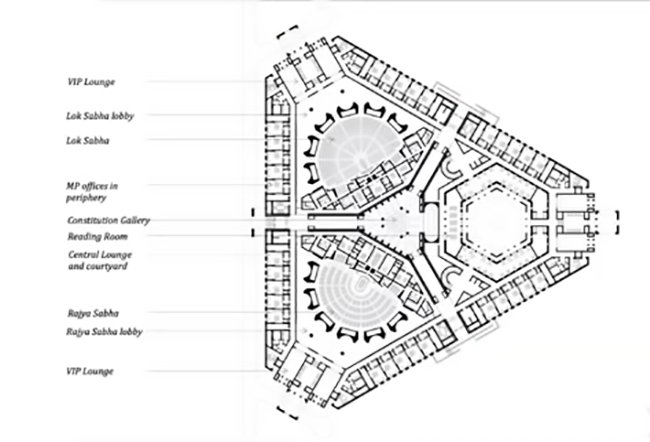
The new parliament house will have a Lok Sabha hall, a Rajya Sabha hall, a Lounge around a courtyard, and a central space called the Constitution gallery. It will not have a separate central hall, as the Lok Sabha will have enough sitting capacity hold joint sessions. In the triangular building, the Lok Sabha will be at the north-west corner, Rajya Sabha will be at the south-west corner, and the lounge will be at the eastern corner. There will be offices on the outer edges of the building, surrounding the houses and the lounge.
Layout of new parliament building (source: HCP Design)
Although the overall size of the new parliament building is almost similar to the old one, it will have much more floor space. This is because, the circular Parliament House has three large courtyards inside it, while the new one will have just a small courtyard, and most of it will be utilised for functional purposes.
Fort example, the new Lok Sabha hall will be 1315 square meter in size, compared to 470 square meter if the current one. It will also have a much larger lobby, which is almost non-existent at present. However, the office spaces for Lok Sabha will be retained same, as it has been considered sufficient. The comparative sizes of the current and proposed Lok Sabha can be viewed in the drawings below.
Size comparison of old and new Lok Sabha (source: HCP Design)
The Lok Sabha will have a capacity of 876 seats. But the seats are much larger in size, and they can actually hold 1350 persons. Therefore, it will easily accommodate joint sessions of the parliament, not requiring a separate hall for joint sessions. The Lok Sabha will also have more space for visitors on the gallery on the first floor.
The interior of the Lok Sabha will be themed on India’s national bird peacock, and its traditional green colour will be retained.
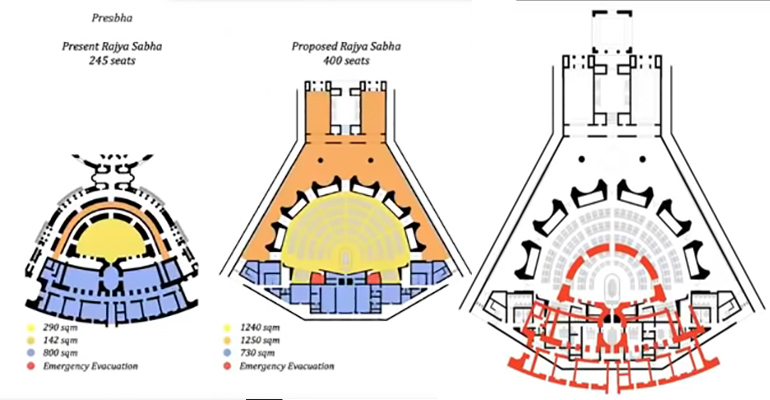
Similar to Lok Sabha, the Rajya Sabha will also be much larger in the new Parliament House. It will have 400 seats, to accommodate more members which will be necessitated due to creation of several new states over the last several years. The drawing below shows that the Rajya Sabha will be almost four times the size of the existing one, with much larger main hall and lobby areas, while office space will be slightly reduced.
Size comparison of old and new Rajya Sabha(source: HCP Design)
The interior of the Rajya Sabha will be themed on India’s national flower lotus, and its traditional red colour will be retained.
For seating arrangement in both houses, there will be individual benches for two members, with proper desk in front of them. But the seats are large enough for three persons, which will enable holding of joint sessions in the Lok Sabha hall.
The technology will also much improved, with modern touch interfaces on the desks to help run a paperless digital parliament. The interiors will be built while considering acoustic aspects, so that viewers viewing live proceedings will have much better sound experience.
On the eastern corner of the triangle, the lounge will be located on the ground floor, and dining facilities will be located on the first floor. There will be an open courtyard at the centre of the lounge.
A small library will be located next to the lounge, towards the inside of the building. It will be a place for people to sit and work on their notes etc. The main library of the parliament will remain in its current place.
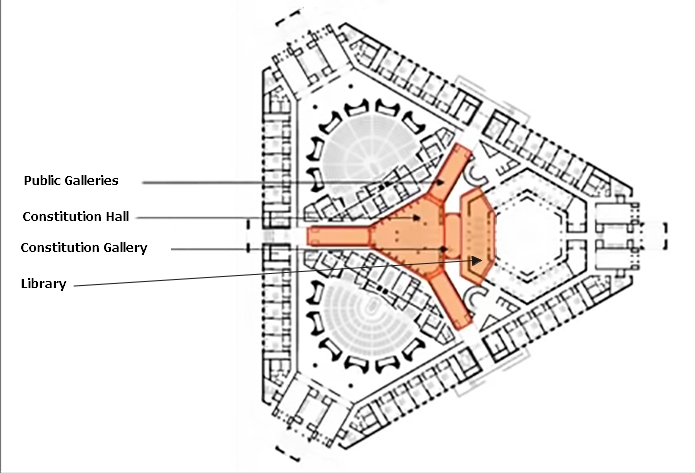
The central space of the building, a triangular shape, with arms leading to entrances, will be called the Constitution Hall. The three entrances that lead to this central hall will be public galleries, where some important materials related to the parliament and the republic will be located.
Constitution Hall (source: HCP Design)
The Constitution Hall below the central dome will have sculptures and portraits of parliamentarians, and other images representing various aspects of India. To the east of Constitution hall, a space will be created called the Constitution Gallery. The original constitution of India will be displayed here.
On the plot north to the parliament, chambers for the parliamentarians will be built. It currently has some ministry offices, which will be moved to the central secretariate to be built under the central vista project.
The need for Central Secretariate
The second part of the central vista project is the central secretariate, to house the offices of all ministries in one location. At present, the North Block and South Block houses some ministries, while several other buildings added later in the area hosts several other ministries. But despite that, a large number of ministry offices are located outside the central vista area, scattered across the city of Delhi.
Out of the 51 ministries of the union govt, which have around 51,000 employees, 22 ministries are located inside central vista, with around 41,000 employees. The remaining ministries and their around 10,000 employees are located outside this area. This causes lots of movement in the city contributing to traffic, and also causes waste of time in inter-ministerial works.
A large number of offices outside Central Vista are located in rented places. According to govt sources, an amount of around Rs 1000 crore is paid every year for the rents of ministry offices in private buildings. This cost is one of the major reasons of the Central Secretariate project.
The Central Vista area also houses several establishments that are not needed in the area. There are army barracks and defence offices where around 9000 defence personnel work.
How the Central Secretariate will look like
The Central Secretariate project aims to place all the offices of the union govt in the Central Vista area. For this, the secretariate offices of various ministries of the government will be housed in new secretariate buildings in the area, while the defence establishments will be moved out. This will result in net addition of only 1000 people, as while 10000 people will come in, 9000 will go out.
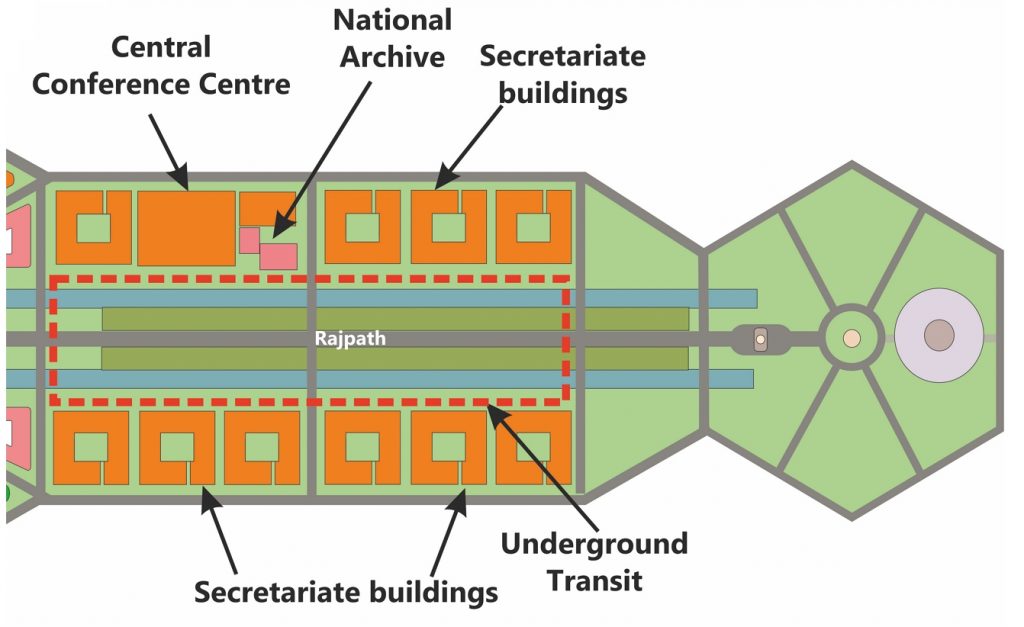
The Central Secretariate will include 10 identical buildings. A conference hall and the national archive will also located in the area.
Proposed Central Secretariat (OpIndia Image)
The secretariate buildings will be rectangular Doughnut shaped buildings, with a large courtyard in the middle. Trees will be planted in the courtyard. They will be built on four plots on the both sides of Rajpath, which are currently fenced plots where various buildings are already located. This means, no extra open space will be used to build the secretariate, it will use the existing used space.
The outside of the buildings will be stone-clad, to match with the existing Lutyens buildings, but the inside facing the courtyard will be covered with glass and steel. The height of the multi-storied buildings will be similar to existing buildings, and they will not be taller than the India Gate, which is 42 meters high.
In three of the four plots, three buildings each will be constructed. But the fourth one, the North-East plot, will have only one secretariate building. In the rest of the place in the plot, a Central Conference Centre will be built. At present, there is no proper conferencing facility at the Central Vista, although the Vigyan Bhawan has some limited facilities. The Conference Centre will have all the modern conferencing facilities.
The existing National Archive building, an old heritage structure, is also part of this plot, which will be retained. A new structure will be added to the National Archive to cater to the growing need.
The central secretariate will be a mass transit-oriented project, as an underground transit system will be constructed which will connect all the buildings with the nearby metro networks. It will be a rectangular underground transit path around the Central Secretariate, using which a shuttle service will move people in and out of the secretariate buildings, eliminating the need of cars for a large number of people.
Facilities for vice President and Prime Minister
At present, the Vice-President’s house is located inside the Central Vista, near the India Gate circle, and it falls within the proposed site for Central Secretariate complex. While the Prime Minister’s residence is outside the Central Vista area. Under the project, both these residences will be moved next to the Rashtrapati Bhawan.
The Vice President’s resident will be built in front of the Rashtrapati Bhawan on the northern side, to the north of the North Block. This plot currently has hutments housing army barracks and offices, which will be moved out.
The Prime Minister’s resident will be located directly opposite to the Vice President’s house, in front of Rashtrapati Bhawan and to the south of South Block. This site also houses hutments which will be moved out. Both will be similar buildings, maintaining the symmetry of the area. Facilities for SPG will be built next to the PM’s house.
To the east of PM’s house, in the diamond-shaped area, the Prime Minister’s Office will be built, along with a garden. This plot is directly opposite to the diamond-shaped plot with the new and old Parliament houses on the other side of Rajpath. This plot also presently has army offices, training colleges etc which are not needed in Central Vista. At present, the PMO is located inside the South Block.
Here is the complete layout of the Central Vista project.
Complete layout of Central Vista project (OpIndia Image)
Relocation of non-secretariate establishments
In order to build the new secretariate buildings, the existing buildings will have to be demolished. These include Shashtri Bhawan, Udyog Bhawan, Nirman Bhawan, Krishi Bhawan, Vigyan Bhawan, Vice-President’s House, National Museum, and the Indira Gandhi National Centre for the Arts (IGNCA). The first four buildings house secretariate offices of various ministries and they will be moved to the new Secretariat complex. It may be noted that some of these buildings are already in bad shape. However, the Jawaharlal Nehru Bhawan housing the ministry of external affairs is new, which was completed in 2011.
The role of Vigyan Bhawan will be fulfilled by the new conference centre. As already mentioned, a new residence for Vice President will come up near North Block. For the IGNCA, a new building will be built in front of the Hyderabad house on the other side of Rajpath. It will be built to look similar to Hyderabad house, but will have an extended section. The present IGNCA has a small structure as the project was not completed.
The most significant movement will be of the National Museum, currently located between Jawaharlal Nehru Bhawan and Vigyan Bhawan on the southern side of Rajpath. The National Museum will be moved to the Heritage buildings of the North Block and South Block. As these two buildings will become empty after the ministry offices move to the new secretariat complex, the National Museum will be relocated to the twin buildings. Thus, these two original buildings built by Lutyens will be available to the general public for unhindered access.
In the plans for the Central Vista project, no new structures are proposed at present at the locations where the Rail Bhawan and Vayu Sena Bhawan are located. Both are identical triangular-shaped buildings directly opposite to each other across the Rajpath, located on triangular plots. Therefore, these two buildings may be retained. On the other side of the Central Vista, on similar triangular plots next to India Gate hexagon, similar triangular buildings are proposed, although their purposes have not been specified.
Development of public areas
Apart from building new structures, the Central Vista project also includes development of the area on the both side of the Rajpath from India Gate to North and South Block buildings, which is available for public. The lawns and gardens will be improved, public amenity facilities will be added, pathways will be rebuilt. New trees will also be planted, as many trees in the area has died, and others are so old that they will die in coming years. For this, a tree species survey is being done to ensure selection of proper species of trees for planting. Specific locations will be identified to located street-side vendors who cater to visitors and tourists.
Contrary to allegations of change of land use, that public space is being used for constructing buildings, actually available public space will increase due to rationalisation of land use. At present several govt buildings have encroached upon public places, which will be freed up after the project is completed.
At present, the lawns on both sides of Rajpath are damaged every year due to the Republic Day parade, as brick and mortar stands are built on them every year, and dismantled after the event. Temporary bridges are also placed on the canals on the both sides of the Rajpath, which also damage the canals. Under the project, permanent bridges will be constructed on the canals. For the Republic Day, mobile stands will be constructed which can be easily installed and dismantled without damaging the ground.
There is also a proposal to carve out an area of approximately 50 acres from the Western end of the Presidential Estate, which will be accessible from the road that runs on the western edge of the Presidential Estate. On the other end, the Central Vista is proposed to be extended to the banks of Yamuna River, where the New India Gardens or the Nav Bharat Udyan will be built to commemorate the 75th anniversary of India’s independence.
Companies involved in the project
The master plan of the Central Vista project has been prepared by HCP Design, Planning and Management Pvt. Ltd, which had won the bid. The company is headed by renowned architect Bimal Patel, who has designed several public places, including the Sabarmati Riverfront at Ahmedabad, Central Vista project at Gandhinagar and the Mumbai Port Complex. Six companies had submitted bids, from which Patel’s company was selected.
Tata Projects has won the bid for constructing the new parliament building, quoting the lowest cost of Rs 861.9 crore. Seven companies had placed technical bids for the project, from which three were selected for financial bids, Tata Projects, L&T and Shapoorji Pallonji. Only the first two had submitted financial bids after it. The government has set a deadline of March 2022 for the project, in time for the celebration of 75 years of India’s independence.
Tenders for the rest of the project including the Central Secretariate have not been invited yet, as the govt is yet to decide on final shape of the project and demolition of existing buildings.
A Delhi court on Wednesday allowed Safoora Zargar, the out on bail accused in the Delhi Anti-Hindu Riots cases to visit her maternal home for two months for proper nursing and postpartum care of her newborn child.
According to the reports, Additional Sessions Judge Amitabh Rawat allowed Zargar to visit her maternal home in Haryana from Thursday after the prosecution did not object to it.
Jamia Millia Islamia student Safoora Zargar, who is currently on bail in the Anti-Hindu riots case had given birth to a child on October 12. The Delhi High Court had earlier granted her bail on June 23 on humanitarian grounds.
Granting her permission to visit her maternal house to carry out certain customs, the court also directed her to ‘drop-a-pin’ on Google maps, so that the investigating officer can verify her presence and location.
The court also directed her to observe all the bail conditions imposed by the high court and to appear during court hearings either physically or through online, as per the court’s directions. The high court also warned against indulging in any activity for which she is being investigated and asked her not hamper or interfere with the on-going investigation or influence the witnesses.
Safoora Zargar – one of the masterminds of Anti-Hindu Delhi riots
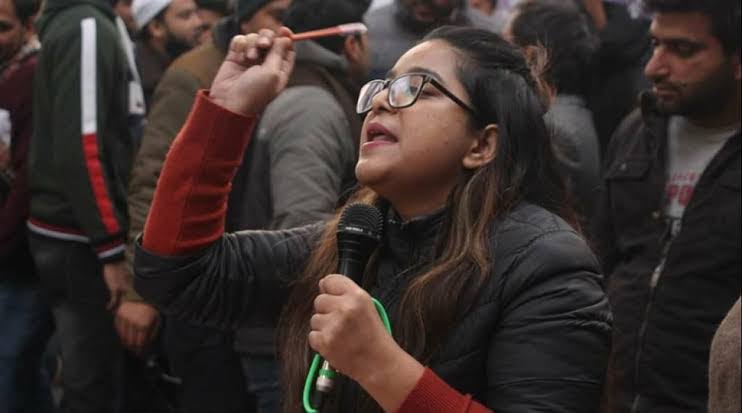
Jamia Millia Islamia student Safoora Zargar was arrested under the Unlawful Activities Prevention Act (UAPA) for her involvement in the Anti-Hindu Delhi riots. She was reportedly the general secretary of the Congress-backed NSUI’s Jamia unit.
According to the reports, Zargar was among the first two coordinators of the Jamia Coordination Committee, which was set up in December last year to protest against the Citizenship Amendment Act. The sociology student from Kashmir was an active member in Congress and its student wing National Students Union of India (NSUI).
Zargar was arrested by the Delhi Police in the month of April for allegedly leading the anti-CAA protests at the Jaffrabad metro station of Delhi in February 2020. After being denied bail on two previous occasions, the Delhi High Court had granted her bail in June this year based on humanitarian grounds.
The Delhi Police had claimed that she was part of the conspiracy to “destroy, destabilize and disintegrate the Government of India in order to compel to withdraw the Citizenship Amendment Act (CAA) and the alleged National Register of Citizens”.
A British mother-of-three cleared of wrongdoing after having sex with an underage body, is all poised to cash in on her infamy by sharing her images and videos on the X-rated platform OnlyFans and “share her side of the story”.
Teah Vincent, 32, had admitted to initiating sex with a 14-year-old boy—whom she claimed she believed to be older than 16 – at her home in Gloucestershire in October 2018. Vincent insisted that she thought he was 16, the legal age of the consent in the United Kingdom.
Vincent says she’d open an account X-rated website OnlyFans
Arguing in the Gloucestershire Crown Court, Vincent contended that only after they had finished having sex, the boy “panicked” and confessed to being underage.
However, Vincent was cleared of the rape charges by the court after it was informed about how the boy had lied and hidden his actual age, including on his Facebook account, where he posted wrong age and posed as an adult.
After being exonerated by the court, Vincent took to Instagram, posting, “I’m thinking about doing an OnlyFans account. People already hate me, so not much to lose,” The Sun reported.
OnlyFans is a subscription service based in London in which content creators can earn money from users who subscribe to them. It is popular among sex workers but content from other genres such as physical fitness, music and other fields are also hosted on the website by its users.
Sharing a picture of her middle finger with the link to the raunchy website OnlyFans, Vincent said, “I want to get my side out and that will be through this website.” She added that she would start posting “lots” of content on her new X-rated account after she gains enough followers, who will have to pay subscription fees to access it.
The 32-year-old woman pleads her innocence on Instagram
The 32-year-old woman ranted online on her Instagram account and called the teen a “liar”, praying that the teen’s family “gets karma”.
In an Instagram post, Vincent wrote, “I wasn’t the one lying for a bloody start. For one I’m not denying what I did was my best choice but if the guy didn’t lie to me I wouldn’t be in this situation with silly gullible people around the world having their two pence peace put in.”
In response to the barrage of criticism directed at her in wake of the rape charges levelled against her, Vincent wrote, “If only you knew the HALF of it about what happened that night and the information on the liar that accused me you wouldn’t be so judgmental.”