Home Blog Page 4795

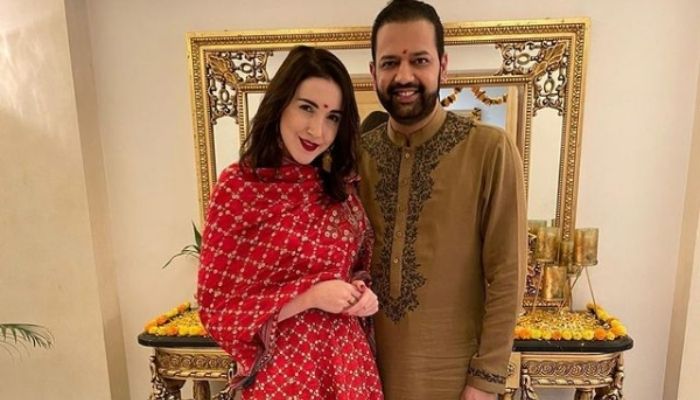
‘My wife has converted to Hindu religion’: Rahul Mahajan on his Russian wife Natalya Ilina

In an exclusive interview with The Economic Times, Big Boss star and entertainer Rahul Mahajan has revealed that his Russian wife Natalya Ilina had embraced Hinduism, following their marriage in 2018. Rahul Mahajan is the son of late BJP leader Pramod Mahajan.

While speaking about his marriage, Rahul Mahajan said, “We are like two tracks of railway. We do not interfere in each other’s matters too much and give each other space. We are not even too apart from each other. But we maintain the balance so that our marriage is on the right track.”

He added, “She is Russian and has converted to Hindu religion and I always give her the reference of Lord Shiva and Parvati. I always tell her that the husband and wife’s relationship should be like Shiv and Parvati. We keep them as our idols in our relationship. I teach her Geeta and we read a lot of mythological stuff together. I feel you really need a good destiny to find a perfect partner and family.”

Rahul Mahajan to participate in Big Boss Season 14

His third marriage with Natalya Ilina had captured the public attention in 2018 as she was 18 years younger than him. He was earlier married to Shweta Singh and Dimpy Ganguly. Rahul Mahajan rose to prominence as a participant in Big Boss Season 2 and is now set to enter the Season 14 of the reality show as a challenger. “It is a full circle because it was my first television show ever in 2008, on season two. Then I went in season eight as a challenger and this is the third time I am going in, so it is a full circle in a way – it started for me from Bigg Boss and again it is Bigg Boss now,” he stated. He had married Dimpy Ganguly in a reality TV show titled Rahul Dulhaniya Le Jayenge. The couple got divorced in 2015.

Cold chain ready, doctors, healthcare workers to be vaccinated on priority: Gujarat govt charts out map for coronavirus vaccination in state

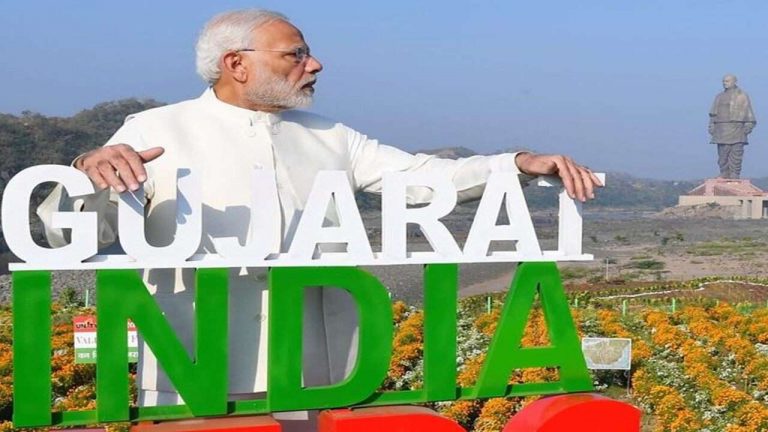
Gujarat government on Saturday informed the people on the preparedness of mass vaccination for Chinese coronavirus. Addressing a press conference, Gujarat Deputy Chief Minister and Health Minister Nitin Patel said that the cold chain infrastructure to store the vaccines is ready. He also added that as many as 4 lakh doctors, healthcare workers will be given vaccine on priority basis.

He said that as per the guidelines issued by the central government, the first priority for the vaccination would be healthcare workers including doctors and nurses. Over 3.96 lakh doctors and frontline health workers fighting Covid-19 on ground in the state will be given the first shots of vaccine whenever it is made available.

He added that 47,796 vaccination centres and 15,534 teams of vaccinators have been planned for this purpose. These details will be provided at a later point in time.

In second phase of vaccination, those who are indirectly engaged in providing help and support in Covid treatment like police personnel, home guards will be covered. Following that, citizens above age of 50 years and those under 50 years of age but with comorbidities like cancer, kidney disease and heart conditions will be given priorities.

The vaccines will be procured by the central government and the cost at which they will be made available to states will be discussed. Health being a state subject, the respective state governments can decide whether to charge for vaccination to people and at what rate.

The covid vaccine requires specific temperature for storage. Hence, bulk coolers belonging to health department of Gujarat will be used in Rajkot, Gandhinagar, Ahmedabad, Surat, Vadodara and Bhavnagar. Further, 2,500-odd primary and community health centres in Gujarat have small refrigeration facilities. He also added that over and above this, the state government will procure walk-in coolers for transporting vaccines. The Centre will be giving 169 ice-lined refrigerators and 30 deep freezers.

Covid-19 vaccines are expected to be made available by January 2021.

Coronavirus in Gujarat

Gujarat has recorded as many as 2,17,333 total coronavirus positive cases in the state. Of these, 1,98,627 have recovered. As of now, 14,642 active coronavirus cases are present in state.

Trouble for BJP in Tripura? Party’s state observer reaches Agartala to meet with dissident MLAs and resolve dispute

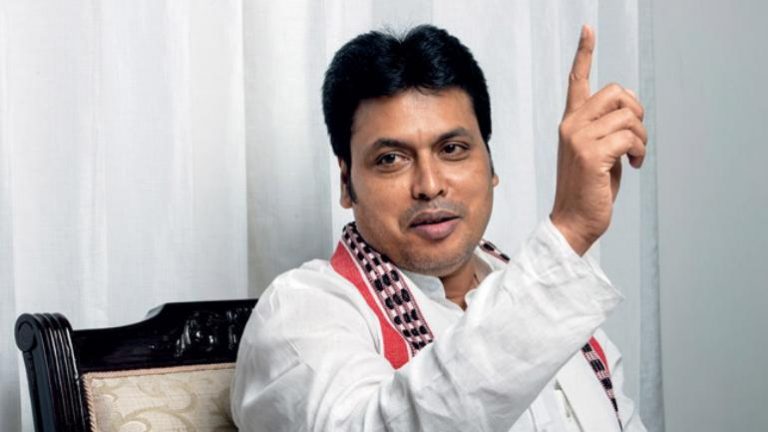
The dissidence within the BJP is Tripura does not appear to be on the verge of a resolution. Vinod Kumar Sonkar, newly appointed national secretary of the BJP and the party’s Tripura observer, has reached Agartala on Saturday to resolve the matter. Sonkar is expected to meet BJP leaders, MLAs and Ministers individually in order to understand the reasons for the dissidence.

Now, reports suggest that the dissident MLAs boycotted the felicitation programme for Sonkar on Saturday organised at Rabindra Bhawan in Agartala. The dissident MLAs, however, suggest that they were not invited to the event. The dispute has been underway for the past couple of months and the MLAs have met senior party leaders in Delhi and Guwahati.

Sonkar told the BJP leaders who had gathered, “Despite all odds, especially the Covid pandemic, the country has progressed in the past one and a half years under the current government during which the party has worked for all sections of society. Hence, the party has to follow suit.”

Reports of dissidence within the party in Tripura have been coming since the second week of October when a team of MLAs reached Delhi to meet BJP national president J.P. Nadda. The team is reported to include former state health minister Sudip Roy Barman, Asish Saha, Sushanta Choudhury, Ramprasad Pal and Diba Chandra Hrankhawl.

“Twenty-five of the 36 BJP MLAs now want a change, and a proper reshuffling in the council of ministers headed by Biplab Kumar Deb so that good governance could be delivered to people,” a member was reported to have told the media on condition of anonymity. The member alleged that “poor leadership and misrule” by Biplab Deb have ruined the BJP in Tripura, which is now “alienated from people, but lost ground could be restored with the delivery of good governance”.

Sushanta Choudhury, the former youth Congress president who had quit the party to join the BJP before the Assembly Elections in 2018, said on October, “Neither the government nor the party is moving in the right direction. All the pre-poll promises, mentioned in the party’s Vision Document, were made to be fulfilled. These should be reflected in action, but we are far away from reality. We want to highlight what is happening in the state.”

“We will apprise the central leadership of what is happening in Tripura. They would decide if they want to intervene in the issue. Our fight is not against the BJP’s ideology. We have full faith in the dynamic leadership of the prime minister and the home minister,” he added. The most prominent leader part of the dissidence is Sudip Roy Barman, son of the last Congress leader to have served as the Chief Minister in the state before the Left front stormed to power in 1993.

It is not clear yet if the dissident MLAs want to jump ship or what their precise numbers are. Some of them have said that the BJP will continue to have 36 MLAs in the state. Sonkar, meanwhile, said at the programme organised for him, “I am a prabhari only and will not be a burden to anyone. I came here to help the karyakartas ensure that the BJP remains in power everywhere – from the panchayat to Parliament.” He will meet the dissident MLAs on Sunday.

Farmer protests: In 2010, Congress-led panel had blamed the APMC system for poverty among farmers

0

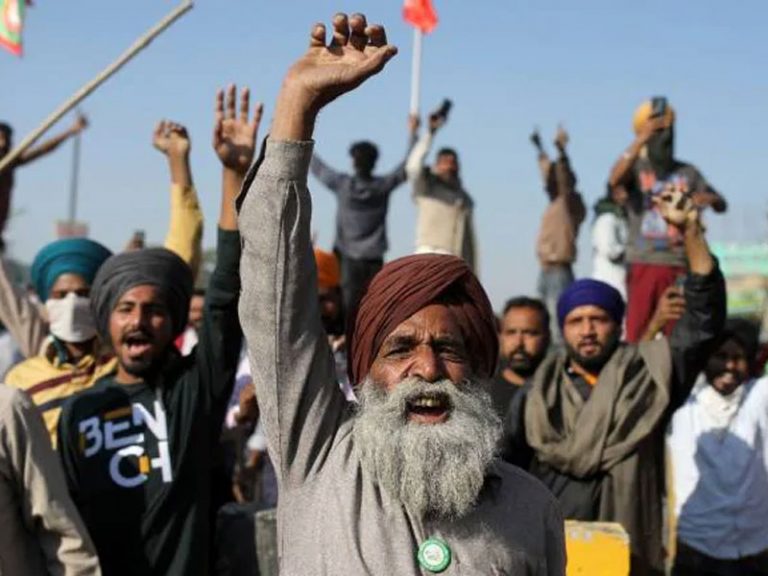
Amid ongoing farmers’ protests in Delhi, opposition parties, including Congress, have supported the farmers. The primary demand of the farmers’ unions is to take back the three newly introduced laws that are Farmers’ Produce Trade and Commerce (Promotion and Facilitation) Act, the Farmers (Empowerment and Protection) Agreement on Price Assurance and Farm Services Act, and the Essential Commodities (Amendment) Act. According to the farmers, the government is trying to end the Agricultural Produce Market Committees (APMC) system where farmers can sell their produce at Minimum Selling Price (MSP) at Mandis.

Though the government has assured MSP is not going away and the Mandi system will continue, the unions are not ready to understand. The opposition parties, including Congress, are adding fuel to the agitation by calling these newly passed laws “the black laws” and demanding the central government should take back the laws.

Congress-led Committee found irregularities in APMC system

Interestingly, according to a report published in the Guardian, it was a Congress-ruled United Progressive Alliance government that came up with suggestions of similar agricultural reforms and also started looking into the functioning of the APMCs. The Ministry of Agriculture under Sharad Pawar formed a committee comprising of agriculture and marketing ministers from 11 states.

The aim was to bring reforms in the Agriculture sector and look into the complaints regarding APMCs. The Committee found out that the APMCs were making a mockery of the system. They were not only charging high commission from the farmers but also blocking much-needed investment from the private sector. The idea behind APMCs was to benefit the farmers, but in reality, they were benefiting a selected group of people.

Ministers from Maharashtra, Assam, Uttarakhand, Andhra Pradesh and Haryana (led by Congress), Gujarat and Madhya Pradesh (led by BJP), Bihar (led by JDU), Karnataka (led by JDS), Odisha (led by BJD), and Punjab (led by Shiromani Akali Dal were part of the Committee. Harshvardhan Patil, the Agriculture Minister from Maharashtra, was the head of the Committee. A total of nine meetings were held in two years with the stakeholders, including farmers, industrialists, retailers, and cold storage owners, to investigate the reasons that were causing a blockage in the progress of the agriculture sector while keeping the farmers poor.

Observations made by the Committee

The Committee had submitted a 98-page report on January 22, 2013, where it had shared many observations that were based on the conversations with several groups during the meetings. The main point that the Committee raised was that the APMCs and intermediaries were making a major part of the income that was supposed to go to farmers. They were not allowing private investment in the agriculture sector as well.

The Committee reported, In the current system, the inefficiencies in intermediary structure result in the producer (farmer) getting only 20-50% of the consumer’s purchase value. In the United States, the farmer gets roughly 60-65 % of the price paid by the end-user.”

Using different examples, including the milk trade and poultry business, the Committee said that the milk producers and farmers were getting more than 70% of the price paid by the end consumer. The well-organized structure and supply chain made it possible for better distribution of the funds among the farmers and milk producers. However, in the agriculture sector, the farmers were getting only 25% of the price the consumer was paying for the product. The remaining 75% was minted by the middlemen. As there were insufficient markets and inadequate marketing infrastructure combined with high charges at APMCs and lack of competition, the long chain of the intermediates kept the farmers poor.

The blockade created by commission agents/traders

The Committee found that the current commission agents and traders were barring entry of any new competition in the market. As it was mandatory to get a license to own a shop or godown in the APMC market, the already existing licensed traders were acting as a major hurdle in allowing any new person to enter the market. These markets were established decades ago, and no expansion plans were ever sought to increase the capacity that became another reason for the lack of new competition. The licensed traders formed associations, and they made it next to impossible for any new person to start working in the APMC markets. The Committee suggested, “There is a need for a transparent and simple system of registration of market functionaries to simplify and revitalize the present marketing system.”

Lack of facilities

The Committee noted that only two-thirds of the markets had open auction platforms. One-fourth of the markets had drying yards. One-tenth of the markets had cold storage facilities, and one-third of the markets had grading facilities. The electronic weigh-bridges were available in a handful of markets.

The high commission charged by APMCs

As per the law, the APMCs could only collect market fees ranging between 0.50% to 2.0% of the sale value of the produce. However, the Committee found out that they were charged 1% to 2.5% in food grains and 4% to 8% in fruits and vegetables. Other charges, including purchase tax, weighing charges, and porter charges, among many others, were to be paid by the farmers. In the end, the farmers had to pay 15% in the charges.

The problems with the supply mechanism

The Committee reported that due to the problems in the supply mechanism, various commodities faced post-harvest losses. In 2009, the total post-harvest losses clocked to Rs.44,000 crore. In cereals, such losses clock to 3.9% to 6%, in pulses 4.3% to 6.1%, in fruits 5.8% to 18% and in vegetables 6.8% to 12.4%, which was adding up to the financial pressure on the farmers.

As per the report, the supply chain in India was very long, with a large number of marketing channels. Between the producers and the consumers, there were many intermediaries causing a spike in the end-price without adding any value to the product. Hence, farmers became the biggest sufferers. The Committee said, “The share of farmers in consumer’s price is very low, particularly in perishables, due to a number of intermediaries, lack of infrastructure and poor holding capacity. In order to provide remunerative prices to the farmers, there is a need to reduce intermediation by providing alternative marketing channels like direct marketing, contract farming, etc. for which reforms in the agricultural marketing system are necessary.”

The importance of private investment

The Committee said that the current system was causing unnecessary delays in the transportation of the agricultural produce at the border checkpoints. It was creating artificial barriers making it harder to manage the movement and storage of the commodities. The government has to come up with a plan to provide a free hand to the private sector so that it can own, operate, and manage the market or create an alternate marketing system. The government should concentrate on formulating the rules and regulations for such markets rather than controlling them.

In the report of the Working Group on Agricultural Marketing Infrastructure for the XII Five Year Plan 2012-17, it was assessed that there was a requirement of more than Rs.14,56,000 crore for development in the agriculture sector. A major chunk of this investment was expected from the private sector. To ensure the investment was encouraged, the government was required to form a regulatory and policy environment. Also, the report suggested a need to encourage the procurement of agricultural commodities directly from the farmer’s field. The states have to amend their marketing laws to ensure the barriers caused by the APMC Act and other regulations are removed for storage and smooth supply of the commodities across the country.

Kisan Union asked to abolish APMC last year

In 2019, Bharatiya Kisan Union had repeatedly asked for the removal of intermediaries in Punjab to ensure direct payments to farmers. Their 2019 manifesto had asked for the abolition of APMCs and the Essential Commodities Act. They had supported the then Union Minister for Consumer Affairs, Food and Public Distribution, late Ram Vilas Paswan, after he demanded Punjab Chief Minister Captain Amarinder Singh to do away with the Arhitya system and ensure direct payment to farmers as is provided under the new farm laws. The same BKU has now been hailing Punjab CM Amarinder Singh for ‘rejecting’ the new farm laws that have provisions to free farmers from the clutches of middlemen.


Diljit Dosanjh’s UK manager linked to 9 companies opened and dissolved since 2011. Are UK based Khalistan sympathisers hijacking farmers’ protest?

0

It has been evident for quite some time that the concept of Khalistan, an ethnoreligious state for Sikhs, has more support in western countries than it seems to have in India itself. Naturally, there are attempts that have been made and are being made to sow the seeds of anarchy in our country from abroad. At the thick of it have been entertainers with significant following who have employed extremely disturbing rhetoric to hijack the ‘farmer protests’ to further the Khalistan agenda.

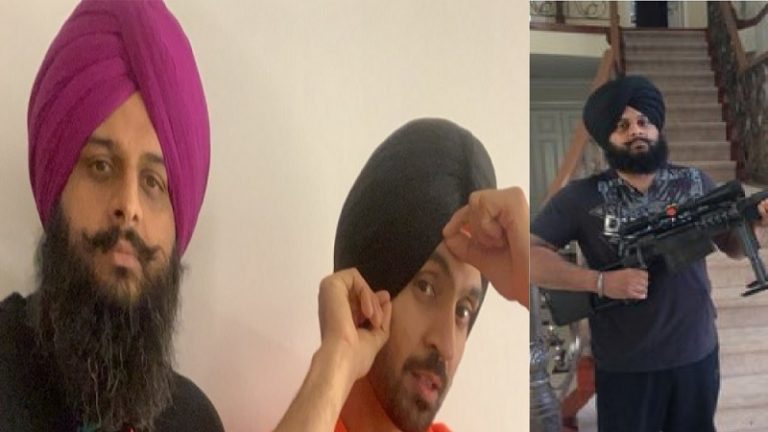
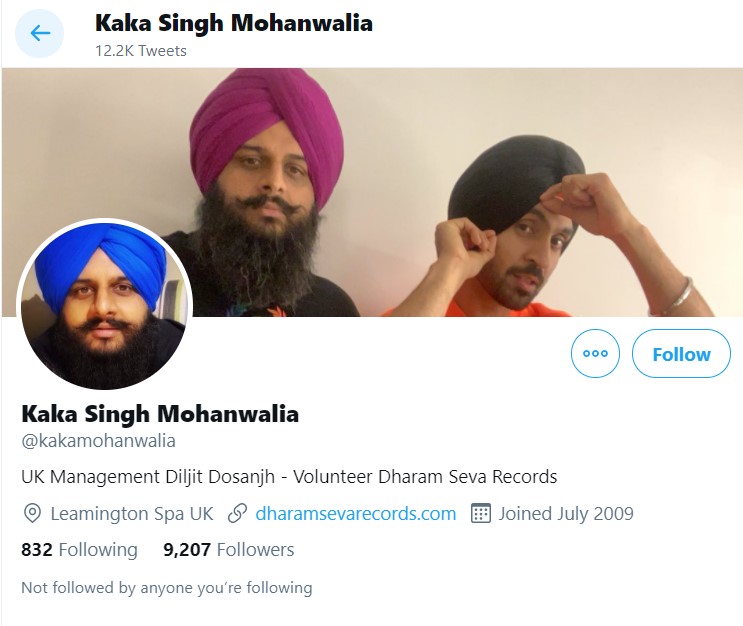
In this context, a Twitter user, Vijay Patel, made some interesting observations about one Kaka Singh Mohanwalia alias Sundip Singh Khakh, manager of popular entertainer Diljit Dosanjh and a volunteer at Dharma Seva Records (DSR). Additionally, the details of a series of companies have surfaced which appear rather intriguing on the face of it.

Twitter handle of Kaka Singh Mohanwalia

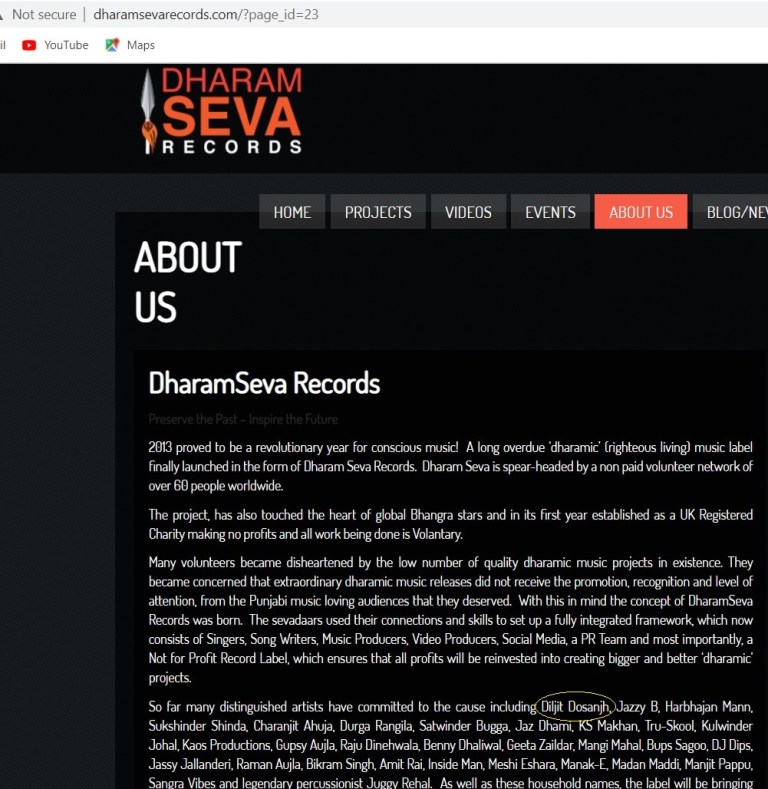
Dharma Seva Records is a registered charity at the United Kingdom for the promotion of “extraordinary dharamic music”. Its website states, “The sevadaars used their connections and skills to set up a fully integrated framework, which now consists of Singers, Song Writers, Music Producers, Video Producers, Social Media, a PR Team and most importantly, a Not for Profit Record Label, which ensures that all profits will be reinvested into creating bigger and better ‘dharamic’ projects.”

According to the website, entertainers such as Diljit Dosanjh, Jazzy B, Harbhajan Mann, Sukshinder Shinda, Charanjit Ahuja, Durga Rangila, Satwinder Bugga, Jaz Dhami, KS Makhan, Tru-Skool, Kulwinder Johal, Kaos Productions, Gupsy Aujla, Raju Dinehwala, Benny Dhaliwal, Geeta Zaildar, Mangi Mahal, Bups Sagoo, DJ Dips, Jassy Jallanderi, Raman Aujla, Bikram Singh, Amit Rai, Inside Man, Meshi Eshara, Manak-E, Madan Maddi, Manjit Pappu, Sangra Vibes and Juggy Rehal have “committed to the cause”.

DSR website

Twitter user Vijay Patel, who tweets under the username @vijaygajera, pointed out that there are a series of companies with names similar to DSR and the same individuals appear to be at important positions in these companies as well. Furthermore, in certain cases, they share the same address. Interestingly, however, these companies were often dormant and shut down within a few years.

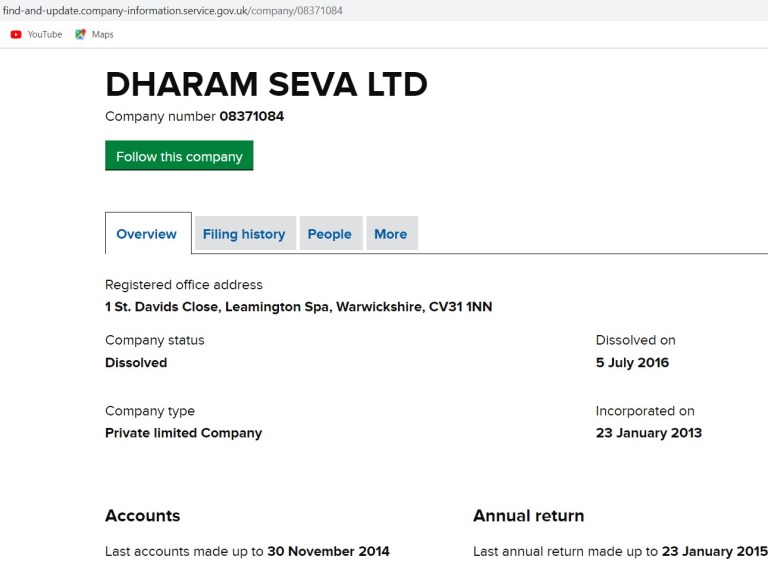
First, there is the Dharam Seva Limited (DSL) which was established in January 2013 and dissolved in July 2016. Its address is listed as ‘1 St. Davids Close, Leamington Spa, Warwickshire, CV31 1NN’. The officials at this company are listed as Sundip Singh Khakh and Gurmeet Singh.

Dharam Seva Ltd

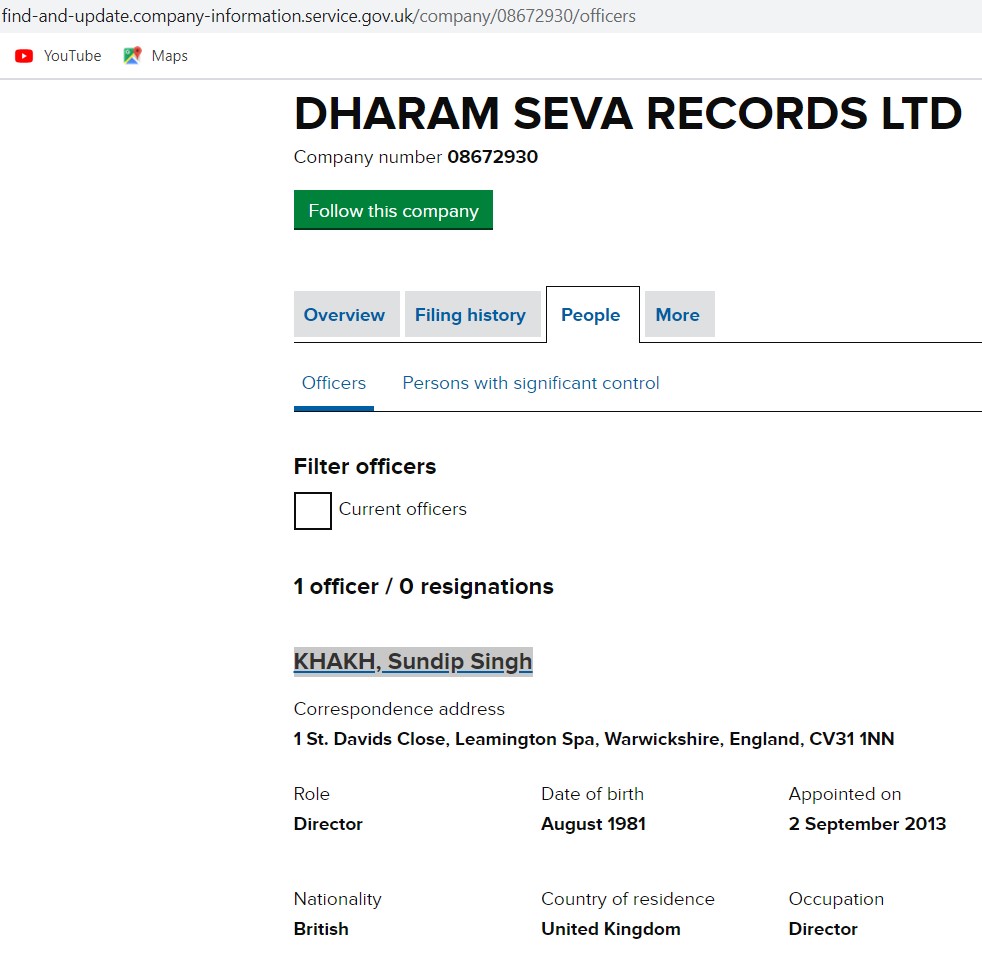
Then, there is Dharam Seva Records Limited (DSRL) which was established in September 2013 and dissolved in May 2016. The address is the same as tDSL and Sundip Singh Khakh is the director at this company.

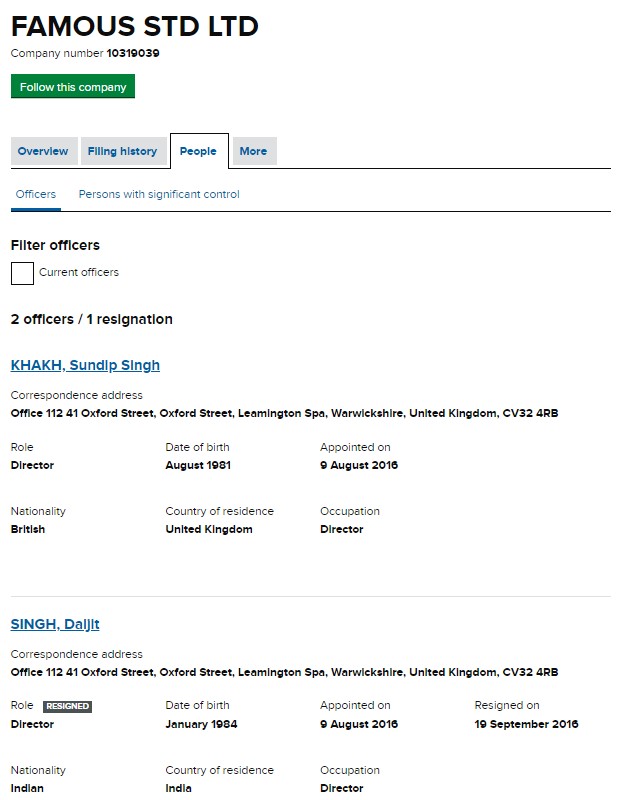
Sundip Singh Khakh is also an official at the Famous STD Ltd (FSL) along with one Daljit Singh. This company was established in August 2016 and dissolved in January 2018. An interesting to note here is that Daljit Singh was born in January 1984, the same month Diljit Dosanjh was born in. Daljit Singh resigned as the director from the company a month after it was established.

FSL

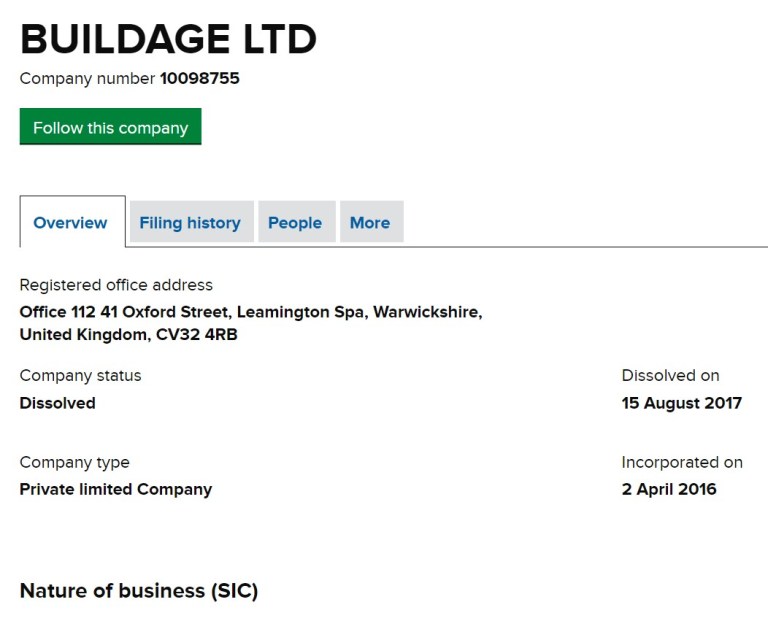
A fourth company is ‘Buildage Ltd’ where Sundip Singh Khakh is a registered official at the company along with Baljit Singh and Amrit Singh. This company had the lifespan of a little over a year. It was incorporated in April 2016 and dissolved in August the next year.

BL

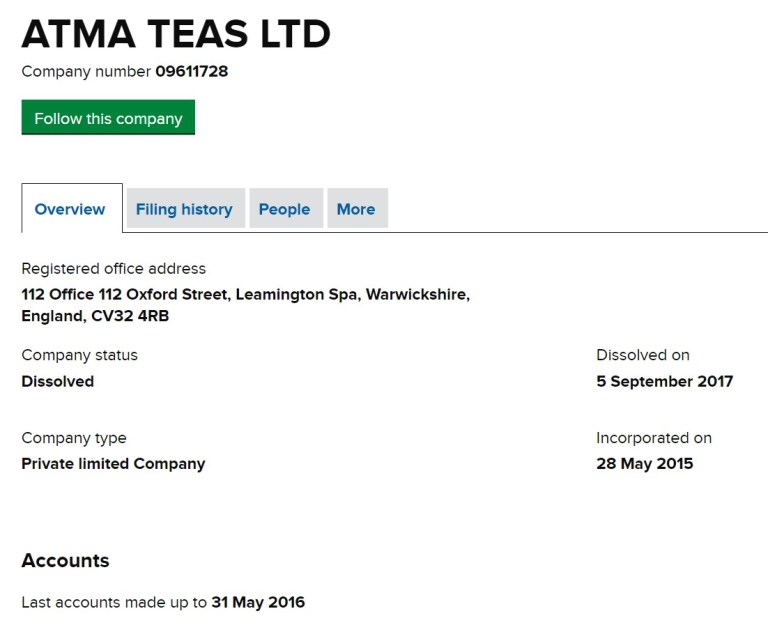
The next is the Atma Teas Ltd (ATL) which was incorporated in May 2015 and dissolved in September two years later. It is registered at the address ‘112 Office 112 Oxford Street, Leamington Spa, Warwickshire, England, CV32 4RB’, the same address as the previous two companies, FSL and BL.

ATL

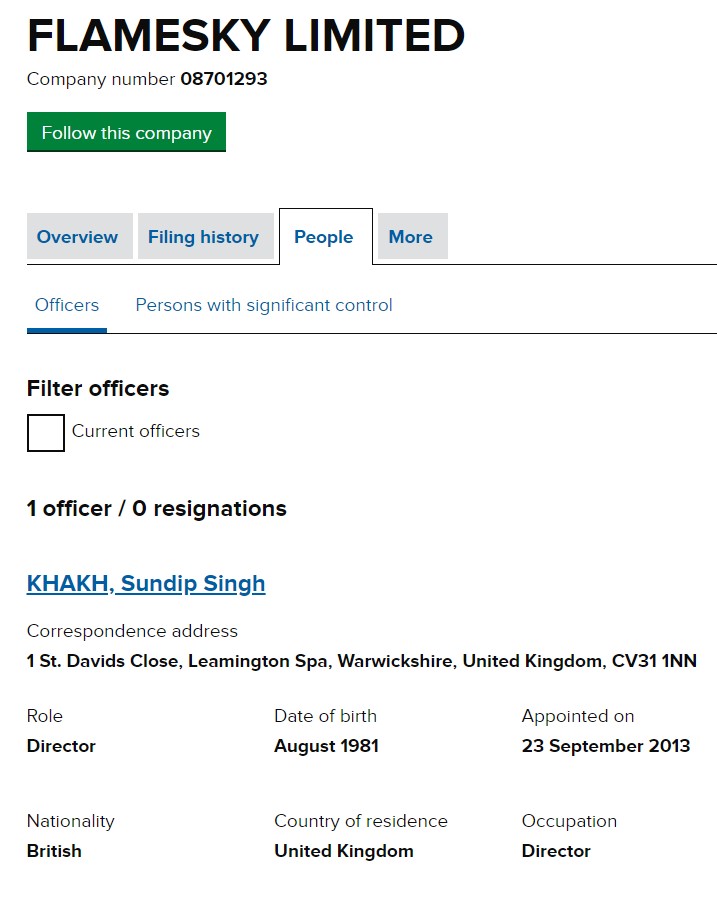
The sixth company is the Flamesky Limited (FL) which is registered at ‘1 St. Davids Close, Leamington Spa, Warwickshire, United Kingdom, CV31 1NN’, the same as DSL. It was established in September 2013 and dissolved in May 2015.

FL

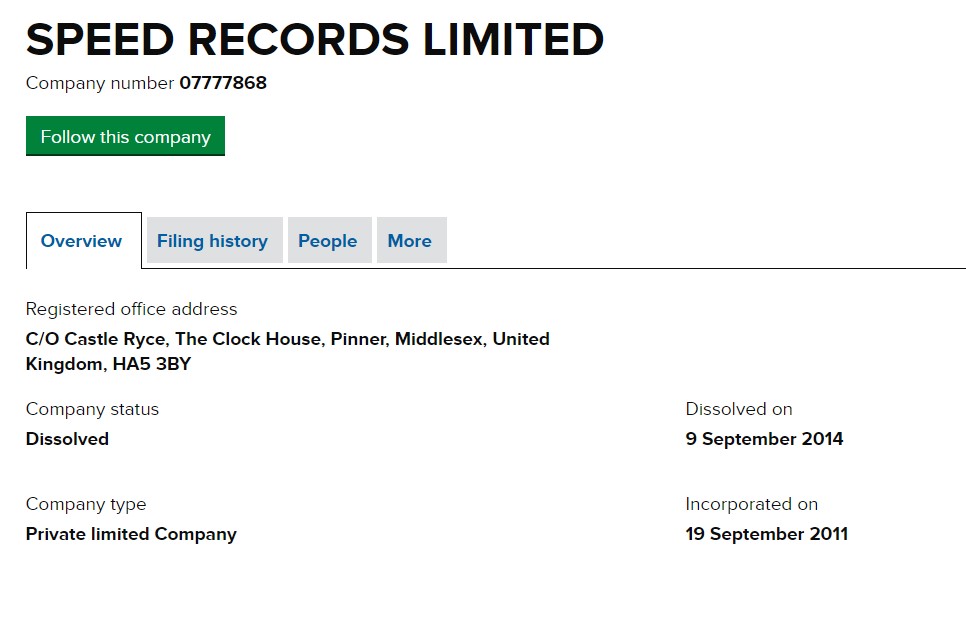
Sundip Singh Khakh is also an official at Speed Records Ltd (SRL) with two others. It was incorporated in September 2011 and dissolved the same month in 2014.

SRL

Apart from these companies, Vijay Patel spoke of two other companies ‘SPEED UK RECS LTD’ और ‘SPEED UK RECORDS LTD’ as well. Sundip Singh Khakh is associated with both these companies which were established in 2015 and dissolved in 2015. The Twitter user alleged that Kaka Singh Mohanwalia is Sundip Singh Khakh and is using his Trust to instigate farmers and youth.

It is pertinent to mention here that In June 2020, a demand for an FIR against Diljit Dosanjh was raised after he was seen supporting Gurpatwant Pannu’s and Sikhs for Justice (SFJ) demand for Khalistan. Ludhiana MP Ravneet Singh Bittu had urged Chief Minister Captain Amarinder Singh to order that FIR’s be filed in every police station of the state against singer Diljit Dosanjh and two others. Diljit Dosanjh has also been very vocal amidst the ongoing farmer protests.

Saradha Scam: Kingpin Sudipta Sen writes to PM Modi, CM Mamata Banerjee from jail alleging top politicians received money from him

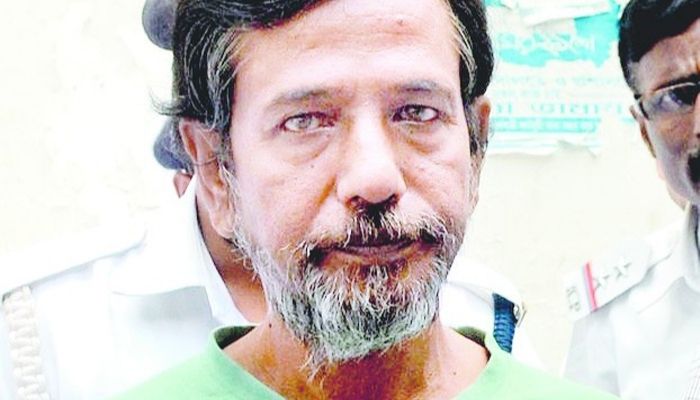
In a new development in the infamous Saradha scam case, former Chairman Sudipta Sen has written a letter to Prime Minister Narendra Modi and West Bengal Chief Minister Mamata Banerjee naming heavyweight politicians across party lines, who have allegedly been benefitted by the Ponzi scheme. The Saradha scam broke out into the open in 2013 when a ponzi scheme run by the Saradha Group, a consortium of over 200 private companies, collapsed after collecting hundreds and thousands of crores from over 15 lakh investors.

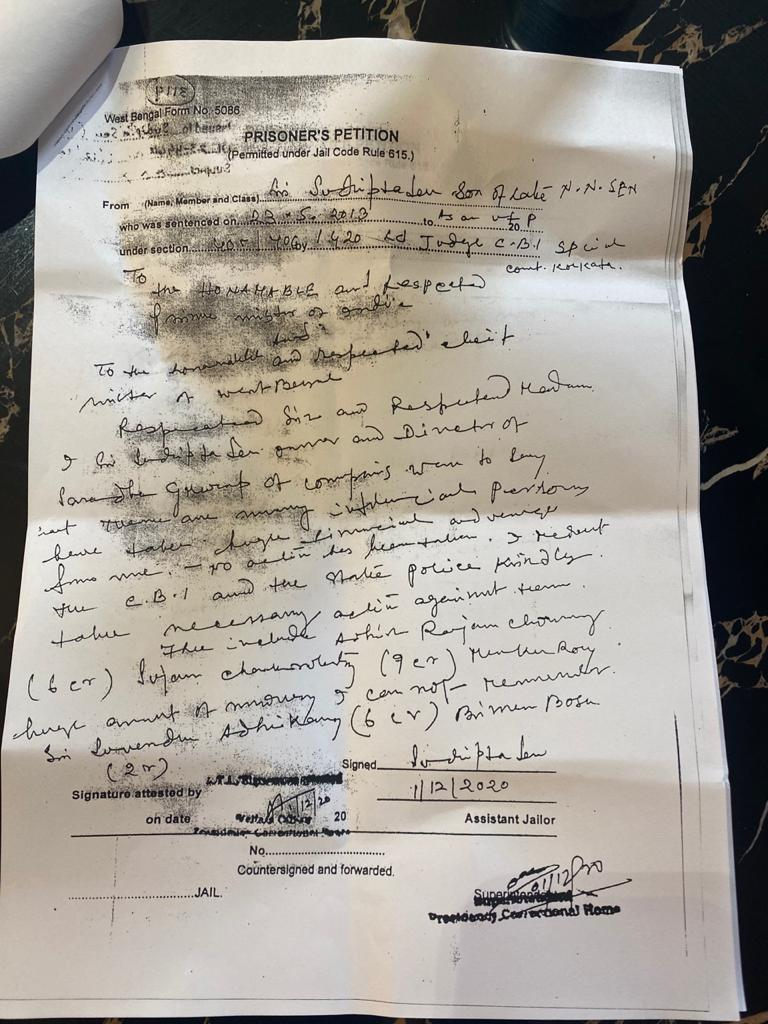
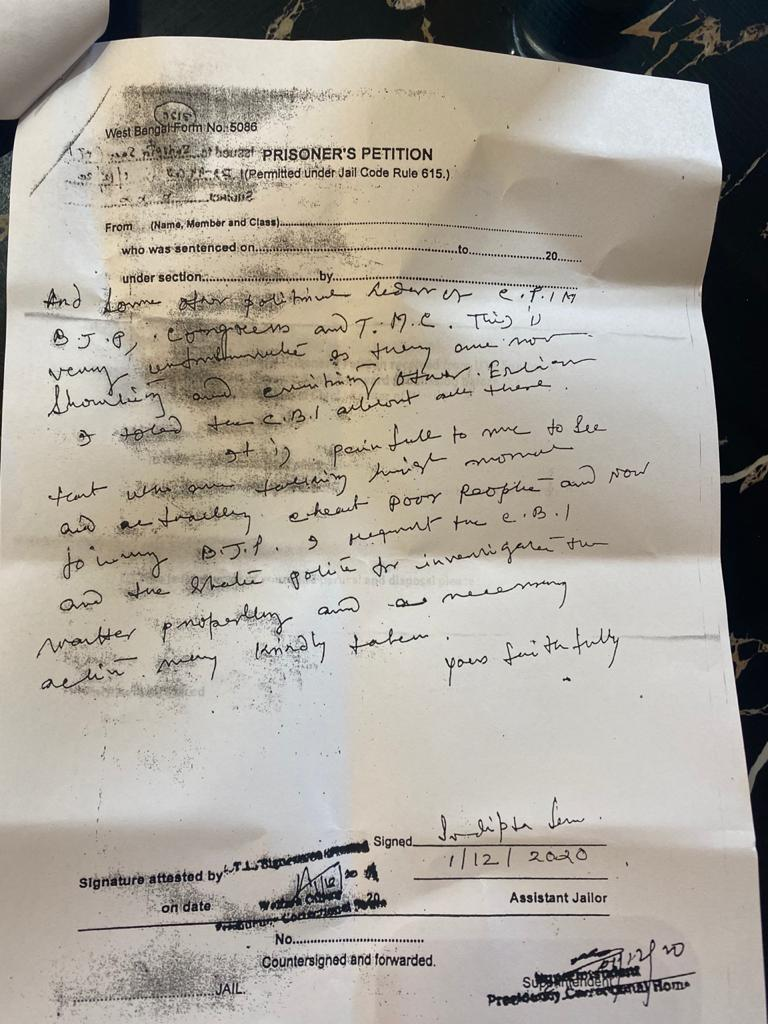
On December 1, Sen wrote a handwritten letter from his cell in the Presidency jail, detailing the amounts allegedly taken from him by several politicians belonging to the Congress, BJP, Trinamool Congress and the CPI (M). In a 2-page letter, the Saradha kingpin had alleged that MP and President of West Bengal Congress Committee, Adhir Ranjan Chowdhury, had received ₹6 crores from him. He also claimed that CPI (M) leaders Sujan Chakraborty and Biman Bose had been illegally benefitted to the tune of ₹9 crores and ₹2 crores respectively.

Letter by Sudipta Sen (Page 1)

While naming former TMC MLA and now BJP leader, Mukul Roy, Sudipta Sen alleged that he is unable to recollect the amount of a ‘large sum of money’ that Roy had taken from him. He also said that the rebel TMC MLA Suvendu Adhikary had also taken ₹6 crores from him. The former Chairman of the Saradha group has expressed disappointment over inaction against the said politicians, who have remained scot-free, despite having been a party to the financial scam.

Letter by Sudipta Sen (Page 2)

He also requested the CBI and the State police to taken action against the politicians he has named in the letter. Sudipta Sen further wrote that those who have been the beneficiaries of the Ponzi scheme have been his most vocal critics in the public sphere. In his letter, he had also alleged that it pained him to see that those who ‘cheated’ the public are now joining the BJP.

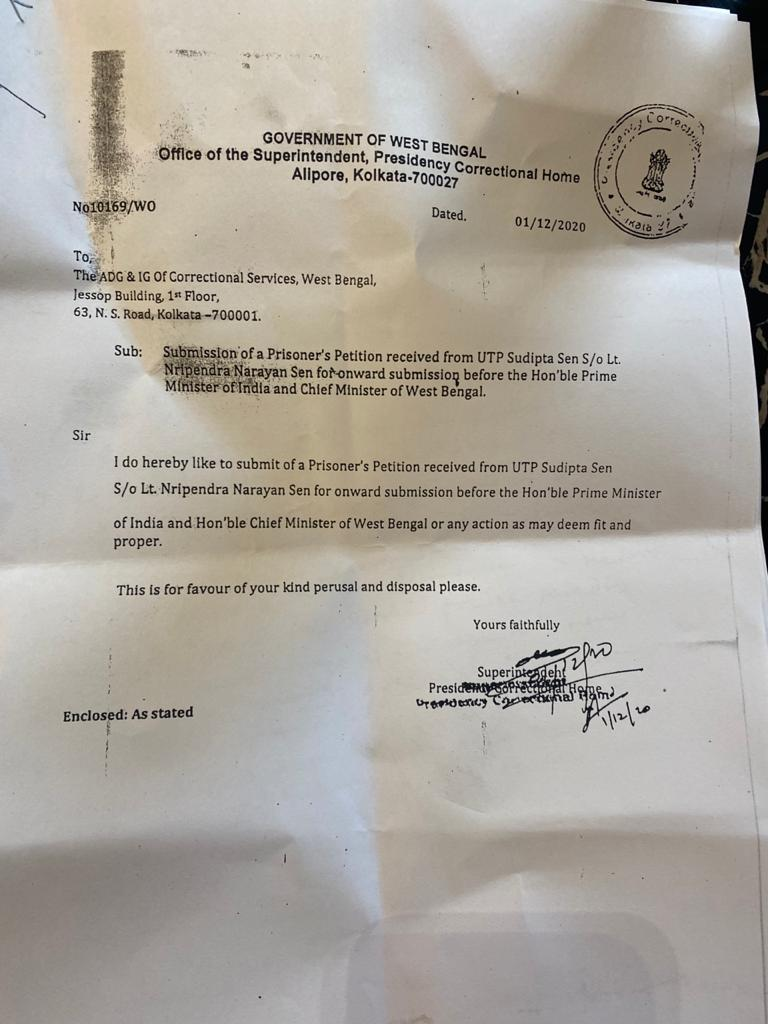
Letter by Superintendent of Presidency jail

Presidency Jail Superintendent Debashis Chakraborty informed, “Sudipta Sen wrote a letter, in accordance with the rules of the jail. It has been sent to the higher authorities.” Reportedly, his letter has now reached the Chief Minister’s Office.

Sudipta Sen, in a confessional letter to the CBI in 2013 had made several claims with far-reaching political implications. In the letter, Sen claimed that he had not only paid hefty pay-out amounts to Trinamool leaders but also influential Congress leader in Assam Matang Sinh, and senior Congress leader P. Chidambaram’s wife Nalini Chidambaram.

Political reactions to the scandalous revelations of Sudipta Sen

While the Trinamool Congress is yet to comment on the matter, the Congress party and the CPI (M) has dismissed all the charges. They alleged that it is an attempt to tarnish the name of their parties ahead of the Vidhan Sabha polls. They also questioned his silence for over 7.5 years and the timing of the letter. Threatening to take legal action, Adhir Ranjan Chowdhury stated, “TMC government is in a state of panic. Therefore, it is trying to malign the image of Congress and CPI (M) leaders. The accused in the Saradha scam is the mouthpiece of the party… Are they making him (Sudipta Sen) do this?”

CPI(M) leader Sujan Chakraborty said that even after 7 years of investigation, the CBI and the State government did not find anything against me. “Now, an ‘anguished’ Sudipta Sen is writing to the Prime Minister and Chief Minister. I don’t know if this will help to improve his image. However, his nefarious plans are now caught red-handed, “he stated.

it is interesting to note that while Sen has named TMC leader Suvendu Adhikary, he is rumoured to be joining BJP soon. Adhikary has already resigned from the ministry.

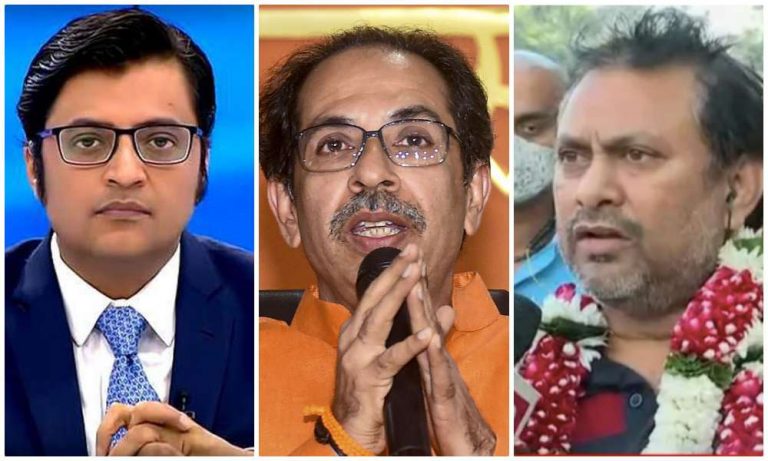
“Republic is undaunted”: Arnab Goswami challenges Uddhav Thackeray after Republic’s Ghanshyam Singh says he was beaten while in police custody

Republic channels’ AVP Ghanshyam Singh, who was released from Taloja jail last evening, revealed how the Mumbai Police officials beat him up while in custody.

Singh was released after being kept in custody for 26 days. When asked whether the police tried to put pressure on him or harass him while in custody, Singh revealed how the police tried to pressure him to accept that they (Republic TV) ‘committed something’. Singh was arrested by Crime Branch of the Mumbai police, in connection to the fake TRP scam, which has turned into a witch-hunt against Republic TV and its editor-in-chief, Arnab Goswami.

Singh was humiliated and paraded like a terrorist, with a black cloth covering his face, before being produced in court. Upon his release, Singh said that when he was in police custody, on the very second day they (Mumbai Police) beat him up. He said that the cops wanted to “know” how Republic TV had “manipulated” TRP. “I was denying because we have not done anything. I told that we have not done anything and I have not done anything. They tried hard but after that the beat me,” he said.

Speaking on Singh’s release, Arnab said that it gives him unparalleled pride and joy to see him out of police custody.

Giving a message to Maharashtra Chief Minister Uddhav Thackeray, Arnab said, “You have failed once again. How many times will you publicly fail before the entire country because you are with falsehood? Uddhav Thackeray, see the smile on Ghanshyam’s face and learn a lesson. See the roar of ‘Satyamev Jayate’, he said.

Arnab further added that for as long as Thackeray remains with falsehoods, he is destined to fail. “To the powers that be. To the arrogant powers that be. Ghanshyam stands for everything that Republic is. He comes out of jail after 26 days and says he has come out stronger,” he said. He further said that despite all the unspeakable methods used by Thackeray government to coerce Republic, they will now bow down.

“Republic is undaunted,” Arnab said. “To those in the Maharashtra government and the Mumbai Police, I stare at you in the eye and say we don’t cut deals. We don’t trade off. We fight and we win. And we are winning,” he said.

Fake TRP scam

On the 8th of October, Mumbai Police Commissioner Parambir Singh held a press conference where he categorically stated that Mumbai police have been alerted about a new racket involving false television rating points (TRP). Parambir Singh had specifically mentioned that Hansa Research had filed a complaint with the police. Interestingly, in this FIR that was filed by Hansa Research, Republic TV was not mentioned even once. The channel that was mentioned several times was India Today.

Madhya Pradesh Government proposes conversion-regulation law, conversion by fraud to be punished with ₹1 lakh fine and 10 years of imprisonment

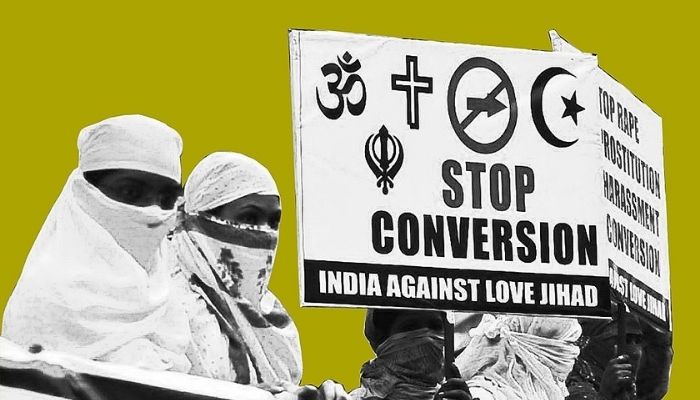
On Saturday, Madhya Pradesh Chief Minister Shivraj Singh Chouhan held a meeting to discuss the proposed law aimed at preventing religious conversion using fraudulant means, aimed at checking the growing menace of grooming jihad. He stated that the law is a part of the government’s Beti Bachao Abhiyan and will be taken up in the Winter Session of the Assembly.

Under the new conversion-regulation law, a marriage solemnised for the sole purpose of conversion will be deemed null and void. All such cases will be probed by police officers, not below the rank of sub-inspectors. The offence will be non-bailable, cognizable and can be taken by Sessions Court. Moreover, the burden of proof will lie on the accused. Individuals, willing to convert to another religion, will have to make a declaration before the District Magistrate at least one month in advance.

Section 3 of the proposed law states, “no one can convert or attempt to convert either directly or otherwise anyone else from one religion to another by use or practice of misrepresentation, force, undue influence, coercion, allurement or by any fraudulent means or by marriage.” Individuals found violating the law can be imprisoned for 1-5 years and fined not less than ₹25,000. The quantum of punishment for the accused will increase if the victim is a minor or a member of the Scheduled Caste or Scheduled Tribe.

A provision has been laid out to imprison such individuals from 2-10 years and fined up to ₹50,000. Similarly, attempts to hide one’s religion for fraudulently solemnising a marriage will be punishable by 3-10 years imprisonment and a fine of at least 50,000. At the same time, individuals found involved in mass conversions will be punished with ₹1 lakh fine and between 5-10 years imprisonment. A complaint can be lodged against the accused by the parents and blood relatives of the victim.

If a person wants to undergo religious conversion, he or she would need to make a declaration before a district magistrate at least a month in advance under the proposed law.

Uttar Pradesh government gets assent for anti-conversion law

Days after Yogi Adityanath government cleared the draft ordinance against unlawful religious conversions, the Uttar Pradesh Governor Anandiben Patel also gave her assent to the ordinance. Soon after the approval by the Governor, the ordinance has come into force in the state. The Uttar Pradesh Prohibition of Unlawful Conversion of Religion Ordinance, 2020 had been promulgated with the approval of the Governor, an official said.

The new anti-conversion law of the Uttar Pradesh government is aimed at preventing forced conversions under the pretext of love and marriage. “There were more than 100 incidents reported in which forceful religious conversion was being done. Also, it was reported religious conversions were going on in the state using deceitful means. So to make a law on this becomes an important matter of policy now,” UP Cabinet Minister Siddharth Nath Singh had earlier remarked. Under the new law, a jail term of 1-5 years is awarded to the accused (extended to 3-10 years in case of SC/STs) and a fine of ₹15,000 (₹25,000 in case of SC/STs). Moreover, the offender’s proven guilty for mass conversion will attract a jail term of 10 years.

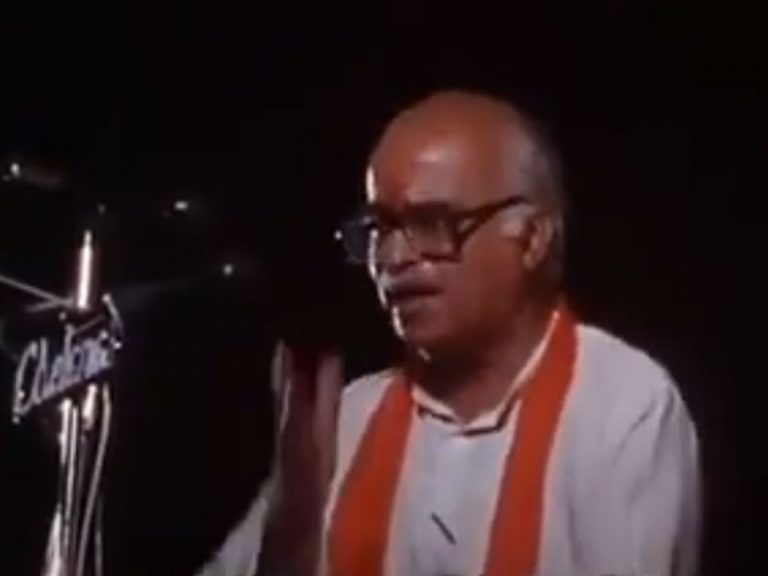
‘Mandir Wahin Banayenge’: Watch the iconic speech by L.K. Advani vowing to rebuild temple at Ayodhya

No one can forget the role of veteran leader L.K. Advani in the Ram Mandir movement. His iconic speeches from the famous Rath Yatra has been making rounds on the 28th anniversary of the Babri Masjid demolition. In 1990, during the Rath Yatra, Advani replied to those including then-Bihar CM Lalu Prasad Yadav, who asked him to cancel his march towards Ayodhya and go back.

Advani said, “Log kehte hain ki aap adalat ka faisla kyun nahi maante? Adalat kya is baat ka faisla karegi ke yahan par Ram ka janm hua tha ke nahi hua tha? (People say, why don’t you respect the court’s verdict? Can the court decide whether Ram was born here or not?)

Urging the leaders to not stop the advancement of Rath, Advani said, “Aap se to itni hi asha hai ke beech mein mat pado. Raaste mein mat aao. Kyunki yeh jo Rath hai, Lokrath hai. Janata ka Rath hai. (We only wish that you do not try to interfere. Don’t come in our way. Because this Rath is the will of people and that of people).”

He said that the Rath has left Somnath to perform the Karseva at the Ram Janmabhoomi. “Mandir Wahin Banayenge. Usko kaun rokega. Kaun si sarkar rokne wali hai?” (We will build the temple on that spot. Who can stop this? Which government can stop this?),” Advani had said. The Rath left Somnath on 25th September 1990 and reached Ayodhya on 30th October 1990.

Bhavya Ram Mandir will be ready in two years

On December 6, 1992, the disputed structure at Ayodhya was demolished by the Karsevaks in an unplanned event. The land dispute case finally came to an end on November 9, 2019, when the Supreme Court of India gave the judgment in favour of Ramlalla Virajman and allowed the construction of Bhavya Ram Mandir. The construction of the temple was started in August 2020, and it is expected to complete in two years. 

From ‘Mandir Wahin Banayenge’ to ‘Mandir Wahin Bann Raha Hai’, we have come a long way.

Coronavirus: Air India Express in dock after crew member allowed to fly despite testing positive

In a shocking revelation, a 44-year-old female crew member of Air India Express was allowed to operate, despite having tested positive for the deadly Coronavirus infection, reported Hindustan Times.

On November 12, the said woman had undergone an RT-PCR test and the results of the test were reportedly available with the airlines around 50 minutes before her scheduled flight from IGI airport in Delhi on November 13. Hindustan Times reported that she was nevertheless allowed to operate throughout the day on the same sector. She even returned to her base station in Delhi by a return flight. The woman was quarantined only the following day.

Air India Express conceded that the crew member had tested positive and has now launched a probe in the case. Although the airlines did not inform whether the woman was symptomatic or asymptomatic, a spokesperson informed, “The said flight was a Delhi-Madurai flight, for which a pre-flight RT-PCR test is not mandatory. The head crew member was to operate the international sector the next day and hence had taken the test. However, she was quarantined from November 14 onwards and no other fellow crew members when tested were found infected. We will, however, surely investigate the matter.”

Allegations of data manipulation against Air India Express

Hindustan Times, cited sources, to allege that Air India Express officials tried to tamper with the report data of the infected crew member in their system. The source had claimed that the officials removed the information about the employee undergoing an RT-PCR test on November 12. As such, there would be no proof of the airline being privy to her condition, if the report wasn’t accessed. “Tampering already logged in data is illegal,” the source emphasised.

Violation of Coronavirus protocols, alleges aviation expert

Another source informed that crew members in domestic flights are allowed to operate, even if their test reports are awaited to avoid shortage of staff. The official stated that it was ‘unacceptable’ to allow an infected crew member to fly, just a days before her scheduled international flight on November 14. Aviation expert Vipul Saxena stated that such an exercise, on the part of the airlines, was a violation of Coronavirus protocols and that last-minute changes to scheduling for crew members was possible. “A detailed inquiry must be initiated to check the symptoms of the head crew member and also whether she was forced to take the flight,” he added.

Hong Kong bans Air India flight for fortnight

Hong Kong in November had banned Air India flights from arriving in the country after a few passengers onboard testing positive for coronavirus. The ban, fifth time since August this year, was in place till December 3. While scheduled flights remain suspended, the Air India has been allowed to operate special flights under the Vande Bharat mission with counris where it has Air Bubble pact in place.