Home Blog Page 4809

London: South Hall’s Havelock Road, named after British general who fought Sikhs, renamed as Guru Nanak Road

0

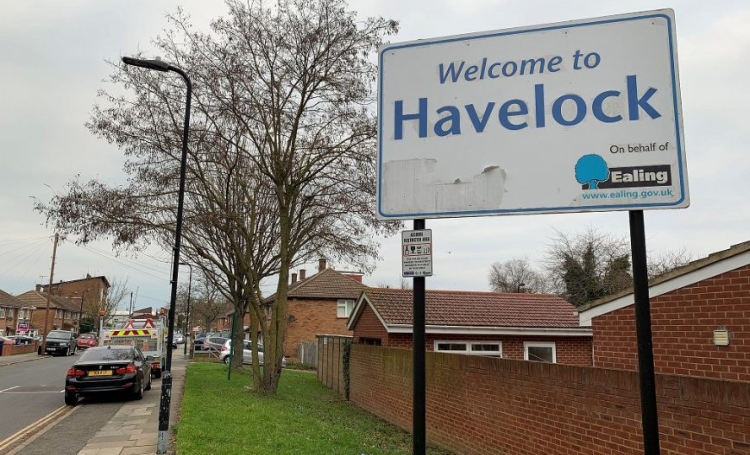
A part of the famous Havelock Road in London’s Southall district will be renamed after Guru Nanak, announced the Ealing Council, the local authority for the London Borough of Ealing that includes Southall, last week. The decision was taken by the cabinet on July 14 to celebrate and commemorate Guru Nanak, the founder of Sikhism. According to the Ealing Council, the part of Havelock Road between King Street and Merrick Road will be renamed ‘Guru Nanak Road’. 

Southall is home to a large Sikh community and the largest gurdwara outside India, Gurdwara Sri Guru Singh Sabha, is also located on Havelock Road.
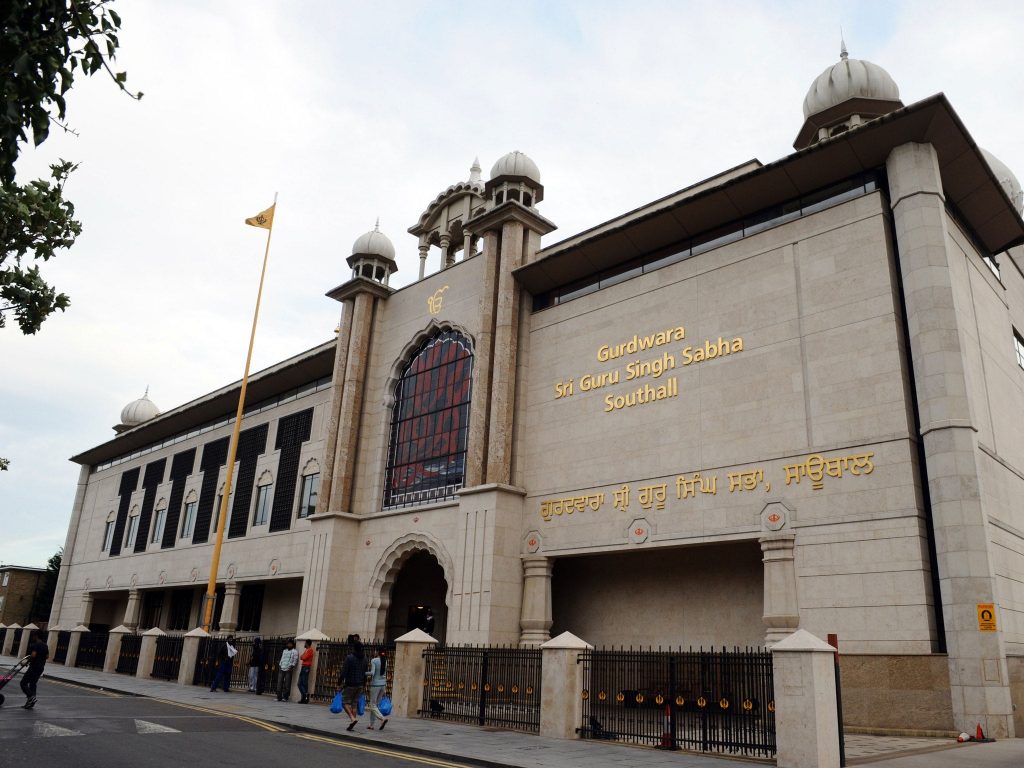
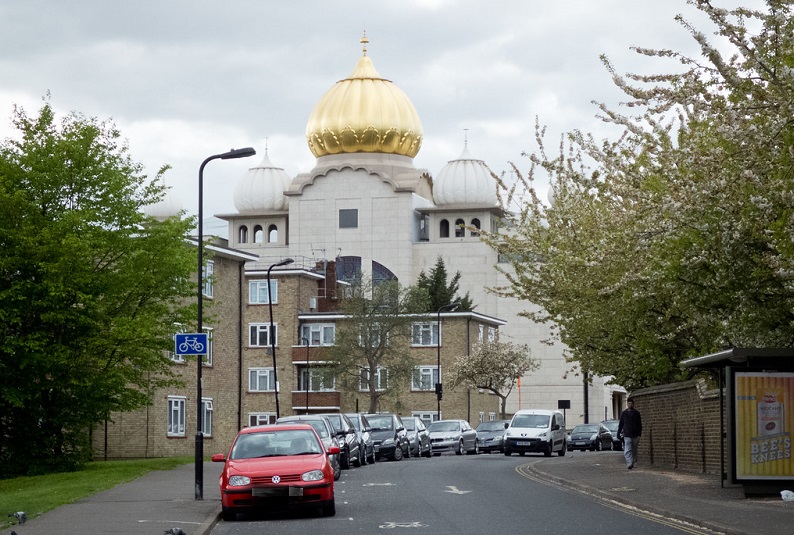
Image sourec: Edward Anderson on Twitter

While announcing the decision the cabinet noted: “Following the decision by the cabinet on 14 July to celebrate and commemorate the founder of Sikhism, Guru Nanak, it has been decided to make an order to rename part of Havelock Road,” furthering that such decisions should ‘respect and balance cultural and historical identities, sensitivities and heritage’.

Authorities concerned carried out consultations directly with Southall residents and businesses which will be directly impacted by the move, including the Royal Mail. The decision was taken in accordance with the Street Naming Protocol. The cabinet said that the name change will come into effect early in 2021 and the council will be writing to households, businesses and organisations impacted in advance of the change.

Havelock Road in Southall, London was named after colonial British general Sir Henry Havelock

The Havelock Road is named after the colonial British general Sir Henry Havelock of the East India Company who is known to be responsible for the death of many freedom fighters during the Sepoy Mutiny in Cawnpore (now Kanpur) in 1857.

Before that, he had participated in several wards in British India. Havelock took part in the First Afghan War in 1839, the Gwalior campaign against the Maratha forces in 1943, and after that, he had taken part in the Sikh wars in 1945-46. The First Anglo-Sikh War was fought between the Sikh Empire and the East India Company during that period in and around the Ferozepur district of Punjab. It had resulted in Sikhs losing significant parts of Punjab to the East India Company, apart from being forced to pay an indemnity of 15 million rupees.

1857 Sepoy Mutiny

The revolt of 1857 was the conscious beginning of the Independence struggle against the colonial tyranny of the British. There are various names for the revolt of 1857 – India’s First War of Independence, Sepoy Mutiny, etc. The revolt began on May 10, 1857, at Meerut as a sepoy mutiny. It was initiated by sepoys in the Bengal Presidency against the British officers.

Hundreds of sepoys were bayoneted or fired at in a frenzy of British vengeance. British soldiers, led by Major General Sir Henry Havelock, killed several freedom fighters in Allahabad, Kanpur and Lucknow on November 24, 1857. After crushing India’s first freedom struggle, the Britishers named many islands, towns and cities in the names of British army officers. An island in Andaman was also named after Major General Sir Henry Havelock.

In December 2018, the Havelock Island in Andaman was renamed as Swaraj Deep, under the leadership of PM Narendra Modi, as a tribute to Netaji Subhas Chandra Bose. Bose had hoisted the Indian flag at Port Blair on December 30, 1943, and proclaimed the Andaman and Nicobar Islands as territories liberated from British rule. He had subsequently named Andaman Island as Shaheed and Nicobar Island as Swaraj.
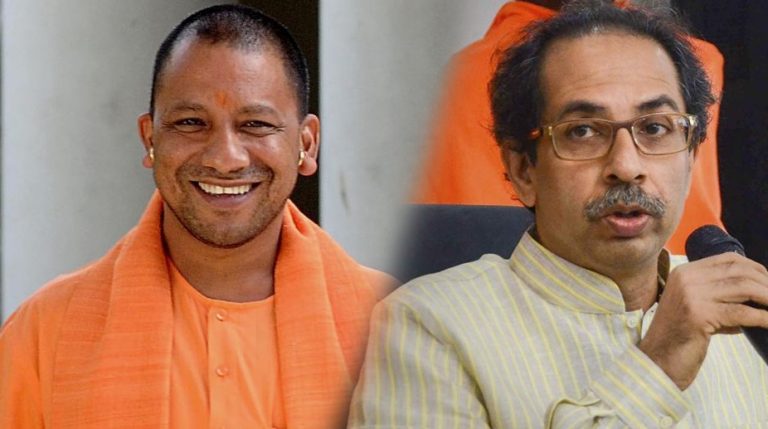
Yogi Adityanath to visit Maharashtra to attract investments to UP, Uddhav Thackeray says will not let anyone forcibly take away businesses

Uttar Pradesh Chief Minister Yogi Adityanath is set to visit Maharashtra tomorrow to encourage industrialists and celebrities to make investments in the state. CM Yogi is first expected to visit the Bombay Stock Exchange (BSE) to attend the listing of Lucknow Municipal Corporation bonds. He will also meet the top executives of several companies including Tata group, L&T, Hiranandani etc. Lucknow is the first north Indian city to release the bond of its municipal corporation. Municipal corporations of Ghaziabad, Varanasi, Kanpur Nagar and Agra are also expected to release their bonds soon.

In order to attract investments for the upcoming Film City in Uttar Pradesh, CM Yogi will meet celebrities from the Mumbai film industry to encourage them to invest in the state. Celebrities who are expected to meet the Chief Minister include actors Randeep Hooda, Jimmy Shergill, filmmakers Subhash Ghai, Rajkumar Santoshi, Boney Kapoor, Bhushan Kumar, Neeraj Pathak, Tigmanshu Dhulia and trade analysts Taran Adarsh, Komal Nahta. Grakhpur MP Ravi Kishan is also expected to be part of the meeting.

This year in September, CM Yogi had announced that country’s biggest film city will come up at Gautam Buddh Nagar in Uttar Pradesh. In the same month, CM Yogi had held a meeting via video conference with representatives from the film industry regarding the Film City. The state government has identified 1000 acre land for the project.

Maharashtra CM irked by CM Yogi’s visit

Annoyed by CM Yogi’s visit to Maharashtra, Chief Minister Uddhav Thackeray today warned him that he would not allow anyone to “forcibly” take businesses away from the state. However, Thackeray clarified that he was not jealous of anyone’s progress if it happened through ‘competition’. Speaking at an event the Maharashtra CM said, “We are not jealous if someone progresses, we do not have any problem with someone’s progress if one competes. But if your are going to forcibly take anything away, then of course, I won’t let it happen and you (industrialists) will not be willing to go”.

CM Yogi’s decision of setting of country’s biggest Film City in Uttar Pradesh did not go down well with the Maharashtra CM who had taken a veiled dig at CM Yogi saying that attempts to shift the film industry would not be tolerated.

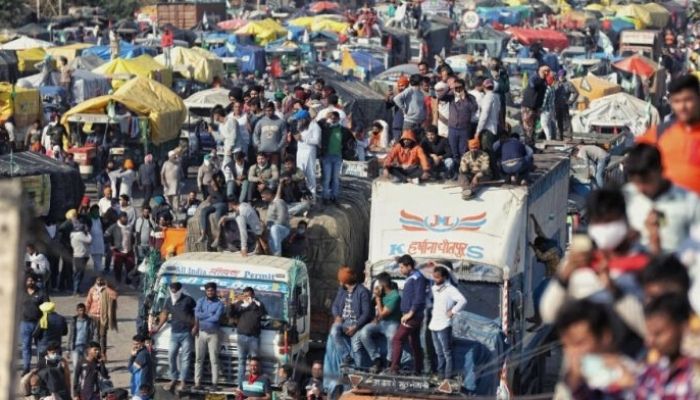
Blocked roads, shut shops, water scarcity: Delhiites suffer due to farmer protests while the state govt welcomes the protesters

With the ‘organic’ anti-farm law agitation intensifying across Delhi and the National Capital Region (NCR), Delhiites are faced with insurmountable inconvenience. The residents of Delhi have become the scapegoat in the tussle between the ‘farmers’ and the Union government. While the protestors remained unresolved in their demands, Delhiites have been facing an array of issues, starting from traffic woes, to unavailability of potable drinking water and loss to local businesses. While the citizens of the city are suffering due to the farmer protests, the Delhi govt is actually supporting the protests and providing them with various amenities to enable them to continue holding the city for ransom for more days.

Owing to the farmer agitation, the Delhi police closed the Tikri and Singhu borders for traffic movement. The cops also increased the checking of vehicles, leading to clogged roads and ‘serpentine queues’ of vehicles. Besides, alternate routes between Haryana and Delhi also remained jam-packed. While talks between the protestors and the government are underway, the Delhi police placed concrete barriers at all entry points to Delhi from Haryana and Uttar Pradesh.

“Tikri border is closed for any Traffic Movement. Badusarai and Jhatikara Borders are open only for two-wheeler traffic. Available Open Borders to Haryana are following Borders – Jharoda, Dhansa, Daurala, Kapashera, Rajokri NH 8, Bijwasan/Bajghera, Palam vihar and Dundahera,” the Delhi traffic police stated in a tweet on Tuesday.

It further added, “Singhu Border is still closed from both sides. Please take an alternate route. Traffic has been diverted from Mukarba Chowk & GTK road. Traffic is very very heavy. Please avoid outer ring road from the signature bridge to Rohini & Vice versa, GTK Road, NH 44 & Singhu border.”

Local businesses take a major hit amidst farmer agitation

On Sunday, ABP News reported that several shops have been forced to remain shut along the Singhu border, thereby causing severe loss to local businesses. Due to the farmer agitation, most shops remained closed in the area, except for a few eateries. The shopkeepers are witnessing inconvenience due to delay in delivery of goods and significantly lower footfall of customers. An employee at a local store, Rahul Jha, narrated, “For the past 4-5 days, even if we open our shops for sometimes, we shut our shops even if a small thing happens… The biggest problem is that we are neither receiving goods nor able to sell it (to customers). And our stock is depleting.”

( Video Credits: ABP News )

Common men suffers as water tankers stop delivery

On Monday, ABP News also reported that owing to farm agitation, people are deprived of potable drinking water near Tikri border. The Delhiites, who would depend on free water supply from tankers, had to suffer as tanker services were disrupted due to intensified protests and border closure. As such, people in the area are now forced to buy water amidst the economic distress. It is important to mention that the tap water is non-drinkable and cannot be used for cooking. Despite the economic hardship, the local residents are now forced to spend ₹20-₹30 per day on drinking water.

The farm laws

In September 2020, the Central Government announced three new agriculture sector reform laws named Farmers Produce Trade and Commerce (Promotion and Facilitation) Act, 2020, The Farmers (Empowerment and Protection) Agreement on Price Assurance, and Farm Service Act, 2020, and The Essential Commodities (Amendment) Act, 2020. The main aim of these reforms is to provide a better platform for the farmers to sell their produce.

Simultaneously, several clauses protect farmers’ rights on how they want to sell the crop, timely payments, and more. Despite several clarifications by the Central government that the MSP provisions will remain as is, opposition parties have repeatedly indulged in spreading misinformation and accused the government of trying to end MSP provision. PM Modi had come down heavily on the parties opposing the farm laws on September 18 and said those who had kept farmers tied to restrictions for decades are now lying about agricultural reforms.

As Justin Trudeau interferes in India’s internal politics, ‘liberals’ invoke ‘Howdy, Trump’ event to again spread lies on PM Modi

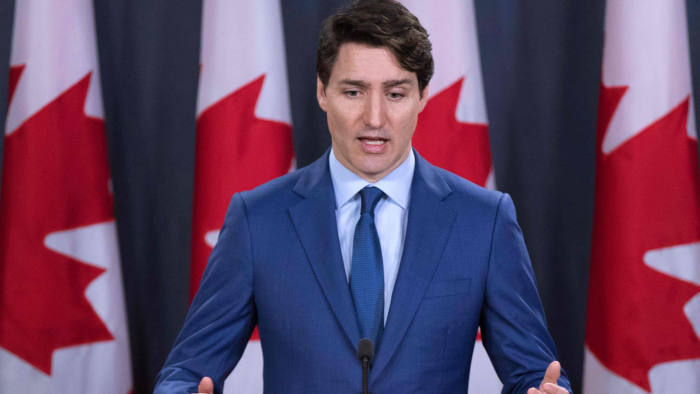
Unwarranted comments by Canadian Prime Minister Justin Trudeau on the ongoing farmers’ protest has attracted sharp reactions from India after he became the first world leader to comment on the issue. India dismissed the remarks calling it “ill-informed and unwarranted, especially when pertaining to the internal affairs of a democratic country,” external affairs ministry spokesperson Anurag Srivastava said.

While, in a terse message, India asked the Canadian leaders to refrain from commenting on India’s internal matter and maintain the sanctity of diplomatic conversations, the so-called liberals jumped on to the opportunity to once again invoke the ‘Howdy, Trump event’ and reweave the lies associated with the event, peddled by them when Joe Biden was declared the 46th president-elect of the United States.

Remark from Justin Trudeau gets the ball rolling for the anti-Modi brigade

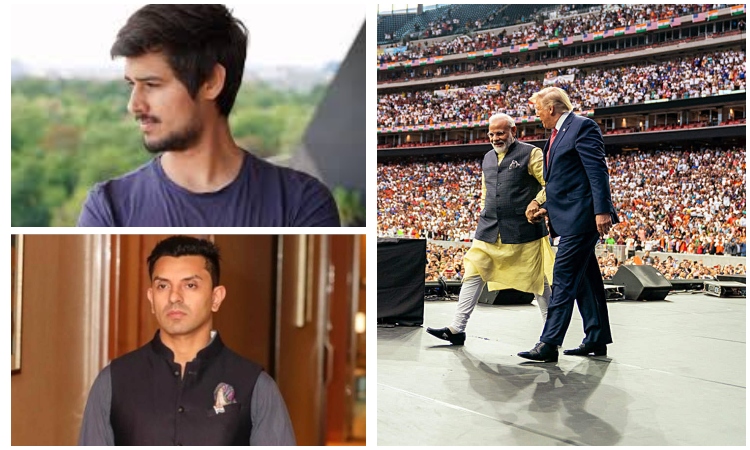
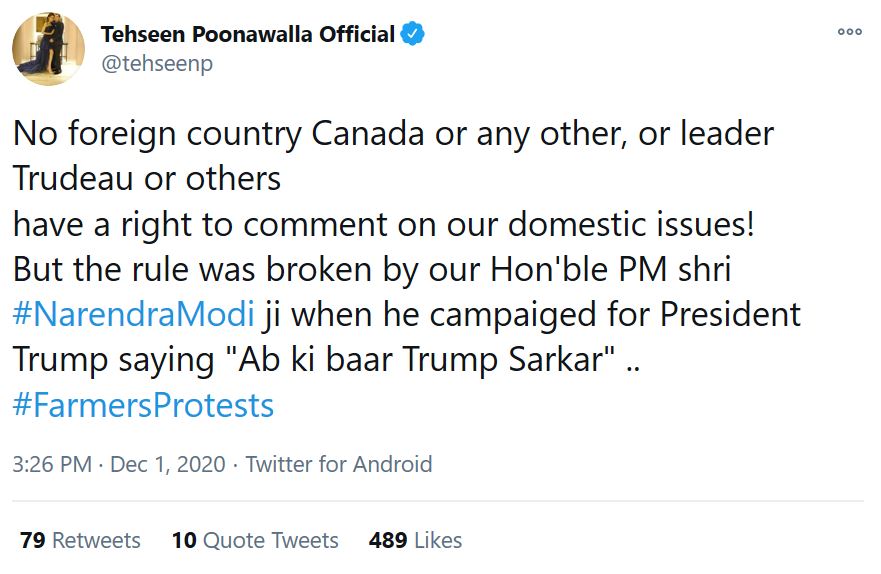
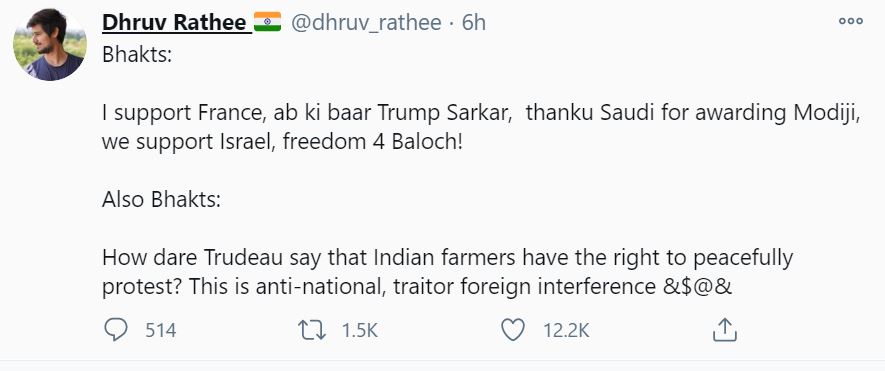
As soon as some social media users slammed the Canadian PM for commenting on India’s internal affairs, few leftist liberals resorted to peddling the same blatant lies, claiming that last year Prime Minister Modi had proclaimed on American soil “Ab ki Baar, Trump Sarkar” to allege that it was a clear case of interference in other nations’ internal affairs. Vocal Congress supporter Tehseen Poonawalla and Pro-AAP vlogger Dhruv Rathee took the lead in peddling the same lie all over again.

The Congress loyalists were soon joined by their other allies.

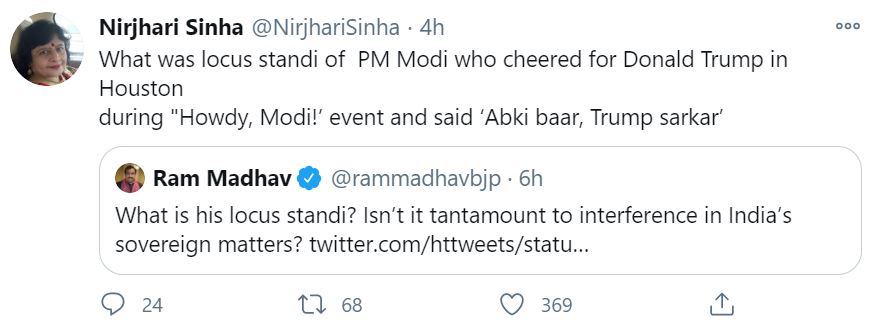
Congress-friendly journalists and media personalities also got in on the act. Director of Pravda Media Foundation, the parent company of the Congress-backed Fact fudger AltNews took to Twitter to write: “What was locus standi of PM Modi who cheered for Donald Trump in Houston during “Howdy, Modi!’ event and said ‘Abki baar, Trump sarkar’. Her Tweet was in response to the National General Secretary Ram Madhav who said that the Canadian PM’s remarks tantamounts to interference in India’s sovereign matters.

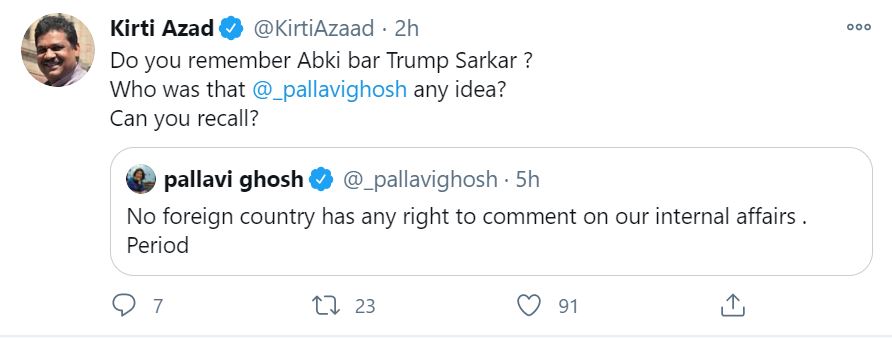
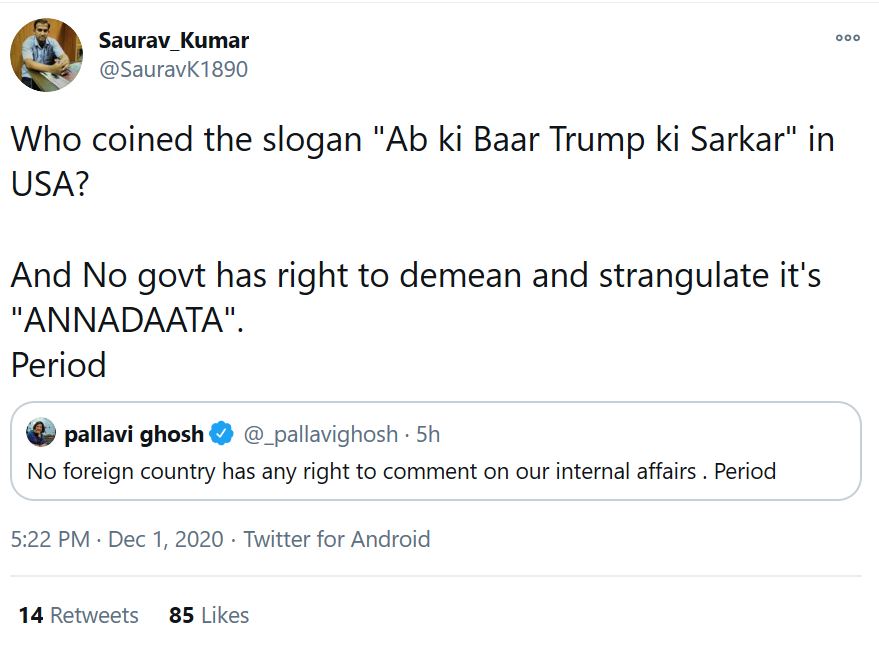
Journalist contributing to leftist media portals The Wire also joined in to spread the same lie. Responding to CNN News18 journalist Pallavi Ghosh who wrote: “No foreign country has any right to comment on our internal affairs . Period”, Saurav Kumar wrote: “Who coined the slogan “Ab ki Baar Trump ki Sarkar” in USA? And No govt has right to demean and strangulate it’s “ANNADAATA”. Period”.

Many other ‘liberals’ jumped on to the bandwagon.

Old lie repeated

This is a lie which the ‘liberals’ had peddled when Joe Biden defeated Donald Trump to become the 46th president-elect of the United States. In a fresh attempt to berate Modi, riot convicted Congress leader Hardik Patel and senior Congress leader Manish Tewari had attempted to spread lies that Prime Minister Narendra Modi had endorsed President Trump for the 2020 US Presidential elections.

Hardik Patel, soon after expressing his wishes to Biden, had resorted to peddling blatant lies by claiming that last year Prime Minister Modi had proclaimed on American soil “Ab ki Baar, Trump Sarkar”. Not just Hardik Patel, Congress MP Manish Tewari also took to Twitter to share a news report saying PM Modi cheered for Donald Trump in Houston by saying ‘Abki baar, Trump sarkar. Other Congress-friendly journalists and media personalities, as well as politicians, also joined in to spread the lies that PM Modi had endorsed Trump for President.

PM Modi didn’t really endorse Donald Trump

Contrary to the claims made by these anti-Modi liberals, PM Modi had never endorsed or tried to interfere in the 2020 US elections. The claims made by Patel and Tewari were misleading as PM Modi was just referring to a campaign run by Donald Trump campaign team prior to 2016 US Presidential elections.

At the mega ‘Howdy Modi’ event held in Houston in September last year, Texas, Prime Minister Modi had reminded the audience as to how during the 2016 US Presidential campaigning, Donald Trump had said ‘Abki Baar Trump Sarkar’ while appealing to the Indian diaspora in the US.

Indian security forces entered 200 meters inside Pakistan to unearth starting point of the tunnel used by JeM terrorists

0

As per reports, the Indian security forces recently entered as far as 200 meters inside Pakistan territory to find the starting point of the tunnel on India-Pakistan border which was discovered last month. The tunnel was believed to be used by Pakistani terrorists who were eliminated in the Nagrota encounter. “Security forces went inside Pakistan for almost 200 meters which was the starting point of the tunnel, used by the terrorists eliminated last week by Indian forces,” a top official said.

On November 22, a 150-meter long tunnel was detected by the security forces near the India-Pakistan border in Samba sector of Jammu and Kashmir. It is believed that the terrorists were using the tunnel to infiltrate inside Indian territory. The security forces had recovered mobile phones from the four terrorists killed during an operation in Nagrota that helped in uncovering the tunnel.

Rakesh Asthana, DG, Border Security Forces (BSF) said, “On the basis of the analysis of mobile phones recovered from terrorists eliminated by security forces, on November 22, BSF unearthed a tunnel used by terrorists to infiltrate in Samba sector.” DG Asthana did not share more details about the operation. The tunnel was detected in a joint operation by Border Security Force and Jammu and Kashmir police.

NS Jamwal, Inspector General, BSF Jammu Frontier, said, “It seems terrorists involved in Nagrotra encounter used this 150-metre long tunnel as it’s a fresh one. We believe they had a guide who took them till highway.”

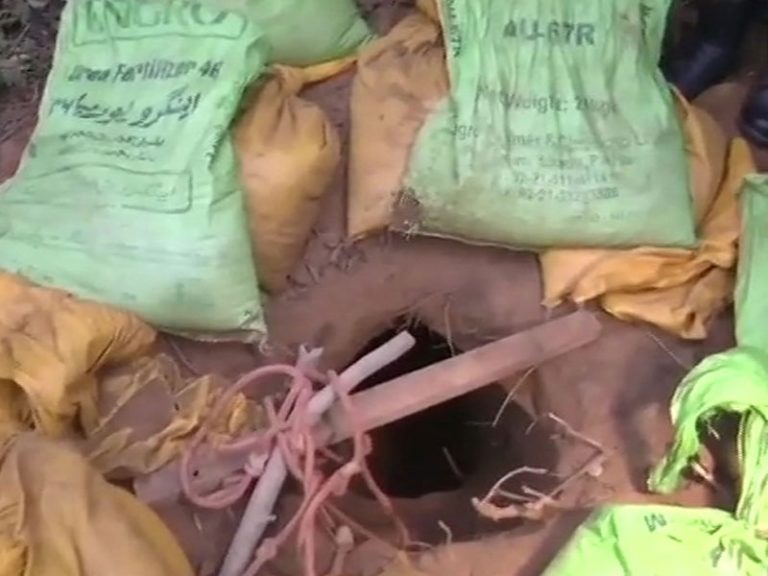
The tunnel was covered in thick bushes carefully and meticulously concealed with soil and wild growth. The security forces found sandbags that were used to strengthen and reinforce the mouth of the tunnel. Those bags had markings of Karachi, Pakistan. The tunnel was made by skilled personnel with proper engineering effort.

‘Sanitary Panels clearly implies that SC is biased towards BJP’: Attorney General slams comic artist for assault on courts, allows contempt proceedings

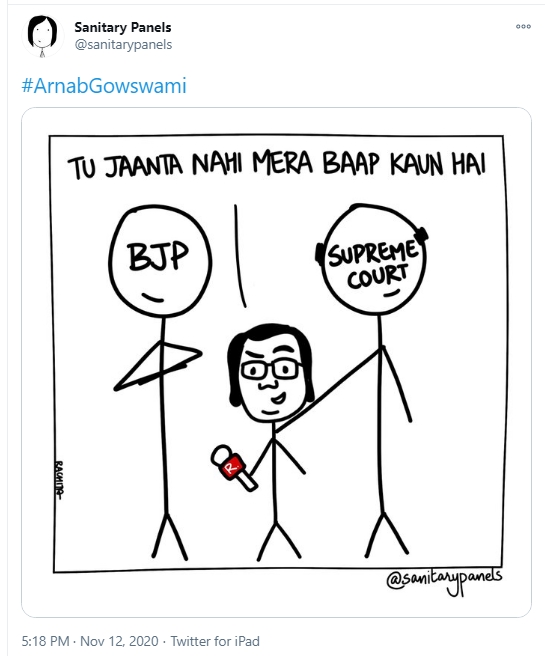
The Attorney General KK Venugopal has granted consent to a law student to initiate contempt proceedings against comic artist Rachita Taneja for Tweets saying they are an “audacious assault and insult to the institution.” According to reports, while granting the consent, the AG stated that the Tweets by Sanitary Panels has a clear implication that Supreme Court is biased towards the ruling political party BJP, which is somehow interested in protecting Republic TV Editor-in-chief Arnab Goswami.

A law student had approached the Attorney General urging him to grant the necessary permission to initiate a contempt proceeding against comic artist Rachita Taneja, the founder of webcomic Sanitary Panels, following her two Tweets dated November 11 and 12. Through her stick cartoons, the comic artist had insinuated a quid pro quo relationship between the Apex Court and the Central government, alleging that on the govt’s direction, the court granted interim relief to Republic TV Editor-in-chief Arnab Goswami.

insinuating that the Supreme Court is biased towards BJP and RSS and because of this prejudice, the cartoons had claimed that the court had absolved Arnab Goswami of the abetment to suicide charge. She had Tweeted those cartoons after the Supreme Court had granted interim bail to journalist Arnab Goswami. 

In his letter seeking permission to initiate contempt proceedings against the cartoonist, law student Aditya Kashyap had attached an excerpt of another tweet dated August 7 this year, which stated: “Let’s not forget how we got here.” The caption is accompanied by a caricature that depicts a similar relationship between the judiciary, especially retd. Chief Justice Ranjan Gogoi and the Central government in delivering the Ayodhya Judgment.

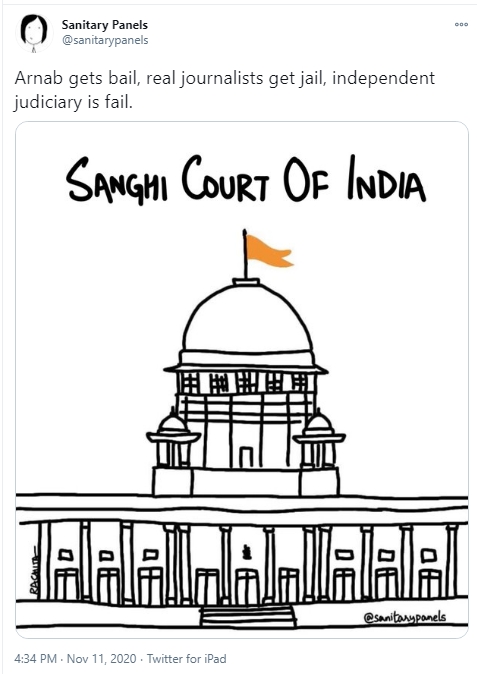
Referring to a Tweet posted by the founder of webcomic Sanitary Panels on November 11, where in the comic artist referred Supreme Court of India as a ‘Sanghi Court of India’, in an apparent reference to Rashtriya Swayamsevak Sangh (RSS) with a caption: “Arnab gets bail, real journalists get jail, independent judiciary is fail”, the AG observed that the Tweet carries a gross insinuation against India’s Apex court to the effect that the Supreme Court of India has ceased to be an impartial organ of the state. The Tweet is clearly calculated to undermine the public confidence in the independence and the impartiality of the Supreme Court of India.

Speaking about the Tweet dated November 12, the AG said that through her cartoon, Taneja has implied that BJP is somehow interested in protecting Arnab Goswami and has prevailed upon the Supreme Court to do so. It said that, therefore, the clear implication would be that the Supreme Court of India is biased towards the ruling BJP, and would tailor its judgement for the benefit of the ruling party.

The AG was referring to Rachita Taneja’s Tweet where she depicted Republic TV’s chief Arnab Goswami with the Supreme Court of India and the Bharatiya Janata Party on his either sides and Arnab saying: “Tu jaanta nahin mera baap kaun hain”, which translates to: “you do not know who my father is”. By this cartoon, the cartoonist had insinuated that both the BJP and the Supreme Court were biased towards Arnab Goswami.

Slamming the cartoon artist for her tweets which were an “audacious assault and insult to the institution”, the Attorney General gave a go-ahead to contempt proceeding against Rachita Taneja.

Sanitary Panels founder Rachita Taneja’s past hateful Tweets

Webcomic Sanitary Panels founder Rachita Taneja is known for her controversial, hateful and often Hinduphobic Tweets. Through her cartoons, Rachita Taneja has regularly indulged in mocking and berating the ruling Bharatiya Janata Party and people associated with it. In April, soon after the demise of actor Irrfan Khan, the cartoonist had posted a deplorable Tweet wherein she wished death on Bollywood actor Akshay Kumar while mourning actor Irrfan Khan’s demise. This animosity against Akshay Kumar was evidently because the superstar has been a vocal supporter of PM Narendra Modi and has never shied away from expressing his admiration for the latter.

Taneja’s tweet had drawen a lot of criticism online which impelled her to temporarily deactivate her Twitter account.

These are, however, only few examples of her hateful Tweets. Following the Supreme Court verdict on Ram Janmabhoomi case where the apex court decided in favour of constructing the Ram Mandir, Taneja had taken to Twitter to abuse the temple. Taneja’s comics which many times reek of Hinduphobia has been commissioned and published by various international publications like Forbes India.

Supreme Court observed that Maha police had failed to establish charges against Republic TV chief in the suicide case

Meanwhile, the Supreme Court had recently detailed the reasons for providing interim bail to Arnab Goswami on November 11 in the 2018 Anvay Naik suicide case. It had said that prima facie evaluation of FIR lodged by Maharashtra police does not establish the abetment of suicide charge against him in the 2018 Anvay Naik suicide case. The Supreme Court said that as Maharashtra police had failed to establish charges against Republic TV chief in the suicide case, it was necessary to grant bail to Arnab Goswami. The court had torn into the authorities saying that the criminal law should not become a tool for selective harassment of citizens.

Meerut: Communal tension after members of Muslim community create ruckus over Facebook post ‘insulting’ Prophet Muhammad

0

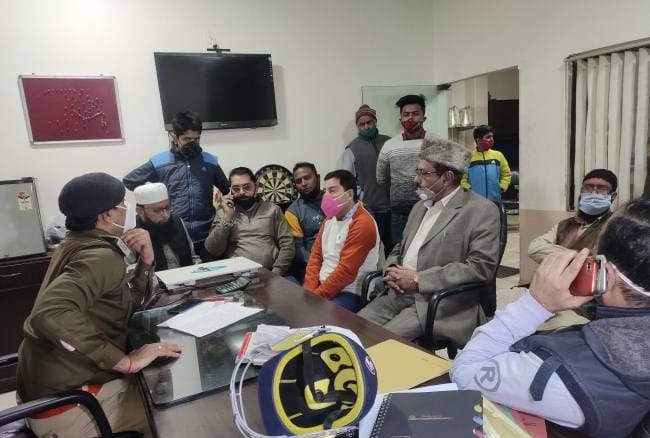
Communal tensions erupted in Jatiwada police station area of Meerut over an allegedly objectionable social media post on Prophet Mohammad. According to reports, a person named Raja allegedly posted objectionable content on social media about Prophet Mohammad on Monday. As soon as people from Muslim community got to know about the post, they asked him to delete the post. A fight broke put between Raja and the people leading to communal flare.

Ashu Saifi, who is a resident of Sahgasa and runs a shop in Khairnagar, was offended by the said post. He along with some other people went to Raja’s shop in Khairnagar and clashes erupted between both the parties. Police force from several police station was called in to pacify the situation. Some people from Muslim community surrounded the police station. CO Arvind Chaurasia filed a case on the complaint of the Muslim community. Raja was arrested by the police.

According to SP City Dr. Akhilesh Narayan Singh said that Raja had been booked under the IT Act. The matter is being investigated by the police .

Facebook post on Prophet Muhammad had lead to riots in Bengaluru

Terrible riots had broken out in Bengaluru in August this year after a person named Naveen who is a relative of Congress MLA Akhanda Srinivas Murthy, allegedly posted objectionable content against Prophet Mohammad on Facebook. Three people were killed and 60 police personnel were killed in the riots. Over 300 vehicles were damaged by the mob rioting on the streets of the city. Names of several leaders and Muslim extremist organisations had emerged in relation to the riots.

Uttar Pradesh: Case under new Love Jihad law filed against two men for trying to convert a married Hindu woman to Islam

0

Days after the Uttar Pradesh government enforced the new anti-conversion law to curb the menace of Grooming Jihad (Love Jihad) in the State, the Muzaffarnagar police have registered a case against two accused named Nadeem and Salman on Monday evening. The two are accused of trying to force a married Hindu woman to convert to Islam.

As per reports, the complaint has been registered by one Akshay Tyagi, the husband of the victim. Akshay, a contractor by profession and a resident of Mansoorpur in Muzaffarnagar, used to work as a contractor in Bhagwanpur in Haridwar in Uttarkhand. Co-workers Nadeem and Salman, who happen to be local residents of Bhagwanpur, began visiting his house regularly where he stayed with his wife.

According to Akshay, the duo started luring his wife to leave him and marry one of them. They also started asking her to convert to Islam on multiple occasions and tried to lure her for Nikkah. But Akshay got wind of the matter, and before things go out of hand, he left Bhagwanpur.

Akshay was thus forced to abandon his work and return to his native village in Muzaffarnagar. He was under constant fear that the two accused would convert his wife’s religion and run away with her. He then contacted the Mansoorpur police station where a case was registered against Nadeem and Salman under Section 3/5 of the Uttar Pradesh Prohibition of Unlawful Conversion of Religion Ordinance, 2020.

Search for the accused continues, police team to visit Bhagwanpur soon

On the basis of the complaint filed by Akshay against Nadeem and Salman, the Mansoorpur police have initiated a probe in the case and have contacted the Haridwar police to trace the absconding men. Inspector Kushal Pal Singh assured that the accused would be arrested soon. He also informed that a team would leave for Bhagwanpur to further investigate the matter.

Grooming Jihad in Bareilly

Earlier, a case was registered against one Ahmed after a family in Bareilly district of Uttar Pradesh had lodged a complaint with the Deorania police. The accused was also booked under Section 3/5 of the Uttar Pradesh Prohibition of Unlawful Conversion of Religion Ordinance, 2020. Ever since the case was lodged against him, Ahmed was reported as absconding. As per reports, the accused tried to force a Hindu woman to convert to Islam. When she refused, he began to pressurise the victim and her family. Besides intimidation, he had also threatened to kill the victim and her family for refusal to give in to his demands for conversion. The Deorania police are now making efforts to nab the accused.

Provisions of the new law

The new anti-conversion law is aimed at preventing forced conversions under the pretext of love and marriage. “There were more than 100 incidents reported in which forceful religious conversion was being done. Also, it was reported religious conversions were going on in the state using deceitful means. So to make a law on this becomes an important matter of policy now,” UP Cabinet Minister Siddharth Nath Singh had earlier remarked.

Under the new law, a jail term of 1-5 years is awarded to the accused (extended to 3-10 years in case of SC/STs) and a fine of ₹15,000 (₹25,000 in case of SC/STs). Moreover, the offender’s proven guilty for mass conversion will attract a jail term of 10 years.

After brutally suppressing protests by indigenous tribes in Canada, PM Justin Trudeau pontificates over farmers’ protests in India

Earlier today, Canadian Prime Minister Justin Trudeau and his ministers expressed their concern over the ongoing farmers’ protests in the country. They extended their support to Indian farmers who have been agitating against the three new bills, noting that the situation is concerning.

Speaking on the occasion of Gurupurab to his Canadian-Punjabi constituents, Trudeau said, “I would be remiss if I didn’t start by recognizing the news coming out of India about the protests by farmers. The situation is concerning. And we all are very worried about family and friends; I know that’s a reality for many of you. Let me remind you. Canada will always be ready to defend the right to peaceful protest. We believe in the importance of dialogue and that’s why we reached out to multiple means directly to Indian authorities to highlight our concerns.”

Besides Trudeau, other Canadian ministers and leaders also extended their unwarranted support to the ongoing protests by farmers, which has seen participation from pro-Khalistani elements such as Punjabi actor Deep Sidhu and known rabble-rousers such as Bhim Army chief Chandrashekhar Azad, who has a history of fomenting trouble during the anti-CAA riots in Delhi and Hathras incident.

Canadian MP Bardish Chaggar, who was part of the Gurpurab celebration, had tweeted on November 30 that the rights of farmers protesting peacefully in India must be respected, and meaningful dialogue is the way forward. Minister of National Defence, Canada, Harjit Sajjan had expressed his support for the protests in a tweet posted by him on November 29. Member of Parliament Tim S Uppal also posted a tweet backing the farmers’ protests.

While Canadian PM Justin Trudeau and other Canadian ministers sanctimoniously held forth on the need to defend the ‘right to peaceful protest’ and expressed their “concern” over the situation in India, they remained conveniently blind to the subjugation of the indigenous tribes by the Canadian police officials in their own backyard.

PM Justin Trudeau turned a blind eye to the oppression of indigenous tribes in Canada

In February 2020, Canadian PM Trudeau and other ministers felt no compunction in removing Indigenous activists from a railway line in Ontario, where a two-week protest against a contentious natural gas pipeline had blocked train traffic and fueled a growing political crisis. The protests were in support of the Wet’suwet’en First Nation in British Columbia and the protesters were fighting against a 416-mile pipeline through their traditional territory.

As the protests swelled, the Canadian police officials gave an ultimatum to the Tyendinaga Mohawk nation to vacate the protest site or risk facing charges and arrest. However, the activists remained resolute in their determination to oppose the government’s contentious decision. Before police moved in to clear the protesters, media was barred from covering the protests. Dozens of police officials descended on the blockade, tackling the protesters gathered there, forcing them to the ground and cuffing their hands with zip-ties. Many protesters were arrested by the police.

It is pertinent to note here that it was on Canadian PM Justin Trudeau’s direction that the blockade was forcibly removed by the police. In contrast to upholding the lofty ideal of “right to protest peacefully”, Trudeau had, instead, given a blunt warning to the protesters to end the protests. “The barricades need to come down now,” Trudeau had said.

Canada had moved WTO against India’s high MSP in Feb 2019

If this wasn’t enough to capture the hypocrisy exhibited by Trudeau, his stance on India’s MSP in the World Trade Organisation would successfully nail down the double-dealing of the Canadian Prime Minister. In February 2019, Canada had moved WTO against India on higher MSPs for five pulses. Canada had then sought a discussion with India on the higher MSP for five pulses, contending that India’s support prices were 26 times higher than the permitted levels by WTO regulations.

It is, therefore, profoundly ironical that Canadian PM Justin Trudeau, who found India’s MSP prices of its crops significantly higher and approached WTO complaining against India’s high MSP prices, comes out in support of the so-called farmers, who have held blockades and are demanding the Indian government to bring a provision for the MSP in the three agriculture bills that were passed in September 2020.

Despite these glaring hypocrisies, Canadian PM Justin Trudeau had the gall of making unsolicited comments on India’s internal matters and moralising her on the need to allow peaceful protests. By all accounts, it appears that Trudeau’s remarks on the ongoing farmers’ protests were aimed at consolidating support among his Canadian-Punjabi constituents and not at expressing genuine concern for the Indian farmers. With the second wave of coronavirus galloping Canada and Trudeau tainted in an ethics scandal, the Canadian PM appears to be willing to risk the relationship with India for securing short-term political gains.

Though a country’s Prime Minister shouldn’t comment on another country’s private matter, if Trudeau still wants to needlessly meddle into a foreign country’s internal affairs, and pontificate them on rights, he should, at least first ensure that he has not flouted those very rights in his own country.

After creating trouble during Delhi Riots and Hathras, Bhim Army chief reaches the farmer protests site, now hijacked by Khalistanis

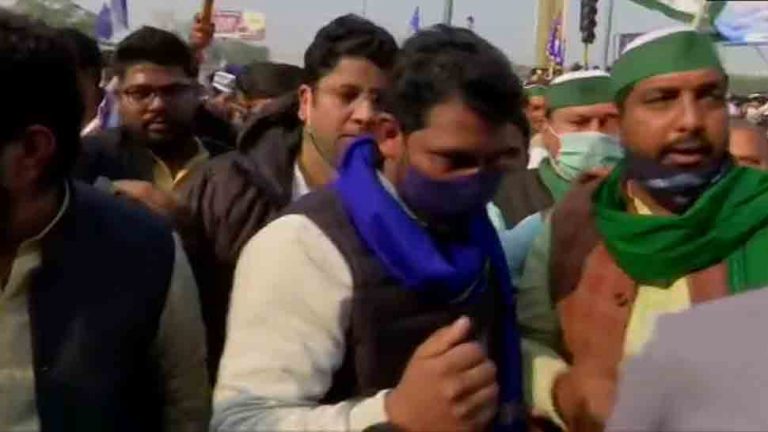
On Tuesday, Bhim Army chief Chandrashekhar Azad partook in the ongoing protests by Punjab farmers that are already hijacked by the Pro-Khalistani elements. Azad extended his support to ‘farmers’ protests by visiting the protest site at the Ghazipur border.

In an attempt to gin up anti-government sentiments, Azad urged the protesters to not give up until all their demands are fulfilled. “Don’t call off your protests until the government accedes to all your demands,” he said. 

During several blockades carried out during the so-called farmers’ protests along the Punjab-Haryana border, posters of Khalistani terrorist Jarnail Singh Bhindranwale were also seen. One of the ‘farmer leaders’ was also seen boasting about how they had shot former PM Indira Gandhi dead.

Recently, Punjabi actor Deep Sidhu, who became the face of the ‘farmers’ protest was also exposed when he unabashedly hailed terrorist Bhindranwale as a revolutionary who fought for a strong federal structure and persistently denied to condemn him as a terrorist. 

Azad fomented trouble during Delhi riots and anti-CAA protests

However, this is not the first time that Azad had tried to exploit an upheaval to remain relevant in politics. Earlier too, Azad had been accused of fomenting trouble during the Delhi riots and the Hathras incident. 

A charge sheet filed by the Delhi Police into the Delhi riots mentions Bhim Army Chief Chandrashekhar Azad in the chronology section. A day before the riots broke out in Delhi, on 23 February, Azad had called for a Bharat Bandh to press for reservations and protest against CAA-NRC-NPR. The police have alleged that the Jafrabad metro station blockade, which was one of the starting points of the violence as per the charge sheet, was in response to the Bharat Bandh call.

In the aftermath of the passage of the Citizenship Amendment Act in December 2019, protests swept many places across the country. During the anti-CAA protests, Bhim Army chief Chandrashekhar Azad surfaced at the Jama Masjid in Delhi, dramatically defying a ban on protests amidst heavy police presence. 

Azad had also rushed to Hathras

During the Hathras incident, Azad’s Bhim Army was accused of slipping in three of its workers in the victim’s house, posing as her ‘relatives’. 

The Bhim Army was also involved in stoking up caste angle in the issue and provoking caste-based tensions in the area. As per a Jagran report, Bhim Army chief Chandrasekhar Azad alias ‘Ravan’ had met the Hathras victim in Aligarh on September 27. The victim died on September 29 and when the political climate started getting hotter, while police took the victim’s body to her village at the night, 3 Bhim Army workers had slipped into the family’s house and had started living there as ‘relatives’. The fake ‘relatives’ were later highlighted in media, giving provocative statements and constantly stirring up caste angles in the crime.