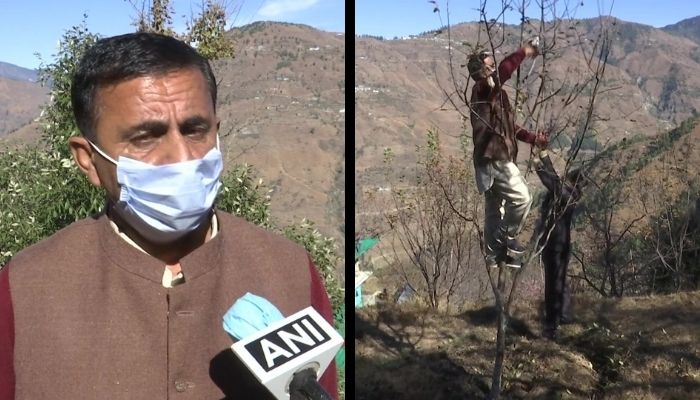
Amidst the renewed protests and the ongoing debate surrounding the historic farm bills, apple farmers have been largely benefitted by private procurement centres in Shimla, Himachal Pradesh.
As per reports, the availability of these centres has increased the income of farmers and eliminated the middlemen from the procurement and distribution chain. While speaking about the development, a farmer named Layak Ram stated, “Earlier we had to go to Delhi. Now we sell apples directly to the centre here. I gave them 12,000 crates of apples last year and around 10,000 crates this year.” He informed that the payment is received directly in the bank account, whereas earlier he had to shell out more money on commissions and to grading officials, and labourers.
I gave them 12,000 crates of apples last yr & around 10,000 crates this yr. Payment is made directly into our bank account. Earlier, we used to spend a lot on paying grading officials, labourers, on commission etc. Now we save a lot & earn good money: Layak Ram, an apple grower https://t.co/DHjbumg0Zcpic.twitter.com/7UTr1ckdJI
While thanking the private player Adani group, Ram Layak informed, “We take care of the quality of our produce. Earlier there was a lot of exploitation because of monopoly. Our labour costs are saved as we have contracted out our lands. We are very happy because we earn more now. The Adani group has helped us.”
Orchard manager Manjeet Singh Dhillon informed that Adani group had been purchasing apples from farmers since 2006. He stated that the focus is on improving the income of farmers. Dhillon added that the production capacity was increased to 22,000 metric tonnes this year as compared to last year’s 18,000 metric tonnes. He also stated that 50% more apples had been procured this year and that 17,000 farmers have been benefited by the increased income.
Highlighting about the procurement process, Dhillon stated that the group has now availed the services of scientists to help the farmers in production to be able to compete at the international market. “There are three collection centres in Himachal Pradesh. The growers get their earnings faster now (directly to their bank accounts),” he emphasised. The orchard manager reiterated that about 90% of the workforce in orchards consists of local people, thereby providing employment and catering to the needs of the people in the district. He added that the new technologies are now being employed to help farmers meet quality standards.
The ‘farmers’ protesting against the three farm bills approved by the Modi government have blocked Delhi’s entry points as the protest enters its sixth day. Despite the protests causing extreme inconvenience to the people of Delhi, CM and Aam Aadmi Party supremo Arvind Kejriwal is in no mood to let go of the opportunity to score political brownie points.
Asserting that the Delhi government stands with the protesting farmers and will ensure that they are taken care of, Arvind Kejriwal led government has made arrangements for drinking water, food, medical facilities and shelter for these protesting farmers.
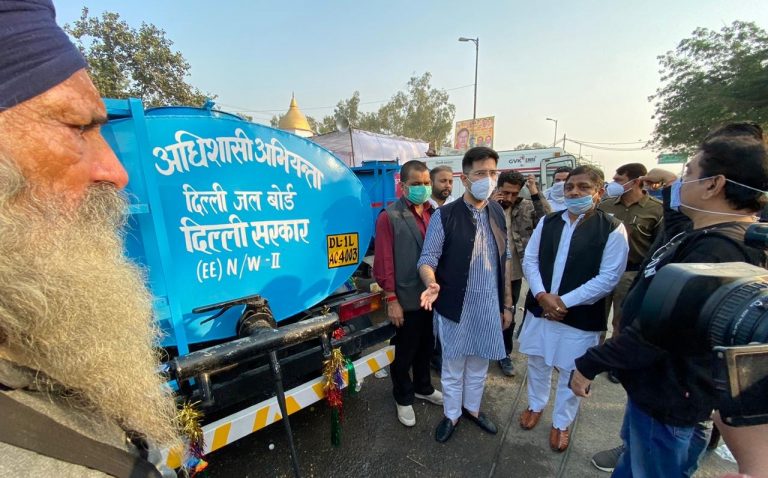
Delhi Jal Board vice-president and AAP MLA and spokesperson Raghav Chadha, himself went to Burari to ensure water tankers are available for the protesting farmers. AAP took to it’s official Twitter handle to brag about the same.
दिल्ली जल बोर्ड के वाईस चेयरमैन श्री @raghav_chadha ने किसानों के लिए पानी की उचित व्यवस्था की समीक्षा करने के लिए सिंघू बॉर्डर का दौरा किया। जहाँ किसान विरोधी काले कानूनों का विरोध कर रहे किसानों के लिए पानी के टैंकर का इंतज़ाम किया जा रहा है। pic.twitter.com/Jsi2aJWw2g
Raghav Chadha also Tweeted that his party is happy to host the protesting farmers and like “sewadar” (servicemen or volunteers) Kejriwal government has made arrangements to ensure that the protesting farmer brothers get basic facilities like food, water and sanitation, and medical care”.
CM @ArvindKejriwal जी की सरकार एक सेवादार की तरह सभी आंदोलनकारियों के लिए जल, भोजन, शौचालय, दवा सबका इंतजाम कर रही है।
आज मौके पर पहुंचकर सरकार द्वारा दी जा रही सुविधाओं का प्रबंध व निरीक्षण किया, किसान भाई केजरीवाल सरकार की मेज़बानी से खुश हैं। pic.twitter.com/C7QNukb5ic
Continuing to play petty politics over the protests, the AAP spokesperson reportedly told Times Now: “The Prime Minister & the Govt should not make this an ‘ego battle’. They must do away with this arrogance, their apathy towards the Indian farmers needs to be shunned”.
The Prime Minister & the Govt should not make this an ‘ego battle’. They must do away with this arrogance, their apathy towards the Indian farmers needs to be shunned: @raghav_chadha, AAP Spokesperson tells TIMES NOW. | #ModiKashiKisanCounterpic.twitter.com/06JHxay6yK
While Arvind Kejriwal is today busy showcasing himself as the Messiah of the ‘distraught’ farmers, he should recollect a few of his recent misendeavors. He forgets how his government had not batted an eyelid in risking the lives of destitute migrant labourers at the time of a crisis as serious as the Coronavirus pandemic.
After Prime Minister Narendra Modi urged Indians to stay at home, wherever they are, in a bid to contain the Chinese coronavirus pandemic, Arvind Kejriwal-led Delhi government had spread lies and unnecessary rumours which had impelled the mass exodus of lakhs of migrant labourers, in an attempt to return to their respective villages.
When most of the state governments had sealed their borders and banned commercial vehicles to ply, the AAP government had made false announcements in colonies, where migrants from UP and Bihar were staying in Delhi, informing them that Delhi government-run DTC buses will take them to the Anand Vihar bus terminal, from where they would be able to get the buses to take them further to UP and Bihar. This had compelled lakhs of migrant labourers to take foot journeys to their homes after they found not buses waiting at the Anand Vihar bus terminal as told by the Delhi govt.
The Uttar Pradesh government, which had then come to the rescue of these migrant workers had on 28 March 2020 accused the Delhi authorities of disconnecting the water and electrical energy connections of individuals, forcing them to leave their homes in Delhi and head back to their villages. “Throughout lockdown, individuals weren’t even supplied meals and milk in Delhi,” stated a report quoting UP govt sources.
Meanwhile, the Aam Aadmi Party chief should also not forget that he who is today so eager to host the farmers from all across the country, had earlier, with a straight face, shown cold shoulder to all ‘outsiders’ battling with the deadly coronavirus in the national capital. In June this year, when the entire country was fighting the scourge of the Chinese virus, Kejriwal had insensitively announced that the Delhi Government hospitals will only treat patients that are residents of Delhi. He had suggested that the outsiders could go to central govt hospitals for treatment.
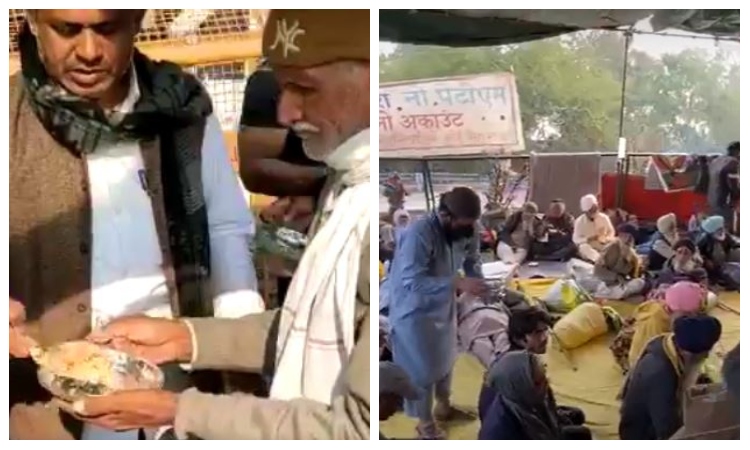
Amidst the ongoing protest by ‘farmers’ against the farms bills passed by the Modi government, a video shared by Times of India (TOI) has gone viral on social media which shows Biryani being served to ‘farmers’ camping in Ghazipur, Delhi. The video captioned “Biryani time at Ghazipur farmers protest spot” by TOI, showed hundreds of protestors queueing up for free Biryani.
The video attracted a barrage of reactions on the micro-blogging platform as it brought back the memories of the ‘organic’ Shaheen Bagh protests, where Islamists sat on a so-called ‘protest’ beginning in December last year, against the Citizenship Amendment Act. Netizens were quick to draw equivalences between the ongoing farmers’ protest at Delhi border areas and the anti-CAA protest at Shaheen Bagh, which had turned out to be a professionally organised left-wing managed anti-India event.
Biryani at the farmers’ protest brings back memories of the ‘organic’ Shaheen Bagh protests
Reacting to the video, some social media users opined that the farmers’ protest was the season 2 of Shaheen Bagh protests. “After roaring success of “Kudrati Biryani-PincherProtests” Presenting Season 2 of India’s biggest Nautanki (aka Reality Show): Shahinbagh 2 theme is: “Kudrati Biryani-FarmerProtests”, wrote one social media user.
After roaring success of “Kudrati Biryani-PincherProtests”
Presenting Season 2 of India’s biggest Nautanki (aka Reality Show):
There is this one Twitter user who opined that the radical Islamic organisations, leftist parties, AAP and Congress who helped to stage the Shaheen Bagh ‘protests’ are the ones who are behind this so-called ‘farmers’ protest.
Shaheen Bagh protests were well-oiled, well-funded (plus, biryani)
It may be recalled how OpIndia’s ground report had earlier talked about biryani being brought in then to be distributed amongst the Shaheen Bagh ‘protestors’ and ‘volunteers’. Along with biryani, there was packaged water, fruit juices and other snacks made available. If this was not enough, there was a music system there, where rental charges are anything between Rs 8,000 to 10,000 per day. The tent would cost anything between 10,000 to 30,000 per day. During day time, there are about 200-300 ‘protestors’ who are provided with water and tea and free food. On average, these protests had cost about Rs 10,00,000 per day.
Moreover, a video shared by BJP’s IT cell head Amit Malviya had also exposed how protesting women at Shaheen Bagh were paid between ₹500 and ₹700 on a daily basis. A man who had appeared in the video had also claimed that the protestors worked in shifts so that the crowd looks huge at all times of the day. According to him, the women are incentivised to dedicate their free time to the protests. He also added that the protestors are provided with food, rest and shift-based rotational ‘duty hours’ in a well-organised manner. He claimed that the Shaheen Bagh protest was more of a mode of income for the locals.
Meanwhile, reports suggest that some women from Shaheen Bagh have also come to the Singhu border to show support for the farmers’ protest. Farm union leaders claim some 3 lakh farmers are participating in the protest march.
Even as the central government tried to assuage the apprehensions harboured by ‘farmers’ regarding the agriculture laws by saying that the new laws would seek to remove middlemen, a group of farmers speaking to the media appeared to bat in support of the middlemen involved in the sale and purchase of their agricultural produce.
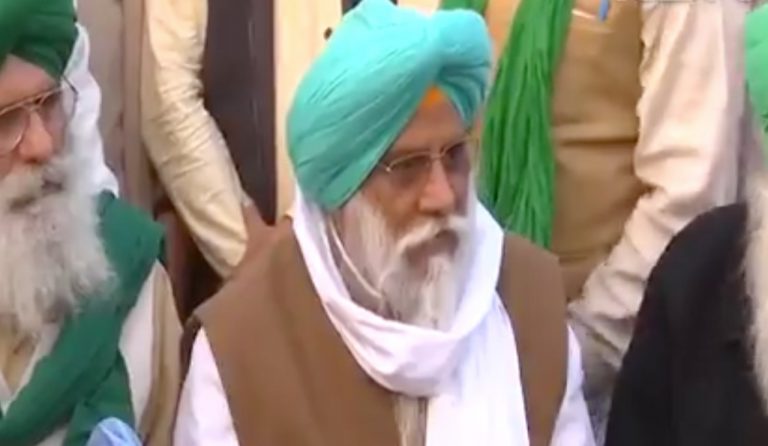
#FarmersProtest | “The government is saying that they have introduced the new farm laws to eliminate the middlemen. We are asking them to define ‘middlemen'”: Farmers address the media pic.twitter.com/bDfaRauVTm
“The government is saying that they have introduced the new farm laws to eliminate the middlemen. We are asking them to define ‘middlemen’. The system that is in place in Punjab and Haryana is considered as the best in the world. When we take our produce to mandis in Punjab and Haryana, the individuals there help us in unloading our trolleys filled with our produce. They pack the grains in sacks and receive money on our behalf from the buyers. They are not middlemen, they are service providers, and if they are charging a commission for providing their service, so be it,” a ‘farmer’ said to the media.
The ‘farmer’ further alleged that the bills that were introduced by the government under the pretext of helping the farmers were brought under the pressure from middlemen in other areas. He said that the Indian government has employed middlemen in several areas of its functioning such as Defence, Trade and Commerce and contended that not a single government transaction happens without a ‘middleman’ being involved.
No restrictions faced by farmers, bills are redundant: Farmer Group
The ‘farmer’ continued his attack against the central government, stating that the reasons provided by them for the introduction of the farm bills are not satisfactory. He stated that the government had introduced the bills for helping the corporates and not for the welfare of the farmers. Rubbishing the central government’s claim of bills helping in removing the impediments to the farmers for selling their products anywhere in the country, the farmer claimed that they still sell their produce across the country without any difficulty.
“The government states that the bills have enabled ‘One country one mandi’ but in reality, the laws have resulted in ‘One country two mandis’. They have pandered to the corporates. In 1976, we fought for the zonal restrictions that prevented farmers from selling their produce to other states. A case was filed and the high court in November 1976 gave a verdict in our favour. Since then, farmers in Bihar send paddy to Punjab. We sell our produce to Bengaluru and Bengal. Apples from Himachal and Kashmir are sold across the country. Maharashtra sends Bananas, Onions and Oranges to other states,” the farmer said.
Farmer indulges in fear-mongering about agricultural reforms carried out by the Modi government
While scare-mongering about the central government’s decision to carry out reforms in the agricultural sector, the farmer inadvertently listed down the benefits that the farmers would receive from the reforms undertaken by the Modi government. Speaking to the media, the farmer said that the new laws would enable anyone from across the country, who has a government authorised identification card such as Pan Card, Aadhar, to buy directly from the farmers. However, he did not shy away from fear-mongering about the reforms, adding that such a provision would be catastrophic for the farmers as there is no effective grievance redressal mechanism in place if the buyer refuses to pay his due to the farmers.
Modi government announces three new bills to overhaul the agriculture sector
Continuing the reform agenda on the back of a Unified National Agriculture Market (NAM) which was announced in 2014, the Modi government had in September 2020 introduced three more bills to promote much easier trade for the farm produce and to provide a competitive market for the producers outside the existing APMC system.
The objective of the three proposed laws is to make way for creating the Modi government’s ambitious vision of ‘One India, One Agriculture Market’. The law intends to end the monopoly of Agriculture Produce Market Committees (APMCs) in carrying out the trade of farm produce in the country.
The Farming Produce Trade and Commerce (Promotion and Facilitation) Bill, 2020 aims at creating additional trading opportunities outside the APMC market yards to help farmers get remunerative prices due to additional competition. Farmers can now sell their agricultural produce in a market of their choice at better prices.
The Farmers (Empowerment and Protection) Agreement on Price Assurance and Farm Services Bill, 2020 creates a framework for contract farming through an agreement between a farmer and a buyer prior to the production or rearing of any farm produce.
The amendments to the Essential Commodities Act, 1955 allows the central government to regulate the supply of certain food items only under extraordinary circumstances.
Significance of the proposed laws
The three historic legislation will unlock the overly regulated agricultural markets in the country. The laws will provide more choices for the farmer and lessen the marketing costs for the farmers thus helping them to get better prices. It will also help farmers of regions with surplus produce to get better prices and consumers of regions with shortages, lower prices.
The laws will enable the farmer to make use of modern technology and better inputs to enhance their farm produce and its trade. It will reduce the cost of marketing and improve the income of farmers. These new laws will encourage large companies, food processing firms, exporters, etc, to invest in the farm sector and source good-quality farm produce.
The announced amendment to the Essential Commodities Act is expected to help both farmers and consumers while bringing in price stability. The proposed changes will also create a competitive market environment and prevents wastage of agri-produce that happens due to lack of storage facilities.
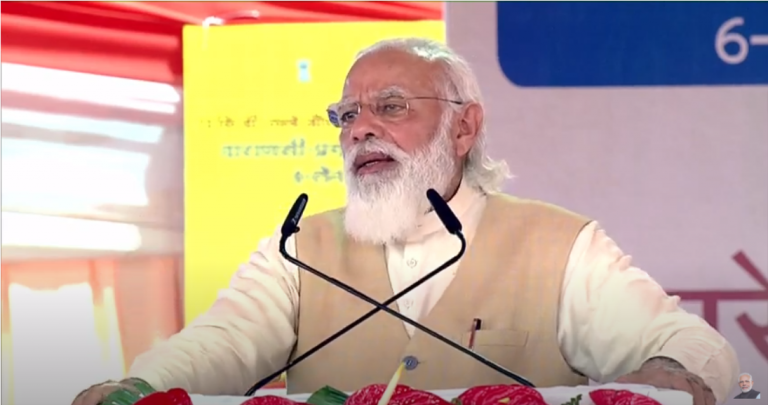
Amidst the renewed protests against the historic farm bills, Prime Minister Narendra Modi addressed a gathering at Varanasi on Monday debunking the propaganda surrounding the government’s initiative that is aimed at the welfare of farmers.
PM Modi informed that the Union government had allocated one lac crore rupees for the development of cold storage facilities. He stated, “When connectivity expands in an area, our farmers benefit greatly. Over the years, efforts have been made to create cold storage arrangements along with modern roads in Indian villages.” He also informed that the government had set up ‘perishable cargo centres’ in Varanasi, thereby easing the sale and storage of fruits and vegetables.
Emphasising on the importance of the newly introduced farm bills, he asked whether the farmers should not have access to the global market and high prices for their produce. He also stated that the government has been investing a huge sum of money for the modernisation of Mandis.
(Video Courtesy : Youtube/ Narendra Modi)
Farmers now have legal protection against fraud, reiterates PM Modi
“New agricultural reforms have given farmers new options and new legal protection. Earlier, transactions outside the Mandi was considered illegal. Now, even a small farmer can also avail legal options on every deal that is made outside the Mandi. The farmers have now got legal protection from fraud,” PM Modi emphasised.
नए कृषि सुधारों से किसानों को नए विकल्प और नए कानूनी संरक्षण दिए गए हैं।
पहले मंडी के बाहर हुए लेनदेन ही गैरकानूनी थे।
अब छोटा किसान भी, मंडी से बाहर हुए हर सौदे को लेकर कानूनी कार्यवाही कर सकता है।
किसान को अब नए विकल्प भी मिले हैं और धोखे से कानूनी संरक्षण भी मिला है: PM
PM Modi stated that the farmers have been provided with 1.5 times Minimum Support Price (MSP) for their produce, as per the recommendations of the Swaminathan Commission. He emphasised that the promise was fulfilled and the due amount has been transferred to the bank accounts of the farmers.
हमने वादा किया था कि स्नामीनाथन आयोग की सिफारिश के अनुकूल लागत का डेढ़ गुणा MSP देंगे।
ये वादा सिर्फ कागज़ों पर ही पूरा नहीं किया गया, बल्कि किसानों के बैंक खाते तक पहुंचाया है: PM
Prime Minister reveals how Centre’s schemes benefitted farmers
PM Modi informed that between 2009 and 2014, the UPA government had procured only ₹650 crores worth of pulses from farmers. However, the BJP government at the Centre had bought about ₹49,000 crores worth of pulses, thereby leading to a 75 times increase in procurement.
सिर्फ दाल की ही बात करें तो 2014 से पहले के 5 सालों में लगभग साढ़े 6 सौ करोड़ रुपए की ही दाल किसान से खरीदी गईं।
लेकिन इसके बाद के 5 सालों में हमने लगभग 49 हज़ार करोड़ रुपए की दालें खरीदी हैं यानि लगभग 75 गुणा बढ़ोतरी: PM
He added that while the UPA government had purchased ₹2 lac crore worth of rice between 2009 and 2014, the BJP government had directly passed the benefit of ₹5 lac crore to farmers through purchase of pulses at MSP.
2014 से पहले के 5 सालों में पहले की सरकार ने 2 लाख करोड़ रुपए का धान खरीदा था।
लेकिन इसके बाद के 5 सालों में 5 लाख करोड़ रुपए धान के MSP के रूप में किसानों तक हमने पहुंचाए हैं।
यानि लगभग ढाई गुणा ज्यादा पैसा किसान के पास पहुंचा है: PM
Hitting out at the Congress party yet again, PM Modi highlighted how only ₹1.5 lac crore worth of wheat was bought from farmers between 2009 and 2014. However, in the following 5 years, the government had doubled the procurement with the purchase of ₹3 lac crore worth of wheat.
2014 से पहले के 5 सालों में गेहूं की खरीद पर डेढ़ लाख करोड़ रुपए के आसपास ही किसानों को मिला।
वहीं हमारे 5 सालों में 3 लाख करोड़ रुपए गेहूं किसानों को मिल चुका है यानि लगभग 2 गुणा: PM
PM Modi stated that owing to government initiatives and development of modern infrastructure, Indian farmers are now able to sell black rice at around ₹850 per kg. He added that the variety was provided to farmers in the Chandauli area in order to increase their income and bring prosperity to their lives.
PM Modi reassures farmers, says their fears will mitigate in future
The Prime Minister asserted that fear of farmers surrounding the new laws stems from decades of mistrust in the government. He assured farmers that the current political dispensation at the Centre is working with the right and pure intention of bringing prosperity in their lives. Reiterating his belief that the new farm laws will benefit farmers and help enhance their income, PM Modi noted, “The government is consistently addressing the fears and queries of farmers, who are anxious about the government’s decision. And even those who still have doubts about the new farm laws today will benefit from them and increase their income in future.”
PM Modi hits out at the Opposition
He stated, “Earlier, MSP used to be declared but little produce was bought at MSP. Farmers were tricked for years. Similarly, large loan waiver packages were announced for farmers. But, it never reached them. As such, fraud was committed even in the name of debt relief.” Hitting out at the Opposition, PM Modi stated, “Although big schemes for farmers were announced, they (Congress party) themselves admitted that only 15 paise out of a rupee would reach the farmers. Such fraud was committed in the name of new schemes.” Rumours have formed the basis of protests against the farm laws, the PM stated.
He had also lashed out the Congress-ruled Punjab government for not implementing the PM Kisan Yojna in Punjab and vowed to provide the cash handouts to farmers when the BJP will form government in the State. This is despite the fact that about 10 crore farmers in the country have already been benefitted from the scheme.
All you need to know about farm laws
In September 2020, the Central Government announced three new agriculture sector reform laws named Farmers Produce Trade and Commerce (Promotion and Facilitation) Act, 2020, The Farmers (Empowerment and Protection) Agreement on Price Assurance, and Farm Service Act, 2020, and The Essential Commodities (Amendment) Act, 2020. The main aim of these reforms is to provide a better platform for the farmers to sell their produce.
Simultaneously, several clauses protect farmers’ rights on how they want to sell the crop, timely payments, and more. Despite several clarifications by the Central government that the MSP provisions will remain as is, opposition parties have repeatedly indulged in spreading misinformation and accused the government of trying to end MSP provision. PM Modi had come down heavily on the parties opposing the farm laws on September 18 and said those who had kept farmers tied to restrictions for decades are now lying about agricultural reforms.
“Just a municipal election” is the new mantra that is being chanted by the members of the WhatsApp group of English journalists. The reference is to tomorrow’s election to the Greater Hyderabad Municipal Council (GHMC) and how BJP’s top central leadership participated in the campaigning for “just for a municipal election”.
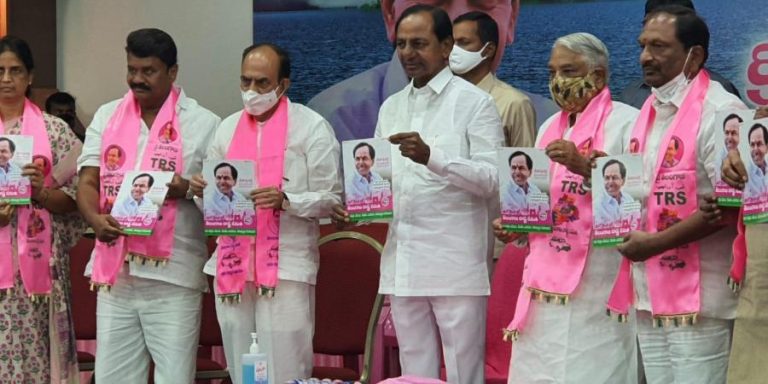
What these people very conveniently don’t tell you is that the ruling TRS is also taking the “just a municipal election” very seriously. Almost all ministers of the cabinet have been given specific responsibilities in this campaign. More than 50 MLAs of the party are assisting these ministers in campaign strategy and implementation. The CM himself released the manifesto and spoke for more than an hour there. He spoke for nearly an hour in a public meeting organized on Saturday. Pretty much the entire might of the TRS party is focused on trying to win “just a municipal election”. This begs the basic question – If the incumbent is so serious about it, why shouldn’t the opposition be equally or more serious about it?
This GHMC election is not “just a municipal election”. This election has the potential to alter the political discourse of the Telangana state. The ruling TRS won a very predictable landslide in 2016. It won 99 out of the 150 divisions. Their friend, the MIM won 44 seats. Given the landslide, TRS could have its own mayor without the support of friendly MIM too. That election established the supremacy of TRS in the electoral politics of the new state and set the course for the 2018 election victory of the TRS. BJP won a partly 4 divisions. They were contesting the elections in alliance with TDP, which won only 1 division.
Ever since the crushing defeat in the 2018 Assembly elections, the BJP has been able to challenge the supremacy of TRS slowly but steadily. The first blow to TRS came in the Lok Sabha elections, when TRS won 9 out of the 17 seats (KCR’s daughter was defeated by BJP; the constituency for which KCR’s son was incharge was won by the BJP). BJP’s victory in 4 LS seats boosted the morale of the cadre. The second blow to TRS came in the recently concluded Dubbaka by-poll where the BJP registered a stunning victory, and more importantly found the right voice to challenge TRS’s monopoly in the Assembly.
It is in this background that the GHMC election is being held. A victory to the BJP does not necessarily mean that they should win the Mayor seat. Given the composition of the GHMC Council that elects the Mayor, the BJP actually has to win a whopping 95 seats out of the 150 to be able to have its own Mayor. On the other hand, the TRS has to win 67 seats to be able to get a Mayor of its own. However, even if the TRS-MIM combine win 67 seats, they will easily come to an agreement to share power and have their Mayors rule the roost.
It is also a victory for the BJP if the TRS fails to win 75/150 seats. Whatever number game will result thereafter, this basically means that TRS did lose the popular mandate of the people. It will rejuvenate the cadre in ways that hasn’t happened in a very very long time. It will give out a message that the mighty TRS can be electorally defeated again and again, if the right guidance and leadership is provided to the party. That today, such a scenario is seen as a strong possibility (TRS not winning 75) is also a testament to the effort the party has put into the fight.
Though the TRS was made to sweat it out, if it does win more than 75 seats, it would reestablish the supremacy of KCR’s son, KTR in the party. It would also mean that the path to even establish a decent opposition to the TRS party has become even more stronger. Undoubtedly, the BJP has replaced Congress as the main opposition, but a victory for TRS would certainly mean that they have a lot of catching up to do.
As is the case with all campaigns, the speeches from both sides had their ups and downs. This is the first time since 2014 that there is a possibility of unseating TRS from a strong position of power. And if that happens, “just a municipal election” would have altered the political discourse of the state. If key leaders of political parties listened to this bunch of condescending English journalists, then they would be confined to the drawing rooms of their party offices. If you don’t believe me, ask the cadre of the Congress party!
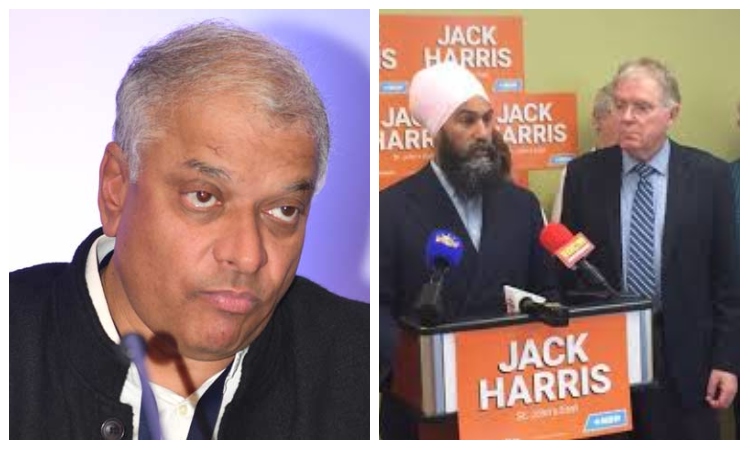
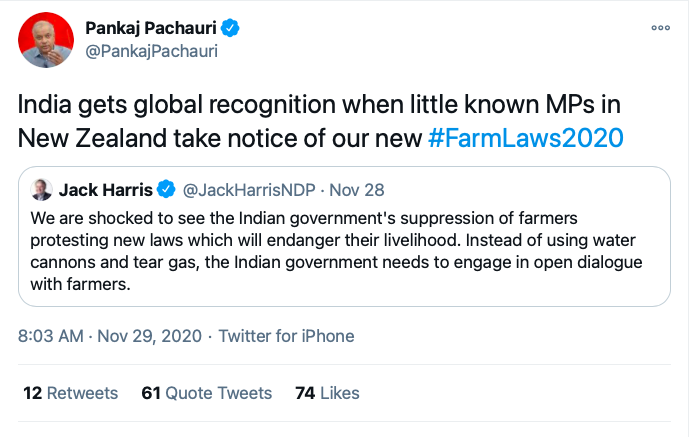
As thousands of farmers continue to protest on the Haryana-Punjab border against the three farm bills passed by the Modi government, Pankaj Pachauri, the former adviser to Manmohan Singh has been delighted by the thought that the agitation against the alleged ‘anti-farm’ laws by the Modi government has received “global recognition”. He claimed that the ‘MPs from New Zealand’ have taken notice of the protest happening in India. And while making this claim the ex-MMS advisor surprisingly shares a Tweet by Jack Harris, a Canadian leader of the pro-Khalistani New Democratic Party.
Pachauri, the Editor-in-Chief and Founder of Go News and formerly the communications adviser to Manmohan Singh during the latter’s Prime Ministerial tenure Twitted: “India gets global recognition when little known MPs in New Zealand take notice of our new #FarmLaws2020”.
Pankaj Pachauri mistakes Canadian MP as New Zealand MP
Pankaj Pachauri thinks NL is New Zealand
Pankaj Pachauri, who was recently called out for spreading fake news against the government regarding trade between India and China, made the claim in a tweet attempting to mock Modi government, however, the Congress leader, as usual, ended up compromising on the factual accuracy in pursuit of it. Jack Harris is an MP from St John, a city in Canada’s Newfoundland and Labrador.
Many Twitter users tried to set the facts straight for Pachauri, giving him some geography lessons in the process.
New Zealand (NZ) and Newfoundland & Labrador (NL) are together just the way Japan and Germany share a border. https://t.co/1jHx1jZGPu
Jack Harris’s New Democratic Party accused of leading anti-Indian movement in Canada
Jack Harris, whose Tweet the Congress loyalist shared, belongs to the New Democratic Party(NDP), which not only shelters Khalistanis in Canada but also leads the anti-Indian movement in America.
According to a dossier prepared by Indian intelligence agencies last year, New Democratic Party leader and Sikh MP Jagmeet Singh provides shelter to pro-Khalistan activists in Canada and is also believed to be involved in the funding of terror outfits.
In 2015, when Singh was a legislature member of NDP, he had appeared at a pro-Khalistan rally in San Francisco, United States. At that rally, Singh left no stone unturned to show dreaded terror leader Jarnail Singh Bhindranwale, killed in Operation Blue Star, as a martyr. A year later, he supported the use of violence as a legitimate means of resistance to achieve the goal of Khalistan. Moreover, in 2013, Singh had organised a conference of pro-Khalistan activists in Canada’s Ontario.
The RAW report last year highlighted the fact that the leader of NDP, the party which Jack Harris is a part of, had been facilitating funds to Khalistani outfits, which had their base in Pakistan. His links with prominent Khalistani and Kashmiri separatist groups based out of European countries have also come to the fore.
It is believed that Singh is working to bring Khalistani and Kashmiri separatists under one umbrella in Canada.
Post Modi government’s Article 370 move, Singh had openly supported the pro-Pakistan narrative on Kashmir while accusing India of human rights violations in Jammu and Kashmir.
‘Farmers’ Protest hijacked by pro-Khalistan elements, opposition parties and radical Islamic organisations
As the ‘farmers’ protest continues on the Haryana-Punjab border to protest against the three farm bills passed by the Modi government, details have emerged revealing how the very people who had instigated JNU violence and the Anti-Hindu riots in Delhi early this year are now fanning the ‘farmer protests’ along the Haryana-Punjab border. Besides, the pro-Khalistan elements, radical Islamic organisation Popular Front of India (PFI) and ‘United Against Hate’ which is accused of fuelling anti-Hindu Delhi riots have also been found extending their support to the protest. Moreover, political parties like the Aam Aadmi Party, CPIM and the Congress have also jumped in to politicise it, most members being clueless as to what the agitation is about.
From issuing various clarifications to making several attempts to hold talks with agitating ‘farmers’, the Central government have made various attempts to bring a peaceful resolution. However, the ‘protestors’ don’t appear willing.
A young man was brutally murdered by crushing him to death with stones and later was burnt so that no one can identify him, just a few months after his brother had run away with a Muslim girl. The incident happened in Bijnor in Uttar Pradesh. The dead body was found on November 27, and it was identified as Shivam. His brother has filed a complaint against six people, including the brothers and father of his other brother’s girlfriend.
His head was crushed with stone
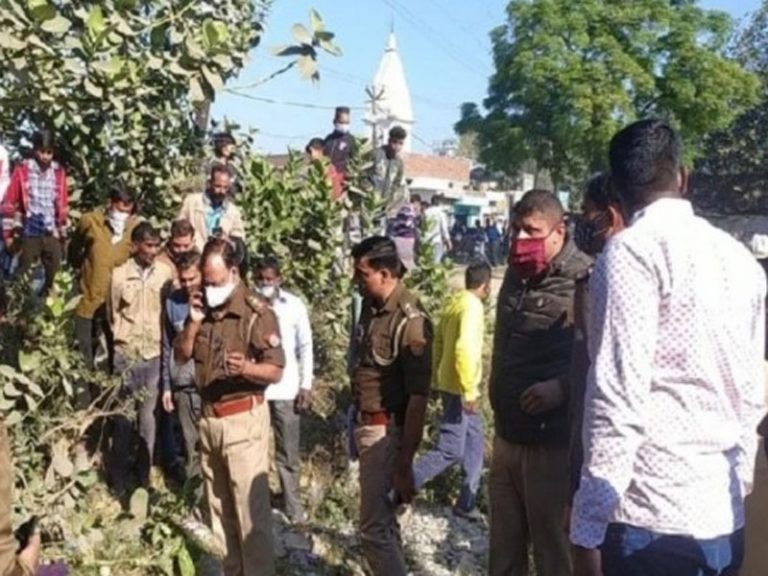
According to the report published in Hindi daily Dainik Jagran, the burnt body of the youth was recovered near the Jhalu bus stand on Bukhara road. A blood-stained stone was found near the body. He was killed by heavy blows to the face and head. SP City Laxmi Niwas Mishra, CO City Kuldeep Gupta, and City Kotwal Rajesh Solanki reached the spot and started an investigation. A dog squad was also deployed to find clues about the murder.
As per the reports, Shivam went out on Thursday evening after asking his family members to prepare food but never returned. The family searched for him but didn’t find him. On Friday evening his half-burnt body was found by locals.
During the post-mortem, the deceased was identified as Shivam, a resident of Bhadwan Nagar Complex, by his relatives. Vasu, brother of the deceased, said that his other brother Sagar ran away with a Muslim girl from the neighbourhood. Around five months ago, he was arrested and sent to jail by the police. The girl was handed over to her family, while Sagar is still lodged in jail.
Shivam was trying to help Sagar
Vasu said that Shivam used to take a stand for his brother Sagar. The people from the Muslim community in the neighbourhood were irked by his attitude. He alleged that girl’s brother and father killed Shivam. Police have started looking for the accused, but all of them are absconding. SP has assured that they will take strict action against the culprits.
The Bijnor police have informed that a case has been registered against Naseem and others based on the complaint of the deceased’s brother. The police also assured that necessary action is being taken against them. The accused named in the case are Asgar, his sons Naseem, Naeem, Ejaz, and another person Arif. Based on the complaint of Vasu, police have registered a case against them.
प्रकरण के सम्बन्ध में थाना को0शहर पर मृतक के भाई की तहरीर पर अभि0 नसीम आदि 04 नफर के विरूद्व अभियोग पंजीकृत किया गया है। आवश्यक विधिक कार्यवाही की जा रही है।
According to Hindi daily Amar Ujala, people of the locality have alleged that the girl with whom Sagar had run away was pregnant. They have seen Shivam standing outside the house of the girl at around 6 PM. Shivam was married and had two children. Station in-charge, City, Rajesh Solanki said that Shivam was murdered as a vendetta. Police are currently investigating the case and looking for the accused.
Similar cases from the past
This is the not first time someone was killed as a result of a relation between persons of different religions. Rahul Rajput was killed in Delhi by the family of the girl he was in love with. He was beaten up by Muhammad Afroz and Muhammad Raj, brothers of the girl, to the extent he died as his intestines burst. Ankit Saxena was also killed for the same reason in Delhi.
On Sunday, the Biju Janata Dal (BJD) expelled one of its MLAs, Dr Pradeep Kumar Panigrahi, for his personal links with IFS officer Abhay Kant Pathak, who has been arrested by vigilance on charges of corruption and accumulating disproportionate assets.
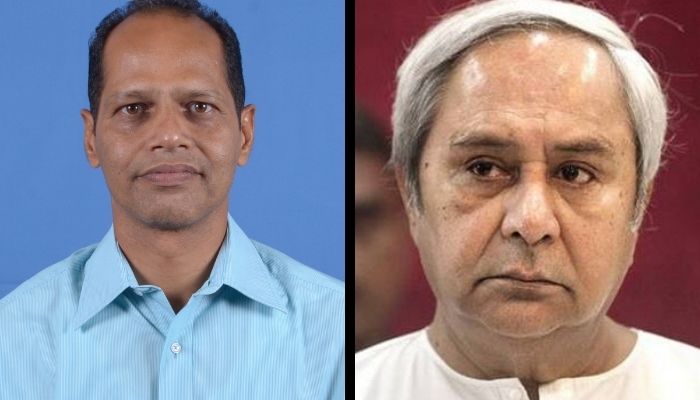
Pradeep Panigrahi, a 3-time BJD MLA and former minister from Gopalpur in Ganjam district of Odisha, was removed from the primary membership of the BJD for his ‘anti-people activities’. As per reports, his expulsion came at the backdrop of his connections with the corruption-accused IFS officer and his son Akash. Pradeep Panigrahi’s daughter Shruti was scheduled to marry Akash Pathak, the son of IFS Abhay Kant Pathak in December, prior to the unearthing of the corruption case. Chief Minister Naveen Patnaik issued an order removing Pradeep from the party on Sunday.
Panigraphi’s daughter was to marry IFS officer’s son
Soon after over a dozen teams of over 150 vigilance officials raided several properties owned by the IFS officer and his son, their close family ties with the BJD MLA were all over the state media. Panigrahi’s daughter and Pathak’s son were to get married at a high-end luxury palace hotel in Rajasthan’s Udaipur in December. Pathak’s son Akash was reportedly staying in a luxury apartment in Pune that he had rented for over Rs 5 lakhs per month. He also had rented another farmhouse for over 5 lakhs a month. The Pathak’s ultra-luxurious lifestyle, dozens of chartered plane flights and other expenses that have been unearthed in the recent raids have grabbed public attention in the state.
It is notable here that Akash has been named in an FIR filed by Tata Motors in crime branch for defrauding job seekers while posing as an MD in the company. As per reports in Odia media, most of the fraud victims are from the Gopalpur constituency, where Pradeep Panigrahi is the MLA. Akash had allegedly cheated crores of rupees from dozens of victims by using fake email id, and forged documents bearing the name of TATA companies. A state crime branch team has reached Gopalpur to investigate the fraud case.
Largest ever vigilance raid in Odisha on IFS officer
IFS officer Abhay Kant Pathak has been arrested for alleged corruption after the multiple vigilance raids. His son Akash was also arrested for impersonating as a top executive officer of Tata Motors and facilitating fake recruitments. As per the findings of the crime branch and State Vigilance Department, the accused had issued a letter of intent to several job seekers in Gopalpur. It is now being probed whether any financial transactions were involved in these recruitments. While conducting raids in connection to the case, the State Vigilance Department had found a whopping ₹9.4 crore in bank accounts of Akash. Reportedly, about ₹8.4 crores were deposited in cash at Bhubaneshwar while ₹70 lacs was deposited at Ganjam.
How would you like to see India’s GDP grow at double digit rates? Sure, you would love that. Suppose then that India’s (real) GDP growth soars to 10%. Add to that say 4% inflation, leading to nominal GDP growth of 14%. Fantastic! I wish…
Just one catch. In return for this 14% nominal GDP growth, you must agree to the Indian Rupee crashing by 50% against the US Dollar.
How do you like the bargain now?
Of course, such a situation would never present itself in the real world. If India’s economy was chugging along at 10%, the whole world would be at India’s door. The Indian Rupee would rise in value, not fall. On the flip side, if India’s economy was doing horribly, the world would rush for the exit. The Indian Rupee would lose value.
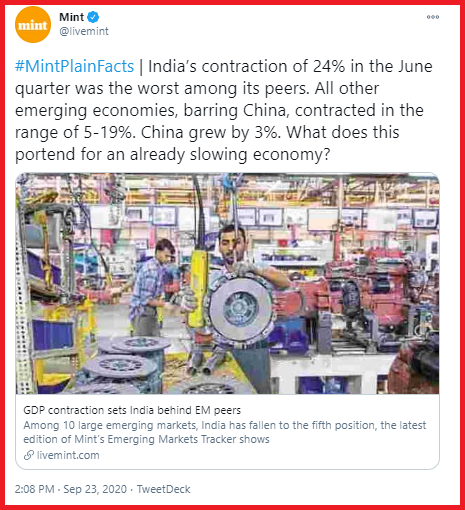
You must have seen the headlines. As the Mint put in “plain facts,” India’s GDP, with a shocking contraction of -23.9% is pretty much at the bottom of the table of emerging economies.
Mint article on Indian economy
So who is doing better than India? Apparently, almost everyone. I suppose this is a good time for all and sundry, from the high brow Kaushik Basu to social media based economist Dhruv Rathee to take potshots at Modi’s India.
Now, here is what is missing from those “plain facts.” Did they mention what happened to the respective emerging market currencies during this same time? Every country reports GDP growth only in its national currency and not in USD.
India’s economy contracted by 23.9%. For comparison, Brazil’s GDP contracted by 11.9% and Russia’s GDP by 8%. So, did they really do better than India?
Absolutely not. Brazil’s GDP contracted by 11.9% in terms of the Brazilian Real (BRL). Russia’s GDP contracted by 8% in terms of the Russian Ruble (RUB). India’s GDP contracted by 23.9% in Indian Rupee terms.
Unless we move to the same unit, we are almost literally comparing apples to oranges to mangoes.
So what happens when we look at the respective contractions in USD terms? Here is the disaster that struck the RUB and the BRL in times of the Wuhan Coronavirus.
USD vs Russian Ruble
From 1 USD = 61.73 RUB at the beginning of the year, the RUB has collapsed to 76.09 to the dollar. That is down by over 23%!
And look at the Brazilian Real (BRL)
USD vs Brazilian Real
From 1 USD = 4.02 BRL at the beginning of the year, the BRL has collapsed to 5.34 to the dollar. That is down by nearly 33%!
And now see the Indian Rupee, almost rock solid.
USD vs INR
Down by barely 4% since the beginning of the year. As it always happens, the US Dollar gains in value during times of global distress. Even though we are facing a once in a century global crisis, the Rupee has barely lost any value.
Does it not make more sense to compare everything in same units? So Brazil lost 11.8% of its apples and India lost 23.9% of its oranges. But the price of apples fell by 33% during the same period, while the price of oranges declined only by 4%. So who really lost more?