Home Blog Page 4853

Law against ‘Love Jihad’ does not violate anyone’s fundamental rights: Smashing the ‘liberal’ arguments with truth

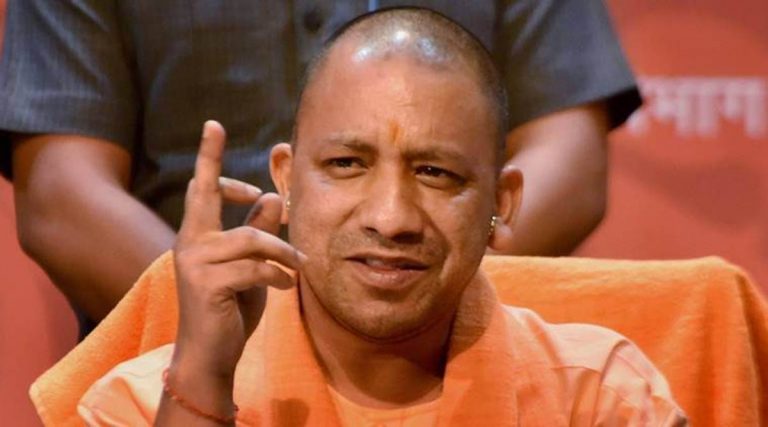
The UP government, as promised by CM Yogi Adityanath, brought the 1st draft of the bill which criminalises ‘Love Jihad’ (Grooming Jihad) and other forms of illegal conversions. The bill is titled Uttar Pradesh Vidhi Virudhh Dharm Samparivartan Pratisdhedh Adhyadesh, 2020 or UP Prohibition of Unlawful Religious Conversion Ordinance – 2020.

Ever since UP and MP governments have shown intent to criminalise ‘Love Jihad’ and bring strong laws against it, leftists are on a misinformation overdrive. The draft not only punctures most of their arguments, but it also paves way for other states like Kerala which have been advised by respective High Courts to bring similar laws against this growing menace.

Provisions under the law

Before going into specific provisions, the readers must know that this is not a law against interfaith marriage or any marriage, to begin with. Interfaith marriages are and will be allowed in India. The law is about illegal conversions by deceit and coercion. Read it as an anti-conversion law. That should clear a lot of the things.

  1. The act aims to provide freedom of religion by the prohibition of conversion from one religion to another by misrepresentation, force, undue influence, coercion, allurement or by any fraudulent means or by marriage and for the matters connected therewith.
  2. The punishment for such conversions may range from 1-5 years. It could attract a higher penalty if the person being converted is a minor or belongs to SC/ST.
  3. The one who desires to convert and the one who is doing the conversion process must submit forms in the DM’s office who will then enquire about the real intention, cause and purpose of such conversions.
  4. The converted person must submit a declaration and present himself/herself before DM, in person, to testify claims made in the declaration.
  5. The burden of proof lies on the person who has caused the conversion.
  6. Any person, reconverting to his immediate previous religion, shall not be deemed as a convert under this law.

Does it deny agency to women?

Absolutely not. In fact quite the opposite. It makes it unlawful to forcefully convert women after or during their marriage. It gives them the choice to continue with the religion of their choice. There have been numerous instances of forceful conversion post-marriage, concealing identity while luring the girl or by other undue influence. I am not going to list them all here. However, all such instances have shown that the conversion was done against free will. And it is this free will that the proposed law tries to strengthen, contrary to what our social commentators would like us to believe.

Also noteworthy is, the bill doesn’t outlaw conversion as a whole. It outlaws conversion against free will in limited cases. So cases like Hadiya, where she was groomed to accept Islam out of free will, still won’t come under the purview of this law. Such cases of grooming jihad cannot be dealt with by law as it goes against free will. It needs to be dealt with by a strong family and social structure and the right education.

Does it act against free will?

No, it doesn’t. In fact, it provides freedom of religion by prohibiting conversion against free will.

Conversions for the sole purpose of marriage have been outlawed by courts in the past. This law only codifies such judgements. You can’t convert to a religion just because it allows you to bypass certain civil laws. For example, you can’t convert to Islam because you want to keep multiple wives. Or your family can’t convert to Islam overnight because you want to disinherit your daughters from parental properties. You can convert only out of your own conviction for the tenets of a religion. 

Free will can’t be an alibi for committing religious bigotry and a fraud upon the law as is held by Calcutta HC.

Does it violate Article 25A?

A short reading of article 25, which is a fundamental right, before we commence further. “Subject to public order, morality and health, all persons are equally entitled to practise, profess and propagate their religion”. I guess, Islamists across the board and their handlers in the media are arguing that anti-conversion law prohibits propagation, which is a constitutional guarantee. Good to see Islamist’s faith in the constitution, however, their reading needs to be improved.

They seem to be under the impression, “Either your head or your signature will be on the conversion papers” is the propagation of religion. That is where they and their handlers in media are erring, by overlooking the first part of the article. The condition which sets the term for practising, professing and propagating. “Subject to public order, morality and health”. ‘Propagating’ is me telling someone about Hinduism, our roots, cultures, traditions and values. This is held by the honourable SC. ‘Convert or face beheading’, as practised by the Islamic invaders, is not propagation. That violates public order and health.

Conversion is not a fundamental right under article 25. A little difficult for expansionists to understand this. Laws against conversion do not violate your fundamental rights. This is not the first time such laws are passed. The Orissa Freedom of Religion Act, 1967 was challenged in court and was duly dismissed. The propagandists know this, hence, instead of challenging the proposed law to be enacted in UP, if they really believe it to be anti constitutional, they will only make noise on Twitter. Any such challenge, will be summarily thrown into dustbin under the flagship “Swachh Bharat Abhiyan” and they know this.

What about dowry and domestic violence?

How can our ‘liberals’ discuss anything about religion and society without drawing false equivalence with so-called ‘evil Hindu practises’? This will cause severe Gastroesophageal reflux in liberals. So a narrative is being built with random statistics about how domestic violence and dowry are bigger evils that exist in Indian society.

I remember the first question from Barkha to Ayaan Hirsi Ali in a panel discussion, “There are so many misogynists in so many religions. Why are you picking up only on Islam? Aren’t the orthodoxies in all religions inherently misogynistic? I come from a country that has one of the largest Muslim population and women are not allowed in the mosque. But guess what, so are Hindu women (WHAT ???)” This was when the discussion was titled “Women in Islam”. In fact, the term “Saffron terrorism” was an outcome of such inexplicable urge to draw a false equivalence. Anyways, I will be digressing if I discuss why Sharad Powar had ‘invented’ a fake bomb blast story in a Muslim majority area in 1992 to make the Mumbai bomb blasts more ‘secular’.

The fact of the matter is, dowry and domestic violence are societal evils and they do exist. But what liberals keep forgetting is, there are specific laws, that also exist to check such evils. Section 498A, and the Domestic Violence act address these concerns. Have they been able to eradicate it? No. Do women who face these evils have recourse to the law? Yes. Do women who face conversion post marriage have recourse to law? No. That is what the proposed law addresses. Nobody is claiming it will eradicate love jihad. IPC 302 hasn’t yet stopped murders. 

Conclusion

Will Gauri be able to marry a Shahrukh on the ghats of Prayagraj after this law is promulgated? Of course yes. Subject to the condition that Gauri knows Shahrukh’s name is Shahrukh and not Raj Malhotra. Also, Gauri remains Gauri or converts to Gulnaaz only out of her free will, fully aware of the consequences. This law, in no way, restricts interfaith marriages. Numerous courts have given several judgements on religious conversions. Courts have even passed orders asking state governments to frame laws against this growing menace. The proposed law only codifies the principle laid down by our courts.

India is a country where 4 major religions of the world have originated. It also has the 3rd highest population of Muslims. Hinduism is the oldest religion in the world. Religion is intrinsically part of the lives of every Indian. More importantly, it has legal implications in civil laws including marriage and inheritance. Secularism can be enshrined in the preamble but in practice, in the absence of a uniform civil code, the state does interfere in civil laws which are religion-specific. In such circumstances, laws that protect religious rights should be welcome.
Karnataka HC slams Mumbai Police for following Republic COO Priya Mukherjee to Bengaluru to question her, grants her transit bail

0

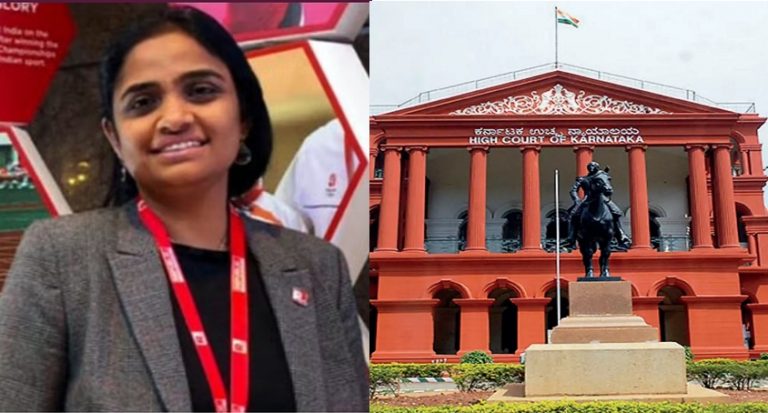
In an important development in the TRP manipulation case, the Karnataka High Court today slammed the Mumbai Police for rushing to Bengaluru to question Republic COO Priya Mukherjee. The court made critical statements for Mumbai police while delivering the verdict on Mukherjee’s petition seeking protection from arrest, and granted her 20 days of transit bail. The court also noted that neither Mukherjee nor Republic TV was named in the complaint filed in the TRP manipulation case.

The High Court said Mumbai police failed to explain they had rushed to Bengaluru when Priya Mukherjee had already appeared for questioning in Mumbai earlier, and she had visited Bengaluru for a few days after informing Mumbai police. The court accepted that the petitioner’s argument that there is reasonable apprehension that the Mumbai Police may arrest her, and hence granted her transit bail while directing her to approach an appropriate court for regular anticipatory bail.

The High Court also ordered that in case she is arrested during this period, she will be released on a bond of Rs 2 lakh and two sureties.

The plea was filed by Republic COO Priya Mukherjee after Mumbai police chased her to Bengaluru to question her, saying that she apprehends that she might be arrested. Mukherjee was issued summons by Mumbai police on November 17 and 18, and her statements were taken from 11.30 am to 5.30 pm in Mumbai. On 19th November, she wrote a letter to Mumbai police informing that she was going to Bengaluru as her father was ill, and informed that she will return in a few days and join the investigation.

On 20th November, she went to Bengaluru and sent another letter to Mumbai police informing that she will return to Mumbai by November 24, and will be available for questioning from that date. But on the same day, i.e., November 20, a team of Mumbai police arrived at Bengaluru, and issued her two notices. In the second notice, she was asked to appear for questioning at the Bannerghatta police station on 21st November. Following this development, she filed the plea with the Karnataka High Court seeking relief from arrest by Mumbai police.

Mumbai police opposed the plea in the court, saying that the petitioner was ‘shopping at different courts’. The police alleged that Priya Mukherjee approached Karnataka High Court after she was denied relief by Mumbai High Court. However, the counsel of the Republic COO rejected this claim, saying it was Arnab Goswami who had filed the plea at Mumbai High Court, and she didn’t file any plea there.

The main contention of Mumbai police was that the petition was not maintainable, and there was no apprehension of arrest. But the High Court rejected the claim, and noted that courts can consider an application made under section 438.

Noting the circumstances of the case, the High Court said, ‘there is no dispute on the fact that in the complaint, there is no mention of the Petitioner as well as the Company,’ referring to the complaint filed by Hansa Research in the TRP case which had named India Today, not Republic TV as alleged by Mumbai Police.

The court also noted that Priya Mukherjee had appeared for questioning in Mumbai as per police summons, and left for Bengaluru after informing Mumbai police. The court said that when Mumbai police was asked why they needed to rush to Bengaluru to question her after she sought a short time to visit her father, they had no answer. The High Court further added that the Mumbai Police could not explain why she was summoned to a police station in Bengaluru.

The court also noted that the notice issued to Priya Mukherjee asking her to appear at the Bannerghatta police station didn’t state the reason for the same.

Rejecting the contention of Mumbai police, the court said that when personal liberty of a person is under threat the petition can seek relief from courts. The bench of Justice H P Sandesh said that Mumbai Police was misusing the SC judgement in Arnesh Kumar v State of Bihar case, and the court will have to come to the rescue of citizens on such cases.

“Police are not applying their mind whether a cognizable offence is made out or not. Police should satisfy the Court on why they are arresting a person”, the court said.

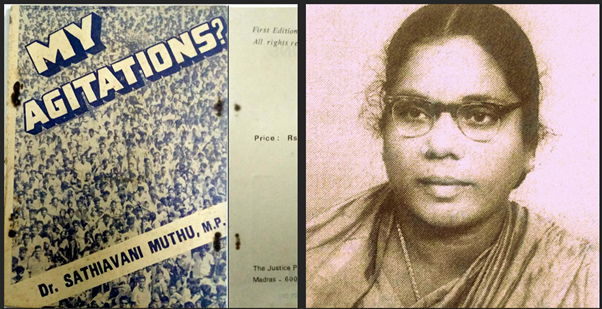
The Life and Travails of Dr Sathiavani Muthu: A window to the experience of Dalits in the Dravidian movement

In an era when upper caste women were beginning to find their feet in public life and participating in politics, a young woman from the Depressed Classes was a pathbreaker and opened the doors for Dalit women in politics. She was Sathiavani Muthu, who participated in electoral politics for 3 decades, from the 50s to the 80s, served as Minister in the Tamil Nadu Government twice and served the country as a Rajya Sabha MP and as a Union Minister.

She has the unique distinction of being probably the first Dalit woman in India to start and lead a new party, Thazhthapattor Munnetra Kazhagam (Depressed Classes Development Front). What should have been a storied life, taught to young Indians as a lesson in self-reliance and leadership remains unknown beyond the unspoken annals of Dravidian history and unsung.

Dr Sathiavani Muthu rose from a background of activism. Her father was part of Ayotheedasa Padithar’s Adi-Dravida Buddhist platform. The Adi Dravida Mahajan Sabha, which was established by Ayotheedasar and led by such stalwarts as M C Rajah eventually was subsumed into EVR’s Self-Respect Movement and its offshoot the Dravidar Kazhagam. Beyond Dalit politics, her family were Buddhists and led workers agitations. Her home turf was the industrial suburb of North Madras, Perambur, from where she stood for Assembly elections 5 times and won thrice.

She was among the cohort of young politicians that joined C N Annadurai in the Dravida Munnetra Kazhagam. When the DMK picketed Chief Minister Rajaji’s house in 1953 during the anti-Hindi agitation, Sathiavani was in the forefront, in spite of advanced pregnancy.

When the DMK came to power in 1967, she was part of Annadurai’s cabinet, holding both Harijan Welfare and Information portfolios. After Annadurai’s passing in 1969, she was again Harijan Welfare Minister in M Karunanidhi’s Cabinet until 1974.

Disillusionment

Her first major disappointment came in 1968, at the time of the Keezhvenmani massacre, when the Dravidian leaders soft pedalled  and tried not to bring too much public attention. The main accused was Gopalakrishna Naidu, a landlord from the same community as many of the Dravidian leaders, and the 43 landless labourers who were burned alive were from the Scheduled Castes.

In spite of Dravidians being in power, she realized that Scheduled Castes were still no better placed in terms of empowerment. She already had faced the bigotry of EV Ramasamy, when he wrote in his periodical Nasthikam of 2 March 1963 – “Pariah women wearing jackets led to increased prices for clothes and Pariah men becoming literate led to increasing unemployment”.

In her autobiography “Enathu Porattam” – My Agitation, she writes:

“Periyar conducted an Untouchability Eradication Conference in which I was invited to speak. I said

You have told us that when we encounter a snake and a Brahmin, the Brahmin must be struck first since he is more dangerous than a snake. You were able to say these words and these Black-Shirted Self-Respect Activists here have risen in life through you. I have to place on record that the situation of our people from the Depressed Classes has not improved in any way.

The Depressed Classes face no trouble from the Brahmins. On the contrary, the information I have is that it is non-Brahmins who are responsible for many of the atrocities against us. The situation today is such that there is a greater need for Shudra and Non-Shudra based politics rather than Brahmin, non-Brahmin polarization.”

Leaving the DMK

In 1974, she made a speech at Integral Coach Factory in a meeting organized by the SC/ST Employee’s Association where she pointed out the skewed nature of family planning policies that targeted Scheduled Castes and may result in their relative diminishing in numbers compared to dominant castes. A man such as M Karunanidhi would never let such an open criticism of his Government’s policies go without retaliation.

When Dr Sathiavani Muthu pushed for a Law University dedicated to Ambedkar, she was told that there were not sufficient funds and the Government would put up half the money. She could raise the remaining money through her own efforts. Though she managed to put up the funds by lobbying on her own behalf, she was smarting from the insult. In 1974, she left the DMK and formed her own party, Thazhthapattor Munnetra Kazhagam.

MGR and the AIADMK

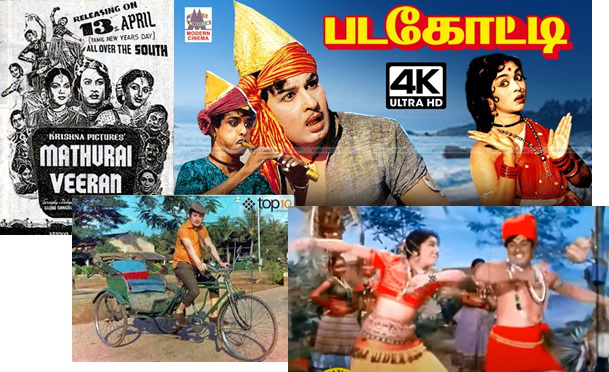
In 1977, MGR won the elections and the AIADMK came to power. The Scheduled Caste vote base had largely shifted to the AIADMK, largely due to MGR’s individual popularity. He had carefully cultivated the Scheduled Castes as a constituency, beginning with ‘Madurai Veeran’ (1956), in which he played a legendary hero from a cobbler background.

Madurai Veeran is the kula deivam for many people from the South of TN and still has a special place in the hearts of Tamil Dalits. ‘Padagotti’ (Boatman, 1964) had him as a fisherman, ‘Rickshawkaran’ (Rickshaw Puller, 1971) was a massive hit among the Dalits who dominated the itinerant working class of the urban slums, Oli Vilakku (Shining Lamp, 1968) was a major hit among the nomadic Narikurava community, as it featured a Narikurava dance by MGR and Jayalalitha.

Dr Sathiavani Muthu was cognizant of the need to use MGR’s popularity as a vehicle for her more activist brand of politics and accepted when MGR reached out to her. The AIADMK only fielded her from Ulunderpet, a rural region in North Tamil Nadu, far away from her home base of Perambur in Chennai. She could not find sufficient traction and lost. MGR nominated her to the Rajya Sabha in 1978, and Dr Sathiavani Muthu served briefly in the Charan Singh Ministry as Minister Of State for Social Welfare.

In 1980, power reverted to Indira Gandhi-led Congress and this time, the DMK was in alliance with the Congress. She fought elections to the Assembly one last time in 1984 in her home turf of Perambur, but the years away from ground-level politics took their toll on her support base. She was ousted by Parithi Ilamvazhuthi, then a rising young star in the DMK who was also from the Scheduled Castes.

Legacy

Dr Sathiavani Muthu’s career serves as a lesson on the importance of self-reliance, especially for Dalits. Despite her background and skills in organization, she was consistently boxed within the Dalit category and could not strike out on major positions.

In the early years of Independence, Dalit leaders like Babu Jagjivan Ram rose to powerful positions. In 1960, Damodaram Sanjeevayya became the first Dalit Chief Minister of an Indian State, in the then unified Andhra Pradesh.

However, regional and caste-centric politics have stymied further growth of Dalits to such positions of leadership.

One wonders what would have been of Dr Sathiavani’s career if the Adi-Dravida Mahajan Sabha had moulded itself into a strong political movement under the leadership of M C Rajah. This trailblazer’s life today remains but a foot note in history, waiting for future generations to carry forward her legacy.

References

  1. Dravida Mayai Part 2 – Subbu
  2. Thi Mu Kavin Thottramamum Valarchiyum (The Rise and Growth of DMK), Sivalai Ilamathy, 1987
  3. https://swarajyamag.com/politics/ten-things-about-periyar-dravidian-parties-dont-want-you-to-know

Ex-Bollywood actress Zaira Wasim, who quit showbiz for Allah, asks fans to remove her pics

Former Bollywood actress Zaira Wasim, who quit the film industry to serve Allah, has urged her fans to remove her pictures from the fan pages.

https://www.instagram.com/p/CH12TG1lavU/

Wasim took to Instagram to urge her fans who operate various fan pages in her name to remove her pictures. She also asked them to ask other fan pages to remove her pictures. “I am trying to start a new chapter in my life and I could really benefit from your cooperation-(like a lot!!)” she posted.

Zaira herself has removed all her personal pictures from her social media account. She had earlier asked her fans to stop praising her as it is dangerous for her ‘Iman’.

Wasim quit Bollywood in June 2019 claiming it took her away from Islam.

PM Modi tops Twitter engagement in October, Sonu Sood emerges top among Bollywood entertainers: Report

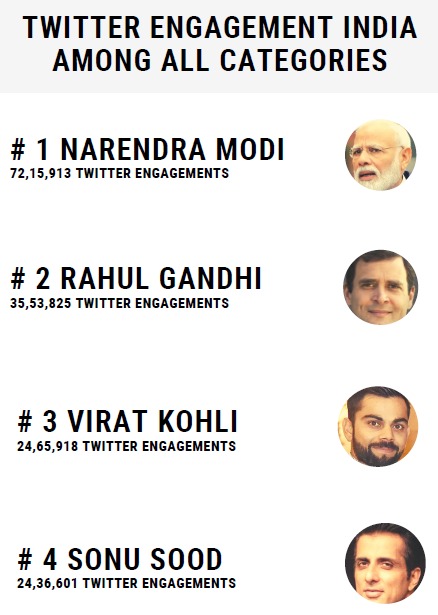
Prime Minister Modi topped the charts for the month of October 2020 in terms of Twitter engagements while Rahul Gandhi comes a distant second with less than half the number of engagements, according to analysis by Twitteet.

Twitteet is an analytics platform that provides ratings and ranks politicians, entertainers, journalists and others based on engagements on the social media platform.

Twitteet ratings

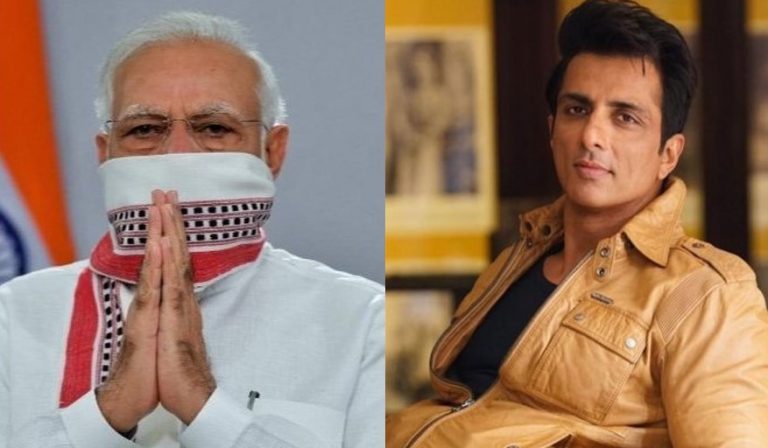
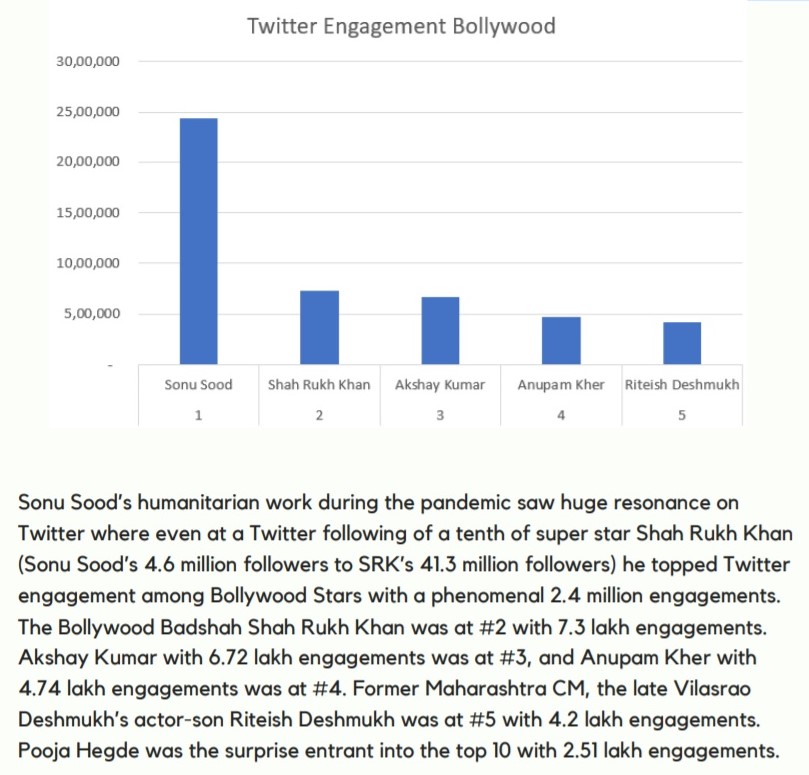
This was, of course, not a surprise as the popularity of Prime Minister Modi is unmatched not only on social media but offline as well. The real surprise, however, was Sonu Sood gained more Twitter engagements than any other entertainer. Sonu Sood garnered more than triple the number of engagements than Shah Rukh Khan, who came second.

Amusingly, however, Sood has only a fraction of the followers that Shah Rukh Khan has. Sood has become somewhat of a meme on social media since the Coronavirus lockdowns began, that perhaps explains the high engagement.

Twitter engagement Bollywood

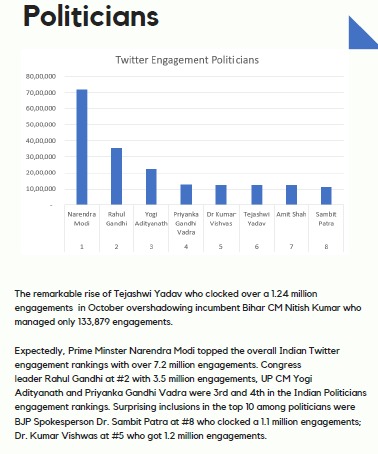
The circumstances were much less surprising with regard to politicians. Prime Minister Modi topped engagement by a huge margin with Rahul Gandhi a distant second. Chief Minister of Uttar Pradesh, Yogi Adityanath, came in at third while Priyanka Gandhi Vadra was fourth in terms of engagement.

Politician Twitter engagement

As for journalists, Deepak Chaurasia topped the chart in terms of Twitter engagement while Rohit Sardana came second. Swati Goel Sharma of Swarajya Mag broke into the top 5 at 5th while Rana Ayyub was at 6th and Rajdeep Sardesai at 8th for the month of October.

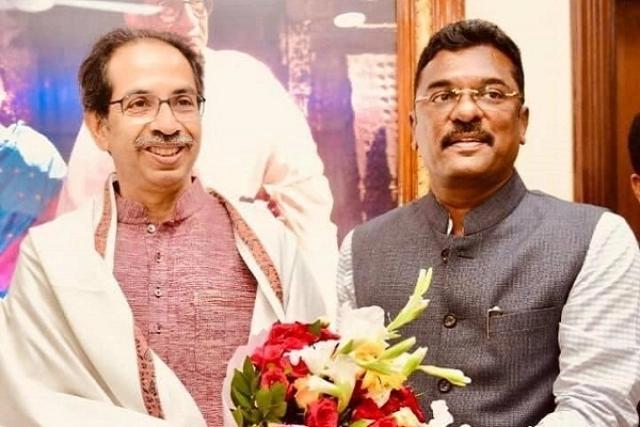
Shiv Sena’s Pratap Sarnaik, who threatened to break Kangana’s mouth, went from being an autorickshaw driver to multimillionaire

The Enforcement Directorate had yesterday carried out multiple raids at the residences and office premises of Shiv Sena MLA Pratap Sarnaik. At least 10 locations spanning across Mumbai and Pune were searched by the ED officials, allegedly in connection with a money laundering case linked to the legislator. 

A senior Enforcement Directorate official said the searches were being carried out at locations in Mumbai and Thane linked to promoters of a private company and some politicians. 

Pratap Sarnaik, the chairman of Vihang Group Of Companies, a major player in the real estate industry in Thane region, represents Ovala-Majiwada in the state assembly. He is also the spokesperson of Shiv Sena in Mira-Bhayander, a city in Thane district.

Pratap Sarnaik drove autorickshaw to make ends meet in the 1980s

However, Sarnaik’s relative affluence and his growing stature in the Shiv Sena party is a recent phenomenon. According to a report published in the Indian Express, back in the 1980s, Sarnaik drove an autorickshaw and was struggling to make ends meet. Subsequently, he made a fortune by the reality sector boom that swept Mumbai and the adjoining regions in recent decades.

Sarnaik’s political journey did not start from Shiv Sena. He was earlier associated with Pawar’s NCP. Sarnaik first hogged the limelight in 2008 when he gifted a diamond-studded cell-phone worth a staggering Rs 15 lakhs in 2008 to his former boss, NCP’s Ajit Pawar. 

Induction into Shiv Sena propelled Sarnaik’s political and personal fortunes

But his association with the NCP came to an end over a perceived insult over the appointment of the leader of opposition in Thane Municipal Corporation. He jumped ship and joined the Shiv Sena in November 2009 and since then his political career took off at an inexorable pace, catapulting him on the path to becoming three-time MLA from Ovla-Majhiwada constituency in Thane.

Interestingly, not just his political fortunes, his personal fortunes also grew at an astounding rapidity after he joined the Shiv Sena. Since becoming an MLA in 2009 when he declared his personal assets at Rs 16 crores, Sarnaik’s assets have increased by nearly 800 per cent in the last decade. In the 2019 Maharashtra Assembly elections, Sarnaik declared his personal assets worth Rs 143 crore. 

With his Vihang Group of Companies, Sarnaik has a strong presence in Thane’s real estate sector and is a major player in the hospitality industry in and around Mumbai and Thane. 

Sarnaik is also known for holding considerable clout in the Thane region and for his long rivalry with NCP’s Jitendra Awhad, who is the currently a cabinet minister in the Thackeray government. However, after Shiv Sena and NCP joined hands to form Maha Vikas Aghadi government in Maharashtra, Sarnaik and Awhad had come together and were recently seen in a joint press conference over a housing scheme launched by the NCP leader.

As his personal affluence grew, so did his standing in the party. Sarnaik was announced as the party spokesperson in September this year. He also played an instrumental role in getting the Independent MLA Geeta Jain to join the Shiv Sena last month. Jain, a former BJP mayor of Mira Bhayander, had rebelled against the BJP candidate and won the Assembly polls last year.

Sarnaik’s younger son Purvesh, a Yuva Sena leader, is married to the daughter of former BJP minister Ranjit Patil.

MLA Pratap Sarnaik had threatened to break Kangana Ranaut’s mouth

In the last few months, Sarnaik has made his presence felt in Maharashtra politics by ratcheting up his criticism against the BJP. Besides, he has also been vehemently demanding re-investigation into the suicide of interior designer Anvay Naik, a case which was used by the Mumbai Police to arrest Republic TV Editor-in-chief Arnab Goswami. Sarnaik had brought in privilege motions against Kangana Ranaut and Arnab Goswami in the previous session of the Assembly.

He had also demanded a drug probe against Kangana Ranaut. He was among the most vocal Shiv Sena leaders who had openly threatened actress Kangana Ranaut. Sarnaik had stated that Sena’s women workers will break Kangana Ranaut’s mouth if she enters Mumbai.

28 foreign companies set to make investments worth over 9000 crores in Uttar Pradesh

While markets worldwide are reeling from the effects of the Wuhan virus pandemic, over twenty foreign companies are eyeing Uttar Pradesh to make investments worth over Rs 9000 crores. According to a government spokesperson, 57 domestic and foreign companies have signed agreements for investments worth Rs 46,501 crores with the state government. Out of these companies, 28 foreign companies have signed contracts worth Rs 9357 crores with the Yogi government. 29 domestic companies have made agreements worth Rs 37,441 crore.

According to reports, a footwear manufacturing company shifted to the state from China and is currently manufacturing in Agra after an investment of Rs 300 crore. The state government has allotted a total of 850 plots to entrepreneurs during the pandemic period. Around 350-acre land has been allotted in sector 28 near Yamuna Expressway for the proposed Dedicated Medical Device Park. An MoU has been signed with Kalam Institute of Health Technology to prepare a detailed project report for the park. In order to kickstart all the projects at the earliest, CM Yogi has given orders to give possession of allotted lands to entrepreneurs within two months. Besides, the state government has adopted various measures to attract investment including amendment in labour laws.

Here are the details of companies and investments made by them in Uttar Pradesh:

  • Two Canada-based companies to invest Rs 1746 crores.
  • Four Germany-based companies to invest Rs 300 crore.
  • One Hong Kong-based company to invest Rs 1000 crore in the state.
  • Seven Japanese companies have signed contracts worth Rs 2000 crore with the state government.
  • Two Singapore-based companies to invest Rs 1600 crore.
  • Three UK-based companies to invest Rs 1375 crore in the state.
  • Five companies from the USA to invest Rs 309 crore in the state.
  • Four Korean companies have signed contracts worth Rs 928 crore with the state government.

CM Yogi seems to be making every possible move to attract companies to invest in the state so that maximum employment can be generated. Migrants workers from various states including Uttar Pradesh and Bihar were severely hit by the pandemic. The Uttar Pradesh Chief Minister had formed a commission in May this to employ the people who have returned to the state due to the Coronavirus lockdown. CM Yogi had also signed MoUs with industry associations to generate around 9.5 lakh jobs.

All landline phones to be given STD facility as govt mandates adding 0 before mobile phone numbers while dialling from landline phones

According to a circular [PDF] issued by the Department of Telecommunications on November 20, 2020, it will be mandatory to prefix ‘0’ before dialling a mobile number from a landline connection from the next year. The order has been passed to ensure adequate numbering resources for fixed-line and mobile services.

The telecom companies have to play a suitable announcement in the fixed-line to inform about the requirement of dialling the prefix ‘0’ for all fixed to mobile calls. In case a subscriber dials a fixed-line to mobile call without prefixing ‘0’, the announcement should be played. To ensure the transition is smooth, all the landline subscribers will get the STD dialling facility, as dialling a number starting with ‘0’ from landline phone is considered as STD dialling.

As per the circular, all telecom companies have to make all the arrangements to ensure compliance with the order before January 1, 2021.

The benefit of making the required change

As per the Telecom Regulatory Authority of India (TRAI), the existing 10-digit number scheme should continue as it is to avoid any inconvenience to the customers. In May 2020, TRAI issued a list of recommendations [PDF] on ‘Ensuring Adequate Numbering Resources for Fixed Line and Mobile Services’ in which the prefix ‘0’ before dialling fixed to mobile was recommended.

It said, “presently, inter-service area mobile calls from basic/fixed phone can be accessed with a dialing prefix ‘0’. However, mobile phones are accessed from a fixed-line phone, within a service area, without dialling prefix ‘0’. This puts the limitation that any digit which has been used as the first digit for the fixed network (for local calls) cannot be used for mobile numbers. By making it mandatory to access mobile numbers in a service area from the fixed network by dialling prefix ‘0’, all the free sub-levels in levels ‘2’,’3’,’4’, and ‘6’, can also be used for mobile numbers.”

Several recommendations under consideration

The government is yet to decide about the other recommendations. TRAI also said that the ministry should think of shifting data-only mobile connections to 13-digits numbers just like they did for M2M connections to ensure the availability of 10-digit numbers for a longer duration. Nowadays, many customers use SIM-based internet connections, but they are allotted 10-digit numbers, reducing 10-digit numbers for regular use.

‘Mark of religious oppression, caste superiority’: Newly elected MP in New Zealand, Gaurav Sharma, targeted for taking oath in Sanskrit

0

There has been a pattern of activism in recent-times that has sought to target Hindu politicians in the West for their religion and brand all Hindu religious symbolism and festivals as beacons for Hindutva. Apart from politicians, efforts have also been made to tarnish the reputation of Hindu organisations and ordinary citizens to rake up polarising issues such as caste.

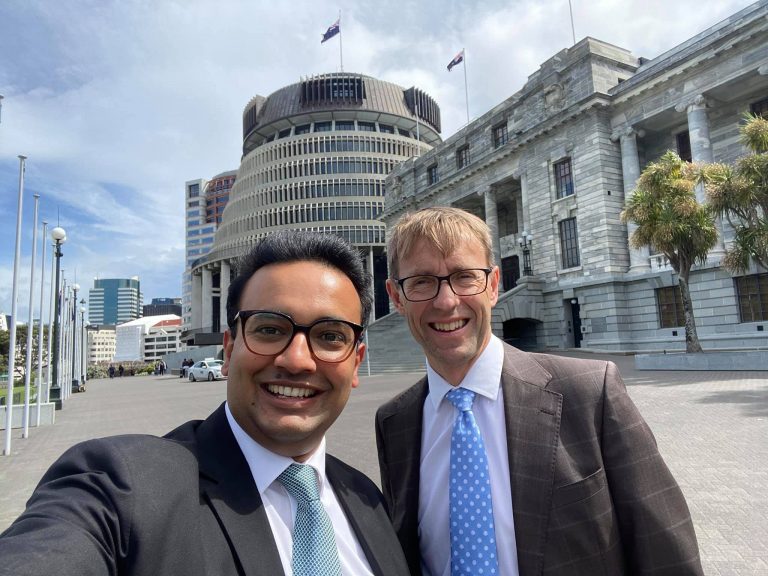
Consistent with this pattern, a journalist in New Zealand targeted newly elected New Zealand MP Gaurav Sharma for taking his oath in Sanskrit. Michael Field, the journalist, claimed that Sanskrit is a language of “religious oppression” and “caste superiority”. He also claimed Sanskrit is a “mark of Hindutva”, a “mark of fundamentalism”.

Baseless allegations against Sharma

Gaurav Sharma responded to the slander by Field in a sensible manner. He said, “I speak multiple Indian languages and wanted to choose a language that would represent the wide range of current languages spoken in India. At over 3500 years old, Sanskrit is the oldest and considered the mother language of many Indian languages that originated from it.”

“I studied Sanskrit at a small school in a rural part of India where it is a compulsory part of education curriculum for every student, not just one class or culture,” he added. Taking a jibe at the journalist, he remarked, “If you do want to talk about oppression and class divide, a bit ironical that your mother tongue and your tweet is in English. Colonialism…”

Michael Field did not leave it at that, however. Even after the sound explanation, he wanted to know ‘why not Hindi?’. Again, Gaurav Sharma patiently explained to him the reasons for his actions.

The point of the matter, however, is that Gaurav Sharma should not be put in a position where he has to explain why he took his oath in Sanskrit amidst ridiculous charges of bigotry. Sanskrit is one of the classical languages of the world. It is the language of the Vedas and the Upanishads, the Ramayana and the Mahabharata. It is verily the language of the Gods.

However, there has been an organised campaign by the Left to brand Sanskrit a ‘mark of Hindutva’. It further reveals that when they claim to be against ‘Hindutva’, what they really mean is that they are against any public demonstration of Hindu identity or the celebration of it. That is why any person in public limelight who takes pride in his or her Hindu culture is subjected to slander.

US Congresswoman Tulsi Gabbard faced similar Hinduphobia when she announced her presidential run. She was accused of being sympathetic and having ties to ‘Hindutva Nazis’. She was subjected to such bizarre allegations throughout her campaign. And now, the slander being peddled against Sharma in New Zealand for taking his oath in Sanskrit only further demonstrates the pattern that is emerging.

Amusingly enough, the newly elected NZ MP also took oath in the indigenous Maori language. But that appears to have been summarily ignored by his detractors. Gaurav Sharma was congratulated by the Indian High Commission to New Zealand Muktesh Pardeshi as well. He said, “Dr Gaurav Sharma, one of the youngest, newly elected MP in NZ Parliament took oath today, first in NZ’s indigenous Maori language, followed by India’s classical language- Sanskrit, showing deep respect for cultural traditions of both India and New Zealand.”

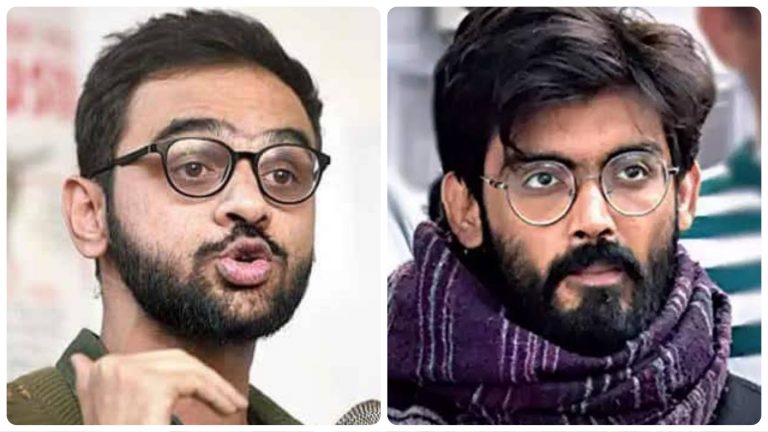
Umar Khalid used cover of ‘atheism’ and exploited Sharjeel Imam’s ‘religious fanaticism’ to push violent brand of political Islam: Delhi Riots charge-sheet

0

In a supplementary charge sheet filed in the Northeast Delhi riots case, the Delhi Police have alleged that former JNU student Umar Khalid carried the pretence of ‘atheism’ to accomplish his nefarious agenda of amalgamating violent brand of political Islam with mainstream political parties to take on the Indian State.

The police mentioned that Khalid “resentfully accepted the idea of India in 2016” and devised a plan to split India in 2020 on the concept of Ummah, thereby annihilating all its secular, national and cultural identities.

Khalid played an instrumental role in mobilising Bangladeshi and Rohingya Muslims for anti-CAA protests

Khalid has also been accused of mobilising Bangladeshi and Rohingya Muslims for carrying out anti-CAA protests in the national capital. As per Delhi Police, Khalid leveraged his political acumen and his “consciousness of the fact that Indian Muslims will vehemently reject the perverted definition of Islam”. Bangladeshi and Rohingya Muslims, who lived in ghettoised setting and were bereft of socio-economic advantages, were easier to locate and enlist to fulfil his goal, the Delhi Police said.

The charge sheet further mentioned that Khalid was the “focal point of the twin lines of Pan-Islamica and Ultra-Left anarchism which had incubated, nurtured and propagated the common conspiracy, all squarely aimed at violent subjugation of the Government”.

The Delhi Police asserted that Khalid was guided by two “mutually reinforcing line of thought”. The first one was the “legacy passed on to him by his father” and the other one was the “ultra-leftist arena where he was desperately trying to surpass the likes of Yogendra Yadav”.

Khalid wanted to exploit the religious fanaticism of Sharjeel Imam

Sharjeel Imam, another man arrested in the Delhi riots case, was the fulcrum in Khalid’s scheme of things. JNU student Sharjeel Imam’s ‘religious fanaticism’, coupled with his academic legacy and pointed oratory skills provided a “perfect combination” to his mentor Umar Khalid to realise his vile pursuit of creating anarchy and chaos in Delhi, the charge sheet says.

The charge sheet further mentioned that for “deeply communal” Khalid, Imam was the “unapologetic floating froth of religious extremism who was to be used for executing the precipitation of the conspiracy in the riots”.

On removal of Sharjeel Imam from the Shaheen Bagh protest site, the charge sheet filed by Delhi Police said that it was under the pretext of a “classical Maoist strategy” of deriving individualism and giving an appearance that the protest was rooted in a mass movement.

Umar Khalid is the ‘veteran of sedition’, Imam a ‘detonator’

The supplementary charge sheet describes Sharjeel Imam as ‘detonator’, while Umar Khalid has been characterised as the ‘veteran of sedition’. Another individual, Faizan Khan, is also mentioned in the supplementary charge-sheet, with the allegations of facilitating the Jamia Coordination Committee, a group of so-called students and activists who had launched a protest against the Citizenship Amendment Act passed last year, by providing them activated SIM cards for communication.

The supplementary charge sheet by Delhi Police was filed before Additional Sessions Judge Amitabh Rawat under relevant sections of Unlawful Activities (Prevention) Act (UAPA) on Sunday. Charges of rioting, unlawful assembly, criminal conspiracy, murder, promoting enmity on grounds of religion, language, caste, etc., and other sections of the IPC have been slapped against the three accused. The court took cognisance of the charge sheet on Tuesday.