“Divide and Rule,” the tactic, which was officially put into action by the British, has been a prominent feature of their colonial legacy in India. The imperialists exited the country after inflicting a brutal division in 1947 along the same lines, but their nefarious motto continues to be applied even today, often in a more aggressive manner and with a different approach. Certain elements have been using this strategy to exploit the faultlines within the Hindu community, even going so far as to designate many groups as outside this religious fold.
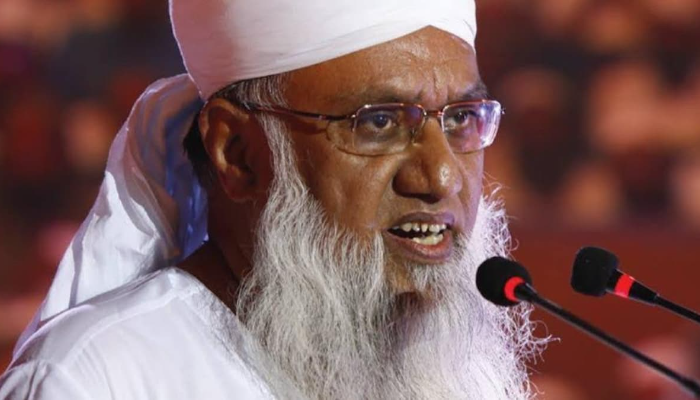
Senior All India Muslim Personal Law Board (AIMPLB) member Maulana Khalilur Rahman Sajjad Nomani recently stated that Hindus are no longer the majority in India during a speech. He argued that the traditional perception of their population is deceptive when diverse groups are viewed separately.
Nomani insisted that tribals, scheduled caste communities, people from Tamil Nadu, Lingayats, some segments of the Jat community and other such categories should not be counted as Hindus because their identities are distinct from the larger community. He announced, “I place my hand on Hajr-e-Aswad and the cover of the Kaaba and say that Hindus are a minority in India. Under no circumstances can Hindus be considered a majority,” to his attentive audience in the viral footage.
He also made an admission, revealing that Hindus were split into two factions to serve the Islamist agenda and expressed disappointment over the scheme’s failure as they all voted for the Bharatiya Janata Party (BJP). “We divided Hindus into secular and fascist units, but both ended up hurting our cause.”
"We have made Hindus a minority in this country too." – Maulana Khalilur Rahman Sajjad Nomani pic.twitter.com/zd4lz2Hpvv
The statement made by Taliban fanboy Nomani is an open secret. The radical ecosystem and “secular” politicians alike have repeatedly employed such manoeuvres to create rifts within Hindu society and fulfil their ulterior motives. Former Karnataka Chief Minister Siddaramaiah had claimed that Lingayat is a different religion. Similarly, Congress MLA from Madhya Pradesh, Umang Singhar, asserted that “tribals are not Hindus.”
The Rashtriya Janata Dal and Samajwadi Party are known for their “Muslim Yadav (M-Y)” combination to form vote blocs in Bihar and Uttar Pradesh for electoral benefits. The latter’s latest PDA (Pichhda or Backward Classes, Dalit and Alpsankhyak or Minorities) strategy represents another extension of this playbook.
The systematic targeting of the Hindu community, which has been segregated into castes, classes or other segments, remains a defining feature of this effort, while Muslims are consistently perceived as a single entity, despite the presence of multiple sects that have been involved in violent conflicts with each other for decades.
The phenomenon has become so standard that it elicits no response when the largest community in India, instead of being regarded as a cohesive whole, is unceasingly exposed to attempts to foster feelings of separation and isolation to undermine its Hindu foundation. This is regularly observed from discussions analysing voting behaviours to giving “caste colours” to crimes, but never to terror assaults, as that would be “Islamophobic.”
A terrifying scenario is underway
A conspiracy is in motion, transcending vote bank politics, aimed at breaking apart the Hindu community, eroding its strength and weakening its influence, which would ultimately sever the civilisational roots of India, substituting them with a foreign culture, as seen in various parts of the world, from the Arab nations to India’s neighbours.
This illustrates why an offensive against Iran and Gaza triggers massive protests and violence takes place in Mumbai’s Azad Maidan over Rohingya Muslims, but New Delhi’s move to introduce the Citizenship Amendment Act (CAA) to protect the persecuted minorities of Pakistan, Bangladesh and Afghanistan results in unrest and anti-Hindu riots in the national capital.
This is also the reason behind the alarming influx of Bangladeshi and Rohingya intruders into the country, which is facilitated by political parties such as All India Trinamool Congress (AITC or TMC) in pursuit of their short-term political objectives at the expense of the nation’s greater good.
TMC chief and former West Bengal Chief Minister had even threatened that Muslims would encircle Hindus and “completely finish them off” if her party were not in power in the state. Interestingly, this was intended to frighten Hindus into supporting her during the assembly elections, which later led to her humiliating defeat. However, her comment serves as a stark reminder of the imminent threat that has already transformed into a chilling reality from Kashmir to Murshidabad.
The Hindu territory of Kashmir experienced a dramatic decline in its native population as the Muslim population expanded over time. The Kashmiri Pandits had to endure a Pakistan-sponsored brutal exodus in the 1990s and are forced to live as refugees in their own country. Their properties are confiscated by those who were once their neighbours and friends but sided with the jihadis, while the former are unable to return to their homes and have to act as uninvited guests in their own land.
A similar incident unfolded in the Muslim-majority Murshidabad last year, where Hindus had to leave their homes to protect themselves after facing attacks from extremists. The violence resulted in the brutal murders of 72-year-old Hargobindo Das and his 40-year-old son Chandan, leading to the conviction of 13 Muslims in the case. Hindu idols and temples were desecrated and vandalised, while Hindu residences were marked with black ink, bombed and set ablaze by the bloodthirsty mobs.
Multiple such instances have surfaced where Hindus had to sell their homes to evade this unwarranted aggression from Muslims, especially where the latter are predominant or in substantial numbers. Furthermore, Indian courts, including the Supreme Court and legal bodies, have consistently cautioned that unnatural or unchecked demographic changes, particularly through illegal immigration, pose a major threat to national security, constitutional integrity and social stability.
Judge GR Swaminathan of the Madras High Court even remarked that the Indian Constitution would no longer be relevant if the nation’s “demographic profile” is altered. Regions such as Jharkhand have already begun to suffer the repercussions of this development.
A violation of the religious rights of Hindus
These Muslim extremists not only assault Hindus but also react adversely to the latter practising their faith, which “offends” their delicate sentiments. A Durga temple in Asansol was shut down by the TMC government due to pressure from Muslims and remained closed for 15 years as Hindus were not allowed to worship there. It was only reopened after the saffron party came to power.
The Mamata government shut down a Maa Durga temple in Asansol under pressure from Muslims.
The temple remained closed for 15 years, with Hindus denied the right to worship.
Following the BJP’s victory, the temple gates have reopened, and saffron flag has been hoisted.… pic.twitter.com/CMHwn4pSiB
Hindus had faced restrictions on conducting religious processions and celebrating prominent festivals, including Durga Puja, when they coincided with Islamic occasions during the TMC regime in Bengal. Calcutta High Court had to intervene against such diktats. However, the trend is widespread in other areas as well. The unyielding objections and assaults on Hindu processions for having the audacity to traverse through “Muslim areas” or even otherwise point to an unsettling degree of intolerance within the second-largest community in the country.
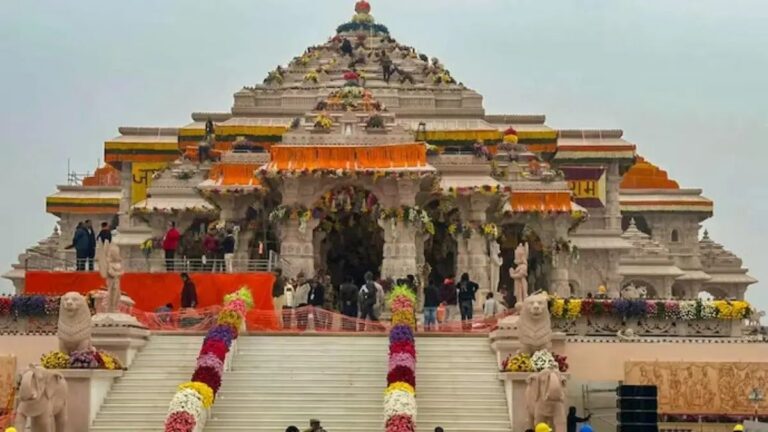
Meanwhile, Hindus have to constantly fight for their fundamental right to observe their beliefs and worship their deities, from Lord Ram in Ayodhya to Lord Murugan at Tiruparankundram Hill. As if this were not enough, the rampant criminal activities, including love jihad and those perpetrated by intruders, which comprise the occupation of government-owned lands such as critical forest and agricultural zones, have resulted in a serious challenge in states like Assam.
Therefore, this remark by Nomani, who is also opposed to sending girls to schools, is not indicative of a radical mindset but rather a meticulously constructed plot reminiscent of the dangerous aspirations expressed in the “India 2047” document of the outlawed Popular Front of India (PFI), which envisioned the country as an Islamic state.
These entities are singularly focused on establishing Muslim dominance in India through any unscrupulous methods, including the division of Hindu society, while “secular” parties are desperate to cater to them for power acquisition while Hindus are in a precarious position facing an existential threat.
Conclusion
It has become imperative to put an end to internal disputes and counter any devious act to attack the Hindu community, which must awaken to reality and stop clashing over matters such as castes, class or language and instead concentrate on the larger picture. They need to showcase a solidified front, just as Muslims do for their community, despite their differences, if they hope to survive against such an organised adversary.
Their dropping growth rate in contrast to that of Muslims, the imposing inflow of Rohingya and Bangladeshi intruders and the Islamo-leftist lobby, has already left them with a very narrow margin against this menace. The odds are stacked against them. Hindus have to defend themselves against an unrelenting global ecosystem on several fronts, and they must recognise and respond to this reality.
It is a fact that Hindus have become politically, culturally and religiously conscious in recent years, but this process must be accelerated and not even a slight opportunity should be afforded to the Islamists to further their agenda, which could be detrimental not only to Hindus but to all of India.
Somalian American Congresswoman Ilhan Omar, notorious for her extreme animosity towards India, has once again made outrageous allegations devoid of any facts to attack the country, especially at a time when there is a rising wave of anti-immigration sentiment marked by violence, especially against individuals of Indian descent, in the United States. Her latest outburst of vitriol happened on 7th June at a program arranged by the Indian American Muslim Council (IAMC), a radical group recognised for its support to terror outfits and anti-Hindu ideology.
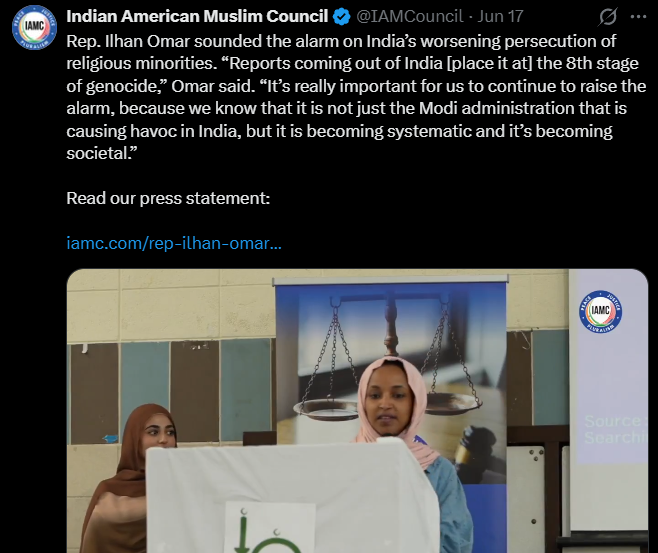
.@Ilhan says “Reports coming out of India [place it at] the 8th stage of genocide,” she said, adding that concerns were not limited to Modi Administration but also reflected broader societal dynamics.
Reports coming out of India place it at the 8th stage of genocide. It’s really important for us to continue to raise the alarm,” Omar claimed at the public event titled, “Community Resistance to Hate and Extremism.” She added that the reason for the situation is not just the Modi government, but rather, the “havoc” is evolving into a “systemic” and “societal” issue.
As was expected, no proof was provided to validate the claims, which were founded on the 10-stage paradigm of genocide developed by American attorney and propagandist Gregory H. Stanto,n who created Genocide Water. He described the 8th step as persecution, which entails widespread, state-sponsored repression of a minority group.
According to him, extrajudicial executions, property confiscation, forced relocation, ghettoisation and denial of necessities like food, water, and medical care are parts of systematic rights violations that fall under this category. While there is no evidence of such brutal targeting of any group in India, it is also important to outline that minority communities, especially Muslims, have seen a considerable increase in population compared to the majority community.
It is noteworthy that the number of people enduring such violent assaults dramatically declines, as is the case in Pakistan, Afghanistan and Bangladesh, instead of rising as rapidly as they do in India. Furthermore, minorities have continuously held key positions both historically and in the present in the world’s biggest democracy.
Meanwhile, real reports that highlight the unprecedented oppression of Hindus in Islamic nations of the subcontinent seldom reach the discussion panels of these forums, which are influenced by a deep-seated bias and hostility towards India.
Hinduphobic IAMC and its ties to terrorist groups
IAMC is a lobbying group in the US that is supported by Jamat-e-Islami and presents itself as an advocacy group for human rights. According to reports, it has collaborated with and paid money to several American groups to have India placed on the USCIRF’s (United States Commission on International Religious Freedom) blacklist.
IAMC has been repeatedly confronted over its relationship with terrorist groups. This concern was brought to light by the Indian government in 2022, following former Vice President Hamid Ansari’s attendance at a virtual panel discussion set up by the body on Republic Day.
“Some people are becoming a part of an anti-India conspiracy of Pakistan-sponsored organisations, which are conspiring to create confusion over India’s culture and inclusivity,” expressed Mukhtar Abbas Naqvi, who was the minority affairs minister at the time. He underscored that IAMC has links with the banned “Students Islamic Movement of India (SIMI) and Pakistan’s Inter-Services Intelligence (ISI).”
IAMC is involved in a vast jihadi network comprising terrorist and fanatical groups. It’s found, er, Shaik Ubaid, and member Abdul Malik Mujahid also presided over the Islamic Circle of North America (ICNA), which is a Western branch of Jamaat-e-Islami, Pakistan. ICNA reportedly established links with Lashkar-e-Taiba (LeT).
IAMC’s former president and current Executive Director, Rasheed Ahme, dwainat the position of executive director of the Jamaat-affiliated Islamic Medical Association of North America (IMANA), which employed Zahid Mahmood, a former member of the Pakistani Navy, as its director of operations.
IMANA was accused of embezzling money from a fundraising drive it sponsored during COVID-19 under the pretence of supporting India. It has relations with retired Pakistani Navy and Army officers alongside alliances with terrorist groups,s including LeT and Hizbul Mujahideen.
Rasheed, in a flagrant act of Hinduphobia, had mocked that Hindu leaders in India were intoxicated by “cow urine” to recover from the coronavirus. A similar insulting statement was posted on social media by IAMC Advocacy Director Ajit Sahi, who wrote, “Sacred cows make the tastiest hamburger.”
It regularly partners with the Council on American-Islamic Relations (CAIR), which has been discovered to have ties with Al Qaeda, Hamas and similar outfits to advance their agenda. The duo collectively protested in 2021 against the “omission of the country from the US Department of State’s list of countries of particular concern.”
Moreover, IAMC pushed US President Joe Biden to withdraw PM Modi’s invitation to the State Dinner in 2023. The letter was signed by 17 organisations, including IAMC. It was also found circulating fabricated material and fake news to support the Islamist movement in India. It also advocated against the Uniform Civil Code in Uttarakhand.
In 2024, IAMC executed a “survey” to label the Hindu community as “racist,” “intolerant”, and “Islamophobic” in an attempt to further demonise the minority community residing in the United States.
The Federation of Indian Associations of New York, New Jersey, Connecticut and New England wanted to include “Ram Janmabhoomi Temple float” inthe India Day Parade that year to celebrate the 78th Independence Day of the nation. However, anti-Hindu groups, such as IAMC, resorted to writing to local leaders opposing the float using fraudulent information and reports.
Last year, IAMC teamed up with other anti-India forces to put together events titled “The Weaponisation of Hinduism in NNorthCarolina and India and the Relationships to Global Religious Nationalisms” at multiple locations to disparage Hindutva in the United States.
Ilhan Omar’s agenda circulates anti-India propaganda, parrots Pakistan’s propaganda and has ties to Islamist outfits
Of course, this is not the first instance for Omar, who has also made headlines for reportedly marrying her own brother, a charge reiterated by President Donald Trump, who even told her to leave the country, to criticise India and the current government under the guise of “minorities” and “human rights.”
The representative from Minnesota extended her support for the unfounded accusations made by the former Trudeau government in 2023 and wrote, “The allegations that Canadian citizen Hardeep Singh Niijar was assassinated by the Indian government are deeply concerning. The US must fully support the Canadian investigation. We are also requesting a briefing on whether there are similar operations in the United States,” she wrote on social media.
Omar not only boycotted Prime Minister Narendra Modi’s joint address to Congress during his visit to the United States a few months earlier that year but also introduced a resolution calling out alleged human rights breaches and restrictions on religious freedom in India in a blatant move to malign the country’s reputation.
Omar took an “official” and “personal” visit to Pakistan-occupied Kashmir (PoK) in 2022, triggering a sharp reaction from New Delhi. She even met with former Pakistan Prime Minister Imran Khan Niazi in Islamabad and lauded him for his stand on “Islamophobia.” She held discussions over “human rights violations in Jammu and Kashmir” with Shahbaz Sharif, who was serving as the prime minister at the time and then President of PoK, Sultan Mehmood Chaudhry.
Omar has a well-recorded track record of promoting the Islamic Republic’s stance regarding Kashmir. She remained at the forefront of bringing up the bilateral subject in the US House of Representatives, pressing the White House to get involved in the matter during the former Biden administration.
Omar unsurprisingly spreads false information in relation to purported attacks on minorities, human rights concerns and freedom of speech in India, as well as peddles the Muslim victimhood narrative. She has disseminated her agenda for years, particularly against PM Modi and even urged the Democratic Party’s administration to aid in her shenanigans.
Aarti Tikoo Singh, an Indian journalist who had testified before the US Congress on the 1990s Kashmiri Hindu massacre in the valley, was verbally attacked by Omar during a US House Foreign Affairs Committee Hearing on South Asia Human Rights in 2019.
In a conspicuous move to meddle in the internal affairs of India, Omar, along with other members of her cabal, signed a letter in December demanding bail and “free trial” for “student activist and scholar” Umar Khalid, prime accused in the anti-Hindu Delhi riots case.
She landed in a massive controversy in 2019 when she downplayed the Al-Qaeda terrorists who carried out the 9/11 attack as “some people doing something” during her speech at an event organised by the group linked to CAIR. Her remarks soon went viral, drawing immense backlash as Trump accused her of supporting the jihadi outfit.
Omar has links with fanatic Islamic factions like Islamic Relief and Helping Hand for Relief and Development (HHRD), which is the sister unit of the ICNA. Additionally, the former has ties to jihadi outfits, including LeT. Omar has also been accused of working for Qatar and the Muslim Brotherhood.
Therefore, it is not unexpected that two prominent Hinduphobes with severely suspicious connections to jihadi elements, who have been excessively engaged in promoting hatred against India, once again united to further their agenda.
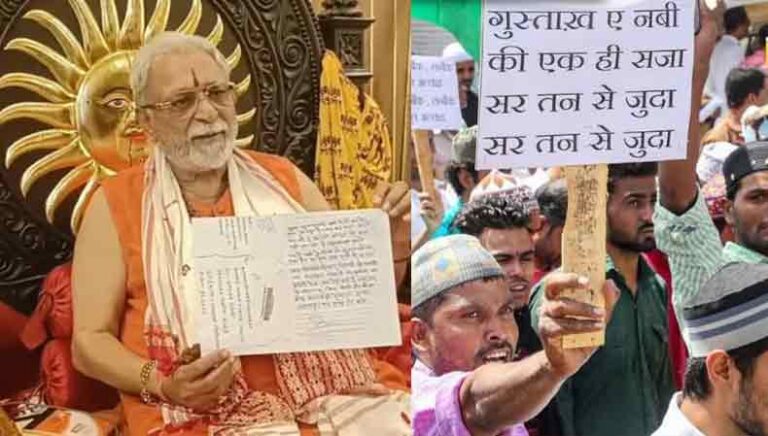
The head of the Mauni Tirth Peeth in Ujjain and Mahamandleshwar of the Niranjani Akhara, Dr Sumananand Giri Maharaj, has once again received a death threat from Islamists, triggering concern among his followers and prompting fresh demands for enhanced security. The latest threat came on Monday, 15th June, through a handwritten letter delivered to the Ganga Ghat Shri Moni Tirth Peeth Ashram on Mangalnath Road in Ujjain.
— Patrika Madhya Pradesh (@patrika_mp) June 17, 2026
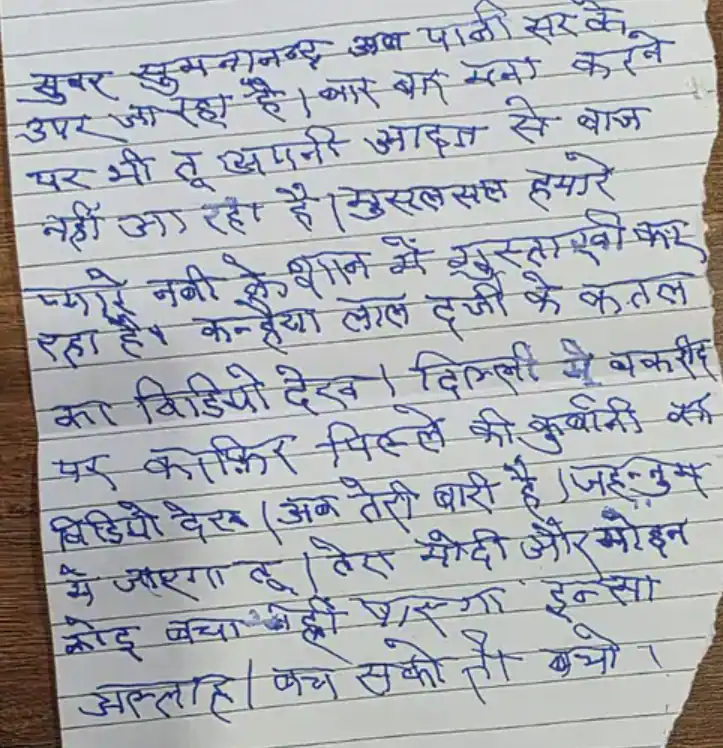
According to the ashram administration, the suspicious letter reached the premises on Monday and was opened the following day. What followed was alarming. The letter contained direct threats to the life of the Mahamandleshwar and referred to the brutal murder of Udaipur tailor Kanhaiya Lal and a recent murder in Delhi. The sender warned him that “now it is your turn” and claimed that no one would be able to save him.
The threatening letter reportedly accused Sumananand Giri Maharaj of repeatedly insulting Prophet Muhammad and used inflammatory language while invoking the slogan often associated with Islamist extremism. One part of the letter read, “Ab pani sir ke upar ja raha hai. Baar-baar mana karne par bhi tu apni aadat se baaz nahi aa raha hai. Musalsal hamare pyare Nabi ki shaan mein gustakhi kar raha hai. Kanhaiya Lal ke qatl ka video dekh… ab teri baari hai. Jahannum mein jayega tu. Tera Modi aur Mohan koi bacha nahi payega. Inshallah, bach sako to bacho.”
Image via NDTV
Following the threat, the ashram immediately informed the police. Authorities have seized the letter and launched an investigation to identify the sender and establish the motive behind the threat. Security agencies have also become involved due to the seriousness of the contents and the repeated nature of such threats against the religious leader.
Speaking to the media, Sumananand Giri Maharaj said that this was not an isolated incident. He revealed that he has been receiving threatening messages and letters for several years. According to him, similar threats were received in 2023 and again in 2025. He has now urged the administration to provide permanent security cover, arguing that the repeated threats should not be dismissed as mere intimidation.
Ujjain, Madhya Pradesh: On requesting security after receiving a death threat letter, Mahamandaleshwar Swami Sumananand Giri Maharaj says, "… I initially thought it might be from someone known or perhaps some ordinary letter… The letter says: '…The water has gone above your… pic.twitter.com/nzwFVyCoc9
A Hindu Religious Leader under constant attack by Islamists
The latest letter is only the newest episode in what has become a long pattern of threats directed at Sumananand Giri Maharaj.
The Mahamandleshwar has often been in the spotlight for his religious activities, including ghar wapsi programmes and facilitating the conversion of individuals to Sanatan Dharma. He has also conducted Hindu marriages for people who chose to leave Islam and embrace Hinduism. These activities have frequently attracted criticism and hostility from radical elements.
According to the Mahamandleshwar, he has faced threats for three to four years continuously. He has claimed that there were even attempts to attack him physically in the past. In one instance, individuals stopped his vehicle and threatened to open fire. In another case, suspicious persons reportedly entered his ashram, creating security concerns.
Despite repeated complaints to local police stations, district authorities and state officials, he says permanent security arrangements have not yet been provided.
“Sanatan ke liye kaam karenge to aisi dhamkiyan milti hain,” he remarked while speaking about the threats. He maintained that helping individuals voluntarily embrace Sanatan Dharma was part of his duty as a religious leader and that he would continue his work despite intimidation.
‘Sar Tan Se Juda’ threat sent from Prayagraj in 2024
For the past three to four years, he has been under constant attack, bearing the brunt of radical fury simply for carrying out his religious duties. He has openly stated that his dedication to Sanatan Dharma, specifically his involvement in “ghar wapsi” (reconversion) and his efforts to bring Muslim women into the Sanatan fold and marry them according to Vedic rituals, has placed a massive target on his back. One of the most serious threats received by Sumananand Giri Maharaj emerged in December 2024 when he received a letter explicitly invoking the slogan “Sar Tan Se Juda.”
Mahamandaleshwar Dr. Sumananand Giri Ji of Niranjani Akhara Ujjain, @drsumanandgiri receives death threat
This is a ploy to eliminate Hindu saints and mahants to render Hindus directionless.
Effective Hindu unity is necessary to counter this
The letter, written in Urdu and sent by a person identified as Sagir Ahmed from Nawabnagar in Kareli, Prayagraj, warned the Mahamandleshwar that he was repeatedly insulting Prophet Muhammad and that “the only punishment for this is Sar-Tan-Se-Juda.”
The threat went beyond a simple warning. The sender also wrote, “We are fully capable of protecting our religion and faith. One day, Azaan will be given in the Shriram Temple.”
The Mahamandleshwar responded defiantly. “I have been working for Sanatan and will continue to do so,” he said.
Even before the December 2024 threat, he had reportedly received an anonymous Urdu letter in 2023 during an Akhara Parishad meeting. The pattern of threats suggests a sustained campaign of intimidation targeting him because of his religious activities and public statements.
The origins of ‘Sar Tan Se Juda’
The slogan “Sar Tan Se Juda” has become one of the most disturbing expressions associated with radical Islamist mobilisations in recent years. The phrase comes from the slogan: “Gustakh-e-Rasool ki ek hi saza, Sar Tan Se Juda, Sar Tan Se Juda,” which translates to, “There is only one punishment for insulting the Prophet, separation of the head from the body (beheading).”
Although the slogan has become familiar during protests and threats in India, its origins lie in Pakistan. The phrase gained prominence after the 2011 assassination of Punjab Governor Salman Taseer in Pakistan. Taseer was murdered by his own bodyguard, Mumtaz Qadri, because he opposed Pakistan’s controversial blasphemy laws and supported reforms.
Instead of universally condemning the murder, several radical Islamist groups celebrated Qadri as a hero. Among them was the extremist organisation Tehreek-e-Labbaik Pakistan (TLP), led by Khadim Hussain Rizvi. During large public gatherings organised in support of Qadri, crowds repeatedly chanted, “Gustakh-e-Rasool ki ek hi saza, Sar Tan Se Juda.” Rizvi used the phrase to radicalise and recruit youth during mass rallies.
The TLP subsequently digitised and globalised the radical slogan by embedding it into YouTube videos, often overlaid with dramatic sound effects of clashing swords to expand its online reach.
Over time, the slogan became a rallying cry for radical Islamist groups demanding violence against those accused of blasphemy. Pakistan has witnessed numerous cases where allegations of blasphemy have resulted in mob attacks, killings and persecution of minorities, particularly Hindus and Christians.
Soon, the slogan crossed international borders and began appearing during various communal flashpoints in India. It was heavily chanted by radical elements demanding the beheading of figures like Kamlesh Tiwari and Nupur Sharma. It has increasingly appeared during protests and online campaigns in India. The slogan has contributed to an atmosphere where threats of violence are normalised against individuals accused of offending religious sentiments.
How the ‘Sar Tan Se Juda’ narrative entered Indian public discourse
Tragically, this imported radical outcry did not stay confined behind Pakistan’s borders. It bled into India, where radical Muslims and their enablers have successfully normalised it on Indian streets. The slogan gained unprecedented visibility in India during the controversy surrounding former BJP spokesperson Nupur Sharma in 2022.
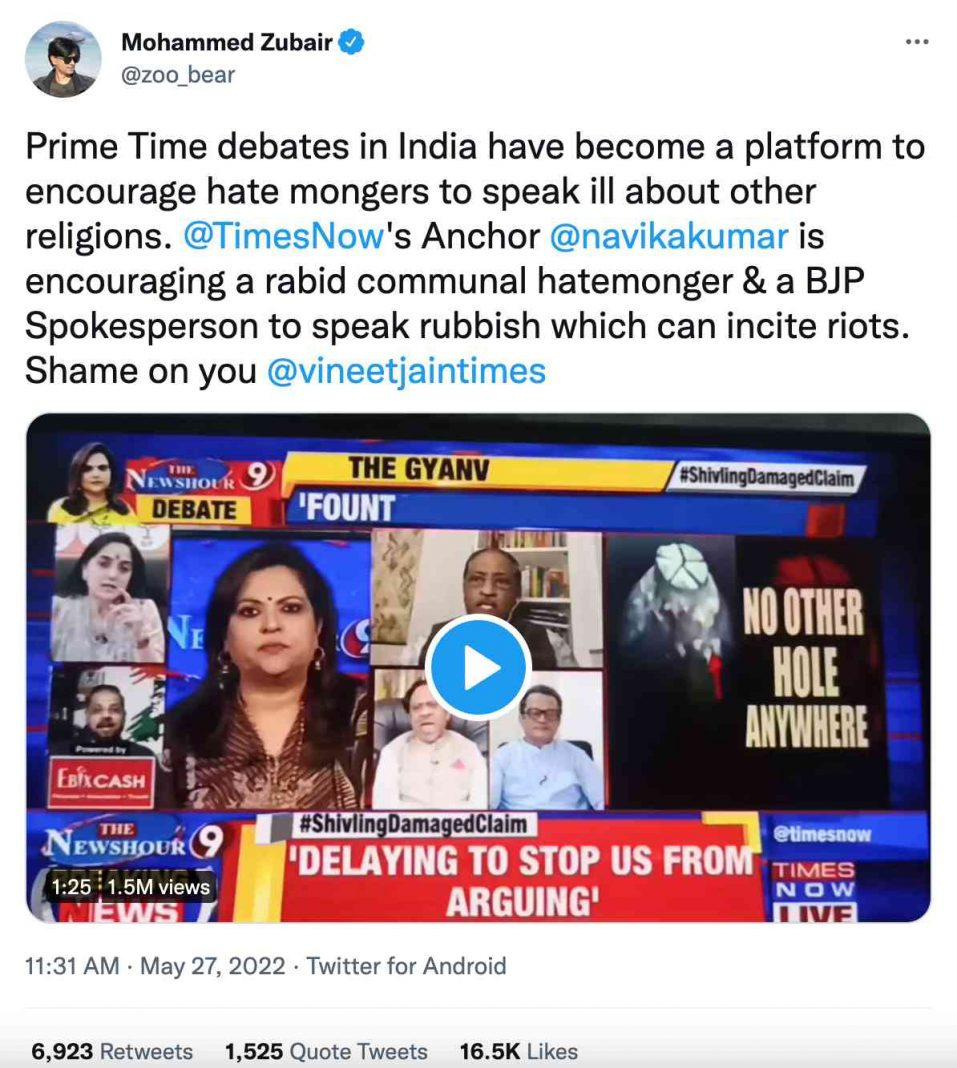
The controversy began after comments made by Sharma during a television debate concerning the Gyanvapi dispute. Soon afterwards, Alt News co-founder Mohammed Zubair shared edited clips from the debate on social media and accused Sharma of making inflammatory remarks.
On 27th May, 2022, Zubair posted tweets targeting Sharma and described her as a “rabid communal hatemonger.” He also demanded police action against her and accused her of inciting communal tensions.
Screengrabb via X
Supporters of Sharma later argued that the clips shared online lacked the full context of the debate and omitted comments made by other panellists that had triggered the exchange.
Within hours of the controversy gaining traction online, Sharma began receiving death threats, rape threats and also beheading threats. Social media was flooded with messages invoking “Gustakh-e-Rasool” and “Sar Tan Se Juda.”
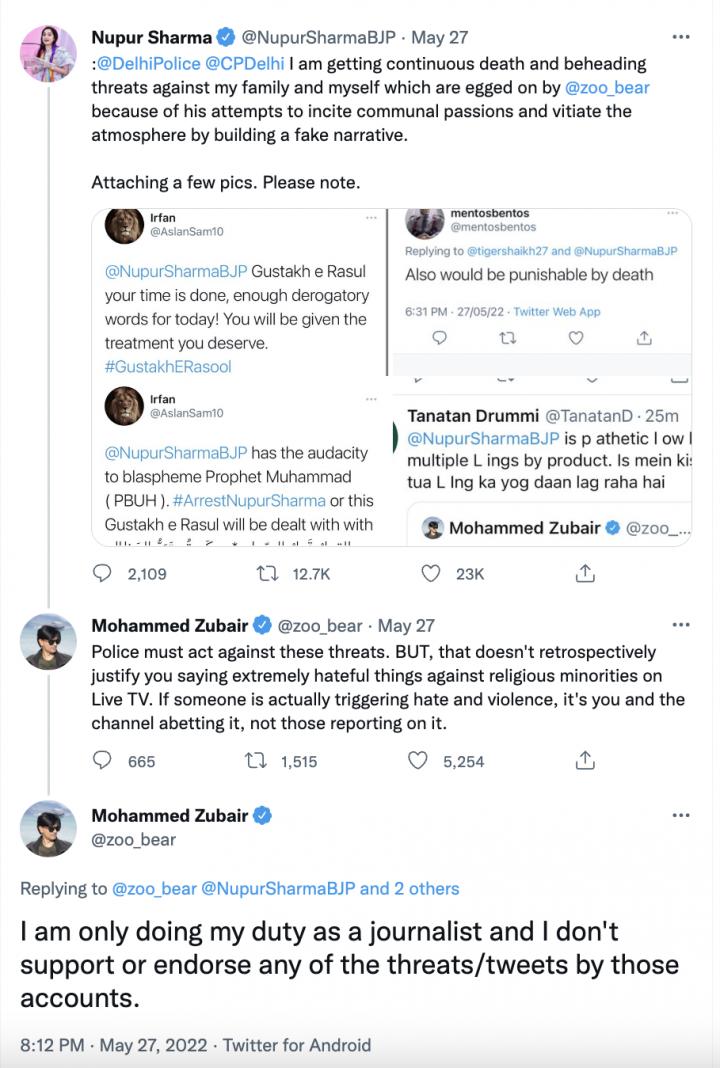
Sharma herself publicly accused Zubair of creating a hostile environment through selective amplification of her remarks. She wrote to the Delhi Police, stating that she and her family were receiving continuous death and beheading threats.
:@DelhiPolice@CPDelhi I am getting continuous death and beheading threats against my family and myself which are egged on by @zoo_bear because of his attempts to incite communal passions and vitiate the atmosphere by building a fake narrative.
What began as a social media controversy soon spilt into the streets. Protests erupted across multiple cities, with demonstrators openly chanting “Sar Tan Se Juda.” The slogan became a recurring feature of demonstrations organised in response to the controversy.
Threats to Nupur and Zubair’s response
The episode marked a turning point, bringing a slogan once largely associated with Pakistan’s blasphemy politics into India’s public discourse.
The Kamlesh Tiwari murder in broad daylight
Long before the Nupur Sharma controversy, India had already witnessed violence linked to allegations of blasphemy.
One of the most prominent cases was the murder of former Hindu Mahasabha leader and Hindu Samaj Party founder Kamlesh Tiwari in October 2019. Tiwari was attacked at his office in Lucknow by assailants who had arrived posing as visitors. According to investigators, the attackers concealed weapons inside a box of sweets before launching their assault. He was shot, and his throat was slit in broad daylight.
According to the reports, the post-mortem report has revealed that Kamlesh Tiwari was stabbed 15 times. The Islamists had stabbed him in the upper part of the body from jaws to the chest. The wounds were inflicted within 10 cm of each another. The post-mortem report suggests that there were two deep cut marks on the neck points to attempt to slit his throat.
The attackers had also shot him once to make sure that he dies in the attack. The bullet was fired in his face. The doctors conducting a post-mortem on Kamlesh Tiwari’s body found a point 32 bullet on the backside of the skull.
The murder shocked the country because Tiwari had been facing threats since 2015, when he made controversial remarks about Prophet Muhammad.
Those remarks triggered widespread protests and riots. In Kaliachak in West Bengal’s Malda district, massive violence erupted. Shops were looted, buses were burnt, and a police station was attacked by rioters. Tiwari spent more than a year in jail after the National Security Act was invoked against him. Although he was later released following court intervention, threats against him continued.
The Kanhaiya Lal Murder case
If Kamlesh Tiwari’s murder was a warning, the horrific slaughter of Kanhaiya Lal was the ultimate realisation of the “Sar Tan Se Juda” terror on Indian soil. The explicit mention of Kanhaiya Lal in the recent threat letter to Mahamandleshwar Dr Suman Anand Giri is what makes the situation so utterly terrifying.
In June 2022, the digital dog-whistling initiated by Mohammed Zubair against Nupur Sharma claimed the life of an innocent Hindu tailor in Udaipur. Kanhaiya Lal’s only “crime” was that an 8-year-old child, his son, was playing a video game on his mobile phone and accidentally shared a social media post in support of Nupur Sharma. Within two days, two radicalised Islamists, Mohammed Riyaz Akhtar and Mohammed Gos, stormed his tailor shop. When they confronted him, Kanhaiya innocently explained that he barely knew how to operate the smartphone and that his young son had made the post by mistake. The men seemingly accepted the excuse, deleted the post themselves, and warned him.
Soon afterwards, local individuals identified him and circulated his details. Complaints were filed against him, and he reportedly began receiving threats. Fearing for his life, Kanhaiya Lal approached the police and sought protection. However, despite his repeated concerns, adequate security was not provided.
On 28th June, 2022, Mohammed Riyaz Attari and Ghaus Muhammad entered his shop posing as customers, and in a deeply disturbing act of barbarism that they filmed for the world to see, they brutally hacked Kanhaiya Lal to death, fulfilling the “Sar Tan Se Juda” promise. The murder sent shockwaves across India and became one of the most cited examples of violence carried out in the name of perceived blasphemy.
The case became a symbol of the dangers posed by extremist narratives that encourage violence against individuals accused of insulting religious figures.
The fresh threat against Mahamandleshwar Dr Sumananand Giri has once again brought attention to the growing number of threats invoking the “Sar Tan Se Juda” slogan.
From the assassination of Salman Taseer in Pakistan to the murders of Kamlesh Tiwari and Kanhaiya Lal in India, the slogan has become associated with a dangerous form of vigilantism where individuals accused of blasphemy are threatened with violence.
For Sumananand Giri Maharaj, the latest letter is not merely another anonymous threat. It comes after years of intimidation, repeated warnings and attack attempts. The references to previous murders, including the Kanhaiya Lal case, have only heightened concerns.
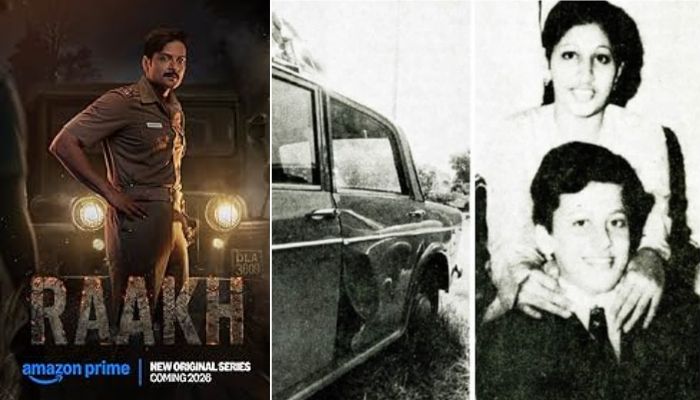
Over the recent years, Amazon Prime Video and several other OTT platforms have routinely exploited creative liberty to inject anti-Hindu and divisive ideological spins into Indian stories. Giving Bollywood’s conventional approach of depicting ‘upper-caste’, Tilak-wearing, and pious Hindu men as villains, OTT shows reframe real events through distorted lenses of Dalit victimhood, Muslim virtue and derision of upper caste Hindus. A new Amazon Prime Video original, Raakh, is facing backlash for inserting fake caste oppression narratives into the 1978 Geeta and Sanjay Chopra kidnapping and murder case, widely remembered as the Ranga-Billa case.
Caste and religions of key characters changed from upper-caste Hindus to Dalits and Muslims, the real Sikh Ranga-Billa turned into Hindu Rajjo and Babu
Officially released on 12th June 2026, Raakh is an 8-episode crime thriller headlined by actor Ali Fazal, who celebrated anti-CAA violence in 2020, Sonali Bendre, Aamir Bashir, and Rakesh Bedi. The web series has been marketed as inspired by the real 1978 Ranga-Billa kidnapping and murder case.
However, the show has rewritten the castes, religions, and the team dynamics of actual police officers and journalists to force-fit the ‘Bhim-Meem’ narrative.
The Prime Video series manufactured a narrative of systemic caste oppression, ‘Muslims are honest, Brahmin Hindus are bad’ bogey, none of which existed in the records of the actual case.
In the show, actor Ali Fazal played the character of Sub-Inspector Jayprakash Jatav, a Dalit officer, whose house features portraits of Jyotiba Phule and B.R. Ambedkar. Absolutely irrelevant to the Ranga-Billa case or the real SI from that time, SI Jayprakash Jatav, shown as facing caste prejudice in the police force, and his retired hawaldar father also faced caste discrimination. Jatav’s father is also shown chanting ‘Jai Bhim’ slogans.
Amusingly, the show features a Muslim officer, Javed Murtaza, as Jatav’s main assistant, who, in spirit, reminds one of the ‘iman ka pakka’ Rahim Chacha from Sholey.
Several social media users pointed out that the Amazon Prime Video original, Raakh, features a lazy or inefficient hawaldar who is coded as Mishra Brahmin.
Unsurprisingly, the ‘honest’ and ‘fearless’ journalist is depicted as a Muslim woman.
While in the real incident, a man named Babulal attempted to save the kidnapped siblings, in the show, Babulal’s character was shown as Salim.
And, the main villains have been given a Hindu identity and named Babu and Rajjo. One of them is shown as a Haryanvi and the other as a Maharashtrian. In reality, the killers were Sikh men Kuljeet Singh and Jasbir Singh.
The real story of the 1978 Sanjay and Geeta Chopra kidnapping and murder, which is widely known as the Ranga-Billa case
Before delving into how the viewers have reacted to the subtle caste and Bhim-Meem bonhomie depiction, it is important to apprise the readers with the real Ranga Billa case, the Amazon Prime Video web series ‘loosely inspired’ by.
On 26th August 1978 in Delhi, siblings Geeta Chopra and Sanjay Chopra, the children of Navy officer Madan Mohan Chopra, disappeared after accepting a lift in heavy rain while on their way to All India Radio office on Sansad Marg to participate in a radio program, Yuva Vani. 16-year-old Geeta and 13-year-old Sanjay left their homes at around 6:15 PM for the 8 PM show.
The duo was spotted at the Dhaula Kuan roundabout by one Kula Nand. Since it was drizzling, one M S Nanda gave a lift to the children to Gole Dak Khana from Dhaula Kuan. At around 6:30 PM, one Bhagwan Das noticed that sound is coming from the mustard yellow Fiat car next to him. Das stopped his scooter and approached the car. He noticed that Geeta Chopra was pulling the driver’s hair, and another Sanjay was trying to fight off the man sitting in the passenger seat. However, the car sped away.
Later, a person named Babulal tried to stop the car, but it sped away. Meanwhile, Bhagwan Das informed the local police about what he saw.
While the siblings struggled for their lives, the police control room committed a massive mistake. The police wrote down the wrong number of the car. Instead of HRK 8930, the operator noted it as MRK 8930.
Meanwhile, a person named Inderjeet Singh saw the Fiat car and the Chopra siblings struggle with their kidnappers, the driver and the man next to him. Singh followed the car, and Sanjay even showed his bleeding shoulder to him. Sanjay cried for help, and Singh followed. However, Inderjeet Singh lost the Fiat car as the kidnappers jumped a signal. Singh reached the police station and informed the correct car number.
Sadly, while Geeta and Sanjay were struggling for their life and crying for help, their parents, Madan Mohan Chopra and Roma Chopra, were unaware of the horror that had befallen their children.
Eager to hear their kids on the AIR program, Madan Mohan and his wife tuned in to the radio. However, they were shocked to hear the voice of another girl, who was given the slot. Later, Madan Mohan Chopra reached the All India Radio office to pick up his children, only to find out they had never arrived. Chopra called up home and his relatives to see if they had gone there.
While the Chopra couple desperately searched for their children, Ranga-Billa played every trick to keep themselves away from the police’s hands.
Two days later, the dead bodies of Geeta and Sanjay Chopra were discovered by a cowherd, Dhani Ram, who informed the police. Later, the parents of the Chopra siblings were called to identify the corpses. It was confirmed that the deceased were Geeta and Sanjay.
The police suspected that the duo faked their names and identity at the Wellington Hospital, who might have been Sanjay and Geeta’s kidnappers. The police’s suspicion was right, as it was indeed Ranga and Billa who went to the hospital for treatment of their wounds caused during the struggle with the Chopra siblings.
A national outrage and a massive manhunt followed. During the investigation, the police found the Fiat car used in Sanjay and Geeta’s kidnapping, abandoned with another name plate on 31st August, 1978, at Majlis Park, Delhi.
In the Prime Video show Raakh, Dalit officer Jayprakash Jatav tracks Rajjo-Babu’s trail to Agra, leading to a high-pressure race to stop them before they can escape on a train. However, in reality, Ranga and Billa were not caught by a lone heroic Dalit officer.
The real criminals were caught when alert army personnel, including Lance Naik Gurtej Singh and AV Shetty, spotted the duo on the Kalka Mail train near Agra. Ranga and Billa had mistakenly entered the compartment reserved for military personnel. The army officers questioned the duo, and despite mounting suspicion, waited for the train to reach Delhi. Meanwhile, Gurtej Singh noticed the pictures of the most-wanted criminals in a Hindi newspaper. With the identities of Ranga and Billa confirmed, the army officers kept a close watch on the duo.
The alert army officers handed over Ranga and Billa to the Delhi Police on 8th September 1978, leading to the end of a week-long manhunt.
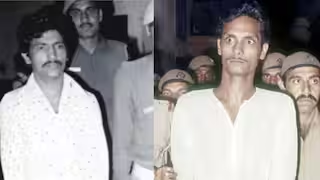
Jasbir Singh, aka Billa, and Kuljeet Singh, aka Ranga, were convicted and sentenced to death. They were hanged to death in Tihar Jail.
Ranga and Billa in police custody (Image via ABP News)
Geeta Chopra was allegedly sexually assaulted, as per the statements of the convicts. However, due to advanced decomposition of the dead body, the same could not be confirmed in the postmortem.
Raakh on Prime Video may be a captivating crime thriller, but the audience cannot help but call out the dishonest insertion of the ‘caste angle’
While the Amazon Prime Video show, Raakh, featured a Dalit SI Jayprakash Jatav as the protagonist, the investigation in reality was led by Inspector VP Gupta of the Delhi Police, with SI Ram Chander being his main aide on the team. The show replaced SI Ram Chander with SI Javed Murtaza.
The bystander who attempted to save Geeta and Sanjay Chopra was Babulal, a Hindu man, but the show replaced Babulal with a Muslim character named Salim.
The journalist who diligently covered the real Ranga-Billa case was a Hindu woman named Prabha Dutt. However, the Prime Video web series showed a Muslim journalist named Nisar.
Netizens have noticed the caste-religion-based ideological spin given to a real events-inspired story.
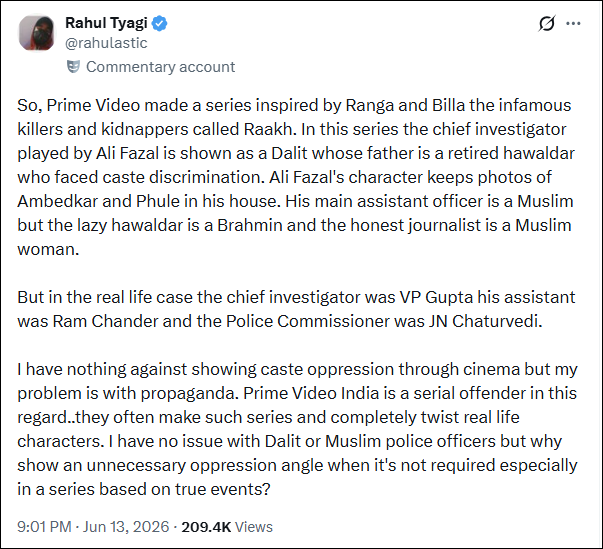
Calling out the misuse of creative freedom to peddle an agenda villainising certain Hindu caste groups, Rahul Tyagi wrote, “So, Prime Video made a series inspired by Ranga and Billa the infamous killers and kidnappers called Raakh. In this series the chief investigator, played by Ali Fazal, is shown as a Dalit whose father is a retired hawaldar who faced caste discrimination. Ali Fazal’s character keeps photos of Ambedkar and Phule in his house. His main assistant officer is a Muslim but the lazy hawaldar is a Brahmin and the honest journalist is a Muslim woman. But in the real life case the chief investigator was VP Gupta his assistant was Ram Chander and the Police Commissioner was JN Chaturvedi. I have nothing against showing caste oppression through cinema but my problem is with propaganda. Prime Video India is a serial offender in this regard..they often make such series and completely twist real life characters. I have no issue with Dalit or Muslim police officers but why show an unnecessary oppression angle when it’s not required especially in a series based on true events?”
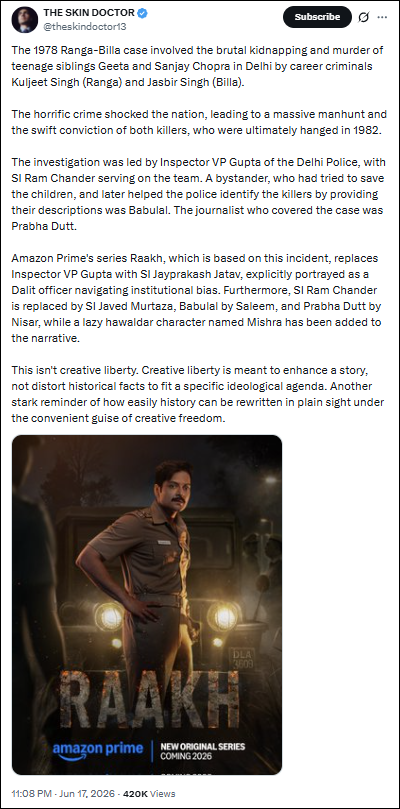
Popular X user Skin Doctor wrote, “…This isn’t creative liberty. Creative liberty is meant to enhance a story, not distort historical facts to fit a specific ideological agenda. Another stark reminder of how easily history can be rewritten in plain sight under the convenient guise of creative freedom.”
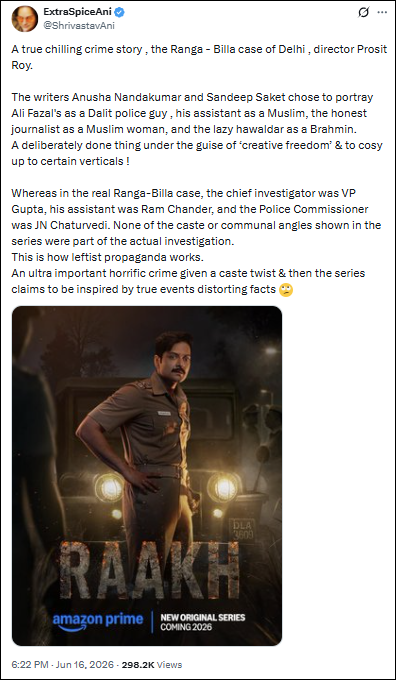
Another X user called out the writers of Raakh, Anusha Nandakumar and Sandeep Saket, for giving a “caste twist” to a horrifying kidnapping and murder case.
“The writers Anusha Nandakumar and Sandeep Saket chose to portray Ali Fazal’s as a Dalit police guy , his assistant as a Muslim, the honest journalist as a Muslim woman, and the lazy hawaldar as a Brahmin. A deliberately done thing under the guise of ‘creative freedom’ & to cosy up to certain verticals! Whereas in the real Ranga-Billa case, the chief investigator was VP Gupta, his assistant was Ram Chander, and the Police Commissioner was JN Chaturvedi. None of the caste or communal angles shown in the series were part of the actual investigation. This is how leftist propaganda works. An ultra important horrific crime given a caste twist & then the series claims to be inspired by true events distorting facts,” the X user wrote.
Meant to entertain, Prime Video is platforming Islamo-leftist activism against Hindus
Amazon Prime Video has been a repeat offender. The online streaming platform has consistently allowed writers, directors, and actors with documented biases toward anti-upper caste narratives to use its platform to soft-peddle their ideologically aligned propaganda. Raakh is not the only Amazon Prime Video show wherein unnecessary caste or religion-based victimhood arcs have been inserted. This is also not the first time that swapped identities to force-fit oppressor-oppressed binaries, and gaslight Hindus, particularly, so-called upper caste Hindus like Brahmins, Thakurs, and Baniyas.
Be it Prime Video, Netflix, or other major OTT platforms, most of them are rolling out content riddled with anti-Hindu bias, forced Muslim victimhood, and Bhim-Meem narratives, with varied intensity.
Over the years, OpIndia has highlighted how Amazon India has been giving space for ultra-left radicals and Islamist elements, who are known for their anti-Hindu agenda.
Back in 2020, Prosit Roy, who directed Raakh, had partly directed Prime Video’s Paatal Lok. This show, produced by Bollywood actor Anushka Sharma, was blatantly Hinduphobic and showed Sikhs in a poor light. The web series included instances of how Sikhs oppress Dalits and backward castes. There are also objectionable scenes regarding the Sikh Community involving rapes.
In this show, actor Jaideep Ahlawat plays Inspector Hathiram Chaudhary, posted in the Outer Jamuna Paar police station. While there were several instances, in the final episode, Inspector Chaudhary, while running, ends up in a play about devotee Prahlad, being held at a fair. Goons are chasing him, and while fleeing from them, he climbs onto the stage. Coincidentally, at that very moment, Lord Vishnu’s incarnation, Narasimha, appears before the demon Hiranyakashipu, tearing through the pillar. Inspector Chaudhary pushes the fleeing character of Narasimha away, landing him directly on Hiranyakashipu.
The show revolved around a Muslim, a Dalit, a Hindu, and a transgender—a cocktail of four criminals. Offering a dramatised version of “Burhan Wani- headmaster’s son”, the show’s makers highlighted the “humane sides” of the criminals, portraying them as helpless only because they are being “framed” in cases involving ISI and Pakistan.
The Muslim criminal Kabir hides his religious identity. Kabir’s father tells Hathiram that his eldest son was killed because he belonged to a particular religion. In that scene, Hindu extremists carrying saffron flags are seen carrying out the massacre. Kabir’s father says that for this reason, he didn’t even allow his second son to become a Muslim, but you people turned him into a terrorist.
The show’s villain, “Tyagi”, is depicted as an ardent devotee of Mahadev.
In 2021, Prime Video released a show named Mumbai Diaries 26/11.The show was centred on the hardships of the frontline workers – doctors, nurses, ward boys, security guards, police personnel, journalists, among others, during the Pakistani-orchestrated Islamic terror attack.
The show, however, went overboard on secularism. Back then, many viewers had praised the performances but pointed out how Mumbai Diaries glorified the Muslim character, Dr Ahaan Mirza, as tolerant, while a Hindu male nurse, Samarth, was depicted as a hateful bigot.
Pushing the ‘bad Hindu, good Muslim’ narrative, Mumbai Diaries showed how Mirza is so emotional and nice that he even enters the morgue and offers prayers for the deliverance of the nurses’ souls. On the other hand, there is the Maharashtrian male nurse, Samarth, who is suspicious of Mirza’s actions. Samarth is unkind, intolerant, and overtly communal. He even roughs up the poor Muslim doctor on a couple of occasions.
In fact, the character of Mansi, a journalist, appears as a mouthpiece of the show’s director, and offers a soliloquy in the final episode to whitewash the Islamic Jihadist drivers of the 26/11 attacks. She says, “Jihad toh insaan ke antarman ki ladayi hoti hai na jo woh apni khamiyon se ladta hai. Humari aankhon ke samne jo hua woh jihad nahi ho sakta” (Jihad is man’s internal struggle with the negative elements of his own soul, what we saw today can never be jihad).
In 2021, Prime Video released another Hinduphobic show, Tandav. The show was directed by Ali Abbas Zafar.
Released on 14th January 2021, Amazon’s original web series Tandav attracted criticism for its anti-Hindu content and scenes mocking Hindu gods. A series of FIRs were registered in different states, including Uttar Pradesh, against Amazon India, the director, producer and actors of the series.
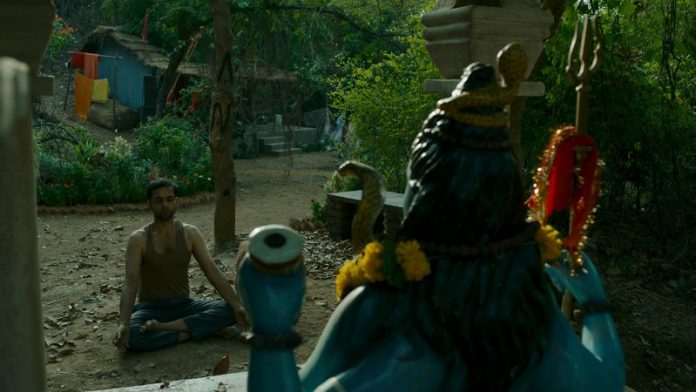
Starring Saif Ali Khan and notorious Islamo-leftist Mohammad Zeeshan Ayyub in the lead roles, the show’s first episode depicted Ayyub apparently playing the character of Lord Shiva and holding Trishul in his hand at a college theatre festival. The host facetiously talked about the character’s social media following and how he should post a tweet or upload pictures to increase his followers. This is followed by the infamous ‘Azaadi’ slogans by the audience.
This show was also riddled with a caste-bias narrative. In one of the episodes, the character played by actor Dino Morea berates the character played by actor Sandhya Mridul for dating a man from a lower caste. In the video, Mridul, who is married to Dino Morea, asks her husband to sign their divorce papers so that she could tie the knot with the character played by actor Anup Soni. Soni is portrayed as a man belonging to a lower caste, while Mridul and Morea are both apparently from the higher caste. Morea’s character is shown fuming over his estranged wife wanting to marry a ‘lower-caste’ man.
In another instance, the web series insinuates that is easy for police to kill Muslims and casts aspersions on the integrity of the law enforcement officials by alluding that many Muslim youths are branded as terrorists to justify their killings.
Prime Video’s super-hit series Mirzapur distorted the whole relationship dynamics between father-in-law and daughter-in-law, sister-in-law and brother-in-law. In fact, it was reported in October 2020 that a Muslim man named Tauseef, who was harassing and forcing a Hindu girl, Nikita, in Mewat, to convert to Islam, decided to kill her after watching the web series ‘Mirzapur’.
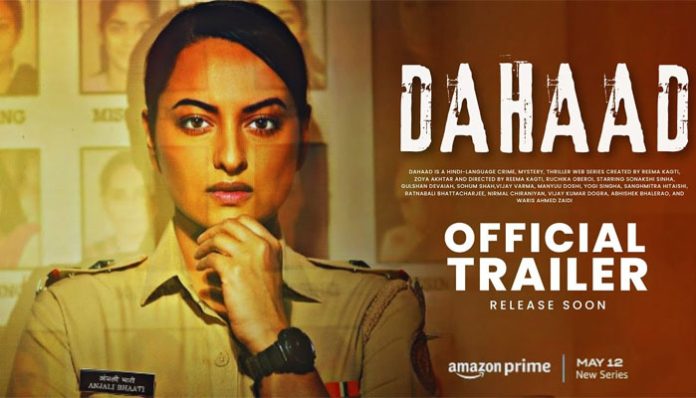
In 2023, Amazon Prime Video released Sonakshi Sinha, Gulshan Devaiah, Vijay Verma and Waris Ahmed Zaidi starrer web series Dahaad. In this crime thriller, two stories run in parallel in the series. The first story is about an upper-caste Hindu girl, Rajni, who eloped with a Muslim boy named Altaf, and the second story is about a serial killer based on Cyanide Mohan. In what amounts to a mockery of the countless victims of love and rape jihad, the show subtly denied the existence of the documented pattern of Muslim men weaponising love and sex as a means to target Hindu girls for conversion to Islam and insulting the Hindu faith.
An OpIndia review highlighted back then, how Rajputs were shown as gundas, Hindu organisations (hinting towards Bajrang Dal and likes) are shown in a bad light, love jihad was whitewashed, fake caste discrimination subplots were inserted, and the main villain was carefully picked as upper caste Hindu man.
Earlier, Prime Video released a show named Sherni. The web series starring Vidya Balan was based on real events. However, just as in Raakh, in Sherni, a Hindu IFS officer, K Abharna, was shown as a Christian character, Vincent, played by Vidya Balan. While real-life hunter Asghar Ali Khan was replaced by kalawa-wearing Ranjan Rajhans.
It must also be recalled how, in 2020, the then creative head of Amazon Prime, Aparna Purohit, was called out by netizens for her left-wing bias. Her social media pages were riddled with anti-Hindu propaganda, hatred against PM Modi and the BJP.
There is a clear pattern of anti-Hindu bias, and a subtle but consistent attempt at pushing Islamo-leftist ideology through shows either entirely fictional or inspired by real events. Changing caste and religious identities of real-life-based characters as per the convenience of the narrative, weaving stories that portray Hindus, especially upper-caste Hindus as outright villains, following regressive and discriminatory practices against Dalits and Muslims, mocking Hindu deities for ‘dramatic effect’, to peddling Muslim victimhood, OTT platforms like Amazon Prime Video are exhibiting bias against Hindus.
These OTT platforms are turning entertainment into brainwashing tools, subtly gaslighting Hindus, and pushing a divisive agenda.
Raakh is a continuation of Prime Video’s approach of prioritising ideological signalling over factual fidelity.
India is home to some of the brightest minds in the world. But for decades, a large number of talented Indian scientists, researchers, and engineers have moved abroad to work at top universities, research labs, and technology companies in countries like the United States, the United Kingdom, Germany, and Canada. While these professionals have made their mark globally, India has often missed out on the direct benefits of their knowledge and expertise.
To address this challenge, the Ministry of Education has announced a bold new initiative called the Prime Minister Research Chair (PMRC) Scheme. In simple terms, this scheme is a government-backed programme that offers senior Indian-origin researchers working abroad a special opportunity – come back to India, lead cutting-edge research projects at some of India’s best institutions, and help build the country’s scientific and technological future.
Why India needs a scheme
For many decades, India has faced a serious problem commonly known as Brain drain. It means that many of India’s most talented and educated people especially in science, technology, engineering and mathematics(STEM) who chose to settle and work in foreign countries rather than in India. While this is partly a personal choice, it has had a significant impact on India’s ability to build a strong research and innovation ecosystem at home. If you look at the world’s top universities, technology companies and research laboratories, you will find Indian origin scientists and engineers in some of the most important positions. Let us take the example of Indian Americans.
Indian Americans have become one of the most successful immigrant communities in the United States with a population of 5.2 million in 2023. They hold the highest median household income among all the ethnic groups in the US at $151,200, and 78% hold bachelor’s degrees compared to the national average of just 33%. By late 2024, Indian-origin executives led 25 of America’s 500 largest companies, which is more than double from the 11 in the early 2010s with the names like Satya Nadella (Microsoft), Sundar Pichai (Google), and Shantanu Narayen (Adobe) becoming global symbols of Indian excellence. In FY 2024, Indian nationals received 71% of all H-1B visas for highly skilled workers, and India was the leading source of international students in the US, mostly in STEM fields. Over 450,000 Indian-owned businesses generate more than $350 billion in annual revenue and employ around 3.2 million workers across the United States.
At the same time, India has an enormous domestic talent pool. The country produces millions of science and engineering graduates every year. But there is a significant gap between the number of talented students and the quality and scale of research happening inside Indian institutions. Indian universities, while improving, still rank relatively low globally in research output, patents, and citations. This matters because advanced research is not just an academic exercise. It directly affects India’s economic growth, national security, and technological self-reliance. Countries that lead in research also tend to lead in industry, defence, and global influence. Technologies like artificial intelligence, semiconductors, quantum computing, and biotechnology will shape the world over the next few decades, and nations that do not develop these capabilities domestically will remain dependent on others.
The PMRC Scheme recognises this gap and tries to bridge it by bringing experienced, world-class researchers back into the Indian system where people who can not only conduct high-quality research themselves but also inspire and train the next generation of Indian scientists.
What Is Prime Minister Research Chair Scheme?
The Prime Minister Research Chair Scheme is a structured fellowship programme that works through a three-layered institutional system. Understanding this structure helps explain how the scheme will actually function on the ground.
The Three Pillars
Lead Institutions
These are India’s most prestigious research and academic institutions such as the IITs (Indian Institutes of Technology), IISc (Indian Institute of Science), AIIMS, and similar top-tier universities and research centres. Lead Institutions will serve as the primary hosts and administrative anchors for the PMRC fellows. They will be responsible for managing the fellowship, providing infrastructure, and ensuring that the research carried out meets the highest standards.
Host Institutions
Host Institutions are the partner organisations where the actual research will take place. These could include other universities, public sector laboratories, defence research organisations, or even private sector research units. The idea is that the PMRC fellows will not be confined to a single campus but can collaborate across institutions, making the impact of their work wider.
PMRC Fellows
These are the researchers themselves distinguished Indian-origin scientists and academics selected to participate in the scheme. Fellows will be chosen based on their expertise, international standing, research achievements, and their potential to contribute meaningfully to India’s priority areas. They are the heart of the programme.
Governance and Oversight
The scheme will be overseen by an Empowered Committee chaired by the Principal Scientific Advisor to the Government of India. This committee will be responsible for selecting fellows, setting research priorities, monitoring progress, and ensuring accountability. The involvement of the Principal Scientific Advisor signals that this is a high-level, strategically important initiative and not just a routine government programme.
Focus Areas: Strategic Technologies For The Future
The PMRC Scheme is not open-ended. It is focused on specific areas of research that are considered strategically important for India’s future. Here is a look at the major themes and why each one matters:
Semiconductors
Semiconductors are the tiny chips that power everything from smartphones to aircraft to military systems. India currently relies heavily on imports for its semiconductor needs. Developing domestic semiconductor design and manufacturing capability is a national priority. PMRC researchers in this area can help build expertise in chip design, fabrication processes, and semiconductor materials.
Artificial Intelligence and Advanced Computing
AI is already transforming industries, healthcare, agriculture, and governance. India has a large IT sector but needs to deepen its AI research capabilities especially in areas like foundational AI models, AI safety, and AI applications tailored to India’s unique challenges such as multilingual communication and rural healthcare delivery.
Quantum Technologies
Quantum computing and quantum communication are the technologies of the future. They promise computing power and data security that are far beyond what is possible today. India’s National Quantum Mission is already underway, and PMRC researchers can accelerate its progress by bringing world-class expertise in quantum hardware, algorithms, and cryptography.
Cybersecurity
As India becomes increasingly digital in governance, banking, healthcare, and defence, protecting its digital infrastructure from cyber threats has become a matter of national security. Research in cybersecurity is essential to build robust systems that can withstand sophisticated attacks.
Who Can Become A PMRC Fellow?
The scheme is open to a broad category of Indian-origin researchers working internationally. Specifically, the following individuals are eligible Indian nationals living and working abroad, OCI (Overseas Citizen of India) cardholders, Persons of Indian Origin (PIO) who may not hold Indian citizenship but have Indian roots. The scheme recognises three distinct categories of fellows, each catering to different stages of a researcher’s career:
Young Research Fellows
This category is for early-career researchers who have already shown exceptional promise. While the exact experience threshold will be defined by the Empowered Committee, this category targets researchers who are in the relatively early stages of their independent research careers – typically with a few years of post-doctoral or academic experience. The goal is to attract young talent before they become too deeply rooted in foreign institutions.
Senior Fellows
Senior Fellows are mid-to-senior career researchers with substantial experience, a strong publication record, and demonstrated leadership in their fields. They are expected to lead research groups, guide younger researchers, and contribute significantly to institution-building.
Research Chairs
Research Chairs represent the highest tier of the scheme. These are world-renowned scientists and researchers, an individuals who are at the very top of their fields globally. Research Chairs are expected to set research agendas, forge international collaborations at the highest levels, and serve as ambassadors for Indian science on the global stage. This category is likely to attract the most eminent Indian-origin academics from the world’s leading universities.
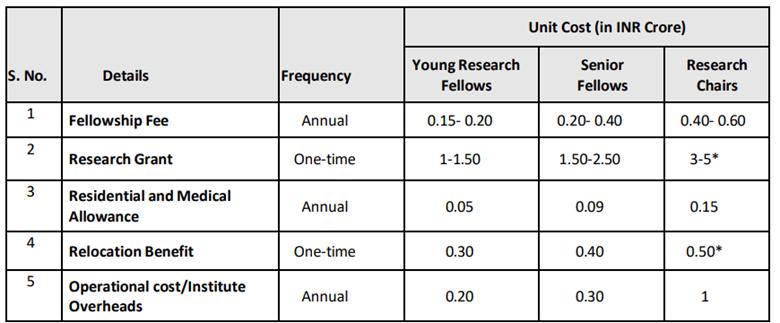
Financial Incentives And Research Support
One of the most critical aspects of any talent attraction scheme is the financial package. The government understands that to attract world-class researchers, many of whom enjoy comfortable salaries, well-funded labs, and quality infrastructure in Western countries. The incentives offered must be genuinely competitive. The PMRC Scheme addresses this with a comprehensive support structure:
Fellowship Support
Fellows will receive a monthly stipend or fellowship amount that is calibrated to match their category (Young Fellow, Senior Fellow, or Research Chair). The amounts are designed to be internationally competitive, acknowledging that these researchers could otherwise command significantly higher salaries abroad.
Research Grants
Beyond personal compensation, each fellow will receive a dedicated research grant to set up and run their research programme. This covers laboratory equipment, computational resources, hiring of research assistants and postdoctoral researchers, and other project-related expenses. This is crucial because world-class research requires world-class infrastructure.
Relocation Assistance
Moving back to India after years abroad is not just a professional decision — it involves uprooting families, adjusting lifestyles, and navigating logistical challenges. The scheme provides relocation assistance to ease this transition, covering costs like moving household goods, initial travel, and settling-in expenses.
Residential and Medical Allowances
Fellows will receive housing assistance (either subsidised accommodation on campus or a housing allowance) and medical benefits for themselves and their families. These are important quality-of-life considerations that can make or break a researcher’s decision to relocate.
Taken together, this funding model recognises that bringing back top talent requires more than just a good salary. It requires creating an environment where researchers and their families can live comfortably and work productively. The government seems to understand that the cost of not investing in this is far greater than the cost of the scheme itself.
What Will Fellows Be Expected To Do?
PMRC fellows are not simply being invited to conduct independent research in isolation. They are expected to be active contributors to India’s broader scientific and academic ecosystem. Their responsibilities will likely include:
Conducting High-Impact Research
Fellows are expected to produce world-class research which will publish in top international journals, present at leading conferences, and contribute to the global body of knowledge in their fields.
Mentoring Students
One of the most valuable contributions of experienced researchers is guiding the next generation. PMRC fellows will be expected to supervise PhD students, postdoctoral researchers, and master’s students, thereby multiplying their impact.
Converting Research into Patents and Commercial Products
One of the markers of a truly impactful research ecosystem is the number of patents filed and technologies commercialised. PMRC fellows will be encouraged to think beyond academic publication and actively work toward creating intellectual property and products that benefit India.
Will bureaucracy slow implementation?
India’s government processes have historically been characterised by complexity and delay. Research grants getting stuck in administrative approvals, delays in procurement, and complicated visa or immigration processes for OCI holders could all undermine the scheme’s effectiveness. The government must set up fast-track, researcher-friendly administrative processes specifically for this programme.
Can institutions retain researchers after the fellowship period?
The scheme is designed for a defined period (likely five years per fellow). What happens at the end? If institutions cannot offer competitive permanent positions, many fellows may return abroad once their stint is over. The scheme should have a clear plan for how the most successful fellows can be integrated into the permanent academic fabric of Indian institutions.
Conclusion
The Prime Minister Research Chair Scheme represents something more than just another government fellowship programme. It is, at its core, a statement of intent, a signal that India is serious about becoming a global leader in science and technology, and that it is willing to make the investments necessary to make that happen. By reaching out to the Indian diaspora and inviting the world’s best Indian-origin researchers to come home, the government is acknowledging an important truth: talent is not just a personal asset, it is a national resource. When Indian scientists contribute to breakthroughs at MIT or Stanford, the world benefits — but India benefits most when those breakthroughs happen in Bangalore, Chennai, or Pune.
The real measure of this scheme’s success, however, will not be determined by the number of fellowships awarded or the money spent. It will be determined by whether it can transform imported expertise into genuinely indigenous technological capabilities. The decisions made in the next decade on research, technology, and innovation will shape the country’s standing in the world for generations. The Prime Minister Research Chair Scheme, if implemented with genuine commitment and operational excellence, could be one of the most important steps India takes on that journey, not just bringing talent home, but building the foundations for a truly self-reliant and globally competitive knowledge economy.
On 17th June (Wednesday), Rahul Gandhi began a nationwide campaign, “Chhatron Ki Goonj (Echo of Students)” from India’s coaching heartland, Rajasthan’s Kota, in the name of highlighting the critical problems afflicting the country’s educational system.
He charged that the framework of the competitive examinations is a “rejection system” instead of a selection process that undermines the hopes and mental health of young people, referring to it as “extremely stressful and unfair.” He stated, “India’s education system is an extortion machine. We want a system that allows you to dream big,” remarking that the youth is experiencing far too much suffering and pain, during a rally after the launch of the ambitious program.
The leader of the opposition in the Lok Sabha also interacted with the aspirants. “In 2026, we witnessed the lengthy format of the preliminary examination. It has been designed in such a way that it is often exceedingly difficult for students. Moreover, 1.5 million forms are submitted for only 1,000 openings. I want to question the government about their approach for those who fail to clear the exam. A backup plan should be in place for the remaining students,” a girl complained amid a conversation with him.
A girl at Rahul Gandhi's event: "Lengthy paper is being given. 15 Lakh appear for UPSC. 1,000 people get selected. — What is the Govt doing for rest 14 LAKH? What is Plan-B for them?"
20L people buy LOTTERY tickets & only one wins. What's Modi doing for the rest 19,99,999? pic.twitter.com/Wm5MxpZIcB
— The Analyzer (News Updates🗞️) (@Indian_Analyzer) June 18, 2026
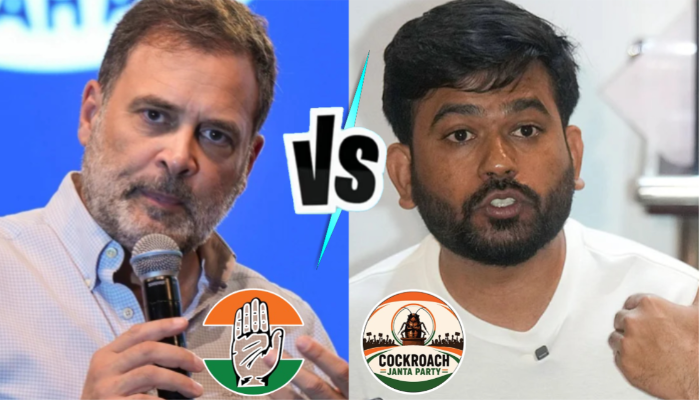
The campaign aims to establish a significant pan-India student movement to revitalise the faltering electoral prospects of the Indian National Congress. However, there exists another competitor also seeking to capture the attention of the anti-Bharatiya Janata Party (BJP) populace. Cockroach Janta Party (CJP), which was founded as an online phenomenon, had already taken to the streets to demand the resignation of Union Education Minister Dharmendra Pradhan over NEET paper leaks.
Hence, the grand old party wants to ensure that the anti-government space on a fundamental issue such as education is not ceded to what it believes to be “non-political” entities. CJP has already been trashed by the former as “performative” and a “brainchild of the Aam Aadmi Party”, as it maintained a firm distance from the Jantar Mantar agitation. Interestingly, Abhijeet Dipke has a documented history of affiliation with the latter and was part of the social media core team.
A split in opposition and what Congress fears
A heated mud-slinging match also broke out as AAP leader Saurabh Bharadwaj mocked Congress and its ecosystem. He asked how a party with a legacy of 140 years, which ruled the nation for decades, could feel threatened by a grassroots effort led by the youth and Gen-Z that is only a few days old.
Bharadwaj accused Congress of attempting to seize the spotlight and acting as though it possesses exclusive authority to protest, unlike other opposition parties that have endorsed the CJP. He asserted that the former has sunk to a new low, and the more it engages in such actions, the further it is going to alienate the younger generation.
On the other hand, the entire Congress system is trying to undermine the supposed impact of the CJP. Former Lok Sabha MP and son of late Chief Minister of Delhi, Sheila Dikshit, Sandeep Dikshit declared the latter as “nonsense” and “fad like AAP”, declaring, “I don’t take this seriously. People clicking on something and thinking they are political,” while talking to propaganda platform Scroll.
Likewise, Youth Congress repeatedly labelled itself as the “true cockroaches” on social media and even started an online drive urging others to join them.
“Real cockroaches are not just online revolutionaries. You have to be on the ground and fight the system,” the youth wing of Congress taunted in another post featuring its demonstration against the centre. “Indian Youth Cockroaches greater than Boston Cockroach,” it similarly hit out at the Boston-based founder of CJP, who recently returned to India.
— Indian Youth Cockroaches (@iyccockroaches) May 22, 2026
Shamita Yadav, also known as Ranting Gola, a prominent member of the Congress ecosystem, posted a video titled, “Who, according to you, is the real opposition? Online drama queens or actual student leaders?” She conveyed that while some people are occupied with signing online petitions and calling for resignations, others are out on the streets demonstrating, being lathi-charged and defending their rights in the sweltering heat. Yadav directly charged that the CJP wishes to be viewed as the main opposition while Congress is handling all the responsibilities.
Aap Chronology samajhiye
– Congress troll Shamita Yadav wanted fame & fund in Cockroach Janta Party
– CJP sidelined her; so she made videos exposing them
– Rattled AAP got her account withheld
Nothing happened to her even after she mocks BJP 24*7, but time she was denting… pic.twitter.com/OjcbjQwzN3
Molitics, another outlet known for its agenda-driven reporting, insinuated that the CJP could be part of a conspiracy against Congress. These statements clearly indicate a glaring division within the opposition bloc. However, Congress cannot overlook how freshly created AAP devoured its voter base and ascended to power by displacing its governments in both Delhi and Punjab.
The former is “once bitten, twice shy” and is exercising extreme caution, considering its humiliating ouster from its strongholds and is desperate to avoid a recurrence of the same, especially given Dipke’s connections with AAP despite repeated dismissals of such allegations by the two.
Thus, the opposition’s unity, which is more of a theoretical construct than a practical reality, has again been exposed as Congress frantically works to protect its swiftly eroding political influence. The strong position taken by AAP on CJP also points to many possibilities related to their association, which might prove harmful to Congress and would certainly prefer to avoid.
The actual purpose of “Chhatron Ki Goonj”
It is an open truth that whether it is CJP, Congress or other parties, their aggression and agitation on behalf of students are merely a ruse intended to earn brownie points in hopes of achieving their political aims. This strategy has been repackaged and redeployed time and again following the astronomical rise of the saffron party to power.
While it is accurate that students are affected by massive challenges that require effective and long-term solutions, the objective of these parties is not constructive criticism but rather the exploitation of these troubles to advance their narrative. Therefore, the conflict between CJP and Congress is over weaponising the difficulties faced by the student community for their political interests.
CJP has just commenced its journey, while Congress is the oldest party that is losing its relevance, and the last thing it needs is to be replaced by a potential front of AAP. Thus, the tug of war is primarily about winning over the undecided or non-BJP voter base, which is being played out on the backs of matters related to students. The Gandhi scion wants to address this demographic through his “Chhatron Ki Goonj” initiative.
CJP and Congress, in essence, are two sides of the same coin, vying for a common goal as the actual concerns are leveraged as a pretext but are easily eclipsed in this frantic political rat race.
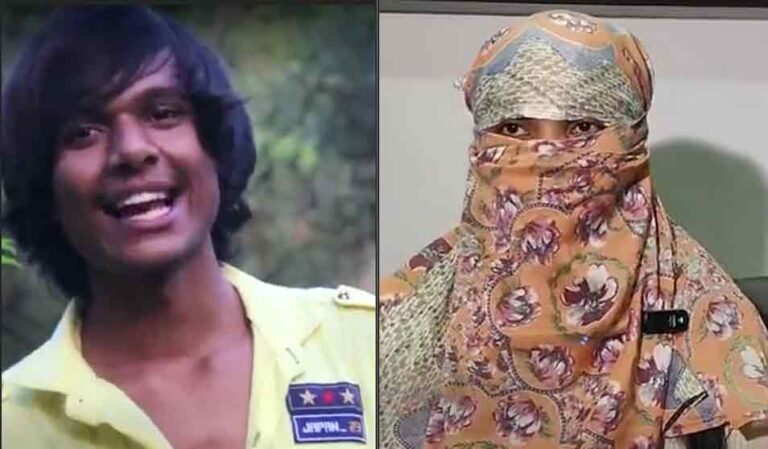
A serious case of love jihad has come to light from Rajkot, Gujarat, where a married Hindu woman has come forward with a serious complaint against a Muslim man, claiming that he trapped her through social media, sexually exploited her, and repeatedly pressured her to convert to Islam. The case gained attention after the woman tried to end her life by consuming acid due to prolonged mental stress and blackmail. Her husband rushed her to a hospital in time and saved her life.
Following the incident, the woman decided to speak publicly and seek justice. Based on her complaint, Rajkot Police have registered an FIR and started an investigation.
Contact began through Instagram
According to the woman, she came in contact with Afzal Sida about a year ago through Instagram. She said that a woman named Anisha Kashmi, who knew Afzal, introduced them. The complainant stated that Afzal initially did not reveal his real identity as Muslim, and she came to know about it nearly two months later.
After discovering this, she tried to end the relationship. However, she says both Afzal and Anisha continued to contact her and pressured her to maintain ties with him.
The woman said that Anisha convinced her to visit an event in Morbi and later took her to a dargah. She claimed that during the visit, a black thread was tied around her wrist, and she was given water that she found suspicious. According to the complaint, Afzal later began pressuring her to convert to Islam and threatened her on several occasions. The woman also stated that Anisha repeatedly convinced her to leave her husband and run away with Afzal.
Hotel meeting and blackmail allegations
The complainant further stated that Anisha once took her to a hotel on Gondal Road, saying they would simply spend some time there. She claims Afzal also arrived at the hotel and that Anisha sent her into a room with him.
The woman told police that Afzal had physical relations with her against her wishes. She further claimed that he recorded objectionable photos and videos.
According to her statement, when she later decided to completely cut off contact with him, Afzal began threatening to release the photos and videos on social media. She said he used these materials to blackmail her and continued to pressure her to convert and come to his home.
Mental stress led to an extreme step
The woman said the continuous threats and fear of public humiliation caused severe mental distress. She eventually consumed acid in an attempt to take her own life. Family members and her husband intervened quickly and rushed her to a hospital.
After recovering, she chose to file a complaint and publicly share her experience.
Rajkot Police have registered a case against Afzal Sida and have begun further investigation. The complainant has also claimed that Afzal had similarly trapped four other Hindu girls in the past.
Police sources said that some criminal cases have reportedly been registered against Afzal earlier as well. Authorities are currently examining the complaint and proceeding with action under relevant legal provisions.
The Madras High Court recently restrained the construction of a church in the vicinity of Mariamman Temple on Kalapatti Main Road in Coimbatore, Tamil Nadu. A Division Bench of Justices G.R. Swaminathan and V. Lakshminarayanan passed the interim injunction in the writ petition filed by Balasubramaniyam, a resident of Kalapatti, against the orders passed by the District Collector and the Revenue Divisional Officer (RDO).
The High Court examined the records of the case and found that the land on which the proposed church was to be erected was classified as a public road in revenue records. In addition to that, the court noted that the proposed church was being constructed in an area where there was a handful of Christian population and the Hindu majority in the area had been vehemently opposing it. The court also held that the construction of a large church in proximity to an over 100-year-old Hindu temple hints at mala fide intentions.
“Coimbatore is a communally sensitive city. It witnessed bomb blasts and bloody religious riots. The proposed church would come up within a stone’s throw from the existing Mariyamman Temple. There are only a handful of Christian families. If a large church is proposed to be constructed in the vicinity of the Mariyamman Temple, mala fide intentions cannot be ruled out,” stated the judgment dated May 25, 2026, authored by Justice G.R. Swaminathan.
Screenshot from the Madras High Court judgment.
“Since India is a secular nation and a pluralistic society, religious amity has to be preserved, especially when an overwhelming majority of Hindus oppose the construction of a church in close proximity to the temple,” Justice Swaminathan noted, adding that the constitutional right to practise, profess and propagate any religion is subject to public order.
However, he clarified that the court is not directing the state to surrender to opposition from a section of society. He added that if a right is established and the opposition is found unreasonable, then the state must enforce and uphold the right. “We should not be understood as holding that if there is opposition, the State must submit to it. Far from it. If the right is established or if the opposition is found to be unreasonable, then the State should go to any extent to uphold the right,” Justice Swaminathan clarified.
Screenshot from the Madras High Court judgment.
Justice Swaminathan also considered the petitioner’s submission that the proposed church building could be used as a centre for conversion activity. “The counsel for the petitioner hints at the possibility of the new building being a centre of conversion activity. We are a secular nation. We are a pluralist society. Religious amity has to be preserved. If a religious right is established, then it is the duty of the State to aid in its enforcement,” Justice Swaminathan said.
Petitioner said fundamentalist groups in the state emboldened under the Joseph Vijay government
The petitioner submitted before the High Court that since the government headed by Chief Minister C. Joseph Vijay took charge in the state, certain fundamentalist organisations have become emboldened. He pointed out certain instances to show how the socio-religious environment in the state has changed after the new government was formed.
He said that Speaker of the Legislative Assembly, JCD Prabhakar, who proclaims that he had distributed thousands of free copies of the Bible, quoted biblical verses in his inaugural address to the Legislative Assembly. The petitioner also added that when Shri Udhayanidhi Stalin, the leader of the opposition, called for annihilation of Sanatana Dharma in his address in the Assembly, it was not condemned or even objected to by the ruling party.
A Single-Judge Bench had stayed the construction of the church pending a suit
The village where the church is proposed to be constructed has a minuscule Christian population. The village has around 1000 families, out of which 950 are Hindus, 15 are Muslims, and a few of the remaining are Christians. In January 2010, the District Collector passed an order permitting the construction of the church near the temple. The Hindus of the village opposed the construction of the church and challenged the order of the District Collector before the District Munsif Court, Coimbatore, vide a civil suit in 2011. The suit is still pending.
Around 13 years later, some private individuals tried to resume the construction of the church and obtained orders to that effect. However, after a law and order situation arose, the District Collector asked them to stop the construction. Subsequently, in 2024, the Church of South India (CSI) filed a writ petition before the Madras High Court challenging the order of the District Collector. A Bench of Justice M. Dhandapani, in April 2026, refused to decide the case on the merits as the civil suit was pending. The court directed the petitioners to make a fresh application after the disposal of the civil suit.
The Madras High Court earlier upheld religious rights
Last year in December, the Madurai Bench of the Madras High Court upheld the rights of Hindus to light Karthigai Deepam at the Mandu Kovil (Dindigul) and the Deepathoon pillar at Thiruparankundram hill in Madurai. A Single-Judge Bench of Justice G R Swaminathan slammed the district administrations of Dindigul and Madurai for failing to make arrangements for the lighting of lamps by Hindu devotees.
The Shri Ram Janmabhoomi Mandir in Ayodhya is not merely a temple. For millions of Hindus across the world, it is the culmination of a centuries-long civilisational struggle, legal battle, and social movement that finally culminated in the consecration of Ram Lalla in January 2024.
Since the Pran Pratishtha ceremony, the temple has received an overwhelming response from devotees. Lakhs visit Ayodhya every month and donate generously in cash, gold, silver, jewellery and other offerings.
It is therefore understandable that allegations of embezzlement involving Ram Mandir donations have triggered widespread concern. Claims of missing funds, suspicious property acquisitions by employees, alleged disappearance of donated valuables and possible manipulation of records have transformed what began as local reports into a national controversy.
However, amid political mudslinging and sensational headlines, one crucial fact is often ignored: the Shri Ram Janmabhoomi Teerth Kshetra Trust is an autonomous body and not an institution whose finances are controlled by the Uttar Pradesh government. This distinction is central to understanding both the controversy and the ongoing investigation.
How the Ram Mandir donation controversy erupted
The controversy began after local media reports highlighted alleged irregularities in the accounting of donations received at the Ram Mandir.
The issue entered the political arena on 7th June when Samajwadi Party chief Akhilesh Yadav cited media reports claiming crores of rupees in offerings could not be accounted for.
Calling it an issue linked to the faith of crores of devotees, Akhilesh Yadav questioned the silence surrounding the matter and demanded judicial intervention. For someone who didn’t attend the consecration ceremony of the Ram Temple in Ayodhya, it was politically convenient to lap up a controversy that could be weaponised to target the Yogi Adityanath government.
Over the following days, allegations snowballed.
Initially, reports suggested that donations worth between Rs 5 crore and Rs 7.5 crore were allegedly unaccounted for. Subsequently, some reports claimed the scale of the alleged discrepancy could be far larger, with estimates crossing Rs 200 crore.
While the exact figures remain disputed and unverified, the allegations triggered demands for a comprehensive investigation.
What exactly are the allegations?
The controversy revolves around multiple allegations involving different aspects of donation management.
According to reports, some cash-counting staff allegedly recorded lower amounts in vouchers than the actual cash collected from donation boxes.
Questions have also been raised regarding the handling and accounting of gold, silver and jewellery donated by devotees.
Further suspicion emerged after allegations that CCTV footage from cash-counting areas covering several months had allegedly been deleted.
There are also allegations that complaints regarding irregularities were either ignored or not acted upon adequately.
Collectively, these claims created concerns that a section of the donation-handling chain may have been compromised.
The whistleblower claims and allegations of a cover-up
One of the individuals at the centre of the controversy is Mahipal Singh, identified in media reports as a former accounts-in-charge associated with temple operations.
Singh alleged that donation theft had been taking place for a considerable period and claimed that concerns were raised internally.
According to his version, he informed senior functionaries regarding the alleged irregularities but was removed from his position soon afterwards.
He also alleged that CCTV footage covering several months had been deleted.
These allegations have not yet been judicially established, but they significantly contributed to the public perception that a deeper probe was necessary.
Missing Ram Shilas and allegations dating back decades
The controversy took a dramatic turn when Dharmsena founder Santosh Dubey made sensational allegations regarding precious Ram Shilas.
According to Dubey, around 1,250 Ram Shilas made from gold, silver, diamonds, rubies and other precious materials, which were allegedly brought to Ayodhya after being worshipped across India and abroad, have disappeared.
He claimed that concerns regarding valuable donations and precious items associated with the Ram Mandir movement dated back several decades.
Dubey even alleged that theft of valuables associated with the Ram Mandir cause had been occurring since 1989.
These allegations remain claims and are now part of the larger controversy demanding investigation and verification.
How donations are collected at the Ram Mandir
Understanding the collection process is important to understand the allegations.
The Shri Ram Janmabhoomi Teerth Kshetra Trust has installed multiple donation boxes or hundis at designated locations around the darshan route.
Every day, thousands of devotees deposit cash offerings in these boxes.
The Trust authorised the State Bank of India to undertake the counting process. The bank subsequently outsourced the actual counting work to a private agency.
As a result, the donation-handling chain involves temple personnel, outsourced cash counters, supervisors, banking teams and accounting mechanisms.
The allegations currently focus on what may have happened after donations were collected rather than suggesting that offerings disappeared directly from the donation boxes themselves.
The suspicious wealth trail that intensified concerns
Perhaps the most damaging aspect of the controversy concerns allegations regarding disproportionate assets.
Several employees involved in donation handling reportedly came under scrutiny after investigators allegedly discovered assets significantly beyond their known sources of income.
Reports suggest that some employees earning approximately Rs 18,000 to Rs 20,000 monthly acquired expensive properties, vehicles and businesses.
Two employees reportedly purchased land worth Rs 1.5 crore and Rs 40 lakh respectively.
Naturally, questions emerged regarding how such acquisitions were financed. These developments strengthened suspicions that certain individuals may have benefited from irregularities in donation management.
Arrest of Lavkush Mishra puts spotlight on donation handling
The investigation gathered momentum after the arrest of cash-counting employee Lavkush Mishra. According to reports, investigators recovered around Rs 10 lakh from his residence.
Media reports further stated that some of the cash was allegedly hidden beneath cow dung. Authorities reportedly began scrutinising Mishra after internal audits and CCTV reviews raised concerns regarding his conduct.
The arrest transformed the controversy from a purely political issue into an active criminal investigation.
Champat Rai rejects allegations of missing donations
The Shri Ram Janmabhoomi Teerth Kshetra Trust has strongly denied allegations that crores of rupees have disappeared.
Trust General Secretary Champat Rai has maintained that no financial irregularities have been detected in internal audits.
The Trust has consistently asserted that its accounting and audit mechanisms remain functional and transparent.
Importantly, the Trust did not oppose scrutiny.
Instead, it approached Uttar Pradesh Chief Minister Yogi Adityanath and sought an independent investigation into the allegations.
According to official statements, the Trust argued that a formal inquiry was necessary both to establish facts and to counter what it described as misinformation intended to damage the image of the Ram Mandir.
Why linking the controversy directly to the Uttar Pradesh government is misleading
As the controversy gained traction, opposition leaders attempted to portray it as a failure of the Uttar Pradesh government.
However, the legal and institutional structure of the Ram Mandir Trust tells a different story.
The Shri Ram Janmabhoomi Teerth Kshetra Trust was not created by the Uttar Pradesh government. It was established through a Central Government notification issued in February 2020 pursuant to the Supreme Court’s Ayodhya verdict. Ownership of the acquired land was vested directly in the Trust through that legal framework.
The Trust functions independently and manages its own affairs. The President, General Secretary and Treasurer are elected within the Trust structure and exercise control over administration, finances and donations.
The Uttar Pradesh government’s role is largely limited to law-and-order arrangements, security, crowd management and administrative coordination. State nominees on the Trust board do not possess voting rights and do not control financial decisions.
Similarly, the Ayodhya District Magistrate serves in an ex-officio capacity primarily to facilitate coordination on administrative matters rather than to manage donations or supervise temple accounts.
Consequently, if wrongdoing is ultimately established, accountability would primarily lie with those directly involved in donation collection, counting, accounting and oversight rather than with a state government that does not operate the Trust’s financial machinery.
Yogi government orders SIT probe after Trust seeks inquiry
Recognising the seriousness of the allegations, Chief Minister Yogi Adityanath constituted a three-member Special Investigation Team.
The SIT includes senior officers from the administration, police and finance departments.
Notably, the decision followed a request from the Trust itself, which sought an independent probe to establish the truth behind the allegations.
The SIT has been directed to investigate claims of financial irregularities, examine available evidence and identify any individuals responsible for wrongdoing.
Its findings are expected to determine whether the controversy involves systemic embezzlement, isolated misconduct by a few employees, procedural lapses or exaggerated claims amplified through political narratives.
PILs, political pressure and demands for greater transparency
The controversy has also reached the judiciary. A Public Interest Litigation before the Lucknow Bench of the Allahabad High Court has sought a court-monitored CBI investigation into alleged irregularities involving temple donations.
Simultaneously, BJP leaders and Ram Mandir movement veterans have demanded strict action against anyone found guilty of misappropriating devotees’ offerings.
There have also been calls for greater public disclosure regarding donations, expenditures, assets and financial records to ensure complete transparency.
The larger issue: Protecting the faith of millions of devotees
For crores of Hindus, uthe issue extends beyond accounting records and criminal investigations. Every donation made at the Ram Mandir represents an act of devotion.
The temple itself is the product of generations of faith, sacrifice and struggle. Any attempt by individuals to misuse offerings made in the name of Lord Ram would amount not merely to financial misconduct but a betrayal of devotees’ trust.
At the same time, allegations alone cannot substitute evidence.
The investigation must distinguish between proven wrongdoing, administrative shortcomings, accounting discrepancies and politically motivated accusations.
Political narrative takes precedence over facts
The Ram Mandir donation controversy has raised serious questions that deserve answers. Allegations involving missing funds, unexplained wealth, missing valuables and deleted footage cannot simply be ignored.
The SIT investigation, arrests and ongoing scrutiny indicate that authorities are taking the matter seriously.
However, it is equally important to separate facts from political narratives.
The Shri Ram Janmabhoomi Teerth Kshetra Trust is an autonomous body that manages its own finances, donations and administration. The Uttar Pradesh government’s role is largely confined to security and administrative coordination and does not extend to controlling temple accounts or handling donations.
If criminal misconduct occurred, the guilty must be identified and punished. If allegations have been exaggerated, that too should become clear through evidence.
Ultimately, the issue is not about politics but about preserving the sanctity of offerings made by millions of devotees at one of Hindu civilisation’s most important sacred sites.
Hundreds of thousands of minor non-Muslim girls were lured, picked up, raped, brutalised, sold, and even killed by Pakistani Muslim grooming gangs or rape gangs for a full forty years or more in the United Kingdom. The British authorities and media covered up the horrifying truth of rape jihad in pursuit of not coming across as ‘racist and Islamophobic’. An independent Rape Gang Inquiry Report has now revealed that the Muslim rape gangs comprised 87% to 95% Pakistani Muslim men, who raped, exploited and groomed over 250,000 non-Muslim, mostly White girls.
The 219-page Rape Gang Inquiry Report is an independent, survivor-led inquiry chaired by MP Rupert Lowe, with lead Sammy Woodhouse, who is a survivor and campaigner, and a panel including MPs Esther McVey, Nick Timothy, and Carla Lockhart.
The report, prepared based on survivor testimonies, whistleblower accounts, media reports, and previous public inquiries, details how Britain experienced a decades-long, nationwide pattern of organised child sexual exploitation, mainly by Pakistani Muslim men of various age groups, with white working-class girls being the primary targets.
The Rape Gang Inquiry Report offers a conservative estimate of at least 250,000 young White British girls subjected to perpetual rape, gang rape, pregnancy, coerced abortions, childbirths, trafficking, torture, forced conversion to Islam, and a trauma impossible to subside in this lifetime.
Around 149 local authority districts, encompassing 50% of the UK areas, were affected by Pakistani Muslim rape gangs. In 2019 alone, 19,000 children were identified as exploitation victims.
“Organised networks of perpetrators built coordinated operations that transported victims between locations, supplied them with drugs and alcohol, recorded abuse for distribution and blackmail, and passed girls between multiple adult men. These crimes have been committed for decades, since the 1950s, by Pakistanis in particular, and have affected every region of our nation,” the report reads.
“The scale of the crimes committed is staggering. It has been previously established that, at the very least, 250,000 young white girls have been subjected to repeated rape, gang rape, trafficking, torture, pregnancy, forced Islamic conversion, and lifelong trauma. The true number is probably higher,” the report adds.
The Inquiry found that around 87% of those convicted in these group-based child sexual exploitation (‘CSE’) cases bore distinctively Muslim names, indicating a clear pattern of Muslim men in the UK weaponising rape against vulnerable girls.
“The perpetrators bear primary responsibility, yet the institutional failures that enabled them for decades must also be confronted. In court records and official inquiries, around 87% of those convicted in these group-based child sexual exploitation (‘CSE’) cases bore distinctively Muslim names. The vast majority of men involved in these gangs were not convicted. Dr Taj Hargey, an imam with the Oxford Islamic Congregation, believes the true proportion of gang members who are Muslims to be around 95%.3 This figure far exceeds the Muslim share of the overall United Kingdom population,” the Inquiry states.
As per the Inquiry, most of the rape gang members were of Muslim backgrounds – predominantly of Pakistani heritage, although smaller groups from Somali, Iranian, Syrian, Turkish, and other Muslim origins were also involved.
‘Islamic motivations of rape jihad, theological aspects of Islam’
In a major departure from the prevalent approach of downplaying the religious drivers of the child sexual exploitation by Pakistani and other Muslim rape gangs, the Rupert Lowe-chaired Rape Gang Inquiry explicitly details the Islamic motivations of rape jihad.
“Perpetrators from Pakistani Muslim and other Muslim backgrounds operated under an honour and shame-based clan code that treated non-Muslim girls, especially white working-class girls, as property available for sexual use. This pattern was reinforced by eight theological and legal aspects of Islam,” the report states.
The rape jihadis targeted White British girls from working-class or unstable backgrounds. They picked these victims due to their vulnerability resulting from poverty, neglect, or prior abuse. While the ages of victims typically ranged between 11 and 13 years, the Inquiry makes a heartbreaking revelation that some victims were as young as 4 to 6 years old.
The Inquiry details how rape jihadi gangs operated organised networks using taxis for collection and transport, passing ‘Kafir’ girls between Muslim men, supplying drugs or alcohol, filming abuse for blackmail, and in some cases, trafficking the victims to Pakistan or West Asia for forced Islamic Shariah-based marriages or Nikah.
The grooming process involved befriending girls as young as 11 by young Muslim men. These men treated the target white non-Muslim girls like adults, plied with alcohol, drugs, cigarettes, etc, then collected them from school gates, care homes, or streets in taxis. The rape jihadis would take these girls to houses, flats, restaurants, or even hotels, where they would be subjected to repeated gang rape, torture, and filming.
Several victims told the Inquiry that the Pakistani Muslim rape jihadis used to call them “white trash”, “English pig-dogs”, “white slags”, or “Kuffar” who merited ‘punishment’.
Further dissecting the Islamic drivers of rape jihad, the Rape Gang Inquiry Report says that Islamic doctrines of superiority over non-Muslims or kuffar, al-walā’ wa-l-barā’ (loyalty to Muslims and enmity to non-Muslims), Islamic-historical precedents of treating non-Muslim war captive females ‘Maal-e-Ghanimat’, and the belief that White girls, and by extension all non-Muslim girls, are ‘property’ or ‘easy meat’.
One of the survivors, Dr Ella Hill, told the Inquiry, “I was told that white girls are trash. They are all whores. They are lower than shit under your shoe. They don’t obey Allah, so they deserve to be punished.”
Several others described ‘rituals’ imposed by Pakistani Muslim rape jihadis to assert Islamic dominance. These included forcing victims to lick feet, branding ‘M’ for ownership on the bodies of Kafir girls, setting up ‘red rooms’, subjecting victims to extreme torture and even getting the White girls raped by animals. Some were also forced to witness murder.
The report shatters a misconception that Pakistani rape jihad against British girls began only in the 1990s. The Inquiry highlighted that the rot has persisted since the 1950s.
Started as early as the 1950s, spiked in the late 1970s
“British Newspaper Archive reveals that the first recorded case of specifically Pakistani rape gangs dates back to 1955, when four Bradford-based Pakistanis were charged with raping a 15-year-old girl from Middlesbrough. This was soon after former colonial subjects, from the subcontinent as much as the Caribbean, became eligible to enter the United Kingdom in non-trivial numbers under the British Nationality Act 1948. What began as singular and small-scale instances became systematic and industrial over time,” the report states.
It further highlights that the scale of rape jihad in the UK magnified dramatically after the victory of Tony Blair in 1977 and the start of “orchestrated mass immigration.”
“With greater numbers came greater opportunities for abuse. Perpetrators built organised networks that transported victims between towns and cities and passed girls between multiple adult men,” the report states.
The Rape Gang Inquiry Report states with equivocation that the institutional denial, political calculation, and fear of the accusation of racism enabled the perpetuation of a national scandal of repeated rape, trafficking, torture, pregnancy, forced Islamic conversion, and lifelong trauma.
“The authorities at every level, including the police, social services, health services, schools, licensing bodies, and politicians, knew the patterns, possessed the intelligence, and still failed to protect the country’s children,” it says.
The most damning sections of the Inquiry report detail systemic, decades-long failures by police, local councils, Crown Prosecution Service (CPS), National Health Service (NHS), schools, social services, media, and successive governments of both Labour and Conservative parties.
How police and ‘system’ ignored complaints of sexual abuse, returned victims to rapists
The report describes how police often dismissed reports of sexual abuse, returned girls to abusers, resorted to blatant victim-blaming and criminalised victims as ‘prostitutes’ or having ‘lifestyle choices’. The police in some cases would demand impossibly solo testimony, concealed or destroyed records, tipped off predators, as it happened in Rotherham, and failed to probe pregnancies/STIs. They even released Muslim rape jihadis on bail.
The Inquiry also found that young girls were placed in known trafficking hubs, social services and councils prioritised ‘community relations’ and dodging ‘racism’ allegations over child protection. In many cases, the local authorities falsified records, particularly the age of minor victims, resisted whistleblowers, and focused on contraception or abortion instead of investing their time and resources in blowing the lid off the ongoing large-scale rape jihad.
It emerged that the UK’s National Health Service (NHS) used to discharge injured victims back to their Pakistani, Somali, Bangladeshi, or Turkish abusers the same night, demonstrating complicity in perpetuating their abuse.
The governments and CPS essentially suppressed ethnicity and religion data. The report mentions that the Labour Party either blocked or delayed national inquiries just to avoid upsetting the Muslim votebank. It further states that rape jihadis were handed lenient sentences with no deportations, with the Starmer-era CPS letting off thousands of rape jihadis with just ‘warnings’.
Meanwhile, the British media adopted a policy of self-censorship and refrained from highlighting the patterns of rape jihad and its religious drives, to avoid ‘Islamophobia’.
The report cited previous inquiries into rape gangs in Rotherham, Telford, and other areas. The Jay Report (2014) found that at least 1,400 girls were abused between 1997 and 2013, with some updated estimates exceeding this. Perpetrators were overwhelmingly Pakistani Muslim men.
In Telford, over 1,000 children (predominantly girls) over decades, again with the same perpetrator profile. The Inquiry cites the Baroness Casey National Audit on Group-Based Child Sexual Exploitation and Abuse (June 2025) report, and Independent Inquiry into Child Sexual Abuse (IICSA) and multiple local inquiries (2022–2025) report, to assert that historical suppression of the crimes and destruction of evidence make it impossible to fully gauge the scale of rape jihad crimes in the UK.
Regarding how whistleblowers who attempted to expose Pakistani Muslim rape gangs were targeted, the Inquiry report says, “Whistleblowers who tried to expose the rape gangs were systematically silenced, discredited and punished. On occasion, their careers and reputations were also tarnished. Social care professionals, campaigners, and public activists who raised evidence of still ongoing grooming, trafficking, and financial abuse of children in care, and institutional cover-ups faced suspension, defamation proceedings, dawn raids, asset freezes, fabricated charges, gagging bail conditions, and career-ending isolation.”
Rape jihad thrived, London’s Pakistani-origin Mayor Sadiq Khan denied: The Jihad and the cover-up
The Rape Gang Inquiry Report describes London, which has the largest Muslim population, as the epicentre of institutional denial in the grooming gang scandal. It mentions how London Mayor Sadiq Khan, who is a known Islamist and ironically of Pakistani origin, used to consistently claim that no grooming gangs operated in the city. He even described evidence from whistleblowers as ‘malicious and politically motivated’. Khan’s outright denial of the existence of rape jihad came even as reports of the Metropolitan Police holding reports of young girls being plied with alcohol and drugs, then raped by Pakistani Muslim men in hotels, etc.
While Sadiq Khan changed tunes from outright denial to downplaying and segregating Islamic drivers from documented CSE cases despite having access to case files, the evidence punctured his lies.
In October 2025, the Metropolitan Police announced a review of 9,000 child sexual exploitation cases. The National Crime Agency launched Operation Beaconport to examine thousands more files nationwide after initial assessments found human errors, missed lines of inquiry, and cases wrongly dropped. London forms a significant part of this backlog.
“A former Metropolitan Police detective has described industrial-scale child prostitution and grooming in the capital, with authorities aware but opting for inaction due to a mixture of “incompetence, laziness, and corruption,” the report said.
Victim testimonies reveal the harrowing truth of the extent of perversion and hate Muslim rape gangs harboured for ‘kuffar’ girls
While the Inquiry promised the release of full testimonies later, the report includes several named and anonymised survivor accounts.
One of the victims, Chloe, who suffered abuse from her paedophilic stepfather, was later abused by Muslim rape jihadis from age 10 to 11 via taxis, hotels, and drugs. She was impregnated by a Pakistani Muslim migrant. An attempt was made to forcibly convert her to Islam. She knew at least 20 more victims. Chloe revealed that she was dismissed as a “prostitute” by the police, and even social services prioritised contraception over ensuring that her violators were brought to justice.
While Chloe was grappling with the abuse by her stepfather, she came in contact with Pakistani Muslim men, most of whom were taxi drivers who would take the girls into their cars and drive them around the town. Chloe said that these men would give extra attention, ‘care’, and treat her and her friends, like ‘adults’. Gradually, Chloe found herself in the swamp of continuous abuse, torture, and rape by different men, in almost all cases, Muslim men of Pakistani origin.
On one occasion, a Pakistani rape jihadi forced the empty whiskey bottle into Chloe’s vagina, where it shattered. Chloe admitted herself to A&E, but no questions were asked about how she had sustained such an injury. She was examined, the glass was removed, and she was discharged.
“There were times when Chloe would be missing for up to three days, during which time she was passed between taxis, drugged, abused, and raped. In every case, the perpetrators were Muslims, and primarily Pakistani,” the report says.
When Chloe was around 19-years-old, a Pakistani Muslim illegal migrant coerced her into converting to Islam and forced her into marriage, both to legitimise the pregnancy in the eyes of her abuser and to assist him in securing a visa. Chloe was forced to wear a hijab, prohibited from looking out of the windows of her rented house, and was brutally assaulted by her husband over the slightest of perceived ‘misbehaviour’.
When asked by the Inquiry panellist about how many men must have raped her over the years until she finally managed escape the spiral, Chloe said, “Hundreds. Hundreds, and Hundreds, and Hundreds.”
Another victim, Fiona, revealed that she was groomed at the age of 13 in care home by Pakistani men between ages 24 and 45. She was abused by 50-100 men, all Pakistani Muslims, trafficked towards Kashmir, subjected to extreme brutalities. Rubbing salt to her wounds, the police returned Fiona to her abusers, while the care staff remained negligent. Fiona said that the care staff may have not been complicit in the rape jihadi crimes but was aware and reluctant to blow the whistle fearing adverse repercussions, including being labelled ‘racist’.
While Chloe faced sexual abuse from her stepfather, Fiona had serious mental health difficulties, self-harm behaviours, and suicidal ideation. Such vulnerable young girls were the desired targets of Pakistani Muslim rape gangs in the UK.
The grooming began with affection and alcohol, quickly progressing to rape, drug dependency, threats, and trafficking.
The police also did not proceed with action beyond issuing ‘notices’ to rape jihadis. In fact, on one occasion when Fiona’s mother called the police to report her daughter missing and mentioned a history of abuse by Asian men, the call handler told her: “You can’t describe them as Asian men because that’s racist. You should just be glad your child is being taught a different culture.”
The Inquiry report says that the police asked the Muslim rapists that if they could persuade Fiona to sign herself out of care, the police would stop bothering them. The rape jihadis tried to persuade her to pull out of care, to take her to Kashmir. They had even succeeded. However, Fiona was stopped from leaving the country. Not because the authorities were to initiate action against her Pakistani Muslim rapists, but because she did not have a valid passport.
Between 2008 and 2012, Fiona was repeatedly raped by multiple men connected to organised grooming networks.
The Pakistani Muslim rape jihadis used to keep Fiona at a “party house” where 10 to 20 men would come to ‘enjoy’ and rape non-Muslim white girls. Muslim rape jihadis used to celebrate the Islamic festival of Eid by raping white girls.
“On one occasion, she was encouraged to bring her friends because the owner had relatives visiting from Birmingham to celebrate Eid and “expected girls to be there.” Within the house, the girls were routinely referred to as “white slags,” while the men wanted Pakistani girls kept “pure” for marriage,” the report mentions.
In addition to enduring rape and torture, Fiona was forced into drugs trafficking.
At 15, Fiona was pregnant and gave birth to a boy, who was removed and adopted due to exploitation risks. But Fiona was left in the same hellhole. The abuse ended only after she turned 18. What was left with her was PTSD, substance dependency, and long-term health damage.
The report also documents testimony of a survivor named Michelle. She was groomed by Pakistani Muslim men at the age of 13. At 14, she was gang-raped and beaten by three men who had locked her in a house.
She was abused by over 600-700 men. Michelle got pregnant four times as a child, underwent miscarriages and abortions, with one child kept. While the police dropped cases, social services described rapes, impregnations, and torture as ‘consensual’.
Besides rape, the Pakistani Muslim rape jihadis also resorted to bestiality and victims, who were always non-Muslim girls, were treated like animals.
“I remember a man opening the back of a van, and I saw 15 to 20 girls locked in dog cages,” a survivor said.
One even reported that she was “raped by a dog”.
“I think that the scariest thing was not having any concept of it. There were men around me, not horrified, not disgusted, not helping, but filming and laughing, making bets on whether the dog could actually rape me or not. Yes, I was raped by a dog. The man just held my face, stared me down straight in the eyes, and he wanted to see me break, and he did,” the victim said.
Michelle was raped in bin sheds, threatened with a knife, and forced into sex with multiple men waiting in cars. She was drugged, beaten, burned with cigarettes, locked in rooms, and passed between men.
Speaking to the Inquiry panel, Michelle said that these rape gangs have remained untouchable because authorities feared being labelled racist. She described an extensive network of abusers operating across the entire country, calling it “industrial” in scale.
“It functions as a large central network with smaller connected groups in specific localities. Michelle claims she was raped by between six and seven hundred different men over the course of three years. She now lives with severe PTSD and lifelong trauma, describing both her childhood and her future as destroyed,” the report reads.
One of the victims, Taylor, revealed that Pakistani Muslim rapists used to say “Bismillah-e-rehman-ur-rahim” (In the name of Allah, the most gracious, and merciful) the Islamic verse said before beginning an ‘auspicious’ or religiously-significant act, before raping her.
OpIndia has long been stressing that be it in UK, Europe or in India, Muslim men weaponise sex, rape specifically, as a means of Islamic conquest over kafirs, and religious act. However, somehow calling out these Islamic crimes makes one Islamophobe and bigot, but the Muslim rapists get a pass by the virtue of being Muslims.
Pakistani Muslims, not ‘Asian’ or ‘South Asian’
The Rape Gang Inquiry report also called out the media bias and deliberate use of broader vague terms like “Asian” and “South Asian” when reporting on grooming gangs. The report said that this framing was inaccurate because UK hosts a substantial number of non-Muslim Asian populations, such as Hindus and Sikhs from India, Buddhists from Japan, and Christians from the Philippines and Vietnam.
“The term “Asian” has frequently been applied in media, official statements, and public discourse to describe the perpetrators in grooming gang cases across Britain. This broad labelling can be misleading, however, because Britain hosts a substantial number of non-Muslim Asian populations, such as Hindus and Sikhs from India, Buddhists from Japan, and Christians from the Philippines and Vietnam. These populations have, with only very rare exceptions, had no involvement in these offences. In fact, members of these communities have more often appeared as victims than as perpetrators in the grooming gang cases that have come to light,” the report said.
Dr Ella Hill, a survivor of the Rotherham grooming gangs and now a qualified doctor, who suffered years of repeated sexual violence, severe beatings, and attempted murder by her abusers, said that it was both racially and religiously aggravated. Hill was explicitly told during the rapes that the attacks were happening because she was white and because she was Christian. Her Pakistani Muslim rapists used to call her “a white slag,” “a white whore,” “a white cunt,” and simultaneously condemned her as a non-Muslim who deserved punishment for failing to follow Islamic rules.
On at least five occasions she approached the police, presenting medical evidence of her injuries, yet each time she was told there was nothing they could do and her evidence was not accepted.
Another victim named Sarah was subjected to rapes, torture, threats, pregnancy, and abuse of all forms by Pakistani Muslim rape gangs, and was eventually compelled to learn the Quran in Arabic and allowed to speak only Urdu and Punjabi. She was also made to cook and clean for the gang members who abused her.
The report detailed how Islam views non-Muslims across the world. It cited various studies by human rights groups to highlight how young girls belonging to Hindu, Sikh, Buddhist, Christian, and other non-Muslim faiths in Pakistan are subjected to abduction, rapes, forced conversions and marriages.
“A common sequence in these cases sees a girl abducted, coerced into signing a conversion certificate, and swiftly married to a Muslim man. Police in Pakistan frequently side with the abductors over the girl’s family. When parents pursue legal action, courts tend to uphold the legitimacy of the conversion. Birth certificates may be falsified to indicate that the girl is not a minor. Contact with her family is typically blocked. Following conversion to Islam, non-Muslim parents lose all authority over their child, as Islamic law prohibits non-Muslims from exercising guardianship over Muslims, including their own offspring,” the report reads.
“The evidence from grooming gang convictions across Britain repeatedly shows a Muslim background among many of the perpetrators. When this is viewed alongside similar patterns of sex crimes observed both in countries of origin for immigrants and in Muslim-majority societies, it offers compelling grounds to consider that elements of Islam are contributing to the grooming gang scourge in our country,” it adds.
The report also cited Quranic verses that emphasise Muslim religious supremacy and legitimise sub-human treatment of Kafirs.
The report proceeds to calling out Labour and Conservative parties for their failure to ensure full and thorough investigation into the grooming gangs.
“The Labour Party bears primary responsibility for the longest and most deliberate cover-up. As the former Conservative councillor Liam Billington emphasised to our Inquiry, Labour-dominated local councils and MPs repeatedly prioritised electoral dependence on Pakistani Muslim communities above the safety of children,” it said.
OpIndia earlier reported how politician in the UK, especially the Labour Party downplayed grooming Jihad cases. Sarah Champion, a Labour Party MP had to apologise for an article published in The Sun in 2017 wherein she wrote that “Britain has a problem with British Pakistani men raping and exploiting white girls”. Champion had to not only apologise but also resign from her post as a shadow minister.
In 2012, Keith Vaz, a Labour Party leader and Chair of the Home Affairs Select Committee, downplayed the grooming jihad crimes calling them not racially motivated and emphasised that the entire community should not be ‘stigmatised’.
A Nottingham Crown Court judge who convicted two Pakistani men who groomed and raped several minor white girls, downplayed the identity of the perpetrators by asserting that the race of the victims and the abusers were ‘coincidental’.
In many cases, instead of arresting the rapists, the police ended up arresting the victims and their families. This was commonly due to a ‘misreading’ of the situation, a failure to probe the grooming part and in most cases a deliberate cover-up, with young victims being treated as offenders for small violations while still in contact with their abusers. This demonstrates an intentional diversion in the approach to child safety, spurred by an obsessive avoidance of racial-religious profiling. Fear of being perceived as racially ‘insensitive’ appears to have taken precedence over safeguarding young girls, culminating in a serious miscarriage of justice.
The evidence-based revelations by the UK Rape Gang Inquiry Report has rocked Britain, and demands are intensifying for tracing and punishing each and every rape jihadi. Demands are also being made to reform immigration policy to prevent influx of Muslim migrants who feign victimhood to make in roads to Britain only to eventually rape and torture Kafir girls.
It must not be forgotten that while the old victims of rape jihad are yet to get justice, the Muslim rape gang menace has not ended in the UK.
In August last year, Great Yarmouth MP Rupert Lowe said that the Rape Gang Inquiry report found that Pakistani Muslim rape gangs have been operating in as many as 85 areas across the United Kingdom.
As per the Rape Gang Inquiry, Pakistani Muslim rape gangs have been actively operating in Aberdeen City, Angus, Antrim and Newtownabbey, Argyll and Bute, Barnsley, Bexley, Birmingham, Blackburn with Darwen, Blackpool, Bradford Brent Bristol, City of Bromley, Buckinghamshire, Burnley, Calderdale, Camden, Canterbury, Chelmsford, Cherwell, Cheshire East, Cheshire West, Chester City of Edinburgh, Coventry, Croydon, Cumberland, Dacorum, Derby, Doncaster, Dorset, East Hertfordshire, East Staffordshire, Glasgow City, Greenwich, Hammersmith, Fulham, Havering, Hillingdon, Hounslow, Kingston upon Hull, City of Kirklees, Lambeth, Leeds, Leicester, Lewisham, Luton, Manchester, Medway, Merton, Middlesbrough, Monmouthshire, Newcastle upon Tyne, Newham, North Tyneside, North Yorkshire, Northumberland, Norwich, Nottingham, Oldham, Oxford, Pembrokeshire, Peterborough, Plymouth, Preston, Redbridge, Rochdale Rossendale, Rotherham, Sheffield, Somerset, Stockport, Stoke-on-Trent, Swansea, Telford, Wrekin Tower Hamlets, Vale of White Horse, Wakefield, Wandsworth, Warrington, Watford, West Berkshire, Westmorland, Furness, Wirral, Worcester and Wyre Forest.
Earlier in 2025, the National Audit on Group-Based Child Sexual Exploitation and Abuse report, prepared by Baroness Louise Casey, revealed that more than 500,000 children a year were likely to experience child sexual abuse, with police recording some 100,000 offences in 2024. Of these, an estimated 17,100 were flagged as child sexual exploitation. The only figure for gang grooming came from a new police database, totalling just 700. Lady Casey said it was “highly unlikely” that this accurately reflected the true scale of grooming gangs.
UK grooming/rape gangs: Decades of abuse, silence, police complicity, victim-blaming and politics of convenience
It must be recalled that in August 2025, Great Yarmouth MP Rupert Lowe said that the Rape Gang Inquiry report found that Pakistani Muslim rape gangs have been operating in as many as 85 areas across the United Kingdom. The report highlighted that although the survivors have their own unique stories of abuse and torment, they were subjected to. “Patterns of targeted exploitation by predominantly Pakistani males, combined with gross negligence from public bodies, are identifiable.”
Starting in the 1980s in the town of Telford, vulnerable girls as young as 11 were picked up, raped, beaten, sold, and even killed by grooming gangs or rape gangs for a full forty years. The young girls, mostly white, were tossed from one rapist to another, most of whom were of British Pakistani origins. Three girls were murdered, and two others died in tragedies linked to the scandal. As many as 1,000 girls suffered in a town of 170,000 people. In Telford, these Pakistani grooming gangs were literally running a rape house while they made the victims believe they were in love by buying them alcohol, cigarettes, doing their mobile top-ups, buying gifts etc.
A similar racket was unfolding in Rotherham, wherein around 1,500 girls were raped, abused, sold, and bought by men of Pakistani descent in a town of 260,000 people. Many victims were gang-raped, and the abuse went on unabated from 1997 to 2013. In Rochdale, the horror began in 2002. At least 47 young girls were subjected to abuse. Such has been the (Non) response of administrative and legal authorities that the grooming gangs continue to walk freely on the streets of “Great Britain”.
Sexual abuse scandals were widely uncovered in a series of locations in the UK, including Huddersfield, Rotherham, Rochdale, Oxford, Bristol, Peterborough, and Newcastle. Despite multiple reports and inquiries, investigative operations like Stovewood and Tourway, the true scale of sexual exploitation by the grooming gangs could not be determined.
These ‘grooming’ crimes continue to haunt the United Kingdom as the National Society for the Prevention of Cruelty to Children (NSPCC) reported in 2023 that there has been an 82% increase in online grooming offences against youngsters over the past five years.
The issue of Pakistani-origin men-led grooming gangs raping vulnerable white and other non-Muslim girls first became widely known in towns like Rotherham, Rochdale, and Telford. According to the 2014 Jay Report on Rotherham, almost 1,400 children were sexually exploited over 16 years, predominantly by men of Pakistani descent. The pervasive inaction by the authorities emerged from the fears of triggering racism against Pakistani immigrants. This suicidal adoption of a silence and denial approach against the grooming/rape gangs enabled Muslim rape gangs to perpetuate abuse against ‘Kafir’ girls.
However, the Rape Gang Inquiry’s chair, Rupert Lowe, wants to discontinue this suicidal reluctance to speak the truth, as he said, “Our inquiry report proves that without doubt there is an undeniable link between religion and the rape gangs. Islam. As a country, we need to find the courage to finally say so.”