Home Blog Page 5254

With Apple’s plans to exit China, its Taiwanese supplier Foxconn to invest $1 billion in India in iPhone manufacturing unit

Taiwanese electronics manufacturer Foxconn is set to invest up to $1 billion at the Sriperumbudur plant in Tamil Nadu state, reported Reuters. The plan comes at the backdrop of a quiet strategy, adopted by Apple, to shift its iPhone production from China to other countries in light of the coronavirus outbreak and the US-China trade war.

The Sriperumbudur plant, located 50 km away from Chennai, manufactures Apple’s iPhone XR model. The investment by Foxconn is expected to take place over a period of 3 years. Other iPhone models, which are currently manufactured in China, will also be manufacture at the plant. Reportedly, the new inflow of investment in the country will add 6000 jobs to the plant. Besides, Foxconn also has a factory in Andhra Pradesh wherein it manufactures Xiaomi phones.

Boost to ‘Makes in India’ initiative

According to a Hong-Kong based tech researcher, India’s cheap labour, coupled with the expansion of a supplier base would help Apple use the country for exports. Reportedly, building phones in India will help Apple save money on the import tax. Besides, the expansion of Apple in India will boost initiatives such as ‘Make in India’, the government’s flagship programme for indigenous production. Samsung, the rival of Apple, also has a factory in North India.

Foxconn vows increased investment

Without getting into details, Chairman Liu Young-way stated in June that the company will increase its investment in the country. “We are fully pushing ahead with the next steps there, and maybe in a few months’ time, we can reveal on our website the next steps and report back to everyone. We’ll have a further investment there,” he was quoted as saying.

Last month, the government of India launched a ₹50,000 crore ($6.5 billion) ‘Electronics manufacturing’ scheme and offered lucrative offers to global smartphone workers to set up their factories in India. “We launched this programme to show our intent that India is ready for business,” IT minister Ravishankar Prasad was quoted as saying.

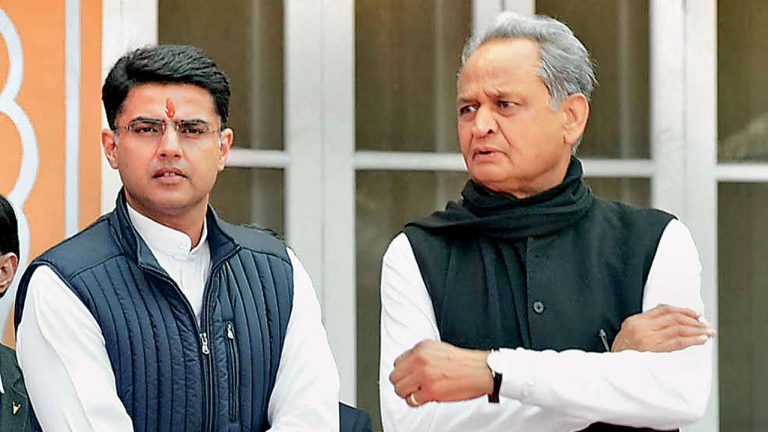
Rajasthan Special Operations Group issues notices to CM Ashok Gehlot and DyCM Sachin Pilot over allegations of attempts to topple their govt

The Rajasthan police have issued notices to Chief Minister Ashok Gehlot and Deputy Chief Minister Sachin Pilot to appear before them in connection with the alleged attempts to topple their Congress government.

According to the reports, the Rajasthan police’s special operations group (SOG) issued notice to Ashok Gehlot and Sachin Pilot to record their statements in a case connected with the attempts made to topple the Ashok Gehlot led Congress government by breaking away Congress party in Rajasthan.

The special operations group (SOG) has also sent a notice to Government Chief Whip Mahesh Joshi. The notices came after the SOG had arrested two people for their alleged involvement in horse-trading of Congress MLAs for toppling the Ashok Gehlot government.

The Rajasthan Chief Minister Ashok Gehlot had claimed that attempts were being made to destabilise his government ahead of Rajya Sabha elections for two seats last month. An inquiry was launched after the government chief whip had filed complaints with the SOG and ACB.

Rajasthan SOG registers FIR against two in connection with the case

On Friday, the SOG had registered the FIR on the basis of conversation between two individuals who indicated that efforts were being made to poach ruling party MLAs. The case has been registered under sections 124A (sedition) and 120B (criminal conspiracy) of the IPC.

The FIR stated that SOG had taken two numbers on surveillance to check smuggling of illegal weapons and explosive substances.

“From the conversation on these numbers, it appears that attempts are being made to topple the government, and preparations were completed before the Rajya Sabha elections. In the conversation, it is said that Chief Minister and Deputy Chief Minister are having a fight; in such a situation, the ruling party MLAs and independent MLAs can be broken away to topple the government and a new CM will be put in place,” read the FIR.

The FIR also highlighted how the plans were made to destabilize the government keeping Deputy Chief Minister Sachin Pilot in the centre. The FIR read, “But BJP says that CM will be our person and Deputy CM will be made a minister in the Central government while the Deputy CM says that he will be the CM – this has also appeared on the conversations.”

Citing Sachin Pilot’s Delhi visit ahead of the Rajya Sabha elections, one of the accused states in the conversation that “big political decisions are being taken in Delhi and things will move quickly after June 30…that’s when his stars will shine and he will take an oath 5-10 days later.”

Congress MLAs were offered Rs 25 crore to switch sides: FIR

The men in the audio allegedly also discussed that by toppling the government, they can earn Rs 1,000 – Rs 2,000 crore, however, it only happened when the CM is as per their wish.

Further, the FIR also alleged that it has also come to know that a BJP leader was trying to lure Independent MLA from Kushalgarh in Banswara, Ramila Khadiya, with money. The telephonic conversations allegedly are also revealed that Mahendra Jeet Singh Malviya, who is a Congress MLA from Bagidora in Banswara was also a target.

The two men allegedly conversed that Malviya was earlier with Deputy CM but has changed paala (sides) to join Ashok Gehlot. The SOG has also claimed that through its sources it has come to know that Rs 20-25 crore were also being offered to Congress and independent MLAs.

The Rajasthan police also added that as the CM took MLAs to a resort ahead of the Rajya Sabha elections, the two accused stated that their Rs 25 crore plan has failed. However, money was still being offered to MLAs, especially independent MLAs as recently as two days ago.

The FIR said that the conversations “make it clear that efforts are being made to purchase Congress and independent MLAs” through a feeling of hatred towards a “democratically elected government”.

The Congress-led government in Rajasthan enjoys the support of 107 MLAs out of the 200 members. The Ashok Gehlot-led government has the support of independent MLAs and legislators of other parties like Rashtriya Lok Dal, CPI (M) and Bhartiya Tribal Party (BTP).

Andhra Pradesh: Locals write to NHRC after state authorities fail to act against illegal church construction in Kadapa

The increase in the evangelical activities of Christian organisations in Andhra Pradesh has now caused a greater worry in the hinterlands of the southern state as there has been a rise in illegal construction of churches and the authorities have failed to check the expansion and illegal activities of the church.

The recent expansion of the Church in Andhra Pradesh, especially the Church pastors forcefully evicting Scheduled Caste families from their homes in Dorasanipalli Village in Kadapa to illegally construct a Church is one of the many incidents, which has now evoked severe protests from Hindus in the area.

According to a report by Organiser, the Legal Rights Protection Forum (LRPF) has written a letter to the National Commission for Scheduled Castes and District Collector of Kadapa seeking action against the Church authorities for the crimes committed against the families of Scheduled Caste communities.

Reportedly, an illegal church was being constructed by the Church authorities in the Moolasthanam Agraharam Village in the East Godavari District, Andhra Pradesh, in a residential area where only Hindu families live.

Villagers protest against the construction of the church

As soon as the construction began, the villagers opposed to the construction of the Church as it was illegal. The locals also said that the church in the village cause disturbance to the peace and public order in the village. The pleas of the villagers to the Evangelists to stop the construction, however, was ignored by the Church authorities.

The villagers then decided to approach the Panchayat and the police. The villagers of the Moolathanam Agraharam filed an RTI with the local authorities. The RTI reply stated that there was no permission accorded for construction of the Church. The order issued by the Panchayat Raj and Rural Development Department of Andhra Pradesh mandated that construction of any religious place of worship can be permitted only if none of the neighbour’s object and after obtaining the due permission from the District Collector.

Reportedly, the Church had failed to obtain any such permission and the residents of the village had objected to its construction. Despite this, the construction of the temple was not stopped. The villagers not only approached the Village Revenue Officer, but also the higher officials including Mandal Revenue Officer and District Collector asking to stop the construction. Shockingly, none of them intervened in the matter and instead, the local police began to harass the Hindus for complaining.

As authorities ignored their plea, the villagers sat on a hunger strike to stop the construction of the illegal church. However, the local police officials increased harassing the villagers, who were often called to the police station and threatened with the filing of criminal cases if they did not stop their protests.

Local authorities succumb to church’s influence

As the church began to influence the local authorities, the villagers then approached the District Superintendent of Police to complain about the negligence of the local police and requested justice in the entire issue. However, the villagers did not find any solution to the issue. With all options exhausted, the villagers have now approached the National Human Rights Commission in the hope of getting justice.

The villagers of Moolasthanam Agraharam have written a letter to the Chairperson of the NHRC explaining the entire issue. The letter reads, “local administration to district officials are treating us as second-grade citizens of India, not even responding to our issues, moreover threatening us for raising our concerns and behaving as if we are refugees of other nations settled here”.

The letter also stated that their fundamental right to live peacefully without any fear has been violated. “Not even considering our complaints and targeting us for raising our issues is nothing but suppressing our fundamental ‘Right to Equality’ which is guaranteed by Constitution of India”, the letter to NHRC read.

In their appeal, the villagers have also sought the intervention of the NHRC to the Director-General of Police, Chief Secretary of Andhra Pradesh, District Collector of East Godavari, District Superintendent of Police and urged them to initiate an enquiry in this matter and to take strict remedial action to halt construction of the illegal church which is detrimental to public peace and order.

Police encounters and ‘secular privilege’ in Indian politics

Between 2002 and 2007, the National Human Rights Commission (NHRC) found 440 cases of suspected “fake” encounters by the police across India. Out of these, only five cases happened to be in Gujarat, which could well be the lowest among big states. But names such as Sohrabuddin Sheikh came to be etched in public memory. They became household names, celebrity causes and in some cases, heroes.

So much so that, in the liberal imagination, this is what India’s history of police encounters looks like today.

Tweet by Pratik Sinha

This is not from a parody account. This is from a person often described by allegedly respectable people as a “fact checker.” Let that sink in.

As with all things in Indian politics, the “secular privilege” extends to police encounters. Because Narendra Modi was Gujarat CM, 5 encounters in Gujarat become more important than 435 in the rest of India. And now, we have media obsessing over everything that Yogi Adityanath’s government does in Uttar Pradesh.

This “secular privilege” is so extreme that I sometimes wonder if BJP ruled states and non-BJP ruled states exist in different universes.

Here is an example: anyone who has ever watched Bollywood movies has heard about the legendary Mumbai underworld. As the Hindustan Times notes in an article titled “Rise of the ’83 encounter batch“

Hindustan Times article

The Mumbai Police Commissioner at the time was Julio Ribeiro. Popular culture often celebrated him as ‘super cop.’ As the Hindustan Times notes, many of the officers who served under him came to be known as “encounter specialists.”

Were any of these encounters fake? I have no idea. I wasn’t there. But surely our media, our intelligentsia and five-star activists could ask if they were fake?

But did they? Did any of them dare to ask such questions? Oh, and did any of them ask if Mumbai Police was trying to save powerful politicians who might have links to gangsters?

Of course they didn’t ask. The secular privilege applies. The burqa of secularism ensures that nobody asks questions.

In fact, ‘super cop’ Julio Ribeiro wrote his autobiography which he called “Bullet for Bullet: My Life as a Police Officer.” Excellent choice of title I would say. Maybe the book should be required reading for everyone who believes in due process and concepts such as guilty until proven innocent in a court of law.

In fact, Julio Ribeiro received even more praise from liberal quarters when he spoke out against “intolerance” in 2015. Most tellingly, he said that he feels like he is on a “hit list” because he is a Christian. Well, we have to trust his police instincts in such matters. He was a super cop after all.

Whether “fact-checkers” and historians like it or not, facts remain facts and history remains history. In fact, the reality is one of the structural problems that modern liberalism is facing today.

Therefore, the liberal strategy is to de-legitimize human memory. They have a label for it: whataboutism. Slap a label on something you don’t like and dismiss it. That’s Modern Liberalism 101.

So if you have heard of police encounters in India before Modi became Gujarat CM, you are guilty of whataboutism.

In fact, if you have heard of the 435 encounters outside Gujarat in 2002-07 instead of the 5 encounters in Gujarat they want you to know about, you are guilty of whataboutism.

Put your blinkers on and your memory on hold. Walk the narrow straight path on which ‘fact-checkers’ are leading you. It’s the only way to be (self) righteous.

‘Safeguarding cows is our priority’: Minister says Karnataka preparing to implement a ban on cow slaughter

On Friday, Prabhu Chauhan, the Animal Husbandry Minister in Karnataka, informed that the BJP government would implement the Prevention of Cow Slaughter and Preservation Bill, 2012 in the State and that a team would be sent to States such as Gujarat and Uttar Pradesh to study similar laws that impose ban on cow slaughter, post the Coronavirus pandemic.

“Safeguarding cows is our priority. We have already started strengthening goshalas,” Chauhan was quoted as saying. He stated that once the law was implemented in the state, the sale, slaughter, or transports of cows from one state to another will be completely stopped. He further assured that the preparations were being done at the ground level to prevent cow slaughter. In order to protect local cow breeds, the government had also launched the Gau Seva Aayog scheme during elections.

Chauhan informed that the BJP had passed the anti-cow slaughter law in 2010 when the party was in power in Karnataka. He added, “The Ministry of Home Affairs had instructed us to make some amendments. However, when the Siddaramaiah government came to power, it did not follow up.’’

Cow slaughter ban in India

Prohibition of cow slaughter is a Directive Principles of State Policy contained in Article 48 of the Constitution. It reads, “The State shall endeavour to organise agriculture and animal husbandry on modern and scientific lines and shall, in particular, take steps for preserving and improving the breeds, and prohibiting the slaughter of cows and calves and other milch and draught cattle”.

Currently, cow slaughter is prohibited in most of India, with the exception of Kerala, West Bengal, and the North-Eastern States such as Arunachal Pradesh, Mizoram, Meghalaya, Nagaland, Tripura and Sikkim. In Manipur, a royal edict banned cow slaughter, but beef is consumed widely.

1500-year-old Cathedral Hagia Sophia converted to a mosque, President Erdogan says it’s Turkey’s ‘sovereign right’

On Friday, Turkey’s President Recep Tayyip Erdogan announced that a 1500-year-old Orthodox Christian Cathedral in Istanbul named Hagia Sophia would be converted into a mosque. The decision was made at the backdrop of a court order nullifying the earlier status of the cathedral as a ‘museum’.

“It was concluded that the settlement deed allocated it as a mosque and its use outside this character is not possible legally. The cabinet decision in 1934 that ended its use as a mosque and defined it as a museum did not comply with laws,” the top administrative court order noted.

As per the report, Erdogan has stated in a press conference that the conversion of the UNESCO World Heritage site was well-within Turkey’s ‘sovereign right.’ He informed that the first Islamic prayer would be read inside the premises of Haga Sophia on July 24. Besides, he reiterated that the historic monument would be open to locals, and foreigners including non-Muslims. Crying foul after the international backlash, Erdogan claimed that those who do not agree to his decision were attacking Turkey’s sovereignty.

Reportedly, a call to prayer was recited at Hagia Sophia and was televised on news channels. Meanwhile, the social media channels of the cultural site were taken down. The Turkish authorities have clarified that the mosaics of the Virgin Mary on the golden dome of the cathedral would not be removed. The historic side reportedly attracts 37 lac visitors every year.

Erdogan, hailing from a conservative Muslim background, had presided over the gradual dismantling of Turkey’s secular traditions in recent times. Many believe that Erdogan’s latest gambit to convert the historical site of Hagia Sophia into a Muslim worshipping site is in line with his broader goal of progressive Islamisation of the Turkish society and designed specifically to gain political mileage by catering to his followers’ fundamentalist views which entails that once a mosque is sanctified, it should never be unconsecrated.

The History of Hagia Sophia

Originally built as a cathedral in 537 AD by Byzantine emperor Justinian I, it was believed to be the largest church in the world. The Byzantines held it for centuries before it was converted into a mosque during the Ottoman rule in 1453.

The city of Istambul, earlier known as Constantinopole, was captured by Sultan Mehmed II. He had then performed Friday prayers within the cathedral. Four minarets were added to the original structure and Christian mosaic was covered with Islamic calligraphy. It was assigned the status of a museum by the founder of modern Turkey, Kemal Ataturk, in 1453. But, all is set to change now. However, the Hagia Sophia has long been the symbol of Muslim-Christian rivalry.

For about 900 years, Hagia Sophia was considered as an unrivalled pilgrimage centre for the Eastern Christians. The artefacts housed at the pilgrimage destination included alleged pieces of the original cross of Jesus Christ, along with the lance that impaled the Nazarene’s side. For centuries, Christian pilgrims found healing from these and other items.

UNESCO criticises move

Following the decision to convert the 1500-year-old church to a mosque, the United Nations Educational, Scientific, and Cultural Organization (UNESCO) expressed deep regret and urged Turkey to initiate dialogue without delay, to preserve world heritage and not to alter the status of the site without discussion. Reportedly, the decision was also criticised by the Eastern Orthodox Church, Greece and Church in Russia.

While Kemal Ataturk with the museum status to Hagia Sophia tried to ascertain a secular legacy, Erodgan’s Islamism has reportedly threatened the founder’s vision. As per reports, an unapologetic Erdogan has stirred up the controversy through his decision to appease the Muslim hardliners in the country and deviate public discourse from the mishandling of the Coronavirus pandemic in the country.


Kerala: Locals in Coronavirus hotspot Poonthura protest against lockdown restrictions, spit on healthcare workers collecting swab samples

In a shocking attack on the frontline workers in Kerala, locals of the fishing suburb of Poonthura near Thiruvananthapuram attacked a team of health workers, including a doctor, who had gone to collect swab samples after it was suspected that the area has become a ‘super-spreader’ in the state of Kerala.

According to the reports, the team of health workers had visited Poonthura to take samples of the suspected Coronavirus patients. However, the villagers forced them to stop their cars, asked them to lower the car window and spat on those inside the vehicle.

The attack allegedly took place on Friday when the local people were protesting against the lockdown restrictions imposed in the area after the area saw a fresh wave of Coronavirus cases.

The locals, despite being suspected Coronavirus patients, were protesting against the restrictions, who neither followed the social distancing rules nor wore masks during the protests.

Hundreds of men and women had come out of their homes at Poonthura this morning protesting that they were facing isolation from various quarters due to media reports on a rising number of positive cases from the area. The locals were protesting alleging that they were being isolated as doctors of certain hospitals had refused to treat them.

The health workers had reportedly reached the area on Friday when the locals were protesting, after which, they were allegedly attacked. Following the incident, all four health workers have been asked to go into quarantine.

Poonthura, the new ‘super-spreader’

The coastal hamlet on the outskirts of Kerala’s capital Thiruvananthapuram has emerged as a sensitive Coronavirus hotspot as more than 100 people in the area tested positive for the virus in last one week. More than 119 people tested positive in the area out of the 600 samples collected in the past five days.

Following this, the Kerala government imposed several restrictions not just in Poonthura but also in the entire city of Thiruvananthapuram.

However, several people in the locality protested against the lockdown and came out on the streets in the containment zone of Poonthura in Thiruvananthapuram on Friday morning. They were allegedly upset about the restrictions imposed as it barred them from moving out to buy minimal supplies and also alleged that there were instances of doctors refusing to treat them, asking them to stay away.

Reportedly, the Coronavirus infection is suspected to have spread at a wholesale fish vendor at the local Kumarichanda market. More than 100 people including autorickshaw drivers, fishermen and their families have tested positive for the virus in the area covering three wards of the local corporation.

“It can be described as a local super-spread,” said Kadakampally Surendran, the minister-in-charge of the district.

Chief Minister speaks up after locals attacked health workers

Meanwhile, Kerala Chief Minister Pinarayi Vijayan and Health Minister KK Shailaja have condemned the attack on health workers. The Chief Minister has blamed the opposition parties for the attack on health workers.

Vijayan said, “Our health workers are in the battlefield consciously knowing that they can get affected anytime and are fighting the spread of the pandemic. They were prevented from entering the place. Some people are making the locals do the same. We can see the hands of the Opposition parties behind this,” he told reporters.

The Indian Medical Association has protested against the attacks on the doctor. The IMA said, “At a time when health workers are risking their lives to help others to tide over the COVID-19 situation, it is unfortunate such an incident has occurred”.

Terrorist Abid Hakani went to Pakistan for training before killing BJP leader Wasim Bari, caught on CCTV footage near Bandipora

The Islamic terrorist, who unleashed terror and killed the BJP leader Wasim Bari and his two family members at their shop in Bandipora, north Kashmir has been identified by the security forces. According to the reports, the terrorist has been identified as one Abid Hakani, who was caught in a CCTV footage captured at Bandipora police station at 8.40 pm on Wednesday. 

The terrorist had gone to Pakistan via Wagah Border and then again infiltrated back into the Indian territory as a trained terrorist.

Earlier, Vijay Kumar, IG of Jammu and Kashmir UT had stated that Wasim Bari was despite having adequate security and had stated that there was definite negligence on the part of on-duty personnel.

The Jammu and Kashmir police has also detained eight policemen for negligence and have arrested them for further questioning as they were not around the leader when the attack took place. According to reports, the policemen were inside the house when terrorists opened fire at the leader. 

Wasim Bari, his father and brother were shot dead by terrorists

Former BJP Bandipora district president Wasim Bari was killed by Islamic terrorists who shot at him outside his shop near Bandipora Police station. As per J&K DGP Dilbar Singh, the family had a component of 8 security people. However, at the time of the incident, none of the security personnel were present.

The cowardly attack occurred at around 9 PM on Wednesday evening. Umar Sultan, the brother of Bari and father Bashir were also injured who later succumbed to injuries.

The spin around Vikas Dubey encounter reminds about the police-raid against Mohammad Shahabuddin in Siwan

After 5 days of chase gangster and mafia Vikas Dubey, who with his men killed 8 policemen in UP, was arrested from Ujjain, MP, and has been finally killed in an encounter, fake, or genuine. The report says he died after being critically injured in a shootout with STF officials. He was shot when he reportedly tried to flee, following a road mishap in which the vehicle he was travelling, overturned.

While the majority Janata is celebrating hearing him dead, some good meaning folks on the mainstream as well as social media are arguing about “fake vs. genuine,” “moral vs. immoral,” “the process of law vs. extrajudicial killing,” – and would do so for another day or two. Their assertion is that “dead men tell no story.”

It’s not the first case of its kind. It compels me to recall and narrate another story of a “police raid” at another scoundrel’s home, in detail.

Almost 35 KMs from my village in the Siwan district of Bihar, the dreaded mafia don Mohammad Shahabuddin, alias… ‘Shahabu Miyan’ ruled the politics of Bihar from his village named Pratappur. My district had the distinction of one murder every two days without any outrage in the media. Shahabu Miyan has been charged with several dozens of crimes, voted into parliament three times, and even from inside a jail cell reigned supreme over this lawless district where only the potholes outnumbered his portraits.

Shahabu Miyan became MLA for the first time in 1990 on Lalu Yadav’s Janata Dal’s ticket and then again elected an MLA in 1995. With Lalu Yadav holding sway over the state of Bihar, Shahabuddin’s terror power increased dramatically. He first contested for the Member of Parliament election in 1996.

On a day before the polling day, Shahabu Miyan and his henchmen had chased the then SP of Siwan, S.K. Singhal, over half-a-kilometre and fired at him in a bid to kill him. The SP somehow saved his life. Shahabuddin got away while the SP was transferred. Such was his fear and clout that no other political party candidate, had dared to put up their flags or posters. His party office also had a statue of Mahatma Gandhi. Shahabu Miyan easily won the election by capturing the majority of polling booths.

In 1997, Chandrashekhar, a charismatic CPI-ML youth leader from JNU, died in a hail of bullets when he was addressing a meeting on the busy market street in Siwan. Another CPI (ML) activist Chhote Lal Gupta was kidnapped and murdered. Shahabu was convicted for this case in 2007. Shahabu also faced jail pending trial over the murder of Munna Chowdhary, a 17-year-old local political activist whose body was allegedly thrown into a brick furnace.

Laloo Prasad Yadav, Bihar’s de facto ruler, called Shahabuddin his “younger brother” and personally escorted him to file his election nomination. By this time, Shahabuddin was running a parallel administration in Siwan, holding “kangaroo courts” to settle family and land disputes. The mafia don gave two hoots to the police and administration. He thrashed them regularly.

In 2001, one day, Shahabu’s men attacked Siwan DSP Ashwini Kumar. In a few days, Siwan Sadar’s DSP Sanjeev Kumar was at one of matriculation exam centres. Sanjiv Kumar had come with a force to comply with a warrant against local RJD chief and a wanted criminal Manoj Kumar Pappu. Shahabuddin and his posse were also present. Shahabuddin had come to provide “assistance” to one of his “boys” taking the exam. When DSP Sanjeev Kumar tried to nab Manoj Kumar Pappu, in the presence of “MP Shaeb,” the infuriated Shahabu slapped DSP Sanjeev Kumar on the cheek in front of the public. This news was not covered in the media because of the terror of the mafia don.

One can imagine how close was Shahabu to Lalu Yadav from the fact that he was the only person in Bihar, who would sit alongside Bihar CM with a pistol tucked to his waist. No one could have dared to touch Shahabu.

However, a sense of anger and desperation was prevailing among the police officials of Siwan. The Manoj Kumar Pappu episode had enraged the police to another level. That time Bacchu Singh Meena was the SP of Siwan, under whom the police showed unbelievable courage and decided to raid Shahbu’s house in Pratappur.

Shahabu’s supporters have already been sitting prepared. The police didn’t even imagine that so many people would start firing with AK47 and assault rifles at them simultaneously right from inside an MP’s house. It is known that Shahabu Miyan was also leading the attack and firing at the police.

Besides the Bihar Police, teams of Uttar Pradesh police from Deoria were also deployed for the purpose of SP Meena’s request. After a 10-hour long gun battle and more than 4000 rounds of bullets fired, 3 policemen and 8 of Shahabu’s accomplices were shot dead while several police vehicles were burnt down. When police entered Shahabu’s home, they were blown away. A considerable amount of weapons, including Pakistan-made assault rifles, AK-47s, grenades, several 9 mm pistols, and ammunition was recovered from Shahabu’s home.

But Shahabu Miyan managed to escape and reappeared from nowhere a few hours later and declared:

“अगर बच्चू सिंह मीना को राजस्थान तक भी दौड़ा कर मारना होगा तो मारेंगे, लेकिन मारेंगे ज़रूर”

A report on Shahabuddin’s tirade against Siwan SP Bacchu Singh Meena was also published in The Outlook with a similar caption “I’ll kill him even if I’ve to chase him to Rajasthan. No one can save him now.“

The immediate fallout was SP Bacchu Singh Meena, and the DM being transferred the very next day. The matriculation exams were postponed for three days. Siwan came to a standstill. The deaths hardly shocked Siwan, what surprised people was that, for the first time, Shahabu’s authority had been challenged.

Then, of course, began the exercise in the media to play the incidence down.

“Shahabuddin is an honorable Member of Parliament, and we are proud of him. Strong action would be taken against the guilty police officials. Had it not been my telephone call to the Mufassil police station of Siwan, the police would have killed more persons,” said CM Lalu Prasad Yadav.

When asked about the thrashing up of the police officers, Lalu explains: “If Shahabuddin had beaten up the DSP, the police should have followed the due process by informing the headquarters. Legal methods should have been adopted.”

Shahabuddin’s evasion of the law ended when in 2003, a new state police chief, DP Ojha, reopened his file and slapped a slew of cases against him, including his links with rival Pakistan’s spy agency and gunrunners in violence-torn Kashmir. After months of remaining underground, Shahabuddin surrendered with fanfare and vowed to “teach a lesson to madman Ojha. DP Ojha was soon sacked by Lalu’s government.

But Shahabu Miyan narrated no tales. Only the terror continued.

His 2004 Lok Sabha contest was from jail. Over 500 booths were looted on the polling day allegedly on his directions. Despite the re-election, he won the seat. Soon, he was shifted to a hospital on medical grounds. One of the floors of the hospital was reserved for him from where he ran his Kangaroo Court.

On August 16, 2004, Rajiv and Satish, two sons of businessman Chandreshwar Prasad alias Chanda Babu, were doused with acid, and the third was shot dead. The due process of the law continued as from the victim’s side, no lawyer stayed with the case.

Remember Republic TV’s first story in which Lalu Yadav was in a telephonic conversation with Shabuddin from jail who was saying “खत्तम है भाई ये SP आपका… इसको रोकिए नहीं तो ये रायट करवा देगा?”

It is a shame that we have to remind this cabal about such conveniently forgotten stories. Today, the same cabal of conspiracy theorists, who regularly attempt to portray this rustic criminal Lalu Yadav, convicted himself of many scams, as Bihar’s Nelson Mandela, were found sulking.

Its the same cabal that spun tales around Vikas Dubey – from predicting his escape to Nepal to anticipating his encounter to keep the dirty secret under wrap, to even giving a caste spin to the villainies of the Yogi Govt., they spared no twists. Yesterday the shameless cabal was seeing a conspiracy in Vikas Dubey’s arrest, probably “because of his links.” Today, the same folks are claiming that he was killed to ‘cover-up’ secrets of his political links.

What this cabal in the media will never tell you that after arresting Vikas Dubey in 2017, the Yogi Adityanath led the BJP government had booked him under the Gangsters Act and Anti-Social Activities (Prevention) Act and charge-sheeted him. He challenged this in the High Court and secured an order of no coercive action against him.

Criminals like Mohammad Shahabuddin and Vikas Dubey have been able to subvert the system, of course, with the help from the politicians, the judiciary, and also the same cabal who weave suitable narratives to cover their sins. As for the “process of law,” criminals trust courtrooms more than the victims. Jails for them are retreats from where they safely operate. A simple truth about such dreaded mafias – longer they stay in the game, stronger they become.

I feel sad to confess, but our judiciary is so broke that sometimes one is compelled to justify extrajudicial killing. We must understand that as the nexus between the criminals and politicians becomes more potent, it can subvert the loyalty of the functionaries at different levels in the government, including the police. It is not an incentive of money always, mostly it is the fear of instant death.

The reality is that on the ground, this scoundrel’s encounter creates fear among wannabe Dons, and the ‘Aam Janata’ of Uttar Pradesh must be feeling relieved and safer.

Note: This article was originally published on author’s blog

“I feel free after ages. This is an end to the era of terror”, says Lallan Vajpayee who was on the hit-list of slain gangster Vikas Dubey

Following the death of gangster Vikas Dubey in an encounter with the Special Task Force (STF) of the Uttar Pradesh police on Friday, former Nagar panchayat Chairman (Shivli) Lallan Bajpai took a sigh of relief. He was subjected to multiple assassination attempts by the slain gangster. “Today, I feel free after ages. This is an end to the era of terror. This is the beginning of a new era of peace. I have arranged for a music show in the evening”, an elated Bajpai informed.

The plot to kill Lallan Bajpai

In an interview with Navbharat Times, Lallan Bajpai recounted the horror tale from 2001, “He (Vikas Dubey) was involved in crime since a very young age… He had come to murder me but Santosh Shukla died at his hands. Dubey had a good understanding with the police. A police inspector had come to take me to the (Shivli) police station. But Santosh learnt that I would be killed if I move out of my house. He asked me to stay indoors… I had also arranged 10-20 supporters by then.”

On the fateful day, Bajpai had spotted the gangster’s accomplice, Atul Dubey, outside his house and realised the sinister conspiracy to assassinate him. Despite being pestered by the police inspector to visit the police station regarding an application against him, he refused to budge and averted his death. On the other hand, BJP leader Santosh Shukla visited the police station and was shot dead by Vikas Yadav and his men. In another interview with TV9 Bharatvarsh, Bajpai informed that Vikas Dubey had made multiple assassination attempts against him and had killed three people acquainted with him.

Vikas Dubey murdered BJP leader Santosh Shukla

Manoj Shukla, the brother of Santosh Shukla, narrated how the deceased BJP Minister had gone to the Shivli police station and was battered with bullets by Vikas Dubey and his men, in front of 25 sepoys and 5 sub-inspectors. He dismissed any political rivalry between Santosh and Dubey but informed about a power tussle between Lallan Bajpai and the slain criminal.

Manoj further added that Vikas Dubey lived beside the police station in Kanpur Dehat area and had good connections with the cops. “Using political influence and money, Dubey turned every witness hostile. I was the only witness. I learnt later that he influenced the judiciary too. The District Magistrate of that time, who was a Muslim, had taken money from him and reversed the decision in his favour.”

Hinting at the miscarriage of justice, Manoj Shukla recounted how Vikas Dubey was handed life imprisonment for the brutal murder of his school headmaster Siddheshawar Pandey despite having a single witness in the case. He lamented how the slain criminal was allowed to go scot-free in the murder of Santosh Shukla.

On being asked the reason behind witnesses turning hostile in the Santosh Shukla murder case, Lallan Bajpai stated, “People are scared of the terror perpetrated by him (Vikas Dubey). He had murdered 8 policemen recently. It can give you an idea about the notoriety of the criminal… I thought I had to die today or tomorrow… Let me stand up against him. People are so scared of him that they would refuse to identify him.”

Vikas Dubey killed in encounter

The notorious gangster Vikas Dubey, who was arrested yesterday from Ujjain, Madhya Pradesh, was killed in an encounter in Kanpur on Friday. According to the reports, the encounter broke out between Vikas Dubey and the Uttar Pradesh Special Task Force (STF) after the gangster tried to flee. Reportedly, the police car met with an accident and the car overturned. After the accident, Vikas Dubey tried to snatch the weapon of injured policemen and attempted to flee. It was then that the police fired in retaliation, killing the gangster.

Vikas Dubey killed 8 policemen, injured 6 others

In a shocking incident, eight police personnel were killed and six cops were injured in Uttar Pradesh’s Kanpur during a police raid to nab the hardened criminal and murderer Vikas Dubey on July 2 late night. A team of 15-16 Uttar Pradesh police had carried out raids in search of criminal Vikas Dubey in Chaubepur in Kanpur. The police personnel were ambushed by Dubey’s men who were prepared with arms on the roof of a building and continuously shot at them. The criminals had already blocked the road with a JCB machine to prevent the policemen from escaping. The criminals managed to flee from the spot after killing the police personnel.