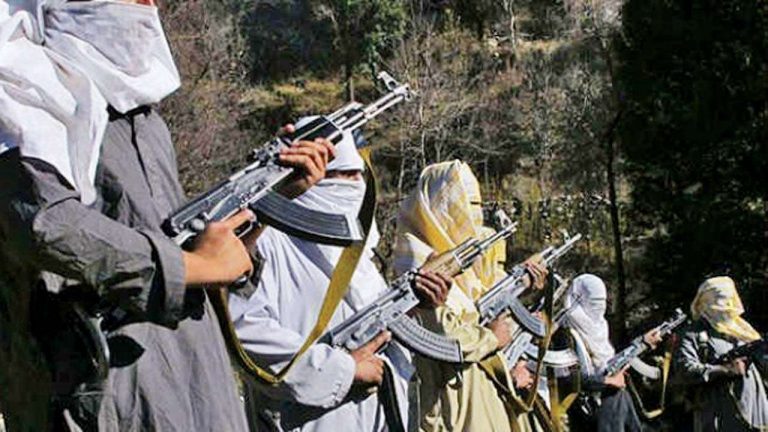
The Uttar Pradesh anti-terror squad has traced and arrested the man behind the threat calls to BJP MP from Unnao Sakshi Maharaj. The man threatened the MP that he will kill him in a bomb attack.
The perpetrator has been identified as Gaffar and is currently under police custody after he was nabbed on 17 June. A case has been registered under Sections 504 (intentional insult with intent to provoke breach of the peace), 507 (criminal intimidation) of the Indian Penal Code and section 66 (any electronic mail or electronic mail message for the purpose of causing annoyance or inconvenience) under information technology act.
He was produced before designated magistrate court for a remand.
Made threat calls to several other BJP Leaders too
During the interrogation, the accused confessed that he made the threat call when he was in Kuwait. He also accepted that apart from Sakshi Maharaj, he made threat calls to several other BJP leaders. One mobile phone, passport, Aadhar card, and Civil card have been recovered from Gaffar.
The ATS confirmed that the accused made calls to several BJP leaders. The ATS traced him while he was located in Kuwait but it was difficult to arrest him abroad. While he was on the radar on ATS, he was arrested immediately after he returned to Bijnor from Kuwait.
Other information regarding the accused that whether he was operating alone or there is a nexus behind the incident which is involved in making threat calls to BJP leaders is being investigated.
Threat call to Yogi Adityanath
Prior to this, Uttar Pradesh police had received a Whatsapp message sent to the social media cell of UP Police’s integrated emergency response centre UP112 in which a person threatened to kill Chief Minister Yogi Adityanath “with a bomb”. He has also warned of bomb blasts at 50 different places in Uttar Pradesh.
In the written message on Whatsapp an unidentified person has said that “we will blow up the entire state and the Uttar Pradesh government will keep watching.”
Last month, the Maharashtra Anti-Terrorism Squad (ATS) apprehended a 25-year-old man named Kamran Amin Khan from the Mhada colony in Chunnabhatti area of Mumbai who also threatened to kill Chief Minister Yogi Adityanath in a bomb attack.
Nationalist Conference politician and former Chief Minister of the erstwhile state of Jammu and Kashmir has conspicuously deleted his Twitter account. Omar Abdullah, who has recently been released from preventive detention that was imposed after Article 370 was revoked in the now Union Territory of Jammu and Kashmir, seems to have deleted his Twitter account late Wednesday evening.
Deactivated Twitter Account of Omar Abdullah
The deactivation of his Twitter account comes after on Wednesday afternoon, Omar Abdullah had tweeted a warning to Kashmiri radicals about cheering China in the ongoing stand-off between India and China in the Galwan Valley of Ladakh.
Tweet by Omar Abdullah before he deleted his Twitter account
In the tweet, Omar Abdullah had warned Kashmiri radicals about the temptation to look towards China. “Those Kashmiris tempted to look towards China as some sort of saviour need only Google the plight of Uighur Muslims. Be careful what you wish for….”.
In the stand-off between India and China, many radical Muslims from Kashmir were seen cheering for China and looking towards China as a country that might help them in their nefarious designs. However, Omar Abdullah had sounded off a caution to the radicals saying that China is no ally of Muslims considering the plight of Uighur Muslims.
Omar Abdullah had interesting disabled replies to his tweet which warned Kashmiri Muslims. Clearly, Abdullah was sure of the abuse he might face at the hands of the radical Kashmiris and had thus, disabled the responses to his tweet. Twitter has a new feature where accounts can limit who is allowed to respond to their tweet and in the current tweet, Abdullah had limited to only those who are mentioned in his tweet being able to response. Since nobody was mentioned in his tweet, it would essentially mean that nobody would be able to tweet a response to him.
That the account was deleted after a tweet in which he had disabled responses points to the fact that Abdullah might have decided to quit Twitter to avoid the blowback he may receive for this tweet not only from Kashmiri radicals but also from Pakistanis.
This is not the first time that a member of the opposition parties has spooked out after tweeting against China. In May, Congress leader and Leader of Congress party in Lok Sabha – Adhir Ranjan Chowdhury took to Twitter to issue some warnings to China and praise the Indian forces. However, he soon deleted the tweet.
The Congress leader, slamming China, had warned the communist nation about how Indian forces can ‘defang the venomous snakes’ like China and stated that the entire world was watching the sinister designs of China while calling them “Yellow expansionist”. Chowdhury also urged the Modi government to accord to diplomatic recognition to Taiwan “without much delay”. Interestingly, this tweet was also subsequently deleted.
It appears that for certain opposition parties, tweeting harsh words against China would be considered forbidden fruit since in their political hatred for Prime Minister Modi, any praise for the Indian Armed Forces, the Nation or even harsh words against an enemy nation are considered off limits.
Update: Later in the day on 17 June, Omar Abdullah’s Twitter account was reactivated.
As the news broke out about the violent clashes that took place between the Indian soldiers and Chinese troopers in Galwan valley in Eastern Ladakh, an illustration of Lord Ram, one of the most important Gods in the Hindu pantheon, taking on the Chinese Dragon surfaced online.
The infographic of Lord Ram battling the Chinese Dragon was posted on the Hong Kong social media website LIHKG in solidarity with India after it lost 20 soldiers in the melee with the Chinese forces along the stretch of the Line of Actual Control in Eastern Ladakh. The illustration carried the seventh avatar of Lord Vishnu, Lord Ram, drawing a bow to shoot the Chinese Dragon along with the message “We conquer. We kill.”
Hong Kong Twitter user HoSaiLei shared it on Twitter and it instantly went viral as Indians and residents of Hong Kong joined hands to stand up to the Chinese expansionism. As of now, the post had garnered 780 retweets, 2,000 likes and 78 comments.
Similarly, other Hong Kong Twitter users also expressed their support to India in its fight to stall the expansionist manoeuvres of Beijing. Users tweeted with #HKstandswithIndia to convey their support for India.
— Sarath Prasannakumar (@SarathPrasanna4) June 17, 2020
The illustration of Lord Ram slaying the Chinese dragon was also hailed by the Taiwanese media organisation and The Taiwan News, one of the leading English media organisation in Taiwan published a report about the illustration that united the Twitter users from Hong Kong, Taiwan and India against the Chinese authoritarianism.
It is pertinent to note that there is groundswell of anti-China sentiments among the residents of Hong Kong and Taiwan after China tightened its grip on the semi-autonomous business hub and threatened Taiwan with military attack. China recently passed a controversial national security law that chip away at the autonomy previously enjoyed by Hong Kong and enables extradition of wrongdoers from Hong Kong to the Mainland China. The city was convulsed with demonstrations and protests much of the last year but the onset of coronavirus crisis dampened the protests. Taking the cover of the coronavirus outbreak, the Chinese Communist Party quickly passed the national security law on the pretext of restoring law and order in the semi-autonomous region. Protesters have claimed this to be in violation of the treaty signed with the Britain in 1997 and termed China’s move as autocratic to quell the dissenting voices.
China has similarly strengthened its claims on Taiwan and has considered it as a part of its territory. It has recently threatened to annex the country by military force if the island resists unification indefinitely. The threats came in the wake of Taiwan’s request to attend WHO meet and amidst growing mistrust among several countries towards China for its initial mishandling of the coronavirus crisis.
26-year-old Sepoy Kundan Kumar Ojha sacrificed his life for the nation in the violent face-off with Chinese troops in Galwan Valley, Ladakh. Hailing from Jharkhand, he was recruited in the Bihar regiment of the Indian army in 2011.
#WATCH Bihar: Father of Sepoy Kundan Kumar, who lost his life in #GalwanValley of Ladakh on June 15-16, says, “My son sacrificed his life for the nation. I have two grandsons, I will send them too.” pic.twitter.com/WHkkJw0HEX
His father, Ravi Kumar Ojha, said, ”My son sacrificed his life for the nation. I have two grandsons, I will send them too.” Sepoy Ojha was posted in the valley along with Col Babu, who also lost his life during the face-off between Indian and Chinese sides.
Col Babu’s father proudly narrated his son’s stories of bravery and told how he fought terrorists in Kupwara. He added that he was mentally prepared for this day from the moment his son joined the army.
Ladakh face-off between Indian and Chinese troops
On the night of 15th and 16th June, a violent face-off took place between Indian and Chinese troops. It led to casualties on both sides. Chinese authorities did not release any official figures. However, the Indian side has confirmed 20 casualties. It is believed that the casualties on the Chinese side are above 40. Prime Minister Narendra Modi has said in a statement that our soldiers died while defending the country, and their sacrifice will not go in vain.
Delhi Police recently filed a charge sheet in connection will the killing of head constable Ratan Lal during the violence that swept northeast Delhi in February this year. The police, in its charge-sheet, had stated that the murder of Ratan Lal was a part of a deeper conspiracy to gin up communal riots across the national capital.
The Special Investigation Team of Delhi Police has filed a 1,100-page charge-sheet in the murder of Ratan Lal and deadly attacks by rioters on IPS Amit Sharma and IPS Anuj Kumar. At least 17 accused have been named in the charge-sheet. There are about 4 to 5 key conspirators in this whole case, which includes Salim Khan, Salim Munna and Shadab. The police stated that the riots were engineered in Delhi through a conspiracy to malign the image of the country.
There were several other extremely disturbing details that emerged from the charge sheet, a part of which has been accessed by OpIndia. One name which has been mentioned in the charge sheet multiple times is that of one DS Bindra. In February, social media posts went viral praising ‘generosity’ of a Sikh man, one ‘Advocate D S Bindra’ who ‘sold his flat’ to fund ‘langar’ (community kitchen often in Gurudwara) at Shaheen Bagh.
India Today headlined its article about DS Bindra by declaring that he was serving humanity.
Headline by India Today
He was also glorified by Shaheen Bagh Twitter handle and used to claimed solidarity between Islamists and Sikhs.
This claim by DS Bindra had gone viral and unsurprisingly, the media had picked up these claims and glorified him for this ‘selfless act’. Aaj Tak and Lallantop while glorifying him, however, forget to mention two important aspects:
DS Bindra was an AIMIM leader
As per media reports, Bindra had also been instrumental in leading anti-CAA protests at Delhi’s Mustafabad and Khureji.
That Bindra was a leaded of AIMIM and was also leading the anti-CAA protests at Mustafabad should have sent alarm bells ringing, however, the media had found their hero through whom the Islamists could be whitewashed and they hanged on to him.
Now, it appears that DS Bindra has been named in the charge sheet filed by the Delhi Crime Branch as one of the key people who instigated the mobs that eventually murdered constable Ratan Lal during the anti-Hindu riots in Delhi.
What the chargesheet said about DS Bindra
The charge sheet said beat officers were regularly deployed in the area of the protest to ensure that no law and order situation arose. After the murder of Ratan Lal, two beat officers were also questioned and their statements recorded to ascertain facts. They revealed that Salim Khan, Salim Munna, D.S Bindra, Suleman Siddqui, Ayub, Athar, Shahdab, Upasna, Ravishand others were organizers of the protest site. At the site, provocative statements inciting Muslims were made every day. The charge sheet specifically mentions that according to the beat officers, the riot at this site was the handiwork of D.S Bindra, Salman Siddiqui, Salim Khan, Salim Munna, and Athar etc in cahoots with local rioters.
The charge sheet further mentions categorically, “The accused persons further combinedly disclosed that along with them D.S Bindra, Dr. Rizwan, Athar, Shahdab, Upasna, Tabbsum, Ravish and others were involved in the conspiracy behind the ChandBagh riots”.
Further, arrested accused Shahanawaz and Ibrahim “disclosed that the riots were a part of a conspiracy hatched by the organiser namely DSBindra, Dr Rizwan, Suleman (Salman), Saleem Khan, Saleem Munna and others with the help of others”.
Another accused, Mohd Saleem Khan (Organiser of the Chand Bagh protest) had revealed that about two months ago, DS Bindra had started community kitchen at service road, Wazirabad road, ChandBagh. Because of the community kitchen, a rather large crowd used to assemble there. He, along with Salman Siddiqui, Dr Rizwan, Salim Munna and others used to visit the community kitchen. DS Bindra instigated him and other Muslims to oppose CAA/NRC strongly and he stressed that people should come on the road to show their dissent.
The chargesheet also categorically states that the conspirators “were fully aware that violence may ensue and had accordingly directed the protestors to arm themselves”.
Further, the chargesheet says, “On 23.02.2020 the above said accused persons along with other organizers, conspirators and rioters convened a meeting at Chand Bagh and asked the residents to equip themselves with iron rods, Dandas, Petrol Bombs etc for the next day. On 24.02.2020 at around 1 pm as per plan the riots erupted and the protestors attacked the police personnel. Numbers of police personnel were injured and HC Ratan Lal was killed”.
People from the Muslim community which included women and children also used to gather in huge numbers. During the protest, hate speeches and instigating messages were conveyed from the stage through the mic. On 23/02/2020, the situation became tense after stone-pelting took place in Jafrabad, another site of CAA/NRC protest. On 24/02/2020, he, along with his associates and residents of ChandBagh planned to block the road and decided that in case police would intervene they would assault them too. Owing to this, he, along with his associates and local residents visited the protest site carrying sticks, Iron rods, petrol bombs, acid, stones, arms etc. In order to instigate the protesters at the protest site, hate speeches were being delivered since morning.
Beat officials from PS Dayalpur had come to the stage to call them for a discussion but they were forced to leave the protest site. They all tried to block the main Wazirabad road and when police asked them to retreat, the fully prepared crowd assaulted and lynched police officials mercilessly. The protesters snatched the tear gas shells and sticks from the police officials. In a planned manner, the CCTVs installed near the protest site were damaged before the assault upon police officials. They burnt the shops, vehicles and houses.
Further, the charge sheet says, “These are the persons who laid the foundation of the protest site. They met local people, organized meetings initially with them, made them believe that they are in a predicament and provided the initial spark. These included politicians, members of organizations like AISA, JCC etc. In the present case, D S Bindra is one of the conspirators. It has been revealed that he put up a community kitchen “Langar” at Chand Bagh at first. He was joined by some local residents whom we may term as Local organizers. Conspirators were in frequent touch with the local organizers since the inception of the protest site till the violence broke out on 24/02/2020”.
In the chargesheet, other than Ratan Lal who was mercilessly lynched and killed by the rioters, 49 other police officials who were injured in the riots were listed.
Ratan Lal’s murder was a deeper conspiracy
Constable Ratan Lal was murdered on February 24 when he was shot at by rioters while patrolling along with his seniors. The police had alleged in the charge-sheet that a group of 45 people held a meeting at the basement of a house on February 22, where the conspiracy of the riot was conceived. On February 23, after the conspiracy was hatched, rioters asked senior citizens and children to stay indoors as they ran riot on the streets, indulging in vandalism.
A day later, on February 24, rioters and vandals again hit the streets, damaging public properties, setting vehicles on fire and causing bloodshed. Around 1 PM in Chand Bagh area, patrolling party in Chand Bagh was vastly outnumbered by a huge crowd of rioters. Senior police officials tried to placate the riotous mob but the crowd turned violent and attacked police. Head constable Ratan Lal was shot dead by the rioters. Amit Sharma, Anuj Kumar and several policemen received serious injuries, the charge-sheet said.
While police head constable Ratan Lal died of bullet injuries in Chand Bagh region, IB sleuth Ankit Sharma(26) was brutally stabbed by a violent mob sheltered inside AAP councillor Tahir Hussain’s house. Sharma’s body was recovered from a ditch in the Chand Bagh area.
The US Chief of Naval Operations has taken to Twitter to raise apprehensions over TikTok, a Chinese video-sharing social media app, and concern over the privacy of its users. Sharing an article by The Wall Street Journal, Charlie Brown, the US Navy’s Public Affairs officer, raised apprehensions about the dynamics of a social media platform owned by a Beijing-based company.
Little bit of a rant: If you’re shocked by the allegations of message manipulation and soft censorship in this article, then you need to think more about the dynamic of a social media platform owned by a Beijing-based company. Social media literacy is national security, too. https://t.co/Kxt2ekYMj2
In a series of Tweets, the U.S. Navy Public Affairs officer asked his fellow soldiers to prudently choose the app they want to use to communicate with each other. He said that though TikTok is an extremely popular app, they should be choosing avenues which are more trustworthy.
For my fellow Sailors, it is not just about what is on our government phone or not. It’s about social media literacy— how much trust can you put in the info you are seeing?
TikTok sharing information of its users with Chinese Government
Raising apprehensions on the privacy of the Chinese app users, the US Navy Chief of Information stated that one needn’t be a think tank expert to understand how important it has always been for the Chinese government to have control over information, insinuating that all the information which a person shares on TikTok, including all personal information and private texts are possibly in possession of the Chinese government.
The Navy officers asserted “social media literacy is national security”, and urged all the sailors to refrain from using TikTok, instead choose from a set of other apps that are more ‘trustworthy’. He also stated that not just crucial data on the government issued-phones, but other information can also be exploited.
It is pertinent to note here, that last year, both the US Navy and the US Army had banned the social media app TikTok from government-issued mobile devices over “cybersecurity threat”. The ban followed guidance issued on December 16, 2019, by the U.S. Department of Defense, identifying TikTok as having potential security risks associated with its use.
Downgrading of the Chinese app
TikTok is owned by a Chinese company called ByteDance. The social media platform TikTok where users share short-videos witnessed a huge fallout after it was massively reported by users in India after several incidents of the platform being used for glorifying various crimes emerged in recent times. Last month, the app’s rating on Google Play Store had dropped swiftly from 4.6 to 1.3.
In India, there have been several complaints against the potential security threat associated with the platform.
Following that, several social media users had reported how the Chinese app is propagating hate crimes by enabling ‘TikTok influencers’ to glorify hate crimes against Hindus. Recently, some TikTok ‘celebrities’ have been seen inciting violence, encouraging acid attacks against women and spreading Islamist propaganda over coronavirus spread. The country witnessed significant violence following the incident and it’s unclear still the extent to which TikTok contributed to it.
Concerned over the Chinese app’s security issues, there have been demands in India too for the government to ban the app.
At least 20 Indian soldiers, including Commanding Officer, had attained martyrdom in the violent clashes with the Chinese troopers in Eastern Ladakh’s Galwan Valley, the Indian Army said on Tuesday. The Army had initially claimed that 3 soldiers, including one Commanding Officer, were killed in the skirmishes but later in the evening it revised the figure to 20 saying 17 others had succumbed to their injuries due to the prolonged exposure to sub-zero temperatures.
Though Beijing remained reticent on the number of casualties suffered by it, the Indian Government said that the Chinese side endured heavy casualties with close to 43-45 PLA soldiers been seriously injured or killed in the clashes. Now, a US intel report has stated that at least 35 Chinese soldiers have perished in the brawl at the Galwan Valley.
The killing of the Indian soldiers marks the Indian Army’s worst losses since the Kargil War in 1999 and signifies the most intense military combat between India and China since 1967 when about 80 Indian soldiers and at least 300 Chinese PLA troops were killed in the course of the savage skirmishes that broke out near the Nathu La and Cho Lo passes, the strategic gateway to the crucial Chumbi valley.
Here’s the sequence of the events, as informed by India Today journalist Shiv Aroor, that led to the violent clashes between India and China in Galwan Valley in the Eastern Ladakh:-
Timeline of the violent melee at the Galwan Valley
Following Lieutenant General talks that concluded on June 6 between India and China, symbolic disengagement took place in an attempt to resolve the months-long border standoff in Eastern Ladakh region.
After the token disengagement, the Chinese came back again mid-week and erected up a fresh tent, just in 2 days of the disengagement plan agreed between the two Generals. A brawl ensued between the soldiers of the two armies which resulted in the incineration of the Chinese tent.
The Chinese troops returned only to come back with a larger platoon of troopers over the weekend. Stone pelting took place between the two sides on Sunday, June 14.
Violent clashes broke out on Monday (June 15) evening at the brink with a high gorge towards the Galwan river. According to the sources, skirmishes intensified and many Indian soldiers jumped into the valley in a bid to save themselves. The military confrontation between the Indian and Chinese troopers took place a day before the Major Generals of the sides were going to meet to take the disengagement plan further ahead.
As the Chinese refused to back off, an unarmed team of patrol led by Commanding Officer Colonel Babu of the 16 Bihar Regiment set out to discuss with the Chinese counterpart. However, the Chinese held their ground and refused to honour the agreed disengagement plan between the Lt Generals on June 6. The Chinese side deliberately stoked the situation by attacking the unarmed Indian patrol team with boulders, stones, iron rods, clubs wrapped in barbed wire and wooden logs with nails around them. The Indian team retaliated. The Indian military sources confirmed that no firearms were used in the clashes and that most of the injuries sustained were due to the stone-pelting and the use of iron rods by the Chinese side.
The CO of the 16 Bihar Regiment sustained serious injuries in the initial attack by the Chinese troopers. He, along with an injured havaldar was immediately rescued and taken back, leaving behind the injured soldiers, who were taken captive by the Chinese side.
After a hiatus of 40 minutes, a Major led the same unit to the site and mounted an attack against the Chinese intruders. Things escalated precipitously from that point onwards.
The Indian troops attacked the Chinese soldiers with brute power and inflicted serious life-threatening injuries to about 55 Chinese soldiers. The bloody brawl resulted in many casualties on the Chinese side but the sources informed that the exact number of fatalities cannot be determined.
The fighting was happening near the ridge and many of the soldiers perished after being pushed down the brink into the fast-moving Galwan river. The Indian unit was massively outnumbered by the Chinese, according to the sources. This is the moment when several casualties on the Indian and Chinese side happened. Sources also inform that there was a brigadier-level Chinese officer on the post waving for peace and asking the two sides to stop the clashes.
Fierce fistfighting continued late into the night and stones, metal clubs wrapped in barbed wire were used, resulting in head injuries to many. The clash continued for about 3 hours.
Fighting halted well past midnight. Bodies of the soldiers were fished from the river while many injured succumbed to their injuries by morning, sources said.
Following the violent clashes between the Indian and Chinese forces, the multiple Colonel-to-Colonel-level talks from both sides happened at the very same post during the day. The Indian Army has now taken over the control of the Indo-Tibetan Border Police (ITBP) posts.
The Bangladesh chapter of the World Hindu Federation has compiled a series of incidents conducted by religious fanatics against Hindus in the country in the last one month including religiously targeted looting, murders, land grabbing efforts, temples attacks, idols vandalisation, families being forced to leave the country and targeted abductions and rapes of Hindu women.
In a press release on June 11, the federation listed all the atrocities against Hindus in the month of May. Amongst those, it mentions 10 incidents where Hindu temples were demolished and its idols were vandalized in just one month.
May 3: A local criminal Mamun and his goons attacked and vandalised Purna Chandra Roy’s house and temple for not paying one lakh taka at Dinajpur municipality area.
May 4: At around 3 in the morning, 40 people with weapons had attacked a Buddhist monastery at Bibirbila Shanti Bihar at Lohagara in Chittagong. They vandalized the temple’s windows, walls, furniture and a Buddha statue. A case by the Bibbili Shanti Bihar Managing Committee was filed in this regard.
According to the official statement of thecase, an extremist, radical and terrorist group of about 30/35 people, led by radical defendants Helal Uddin and Jamal Uddin equipped with firearms, iron rods, hammer, sharp weapon and sticks came to the tri-junction on the north side of the temple, Chanting slogans against the Buddhist the radicals attacked the temple and vandalised the idols and furniture.
May 5: Some unknown miscreants vandalized the idol of Kumudganj Bazar Kali Mandir at Bakaljora Union of Durgapur Upazila in Netrokona district.
May 8: In another similar case, some religious fanatics vandalized the idols of Jidhuri Saha Para temple at Belkuchi Chala in Sirajganj district. Then, the leaders of Sirajganj district’s World Hindu Federation (WHF) Bangladesh Chapter visited the temple and demanded immediate arrest the culprits.
May 9: In yet another incident, the idol of a 100-year-old Kali temple was vandalised. Miscreants entered the temple on Saturday night and vandalized the Goddess Kali idol in the temple situated in Nagdara village of Kalmakanda Upazila in Netrokona district. This incident had created immense panic amongst the Hindus residents in the district.
May 10: Terrorists attacked Hindu families and vandalized houses and temples over comments on Facebook at Tatikona village of Chhatak Municipality in Sunamganj district. At least 10 Hindus were injured in this gruesome attack.
May 11: The miscreants vandalized the idol of the famous Sri Sri Ma Bidveshwari temple at Chaparhat Emenderghat in Lalmonirhat district.
May 13: Idols of Hindu goddesses were vandalised by some miscreants at a temple in Rangamati district town on Tuesday night. The incident took place at Sri Sri Mogdeswari temple in Rangamati district in Bangladesh. Police had confirmed that the gold ornaments put on the idol and the donation box of the temple were also looted. Police suspected that miscreants entered the temple sometime at night and looted valuables after vandalising the idol.
May 13: In yet another incident which occured on the same day, thieves broke the back wall and entered to the Perth Sarathi temple of the Kshatriya Samiti in Suihari and stole jewellery and other valuable things of the temple and belongings of the Hindu students in the dormitory at Sadar thana in Dinajpur district.
May 19: As another atrocity on minorities, a Hindu priest, Shri Sameer Haldar (55) and his wife were physically assaulted by the local chairman, Shahjahan Ali Khan and his goon at Ambria village of Morelganj in Bagerhat district. They wanted to occupy the house and land of this Hindu priest.
Sameer Haldar (Hindu priest) of Ambria village under Morelganj PS of Bagerhat district & his wife were physically assaulted by some criminals on May 19,2020.Those miscreants came to occupy the priest's house & lost millions of money.The main culprit is local chairman Sajahan Ali. pic.twitter.com/0Nga8tJTZa
Last month, the World Hindu Federation, Bangladesh chapter had alleged that the persecution of minorities in Bangladesh, mainly Hindus, has increased during the lockdown. Bangladesh announced a nationwide lockdown after noting a surge in Coronavirus cases in the country on 26 March.
Supreme Court today heard a took Suo Motu plea on the deplorable condition of treatment of Covid-19 patients in Delhi, Maharashtra, Gujarat, Tamil Nadu and West Bengal. Justice Ashok Bhushan led the bench comprising Justices S K Kaul and M R Shah. Additional Solicitor General Sanjay Jain appeared on behalf of the Delhi government. He told the Supreme Court that the Delhi government is committed to patient care, dignified management of the dead and increasing the number of tests in the state.
[SUO MOTU COGNISANCE OF PROPER COVID19 TREATMENT AND DIGNIFIED HANDLING OF THE DEAD]
Supreme Court bench led by J Ashok Bhushan hears the suo motu plea where it had taken note of the deplotable condition of COVID19 treatment in Delhi, Maharashtra, WB, Tamil Nadu and Gujarat pic.twitter.com/6EawEWw0At
Supreme Court questioned affidavit submitted by Delhi government
Justice Bhushan asked ASG that his affidavit shows everything is excellent in Delhi. If that is so, why are there so many reports of mismanagement? Jain replied that the government is not saying everything is perfect. They are taking the necessary steps to improve the situation and increasing the number of tests as well.
Don’t shoot the messenger
The Supreme Court showed displeasure over the FIR filed against a doctor for video-taping and disclosing the grim situation in a government hospital in Delhi. Supreme Court warned the Delhi government not to shoot the messenger. The court asked why the government suspended the doctor who was employed in a north Delhi hospital and filed an FIR against him for sharing the video. The court added that the authorities should immediately stop harassing the doctor.
J Bhushan: You cannot try to suppress numbers. You cannot shoot the messenger which you are doing.
The top court said that doctors, nurses and other healthcare professionals are at Corona War. The government must protect them. If the government does not treat the soldiers well, how will we win the war, the court asked. Justice Bhushan said that the government could not try to hide the numbers and in no circumstances, they can shoot the messenger. Justice MR Shah said that it seems the government does not want the truth to come out to which Justice Bhushan added that the Delhi government is giving out the wrong signal to the public.
IAS officer should not manage health desks
When Jain told the court that the government has set up health desks, the court replied that an IAS officer has no authority to supervise a hospital. The court asked who is handling the help desks. Someone qualified to manage health desks should look into this matter and take necessary steps. Jain informed the court that a high power committee had been formed after Arvind Kejriwal and Home Minister Amit Shah met to discuss the Covid-19 situation in Delhi.
During the hearing, the court mentioned that the patients are being released after four and ten days without testing asymptomatic people. It is happening in the hospitals in Ahmedabad too. The court has set 19th June as the next day of the hearing and has asked the Delhi government to submit a “better” affidavit.
Amid the India-China standoff at LAC in eastern Ladakh, the Intelligence agencies of India have suggested the government to ban or advise people to stop using several apps from China. The agencies claimed that the apps are not safe and are extracting a large amount of data outside India.
As per the reports of Hindustan times, the list of applications sent to the government by the agency includes video conferencing app Zoom, short-video app TikTok, and other utility and content apps such as UC Browser, Xender, SHAREit, and Clean-master.
A government official stated that the recommendation made by the intelligence has been supported by the National Security Council Secretariat agreeing with the fact that these apps can be dangerous to India’s internal security.
The official revealing about the parameters and the risks attached to each app said, “The discussions on the recommendations are continuing.”
The 52 apps flagged by the intelligence report are:
TikTok
Vault-Hide
Vigo Video
Bigo Live
Weibo
WeChat
SHAREit
UC News
UC Browser
BeautyPlus
Xender
ClubFactory
Helo
LIKE
Kwai
ROMWE
SHEIN
NewsDog
Photo Wonder
APUS Browser
VivaVideo- QU Video Inc
Perfect Corp
CM Browser
Virus Cleaner (Hi Security Lab)
Mi Community
DU recorder
YouCam Makeup
Mi Store
360 Security
DU Battery Saver
DU Browser
DU Cleaner
DU Privacy
Clean Master – Cheetah
CacheClear DU apps studio
Baidu Translate
Baidu Map
Wonder Camera
ES File Explorer
QQ International
QQ Launcher
QQ Security Centre
QQ Player
QQ Music
QQ Mail
QQ NewsFeed
WeSync
SelfieCity
Clash of Kings
Mail Master
Mi Video call-Xiaomi
Parallel Space
The Home Ministry had issued an advisory on the use of the video-conferencing app Zoom in the month of April on the recommendation of the national cybersecurity agency Computer Emergency Response Team of India (CERT-in). Apart from India, Taiwan had also prevented its government agencies from using the app. The German Foreign Ministry had also restricted use of Zoom to emergency situations on personal computers and the United States suggested it’s Senate members use other modes of communications. The company later responded to the advisory stating that it is serious about the user’s security.
The call for a ban against certain Chinese mobile apps has been witnessed from time to time on the suspicion of the mobile app companies compromising with the user’s data. And companies who have produced apps like Tik Tok, that is owned and operated by ByteDance have also issued denials. Despite that many officials agree that many android or IOS apps which are either developed by Chinese officials or launched by a company with Chinese links possess the potential to be used as spyware or other malicious ware.
Also, several reports have emerged that the security agencies had advised security personnel to refrain from using them in view of the ‘detrimental impact that this could have on data security’.