Home Blog Page 5279

New FIR registered against arms dealer Sanjay Bhandari, may accelerate the probe against Robert Vadra

Sanjay Bhandari, the absconding arms dealer’s troubles have just increased as the Central Bureau of Investigation (CBI) has registered FIR against Bhandari, M/s Samsung Engineering, and “unknown” officials of ONGC/ONGO petro addition (OPAL) on the charges of criminal conspiracy and corruption.

The FIR suggests that Bhandari acted as a middleman and helped M/s Samsung Engineering in approaching unknown public servants working with ONGC/ONGO petro addition (OPAL) to show “undue favor” to the company. His aim was to help the South Korean company to get a contract of DFCU project at Dahej, Gujarat. Bhandari allegedly received kickbacks via his UAE based consultancy company from SECL for the support.

Sanjay Bhandari and his UPA connection

As per the reports, the deal was struck during the UPA regime. It came under the investigation agencies’ scanner as there were alleged links to purchasing Benami properties in London for Robert Vadra, husband of Priyanka Gandhi. The Enforcement Directorate (ED) has already questioned Vadra multiple times during an ongoing probe into alleged money laundering cases associated with the purchase of a London property worth 1.9 million pounds. Last year, ED informed a local court that the said deal occurred in 2008 between Samsung Engineering and state-run ONGC and alleged that there are connections to the purchase of Benami properties in London.

On 2nd June, ED filed a charge sheet against Sanjay Bhandari on charges of money laundering to help in his extradition from London. There is another case registered against Bhandari by CBI in June 2019 on allegations of corruption in a Rs 2,985-crore deal in 2009 to procure 75 PC-7 trainer aircraft from Swiss plane maker Pilatus Aircraft. CBI has also added unknown officials of the Indian Air Forces and others in the case.

All these cases are part of the proceedings to tag Bhandari as an economic offender. The Income Tax department is also probing him for having an undeclared wealth of more than 500 crores.

Vadra has denied any connections to Sanjay Bhandari or the said property.

#WhySoProud: Islamists attack Film Director Faraz Arif Ansari, give death threats for calling out their homophobic tweets

Film Director Faraz Arif Ansari today took to Twitter to allege that he has been receiving death threats after he called out Islamists for their homophobic tweets under #WhySoProud hashtag earlier this week.

He said that the Islamists have threatened to throw him off the roofs, stone him and punish him until he dies.

Earlier he had taken to Twitter to call out homophobic Islamists who were trending ‘WhySoProud’ and said that discrimination and hate is haram, unlike homosexuality.

Earlier this week, many Islamists had taken to Twitter to voice their opinion and claim that homosexuality is a sin and ‘Haram’ as per Quran. Some Islamists said that since Muslims are answerable to Allah, they need to understand that homosexuality is Haram in Islam.

A homosexual himself, Faraz Arif Ansari has directed movies like Sisak and Sheer Qorma.

Homosexuality and Islam

As per Quran, ‘People of Lot’ were destroyed by the ‘wrath of God’ because men had sex with men. Some Hadith collections also condemn homosexuality and transgender acts. Male homosexual acts are prescribed death penalty. Many Islamic countries have death penalty for homosexuality.

TikTok banned – The process of banning apps and why is it not the end of the road for users making money on the banned apps

The Indian government banned Tiktok and 58 other mobile applications on 29th June 2020. You cannot download them from Google’s Play Store or Apple’s App store anymore. There are many speculations, conspiracy theories, and unnecessary drama going around the ban, especially because of TikTok. Though some of us may have tried to understand why and how these mobile apps were banned and what will happen next, the technicalities behind it are confusing and hard to understand. Here, I will try to explain everything in the simplest possible language and will discuss why this is not the end for “TikTok Stars.”

The ban imposed on TikTok and 58 other applications

First of all, we need to understand why the Indian government decided to ban these applications. There have been reports that suggested that apps originating from China are stealing user information and sending it to Chinese servers. Recently, Apple found out that TikTok was spying on millions of iPhone users. Though Apple immediately took action and fixed the issue, no one can be sure how much data TikTok might have stolen. Similar cases have emerged about other Chinese origin applications where there were reports that they are allegedly spying on the users and stealing information.

A few days back, there were rumours that the Indian government is planning to ban Chinese applications, but the Indian government issued a press release in which they said that there are no plans to take such action. However, on 29th June, the government announced that they have indeed banned 59 Chinese apps.

How the ban will be imposed

Now, this is the tricky part of the whole conversation. Google allows app developers to geo-target the user base for their apps. That means the app developers can decide which country users will get access to the application. Google also ban or block apps based on location if there is a court order or a request from the government.

Such bans or blocks are not limited to just application but to websites, videos, search results, and more. Google has a policy under which it shares all the information with users about the steps they took based on the governments or courts’ requests. You can also get content delisted based on copyright infringement reports. You can check an overview of the content removal requests made by India here.

The Indian government has used its power under section 69A of the IT Act using the provisions of the Information Technology (Procedure and Safeguards for Blocking of Access of Information by Public) Rules 2009. The Act provides the government power to block websites, URLs, videos, applications, and other forms of information sharing over the internet to save the country’s safety, security, defence, sovereignty & integrity of India and to protect data & privacy of people of India. In simplest terms, if the government believes any app is against India’s or its citizen’s interest, it can get it removed and block all access to it. The Indian government did the same with many porn websites in 2018 after a court order.

After India made the request, Google initiated the process of removing access to the applications based on geo-location. That means if you are using Google Play store meant for Indian users, you won’t see TikTok on Google Play store. The same goes for Apple. Some users said that other applications are still visible on Google Play Store, but they are not available for download. It takes time for Google to remove the apps’ visibility from all servers and CDNs (Content Delivery Networks). The apps that are still visible will disappear from Google Play Store in a few days.

Those who have TikTok and other applications installed on their phones may keep on using them, but here is a catch. You have to install a Virtual Private Network to do so as the Indian government has instructed the Internet Service Providers (ISPs) to block access to these applications. When you open these apps, you will see an error message of “No connection.”

Not only the application, the ISPs have been instructed to block access to the associated websites as well. Some users stated that the sites of these apps are still functioning, and they were confused about why there is a ban on the app but not on websites such as Shein. Now, if you try to access Shein, it is not opening. The case is similar here. ISPs started blocking the site on 29th or 30th after receiving the orders from the government. It takes time for all ISPs to impose a ban. After restricting access to these websites, it will again take a few hours for the servers to impose a ban at all locations. Some ISPs complete the process quickly, like Airtel and Jio, the rest took a little more time.

Can you access the websites and applications?

Yes, you can. If something is there on the internet, chances are you can find a way to access it. Here, you can use VPN software (Virtual Private Network). What these applications do is they route the request from other countries. If the application is working at that location, you will be able to access the website or app.

There is one problem with this method, though. You will not be able to directly update the app from the App Store or Google play store even if you use a VPN. You will have to manually install the application whenever there is a new update using its apk (installation file). Keep in mind that most applications push updates almost every week, which means you will end up downloading the latest version every other week and that too only when you come to know about it. If the app is not updated on time, your mobile device may become vulnerable to malware attacks. Think about it. Are these apps worth this much trouble?

Is it the end of easy fame and money?

Believe it or not, the popular accounts of TikTok were making good money. If I say some of them were even making Rs.5,00,000 per month, it will not be an exaggeration. A social media influencer with millions of followers often attracts deals from the businesses. They get paid to endorse products, and sometimes they do not even have to name the product. Simple product placement in their video is more than enough for the companies. Fame was easy on TikTok, so was the money.

But now, “it is all gone.” This is what some “experts” are telling the TikTok users. No, it is not the end. There are countless options where an influencer can build his or her career. Youtube is testing features like TikTok and soon may come up with an option to create 15-second to one-minute videos with filters etc. Meanwhile, there is Instagram and Chingari that is of Indian origin. Is it easy to get famous on YouTube or Instagram like TikTok? No. It is not. You will have to be more creative and come out of the shell. Only lip-sync videos will not make you famous. Original and unique content bring more followers and views that will later become a source of income. But it takes time and effort.

To be honest, easy money never stays. Social media stars and influencers have a very short fame-life, and eventually, most of them shift to regular jobs in the real world. If you are serious about a career as an influencer or social media “star,” it is better to sit and think about it. Just picking up the mobile and making videos won’t work. You have to understand how hashtags work or how you can find topics to create content. From writing scripts to creating and editing videos, there is a lot you need to learn. Apps like TikTok may promise you a good future, but it is only for a short span.

There is no way a ban on an application will end your career. There are countless options available, and you can find a way to use other applications. I would suggest you first to try Instagram or Chingari. In a few days, you will get hold of these apps. Please do remember that content in regional languages is famous on other apps, too, and not just on TikTok.

What else can you do?

Literally a lot! The Internet is a Pandora box of information. You can learn new things. From language to programming, there are tutorials on everything. You can find simple tutorials on how to use Instagram as well. Learn about SEO, social media apps, their structure, how they work, what others do on social media and how you can promote yourself and then give it a try. Learn something new every day and do not hold back just because you lost an account with 25,000 or 2.5 million followers. It is part of life and you have to learn how to deal with it.

Can TikTok make a comeback?

Yes, it can, but it is highly unlikely that it will come back any time sooner. This is not the first time questions were raised against TikTok. There are many complaints against the application that the government will think at least ten times before allowing them to do business in India. From security flaws to malicious activities of the app and vulgar content, there is so much they have to fix before even being considered for a hearing. It is same with all other apps. Even Vego was quite famous among creators.

Though TikTok says, they are working with the Indian Government and trying to figure out a way to get things sorted. Still, the irony is right there in the fact that they come from a country where basic apps like Whatsapp and Snapchat, along with many others do not work as the government has banned them. So sit back, relax, and try to find another source of entertainment and time pass.

P.S. Maybe TeamNawab was the “panuati” as they posted “We are back” video on 29th June or maybe “CarryMinati ki haye lag gai TikTok ko.” Jokes apart, can we get over TikTok now? Please?


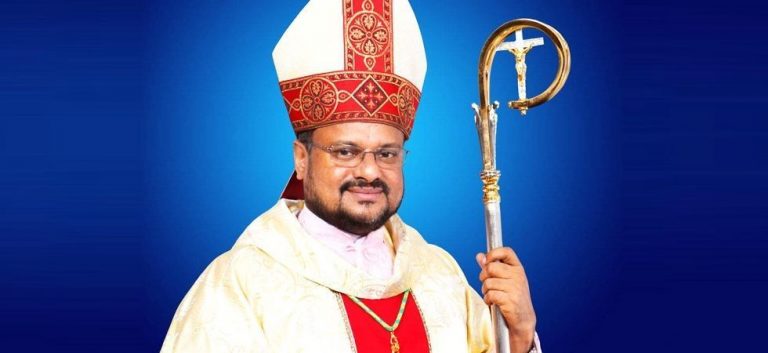
Court warns Bishop Franco of arrest after he skips hearing for 13th time, Kerala HC refuses to stay rape case: Reports

In a big setback to rape-accused Christian priest Bishop Franco Mulakkal, the Kerala High Court has refused to stay his plea in the on-going rape case against him, reports Goa chronicle.

According to a report by Goa Chronicle, Bishop Franco, who is accused of raping a 44-year-old nun, had approached the High Court in order to stay the rape case filed by the victim nun. However, the Kerala High Court did not admit petition and rejected his plea.

Franco Mulakkal, Bishop of the Roman Catholic Diocese of Jalandhar, was accused of raping a 44-year-old nun at a guest house in Kuravilangad in May 2014 and subsequent sexual exploitations afterwards. The nun had registered a complaint in June 2018 and has also claimed that despite her complaints, the church took no action on the bishop.

Bishop Franco skips summons, trial court warns him of arrest

Earlier, the trial Court in Kochi had warned the rape accused Bishop Franco Mulakkal of arrest and cancellation of bail for failing to appear before the court for 13 times in connection with the hearing of the rape case against him, reported Goa Chronicle.

Reportedly, the lawyers for the clergyman has sought adjournments 13 times.

The Trial Court had even summoned the rape accused Bishop Franco on July 1, 2020, however, the accused Franco failed to appear again, this time angering the court.

The lawyers had claimed that the Archdiocese of Jalandhar was under containment zone restrictions due to the coronavirus pandemic and added that Bishop Franco had failed to obtain permission to travel out of Jalandhar.

However, the court did not entertain the alibi presented by Bishop Franco’s side and warned them of cancelling the bail if Bishop Franco fails to appear before the court during the next hearing.

“I am sorry. But if Bishop Franco is not present at the next hearing, his bail will be cancelled and arrest orders will be issued,” the trial court said.

The accused Franco has been summoned yet again for a court hearing on July 13, 2020. The rape accused Bishop will be arrested if he fails to appear before the court on July 13.

Last month, the Kerala government had informed the High Court that there is ample evidence against the Bishop in the rape case.

Here is why and how the Supreme Court got convinced to modify its earlier order and allow Rath Yatra to be conducted in Puri

What transpired before the Hon’ble Supreme Court in the Rath Yatra matter on 22.06.2020 that convinced the Court to modify its earlier order dated 18.06.2020 and allow the annual Rath Yatra to be conducted at Puri? Did the submissions of the counsels representing the parties coincide, that too on both the dates?

Intentions of Odisha Government to conduct Rath Yatra

From the actions of the Odisha Government, one could clearly make out that the State Government was apathetic to conduct the Rath Yatra at Puri this year. I list out three key reasons for it.

First, on 18.06.2020, the Petitioner was represented by two top Senior Advocates namely Mr. Mukul Rohatgi and Mr. Ranjit Kumar before the Supreme Court, who as instructed by the Petitioner, submitted that if the Rath Yatra is allowed in the midst of the Corona Pandemic, a congregation of 10 to 12 lakh people shall take place and this, in turn, shall be catastrophic.

The Central Government represented by Solicitor General Tushar Mehta sought deferment of the matter for the next day which would have enabled him to seek instructions in the matter. The Court disallowed it. The State of Odisha was represented by none other than Senior Advocate Mr Harish Salve who started his arguments on a note that “at times, one has to rise above his brief”. The Interveners repeatedly prayed for at least the rituals to continue which was supported by Mr Mehta appearing for the Central Government.

For a moment, the Court seemed to be of the opinion that at least the rituals could be allowed adhering to the social distancing norms. However, Mr Salve, who when asked if only rituals could be allowed, answered: “the moment there is a festivity, people will gather”, to which Hon’ble the Chief Justice of India agreed. Not even a word was uttered, promising the Court to conduct the Rath Yatra adhering to social distancing and guidelines issued by the Central and State government to stop the spread of COVID-19. No submissions regarding the already conducted rituals and ready to roll Rath (chariot) was made. More importantly, the submission regarding a gathering of about 10-12 lakh people made by the Petitioner was not opposed by Mr Salve.

It seemed as if the Petitioner and the State Government were on the same page wherein the State government agreed to whatever the Petitioner submitted. Ultimately, the order was dictated whereby the Court stalled the Rath Yatra at Puri and further restricted all religious and secular practices associated with the Yatra.

Second, by virtue of the MHA guidelines dated 30.05.2020 (popularly referred to as Unlock-1 guidelines) religious places and places of worship were allowed to be opened for the public from 08.06.2020. However, the Odisha Government, issued its own set of guidelines on 01.06.2020, Clause-3 of which stated that religious places and places of worship shall continue to remain closed till 30.06.2020. Adding salt to the injury, yet another Order dated 07.06.2020 was issued by the Odisha Government specifically stating that religious places and places of worship shall remain closed till 30.06.2020.

This order had no purpose as the earlier set of guidelines issued on 01.06.2020 had in verbatim made this prohibition. However, this repetition clarified the intention of the State government which had by then decided not to conduct the Rath Yatra. The Petitioner relied on these two documents to support his case which is to say that allowing the Rath Yatra shall lead to blatant violation of the guidelines and the order issued by the State Government.

Third, the MHA guidelines dated 30.05.2020 allowed the States/UTs to assess the situation and allow cultural/religious functions and other large congregations. The State Government owing to the sentiments and devotion of over 4.5 crore Odias and millions of devotees of Lord Jagannath all around the globe, should have utilised this clause and carved out an exception to organise the Rath Yatra. Needless to mention that all social distancing measures had to be adhered to. It could have been worked out. There was absolutely nothing that should have prevented the State Government from issuing such an Order. 

State Government in a fix after the order

The State Government’s stand before the Supreme Court received widespread criticism. There was resentment all around. Devotees, sevayats (priests), the Shankaracharya, the Gajapati Maharaj all reproved the Government. Senior journalist Saswat Panigahi who widely covered the issue had rightly stated that Governments ought to understand popular public opinion and give respect to it. The Gajapati Maharaj in a press conference stated that the State Government had bypassed the recommendations of the temple administration. He further addressed an open letter dated 20.06.2020 to the Chief Minister requesting the State Government to seek a modification of the 18.06.2020 order.

Thereafter, on 21.06.2020, the Law Department of the Government of Odisha issued a press note. It was stated therein that the State shall take a favourable stand on the request made by the Gajapati Maharaj. Interestingly, the press note stated that the State Government’s stand on 18.06.2020 before the Supreme Court was primarily with respect to thousands to Rath Yatras taking place across the State.

However, it is pertinent to note that the Petitioner only prayed to stall the Rath Yatra at Puri only. All submissions made by the counsels were centred around the Rath Yatra at Puri and not of any other yatra at any other place. The explanation of the State Government was therefore vague and didn’t hold ground. By 22.06.2020, a total of 16 intervention applications were filed by various individuals and associations seeking modification of the earlier order.

Hearing on 22.06.2020.

The matter was mentioned by Solicitor General Tushar Mehta and Mr Harish Salve appearing for the State of Odisha before a bench headed by Justice Arun Mishra who placed the matter before the Chief Justice of India. The Chief Justice immediately constituted the same bench comprising of Justice Dinesh Maheshwari and Justice A.S. Bopanna. Everyone including the Petitioner, the Central Government, the State Government, the Temple Management Committee and the interveners were all on the same page i.e. Conduct Rath Yatra at Puri by adhering to the COVID-19 guidelines.

There are two notable points worth mentioning. First, the Petitioner, this time represented by Mr Ranjit Kumar out rightly concurred with the view of conducting the Rath Yatra at Puri and second, Solicitor General Tushar Mehta stated that the State Government was changing its stand. 

The Court thereafter agreed to allow the Rath Yatra. Para 3 of the order passed on 22.06.2020 is worth reproducing:

“Before we passed our earlier Order we had suggested to the parties that the procession of chariots, i.e., the Rath Yatra itself, could be allowed to proceed, however, without the general congregation which participates in this Yatra. We were informed that it would be well nigh impossible to ensure that there is no congregation. This Court was, therefore, left with no option but to grant an injunction restraining the Rath Yatra itself.”

We now know, who on 18.06.2020, while the Supreme Court was willing to grant permission for conducting the Rath Yatra, had opposed it.

(The author of this article is Arya Tripathy, who is a practicing Advocate before the Supreme Court. He had also appeared in the matter)

Twist in the tale: Tej Pratap Yadav’s sister in law Karishma joining RJD leaves him fuming

Rashtriya Janata Dal (RJD) supremo Lalu Prasad Yadav’s elder son Tej Pratap is upset after his sister in law Karishma, the sister of his estranged wife Aishwarya, joined RJD earlier today. Tej Pratap Yadav took to social networking site to say that he does not trust anyone from the family of those who ‘ruined his life’.

Karishma’s inclusion in RJD comes at a time when Tej Pratap is fighting a bitter divorce battle with his estranged wife Aishwarya Rai. Karishma is Aishwarya’s cousin. As per reports, this is a political move by Tej Pratap Yadav’s younger brother and RJD leader Tejashwi to try and create cracks within the Rai family. Karishma is niece of Chandrika Rai, Aishwarya’s father.

Karishma, like Tej Pratap’s sister Misa Bharti, is a doctor by profession. While joining RJD, Karishma reportedly said that they have old relations with the Yadav family. Speaking on the relationship between Tej Pratap and her sister Aishwarya, Karishma said that it is a personal thing. “Sometimes, marriage between two good people does not work out for reasons beyond control. No one can be blamed for it,” she said.

Tej Pratap Yadav reportedly said that the party’s decision is important. “There must be a reason why RJD gave her membership,” he told New18. However, moments later, he took to Twitter to say he does not trust anyone who is related to the family who ‘ruined his life’.

Troubled marriage of Tej Pratap Yadav and Aishwarya Rai

Tej Pratap Yadav and Aishwarya Rai got married on May 2018. But the couple filed for a divorce a few months after the wedding. In December last year, Aishwarya and Rabri Devi, her mother-in-law accused each other of torture and harassment. She also accused her sister in law Misa Bharti and Tej Pratap of harassing and assaulting her. Tej Pratap Yadav has claimed that he was made a scapegoat for the political benefits of his family members.

India’s TikTok ban may have caused losses worth 6 billion USD to Chinese parent company ByteDance, says China’s mouthpiece Global Times

The Chinese media outlet The Global Times has reported that ByteDance, the parent company of TikTok, may lose $6 billion in revenue after India banned 59 Chinese apps. They tweeted, “The loss of Chinese internet company ByteDance – the mother company of Tik Tok — could be as high as $6 billion after the Indian government banned 59 Chinese apps including Tik Tok, following deadly border clash between Indian and Chinese troops last month.”

On 29th June, the Indian government announced a ban on 59 Chinese apps, including TikTok, Vigo, UC Browser, ShareIt, Baidu map, Shein, and Clash of Kings. It is not the only step India has taken against China after the violent standoff at Galwan Valley. State governments and state-owned entities, including Indian Railways, Haryana government, Maharashtra government, BSNL, and NHAI have announced cancellations of agreements with Chinese companies.

Though TikTok released a statement that they are working with the Indian government and sorting issues raised against the app, it is highly unlikely to see a comeback anytime soon. Meanwhile, Chingari, a TikTok alternate of Indian origin, has seen a massive spike in downloads.

India’s economic retaliation against China

Along with banning 59 apps, including TikTok, the Indian government has taken several steps against China to halt its penetration in the Indian economy. Union Minister Nitin Gadkari, on 1st June, announced that Chinese companies would not be allowed to take part in highway projects. They cannot take part in joint ventures as well.

The Maharashtra government has recently put a hold on three agreements with Chinese companies worth Rs.5,000 crore. The Haryana government has decided to cancel power project contracts with Chinese companies. National telecom giant BSNL has officially announced the cancellation of the agreement with a Chinese company for setting up 4G services in India. The Indian Railways had also recently terminated a contract worth Rs 471 crore with a Chinese company.

The Indian Federation of Working Journalists seeks probe into finances of PTI, accuses it of being mouthpiece of Congress

The Indian Federation of Working Journalists (IFWJ) has written to the Prime Minister of India and the Minister for Information and Broadcasting, demanding a judicial inquiry into the various funds, subsidies, loans and financial help made available to the Press Trust of India (PTI) by the Government of India during the past several years.

In the letter, the largest journalist organization has accused the PTI management of misappropriating the Government funds for anti-worker purposes like splitting its plant union, favouring only loyalists and denying employees their legal dues under various statutory wage awards. It said that the Press Trust of India not only received a huge sum of money through various Union Government over the years, it also got a subsidized land to build its office on the fabulous Parliament Street. And all this at the cost of state exchequer and the Indian taxpayer money.

Accusing the news agency to have become a “mine of nepotism”, the Indian Federation of Working Journalists wrote that PTI ran on a professional pattern so long as its management had working journalists like P. Unnikrishnan, N.D. Prabhu and K.P. Srivastava among others. But after the management changed hands and the “nefarious contract system of employment and the rule of supersession started, the news agency became a mine of nepotism”, read the letter.

IFWJ accused the PTI fo being Congress’ mouthpiece

IFWJ also accused the PTI management of always shamelessly turning itself into the mouthpiece of the ruling party, chiefly the Congress party.

PTI’s interview with the ambassador of China raises doubts about its hidden agenda: IFJW

Speaking of the recent interview by the PTI with the ambassador of China, IFWJ wrote that the interview was done at a time when the Chinese Communist Party had virtually declared a state of war through media. The PTI story thus raises doubts about its hidden agenda, read the letter signed by Vipin Dhuliya, the secretary-general of IFWJ.

PTI had come under great criticism recently after an interview with Chinese ambassador Sun Weidong. During the interview, the Chinese ambassador blamed India for the clash between the two countries at Galwan Valley. Journalists of other agencies were outraged by the fact that the PTI did not bother to counter-question the Chinese ambassador on his dubious claims. People have also pointed out that the ‘interview’ came across as a press release by the Chinese Communist Party rather than a genuine interview.

Indian Federation of Working Journalists (IFWJ)

For the uninitiated, the Indian Federation of Working Journalists (IFWJ) is the largest journalist organization, with over 30,000 primary and associate members, working for electronic media, news agencies and 1,260 journals of 17 languages in 35 states and Union Territories. It was founded in  New Delhi on 28 October 1950.

The letter also spoke of how the independent multilingual news agency, the United News of India (UNI) was being starved of govt aid, which was in stark contrast with what PTI has been receiving over the years. The UNI was left to die slowly. Most of the UNI employees have not been paid full wages for over three to four years. This sad state of discrimination between two national news agencies has only ruined journalistic independence and professional integrity, read the letter.

Prasar Bharti greatly displeased with the ‘anti-national’ reporting by PTI

IT was reported how, Prasar Bharti, India’s largest public broadcasting agency, had expressed deep anguish on the blatant anti-India propaganda, which it called “anti-national’ reporting, by PTI in recent times and was considering withdrawing financial support to the latter over their recent coverage.

PTI has apparently been receiving huge fees from the public broadcaster, the fees are said to be in crores and it has been going on since decades. Reportedly, Prasar Bharti pays PTI over RS. 9 crores annually, which is in addition to the amount paid by PIB. Now, sources tell us that PTI’s ‘anti-national’ reporting makes Prasar Bharti believe that it does not make it feasible to carry forward the said relationship.

Sources also tell us that PTI has been averse towards a review of the same since 2016-17. But in light of PTI’s recent coverage, Prasar Bharti has initiated a review of the relationship between the two. We are told that PTI will be informed of the decision soon.

Past Incidents of Fake News by PTI

There have been numerous occasions in the past when the PTI has peddled fake news, on certain occasions, even on communally charged matters. Earlier in April, PTI had claimed that one Mehboob Ali was lynched on suspicions of being infected with the coronavirus. However, later it turned out that he was alive.

The PTI has spread fake news on matters of politics as well. Prior to the Delhi Elections in February, PTI had claimed that only 25% of AAP candidates had serious criminal cases against them. But in reality, the number was upwards of 50%.

Pakistan fears new virus spread due to human-animal contact during Bakra Eid, India was infected earlier too

Pakistan’s National Institute of Health has expressed concerns over the increased risks of transmission of the Wuhan Coronavirus and another deadly disease named Crimean-Congo Hemorrhagic Fever (CCHF) due to increased human-animal interaction during the upcoming Eid al Adha or Bakra Eid. It has stated that the increased human-animal interaction during movement, purchase and herding of sacrificial animals ahead of Eid multiplies the risks of the CCHF. Eid al Adha

As per reports, Pakistan’s NIH, through its Field Epidemiology and Disease Surveillance Division (FEDSD), has issued an advisory alerting stakeholders, including healthcare providers to take timely steps to prevent widespread transmission of the above diseases.

The NIH advisory ahead of Eid

The 2-page advisory issued by the NIH states that the deadly disease that is spread by tick bites can be prevented by monitoring sacrificial animals at entry points at markets and making sure that every animal is treated by approved acaricides at least a week before they reach markets. It adds that people participating in slaughtering, butchering and handling tissues and skin should wear appropriate protective gear like gloves etc, even while doing it at home.

The NIH advisory further states that livestocks should always be examined for ticks and animal herders and sellers should take adequate precautions while examining and treating ticks on the body of animals. It added that ticks should never be crushed with fingers. It also called for proper handling, herding and burial practices.

The advisory stated that people visiting animal markets during Eid should wear full sleeves clothes, gloves and face masks. It advocated for the usage of insect repellents to avoid ticks, examining clothes and body for ticks and usage of proper hand wash and sanitisation techniques.

NIH, Pakistan’s advisory for public ahead of Eid

What is CCHF?

Crimean-Congo Hemorrhagic Fever is a deadly and infectious disease caused by a tick-borne Nairovirus of the Bunyaviridae family. The fatality rate of the disease is at a risky 10-40% and in severe outbreaks, can even go up to 90%. Ticks present on the body of domestic animals like cattle, sheep, buffalo and goats serve as both the reservoir and vector of the virus. WHO says that the virus can spread quickly and can cause dangerous hospital and health facility outbreaks. It also says that the disease is very difficult to prevent and treat.

CCHF has symptoms similar to dengue and causes, fever, headache and very low platelet count in humans.

India had also had a CCHF outbreak in 2011

In January 2011, NIV, Pune had confirmed India’s first CCHF outbreak in Gujarat’s Sanand. The patient zero was a woman named Amina Momin of the Kolat village near Sanand town, who had picked it up from ticks on domestic animals. Later, a doctor and a nurse treating her had contracted the disease. All three had died before a viral outbreak was suspected and NIV was contacted by the health authorities.

The NIV had confirmed the virus within 15 hours of getting the samples from Sanand. It had alerted the Gujarat government and the then state government had immediately begun screening of the entire area, covering some 16,000 villages. Due to strict measures and widespread screening, the outbreak was successfully contained. Many subsequent cases have also been reported, especially in the Gujarat region and among communities who herd and slaughter animals.

Tablighi Jamaat members tried to cheat the system when they entered India on a tourist visa: Here is what MHA affidavit says

10 Tablighi Jamaat members had approached the Supreme Court challenging the Modi government’s move to cancel their visas after the Coronavirus pandemic fiasco. 34 individuals from 34 different countries had challenged the Ministry of Home Affairs order blacklisting over 2,500 foreign nationals presently in India for a period of 10 years from travelling to India for their alleged involvement in Tablighi Jamat activities (Malana Ala Hadrami and ors. v. UOi and anr). Maulana Ala Hadrami is a french national who has approached the SC. Now, the Ministry of Home Affairs had responded to the queries posted by the Supreme Court in the case.

The French petitioner had invoked the Indian Constitution to challenge the MHA. “En masse blacklisting of the aforesaid more than 2500 foreigners of about 40 different nationalities, currently in India, without affording any opportunity to prima facie defend themselves, is an egregious and blatant violation of Article 21 of the Indian Constitution.”, the petition by Hadrami had stated.

The petitioners have urged the top court to quash the MHA orders blacklisting nearly 3,500 foreign nationals as it violates Article 21. They have sought the Court’s help to allow their travel back to their countries of citizenship. 

On Monday, a bench of A M Khanwilkar, Dinesh Maheshwari and Sanjiv Khanna sought to know if there was a general direction for cancellation of visas and blacklisting them or if an order was passed in each individual case.

The court also asked the Union government to clarify why these foreign attendees had not been deported if their visas were cancelled.

In response, the Union Government has clarified several points with regards to the cancellation of visas and deportation of members of Tablighi Jamaat.

Firstly, the government has unequivocally stated that foreigners are not entitled to getting an Indian visa and also, have no right to invoke Article 21 under these circumstances.

MHA response in the Tablighi Jamaat case

MHA stated that a foreigner has no fundamental right to get an Indian visa or to continue living here on a cancelled or rescinded visa. The grant of visa is not an enforceable right, let alone a fundamental right of any foreigner. MHA also states that the petitioners cannot claim a right under Article 21 of the Indian Constitution as it is always subject to the procedure established by law and thus, the petition is not maintainable.

The response of the MHA reveals that in the visa manual, specific provisions are cited that regulates “Tablighi work”. From 2003 to 2019, the MHA statement cited rules in the visa manual that spoke of the requirements of disclosures if a foreigner visits India for Tablighi work.

MHA response in the Tablighi Jamaat case

The MHA statement further revealed that the Tablighi Jamaat members were in India on a tourist visa and thus, they violated the norms set for the entry of anyone who wishes to get involved in Tablighi work.

MHA response in the Tablighi Jamaat case

“Keeping in view the fact that participation in Tablighi Jamaat activities on Tourist Visa is a serious violation of provisions of Visa Manual 2019 and is also a criminal offence punishable under sections 13 and 14 or The Foreigners Act, 1946, the Bureau of Immigration was directed on 02.04.2020 to blacklist these foreigners under Category A to prevent their future entry in India”, the response by MHA stated.

It is pertinent to note that according to The Hindu, after this fiasco, the MHA has included indulging in Tablighi activities” as a specific visa violation that will attract a penalty of $500 fine and has added a new category—“restriction on engaging in Tabligh activities” in the “general policy guidelines relating to Indian visa.”

Reportedly, The amended guidelines read, “foreign nationals granted any type of visa and Overseas Citizens of India (OCI) cardholders shall not be permitted to engage themselves in Tabligh work. There will be no restriction in visiting religious places and attending normal religious activities like attending religious discourses. However, preaching religious ideologies, making speeches in religious places, distribution of audio or visual display/ pamphlets pertaining to religious ideologies, spreading conversion etc. will not be allowed.”

From the response issued by MHA to the Supreme Court, it is evident that the members of the Tablighi Jamaat misrepresented the reasons for their visit to India. Under a tourist visa, one can move around in India for the specific purpose of visiting places only and not for indulging in any religious activity like that of the Tablighi Jamaat. Hence, to avoid issuing the necessary information for immigration, the Tablighi Jamaat members visited India on a Tourist Visa and thereafter, proceeded to indulge in religious activities by cheating the system.

The response by MHA further gave out the following information:

  1. Visa of 2679 foreigners, including 9 OCI card holders, have been cancelled so far on a case to case basis.
  2. No Tablighi Jamaat member has been deported so far as criminal proceedings against them are ongoing.
  3. Before the issuance of lookout notice and their blacklisting, 227 foreign Tablighi members were remaining in India.

Ever since the Tablighi Jamaat was busted and hauled up to quarantine facilities and hospitals, they have embarked on a Jihad against civility, decency and the laws of this country. Its members have sexually harassed nurses, made life difficult for healthcare providers and refused to cooperate with the administration even on the face of calamity.