Home Blog Page 5378

Supreme Court issues dress code for lawyers without coats and gowns for virtual court hearings, CJI says they make it easier to catch Coronavirus

Today the Supreme Court of India issued a notification announcing a new dress code for the lawyers for the time the Coronavirus pandemics remains a threat in the country. The apex court has said that lawyers appearing for cases through video conferencing will not wear the coats and gowns which are the normal uniform of advocates. The notification said that the advocates may wear “plain white-shirt/white-salwar-kameez/ white saree, with a plain white neck band” during the hearings before the Supreme Court of India through Virtual Court System till medical exigencies exist or until further orders.

The Supreme Court notification came just hours after the CJI had said that a new dress code will be issued to be followed during the Coronavirus pandemic as coats and gowns increase the chance of catching the virus.

While holding a court hearing through video conference, the Chief Justice of India Sharad Arvind Bobde had said that the judges and the lawyers should not wear coats and gowns the during the epidemic as the coats and gowns are easier to catch the virus.

He said this while holding the video conference in a case in which arguments were being made by senior advocate Kapil Sibal. He was sharing a bench with Indu Malhotra and Hrishikesh Roy.

The CJI informed that the Supreme court may soon come up with a dress code for lawyers and the judges. The judges were not wearing coat and gown during the video conference. After the comments of CJI, lawyers immediately started attending hearings through video conference without the familiar black coats.

Read- Rajasthan HC adjourns a bail plea after lawyer appears in ‘Baniyan’ for the hearing through video-conference, second such incident in a month

The Chief Justice of India observed in view of the fact that the supreme court has been holding courts through video conferencing from March 25 due to nationwide lockdown to contain the spread of coronavirus. The Apex court had also barred the entry of advocates and other staff in the high-security zone on the basis of proximity cards until further order.

Earlier, the Supreme court stated that the judges may come to the courtroom as a pilot project from next week to hold court proceedings through video conference.

Pakistan: Minor Hindu girl abducted and forcibly converted to Islam, watch how influential Islamic cleric Mian Mithoo makes her embrace Islam

The brutalities against minorities continue unabated in the terrorist state of Pakistan as multiple instances of atrocities against minorities especially Hindus and Sikhs have been emerging regularly in recent times. In yet another deplorable act of forced conversion to Islam in the terror state of Pakistan, a young Hindu girl named Kavita Kumari was abducted and forcibly converted to Islam. Mian Mithoo, the extremist Muslim cleric and an influential politician that Hindu families dread in Sindh, is believed to be behind the incident.

Mian Mithu is accused of kidnapping and forcing religious conversions of Hindu teenage girls in Pakistan.

In the incident which was reported from Barjhundi in Ghotki area of ​​Sindh province, Pakistan, a thirteen-year-old Kavita Kumari was abducted and allegedly taken to Mian Mithoo, who then forced the Hindu minor to embrace Islam.

Pakistani human rights activist Rahat Austin had taken to Twitter to post a video where the Hindu girl can be sitting next to the extremist Muslim cleric Mian Mithoo, who guides her into embracing Islam.

Past incidents where Mian Mithoo has been instrumental in converting Hindu underage girls

This is, however, not the first incident where the ‘Mithoo mafia’, as the Mian Mithoo’s goons are commonly referred to, has been instrumental in carrying out abductions and forced conversions of several Hindu underage girls in the area. Prior to this, he was accused of abductions and forceful conversions of one Hindu named Mahek Keswani and two other underage Hindu girls Raveena (13) and Reena (15), who were abducted from the Ghotki in Pakistan’s Sindh on the eve of Holi. The girls were later forcefully converted and married off to older Muslim men.

Similarly, Rinkle Kumari, was abducted and forced to convert to Islam, and marry a young Muslim man named Naveed Shah under his supervision. Rinkle Kumari, the daughter of a local school teacher Nand Laal, was a mere teenager at the time of her abduction. Nand Laal had allegedly fled to Lahore soon after accusing Mian Mithu of the abduction and forced conversion.

Almost all the sordid sagas of the Hindu teenager’s abduction and marriage in Pakistan’s Sindh province is said to be masterminded and supported by Mian Mithu.

The notorious Islamic cleric Mian Mithoo

Mian Abdul Haq, commonly known as Mian Mithoo, belongs to an influential family in the Sindh province and is an influential political and religious figure in Ghotki. He had been elected as a member of the National Assembly from Ghotki in the elections of 2008 on a Pakistan People’s Party (PPP) ticket. He is also the custodian of a Muslim shrine, Barchundi Sharif.

Mithoo is feared by the local Hindus as they accuse him of kidnapping and forced conversions of Hindu girls. The minority Hindus of the area claim that Mithoo provides protection to those who kidnap underage Hindu girls and forcibly converts them to Islam before marrying them off to their kidnappers. Further, he also wields his political power to influence legal processes in case families of kidnapped girls decide to go to court.

Mian Mithoo, the chief of Bharchundi mosque is accused of systematically carrying out the kidnapping and forced conversions of underage Hindu girls in the area.

Ghotki riots pre-planned by Mithoo to cover up abduction of Hindu girl

Last year, temples belonging to the minority Hindu community were vandalised and violence was unleashed against Hindus in Pakistan’s Ghotki after a principal Notan Das had allegedly made some ‘blasphemous’ remark. The violence had broken out after a student accused the school principal Das of making ‘blasphemous’ remarks.

In a twist to the whole incident, a news report in Pakistani media outlet Naya Daur had stated that the attacks against the Hindu community were pre-planned by the goons of notorious Radical Islamic leader Mian Mithoo.

School principal Notan Das had reportedly saved an abducted Hindu girl by giving refuge to her and the attack against him was an attempt to cover up the crime by Mian Mithoo’s goons.

As of 2016, 117 cases had been registered against the Islamic cleric who is allegedly known to be a close aid of Pakistan’s PM Imran Khan and the Pakistani general Qamar Javed Bajwa. In Pakistan, Hindus have many times reportedly taken to the streets demanding the arrest of Mian Mittoo.

The sham of “Worli Model” exposed as Maharashtra CM Uddhav Thackeray tells districts to embrace the Goa model to fight coronavirus outbreak

In what appears as a tacit acknowledgement by Uddhav Thackeray that the aggressively promoted “Worli Model” was nothing but a PR campaign gone awry, the Maharashtra chief minister today asked the district heads to follow the Goa model of surveying house-to-house and treating all the suspected COVID-19 patients.

Making it amply clear that there are no plans in the offing to relax the lockdown restrictions and opening up of district borders, Thackeray asked the district authorities over video conferencing on Tuesday to submit their plans to the centre on how they intend to ease restrictions during Lockdown 4.0 by Friday. He also asked them to focus their efforts on containment zones and take preventive measures to limit the spread of the coronavirus.

According to an official privy to the instructions issued by Thackeray, district authorities in Maharashtra have been asked by the chief minister to imitate the pattern adopted by Goa and initiate house-to-house surveys to inspect for symptoms of coronavirus along with other monsoon-related diseases to prevent the illness.

Besides, Thackeray added that even when the lockdown restrictions are relaxed in the impending future, the district boundaries will remain sealed, citing the massive movement of migrant labourers. While evaluating the situation of the Green, Orange and Red zones in Maharashtra, Thackeray instructed district collectors and divisional commissioners to assess if the mass departure of migrants in their districts had led to a shortage of manpower, and fill it with locals.

While the Shiv Sena supremo advised the district authorities to follow the Goa model in dealing with the coronavirus outbreak in their regions, it is worth noting that he has asked to follow a model from a state which has only registered 7 cases till date. Maharashtra, on the other hand, has been leading the tally of the states with the highest number of coronavirus infection and has today reported 1,495 new COVID-19 cases and 54 deaths, taking state caseloads to 25,922 and mortalities to 975.

Maharashtra’s total cases account for a staggering 33 per cent of India’s total coronavirus cases. On the flip side, Goa had declared itself coronavirus-free after all the 7 patients in the state had recovered from the contagion. By drawing a preposterous parallel with the Goa’s model, Maharashtra chief minister has betrayed his poor grasp of the situation, presumably leading to the crisis that Maharashtra finds itself in.

The sham of “Worli Model”

Of late, an attempt was being made by the Maha Vikas Aghadi government in Maharashtra to tout the Worli Koliwada Model as a perfect example of the containment zone in the country to cover up its apparent shortfalls in dealing with the raging coronavirus crisis in the state.

A five-member Inter-Ministerial Central Team (IMCT), headed by an additional secretary, Manoj Joshi, was on a two-day visit in Mumbai on April 21 to assess the state’s preparedness in battling the coronavirus outbreak. However, as the IMCT visit in Mumbai was about to conclude, a spurious report was published in the Times of India claiming that the IMCT team which was in the city to review the state’s readiness in fighting the spread of the coronavirus “felt” that Worli Koliwada can be a perfect model for the rest of the country in containing the coronavirus outbreak.

The article published in the Times of India cited a press release issued by the Chief Minister’s Office (CMO) to claim that additional secretary Manoj Joshi hailed the Worli Koliwada model as the best example of the coronavirus-free zone in the country, asserting that the model is worth replicating in other areas to break the virus chain. It was overzealously shared by Rajya Sabha member Priyanka Chaturvedi, who claimed that Maharashtra’s handling of the crisis has been outstanding and worth emulating.

But when OpIndia had spoken to a few officials about Mr Joshi’s supposed praises for the model, they denied the knowledge of any such model existing and expressed apprehensions that Joshi could have been misquoted. While our attempts to reach Mr Joshi had failed, sources had claimed that Times Of India had misquoted the official, presumably, due to the press release by the state government.

Atmanirbhar Bharat: Yogi govt to hold online loan fair for MSME sector, to disburse loan of around Rs 2,000 crore to 36,000 entrepreneurs

Uttar Pradesh Chief Minister Yogi Adityanath has announced to conduct an online loan fair to disburse loans to 36,000 entrepreneurs from the MSME sector. This came right after Finance Minister Nirmala Sitharaman announced major scheme and relief under Atmanirbhar Bharat Abhiyan for the MSME sector.

Chief Minister Yogi Adityanath that Rs 1,600 crore to Rs 2,000 crore loans would be disbursed to about 36,000 entrepreneurs tomorrow through the online fair.

UP CM said that keeping in mind the MSME sector, his government had already held a state-level meeting for MSME committee.

Uttar Pradesh hub of MSME sector

Yogi Adityanath further said that Uttar Pradesh is a hub for MSME sector and about 3 crore people in the state are directly or indirectly involved in the sector.

This economic package will bring a huge sigh of relief to these people.

He further added that under the leadership of PM Modi the UP state government had tried to boos the MSME sector but owing to coronavirus, they were facing hurdles. But now the sector will gain momentum, he tweeted.

With this step, the MSME sector will get a new boost of energy. This is an important step in PM Modi’s vision of ‘local to global’ move. We will definitely become a global economy, CM Yogi Adityanath tweeted.

Union Finance Minister Nirmala Sitharaman on Wednesday unveiled the details of the Rs 20 lakh crore economic package under ‘Atmanirbhar Bharat Abhiyan’ announced by Prime Minister Narendra Modi in his address on Tuesday evening.

Finance Minister announced relief to Micro, Small and Medium Enterprises (MSMEs)

In a major initiative, Finance Minister Nirmala Sitharaman announced Rs 3 lakh crores Collateral-free Automatic Loans for Businesses, including Micro, Small, and Medium Enterprises (MSMEs). FM Sitharaman announced that collateral-free automatic loan to MSMEs will be given for a four-year tenure with a 100% credit guarantee. The collateral-free loan is available till 31st October, said Finance Minister. The scheme will benefit 45 lakh units, allowing them to resume activity and safeguarding jobs, said Sitharaman.

“To provide stressed MSMEs with equity support, the Modi government will facilitate the provision of Rs 20,000 crore as subordinate debt. Two lakh MSMEs are likely to benefit.” She added, “All NPAs or stressed MSMEs are eligible for the scheme. The government will provide Rs 4,000 crore to CGTMSE who will provide a partial guarantee to banks who will then give benefit to stressed MSMEs.”

In a big boost to MSMEs, Finance Minister Nirmala Sitharaman on Wednesday announced that global tenders for government procurement tenders will be disallowed for tenders up to Rs 200 crore to enable self-reliant India.

PM CARES Fund allocates Rs. 3100 Crore to fight coronavirus, will be used to purchase ventilators and support migrant movement

The govt of India today announced that Rs 3100 crore has been allocated to the fight against Coronavirus from the money collected by the PM CARES fund by the trust managing the fund. Out of Rs 3100 crore, a sum of approximately Rs.2000 crore will be earmarked for the purchase of ventilators, Rs. 1000 crores will be used for care of migrant labourers and Rs.100 crores will be given to support vaccine development. 

A statement issued by the central govt said that 50000 ‘Made-in-India’ ventilators will be purchased from using the money collected at PM CARES Fund at a cost of approximately Rs. 2,000 Crores. These ventilators will be provided to government run COVID hospitals in all States/UTs, for better treatment of the critical COVID-19 cases. This will help in augmenting the infrastructure to tackle the Coronavirus cases across the country.

In addition to that, the states and Union Territory govts will be given a lumpsum assistance of totalRs. 1000 Crore from PM CARES Fund. This amount would be provided to the State Governments/UTs to place it at the disposal of the District Collectors/Municipal Commissioners for strengthening their efforts in providing accommodation facilities, making food arrangements, providing medical treatment and making transportation arrangements of the migrants returning to their home states. The state/UT wise funds will be released on the weightage of population of the State/UT as per 2011 Census (50% weightage), number of positive COVID-19 cases as on date (40% weightage) and Equal share (10% weightage) for all states/UTs to ensure basic minimum sum for all states. The fund will be released to the District Collector/District Magistrate/Municipal Commissioner through the State Disaster Relief Commissioner of the States/UTs concerned.

Rs 100 crore from the PM CARES will be used to support the efforts to develop vaccines against Novel Coronavirus. The fund will be provided to Indian academia, start-ups and industry who have come together in the effort of cutting-edge vaccine design and development. It will given as a helping hand to catalyse vaccine development, which will be utilized under the supervision of Principal Scientific Advisor.

PM CARES Fund Trust was formed on 27th March this year to receive public donations to fight emergencies or distresses like the current Covid-19 pandemic. Prime Minister is the Chairman of this trust, and its members include Defence Minister, Home Minister and Finance Minister.

After the PM CARES fund was set up by the government, opposition parties and a section of left liberal intellectuals had launched a campaign against it, alleging that the fund will be misused as it will not be audited by the CAG. Congress president Sonia Gandhi had demanded that the entire money collected in the fund should be transferred to the PM National Relief fund, where the Congress president a trust member as per resolution of formation of the fund. The PMNRF is also not audited by the CAG, as both the fund do not receive any taxpayers’ money, but accepts only voluntary donations.

Islamic preacher Zakir Naik asks Muslim countries arrest non-Muslims Indians criticising Islam and try them under blasphemy laws

The radical Islamist preacher Zakir Naik has released a video in which he can be heard asking Islamic countries across the globe to collect data of non-Muslims in India who criticise Islam and arrest them when they land up in their countries and try them under the blasphemy law.

In a video going viral on social media, the Islamist preacher says that he would request all the Kuwait lawyers to collect a database of all non-Muslims in India who have ever passed any negative remarks or abused or ‘attacked’ Muslims or Islam, and keep it stored in their computer. Next time when these non-Muslim Indians visit any gulf country, be it Indonesia, Dubai, Kuwait or Saudi Arabia, they should be identified, booked and tried under the laws.

“The rich non-Muslims travel to Gulf and different Muslim countries. If these Muslim countries have data of these people attacking or spreading venom against Muslims, they should arrest them under their (own) law once they enter their territory,” said Naik. The video was first posted on Pakistani-American preacher Yasir Qadhi’s YouTube channel on 23rd April, 2020.

The radical Islamist preacher Zakir Naik is currently living in Malaysia after fleeing India. He is facing charges in India of provoking communal disharmony and indulging in unlawful activities that incited terror in the country.

He is also under investigation in India and Bangladesh for the terror attack at the Holey Artisan Bakery in Dhaka in July 2016.

Radical Islamist Zakir Naik

Radical Islamist Zakir Naik, a Mumbai-born 53-year-old who is the founder of the controversial ‘Peace TV’ has been living in Malaysia since 2017 after fleeing from India and the previous government there had granted permanent residency to him.

Although the current Mahathir administration has barred the controversial Islamic preacher from delivering public speeches, it is yet to take any decision on sending him back to India.

This is not the first time the radical Islamist was heard spewing venom. Speaking on BJP’s decision to repeal Article 370, he had said that Kashmir is being ‘singled out’ because it is a Muslim majority state. Naik had called the situation in Kashmir as an ‘act of war by the BJP government against the biggest Muslim community in the country.’ Adding to his hate speech against the Indian government, Naik ‘warned’ against a Palestine-like situation building up in the state. He even furthered the lie that Kashmiri youth are being arrested and ‘sent to undisclosed jails in and outside Kashmir’.

The controversial Islamic preacher, who reportedly inspired the mastermind of Sri Lanka Easter blasts last year that killed 290 people, had said he doesn’t intend to come back to India as long as the BJP is in power. Naik fled the country in 2016 after Dhaka terror attack.

Gorakhpur: Man tries to commit suicide after wife asked him to not come home after he had travelled more than 1600 km to reach home, rescued by police

A labourer attempted to commit suicide by hanging from the railing of a three-story building in Gorakhpur after his wife advised him to not return home due to Coronavirus pandemic. Fortunately, this was spotted by locals and police reached the spot on time to save his life. A video of the incident has also surfaced. In the video, the police can be seen pulling a young man hanging from the railing.

The youth was going from Pune to Bihar

Deepak Patel alias Dipu who is a resident of Chainpur Chitouni, Siwan, Bihar works as a construction worker in Pune. But due to the lockdown imposed due to the coronavirus crisis, he couldn’t get any work in Pune, so he decided to leave for his home 1,794 km away. He undertook the journey sometimes on foot and sometimes taking lifts from trucks. By Tuesday night, Deepak had travelled 1,655 km and reached Naushad in Gorakhpur. He was accompanied by some other people in the journey.

During the night, everyone decided to take shelter at the bus station in the locality. From there, Deepak talked to his wife at night. But to his shock, his wife told him not to come home after he had almost completed such a difficult journey over several days. His wife thought that there will be the threat of bringing the Coronavirus infection if Deepak comes home. This led to an argument between the two. Then, he ran out of balance on his mobile phone, so the verbal spat ended abruptly. Tensed due to the situation, at around five and a half in the morning, Deepak climbed to the third floor of Ram Chandra Gupta’s house located in front of the bus stand and tried to hang from the railing using a towel.

Police reached the spot to rescue the man

His co-travellers and others in the locality spotted this started raising a hue and cry. Alerted by the noise, policemen from the nearby police reached the spot immediately to rescue the man. The police tried to convince the man to come down, but he did not agree and kept asking for a mobile phone. When he did not listen, Constable Virendra Kumar and Constable Ramjit Chaudhary headed by the outpost in-charge Bhupendra Tiwari undertook a daring mission to save the man. They climbed up to the next building and from there, they jumped on to the second floor of the building from where Deepak was trying to hang. Once on the spot, they pulled him up had prevented him from committing suicide.

Talking to media after being rescued, Deepak Patel said that he had got tensed and emotional when his wife asked him not to come home last night on phone.

Policemen who saved his life will be rewarded

SP North Arvind Kumar Pandey said that the outpost Incharge and the two policemen showed urgency and saved the life of the young man. Constables Virendra Kumar and Ramjit Chaudhary will be awarded. After talking to SDM, the youth will be sent to the shelter home or quarantine. Arrangements will be made to send home after a checkup.

Atmanirbhar Bharat Abhiyan: How Sterlite Copper plant closure was India’s loss and Pakistan’s gain making us dependent on import for copper

While addressing the nation on May 12, 2020, PM Narendra Modi announced an “Atmanirbhar Bharat Abhiyan” worth Rs 20 lakh crores($265 billion) to tide over the economic downturn induced by the coronavirus crisis and emphasised on the need for India to become “self-reliant” as the pandemic sweeps across the world, paralysing economies in its wake.

In his clarion call to build a self-reliant India, PM Modi impressed upon the need to support and promote local products and brands so that the nation builds a robust supply chain that can ride out global storms like coronavirus relatively unscathed. PM Modi’s apparent reference was to the limitations of the globalisation amidst a rampaging pandemic that had forced the countries to shut down their economic engines and thereby adversely affecting the global supply chain. PM Modi promptly highlighted how India’s ingenuity and self-reliance in quickly churning out the PPE kits and N95 masks in the midst of an epidemic helped her in escaping the fate suffered by other coronavirus-ravaged countries dependent on global supplies for procuring the necessary protective gears.

With India staggering under the economic shadow of coronavirus, the message quickly resonated with its 1.3 billion population who were forced to shut their economic activities(except for essential items) and compelled to remain confined to their houses as the pandemic continued its ominous march. As PM Modi yesterday hinted that there might finally be light at the end of the tunnel as the country girds to tread the treacherous and uncharted path of reviving its economy, the gravity of PM Modi’s message was not lost on the citizens and the virtuous ideals of “Atmanirbhar” or “self-reliance” soon became the catchphrase for Indians determined to awaken the economy from its torpor and catapult it on the path to autarky.

While Indians pledge to liberate the country from the crutches of dependency, it is pertinent to note that there have been some instances in the nation’s recent history that have served to severely dampen its aspiration of becoming a self-reliant country. Most notably, the debacle of Sterlite Copper has hustled the country from once being an exporter of copper to a net importer, only within a matter of a few months.

Sterlite Copper closure: India suffering from “self-inflicted” harm by shunning “self-reliance”

The Vedanta owned Sterlite Copper plant in Thoothukudi was shut down by the Tamil Nadu in May 2018 following the violent protests staged by the residents, who alleged that the plant posed serious health hazards. The closure of the Sterlite Copper plant had such widespread ramifications on the country’s copper trade that from being one of the top five exporters of the copper cathodes in 2017-2018, India became a net importer beginning 2018-2019.

Sterlite Copper accounted for roughly 38 per cent of the country’s copper needs as the smelter produced nearly 4 lakh tonnes every year. However, after the Tamil Nadu government’s diktat of shutting down of the plant, not only did the diminished copper production dramatically reduced the country’s export but it also forced the country to import the metal from overseas.

As per the 2017-2018 figures, India exported approximately 378 kilotonnes of copper cathodes— obtained after the copper ore is smelted and refined. However, after the Sterlite Copper plant in Thoothukudi was shuttered, India’s exports nosedived to 48 kilotonnes in 2018-19, a precipitous fall of almost 87 per cent.

In addition, India’s copper imports also rose by a strikingly large amount. In 2017-2018, India had imported a paltry 36 tonnes of copper cathodes. But in a span of just a few months, India’s imports zoomed to 84 kilotonnes in 2018-2019, a stunning rise of 233 per cent.

Perhaps, the most consequential statistics related to the plummeting exports of copper from India came from its north-east neighbour- China. From exporting copper cathodes worth $1.5 billion in 2017-2018, India managed to export only $226 million worth of copper cathodes to China in 2018-2019, a massive drop of 85 per cent.

India’s exports of copper cathodes in FY 2019-2020 have been predictably abysmal. Now, a report published by China Economic Net claims that the financial year 2019-2020 saw a 400 per cent increase in Pakistan’s copper exports to China compared to what they were 3 years back. Pakistan’s export of copper to China stands at $550 million against the $106 million export three years ago. Effectively, losses borne by India from the shutting down of the Sterlite Copper plant have now transformed into gains earned by its nemesis-Pakistan.

According to the Pakistani daily-The International News, China is eyeing to take the exports to $10 billion-mark once the dispute surrounding the “Reko Diq project”, one of the largest copper reserves of Pakistan, settles down in the International Court of Justice.

The export of copper and the prospect of large reserves of copper waiting to be tapped could revitalise China’s interest in the China-Pakistan-Economic-Corridor(CPEC), a project touted as “harbinger of economic progress and regional peace” but in reality is a nasty scheme to strip Pakistan of its natural resources while simultaneously holding India’s feet to the fire to accept China’s regional hegemony.

By shutting down the Sterlite Copper plant, India had effectively empowered two of her arch-enemies whose ill-disposition towards India is evident and unmistakable. In the matter regarding the closure of Sterlite Copper plant in Thoothukudi, India unapologetically shunned its self-reliance and inadvertently caused self-inflicted injuries to its national security and its economic interests.

“Atmanirbhar” is the need of the hour

The post-coronavirus world order may present us with its own set of problems, ranging from national security which still exists today to the novel issues such as fragile global supply chain. Countries will continue to have friendly relations with other countries bounded by shared interests and mutual goals. But it also remains a fact that enmities between certain nations will continue to sustain, if not aggravate, as the nations come to terms with the post-coronavirus world order.

With no prospect of vaccine for coronavirus in the foreseeable future, nations who risk relaxing the lockdown restrictions to shake up their economies from their slumber may stand the risk of being afflicted with a possible second wave of coronavirus infection. This could force them to reinstate the lockdown restrictions which could disrupt the global supply chain, leaving countries dependent on exports in a deeply vulnerable condition.

In such a scenario, for India to realise its goal of autarky while ensuring its national security interests are not jeopardised and it does not remain inordinately dependent on the capricious global supply chain, it becomes all the more important that PM Modi’s exhortation to build an “atmanirbhar” India or a ‘self-reliant” country is followed in letter and spirit. Perhaps, we can start it by restarting the now-defunct Sterlite Copper plant and reconquer our position of being one of the top exporters of copper cathodes.

Zee-News editor-in-Chief Sudhir Chaudhary receives threat calls from Kalistan supporting terrorist in UAE

Day after Zee News editor-in-chief Sudhir Chaudhary was in headlines after receiving threats from Pakistani terrorists for reporting on various kinds of ‘Jihad’ which exposed its modus-operandi, the senior journalist is again in headlines after getting chilled threats from Khalistan backed terrorist and then a Kashmiri terrorist.

The Zee News reported that the Editor-in-Chief received a threat call from a Khalistan backed terrorist from UAE. The Khalistani stressed on Sikh referendum 2020 saying that it will happen and they will establish Khalistan. The Zee News played the recording in which the Khalistani says, “Punjab does not belong to someone’s father. And the Referendum will anyway happen. No one can stop Khalistan to establish.”

In an another recording, a Kashmiri terrorist is threatening that Zee news will pay for targetting Pakistan in its jihad based reporting. A video has been released in which a Kashmir based Mujahideen is threatening to leave Kashmir otherwise they will do Jihad to remove Indian possessions from Kashmir.

FIR against Sudhir Chaudhary

On May 7, an FIR was filed in Kerala against Sudhir Chaudhary after he had reported on various kinds of ‘Jihad’ and exposed its modus-operandi on a TV show.

Sudhir Chaudhary had shared the copy of an FIR filed against him in Kerala over his March 11 report, in which he had exposed the idea behind ‘Jihad’ with a flowchart. The show had triggered the ‘secular-liberal’ media, who had attacked the Zee News editor for his reportage.

Sudhir Chaudhary had highlighted the ‘Land Jihad’ using the Roshni Act

In the show, the Zee News’ Editor-in-chief had explained stating that there are two types of Jihad – Hard Jihad and Soft Jihad. “Hard Jihad includes Population Jihad, Love Jihad, Land Jihad, Education Jihad, Victim Jihad, and Direct Jihad, while Soft Jihad includes Economic Jihad, History Jihad, Media Jihad, Movies, and Songs Jihad and Secular Jihad,” Sudhir Chaudhary had explained in his hour-long show.

Sudhir Chaudhary’s episode exposing the real purpose and ways of carrying out ‘Jihad’ was watched widely. The highlight of the show, broadcast on March 11, was the “Jihad chart”.

“Our houses are getting destroyed, our women being raped and tortured every day”: Pashtun activist accuses Pakistan Army of human rights violation

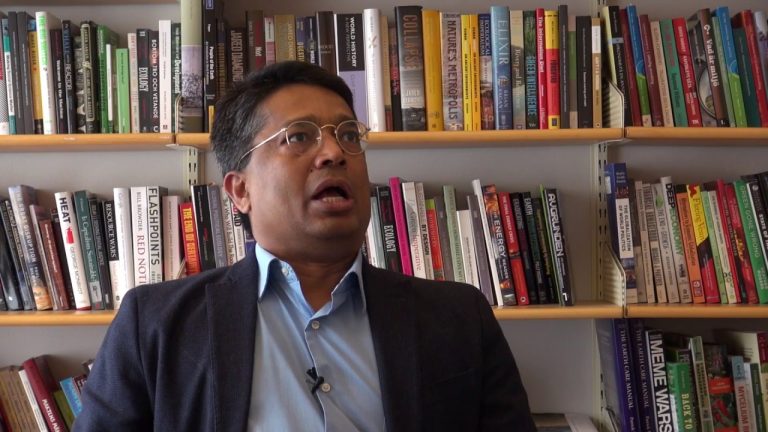
A Pashtun activist has accused Pakistan army of human rights violations under the garb of anti-terror activities in the tribal areas bordering Afghanistan. Arbab Sohrab Saadat Jabarkhail, who hails from Peshawar and is now living in London, lamented that their lives have been destroyed.

“Our houses are getting destroyed every day. Every day our women are getting raped and tortured, which is not acceptable to us. We are not going to stop anymore. We are going to raise our voices. We are going to try for help as much as we can”, Arbab Sohrab was quoted by ANI as saying.

Pashtun oppressed in Pakistan for decades

The Pashtuns in Pakistan have been oppressed and have faced discrimination in the hands of the Pakistani army and the government since decades. They have been regularly targeted by the Pakistan army in the name of counter-terrorism operations against the Taliban and have, without any fault of theirs, sustained irreparable damages in the hands of the Pakistani army and authorities.

Pashtun Tahafuz Movement (PTM), a social movement for Pashtun human-rights based in Khyber Pakhtunkhwa and Balochistan had been initiated against the Pakistani authorities for the rights and justice for Pashtuns.

According to the PTM leaders and other Pashtun leaders residing in Khyber Pakhtunkhwa, 362 Kashmiri civilians may have been killed at the hands of forces in Kashmir in comparison to the demolition of 120,000 houses of Pashtuns during the past two decades, leading to deaths of many Pashtuns in the past 15 years.

Facing decades of repression, the minorities in Pakistan are now taking up the fight against the state of Pakistan for inflicting human rights abuses on them. Recently, one of the prominent leaders of the minority Mohajir community, Nadeem Nusrat had slammed Pakistan government stating that Pakistan had “no moral right to speak on behalf of Kashmiris.”

Nadeem Nusrat had also warned Pakistan that it could face a “potentially existential threat” and advised Islamabad to restructure Pakistan into multiple autonomous states suggesting that it is the only viable solution to save the country.