Home Blog Page 5388

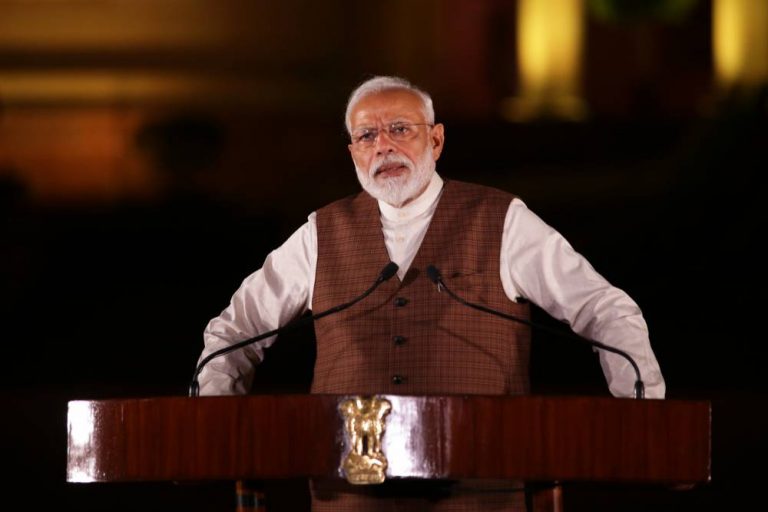
This speech by Narendra Modi in March shows his desire to uproot the existing status quo and his commitment towards major reforms

We are at a pivotal moment in our history. The developments of 2019 had ensured that the next decade would be the most significant in the history of Independent India and to top it off, the beginning of the decade saw the dawn of a deadly pandemic that has crippled the world economy. Thus, to recover from this crisis, it is only to be expected that big bang reforms will have to be pushed through. If India is to come out of this mess, then it is of paramount importance that India takes hard measures to spark an economic revival. Thus, we have seen Uttar Pradesh implement a major reform of labour laws and Madhya Pradesh on agriculture.

There are enough indications that the reforms have the backing of the Central Government. As expected, the usual suspects are up in arms against the reforms and an attempt is being made to portray the reforms as the end of humanity. In this context, Prime Minister Modi had delivered a speech in March which precisely highlights the mentality of such individuals and the commitment of his government towards bringing about real reforms.

Prime Minister Modi had said in his speech, “There was a time when things were run according to the predictions of a special class. Whatever verdict they delivered was assumed to be final. But due to developments in technology and the democratisation of discourse, the opinions of every section of society matters. Today, the ordinary citizen voices his opinions very strongly against the so-called touted wisdom. Earlier, the arguments and theories of this special class used to bury the ambitions and aspirations of the ordinary citizen.” The Prime Minister then went on to elaborate how the country was lacking basic amenities such as toilets when he first assumed the seat of Prime Minister.

“We had the choice to continue pursuing the path that had been laid down before us, or we could leave it and forge a new one for ourselves and proceed with a new approach. After a lot of a contemplation, we forged a new path with a new approach, went forward and we prioritised the aspirations of the masses above all else,” Narendra Modi said. The Prime Minister then went to assert that the identifying characteristic of this special class is their penchant for saying the right things. “There is no harm in saying the right things. But this class hates those individuals who do the right things. That’s why when there’s a change in the status quo, such people start seeing disruptions,” he said.

The Prime Minister stated further, “Those who call themselves the messiah of gender justice, they are against our decision to bring forth a law against Triple Talaq. Those who go around the world pontificating on the necessity of according to refugees human rights, they oppose the Citizenship Amendment Act which is designed to help refugees. Those who swear by the Constitution day and night, they oppose the abrogation of Article 370 which would ensure the implementation of the Constitution even in Jammu & Kashmir. Those who keep talking about Justice, when a single verdict of the Supreme Court goes against them, they start questioning the integrity of the Supreme Court itself.”

In light of the massive reforms being undertaken to solve India’s economic woes, these words gain new significance. Of course, a certain set of individuals are not pleased by the Uttar Pradesh Government’s decision. These individuals would much rather want the status quo that they helped created to continue thriving because, naturally, they benefit the most from it. However, as the events from 2019 demonstrate, Prime Minister Modi has made up his mind to upend the status quo as it is not serving the masses. Some shrieks and screams are to be expected as the benefactors of the erstwhile status quo would obviously do everything in their power to ensure that the status quo is not changed. But, armed by a massive mandate in his favour, Narendra Modi has decided to forge a new path for the country.

Pakistan, drinking pigeon sh*t slurry won’t cure coronavirus, leave the kabootars alone!

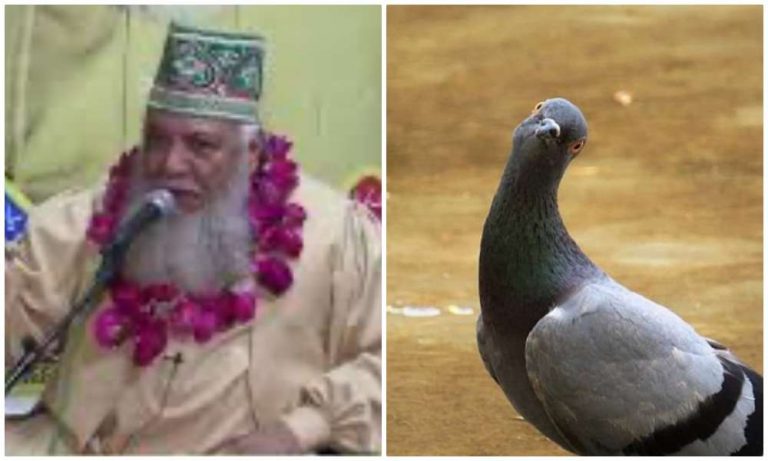
Pakistan, when is not keeping itself occupied plotting ways to export terrorists to India, is busy finding new ways to torture poor pigeons, it seems. Recently, a preacher in Pakistan claimed that drinking pigeon poop mixed in water is a sure shot cure for coronavirus.

A Pakistani preacher ‘Peer Pinjar Sarkar’ has discovered a ‘cure’ for coronavirus. The video is from March 2020 but recently it became viral on social media.

At around 8 minute, 30 seconds into the video, the preacher claims that he has discovered the ‘cure’ for coronavirus. Pointing his head, Peer Pinjar Sarkar says that Allah has filled the cure for coronavirus ‘there’. “I have perfect cure for coronavirus. It is Allah approved. These pigeons you find everywhere, keep calling name of Allah. Take the pota (undigested food from the inside of the intestinal(?) sack of the pigeons) and then take the fluids from stomach membranes of three pigeons and cook both and drink that water. You will never get coronavirus,” the preacher claims. Then as if the bringing the popular ‘potato-gold’ type analogy a la Rahul Gandhi, the preacher adds, “Anyone who contests this, let me tell you that a pigeon digests all poison and hence it is the cure for coronavirus.”

Hearing this, the crowd starts cheering for Allah.

Pakistani quacks and pigeons

Pakistanis have a strange love-hate relationship with pigeons. On one hand they want to send them to spy in India, on other hand they want to do unmentionable things in name of ‘curing’ illnesses. Last year, a few videos had gone viral on social media where wild pigeons were used to ‘cure’ hepatitis B.

In an undated video that has gone viral on social media, a man in Pathani kurta and pyjama, an outfit which is quite common in Pakistan, is lying down as another man, perhaps a quack demonstrates how a pigeon could ‘suck’ out hepatitis the man is suffering from by pressing the pigeon’s anus on the navel of the man. While the text of the above tweet is sarcastic, referring to the quack as a doctor and mocking the practice, the fact that Pakistanis, and some Islamic and Middle Eastern countries, indeed believe in such cures instead of medicine is not something that should be completely ruled out.

Another viral video showed how a quack cured Hepatitis C with help of wild pigeon. He explains that the patient should be laid down and on his navel, the pigeon’s anus should be pressed and sit. In 5-10 minutes, the pigeon would die. As soon as one pigeon dies, the bird should be replaced. When the pigeons stop dying, the patient is ‘cured’.

And now, instead of killing the poor birds, Pakistani quacks graduated to making poop slurry to cure the deadly virus.

Seriously, just leave the poor birds alone.

China asked WHO director to delay global warning on Coronavirus in January: Reports German media house quoting German intelligence

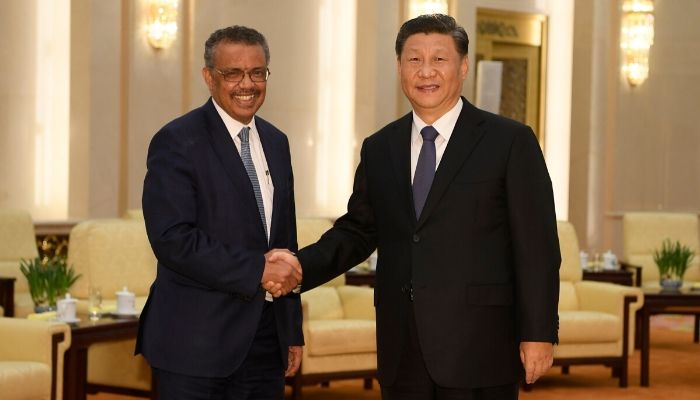
Chinese Premier Xi Jinping had ‘personally’ told the World Health Organisation (WHO) chief Tedros Adhanom to “delay global warning” against the Wuhan Coronavirus outbreak, reported German news outlet Der Spiegel on Saturday. The report claimed that Chinese premier had asked WHO chief to ‘delay a global warning’ about the threat of COVID-19 during a conversation in January. 

The report stated, ‘On January 21, China’s leader Xi Jinping asked WHO chief Tedros Adhanom Ghebreyesus to hold back information about a human-to-human transmission and to delay a pandemic warning.

The report was based on intelligence from the Bundesnachrichtendienst (BND), the Intelligence Service of Germany, which alleged that China urged WHO Chief to withhold crucial information about the human transmission of the Chinese virus. BND has estimated that the world lost 4-6 weeks to fight the virus due to the delay in the Coronavirus warning that has affected 40 lakh people worldwide and claimed 2.8 lakh lives.

WHO denies charges

On Sunday, the World Health organisation denied the serious allegations of a pandemic coverup, levelled against the organisation by the German news outlet. Labelling the grave charges as “unfounded” and “untrue”, WHO claimed that Xi and Tedros never spoke over a phone call. It claimed that such “inaccurate reports” will hinder the global fight against the Chinese virus. WHO further added that China confirmed the “human-to-human transmission” aspect of the Coronavirus to the organisation on January 20.

China agrees to a Coronavirus review

After resisting any study into the origin of Wuhan Coronavirus, China now seems to have relented as they have reportedly agreed for a review of the pandemic. On Friday, China agreed to a review by an “open, transparent and inclusive” WHO panel, constituted only under the leadership of the controversial WHO Chief, Tedros Adhanom Ghebreyesus, at an appropriate time, following the end of the Coronavirus pandemic.

US alleges unholy alliance between WHO and China

On May 1, President Trump said that the government is examining all scientific evidence to determine the origins of Novel Coronavirus, however, when probed further by a journalist and asked whether he has seen information and has ‘high degree of confidence’ that the Coronavirus originated in a Wuhan lab, President Trump said, “Yes, I have”.

President Trump also called out the WHO and said that they should be “ashamed of themselves” because they are like the “public relations agency” for China. President Trump said that WHO should not be making excuses when people (China) make horrible mistakes.

The myth of Mughal greatness: Mughals were neither great rulers nor were they secularists competing with Nehru

Ye imaarat o Maqabir ye fasilein ye hisaar,
Mutlaq-ul-hukm shahanshahon ki azmat ke sutoon;
Seena-e-dahar ke nasoor hain kohna nasoor,
Jazb hain unmein tere mere ajdaad ka khoon. – Sahir Ludhianvi
(Maqabir- Graves, hisaar- Fortress, Mutlaq-ul-hukm- Sovereign, azmat- Greatness, sutoon- Pillars,
Seena-e-dahar-The chest of the world, kohna- Ancient, Azdaad- Ancestors)

The above couplet from Sahir’s famous Nazm, Taj Mahal, loosely translates as below:

“These grand graves, and these high-walls of the majestic fortresses,
Are the pillars of the brutal majesty of the sovereign dictators.
 These gaping wounds are the ancient wounds on the breast of the world,
Mingled with the ugly pus and the oozing bloods of our common ancestors.”

In today’s world where the intellectual mind stands divided on communal lines with even daughters of noted Urdu poets like Munawwar Ranaproudly declaring first to be a Muslim and then to be an India, it is no wonder that these couplets of Sahir, a proud secularist India remain buried in the oblivion. While the Nazm, Taj Mahal, became popular, to me these two couplets stand apart in their scathing and brutal honesty. Today, more than ever, when riding on the crafty and cunning Communist re-telling of Indian history, there is a growing tendency to recreate the myth of Mughal majesty, it is important for people to read, understand and acknowledge the pain and truth in Sahir’s words. This is one rare poem which goes back into the history, when the Mughals looked at the Indians, those converted and not yet converted to Islam, with equal distrust, disgust and disdain. There were far too many people in India, the most populous land on the Earth even then, for all of them to be converted to Islam.

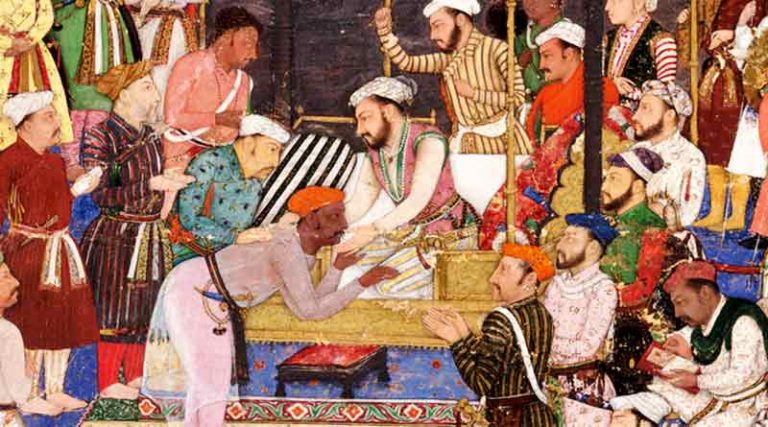
The Mughals were often far too busy to manage their empire amid overwhelming number of people of different faiths who were so different from them. The wars with the remnants of earlier Islamic Sultanate and Hindu kings continued, while the Mughals tried to neutralize the antipathy against the foreign invaders by aligning with Hindu kinds. Even the Mughals would not have known that someday, they will be projected as great Secularists merely because they established alliances with Hindu kings out of political expediency. Equally surprised they would be to know, if they were to know, that the descendants of the same people they had treated with disdain and whom they converted to Islam under duress, will hail them as an epitome of greatness, long after they were gone, resurrecting the Mughals as some Motif of Muslim Identity, incongruent and inconsistent with their National Identity and history as Indians. We need to see things in the right perspective. At the time of Mughals, or even before the Mughals when Islam first made entry into India, around Seven Hundred years after it came into existence and nudged at the Hindu borders; the business in the Indian subcontinent went about as usual.

Read- The Mughal syndrome : A disease which clouds the objectivity of ‘intellectual’ Hindu minds

The Mughals were no more and no less secular than the Afghans before them. Even the most secular of them, Akbar, while he married in the families of Hindu Kings, it was mostly out of political expediency. History does not tell us of any of the offspring of Hindu wives of Akbar who was raised as a Hindu. Akbar did not raise any of his descendants as a Hindu and in two generation will give rise to the most fanatic Emperor India had ever seen in Aurangzeb. The fact is that religion was less of a political tool even under Akbar when they were constantly fighting the co-religionists, the Afghans for supremacy in India. While Aurangzeb was a fanatic Sunni, Humayun, when he sought help from the King of Persia, claimed to have faith in Shiaism. More than anything, the Mughals were fanatic Timurides.

Akbar, considered the greatest among the Mughals, is often equated with Emperor Ashoka. John S Hoyland and SN Bannerjee do not agree with this comparison. In their editorial introduction to ‘The Commentary of Father Monserrate’ , they write, “Akbar’s greed for conquest and glory and his lack of sincerity form a marked contrast to Ashoka’s paternal rule, genuine self-control and spiritual ambition. They add that ‘the old notion that Akbar was a near-approximation to Plato’s philosopher king has been dissipated by modern researches. Akbar remains a personality full of contradictions. His philosophical wanderings were secular, he grants lands to the Sikhs, abolishes Jaziya, builds relationships through marriages with the Rajputs. A great deal of these initiatives had to do with Akbar’s desire to bring some stability to his newly-established Muslim empire in an overwhelmingly Hindu land. Let us stick to the falsehood of great economic shape of India under the Mughals.

It is true that India, as a nation, was quite rich by the time British stepped into India. But the three things they looked for – Spices, Indigo and Textiles- were industries based on the skill and land of India. It had precious little to do with the state. The Emperor was rich, richest Monarch on the face of this Earth. But there was no just distribution of wealth. There was almost no middle-class and the society was split between the extremely rich and severely poor. The myth of India being rich as a society under the Mughals is as big as India being totally under the Mughals. Even at the time of death of Akbar, Vijaynagar, Deccan, Khandesh, Ahmadnagar, Bidar and Bijaipur were independent, towards the south, so was the region in North-East. A quick glimpse into Indian History, objectively, without the interference of the partisan parties gives a different picture than what those who somehow feel that Mughal greatness is equivalent to Muslim greatness and in some way is a justification of Islamic supremacy.

Read- Calling Akbar, the Mughal, the father of the nation is an insult to history and common sense

Let us look at Maddison’s The World Economy- A Millennial Perspective. In the First Century AD, India’s share in the Global GDP was 32.9% which went down to 28.9% in 1000 AD. When the Mughals arrived, in 1500 AD, it went further down to 24.5% and at the end of Akbar’s rule, in 1600 AD it was 22.6%. The slow decline under the Mughals ended at 16% of Global GDP in the year 1820 AD. Looking at things from Individual prosperity perspective, the Per Capita GDP remained almost stagnant during the Mughal period, with USD 550 in the year 1500 AD, unchanged in year 1700 and reducing further to 533 $ in the year 1820 AD. In comparison, Per capita GDP for the British was 762 USD in 1500, and 2121 USD in 1820 AD (at 1994 rate of USD). This was the state of individual wealth at the time when the Mughal Emperor would sit on a throne worth Millions of Dollars.

The relationship between the Hindu masses of India and the Mughals remained that of the Conquered and the Conqueror. The welfare schemes were minimal. The irrigated land constituted around 5% of the land. Maddison writes that ‘there was little motive to improve the landed property. Mughal officials needed high incomes because they had many dependents to support. They maintained polygamous households with vast retinues of slaves and servants. This lack of initiative to create revenue sources apart from regressive taxations which appeared more like security money extracted by the warlords could possibly explain the quick crumbling down of the Mughal empire and subsequent poor state of landless Muslims with the decline of Mughal empire. Maddison called this a system of warlord predators leading to wasteful use of resources coming down from the tradition of the nomadic societies which created Islam in Arabia and the Ottoman Empire.

Far from the Utopian world of secularism under Islamic rulers projected by the Islamists and leftist historians alike, as Maddison says, under the Mughals, Muslims were the ruling elite in India from the 13th Century until the British takeover. Bernier writes that the Mughals were even then (17th Century) were foreigners in India. Among the Nobles in Mughal courts, 70% above the rank of 500 were Foreigners (Turks, Persians and Afghans). Of the remaining 30% who were Indians, more than 50% were Muslims. Even in Akbar’s court, which with revocation of Jaziya- a tax exclusively on Hindus, as a charge for practising a non-Islamic faith, was one of the better periods under the Islamic rule, in 40 years of rule, Akbar only appointed Twenty-One Hindus above 500. Out of these 21, 17 were Rajputs, one was Brahmin (Birbal), two Khatris (Todarmal and his son), and one unknown. The larger masses of the Indian population had no say, no stakes to play in the Mughal rule. Taxation was oppressive. Unlike earlier Hindu kings whose taxation as per Hindu books was limited at One-Sixth (History of Mediaeval Hindu India by Ck Vaidya quoting Hiuen Tsang), Akbar took 1/3rd of the Produce as taxes. It was only slightly better than the Delhi Sultanate period when taxes were half the produce for the Hindus.

Read- Maharana Pratap Jayanti: What Asaf Khan told Mughal forces at the Battle of Haldighati

With little attempt to involve the masses and totally dependent on taxes as protection money, the Mughal empire quickly collapsed under its own weight when the Pre-Akbar intolerant practices came in. Continuing to be disconnected from the people, the Emperors continued to indulge in their decadent luxuries. Shahjahan who is said to build Taj Mahal, as per Badshaahnama by Abdul Hamid Lahori ordered the demolition of 70 Temples in Benaras. After the great famine of 1629-1632 which killed Millions in Gujrat, the Emperor was busy building his famous Throne in 1634 AD, adorned with the diamonds and rubies valued Rupees Two Crores then, Jewels worth Eighty-Six Lakhs, with Twelve Emerald Columns. The cost of construction of the throne came to be One Crore, over a period of Seven Years. Majlisu-s-Salatin of Muhammad Shah Hanafi mentions the revenue of Hindustan (collected by the Mughals) as Six Arbs and Thirty Crore Dams (One Arb being equal to 100 Crores, and A Hundred Crore Dam equal to Two Crore Fifty Lakh Rupees). The much-touted symbol of love, Taj Mahal, also turns out anything but that (Sahir’s poem above refers to that). It is nothing more than a narcissist and self-indulgent memory of Shah Jahaan’s second and most favourite wife, Aliya Begum or Mumtaj Mahal, who died at the age of Forty, having birthed Eight Sons and Six Daughters to the Emperor.  

Then came the repressive empire of Aurangzeb. Miraat-i-Aalam of Bakhtawar Khan mentions the policies of Aurangzeb when he writes that Hindu writers have been entirely excluded from holding Public offices and all the worshipping places of these infidels and the great temples have been destroyed in a manner which excites astonishment. A firman of 1679 orders to restart the campaign to demolish Hindu temples. On 2nd of April, 1679 Jaziya was imposed on the Hindus. The opposition to the same was met with releasing elephants on the protesting crowds. An Imperial order dated 10th of April, 1665, imposed Custom duty on all material imported for re-sale at 5% for the Hindus and 2.5% for the Muslims. This collection was considered as Zakaat only to be used on the welfare of Muslims. Another order dated 9th of May, 1667, changed this to 0% for Muslims and 10% for the Hindus. Manucci notes that many Hindus who were unable to pay converted to Islam.

An order issued in March 1695, forbade all Hindus except Rajputs to ride Palkis, horses or Elephants. Carrying of Arms was prohibited for the Hindus. Shivaji wrote a passionate letter asking Aurangzeb to stop harassing Hindus, trying to tell the fanatic Emperor that Hindus and Muslims both should be treated similarly. His letter is ignored, paving way for huge discontent which waited for the empire to weaken a little. With the death of Aurangzeb, the Jats, the Marathas all rise in rebellion. The weakened Mughal forces harassed everywhere. The queens have to run away from Red Fort in disguise to Loni. After the attack of Bajiraon on Delhi in 1737 and later the complete plunder under Nadir Shah in 1739, the fate of Mughals, deprived of power and money to maintain forces, and isolated from the Hindu population around them, was sealed. It would take centuries for India to become Independent and for Islamist forces, not satisfied with the Partition of this great land to come under the flag of a cynical opposition and Communist politics to resurrect a fake history of secular Mughals.

The emperors did not look at themselves as the forefront of a campaign to destroy a civilization. As many have written, they considered themselves foreign warlords only. Much has been written about Bahadurshah Zafar leading Indian Freedom Struggle, the fact remains that he was forced to lead the rebels only reluctantly and tried to disown them in front of the British immediately thereafter. The attempt here is not to prove if Mughals were all good or all bad. It is merely to establish that in spite of administrative principles left behind by Sher Shah Suri, the Mughals, in general, did not govern well and treated India as a foreigner warlord would. How the Mughal Empire and once the richest Monarch fell into bankruptcy and not one tear was shed for him is a story for another day. The matter under consideration right now is that Mughals were neither great rulers nor were they secularists competing with Nehru. It is also to remind us what Sahir wrote, that it wasn’t the Hindus alone who suffered under the Mughals, rather the same riches which modern Muslims boast about were created by shared suffering inflicted on the ancestors of both Hindus and Muslims, many of latter might have been former then.


After India telecasts Gilgit-Baltistan and PoK regions in weather update Pakistan tries to act smart, ends up with self goal

After Indian Meteorological Department (IMD) and Doordarshan started to include the Gilgit-Baltistan region and Muzaffarabad in their weather forecasts, Pakistan attempted to respond to India by putting out tweets reporting the weather reports of various places in Jammu and Kashmir and Ladakh.

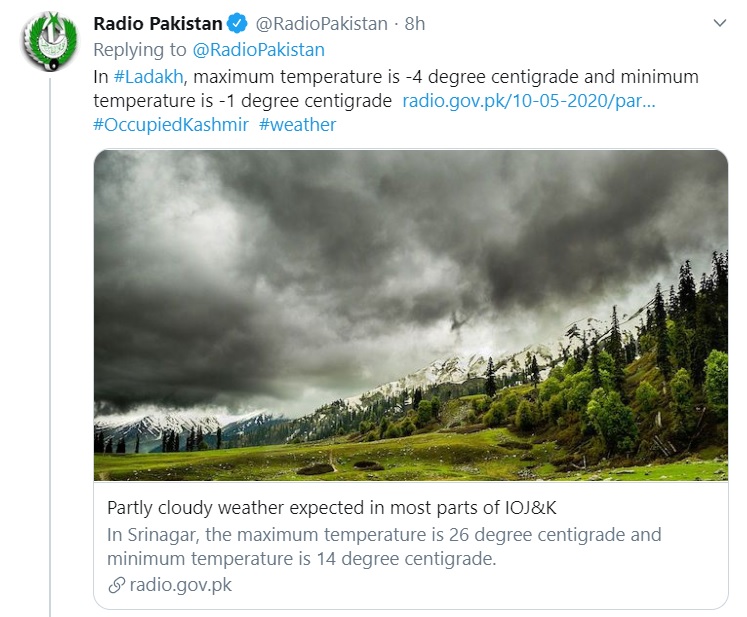
The country’s national radio broadcaster – Radio Pakistan – put out tweets on Sunday with maximum and minimum temperatures in various places like Jammu, Pulwama, Ladakh etc. However, in an attempt to mimic India, the low-IQ Pakistanis goofed up, giving yet another opportunity to netizens to troll the Pakistani authorities.

In a tweet, Radio Pakistan posted weather report of Ladakh and quoted, “In Ladakh, maximum temperature is -4 degree centigrade and minimum temperature is -1 degree centigrade”.

Social media users were quick to point out the mix-up of the words ‘maximum’ and ‘minimum’ by Radio Pakistan’s Twitter handle. Twitter users soon pointed out that -4 degree centigrade was actually lower than -1 degree centigrade and cannot be the ‘maximum’ temperature.

One user pointed that the people in Pakistan did not know the difference between the maximum and minimum.

Another user advised Pakistan to follow India correctly, even if they intended to follow the country blindly.

IMD includes Gilgit, Baltistan in its weather forecasts

Claiming the rights of the Indian state over the Pakistan Occupied Kashmir (POK), the official website of the Indian Meteorological Department (IMD) had earlier started including the Gilgit-Baltistan region in its weather forecasts. The IMD had announced weather forecasts for Gilgit-Baltistan in the North-west subdivision.

The Indian Meteorological Department forecasted weather conditions in towns such as Muzaffarabad, Skardu, Nilam regions located in Gilgit-Baltistan. This is the first time when IMD has started predicting the weather for these areas under the north-west subdivision. The first such weather forecast for Gilgit was uploaded on May 6.

After that, Indian national broadcaster Doordarshan had also started including Gilgit-Baltistan and regions of Pakistan occupied Kashmir in its daily weather forecast report.

MEA asks Pakistan to immediately vacate the illegal occupations in POK

India had registered a strong protest against Pakistan’s Supreme Court’s order on the ‘Gilgit-Baltistan’ area which is under illegal occupation of Pakistan. Prior to that, the Supreme court of Pakistan had permitted elections in the regions of Gilgit-Baltistan.

The Ministry of External Affairs said that it was clearly conveyed that the entire Union Territories of Jammu & Kashmir and Ladakh, including the areas of Gilgit and Baltistan, are an integral part of India by virtue of its fully legal and irrevocable accession. 

Government issues safety guidelines to restart factories post lockdown after Styrene gas leak incident in Vishakhapatnam

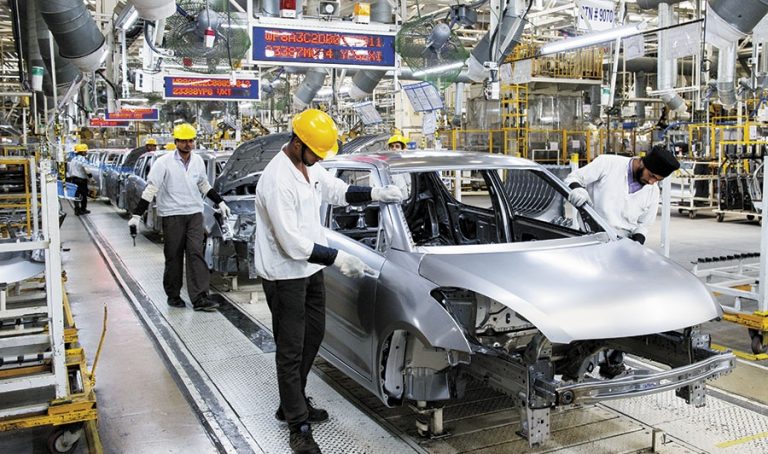
Three days after Styrene gas leak in a polystyrene plant in Vishakhapatnam on Thursday killed 11 people and made hundreds of people ill, the govt has issued safety guidelines to be followed while restarting factories after the lockdown. On Sunday, the National Disaster Management Authority (NDMA) issued guidelines to resume operations in industries, post the nationwide Coronavirus lockdown. The incident at the LG Polymers factory had happened while the plant was trying to restart after being shut for more than a month due to the Coronavirus Lockdown.

The Indian economy had taken a major hit during the lockdown, a crucial step towards ensuring social distancing in public and checking the spread of the Chinese virus. Now the government has decided to slowly relax the restrictions so that the economy can be brought back to the track.

In its official order shared by Union Cabinet Minister, Piyush Goyal, the NDMA has asked all industries to “not try to achieve production targets” but instead focus on ensuring implementation of safety protocols. The order read, “As a result (of the lockdown), some of the manufacturing facilities, pipelines, valves, etc. may have residual chemicals, which may pose risk.”

Generic Safety Protocols

The NDMA has issued generic safety guidelines for industries and workers, as well as specific industry-based protocols such as product storage, manufacturing, and raw material storage. The employers have been advised to make the employees sensitive to abnormal smell, leakage, smoke, and other hazardous signs such that they raise alarm immediately

Industries have been recommended to seek the help of District administration in case of difficulties in managing backward linkages. They have been directed to ensure lockout and tag out procedures on a daily basis, amidst the Coronavirus outbreak. Industries have also been instructed to inspect all equipment during the restart phase.

Industry Specific-Safety Protocols

For industries dealing with the storage of raw materials, they have been advised to check containers, large vessels, pipelines, vaults, and conveyor belts for possible wear and tear during the lockdown. Chemical stability of stored HAZMAT chemicals must be ensured before using it for various processes. Abnormalities such as unfamiliar smell or sound should also be flagged at the earliest.

The NDMA has instructed industries involved in manufacturing processes to run a safety audit before initiating activities. Moreover, equipment such as furnaces, heat exchangers, boilers, pipelines must be checked for possible wear and tear while the functionality of temperature and pressure gauges ought to be tested.

Manufacturing industries have been specifically directed to undergo three crucial tests, namely tightness test, service test, and vacuum hold tests. For industries involved in product storage, the NDMA has advised checking storage facilities for damage.

Safety Guidelines for Workers

Industries must implement a sanitisation routine every 2-3 hours to ensure safety of workers. It is mandatory to check temperature of workers, twice a day. Employees with symptoms of Coronavirus have been barred from working. It is the responsibility of the management to provide sanitisers, personal protective equipment such as masks and glove to the workers.

As per MHA guidelines, administrative and managerial staff should work at 1/3rd capacity. Plus, it must ensured that no equipment used by one worker is shared by the other. Factories also need to provide accomodation to isolate worker, if such a need arose.

Industrial Mishap in Visakhapatnam

The safety protocols outlined by the NDMA come at the backdrop of Styrene gas leak from LG Polymers plant at RR Venkatapuram village in Andhra Pradesh that has affected 5000 people and killed 11. Reportedly, due to the failure of the refrigeration unit, the temperature of the tanks rose. The Styrene started evaporating and its gas built up inside the tank. When the plant prepared to resume operation after relaxations were announced in Coronavirus lockdown, the gas evaporated from the tanks and spread in the atmosphere.

US college apologises after Islamists threaten professor over quiz stating terrorists strive to emulate prophet Muhammad

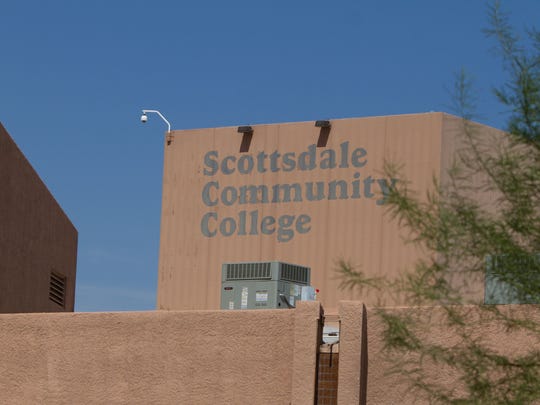
Scottsdale Community College in Arizona, United States of America has apologised over quiz questions where a professor asked multiple choice questions on Islam in a quiz. Screenshots of the quiz questions have gone viral on social media. As per reports, the first question was “Terrorism is ______ in Islam.” The multiple choice options were, “always forbidden”, “Justified within the context of jihad”, “justified under international law” or “always justified”. The correct answer for the quiz was reportedly ‘justified within context of jihad’.

Second question was “Where is terrorism encouraged in Islamic doctrine and law?”. The options were, “terrorism is not encouraged in Islamic doctrine and law”, “the Medina verses”, “the Muhammad verses” and “the Mecca verses.” The correct answer for the quiz was reportedly “the Medina verses”. Reportedly, the Medina verses refer to the portion of the Qur’an traditionally understood as having been revealed later in Muhammad’s prophetic career.

The third question was, “Who do terrorists strive to emulate?” The options for this question were, “Prophet Muhammad”, “Ibn Tamiyyah”, “Saddam Hussein” and “Osama Bin Laden”. The correct answer for this quiz question was reportedly Prophet Muhammad.

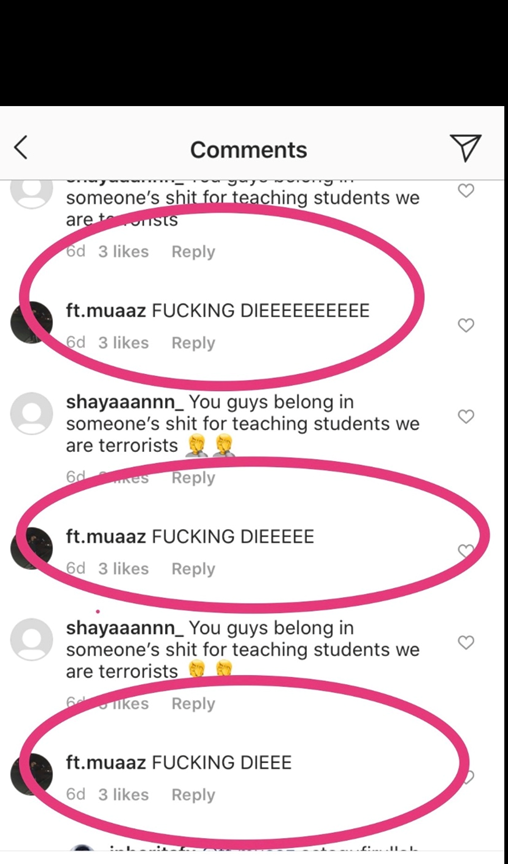
Following the questions, the professor who had set the quiz started receiving threats.

As reported by frontpagemag, the professor and the college started receiving threats from those who took an offence to the quiz. After that, the college put up an apology on social media.

The college also said that the above questions will be permanently removed from any future tests.

Kerala professor hand chopped off over exam question

On 4th July 2010, professor TJ Joseph, faculty of the Newmans College at Thodupuzha in Idukki, was attacked by the members of Popular Front of India, a radical Muslim group, alleging that one of his questions in an internal examination paper, which was reportedly set by Joseph, had derogatory remarks on Prophet Mohammed. The Muslim radicals attacked the professor as a punishment for the alleged irreverent reference to Prophet Mohammed in a question paper that he prepared. The professor was returning home along with his family after attending Sunday mass when he was attacked and one of his hands was chopped off by the accused.

For the Malayalam question paper, Joseph had selected a paragraph from a short story by CPI(M) leader PT Kunju Mohammed to test students on punctuation. In the story, a nameless villager questions god. When setting the question, Joseph had named this villager Mohammed. This had created a furore after a newspaper affiliated with the Jamaat-e-Islami sensationalised the issue by equating it with blasphemy.

Of the 31 people nabbed by the NIA in the case, 13 were found guilty and the rest were acquitted.

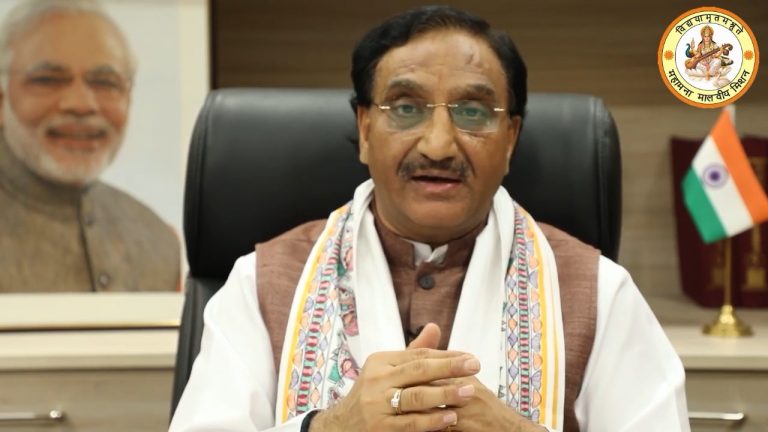
India’s New Education Policy will be based on Vedic Knowledge combined with Science: HRD Minister Ramesh Pokhriyal

Union Human Resource Development Minister Dr Ramesh Pokhriyal ‘Nishank’ on Saturday said that the country’s new education policy will be based on Vedic knowledge-science as per the vision of Pandit Madan Mohan Malviya.

HRD Minister said this on Saturday while inaugurating the three-day national webinar titled ‘Covid-19: The Mahamana’s Indian vision in global context’ organised by Mahamana Malaviya Mission, Banaras Hindu University (BHU), Varanasi.

Speaking at the event, Pokhariyal said, “The whole world is looking towards India. At present, the ideas of Mahamana are certainly very important for us. Our cultural heritage is our strength. Based on the vision of Mahamana, we will bring a new education policy that will be based on Vedic knowledge and science. It will come true to Mahamana’s vision and meet his expectations. Ancient knowledge should become part of every discipline”.

He said that we have to combine our ancient knowledge with modern science and technology to move forward in future. The minister noted that the nation needs to act with solidarity in tough times to win the fight against the coronavirus.

Dr Krishn Gopal, the joint general secretary of the Rashtriya Swayamsevak Sangh, said that Mahamana Malviya always emphasised on the pattern of education that should be a blend of worldly knowledge and spiritual wisdom and established BHU on these tenets. 

Read- Congress government in Rajasthan to set up Vedic Shiksha and Sanskar Board: Ashok Gehlot

“Civilization changes after a few years, while the culture is everlasting. Mansahar (Non-vegetarian) food is the root cause of corona pandemic. The carnivore now stands before us in a gruesome form. Mahamana and Gandhi Ji had never accepted non-vegetarianism. We need to follow Vedic culture,” Gopal added.

BHU vice-chancellor Prof Rakesh Bhatnagar presided over the event and highlighted the importance of maintaining hygiene and spreading awareness.

Underlining on Mahamana’s belief of all-round development, Prof Bhatnagar laid emphasis on education and character building and also gave an overview of how teachers are contributing to the fight against coronavirus by facilitating students with online lectures and reading materials.

The webinar witnessed the virtual participation of more than 2000 participants.

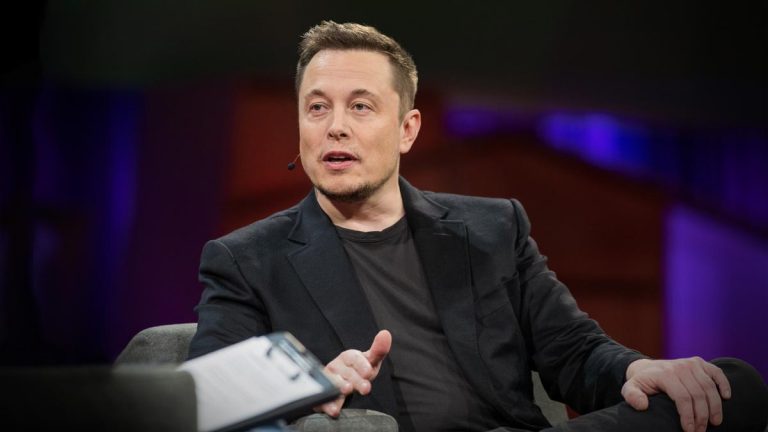
Angered by lockdown restrictions, Elon Musk threatens to move Tesla headquarters, factory out of California

Elon Musk, the chief of Tesla, Inc. – an American electric vehicle and clean energy company, on Saturday threatened to pull his electric car headquarters and manufacturing plant out of California after local authorities refused to grant him the permission to resume production amid coronavirus pandemic.

Taking to Twitter, Elon Musk threatened to sue over Alameda County Health Department coronavirus restrictions which did not allow the Tesla facility from restarting production its factory in Fremont south of San Francisco. The electric-car maker has filed a complaint with the US District Court in San Francisco. 

Irked by the decision of health authorities, Elon Musk lashed out at the California county for blocking Tesla from restarting its operation in its only US car plant in California. Elon Musk also threatened to shift the company’s headquarters to Texas or Nevada, where shelter-in-place rules are less restrictive.

“If we even retain Fremont manufacturing activity at all, it will be dependent on how Tesla is treated in the future,” he tweeted. The San Francisco Bay area facility is currently Tesla’s only US vehicle factory.

Reportedly, Tesla stated that the county’s health order violates due process and “puts businesses deemed critical to the nation’s well-being by the federal and state governments between a rock and a hard place.” Earlier, Tesla had hoped that they could restart the production in its California factory at the beginning of May but was prevented by local authorities.

According to Guardian report, Musk had told employees on Thursday that limited production would restart at Fremont from Friday afternoon. The Tesla California plant was closed on March 23 under a six-county order in the San Francisco area, which has been extended through May 31. Tesla manufactures over 415,000 cars a year at the Fremont facility and moving the entire production facility will be a massive challenge.

Musk also highlighted the company’s operations in China, where the production of electric cars has resumed after the country’s coronavirus lockdown was lifted. “Tesla knows far more about what needs to be done to be safe through our Tesla China factory experience than an (unelected) interim junior official,” he tweeted.

Anti-lockdown protests in USA

Massive protests have continued in the United States, as several people have taken to streets over the past month demanding the withdrawal of lockdown imposed due to coronavirus epidemic.

The Americans have protested on the pretext that the lockdown in the country has curtailed that their constitutional rights and freedom. Several protestors were also frustrated that they could not work as they have lost their jobs due to state lockdowns.  

The protests in the United States seeking withdrawal of lockdown restrictions come despite the country has been devastated by the Chinese epidemic. The cry for the easing of restrictions comes at a time when the US has lost more than 80,000 people to coronavirus. More than 1.3 million people have been affected by the Chinese epidemic in the United States of America.

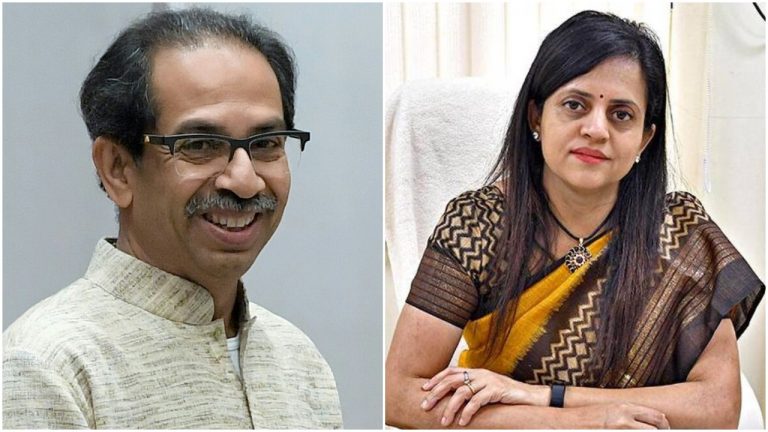
Previously shunted by Maha Vikas Aghadi, ex-Mumbai Metro chief Ashwini Bhide brought back to handle coronavirus crisis

Nearly four months after Uddhav Thackeray-led Maharashtra government had transferred Ashwini Bhide, the Managing Director (MD) of Mumbai Metro Rail Corporation Limited for taking on Shiv Sena prince Aditya Thackeray over Aarey Metro Rail car shed issue, the Shiv Sena-led Maharashtra government has brought back the IAS officer to handle the out-of-control coronavirus crisis in the state.

On Friday, the Maharashtra Government, facing massive criticism over their failure to contain the coronavirus spread in the state, had transferred Brihanmumbai Municipal corporation (BMC) commissioner Pravin Pardeshi. The transfer of BMC commissioner was seen as an act of shifting the blame on the bureaucracy for the misdeeds of the Maha Vikas Aghadi government in Maharashtra.

Soon, Pravin Pardeshi was replaced as Mumbai commissioner by Iqbal Chahal. Ashwini Bhide, who was shunted out from Mumbai Metro Rail Corporation for taking on Aaditya Thackeray, was soon appointed as the additional commissioner in the BMC by the Maharashtra government.

Aaditya Thackeray vs Ashwini Bhide

Senior IAS officer Bhide was the former MD of MMRC, who was at the forefront of implementing the Mumbai Metro 3 project. There were reports that Aaditya Thackeray was unhappy over Bhide’s insistence on Aarey Metro Car Shed Project.

The previous state government’s plan to cut about 2,700 trees in Aarey Colony in north Mumbai for car shed of the metro had green activists and citizens’ groups up in the arms including Sena heir-apparent Aaditya Thackeray. However, Bhide as the head of MMRCL had vociferously defended the metro project at Aarey by stating that it was impossible to shift the car shed anywhere else as suggested by Shiv Sena leader Thackeray and few other green activists.

Thackeray had even expressed his anger and annoyance at Bhide for her staunch support of the car shed project. Following the displeasure of Aditya Thackeray, she was removed from the post.

With Maharashtra government facing massive criticism over handling the coronavirus crisis, perhaps Chief Minister Uddhav Thackeray seems to have to realised that utilising services of honest, upright officers could save him from further embarrassment.