Home Blog Page 5387

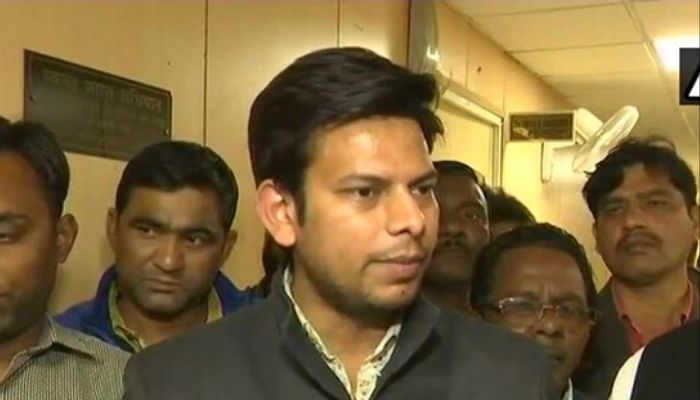
Congress leader Maher Haider seen barging into Mumbai hospital and misbehaving with doctors, hospital files complaint: Report

In a CCTV footage of a Mumbai hospital has emerged in which Congress leader and Municipal Corporator Maher Haider is seen storming into the premises and misbehaving with the doctors. As per a report by Republic TV, the incident is of 24 April midnight and had come to notice on Friday. The Global Hospital and Research Centre have filed a complaint against the Congress leader. However, despite filing a complaint and even after one week of the incident, the Mumbai police haven’t filed an FIR.

Endangered lives of patients

In the complaint, the hospital has alleged that Maher Haider ‘unauthorisedly, illegally and unlawfully’ entered the hospital without information and without an appointment at 12 o’clock on 24 April. The complaint alleged that she forcefully, entered the patient’s ward, disrupting the hospital’s rules and regulations, and endangered the lives of patients. The hospital alleged that she stayed in the hospital for 45 minutes. She allegedly yelled at the doctors calling them ‘drunk’ and threatened to convert the hospital into a coronavirus quarantine centre. The Municipal corporation disturbed the patients and endangered their lives.

Congress leader’s statement

Speaking to Republic, the Corporator later stated that she was screened at the entrance, despite the CCTV footage showing that she had barged into the premises. She denied the allegations made by the hospitals and stated that the hospital had tampered with the CCTV footage to blame her.

As on Friday, 1st May, Maharashtra has over 9915 confirmed cases of coronavirus. 432 people have so far succumbed to the deadly disease.

Coronavirus: No ration, petrol to those not wearing masks in Goa

The State Executive committee of Goa has decided to not to provide ration and petrol to those who are not wearing masks. The decision was taken during the meeting of the State Executive committee chaired by Chief Secretary Parimal Rai on Thursday.

The SEC decided that the use of masks and face cover will have to be used mandatorily across the state amid the novel coronavirus outbreak. Petrol pumps and fair price shops have been directed not to sell the commodities if the buyer is not wearing marks or mandatory face cover.

The statement of SEC said, “To enable this, the state should launch a campaign, like ‘no mask-no petrol’ or ‘no mask-no ration’. The committee asked the Director of civil supplies to launch a campaign in order to reach out to the petrol pumps and fair price shops so that they will act further.

State Inspector General of Police Jaspal Singh said during the meeting that the police have recovered fine from 1,000 people for not wearing masks.

Earlier the Goa govt had made wearing mask mandatory for all people who step out of their homes. A statement issued by Goa govt had said that actions will be taken against those who violate the order. “Wearing masks is compulsory at public and work places, including streets, hospitals, working sites, etc, under the Goa Epidemic Diseases (Act), COVID-19 Regulations to prevent the spread of COVID-19 in the State,” the statement had said. The violators of this rule will be liable for penalty of Rs 100 and in case of non-payment, shall be liable for action under IPC section 188.

Goa has zero active Coronavirus cases in the state at present. Seven persons had tested positive for the infection earlier, but all of them have recovered and no new case has emerged after the last patient was discharged on 19th April.

Dear Mahua Moitra, I am an NRI doctor and your article was a litany of lies promoting sycophancy over talent

Respected Mahua Moitra Madam, 

The role of opposition in a democracy can be quoted very aptly through the words of Walter Lippmann which goes as the following, “In a democracy, the opposition is not only tolerated as constitutional but must be maintained because it is indispensable.” Being a learned member of the parliament of the largest democracy in the world, I am sure you are very well aware of it. But your recent comments on the non-residential Bengalis as published in Anandabazar Patrika are very unfortunate, to say the least. Expats supporting the party are often deployed to defend the shortcomings. Whereas those raising questions against the Bengal government are being projected as uprooted (rather than non-residential) Bengalis. This derisive attitude is very unbecoming of your stature and against the spirit of democracy. 

In your recent writing, you have put forward a lot of data from across the globe. I would like to remind you of some data from our own state of West Bengal. Our population is 7.54% to that of India. If the national percentage of COVID19 testing is to be followed, West Bengal should have carried out 43,720 tests whereas only 9880 tests have been conducted which is 442% less (at the time of publication of original Bengali article in Bangladesh on April 28th). Can you kindly explain why the numbers of COVID19 tests being carried out in central research centres were reduced? What steps were undertaken by the government to increase the number of daily tests? In the recent past, CM Mamata Banerjee had said that her government is considering the possibility of a partial relief of lockdown. But how could the situation become so dire within such a small span of time? Did the government not have enough information at hand? When the lockdown started, the Bengal government seemed to have set up isolation centres almost in a war footing. But as soon as the videos depicting mismanagement of these isolation wards went viral, the use of mobile was banned. Thanks to social media, news of closedown of Hospital units and midnight funeral of possible COVID19 victims (often without informing the kin) has come forward. Do the people of Bengal have no right to raise these questions? 

As you have compared Gujarati and Bengali ex-pats in your writing, it is necessary to bring forth some hard facts. Gujaratis go across the country primarily for business and travel across the globe for business or job. Whereas Bengalis cannot set up a business within their own state. Syndicate, non-payment, high handedness is constant impediments that vitiate the environment. Scores of industrious Bengalis have gone bankrupt due to these troubles, what has the government done to improve the situation? 

Read- West Bengal Doctors Forum writes to Mamata Banerjee asking that Coronavirus data should be genuine, transparent and verifiable

Also, the job prospect looks equally dire within the state. As soon as Mamata Banerjee came to power, she stopped SEZ and took a stand against FDI. The land is not being allotted; even the port construction on the Bay of Bengal has been stopped. There are no four-lane state highways; the land is not being allotted for national highways. Jiagunj-Azimgunj bridge construction has not finished in 10 years due to legal problem with only 1 Katha of land!! Metro rail was not allowed to invest 50% (like in other states) nor is the land being allotted, airport expansion was halted. The land was not provided for Kolkata Delhi freight corridor. No significant investments have come in even after 4 industrial summits. Neither industrialization has taken place, nor is there focus on infrastructure development. The last hope people had was government service. Now with the rampant corruption, that has also become a distant not so feasible dream for most. RICE, MICE coaching centres are on the decline as pupils are quickly losing faith in the exam. 

The first IIT, IIM, IISWBM, ISI in India were set up in West Bengal, not Gujarat. Centre government constructed Teesta, Farakka, DVC in Bengal, whereas Gujarat paid for Sardar Sarovar Dam out of their own pockets. Gujarat did not have centre funding for industrial hubs like Durgapur, Haldia, Kharagpur, Saltlake, Kalyani etc, we did. But today, Gujarat is successful because their successive governments have worked for the state. Whereas Bengal, after suffering three decades of communism was already a sick state, Mamata Banerjee government has fared hardly any better. 

Read- Doctors write letter flagging mismanagement of Coronavirus crisis in West Bengal, TMC MP Mahua Moitra says ‘you don’t even pay taxes’

We are researchers living abroad and we would love to return to our state and work for her development. But sadly, the present environment in West Bengal promotes sycophancy than talent. The pay scale of doctors in Bengal is equivalent to that of nurses at AIIMS. The humungous failures of the state government are beyond comprehension. 

It is true that the total number of COVID cases is higher in Gujarat, but at least they are being transparent with their numbers, unlike Bengal. The present regime in Bengal is trying hard to suppress the numbers thinking of electoral politics rather than the health of the people of Bengal. It is only expected that concerned citizens will ask questions when a state government eyes for electoral politics at the time of a global pandemic. 

Lastly, we may be ex-pats, but a lot of us are Indian citizens and we have a democratic right to ask questions to the government of the day. At least we are not demanding an UN-monitored referendum like our CM did in case of an internal matter like CAA. 

(This article was first published on bangodesh.com in Bengali, authored by Rudra Prasanna Banerjee who is a researcher, University of Alberta, Canada)

Guntur: Deceased coronavirus patient contracted the virus from a Tablighi Jamaati after visiting the same tea stall, spreads the infection to over 50 others

A coronavirus positive cable operator from Andhra Pradesh’s Guntur, who became the sole reason for a massive outbreak of coronavirus cases in Narasaraopet, Guntur, infecting over 50 people of the town, had contracted the virus from a Tablighi Jamaat member.

Guntur Rural SP Ch Vijaya Rao who had formed a special team to investigate how the 45-year-old coronavirus positive cable operator who died on April 10, contracted the virus, revealed that the deceased had contracted the infection from a 54-year-old man of Guntur who attended Tablighi Jamaat at Nizamuddin Markaz in Delhi, reports The New Indian Express. 

Cable operator visited same tea stall as the Tablighi Jamaat attendee

According to the report, during the inquiry, it was revealed that 13 persons of Guntur attended Tablighi Jamaat. The seventh among them visited Narasaraopet on March 20 to see his parents, who reside at Shalem Nagar.  On his way to his parents’ house, the Delhi returnee had a cup of tea at a stall at the bus stand centre. At the same time, the cable operator also visited the stall and ordered a cup of tea. The duo stayed at the stall for sometime when the cable operator might have contracted the virus from the Delhi returnee.

The cable operator who was a Tuberculosis (TB) patient, got treatment at Narasaraopet government hospital. On April 6, the doctors referred him to Guntur Fever Hospital for treatment suspecting that he had developed Covid-19 symptoms. He was admitted to Fever Hospital on April 9 and later died. He was declared coronavirus positive on April 10. 

Phone tracing and search

As part of the inquiry, the police collected call data of mobile phones of several Tablighi Jamaat attendees and their contacts. They also tracked the location of mobile phones of the Markaz attendee and the cable operator to establish their presence at the tea stall at the bus stand centre in Narasaraopet at the same time.

The police gathered information about the duo after showing the photos of the Delhi returnee and the cable operator to a worker at the stall to ascertain the fact that he served tea to them or not. The worker at the tea stall recognised the duo to whom he had served tea. Based on the information provided by the worker, the police visited NRI hospital where the Delhi returnee is undergoing treatment. When questioned he agreed to the fact that he visited Narasaraopet on March 20. 

As the Jamaati tested negative after treatment, he was discharged from hospital on Thursday. 

Deceased cable operator infects over 50 people

The deceased cable operator who had contracted the infection from the 54-year-old Tablighi ultimately became a super-spreader of the virus infecting more than 50 people in his hometown, Guntur. Initially, five family members of the cable operator and a home guard who is his close friend contracted coronavirus. His family members, in turn, spread the virus to another 34 persons, while the home guard who tested positive for the pathogen, infected 18 persons, including five doctors, as per the NIE report.

Role of Tablighi Jamaat in spreading the Wuhan Coronavirus

The Tablighi Jamaat fiasco, which took place in the second week of March 2020. was undoubtedly the biggest setback to India’s fight against the Wuhan Coronavirus. The mass gathering at the Markaz Nizamuddin in Delhi, and the subsequent transport of the virus through carriers across the length and breadth of India has jeopardised greatly the safety and health of this country.


Anybody can watch anything on TV: SC tells Prashant Bhushan’s lawyer over his remarks criticising Prakash Javadekar for watching Ramayan

The Supreme Court on Friday slammed lawyer Prashant Bhushan for his critical comments passed on Twitter against the Union Minister Prakash Javadekar who had shared a picture of himself watching “Ramayana” serial amidst the national lockdown on Twitter.

“As crores starve and walk hundreds of miles home due to the lockdown, our heartless ministers celebrate consuming and feeding the opium of Ramayana & Mahabharata to the people,” lawyer Prashant Bhushan had tweeted after Union Minister Prakash Javadekar shared his picture watching Ramayana.

Following Bhushan’s withering remarks against Hindu epics of Ramayana and Mahabharata, an FIR was filed by former Army personnel Jaidev Rajnikant Joshi at Rajkot claiming that Bhushan has hurt religious sentiments of the Hindus by tweeting against re-telecast of Ramayana and Mahabharata serials on DD during the lockdown imposed to limit the spread of the coronavirus in the country.

Hearing the matter, a bench comprising of Justice Ashok Bhushan and Sanjiv Khanna asked Senior Advocate Dushyant Dave, who was appearing for Prashant Bhushan: “Mr Dave, anybody can watch anything on TV. How can you say people cannot watch this and that?”

Dave responded, “No, we are not on people watching something on TV. But we are on FIR”

Bhushan, in the writ petition filed in the apex court through advocate Kamini Jaiswal, defended himself claiming hist tweet was meant to highlight the apathy of the Union Minister in handling the migrant workers’ crisis and was not intended at hurting religious sentiments.

Bhushan further added that the FIR filed against him is an abuse of power, intended to muzzle valid criticism of the government actions.

The Supreme Court on Friday granted interim protection from arrest to Advocate Prashant Bhushan in FIR registered against him by Gujarat police alleging hurting of religious sentiments.

Posting the matter to be heard after two weeks, the court issued a notice to the Gujarat Government, ordering them to not take any coercive action against the defendant till the next day of the hearing.

RSS in the times of Coronavirus: How RSS and its Swayamsevaks surrender themselves to the service of this nation

It was in January last week Indians began to know about Coronavirus outbreak. Although the news of Coronavirus outbreak in China’s Wuhan city was in the public domain since December 2019, the rest of the world, including India, did not take strict measures like imposing lockdown till things became worst in countries like Spain and Italy. The increase in the number of deaths and infected in countries like Spain, Italy and the United States of America set the alarm bells ringing and the world realized that what they thought to be a health hazard concerning China was a pandemic capable enough to bring the entire world to a halt. As far as India is concerned the first positive case of Coronavirus was found in the state of Kerala, a student who had come for his vacation from Wuhan University. As the numbers started increasing the government was deliberating on the idea of a pan India lockdown & ultimately when the World Health Organization declared the outbreak of Coronavirus as a pandemic. India too was left with no choice but to call for a complete shutdown from 24th March 2020.

For the current generation who had read about epidemics, wars and its negative effects in books and movies, the lockdown was a new experience. However, Indians stood united and supported the government’s decision of lockdown for breaking the chain of the Coronavirus spread. While developed and powerful countries like Spain, Italy and the USA were all in deep Coronavirus crisis, India managed to slow down the spread of Coronavirus by announcing the timely lockdown. 

During this period the real challenge for the government and the civil society was to ensure that no poor should suffer from hunger and disease. Besides this, another challenge was to control rumours, which were travelling thick & fast, causing panic amongst people and would have defeated the purpose of the lockdown. India’s unorganized sector was definitely going to be badly hit by the lockdown & Maharashtra is one such state which has the highest number of migrant labours. While we are safe in our homes with ration, vegetables, milk, and all the food items being easily available and we have the luxury of TV, mobile and our boring days are passing by eventually. But at some distance from our home, there are some houses where the stove is not burning. How will these families who earn daily income fill their stomach when there is no employment? What would such families eat? How would such families get their basic needs? Hence providing them with food was & still a top priority. 

Since India is a vast country with a large population, help from the government reaching every doorstep within a stipulated time frame is difficult. Though rich people are willing to contribute to society in the form of money, food and medical services, it requires huge manpower to ensure that this help reaches out to the needy. Social distancing & staying indoor are ways to remain safe from coming in contact with the Coronavirus. Hence the role of NGOs & self-help groups came into play. Time and again RSS, the world’s largest socio-cultural organization, has played an important role in serving humanity at the time of any crisis that was faced by our nation. To face such crisis presence of mind and discipline is very important. But there were few concerns for elderly and sick people like in the midst of the lockdown with no transportation facility how will they go to the hospitals for their routine checkups or for medical emergencies? To tackle this crisis on the very first day of the lockdown the Mumbai division of RSS Jankalyan Samiti came up with the idea of providing free transport facilities to needy citizens and for their routine checkups, scheduled visits & medical emergencies. A number of citizens also volunteered to offer driving services with their own vehicles to ferry the patients.

During these pandemic times, poor families are the ones to be affected the most, and to help them with food and other necessary supplies RSS’s volunteers have been on the ground.  Many billionaires like Tata and Ambani are giving funds and other help to the citizens of the country. Good-hearted TV celebrities and film producers also started contributing to the country. One such name is film producer Manish Mundra who not only provided medical health kits but also donated money to several small NGO’s. He also inspired Indian’s by repeating the slogan “let’s do more” on social media. Soon the social media was turned into an NGO and many started tagging each other for helping needy. Never witnessed such a competing approach ever before to send help to the needy. RSS as an organization stood tall by coordinating with government officers and ensured that suffering of Poor is reduced maximum during the lockdown period. 

While maintaining social distance is key to be safe, RSS volunteers jumped into the war risking their own life. In any battle, a bulletproof jacket is provided to soldiers to save their respective lives while fighting the enemy. In the same way, all the Coronavirus warriors are fighting Coronavirus risking their life with all the required precautions and protections. As on April 24, 2020, RSS has served us with the help of 300, 809 volunteers. 

While Central and State governments were doing its best by announcing packages and its implementation, RSS deployed lakhs of its cadres to serve the poor and needy in the time of lockdown. Imagine the difference it would have made with such a humungous strength of selfless cadres working for any other country other than India (over and above the government strength). This shows the character of a Nation to fight back on any given situation. RSS along with the nation is fighting an invisible enemy. We are lucky that we got our Lakshmana in RSS who has the courage to fight an invisible enemy. Even in such difficult circumstances, the volunteers of the Rashtriya Swayamsevak Sangh (RSS) without caring for their lives have come forward once again for the sake of service to the country and society. The volunteer is also the son of a mother, or husband of someone or he can be some sister’s brother. But, history tells that whenever there is any calamity on the nation – then the RSS and its volunteers surrendered themselves to the service of the nation. May this nation be victorious by defeating the crisis.

(This article has been written by Mr Vipin Menon. He is an Entrepreneur. Currently working as an HR Consultant for IT firms. He is a Social Media Enthusiast and TV Panelist)

After deleting nearly 4,000 names from terror watchlist, Pakistan govt tells UNSC panel it cannot act against terrorists due to ‘lack of information’

The Pakistan government, which actively sponsors Islamic terrorism, has now told a visiting team of a United Nations Security Council monitoring committee that it cant trace the terrorists listed by UN because it does not have sufficient information to track them, reports Hindustan Times.

According to the report, Pakistan has said that it cannot against numerous terrorists listed in its sanctions list because the UN panel had given “insufficient information”. Islamabad said this while a UNSC monitoring committee had come for a visit to the country. The UNSC sanctions list has the name of 130 Pakistani nationals.

Deletion of 4,000 names from terror watch

This comes in the backdrop of a recent decision of Imran Khan govt in Pakistan to delete nearly 4,000 names from its terror watch list to change its image in front of the United Nations Security Council. The ‘insufficient information’ explanation for deleting nearly 4,000 names from domestic terror watch-list was also given when the UNSC team had arrived for a five-day visit in March.

The Pakistan government said to the UN analytical support and sanctions monitoring team that they did not have the accurate date of birth, nationality, national ID number, passport number or a specific address of the men sanctioned for their terror links.

A total of 130 names from the  UNSC 1267 Sanctions List are from Pakistan, whereas the country has acknowledged only 19 of them including the Lashkar-e-Taiba founder Hafiz Saeed. The Pakistan government has also asked to delist six terrorists from the list.

Pakistan had deleted names of 1,069 terrorists in 2018 

In October 2018, Pakistan showed off the same list to the FATF to escape being grey-listed. The list then had 7,600 names in it. The deletion of names was first noticed by a New-York based tech firm, Castellum AI, it tracks global terror watch list. They said that few names were deleted after October 2018. About 1,069 names were deleted between March 9 to 27 and another 800 were deleted on March 27.

The deletion of the names is seen as desperation to stay out of FATF blacklist as they currently are on the grey list for terror financing. The FATF review meeting for Pakistan has been postponed for four months due to the coronavirus pandemic.

Top terrorist leaders who are designated by the UNSC such as the Lashkar-e-Taiba’s chief operations commander and 26/11 Mumbai attacks mastermind Zaki ur Rehmani Lakhvi have been left out of Pakistan’s terror list. Even Dawood Ibrahim and others terrorists such as Mohammed Yahya Mujahid, head of LeT’s media department and LeT co-founder and Hafiz Saeed’s deputy Hafiz Abdul Salam Bhuttavi are also out of Pakistan’s terror list.

Oman asks all state-owned companies to fire foreign employees and appoint Omani nationals at their place

In what can be defined as a major blow to the expatriate workers living and earning in Oman, the Gulf country has ordered the state-owned companies to fire all the foreign nationals working there. And as per the policy of Omanisation, the Omani nationals will have to be appointed at their places.

However, the Ministry of External Affairs has clarified that the Omani government has assured to take care of Indian people. Also, the policy does not specifically target Indians. The MEA spokesperson Anurag Srivastava said, “The policy is decades-old and is not India specific. The Omani government has assured to take care of Indians in the country. The policy does not target Indians.”

Implementation of Omanisation policy

The process is the implementation of a policy known as Omanisation that was launched during the former Sultan’s rule. Omanisation is a policy enacted by the government of Oman in 1998 which aims at replacing expatriate workers with trained Omani personnel. The Sultanate of Oman sets quotas for various industries to reach targets in terms of the percentage of Omani to foreign workers.

After reaching the government-mandated goals the companies are provided with a ‘Green Card’, that means they get press attention and preferential treatment in their dealings with the government.

Around 8 Lakh Indians are stranded over there in Oman

As per estimates around 4.4 lakh of Indian workers are stranded in Oman while some other estimates say that there is a maximum of 8 lakh of Indians in Oman. The order of the firing the foreigners was issued on Wednesday as a part of the financial guidelines. The order applies to the State-run companies but there is a fear among employees that the private sector can also follow the guideline.

Mohammad Ibrar who is a Hyderabad native and Salalah-based transport supervisor said, “As of now, I am not affected by it but it would get chaotic if one day my company asks me to pack my bags and leave suddenly. The order has caused a lot of panics. Some people I know will be affected by it.”

The gulf country is already scuffling with low prices of crude oil and economic slowdown caused due to a novel coronavirus epidemic. Oman is a small energy producer and its debt has been rated as junk by major rating agencies.

Read what US Congress lawmaker George Holding said lauding India for supplying Hydroxychloroquine, other vital supplies to US

India’s unwavering commitment to fight the scourge of the Wuhan coronavirus within the country as well as help various others to contain the pandemic which has wreaked havoc across the globe is being recognised and lauded by one and all. US Congress leader, George Holding has lauded India for supplying Hydroxychloroquine and other vital supplies to the US and expressed happiness that the partnership between the two countries remains strong amidst the pandemic.

“The Republic of India is one of America’s closest and most important allies, and our relationship has always enjoyed bipartisan support in Washington, DC. I am thankful that India has stepped up as a leader in the fight against coronavirus, and am glad that our special partnership remains strong during this pandemic,” Congressman George Holding, the co-chair of the Congressional Caucus on India and Indian-Americans, said.

In a statement, the Republican lawmaker from North Carolina also appreciated the role being played by Indian-American non-profit organizations and community organizations in the pandemic related work in the US.

“On the US soil, Sewa International (an India-based service organization) has been working tirelessly to donate masks, provide meals to first responders, and ensure vulnerable populations have access to food and medicine throughout the country,” Holding furthered.

“Sewa has also provided support systems by hosting informative conference calls, while Indo-American hoteliers have stepped up and donated temporary housing to Indian international students in the United States”, Holding added.

Holding said the Indian government has been hard at work both in their country and in the United States to help the international community fight COVID-19. “It’s amazing to see how one of our closest and most important partners can have such an impact in our country from nearly ten thousand miles away,” he said.

Together, the Indian and US governments have been able to identify measures necessary to propel us forward in the fight against this pandemic, Holding said.

India has shown that they are committed to keeping key supply and logistics chains open for pharmaceutical and medical products – benefitting both the United States and India’s own regional neighbours, he added.

“In early April, Prime Minister (Narendra) Modi and President Trump worked together to overcome the challenges that international trade faces amidst national lockdowns. Since then, India has provided the United States with vital supplies such as mass quantities of Hydroxychloroquine,” said the Republican lawmaker.

Thanking Indian authorities for facilitating the return of more than 1500 American citizens back to their country from India, the lawmaker observed that the US-India partnership has also directly impacted the lives of many Americans.

“It prides me to see that the sense of community supersedes borders and cultures during a time of international crisis,” Holding said.

The US President and other countries thank Modi for his help

US President Donald Trump on April 8 thanked India and Prime Minister Narendra Modi for allowing the export of hydroxychloroquine (HCQ) to the United States a day after India formally announced that it was easing the blanket ban on exports and would consider its export on a case-by-case basis with approval from the ministry of external affairs. The exports were allowed after ensuring sufficient stock for domestic usage.

President Trump had praised PM Modi for his strong leadership and said that India’s help during this crisis “will not be forgotten”.

Amidst reports of US requesting India to ease export of Hydroxychloroquine to treat coronavirus patients, there were misleading reports across Indian media claiming that US President Trump had warned Modi government of ‘retaliation’ if it did not ease restrictions on the export of the drug. However, the claims of Trump retaliation was debunked by OpIndia.

Similarly, Special Envoy from the Dominican Republic to UN Ambassador Jose Singer and President of Security Council for April expressed gratitude to India for the donation of 200,000 hydroxychloroquine tablets to his country.

“Dear Ambassador! My country the Dominican Republic is so grateful for this help in challenging times!!!” Singer had said in response to a tweet by India’s Permanent Representative to the UN Ambassador Syed Akbaruddin on India’s donating the medicines to the Caribbean nation.

UN Chief salutes PM Modi for helping over 55 coronavirus-hit countries

Responding to a question on the reaction of UN chief Antonio Guterres to India’s efforts to send Hydroxychloroquine and other supplies to other countries amidst the Wuhan coronavirus outbreak, Guterres’ spokesperson Stephane Dujarric said he ‘salutes’ India and other countries helping others in the global fight against the coronavirus pandemic.

Countries receiving hydroxychloroquine supplies from India

India is in the process of supplying hydroxychloroquine to 55 coronavirus-hit countries as grants on humanitarian grounds as well as on a commercial basis.

A number of countries including the US, Mauritius and Seychelles have already received the drug in the past few days while several others will get it by the weekend.

According to sources, India is also sending the drug to neighbouring countries like Afghanistan, Bhutan, Bangladesh Nepal, the Maldives, Mauritius, Sri Lanka and Myanmar.

It will also be supplying the anti-malaria drug to other countries like Zambia, Dominican Republic, Madagascar, Uganda, Burkina Faso, Niger, Mali, Congo, Egypt, Armenia, Kazakhstan, Ecuador, Jamaica, Syria, Ukraine, Chad, Zimbabwe, France, Jordan, Kenya, the Netherlands, Nigeria, Oman and Peru.

In addition to the drug, India has sent its military health professionals to Kuwait and Maldives to help deal with the pandemic caused by the Chinese virus.

India lifted ban on export of hydroxychloroquine

On April 7 India had lifted the blanket ban it had put on the export of hydroxychloroquine and said that it would grant the license of export in appropriate quantities to all the neighbouring nations who are depended on India’s capabilities for production of hydroxychloroquine.

It is notable here that India had banned the anti-malaria drug’s export back on 25 March. After that USA, SAARC nations, UAE, Indonesia and several European and Latin American nations had requested India to lift the ban and allow export.

On 27 March, the Department of Pharmaceuticals had asked India’s drug prices regulator to examine if India has enough stocks to fulfil domestic demand as meet export demand as well.

Hydroxychloroquine

Hydroxychloroquine is an old and inexpensive drug used to treat malaria, is seen as a viable therapeutic solution by many nations for the Wuhan coronavirus. India is the biggest producer and exporter of hydroxychloroquine and its pharmaceutical components in the world, an anti-malarial drug that is in much demand for the potential use in helping treat patients of the novel coronavirus.

Relief to Maharashtra CM Uddhav Thackeray as EC set to hold MLC elections soon, former CM Devendra Fadnavis welcomes decision

In a big relief to Maharashtra Chief Minister Uddhav Thackeray, the Election Commission of India (ECI) on Friday decided to hold elections for the Legislative Council in Maharashtra, which will pave way for CM Uddhav Thackeray to become a member of the Legislative Council (MLC), reports ANI.

On Thursday, Governor Bhagat Singh Koshyari had requested the Election Commission of India to declare elections for the 9 vacant seats of the Maharashtra Legislative Council ‘at the earliest’.

Governor’s letter to Election Commission about Uddhav Thackeray needing to be an MLC before 27th May

In his letter, the Governor had pointed out that Chief Minister Uddhav Thackeray, who is not a member of either house of the State Legislature, needs to get elected to the Council before May 27, 2020. The Maharashtra governor letter to Election Commission came a day after Thackeray had spoken to PM Modi and had pleaded him to intervene to end the political crisis in the state.

In his letter, the governor has stated that the central government has announced many relaxation measures regarding the enforcement of lockdown in the country. As such, the elections to the council seats can be held with certain guidelines, he said.

The Election Commission will likely hold polls to nine MLC seats of Maharashtra this month. Earlier, Election Commission had withheld the election process for these 9 seats in view of the coronavirus situation in the country.

Chief Election Commissioner (CEC) Sunil Arora, who is currently stranded in the United States due to lockdown, held a meeting via video conferencing. Arora had visited the US early March and was supposed to come back in the first week of April but could not as India banned international and domestic flights from March 25 onwards in the wake of coronavirus epidemic.

BJP doesn’t want instability in Maharashtra: Devendra Fadanvis on MLC elections and Uddhav Thackeray

Leader of Opposition in Maharashtra Assembly Devendra Fadnavis on Friday had said that BJP was not interested in making a “backdoor entry” into state politics and it will be very happy to see Uddhav Thackeray being nominated to the Council and continuing as chief minister as the party does not want instability in the state.

Fadanvis had also welcomed the elections to Maharashtra legislative council, stating that the polls will prevent Maharashtra from going into instability in the testing times of coronavirus.

The former Chief Minister also stated that Uddhav Thackeray contesting elections instead of getting nominated to the council will also uphold the values of the constitution. Fadanvis said that Uddhav Thackeray’s decision to contest elections will only uphold the convention that an MLC member nominated by the governor should not join the cabinet.

Maha Vikas Aghadi delegation met Governor Koshiyari

A delegation of MVA leaders led by deputy chief minister Ajit Pawar had met the governor on Tuesday and handed over the cabinet decision’s copy to him. According to one senior cabinet minister privy to the discussion with the state governor, Koshiyari has been non-committal in assuring the ministers of Thackeray’s nomination to the council. 

Thackeray, who is not a member of either house of the state legislature, was sworn in as chief minister on November 28, 2019. He has to become a member of either of the house of the state legislature by May 28 when he completes six months in office. He will cease to the chief minister if he fails to be a member.