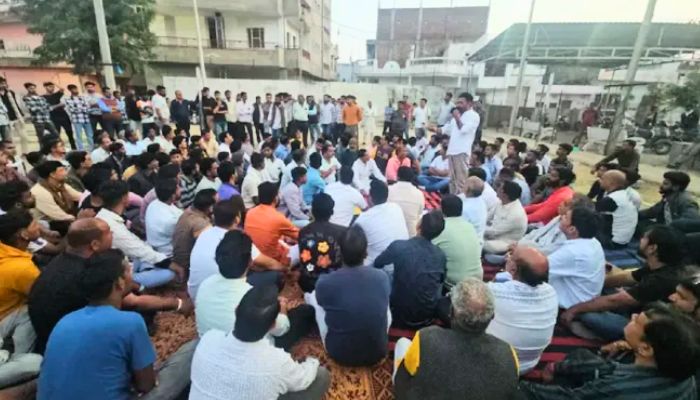
The Mahakumbh festival in the holy city of Prayagraj is estimated to have generated business of over Rs 3 lakh crore (USD 360 billion) through goods and services, making it one of the biggest economic events in India, Confederation of All India Traders (CAIT) Secretary General and Chandni Chowk MP Praveen Khandelwal said.
Mahakumbh, which happens after 144 years, is being held in Prayagraj from January 13 to February 26, witnessing the arrivals of millions of devotees over these six weeks.
Trade leader and parliamentarian Khandelwal noted that this world’s largest human gathering has firmly established the connection between faith and economy.
The Mahakumbh is boosting local trade with a surge in demand for Mahakumbh-themed products like diaries, calendars, jute bags, and stationery. Sales are reported to have increased due to meticulous branding.
Khandelwal mentioned that before the commencement of the Mahakumbh, initial estimates projected the arrival of 40 crore people and business transactions worth around Rs 2 lakh crore.
However, due to the unprecedented enthusiasm across the country, it is now expected that nearly 60 crore people will participate in the Mahakumbh by February 26, leading to a massive business turnover exceeding Rs 3 lakh crore.
This, he said, has provided a significant boost to Uttar Pradesh’s economy and created new business opportunities.
Highlighting the economic impact of the Mahakumbh, Khandelwal noted that several business sectors have witnessed large-scale economic activities, including hospitality and accommodation; food and beverage sector; transport and logistics; religious attire; puja samagri, and handicrafts, textiles, apparel and other consumer goods; healthcare and wellness services; media, advertising and entertainment; civic services; telecom, mobile, AI-based technology, CCTV cameras, and other equipment.
Khandelwal further pointed out that the economic benefits of Mahakumbh are not limited to Prayagraj.
Cities and towns within a 150 km radius have also experienced a significant business surge, strengthening local economies.
Additionally, Ayodhya, Varanasi, and other religious destinations have seen an increase in pilgrim visits, as devotees travel for the darshan and worship of Lord Ram in Ayodhya, Lord Shiva in Varanasi, and others in the nearby districts. This has further fueled massive economic activities in these areas.
The Delhi MP said Mahakumbh is expected to positively shape India’s trade, commerce, and cultural landscape, setting a new economic benchmark for years.
The Uttar Pradesh government has spent Rs 7500 crore for the improvement of Prayagraj’s infrastructure – flyovers, roads, and underpasses The Rs 7500 crore spending included Rs 1500 crore that was earmarked specifically for Mahakumbh arrangements.
(This news report is published from a syndicated feed. Except for the headline, the content has not been written or edited by OpIndia staff)
On Tuesday (18th February), 108 lawyers wrote a letter to President Droupadi Murmu seeking revocation of the Padma Shri conferred to film producer Ekta Kapoor for making shows loaded with obscene and “horrendous pornographic content”.
In the letter signed by around 108 lawyers from across the country, it is alleged that the content of Ekta Kapoor’s web series has profoundly degraded moral values. Moreover, certain web series produced by her have maligned Indian relationships alongside disrespected cultural traditions.
The letter states that Padma Shri, India’s fourth highest civilian honour is conferred on individuals for their exceptional contribution in their field and for leaving a positive impact through their work. However, Ekta Kapoor being conferred this honour and being allowed to retain it “inadvertently legitimises and endorses content that is not only morally reprehensible but also harmful to society.”
Appeal by 108 Advocates from Across Bharat for Revocation of Padma Shri Award Conferred on Ekta Kapoor
“Bestowing such a prestigious honour upon someone whose work promotes obscenity and violates numerous laws, undermines the very essence of the award. In light of the facts presented, we earnestly urge the President of India to immediately revoke the Padma Shri conferred upon Ekta Kapoor,” the letter states.
In the letter, the lawyers have also given information to the President about all such web series made by Ekta Kapoor. The signatories asserted that withdrawing Padma Shri from Ekta Kapoor would not only restore the sanctity of the prestigious award but also reinforce the government’s commitment to upholding the country’s ethical standards and societal values.
“The content of these films and web series being streamed on Ekta Kapoor’s ALTT is so horrendous, obscene and unlawful that they would not even be approved for screening with an ‘A’ certificate in cinema halls by Censor Board of Film Certification (CBFC). ALTT streaming pornographic content is blatantly violating several provisions of law, rules, guidelines, codes which restrict and or penalises production and distribution of obscene, indecent and pornographic material in the country,” the letter reads.
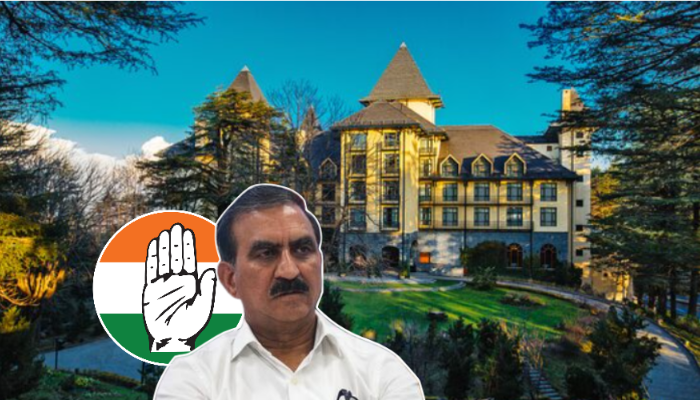
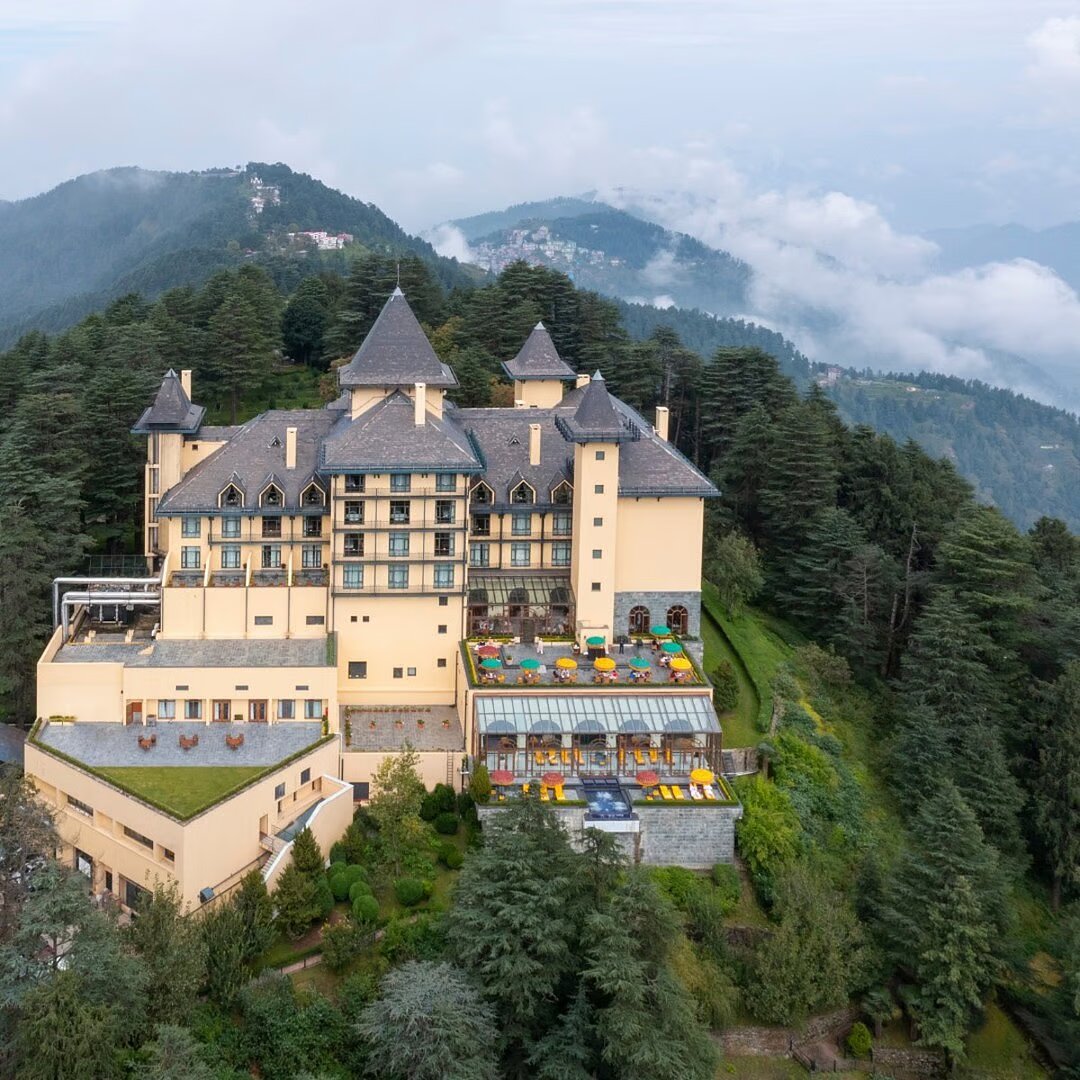
After Karnataka, Himachal Pradesh is now bearing the brunt of the Congress government’s freebies policy as the state coffers have dried up and the administration must find alternative methods to produce revenue. Therefore, the century-old Hotel Wildflower Hall, which is around 12 kilometres from Shimla, is going to be leased by the Himachal Pradesh government. The prized property located in a beautiful neighborhood, will be up for sale again after the state was able to take its possession in January of last year following two decades of legal battle.
It was first built by Lord Kitchener in 1902, under the British Raj and covers 100 acres in the middle of a lush deodar forest. The state cabinet approved the employment of a consulting firm to lease out the property during a meeting on 15th February, which was chaired by Chief Minister Sukhvinder Singh Sukhu. Industries minister Harshwardhan Chauhan stated, “The cabinet had approved hiring a company to work out further modalities. The company will decide on the best way to lease out the property which would be soon given on lease to highest bidder.”
The administration has been evaluating means to locate a suitable partner to run the luxury hotel since regaining control of the property to help the state, which is currently enduring financial difficulties, generate income. Sukhu also implemented a 2005 arbitration award which mandated that the Wildflower Hall and the surrounding deodar forest be turned over to the Himachal Pradesh Tourism Development Corporation (HPTDC) in June 2023.
The Oberoi Group now operates the property as a world-class, upscale resort, and the government is eager to entice companies from the hospitality sector to lease it. For nearly two decades, the Himachal Government and East India Hotels Ltd (EIHL) have been involved in a judicial battle over control and profit-sharing of the colonial-era hotel. The state government has declared that it is open to consider Oberoi Group’s claim to operate the property, however, it prefers that the company compete with other hotel chains for the Wild Flower Hotel lease, as the government will be accepting bids from all over the world.
History and legacy
GHM Batten, the Earl of Lytton’s private secretary, was the initial owner of Wildflower Hall, per the documents. The structure was completely destroyed by fire. Lord Kitchner, who was the Indian military’s commander-in-chief at the time, obtained the building’s lease from its proprietor after Batten restored it. After his return to England in 1909, the house was sold to a British couple, who demolished it in 1925 to build a 37-room, three-story hotel.
The Government of India occupied the land after independence and began an agricultural school there which lasted until 1973, when it was turned over to the HPTDC to be used as a hotel. Eleven cottages, four rooms, a multipurpose hall and a green room were constructed by the department. A short circuit then caused the structure to burn down on 5th April 1993. Nevertheless, the HPTDC continued to maintain the cottages and four additional rooms that had withstood the incident until the government and the Oberoi Group entered into a joint venture to reconstruct Wildflower Hall as a premium hotel.
The refined elegance of Oberoi Resort, Shimla. (Source: @wildflowerhall/Instagram)
The hotel was burnt down in 1993 and was completely gutted. The state administration made the decision to explore multiple options for reopening the hotel. However, the property dispute came to the fore when international tenders were requested to redevelop the building into a five-star hotel. The state government chose to collaborate with East India Hotels Limited, a flagship business of the Oberoi Group, which also took part. A firm named Mashobra Resort Limited was established as part of the joint venture with the goal of constructing the five-star hotel in four years. The corporation was forced to pay the state government an amount of Rs 2 crore annually for failing to comply.
The land was transferred by the government in 1996 in the company’s name. However, they were still unable to prepare the hotel for usage six years later. Citing concerns about “selling Himachal’s interests,” the Bharatiya Janata Party government led by PK Dhumal then ended the agreement on 6th March 2002, quoting a breach of terms amid ongoing issues like the hotel’s non-functionality within the required six years as well as the town and country planning department’s failure to regularize 57 rooms. The business law board heard a challenge to this government verdict and decided in favor of the corporation. The government appealed the ruling to a single high court bench.
On 17th November 2023, the high court dismissed the government’s submission and asserted that the Oberoi Group had not complied with the arbitration decision within the allotted three months. As a result, the state government was qualified to assume ownership and control of the hotel. The case was assigned to the arbitrator by the court in order to be settled. The government’s 2005 decision to terminate the contract with the corporation and give it the right to reclaim the land was upheld by the arbitrator.
The Oberoi Group challenged the single bench’s ruling in a move to the court, but the company’s appeal was denied. Even though the Oberoi group had approached the Supreme Court, it reiterated the high court’s judgment in January 2024.
Similar to Karnataka, a serious economic problem has been plaguing Himachal Pradesh under the Congress regime. The party, staking its claim to victory on “freebies,” before the 2022 assembly elections in the state offered free electricity up to 300 units per month to every household and Rs 1,500 per month to women aged 18 to 60. The party also vowed to establish the Agriculture and Horticulture Commission, restore the Old Pension Scheme (OPS) for government workers and set a minimum procurement price for fruits, particularly apples, after consulting with farmers and horticulturists.
Additionally, it promised to establish mobile clinics in every hamlet and provide one lakh government jobs. Furthermore, the party’s manifesto assured interest-free loans to young people and provision of Rs 10 crores to be distributed to all assembly segments to help the youth to develop start-up units. The commitments which were made solely to entice voters are now depleting the state’s budget.
The state government in last November decided to issue an extra Rs 500 crore loan, which was part of its Rs 6,300 crore borrowing limit expected to run out by December to meet the state’s developmental demands. The loan has a 15-year term and is due back on 13th November 2029. The financial burden is significant, though, especially given that the government found it difficult to fulfill its monthly obligations of almost Rs 2,000 crore for pensions and salaries. A sharp fall in the state’s revenue sources made matters worse, especially after the centre reduced its GST allocation and anticipated to cut the revenue deficit grant from 2025.
The administration even went so far as to postpone salary and pensions in an attempt to control the crisis. Given its dire financial situation, the Himachal Pradesh government was unable to pay its emplyees and pensioners any money in August of last year which affected 391,000 people. With Rs 1,200 crore set aside for salaries and wages and Rs 800 crore for pensions, the total monthly commitment comes to about Rs 2,000 crore. According to reports, this is the first instance in the state’s history where government employees and retirees have not received their rightful amount.
However, Sukhu argued that the state was not experiencing a financial crisis and that the government was unable to make the payments on schedule due to some fiscal prudence difficulties. Leader of the Opposition Jai Ram Thakur, however, countered that despite the Congress government’s record-breaking Rs 2,400 crore in loans, the state government was on the verge of financial collapse. Even though the treasury occasionally experienced deficits during previous administrations, pay and pensions were never postponed.
Congress introduces fresh taxes
In September of 2024, the Himachal Pradesh Vidhan Sabha approved an amendment bill to impose an environment tax on energy use that ranges from 2 paise to Rs 6 per unit and a milk tax of 10 paise per unit. The Himachal Pradesh Electricity (Duty) Amendment Bill 2024, which aimed to alter the Himachal Pradesh Electricity (Duty) Act, 2009 by adding Sections 3-A for the introduction of milk cess and 3-B for the environment cess was approved by the house by a voice vote.
The administration has already burdened the average citizen, according to opposition leader Jai Ram Thakur, by raising the price of diesel by Rs 7 per litre, cutting off 125 units of free power, and abandoning the election promise to provide 300 units of free power to consumers. According to him, the Sukhu government has also increased the price of tap water in rural regions from Rs 10 to Rs 100.
“The state government claims that it will turn Himachal into a Green energy state and yet imposes heavy cess on the electric vehicle charging stations,” voiced BJP member Trilok Jamwal. Notably, the government of Himachal Pradesh made the decision to eliminate the free drinking water program in rural regions and the free travel program for all police officers. The development transpired in last August.
The cabinet made the decision to impose a monthly charge of Rs 100 on rural residents with household connections who had previously been receiving free water supplies. The free power subsidy for all income tax payers was eliminated by the financially strained government. The Congress government, even considered additional options to cut off subsidies for the well-off segment of society due to a serious economic shortage.
On the other hand, the government was perceived as being regressive when it decided to impose a cess on hydro projects to raise an estimated Rs 4,000 crore. This decision impacted minor projects and participants in particular and hindered the government’s efforts to push for hydro. The imposition of a cess on the hydro industry is terrible news, according to a power analyst who works closely with power regulators. According to another expert, the cess is an act of desperation and added that it’s regrettable that he state appeared to have given in to the lobbying of larger hydro companies. Moreover, home states usually receive 12% of the free power. The double whammy could therefore hamper the government’s hydro effort.
The government even considered legalizing the production of cannabis for industrial and medical uses to solve its financial problems, in September of last year. “A committee has been formed to consider legalising controlled cultivation of cannabis. The step will also strengthen the state’s economy,” minister Vikramaditya Singh conveyed. The five-member group, led by state revenue minister Jagat Singh Negi, also called for regulation changes in April 2023 to permit the growing of cannabis for the plant’s fiber and low-intoxicant seeds. The report was also presented to the state assembly by Chief Minister Sukhvinder Singh Sukhu.
It’s interesting to note that the Congress government’s troubles intensified when it had to focus on the growing economic difficulties in July 2024 as it attempted to get around the crutch of loans. The development coincided with the central government lowering the borrowing cap for Himachal by Rs 5,500 crore.
Conclusion
Congress appears to be inspired to repeat its error and plunge the state into an economic abyss rather than learn from it. It has yet to recognize that while freebies might help win elections, they are detrimental for the welfare of the state and its citizens. The party that destroyed Karnataka’s economy in order to garner votes has been doing the same in Himachal Pradesh. They first introduce freebies, then put additional responsibilities on taxpayers to fulfill their irrational promises, damaging the taxpayer’s budget and destroying the state coffers. Freebies and similar programs might seem at first to be voter-friendly, but in reality, they harm taxpayers and have an adverse effect on their development.
NASA has upgraded the possibility of Asteroid 2024 YR4 hitting the earth in 2032 to 3.1 per cent or simply a 1-in-32 chance. These are the highest odds of a collision predicted so far. It has been reported that much of the asteroid’s estimated path passes over empty ocean, however, some possible impact locations are close to large cities Bogotá, Lagos and Mumbai. Some reports also include Chennai as a possible impact location.
NASA says the chances of a collision in 2032 have increased from 1 in 83 since it was initially discovered. It has since risen to 1 in 67, 1 in 53, 1 in 43, 1 in 38, and currently 1 in 32.
One asteroid, 2024 YR4, has been of particular interest to planetary defense experts because of its low chance of Earth impact in 2032. As more observations of the asteroid’s orbit are obtained, its impact probability will become better known. More: https://t.co/rGOg0UPMPC
Scientists, however, are of the view that merely because the odds increased this time or last week does not mean that the asteroid may actually hit the Earth. These odds may also come down in the coming time.
“Just because the probability has risen does not mean it will continue to do so,” said Professor Hugh Lewis, an astronautics specialist at the University of Southampton.
Similarly, NASA’s Molly L Wasser said, “It is possible that Asteroid 2024 YR4 will be ruled out as an impact hazard, as has happened with many other objects that have previously appeared on NASA’s asteroid risk list.”
Furthermore, the European Space Agency (ESA) estimates that asteroid 2024 YR4 has a 2.81% chance of colliding with Earth on 22nd December 2032.
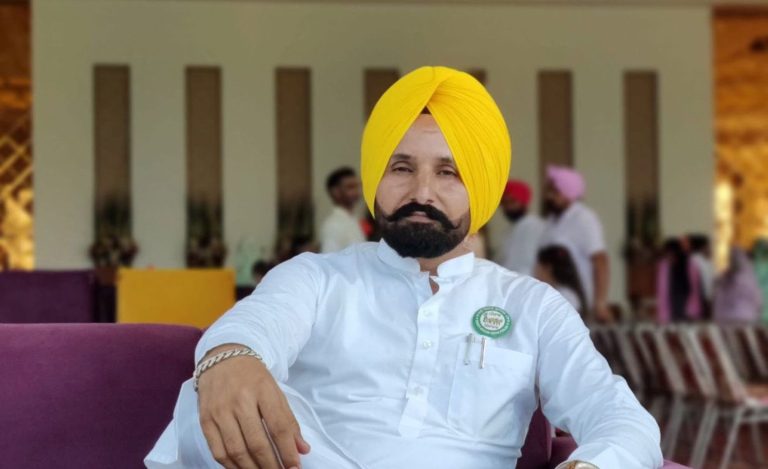
While farmers continue their struggle at the Shambhu and Khanauri borders for their demands, some unscrupulous individuals exploit the situation for personal gain. A recent case from Moga has brought such misconduct to light. Here, a farmer leader, who claims to fight for the rights of farmers, was booked by the police after a compatriot accused him of Rs 45 lakhs visa fraud and sending him to the US via an illegal route.
The Dharamkot police have registered a case against Sukhwinder Singh Sukh Gill, the Bharatiya Kisan Union (Totepur) state president, and his mother, Pritam Kaur, in connection with immigration fraud. According to police reports, Sukh Gill, along with Jaswinder Singh of Pandori Arian village in Moga—who was deported from the United States—has been accused of orchestrating the fraudulent scheme.
An FIR has been lodged against Sukh Gill, his mother, and two others—Talwinder Singh and Gurpreet Singh—under BNS 318(4), 143, and 61(2) of the Immigration Act 24 at the Dharamkot police station. Additionally, two travel agencies, Fateh Immigration (Dharamkot, Moga district) and Ekam Travel (Chandigarh), have also been implicated in the case.
The accusations surfaced after Jaswinder Singh, recounting his ordeal, revealed that he had spent ₹45 lakh in pursuit of his American dream. He informed the police that he had sought legal means to immigrate but was instead deceived into travelling by boat, leading to his eventual deportation.
On 19th February, Beawar police said that they have detained three more accused in the case where Muslim men trapped, raped, and forced Hindu girls to convert to Islam. Speaking to OpIndia, Vijaynagar Police Station in-charge Karan Singh said, “Three more accused have been detained by the police. They are being questioned to determine their role in the matter. Five accused, who were arrested earlier, have been sent to police remand, and two minors have been sent to a juvenile house.”
When OpIndia asked about the names of the detained accused, Singh said, “The names will be revealed via press release later after police finish questioning them.” Singh added that the investigation into the matter may take some time to complete as the police are carefully examining every aspect of the case.
Reportedly, the accused were thrashed in court premises by the advocates.
Muslim men trapped, raped, and forced Hindu girls to convert
Earlier, on 17th February, a case came to light in the Vijaynagar police station area of Beawar district, where multiple Hindu girls were trapped, raped, and forced to convert by a gang of Muslim men. The incident came to light when a mobile phone was found on one of the girls, which had been given to her by a gang member.
Upon questioning, the girl revealed how they were being blackmailed and sexually exploited by members of the Muslim men gang. The family approached the police to file a complaint about the matter. It was revealed that there were multiple victims. The accused have been identified as Rihan Mohammad (20), son of Jaan Mohammad, resident of Rajnagar Police Station area, Bijainagar, Sohail Manshuri (19), son of Anwar Hussain from Taro ka Kheda Bijainagar, Luqman alias Soheb (20), son of Mohammad Usman of Hurda Road Gulabpura, Arman Pathan (19) son of Kalu Khan, native of Rajnagar Police Station area, Bijainagar, Sahil Qureshi (19) son of Mohammad Sabir from Sajanabad Police Station area, Gulabpura. Three separate FIRs have been filed in the case. So far, 10 accused have been apprehended by the police, out of whom two are minors.
It also came to light that the Muslim men wanted to trade Hindu girls. One of the victims said, “They once told me that a Brahmin girl would fetch ₹20 lakh if sold, and you (a Dalit) would get ₹10 lakh.” The girls said in their statements that they were continuously blackmailed with obscene photos and videos and forced to bring in other girls.
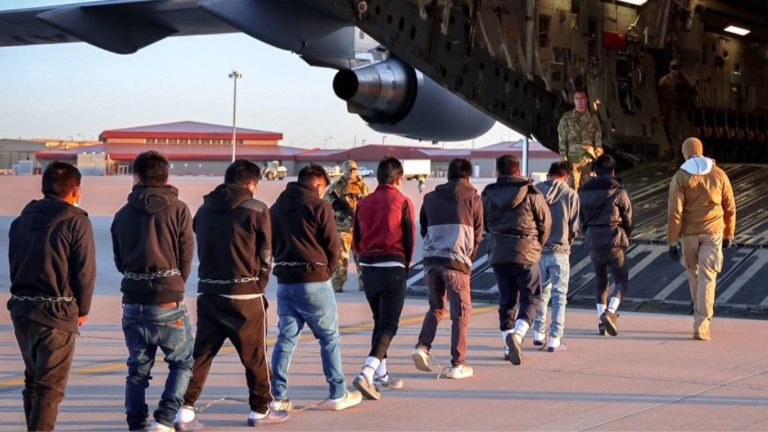
The recent deportation by the United States of Indian citizens who have been staying in the country illegally has highlighted how private travel agents in India have been conning ignorant people by selling them the ‘American dream’ for hefty amounts of money. As per reports, out of the 332 illegal Indian immigrants deported by the US recently, 127 hailing from Punjab paid over Rs 43 crore to travel agents to enter the US.
This means each immigrant from Punjab deported from the US paid around ₹34 lakh on average to the agents. The 332 undocumented Indians were deported by US military aircraft that landed at Amritsar airport in three batches on February 5, 15 and 16.
The deportees were reportedly asked by Punjab officials who were compiling their data, to disclose the names of travel agents who helped them enter the US and the amount of money they paid to them. Out of 31 deportees in the first batch deported on February 5 those who agreed to disclose information about the money they paid, are said to have paid Rs 4.95 crore to travel agents. This batch included a minor.
The amount paid by the second batch of 65 deportees was Rs 26.97 crore while the last batch of 31 deportees reportedly paid Rs 11.37 crore to travel agents. The deportees were also asked to reveal the names of the travel agents who helped them enter the US. Out of the total deportees, most are from Punjab (38%) followed by Haryana (33%) and Gujarat (22%). The remaining deportees come from other States and Union Territories including Maharashtra, Uttar Pradesh and Himachal Pradesh.
According to the information provided by the deportees, the travel agents operated from different parts of Punjab and Haryana and some even operated from Dubai and Spain. The agents promised the deportees a smooth journey to the US but later took them through dangerous routes including South American countries and Mexico. Some of the deportees were reportedly detained and kept for months in the US immigration centres before being sent back to India.
Punjab and Haryana High Court hears PIL seeking action against fake travel agents
The Punjab and Haryana High Court directed the Punjab and the Central government to decide on representation within 30 days during the hearing of a Public Interest Litigation (PIL) on 17th February seeking action against fake travel agents. A division bench of Chief Justice Sheel Nagu and Justice Harmeet Singh Grewal asked the petitioner Advocate Kanwar Pahul Singh to submit a representation to the concerned authorities. The petition sought the establishment of ’emigration check posts’ in all districts of Punjab along with an upgraded list of ‘certified recruiting agents’. It further sought stringent action against unauthorised travel agents involved in ‘human smuggling’.
After the first batch of deportees arrived in India, the Punjab police formed a special investigation team to investigate the illegal human trafficking.
On 17th February, Beawar police busted a gang of Muslim men who were trapping Hindu girls, raping them, and forcing them to convert to Islam. According to the latest reports on the matter, it has come to light that these men were teaching Hindu girls about namaz, roza, and reciting the Kalma (Islamic declaration of faith). Furthermore, they were pressuring the girls to wear burqas and brainwashing them for religious conversions.
One of the victims said in her statement that her hand was cut with a blade when she refused to keep roza. They were subjected to continuous sexual exploitation. The initial interrogation of the accused and statements of the victims have revealed horrifying details.
All accused illiterate, lured girls with notes
Reports suggest that all the accused in the matter, including Rehan Mohammad (20), Sohail Mansuri (19), Lukman (20), Arman Pathan (19), Sahil Qureshi (19), and two minors, are illiterate. None of them attended school. Some of them worked at a welder’s shop, while others were labourers at a furniture store. However, they were targeting Hindu girls studying in Class 10 at a school. These girls lived nearby and often passed through the area where the Muslim men lived while going to school.
One of the victims recounted that Sohail Mansuri followed her from school to home for 15 days. He threw notes at her with his phone number. One day, the girl called him, and he asked her to meet him at a café, where he sexually assaulted her. The victim said that he took photos of her during the assault. Sohail was joined by other Muslim men in the act. Following the incident, Sohail began to torture her into talking to his friend.
Given a mobile, pressured to fast and recite Kalma
According to an NDTV Rajasthan report, Sohail gave the victim a small mobile phone to communicate with him. He constantly threatened her. Following his insistence, she introduced her friends to Sohail’s friends, namely Riyan, Javed, and Arman. Sohail tormented the Hindu girl into wearing a burqa and taught her about Ramadan and fasting. He reportedly brainwashed her into observing fasts. He cut her hand with a blade and pressured her to recite the Kalma.
The victims said that the men would come in new vehicles, including Bullet motorcycles and other cars, to take them away. One of the victims said, “They once told me that a Brahmin girl would fetch ₹20 lakh if sold, and you (a Dalit) would get ₹10 lakh.” The girls said in their statements that they were continuously blackmailed with obscene photos and videos and forced to bring in other girls.
Case uncovered through a mobile
The incident came to light after a mobile phone was found with one of the girls. When the family called one of the Muslim men , he responded with abuses and threats. The victim’s family rushed to the police station and filed a complaint about the matter, after which the case unfolded layer by layer.
The police found that it was not just one victim but multiple girls who had fallen prey. Several Muslim men were involved. They also extorted money from the girls and forced them to steal cash from their homes.
Police recorded statements, took accused into remand
The arrested accused were presented in court on 19th February 2025. The court sent five adults to four days of police remand. Lawyers reportedly thrashed the gang of Muslim men with shoes and slippers inside the court premises. The Hindu community in Beawar has also protested over the matter. The statements of the victims have been recorded in court, and their medical examinations have been conducted. Two of the arrested minor Muslim boys have been sent to the Juvenile Board.
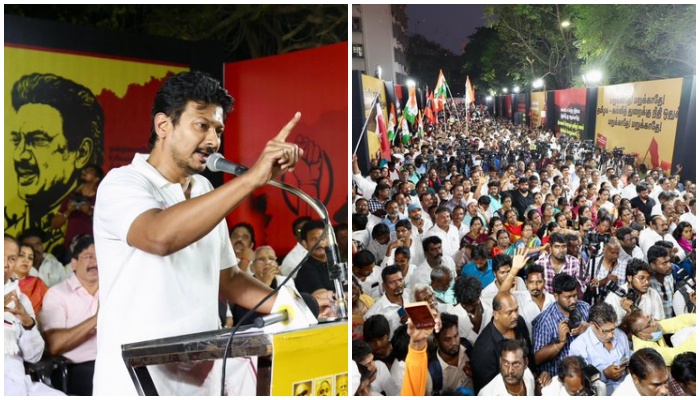
DMK organized a major protest in Chennai against the BJP-led union government concerning the New Education Policy, the Trilingual Language System (Hindi imposition), and Union Education Minister Dharmendra Pradhan.
Tamilnadu Deputy Chief Minister Udhayanidhi Stalin participated in the protest. At the same time, DMK Alliance party leaders from MDMK Vaiko MP, Congress State President Selvaperunthagai, VCK President Thirumavalavan MP, Indian Union Muslim League National President Kader Mohideen, TMMK State Secretary Abdul Samad, Tamilaga Valurimai Party Chief Velmurugan MLA and other Alliance party leaders have participated in the protest.
A large number of cadres from the DMK and alliance parties participated in the protest, holding placards that called for the Central Government to release funds to Tamil Nadu and to refrain from imposing a trilingual language policy in the state. Tamil Nadu ministers, including Anbil Mahesh Poiyamozhi, Sekar Babu, and Ma. Subramanian, as well as DMK MLAs and MPs such as Tamilachi Thangapandian and Kanimozhi Somu, also joined the protest.
Tamilnadu Deputy Chief Minister Udhayanidhi protested and agitated against the Union government.
While speaking in the protest, Dy CM Udhayanidhi Stalin said, “To save the Education and Language of our state, I have come here to protest against the Union Government; I have not come to participate in this protest as a DyCM. I have come here to participate in a DMK youth wing cadre. In the union budget 2025, the funds that must be shared with all states were majorly given to Uttra Pradesh and Gujarat states, and Tamilnadu was neglected completely.”
He added, “Union Education Minister Dharmendra Pradhan said that we only provide funds if TN accepts the Trilingual Language policy.”
Udhayanidhi said “We didn’t ask for our father’s money; we have asked only for our Tax money and our rights. We are asking for our fund rights. Mainly, this is a Dravidian land, this is a Periyar land, Tamilnadu is a self-respected land, and do u think you(BJP) can threaten us? It will never happen in Tamilnadu. Last time, when you attempted to take away the rights of the Tamil people, they started a “Go back Modi” campaign, and now, if you try it again with the Tamilnadu people, this time the voice will be ‘Get out Modi’ that agitation will be done to send you(PM) back.”
Speaking further, Udhayanidhi Stalin demanded that the Union Government release the funds due immediately to the Tamilnadu education department for the welfare of the students, he said, “Tamil Nadu Children’s studies should not get affected due to it. We respect the Constitution and democracy and are democratically raising our voices. Our voice needs to be heard by the fascist BJP-led Union government ears. They should respect our rights. Otherwise, we (Tamil Nadu) will not hesitate to face another language war. Tamils are people who value love and will never surrender for Intimidating”.
Udhayanidhi Stalin made it clear that the people of Tamil Nadu would never accept the Trilingual language policy. He emphasized that the Tamil people would never be subjugated and that this was a matter of self-respect. He also highlighted that Tamil Nadu has a long history of protesting against the imposition of Hindi and for education.
“The two-language policy has allowed Tamils to excel globally. For Tamils, language and identity are more important than politics. NEP and the imposition of Hindi upon Tamil Nadu are concerned about the future of the children and the Tamils, and it is not confined to the DMK alone,” he said.
He also questioned why the AIADMK is remaining silent on this issue.
“AIADMK must firmly oppose the NEP, and we(AIADMK) have to protest jointly against it. Even I appeal here to AIADMK to join us, take this issue to the streets, and protest. The party (AIADMK) bearing the name of Anna (former Chief Minister C N Annadurai) and Dravida should not remain silent on this issue,” he said.
Udhayanidhi Stalin also urged all political parties to rise above party lines and unitedly oppose the trilingual policy of the BJP-led Union Government, which wants to dump Tamilnadu.
“If they want to impose Hindi again, I am saying now, not hundreds more than thousands of Tamils will sacrifice their lives for Tamil language. I urge the Union Government not to do politics in the children’s education or their future, and I urge you to release the funds immediately,” he said.
(This news report is published from a syndicated feed. Except for the headline, the content has not been written or edited by OpIndia staff)
On 17th February, the Social Democratic Party of India (SDPI), the political wing of the now-banned Islamic terrorist outfit Popular Front of India (PFI), held a ‘Waqf Protection Rally‘ in Kollam, Kerala. SDPI gave the slogan ‘Waqf Protection for Social Security’ during the rally. The state president of the political outfit, CPA Latheef, presided over the event.
A conference was held after the rally, where the state general secretary of the Dakshina Kerala Jamiyyathul Ulama, Thodiyoor Muhammed Kunju Moulavi, accused the Bharatiya Janata Party (BJP) regime at the centre of secretly attempting to destroy the Constitution of the country and bring in Manusmriti through the Waqf amendment.
Thodiyoor Muhammed Kunju Moulavi was delivering the inaugural speech of the public meeting after the rally. Moulavi added that the very existence of the Constitution of India was being destroyed through the amendment to the Waqf Act.
He said, “The Waqf Amendment Bill is posing a threat to the country’s Constitution and destroying it. World nations respect India’s rulers because India follows democracy and secularism. India is a garden of diversity. Places of worship, including mosques, temples, churches, and gurdwaras, are symbols of secularism. Any aggression against any one of these is a challenge to the country’s secularism.”
Waqf Amendment Bill
The Waqf (Amendment) Bill, 2024, aims to address these challenges by introducing reforms such as digitisation, enhanced audits, improved transparency, and legal mechanisms to reclaim illegally occupied properties. The Waqf Act of 1995, enacted to regulate Waqf properties, has long been criticised for issues such as mismanagement, corruption, and encroachments. The bill was introduced last year and was sent to the Joint Parliamentary Committee (JPC) for further assessment. The JPC report has already been tabled in the Rajya Sabha.
The opposition, however, has opposed the JPC report and claimed that their objections were not included in it, an allegation that Jagadambika Pal, BJP MP and Chairman of the Joint Parliamentary Committee (JPC) on the Waqf (Amendment) Bill, categorically denied.