Home Blog Page 5519

Madhya Pradesh crisis: Power and functions of the Governor as Supreme Court orders floor test for Kamal Nath government

In a dramatic sequence of events 22 Members of the Madhya Pradesh legislative Assembly, who were Congress MLAs, tendered their resignation to the Speaker of the House after Jyotiraditya Scindia joined the Bharatiya Janata Party. The Speaker NP Prajapati accepted the resignation of 6 of the 22 rebel MLAs who formed the part of Madhya Pradesh Cabinet while not accepting the resignation of the remaining 16 MLAs, reducing the strength of the house to 222 and the halfway mark to 112, thereby keeping the Kamal Nath led Congress Government safe in the state. This, however, became a crisis situation in the State pushing the BJP to claim that the Kamal Nath government was indeed in minority.

Under such circumstances, the Governor of the State Lalji Tandon, who is entrusted with the task of making sure that the Constitutional machinery in the state doesn’t break down, wrote to the Chief Minister Kamal Nath to face a floor test in the Assembly stating, “Under Article 174 and 175(2) of the Constitution, I am empowered to direct that MP Assembly session will begin on March 16 at 11 am with my address. Soon after that, the only work to be done is voting on trust vote.” When the Speaker NP Prajapati refused to hold floor test and deferred the Budget Session of the House to 26th March, ex-Chief Minister of Madhya Pradesh, Shivraj Singh Chouhan approached the Supreme Court of India to seek the Court’s direction to getting a floor test done in the State Assembly.

In a two-day long hearing of the case titled Shivraj Singh Chouhan & Ors vs. Speaker Madhya Pradesh legislative Assembly & Ors., the Supreme Court ordered for the floor test to be conducted in the state Assembly on 20th March by 5 PM and the same to be video recorded, to effectively resolve the state of uncertainty in the State of Madhya Pradesh. The operative part of the judgment that lays down the guidelines for a floor test to be held today is as follows:

  • The session of the Madhya Pradesh Legislative Assembly which has been deferred to 26 March 2020 shall be reconvened on 20 March 2020.
  • The meeting to be convened in pursuance of (i) above shall be confined to a single agenda, namely, whether the government of the incumbent Chief Minister continues to enjoy the confidence of the House. 
  • Voting on agenda (ii) above shall take place by show of hands (the Governor having clarified by his letter dated 15 March 2020 that there is no provision for recording the division by ‘press of a button’). 
  • The proceedings before the Legislative Assembly shall be videographed and, if a provision exists for the live telecast of the proceedings, this shall, in addition, be ensured.
  • All authorities, including the Legislative Secretary, shall ensure that there is no breach of law and order in the course of the proceedings and that the floor test is conducted in a peaceful manner.
  • The floor test in pursuance of the above directions shall be concluded by 5.00 pm on 20 March 2020.
  • The Director-General of Police, Karnataka as well as the Director-General of Police, Madhya Pradesh shall ensure that there shall be no restraint or hindrance whatsoever on any of the sixteen MLAs taking recourse to their rights and liberties as citizens. In the event that they or any of them opt to attend the session of the Legislative Assembly, arrangements for their security shall be provided by all the concerned authorities.”

In light of the arguments that took place in the Supreme Court on the issue of floor test and the role of Governor, we shall now see what are the powers, functions and roles of the Governor in a State.

The post of governor of a state is of immense importance in our political system. It is considered as one of the pivotal parts of “checks and balances” that our democracy is proud of. Powers and functions bestowed upon the governors and lieutenant-governors of the states and union territories of India are similar in nature to that of the President of India at Union level. Being de jure head of the state government, all its executive actions are taken in the governor’s name. While the President of India is “elected”, the governor is “selected” by the existing central government via imperative processes.

While the Constitution was being framed and discussed upon, Sardar Patel sought to make it explicit that ‘special powers’ endowed upon the Governor would not create dissonance between him and the ministry. He stressed that there would be no ‘invasion of the field of ministerial responsibility’. The ‘special powers’ would primarily be limited to sending a report to the Union President when a grave emergency arose, threatening menace to peace and tranquillity. At one point there was also an argument put forward that the governor should be elected directly by the people of that province, but it did not find assent. Jawaharlal Nehru had emphasized that this post could be utilized to bring distinguished people from eclectic backgrounds as well as academics into the field of public service, as they might not have necessary expertise or zest for winning an election.

Role, Functions and Powers of the Governor as enshrined in the Indian Constitution

As provided by Articles 155 and 156 of the existing Constitution of India, Governors of the States are appointed by the President of India and are answerable to him and hold their offices during the pleasure of the President of India. The Governor, thus, is an appointee of the Central Government in the State, and, in so far as he acts in his discretion, he shall be answerable to the Union Government. Except in matters in which the Governor is required by or under the Constitution to exercise his function in his discretion, the Governor is the Constitutional or formal head of the State and he exercises all his powers and functions on the aid and advice of his council of Ministers.

This is so because our Constitution embodies generally the Parliamentary or Cabinet system of Government of the British Model both at the Union and the States. Article 164(1) of the Constitution of India empowers the Governor to appoint the Chief Minister. However, like the discretion of the President in the appointment of the Prime Minister, the Governor’s discretion in the appointment of Chief Minister is conditioned by an essential form of Parliamentary form of Government that the Council of Ministers shall be collectively responsible to the State legislative assembly. This means that the leader of a party which commands the majority in the legislative assembly is eligible for appointment as Chief Minister, and the Governor is bound to request him to form the Government. If there is no party commanding a clear majority in the legislative assembly, the Governor may exercise his discretion in the appointment of Chief Minister according to his personal assessment of the situation at that time. 

In a 5 Judge Bench, the Supreme Court of India has held in BP Singhal v. Union of India, (2010) 6 SCC 331 that the role of the Governor of a State is to function as a vital link or bridge between the Union Government and the State Government. He is required to discharge the functions related to his different roles harmoniously, assessing the scope and ambit of each role properly. Therefore, the Governor of a State has a dual role. The first is that of a Constitutional head of the State bound by the advice of his Council of Ministers. The second is to function as a vital link between the Union Government and the State Government. In certain special or emergent situations, he may also act as a special representative of the Union Government. He is constitutionally the head of the State in who is vested the executive power of the State and without whose assent there can be no legislation in exercise of the legislative power of the State. The fact that the Governor holds office during the pleasure of the President does not make the Government of India an employer of the Governor.

Difference between powers of The President and powers of The Governor

There is a distinction between the powers of the President under Article 74 and the Governor under Article 163 of the Constitution. There is some qualitative difference between the position of the President and the Governor. The President under Article 74 has no discretionary powers but the Governor has certain discretionary powers under Article 163(2) of the Constitution of India. In contrast to Article 74, even though Article 163 similarly provides that the Governor of a State is to exercise his functions in consonance with the aid and advice tendered to him by the council of Ministers with the Chief Minister as the head, yet Article 163(2) confers discretionary powers with the Governor when it is so expressly mandated by or under the Constitution. To a limited extent Article 163(2) authorizes Governor to act in his own discretion and in that sense, there is a clear distinction between the power vested in the President and the power vested in the Governor.

In the landmark judgment of B.R. Kapur v. State of T.N. & Anr, (2001) 7 SCC 231, the Supreme Court observed that the Governor should act as per the will or advice of the majority party only when the same is in accord with the Constitution and the laws.

Conclusion

The legislative and discretionary powers of Governor are very clear and precise in terms of the Constitutional Provisions and various judgments of the Supreme Court. The Governor can summon, prorogue, defer or dissolve the State Legislative Assembly, his decisions often taken in counsel with the Chief Minister and the Council of Ministers. The Governor holds the power to select the Chief Minister should no political party win a majority in the Vidhan Sabha of the state, or in the Chief Minister’s demise without any obvious successor. The Governor may recommend imposition of the President’s Rule on the President’s behalf, and in such circumstances, override the Council of Ministers and directly handle the workings of the State.

Lastly, the Governor of a state is the custodian of the Constitutional machinery of the state and hence has a greater responsibility to make sure that the same doesn’t breakdown. Lalji Tandon, the Governor of Madhya Pradesh, was doing exactly the same which he asked Chief Minister to prove his majority on the floor of the House after 22 of his party’s MLAs resigned.

Support comes from unexpected avenues for PM Modi’s ‘Janata Curfew’ as even the detractors join in

Calling for “resolve and restraint” to fight coronavirus, Prime Minister Narendra Modi on Thursday asked the entire country to observe ‘Janata curfew’ on Sunday, March 22 as a test run for social distancing over the next few days.

In a nearly 30-minute national broadcast, he asked people to stay at home from 7 am to 9 pm that day and abide by it while underscoring the dangers of coronavirus, saying the world has never seen a crisis as grave as this.

Prime Minister Modi’s appeal to the citizens to fight the coronavirus has received overwhelming support across the spectrum. Barring a few, the movement to fight the coronavirus received support from all sections of the society. The support for PM Modi also came from unexpected quarters as usual detractors including the members of the “liberal-secular” media and the Congress ecosystem heaped praises on PM Modi for calling people to observe the Janata Curfew.

Sagarika Ghose, a self-styled ‘journalist’ and a known Modi baiter, surprisingly praised Prime Minister Modi for calling on citizens to observe social distancing through self-imposed curfew. However, as usual, there was also a bit of criticism from ‘intellectual’ Sagarika Ghose, as she said she would have liked to hear more about ‘solid measures’ on the overall approach to tackling the crisis.

Former Bollywood actress Twinkle Khanna also surprised netizens and applauded PM Modi for his speech. Khanna who usually rants against the Modi government took to Twitter to state that PM Modi’s address to the fight the corona epidemic made her feel more united.

Yogendra Yadav, a multi-talented ‘intellectual’ and self-proclaimed psephologist, also declared that every Indian must support the government’s efforts to fight the Chinese virus. Yadav, who often comes up with deranged assertions to attack the Modi government also supported the idea of the Economic Task Force.

Rajdeep Sardesai, the Michealangelo of Indian journalism and a known member of the Congress ecosystem, supported PM Modi’s call for restraint and resolve during the testing times and asked the government to act now to tackle the health crisis.

The most unexpected support to PM Modi’ initiative came from none other than Shehla Rashid. Rashid, who is a freelance protestor and a member of the anti-India JNU brigade, shocked the netizens when she appreciated PM Modi’s call to stay indoors. She also endorsed PM Modi’s appeal, asked everyone to be united and follow the instructions given by the government.

Abusive troll Swati Chaturvedi too called PM Modi’s Thursday speech as a ‘better one out of all his speeches’. Chaturvedi however, was not happy with PM Modi’s appeal to applaud the thousands of people who are working day and night to fight the coronavirus outbreak.

Sonam K Ahuja, another Bollywood starlet, also retweeted a post praising PM Modi’s efforts. Sonam Kapoor retweeted Masaba Gupta’s post which said that PM Modi delivered an outstanding speech and it was the time to come together to applaud our nurses and doctor.

The ecosystem, which sustains on the anti-Modi propaganda, perhaps have realised the seriousness of the Coronavirus crisis in the country and believes that the crisis can only be tackled with meticulous planning managed by a powerful leadership. In a way, the anti-Modi brigade now feels that it is only Prime Minister Modi who can unite a country at the time of such a crisis and have also decided to support the PM during these challenging times.

Ex-CJI Gogoi exposes the ‘lobby’ which holds judiciary at ransom, says if judgement goes against what they advocate, they malign the judge

Former Chief Justice of India and Rajya Sabha MP Ranjan Gogoi revealed that the judiciary is being held at ‘ransom’ by a handful of people. Speaking to Times of India after taking oath as an MP nominated by the President of India, ex-CJI Gogoi said that the judicial independence was under threat because of a stronghold of a ‘lobby’ which comprises of about half a dozen people.

He further said that the same set of people go and malign a judge if a judgement does not go as per their wish. Justice Gogoi further added that the judiciary will not be fully independent in its true sense unless the stronghold of these people was broken. “They hold judges at ransom. If a case is not decided in a particular way advocated by them, they malign the judge in every way possible,” he said.

Speaking on the allegations that his Rajya Sabha nomination was a quid pro quo for the Ayodhya verdict where the 5-judge Supreme Court bench headed by him ruled in favour of the temple, Gogoi said he was being maligned because he defied the lobby. He added that he decided on the basis of what his conscience. “If a judge decides a case fearing what the half-a-dozen people will say, then he is not true to his oath,” he told the Times of India. Furthering on the judgement, he said, “It was a unanimous verdict by a five-judge bench. Rafale was again a unanimous verdict by a three-judge bench. By alleging quid pro quo aren’t they questioning the integrity of all three judges involved in the two judgements?”

Read: The Curious case of Justice Ranganath Misra who gave clean chit to Congress for 1984 Sikh massacre

Dismissing the insinuations that he was ‘compensated’ for the Ayodhya and Rafale verdict, he said that if a former CJI wants quid pro quo, he could seek bigger, better posts with more lucrative emoluments. Rajya Sabha nomination would hardly fit since the benefits of a Rajya Sabha MP are quite similar to that of a retired judge. He further added that if rules permit, he would not take the salary and allowances and give it to refurbish libraries in smaller towns.

He further added how he was hailed when he participated in the historic press conference in January 2018 against ex-CJI Dipak Misra. “I was the darling of the lobby when I went for the press conference in 2018. But they want judges to decide cases in a certain manner and only then will they certify them as ‘independent judges’,” he said. In January 2018, four senior Supreme Court judges namely Justices J Chelameswar, Madan B Lokur, Ranjan Gogoi and Kurian Joseph, called a press conference to inform the nation of “their failed efforts” to convince the Chief Justice to take steps to protect the institution.

Speaking to India Today, CJI Gogoi said that if the President of India makes you an offer under Article 80 and tells you that the nation needs your service, you do not refuse. “You shouldn’t refuse that,” he said. “So far as quid pro quo is concerned, if you write five judgements against the government, then only you are eligible for nomination under Article 80? If you write judgements which eventually turn out to be in favour of the government, only then are you eligible?” he said. “If it was a quid pro quo, I wouldn’t have stopped at Rajya Sabha membership,” he said.

Coronavirus outbreak: PM Modi calls for ‘Janta Curfew’ on March 22, forms Economic Response Task Force to combat impact on economy

Prime Minister Narendra Modi addressed the nation on Thursday talking about issues relating to Coronavirus outbreak and the efforts being undertaken to combat it. At the time when India is grappling the coronavirus fear, the Prime Minister has urged his citizens to follow 2 things: Resolve and Restraint. He has called for a ‘Janta Curfew’ (public curfew) on March 22 (Sunday) from 7 am to 9 pm which he says would mean a curfew imposed by the people on themselves in order to prevent the spread of the disease. “If possible, please call at least 10 people every day and tell them about the ‘Janta Curfew’ as well as the measures to prevent coronavirus,” the prime minister appealed.

The prime minister appealed the public to remain in their homes on Sunday, except those involved in essential services. He said that this will be a strong symbol of duty performed towards the benefit of the nation. PM Modi added that the success and experience of the Janta Curfew on Sunday will help us to prepare for the challenges in the future. This implies that the voluntary curfew will be like a mock drill, to prepare for a situation in future where more drastic measures may be required.

Speaking about the auspicious Navratri festival, which is around the corner, Modi said that as we head towards the nine-day festival, he would like to make nine requests to the citizens. The nine requests broadly being:

  • Citizens should stay careful and avoid going out of their houses for the next few weeks unless inevitable.
  • People older than 60-65 to stay indoors as much as possible.
  • This Sunday, March 22 from 7 am to 5 pm every citizen should follow ‘Janta Curfew’.
  • On March 22 at 5 pm everyone should stand at their balconies/door/windows and either clap or ring a bell and make some sort noise, giving a shout out in respect for the people serving others.
  • Avoid going to hospitals for regular check-ups, postpone non-essential elective surgeries.
  • Employers should not deduct the salaries of the lower-income people working under them.
  • Asks the government to create a COVID-19 Economic Response Task Force.
  • Do not indulge in panic buying
  • Asks people to stay informed and not fall for rumours.
The nine requests PM Modi makes on the occasion of Navratri

Prime Minister Narendra Modi in his address to the nation impressed upon all Indians the need to follow the practice of social distancing and only step out of the house only if very necessary as he talked about measures to combat the coronavirus pandemic in the country.

Warning the people against ignoring the advice to stay indoors, the prime minister says, “If you feel you are okay and nothing will happen to you, you are wrong.”

“Restrain is compulsory to protect ourselves and remain healthy. I request that for the coming weeks’ people should go out of their homes only if essential,” PM Modi said.

At the time when the fear of a lockdown is driving people to throng supermarkets and stores to buy essential items and hoard in bulk, PM Modi urged everyone to refrain from doing so. Assuring that there will not be a shortage of food, medicines, milk and other supplies, Modi appealed against panic buying. “I appeal to all not to go into panic buying to store essential commodities. Steps being taken to ensure that there is no scarcity of essential commodities,” PM Modi said.

He also advised people against visiting hospitals for regular check-ups. “I request the countrymen to avoid visiting hospitals for routine check-ups. If you have an appointment for any non-essential surgery, please postpone for one month. We should keep in mind that pressure should not come to hospitals.”

Modi informed that the government has decided to create a COVID-19 Economic Response Task Force to tackle the coronavirus outbreak’s impact on the economy, which will be headed by the finance minister. The task force will remain in regular touch with all stakeholders, take their feedback and make decisions accordingly, said Modi in his address.

The Finance Minister will hold the first meeting of COVID-19 Economic Response Task Force tomorrow.

Ahead of Prime Minister Narendra Modi’s address to the nation about the coronavirus pandemic on Thursday, top sources in the government have clarified that there will not be any announcement of a lockdown. Multiple media reports speculated that the Prime Minister will announce a virtual lockdown of the country, but sources had confirmed that the information was incorrect.

Prime Minister Narendra Modi has been one of the most proactive Prime Minister in tackling the unprecedented situation created due to the deadly coronavirus spread. He chaired a meeting on Wednesday to review the ongoing efforts to contain COVID-19 and is said to be closely monitoring the situation.

He discussed ways to further strengthen India’s preparedness, including further enhancing of testing facilities, the government said in a statement.

Modi also emphasised on actively engaging with individuals, local communities and organisations in efforts to curb the outbreak. He also urged officials and technical experts to deliberate on the steps to be taken next, the statement said.

The number of cases in India rose to 173 Thursday while the death toll rose to 4 after a 72-year-old man died of novel coronavirus infection in Punjab.

Assam man who fled quarantine in Kerala held at Bongaigaon railway station onboard Kolkata-Silchar train, kept in isolation

0

A native of Assam who fled the quarantine in Kerala was traced and caught at Bongaigaon railway station in Assam and quarantined at the isolation ward of the railway hospital. The man was travelling back to his home in Assam via Chennai.

Two other suspects of coronavirus who were quarantined by the Kerala health authorities at the hotel in Kozikhod also fled from the facility on 16 March. They are natives of West Bengal and Odisha.

NF Railway Chief PRO Subhanan Chanda said, “Railway Protection force of NFR successfully traced out the person from train number 13175 Kanchanjunga Express. He has fled the quarantine centre at Kerala. RPF on getting information from additional SP of Marigaon district that a person belonging to that district jumped quarantine at Kerala, swung into action immediately.”

As per reports, the RPF led by Inspector Pavan Kumar along with the train escort party and strike force and the commercial department team conducted a massive search of the Kanchanjunga Express when the train arrived platform number 3 in the new Bongaigaon station at 12:53 am.

Chief Public Relations Officer(CPRO) said, “Finally the searching team was able to locate Sariful Islam aged about 24 years from Mikirgaon village of Lahorighat in Morigaon District of Assam from inside the general coach number-ER-14425. On interrogation he accepted that he fled from the quarantine centre at Kerala and travelled by the train from Parak to Chennai and from Chennai to Howrah by Howrah mail. From Sealdah, the person was travelling by the Sealdah-Silchar Kanchanjunga express and was supposed to get down at Guwahati station for going to Morigaon.”

The CPRO further added, “He was immediately detrained from the coach at new Bongaigaon. Later on, the Medical team of Railway hospital of new Bongaigaon attended and conducted screening tests of the person and was later shifted to railway hospital.”

The man is now under observation of RPF and GRP personnel so that he can be prevented from fleeing again. All the passengers of the respective coach in which the absconder travelled, were medically screened by railway doctors before the train left and all of them are advised to go under home quarantine as per norms.

Celebrities come together to support PM Modi’s call to action in fight against coronavirus

Prime Minister Narendra Modi in his address to the nation today listed out 9 points of call to action and urged the citizens to follow them to help contain spread of deadly coronavirus.

Celebrities across spectrum came together to hail PM Modi’s efforts and vowed to follow the advisory in order to control the pandemic.

Superstar Akshay Kumar said that he would follow the ‘Janta curfew’ where PM Modi urged citizens to stay at home on 22nd March 2020 from 7 AM to 9 PM. This is an effort to encourage social distancing and discourage large gatherings.

Cricketer Virat Kohli also appealed to citizens to follow the guidelines.

Actor Ajay Devgn too urged fellow Indians to show resolve as we come together to fight the COVID-19 outbreak.

We are in this fight together and it is indeed heartening to see people come together.

Enforcement Directorate files case against former Kerala PWD minister and Muslim League leader VK Ebrahim Kunju on money laundering charges

0

The Enforcement Directorate (ED) has filed a case against former Public Works Minister of Kerala and Indian Union Muslim League leader VK Ebrahim Kunju on the charges of money laundering. The Kerala High Court had ordered the Enforcement Directorate (ED) in the month of November to probe in the money laundering case against the former Minister.

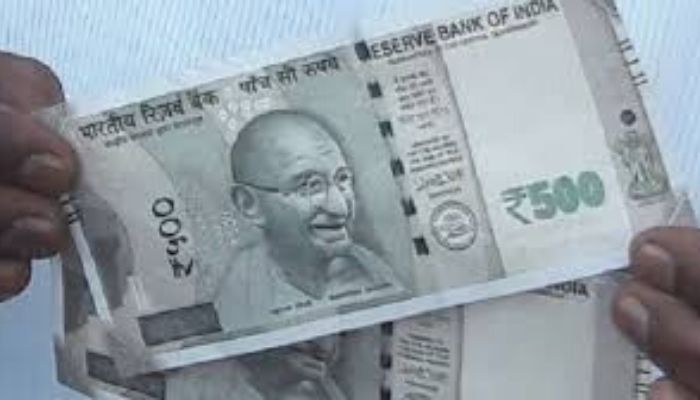
The leader of Indian Union Muslim League Ebrahim Kunju is accused of depositing Rs 10 Crores into the bank account of IUML’s mouthpiece Chandrika when high-value currency notes were banned by the Modi government.

The orders on Kunju was passed by Justice Sunil Thomas in response to a PIL petition by Kalamassery native Girish Babu that sought an investigation against IUML leader for allegedly attempting to convert black money. The petitioner alleged that the income tax department only imposed a fine on unaccounted transactions but did not take action against the accused. The Vigilance and Anti-corruption Bureau of the state government made it clear that according to their investigation that unaccounted money was deposited into the bank accounts.

Kunju is also under scanner for his alleged involvement in the Palarivattom flyover corruption case. The Flyover at Pipeline junction in Kochi was shut down last year after the cracks were observed on the surface. Ebrahim Kunju was PWD minister of the state of Kerala from 2011-2016.

Madhya Pradesh: Kamal Nath government must face floor test on Friday by 5 pm, rules Supreme Court on plea filed by BJP

The Supreme Court has said that Kamal Nath government in Madhya Pradesh has to face floor test till 5 pm on Friday, 20 March to end the situation of uncertainty in the state. The apex court issued this order in response to a plea filed by the former Madhya Pradesh Chief Minister Shivraj Singh Chouhan seeking directions to conduct an immediate floor test in the assembly.

The top court said that that floor test would be held by the show of hands in accordance with the law and the floor test should be video recorded. The court also said that if the rebel MLAs want to join the assembly then both Karnataka DGP and Madhya Pradesh DGP should provide them security.

The Supreme court had served a notice to the Kamal Nath government on Tuesday on the plea filed by the former CM Shivraj Singh Chouhan seeking a response to conduct an immediate floor test for a stable government in the state of Madhya Pradesh. “The session of the MP Assembly that has been deferred shall be reconvened on March 20. A single agenda for the assembly — to hold floor test on March 20. Citing by show of hands,” the order passed by the apex court read.

In the plea, BJP had stated that “the Congress Government in Madhya Pradesh led by Kamal Nath has a lack of confidence and his government has been reduced to a minority. It has no moral, legal, democratic or constitutional right to remain in power even for a single day. All possible attempts are being made by the Honorable Chief Minister to convert his minority government into the majority by giving all possible threats to the members of the Madhya Pradesh Vidhan Sabha. The horsetrading is at its peak. Therefore, it is essential that the floor test is conducted on 16.3.2020 itself as already directed by Honorable Governor, so that it becomes absolutely clear as to whether the Honorable Chief Minister continues to enjoy the confidence of the majority of the Madhya Pradesh Vidhan Sabha.”

The Congress government in Madhya Pradesh is almost sure to lose the trust vote as 22 of its MLAs, including 6 ministers, have resigned from the assembly. The MLAs left the party after senior leader Jyotiraditya Scindia resigned from Congress and joined BJP.

Media misleads public on nationwide lockdown due to coronavirus scare, govt calls reports baseless

The cases of COVID-19 coronavirus in India have risen to 169 on Thursday and three deaths have been reported so far due to the virus. The central and state governments have been working relentlessly to contain the spread of the virus by various measures including screening the suspects, banning mass gatherings, closing down public spaces, etc.

However, certain sections of the media have been continuing to mislead the public by false information to create panic among the citizens. There have been misleading reports that PM Modi will be announcing a lockdown in his address to the nation today. Another rumour is also being circulated stating that there was already a lockdown in the country restricting the movement of the citizen.

In similar propaganda, the controversial left-wing news website HW News on Thursday resorted to fear-mongering by claiming that there were rumours of a pan-India lock-down after Prime Minister Modi’s scheduled public address on Thursday.

The HW report stated that considering PM Modi’s history of surprising citizens in the past, many on the internet started speculating what’s in the store for the country now.

“Whatsapp and other social media platforms are flooded with messages that PM Modi might announce country-wide lockdown in his address tonight,” the fear-mongering report stated.

However, Shashi Shekhar, the CEO of the Prasar Bharti has refuted the claims made by HW news and others. Shashi Shekar categorically stated that information regarding the lockdown was incorrect and denied reports that speculated that PM Modi would announce a lockdown in the country during his address. He said that such incorrect reports would cause unnecessary panic in the minds of the people.

Regarding another rumour stating that there has already been lockdown in the country restriction of the movement of the people, Prasar Bharti has confirmed that all the rumour regarding the lockdown spread across social media, especially by the mainstream media are baseless as there has been no lockdown in any parts of the country.

“A Press Release regarding movement restriction is widely getting circulated on WhatsApp claiming to be of Government of India. No such Press Release has been issued by Prime Minister’s office,” said a press release.

It is shocking to see that certain sections of the media with an inherent bias towards the Modi government has been indulging in such false propaganda at a time when the entire country is in a panic mode following the outbreak of Chinese coronavirus.

The total number of novel coronavirus cases in India has risen to 169 on Thursday after a record number of fresh cases reported from the various parts of the country. Maharashtra is the worst affected state with the maximum number of cases. According to the data released by the Ministry of Health and Family Welfare, the total tally includes 141 Indian nationals and 25 foreigners.

Later today, Prime Minister Narendra Modi will address the nation at 8 pm today regarding the ongoing coronavirus outbreak across the world and the efforts to combat it. The address comes after a high-level meeting the Prime Minister chaired in the evening to review the efforts to contain COVID-19.

Satyaniti and Swaraj constitute the historical backbone of the socio-political order of India, through the ages

Society in the lands we know in modern times as India once was a society firmly placed on the twin-pillars of self-governance and voluntaryism [1-5]. Voluntaryism is a philosophy that posits that all forms of human association should be voluntary [6, 7]. A voluntaryst society is one where people live, socialise, transact and trade without any structures of power and hierarchy, without any coercion or regressive power dynamics. The decentralisation of power, which ends with a community or family in modern times, ended only with the individual, politically, socially and spiritually, in ancient India. Spontaneous order in political and economic realms were respected and harmonized. While in the past I have written on Dharmocracy – comprehensive (political, economic and spiritual) democracy, in this piece, I go one step further in decentralisation and renegotiation of the normative to the individual. In ancient India, atleast in spirit, it was Swarajya (self-rule of people within picayune kingdoms/republics – so much so, that even in 1947, India had 565 princely states) not Samrajya (imperial rule), catallaxy (a synchronisation of individual economics and interests) not a modern economy (transactions with assumed common goals and interest) [8, 9]. This was the perspective that prevailed, and in such a liberal society, people lived with responsibility, peace and rationality, in what was a rarely found open, free and transparent society [10-12].

The Veda are the fountainhead, the spring of profound and beautiful philosophical, soteriological and spiritual principles and ideas [13-18].

Vivaha Sukta, Rigveda Mandala 10 Hymn 85 Verses 16-22

Composed in Vedic Sanskrit, the Veda constitute the oldest layer of scriptural literature within Santana Dharma, with Hindus considering the Vedas to be apauruṣeya, – not authored by man. While monarchies prevailed in Vedic society [19, 20], not only was there a movement away from preeminence given to political power towards a more spiritual one [21, 22] but also the existence of ancient Indian republics – Ganatantra, which contributed towards decentralisation of power [23]. Whether this directly took the form of anarchism is debatable, but there was a move towards reducing the importance of the construct of a primary, overarching state and constructs of powers [24]. The Dharmic path has always been about a fearless trek into the unknown, about seeking the truth of reality [25-27]. It throws out any and every imposed normative ideal of political philosophies, and in doing so, calls for the sacrifice of attachment of the human mind with dogma and rigid political alignments. While this perspective highlights society’s ills and even prescribes possible solutions, it lays a greater emphasis on mutual respect, cooperation and harmony in society rather than rigid loyalties to political constructs of the state or ideologies. This is part of the greater Dharmic realisation of the futility and fleeting nature of all constructs, be it political, social or economic, in the pursuit of the Absolute Truth:

Satya, the Absolute Truth, is beyond constructs of politics and society, particularly those of state and (political) ideologies

And in doing so, it had anarchist undertones, when one considers politics: it highlighted the fallibility of human power and reasoning that can be applicable to one and all, the importance of spontaneous self-organisation and unconscious design in political entities, significance of innovation and influence of factors and forces beyond the control of a central authority.

Satyaniti, this Dharmic anarchism, is the result of the Indic civilisation embracing the dynamism of life, and the spontaneity and capacity to self-organize of human beings.

The principle of self-governance naturally arises from this realisation. Instead of imposed structures, emphasis is on peaceful emergent orders without any rigid conservatism regarding hierarchy, power dynamics and coercion. A truly Dharmic society has at its foundations a preeminent place for honest introspection, self-improvement and evolution of thought and individuality thereby. This is a dynamic way of determining one’s purpose of life, of one’s role within society and the key to one’s happiness.

There is a distinct difference between western anarchism and Dharmic anarchism. While western anarchism is about negation and oft-violent insurrection against political structures, the Dharmic version preoccupies itself with the realisation of why obsession with these political elements is naturally at odds with one’s existence and well-being. The Rishis (seers) since times immemorial led by example, in highlighting how self-governance and self-rule is significant, coupled with anarchist tendencies of not placing much importance with control of the state. They dwelled in forests outside the control of any government, be it of a monarchy or republic of ancient India. They brought forth a spiritual mooring for education and existence, a values-based living and a realisation of Rta (cosmic order) and Dharma (the path that facilitates this order, the universal cosmic principle as well equilibriation in nature).

Read- Satyatva or the Absolute Truth: Resonances across Religions and Rejection of Exclusivism

While western anarchism emphasised anti-state policies, Dharmic anarchism emphasised self-consciousness. While western anarchism went against specific rulers, Dharmic anarchism went for decentralised and non-hierarchical polities. The latter prioritises community living, sensitivity to holistic living and ecologically sustainable lifestyles. This was done with a combination of grassroot democracy (that was centralised around the unit of the Gram – village), Dharma, Varnasrama (not Jaativad) and socio-spiritual realisation of Satya – Truth.

Gram Panchayat. Courtesy: Shagil Kannur

The grassroot democracy can be seen even today with the Panchayati model. Over millenia, this turned India into not only a village-based society but also a strongly community-based and resilient society. The movement towards making these fundamental units of politics and society self-governing and self-sufficient has been seen over the ages. This was in a cooperative model, which was sustainable and nature-bound, and most importantly, independent from the state and its associated politics. Orientalists such as Metcalfe, Munroe and Wilks have described the importance of these communities in India. Kings came and went, dynasties came and went, power exchanged powers, wars took place. What never changed beyond a point was the underlying social fabric of India, based on the village- and community-based model. C. F. W. Hegel highlighted how this system made India impervious to the vagaries of despotism and subjugation by rulers and invaders, even during the colonial era. The achievement of this high level of decentralisation was that there never was a political monolith that a coloniser or invader could demolish for the Indians to fall as a people. It is this rich political heritage that naturally translates to the principle of self-governance, self-rule and Swaraj, and it is this rich political heritage that I would like to stand by.

Satyaniti and Swaraj constitute the historical backbone of the socio-political order of India, through the ages.

References:

  1. Talwar, Balvir. “‘Sustainable growth–the Vedic way.” International Conference on Quality (ICQ’05), Tokyo, September. 2005.
  2. Rammohan, Sethuraman. “Improving Governance In The Light Of Ancient Indian Heritage Texts.” (2018).
  3. Jha, Pradip Kumar. “Decentralization in India: Reflections from Bihar.” Journal of Politics and Governance 3.4 (2014): 149-155.
  4. Singh, Gurdeep. “Swami Dayananda Saraswati’s Instruments in the Reformation of Indian Society.”
  5. Mohapatra, Amulya Ranjan. Swaraj: A Multi-Dimensional Concept. Readworthy, 2009.
  6. Herbert, Auberon Edward William Molyneux. The principles of voluntaryism and free life. Free Press Association, 1897.
  7. Watner, Carl. “‘Stateless, not lawless’: voluntaryism and arbitration.” The voluntaryist 84 (1997): 1-8.
  8. Tilak, Deepak, and Geetali Tilak. “Swarajya and Tilak.” (2019).
  9. Nikam, N. A. “Indian Thought and the Philosophic Bases of Responsibility of Man.” Revue Internationale de Philosophie (1957): 75-87.
  10. Kuppuswamy, Bangalore. Dharma and society: A study in social values. Macmillan, 1977.
  11. Londhe, Manali. “Vedic Concept of Rta: The Cosmic Order.” Proceedings of the XXIII World Congress of Philosophy. Vol. 16. 2018.
  12. Saravanamuthu, Kala. “Gandhian-Vedic’.” Envisioning a New Accountability (Advances in Public Interest Accounting, Volume 13). Emerald Group Publishing Limited (2007): 177-235.
  13. Halbfass, Wilhelm. “The Idea of the Veda and the Identity of Hinduism.” Defining Hinduism. Routledge, 2017. 16-29.
  14. Goodall, Dominic, ed. Hindu scriptures. University of California, 1996.
  15. Macnicol, Nicol. Hindu scriptures. Univ of California Press, 1996.
  16. Zaehner, Robert Charles. Hindu scriptures. Motilal Banarsidass Publ., 2001.
  17. Frawley, David. Wisdom of the ancient seers: Mantras of the Rig Veda. Motilal Banarsidass Publ., 1994.
  18. Wilson, H. H. “Rig-Veda Sanhita: A Collection of Ancient Hindu Hymns, Vol.” (1888).
  19. Bedekar, V. M. “VEDIC FOUNDATIONS OF INDIAN CULTURE.” (1976): 223-226.
  20. Singh, Sarva Daman. “Monarchy in the Vedic Age.” Australian Journal of Politics & History 35.3 (1989): 338-352.
  21. LINDBLAD, J. THOMAS. “The Ultimate Implications of the Ancient Hindu Concept of Sovereignty: The Principle of.” Journal of Indian History: Golden Jubilee Volume (1973): 193.
  22. Sinha, Braj M. “SVADHARMA AND SVABHĀVA IN THE” BHAGAVADGĪTĀ”.” Journal of South Asian Literature 23.2 (1988): 144-149.
  23. Pandey, R. B. “Vedic origin of Indian republics.” Proceedings of Indian History Congress; 15th. session, Gwalior. 1952.
  24. Weir, Kay. “A brief history of anarchism.” Pacific Ecologist 19 (2010): 48-50.
  25. Agarwal, Manjul K. The Vedic Core of Human History: And Truth Will Be the Savior. iUniverse, 2013.
  26. Edgerton, Franklin. “The Upanisads: what do they seek, and why?.” Journal of the American Oriental Society (1929): 97-121.
  27. Nigal, Sahebrao Genu. Vedic philosophy of values. Northern Book Centre, 2009.