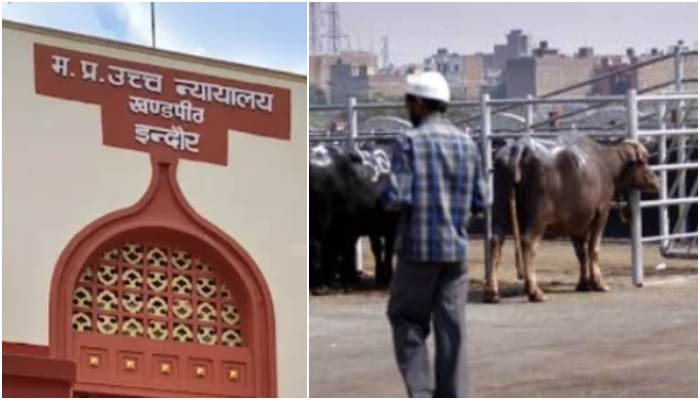
Last week, on 17th December, the Madhya Pradesh High Court declared that refusing permission for the establishment of a modern slaughterhouse claiming the religious background of the city is entirely unacceptable. The said judgment was delivered by Justice Pranay Verma. The judge emphasised that a State Government notification under the MP Municipalities Act, 1961, that specifically declares a 100-meter radius as a sacred area, does not refer to the entire city as sacred.
As per the reports, permission to establish a slaughterhouse was sought by an individual identified as Sabir Hussain. Following the judgment, the court ordered the Municipal Council of Mandsaur to issue an NOC to Hussain to set up a slaughterhouse for buffalo slaughter and meat trading. Hussain reportedly had filed a petition in the High Court challenging a refusal by the Chief Municipal Officer of Mandsaur who he claimed had denied permission for a slaughterhouse stating the religious nature of the city.
Hussain had submitted an application to the Municipal Council seeking a NOC under Section 264 of the MP Municipalities Act, 1961, to establish a slaughterhouse beyond the 100-meter radius of the sacred area as designated by the 2011 State Government notification. The council however rejected his application stating the underway procedures to locate a suitable land for the modern slaughterhouse.
It added that granting permission to establish a slaughterhouse would offend and hurt the religious sentiments of the citizens of Mandsaur. The council further raised concerns over the potential law and order situation of the city as cited by the City Superintendent of Police and the Officer-in-Charge of City Kotwali, Mandsaur.
Hussain then referred to a 2017 High Court judgment that permitted the establishment of a temporary slaughterhouse until a modern one was set up and demanded that similar directions be issued in the given case.
Rejecting the council’s argument, the court stated, “The reason as has been taken in the return that Mandsaur is a religious city hence permission for establishment of a slaughterhouse cannot be given is wholly unacceptable. The issue is regulated by specific legal provisions and even the notification which has been issued by the State Government on 09.12.2011 has declared an area of only 100 meters in radius to be a sacred area. Only for the issuance of such a notification can the entire city not be considered a sacred area. The stand as taken in the return by the respondent hence cannot be accepted
The Court further criticised the Council’s reliance on police recommendations as it noted that the legal provisions under the Municipalities Act should also be looked upon.
Justice Verma also stated that the Council’s underway procedures to locate suitable land for the modern slaughterhouse did not exempt it from its responsibility to issue a NOC.
The Court then ordered the administrative authorities to issue NOC to Hussain provided the latter succeeds in obtaining necessary permissions under the Water (Prevention and Control of Pollution) Act, 1974, and the Air (Prevention and Control of Pollution) Act, 1981.
Continuing their drive against child marriage and other social evils, the Assam Police arrested 5348 persons across the state in last two years and registered 5842 cases.
According to the data shared by Assam police, the first drive was launched against child marriage in February 2023 and the second drive was conducted in October 2023.
Assam police arrested 431 persons in the third phase drive on the night of December 21-22 across the state and registered 345 cases. In the first phase drive, police arrested 3425 persons and registered 4387 cases, in the second phase, police arrested 913 persons and registered 682 cases.
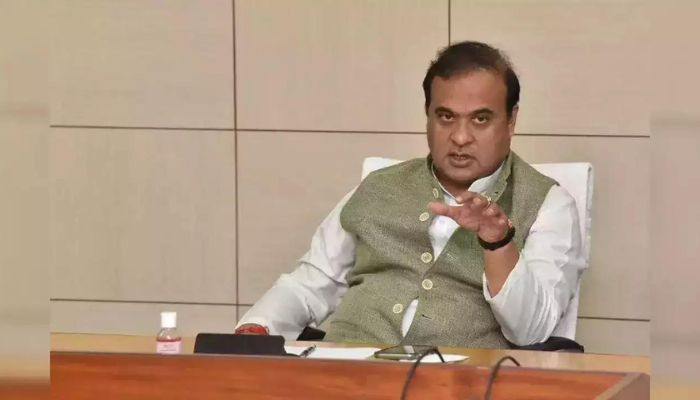
M. P. Gupta, ADGP (CID) said that, as per the direction of Assam Chief Minister Himanta Biswa Sarma, fulfilling his vision, Assam Police has been continuously fighting against the evil of child marriage.
Gupta said that the main goal was to eradicate the social evil of child marriage by 2025.
“The goal is to eradicate the social evil of child marriage by the end of 2025. In this regard 2 numbers of special drives have been conducted earlier in the month of February, 2023 and again in the month of October, 2023. In the first drive against child marriage all over Assam 4,387 cases were registered and 3,425 persons were arrested and in the 2nd drive conducted in the month of October 2023, 682 cases were registered and 913 persons were arrested. In continuity to curb the social evil of child marriage and as per the direction the Chief Minister of Assam, Assam Police launched the 3rd special drive on 21st December, 2024 throughout the state,” the ADGP said while speaking to ANI.
Further, he added that in the current drive a total of 345 cases had been registered in which most of the accused were husbands, family members and Kazis who performed the marriage rituals.
“In the current drive 345 cases were registered and 431 persons were arrested. The arrest include the accused husbands, family members, and the Kazis who performed the marriage rituals. In the first 2 drives 5,181 cases were charge sheeted and it accounts to 95.2% of the cases registered. As a result of these special drives against child marriage. The Infant Mortality Rate (IMR) and the Maternal Mortality Rate (MMR) has come down drastically in the state of Assam,” M. P. Gupta said.
According to the data of Assam police, in the third phase drive, police arrested 68 persons in Dhubri district, 52 persons in Barpeta district, 42 in South Salmara Mankachar district, 22 each in Kamrup and Karimganj district, 21 each in Darrang and Hailakandi district.
(This news report is published from a syndicated feed. Except for the headline, the content has not been written or edited by OpIndia staff)
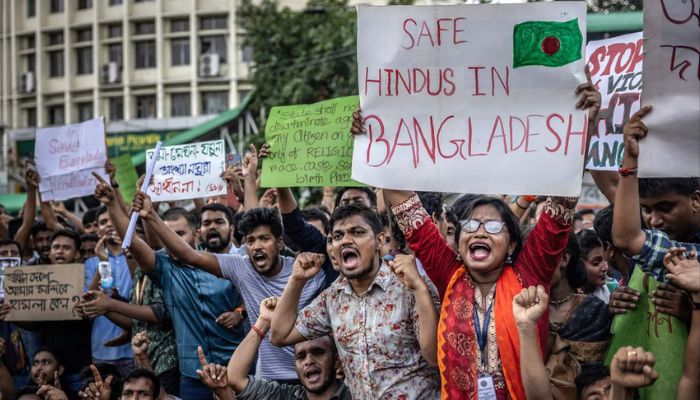
Since Sheikh Hasina’s exit from Bangladesh in August 2024, the propaganda news portal The Wire has consistently downplayed the issue of violence against Hindus roiling the neighbouring country. Through a series of reports, op-eds, and interviews, The Wire diminished the severity of the targeted attacks on Hindus and other minorities by framing them as politically motivated rather than religiously driven. Though the publication acknowledged the attacks on minorities, it frequently shifted the focus to so-called misinformation by Indian right-wing groups and broader political narratives. Here is an analysis of 10 reports, interviews, and op-eds published by The Wire since August 2024 that clearly show the intention to downplay the attacks on Hindus in Bangladesh.
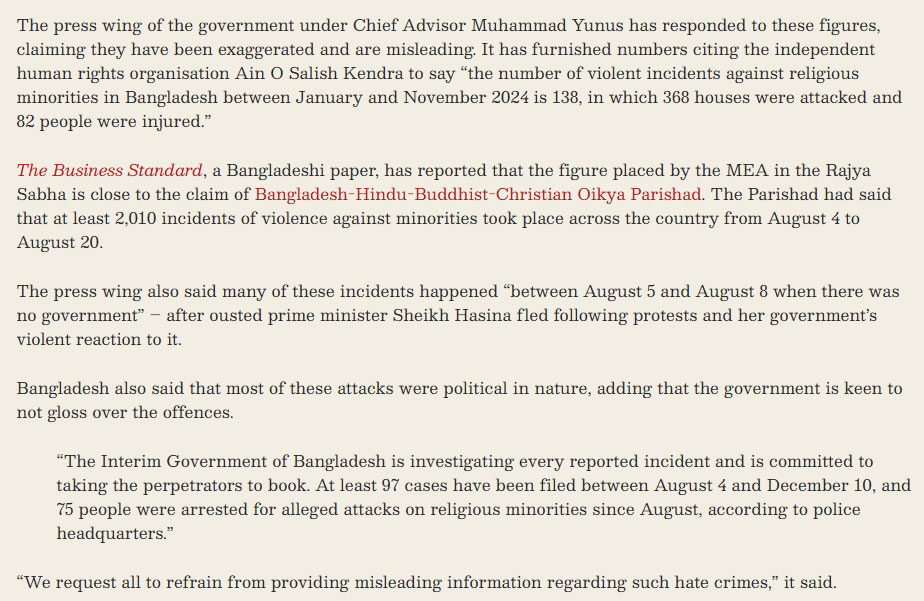
On 21st December, The Wire published a report quoting the Bangladeshi government’s official response to the Ministry of External Affairs’ reply in the Lok Sabha. The ministry stated that there were 2,200 incidents of violence against Hindus and other minorities in Bangladesh in 2024. The Bangladeshi press wing, as quoted by The Wire, claimed that there were only 138 incidents of violence between January and November 2024. Ain O Salish Kendra, a human rights organisation from Bangladesh, provided the numbers.
Source: The Wire
It further claimed that the figures presented by the MEA were close to the numbers published by the Bangladesh Hindu-Buddhist-Christian Oikya Parishad, which recorded 2,010 incidents of violence in just 16 days between 4th August and 20th August. Downplaying the incidents of attacks on Hindus and other minorities, the report quoted the press wing as stating that between 5th August and 8th August, there was no government in the neighbouring country. Indirectly, the press wing attempted to evade responsibility, and The Wire followed it. It is unclear on what basis the Bangladeshi government and The Wire dismissed the stats provided by the Bangladesh Hindu-Buddhist-Christian Oikya Parishad.
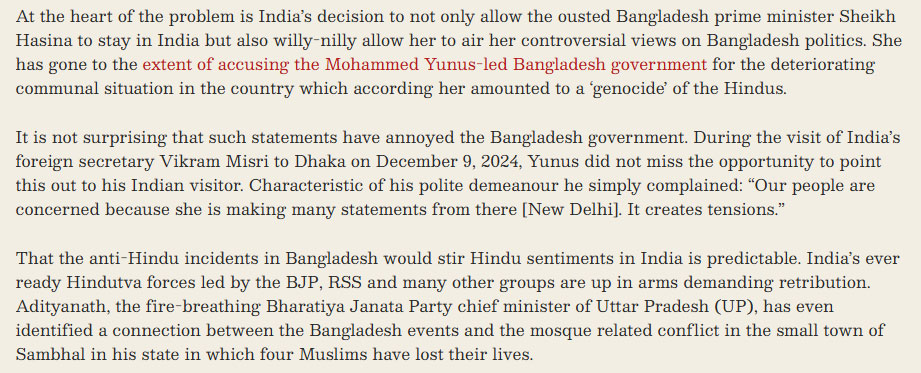
In an op-ed authored by Partha S. Ghosh published in The Wire on 12th December, the author conspicuously downplayed the attacks on Hindus and other minorities in Bangladesh. He dismissed concerns about the deteriorating communal situation in the neighbouring country and portrayed former Prime Minister Sheikh Hasina’s accusations of genocide against Hindus as “politically motivated” and “exaggerated” to suit her Indian hosts.
Source: The Wire
Ghosh acknowledged the stronghold of pro-Islamic forces in Bangladeshi politics but diminished the gravity of the violence. He questioned the authenticity of reports from Bangladesh regarding the attacks on Hindus and other minorities, attributing them to “fake news” or “Hindutva propaganda.” Furthermore, he claimed that the communal situation in Bangladesh is no different from that in India and indirectly shifted the focus from the targeted violence faced by minorities in Bangladesh to criticising the BJP-led central government in India. He wrote, “As such, when the BJP, which has been ruling India for ten long years with its avowedly anti-Muslim politics, tends to shed tears for the minorities in a neighbouring country it sounds rather ironical.” In doing so, he minimised the plight of the victims and sidestepped the responsibility of addressing the issue at its core.
Source: The Wire
Even in regular reports, The Wire did not miss any opportunity to portray day-to-day life in Bangladesh as “normal” while accusing the BJP of circulating videos of “violence” against minorities in India. In a report published on 10th December on declining trade between Bangladesh and India at Petrapole in West Bengal, The Wire quoted a trader from Bongaon, Tapan Saha, who, according to the portal, claimed that “everyday life in Dhaka seemed normal” to him and that it was puzzling to see videos of unrest shared by the BJP on social media, which were absent from Bangladeshi media.
Source: The Wire
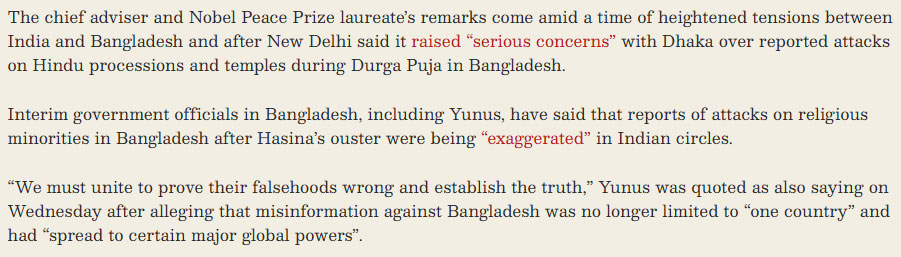
In another report published on 5th December, The Wire effectively downplayed the violence against Hindus in Bangladesh by amplifying the narrative of interim chief adviser Muhammad Yunus and other Bangladeshi officials. The report highlighted allegations made by Yunus, claiming that reports of attacks on minorities were “exaggerated” and part of a “fabricated narrative” spread by India and other global powers.
Source: The Wire
It further cited Yunus’s claims that Durga Puja was celebrated “peacefully” despite anticipated troubles, portraying Indian concerns as unfounded. The Wire subtly diverted attention from the plight of minorities to Bangladesh’s grievances over incidents such as the Agartala protest. Notably, the protest and the alleged attack on the Bangladeshi consulate in Agartala had already been condemned by the Indian government.
Source: The Wire
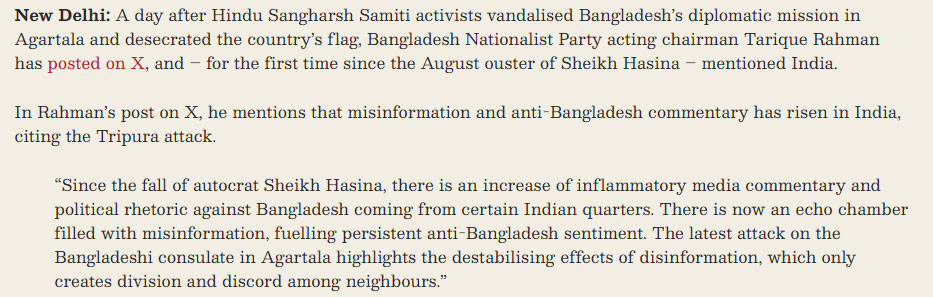
Interestingly, on 3rd December, The Wire published a report citing Bangladesh Nationalist Party (BNP) acting chairman Tarique Rahman, who claimed that “anti-Bangladesh sentiment” has been fuelled in India. Citing a post on X by Rahman, The Wire quoted him saying, “Since the fall of autocrat Sheikh Hasina, there is an increase of inflammatory media commentary and political rhetoric against Bangladesh coming from certain Indian quarters. There is now an echo chamber filled with misinformation, fuelling persistent anti-Bangladesh sentiment.”
Source: The Wire
Notably, Rahman, currently living in the United Kingdom under forced exile, is the prime convict and mastermind of the 21st August 2004 terrorist grenade attack on the Awami League’s political rally. Having fled to London in 2008, he was sentenced to life imprisonment for the grenade attack in 2018. However, on 1st December, the Bangladesh Supreme Court quashed all lower courts’ decisions against him in the 2004 attack.
Ironically, while Rahman alleged the existence of anti-Bangladesh sentiment in India, he called for a boycott of Indian products. In early 2024, he orchestrated a campaign against India, primarily on social media platforms, using the hashtag #IndiaOut.
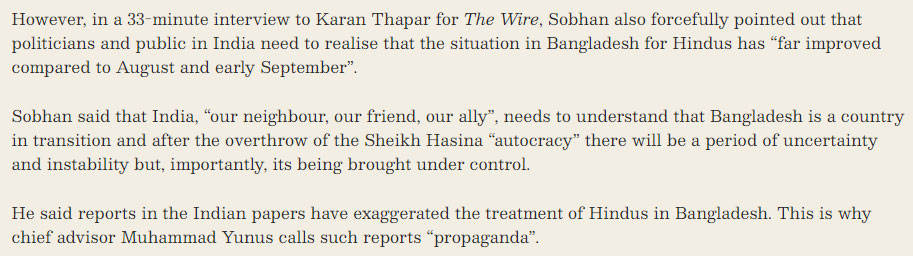
On 29th November, in an interview with Karan Thapar for The Wire, Zafar Sobhan, editor of the Dhaka Tribune, downplayed the severity of attacks on Hindus in Bangladesh by asserting that the situation has “far improved” compared to previous months.
During the discussion on the arrest of ISKCON leader Chinmoy Krishna Das, Sobhan criticised the sedition charges as “out of line, unwarranted and unwise” but simultaneously shifted focus to blaming Indian politicians and media for allegedly exaggerating the treatment of Hindus in Bangladesh.
Source: The Wire
He cited Bangladesh’s transition following the ouster of Sheikh Hasina and echoed interim chief adviser Muhammad Yunus’s dismissal of reports on Hindu persecution as “propaganda,” subtly minimising the targeted violence against minorities. The Wire’s report on the interview noted him saying, “Our neighbour, our friend, our ally needs to understand that Bangladesh is a country in transition, and after the overthrow of the Sheikh Hasina ‘autocracy’, there will be a period of uncertainty and instability, but, importantly, it’s being brought under control.”
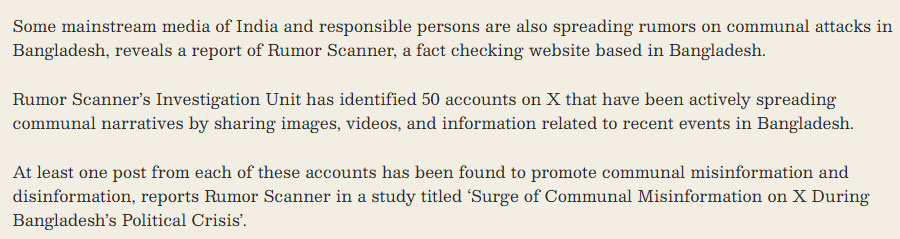
In an alleged fact-checking report published by Prothom Alo and featured on The Wire on 19th August, the attacks on Hindus in Bangladesh were effectively downplayed by citing a study from Rumor Scanner. The report accused Indian media outlets and individuals of spreading communal misinformation. The report scrutinised social media posts that allegedly misrepresented incidents in Bangladesh as attacks on Hindus, yet it failed to adequately address several incidents of violence or the plight of the Hindu victims.
Source: The Wire
By focusing heavily on debunking misinformation from Indian sources, the report shifted attention away from the real concerns of targeted violence against Hindus in Bangladesh. The report even accused OpIndia of spreading misinformation while downplaying the extensive reporting done by the portal highlighting attacks on Hindus following Sheikh Hasina’s exit.
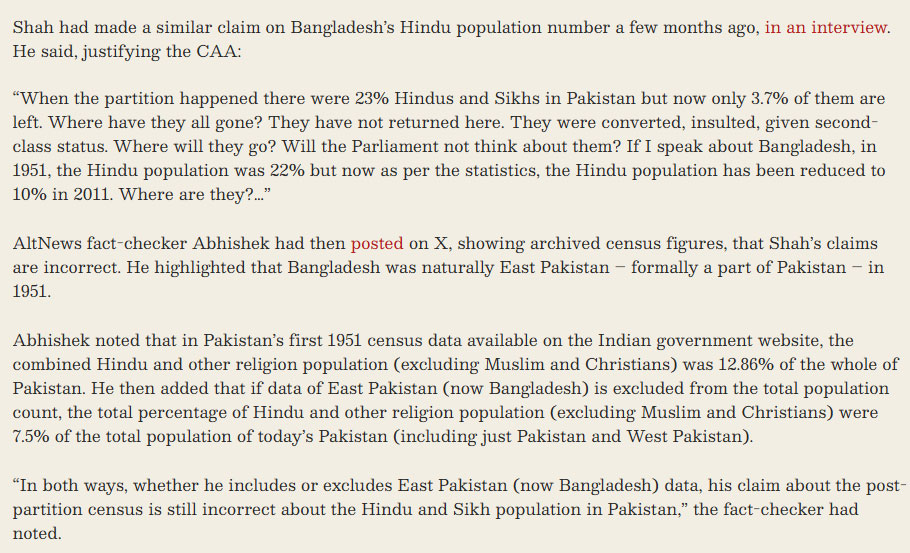
In a report published by The Wire on 18th August, which mentioned Bangladesh’s claims that reports of attacks on its Hindu minorities were “exaggerated,” the historical data presents a contrasting reality. While The Wire cited a so-called fact-checker to contest Union Home Minister Amit Shah’s remarks on the declining Hindu population in Bangladesh, official Bangladeshi data shows a significant decline in the minority population.
Source: The Wire
The “Percentage Distribution of Population by Religious Communities” indicates a drop from 33% in 1901 to 10.5% in 1991, with the 2022 census confirming a further reduction to just 7.95%. HM Shah, while distributing citizenship certificates to Hindu refugees in Gujarat under the Citizenship (Amendment) Act (CAA), highlighted the persecution of Hindus in Bangladesh, attributing the decline to forced conversions and systemic discrimination.
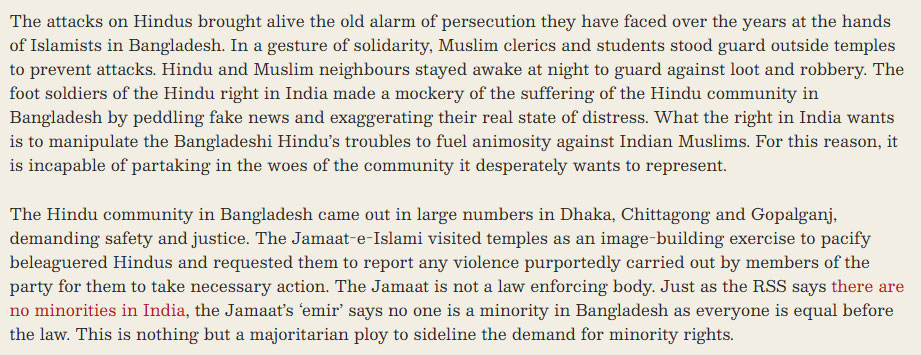
In an op-ed by Manash Firaq Bhattacharjee published in The Wire on 17th August, the attacks on Hindus in Bangladesh are downplayed by framing the violence as political rather than religious. Bhattacharjee echoes interim chief adviser Muhammad Yunus’s rhetoric, suggesting that Hindus asking for special safeguards were “compartmentalising their demands” and detracting from a nationalistic “humanist aspiration.”
Source: The Wire
While acknowledging the violence, the op-ed misrepresents it as an extension of political retribution linked to the Awami League rather than targeted religious persecution. Furthermore, it accuses Indian right-wing groups of making a mockery of Bangladeshi Hindus’ suffering by allegedly exaggerating their distress to foster animosity against Indian Muslims. The author went ahead and compared the Islamist organisation, Jamaat-e-Islami, which was banned by Bangladesh, with RSS in India. He wrote, “Just as the RSS says there are no minorities in India, the Jamaat’s ‘emir’ says no one is a minority in Bangladesh as everyone is equal before the law.” By prioritising critiques of Indian narratives and advancing a universalist framework, the op-ed categorically downplayed the gravity of the attacks and the specific vulnerabilities faced by Hindus in Bangladesh.
In an op-ed by Ram Puniyani published in The Wire on 15th August, the author severely downplayed the attacks on Hindus in Bangladesh by portraying them as politically motivated rather than religiously targeted. Though he acknowledged that there were attacks on Hindus, the author emphasised narratives of pluralism and democratic progress in Bangladesh.
Source: The Wire
He claimed that Yunus and student groups were “protecting” Hindu temples. Simultaneously, he criticised the Indian response and accused right-wing groups and media of spreading misinformation, which fuelled Islamophobia in India and perpetuated divisive rhetoric.
Source: The Wire
His extensive focus on “Indian propaganda” and conflating the violence with broader political unrest diminished the severity of targeted attacks on Hindus. He attempted to shift the narrative towards communalism in India rather than addressing the root causes of the persecution of minorities in Bangladesh.
Simultaneously, he criticised the Indian response and accused right-wing groups and media of spreading misinformation, which fuelled Islamophobia in India and perpetuated divisive rhetoric. His extensive focus on “Indian propaganda” and conflating the violence with broader political unrest diminished the severity of targeted attacks on Hindus. He attempted to shift the narrative towards communalism in India rather than addressing the root causes of the persecution of minorities in Bangladesh.
The Wire kept its emphasis on the claims of exaggerated reports and Indian propaganda, setting a narrative to deflect attention from the alarming persecution of Hindus and other minorities in Bangladesh. Historical data highlights a significant decline in the Hindu population in Bangladesh, but The Wire, instead of verifying the statistics itself, relied on another propagandist portal’s report to downplay the population decline. Throughout its reporting, The Wire remained more invested in criticising the Indian response rather than holding the interim government in Bangladesh accountable.
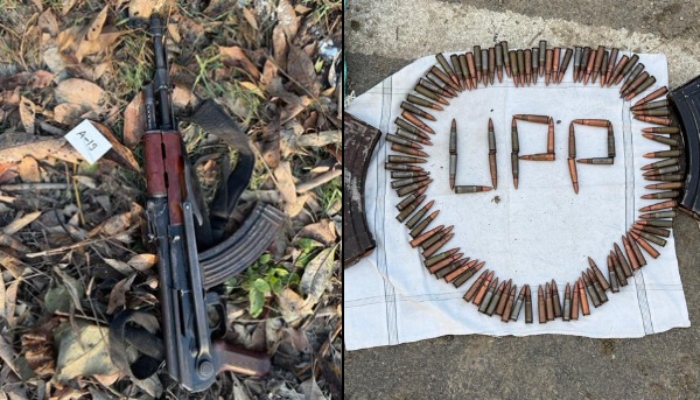
On Monday (23rd December), three Khalistani terrorists were injured in a police encounter in the Pilibhit district of Uttar Pradesh.
They were initially treated at the Community Health Centre in Puranpur, before being shifted to the district hospital where they were declared dead on arrival.
The Khalistani terrorists neutralised in the police encounter included Gurwinder Singh, Virendra Singh, and Jasanpreet Singh. They were wanted for attacking a police post with a grenade in the Gurdaspur district of Punjab.
VIDEO | Pilibhit Encounter: "The three injured accused were referred to the district hospital after initial treatment at CHC Puranpur. However, the CMO and his team confirmed that they dead upon arrival here. Two AK47s, two foreign made Glock pistols and a huge cache of… pic.twitter.com/lihFwb1zgS
As per the initial reports, these Khalistani terrorists were associated with the banned Khalistan Commando Force. The authorities have recovered two AK-47 rifles and two Glock pistols from their possession.
The police acted upon the tip-off and gheraoed the region to restrict the terrorist movement. Following this, the police asked the terrorists to surrender.
On their refusal, a major scuffle happened between the police and the accused persons after which the encounter was executed in which three terrorists were put to death.
Uttar Pradesh DGP Prashant Kumar commented on the matter and confirmed that the operation was conducted as a part of joint efforts put in by the Punjab Police and the Uttar Pradesh Police.
The UP police were informed that the terrorists had been hiding in the Pilibht district and that they were wanted in Punjab after they attacked a police post in Gurdaspur.
“We first asked them to surrender. But they failed to surrender. After this, a major scuffle occurred between the authorities and the terrorists following which the encounter was executed. The injured terrorists were taken to the hospital for treatment but they were declared dead. This is the result of our joint efforts,” he said.
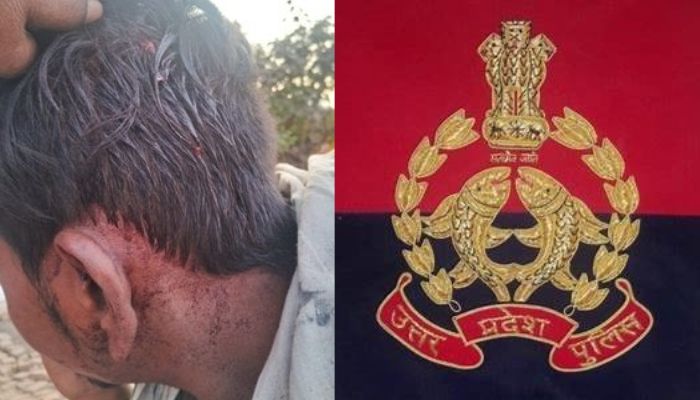
In Uttar Pradesh’s Bareilly district, a Hindu fast food hawker named Bhupendra was allegedly assaulted by some Muslim men Abdul, Pappu and two others, after the accused persons abused the victim on 22nd December. The victim has suffered serious injuries.
In his complaint, the victim, a resident of Kesarpur village in the Bhuta Bareilly police station area, said that he was going to the market at around 3 p.m. with his Chowmein cart. On the way, Abdul, son of Shamshuddin Mamma of the village, started abusing Bhupendra without any reason. When Bhupendra stopped them from doing so, the accused overturned his fast food cart.
प्रकरण के सम्बन्ध में थाना भुता,बरेली पर सुसंगत धाराओं में अभियोग पंजीकृत है तथा अग्रिम विवेचनात्मक कार्यवाही प्रचलित है।
Following this, Abdul, Pappu and two others began thrashing the victim. The complainant alleged that accused Abdul hit him with a rod. The victim was also threatened.
“When I stopped him from abusing, he overturned the cart. Upon hearing this, the above-mentioned people Abdul and Pappu sons of Shamshuddin Gayema and two unknown people resident of Kesarpur started beating me. They took a rod and a pistol and Abdul hit me on my head. People from the neighbourhood then came and threatened to kill me,” the victim said in his complaint and demanded action against the accused persons.
Meanwhile, the Bareilly Police has said that a case has been registered under relevant sections and an investigation is underway.
“In relation to this matter, a case has been registered under relevant sections at Police Station Bhuta, Bareilly and further investigation proceedings are underway,” the police said.
The Office of the High Commissioner for Human Rights (OHCHR), an entity of the United Nations, had been deliberately ignoring the plight of Hindus who have been suffering at the hands of Islamists in Bangladesh.
On 5th August this year, extremists masquerading as ‘student protesters’ ousted Sheikh Hasina as the Prime Minister of Bangladesh. Thereafter, Hindus and other religious minorities were left at the mercy of violent Muslim mobs.
Instead of documenting the atrocities committed against the vulnerable Hindus, OHCHR announced on 16th September this year that they are conducting an ‘independent and impartial investigation’ into human rights violations.
It revealed that the so-called independent probe was being done at the behest of the Muhammad Yunus-led interim government of Bangladesh, which coincidentally has been pandering to Islamists and anti-Hindu forces.
OHCHR clarified that its ‘impartial investigation’ is limited to the anti-Hasina protests and the ‘human rights violations’ occurring in the context of it between 1st July and 15th August.
Thus, the United Nations entity was able to skirt specific instances of violence against vulnerable Hindus, committed by the majority Muslim community.
OHCHR, which is known for mouthing platitudes about the ‘human rights’ situation in India, thus shrewdly avoided holding the interim government accountable.
“The fact-finding team is mandated to establish facts, identify responsibilities, analyze root causes, and make concrete recommendations for Bangladesh to address past human rights violations and prevent their recurrence,” it claimed in its announcement.
The ‘confidential nature’ of the fact-finding process further nullified any hopes of transparency and justice for the minority Hindu community in Bangladesh.
Attack on Hindus in Bangladesh since the fall of Dhaka
While the Office of the High Commissioner for Human Rights (OHCHR) had deliberately avoided documenting the plight of Bangladesh Hindus, OpIndia had been vetting and reporting cases of atrocities since the ouster of Sheikh Hasina.
There have been at least 205 attacks on Hindu temples, shops and businesses within 3 days of the fall of Dhaka.
We previously exposed how Muslim students have forced as many as 60 Hindu teachers, professors and government officials to resign from their positions.
Human rights activist and exiled Bangladeshi blogger, Asad Noor, has recently revealed that the minority community is now being coerced into joining ‘Jamaat-e-Islami’.
On 6th September, a procession of Hindu devotees carrying the idol of Lord Ganesha came under attack in the Kadam Mubarak area in Chittagong city of Bangladesh.
Ahead of the Durga Puja celebrations, a radical Muslim man named Yasin Mia vandalised the idols of Goddess Durga and other Hindu deities in Gouripur town in the Mymensingh district of Bangladesh on 25th September.
In the latest series of attacks, idols of Goddess Durga and other Hindu deities were vandalised at the Rishipara Barwari Puja Mandap and the Manikadi Palpara Barwari Pujamandap on 28th September and 1st October respectively.
The attacks were carried out in Sujanagar upazila in Pabna district in Rajshahi Division of Bangladesh. While a total of 4 idols were defaced at the Rishipara Barwari Puja Mandap, another 5 Hindu idols were destroyed at the Manikadi Palpara Barwari Pujamandap.
On 3rd October, 7 idols of Hindu deities were destroyed at the Gopinath Jiur Akhara Durga Puja mandap in Kishoreganj, Dhaka Division, Bangladesh.
On 5th November, the Hindu community came under attack from police and law enforcement authorities in Hazari Goli in Chittagong city of Bangladesh.
On 29th November, a violent Muslim mob attacked Hindu minorities and vandalised 3 temples in Patharghata in Chittagong district of Bangladesh.
The Hindu religious sites that the Muslims targeted included the Shantaneshwari Matri Temple, the Shoni Temple, and Shantaneshwari Kalibari Temple. The attack took place immediately after the conclusion of Jumma Namaz.
On 30th November, a prominent Hindu journalist named Munni Saha was arrested by the police from Karwan Bazar in Dhaka city of Bangladesh.
A group of extremists attacked the Mahashmashan Kali Mata Mandir, vandalised 7 idols of deities and stole gold ornaments on 13th December 2024.
On 19th December, a Muslim man identified as Alal Uddin vandalised an idol at the Polashkanda Kali Temple and then attempted to create a fake alibi. The incident occurred in Haluaghat upazila in the Mymensingh district of Bangladesh.
Another 37-year-old Muslim man identified as Azharul vandalised several idols of deities in Haluaghat Upazila in the Mymensingh district of Bangladesh.
The recent arrest of Chinmoy Krishna Das Prabhu and his aides, attempts at banning Hindu organisation ISKCON and stiffling Hindu protests with cases of ‘sedition’ highlight systematic persecution under the interim government of Muhammad Yunus.
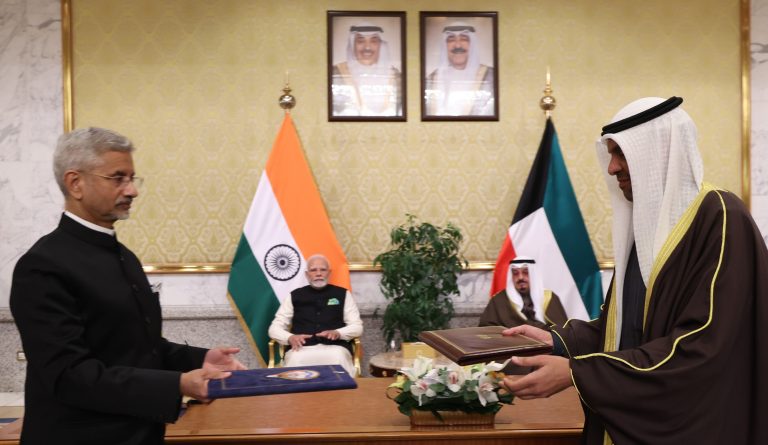
India and Kuwait signed four Memorandum of Understandings in the areas of defence, sports and cultural cooperation during Prime Minister Narendra Modi’s visit to the Gulf nation, the Ministry of External Affairs said on Sunday.
MEA Secretary CPV and OIA, Arun Kumar Chatterjee during a special briefing today, said the MoUs are expected to deepen the multifaceted bilateral relationship as well as open avenues for newer areas of cooperation.
“Following the delegation level talks today, four bilateral documents were signed during the visit. The first one is a Memorandum of Understanding on defence cooperation, the second one is a Cultural Exchange program for the years 2025-2029, the third is an executive program on cooperation in the field of sports for the period 2025- 2028. We also had Kuwait joining as a member of the International Solar Alliance (ISA),” he said.
“We are pretty confident that this historic visit of the Prime Minister will open up a new chapter in the relationship between India and Kuwait. Both the sides have been able to identify several important areas of cooperation and the governments will be working towards fulfillment of the plans that have been made during this visit,” Chatterjee added.
The MoU on Defence cooperation will institutionalize bilateral cooperation in the area of defence. Key areas of cooperation include training, exchange of personnel and experts, joint exercises, cooperation in defence industry, supply of defence equipment, and collaboration in research and development, among others, a statement by MEA said.
“The MoU between India and Kuwait in the field of Defence cooperation will institutionalise the bilateral cooperation in the areas of defence. The key areas of cooperation would include training, exchange of personnel and experts, joint exercises, cooperation in defence industry, supply of defence equipment and collaboration in research and development,” Chatterjee said.
Cultural Exchange Programme (CEP) between India and Kuwait for the years 2025-2029 will facilitate greater cultural exchanges in art, music, dance, literature and theatre, cooperation in preservation of cultural heritage, research and development in the area of culture and organizing of festivals, an MEA statement said.
“The cultural exchange program will facilitate greater cultural exchanges in art, music, dance, literature and theater. Cooperation in preservation of cultural heritage, research and development in the areas of culture and organization of festivals,” he said.
Executive Programme (EP) for Cooperation in the Field of Sports for the years 2025-2028 will strengthen bilateral cooperation in the field of sports between India and Kuwait by promoting exchange of visits of sports leaders for experience sharing, participation in programs and projects in the field of sports, exchange of expertise in sports medicine, sports management, sports media, sports science, among others, the statement said.
“The executive program for cooperation in the field of sports will strengthen bilateral cooperation in the fields of sports between India and Kuwait by promoting exchange of visits of sports leaders for experience sharing, participation in programs and projects in the field of sports, exchange of expertise in sports medicine, sports management, sports media, sports science among some of the areas that we have identified,” Chatterjee said.
Kuwait became a member of the ISA. The International Solar Alliance (ISA) collectively covers the deployment of solar energy and addresses key common challenges to the scaling up of use of solar energy to help member countries develop low-carbon growth trajectories, the MEA statement said.
“Kuwait becoming a member of the International Solar Alliance collectively covers the deployment of solar energy and addresses key common challenges to the scaling up of use of solar energy to help member states develop low carbon growth trajectories,” Chatterjee said.
The MEA Secy said that Kuwaiti side acknowledged the important contribution made by Indians there in their economy. Both sides agreed that working groups in the sectors of health and education will identify new sectors of cooperation.
“Regarding the health and education sector, both the sides acknowledged the important contribution that Indians are making in the Kuwaiti economy today and the Kuwaiti side also acknowledged the major contribution that the Indian diaspora is making for the development of the Kuwaiti economy on the issues like health and education. We have separate working groups that have been set up. Both the leaders agreed that these working groups will be meeting frequently and regularly to identify new areas of cooperation. On manpower front also we have a joint working group that exclusively looks at manpower-related issues of Indians in Kuwait and that working group usually looks at and addresses the major issues that are there in this sector but in the general context the leaders discussed about the contribution of the of the Indian community here,” Chatterjee said.
He said that intensification of visits from Kuwaiti side may be anticipated as new areas of cooperation have been identified.
“The elevation of a relationship to a strategic partnership means you have taken your bilateral relationship to the next level. Which means you will have greater intensity of cooperation in several areas, plus we have identified new areas. We will see intensification of exchanges and visits in the coming days to materialize whatever has been planned by the leaders of both the countries,” he said.
Chatterjee added that health is an important sector that has been identified for cooperation.
“Health and pharmaceuticals is one important area which both the sides have identified for cooperation and that could include investments by the Kuwaiti side in India or expansion of the trade basket to increase pharmaceutical exports also from India. Pharmaceutical would continue to be one of the important sectors of cooperation between our two countries,’ he said.
Prime Minister Narendra Modi concluded his two-day official visit to Kuwait, and emplaned for New Delhi on Sunday.
Visiting Kuwait at the invitation of Sheikh Meshal Al-Ahmad Al-Jaber Al-Sabah, the Emir of the State of Kuwait, PM Modi held multiple engagements and held discussions to further deepen the India-Kuwait ties.
In a special gesture, the PM of Kuwait came to see off PM Modi at the airport as he left for India.
(This news report is published from a syndicated feed. Except for the headline, the content has not been written or edited by OpIndia staff)
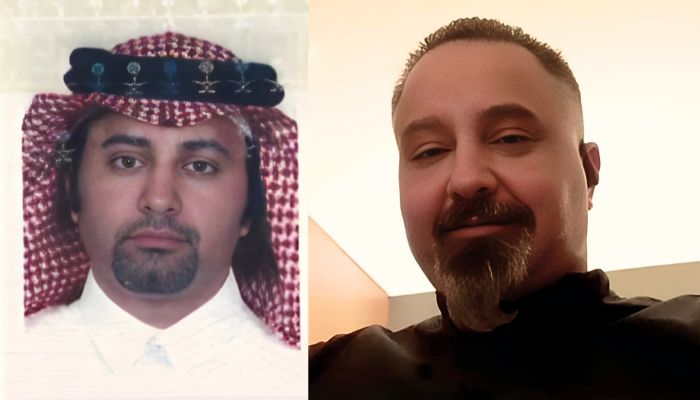
On 20th December, a 50-year-old Saudi-born doctor identified as Taleb Al-Abdulmohsen rammed a BMW car into the crown at a Christmas market in Magdeburg, Germany. The incident claimed lives of five people and left over 200 injured. Several of the injured individuals are in critical condition. The German authorities are examining the motive behind the attack. Taleb, who identified himself as an ex-Muslim atheist on social media, has sparked global outrage with his actions. Notably, the ex-Muslim community has come forward and raised serious concerns about his claimed identity as an ex-Muslim atheist.
Ex-Muslim community questions attacker’s authenticity
Taleb fled Saudi Arabia in 2006. He publicly identified himself as an ex-Muslim atheist. He used this persona to get asylum in Germany citing possible persecution in his homeland. However, prominent ex-Muslims have raised concerns over the said identity and pointed out inconsistencies in his behaviour. The ex-Muslim community is now suggesting that Taleb was using the “label” strategically for his personal gains.
German ex-Muslim atheist Ali Utlu has accused Talen of duplicitous behaviour. In a statement, Utlu said, “He acted as an ex-Muslim publicly while threatening others, especially Saudi women, in private. According to media reports, Utlu was in contact with Taleb till 2018. However, he distanced himself from Taleb due to troubling interactions.
He acted ex-Muslim on the outside, while in DMs he threatened ex-Muslims, especially Saudi women who had fled. He also repeatedly attacked me because I wanted nothing more to do with him after 2018 and finally blocked him in May of this year. on X.
In a post on X, Utlu questioned, “We organized ex-Muslims openly say that he practiced taqiyya. If someone was as Islamophobic as him, wouldn’t he try to kill Muslims in an attack instead of Christians at a Christmas market?”
I'll say it again: many people who have had contact with Taleb, like me, deny that he was ever an atheist or ex-Muslim.
He himself claimed to be a Wahhabi. He had open contacts with Hamas people, as well as with supporters of IS.
Similar accounts were shared by Canadian ex-Muslim activist Yasmine Mohammed who described Taleb as “unstable” and aggressive. She alleged that Taleb targeted female activists from Saudi Arabia. He even sought Yasmine’s help to “expose” one such woman. She expressed suspicion that Taleb might have collaborated with the Saudi authorities to undermine female dissidents.
The man who was arrested for the most recent terrorist attack on a Christmas market- this time in Magdeburg, Germany- is allegedly Saudi national Taleb Al Abdulmohsen. I’ve known him for years (online only) and he never seemed stable to me. He obsessively went after an ExMuslim…
Some ex-Muslims have suggested that Taleb might have employed Taqiyya. For those who are unaware, Taqiyya is an Islamic practice that allow concealment of faith under duress. It is often used to infiltrate ex-Muslim community. Maral Salmassi, who is an Iranian-German entrepreneur, released a video dismissing claims that Taleb was an atheist. She argued that his actions aligned more with Taqiyya as he used to advance Islamist objectives while deceiving others.
Despite claims made by the German press, Taleb Al Abdulmohsen is not an ex-Muslim atheist, nor is he a fan of the AfD or Elon Musk. While he may have spread this misinformation himself, it aligns with the practice of Taqqiye, an Islamic doctrine that permits lying and deception… pic.twitter.com/tU2tRS51Lr
According to Britannica, Taqiyya can be described as a doctrine practised primarily by Shia Muslims. It permits to follow religion under secrecy under threat. As Taleb belonged to Shia community, those who are sceptic that he was an ex-Muslim, believe that his actions fall in line with Taqiyya.
Al-Abdulmohsen’s asylum and the German authorities’ oversight
In 2016, ten years after Taleb fled Saudi Arabia, Germany granted him asylum. His persona of an ex-Muslim played a significant role in getting asylum status. There were allegations of terrorism, rape and smuggling against Taleb in Saudi Arabia and the authorities sought his extradition. However, German authorities refused his extradition while citing possible risk to his safety. Evidently, in the light of recent events, it is possible that the German officials overlooked the warnings about his extremist tendencies.
Reportedly, a woman had alerted authorities that Taleb had threatened to carry out a terror attack. However, no significant action was taken on the woman’s revelations about Taleb’s intentions. It is possible that his carefully curated image of an ex-Muslims influences the authorities leading to leniency in his case leaving room for the recent attack to happen.
The impact on genuine ex-Muslims
The incident has raised serious concerns among the genuine ex-Muslims. They fear that Taleb’s actions would stigmatise their community and jeopardise their asylum claims. Ex-Muslims are always under risk as they left Islam. They face death threats, violence and estrangement from the community. Many of the ex-Muslims hide the fact that they have left Islam and do not share their identity as an ex-Muslim with their families fearing adverse reactions from them.
In a statement, Yasmine Mohammed voiced her fears and stated that such incidents will lead to scrutiny on ex-Muslims. She said, “This path to asylum was already fraught with challenges. Now it’s harder.”
Taleb Al-Abdulmohsen – A case of manipulation?
The life of Taleb Al-Abdulmohsen in Germany was full of contradictions. On social media, he developed a person of ex-Muslim. He championed anti-Islam themes and regularly interacted with ex-Muslims. He was often seen criticising German policies and even supported the far-right party AfD. He openly admired individuals like Elon Musk as well.
However, his refusal to engage with prominent ex-Muslim individuals including Brother Rachid raised suspicions among the ex-Muslim community. Brother Richard is a veteran interviewer. He noted that Taleb repeatedly avoided tough questions about his stance. He said, “He always had excuses, citing temporary medical conditions.”
Furthermore, there have been allegations that he had extremist tendencies. Many from the ex-Muslim community believe that Taleb manipulated his persona for personal and ideological gains. The Magdeburg attack, targeting a Christmas market, appears to align more closely with extremist Islamist motives than those of a genuine ex-Muslim atheist.
A pattern of deception?
Taleb is not the first “ex-Muslim” who apparently falsely claimed to have renounced Islam to secure asylum. For example, Afghan migrant Abdul Shokoor Exedi sought refuge in the United Kingdon claiming that he had converted to Christianity. After he got asylum, he was implicated in serious crime including a chemical attack. After his death, his funeral took place following Islamic rituals which revealed his true affiliations.
The need for clarity
The Magdeburg Christmas market attack needs deeper investigation as there are complexities around the identity and ideology of the accused. As the case moves forward, the ex-Muslim community remains resolute in distinguishing themselves from individuals like Al-Abdulmohsen, emphasising their genuine struggles against oppression.
Notably, this case has once again brought forward the methods used by asylum seekers to seek refuge in Western countries. Asylum policies, identity verification and methodology of granting asylum has come under scrutiny. There are broader implications of ideological manipulations as in such cases identification of possible threats go unchecked.
Department of Consumer Affairs will launch ‘Jago Grahak Jago App,’ ‘Jagriti App,’ and ‘Jagriti Dashboard” for public use on National Consumers Day 2024 i.e. 24th December, 2024.
As part of the government’s broader strategy and ongoing efforts to strengthen consumer protection in the digital era and curb unfair practices in e-commerce and online services, the Central Consumer Protection Authority notified the Guidelines for Prevention and Regulation of Dark Patterns in 2023 and specified 13 dark patterns, namely: False urgency, Basket Sneaking, Confirm shaming, forced action, Subscription trap, Interface Interference, Bait and switch, Drip Pricing, Disguised Advertisements and Nagging, Trick Wording, Saas Billing and Rogue Malwares.
CCPA had earlier issued notices to IndiGo Airlines and BookMyShow under Consumer Protection Act, 2019 for alleged Misleading Advertisement/Unfair Trade Practices in the form of deceptive design patterns/dark patterns.
It came to the notice of the Central Consumer Protection Authority (CCPA) that BookMyShow had allegedly imposed an extra charge on customers after the booking of confirmed tickets. Re. 1 per ticket was automatically added as contribution towards ‘BookASmile’ in the form of pre-tick without consent of the consumer. This amounted to ‘Basket Sneaking’ as defined under the clause (2) of Annexure 1 of Guidelines for Prevention and Regulation of Dark Patterns, 2023. After CCPA’s intervention, BookMyShow addressed the issue of ‘Basket Sneaking’ by giving customers are an option to choose whether or not they wish to contribute towards BookASmile.
Based on the grievances lodged at National Consumer Helpline, the Central Consumer Protection Authority issued notice to InterGlobe Aviation Limited (IndiGo Airline) for alleged unfair trade practices / dark pattern pertaining to ‘Confirm Shaming’ on Indigo Airlines App and Lack of Transparent Communication on Seat Assignment.
After the CCPA intervention, IndiGo Airline has resolved the issue by changing the wording to “No, I will not add to the trip”, which ensures clarity and neutrality. The wordings used earlier were “No I will take risk”, which amounted to ‘confirm shaming’ which is a Dark Pattern. In another issue, the Airline was directed to address the issue with the “Skip” button on the “Selection of Seat” page and to undertake a comprehensive re-examination and redesign of their web check-in page. Accordingly, the airline addressed the issue of ‘Preferential Seating’ by modification of their website/app by providing a disclaimer on the left side of “skip button” where it is written that “You can skip preferred seat selection and complete your booking. IndiGO will auto-assign a seat prior to your travel”.
As part of its legislative intent, CCPA held several meetings with industry stakeholders and requested them to refrain from using Dark Patterns which amount to Unfair Trade Practice under the Consumer Protection Act 2019. CCPA has also focused on expanding its consumer outreach by utilizing its social media platforms through informative posts, videos and stories on dark patterns. CCPA has also trained it’s team at National Consumer Helpline to effectively address the grievances pertaining to Dark Patterns.
Department of Consumer Affairs is now also equipped with means and resources to identify dark patterns on e-commerce platforms and is soon going to empower consumers with these tools. As part of the intensive research done by students, Prince Aman and Nameet Mishra, NCC LAB, Department of Electronics Engineering, IIT(BHU), three apps have been coded, namely; ‘Jago Grahak Jago App,’ ‘Jagriti App,’ and ‘Jagriti Dashboard’. These are part of an intelligent cyber-physical system, which operates in real-time and runs on the Airawat AI Supercomputer under the National Supercomputing Mission for AI and Data Analytics. This innovative system analyses existing text and design elements on e-commerce platforms to determine whether they are being used to influence consumer psychology.
The ‘Jago Grahak Jago App,’ provides essential e-commerce information about all URLs during a consumer’s online activities, alerting them if any URL may be unsafe and requires caution. Meanwhile, the ‘Jagriti App,’ allows users to report URLs where they suspect the presence of one or more dark patterns declared illegal. These reports are then registered as complaints to the Central Consumer Protection Authority (CCPA) for possible redressal and subsequent action. Additionally, the CCPA is being strengthened with the ‘Jagriti Dashboard’ which is used to generate real-time reports on e-commerce URLs for the presence of the aforementioned dark patterns, enhancing the capability to monitor and regulate online consumer interactions effectively. This solution will aid the CCPA in identifying dark patterns, speeding up the resolution of consumer disputes and will go a long way in curbing practices that are detrimental to consumer interests.
Through above initiatives, Department endeavours to:
create a transparent and fair digital marketplace where consumers can make informed decisions without being tricked or coerced;
educate consumers about their rights;
regulate e-commerce platforms to prevent practices such as subscription traps, where consumers are unknowingly signed up for recurring payments, or misleading product offers and
Encourage companies to adopt ethical design practices that prioritize consumer rights and transparency
The Ukrainian Air Force reported an attack by Russian forces, involving 103 Shahed drones and other unmanned aerial vehicles (UAVs), launched from multiple locations including Bryansk, Millerovo, and Berdyansk.
Ukraine’s Defence Forces repelled much of the attack, downing 52 UAVs and drones across several regions.
In a post on the social media platform Telegram, the Ukrainian Air Force wrote, “The enemy attacked with 103 Shahed UAVs and drones of other types from the directions of Bryansk, Millerovo, Orel, Kursk, Primorsko-Akhtarsk, Berdyansk. The launch of an Iskander-M ballistic missile from Crimea towards the Kherson region was also recorded.”
“The air attack was repelled by anti-aircraft missile troops, aviation, electronic warfare units, and mobile fire groups of the Air Force and Defence Forces of Ukraine. It has been confirmed that 52 Shahed UAVs and drones of other types have been shot down in Poltava, Sumy, Kharkiv, Kyiv, Chernihiv, Cherkasy, Kirovohrad, Zhytomyr, Dnipropetrovsk, Kherson, Mykolaiv, and Zaporizhia regions,” the post added. However, the attack caused damage to private properties and civilian infrastructure in Kherson, Mykolaiv, Chernihiv, Sumy, Zhytomyr, and Kyiv, though no casualties were initially reported.
“Due to the active countermeasures of the Defence Forces, 44 enemy drones-simulators were lost in location (without negative consequences), and one UAV flew towards Belarus. In Kherson, Mykolaiv, Chernihiv, Sumy, Zhytomyr and Kyiv regions, private businesses, apartment buildings and property of citizens were damaged due to the Russian attack, initially without casualties, assistance is being provided to the victims,” the Ukrainian Air Force said.
Earlier on Friday, a Russian missile attack on Kyiv left at least one person dead and 12 others injured, while several embassies sustained damage, according to Ukrainian authorities, CNN reported.
The Kyiv City Military Administration confirmed the casualties in a Telegram post, noting that five of the injured were hospitalised and others received treatment at the scene.
(This news report is published from a syndicated feed. Except for the headline, the content has not been written or edited by OpIndia staff)