Although the tension between India and Pakistan has deescalated since the dramatic incidents in last week of February, the situation still remains volatile and Pakistan is still trying to avenge the demolition of terror camps in Balakot by Indian Air Force.
Sources: At 3 AM today, Indian radars detected a large sized UAV & package of 4 Pakistani F-16s flying close to Indian border in Khemkaran sector in Punjab. India scrambled Su-30MKIs & Mirage jets in response after which the Pakistani jets retreated further into their territory. pic.twitter.com/ZKTbw8zPZo
According to reports, several Pakistani aircraft were detected flying close to the Indian border in Punjab on the early hours of Monday. Indian radars detected a large-sized Unidentified Aerial Vehicle (UAV) and four F-16 jets of Pakistan Air Force near the Khemkaran sector in Punjab at around 3 AM in the morning.
As soon as enemy aircraft were detected, Indian Air Force scrambled Sukhoi Su-30 MKI and Mirage 2000 jets in response and forced the Pakistani jets to go back.
On February 27, several F-16 jets of Pakistan Air Force had tried to bomb Indian defence bases in Jammu and Kashmir, but they were chased away by Indian Air Force jets. In the process, one MiG-21 of IAF had crashed in Pakistan, after shooting down an F-16. After that, Pakistani drones have been detected by Indian Radars inside Indian territory, and several of them have been shot down by Indian defence forces. On March 4th, one such drone was shot down using an air to air missile by a Sukhoi MKI30 fighter. Before that on 26th February, one Pakistani drone was destroyed using a Derby missile of the Israeli Spyder air defence system, marking the first use of the system by India.
Rahul Gandhi’s decision to contest from Wayanad in Kerala has certainly not gone down well for the Congress party. After Kerala Chief Minister Pinarayi Vijayan admonished the Congress President for the move, CPI(M) mouthpiece published an editorial fired the ‘Pappu’ jibe at him.
The editorial titled ‘Congress Collapse to be Completed with this Pappu Strike’ asserted that the scion of the Nehru-Gandhi Parivar was afraid of a defeat in Amethi. “If the Congress wanted to fight fascism, then Rahul should contest against the BJP not Left Front. By contesting in Kerala which historically supports either Congress-led government or Left Front, Rahul is conveying a message that his party’s main opposition is Left government instead of BJP,” it said.
“The fight can be viewed as nothing but a wet cracker. To put it in a flowery manner, the Congress move is a Pappu strike. This will make the party’s destruction complete,” says the editorial’s conclusion.
The Congress party was outraged over the reference. Congress MLA from Kerala, V.T. Balaram, who had once posted a video of himself eating beef to show his solidarity towards cow slaughter, demanded an apology from the daily over the matter. He claimed that the reference had shamed Malayalam media as a whole. “The ‘Desabahimani’ article is on the lines of the BJP’s culture,” said AICC general secretary and former chief minister Oommen Chandy.
Meanwhile, P.M. Manoj, the editor, said that the reference does not reflect the CPI(M)’s culture on Facebook. “The ‘Pappu’ usage was improper and we will examine how it happened,” he wrote.
We at OpIndia are doing a series on the works done by the Modi government in last five years and why should India vote for Narendra Modi again. In the last article, we saw the achievements and initiatives of Prime Minister Narendra Modi. Today we’ll have a brief look at the achievements of Arun Jaitley, Minister of Finance and Corporate Affairs.
Arun Jaitley started his political career as Delhi University Students Union (DUSU) president in 1974 from ABVP, the student arm of RSS. Being a prominent student leader at that time, he was under preventive detention for 19 months during the emergency. After being released from jail, he joined Jan Sangh, the earlier avatar of BJP. He continued to practice law, rising as a senior advocate while continuing to hold different posts in BJP. When BJP government led by Atal Bihari Vajpayee assumed the office in 1999, he was made minister for state (independent charge) of Information and Broadcasting. Later he also held the charge of the ministry of disinvestment, when it was created for the first time during Vajpayee government. After Ram Jethmalani resigned as minister for law and justice in the July 2000, he held that ministry as an additional charge. He was elevated as a cabinet minister in November 2000 and made the minister of Law and Justice, Company Affairs and Shipping. He resigned in July 2002, to join BJP as its general secretary and national spokesperson, keeping in mind one man, one post principle of the party. He again rejoined the government as minister in January 2003, as minister for Commerce and Industry and Law and Justice, and continued till 2004, when Vajpayee government was voted out from the centre. He again returned to his legal career, and was given the post of General Secretary in BJP. After 2009 elections, he was chosen as leader of opposition in Rajya Sabha, the post he continued to hold till 2014 elections. After 2014 elections, he joined Narendra Modi government as the minister for Finance and Defence. He continued to hold the charge for Defence ministry for about six months, till Manohar Parrikar was appointed as full-time defence minister. He was on a brief sabbatical last year, due to his kidney replacement surgery, and Piyush Goyal officiated as finance minister in the interim. He returned to take charge of the finance ministry in August 2018. He was on sabbatical for the second time in this January and Piyush Goyal presented the last budget of this government.
Here are a few notable achievements of the Finance Ministry in the last five years:
GST – This government implemented long awaited one nation, one tax – GST which subsumed all other indirect taxes, except for few state-specific levies. This has resulted in increased compliance, formalization of the economy, more people coming into the tax net, and therefore more funding available to the government to spend for development and welfare activities. GST has also resulted in abolishing check posts at state borders, thereby reducing turnaround time in the transport sector and making our logistics industry more competitive. This has also substantially reduced pollution as trucks don’t have to stop at every state border. Just like Rafale, GST was also being discussed since the days of Atal Bihari Vajpayee government, however UPA government lost crucial decade on deciding both and country suffered due to non-decisiveness of the government. An entire book can be written on the benefits of GST, but in short, this is it.
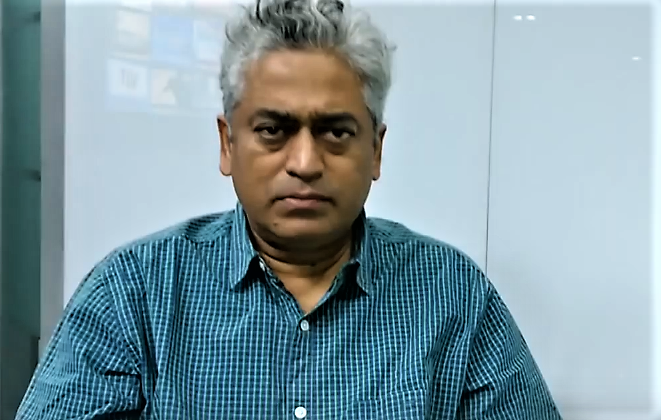
Demonetisation –On 8th November 2016, the government of India suddenly withdrew old Rs 500 and Rs 1000 notes from the market. It did give time to people to exchange the notes. Though people have criticized this move, saying almost all the banknotes were returned to the Reserve Bank of India and therefore demonetisation had failed, we should remember that success of demonetisation can’t be judged from the number of banknotes returned. It was never the only stated objective of demonetisation. Though it temporarily slowed down the economy as former RBI governor Raghuram Rajan has rightly stated, such kind of shock treatment was necessary to get out of economic slumber we were in.
Demonetised banknotes of ₹500 and ₹1000
Please remember that it was done right before Uttar Pradesh State Assembly Elections, the biggest and politically most crucial state for any party. No other government would have dared to take such disrupting decision, just before the elections of the biggest state in India. Please read this article backed with official figures, to see the success of demonetisation.
Increase in taxpayers, returns and tax collection – Due to collective effect of Demonetisation and GST, tax base increased like never before and was the fastest to rise in 4 years period historically, where all the figures almost doubled in short time of 4 years.
Insolvency and Bankruptcy Code (IBC) – India long needed a proper bankruptcy and insolvency code. Earlier provisions in the law were not enough to deal with corporate loan defaulters. However, IBC has set a stringent and time-bound process to get NPA recovery done. Now no one can skirt the system like earlier, and it has seen the results with biggest NPA account worth almost 40,000 crores of Bhushan Steel settled, which was almost twice bigger compared to the infamous Vijay Mallya and Nirav Modi combined, resulting into Tata Steel taking over and lenders getting their money back. In short, IBC means pay up or lose your business. This law was immediately operationalized and cases were referred to it. The government even carried out amendments based on the feedback such as original promoters of defaulting companies can’t take over their companies at reduced prices through IBC. Arun Jaitley wrote a detailed blog on how cases are being resolved through IBC when it completed two years. It can be accessed here. Earlier such process to liquidate assets of defaulters used to take years. Even last law dealing with defaults (SARFAESI) was enacted by the last NDA government led by Atal Bihari Vajpayee. However, it was proving insufficient to deal with the current NPA mess which was inherited by the Modi government from the last UPA government.
Merger of Public Sector Banks – This was a long-discussed issue for at least last 10 years but the government was unsuccessful in merging the banks. Thought behind merging banks was, India doesn’t need many small banks but few big banks to reach effective lending to help the economy. Big banks can also absorb economic shocks better than their small counterparts. This government first merged all the remaining subsidiaries of State Bank of India in 2017, where the last merger happened way back in 2008-09 when it merged State Bank of Indore with itself. Now the government has set the ball rolling by announcing the merger of Dena Bank and Vijaya Bank with Bank of Baroda. From April 1st, Vijaya Bank and Dena Bank would be merged in Bank of Baroda.
Mudra Loans – Mudra Schemes offers to small businessman and self-employed people up to Rs 10 lakh without any collateral. This has helped a lot of people to be self-employed and also to create jobs. Till date, the banks have sanctioned Mudra loans worth Rs 8.25 lakh crore to 17 crore entrepreneurs. Though opposition keeps claiming that most of Mudra loans have turned NPAs by quoting absolute numbers a detailed analysis reveals that Mudra loan NPAs are in line with the banking sector average.
Today Congress alleged that Mudra loan NPAs have increased by 1120% by quoting absolute numbers but analysis shows otherwise. The latest publicly available figure of NPAs under Mudra scheme is Rs 11,000 crore which comes to 1.33% of total disbursement which is even below the average banking sector NPAs which range between 3-4 % is considered normal. During Modi government, banks were forced to come clean on NPA mess and they rose to staggering 12-13% for some banks, which were hidden all these years by window dressing.
Jan Dhan Yojana – Under this scheme, people not having any access to the formal banking system due to lack of bank accounts were covered. The scheme was operated in mission mode with over 35 crore accounts being opened in the scheme and nearly one lakh crore rupees being deposited in these accounts. In other words, a total of Rs 1 lakh crore which was lying unused at homes of these poor people have come into the formal banking system. The best part about this scheme was these were zero balance accounts. It was often observed that poor people didn’t have any bank account due to the requirement of minimum balance in the account, which these people wouldn’t be able to afford, and that’s why they were out of formal banking system. This scheme has resulted in almost all Indians, who were mostly poor, getting bank accounts, who further benefitted under the DBT scheme, where subsidies were directly transferred to their bank accounts.
Pradhanmantri Jeevan Jyoti and Suraksha Bima Yojana – Under these schemes, a person is insured for Rs 2 lakh for a small premium of Rs 350 per year and Rs 12 per year respectively. One can opt for these schemes easily through your bank. Jeevan Jyoti is life insurance scheme and Suraksha Beema Yojana is an accidental insurance scheme. More than 5.5 crore people have registered for Jeevan Jyoti Beema Yojna while more than 14.5 crore people have opted for Suraksha Beema Yojana. These schemes have increased India’s insurance coverage ratio, which was abysmally low before these schemes.
Atal Pension Yojna – Government launched this social security scheme primarily for the people from the unorganized sector to get them regular pension after the age of 60. Around 1.40 crore people have subscribed to APY.
Cracking down on shell companies – After demonetisation, the government has deregistered around 2.26 lakh companies and identified another 2.25 lakh companies for action and closed almost 1 deregistered over 1 lakh companies various non-compliances according to the latest data. Post deregistration these companies have been debarred from operating bank accounts until they come clean. Most of these companies are suspected to be shell companies acting as a conduit to route illegal black money. Out of already deregistered 2.26 lakh shell companies, only 1157 companies have applied to NCLT for restoration, effectively proving that all the companies deregistered were indeed shell companies. Further Central Board of Direct Taxes (CBDT) has asked income tax department to probe all these 3 lakh companies for money laundering, pointing out the rot in the system, which was continuing unabated before Modi government.
Separately, the government is considering making mandatory for companies to geo-tag their registered offices in statutory filings with the Registrar of Companies (RoC) in an attempt to tackle the black money menace. Geo-tagging means giving data on the exact location of the registered office. “This will help us identify instances of one building being used by hundreds of shell companies as their registered office or of companies citing vacant plots as their registered office address,” minister of state for corporate affairs PP Chaudhary told Mint newspaper.
Sukanya Samruddhi Yojna – Arun Jaitley launched Sukanya Samruddhi Yojana (SSY) as a part of Beti Bachao, Beti Padhao campaign of the government. Under this scheme, parents can open an SSY account in any bank, in the name of the girl child and can invest up to Rs 1.5 lakh per year which would be tax-free. The aim of this scheme is to encourage parents to save for the education and marriage expenses of girl, because of which most girls are aborted at the prenatal stage, even though it is a crime. Currently if parents invest Rs 1.5 lakh per year making total deposit of Rs 21 lakh in 14 years (maximum permissible under the scheme), at the current interest rates, maturity amount would be Rs 70,23,219 at the end of 21 years which is a huge amount, which can be only withdrawn by the girl child under whose name account has been opened.
Advancement of union budget date from 28th February to 1st February – Traditionally union budget was presented by the finance minister every year on 28th February. By advancing it to 1st February, the government now doesn’t require to take approval of parliament on a separate vote of account for the expenditure of first two months of the financial year by the time Lok Sabha approves the full budget, generally in the month of April or sometimes even May. As the financial year starts in April, if the budget is approved before the financial year ends, it would enable operationalizing the budget for new schemes/projects included in the budget right from the commencement of financial year and ministries can plan their expenditure allocations for the full year even better. By advancing the budget by 1 month, the government has made sure that all the ministries get the approval at the beginning of the new fiscal itself.
Arun Jaitley presenting the 2018 budget
This government also scrapped separate railway budget and merged it in general budget because, when the tradition of separate railway budget was introduced by the British, railways consisted a huge chunk of the government expenditure (84%) and therefore a separate budget was needed. Over a period of time, railway expenditure was in line with most other departments and therefore the basic reason for having a separate budget was non-existent. Also having separate railway budget paved way for increased politicization of railways. The government stopped the political football played in the railway budget where often, the state from which railway minister belonged, used to get preferential treatment much to the chagrin of the other states.
It is interesting to note here that during the tenure of Atal Bihari Vajpayee, the colonial tradition of presenting the budget at 5.30 PM was abolished and the time for presenting the budget was set at 11 AM. As there was a time difference of 5.30 hours between England and India, the British government used to present the budget at 5.30 PM in order to ensure that, the budget can be heard in England at 12 noon. This tradition was even continued even after independence, without giving much thought on why it existed. Due to the late presentation of the budget, newspapers used to scramble to gather the information. This advancement had brought much relief for media persons, who could now peacefully report on budget provisions.
Fugitive Economic Offenders Bill – Government also brought in a bill to take action against fugitives like Vijay Mallya who have left the country after committing financial fraud in order to evade arrest and prosecution. Under the provisions of this bill, properties of the people who have committed the bank fraud of at least Rs 100 crore and left the country to avoid arrest can be confiscated by the central government and would be free from all encumbrances, meaning the central government would have first right on such confiscated property. Recently a court in Mumbai declared Vijay Mallya as the first fugitive economic offender under the new act.
Benami Transactions (Prohibition) Act – This existed since 1988, but it wasn’t operationalised due to legal infirmities. Finance ministry moved an amendment bill to this act in 2016 and made the law operational. The amended law empowers the specified authorities to provisionally attach benami properties which can eventually be confiscated. Besides, if a person is found guilty of offence of benami transaction by the competent court, he shall be punishable with rigorous imprisonment for a term not less than one year but which may extend to 7 years and shall also be liable to fine which may extend to 25% of the fair market value of the property. this law came into the effect from 1st November 2016
This law makes difficult to own a benami property now. This is in line with Narendra Modi’s assurance on cracking down on corruption. Recently the I-T department challenged relief granted to actor Shahrukh Khan under the new law who allegedly owns a benami property in Alibaug as per the IT department.
Income tax relief for the middle class – In the tenure of this government, the middle class has got several reliefs in income tax. In four budgets presented till now, Finance Minister Jaitley has raised income tax exemption limit to Rs 2.5 lakh from Rs 2 lakh, income tax deduction limit under section 80C has been raised to Rs 1.5 lakh from Rs 1 lakh, also deduction limit on interest payable on home loans has been raised to Rs 2 lakh from Rs 1.5 lakh, health insurance deduction was raised to Rs 25,000 from Rs 15,000, transport allowance deduction. Further, the tax rate for the lowest bracket which is up to Rs 5 lakh was lowered to 5% from 10%. Overall, the middle class got substantial income tax relief in the tenure of Modi government. After taking progressive steps on income tax relief for the middle class for last 4 years, in the last budget, the government announced complete income tax relief for those who earn up to Rs 5 lakh per year benefitting crores of middle-class taxpayers.
In the last budget, the government announced that within two years, all IT returns would be processed within 24 hours after filing and refunds would be also issued simultaneously, meaning within 24 hours of filing returns, taxpayers will get the refund, the process which currently takes anywhere between 4-6 months.
UPI and BHIM app – National Payments Corporation of India (NPCI) introduced one-touch United Payment Interface in 2016, which can directly transfer funds real time into recipient bank accounts in one touch, obviating the need of using NEFT and RTGS for small amounts up to Rs 1 lakh per day. NPCI also launched UPI based BHIM app for fund transfer using mobile phones. Several banks also have launched UPI based fund transfer apps for their customers. Companies like Google and WhatsApp are also offering UPI based fund transfer now. Many independent UPI based apps like PhonPe, Google Pay are now available and has become hugely popular.
UPI Apps on Google Play Store
Bharatkosh Portal – Government launched Bharatkosh portal in February 2016, to collect non-tax receipts like dividend payments by RBI and other PSUs, spectrum fees paid telecom operators, royalties, license fee etc. According to an estimate, such non-tax revenue is over Rs 2 lakh crore for the central government and by completely digitizing it, the government took another historic step in its pursuit of Digital India and Digital Governance.
The author is journalism pass out from Indian Institute of Mass Communication, New Delhi. After dangerously flirting with the idea of left during his IIMC days, due to the proximity of the IIMC with JNU, a den of radical leftists, he became firmly aligned to right after realizing the futility of the left. He tweets at @kpophale.
Ever since Prime Minister Narendra Modi turned Congress President Rahul Gandhi’s ‘Chowkidar’ jibe against him and used it in the BJP’s poll campaign, it has instantly struck a chord with the masses and an overwhelming majority of the people have come out and openly supported PM Modi in his #MainBhiChowkidar campaign.
This has obviously caused ripples among the politicians in the opposition political spectrum with many indulging in outrageous racial attacks against Nepalis in their endeavour to belittle Prime Minister’s Chowkidar campaign. Latest to join this list is Congress party’s Navjot Singh Sidhu.
In an attempt to take a swipe at PM Modi and run down his Chowkidar campaign, Siddhu posted a tweet urging Indians to elect a Prime Minister this time while an honest Chowkidar can be acquired from Nepal as well. Siddhu also attached a video in the tweet slamming PM Modi and glorifying Pandit Nehru.
Before Sidhu, AAP MLA Alka Lamba had posted similar disparaging tweet perpetrating racism against Nepalis with an intention of taking on the PM Modi’s Chowkidar campaign. However, facing a severe backlash from various Twitter users including Nepalis, she had promptly taken down the tweet.
It is not the first time that Congress leader Navjot Singh Sidhu has stirred a controversy. A few weeks back, Sidhu had made a controversial remark about the Pulwama attack. He also faced severe flak for posing with known Khalistani terrorist Gopal Singh Chawla for photographs during his visit to Pakistan.
While it is absolutely fine to attack politicians, their campaigns, but it is outrightly unacceptable to indulge in casual racism. By doing this, Sidhu is normalising racism and stereotyping Nepali community. Implying that people of Nepal can be only good security guard is among the worst examples of racism. Racism can be eliminated when legislators and politicians display no-tolerant policy towards it. But when a legislator himself indulges in passing racist slurs, racism will only gain ground. It is unbecoming of a politician to resort to racism in order to take on his ideological adversary.
Aam Aadmi Party today was caught running donation ads in Saudi Arabia, the United Arab Emirates, Qatar and Oman other than in India.
AAP seeking donations from various Middle-Eastern countries
In the above ad seeking donations for funding the election campaign, AAP has drawn a cartoon which points to a red-coloured building with a speech bubble, ‘Govt School Wahin Banayenge’ (will build government school there only).
The text for the ad reads:
“Dear friends,
Some people can give time, others can give money.
If you’ve not donated this election, please DONATE NOW.”
AAP ad seeking donation in India
Interestingly, their India ad had the caption,
“Elections are here. Come forward to support the Politics of Education, Health and Infrastructure. Your –
Rs. 500 will help us get 100 Posters.
Rs. 1000 will get us 250 Caps.
Rs. 10000 will help us get a sound system for a rally.
Step up and donate generously.”
This was followed by a link to donation for AAP.
AAP is asking for donations to purchase campaign material like posters and caps.
Aam Aadmi Party has a dubious relationship with donations in the past. In May 2017 it was alleged that AAP allegedly received crores of funding from shell companies through hawala transactions. Prior to that, anti-corruption crusader Anna Hazare had written a letter to AAP chief to come clean on the donations received by the party.
It was even alleged that before the 2014 general elections, Kejriwal had received money through dubious channels. AAP rebel leader Kapil Mishra had alleged that one Hem Prakash Sharma, was the key to Kejriwal’s demonetisation drama. Mishra had alleged that on 5th Apil, 2014, a week before Kejriwal filed his nomination for 2014 General Elections from Varanasi, Rs 2 crore had been deposited in AAP’s account from four shell companies. Of these 4 companies, Hem Prakash Sharma is a director in 3. During an ED raid after demonetisation, carried out in GK in Delhi, Rs 13 crore worth currency was found. One of the directors of this company is also one Hem Prakash Sharma.
He further said that Hem Prakash Sharma is a fake director, who probably does not even exist. He went on to add that the only reason Kejriwal was on a back foot about contesting elections is the demonetisation, which has hurt him the most. This was bewildering for someone like Kejriwal, who hailed himself as an anti-corruption crusader and formed the political outfit on the plank of fighting corruption.
When OpIndia investigated into the mysterious Hem Prakash Sharma, we found that according to this report, the official records show that the four companies that had donated to AAP in April 2014, have no revenue to show. These companies have three common directors, Hem Prakash Sharma, Dharmender Kumar and Mukesh Kumar. The addresses listed in the registrar house a post office, a grocery store with shutters down and a small sewing factory. From the details, it would seem like these were shell companies.
Moreover, DNA was able to track down one of these directors, Mukesh Kumar, who denied donating anything to AAP, ever. He admitted to owning these companies, which exist only on paper, but denied donating to AAP. As per DNA, when they visited the address of Hem Prakash Sharma as mentioned in the official records, they found the two-storey house. There resided a lady in her 60s and a woman named Deepika Sharma, who was living with her family. She denied knowing Hem Prakash Sharma.
So who are these mysterious men? Are they fictitious? If so, who is funding these operations? Is there something the ‘anti-corruption crusader’, Arvind Kejriwal, hiding from us?
When the Aam Aadmi Party stormed into Indian political scenario, it arrived with a promise of changing the way political parties operate in India. It promised complete honesty and transparency in its operations, and most people believed in it. One the innovative thing the party did was to publish a list of donations it receives on its website, as proof of the transparent nature of its financial activities.
Towards the year 2016, the party removed the donation list for its website. During that time, the webpage for the list was still there, but it showed a message “under construction. New Version coming soon..”. But that new version never came.
It was reported that the page listed many donations above ₹ 20,000, but those were not reported to the Election Commission as per rules, and thus the party removed the list itself from the public domain.
This removal of the donation list was questioned by many people, including Yogendra Yadav and Anna Hazare. Former party member Yadav had alleged that the party was collecting cash donations which were not recorded.
They have relaunched their donation page on their website, but with a significant change. They have changed the web address for the page, it was donate.aamaadmiparty.org earlier, but now it is donations.aamaadmiparty.org. Along with standalone donations, the party now have provided the option of monthly donations also.
Meanwhile, the fact that AAP is running donation ads in the Middle Eastern countries also raises eyebrows. In November last year, as Delhi grappled with toxic pollution, Kejriwal was found taking a private trip to Dubai. It was also reported that Delhi’s health minister Satyendra Jain had also taken a week-long trip to Dubai just a week prior. Earlier too, Kejriwal has made trips to Dubai including that on a business class, drawing criticism.
It was also reported that the Indian-community based in Saudi Arabia is one of the major supporters of the Aam Aadmi Party. In February 2015 it was reported that they celebrated when AAP beat BJP in Delhi state assembly elections. In fact, a year later, they even celebrated one-year completion of AAP government in Delhi.
While there is nothing prima facie wrong with running ads in Middle-Eastern countries to seek political donations, the fact that Aam Aadmi Party, a political outfit which came to power promising transparency, is not coming out clean leaves us with more questions.
Lalu Prasad Yadav’s elder son, Tej Pratap Yadav, has seemingly revolted against his party which has come to be headed by Tejashwi Yadav, the convicted RJD supremo’s other son. As per reports, Tej Pratap has decided to float the ‘Lalu Rabri Morcha’ following his resignation from the Youth Wing of the party.
Lalu Yadav’s son Tejpratap Yadav to launch Lalu Rabri Morcha.
Speaking at Zee News’ India Ka DNA conclave, he said, “I will not form a new party. I will contest from Saran as an independent as this seat is a bastion of Lalu Prasad and Rabri Devi. I will contest from Saran even if RJD has a candidate from Saran.”
However, Tej Pratap has made it clear that the Morcha will be supporting independent candidates across 20 seats. “I have formed a Lalu-Rabri morcha and I will tour 20 seats in Bihar. We will support independents and contestants who can work for the country. I have got in touch with independents in the 20 seats and Lalu-Rabri morcha is a part of RJD,” he stated.
The elder son of Lalu further stated Tejaswi’s advisers were deliberately trying to create a rift between the two brothers. He said, “I will fight for RJD workers. Those with Tejashwi are giving him the wrong advice. They are instigating our fight. Tejashwi is my younger brother. He has my best wishes. I want to warn Tejashwi to be beware of his adviser. They are giving him the wrong picture.”
Context
The alleged rift between Tej Pratap and Tejashwi has been brewing for quite some time. In June 2018, he had asserted that he would quit politics, only to change his decision in a matter of hours and ended up blaming the RSS for reports of a rift with Tejaswi. Later, in October, Misa Bharti, Lalu’s daughter, had also confirmed the rift between the two brothers only to call it a ‘media twist’ later.
Tej Pratap’s primary contention is that no one listens to him within the party. Over time, he had made a habit of attracting media attention, although for rather unusual reasons. His marital life has been going through a rough patch as well and he can be often seen at various places dressed up in colorful attire.
National Conference (NC) leader and former Chief Minister of Jammu and Kashmir Omar Abdullah has revealed his Party’s true colours few weeks ahead of Lok Sabha elections by demanding a separate post of Prime Minister and hence more autonomy for the State of Jammu and Kashmir as reported by News 18 India.
Abdullah has demanded that pre-1953 position should be restored in the state when there used to be a Prime Minister of the state in place of Chief Minister. Greater autonomy for the state of J&K has been an old demand of the National Conference. The Party had tried to fulfil this demand in the year 2000 when there was an NC government in Jammu and Kashmir. A resolution was adopted by the majority in the J&K Assembly, amidst opposition from BJP, Congress and Panthers’ Party, in which the report of State Autonomy Committee (SAC) was accepted. The committee had recommended sweeping changes in the Centre-State relations and greater autonomy for the State. However, the resolution was rejected by the Central government.
#WATCH Omar Abdullah in Bandipora says, “Baaki riyasat bina shart ke desh mein mile, par humne kaha ki humari apni pehchan hogi, apna constitution hoga. Humne uss waqt apne ‘Sadar-e-Riyasat’ aur ‘Wazir-e-Azam’ bhi rakha tha, Inshallah usko bhi hum wapas le aayenge.” pic.twitter.com/mPPoELKT8G
Making a reference to a statement of BJP National President Amit Shah where he allegedly said that Article 35A will be removed by the year 2020, Omar Abdullah warned that the State is being attacked in various ways and several conspiracies are being hatched by some powers who are trying to erase the identity of the State.
National Conference will be contesting the upcoming Lok Sabha elections in alliance with the Congress Party.
Rahul Gandhi, who was on a hunt for a safe seat after Union Minister Smriti Irani laid siege to the Nehru-Gandhi Parivar bastion of Amethi, has decided to contest from Wayanad in Kerala as his second seat.
Despite what some would have you believe, the truth of the matter is that Wayanad is a Hindu minority constituency which is believed to be a safe bet for the Congress President due to its demography even by Congress leaders.
Prime Minister Modi, too, remarked on it in his speech at Wardha. He said that the Congress party branded the Hindu community as terrorist which has accepted the entire world as its family. Narendra Modi, who is making his bid to become the first non-Congress politician to complete two successive terms as Prime Minister, then proceeded to assert that it’s because of this that the Congress President had to run away from a ‘majority’ seat and take shelter at a ‘minority’ seat.
With this, the tone of the elections appears to have been set. Narendra Modi, in his campaign, will not focus only on ‘Vikas’ alone but also on the civilizational narrative. The Prime Minister’s comments on Rahul Gandhi’s constituency is the biggest attempt to lend a civilizational narrative to the Battle for 2019 after BJP President Amit Shah compared it to the Third Battle of Panipat.
During his first term as Prime Minister, although the NDA government has been unable to assuage too many ‘core’ concerns, a credible effort has been made towards emphasizing on India’s Hindu identity.
The biggest legislative push towards addressing Hindu concerns came not on the Ram Mandir issue but on guaranteeing citizenship to Hindus and other minorities from neighbouring countries where they face great oppression. A crackdown has been conducted also on foreign-funded NGOs that seek to undermine India’s territorial integrity and culture.
Narendra Modi’s own constituency, Varanasi, is one of the most sacred cities for Hindus. Although Modi himself is unlikely to emphasize the contrast between the constituencies he and Rahul Gandhi will contest from, the symbolism of it will not be lost on those who pay close attention to details.
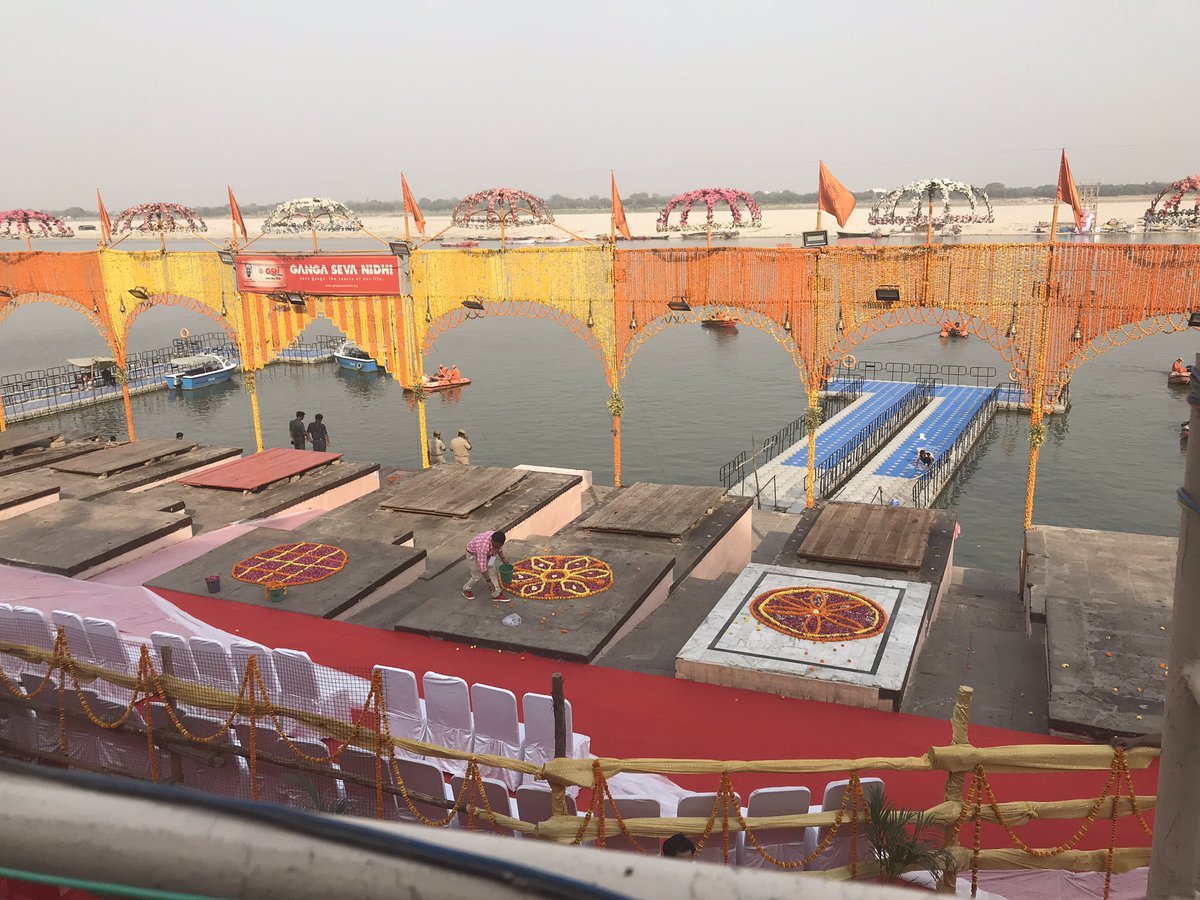
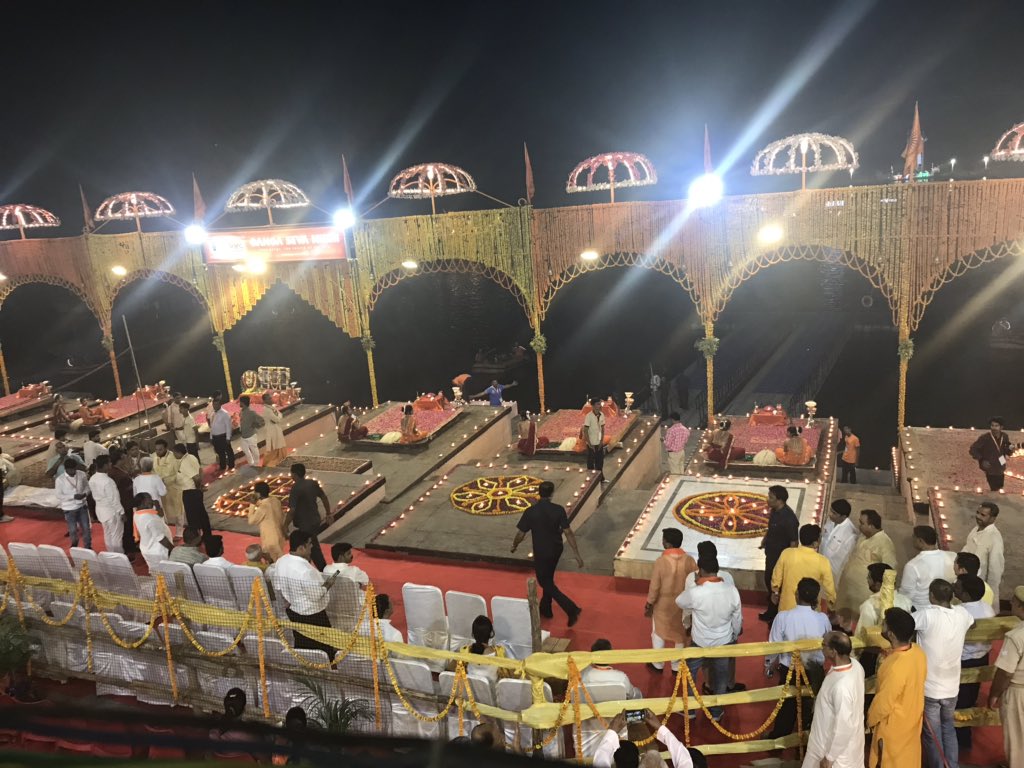
It was also during the tenure of Narendra Modi that the sacred Kumbh Mela was conducted in the most efficient manner. The administration was hailed widely for its conduct and the visuals from it only augmented the already enchanting aura of the Hindu festival.
The appointment of Yogi Adityanath as the Chief Minister of Uttar Pradesh itself was perhaps the greatest shift of the Overton Window in India. It is hard to imagine any other era in independent India when a saffron-clad Mahant of a sacred Hindu Temple with an unapologetic commitment towards preserving the Hindu identity of India could be appointed as the Chief Minister of a state. It was also a subtle hint towards Hindus that their concerns are heard and their sentiments respected.
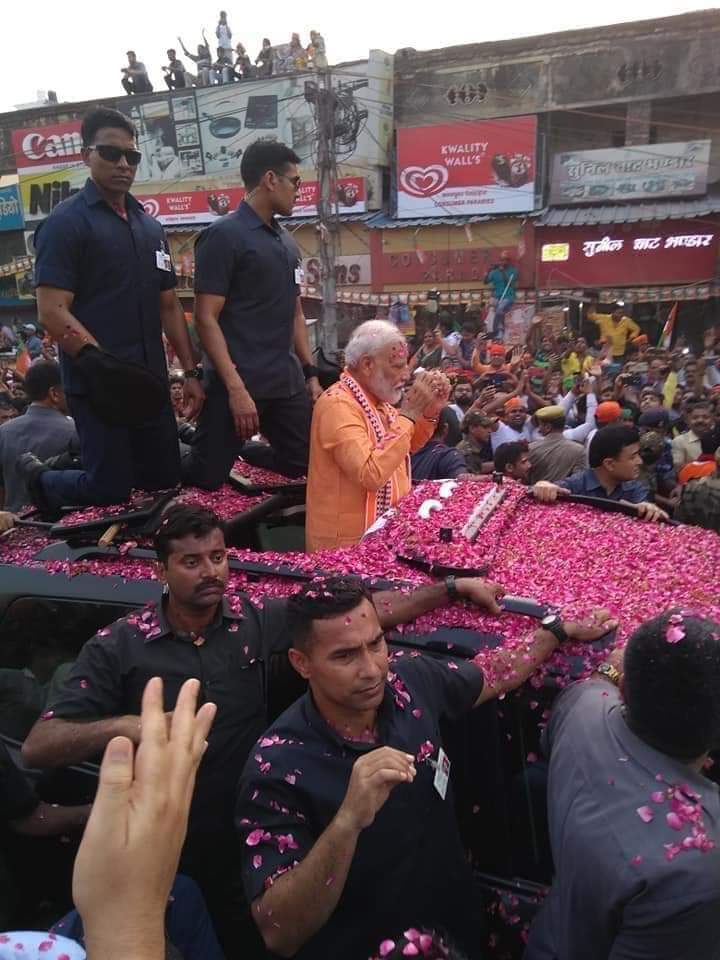
In his personal capacity, Narendra Modi has never shied away from celebrating his Hindu identity. His visit to the Kumbh merely a couple of days before the airstrikes at Balakot, his visit to auspicious Hindu Temples with world leaders, making Yoga an international phenomenon, the revival of Ayodhya and the grand celebration of Diwali there under his able lieutenant Yogi Adityanath all points towards his commitment towards his Hindu identity.
As we get closer to the elections, Prime Minister Modi is likely to emphasize the distinction between the two parties in their commitment towards the Hindu community. Narendra Modi is an astute politician and he realizes that the BJP’s thumping victory in 2014 ought to be credited to the United Spectrum of Hindu Votes (USHV) that his party succeeded in knitting together, although he may not say it in public. If the BJP is to repeat the magic of 2014, then it has to repeat its earlier feat, which has been made considerably more difficult with the alliance of caste-based political parties in Uttar Pradesh and elsewhere.
Rahul Gandhi’s candidature from a constituency where Hindus are in the minority is likely to have repercussions elsewhere and the BJP will look to hone in on the message. Moreover, the state unit of Kerala is particularly infamous for anti-Hindu acts it has committed in the past. Members of their Youth Congress slaughtered a calf in the middle of the street and ate its flesh, an MLA from Kerala posted a video of himself consuming beef to express solidarity with cow slaughter. It is unlikely that the BJP or the Prime Minister will forget to mention these transgressions combined with Rahul Gandhi’s candidature from a Hindu minority constituency.
Wayanad has also been battling Islamic radicalization as there are many youths who have joined ISIS. There have been multiple cases of youths joining the Islamic terrorist organization to realize its ambition of establishing an Islamic caliphate around the world. Habeen Rehman, from Kalpeta which falls under Wayanad Parliamentary Constituency, was arrested by the NIA in connection to the Kasargod module case. On the whole, Kerala has seen great radicalization among its youth and a great many have left India to join the Islamic State. Therefore, the respective constituencies that Narendra Modi and Rahul Gandhi would represent are fundamentally different by their very nature. One is a flourishing site of the Hindu Civilization while the other is battling the menace of Islamic radicalization.
‘Vikas’ is important but so is identity, especially when one has to navigate through the minefield of caste-based alliances. Moreover, at various junctures during his tenure, as illustrated above, Prime Minister Modi has given subtle hints that he is aware of India’s position in the world and respects his Hindu identity. Therefore, going into 2019, the Trump Card for the BJP again will be evoking the Civilizational consciousness Narendra Modi has carefully nurtured during his first term as Prime Minister.
Few days after Hurriyat Conference leader Syed Ali Shah Geelani faced a penalty of Rs 14 lakh imposed by the Enforcement Directorate under the Foreign Exchange Management Act (FEMA) for illegally possessing foreign exchange of $ 10,000, now a property belonging to Geelani located at Khirki Extension, Malviya Nagar has been attached by the Office of Tax Recovery Officer.
#Delhi: Office of the Tax Recovery Officer attaches Kashmiri Separatist Syed Ali Shah Geelani’s Khirki Extension, Malviya Nagar property. Prohibits him from transferring the property as he has failed to pay Rs 3,62,62,160. (file pic) pic.twitter.com/wVbUXWUDn8
Geelani is prohibited from transferring the property as he failed to pay a tax amount of Rs 3,62,62,160. Last month Separatist Hurriyat leaders Mirwaiz Umer Farooq and Syed Ali Shah Geelani’s son Naseem Geelani were issued summons by the National Investigation Agency (NIA) to appear in New Delhi for interrogation in relation with a terror funding case.
As per reports, the I-T officials have sealed the house for failure to pay income tax for the assessment years 1996-97 to 2001-02. The action taken by the TRO is reportedly in accordance with section 222 of the I-T Act.
In a massive crackdown on the separatist Hurriyat leader in the aftermath of the Pulwama terror attack, the security cover of 18 Hurriyat leaders was withdrawn by the government calling it a wastage of resources. Residences of Hurriyat leaders including Mirwaiz Umer Farooq, Naseem Geelani, and Mohammad Yasin Malik were also raided.
According to the NIA, among other incriminating evidence like property papers, financial transaction receipts and bank account details, letterheads of different terrorist organisations and documents related to recommendations for a visa for admission in Pakistan educational institutions were also recovered.
Opposition parties and a section of media keeps trying to project that the economy has suffered badly during the Modi government, but the data keeps proving them wrong. Today two different data points reveal a state of the economy which does not match with the narrative that opposition is trying to build up.
Total gross GST revenue collected in March, 2019 is ₹ 1,06,577 crore of which CGST is ₹ 20,353 crore, SGST is ₹ 27,520 crore, IGST is ₹ 50,418 crore (including ₹ 23,521 crore collected on imports) and Cess is ₹ 8,286 crore (including ₹ 891 crore collected on imports).
The total gross GST collection in March 2019 was ₹1,06,577 crore, which was highest since the introduction of GST. Out of total GST collection of ₹1,06,577 in March, CGST is ₹ 20,353 crore, SGST is ₹ 27,520 crore, IGST is ₹ 50,418 crore and Cess is ₹ 8,286, finance ministry informed.
An official statement issued by finance ministry said that this reflects an increase of 15.6% over GST collection in March 2018, which was ₹92,167 crore.
Collection in March, 2019 has been highest since introduction of GST. Revenue in March, 2018 was ₹ 92,167 crore & revenue during March, 2019 is a growth of 15.6% over revenue in same month last year. Revenue for last quarter in 2018-19 is 14.3% higher than same period last year.
The average GST per month during the financial year 2018-19 was ₹ 98,114 crore, which is 9.2% higher than the average for FY 2017-18. These figures indicate that the revenue growth has been picking up in recent months, despite various rate rationalization measures.
Source: Ministry of Finance
The fact that GST collection has gone up despite the reduction in rate on various items, means that the business activities in the country are increasing at a steady rate, and more businesses are being brought under the tax regime.
The BSE Sensex also hit an all-time hit today, reaching the 39,110.68 and crossing the 39,000 for the first time. In the last 5 years, Sensex has gone up from 22000s to the current level, growing steadily over the years. The share markets are displaying bullish trends due to a positive outlook about the economy. The country has also experienced strong FII inflows, reflecting in the stock exchange indices. The Rupee has also recovered in recent times, and markets are expecting a rate cut from RBI.