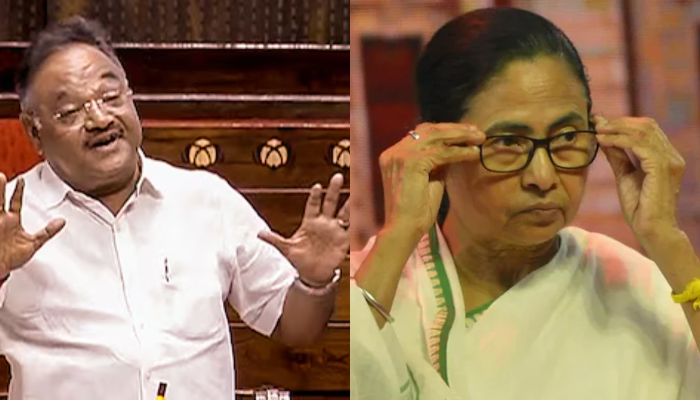
According to an official reply in Rajya Sabha by the ministry of Corporate Affairs, a staggering 2,277 businesses including 39 listed companies moved their registered offices from Mamata Banerjee-ruled West Bengal to other states between 2019 and 2024.
The shocking statistics came to light on 3rd December after the Union Ministry of Corporate Affairs replied to a query posed by first-time Bharatiya Janata Party’s Member of Parliament Samik Bhattacharya.
Bhattacharya had also inquired as to whether the All India Trinamool Congress (AITC or TMC) government had determined the causes of the relocations of these companies and whether any efforts were underway to attract and retain businesses. “Administrative, operational, convenience, cost-effectiveness and for better control” among other things was the response.
Bhattacharya had questioned, “Will the Minister of Corporate Affairs be pleased to state (a) the total number of companies that have shifted their registered office from West Bengal to other states of the country from 2019 to 2024, (b) the number of such companies listed on stock exchanges, and sectors where they primarily belong to, (c) the reasons identified by Government for companies shifting their headquarters from West Bengal to other States, including any challenges or disadvantages cited by these companies in operating from West Bengal and (d) the steps being taken by government to address these issues and to retain and attract businesses to West Bengal?”
“2227 number of companies have shifted their registered office from the State of West Bengal to other States during the period from 2019 to 2024. (b) Out of the above 2227 companies, 39 companies are listed companies. These companies are engaged in activities of manufacturing, financing, commission agents, trading etc. (c) & (d) Companies are permitted to shift their registered office from one state to another, in accordance with the provisions of Section 13(4) of the Companies Act, 2013 read with Rule 30 of the Companies (Incorporation) Rules, 2014. The reason for shifting their registered office provided by the companies in their applications are administrative, operational, convenience, cost-effectiveness, for better control etc,” the ministry answered.
It is noteworthy that the government’s policies to prevent such company migrations in the future were not mentioned. Meanwhile, Amit Malviya, in-charge of BJP’s National Information & Technology Department who also serves as the co-incharge West Bengal also flagged the information and attacked the TMC supremo. “Here is Mamata Banerjee’s report card on corporate exodus from West Bengal and what a massive disaster she is, as a chief minister,” he pointed out while quoting the figures.
Here is Mamata Banerjee’s report card on corporate exodus from West Bengal and what a massive disaster she is, as a Chief Minister.
Between 2019 and 2024, a period of just five years, a staggering 2,227 companies relocated their registered offices from West Bengal to other… pic.twitter.com/V7PK63ZiGp
“This is a concerning trend, which underlines the grim state of lack of jobs, trade and industrial growth in West Bengal. The data was provided by the Union Ministry of Corporate Affairs in response to a question posed by Rajya Sabha MP Shri Samik Bhattacharya,” he added. The saffron party has regularly asserted that the state’s present government is “anti-industry” and the development could cause a lot of embarrassment for the TMC administration.
On Monday, 3rd December, no lawyer for ISKCON head Chinmoy Krishna Das in Bangladesh could appear for him in Chattogram court forcing the authorities to postpone the date of the hearing to January 2nd. As per the reports, advocate Rabindra Ghosh who was to appear for Das in the court was denied entry in the court premises.
Notably, earlier it was reported that one of the other advocates who was appearing for Das, Ramen Roy was seriously injured in the court premises in Chittagong while seeking the bail hearing of the arrested monk.
As per reports, unidentified elements also attacked and vandalized the private office chamber of advocate Ramen Roy. The office was badly damaged and furniture was destroyed during the attack. Some social media handles shared the photo of a young man, reportedly Roy, lying down with bandaged head wounds. However, ISKCON Vice President and Spokesperson from Kolkata, Radharaman Das further confirmed that the advocate was brutally attacked by the anti-Hindu elements in Bangladesh.
Please pray for Advocate Ramen Roy. His only 'fault' was defending Chinmoy Krishna Prabhu in court.
“Please pray for Advocate Ramen Roy. His only ‘fault’ was defending Chinmoy Krishna Prabhu in court. Islamists ransacked his home and brutally attacked him, leaving him in the ICU, fighting for his life,” Radharaman Das said.
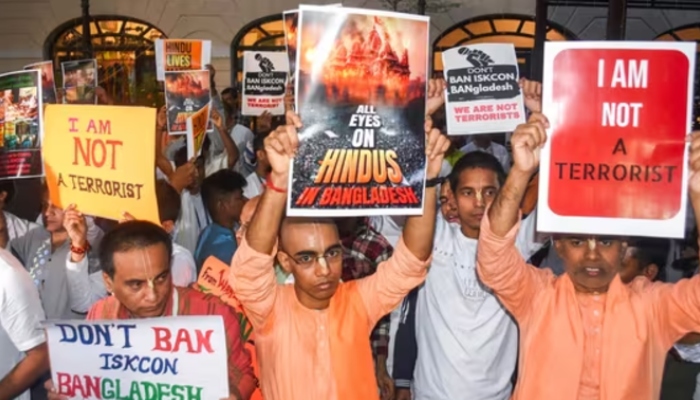
It is crucial to note that since the fall of Sheikh Hasina’s Awami League government in August this year, the minority community in Bangladesh has been targeted and several temples have been destroyed in the area in a major crackdown on Hindus. OpIndia has recorded several such incidents, the details of which can be read here. Further, the arrest of three Hindu priests has sparked a major controversy with minorities protesting across Bangladesh seeking justice.
In an update to the terrible attacks, social media handles have been reporting that 130 houses and 20 Hindu temples have been vandalized by the Islamist mob in Doarabazar, Sunamganj area of Bangladesh on the night of 3rd December. This is following an alleged blasphemous Facebook comment that locals claim caused insult to Islam.
130 Hindu houses & 20 mandirs have been vandalised by Islamist mobs in Doarabazar, Sunamganj, Bangladesh.
The pretext? An alleged blasphemous FB comment
Demonization of ISKCON, arrests of monks, assaults on lawyers, incessant anti-Hindu mob violencepic.twitter.com/uIisRWnND3
Several social media posts are making rounds in the given case however, none of them could be individually verified by the OpIndia team. The social media posts claim that one of the individuals identified as Akash Das posted an alleged blasphemous remark against Islam, as a result of which the locals got enraged and resorted to violence.
Urgent Alert: ISKCON, Loknath, and Durga temples, along with Hindu homes and shops in Doarabazar, Sunamganj, have been vandalized. The Hindu village of Manglar Gao is now under siege by Islamic militants. #SaveBangladeshiHinduspic.twitter.com/t3n87IkHbl
At present, police and the army have been deployed in the area as the violence is underway in the Mongla Gao region of Bangladesh.
The ISKCON,Loknath,Durga temple, Hindu houses & shops in Doarabazar Upazila,Sunamganj dist. 've been vandalized,following rumors that a local boy's insulted religion.Violence is also ongoing in Mongla Gao,The army has been deployed to control the situation#SaveBangladeshiHindhupic.twitter.com/QSU5m99VrC
Notably, on 3rd December, a senior Bangladeshi government official claimed that the minority Hindu community was more protected in Bangladesh under the rule of the interim government than they were during the administration of deposed Prime Minister Sheikh Hasina. In an exclusive interview with India Today, Shafiqul Alam, the press secretary of the Muhammad Yunus government, claimed that Indian media was running an “industrial scale misinformation campaign” to spread false narratives about minorities being targeted in Bangladesh.
“Hindus are well protected here. They are more protected than they were during Sheikh Hasina’s regime. What we are witnessing here is an industrial scale misinformation campaign originating from India,” Alam was quoted as saying.
Amid this, Alam during the interview confirmed that one of the Hindu temples in the Chittagong region was attacked, and an effort to strike three Iskcon centers in the previous week was executed. He however said that security in the region has been increased.
In the given case, no details regarding the violence could be independently verified by OpIndia. The story is still developing. Further details will be reported once obtained.
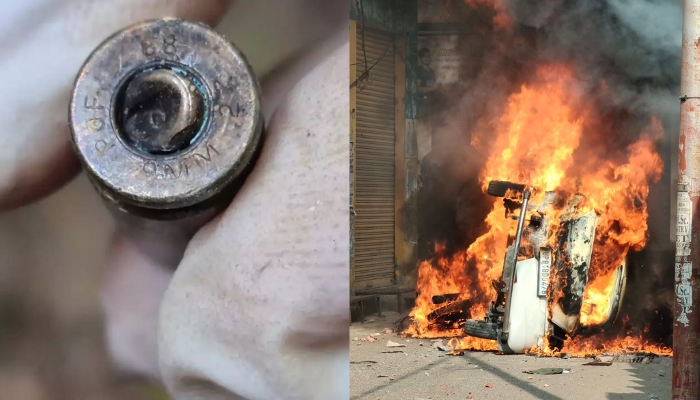
On 3rd December, in a significant breakthrough, the forensic team recovered cartridges made in Pakistan and the USA from the violence-hit area in Sambhal, Uttar Pradesh. According to media reports, police uncovered Sambhal violence’s link to Pakistan after discovering an empty cartridge manufactured in the Pakistan Ordnance Factory. The cartridge was recovered alongside five others from a drain at the site of the 24th November violence.
Speaking to the media, Additional Superintendent of Police (ASP) Shrish Chandra said, “On Tuesday, the forensic team arrived at the Kot Garvi neighbourhood, where violence occurred on November 24 during the survey of the Shahi Jama Masjid. The team found six cartridges in the drains. One of these empty cartridges was manufactured at the Pakistan Ordnance Factory.”
Authorities on high alert after shocking recovery
The recovery of international ammunition has raised serious concerns, and the security agencies have been alerted about the discovery. The cartridges included two 12-bore and two 32-bore shells along with 9 mm shells of foreign origin.
In a statement, Divisional Commissioner Aunjaneya Singh confirmed the discovery of foreign-made cartridges and said, “One of the cartridges had ‘POF’ (meaning Pakistan Ordnance Factory) written on it. It is a 9 mm cartridge, and the bullet was shot. It is suspected that it is made in Pakistan. Another 9 mm cartridge with ‘FL with two stars’ is possibly made in the USA. Additionally, two 12-bore and two 32-bore shell casings were found. The police team is still conducting a search operation using metal detectors. We are taking the help of the Municipal Corporation in the drive.”
Special Investigation Teams formed to probe foreign connections
Following the violence, two Special Investigation Teams (SITs) have been formed to investigate the matter. Sambhal’s Superintendent of Police Krishan Kumar said, “Two SITs were formed to carry out the investigation of the Sambhal violence. One of the investigation officers carried out a search operation with the support of the Municipal Corporation and recovered one made in Pakistan and one made in the USA cartridge, along with four other cartridges.”
He added, “The recovery of international cartridges is shocking for the police, and it will be investigated thoroughly with the help of investigation agencies. In the past, NIA took the help of local police in collecting information about criminals involved in anti-national activities. We will check the history of all criminals with any connection to terrorism and check if they were involved in the violence.”
The incident has drawn comparisons to previous National Investigation Agency (NIA) investigations, where local police assisted the central agency in probing anti-national elements. The SP added, “We will leave no stone unturned in identifying whether these foreign-made cartridges were used intentionally to incite violence.”
Court-ordered survey at Jama Masjid in Sambhal and violence that erupted on 24th November
On 19th November, a court-mandated survey was conducted at Jama Masjid in Sambhal, Uttar Pradesh. The court ordered the survey in response to a petition filed by Supreme Court Advocate Vishnu Shankar Jain, and seven co-plaintiffs, asserting that the mosque occupies the site of a temple dedicated to Bhagwan Kalki. The site in question is a protected monument under the Ancient Monuments Preservation Act of 1904. The survey was carried out under the supervision of Advocate Commission. A heavy police force was deployed in the area to ensure the survey proceeded peacefully.
However, on 24th November, during the second round of court-mandated survey at Jama Masjid, Islamist mobsters gathered outside the mosque and engaged in violence. They pelted stones at police, opened fire at police personnel and set ablaze vehicles and shops. At least 20 police personnel were injured during violence and four mobsters were killed in the mayhem, likely from illegal guns carried by rioters.
In the aftermath of the Sambhal violence on 24th November, police have clarified that the deaths of three individuals occurred due to firing by rioters, not by the police. Post-mortem reports revealed that two victims were shot with country-made pistols, while the 315-bore bullet was found inside the body of another victim, a type not used by Uttar Pradesh Police. Sambhal SP Krishna Kumar Bishnoi stated that the police initially fired tear gas and rubber bullets to disperse the mob but were fired upon by rioters.
During the survey, however, Muslims living in the area gathered outside the Jama Masjid and raised religious slogans. The District Magistrate of Sambhal confirmed that the survey was completed in around two hours and stated that a report would be submitted to the Civil Court, which will review it on the next date of hearing, 29th November 2024. OpIndia accessed the petition filed by the plaintiffs in the case.
As of now, the Supreme Court of India has stayed the hearing in the District Court, Sambhal, in response to plea filed by the Muslim side. Furthermore, the survey report submitted by the Advocate Commissioner has been ordered to be sealed and not to be opened till an order is passed by the High Court in the matter. Next hearing in the matter will be in January 2025. A judicial committee was formed by CM Yogi Adityanath to investigate the cause of the violence.
OpIndia’s detailed report on petition filed at the court can be checked here.
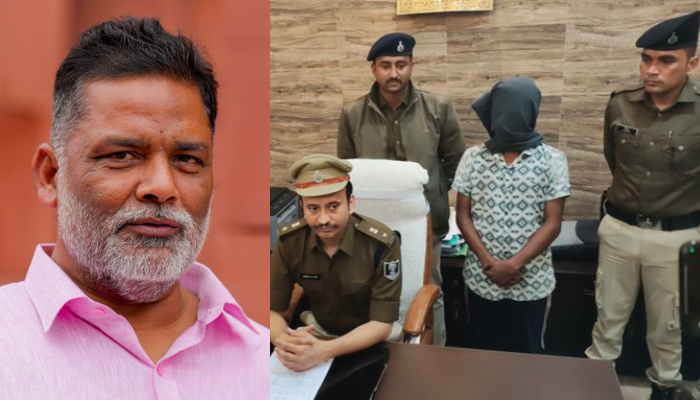
Ram Babu Yadav from Arrah, a suspect who was nabbed from Bhojpur for allegedly threatening Purnea Lok Sabha MP Rajesh Ranjan, popularly known as Pappu Yadav, is in fact, his own man. On 3rd December, police denied that the intimidation was carried out by the Lawrence Bishnoi gang and informed that the accused did so that his leader could get Z security. On 3rd December, Purnea police apprehended Ram Babu Yadav and confiscated some videos from him.
During questioning, he admitted that he sent threatening video messages in exchange for money at the request of the latter’s close aide. “The arrested person has confessed that he was asked to send a video message and for this, he was to be paid Rs 2 lakh. He admitted that he was given Rs 2,000 for making and sending threat videos,” Purnea superintendent of police (SP) Kartikeya K Sharma informed the media.
According to him, recovered calls and videos showed no link to the Lawrence Bishnoi gang. He was an active member of Pappu Yadav’s Jan Adhikar Party (JAP), which he founded in 2015 after leaving the Rashtriya Janata Dal (RJD), based on the authorities. He was reportedly urged to do so for Pappu to obtain Z security, and if he did, he was assured greater political responsibility. “Police have seized two videos from his possession, one was released and the other was to be released after some time,” the official added.
He implied that all of this was orchestrated by someone close to MP to elevate his security from the Y level to the Z category. He did not, however, reveal the identity of the individual, stating that it would influence additional investigation. The offender threatened, “You will be murdered in the last 24 hours. Our companions are fully prepared and have close access to you. Even your guards will not be able to save you. Happy birthday to you from Lawrence Bhai and his team. Purnea MP Rajesh Ranjan alias Pappu Yadav, enjoy your last day,” Pappu’s spokesperson Rajesh Yadav reported.
The accused claimed to be speaking on behalf of the Bihar gang Lawrence Bishnoi network in a 13-second video that he sent on the MP’s close associate’s cell phone on 1st December in which he threatened to kill Pappu. The MP received a threatening message on his WhatsApp on 29th November from a number based in Pakistan. Police have so far determined that the majority of the dozens of threatening calls and messages that Pappu allegedly received were prank calls. For two months, he has been the target of constant threats.
A court has sentenced 8 Muslim rioters to life imprisonment in the murder case of farmer Hariram. The incident transpired in the year 2000 during the riots in Malpura in the Tonk district of Rajasthan which claimed the lives of 6 people including Kailash Mali. The court granted the benefit of the doubt to 5 of the defendants in his murder case, resulting in their acquittal. A special court of Jaipur pronounced its verdict in both cases on 2nd December.
According to media reports, Islam, Mohammad Ishaq, Abdul Razzaq, Irshad, Mohammad Zafar, Sajid Ali, Bilal Ahmed and Mohammad Habib were sentenced to life imprisonment in the Hariram murder case. After hearing all of the defence and prosecution’s arguments, the court declared that no leniency can be shown against those who commit brutal murders with sharp weapons. However, the 5 accused in Kailash Mali’s case were released because there were no eyewitnesses.
On 10th July 2000, Hariram’s widow, Dhanni Devi, filed a report at the Malpura police station regarding his murder. She was reportedly accompanying her spouse to their field. The rioters used a sharp knife to assault him during this time and repeatedly struck him on his body after which he died. His son had filed a First Information Report (FIR) in the murder case of Kailash Mali.
The complainant stated that he had been informed about the attack on his father by some villagers, but his father had already passed away when he arrived at the location after learning about the shocking development. Five people were charged in this case. There were no eyewitnesses, according to the defence. The accused was found not guilty after the court accepted this argument.
On 10th July 2000, Bharatiya Janata Party leader Kailash Mali was murdered in Malpura of Tonk district. Kailash Mali was pushed off a moving bike and stabbed with knives. He died on the way to Jaipur. The news of Kailash Mali’s murder spread in the urban and rural areas of Tonk. Muslim mobs targeted Hindus at many places, amid the critical atmosphere. People from both communities died due to the unrest. Cases against 17 other people are still pending in court. Kailash Mali was made the main accused by the police in the 1992 riots that took place in the Tonk district after the Babri demolition which put him on the target list of fundamentalists. On the other hand, his wife asserted that he was falsely implicated.
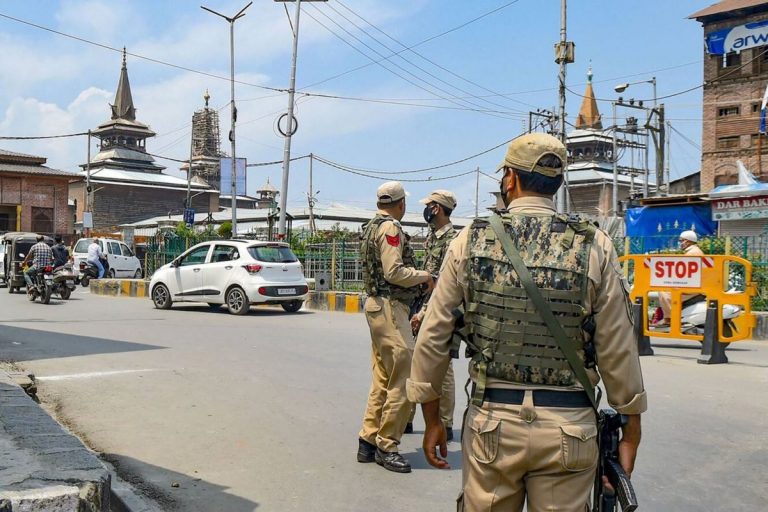
The terrorist who has been killed in an ongoing operation with security forces in Srinagar district was identified as Junaid Ahmed Bhat. Police said Bhat was involved in civilians killing at Gagangir, Ganderbal and several other terror attacks, in Jammu and Kashmir, police said on Tuesday.
#OPDachigam : In the ongoing operation, one #terrorist is killed and has been identified as Junaid Ahmed Bhat ( LeT, Category A). The said terrorist was involved in civilians killing at Gagangir, Ganderbal and several other terror attacks. (1/2) https://t.co/zWXLOAtVb5
“In the ongoing operation, one #terrorist is killed and has been identified as Junaid Ahmed Bhat ( LeT, Category A),” Kashmir Zone Police said in a latest update in a post on its social media platform X (formerly Twitter).
The said terrorist was involved in civilians killing at Gagangir, Ganderbal and several other terror attacks, they said.
“Operation continues in the upper reaches of Dachigam by J&K Police along with Joint Parties of RR and Security Forces. Further details shall follow,” it added.
In its update the Indian Army’s Chinar Corps said,” OP DACHHIGAM, One terrorist has been neutralised by the security forces in the ongoing Operation at upper reaches of Dachhigam Forest, Srinagar. Search Operation is in progress.”
Police earlier on Tuesday said that joint parties of SFs launched CASO in the upper reaches of Dachigam forest based on specific intelligence input.
On November 23, Baramulla Police, in a joint operation with security forces, busted a terror hideout in the Kunzer area of Baramulla district.
A joint operation was launched in the forests adjoining the village Malwa, under the jurisdiction of Police Station Kunzer, by Baramulla Police, Budgam Police, and 62 RR.
On November 9, based on specific intelligence regarding the presence of terrorists, a joint Operation was launched by the Army and JK Police in the general area of Rajpura, Sopore, Baramulla. Suspicious activity was observed by vigilant troops and on being challenged terrorists opened indiscriminate fire. Troops effectively retaliated. One terrorist was neutralised by the security forces.
On November 6, Security forces eliminated one terrorist in Operation Kaitsan in Bandipora.
On November 2, two terrorists were killed by security forces during an encounter in Anantnag district. The encounter broke out after security forces initiated an anti-terrorist operation in the Halkan Gali area.
On October 29, the security forces neutralised three terrorists in a high-stakes encounter in Akhnoor, Jammu and Kashmir, following an attack on an Army convoy.
(This news report is published from a syndicated feed. Except for the headline, the content has not been written or edited by OpIndia staff)
On Tuesday, 3rd December, a senior Bangladeshi government official claimed that the minority Hindu community was more protected in Bangladesh under the rule of the interim government than they were during the administration of deposed Prime Minister Sheikh Hasina. In an exclusive interview with India Today, Shafiqul Alam, the press secretary of the Muhammad Yunus government, claimed that Indian media was running an “industrial scale misinformation campaign” to spread false narratives about minorities being targeted in Bangladesh.
“Hindus are well protected here. They are more protected than they were during Sheikh Hasina’s regime. What we are witnessing here is an industrial scale misinformation campaign originating from India,” Alam was quoted as saying.
Since the fall of Sheikh Hasina’s Awami League government in August this year, the minority community in Bangladesh has been targeted and several temples have been destroyed in the area in a major crackdown on Hindus. OpIndia has recorded several such incidents, the details of which can be read here. Further, the arrest of three Hindu priests has sparked a major controversy with minorities protesting across Bangladesh seeking justice.
Amid this, Alam during the interview confirmed that one of the Hindu temples in the Chittagong region was attacked, and an effort to strike three Iskcon centres in the previous week was executed. He however said that security in the region have been increased. “We are here to establish the human rights of every Bangladeshi irrespective of gender, ethnicity, race, and colour,” Alam further asserted.
However, he alleged that major atrocities against Hindus took place under the rule of Sheikh Hasina the minority community but none of it was reported. “Because it happened in Sheikh Hasina’s time, there is not a single report from any Indian media. There is not a single report from any diaspora group and no one in the British Parliament raised this issue,” he alleged.
Further denying that there was a deliberate crackdown on ISKCON, the official emphasized that the government had dispatched the military to the religious organization’s headquarters for security. “We made sure Hindus could celebrate Durga Puja… Have we banned ISKCON? We sent troops to guard Iskcon temples,” Alam said, referring to Iskcon as a religious organization.
Notably, during a hearing on a petition to ban ISKCON last week, the Bangladeshi attorney general referred to it as a “fundamentalist organization.” However, the court declined to prohibit Iskcon. Days later, the authorities froze the bank accounts of 17 people associated with ISKCON.
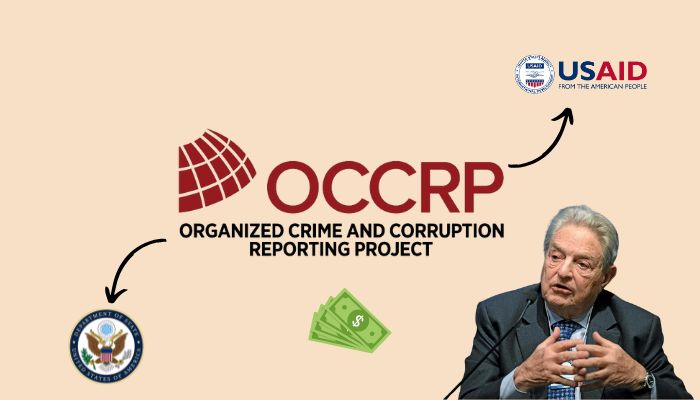
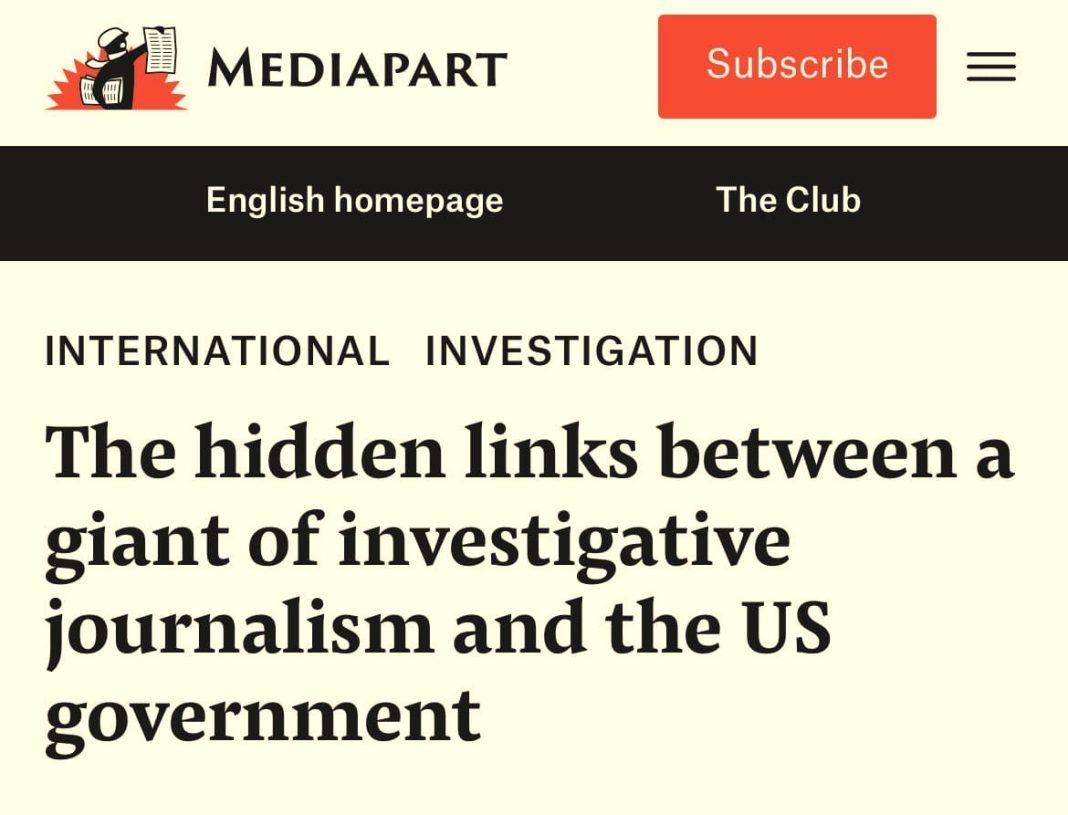
The Organised Crime and Corruption Reporting Project (OCCRP), which had previously targeted India and the Adani Group, is now under the scanner following the publication of an explosive investigative report by Mediapart.
The French newspaper has revealed on Monday (2nd December) that OCCRP, which poses as an independent, non-partisan organisation, is funded by US government agencies and works to serve their interests.
OCCRP was founded in 2007 in Bosnia’s capital city Sarajevo by a ‘journalist’ named Drew Sullivan in cahoots with the US government. It has spread its ‘network of journalists’ to every continent and has connections to 50 media partners.
Screengrab of the report by OCCRP
The US government-funded NGO prides itself on ensuring the fall of Heads of government in 5-6 countries. The idea of OCCRP was first floated by Drew Sullivan to the Director of USAID (Sarajevo) in 2003.
A year later, the Center for Investigative Reporting (CIN) was opened in Bosnia’s capital city with financing from USAID.
According to Mediapart, the funds were managed by a company owned by Drew Sullivan named Journalism Development Group (JDG). Fast forward to 2006, he quit CIN to start OCCRP with another founder named Paul Radu.
Funding sources of OCCRP
In the following year, OCCRP received $3,46,000 from the United Nations Democracy Fund (UNDEF). Drew Sullivan and Paul Radu need more money to operate and hence approached an US army officer named David Hodgkinson.
In 2007, he was the director in the US State Department’s Bureau of European and Eurasian Affairs. Hodgkinson used his influence to get OCCRP funds from the Bureau of International Narcotics and Law Enforcement Affairs (INL) of US State Department.
In May 2008, the Organised Crime and Corruption Reporting Project received $1.7 million from USAID after INL was found to have no competence in media activites.
As of today, David Hodgkinson works in the Office of the Director of National Intelligence (ODNI). It gives a fair idea of the influence of the US government and deep State on the ‘independent’ OCCRP.
According to Mediapart, OCCRP has received at least $47 million from the US government, $14 million from European countries (Britiain, Sweden, Denmark, Switzerland, Slovakia and France) and $1.1 million from the European Union since its inception.
The French newspaper, in its explosive piece, revealed that government funding accounted for 70% of the annual budget of OCCRP between 2014 and 2023. 52% of the funds were provided by the US government alone.
It must be mentioned that Drew Sullivan did not land USAID funding out of thin air. 7 years prior to establishing OCCRP, he had visited Sarajevo to train Bosnian journalists as part of a programme funded by the US government agency.
Sullivan had also worked on the US Space shuttle programme and spy satellite shuttles. According to Mediapart, he had a top-secret security clearance.
How OCCRP tries to hide its ties to US government
In its report, Mediapart noted, “While the OCCRP presents itself as being totally independent, its management have placed it in a position of structural dependence upon the US government.”
It stated that the NGO also withholds/ conceals the extent of funding by the USAID and State Department from the public, media partners and journalists.
“The US government financing is never mentioned in OCCRP-produced articles…OCCRP appears uncomfortable about the scale of US funding, as the amounts are not published on the NGO’s website,” the French newspaper added.
It further highlighted, “The OCCRP has omitted from its official history the role played by the US government in its creation, only mentioning the funding by the UN…OCCRP has never publicly disclosed the role of the INL and David Hodgkinson in its financing.”
OCCRP co-founder Drew Sullivan has acknowledged that his independent ‘network of journalists’ could not have been created without funding from US government agencies.
In order to keep the illusion of its ‘independence and non-partisanship’ alive, it removed the phrase ‘OCCRP is made possible by’ and the logo of USAID from the homepage.
According to Mediapart, it is essential for all organisations to prominently acknowledge financial support from USAID.
However, OCCRP has been allowed a ‘partial branding waiver’ that allows it to not follow the usual process of acknowledgement.
Influence on reporting by OCCRP
The US State Department and USAID exerts influence on the Organised Crime and Corruption Reporting Project through its financing.
USAID can veto the appoinment of ‘key personnel’ in OCCRP. It also has a ‘cooperative agreement’ and a ‘substantial involvement clause’ with the NGO, which claims to be ‘independent.’
According to Mediapart, USAID uses OCCRP reports to trigger judicial probes and sanction procedures. OCCRP cannot investigate the US government and is directed to probe foreign governments hostile to American interests.
These unfortunate countries include Russia, Venezuela, Malta and Cyprus. Mediapart noted, “Not only is the US government largely untargeted by OCCRP reporting, but it also manages to orientate the NGO’s coverage by providing funds which the OCCRP has an obligation to use on reports that focus on designated countries.”
Drew Sullivan has himself conceded that one cannot report against a country with their own money. “We couldn’t use US government or Soros money for US stories,” he said in an email to OCCRP journalists in 2023.
It became evident when Sullivan did not pay heed to allegations of corruption scandal by US-based companies such as Microsoft and Bechtel.
The lack of independence and involvement of the US government in OCCRP had forced prominent US journalist Lowell Bergmann to resign from the Board.
It is interesting to note that OCCRP is bound by law to comply with the US Foreign Assistance Act, pertaining to aid money received abroad to advance US economic interests and foreign policy.
How OCCRP targets foreign govts at the behest of US agencies
OpIndia had previously reported how USAID, which funds OCCRP, had been at the helm of ‘regime change’ operation in India’s neighbouring country of Bangladesh.
Given the extent of financing by the US government, OCCRP is bound to conduct investigations in countries that are considered top priority by the former.
The US State Department has doled out funds specifically to target foreign nations. Mediapart found that it donated $2.2 million to OCCRP between 2015 and 2019 for a hitjob titled ‘Balancing the Russian Media Sphere.’
Again, OCCRP received $1.7 million for another mission titled ‘Strengthening Investigative Journalism in Eurasia’, targeting China, Russia and central Asia. The project ran between 2019 and 2023.
According to the directives of the US government, the NGO created a database of assets that are controlled by Russian politicians globally.
The US State Department also financed $1,73,324 to OCCRP to ‘uncover corruption’ in Venezuela, whose President is a staunch enemy of the United States.
In 2013, the US State Department’s Bureau of International Narcotics and Law Enforcement Affairs gave $2,00,156 to the ‘independent organisation’ to expose drug cartels in Mexico.
Countries such as Malta and Cyprus were also targeted, with donations to the tune of $2.3 million from the US State Department, between 2022 and 2024.
Reports by OCCRP were then used to actively mobilise law enforcement authorities through the Global Anti-Corruption Consortium (GACC).
Mediapart states in its investigative report –
“The GACC has two missions. One of them is to prompt, on the basis of reports published by the OCCRP, and together with the actions of the local offices of Transparency International, present in 65 countries, the opening of judicial investigations into corruption, as well as sanctions procedures and the mobilisation of civil society.The second is to lobby states to toughen their anti-corruption and anti-money laundering legislation.“
GACC has been instrumental in furthering American interests through OCCRP and ‘Transparency International’ that former US Secretary of State Antony Blinken vowed to increase its funding.
It thus makes sense why Senior adviser with USAID’s Europe and Eurasia Office, Mike Henning, had dubbed OCCRP as ‘one of the best achievements’ made by the US govt agency.
OCCRP has ties to George Soros’ OSF
In August last year, OpIndia had revealed that OCCRP is funded by the likes of George Soros’ Open Society Foundations (OSF), the Ford Foundation and the Rockefeller Brothers Foundation.
OSF even gave a grant of $8,00,000 (~ ₹6.61 crores) to the Organised Crime and Corruption Reporting Project for ‘strengthening’ the organisation’s cross-border reporting and increasing the wider impact.
Opindia also analysed the 2019 annual report [pdf] of OCCRP, which made it clear that the funds provided by George Soros’ Open Society Foundations were being used for establishing ties of the Global Anti-Corruption Consortium (GACC) to civil society across various countries.
OSF’s funding to OCCRP
Page 24 of the report stated, “In the next year, the GACC will go farther to advance legal action and build ties with civil society partners at the global and local levels, growing its reach and impact.”
“We are grateful to our partners who have supported this unique partnership: the governments of Argentina, Australia, Denmark, Norway, and the United States and the Open Society Foundations,“ it further added.
This is in line with the textbook approach adopted by George Soros and his Open Society Foundations to influence civil society and ‘distort’ public perspectives across different nations.
OCCRP published hit piece on the Adani Group
In August 2023, OpIndia had predicted that the OCCRP was planning a shakedown of India’s financial markets, following the footsteps of US-based short seller ‘Hindenburg Research’.
The ‘network of journalists’ published two hit pieces so far – one in August 2023 and another in May 2024. The baseless claims were junked by the Adani Group and also by the Mauritius-based fund ‘360 One.’
Even the Supreme Court of India had ruled that the Organized Crime and Corruption Reporting Project (OCCRP) report could not be used to cast doubt on the ongoing probe by SEBI.
It stated that reliance on a third-party organisation report without any verification cannot be relied on as proof.
The revelations made by Mediapart come at a time when Gautam Adani is being hounded in the US over dubious allegations of bribery.
On 2nd December (local time), Canada’s national broadcaster, Radio Canada, claimed that agents of the Indian government interfered in Conservative candidate Patrick Brown’s 2022 Conservative Party leadership campaign. It suggested that Indian consular officials pressured Brown’s supporters to withdraw their backing. Notably, the report relied on unnamed sources and cited Baaz News Organisation as a named source. Baaz is a pro-Khalistani platform known for its controversial reporting on India-related issues.
In December 2023, Baaz News Organisation claimed that Indian consular officials intervened in the 2022 Conservative Party of Canada (CPC) leadership race to undermine the candidacy of Brown. The organisation claimed that Indian consulates lobbied a Member of Parliament to withdraw support for Brown and barred him from attending Indian diaspora events.
The organisation further claimed that Brown’s policy positions, such as support for Sikh farmers and criticism of Indian government policies, led Indian officials to consider him a foe rather than the friend he had been regarded as previously. Similar allegations were made by Radio Canada in its report, suggesting that Brown’s support for farmer protests and the Indian government’s serious concerns about his attendance at a vigil organised by the Sikh community following the death of Waris Punjab De founder and pro-Khalistani actor-turned-leader Deep Sidhu were linked.
Both Baaz and Radio Canada, in their reports, claimed that their actions of Brown were tied to broader accusations of election interference by India, citing claims from CSIS and other sources.
Baaz’s reporting is known for its anti-India bias. It has frequently published reports targeting the Government of India under the leadership of Prime Minister Narendra Modi. On the other hand, Radio Canada granted anonymity to its sources and heavily framed its narrative around divisive diaspora issues, fuelling distrust in India-Canada relations.
Interestingly, Baaz claimed Indian influence in supporting CPC leader Pierre Poilievre, citing ties to organisations such as the Canada India Foundation and the Canada-India Global Forum. According to Radio Canada, Poilievre’s office denied any knowledge of such interference by Indian agents. Citing sources, Radio Canada further claimed that it was Conservative MP Michelle Rempel Garner who was “pressured” by Indian agents—a claim Garner categorically denied. Baaz mentioned, “At least one Member of Parliament was visited by representatives of an Indian Consulate in Canada urging them to pull their support,” but did not name anyone. Radio Canada claimed it was Garner, but she called these claims “ridiculous.”
Baaz has a history of anti-India stance
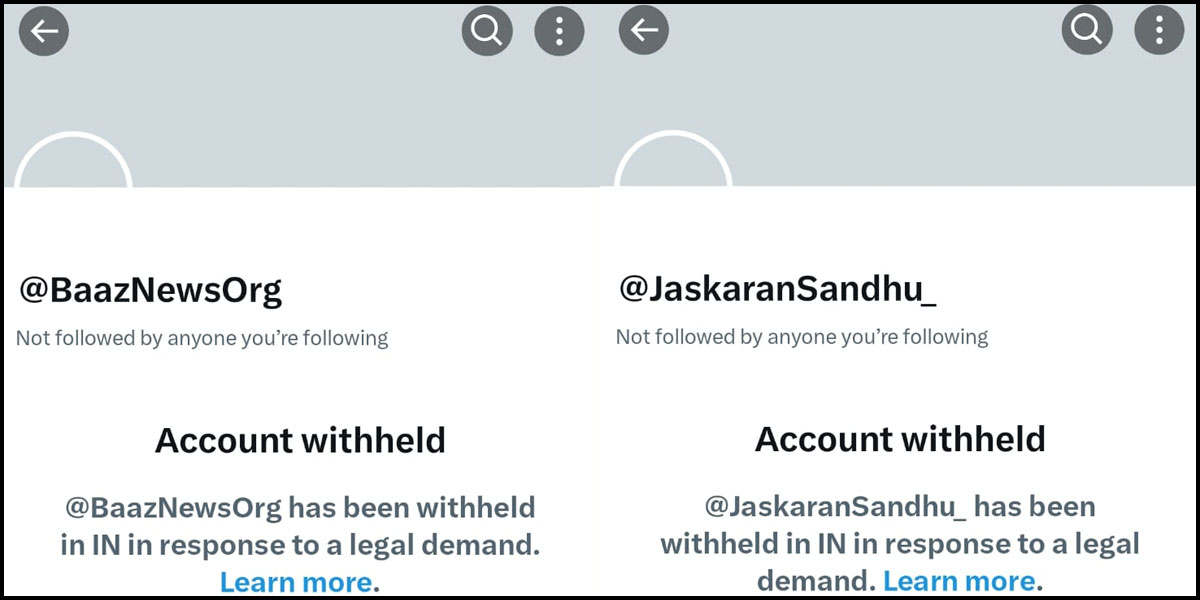
Notably, Baaz News Organisation has a long history of maintaining an anti-India and pro-Khalistan stance. The organisation repeatedly shares fake news and disinformation about India, leading to the social media accounts of both the organisation and its founder, Jaskaran Sandhu, being withheld in India. Baaz’s account was specifically withheld for spreading misinformation during the crackdown on the pro-Khalistani preacher and now Member of Parliament, Amritpal Singh. The platform has also provided a voice to Jas Oberoi, a Canada-based columnist known for his anti-Hindu and anti-India rhetoric.
Source: X
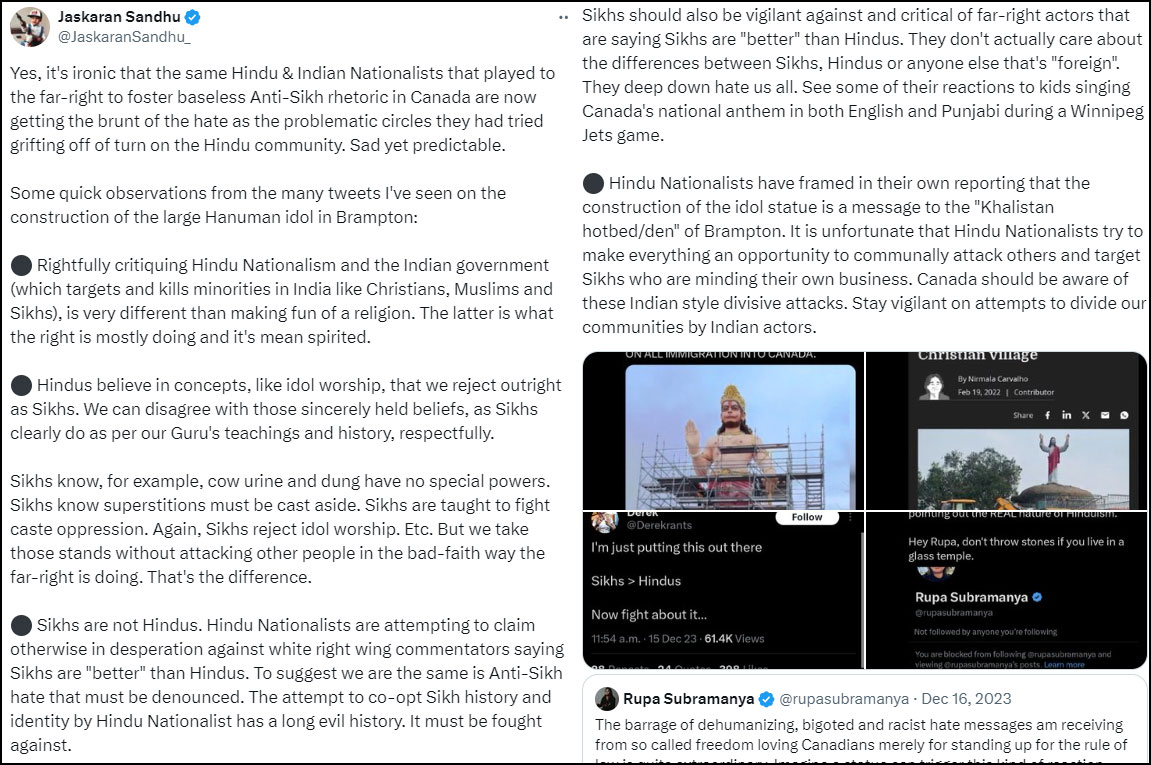
Jaskaran, co-founder of Baaz News, frequently posts anti-Hindu content on social media. In December 2023, when there was public outrage over racist comments directed at a Shri Hanuman idol in Brampton, Jaskaran published a lengthy post filled with Hindu hatred and an anti-India tone. In this post, he openly accused the Indian government of killing minorities, including Christians, Muslims, and Sikhs. He wrote, “Rightfully critiquing Hindu Nationalism and the Indian government (which targets and kills minorities in India like Christians, Muslims and Sikhs), is very different than making fun of a religion.” He also included a derogatory cow urine remark that was entirely unnecessary. He wrote, “Sikhs know, for example, cow urine and dung have no special powers. Sikhs know superstitions must be cast aside.”
Source: X
In the same post, he used a screenshot of a news report claiming that India destroyed a Jesus statue. The context, however, was omitted—it was never mentioned that the statue in question was illegal, having been constructed on encroached land.
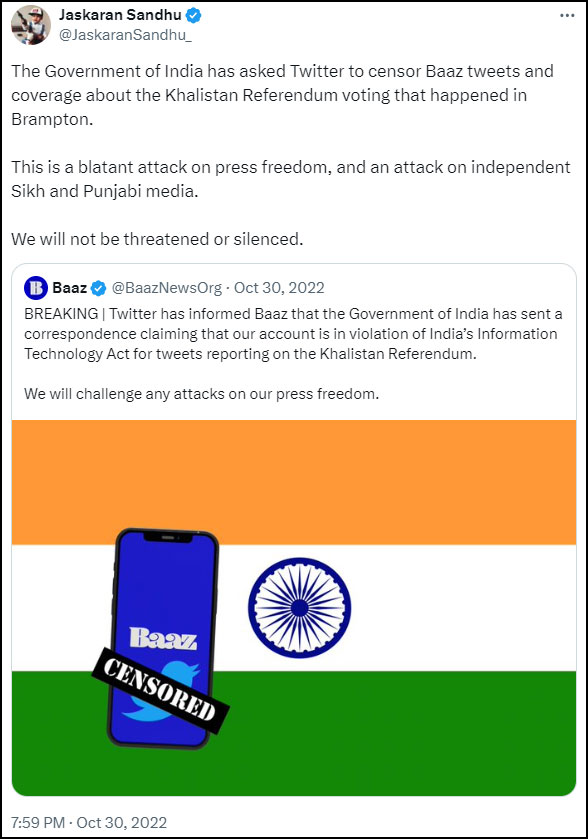
In October 2022, Jaskaran whined on social media after the Government of India asked Twitter to censor Baaz News posts about the Khalistan referendum. He claimed it was a “blatant attack on press freedom and an attack on independent Sikh and Punjabi media.”
Source: X
In May 2021, Baaz News published a report authored by one Sandeep Singh, accusing OpIndia of targeting minorities during the COVID-19 pandemic. The basis of the report was an article published by OpIndia that discussed whether travellers from the United Kingdom to Punjab had any role in spreading the UK variant of COVID-19. OpIndia’s report was merely a discussion without any conclusive data. However, Baaz News got triggered and claimed to have talked to “two” travellers who suggested they went through screening before boarding in the UK and after landing in India.
Baaz News Organisation has shown a clear bias with its strong anti-Hindu and anti-India stance. Its pro-Khalistani agenda and frequent spreading of misinformation make it hard to trust as a news source. By leaving out important details and making baseless allegations, Baaz pushes a narrative aimed at creating division. Jaskaran Sandhu’s posts, filled with hateful comments against Hindus and unnecessary insults, show the platform’s focus on attacking India rather than promoting fair discussion. Baaz uses its platform to spread negativity and distrust, harming already soured India-Canada relations and raising concerns about its journalistic ethics.
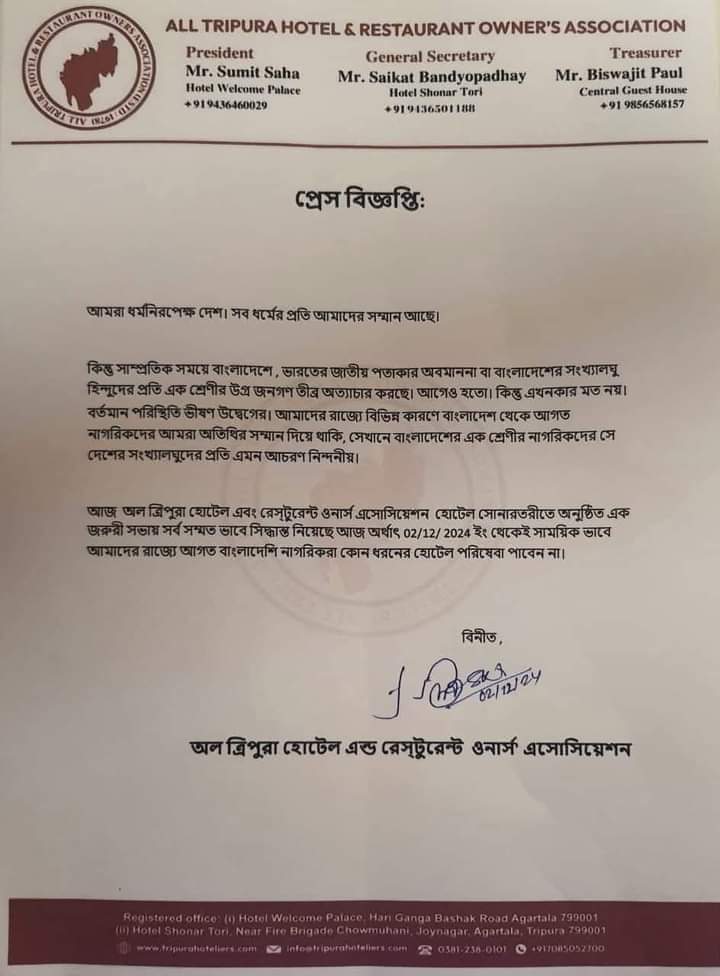
In a major development, the All Tripura Hotel & Restaurant Owners’ Association (ATHROA) resolved on Monday (2nd December) to ban serving guests from Bangladesh. The Association took this decision in the wake of the disrespect for the Indian flag and atrocities against minority Hindus by Bangladeshi Islamists.
ATHROA general secretary Saikat Bandyopadhyay said that this decision was taken at an emergency meeting on Monday. “We are a secular country and have respect for all religions. Our national flag has been desecrated and minorities are facing oppression by a section of fundamentalists in Bangladesh. Earlier too such incidents used to take place but now it has crossed the limit. The prevailing situation in Bangladesh is really worrisome. We serve the people who are coming to Tripura for various purposes. We condemn the treatment meted out to minorities in Bangladesh,” he said.
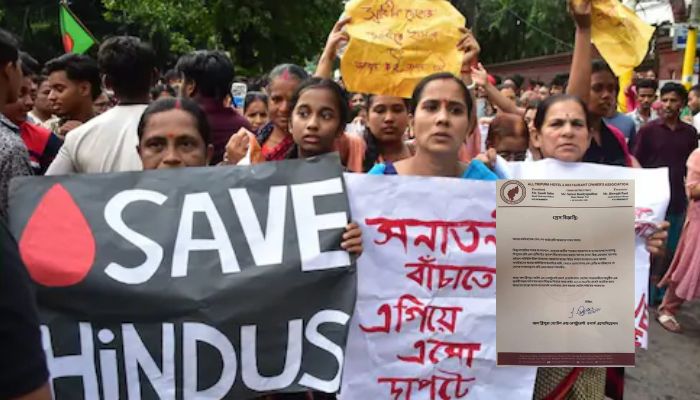
Thousands of people gathered in Tripura’s capital Agartala on Monday to protest ISKCON leader Chinmoy Prabhu’s arrest in Bangladesh on sedition charges.
Earlier, the ILS Super Speciality Hospital in Agartala announced that it would no longer provide treatment to Bangladeshi nationals. This decision comes amid growing protests from various nationalist organizations in the state, which have been fueled by recent attacks against minority Hindus in Bangladesh.
The hospital, which had previously been a key healthcare provider for patients from across the border, has suspended its services for Bangladeshi citizens following a meeting of its executive committee yesterday. ILS Hospital has been a popular destination for medical treatment, with around 100 patients from Bangladesh crossing the Integrated Check Post (ICP) in Agartala each month. This follows a decision by the JN Ray Hospital in Kolkata to stop treating patients from Bangladesh.
Tanuj Saha, the manager of the ILS Super Speciality Hospital confirmed the decision in an exclusive conversation, stating that the hospital had faced increasing pressure from protesters demanding a halt to foreign patients’ access, in light of the escalating violence against minorities in Bangladesh. Saha explained that the hospital’s administration, in consultation with local authorities, took the step to ensure the safety and well-being of both patients and staff. The protests have seen participation from various nationalist groups, who argue that the influx of foreign nationals for medical treatment is inappropriate amidst the current political and social climate.