Home Blog Page 671

Why are Hindu organisations demanding demolition of the disputed mosque in Uttarkashi: Here’s all you need to know

After Sanjauli Mosque in Himachal Pradesh, Hindu organisations are calling for the removal of an alleged illegal mosque in Uttarkashi, Uttarakhand. On the 24th of October 2024, members of local Hindu rights organisations like the Sanyukt Sanatan Dharma Rakshak Sangh staged a protest rally against the illegal structure.

Following stone pelting, tensions rose and the police lathi-charged the protesters leaving several injured. Hindu organisations have alleged that a mosque has been built illegally on government land in the Barahat area of ​​Uttarkashi.

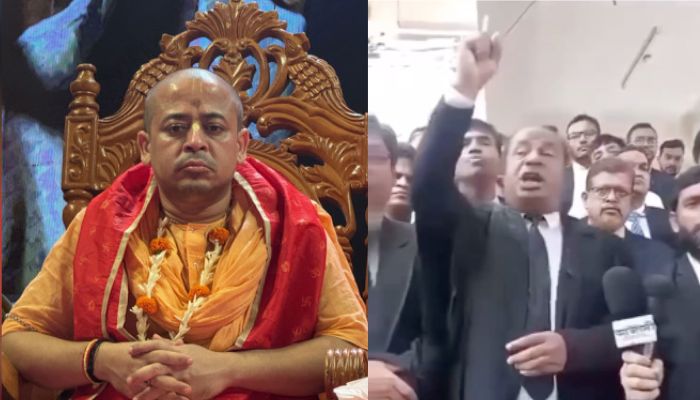
A rally was held by the protesters starting from Hanuman Chowk against this. Swami Darshan Bharti, leader of the Devbhoomi Raksha Abhiyan, was also present in the rally. During this time, the protesters also raised slogans of ‘Jai Shri Ram’. Markets remained completely closed in Uttarkashi, Dunda, Bhatwadi and Joshiyada during the protest.

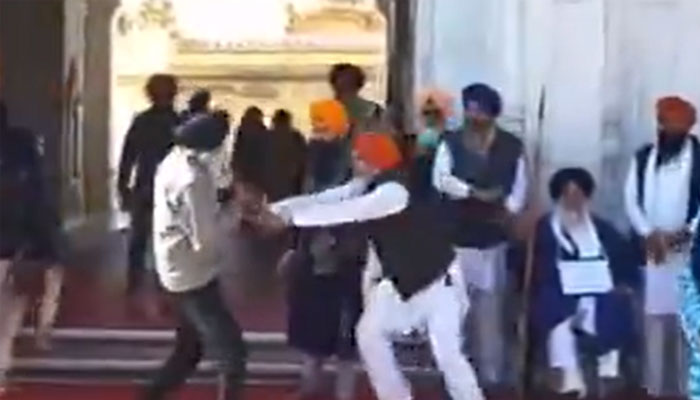
When the protesters tried to remove the barricades, they clashed with the police and the police lathi-charged the protesters. During this, tear gas shells were also fired. 27 people, including 2 female protesters and 8 police officers, were injured in the clash. The injured have been admitted to the district hospital for treatment.

The police crackdown on Hindu activists was met with outrage, and on Friday, the local traders and Hindu activists observed a “Bandh” in the Yamunaghati area to register their protest against the police. It has been reportedly decided that a Hindu Mahapanchayat will be held on the 4th of November to address this matter.

On Thursday night (23rd October), Swami Darshan Bharti issued a warning that if namaz were offered at the illegal Uttarkashi mosque on Friday, markets will remain shut and there would be widespread protests.  In reaction to the rising tensions, District Magistrate Dr. Meharban Singh Bisht enforced Section 144 in Uttarkashi District.

Extending solidarity to the Vyapar Mandal, Uttarkashi’s vegetable market stayed shut. To successfully manage the situation, police from Tehri Garhwal, Haridwar, and Dehradun were dispatched to the region. Members of various Hindu organisations met at the Vishwanath Temple compound in the afternoon to raise their demands regarding the said illegal mosque.

What is the protest against the mosque about

Hindus say that the mosque in Uttarkashi has been built illegally on government land. However, the district administration says that the mosque is old and is built on the land of the people of the Muslim community. Regarding this, the District Magistrate Office of Uttarkashi also issued a notice on the 21st of October. In this, the report of Bhatwadi’s Sub-Divisional Magistrate Mukesh Chand Ramola has been cited, in which he said that the land on which the mosque is built is registered in the name of the land account holders.

This mosque is also reported to be mentioned in the government gazette published by the Muslim Waqf Department of the Uttar Pradesh government on 20th  May 1987. In this, the khasra, raqwa, Nali and religious purpose of the mosque are mentioned on behalf of the Sunni Waqf. This land was reportedly bought by Ramzan Ali, Abdul Hameed Beg, Ali Ahmed, Yasin Beg, Ilahivaksh, and Mohammad Rafiq, residents of Sakinan Uttarkashi, Patti Barahat, Tehsil Bhatwadi. They apparently purchased a total of four Nali and 15 Mutthi land [Mutthi and Nali are traditional units of land measurement in Uttarakhand].

The mutation of the land took place in 2004, and an order passed by the Tehsildar in 2005 states that the mosque is built on the land in question. This dispute began when the Sanyukt Sanatan Dharma Rakshak Sangh sought information about the mosque under RTI. In this, the district administration gave vague information and said that it did not have the necessary documents.

Devbhoomi Raksha Abhiyan founder Swami Darshan Bharti says that the administration provided incorrect information in the RTI. Following this, on the 6th of September, 2024, Hindu organisations protested outside the DM office, demanding the mosque’s demolition. They issued a three-day ultimatum to the administration. They stated that if their demand was not met, they would demolish the mosque themselves. Following this, the District Magistrate of Uttarkashi appointed a committee to investigate the matter. This committee stated that the mosque is legal and does not sit on government land.

Reports say that the local Muslim community claimed that the Uttarkashi mosque was constructed in the pre-independence period, however, at that time it had only two floors and three others were illegally constructed later on.

Local Bhartiya Janata Party (BJP) leader Gaurav Pandey has said that several “outsiders” have entered the Devbhoomi and are involved in illegal activities. Pandey stated that in recent years, cases of molestation and enticing of women have increased in hilly areas, resulting in anger among locals, which can be seen on the streets. The BJP leader said that there have been illegal encroachments and buildings on government land in several parts of the state, which have been reported by locals; the government has taken note of this and freed many hectares of land from encroachment. He further stated, “In the Pushkar Singh Dhami government, no one will be allowed to take the law into their hands and strict action will be taken against the culprits.”

On 28th October, the police conducted a routine inspection in the unrest-hit area. The Investigating Officer Manoj Aswal said that as part of the investigation, a routine inspection of the spot has been done. Also, a map has been prepared of where the protesters were coming from and where the policemen were standing. He said that efforts have been made to collect evidence from the spot and based on the evidence found, the stone pelters will be identified and arrested.

DMK minister targets actor Vijay’s Tamilga Vatri Kajhagam, says they are ‘C team of BJP’

0

Tamil Nadu law minister S Regupathy on Monday targeted Actor Vijay’s Tamilga Vatri Kajhgam (TVK) party, saying that the party is not an A team or B team, but the BJP’s C team.

He further added that Sunday’s TVK public meeting was more like a grand film than a real meeting.

Speaking to reporters, Tamil Nadu law minister S Regupathy said, “Actor Vijay’s TVK (Tamilga Vatri Kajhgam) party is not an A team or B team, but it is BJP’s C team. It is clear that the Dravidian model of governance cannot be removed from the minds of the people. Yesterday’s TVK public meeting was more like a grand film than a real meeting.”

On Sunday, Actor Vijay’s Tamilaga Vettri Kazhagam state conference was held in V Salai, Vikravandi, where lakhs of Vijay supporters thronged and participated in the party’s first-ever state conference.

Vijay accused the DMK of deceiving the public under the guise of the Dravidian model and called the DMK government anti-people.

Addressing the people, Vijay said, “Here one group singing the same song. Applying specific colour to whoever comes for politics. They are cheating people and they are doing underground dealing. In the name of the Dravidian Model running anti people’s government cheating the people. TVK’s first ideological enemy is who troubles this country with divisive politics. The second is in the name of the Dravidian model and using the names of Thanthai Periyar and Peraringanar Anna cheat Tamil Nadu people which is one selfish family group (Dynasty).”

He further remarked that politics is “not a cine field but a battlefield,” adding that his party members must be vigilant on the ground.

“Politics is not a cine field; it is a battlefield. It’s serious. Whether it’s dealing with a snake or politics, if we decide to take it up with seriousness and a touch of humour, only then can we endure in this field and handle opponents. We need to stay cautious on the ground,” Vijay said.

Vijay entered politics and launched his party, Tamilaga Vetri Kazhagam, in February this year.

The Tamil Nadu Assembly elections are anticipated to take place in 2026. 


(This news report is published from a syndicated feed. Except for the headline, the content has not been written or edited by OpIndia staff)

Delhi: Asif and his father Riyazuddin attack police officers, punch SHO in the face

On Saturday (26th October), a youth named Asif assaulted multiple on-duty police officers for stopping the former from riding a bike with a modified silencer. He was accompanied by his father Riyazuddin.

According to reports, the Station House Officer (SHO) of Jamia Nagar police station, Narpal Singh, was on patrol duty in Batla House at about 8:45 pm. He saw Asif driving towards Zakir Nagar market on his motorcycle while creating a loud noise.

Singh stopped the accused for inspection and found that his bike was equipped with a modified silencer, which emitted sound beyond permissible limits as mandated by the Motor Vehicles Act.

The SHO directed the cops to take legal action against the 24-year-old Asif. The accused called his father Riyazuddin to the scene. He attempted to take away the bike and threatened the police officers with drastic consequences.

“Just settle it here and let him go, or else things won’t go well,” Riyazuddin threatened. He then held onto SHO Narpal Singh while Asif threw punches at his face. The officer sustained injuries to his eye. Constable Ramkesh was also injured.

SHO Singh and constable Ramkesh were rushed to the Holi Family Hospital for treatment. Their condition is now said to be stable. Other police officers on patrol duty overpowered the duo and arrested them.

A case was thereafter registered against Asif and Riyazuddin for assaulting on-duty police officers and obstructing public servants from performing their duties.

AIMPLB President Maulana Khalid instigates Muslims to create unrest over Waqf Amendment bill, says it is ‘matter of life and death’

Maulana Khalid Saifullah Rehmani, the president of the All India Muslim Personal Law Board (AIMPLB) stepped up his opposition to the proposed Waqf (Amendment) bill. In an effort to provoke Muslims, he vowed to fight its implementation “at any cost” and declared that members of the organisation are willing to give their lives for the cause. He further alleged that the government wanted to limit the board’s rights and added that it had unlawfully occupied the highest number of Waqf properties.

“It is a matter of life and death for us, and we should stop it (Waqf bill) at all costs. If needed, the Muslims of the country will fill the jails in such a way that the government will not have any place to house criminals,” he threatened while speaking at an event in Kanpur, Uttar Pradesh. “If needed, we will not hesitate to give our own lives,” he claimed in front of his audience.

“If its (waqf boards) management is done by non-Muslims, will they sympathise with your mosques and graveyards? The result will be your land will be taken away from you. This is a very dangerous law. In Tamil Nadu itself there are 4,78,000 acres of temple land. In Andhra Pradesh, there are 4,68,000 acres of temple land. Both these states have 10 lakh acres of temple land. If Muslims have six lakh acres of Waqf land in the whole country, then what is the problem,” he asked.

Additionally, the AIMPLB chief accused that the center governemnt was “pressurising” certain Waqf Board members to drop the legal battle and refrain from submitting any paperwork. “Think about it. If there is a dispute between the Waqf board and the government, will the collector give a decision against the government? The collector is from the government itself,” he claime dinf ront of the gathering.

Notably, a group headed by the AIMPLB supremo met with Jharkhand Chief Minister Hemant Soren on 9th October to allegedly discuss their objections to the bill. They claimed that the Waqf Act would permit the seizure of Waqf holding and charged that the move is in violation of the Constitution, federalism, democratic values and the pluralistic structure of the nation. According to a statement issued by the AIMPLB following the meeting, Soren would “never support the Waqf Amendment Bill 2024 if it is presented in Parliament.”

On 28th July, the central government proposed the Waqf (Amendment) Bill in Parliament. However, it was referred to a Joint Parliamentary Committee (JPC) due to the objection from the opposition parties. Waqf boards now have the jurisdiction to declare any property “waqf property.” The law seeks to limit their authority. It also recommends including Muslim women and non-Muslims to state Waqf Boards and the Central Waqf Council.

On 22nd October, Trinamool Congress Lok Sabha MP Kalyan Banerjee reportedly attacked JPC chairman Jagdambika Pal with a glass bottle during the Joint Parliamentary Committee meeting on the Waqf (Amendment) bill. He had a heated dispute with Bharatiya Janata Party member and former Calcutta High Court Judge Abhijit Gangopadhyay and injured his thumb as well as index finger when he shattered a glass water bottle on the table out of rage. Meanwhile, Jagdambika Pal expressed, “Yesterday during the Joint Parliamentary Committee meeting, TMC MP Kalyan Banerjee broke a glass bottle and threw it with such anger and fury and the way he threw it at me, it is God’s grace that I narrowly escaped.”

“The government is having discussions on the bill so that it can benefit the Muslim community. The objective of the bill is to benefit the poor Muslims. The state wants such land to be used for the education and development of poor Muslims. We have to come to a consensus. If anybody disagrees, they must make their point. But showing such anger is not valid,” Jagdambika Pal noted.

Kerala govt refuses to prosecute Kalamassery blast accused Dominic Martin under UAPA, will be charged under IPC and Explosives Act

0

In an update to the blast that was reported in Kerala’s Kochi last year, the police have withdrawn terrorism charges against Dominic Martin, the only person accused in the case. The blasts took place last year at a Jehovah’s Witness convention in Kalamassery, which killed eight people and injured 45 others severely. 

The UAPA charges filed against Martin were reportedly dropped after the state refused to prosecute him under the said act. According to the New Indian Express, the police stated that despite the fact the investigation team had finished every procedure for prosecuting Martin under UAPA, the state administration declined to pursue UAPA charges.

“The paperwork was completed, and the police had submitted the documents to the UAPA committee. After the committee reviewed it, the government decided not to grant prosecution sanction under UAPA in the case. The sanction was denied due to the stand of Left parties against UAPA,” a police source was quoted as saying by the New Indian Express. 

After the police submitted the chargesheet at the Ernakulam District Principal Sessions Court in April of this year, the matter was sent to the Kalamassery magistrate court for committal hearings. Martin will now stand trial for offenses only under several sections of the IPC and the Explosives Act.

Kochi City Police Deputy Commissioner K S Sudarshan, who examined the issue, confirmed that Martin’s UAPA charges were withdrawn because they did not get the sanction from the government. “However, we don’t know the reason behind the denial,” he said. 

Officers on the investigation team assert that, while UAPA charge has been dismissed, Martin still faces additional serious allegations that might result in a capital punishment. There are 284 witnesses in this case. Over 150 material objects and documents were submitted before the court, along with a chargesheet spanning over 3,500 pages.

Last year, multiple blasts were executed at a Jehovah’s Witnesses prayer meeting at a convention center at Kalamassery, Ernakulam in Kochi district, killing eight and injuring over more than 50 persons.

Hours after the blasts, a man named Dominic Martin surrendered to the police claiming responsibility for the explosions. Before his arrest, Martin, a former member of Jehova’s Witness, appeared live on a social media platform and said that he believed that its teachings were “anti-national and seditious”.

“Their teaching is not right. They are teaching anti-national things. I told them that they should change their ways. Staying in a…but cursing and addressing people in that country in the worst…derogatory form is they do. They are telling a 4-year-old child that if somebody from another community gives you candy, you shouldn’t have it. From an early age, they are feeding such poison into the child,” the accused reportedly alleged.

He further said, “I took this decision because I understood that this organization is bad for the country. Political parties won’t take action because everyone is scared of religion. You should open your eyes.”

The Indian Express quoted Martin saying that Jehova’s Witnesses ask the children not to sing the national anthem or join the defense services. “They teach that all people of the world will perish and only they will live. What should we do with the people who long for the ruin of the entire people in the world? I could not find a solution,” Martin said.

Jehova’s Witnesses, according to information available on their website jw.org, “strive to adhere to the form of Christianity that Jesus taught and that is apostles practiced”. They consider Jehova as the one true and Almighty God, the Creator, who is the God of Abraham, Moses, and Jesus.

According to information on jw.org, Jehova’s Witnesses do not participate in nationalistic ceremonies. “Jehova’s Witnesses choose not to participate in such ceremonies because we believe that these conflict with Bible teachings. We appreciate receiving the same respect for our beliefs as we show to others who make a different choice,” the official website of Jehova’s Witnesses reads. The group claims to remain “strictly neutral” in political affairs and “avoid affiliation with other religions”. Interestingly, a lot of these beliefs bear a resemblance to Islam in more than one way primarily owing to their Abrahamic origins. They believe religion to be above nationalism, propagate and practice conversion, and provoke people to commit anti-national acts.

In the given case, the Kerala government and the UAPA committee have now withdrawn the UAPA charge against Dominic. It is believed that the government has taken this decision owing to politics.

MP: Rustam, Akbar and Babu Khan enter Ram Mandir, offer namaz despite priest’s objections, police releases them after giving notice

0

In the Shajapur district of Madhya Pradesh, a case of three Muslim men identified as Rustam, Akbar and Babu Khan, forcibly offering namaz in a Ram temple came to the fore on 26th October. The Police registered an FIR against the accused trio and detained them, however, the accused were later released witha notice. The incident has triggered widespread discontent among the local Hindus, who are demanding stern action against the accused Muslim men.

The incident transpired in the Kiloda village of Salaslai police station precinct of ​​Shajapur, wherein the temple priest Omprakash Sharma filed a complaint with the police alleging that 85-year-old Akbar, 65-year-old Rustam and 70-year-old Babu Khan had come to the temple at around 5:45 pm on Saturday (26th October), washed their hands and feet with water from the pot kept in the temple, and sat in the temple premises and started offering Namaz.

Despite the temple priest’s objections, the three accused remained in the temple for almost 20 minutes before leaving. According to the authorities, the three brothers were coming home after performing some work at a bank, and then it was time for namaz, and all three of them performed namaz in the temple grounds.

Due to this incident, the temple priest and local Hindus are outraged and have demanded strict action against accused Rustam, Babu Khan and Akbar. Notably, after the police registered a case and detained them, the accused trio admitted to their actions. The police filed a FIR and charged them, but later released them after receiving a notice. The investigation and legal action in the matter are still underway, and another trial will be held in court.

Luxury hotels, extravagant parties, chartered flights and more: The life and times of The Hindu ‘journalist’ Mahesh Langa, arrested for GST fraud

0

Several surprising revelations have emerged about Mahesh Langa, a journalist for The Hindu, who is implicated in a GST fraud case. Reports suggest that he led a lifestyle far beyond his salary, amassing crores of rupees over the past two years.

Reports indicate that Mahesh leveraged his position as a journalist to engage in blackmail, settlements, and illicit business activities, reportedly earning millions through these means.

Additionally, his name has surfaced concerning the leak of sensitive government documents, and an FIR has been filed in Gandhinagar regarding this matter.

Despite an annual salary reportedly only in the lakhs, a recent Ahmedabad Crime Branch search at his home uncovered Rs 20 lakhs in cash. Police also recovered expensive jewelry and documents related to property holdings.

Furthermore, Mahesh and his wife frequently visited luxury hotels like the Oberoi and Taj Man Singh. As per the revelations, he and his wife stayed in such establishments over 98 times in the past year without covering any of the costs themselves.

Shell companies bore the cost

Investigations have revealed that the lavish lifestyle of the journalist was primarily funded through shell companies. He also frequently traveled by chartered flights, with fares amounting to lakhs.

He even has a history of hosting an extravagant birthday party, inviting prominent businessmen and city officials. For this event, he reportedly paid a Rs 5 lakh advance for the hall and gifted gold coins to each guest.

Use of government documents for personal gain

As reported earlier, Mahesh Langa also acquired government documents. Notably, he did not use these for journalism but rather to blackmail officials and government bodies. However, officially, it is stated that the documents contained no information against the government.

His wife and brother have apparently issued statements against him. The initial FIR named Mahesh’s brother, Manoj Langa. However, the investigation later showed that Mahesh’s wife was a partner in the company being investigated. During questioning, she claimed that she was uninformed of the actions and attributed everything to Mahesh.

Following a raid at the Gujarat Maritime Board (GMB) office, another FIR was filed in Gandhinagar

As Mahesh Langa was first brought for questioning by the Crime Branch, he claimed that he was being targeted by the government because of his work as a journalist, but this defense failed, and he was arrested.

During the investigation, it was determined that he had been in contact with specific officials, with chat logs to back this up located on his devices. Further police investigation found that Mahesh had gotten documents and other private information about the Gujarat Maritime Board, triggering a search of the GMB office in Gandhinagar.

After seizing several documents and materials, the Gandhinagar police registered another FIR against him at the Sector 7 police station. The investigation remains in its early stages, and police have yet to take him into full custody.

Meanwhile, Mahesh’s bail plea in the GST fraud case was denied by the Ahmedabad Metropolitan Court, and he is currently held in Sabarmati Jail. As the investigation unfolds, there are indications that the Enforcement Directorate (ED) may also become involved; reports suggest they have already begun a preliminary inquiry.

Growing cases of drug and weapon smuggling at India-Nepal border, security officials seize pistols, hashish, brown sugar and cash

Drugs trafficking menace at the India-Nepal border area has been a major cause of concern among the border security forces of India and Nepal.

On 16th October, the Seema Suraksha Bal (SSB) recovered 910 grams of Hashish from a woman who passed through a Nepali security check post at Krishnanagar border point and entered Badhani town in India.

During interrogation, the woman, Mina from Siddharthanagar, India, claimed to be a porter who brought the contraband from Nepal. She had previously smuggled hashish into India from the same border post (Krishnanagar) three to four times.

Pistols and ammunition recovered

In another such incident on 21st September, Nepal Police caught two Indian nationals riding a motorbike with a pistol and five bullets near Chandrauta while on their way to Krishnanagar.

Pritam Kumar and Suraj Dwivedi, both from Uttar Pradesh, entered Nepal through the Krinanagar border crossing deceiving security authorities. The duo were searched after a dispute with villagers in Krishnanagar, and the weapons were recovered from their possession. 

Similarly, Nepal Police recently arrested two Indian nationals Jamkod Khan and his son Kishor from Bihar’s Kishanganj over their alleged role in narcotic drugs smuggling. The police seized 2 grams and 290 mg of brown sugar.

These instances highlight security gaps between Nepal and India in crucial border points like Krishnanagar. According to a Kathmandu Post report, smugglers are increasingly using the Krishnanagar border to smuggle drugs and small guns.

Unaccounted cash seized

On the 21st of October, Nepal Police confiscated Rs 2.05 million in undeclared money at Krishnanagar’s main border gate. The security personnel did not detain the high-profile Indian politician, but instead detained her aides and sent the recovered money and detainees to Butwal for further investigation.

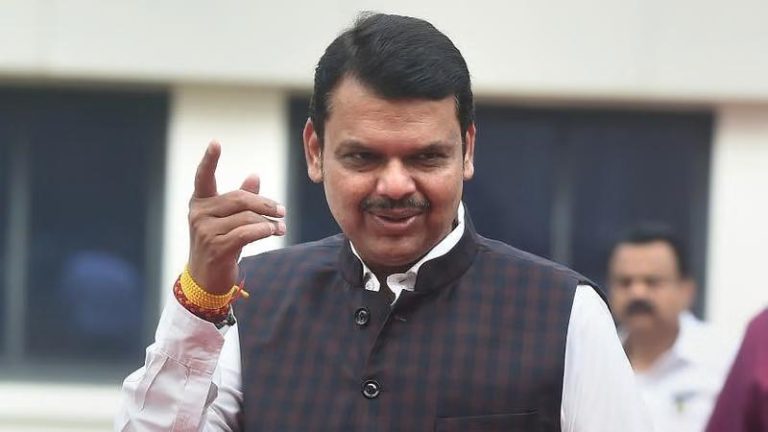
Citing sources, the report claimed that the Minister for Women and Child Development in the Maharashtra government, Aditi Sunil Tatkare, brought the undeclared money.

Krishnanagar Police first reported that six persons, including a woman, were held in the case. The following day, authorities reported that two Indian nationals were arrested in connection with the money.

Nepali officials blame lack of modern tools and device

Over the previous 2-3 years, security failures at this checkpoint have often occurred, indicating a disturbing trend.

There are six security checkpoints along a 10-kilometer route from Bahadurgunj to Krishnanagar, with five manned by Nepal Police and one by customs authorities. However, the report said security and customs authorities appeared oblivious to both instances.

Speaking about the alleged security lapses, Nepali officials say that the lack of modern tools and devices is a major factor. “We don’t have modern tools and equipment at our security check posts.

So we have to conduct checks manually, which can lead to occasional oversights,” Suraj Khatri, the inspector at the Area Police Office in Krishnanagar told Kathmandu Post.

Extremists vandalise two Hindu temples in Australia, break Shivling and loot donation boxes: Read about the past 5 attacks by Khalistanis

On Saturday (26th October) afternoon, masked extremists broke into two Hindu temples in Canberra city of Australia and carried out vandalism and theft.

According to a report by The Australia Today, a total of 4 men crashed their black Honda van into the front door of the Hindu temple & Cultural Centre in Florey. They swiftly stole 4 donation boxes, one weighing 200kg and containing thousands of dollars.

The attack, which lasted about 15 minutes, coincided with the annual Diwali Mela held at the Albert Hall in Australia’s capital city.

CCTV footage showing extremists entering the Hindu temple in Florey, image via Australia Today

While speaking to The Australia Today, the Vice President of the Hindu temple Tarun Agasti stated, “We are deeply saddened and disturbed by the recent act of vandalism and theft that occurred at our temple over the weekend.”

“This senseless act of disrespect towards our place of worship and our community is disheartening. We want to assure our community that we are working closely with the local authorities to investigate this incident and bring those responsible to justice,” he added.

Tarun Agasti called for immediate action against the extremists for vandalising and looting the temple. “This act of vandalism not only affects our Hindu community but also undermines the values of respect, tolerance, and inclusivity that our diverse Canberra community holds dear,” he pointed out.

Vandalism at the Vishnu Shiva Temple, image via The Australia Today

According to The Australia Today, the extremists thereafter drove to the Shri Vishnu Shiva Mandir in Canberra at about 2 pm. At that time, the caretaker and the priest of the Hindu temple had gone for lunch.

The 4 men broke open the front door using a crowbar and vandalised the reception area of the Mandir. They destroyed the Hundis (donation boxes) embedded in concrete using a sledgehammer. The extremists ran away with two safes containing cash.

They also breached the sanctum sanctorum of the Hindu place of worship, damaged cupboards containing clothing for deities and broke the Vasant Mandaoan. A Shivling was also destroyed by the same extremists.

Destruction at the Vishnu Shiva Temple, image via The Australia Today

While speaking to The Australia Today, President Thamo Sritharan, stated, “I would like to urge the newly elected government to provide the support needed to ensure the protection of our temples and community.”

The Honda van used by the 4 extremists, who vandalised the two Hindu temples, bore the number plate of Victoria. It remains unknown whether the number plate or the van were stolen. The Canberra police are now investigating both cases.

Temple vandalism in Australia

This is not the first time that a Hindu temple has come under attack in the country. In 2023, OpIndia reported 5 instances of attacks on Hindu temples in Australia. Khalistanis stormed the Laxmi Narayan Temple in Brisbane and left hateful graffiti on the temple’s perimeter. 

‘Hindustan Murdabad’ was written on the walls of the ISCKON temple in Melbourne’s Albert Park. The Shri Shiva Vishnu Temple in Carrum Downs (Victoria) was vandalised while anti-Indian graffiti was painted on the Swaminarayan Temple in Melbourne.

The BAPS Swaminarayan temple in Sydney was also defaced with “Declare Modi Terrorist (BBC)” graffiti. Khalistanis had also threatened Kali Mata Mandir in Melbourne against conducting bhajan program featuring ‘staunch Hindu’ singer Kanhiya Mittal

“We should stop buying German equipment”: Piyush Goyal confronts German Vice Chancellor over China blocking sale of German tunnel boring machines to India

Union Commerce and Industry minister Piyush Goyal on Saturday confronted German Vice Chancellor Robert Habeck over China blocking sale of German Tunnel Borring Machines to India. Goyal said that India will stop buying from Germany if such problems occur. The confrontation took place on a Delhi Metro train, video of which has gone viral.

Robert Habeck, who is also the Federal Minister for Economic Affairs of Germany, is on a visit to India to attend the 7th India-Germany Inter-Governmental Consultations. He took a ride with Piyush Goyal on the Delhi metro to reach the YashoBhoomi Convention Centre in Dwarka, Delhi.

During the ride, Piyush Goyal told Robert Habeck that India is buying Tunnel Boring Machines from a German company named Herrenknecht, which makes the machines in China. He informed the German minister that China is now blocking the sale of the TBMs to India, indicating how this has effected vital infrastructure projects in India.

The video of the incident was shared by an X user with the user name ‘Lord Bebo’, who criticised how the way Habeck responded to Goyal. In the video, Goyal can be heard telling Habeck, “See your German company is supplying us some tunnel boring machines which they make in China. But China is not allowing them to sell them to me”.

When Goyal said that the name of the company is Herrenknecht, Robert Habeck displayed ignorance about the name. He asked, “They are producing in China?” to which Piyush Goyal replied yes. The Indian minister then added, “We should stop buying German equipment now”.

While Piyush Goyal was standing, Habeck was sitting during this conversation. After Goyal talked about stopping to buy German equipment, he stood up and said, “I think I should listen to you”.

Tunnel Boring Machines of Herrenknecht have been used in several projects in India, including metro projects of Delhi, Bangalore Chennai, Kolkata, the Ahmedabad-Mumbai bullet train project.