Home Blog Page 6794

Undermining National Security threats during Modi era is just another way that ‘liberal’ media protects Congress

So, the other day, Indian agencies busted an ISIS module operating here in India, by conducting raids at 17 places and arresting 10 people. Among the material recovered were several kilos of explosives, multiple weapons, one rocket launcher as well as hundreds of alarm clocks and SIM cards.

Anyone with any sense would have taken the threat seriously. However, soon after the raids, the liberal media began a campaign of mockery and ridicule to minimize what had happened. Some journalists posted photos of a few “sutli bombs” that were among the stuff recovered from the suspects … after carefully cropping out the rocket launcher that was lying a few inches away.

Do these ‘journalists’ know that 9/11 terror attacks were carried out with humble box cutters and/or utility knives that you can purchase at any convenience store? Do they remember how an Islamic terrorist murdered nearly a hundred people in France in 2016 by simply mowing them down with his truck? Do they know that firecrackers (and fertilizers) are easily available sources for chemicals that can be used to make explosives? Not to mention that firecrackers themselves can be used to cause a stampede in crowded places that could kill hundreds of people.

Yes, terrorists can use everyday objects to kill hundreds, even thousands of people.

But pathological hatred for Narendra Modi has made sections of our liberal media close their eyes to the threat of ISIS.

This kind of coordinated effort to minimize a national security threat during PM Modi’s tenure is not new. Anyone remember the ‘terror boat’ incident from early 2015? Remember the boat full of explosives coming from Pakistan that was intercepted and blown up by the Indian Coast Guard near the Gujarat coast?

You would think that at least memories of the 26/11 terror attacks would keep the Indian media from minimizing threats coming from Pakistan by boat. But no. The media jumped in to ridicule and mock the incident, they began to spread rumours all around that it was a mere smuggling boat or something like that.

The same happened after the surgical strikes of September 2016. The media began to fan and amplify crazy conspiracy theories planted by Congress and AAP leaders about how the strikes had been faked and so on. When that didn’t cut ice, a second theory was spread about how Manmohan Singh had carried out secret surgical strikes during his tenure. This was, of course, false and the theory was busted by the official DGMO response to an RTI. But fake news and conspiracy theories are generally immune to the truth.

Another recent example is the arrest of certain urban Naxals in August this year. At least two of them had spent long periods in jail after getting arrested in connection to Maoist terror plots during UPA years. One had even been convicted and had come out of jail recently after serving his term. An interview of a surrendered Naxal revealed that one of them was, in fact, a functionary of the Maoist party and had met high ranking Maoist leadership like the central committee members. The kind of people whose arrests should be taken very seriously. But the media went to town, trying to portray those arrested, including one convicted history-sheeter, as “free speech activists”.

This systematic effort to minimize Islamic and Maoist terror threats during the Modi years coincides with an equally systematic effort to exaggerate random incidents to fit into a manufactured narrative of ‘intolerance’.

A stone was thrown at a church by a drunken gambler somewhere near Mumbai. A couple of thieves stealing Rs 8000 from a missionary school. These petty crimes were fitted uncritically by the media into the narrative of ‘church attacks’ and India’s Prime Minister was asked to answer for them in place of the local beat constable.

The rape of a nun in Bengal was instantly connected to Hindutva. The story vanished later when it was found that the culprits were illegal immigrants from Bangladesh and Muslims. Anxious liberals report to their Western colleagues about the threat from Hanuman T-shirts and the New York Times sees a Hindutva hand behind the government promoting the Banarasi saree.

The media has been so uncritical and so gullible about the intolerance narrative that opportunist elements have taken notice and seized the moment. A small media worker managed to hit national headlines by making up a cock and bull story about how he was threatened by “gau rakshaks” in Mumbai over a leather bag. Another lawyer who claimed to be working for “Justice for Asifa” walked away with national and international acclaim and numerous awards and honours before it was realized that she had attended just 2 out of 110 hearings in the case. The reason these tricks worked is that the media was willing to believe almost anything as long as they could fit it into the intolerance narrative.

The same kind of uncritical swallowing by media was seen in UPA years except at the time they swallowed government propaganda instead of debunking it. So casual was the UPA government in its pronouncements and so confident in the loyalty of its media mouthpieces that Home Minister Sushil Shinde took the stage in Jaipur in 2013 and declared that BJP was running terrorist camps. No media ever pressed him to provide details about the exact location of these camps.

The question is why is the liberal media doing this. One reason, of course, is pathological hatred for Narendra Modi. But there is a second, deeper reason: the liberal media has a deep-seated inferiority complex about the disastrous national security record of the UPA government. 

Remember the days when blasts in Delhi, Mumbai, Jaipur, Ahmedabad, Pune, etc would play out on TV screens like endless ticker tape?

Those days are long gone. And the media realizes this. The media doesn’t want the public to discuss the matter of national security. Because Dr Manmohan Singh would come out looking very pathetic indeed if people start comparing.

Remember the time after 26/11 when Congress CM came to visit the Taj Hotel on a sightseeing trip with his actor son and Bollywood director Ram Gopal Verma? The terror attacks of 26/11 were a joke to them.

The Modi government has faced more criticism for its handling of the mythical ‘church attacks’ than the Manmohan Singh government faced for its handling of 26/11 attacks. Let that sink in.

India makes 25% of Rafale payment to French government, first plane to arrive in September next year

The Modi government, undeterred by controversies and constant attacks by the opposition over the Rafale deal has gone ahead and made the first instalment of the payment to the French government. According to reports, the central government has recently issued 25% of the agreed price in the 59,000 crore deal.


News agency ANI has cited top sources in the Indian Air Force confirming that the first aircraft will be delivered to India by the end of September 2019 but the planes will have to undergo extensive testing and trials by Indian pilots to confirm the India-specific enhancements added to them.

The Indian government had signed a deal for 36 Rafale fighter jets with the French government for 7.9 billion Euros which comes to approximately 59,000 crore rupees.

ANI quoted sources within the Indian Air Force stating that almost 25% of the payments have already been made to the French government as per the deal. The payment is being made to the French government and not to Dassault Aviation as this was a government-to-government contract, the sources added.

The ANI report also stated that the first batch of four fighter jets with the advanced avionics and sensors will arrive in India by the middle of 2020. As per the September 2016 deal PM Narendra Modi signed with the French government, India will receive 36 Rafale jets with custom enhancements in fly-away conditions.

The Congress, other opposition parties and a large section of pro-Congress media in India have been making wild allegations against the Indian government over the deal. Despite repeated clarifications by the Indian government, French government and even Dassault Aviation that there has been no foul play, Congress President Rahul Gandhi had made one baseless allegation after another on the Modi government over the deal.

Rahul Gandhi had alleged that the Modi government had pressurised Dassault Aviation to choose Anil Ambani’s Reliance Defence as its offset partner. The allegations, lies and misinformation spread with them were all proven false.

Recently, the Supreme Court of India had also given a clean chit to the Modi government over the deal and had dismissed the PILs filed against it.

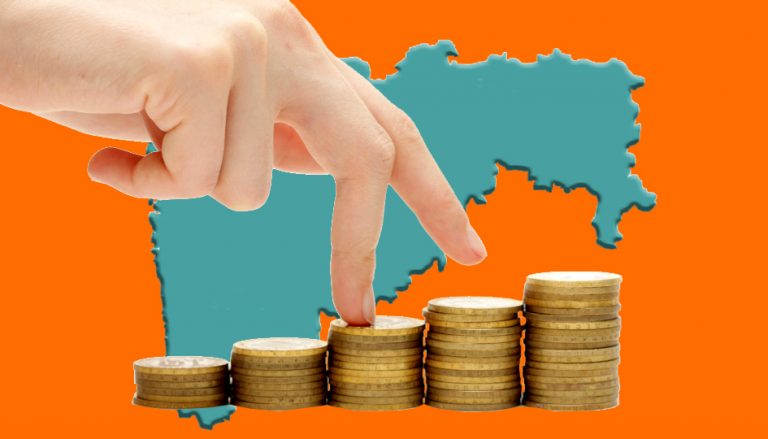
New year bonanza for Maharashtra govt employees, seventh pay commission to be implemented in the state

0

The new year brings good news for government employees of Maharashtra, as the state government has decided to implement the recommendations of the seventh pay commission. The state government had formed a “State pay revision committee 2017” to work out new salary structure for the state government employees based on the seventh commission, the committee submitted its report on 5 December 2018.

The Maharashtra state government has decided to adopt the salary matrix structure adopted by the Central Government as per the recommendations of the 7th Central Pay Commission. The revised salary matrix will be applicable to state government and other eligible employees with effect from January 1, 2016. This means the employees will get arrears for 36 months.

The government has decided to reduce the number of pay grades from existing 38 to 31, by merging 7 pay grades. The base salary as on 1st January 2016 will be multiplied with a factor of 2.57 to arrive at the revised salary. The special allowance for police constable, naik and hawaldar have been increased by 50% from the current amount of ₹500.

The regular/collective salary of part-employees has been increased 2.5 times, with a minimum increase of ₹1500 and maximum ₹3500.

The state government employees will get same dearness allowance paid to central government employees on 1 January 2016, and as revised time to time. The total arrear for 36 months on account of increase in salary from 1st January 2016 is ₹38,655 crore. The state government will pay this money in five instalments in the next five years starting from the financial year 2019-20, and the amount will be deposited it provident fund and applicable pension funds of the employees. The means the employees will not get the arear amount in their bank accounts, that will be deposited in their PF and pension accounts in 5 instalments in the next 5 years. The circular says that this amount cannot be withdrawn for 2 years after it is deposited.

The monthly pension paid to retired employees also has been increased. Those who have retired after 31 December 2015, their monthly pension will be multiplied by 2.57. For others, the pension will go up depending on their age bracket, instead of current flat 10% hike. The hike will be 10%, 15%, 20% and 25% for employees aged between 80-85, 85-90, 90-95 and 95-100 years. For pensioners aged above 100 years, the hike will be 50%.

Around 20.5 lakh employees in the state will be benefited by the increase in their salaries and allowances. The increase in salaries, allowances and pensions will cost the state the government around ₹52,000 crore. Out of this around ₹14,000 crore will be needed to pay revised salaries and ₹38,655 crore for arrears.

The seventh pay commission was constituted in February 2014, and the commission submitted its report in November 2015. The NDA government had implemented the recommendations in September 2016 for the central government employees, with some minor modifications. Since then, several states have increased salaries of their employees as per the recommendations of the commission.

Urea shortage days within coming to power shows true face of Congress’ model of ‘farmer welfare’

0

The recent elections in three states of Madhya Pradesh, Chhattisgarh and Rajasthan witnessed a significant focus on the rural economy. Rahul Gandhi and the Congress Party went around town promising farm loan waivers and other populist measures for electoral benefit. In fact, Rahul Gandhi also tweeted on the National Kisan Day where he reiterated his misplaced belief that farm loan benefits benefit any farmers.

Unfortunately, most of these announcements are just theatrics as the reality on the ground is in stark contrast with what the Congress was projecting before the elections. While Congress Governments in these three states had announced a loan waiver, they forgot that a similar waiver costing Rs. 34,000 Crores in Karnataka had benefited only 800 farmers. In fact, farmers continue to commit suicide post the loan waivers in Karnataka and in Madhya Pradesh. Thus, as argued by many, loan waivers only help to get votes while they result in huge economic costs to the states as they fail to benefit most of the farmers. Despite this, the repeated statements by Rahul Gandhi on farm-loan waivers shows the true face of Congress and its commitment to policies that get them votes rather than looking for policies that resolve the issues of farmers and the rural sector over the long run

It is interesting to note that within just 20 days of the Congress coming to power, the corrupt mindset of Congress has taken over these three states.

The decision to allocate 50% urea to private traders as against 20% before indicates that the culture institutionalized corruption is back. It has been found that private traders have been hoarding urea and have been selling it in the black market. A 45 Kg bag of urea that used to be sold at Rs. 250 is being sold at Rs. 450 to the farmer without a bill. Thus, the economics of funding elections through artificially creating shortages, colluding with traders and through black marketing of products is being brazenly practised by the Congress in these two states as it looks to fill its coffers before the 2019 campaign.

The recent shortage of Urea in both these states also indicate that Congress has no regard for the farmers, and it has completely forgotten the promises it made in the run-up to elections. Up until 20 days ago, there was an adequate supply of Urea for farmers, however, suddenly there’s an acute scarcity of Urea in the state of Madhya Pradesh and Rajasthan. This shortage has been artificially created as the availability of Urea is 2.75 lakh metric tonne (LMT) while total sales are 1.85 LMT for Madhya Pradesh and for Rajasthan, the availability is 2.60 LMT as against sales of 2.31 LMT. Thus, there is absolutely no denying that this is an artificially created shortage which is being exploited by the Congress.

Before 2014, urea marketing, or rather black-marketing used to be a big business, however, since 2014, the state and central government had worked extensively to systematically reduce the leakages of Urea subsidy by coating it with Neem and making it unviable to use it for industrial purposes. The recent shortage of urea in MP and Rajasthan indicate that the business is back at the cost of the farmer and a major factor behind the return of the business is the policies enacted by the state government. What is all the more concerning is that such shortage of urea during the peak sowing season urea is bound to negatively impact sowing and agricultural produce in the subsequent harvesting season. The return of leakages and systematic corruption is going to have a negative impact on the incomes of the farmers, hence Congress has sown the seeds for a decline of the rural sector of Madhya Pradesh and Rajasthan.

This episode of urea shortage shows the true face of Rahul Gandhi’s talk on farmer welfare as it exposes the lack of empathy of his party. While Rahul Gandhi tweets on “farmers welfare”, his state governments work overtime to ensure just the opposite- that’s the true Congress model of “farmers welfare” that India rejected in 2014 and it’d do the same in 2019 too.

Aligarh shocker: Cows buried alive in farmland, rescued by the locals

0

A shocking case of cows being buried alive by unknown miscreants has surfaced in the Uttar Pradesh town of Aligarh. A large number of people thronged the farm in the morning as the news about the cows struggling to get out of the pit broke out.

As per the reports, cows were buried alive in a pit by a canal near the Tikapir village which falls under the jurisdiction of Iglas police station area. When farmers came to work in the fields around the dawn, they saw the cows struggling to get out of the pit. Hundreds of farmers came to the spot to rescue the scrambling cows. Around five cows came out alive. This incident stoked passions among people and they took their protest to the streets.

According to a farmer, he saw some policemen present at the location a night before with a truck. He has alleged that this unholy act has been carried out under the supervision of the police. Incensed by the act, the locals started sloganeering against the administration and Yogi government. The angry crowd of people showed their protest by shouting slogans and jamming the Aligarh-Mathura road.

The Superintendent of Police, Manilal Patidar, said that attempts to bury cows alive in the pit may have been done by unknown people. The locals were infuriated with the act which led to a furore. Reassuring the people, he said that strict action will be taken against the miscreants.

Rashtriya Gauraksha Vahini’s Bhavna Sharma has claimed that the act of burying cows alive has grievously hurt the sentiments of Hindus. There has been a spurt in the illicit activities against cows in Uttar Pradesh. Some time ago, violence in Bulandshahr erupted after the carcasses of cows were found hanging in the farms.

Lok Sabha passes the Triple Talaq Bill in a historic move towards empowerment of Muslim women

The Triple Talaq Bill which criminalises the Islamic practice of Triple Talaq has been passed by the Lok Sabha. 245 MPs voted in favour of the Bill, while 11 voted against.


The Congress party and AIADMK had staged a walkout ahead of voting on the Bill.


The BJP has maintained a staunch stance on the issue that banning the practice will uplift Muslim women. In the Parliament as well, during the debate, BJP leader Meenakshi Lekhi called it a matter of ‘human rights violations’.


Law Minister Ravi Shankar Prasad stated that the law should not be viewed through the prism of politics and it is not directed against any community or religion.


The Bill has been opposed bitterly by opposition political parties in the Parliament. In a bitter sense of irony, while the Triple Talaq Bill was being discussed, a Madarsa manager, father of 11 children, gave triple talaq to his wife of 19 years.

After the Supreme Court ruled that Triple talaq is unconstitutional, the NDA government had brought an ordinance in September to make it a punishable offence. However, despite the ordinance and the Supreme Court calling it unconstitutional, the cases of triple talaq had not declined.

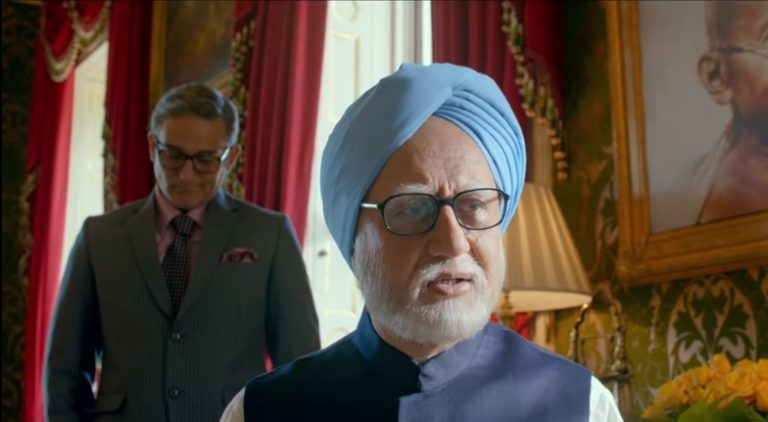
Youth Congress demands to censor the movie ‘The Accidental Prime Minister’, threatens to stop release

The Maharashtra unit of Youth Congress has sent a letter to the producers of the movie The Accidental Prime Minister, asking for a special screening for them before the theatrical release of the movie, so that they can censor it. The movie is a biopic on former prime minister Dr Manmohan Singh, based on a book with the same name by Sanjaya Baru, who was media advisor of Dr Singh. Directed by Vijay Ratnakar Gutte, the film stars veteran actor Anupam Kher as Manmohan Singh. The movie is scheduled to be released on January 11, 2019.

The trailer of the movie was released on Youtube, and it seems the youth Congress is not happy with the portrayal of various characters movie. They have written that ‘facts have been played with and presented in an incorrect manner’. They also say that the way Manmohan Singh, Sonia Gandhi and Congress party is shown in the movie is not acceptable to them.

Therefore, they have demanded a screening of the full movie before its release, so that they can decide if there are any un-actual scenes that malign the image of the party and its release. If such scenes are found in the movie, they have to be edited and deleted, says the letter. The Youth Congress than goes on to threaten that if the movie is released without pre-screening for them and without making changes as demanded by them, they will stop the screening of the movie across India.

Last year, Congress activists had disrupted the screening of the movie Indu Sarkar at various places in India. Directed by Madhur Bhandarkar, the movie was set in the period of the emergency in India, and Congress was not happy with the way former PM Indira Gandhi and her son Sanjay Gandhi was portrayed in the movie. Apart from disrupting screening, the Congress workers also had forced the filmmakers to cancel promotional activities for the movie. The government had to provide police protection to Madhur Bhandarkar to safeguard his life.

Now it seems The Accidental Prime Minister will also face similar protests and disruptions by the Congress party workers. Other than Anupam Kher, the movie stars Akshaye Khanna playing the role of Sanjaya Baru and German actress Suzanne Bernert as Sonia Gandhi, who has acted in several TV serials in India before.

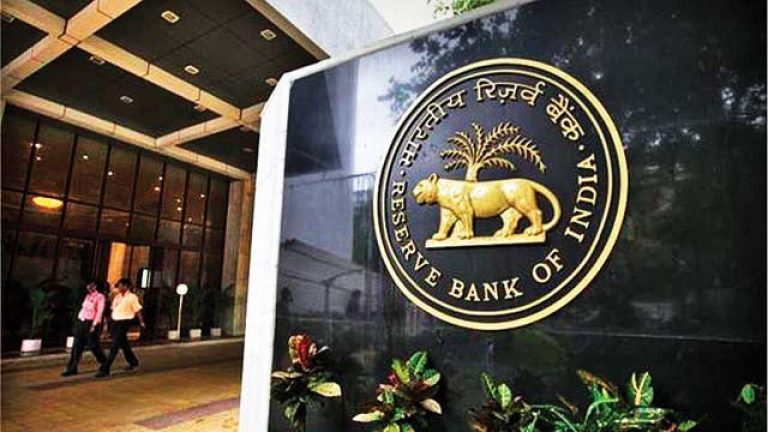
Measures adopted by the Modi government paying off, the recovery against NPAs has doubled for public sector banks

According to a report published by Times of India, the public sector banks have recovered Rs 60,713 crore against non-performing assets (NPAs) in the first half of this year. This amount is the double of the amount recovered in the corresponding period last year. According to the report, the Finance Ministry in response to a parliamentary question said that following the amendments in the Banking Regulation Act, the RBI had directed banks to initiate insolvency proceedings before the National Company Law Tribunal (NCLT) in 41 cases. Twelve out these 41 cases had cumulative outstanding of Rs 1,97,769 crore on March 31, 2017, and remaining 29 had an outstanding of Rs 1,35,846 crore as on June 30, 2017.

The report mentions RBI data quoted by the government in reply to BJP MPs Kirti Azad and Bharatiben Shiyal. “As per RBI data on global operations (with provisional data for September 2018) during the last three and a half financial years, NPAs of scheduled commercial banks reduced by Rs 2,83,770 crore due to recoveries,” the government told.

NPAs had been piling up since 2008, a period during which the UPA was in power, as revealed by various measures including Asset Quality Review (AQR) adopted by the Modi government. According to RBI inputs, aggressive lending practices, wilful defaults, loan frauds, corruption and economic slowdown were the primary reasons for the hike in the stressed assets. The AQR measure led to the reclassification of stressed assets as NPAs which led to an increase in the gross NPAs of scheduled commercial banks from Rs 2,51,054 crore as on March 31, 2014 to Rs 3,09,399 crore as on March 31,2015; Rs 5,66,247 crore on March 31, 2016; Rs 7,28,740 on March 31, 2017 and Rs 9,62,621 crore on March 31, 2018. This declined to Rs 9,46,062 in September.

Under the new Insolvency and Bankruptcy Code (IBC), the incentive to abuse the legal system has been taken away as the interim resolution professionals take over the management of corporate debtor at the outset said the Finance Ministry. Also, FEMA has been amended to include a three-month jail term for a borrower who does not provide the asset details and for the lender to get possession of the mortgaged property in 30 days.

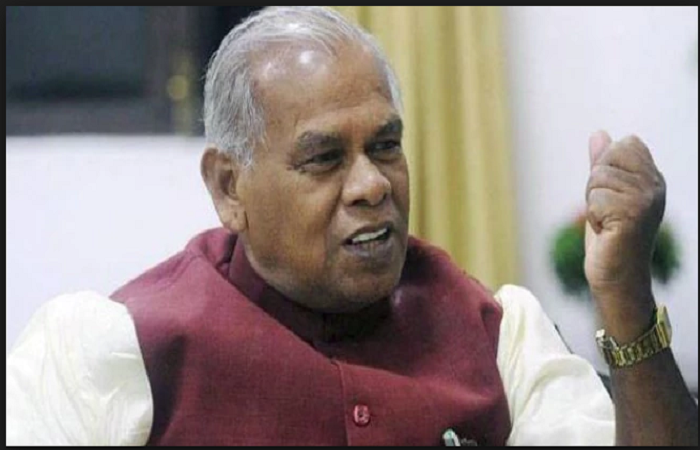
Hindustani Awam Morcha threatens Mahagathbandhan, says will boycott Lok Sabha elections if demands not fulfilled

Hindustani Awam Morcha or HAM, one of the six constituents of Bihar Mahagtabnadhan has warned to boycott the 2019 Lok Sabha elections if they don’t get enough seats.

HAM was founded by former Cheif Minister of Bihar from JD(U) Jitan Ram Manji in 2015. He became chief minister of Bihar after 2014 Lok Sabha elections when CM Nitish Kumar, taking responsibility of the loss, decided to vacant the post. After 10 months of becoming CM, he was asked by the party to vacate the seat for Nitish Kumar again, to which he refused. Later, when asked to prove majority in the assembly, he had resigned before voting took place.

He formed his own party with his supporters and fought elections with BJP in 2015. His party only managed to secure 1 seat out of 21 they contested, that seat was of Manji himself.

Later, HAM defected NDA and joined the coalition of parties against NDA this year. HAM is one of the six constituents of Mahgatbandhan. Other than Congress and RJD the coalition consists of RLSP of Upendra Kushawa who recently left the NDA, former JD(U) veteran Sharad Yadav’s LJP and Mukesh Sahni’s Vikasheel Insaan Party.

HAM has been demanding more number of seats from the coalition. He had said a few months ago, that his party has the dominant role in almost 20 seats out of 40 Lok Sabha seats.

“Every party has the right to make the best possible bargain for itself as far as we are concerned, we are standing on the road. Those living in proper houses should make a proper assessment or else they may end up on the road as well,” Vrishan Patel, state president of HAM said. Manjhi had also taken a dig both at NDA and UPA recently. He had called NDA a ‘Nagraj’ (king cobra), and UPA a ‘saanpraj’ (king of snakes).

After many speculations, NDA announced its seat-sharing in Bihar this month, while Mahgatbandhan is yet to the make the seat sharing announcement for the upcoming Lok Sabha elections in 2019.

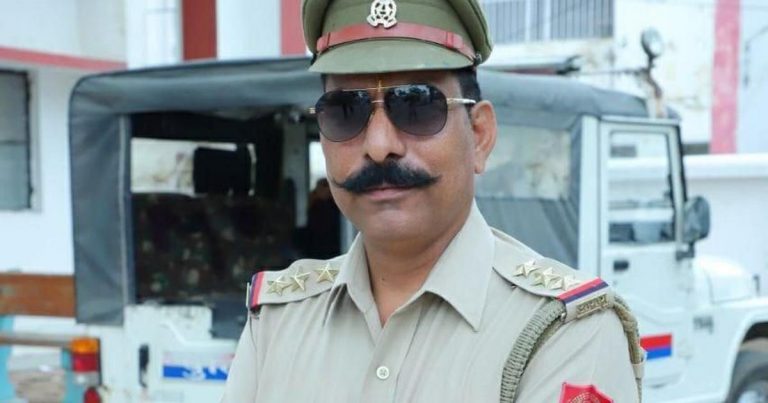
Bulandshahr twist: Neither Bajrang Dal leader nor an army soldier, but 30-year-old Prashant Natt is wanted by UP Police

0

The Bulandshahr violence has taken a serious twist. According to the Economic Times report, it is neither absconding Bajrang Dal leader Yogesh Raj nor an army soldier who is a prime suspect in the death of Inspector Subodh Singh. Instead, it is a 30-year old petty criminal named Prashant Natt.

Uttar Pradesh police has been looking for suspect Prashant Natt, whose name incidentally did not figure in the first information report (FIR) earlier.

UP’s Additional Director General (Law and Order) Anand Kumar speaking to ET has said that based on the video footage they have received and on oral testimonies of some other people, they have made Natt a prime suspect in the killing of inspector Subodh Kumar Singh.

“We have recreated the crime scene and narrowed down the people who went and killed the Inspector, Natt was part of that group. We have almost cracked the case of the inspector’s killing,” said the senior police officer.

The case has now taken a turn as the Uttar Pradesh police had earlier suspected that Bajrang Dal member Yogesh Raj as the suspect behind the killing of the inspector in a case of apparent mob violence on December 3. However, police officer Kumar said that while Yogesh had a role in instigating the crowd and creating chaos in the police station, he is not a suspect in the inspector’s killing that occurred later.

The police were able to find the real suspect after they went through the video footage in its possession and statements given by other accused who have been arrested. “Once he is arrested, which will be soon, he will spill the beans,” said Kumar.

Reportedly, suspect Natt is said to be working as a taxi driver in Delhi and belongs to a village called Chingravati which is located in Bulandshahr. Natt and three other accused-Satish, Vineet and Sachin are absconding and had put a surrender petition in Bulandshahr court last week but did not surrender themselves to the police.

The investigation conducted by the UP police has so far revealed that the death of Sumit triggered the killing of inspector Subodh Kumar and Sumit later succumbed to his injuries. Three to four people, including Natt, are suspected to have been near the police jeep when the inspector was shot dead.

On December 3rd, violence broke out in Bulandshahr after carcasses of cows were found in a field in Mahav village near Chingravati, Bulandshahr. Protesters had gathered outside a police station claiming that they had discovered carcasses of cows in their locality. Angered with police inaction even after repeated complaints, they clashed with the police. The protest turned violent where the police inspector Subodh Singh accidentally shot Sumit, a 17-year-old boy. Inspector Singh too died by a bullet. Investigation is currently underway to identify the culprits.