Home Blog Page 997

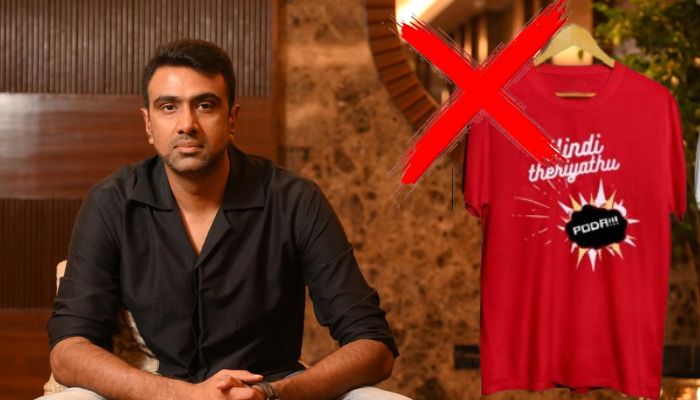
‘Aspiring to build a career beyond Tamil Nadu, learn conversational Hindi’: Cricketer Ravichandran Ashwin slams Dravidian anti-Hindi campaign ‘Hindi Theriyadu Poda’

Ace Indian off-spinner Ravichandran Ashwin recently slammed DMK’s anti-Hindi campaign slogan, ‘Hindi Theriyadu Poda’ (Translation – I Don’t Know Hindi, Get Lost!)”,  and advocated for learning the Hindi language. Notably, Ashwin has been interacting with several media channels regarding his recently released book, “I Have the Streets: A Kutty Cricket Story.” During an interaction, he shared anecdotal stories to emphasise the need to learn other languages if one wants to make a career beyond their native state. He noted that learning the language could go a long way to earning acceptance from others and contributing to conversations.

While interacting with Chennai Super Kings’ Content Head, Radhakrishnan, Ashwin shared his thoughts on the challenges of not being able to converse in Hindi. He argued that there can be two mindsets. A non-Hindi speaker could take pride in saying, ‘Hindi Theriyadu Poda,’ or he could learn basic conversation in Hindi or communicate properly to Hindi speakers that he faces language barrier issues and seek assistance. He stressed the need to have a mindset that leads to personal growth. 

“Not knowing Hindi can be proudly expressed as ‘Hindi Theriyadu Poda‘. Alternatively, it can be viewed as ‘If we don’t learn it, it could be difficult‘, a mindset that can lead to significant personal growth,” Ashwin was quoted saying in The Commune. 

He also emphasized the importance of learning conversational Hindi for anyone who aspires to build a career beyond Tamil Nadu. At the same time, the Indian cricketer also seemingly urged native Hindi speakers to empathize with those learning the language and to foster inclusivity beyond linguistic barriers. 

He added that he wrote the book to drill down the point that learning the language would go a long way to earn acceptance from others and also be a part/contribute to conversations.
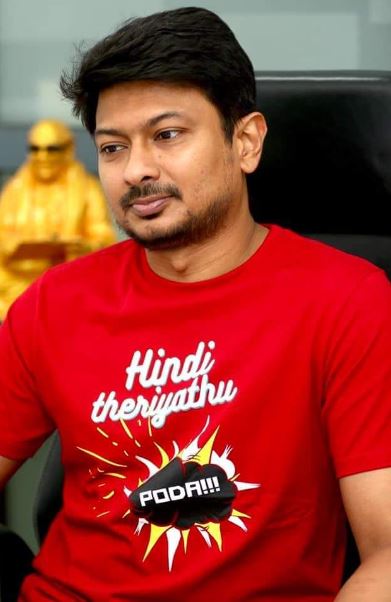
(DMK leaders are notorious for anti-Hindi remarks and campaigns, Udayanidhi Stalin, Minister and son of Tamil Nadu CM, MK Stalin wearing T-shirt that has anti-Hindi slogan, Image Source – FB page–Udhayanidhi Stalin Welfare Association Tharamangalam)

It is pertinent to note that Dravidian parties including the ruling party in Tamil Nadu, DMK have been peddling the trope of so-called “Hindi imposition”. As part of anti-Hindi rhetoric in the state, it has been fanning anti-Hindi sentiments among the state residents with campaigns like ‘Hindi Theriyadu Poda’ (Translation – I Don’t Know Hindi, Get Lost!)”. Dravidian leaders and its supportive ecosystem have been notorious for making derogatory remarks about North Indians, particularly in the Hindi speaking belt, referring to them as “vadakkans“ (the term being used as a slur for North Indians), “panipuri sellers”, Toilet cleaners, etc. 

In December 2023, DMK MP Dayanidhi Maran said “Hindi speakers clean toilets.” Former DMK MP Senthilkumar, inside the parliament, referred to Hindi heartland states as “gaumutra” states.

Meanwhile, after R Ashwin batted for learning Hindi, several X users lauded him for his remarks while some started targeting him for his views and hurled labels at him to cast aspersions on his character. Some X users made anti-Hindi remarks. It is pertinent to note that Ashwin hails from the Tamil Brahmin community. The Dravidian parties have been deriding and vilifying the community.    

In his book, R Ashwin states, “I can read and write Hindi, but the Hindi spoken in the world outside Tamil Nadu is nowhere close to what we are taught in textbooks.” He also elaborated on how he faced the issue of a language barrier during the initial days of his cricketing career. 

Nonetheless, R Ashwin launched his book, ‘I Have the Streets: A Kutty Cricket Story’ on 10th June. It is published by Penguin Random House India and it highlights Ashwin’s journey from playing gully cricket to striving for excellence in the sport. For his book, he has collaborated with Siddharth Monga, a cricket writer from ESPN Cricinfo, who helped him transcribe his voice notes and shape the narrative.
Delhi Court remands CM Arvind Kejriwal to CBI custody for three days in liquor policy scam

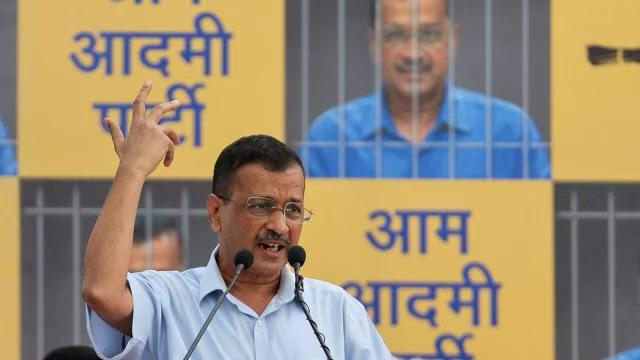
A Delhi Court has sent CM Arvind Kejriwal to CBI custody for three days following his arrest by the federal agency in connection with the alleged liquor policy case.

The agency had initially requested a five-day custody. Kejriwal was apprehended by the CBI at Delhi’s Rouse Avenue Court and, within an hour, withdrew a Supreme Court petition challenging the stay on his bail grant after his March arrest by the Enforcement Directorate in the same case.

The petition was withdrawn without objection from the ED, with plans to file a more substantial appeal against the High Court’s decision to stay the Rouse Avenue Court’s bail order.

The Central Bureau of Investigation on Tuesday (25th June) moved to arrest Arvind Kejriwal from Tihar Jail in the Delhi liquor policy case. This happened on the eve of the Supreme Court hearing his petition appealing the Delhi High Court ruling delaying the trial court’s order to give him bail.

As per the reports, the CBI also questioned Kejriwal in this case and granted permission to bring the Delhi Chief Minister before the relevant trial court on Wednesday (June 26), where he is expected to request his custody.

Notably, Kejriwal will appear before the CBI court on Wednesday morning, where he will be detained for further custodial interrogation. 

The ED arrested Kejriwal on March 21, stating that the Delhi chief minister diverted money from liquor vendors to support party activities. The Aam Aadmi Party and other opposition parties have said that this case is part of the Narendra Modi regime’s habit of employing central agencies to target opposition figures.

UP: Azim Ali forces Hindu girl to convert to Islam, perform Nikah, family assaults her for not following Islamic customs, FIR registered

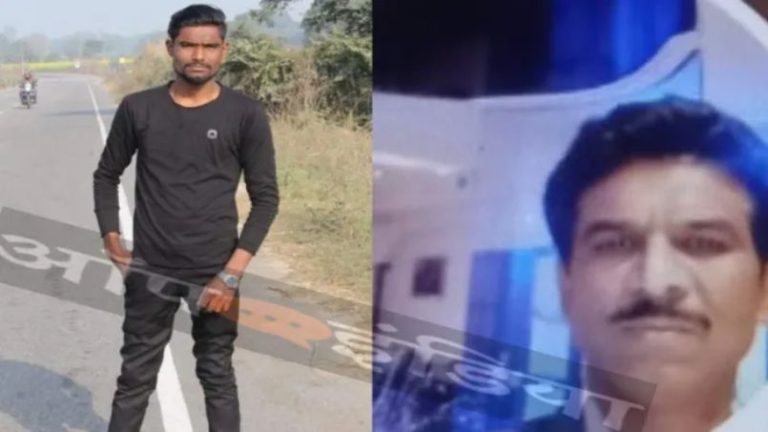
In a case of grooming Jihad in Uttar Pradesh’s Badaun district, a Muslim youth named Azim Ali allegedly forced a Hindu girl to convert to Islam and perform Nikah with him. The accused force-fed meat to the victim along with forcibly taking her to Dargahs and reading Islamic texts. As the Hindu victim refused to do so, Azim Ali thrashed her.

On 25th June, the victim lodged a complaint at the Kotwali Nagar police station against accused Azim Ali. In her complaint, the victim stated that when she was 17, a 24-year-old Azim Ali, who resided in her neighbourhood, lured her into his love trap. Azim blackmailed the girl with obscene pictures and videos, and he raped her multiple times.

Azim took the victim around a year ago, threatening to kill her and make her obscene video viral. When the girl’s father filed a police report, Azim and his father Shakir Ali pressured her and convinced her to give a statement in their favour. Among the five accused in the case, accused Shakir Ali is a chemist by profession.

Once the victim’s statement was recorded in court, Azim Ali took her to his house, where Azim Ali, his father Shakir Ali, mother Reshma, brother Nadeem Ali, and sister Saima started pressing the victim to renounce Hinduism and convert to Islam. The accused Muslim family coerced the victim who is a strict vegetarian, to cook and eat meat.

The woman also alleged in her complaint that she was forced to wear Islamic attire and read Islamic books. She was taken to the tombs against her will. When the girl objected, she was held captive in a room and brutally assaulted. In addition, the victim was left famished for a very long time. 

A few days later, the accused Azim forcibly converted the Hindu girl to Islam and performed Nikah with her. After the nikah, the girl was given the name Mayra. On Monday, the 24th of June, Azim, his mother, father, and brothers began assaulting the victim. They were outraged because the victim did not observe Islamic norms.

The victim managed to escape the accused’s captivity and reached the police station late at night. She informed the police about her ordeal and sought stern punishment against the perpetrators. The police have registered an FIR based on the victim’s complaint against Azim and his family members.

The accused persons have been booked under Sections 323, 504, and 506 of the Indian Penal Code (IPC) and Section 3/5(1) of the Uttar Pradesh Prohibition of Unlawful Conversion of Religion Act 2021. OpIndia has obtained a copy of the complaint. Meanwhile, Badaun police stated the case is being investigated, and further necessary action is underway.

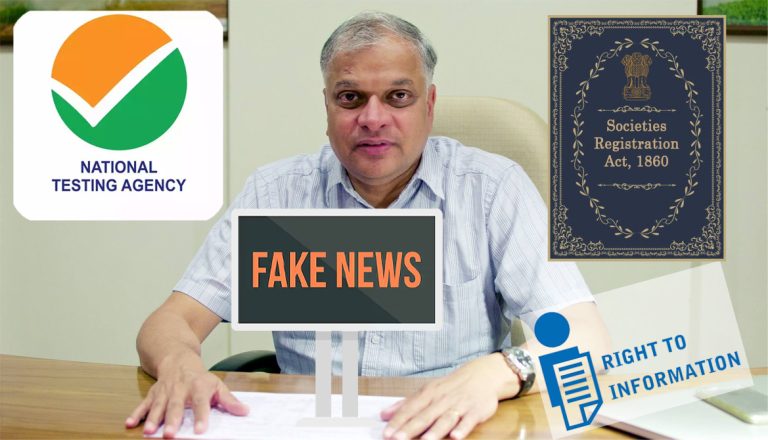
PMO official during UPA govt and others spread fake news that NTA is a private society not under RTI: Here is the truth

Even as controversies around the National Testing Agency and the cancellation of exams continue, fake news regarding the agency continues to emerge. In the latest incident, several netizens have started to claim that NTA is a private organisation and it does not come under the Right to Information Act. Using the fact that NTA was registered under the Societies Registration Act, 1860, several people are claiming that it is a private society. However, this is a false and baseless claim, and NTA is not a private body.

One prominent name making the claim is Pankaj Pachauri, journalist and former Communications Adviser to the PMO during the Manmohan Singh-led UPA-1 govt. Posting the certificate of registration of NTA on 26 June, Pachauri claimed that he is shocked to know that “NTA is a private society deciding the future of the students to publicly funded government institutions.”

The former NDTV journalist also claimed that NTA is not under RTI, which means no information about it can be obtained. He added that there is no public oversight, which means no accountability for NTA. He claimed that it has been done so that the “govt and the ministry can wash their hands off the scam.”

The same claim was made by a Congress worker named Harmeet Kaur K on X on 22 June. She claimed that NTA is “just a society, not set up by an Act of Parliament, or a PSU, or a public sector commission or board, or a registered company”. She claimed that as NTA is registered under the Societies Act, “it is just a Governing  Body with no general body to speak of, and is not subject to the rules that govern the conduct and honesty of government employees.”

While it is true that the National Testing Agency was registered as a Society under the  Societies (Registration) Act, 1860, the claim that it is a private society and does not come under laws such as RTI are completely false.

The NTA was formed by the Department of Higher Education under the Ministry of Human Resource Development (now called the Ministry of Education) and is a government body. Just because NTA is registered under the Societies Act, it does make it a ‘Private Society”. When it was formed in 2018, HRD secretary R Subrahmanyam was the chairman of the agency, and the members included other govt officials from various ministries and one member each from CBSE and IIT Kanpur.

The NTA website states that it is an autonomous organization under the Department of Higher Education, Ministry of Education, Government of India. Therefore, the claim that NTA is a private society is false, and it is a full-fledged government body directly under the control of the Union Education Ministry.

Just because NTA is registered under the Societies Registration Act, it does not mean it is a private body. There are a large number of govt bodies registered under the Societies Registration Act. For example, the Sports Authority of India is registered under the Act. Some other notable govt bodies registered as societies include the Indian Council of Agricultural Research, Kendriya Vidyalaya Sangathan, Navodya Vidyalaya Samiti, Film and Television Institute of India in Pune, National Rural Roads  Development Agency, National Horticulture Board, National Institute of Health and Family Welfare and many others.

Many of these institutions are decades old, which means the practice of registering govt bodies as societies has been going on for a long time, it is not something started by the Modi government. It is concerning that a person who worked in the PMO during the UPA govt is not aware of the fact that a large number of govt organisations are under Societies Registration Act, 1860 under various ministries and departments.

Similarly, the claim that NTA does not come under RTI is also completely false. The NTA website has a dedicated section on filing RTIs. It states that RIT queries can be raised with NTA using the standard for seeking information under the RTI.

NTA has also made several suo moto disclosers on its website, where it as uploaded several manuals, appraisal reports, replies in the parliament, and responses to RTI queries. This means, a lot of information about the agency can be obtained from the website without filing a request under the act.

The other claim by Pankaj Pachauri, that NTA does not have public oversight and therefore it has no accountability is also completely false. Just like hundreds of govt bodies registered under the Societies Registration Act, NTA also has public oversight through the ministry and ultimately through the parliament.

As a govt body under the education ministry, NTA is subject to audits and other oversights applicable to all government agencies.

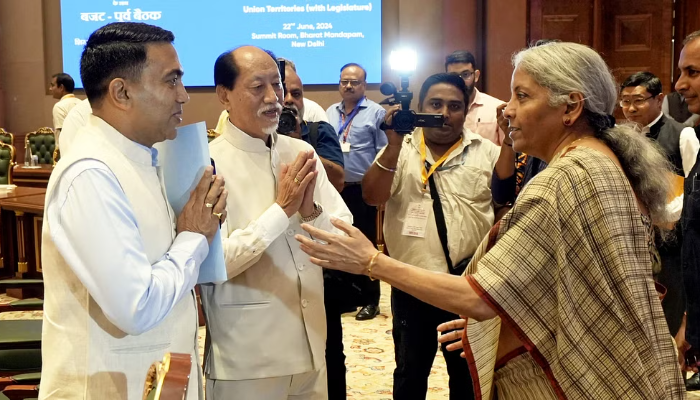
Goa CM asks centre for Rs 8,700 crores to roll out big projects, including Rs 300 crores for the decennial exposition of St Francis Xavier’s relics

On 22nd June, Union Finance Minister Nirmala Sitharaman was urged by Chief Minister Dr Pramod Sawant to allocate a budget of Rs 8,700 crore for four major projects in Goa, including displaying the relics of Saint Francis Xavier, enhancing inter-city connectivity, building small dams and establishing a smart water utility. He asked the centre for grants totalling Rs 300 crore for the decennial exhibition of Saint Francis Xavier’s relics later this year and Rs 700 crore for water augmentation projects at a pre-Union budget meeting presided over by Nirmala Sitharaman.

Expounding on the necessity for funding, he stated that over 60 lakh pilgrims from all across India and abroad attended the previous exposition in 2014 and this year’s attendance is anticipated to be higher. He declared, “The state government has to make all the preparations for infrastructure creation for the smooth conduct of this global event.” Saint Francis Xavier’s relics are kept in the Basilica of Bom Jesus in Old Goa which is close to Panaji, the state capital. The dates of the exposition are set between 21st November 2024 and 5th January 2025. Millions of people from all over the world attend the event, which takes place once every ten years. According to a statement from the chief minister’s office, Pramod Sawant emphasized the necessity of an economic package of Rs 300 crore for the occasion.

Meanwhile, the chief minister who holds charge of the state finance department also asked for assistance with the Konkan Railway (KR) route double-tracking. He asserted that it is the main rail link for ports along the western coast, running from Mangaluru to Mumbai, but double-tracking had been completed on a small section of the line while the remaining is still pending because of financial constraints.

He mentioned, “With this double-tracking, Goa will also be able to use this rail network for inter-city connectivity. Currently, land is a scarce entity in Goa, and in the future, the widening of roads will be difficult. Hence, I request you to provide Rs 5,000 crore to Konkan Railway for this inter-city connectivity project in Goa.” The chief minister further stated that Goa was to receive Rs 200 crore for tourism development and Rs 500 crore for the development of renewable energy to mitigate climate change, as recommended by the 15th Finance Commission.

He stressed, “We need much-improved rail connectivity from Goa to major cities like Bengaluru, Hyderabad, and Pune. Vande Bharat or express trains to these destinations will help the passengers, especially Goans,” and requested that the state receive these grants as soon as possible. Furthermore, he pointed out that Goa performs exceptionally well under the “scheme for special assistance to states for capital investment” and the initiative should be awarded an additional Rs 1,000 crore because it is considerably assisting Goa in accomplishing its infrastructure developments.

He highlighted that the state’s swift growth efforts have led to a quantum leap in water demand. The state government intends to develop and harvest water resources by establishing new water retention structures and enhancing current storage facilities to guarantee an adequate supply of water. Therefore, he sought Rs 700 crore to be provided to Goa for the construction of small dams, the augmentation of the water-holding capacity of already-existing dams, the strengthening and upgrading of irrigation projects and the implementation of anti-sea erosion and flood control measures.

According to Pramod Sawant, the state is working toward achieving “smart water utility” and replacing outdated pipelines gradually is one of the key components of this effort. He added, “For the implementation of this project, we seek special assistance of Rs 1,000 crore.” He noted that the state government has Rs 431 crore in the Reserve Bank of India (RBI)-maintained guarantee redemption fund. He maintained that the state has significantly lowered the outstanding loan amount of Rs 297 crore against the given guarantees by prepayment over the years.

He clarified that this corpus should be 5% of the extended guarantees by RBI norms, and withdrawals are only permitted if guarantees are invoked. He conveyed, “As the contribution in the fund is more than the loan amount, a policy decision needs to be taken to allow withdrawal of this excess amount or to transfer this excess amount to the consolidated sinking fund maintained by RBI.”

His office informed, “The chief minister said these initiatives are essential for Goa’s development, and he expressed certainty that they will be included in the upcoming Union Budget 2024-2025.” Goa Chief Minister Pramod Sawant was in Delhi to take part in the pre-budget meeting led by the Union finance minister and the Goods and Services Tax (GST) Council meeting.

Who was ‘Saint’ Francis Xavier?

Saint Francis Xavier who thought of the dark-skinned natives as “devils”, entered India on 6th May 1542 with a single aim to spread Christianity. Xavier established the idea of the Inquisition, an organization inside the Catholic Church designed to identify and punish anti-Christian behaviour defined by orthodox Christianity, to spread Christianity throughout India and strengthen its foundations. The inquisitions were nothing more than concentration camps from the 16th century, as European colonial rulers forced the politics and teachings of the Catholic Church upon indigenous populations.

Among his projects in India was providing patronage for the construction of churches throughout Malabar, which were completed at the volunteer hands of local neo-converts. The new churches were constructed with money pilfered from the Hindu temples. The Brahmins were his soft targets since they frequently served as centrifuges in his conversion efforts. The so-called lower populace was prevented from adopting the foreign faith by the influence of Brahmins, who topped the caste hierarchy.

He expressed, “(Indians) being black themselves, consider their colour the best, they believe that their gods are black, the great majority of their idols are as black as black can be and seem to be as dirty as they are ugly and horrible to look at.” Eminent Indian historian Anant Kakba Priolka referred to the period of inquisition led by Francis Xavier as the age of “callousness and cruelty, tyranny and injustice, espionage and blackmail, avarice and corruption, repression of thought and culture and promotion of obscurantism.”

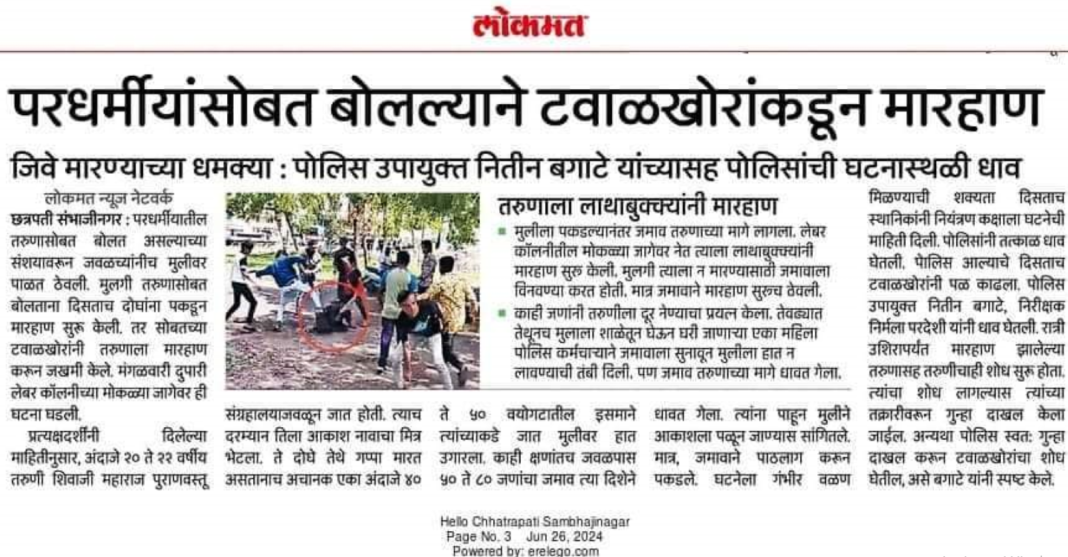
Maharashtra: Islamist mob brutally assaults Hindu boy for talking to burqa-clad girl, misbehaves with girl

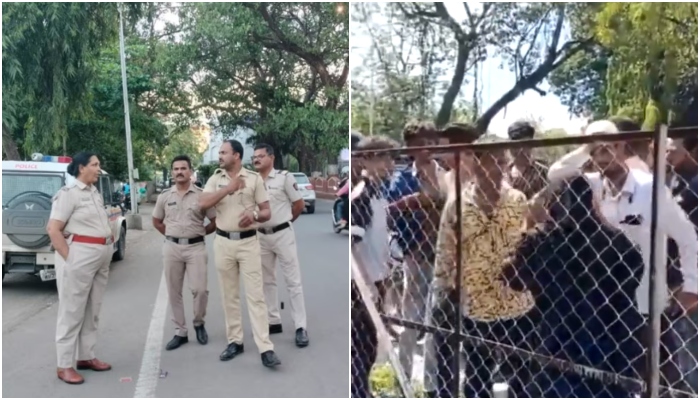
On Tuesday, 25th June, in a bizarre incident, a youth identified as Akash was brutally assaulted by a large Muslim mob comprising of 40-50 persons for talking to a burqa-clad girl in Chhatrapati Sambhajinagar. The accused Muslim individuals caught the duo and launched an attack on Akash after threatening and assaulting the girl.

The video of the incident is making rounds on social media in which a girl wearing a burqa can be seen trying to escape from the attack launched by Muslims.

As per the local reports, the incident occured in the Labour colony area of the city when the girl from the specific community was passing by the Shivaji Maharaj Museum. The girl met the Hindu boy there and they were talking.

Meanwhile, around 40-50 individuals from the specific community were keeping an eye on the girl and arrived at the spot after she was seen talking to the Hindu boy. The accused slapped the girl for talking to a Hindu boy and then moved towards Akash to launch an attack on him. In the meantime, 20-30 additional individuals happened to join him.

Seeing this, the girl asked Akash to run away from the spot. However, the mob belonging to the specific community caught the victim. They continued to assault him until some of the local people informed the police.

On being informed, Police officers Nitin Bogate and Nirmala Pardeshi reached the spot and nab the accused. However, the accused persons managed to flee from the spot on seeing police arriving at the location.

As per the police, the victim boy and the girl also escaped from the spot probably to save their lives. “We are looking for them. A formal complaint will be filed based on the testimonies of the girl and the victim boy. If not, a suo-moto complaint will be filed and the accused persons will be identified and punished,” officer Nitin Bogate said.

With the increasing radicalization among Islamists in India, Hindu men are repeatedly being attacked if they even walk with a female Muslim colleagues or classmates. At these times, Hindu men always end up at the mercy of law enforcement authorities.

Several videos have surfaced on social media in the last year wherein a mob of Islamists is seen harassing, abusing, and assaulting Hindu-Muslim couples under the pretext of combating the ‘Bhagwa Love trap.’

OpIndia last year recorded more than 30 cases where the Islamists attacked Hindu men for talking to Muslim girls. The attacks were carried out under the pretext that a sinister plot was underway to convert Muslim women to Hinduism by luring them into a love trap – a conspiracy theory espoused by Sajjad Nomani in multiple videos. The detailed reports regarding this can be read here and here.

Ghaziabad: Shah Alam poses as a Brahmin man to trap a married Hindu woman, rapes and pressurises her for religious conversion

A shocking case of rape and sexual assault of a Hindu woman has come to light in Ghaziabad district of Uttar Pradesh. The victim, a mother, had a dispute with her husband over some issues. During this time, Shah Alam befriended her by hiding his religion and real identity. He introduced himself as a Hindu man named Sahil. It is alleged that he raped and sexually assaulted the victim for 7-8 years on the pretext of marriage. He later started backtracking on his promise and started putting pressure on the woman to convert. When she refused to convert, the accused assaulted her and threatened to kill her family. The police registered an FIR on Monday (24th June 2024) and took the accused Shah Alam into custody. 

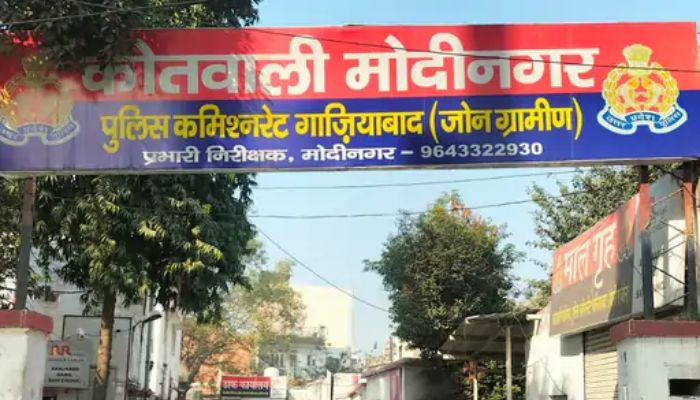
The incident is from the Modinagar police station area. On Monday (24th June), the victim complained to the police that 7-8 years ago, she had separated from her husband for some reason. During this time, Shah Alam, the son of Hasam Ali, who resides in the Modinagar police station area, came into contact with the victim. Shah Alam assured the woman that he would leave Islam and adopt Hinduism. He also promised to marry the victim.

Shah Alam deceived the woman and raped her several times. During this time, he also had unnatural sex with the victim. It is also alleged that the accused also took one and a half lakh rupees from the victim to start some work. On 13th June, the victim asked Shah Alam to fulfil his promise of marriage. This made Shah Alam angry. He threatened the woman and said, “Don’t ever talk about marriage to me again. If you report me, I will kill you.” Shah Alam also refused to leave Islam. The victim was terrified of the incident.

She then reached the police station along with members of the Hindu Jagran Manch on Monday and reported the incident. She lodged a complaint with the police on Monday (24th June). The police registered an FIR against Shah Alam under sections 376, 377, and 506 of the IPC. The ACP of the Modinagar area stated that Shah Alam has been taken into custody. Investigation and other necessary actions are being carried out in the case. OpIndia has a copy of the FIR. Meanwhile, the victim presented her case to the media. She stated that Shah Alam introduced himself with a Hindu name Sahil and had identified himself as a Brahmin. 

In the same video, the victim further revealed Shah Alam’s misdeeds. He said, “I am a Mohammedan. I will not marry you. If you want to marry me, go to the village mosque and recite the Kalma.” Shah Alam also threatened to kill the victim along with her children.

Manipur government and agencies in war against fake Aadhaar and Voter ID gangs helping illegal immigrants from Myanmar

In the conflict-hit Manipur, the police have busted a massive racket of issuing counterfeit Aadhaar and voter ID cards to illegal immigrants in Manipur. A special police team has been tracking the racket and arresting several accused in recent times, NDTV reported, citing sources.

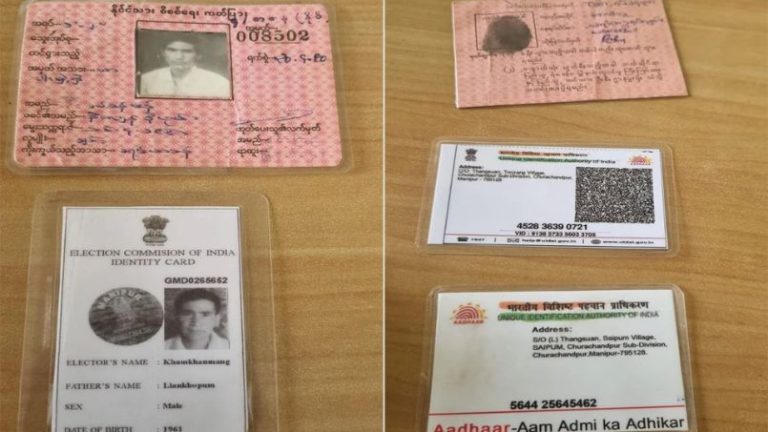
The police have arrested two illegal infiltrators from Myanmar residing in the Churachandpur district of Manipur. Two fake identity cards were recovered from their possession. The police said that they are investigating numerous such cases.  

Illegal immigrants from Myanmar with fake Aadhaar and voter ID cards in Manipur (Source: NDTV)

The police official told NDTV that illegal immigrants can write the name of any place in address, based on what the criminals running the racket ‘advise’ them to write.

Notably, Southern Manipur is the epicentre of the state government’s low-decibel operation to nab illegal immigrants carrying fake identity documents including Aadhaar and voter ID. The state government said that this is not limited to Manipur and they see it as a threat to national security.

The biometrics of Myanmar refugees fleeing violence between junta forces and pro-democracy militants are being recorded in Manipur. However, illegal immigrants who avoid Indian authorities’ attempts to capture their biometrics are the ones who contact the bogus Aadhaar gangs. The authorities are taking action against such illegal immigration and identity fraud rings.

Action against fake identity rackets and illegal immigrants in the last few years

Back in 2018, 10 people were arrested for involvement in two fake Aadhaar card rackets operating from the bordering towns of Jirbhim and Moreh. Of the 10 arrested, 9 were illegal Muslim immigrants from Myanmar. One Indian woman Paritha Begum from Tamil Nadu was also arrested. The police raided the house one Mohammad Tomba at Moreh and seized two laptops, four Aadhaar Cards, one printer machine, one laminating film machine, plastic sheets, DVDs and photo paper.

Similarly, in May 2018, around 98 illegal immigrants with fake Aadhaar cards were arrested from Imphal City.

In October 2021, Assam Rifles troops arrested  24 Burmese illegal immigrants who were travelling with counterfeit Aadhaar cards along the Indo-Myanmar border in Manipur’s Tengnoupal district. This came about a week after 11 Myanmar nationals were arrested at Imphal Airport while attempting to board a Delhi-bound flight using forged Aadhaar cards.

Notably, in just two days last year, over 700 illegal immigrants including 301 children from Myanmar entered Manipur.

How the government is tackling the menace of fake Aadhaar cards and voter IDs in Manipur

The proliferation of fake Aadhaar cards and voter IDs in Manipur has emerged as a significant challenge for the Indian government and its agencies. This issue has not only raised concerns about national security but also about the integrity of the electoral process.

In recent years, Manipur has witnessed an increase in the circulation of counterfeit identification documents, including Aadhaar cards and voter IDs. These fake documents are often used by illegal immigrants and individuals involved in fraudulent activities. The use of such documents undermines the credibility of the national identification system and poses risks to both security and governance.

Last year, over 1000 fake voter identity cards were recovered from the razed houses of Kukis in the Kakching district.

Notably, the authorities have taken several steps to tackle the fake Aadhaar and voter IDs being obtained by illegal immigrants from Myanmar.

The Unique Identification Authority of India (UIDAI) has intensified the verification process for Aadhaar cards. Enhanced biometric authentication and cross-checking with other government databases are being used to ensure the authenticity of the issued IDs . Notably, various government agencies, including the Election Commission of India (ECI), UIDAI, and local law enforcement, are collaborating to tackle the issue.

Given Manipur’s proximity to international borders, border security has been intensified. Manipur shares a long and porous border with Myanmar, making it easier for people to cross over illegally. The challenging terrain and inadequate border security infrastructure contribute to the ease of illegal crossings. However, the Border Security Force and other agencies are conducting rigorous checks to prevent the inflow of illegal immigrants and counterfeit documents. The seriousness of the influx of illegal immigrants from Myanmar entering and settling in India can be understood from this that the number of illegal Myanmar nationals living in shelter homes in eight villages has outnumbered the locals, as claimed by a local MLA.

The government has also been pushing for the implementation of the National Register of Citizens (NRC) to identify illegal immigrants. In addition, the establishment of detention centres is part of the government’s efforts to manage illegal immigration. OpIndia has reported about the Manipur government deporting illegal immigrants in such detention centres. On 8th May this year, the Manipur government announced the completion of the first phase of deportation of illegal immigrants from Myanmar “without any discrimination”. 

In June this year, the Manipur government deported 38 illegal immigrants belonging to Myanmar through the Integrated Check Post (ICP), Moreh. 

The influx of Kuki-Chin people and the Manipur problem

In August last year, Union Home Minister Amit Shah informed the Lok Sabha that the situation in Manipur began with an influx of Chin-Kuki refugees from nearby Myanmar after the military rulers there launched a crackdown on militants in 2021. These illegal immigrants arriving in Manipur aroused fears of a demographic change in the region.

“A Kuki Democratic Front started a movement there, and the military rulers launched a crackdown on them. As there is no border fencing, a large number of Kuki brothers came to Manipur and Mizoram as refugees. As the Kuki refugees settled down in the forests of Manipur valley, there were fears of a demographic change,” Shah said.

Amit Shah has time and again emphasised the importance of holding talks to resolve disputes with concerned parties—Kukis and Meteis. However, the Home Minister made it clear in April that a separate Kuki-Zo dominant Union Territory would not be formed as he stated the state “would not be allowed to break apart under any circumstances”.

The Kuki-Zo community has still been pressing for its separate UT demand. Recently, the Indigenous Tribal Leaders’ Forum (ITLF) wrote to Amit Shah to demand a separate union territory for Kuki-Zo tribals.

The Zo people and their demand for ‘Kukiland’

the Zo people, also known as Zomi, Chin-Kuki-Mizo, are an ethnic group inhabiting the hilly regions of India, Myanmar, and Bangladesh. Their historical origins trace back to the Chin Hills of Myanmar and the adjoining areas of Manipur, Mizoram, and Nagaland in India. During the British colonial rule, these tribes were converted on a large scale by Christian missionaries. As OpIndia reported recently, several Kuki-Chin militant groups have been carrying out killings, kidnappings, and extortions in Manipur, and are closely involved in the ongoing ethnic strife in the north-eastern state.

Recently, Bangladesh PM Sheikh Hasina had warned about the alleged designs of the US to carve out a Christian nation “Zogam” for Zo people. It is said to be on the lines of “Zalengam” [land of freedom], a proposed Kuki State. This separate nation would comprise large parts of Sagaing Division and the Chin state of Myanmar, the Indian state of Mizoram, and Kuki-inhabited areas of Manipur, and the Bandarban district and adjoining areas of Bangladesh’s Chittagong division. Several Kuki-Chin militant groups active in Myanmar and Bangladesh have joined forces with Islamic terrorist groups as well.

In the words of an Intelligence Bureau official, “Kuki-Chins have got tens of thousands of Chins from neighbouring Myanmar to illegally enter Manipur and settle down in the state, thus boosting the Kuki-Chin population of the state exponentially. Notably, these Kuki militant groups earn money through the cultivation of opium and trafficking drugs, including synthetic drugs, from Myanmar and Manipur through Mizoram and Bangladesh.

Om Birla starts his new term as Speaker by condemning the ‘Tanashahi’ of former PM Indira Gandhi for imposing Emergency in 1975

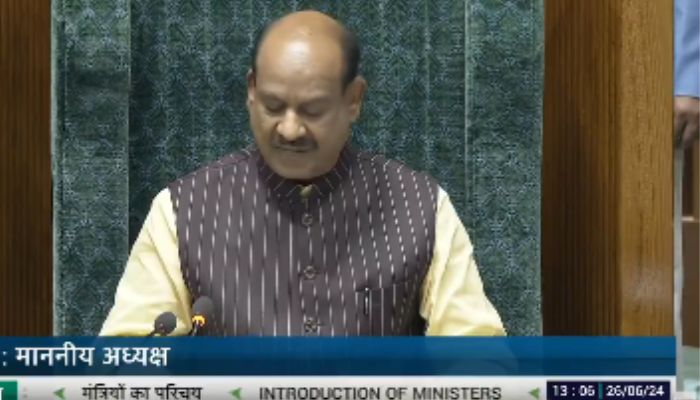
On Wednesday (June 26), Lok Sabha Speaker Om Birla came down heavily on the Congress party after assuming his charge upon being re-elected to the post. He condemned the ‘dictatorial’ proclamation of Emergency that was announced by the previous Congress government led by then PM Indira Gandhi in 1975. He described it as the black chapter in India’s history. He also asked the House to observe 2 minutes of silence to mourn the ‘murder of democracy’, a day after the country entered the 50th year of Emergency that started in June 1975.  

Addressing the Lok Sabha, Om Birla said, “This house condemns the Emergency that was imposed in 1975 in the strongest terms. We also laud the determination of all those who staunchly opposed the Emergency, struggled, and performed the duty of safeguarding India’s democracy. 25th June 1975 will always be remembered as a black chapter in Indian history. On that day, then PM Indira Gandhi imposed an Emergency in the country and made a major blow to the constitution drafted by Dr BR Ambedkar.” 

The Lok Sabha speaker slammed the erstwhile Congress-led government for imposing dictatorship on India. He also highlighted the excesses which were committed during the Emergency period.

He added, “Throughout the world, India is the mother of democracy. In India, discussions deliberations, and democratic setup have always been supported, encouraged, and safeguarded. ‘Tanashahi’ (dictatorship) was imposed on such a country by Indira Gandhi and India’s democratic ethos was trampled upon and freedom of expression was strangulated. Citizens rights were snatched from them. It was an era when opposition leaders were incarcerated and the entire country was turned into a Jail cell. The then-dictatorial government introduced numerous restrictions on media and the judiciary’s independence was curtailed. That period of Emergency was a dark phase of injustice in our history.” 

At a time when the Congress party steered by Gandhi scion Rahul is claiming to be championing the cause of democracy and safeguarding the Constitution, Speaker Om Birla cited how the previous Congress government had made major assaults on the Constitution and brought sweeping amendments.  

He further stated, “During that time, the Congress government made several such decisions that trampled the essence of our constitution. They amended the Maintenance of Internal Security Act so that the judiciary could not give justice to leaders jailed under the MISA act. To stop the media from publishing the truth, several laws were brought, and brought the 39th to 42nd amendment to the Constitution to centralise power in one person’s hand, exercise control over the judiciary, basic doctrines of the Constitution could be finished and citizens’ rights were repressed. “    

He added, “Not only this, then PM Indira Gandhi talked about committed bureaucracy and committed judiciary which is an example of her undemocratic style of functioning. With it, the Emergency brought several social challenges and dictatorial tendencies that wrecked the poor and Dalits. People were forced to undergo sterilisation by the Congress government. This house expresses sympathies to all those people.” 

The 1975-1977 period was a black phase that makes us remember democratic structure, principles, and judicial independence. As we are entering the 50th year of Emergency, Lok Sabha reiterates its commitment to the maintenance, protection, and safeguard of DR. BR Ambedkar drafted Constitution. We are committed to ensuring the rule of law and decentralisation of power. We praise all the people for their faith in the democratic setup and struggle. Because of the Emergency ended and the democratic setup was re-established, the Lok Sabha speaker noted.      

Om Birla asserted, “Our young generation should know about the black phase of democracy. During the dark phase of the Emergency, scores of people lost their lives at the hands of Congress’ dictatorial government. We (the house) will observe 2 minutes of silence in their honour.”  

Notably, the Lok Sabha speaker made these remarks after PM Modi introduced ministers to the LS. Following his scathing remarks condemning the Emergency, the Lok Sabha then adjourned the house till tomorrow. 

Tamil Nadu: Death toll rises to 61 in Kallakurichi hooch tragedy, NCSC chairman meets family of deceased

0

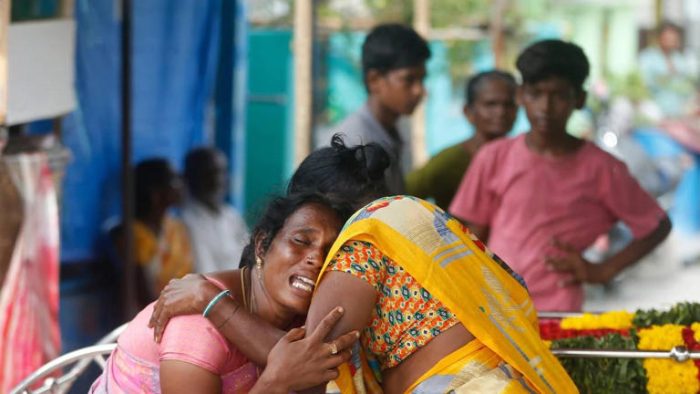
61 people have died due to the Kallakurichi Hooch tragedy, as per the Kallakurichi District Collectorate.

Currently, 91 people are undergoing treatment at the Government Kallakurichi Medical College and Hospital and 32 people have died at the Government Kallakurichi Medical College and Hospital. 20 people have been discharged from the Government Kallakurichi Medical College, as per the hospital authorities.

10 people have been admitted to the Jawaharlal Institute of Postgraduate Medical Education and Research(JIPMER) Puducherry and a total of 6 have been discharged from the hospital. A total of four people have passed away at Jawaharlal Institute of Postgraduate Medical Education Research.

30 people are undergoing treatment at the Salem Medical College while 21 have passed away, as reported by hospital authorities.

Four people have passed away in the Villupuram Medical College due to consumption of illicit liquor and 4 are currently admitted in the the Villupuram Medical College.

One person has been admitted to the Royapettah Greater Hospital in Chennai. Two people have been discharged from Sri Sanjeevi Hospital.

A total of 136 people have been admitted to five hospitals. The total count of people affected due to consumption of illicit liquor has now increased to 225.

Earlier today, the National Commission for Scheduled Castes (NCSC) Chairman Kishor Makwana along with the Deputy Chairman of Tamil Nadu Commission for Scheduled Castes (TNCSC) Puneeth Pandian and Deputy Inspector General (DIG) of the National Aditya Vidarbha Commission Sanmeet Kaur met the family members of the people who died due to the consumption of illicit liquor in Karunapuram area of the Kallakurichi district.

On Wednesday the Tamil Nadu assembly saw uproarious scenes as the AIDMK leaders clad in black shirts protested inside and outside the house. The AIADMK legislators, including the leader of the Opposition Edappadi K Palaniswami, were later suspended from the current Assembly session for disrupting the House proceedings.

(This news report is published from a syndicated feed. Except for the headline, the content has not been written or edited by OpIndia staff)