


American Christian evangelist Sean Feucht has alleged persecution after fleeing India, where his activities had come under scrutiny and were described as potential violations of visa rules related to religious conversions.
Feucht, who was recently in India with his wife for the inauguration of a facility called the “Zion Centre” in Andhra Pradesh’s Anantapur district, came under scrutiny after visuals and posts from the event surfaced online. The facility, described as a community and religious hub, reportedly hosted large gatherings involving prayers and evangelical outreach.
According to a complaint filed with the Foreigners Regional Registration Office (FRRO) in Bengaluru, Feucht is alleged to have entered India on a tourist visa but participated in activities such as preaching and proselytisation. Under Indian visa rules, foreign nationals on tourist visas are not permitted to engage in religious conversion, deliver sermons, or organise missionary events.
Authorities have not publicly confirmed the exact visa category under which Feucht entered India. However, legal experts note that even missionary visas come with restrictions and do not permit organised conversion campaigns or propaganda.
With the controversy raging, Feucht hightailed it out of India, but not before crying victimhood on social media. Now, days later, he has only continued his victimhood saga, sharing screenshots of his DMs to claim Christians are not safe in India.
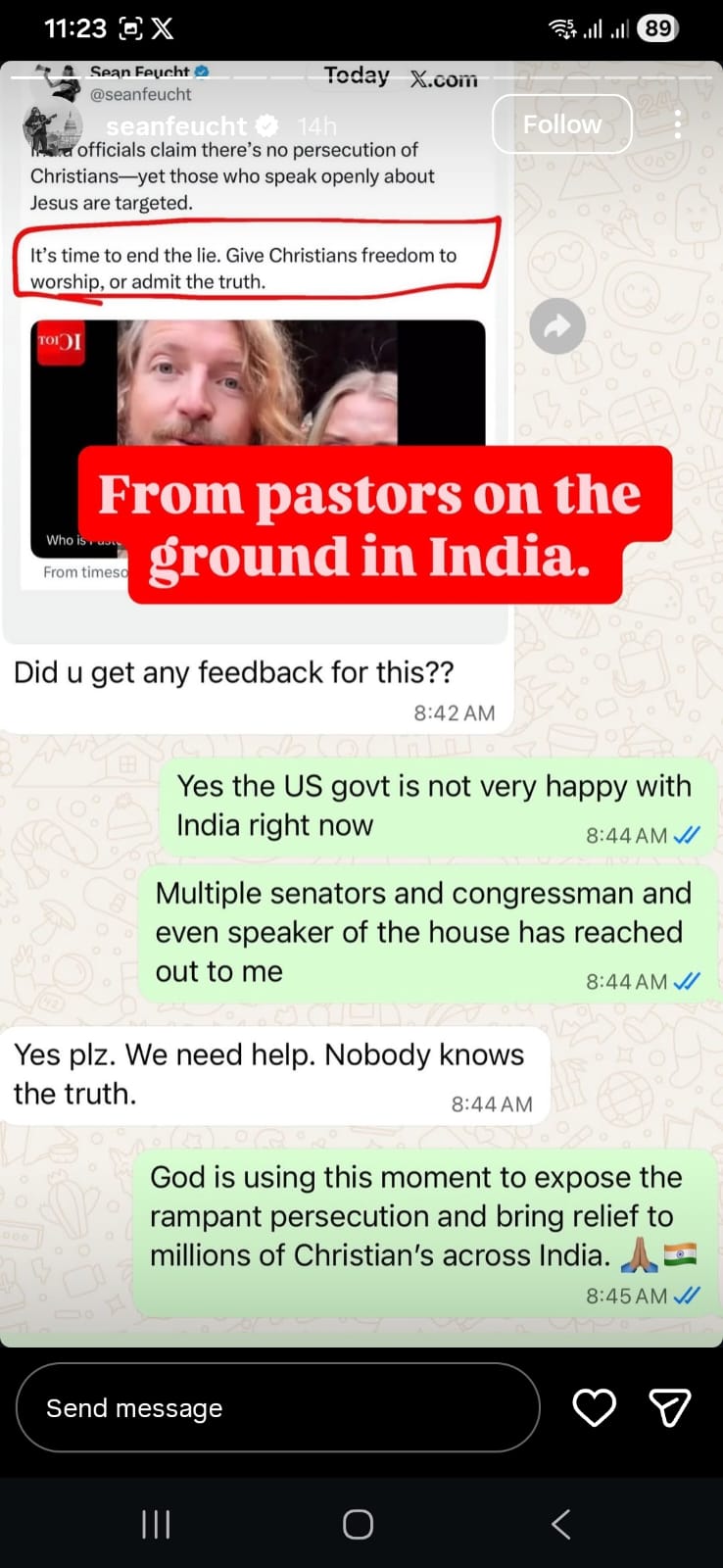
Feucht posted a series of messages on social media platforms, alleging that there is “persecution” of Christians in India. In one post, he amplified claims that strict anti-conversion laws could lead to severe penalties, including long prison terms. He also claimed that the “US government is not very happy with India,” and suggested that American lawmakers had reached out to him regarding the situation. There is no official confirmation of such diplomatic communication.
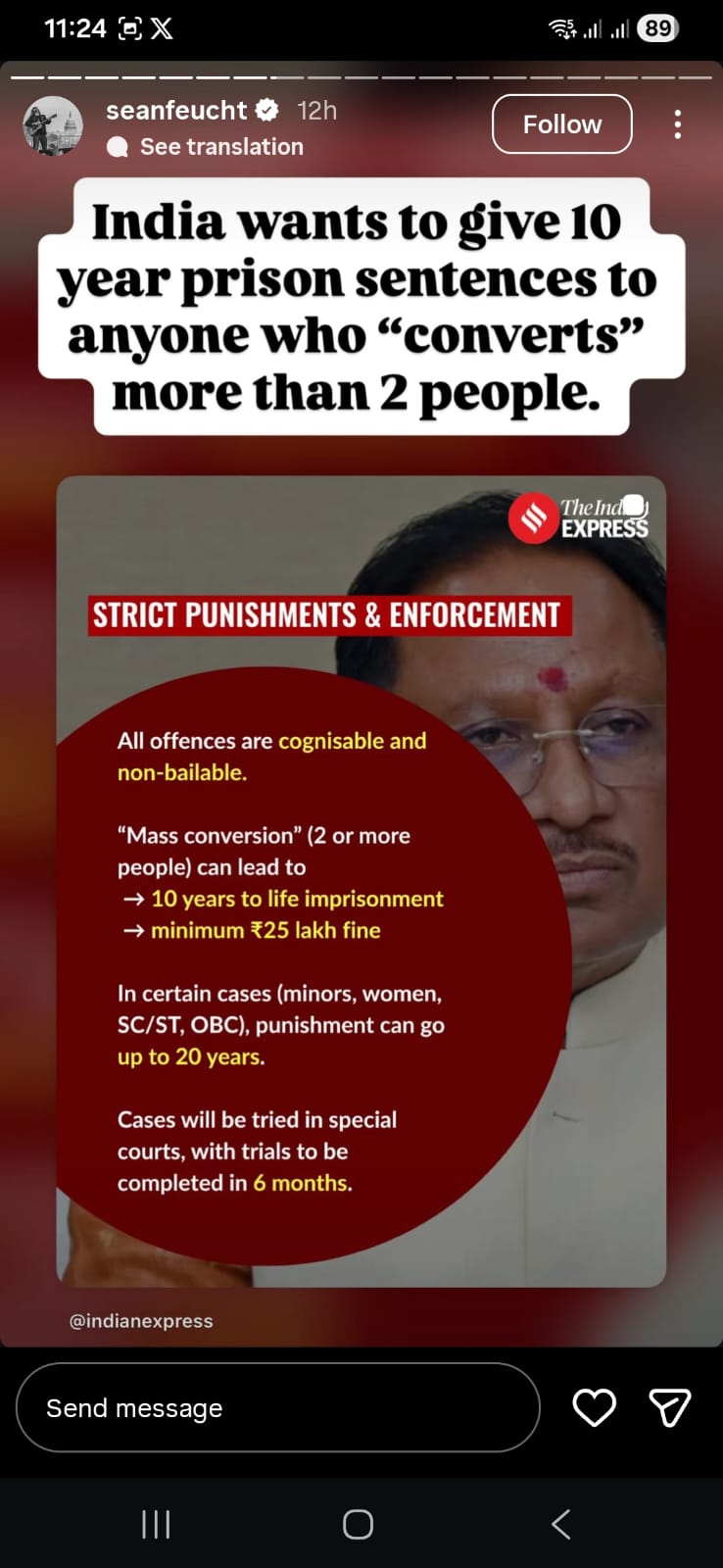
Screenshots shared online also show Feucht presenting feedback from individuals described as “pastors on the ground in India,” claiming that Christians face restrictions in openly practising their faith. In private messages shared publicly, he described the situation as “rampant persecution” and sought support.
Indian laws do not prohibit voluntary religious conversion but regulate conversions carried out through coercion, fraud, or inducement. Several states have enacted anti-conversion laws that prescribe penalties for what is termed “mass conversion” or conversion of vulnerable groups under questionable circumstances.
Some observers have also suggested that Feucht’s framing of events as “persecution” could be an attempt to deflect attention from the allegations of visa violations and to build external pressure on Indian authorities. They argue that such narratives may seek to recast regulatory enforcement as a rights issue, potentially enabling continued missionary activities without scrutiny.
