

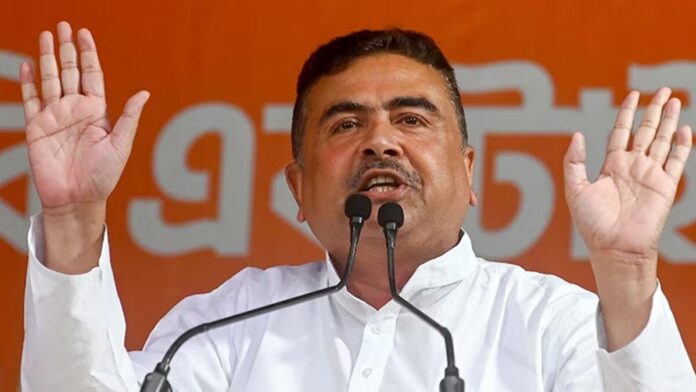
Framing the mandate as a “victory for Hindutva,” Suvendu Adhikari engineered a seismic upset in West Bengal politics, unseating Chief Minister Mamata Banerjee in her stronghold of Bhabanipur and dealing a decisive blow to her political dominance.
Adhikari, often dubbed the BJP’s “giant slayer,” secured a decisive victory with a margin exceeding 15,000 votes—an outcome that not only dents Banerjee’s political authority but also pushes the All India Trinamool Congress onto the back foot with its tally reduced to 77 seats. The result underscores a sharp shift in voter sentiment in a constituency long considered impregnable for the TMC.
Framing the mandate in ideological terms, Adhikari described the verdict as a “victory for Hindutva,” asserting that a broad coalition of Hindu voters, cutting across caste and regional lines, consolidated behind the BJP. He claimed that while minority voters backed Banerjee, communities including Hindus, Sikhs, Jains, and Buddhists rallied decisively in his favour, alongside support from groups such as Marwaris and Purvanchalis.
“This was a crucial battle,” Adhikari said after the results. “Defeating Mamata Banerjee was necessary. This marks her political retirement,” he added, emphasising that this is the second time he has personally defeated her in an electoral contest.
The symbolic weight of the Bhabanipur result is hard to ignore. Once a trusted lieutenant within Banerjee’s inner circle, Adhikari’s transformation into her most potent adversary has now culminated in back-to-back victories, first in Nandigram in 2021 by a narrow margin, and now in Bhabanipur with a far more emphatic mandate. If Nandigram marked his arrival on the national stage, Bhabanipur may well cement his position as the BJP’s principal challenger to Banerjee in West Bengal.
Reacting to the outcome, Union Home Minister Amit Shah hailed the electorate of Bhabanipur, stating that the verdict signals growing public disillusionment with what he termed “anarchic governance.”
Beyond the numbers, this result represents a deeper churn in Bengal’s political landscape, where personal rivalries, ideological positioning, and shifting voter coalitions are converging to redraw the state’s electoral map.
