

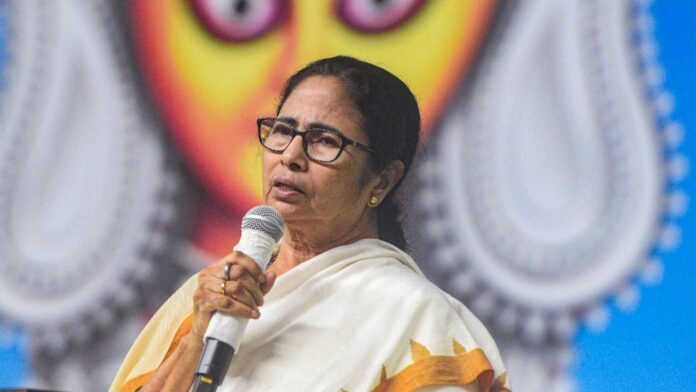
In the aftermath of a stunning electoral upset in West Bengal, TMC supremo and outgoing CM Mamata Banerjee has refused to accept the verdict, alleging large-scale malpractice and accusing both the Election Commission of India and the BJP of orchestrating what she termed as “loot” of over 100 seats.
Addressing reporters in Kolkata, Banerjee launched a scathing attack, claiming, “More than 100 seats, the BJP looted. The Election Commission is the BJP’s commission.” She further alleged that despite raising complaints with officials, including Chief Electoral Officer Manoj Agrawal, no corrective action was taken. Questioning the legitimacy of the outcome, she said, “Do you think this is a victory? It is an immoral victory, not a moral victory.”
#WATCH | Kolkata | West Bengal CM Mamata Banerjee says, "More than 100 seats BJP looted. The Election Commission is the BJP's commission. I complained to the CO and also Manoj Agrawal, but they are not doing anything. Do you think this is a victory? It is an immoral victory, not… pic.twitter.com/q0zelygU23
— ANI (@ANI) May 4, 2026
Escalating her rhetoric, Banerjee accused the ECI, central forces, and even the country’s top leadership of collusion. “Whatever the Election Commission has done, along with the Central Forces and the PM & Home Minister, is totally illegal. It is loot, loot, loot. We will bounce back,” she asserted, even as her party faced its most significant electoral setback in over a decade and a half.
BJP breaches Bengal fortress
In a historic political shift, the BJP has decisively breached the TMC’s long-standing stronghold in West Bengal and is poised to form the government independently for the first time in the state’s history. The scale of the victory marks a dramatic reconfiguration of Bengal’s political landscape, ending Banerjee’s uninterrupted 15-year rule.
Reacting to the mandate, PM Modi hailed the outcome as a triumph of governance and democratic will. “The Lotus blooms in West Bengal! The 2026 West Bengal Assembly Elections will be remembered forever. People’s power has prevailed, and the BJP’s politics of good governance has triumphed,” he posted on X.
TMC questions the counting process
Even as counting progressed, the TMC continued to cast aspersions on the electoral process. In a statement on X, the party alleged that the ECI had “abandoned even the faintest pretence of neutrality,” accusing it of deliberately delaying counting and withholding victory certificates in constituencies where outcomes were allegedly clear.
The constituencies cited included Diamond Harbour, Magrahat Purba, Magrahat Paschim, Kulpi, Raidighi, Patharpratima, Basanti, Bardhaman Uttar, and Sitai. Banerjee also made a visit to the Sakhawat Memorial counting hall in Kolkata, where she reiterated claims that counting had been halted in multiple locations and accused central forces of bias.
The numbers tell a different story
Despite the allegations, official trends present a decisive and unambiguous mandate. As per ECI data at 8:02 pm, the BJP had already won 113 seats and was leading in 93 others, taking its tally to a commanding 206 seats in the 294-member assembly.
In stark contrast, the TMC managed to secure just 46 seats, with leads in 35 more, bringing its total to 81, far behind the BJP’s dominant position. Other parties remained marginal players, with Congress winning 2 seats, Humayun Kabir’s AJUP securing 2, while CPI(M) and AISF were leading in one seat each.
Denial used as a tool for damage control
Banerjee’s refusal to concede and her sweeping allegations against constitutional institutions raise familiar questions about post-defeat narratives in Indian politics. While electoral upsets often trigger scrutiny, the scale of the BJP’s victory in West Bengal, cutting across regions and demographics, suggests a broader political shift rather than isolated irregularities.
