

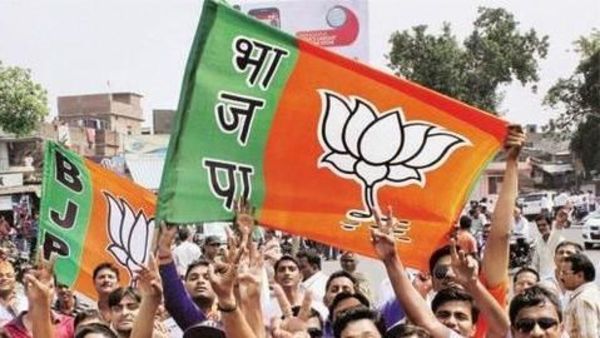
The Aam Aadmi Party has secured a massive victory for itself in the Delhi Assembly Elections. Arvind Kejriwal has succeeded in fending off a strident challenge from the BJP and he is set for a third term as the Chief Minister. However, things were not all bad for the BJP. It managed to increase its vote-share significantly and by the looks of it, it will certainly win more seats than it won the last time around.
Some intellectuals, however, have lost their sense of proportions and are attempting to portray a completely different picture from what the results actually represent. It needs to be mentioned here that the BJP has not formed the government in Delhi since 1998, which is more than 20 years. Therefore, any analysis of the results must be made on the backdrop of this information.
The Delhi results have certainly sparked a renewed hope among ‘intellectuals’ that AAP has emerged as an alternative pole in Indian politics and that they represent a form of politics that could potentially succeed at the national level.
A big message to BJP & Congress that communal polarization is not a vote catcher. Do think about why AAP stayed away from #ShaheenBagh protests & maintained an equidistant approach. Indian voters are smart & will always vote for good governance & development. #DelhiPolls2020
— Aarti Tikoo Singh (@AartiTikoo) February 11, 2020
If the results indeed reflect a defeat of the politics of ‘communal polarization’, then it begs the question as to how did the BJP’s vote-share increase so significantly from the last time around? An increase in the number of seats accompanied by a significant increase in vote-share cannot be interpreted as a rejection of a particular brand of politics.
Furthermore, it is not the case that the Aam Aadmi Party refrained from indulging in communal politics. Amanatullah Khan, the AAP candidate from Okhla, was spotted leading a riot against the Citizenship Amendment Act in the Delhi. Arvind Kejriwal was prancing around reciting the Hanuman Chalisa on national television to ensure that he did not lose too many Hindu votes. All of this does not indicate a defeat of the politics of ‘communal polarization’.
Some others believe that “a political campaign that focused on Governance issues trumped one that was divisive”. Even that isn’t entirely true as the BJP highlighted the failures of the Arvind Kejriwal government greatly but at the end of the day, it just wasn’t enough. It’s true that Shaheen Bagh affected the elections disproportionately and it is understandable why but it is just wrong to claim it was only one party that focused on Shaheen Bagh and the other on governance issues. That is simply not how election campaigns are run.
It is good that a political campaign that focused on Governance issues trumped one that was divisive. #DelhiElectionResults
— Sumanth Raman (@sumanthraman) February 11, 2020
Others believe that the AAP’s victory suggests that running a ‘clean modern government’ works in winning elections. Well, the AAP’s governance wasn’t ‘clean’ by any measure. It was plagued by scams and malfeasance of one variety or the other but it hasn’t affected its electoral prospects all that much.
AAP’s victory doesn’t suggest Indians are tired of useless issues. Just that the BJP has a monopoly over useless esoteric issues and to beat it, AAP has shown again, you have to run a clean modern government that does all the boring stuff like actual governance.
— Manu Joseph (@manujosephsan) February 11, 2020
All in all, the BJP did suffer a defeat in the Delhi Assembly Elections, but not much can be made of the results. Polarization did occur but it wasn’t enough to win them the elections. It also seems that having a known Chief Ministerial candidate has worked in AAP’s favour and when combined with the welfare scheme promised and implemented by the incumbent Delhi government, it was enough for the AAP to register a thumping victory.
At the same time, the increase in BJP’s vote share and the total collapse of the Congress party in Delhi cannot be ignored. It is safe to say that had the Congress not collapsed to this extent, the BJP would have won a lot more seats than it has. The BJP hasn’t won Delhi in 20 years and another defeat in the Union Territory cannot be interpreted as some verdict on matters of ideology and larger narratives on how a government ought to be run. The defeat of BJP in Delhi in 2015 did not affect the larger national narrative in any manner and it is unlikely that it will after AAP’s victory in 2020 as well.


