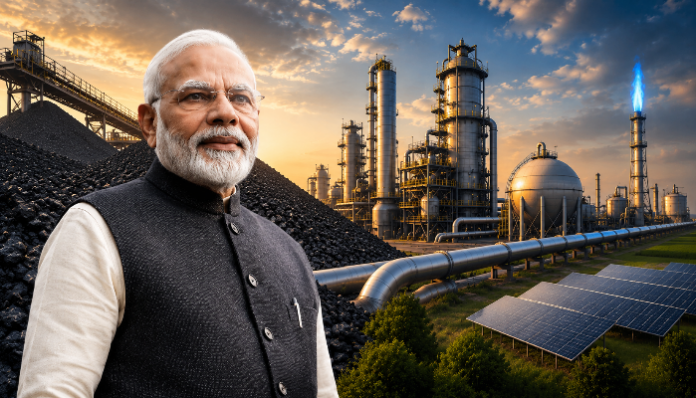
On 13th May (Wednesday), a ₹37,500 crore coal gasification project was approved by the Modi government with the goal of turning India’s enormous coal and lignite deposits into synthesis gas for use as fuel and in the production of chemicals, fertilisers and other goods.
Prime Minister Narendra Modi stated that the initiative “will further energy security, boost investment and create job opportunities for the youth. It will add strength to our efforts to strengthen the tech and innovation system as well.”
The scheme for Promotion of Surface Coal/Lignite Gasification Projects that has been cleared by the Cabinet will further energy security, boost investment and create job opportunities for the youth. It will add strength to our efforts to strengthen the tech and innovation system…
— Narendra Modi (@narendramodi) May 13, 2026
The move is a significant advancement in this direction, propelling the national objective of gasifying 100 million tonnes (MT) of coal by 2030, enhancing energy security and diminishing reliance on imports of essential products. India imports 20% of its urea, nearly 100% of its ammonia and roughly 90% of its methanol. More than half of the nation’s Liquefied Natural Gas (LNG) needs are also supplied from abroad. Gasification is aimed at reducing these imports.
Union Minister Ashwini Vaishnaw expressed, “Today, we took a very important and timely decision on coal gasification to help India become self-reliant amid rising gas demand and the current geopolitical situation.” He highlighted that India has enough coal reserves to last for about 200 years and that efforts are underway to turn these into gas.
VIDEO | Delhi: During cabinet briefing, Union Minister Ashwini Vaishnaw (@AshwiniVaishnaw) says, “Today, we took a very important and timely decision on coal gasification to help India become self-reliant amid rising gas demand and the current geopolitical situation. Since India… pic.twitter.com/9rcZhBMNZP
— Press Trust of India (@PTI_News) May 13, 2026
Vaishnaw informed, “In the coal gasification process, coal is crushed, prepared, and heated at very high temperatures and pressure inside a furnace, where it converts into synthesis gas, or syngas, instead of burning.” He added that the syngas, which is mostly composed of hydrogen and carbon monoxide, can be consumed similarly to natural gas. It even aids in the production of power and fuel that is equivalent to Liquefied Petroleum Gas (LPG).
The important features of the project
The investment is intended to encourage new surface coal and lignite gasification missions for the production of syngas and downstream products. The goal is to gasify approximately 75 million tonnes of these resources. A maximum of 20% of the plant and machinery cost will be covered by govt funds. An evaluation system that benchmarks project cost, coal input and syngas production will be implemented to make the selection through an open and competitive bidding procedure.
The payment will be carried out in 4 equal instalments that correspond with project milestones. Financial incentives would be limited to ₹5,000 crore for individual projects, ₹9,000 crore for single products (except from urea and synthetic natural gas), ₹12,000 crore for separate corporate groups spanning all ventures.
Access to these rewards under the commercial coal mining system or other central or state government ministries is not restricted by the program. On the contrary, it is an add-on. Additionally, the endeavour is technology-neutral, but emphasis is laid on adoption of domestic innovations.
A crucial step towards self-sufficiency
Investment mobilisation is anticipated to be between ₹2.5 and ₹3.0 lakh crore. Diversified utilisation of coal resources will replace imports of LNG, urea, ammonia, ammonium nitrate, methanol and coking coal. It will protect the nation from global price instability and geopolitical supply chain disruptions while also achieving the ambitious “Atmanirbhar Bharat” and “Make in India” agendas.
About 50,000 job opportunities are also slated to be created under the scheme across 25 projects in coal-bearing regions. The use of coal and lignite will possibly produce ₹6,300 crore a year from the 75 million tonnes of gasification in addition to downstream income from GST (Goods and Services Tax) and other taxes.
Furthermore, it aims to strengthen India’s domestic surface coal gasification potential by developing indigenous technology and reducing dependency on international EPC (Engineering, Procurement and Construction) contractors.
The Union Cabinet also extended the coal linkage tenure under the “Production of Syngas leading to Coal Gasification” sub-sector of the Non-Regulated Sector (NRS) linkage auction framework to 30 years in a major associated reform. Investments in coal gasification schemes are going to benefit from long-term policy certainty after the development.
The critical timing of the decision
India has one of the greatest reserves of lignite, around 47 billion tonnes, along with coal, which exceeds 401 billion tonnes. More than 55% of the nation’s energy is generated by coal-fired thermal plants. Gasification transforms coal and lignite into “synthesis gas” (syngas), a flexible feedstock for fuel and chemical production. This allows India to substitute high-value imports and protect itself from price volatility and interruptions in global supply.
In Fiscal Year 2025, New Delhi’s import cost for important alternatives, comprising LNG, urea, ammonium nitrate, ammonia, coking coal, methanol, DME (Dimethyl ether) and others, was nearly ₹2.77 lakh crore. This vulnerability was further illustrated by the current conflict in West Asia.
The fresh course builds on the momentum fostered by the National Coal Gasification Mission (2021) and an ₹8,500 crore programme that was approved in January 2024. 8 projects totalling ₹6,233 crore are currently under execution under it.
What is coal gasification and the reasons behind its popularity
The procedure of turning coal into synthetic natural gas (SNG), which can be used for heating, power generation and chemical synthesis, is known as coal gasification. It gives hydrogen and carbon monoxide from carbonaceous materials consisting of coal, petroleum, petroleum coke and biomass.
On the other hand, the act of converting coal into gas while it is still in the seam and then extracting it through wells can be described as in-situ gasification of coal, or underground coal gasification (UCG).
Coal is partially oxidised with air, oxygen, steam, or carbon dioxide to create a fuel gas which is utilised to produce energy in place of piped natural gas, methane and other substances. Syngas, a mixture predominantly made up of methane (CH4), carbon monoxide (CO), hydrogen (H2), carbon dioxide (CO2), and water vapour (H2O) is formed by the process.
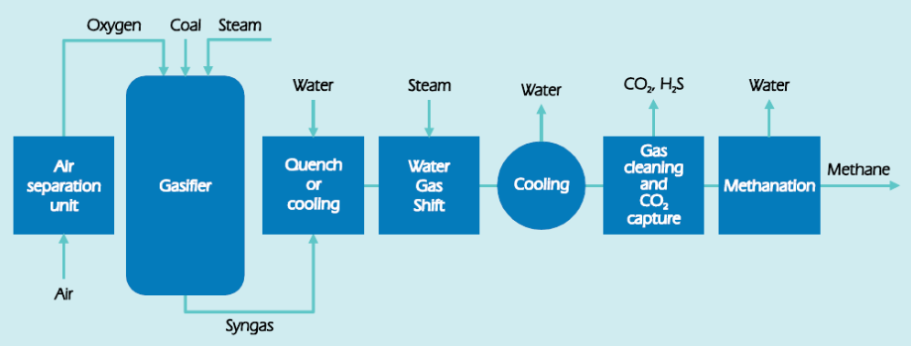
The widespread availability of coal as a raw material and its advantages over other combustion technologies in terms of environmental concerns have made it a progressively common method of producing electricity. Air pollution caused by coal burning is also minimised because the gas is purified before it is used.
This makes it easier to capture and use carbon dioxide (CO2) and other greenhouse gases emitted during the gasification operation. Coal to Liquid (CTL) transforms coal into liquid fuels, such as petrol or diesel and is mostly utilised in nations like South Africa and China that have plenty of coal resources but little oil reserves. It can improve a nation’s energy security and lessen reliance on oil imports.
It delivers clean electricity through an approach known as Integrated Gasification in Combined Cycle (IGCC). Compared to traditional methods, IGCC is a more effective and environmentally friendly approach to generate power from coal and other fuels.
Coking coal, which is imported and expensive, is regularly employed by steel firms in their production processes. However, plants can swap out it with syngas to cut costs, which is used to obtain several fertilisers, fuels, solvents and synthetic materials. It is also used for chemical feedstocks and energy.
Similarly, hydrogen obtained from coal gasification can be employed for a number of purposes, including heating, industrial activities, transportation and manufacturing power. Ammonia, a necessary component of fertiliser for agricultural growth, can also be acquired from the gaseous byproducts of gasified coal.
When Germany used coal to satisfy its energy needs
World War I and the loss of colonies in Africa and Oceania pushed the Germans to look for synthetic fuels owing to a dearth of indigenous petroleum sources. Coal reserves were plentiful in the country, and its scientists had figured out the way to gasify and pyrolyse solids to create liquid fuels in the early 1920s.
Hydrogen was applied to coal at very high pressures (200-700 atmospheres or atm) and temperatures (400-600°Celsius) while an inorganic solid catalyst was present. High-quality petrol fractions would be produced with the breakdown of big molecules in coal into smaller versions. This process was invented by the Nobel laureate scientist Friedrich Bergius, who first suggested liquefaction or hydrogenative pyrolysis of coal in 1913.
The technique provided relative self-sufficiency in liquid fuels, which was essential during a crisis, despite being economically and energetically inadequate. Fritz Haber and Carl Bosch simultaneously succeeded in generating precious ammonia from coal-derived hydrogen and nitrogen.
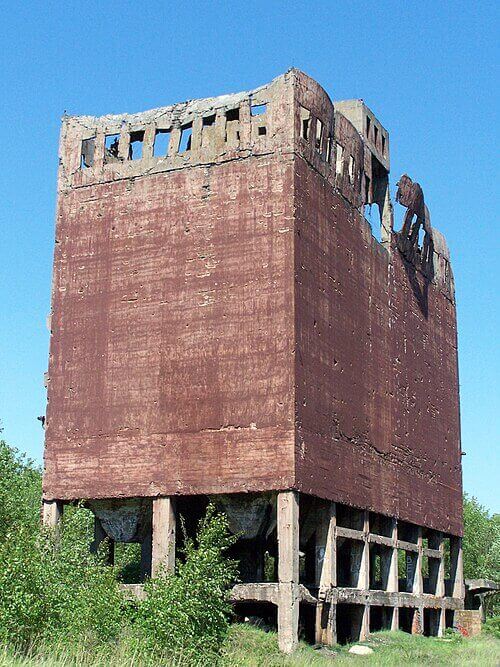
Therefore, the European state’s extensive and sophisticated chemical industry had substantially raised the amount of ammonia and liquid fuels directly from its abundant anthracite, bituminous coal, and lignite reserves by 1921. With their trademark FT method, Franz Fischer and Hans Tropsch overhauled the industry in 1925. Coal was gasified at 150-300°C and 20 atm to yield synthesis gas or town gas. It was principally a concoction of hydrogen and carbon monoxide, which was fed through a solid catalytic reactor. Diesel and kerosene were created there by the reaction of the two components.
To create petrol from a range of coal grades and available catalysts, a growing number of industries, scientists, and chemical engineers actively collaborated. A new dawn broke, and Germany ultimately landed in the age of substitute fuels and chemicals that reduced its reliance on foreign oil. Its Four-Year Fuel Plan, enacted in 1936, expedited these activities.
Germany’s 25 synthetic fuel manufacturing units produced more than 124,000 barrels per day by late 1944. Over 90% of aviation gasoline and close to half of the total petroleum were the products of synthetic fuel. Almost 75% of the nation’s fuel came from synthetic sources by 1945.
Meanwhile, international embargoes and a paucity of petroleum reserves compelled South Africa to derive all of its land and air fuels from coal for many years, hiring a large number of German scientists and researchers. After World War II, the FT process continued to thrive as diesel virtually took the place of petrol in trains, military, commercial and heavy vehicles. Jet engines also gained global dominance in aviation, and kerosene emerged as the norm for aircraft.
The imperative to attain energy independence and the vitality of India’s coal deposits
The geopolitical landscape has remained volatile throughout the years, as exemplified by the present war in the Middle East. China, which has nearly 350 million tonnes of coal gasification capacity and is vulnerable to energy imports like India, showed the strategic role of this sector.
Its extensive domestic coal-to-chemicals ecosystem served as a strategic shield, contributing to maintaining supply stability and limiting demand on the unstable international market. On the other hand, many nations endured LNG shortages, outages in fertiliser supply, price spikes and force majeure threats.
India also faced difficulties as a result of the armed standoff between the United States, Israel and Iran. The nation imports basic commodities like LNG, ammonia and urea, which cost an estimated ₹2.77 lakh crore annually. Hence, the dispute poses a major challenge as crude oil prices rise and affect India’s economic health. However, coal gasification offers an effective route for the production of these necessities from local coal.
“India has a reserve of 307 billion tonnes of thermal coal and about 80% of coal produced is used in thermal power plants. With environment concerns and development of renewable energy, diversification of coal for its sustainable use is inevitable. Coal gasification is considered as cleaner option compared to burning of coal. Gasification facilitates utilization of the chemical properties of coal,” the Ministry of Coal declared in 2021.
“Syngas produced from coal gasification can is usable in producing Synthetic Natural Gas (SNG), energy fuel (methanol & ethanol), ammonia for fertilizers and petrochemicals. These products will help move towards self-sufficiency under Atmanirbhar Bharat Abhiyaan,” the ministry mentioned and outlined that it wants to accomplish 100 million tonnes of coal gasification by 2030.
A calculated step to protect India’s energy prospects
Corporate advisor Pavan Kaushik stated that the country’s move toward coal gasification is a strategic national defence for the future as reducing dependencies on outside energy sources is key for long-term economic stability at a time when India imports around 89% of its crude oil needs.
Thus, the government is boosting its attempts to strengthen the capacity for coal gasification, regarding it as a fundamental step toward a stable tomorrow and economic independence. This approach confronts the obvious risks that nations that depend on imported energy confront, particularly in light of persistent problems with the global supply network and geopolitical strife.
It is to mitigate reliance on foreign suppliers and improve national security by harnessing India’s abundant coal reserves into valuable fuels and chemicals. Moreover, this strategy preserves foreign exchange while shielding important industries like manufacturing and agriculture from volatile international markets.
New Era Cleantech Solutions has already made major investments in coal gasification and carbon capture, including a ₹20,000 crore complex in Maharashtra’s Chandrapur. With the initial production of ammonia, ammonium nitrate and monoethylene glycol, this factory hopes to process more than 5 million tonnes of coal annually.
Future ambitions include ethanol, urea, sustainable aviation fuel (SAF) and dimethyl ether (DME). These actions are fundamental to cultivating a domestic industry capable of supplanting imported fuels and chemicals.
Coal has illustrated its worth as black gold via its economic significance and energy production, both historically as well as in modern times, and India clearly aims to capitalise on its coal advantage in the years to come.