


Vania Sheikh, a BDS student of the Swami Vivekananda Subharti University, tried to end her life on Friday last week by jumping off the fourth floor of the university. Sheikh was grievously injured and rushed to the hospital, where she remained critical after injuring her spinal cord and sustaining head injuries.
Then, 48 hours after she attempted to commit suicide, Sheikh died in the hospital, succumbing to the injuries she suffered from the fall. Initial reports suggested that a fellow student named Siddhant Pawar was involved in the death of Vania.
Her death, however, created an online furore, with many social media users deliberately giving a communal spin to the issue, alleging that a Hindu man was responsible for the death of the Muslim woman, even though there was no clarity as to why Vania took the extreme step of ending her life.
Several social media users alleged that the woman was specifically targeted because she was a Muslim.
हाल के दिनों की गंभीर वारदातों में से ये एक है …दोषियों पर सख्त कार्रवाई होनी चाहिए ! https://t.co/TYjyUOCkR7
— Parvez Ahmad (@parvezahmadj) October 22, 2022
ज़कात के पैसे को आर्गेनाइज तरीके से इकट्ठा करके हमने, स्कूल, कालेज, मेडिकल कॉलेज, इंजीनियरिंग कालेज और युनिवर्सिटी बनाई होती तो वानिया आज ज़िंदा होती…..?
— Yasmeen Khan (@YasmeenKhan_786) October 22, 2022
#JusticeforVania pic.twitter.com/PImZnG7SSL
The venom spilled through TV channels is causing Psychological stress, physical abuse, sexual harassment, rape and killings. Muslim Girls are Targets.#JusticeForVaniaShaikh pic.twitter.com/nsC48wnTTZ
— Asma Zehra Tayeba Dr. (@AsmaZehradr) October 22, 2022
Alishan Jafri, an Islamist masquerading as a ‘journalist’ and who has written for ‘The Wire’, also partook in the controversy to give a communal colour to the unfortunate death of Vania.

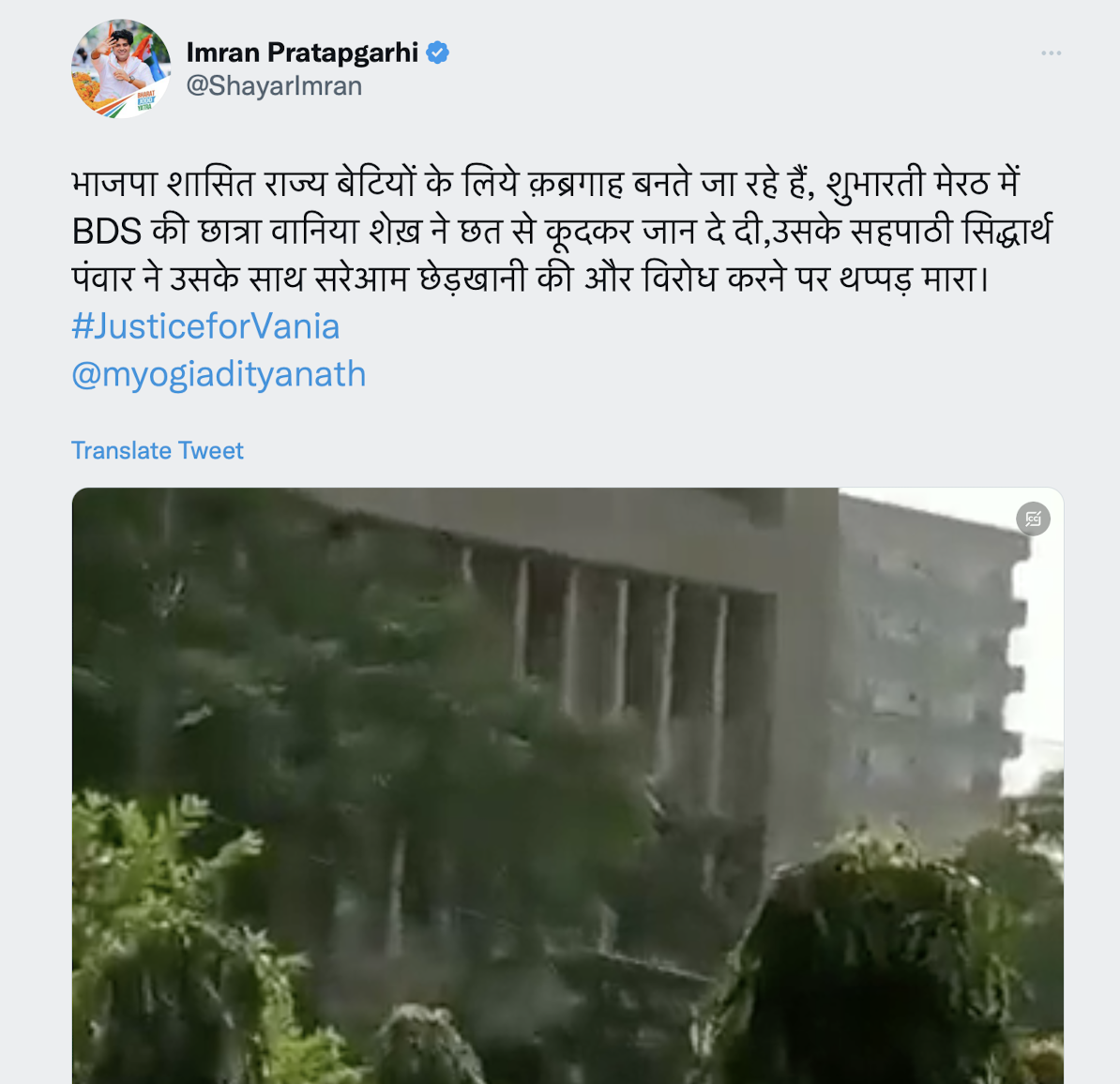
Imran Pratapgarhi, a Congress leader who is known for his inflammatory rhetorics, said BJP-ruled states have turned into graveyards for daughters, conveniently missing out on the alarmingly high criminal incidents against women reported in Rajasthan, a Congress-governed state.
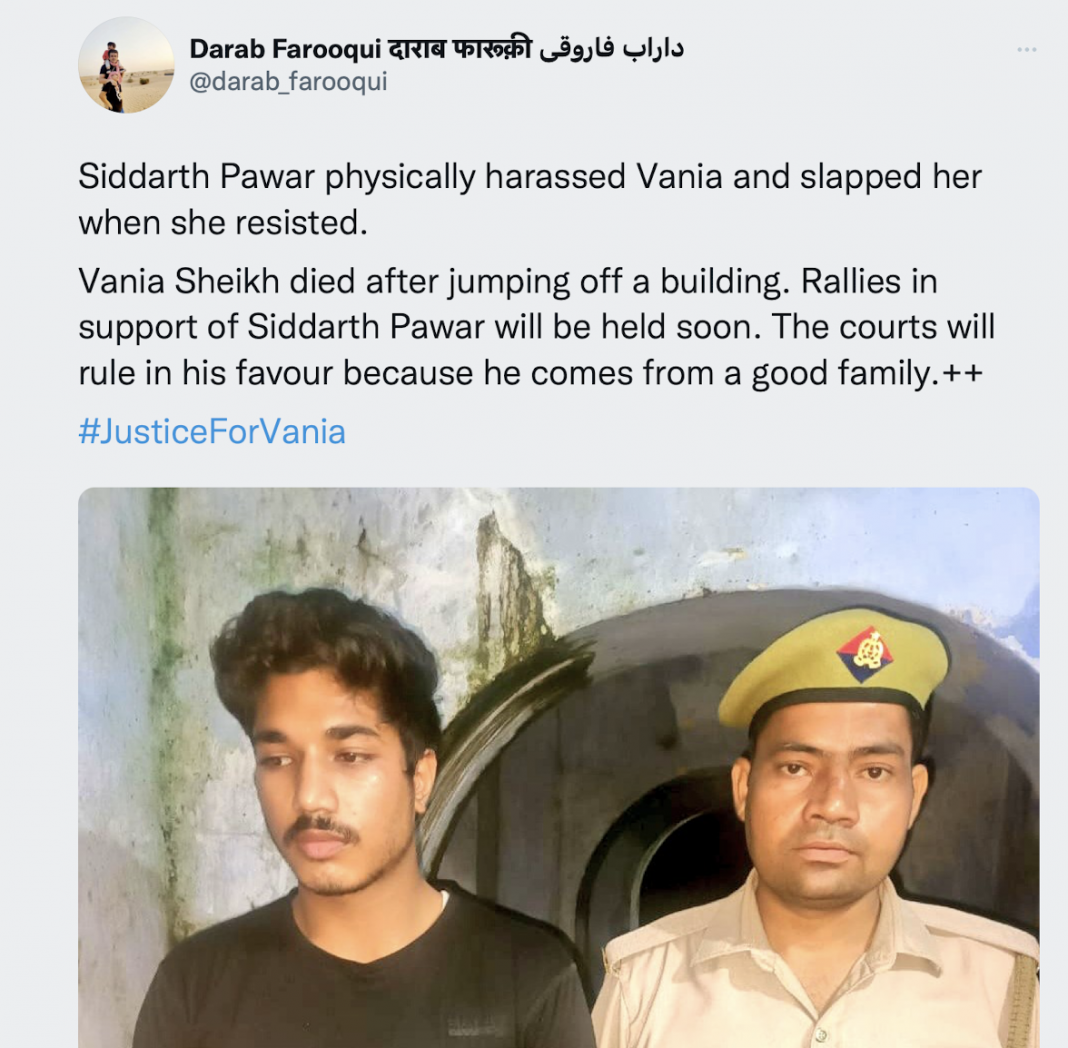
Others alleged that Siddhant Pawar physically harassed Vania and assaulted her when she resisted.
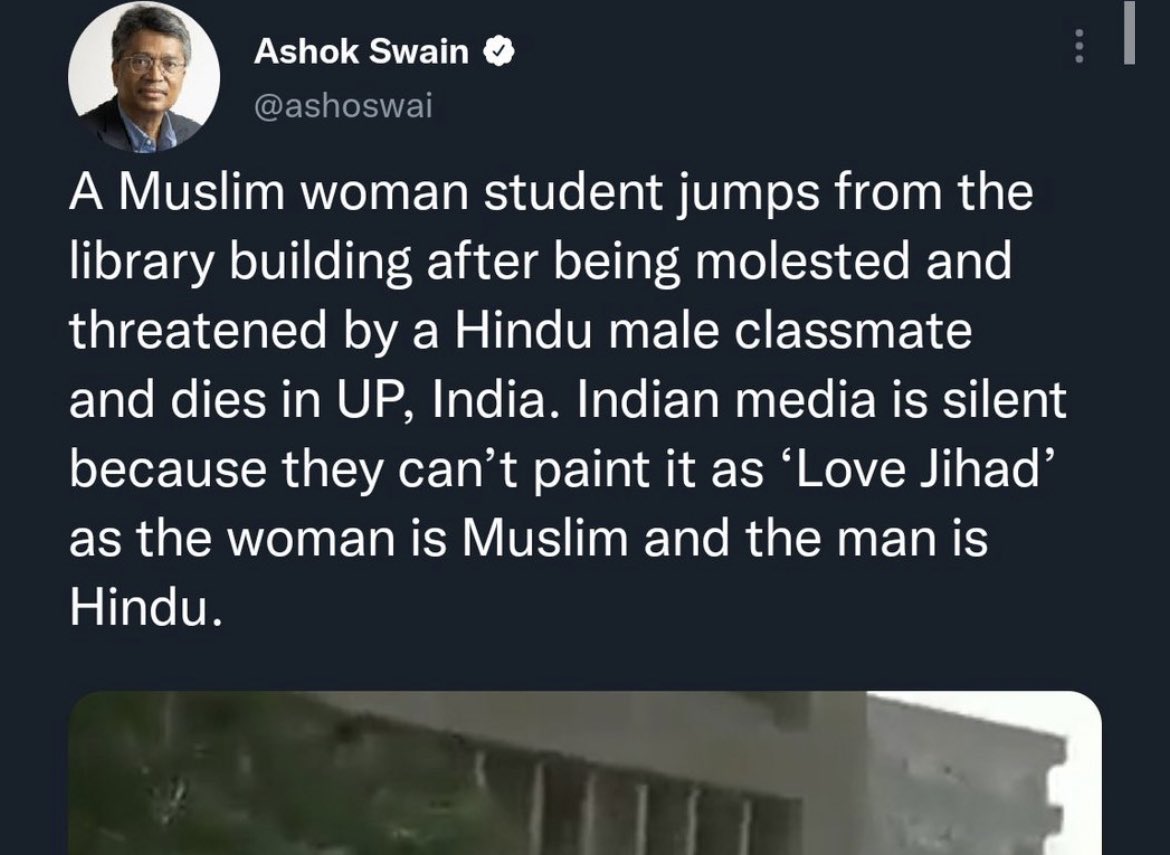
Ashok Swain, an inveterate fake news peddler, also communalised the incident, saying that a Muslim woman jumped from the library building after being molested and threatened by a Hindu male classmate.
Meerut police debunks communal propaganda
However, the findings of the Meerut Police put paid to the malicious rumours and speculations fanned by the communal elements on social media. In its clarification, the Meerut police said that a case was filed at the concerned police station and an investigation was launched into the matter.
#MeerutPolice pic.twitter.com/AJnD9G219D
— MEERUT POLICE (@meerutpolice) October 22, 2022
The investigation revealed that the two, Vania and Siddhant, were in a relationship but were facing personal strife for some time. The decedent girl, in connivance with one of her male friends, took a ‘loyalty test’ of the accused Siddhant, the police said. In a fit of rage that loyalty was questioned, the accused slapped the girl in front of others. Ashamed and embarrassed at the unfortunate turn of events, Vania committed suicide, the police said. Reports said they are also probing role of staff of college who failed to report the incident to police and they got to know about it only from social media.


