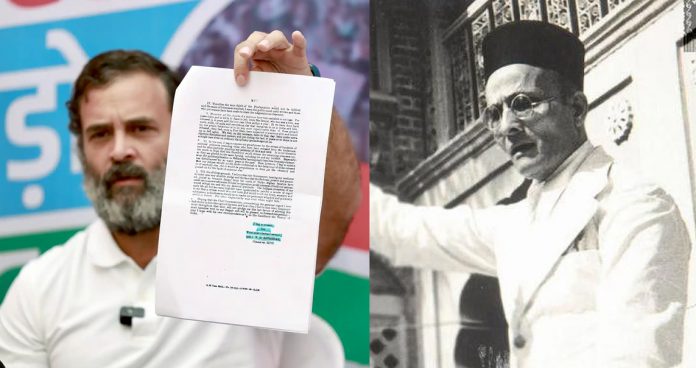
Congress MP Rahul Gandhi created a massive controversy with his comments on Veer Savarkar in his speeches during his Bharat Jodo Yatra. On November 15, Rahul Gandhi alleged that Veer Savarkar took pension from the British Government to work against the Congress party.
Then on November 17, he accused Savarkar of being loyal to the British rulers and helping them. He produces a letter written by Veer Savarkar to the British Government, where he had signed off by writing ‘I beg to remain sir, your most obedient servant’.
“I have a document that comprises Savarkar’s letter to British in which he has stated ‘I beg to remain, sir, your most obedient servant’. This is not written by me… but Savarkarji. Let everyone read this document,” Rahul Gandhi said. Displaying a print out of a copy of the letter Rahul Gandhi added, “I am very clear that he helped the British”.
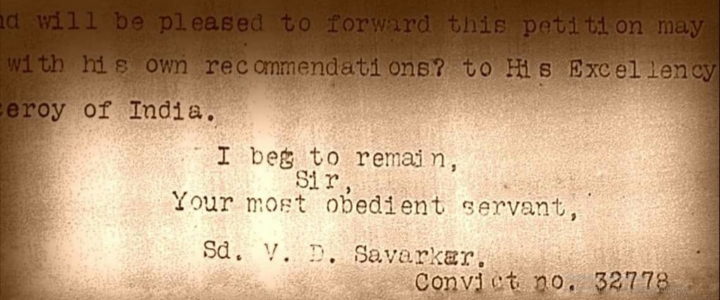
He alleged that Savarkar betrayed leaders like Mahatma Gandhi, Jawaharlal Nehru and Sardar Patel by signing the letter out of fear. While at the first glance it seems shocking that Savarkar desired to remain ‘most obedient servant’ of the British, Rahul Gandhi making the allegation actually exposes his shocking lack of knowledge about formal writing during that era.
Because, as already many people have already pointed out, it was the general practice at that time to end letters. Most prominent Indian letters used variations of this phrase before signing their letters to British officials and others.
M K Gandhi had written numerous letters to the British government during the Indian freedom movement that he was leading, and he himself had used such phrases. In one such letter to Lord Chelmsford, he wrote at the end, “I have the honour to remain, Your Excellency’s obdt. Servant”.
राहुल जी,
— Devendra Fadnavis (@Dev_Fadnavis) November 18, 2022
कल आपने मुझे एक पत्र की अंतिम पंक्तियाँ पढ़ने को कहा था,
चलो, अब कुछ दस्तावेज़ आज मैं आपको पढ़ने देता हूँ।
हम सब के आदरणीय महात्मा गांधी जी का यह पत्र आपने पढ़ा ?
क्या वैसी ही अंतिम पंक्तियाँ इस में मौजुद है, जो आप मुझे पढ़वाना चाहते थे?#VeerSavarkar @RahulGandhi pic.twitter.com/hwtDtuB1ws
In another letter written to Duke of Connaught, MK Gandhi wrote at the end, “I beg to remain, Your Royal Highness’s faithful servant.”
It is not that Gandhi used such phrases only for British officials. In his letter to Russian author Leo Tolstoy, he had written, “I am, Your obedient servant, M. K. GANDHI”.
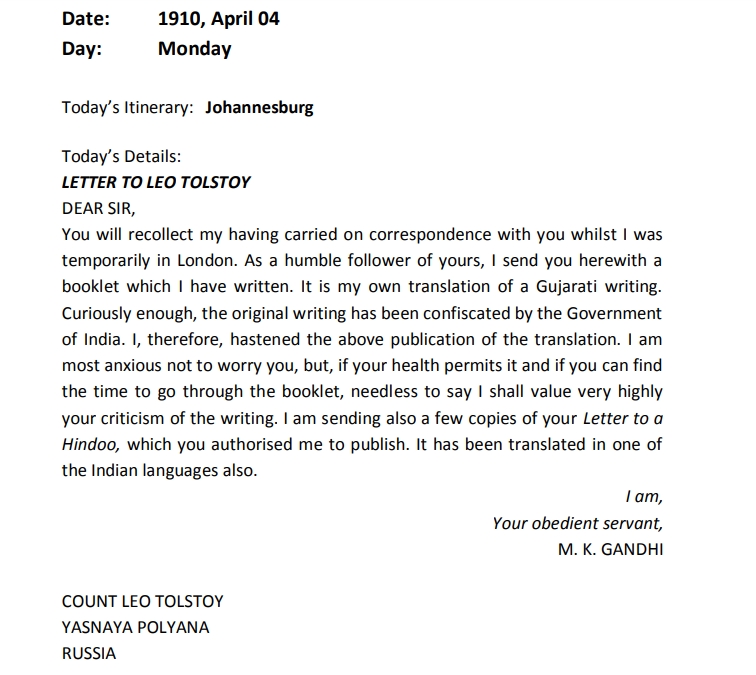
Letters written by other leaders at the time also used such phrases. This is evident that it was a standard practice, and it does not mean Veer Savarkar wanted to become an ‘obedient servant’ of the British, just like M K Gandhi didn’t want to become an ‘obedient servant’ of the British officers he wrote to.