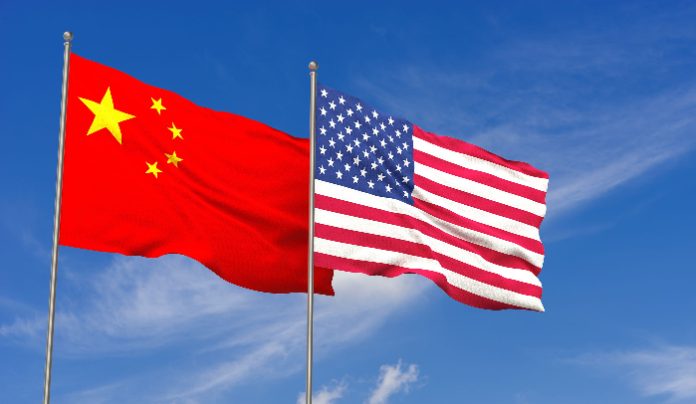
A Chinese court has sentenced a 78-year-old American citizen to life in prison on spying charges, CNN reported.
A permanent resident of Hong Kong, John Shing-Wan Leung, was convicted of spying and given a life sentence on Monday by the Intermediate People’s Court in the eastern city of Suzhou, as per a statement on the court’s social media account.
The court’s statement, which did not provide details on his charges, further said that Leung was detained on April 15, 2021, by state security authorities in Suzhou, Jiangsu province.
The court has also confiscated the man’s personal property worth 50,00,000 yuan, the statement said, according to CNN.
No information on Leung’s detention or the court process that led to his conviction was disclosed by Chinese authorities and state media. Cases that involve state security are usually handled behind closed doors in China.
Leung’s imprisonment took place while Sino-American relations are at their lowest point in fifty years due to escalating competition in trade, technology, geopolitics, and military supremacy.
It also happened at a time when American and Chinese officials are resuming high-level interactions after efforts to improve relations earlier this year were broken by a dispute over a suspected Chinese surveillance balloon.
Leung is among an increasing number of foreigners who have fallen victim to China’s escalating anti-espionage campaign under leader Xi Jinping, according to CNN.
Earlier, a Japanese employee of Astellas Pharma was detained in Beijing on suspected espionage – the 17th Japanese national to have been detained in China since the counter-espionage law was introduced in 2014.
Two Canadians, a former diplomat Michael Kovrig and businessman Michael Spavor, were detained in China for almost three years in another high-profile case.
Their arrest on charges of spying in late 2018 came briefly after Canada arrested Chinese businesswoman and Huawei executive Meng Wanzhou on a US warrant in relation to the company’s business dealings in Iran, as per CNN.
The two men were nevertheless released on the same day that Meng was granted permission by Canada to return to China, despite Beijing’s repeated denials that their cases were motivated by political revenge.
China passed a wide-ranging amendment to its already comprehensive counter-espionage law last month, and it will go into force on July 1.
The new legislation expanded the definition of espionage from covering state secrets and intelligence to any “documents, data, materials or items related to national security and interest,” as well as cyberattacks against government institutions or crucial information infrastructure, CNN reported.
(This news report is published from a syndicated feed. Except for the headline, the content has not been written or edited by OpIndia staff)