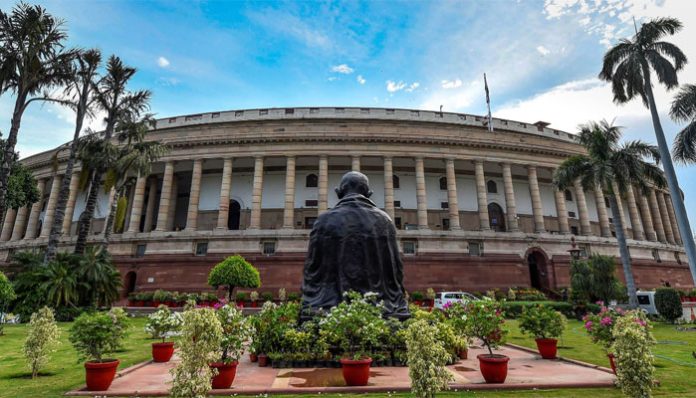
On May 28, Prime Minister Narendra Modi inaugurated the new Parliament House in New Delhi. The new building has an increased seating capacity for the MPs. It has modern infrastructure and state-of-the-art construction that can save the building from any unforeseen event. As both the houses, Lok Sabha and Rajya Sabha will function from the new building, the question arises what will happen to the old building now?
While there are speculations about what would happen to the old building, it is pertinent to note that considering the historic importance of the old building, the Government of India under PM Modi has already announced that the old building will be restored and repurposed. In 2021, when the Central Vista project was launched, the Union Government announced they would be restoring the old Parliament building. In March of that year, Union Housing and Urban Affairs Minister Hardeep Singh Puri told Rajya Sabha that the old building will be repaired and made available for alternative use.
Though it is not confirmed for what purpose the building will be used, there is a possibility that it will be converted into a museum. Not to forget, PM Modi in his 101 Mann Ki Baat address, talked in detail about the museums of India and their importance. Converting the old building into a museum will give a chance to the public to witness the inside of the Lok Sabha and Rajya Sabha. However, in 2021, Puri said in an interview that the building would not be converted into a museum. The actual repurpose of the old Parliament building is yet to be announced by the government.
One thing is confirmed that the government is not going to demolish the old building considering its archaeological and historic significance. Since independence, the old Parliament Building has witnessed a lot. While there are hundreds of memories of India’s progress are attached to the old building, the horrific attack of 2001 is also part of its history.
After India’s independence on August 15, 1947, the building that was in use since 1927, served as Constituent Assembly from 1947 to 1950. After the Constitution of India was created under the Presidency of the first President of India Rajendra Prasad, the building housed Lok Sabha and Rajya Sabha for 73 years, from 1950 to 2023.
Why a new building?
There are several reasons behind the construction of the new building. First of all, the old building was showing signs of distress and overutilization. There was not enough space for offices for all the MPs, union ministers, ministers of state and departments. Furthermore, the building was not constructed to accommodate modern amenties and technology.
The construction of the new building was started in 2021. It took two years and around 60,000 workers to construct the building in record time.