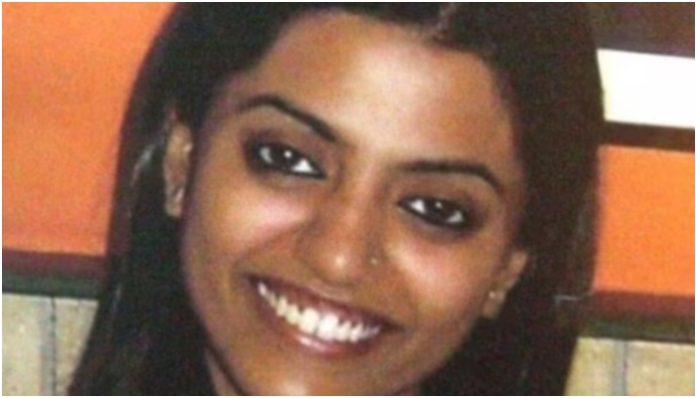
On Thursday (18th October), the Saket court in Delhi convicted four accused persons in the murder of journalist Soumya Vishwanathan. The fifth accused has also been convicted of other charges related to the case. The court found all of them guilty under the strict MCOCA law.
The court determined that Ravi Kapoor, Amit Shukla, Ajay Kumar, and Baljeet Malik murdered the journalist with the goal of robbing her. They were found guilty under Sections 302 and 34 of the IPC and also under MCOCA section 3(1)(i).
Ajay Sethi, the fifth accused, has been convicted under Section 411 of the Indian Penal Code for keeping a stolen car. He also supported the group and retained property generated from organised crime. The court found him guilty under sections 3(2) and 3(5) of MCOCA.
STORY | 15 years on, court convicts four for murder of TV journalist Soumya Vishwanathan
— Press Trust of India (@PTI_News) October 18, 2023
READ: https://t.co/fDWAlrDbhb
VIDEO: pic.twitter.com/cQY1D1Psoj
The murdered journalist’s mother commented on the verdict saying, “We’ve lost our daughter, but this (verdict) will act as a deterrent for others as well.” She said that all the accused convicted deserve life imprisonment as a punishment in this case.
"My daughter is gone but this verdict will act as a deterrent for others": Soumya Vishwanathan's mother.
— NDTV (@ndtv) October 18, 2023
5 people were today convicted in the 2008 murder case of journalist Soumya Vishwanathan. pic.twitter.com/JVJfHwySNs
In September 2008, the journalist was assassinated in Delhi’s Vasant Kunj area. She was killed in her car on Vasant Kunj’s Nelson Mandela Marg. Vishwanathan was working as a journalist with the then-newly launched news channel named ‘Headlines Today’. On September 28, 2008, she was shot and killed on her way home from work.
The Delhi police had invoked the Maharashtra Control of Organised Crime Act (MCOCA) due to the accused’s prior involvement in other dreadful cases including the Jigisha Ghosh murder case.
The decision was made by Delhi’s Saket Court 15 years after the murder. The accused were arrested in March 2009, but it took the prosecution 13 years to bring all of the evidence in the case before the court. The trial began in February 2010 and ended today with the accused being found guilty.
Vishwanathan was found murdered in her car on September 30, 2008. It was initially assumed that she died in an accident. However, forensic reports found that Vishwanathan died as a result of a bullet wound to the head. This sparked an investigation into a murder.
According to police investigations, she was followed on her way home and shot by another moving vehicle. CCTV footage tracked her movements and detected a maroon-colored car following her.
The police then conducted an investigation and arrested two people, Ravi Kapoor and Amit Shukla, for their involvement in another case. However, they confessed to having murdered Vishwanathan and described it as a ‘thrilling activity’. All the other accused were then identified and arrested.
The hearing of the case was completed in 2016, however, the verdict was postponed multiple times owing to legal issues.